
Fine line and saturated color are both having a moment in dark fantasy neo traditional work, but what holds up is not always what trends on boards. I have seen pieces that looked unreal fresh and then softened into a blur, and I have seen bold silhouettes age into readable statements. If you care about how a gothic motif looks at year one and year five, these 27 design ideas pair visual drama with practical notes so you pick a piece that still reads like you years from now.
1. Raven with Candles on Inner Forearm
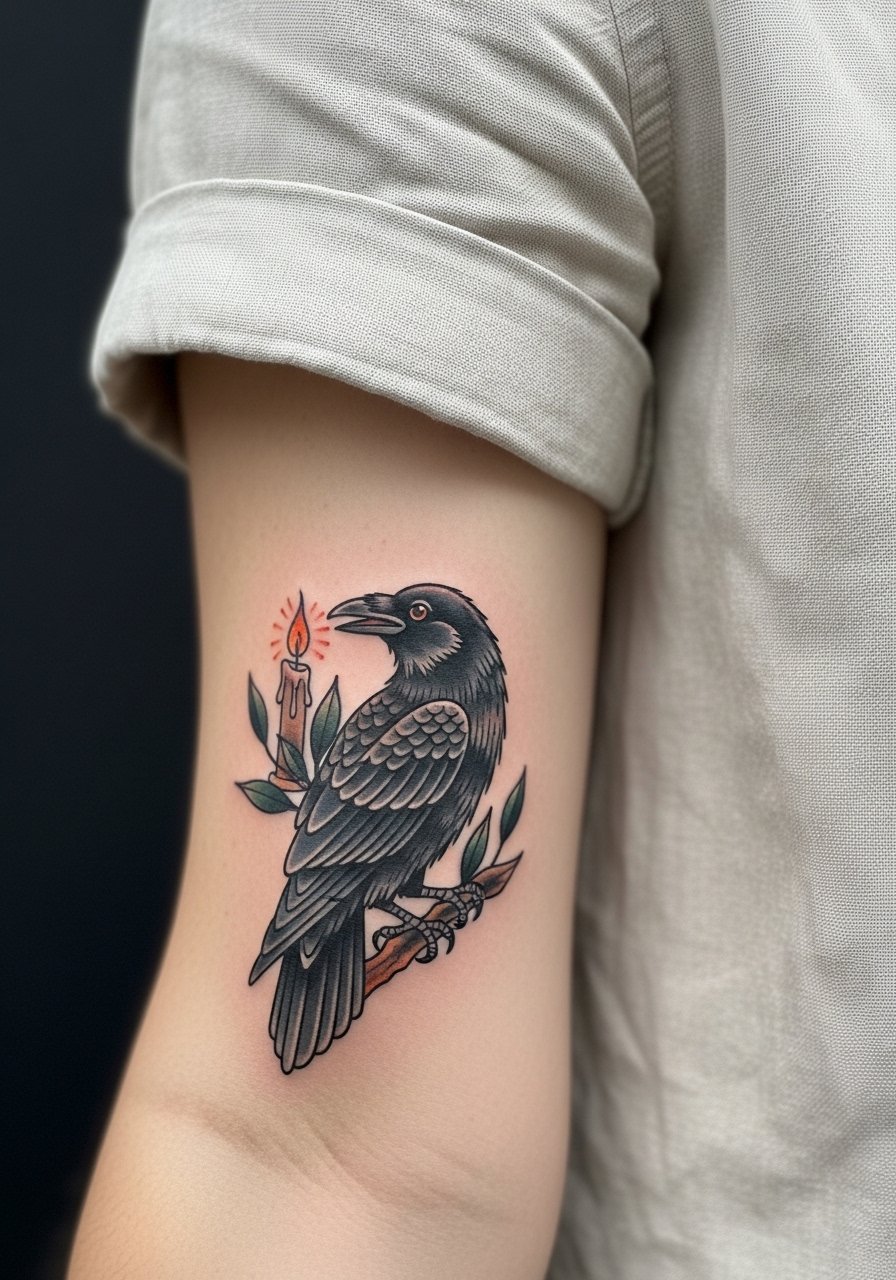
I recommend this when you want a piece that reads from across a room yet still keeps delicate linework up close. Ask your artist for reinforced linework around the beak and candle flame and for stipple shading in the shadows so the texture holds. Fair warning, the inner forearm will bruise more during the session than the outer arm but heals predictably. Blowout risk is low if the artist uses crisp, controlled linework. For showing it off, roll sleeves or wear a short-sleeve linen shirt that frames the forearm without crowding the composition.
2. Stained Glass Bat on Upper Arm
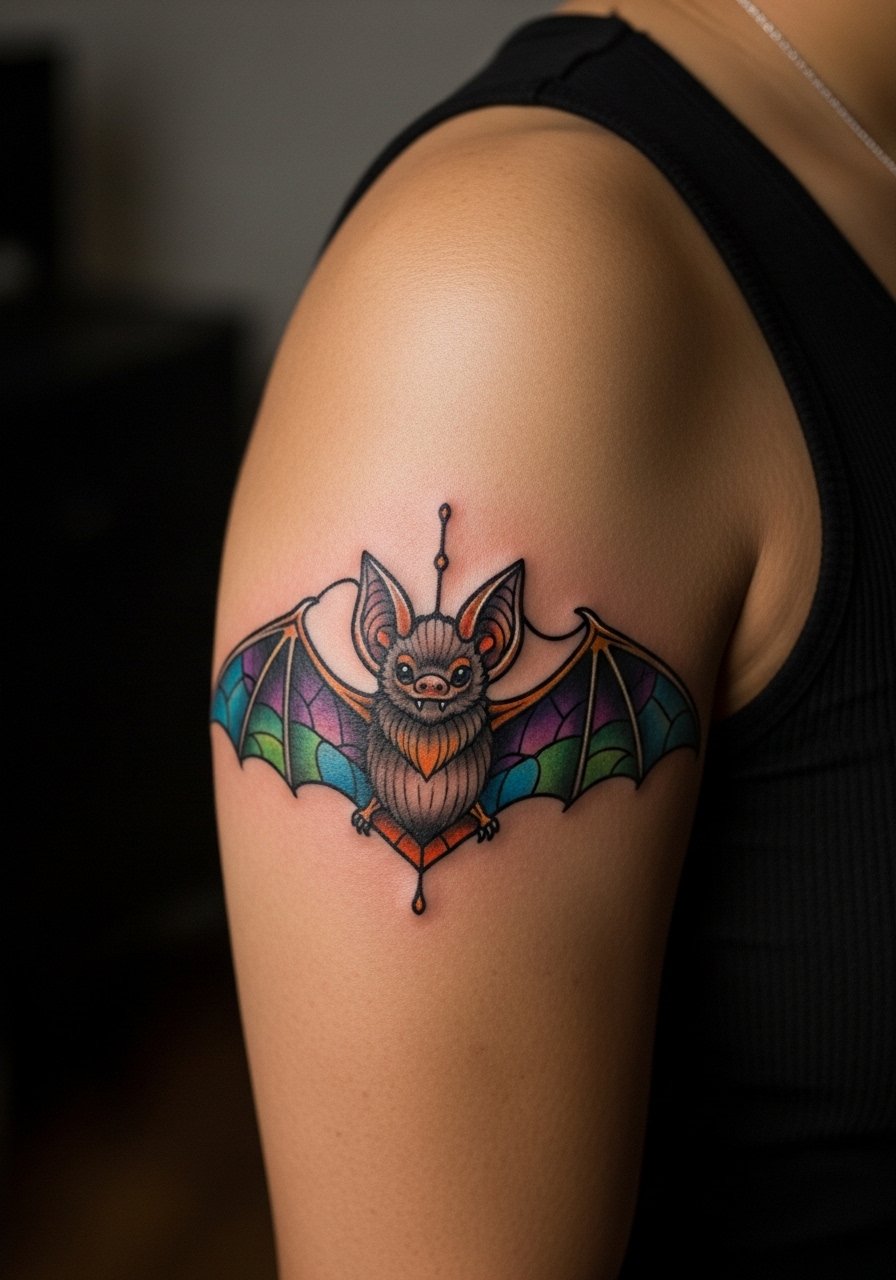
This design is ideal if you like color but worry about saturation fading. Tell the artist to group the color fields with bold black outlines and to avoid tiny color islands that age into muddiness. Sessions are moderate in pain and often finish in one long sitting for a single-arm piece. Expect the colors to soften at six months and then stabilize by year two with occasional touch-ups every few years. Pair it with a racerback tank when you want the shoulder exposed without distracting from the wing shapes.
3. Witch Portrait on Upper Back
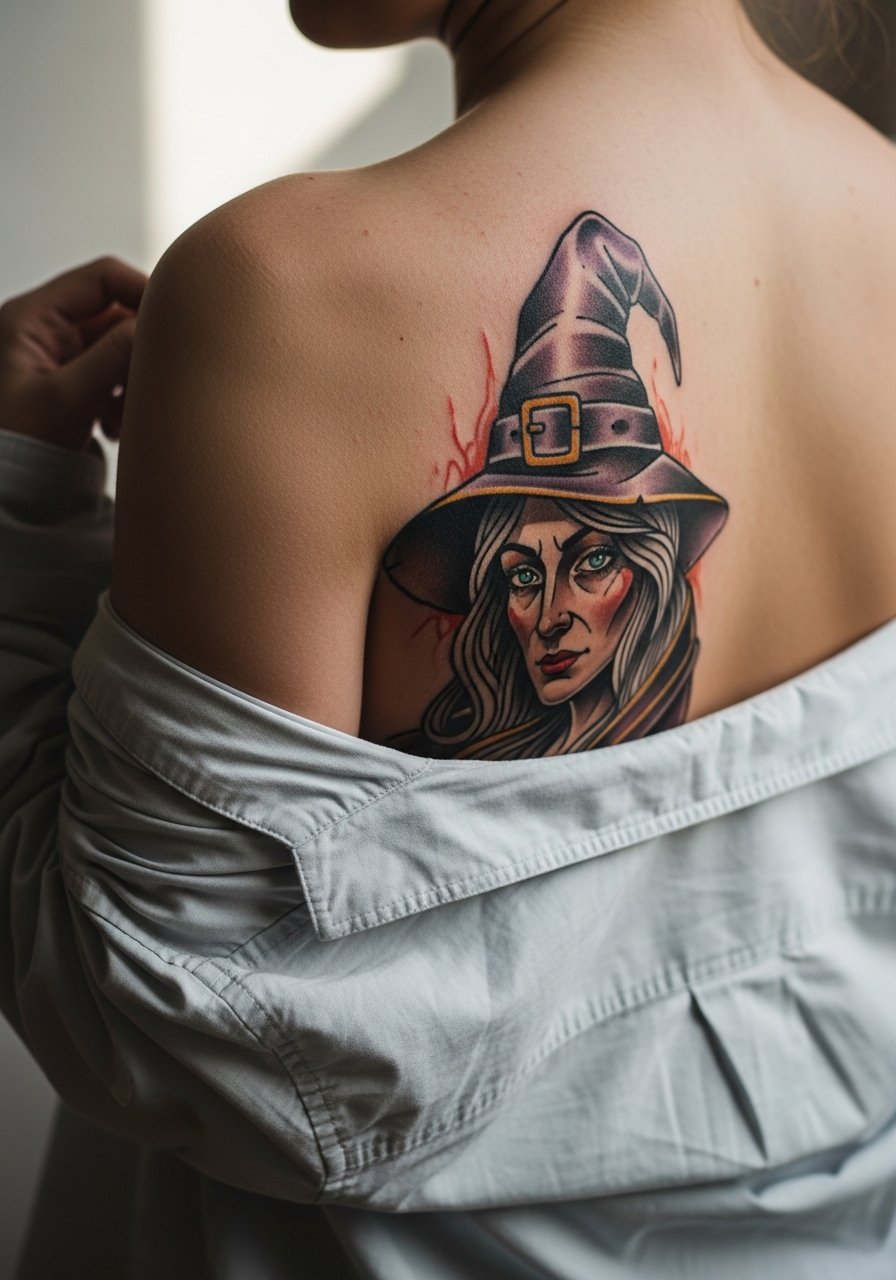
If you want a statement that can be hidden for work, the upper back is smart. During consultation, specify facial expression, eye direction, and how much jewelry or flora should surround the portrait. Large back pieces age well because skin there moves less with daily activity. Session time for a moderate portrait is long, so plan two appointments. For the session wear, choose a loose button-down shirt you can pull aside without rubbing the fresh ink. This placement is forgiving but still requires proper saturation to avoid patchy healing.
4. Thorned Rose Heart on Sternum
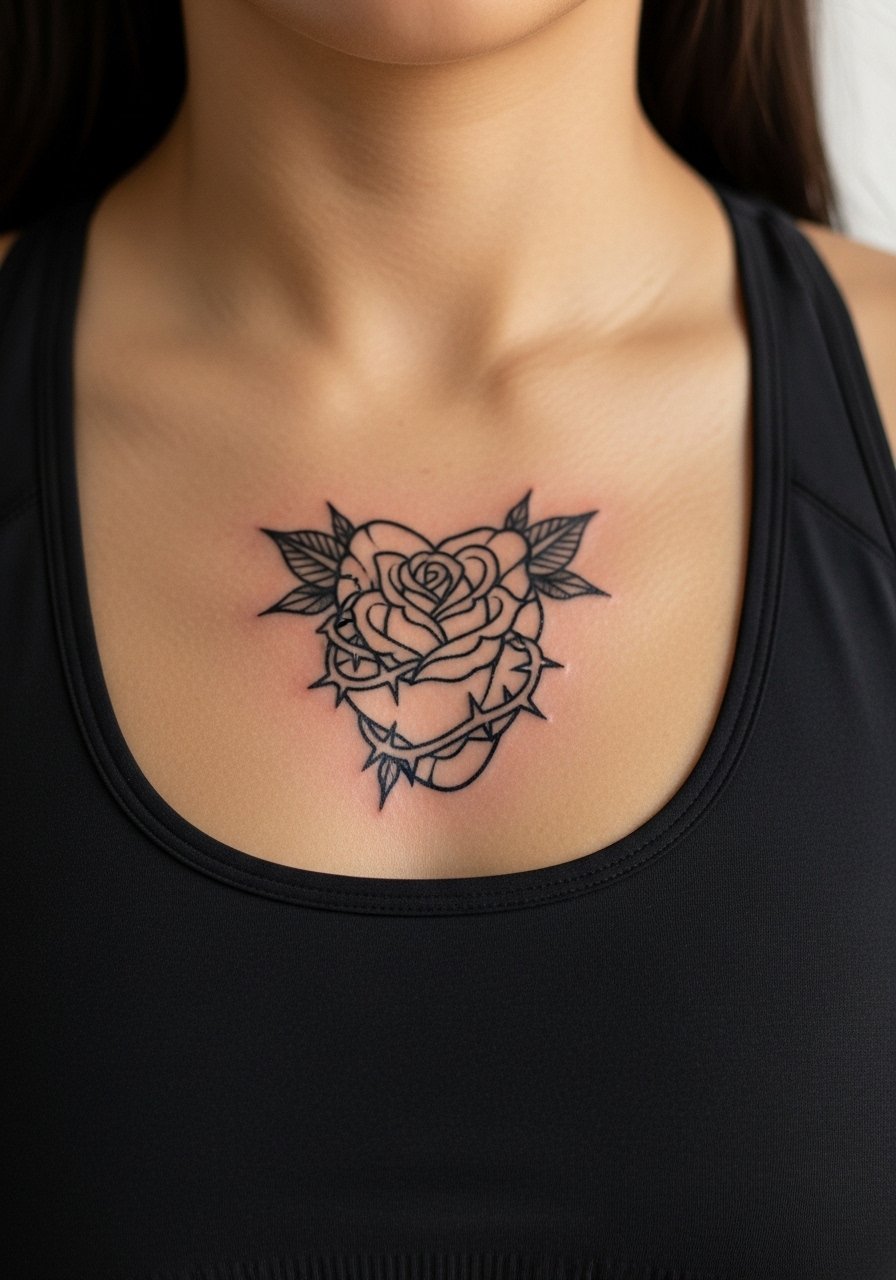
Sternum tattoos read very intimate and they age differently than arm pieces. Be clear with your artist about how deep you want shadowing under the petals so the rose keeps shape as the skin moves. Pain is higher here and sessions can be broken into shorter passes. One common mistake is asking for ultra-fine detail in a tight area. Larger linework with controlled shading holds up better. For wearing out, an open neckline with a thin chain pendant necklace sits above the design and helps frame it without covering the tattoo.
5. Horned Stag with Floral Mantle on Shoulder Blade
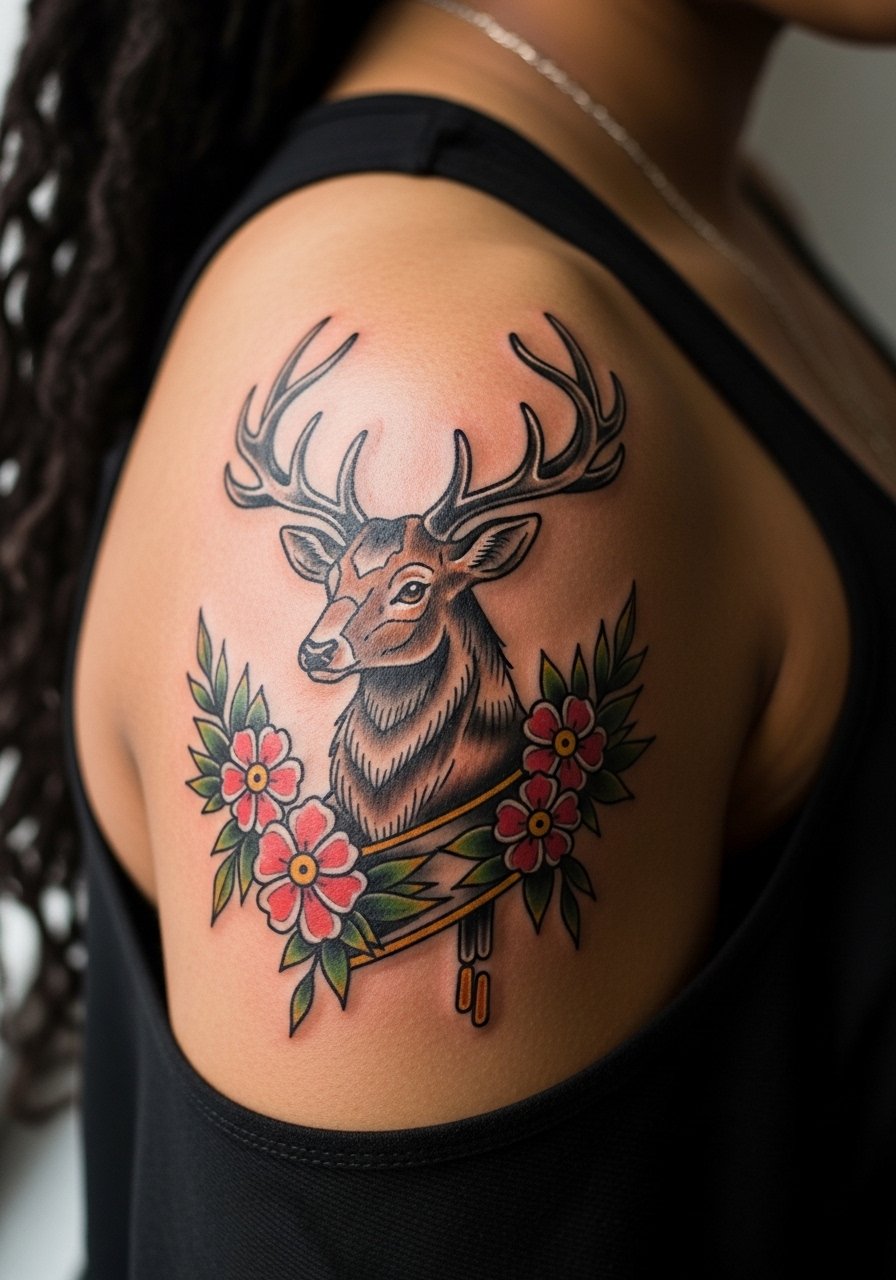
Shoulder blade placement is great for pieces that may grow into a back panel later. Tell the artist you want the antlers to break the silhouette without tiny filigree at the tips. Sessions here are tolerable and usually one or two appointments depending on size. The biggest mistake is overloading the antlers with thin detail that loses clarity when the skin stretches. Styling is easy. Slip into a tank top to show off the shoulder without stressing the healed ink.
6. Crystal Skull on Calf

Calf pieces are visible and age well because the skin is stable and friction is low. For a crystal effect, ask for contrast between deep blacks and small saturated highlights. Sessions feel like steady vibration rather than sharp stingers. A common aging issue is too many tiny facets that blur together over time. For showing it off, wear rolled jeans or a pair of denim shorts that do not rub the area while it heals. Expect a touch-up at year three for peak saturation.
Studio Day Picks
The shoulder, sternum, and calf pieces above each have different prep needs, so these items smooth the session and first week.
-
Stencil transfer paper kit. Lets you test positioning on skin for pieces like the shoulder blade stag and the sternum rose before the first needle touches the skin.
-
Topical numbing cream. Apply as directed before the session to reduce discomfort for sternum and ribcage work without altering the artist's linework.
-
Thin protective film roll. Useful for calf and forearm tattoos during the first few days when jeans and sleeves could rub the area.
-
Fragrance-free body wash. Cleans healing zones like the shoulder and calf without stripping color or irritating sensitive skin.
-
Aquaphor healing ointment. Thin application for the initial days keeps linework moist and helps fine details like the candle flame and antler tips settle.
7. Poisoned Bloom Thigh Piece
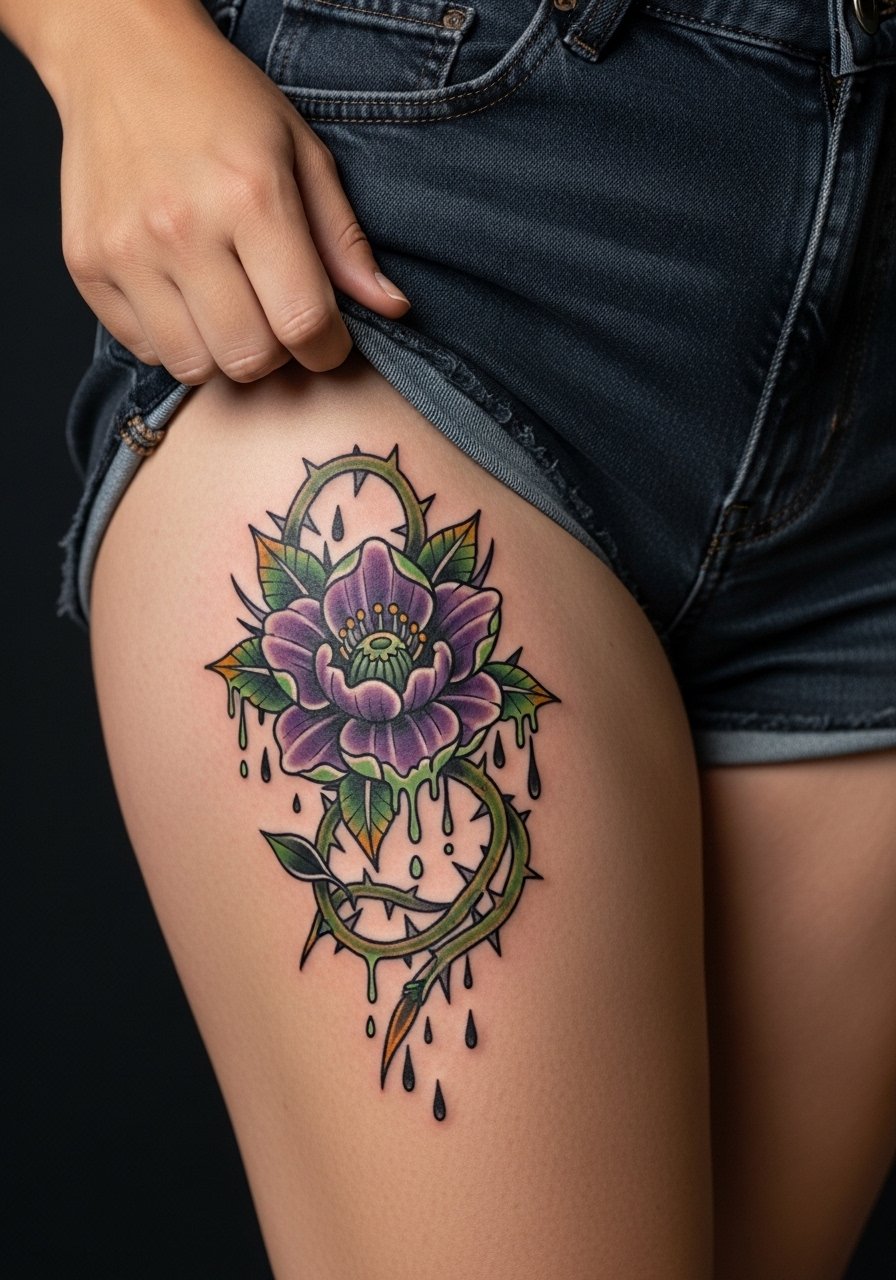
Thigh tattoos are forgiving for scale and detail because the canvas is broad. When you want dramatic color transitions, ask for larger color fields instead of micro gradients that can muddy. Session pain is lower than ribs but expect longer sittings for a detailed thigh piece. A common mistake is compressing too much detail into a small thigh patch. For the appointment, choose loose high-waisted shorts so the artist can access the area without fabric rubbing the fresh ink.
8. Moth with Third Eye on Collarbone
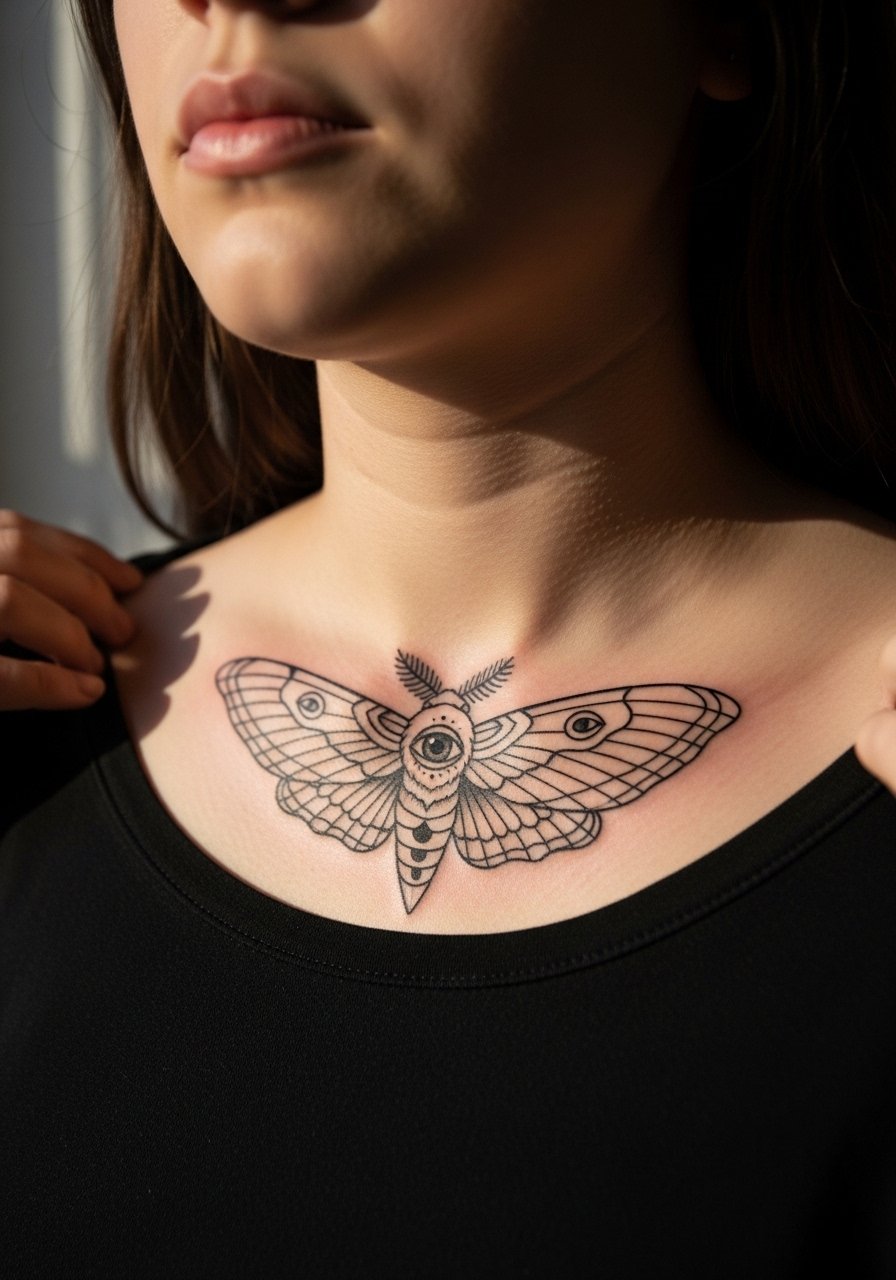
Collarbone pieces are thin and delicate and they read well when paired with jewelry. Tell your artist to avoid placing dense stipple directly over the bone since the linework there can blur as the skin ages. Pain is higher on the bone than nearby soft tissue. For showing off, try an open-neck blouse or a simple choker that complements the moth without covering it. Expect touch-ups sooner than on the calf because the collarbone sees sun and friction from straps.
9. Plague Doctor Mask on Upper Arm

This motif works when you want a theatrical, iconic silhouette that stays readable. During consultation, specify how worn or pristine you want the mask to appear and whether to include surrounding iconography like herbs or clocks. Upper arm skin is resilient and tolerates saturation well. A mistake is packing too much tiny script into the background. For sessions, wear a short-sleeve shirt that rolls easily so the artist can work without fabric interference.
10. Rune-Bordered Pocket Watch on Ribcage
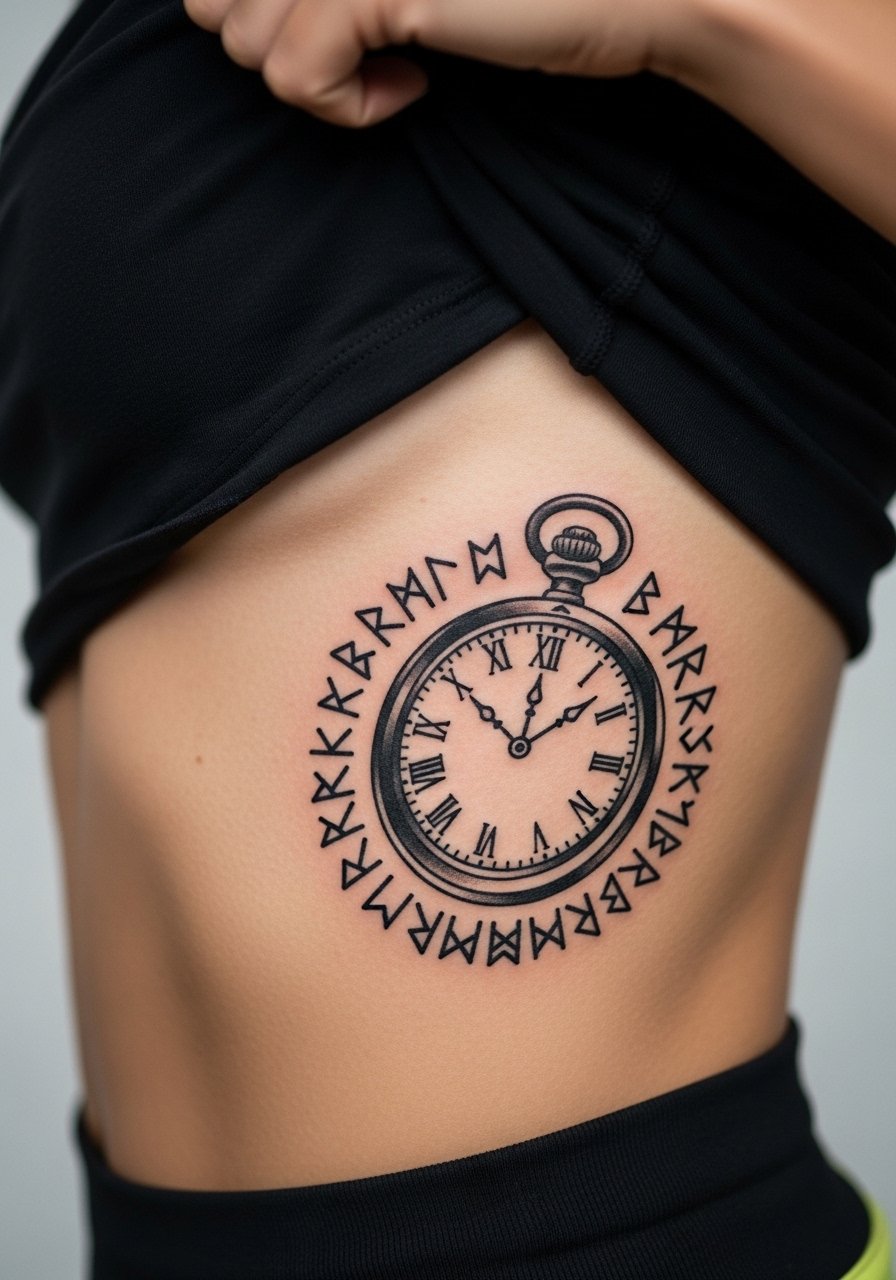
Ribcage work splits artists into two camps. One camp argues that fine line on ribs blurs within a couple of years because the skin stretches and moves. The other camp says that with correct needle depth and spacing the lines settle fine. Ask your artist which camp they fall into and why, and ask to see healed examples on similar skin. Expect higher pain and the need for careful session pacing. For the appointment choose a cropped athletic top so you can reveal the side without full torso exposure.
11. Chained Heart on Wrist
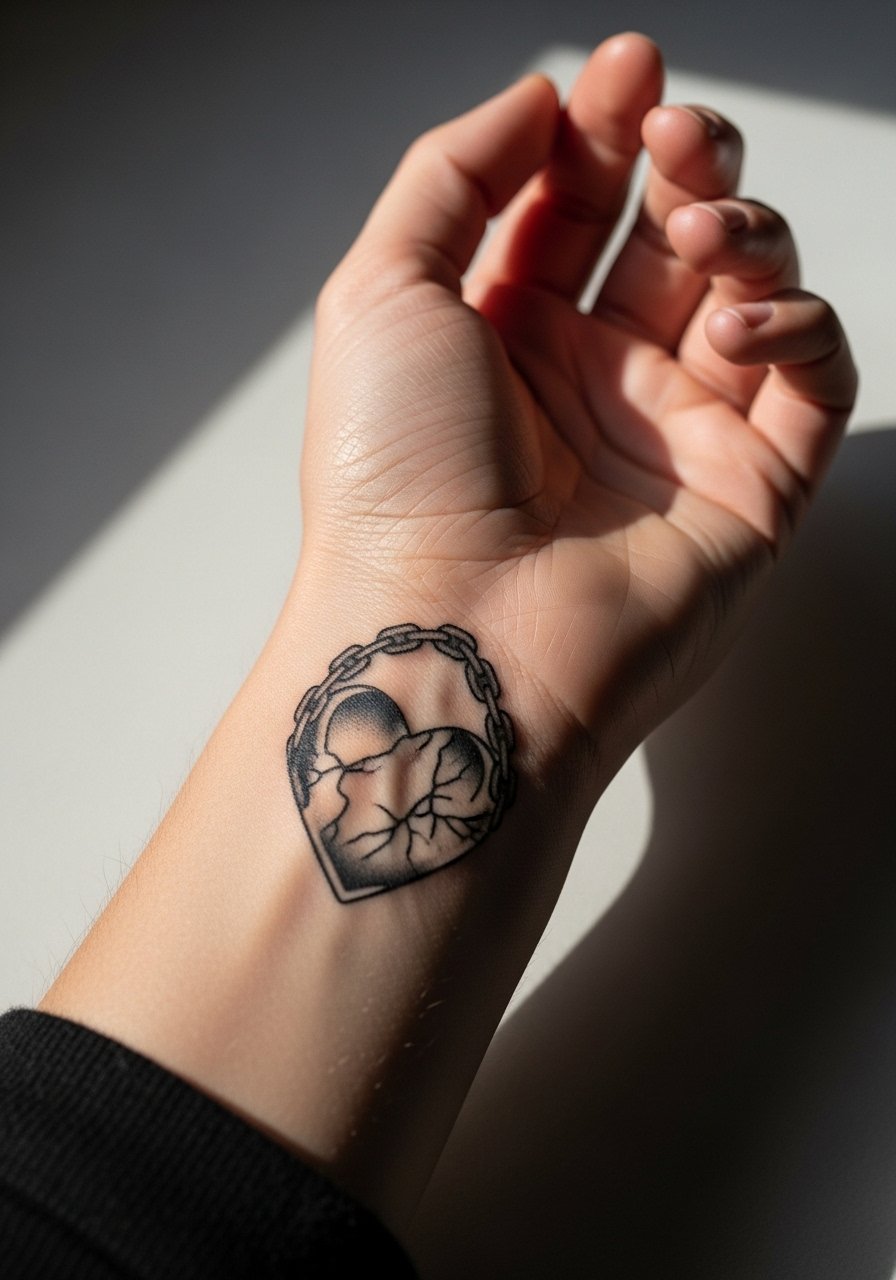
Wrist tattoos are small and visible so line weight matters. When you want a bold symbol without tiny filigree, ask for slightly thicker main lines and soft stipple shading so the heart keeps shape as the skin moves. Pain is low to moderate but healing is subject to constant hand use. Blowout risk increases with too many close parallel lines. For daily style, a thin chain bracelet frames the wrist without crowding the tattoo.
12. Crystal Moth Sleeve Start on Inner Bicep
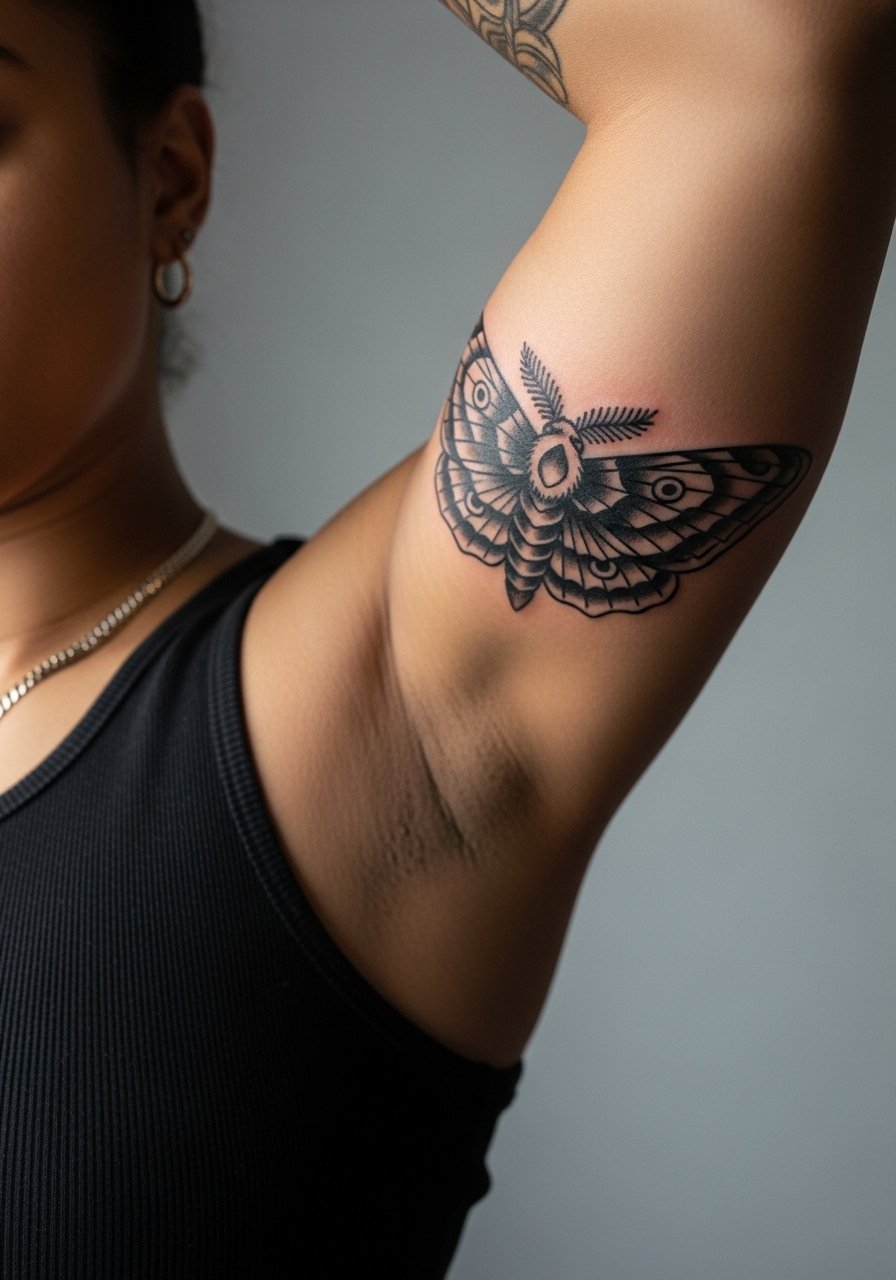
Inner bicep is sensitive and can swell more during sessions, but it is an excellent place to start a sleeve that reads from the side. Tell the artist you want the heavier shading away from the fold to prevent smudging into the crease. A common mistake is packing dense black near the armpit where movement causes abrasion. For the session wear a tank top so the artist can adjust arm position without fabric tugging.
13. Necrotic Fox on Calf Wrap
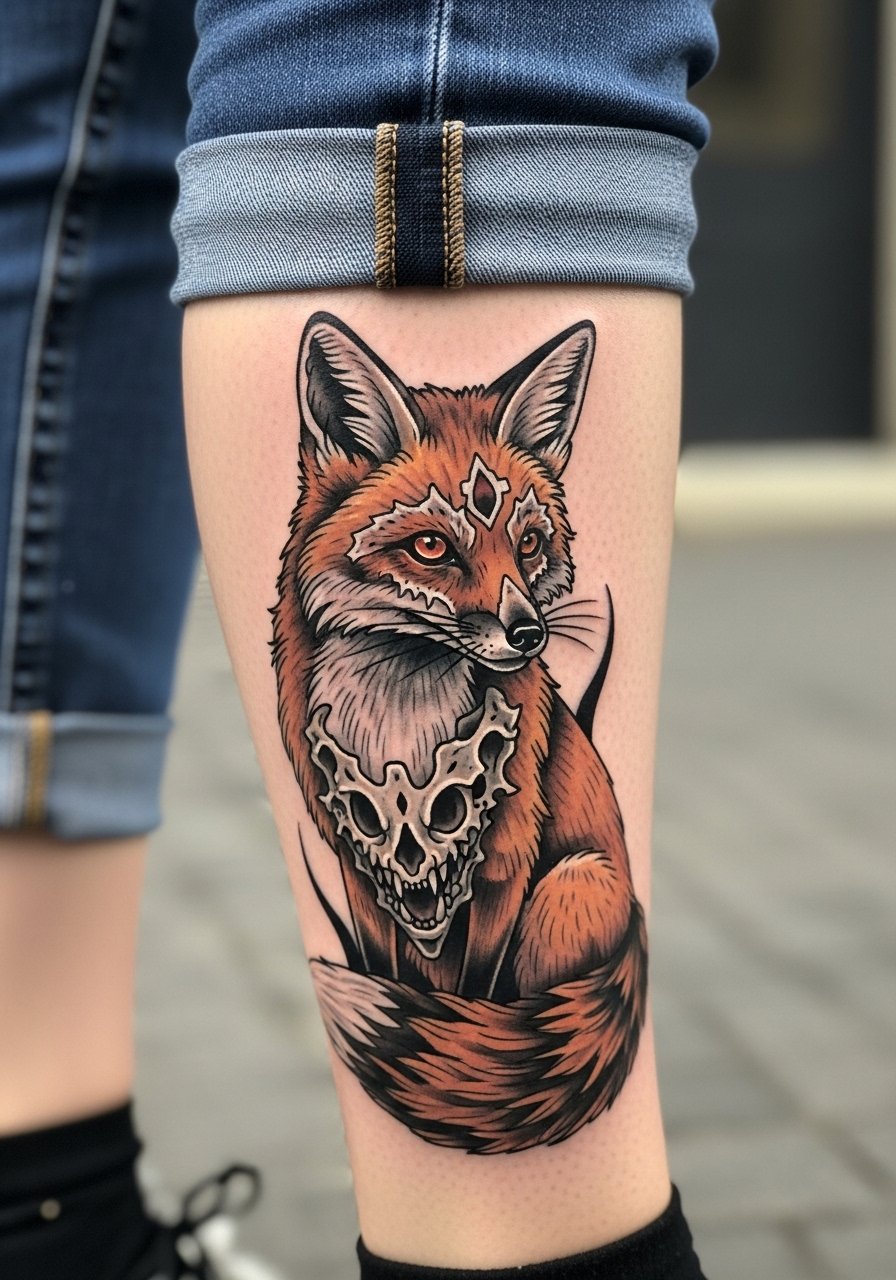
A calf wrap reads like a mini narrative when composed with motion in mind. During consultation specify how much negative space you want so the fox does not disappear into background shading. Sessions are steady and usually one or two sittings depending on wrap complexity. Mistakes happen when artists try to compress too much story into a single session. For showing it off, ankle boots with rolled jeans work better than tight socks that could rub the fresh area.
14. Stained Ivy Collar Tattoo
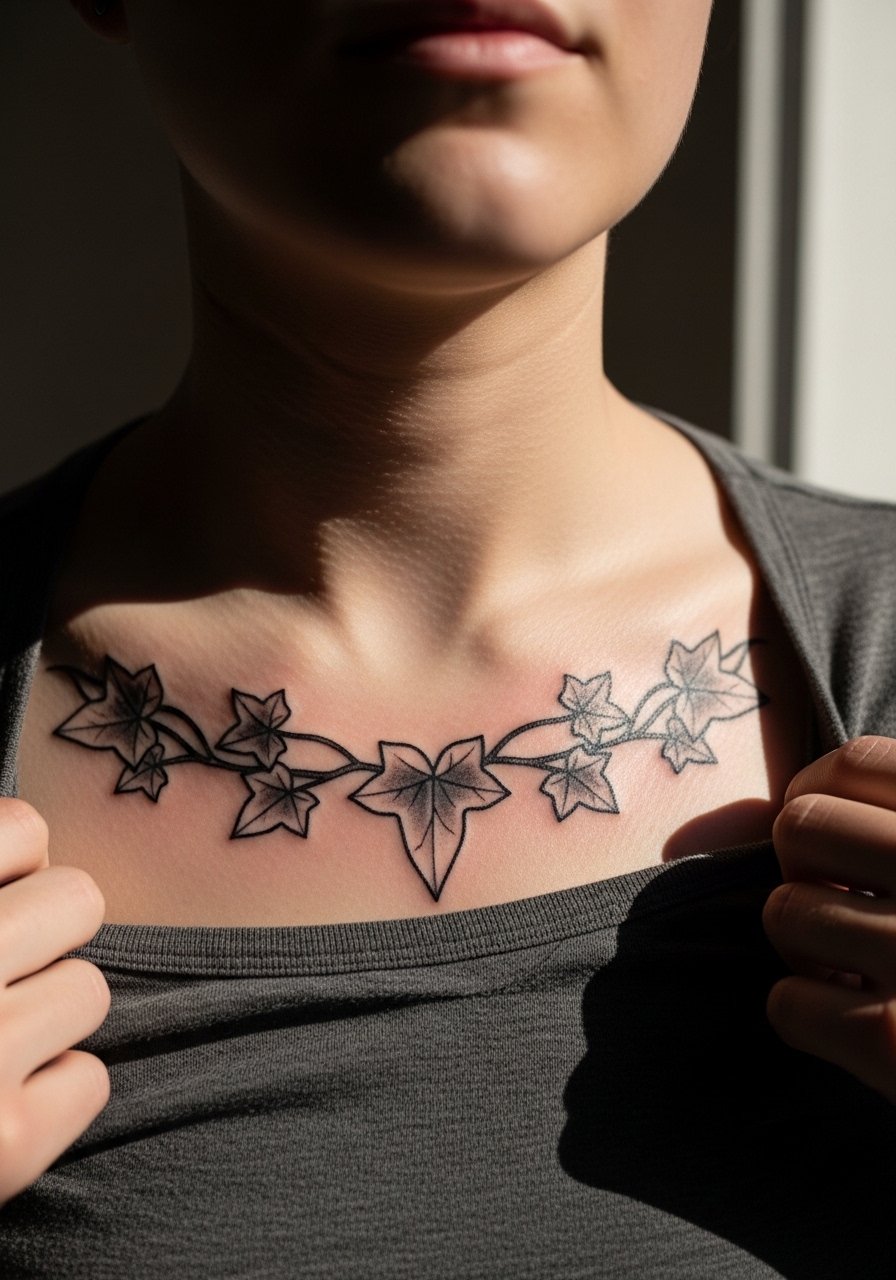
Upper chest pieces can be both subtle and striking. Ask the artist to anchor the ivy stems away from direct collarbone peaks so the leaves keep form with movement. Pain is concentrated across the bone areas so plan for breaks. A styling tip is an open-back midi dress for evenings out that lets the collar tattoo peek without full exposure. Expect touch-ups earlier than on lower-body placements because shirts and sun affect chest tattoos more.
15. Spider Queen on Thigh Inner Side
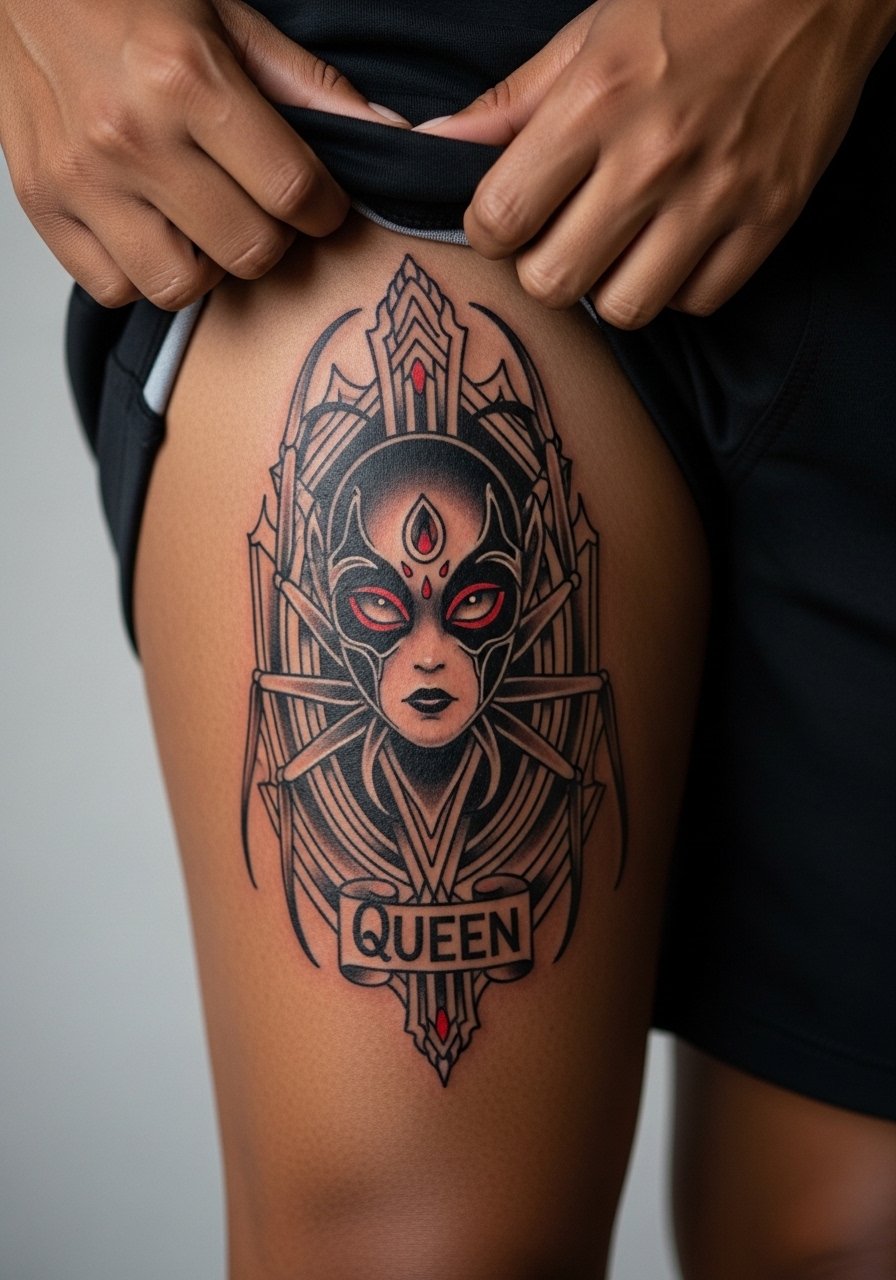
Inner thigh pieces are intimate and require a discreet artist who has experience with that canvas. Tell the artist you want a balance between fine detail and open space for longevity. Sessions involve awkward positioning and a modest pain level. One mistake is asking for ultra-fine textures too close to the groin where friction and moisture can complicate healing. For the appointment pick loose shorts or a wrap skirt so fabric does not press the new ink while you move.
16. Altar Bouquet on Lower Back
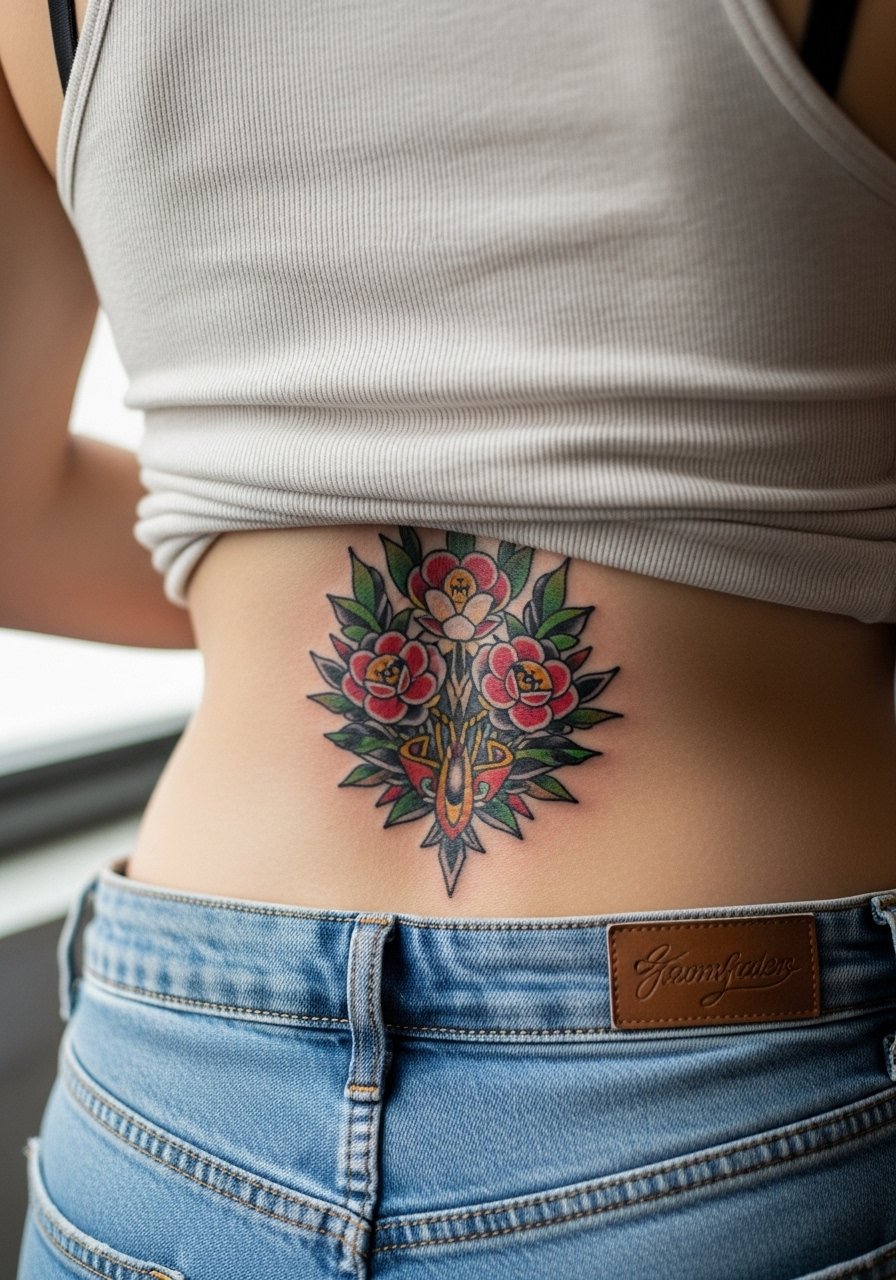
Lower back panels let you combine motifs without visible daily wear. Ask about how the bouquet will look with a future extension into the hip or spine. Sessions can be spread over multiple visits to control soreness. A frequent mistake is using too many tiny highlights that wash out over time. For clothing, a tank top and high-waisted jeans reveal the design without putting pressure on the area during healing.
17. Spectral Wolf Over Rib to Sternum
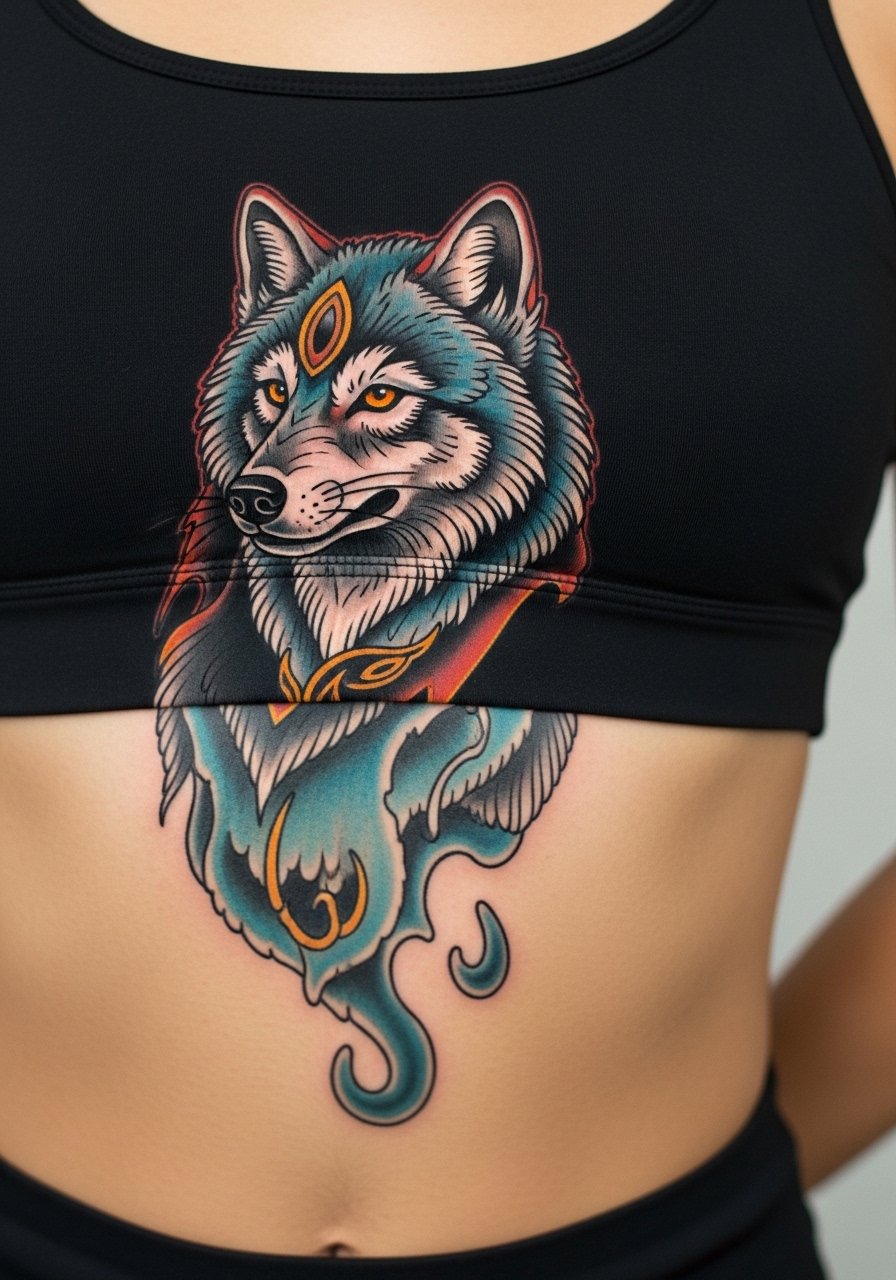
Large pieces across rib and sternum demand a clear conversation about placement and depth. One camp of artists avoids super-fine contouring across this area because of movement and thin skin. The other camp argues that with staged sessions and correct spacing it can read clean for years. Ask to see healed ribs in their portfolio and plan for staged appointments. Pain will be higher and recovery needs patience. For the session wear a sports bra you can loosen slightly without exposing more than the tattoo area.
18. Gothic Castle Sleeve Element on Outer Forearm
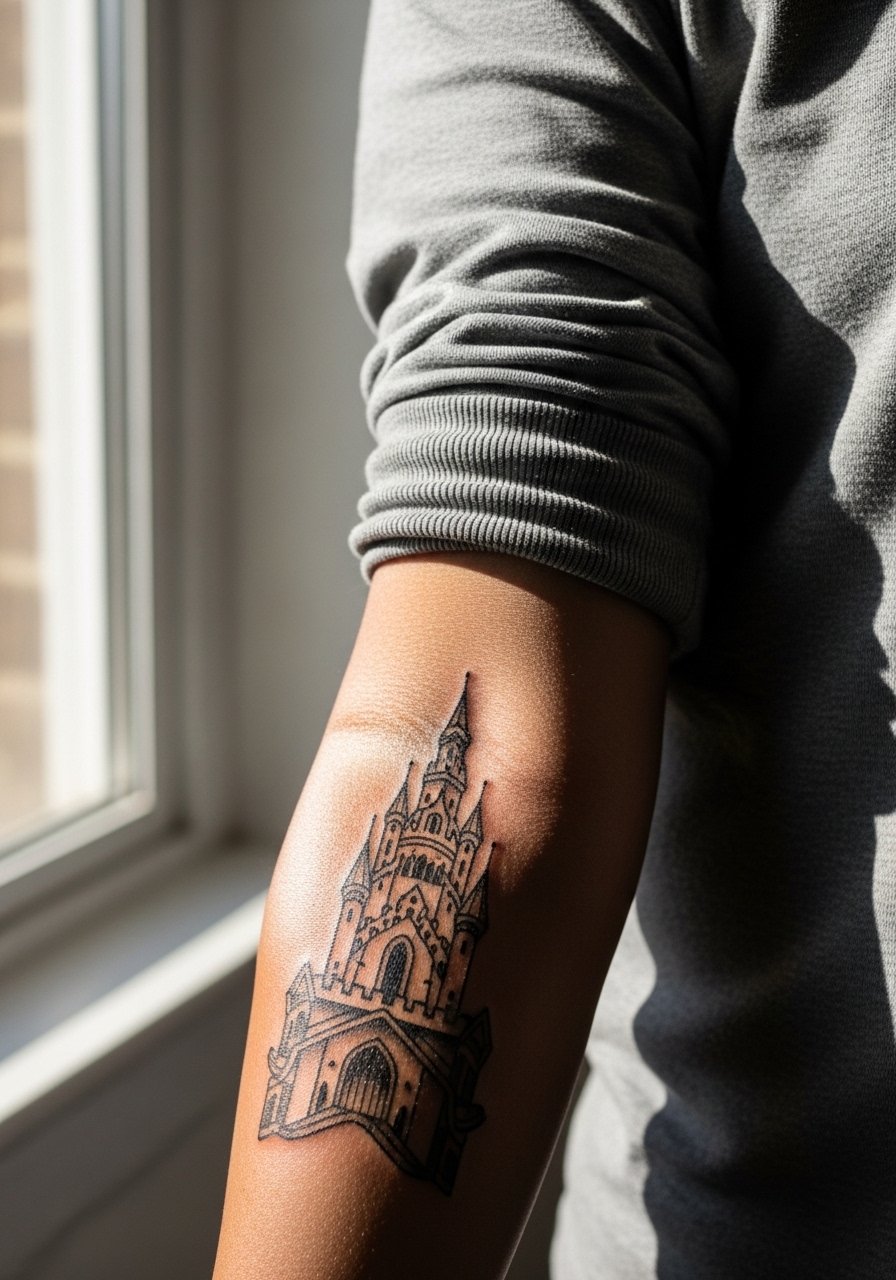
Forearm placements age well if the linework has breathing room. Tell your artist to keep architectural lines bold and to use negative space to suggest windows rather than tiny window panes that will blur. The session feels like steady vibration with occasional sharper passes for deep blacks. A common mistake is over-detailing the skyline in a small forearm panel. For daily style, roll sleeves or wear a long sleeve shirt that can be cuffed to keep the piece visible without constant sun exposure.
19. Black Cat with Crescent Moon on Ankle
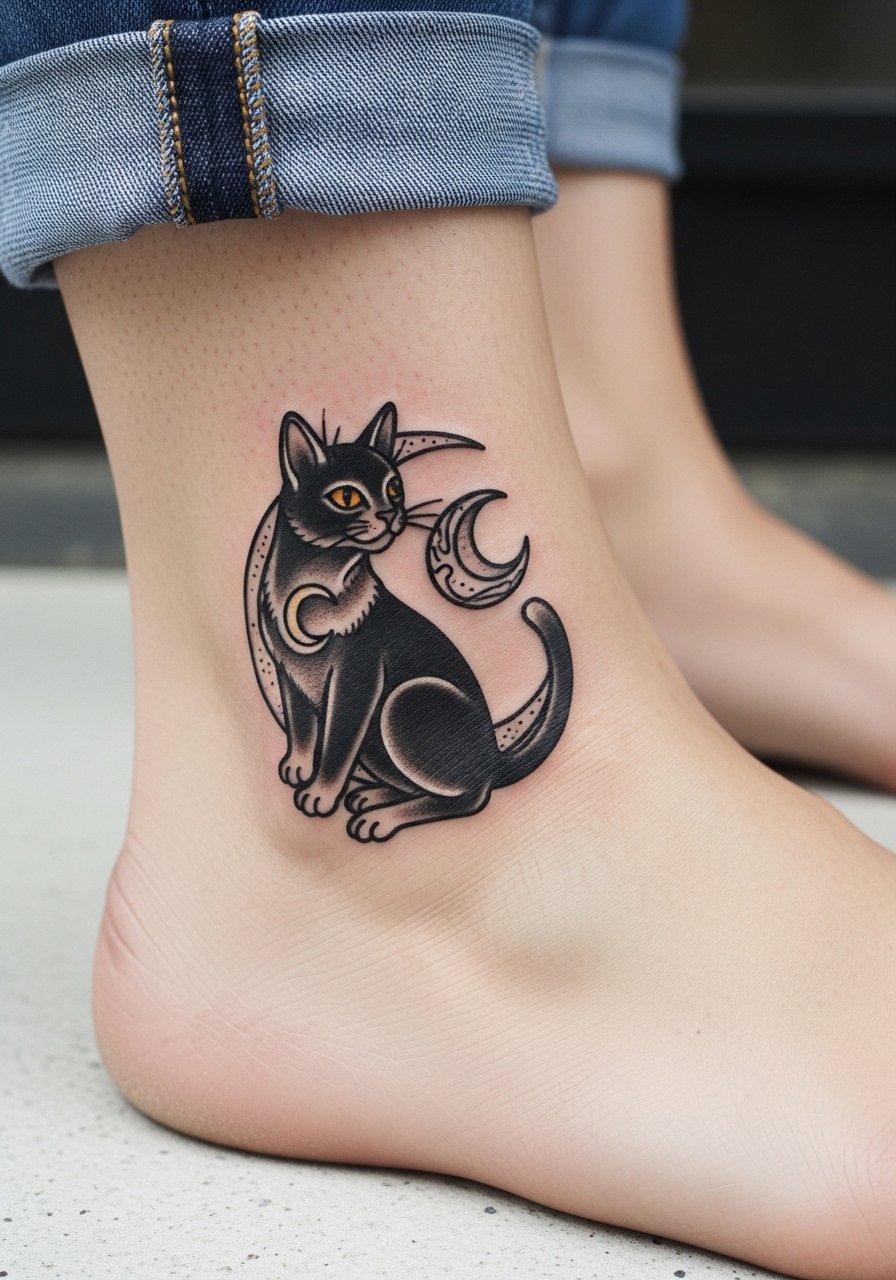
Ankle tattoos are petite and visible so heavier outlines help preserve silhouette. During consult ask for the moon and cat to have defined negative space so they remain legible with shoes and socks. Healing can be irritated by footwear, so plan footwear that limits rubbing. A common mistake is placing too many tiny stars around the cat that fill in. For styling, a pair of sandals or rolled trousers frames the ankle without constant friction.
20. Clockwork Skull on Back of Hand

Hand tattoos are highly visible and can affect workplace perceptions, so consider your career plans before committing. Technically they age faster because of constant washing and sun. Ask your artist about minimizing small parallel lines and focusing on bold shapes that can withstand frequent contact. Touch-ups will likely be necessary within a few years. For showing off, a simple ring or thin stackable rings complements the hand without covering the design.
21. Moon Phases Spine Column
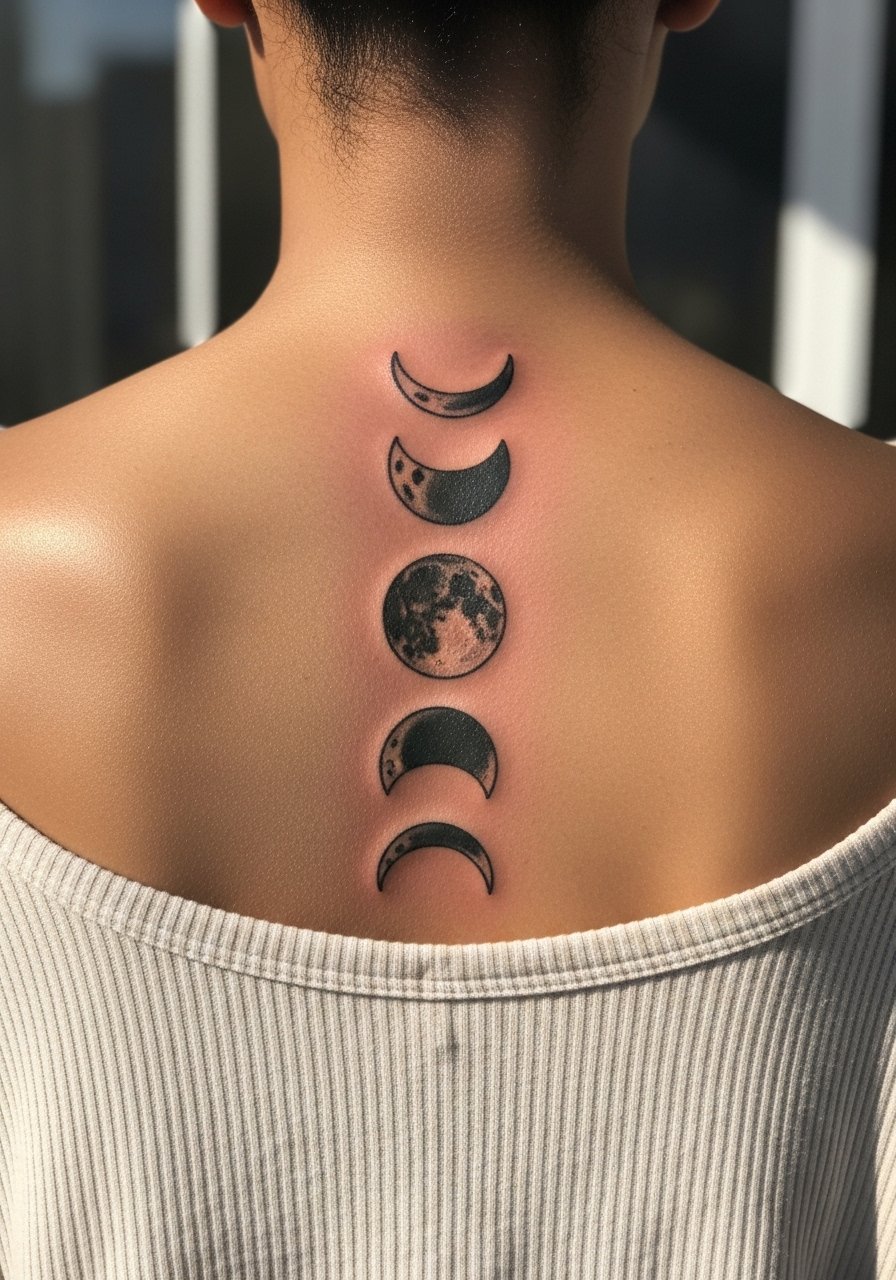
Spine pieces stack nicely into larger back work. Discuss how each moon phase sits relative to vertebrae so the circles do not appear skewed as your posture shifts. Pain can be intense depending on proximity to bone. The common mistake is making the moons too small which causes merging. For seasons when you want the spine visible, a backless top shows the column while still keeping the rest of the back covered.
22. Rune Mandala on Palm of Hand
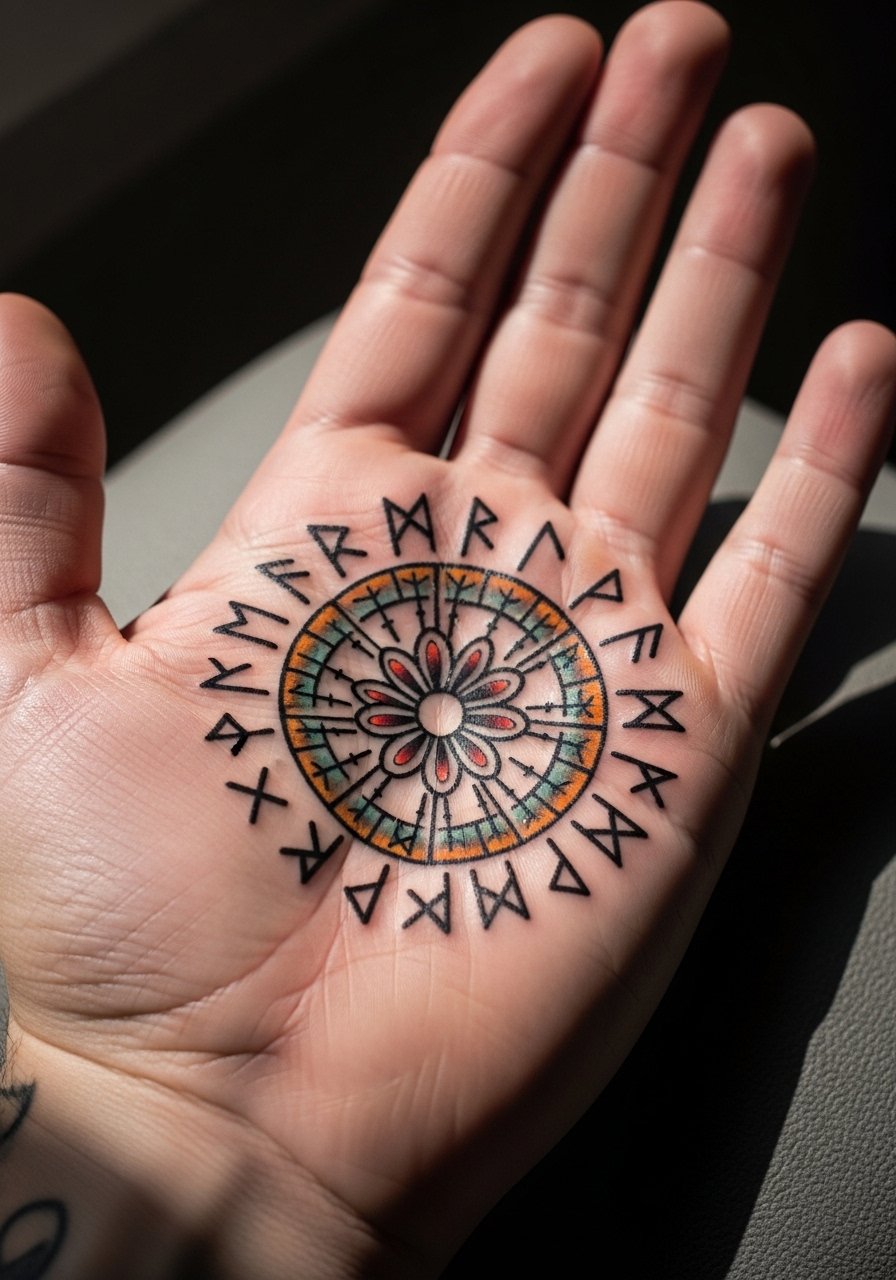
Palm tattoos are experimental and controversial because the skin regenerates faster and ink often fades quickly. One camp says palms are unsuitable for fine detail and rarely hold beyond a couple of years. The opposing camp suggests bolder symbols and thicker lines can persist if you accept eventual touch-ups. If you proceed, keep the mandala bold and simple. Expect frequent touch-ups and discuss maintenance during booking. For day-to-day wear, rings can draw attention away from fading without covering the palm.
23. Thorned Dagger on Inner Wrist
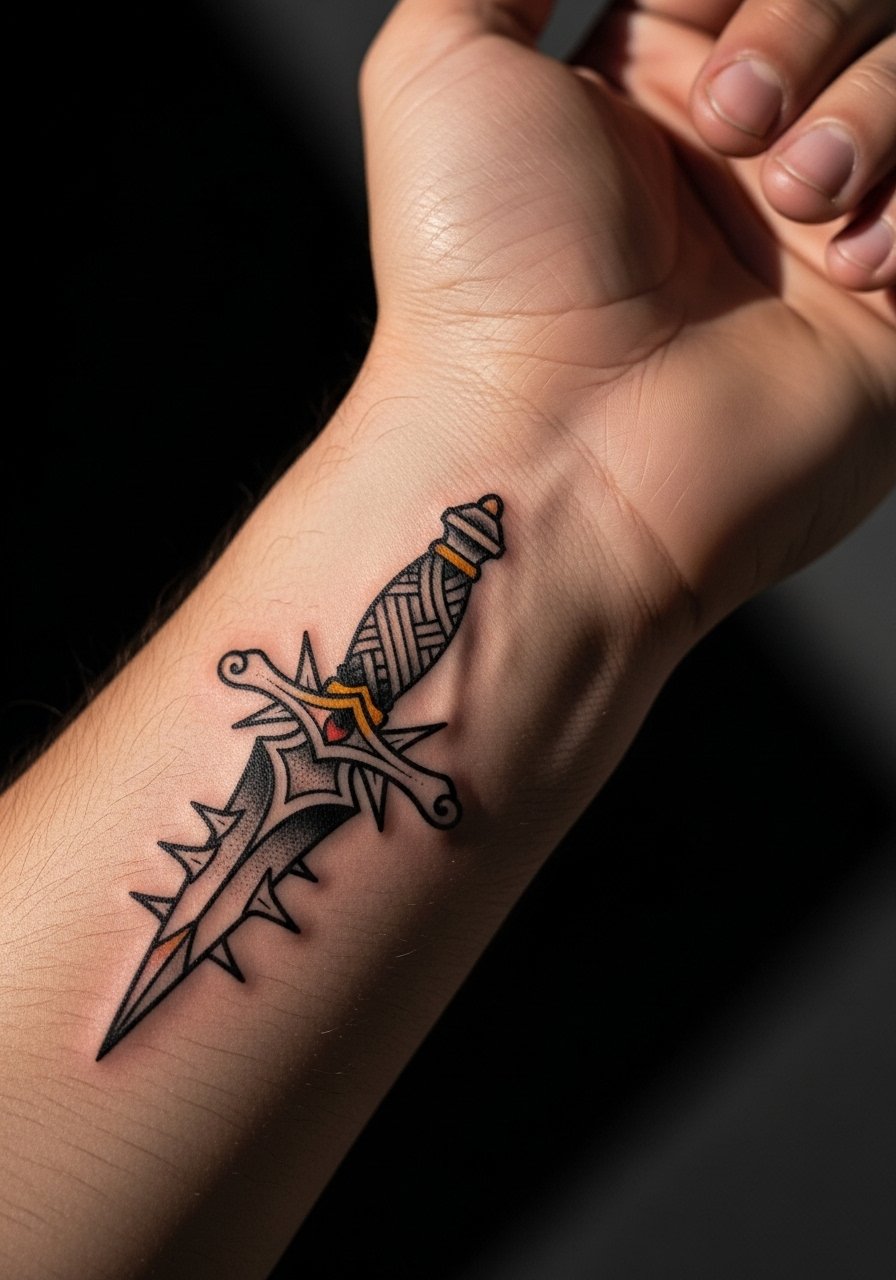
Inner wrist is visible and heals quickly but sees daily flexing. Tell your artist to use slightly thicker spear lines and soft shading to maintain clarity. Sessions are short and tolerable for most people. A mistake is asking for ultra-fine cross-hatching that will settle into a muddy patch. For showing off, try a minimalist watch that complements the dagger without compressing the area during healing.
24. Spectral Owl Over Shoulder Cap
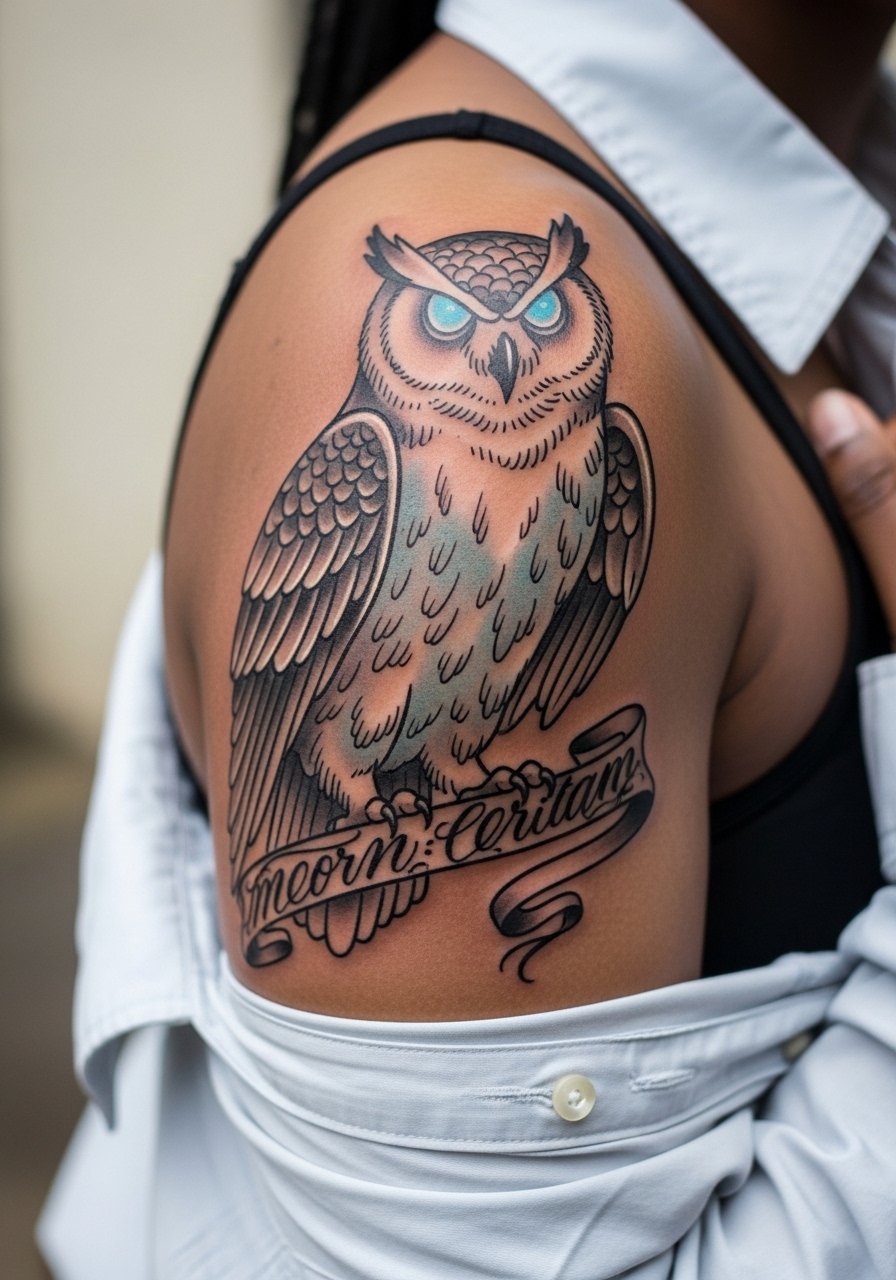
Shoulder cap pieces are wearable and build into larger back or sleeve work later. During consult ask for the owl's wings to be composed with bold feathers rather than tiny feather filigree. Sessions are moderate and usually one or two appointments for a single shoulder piece. The common mistake is crowding the wing edges where movement can break the silhouette. For casual wear, a loose button-down reveals just enough of the owl without stressing the skin.
25. Chained Dagger Thigh Panel

Outer thigh accepts large panels and tends to keep saturation well. For longevity pick bolder outlines and controlled negative space around the chain links. Sessions can be long but comfortable. A frequent mistake is demanding tiny chain links that blur into a single dark line. For the session pick high-waisted bottoms or loose shorts so the artist can access the thigh without the fabric rubbing the new ink.
26. Raven and Candle on Hand Side
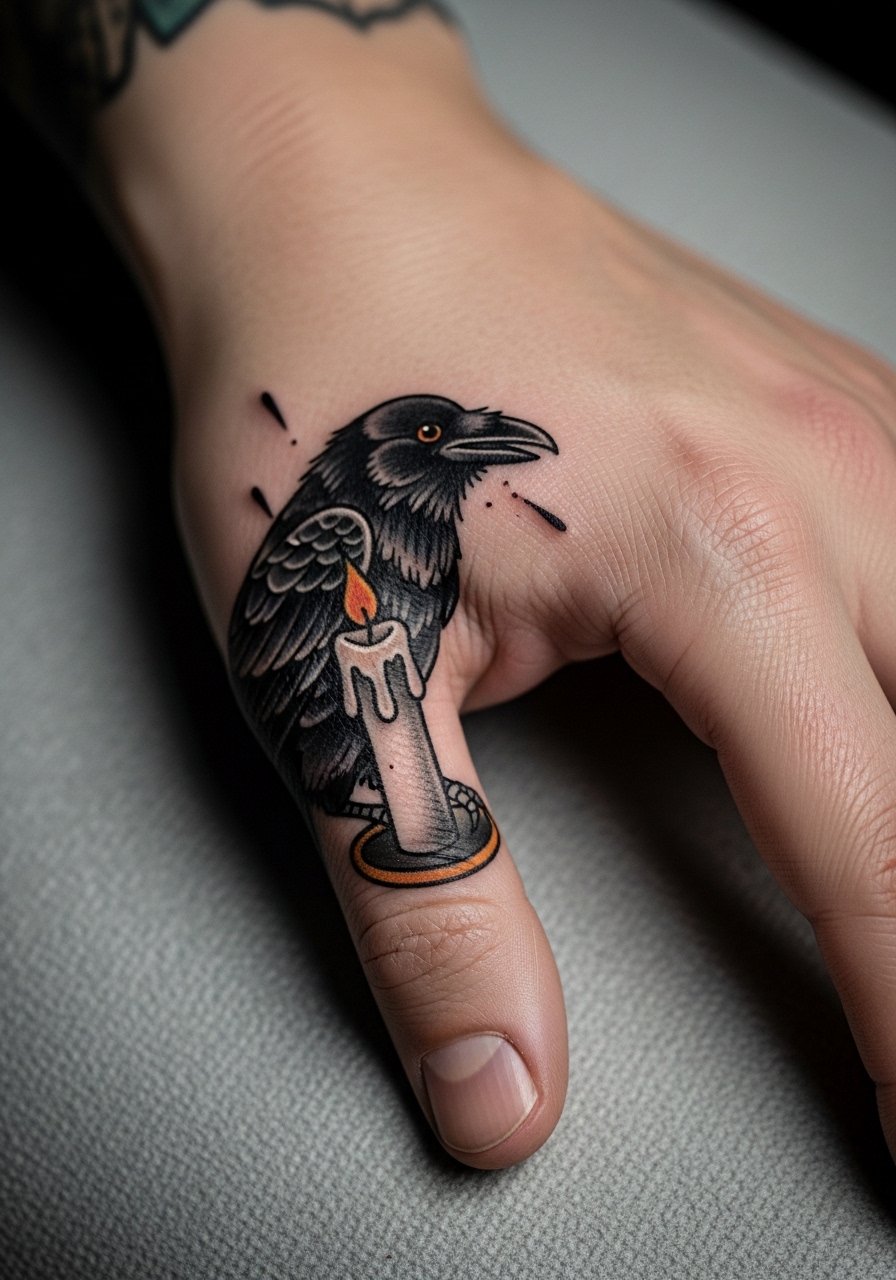
Side-of-hand tattoos are visible and vulnerable to daily abrasion. Ask for pronounced silhouette shapes and avoid narrow parallel lines that fade quickly. Healing requires extra caution with washing. A common mistake is requesting micro detail in a small area that will not last. Simple jewelry like a thin band ring can complement the design without putting pressure on the tattoo during healing.
27. Alchemical Bloom Sternum Panel
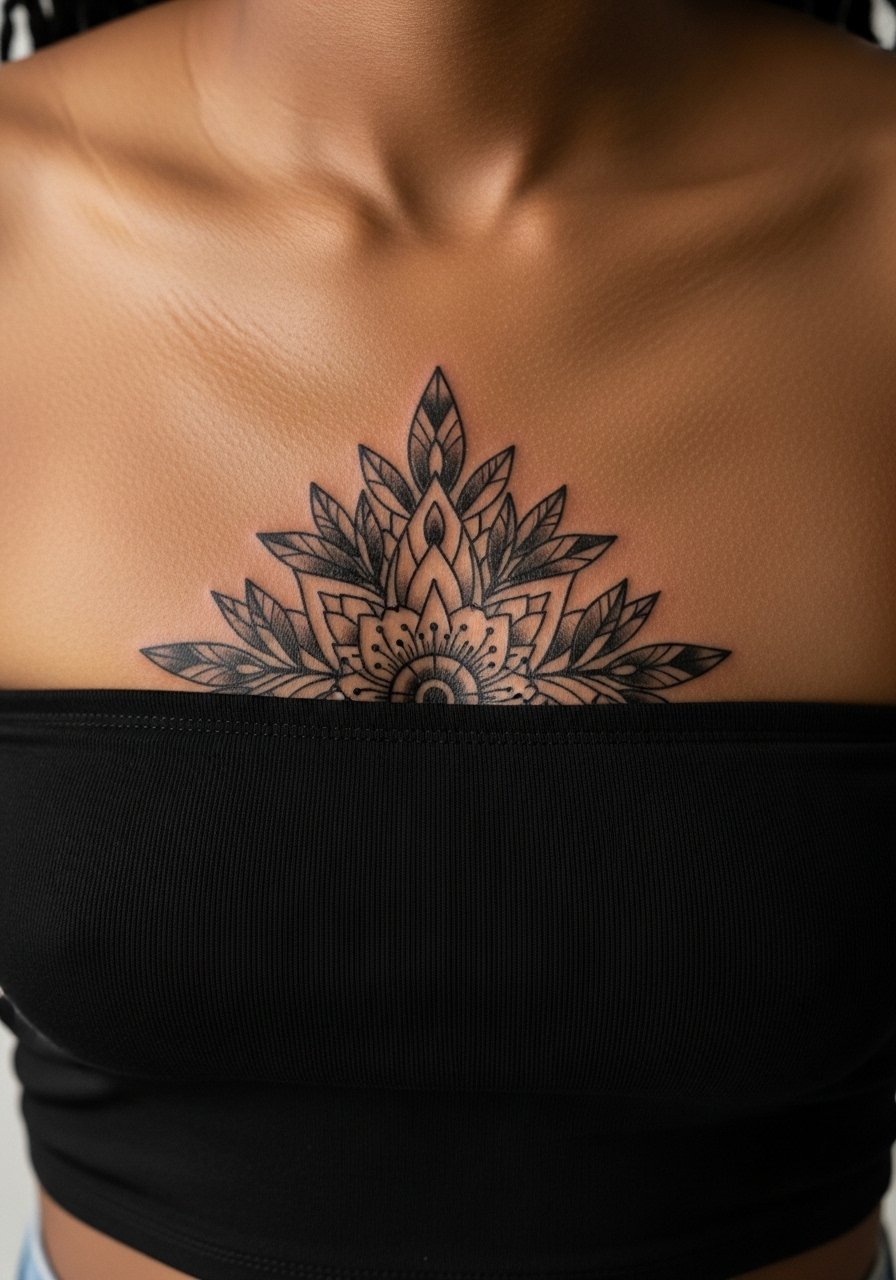
Sternum panels read as intimate statements and need clear discussion about scale and negative space. Tell your artist you want less micro-dot fill over the sternum bone so the central motif keeps shape. Pain is higher and sessions are commonly split into shorter passes to manage discomfort. One mistake is compressing too many symbols into the tight sternum area which makes future touch-ups harder. For the appointment wear a fitted bandeau or sports bra that exposes the sternum without wide fabric movement.
Frequently Asked Questions
Q: Will fine line neo traditional dark fantasy tattoos blur faster than bold blackwork on places like the ribs and sternum?
A: It depends on placement and needle spacing. Fine line tends to require more breathing room and may need touch-ups sooner on high-motion areas like ribs. Many artists split into two camps on this. Ask to see healed examples on similar skin and plan for a follow-up touch-up at year two or three if you favor delicate lines.
Q: How should I prepare clothing-wise for a long session on the thigh or calf?
A: Bring loose shorts or a skirt for thigh work and rolled jeans or loose pants for calf sessions. Comfort matters during long sittings and session wear that allows the artist to access the area without fabric rubbing will make aftercare simpler.
Q: Are sternum and ribcage pieces riskier for color saturation loss compared with upper arm or calf pieces?
A: Yes, those areas see more skin movement and sun exposure if you wear low necklines. Heavier initial saturation and planned touch-ups help, and choosing areas slightly off direct bone reduces the chance of patchiness.
Q: I want a visible hand or wrist piece but worry about work. Any practical options that keep the look without forcing a career change?
A: Consider placements that are visible but easier to hide like the outer forearm or shoulder cap. If you proceed with hand or wrist, keep the design bold and simple so it ages predictably. Rings and bracelets can also shift attention without hiding the tattoo completely.
Q: How often do neo traditional dark fantasy pieces need touch-ups, realistically?
A: From what I have seen, bold blackwork can go four to ten years before needing a refresh. Pieces with fine detail or heavy color in high-friction places often need touch-ups around year two to four. Plan for maintenance if you care about crispness long term.
Q: Where should I look to find an artist who understands neo traditional dark fantasy work without naming or following a specific account?
A: Use discovery pathways like local convention listings, genre-specific hashtag searches, and reputable directory sites. Check healed-work photos in portfolios and ask artists for examples of similar placements during consultation. A shop that handles both saturated color and bold linework across multiple healed pieces is a good sign.
