
Fine line praying mantis designs are all over saved boards, but the neo traditional versions tend to hold visual weight longer while still reading playful and bold. I’ve noticed the combination of thick contour lines and rich, muted saturation keeps the insect’s silhouette clear through touch-ups and normal fading. Start here and you will see options that work across wrists, ribs, sleeves, and places people forget to test under movement.
1. Stylized Praying Mantis on Inner Forearm
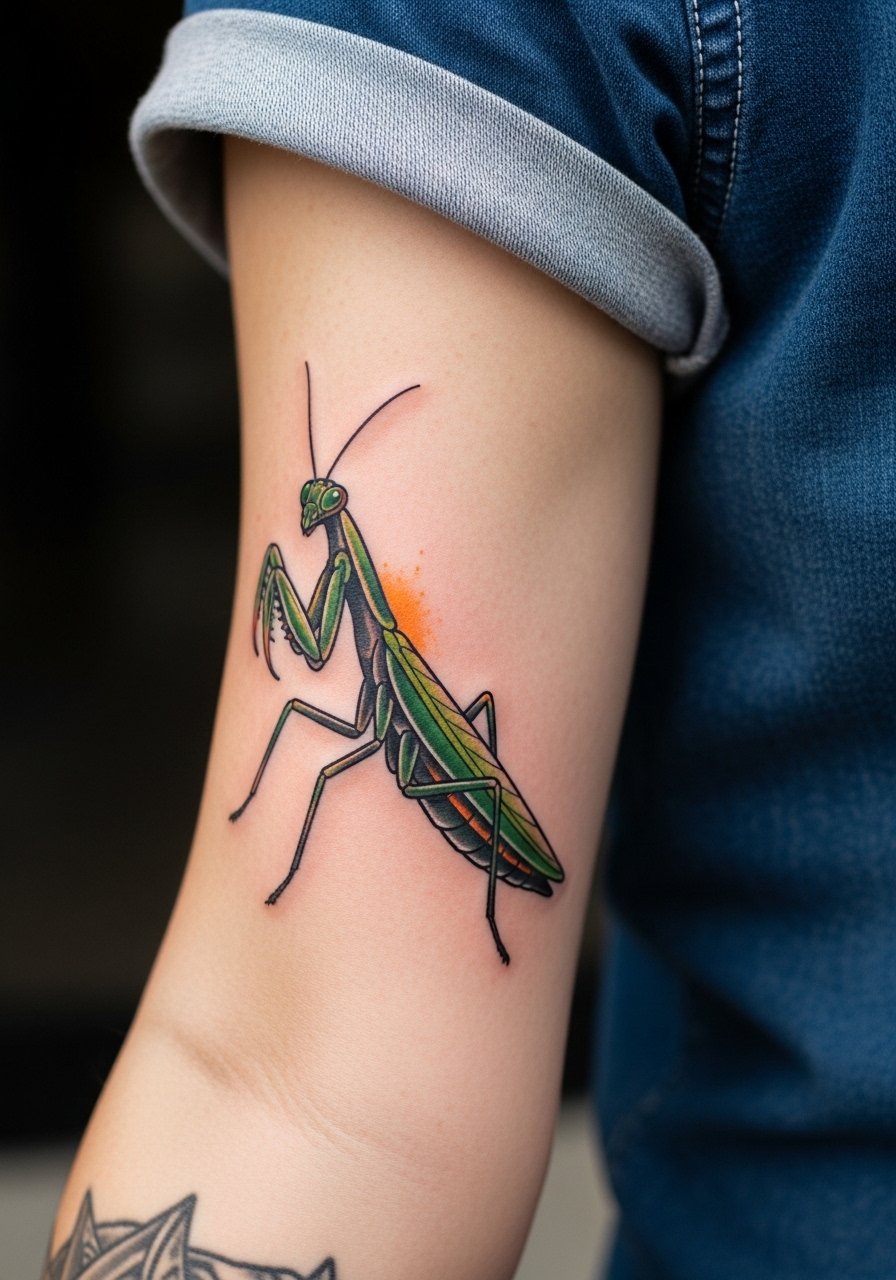
I’ve seen this placement work best when the mantis faces the wrist. The inner forearm avoids extreme stretch so the thick neo traditional outlines age better than fine line versions. Tell your artist you want bold contour linework with stipple shading in the abdomen and a subtle gradient fill, not tiny micro details packed close together. Fair warning, small, fussy legs will blur over time if placed too close to the wrist where skin moves constantly. Pain level here is moderate and a single session of 60 to 120 minutes usually does it. For showing it off, roll up a linen short sleeve shirt that frames the forearm without covering the tattoo.
2. Mantid Bust on the Collarbone
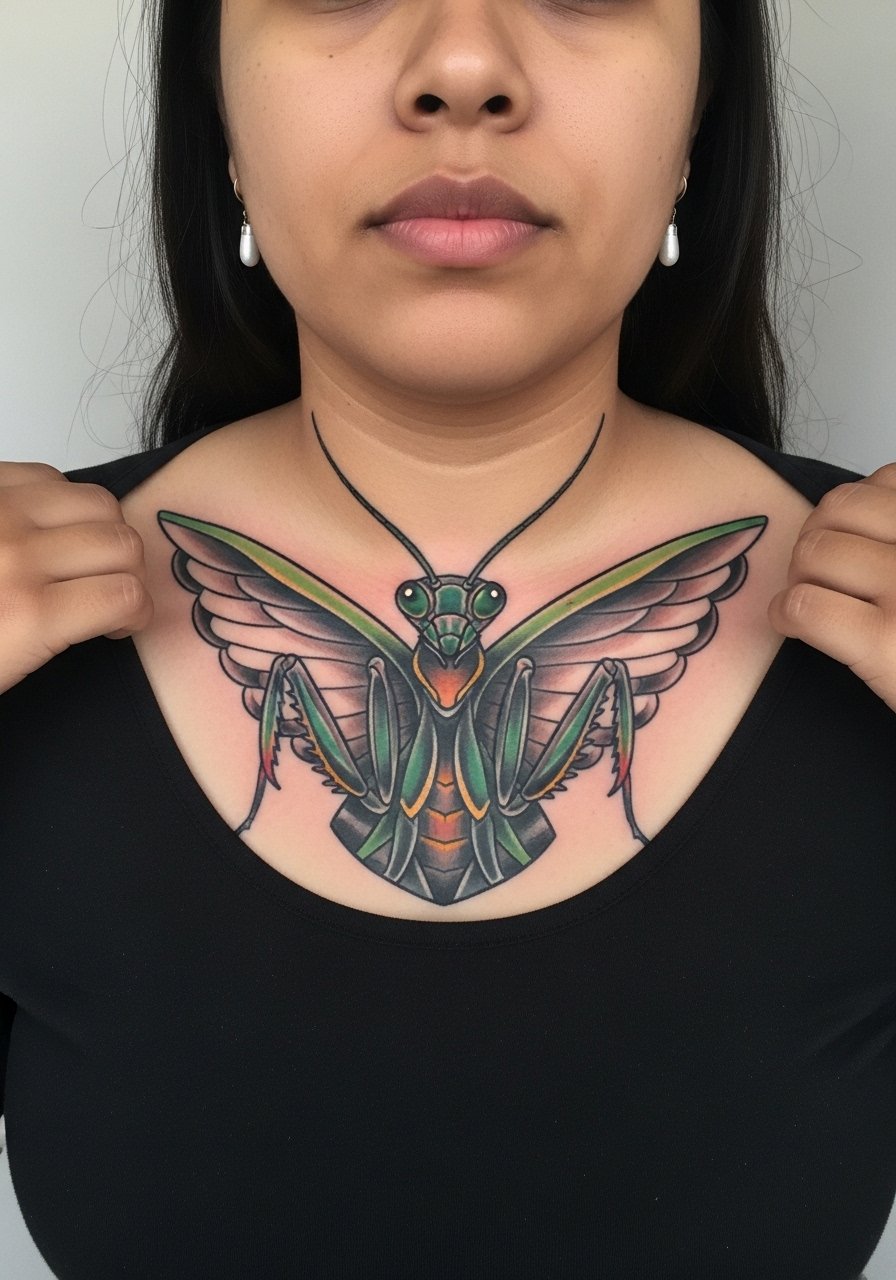
This collarbone placement reads like jewelry when done with strong silhouette lines and measured negative space. The biggest mistake is trying to jam detailed foliage right into the clavicle curve. Ask for simplified leaves and a slightly larger insect to preserve clarity as the collarbone shifts with breathing. Expect a sharp sting and a 45 to 90 minute session. If you want to minimize rubbing during healing, choose a wide-neck blouse you can pull aside without stretching the skin. For people balancing office dress codes, the placement hides easily under blazers.
3. Mini Mantis on the Wrist
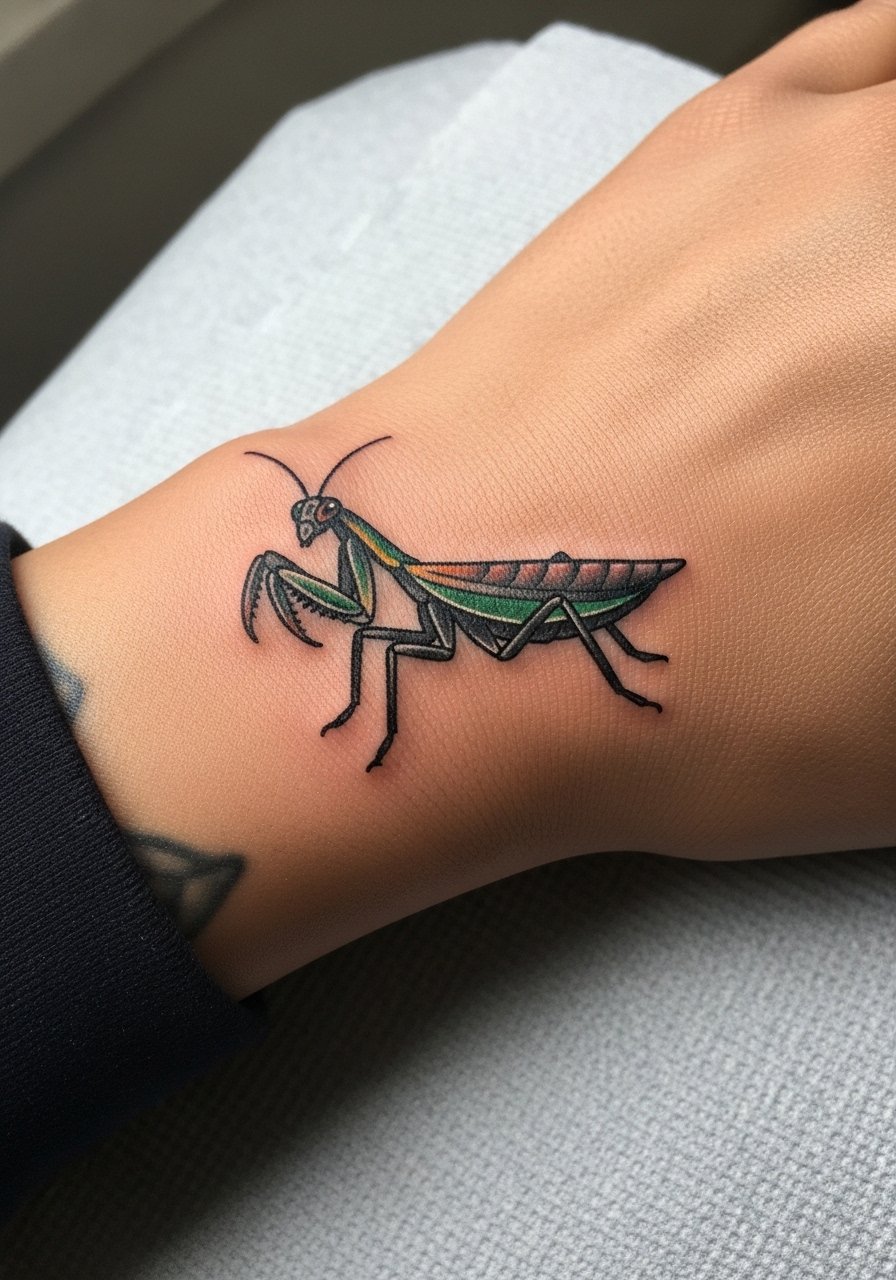
Fair warning, the wrist is a friction zone and it tests neo traditional tiny pieces. Small mantises with thin interior details often need a touch-up by year two. I recommend a compact composition with thick outer linework and solid color panels rather than tiny hatch shading. Tell your artist to avoid ultra-fine internal veins in the legs. Pain is lower here but aftercare matters because of constant hand washing. For showing off the piece, stacked dainty bracelets can frame the tattoo, so consider a thin chain bracelet set that complements the green and gold palette.
4. Full-Shoulder Mantis With Floral Frame
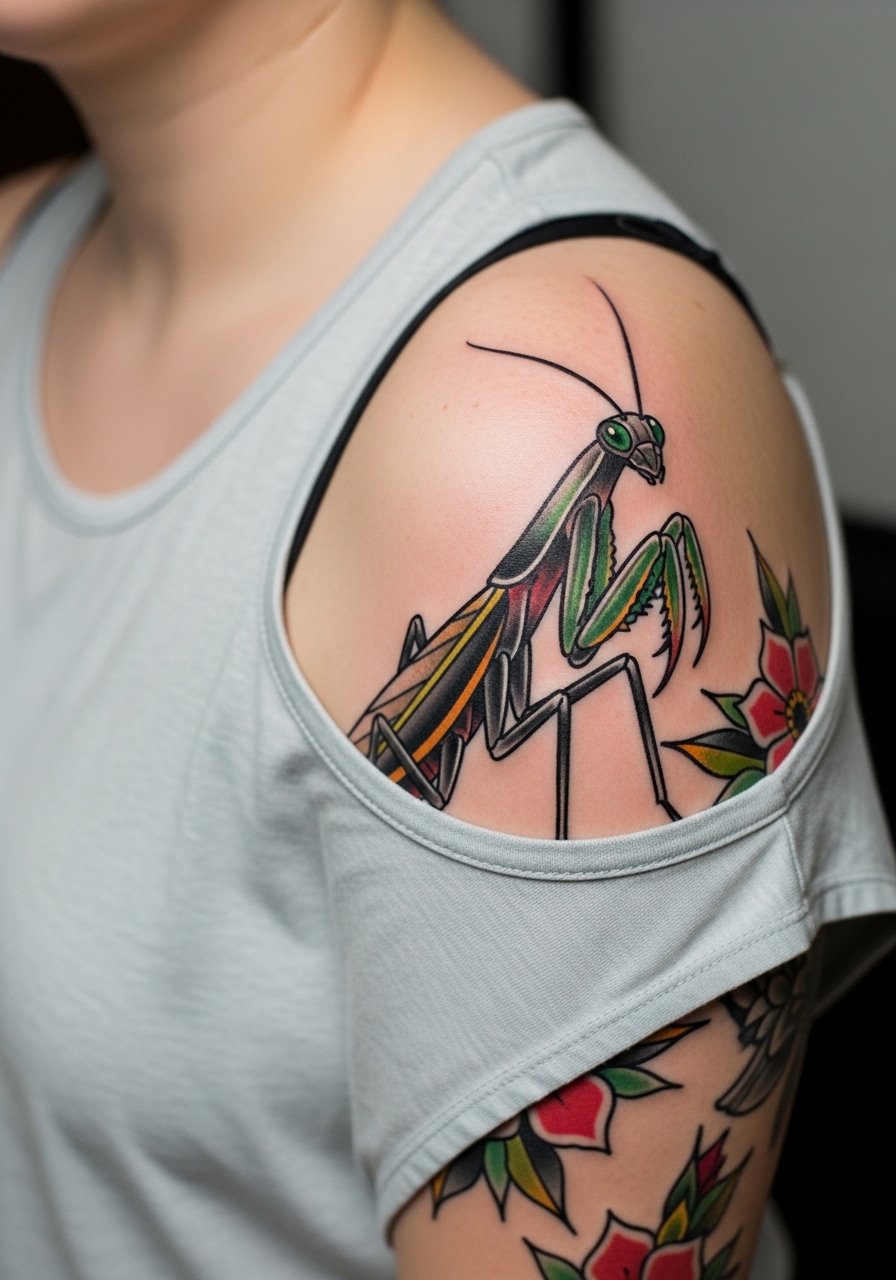
There is a debate among artists about how much negative space a shoulder piece needs. One camp says dense ornamentation gives neo traditional designs character. The other camp argues shoulders need breathing room to prevent muddiness when you move. I lean toward measured floral framing and clear silhouette, especially for the mantis's angular forelegs. Sessions run longer here, often two to three hours, and you may feel sharp spots near the bone. During the appointment wear a loose tank top so the artist can access the shoulder without you getting cold.
5. Ribcage Mantis With Geometric Backdrop
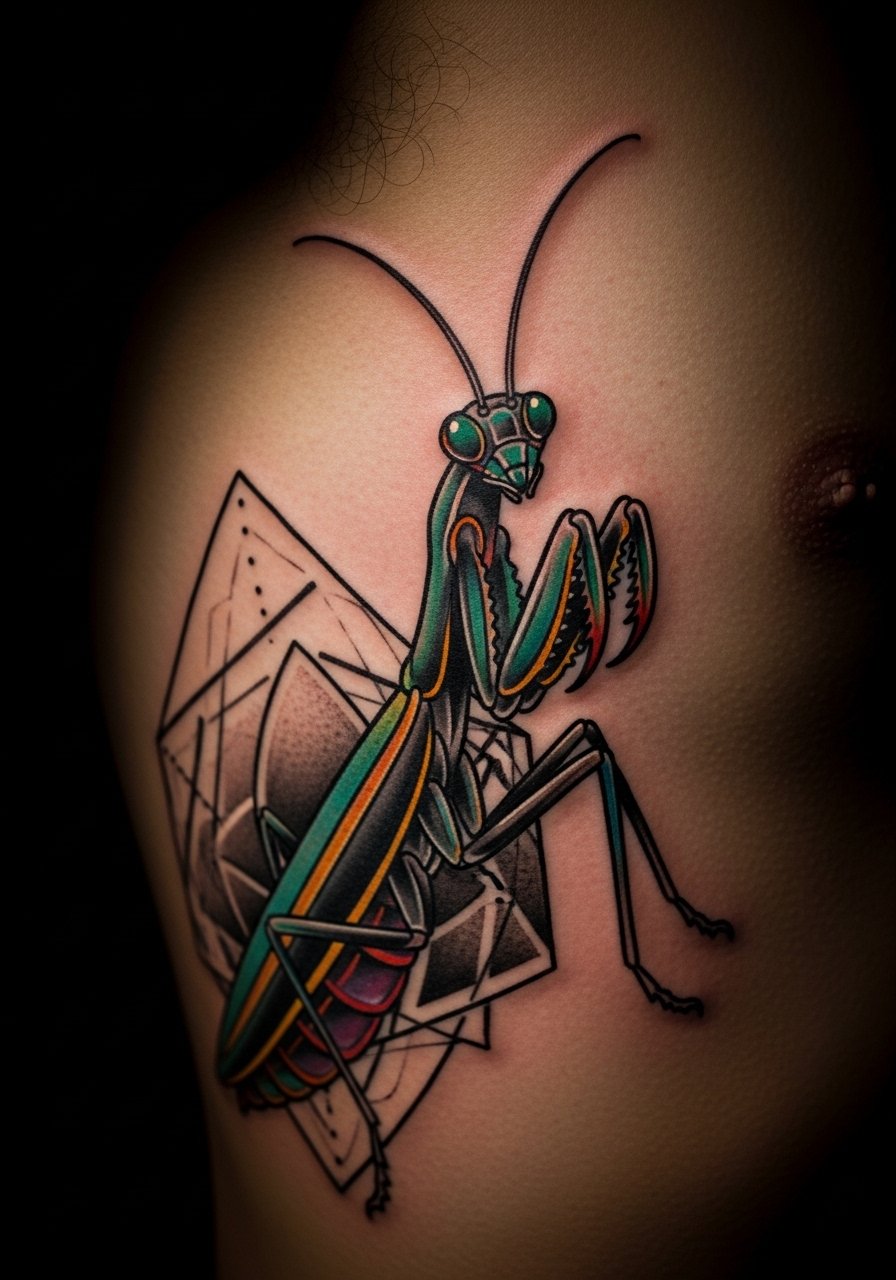
Pain warning, the ribcage is one of the higher pain placements. Neo traditional mantises here look dramatic because the curvature allows the insect to read life like it is climbing. Artists split on fine detail on ribs. One camp says the skin stretch will blur fine linework within two years. The other camp says with correct depth and spacing it holds. Ask your artist where they fall and request larger contour lines if they warn of blur. Expect a multi-hour session with a likely touch-up by year two. For the appointment choose a cropped sports top you can lift without exposing too much skin.
6. Thigh Panel Mantis Among Leaves
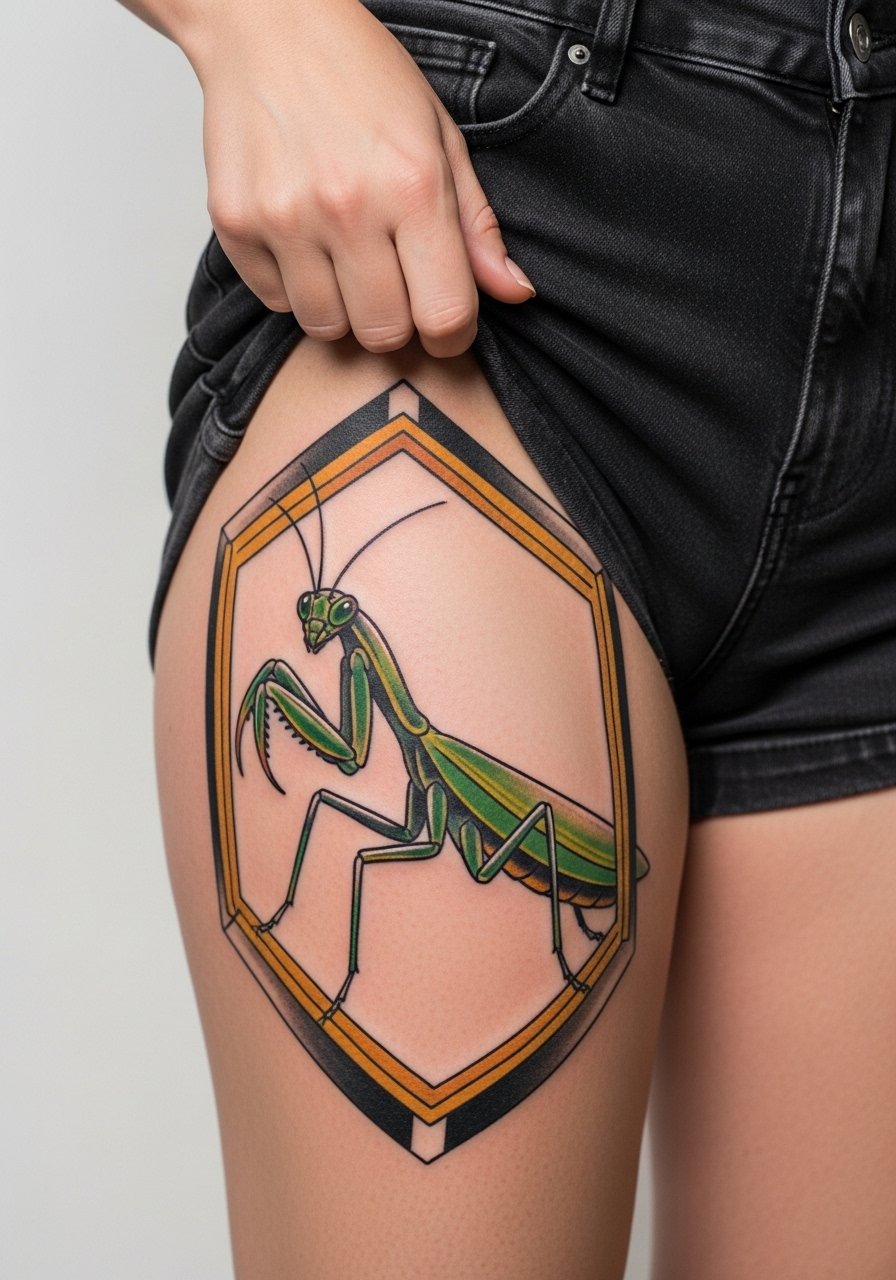
The thigh allows for scale and visual narrative without blowout risk. I’ve seen mantis panels age nicely here because the skin stretches less than the inner thigh and shading keeps saturation stable. Tell your artist you want stipple shading in the background and solid color blocks on the mantis to keep the silhouette crisp. A common mistake is over-detailing the legs which then blends into fabric friction from jeans. Session time is usually two to three hours and touch-ups happen later than wrist pieces. For the session wear high-waisted shorts so the artist can access the outer thigh comfortably.
Studio Day Picks
The first six ideas cover wrists, forearms, shoulders, ribs, and thighs, each with different prep needs. The items below smooth the session and protect linework in the first week.
-
Stencil transfer paper kit. Useful for previewing exact placement on curved areas like the collarbone and shoulder before the needle hits skin.
-
Topical numbing cream. Apply as directed before a ribcage or thigh session to reduce the edge during longer appointments.
-
Thin protective film roll. Keeps wrist and hand pieces clean through frequent washing and reduces friction from clothing.
-
Fragrance-free gentle body wash. Gentle cleansing supports fine line and neo traditional color blocks in the first week without irritating the area.
-
Aquaphor healing ointment. A thin layer during the initial days can help maintain moisture for tight linework without clogging the skin.
7. Mini Mantis Behind the Ear With Floral Accent
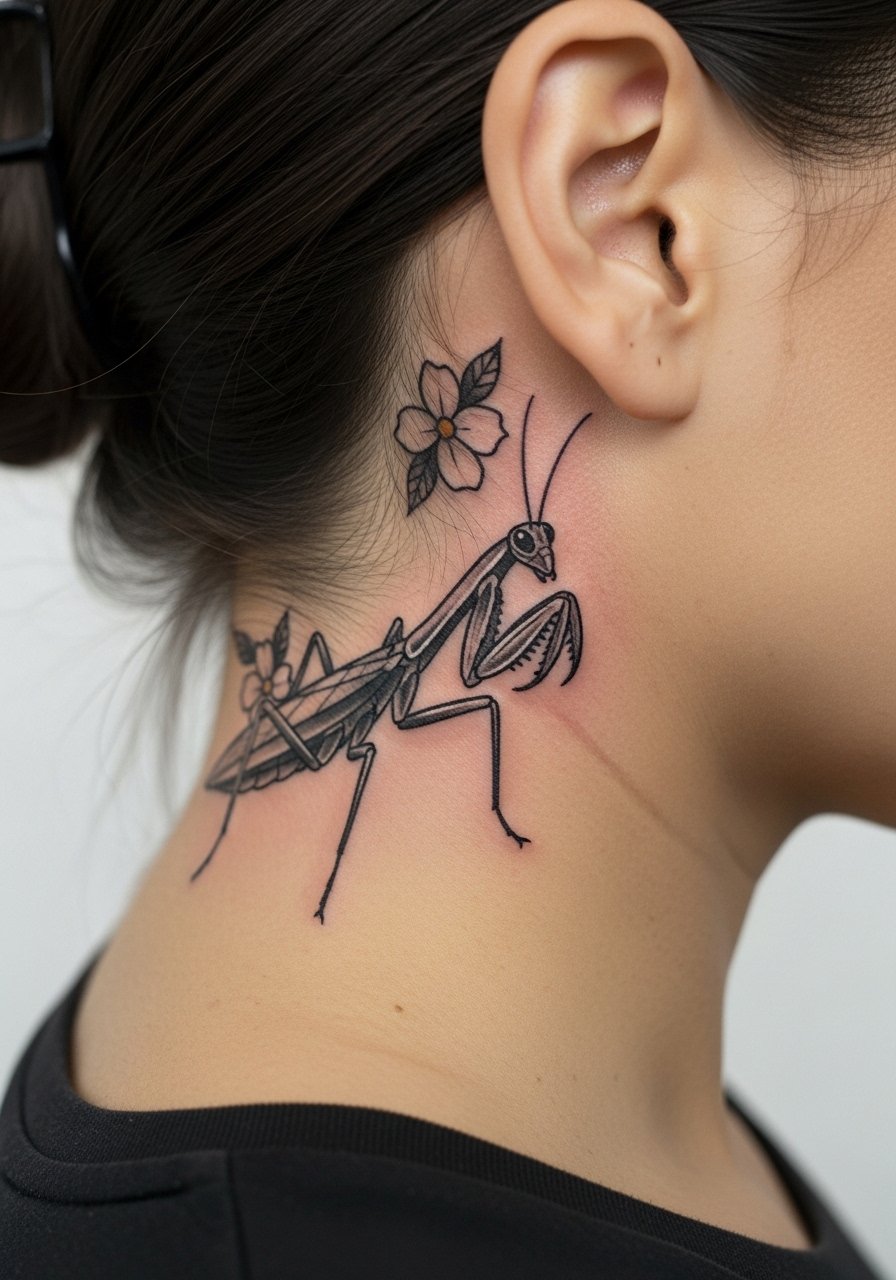
This subtle placement reads like a private accent and pairs well with short hair or updos. The behind-the-ear zone requires a clothing descriptor for photography and a short session, often under 45 minutes. A common mistake is asking for too much interior detail in a space that barely fits it. Ask for a simplified body and one statement color with a tiny floral host. Hand the artist photos showing exact scale on similar ear shapes so you avoid disappointment. Mention if you work in conservative settings because visibility changes with hairstyles.
8. Sleeve Accent: Mantis Between Leaves and Daggers
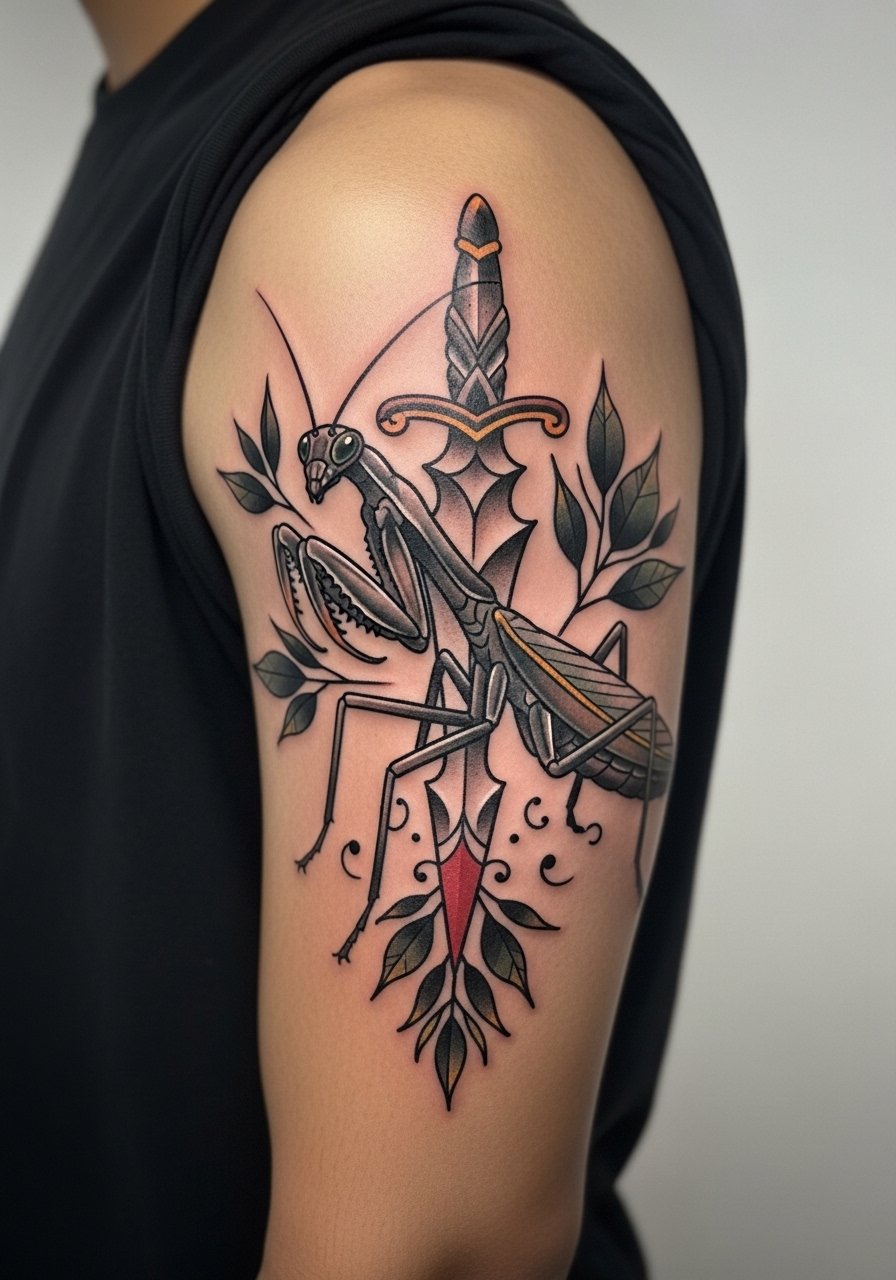
Visual impact lead fits here because the mantis needs to pop among other motifs. Piece this as an accent with bold outlines and flat color blocks so it keeps presence when other elements age. Tell your artist to leave negative space around the forelegs so they do not merge with adjacent flash over time. A half-sleeve session can be broken into two sittings. Expect medium pain and a likely touch-up after the sleeve heals as small overlaps can soften. For casual show-off pair with a rolled sleeve chambray shirt.
9. Ankle Mantis With Trail Pattern
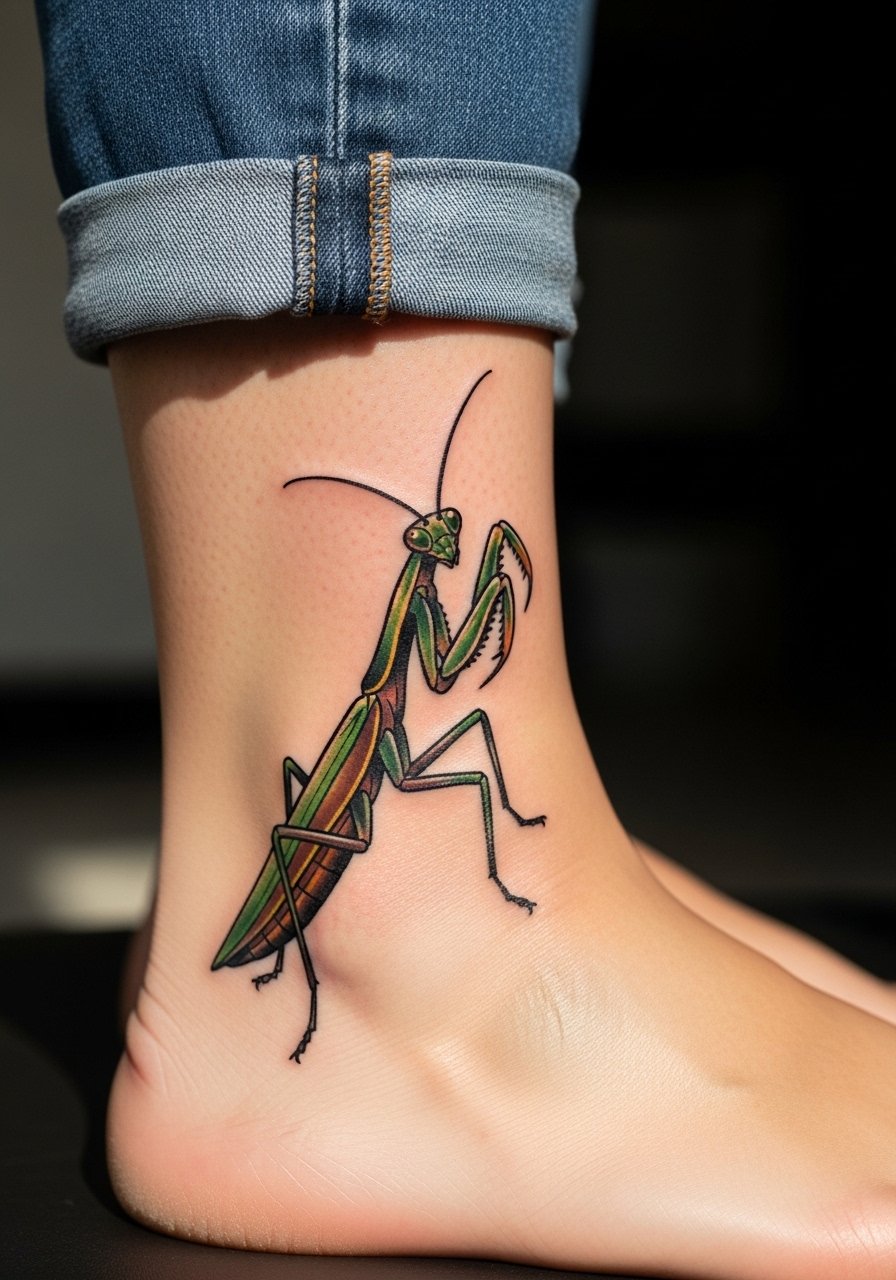
The ankle is a high-friction spot because of socks and shoes. The main mistake is placing long, thin legs that rub against footwear and blur. Go for a squat mantis with firm outlines and a trailing dot-work pattern that reads even when some pigment migrates. Session time is short, often under 60 minutes, but expect touch-ups earlier than thigh or shoulder pieces. For showing off choose low-cut sandals that keep the ankle visible without overly rubbing the fresh skin.
10. Calf Mantis With Dramatic Tail
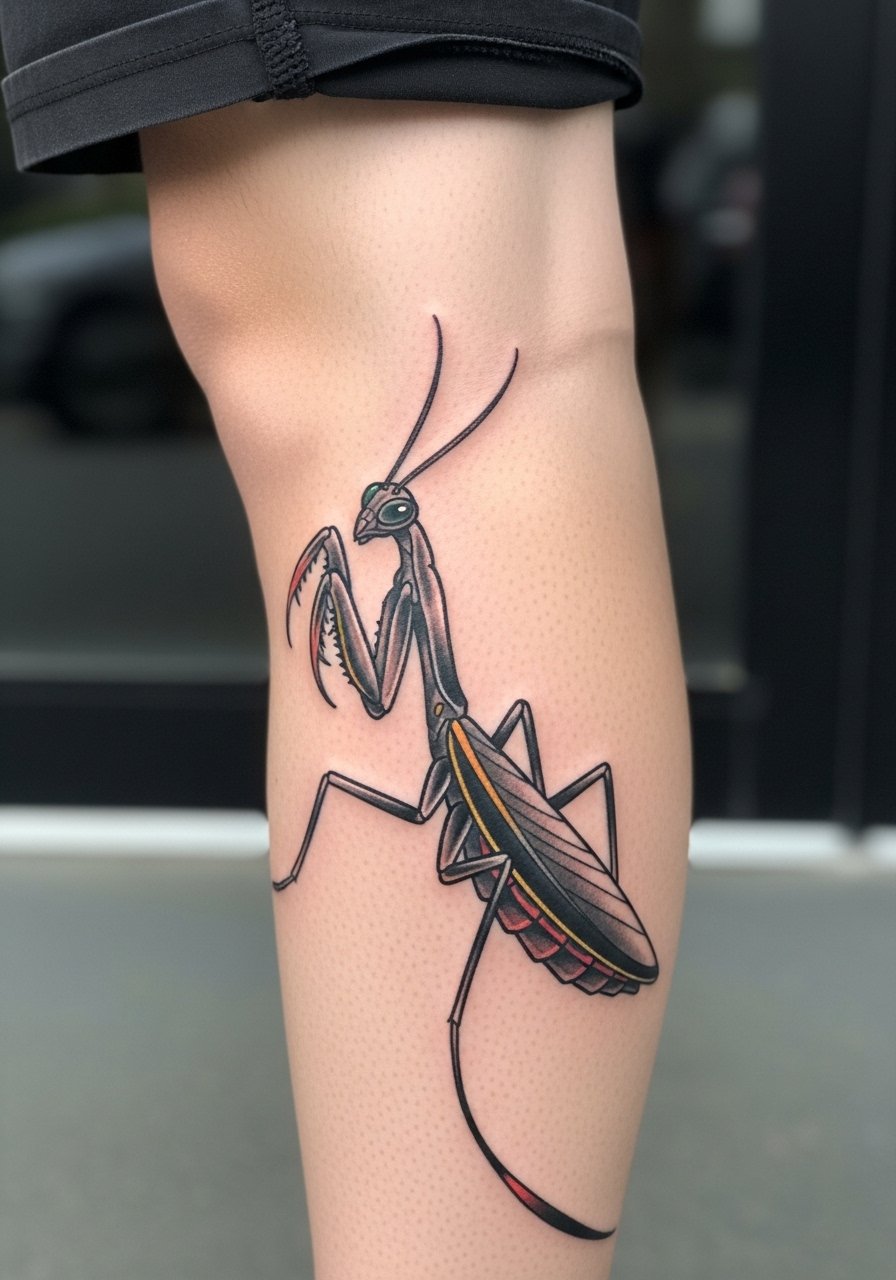
This placement takes scale well and avoids much daily friction. A visual detail that ages poorly is overly dense stipple shading in the tail. Ask for layered color blocks and whip shading so the tail keeps motion without muddiness. Expect medium pain with a session of 90 to 180 minutes depending on size. Calf pieces are great for coverable yet dramatic work and pair with athletic shorts for summer visibility.
11. Chest Mantis Framing Sternum
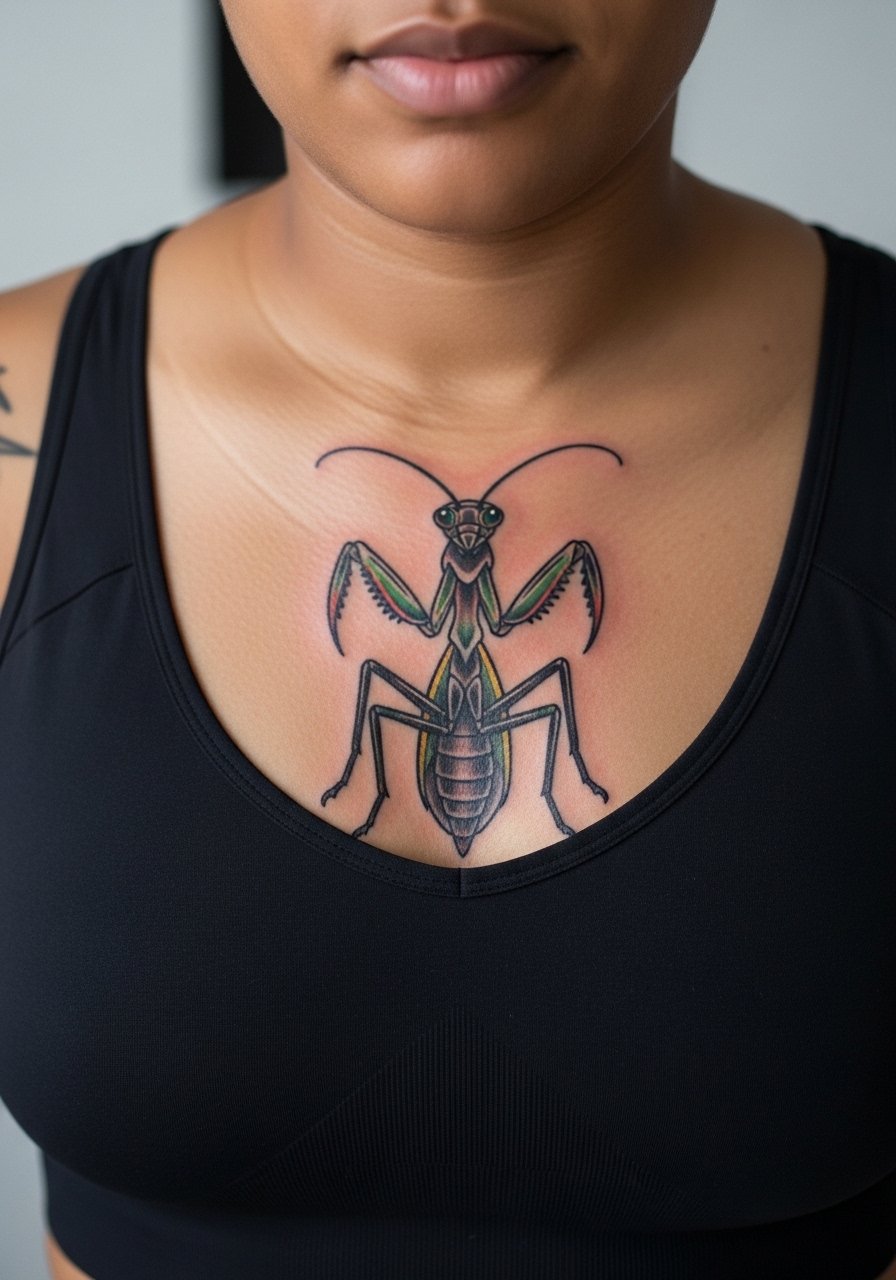
Aging and stretch on the chest vary, especially across body types. Most people ask for symmetrical mantis work here for a dramatic centerpiece. The common mistake is expecting tiny filigree to stay crisp across the sternum where movement and stretch happen with breath. Ask for strong outer lines and avoid micro-detail. Sessions are moderate to intense, and you should plan for at least one multi-hour sitting. For the appointment bring a fitted sports bra you can slide slightly to reveal the area without full exposure.
12. Back-of-Neck Mantis With Mandala Halo
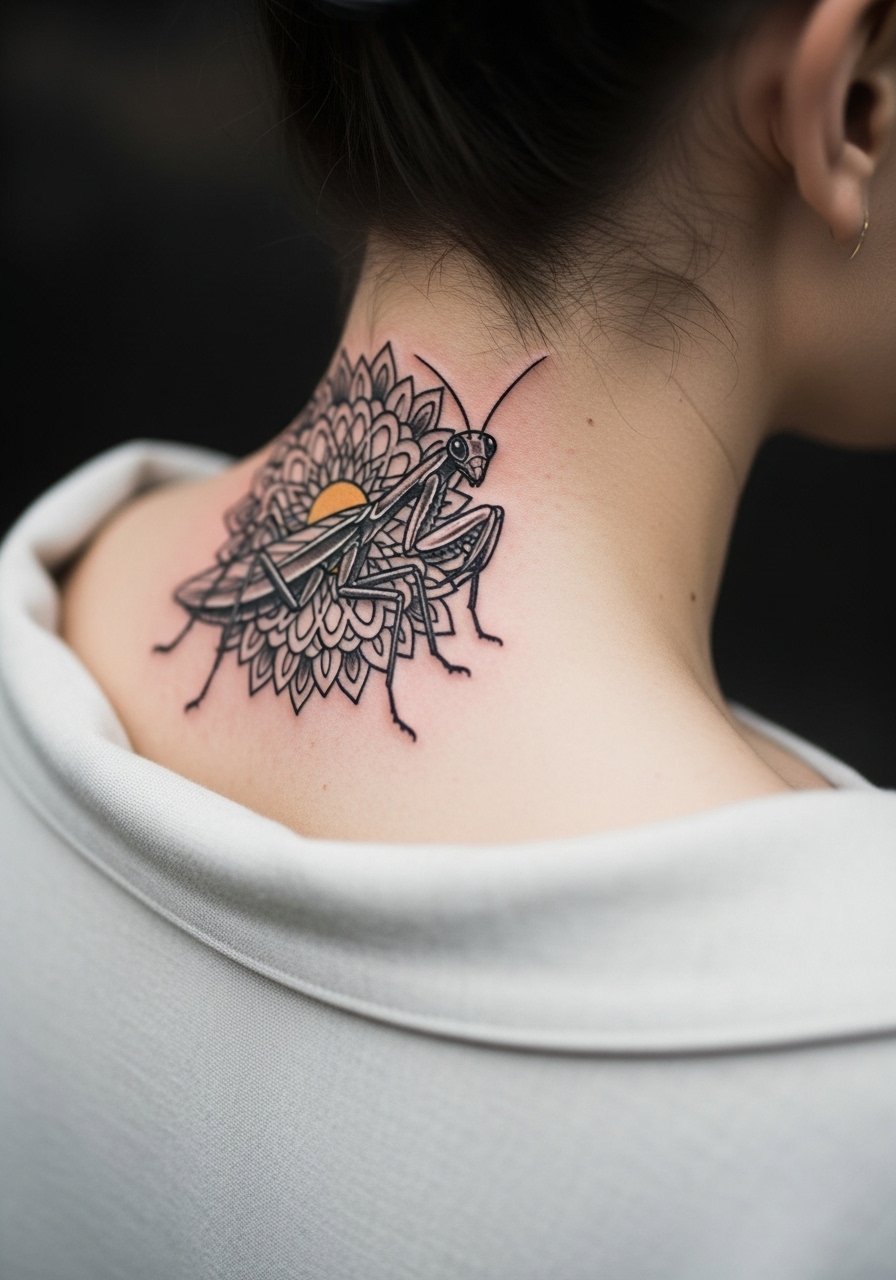
Consultation lead fits because you must be clear about visibility. The back of the neck sees sun and hair ties, and the halo detail can soften with time. Tell your artist to keep the halo open with spaced elements so the mandala does not become a blurred patch. Pain is brief but sharp for some. If you wear collared shirts for work, consider how often it will be hidden. For styling, short necklaces sit well so try a thin chain pendant that doesn’t clash with the halo.
13. Inner Bicep Mantis in Profile
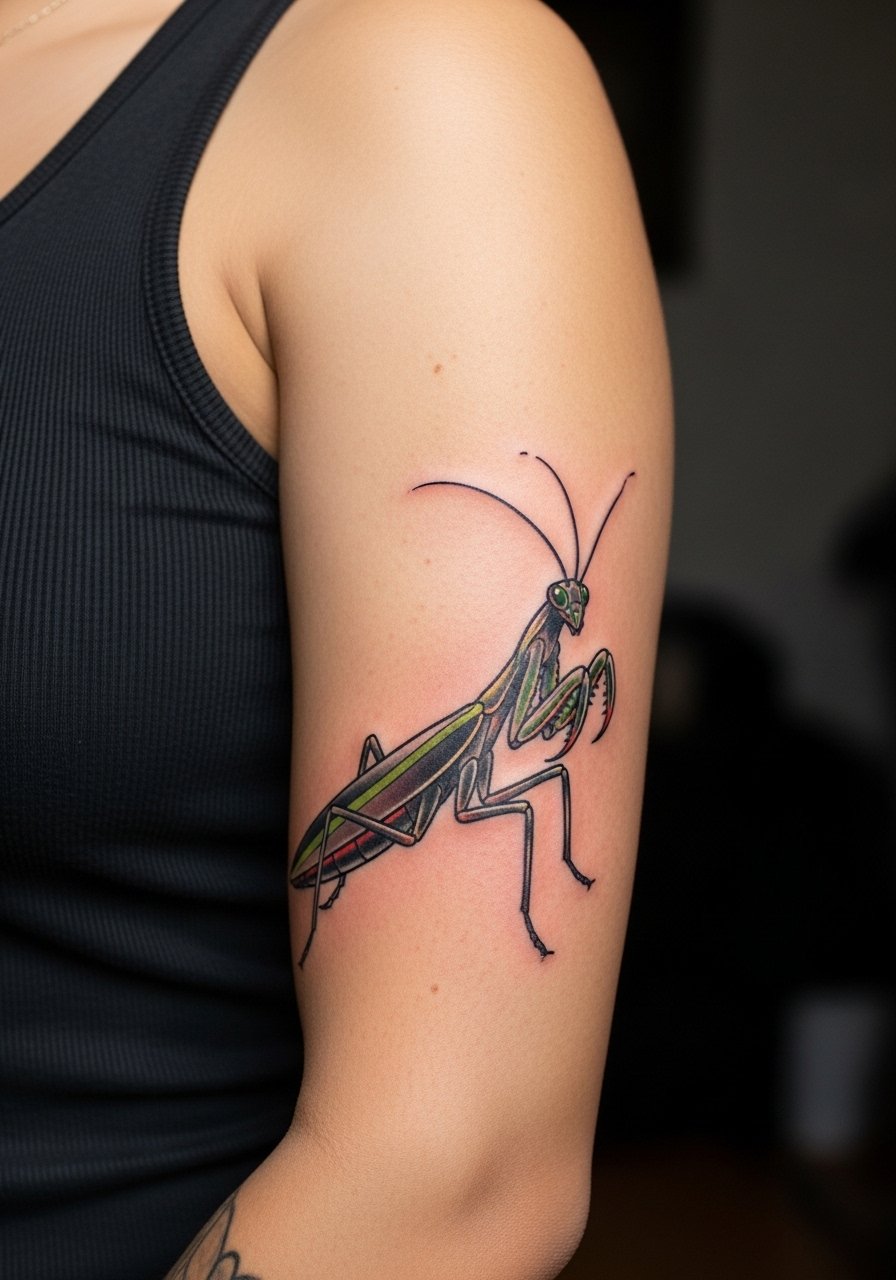
Pain warning, the inner bicep can be tender but it rewards scale. Artists disagree about how much fine line to use internally on this spot, with one camp preferring bold interiors and the other favoring delicate veins. I recommend medium internal detail and strong outer lines to minimize blur. Touch-ups tend to be needed around year three depending on muscle changes. For the session wear a loose tank top you can lift without overextending the arm.
14. Hand Mantis With Leaf Motif
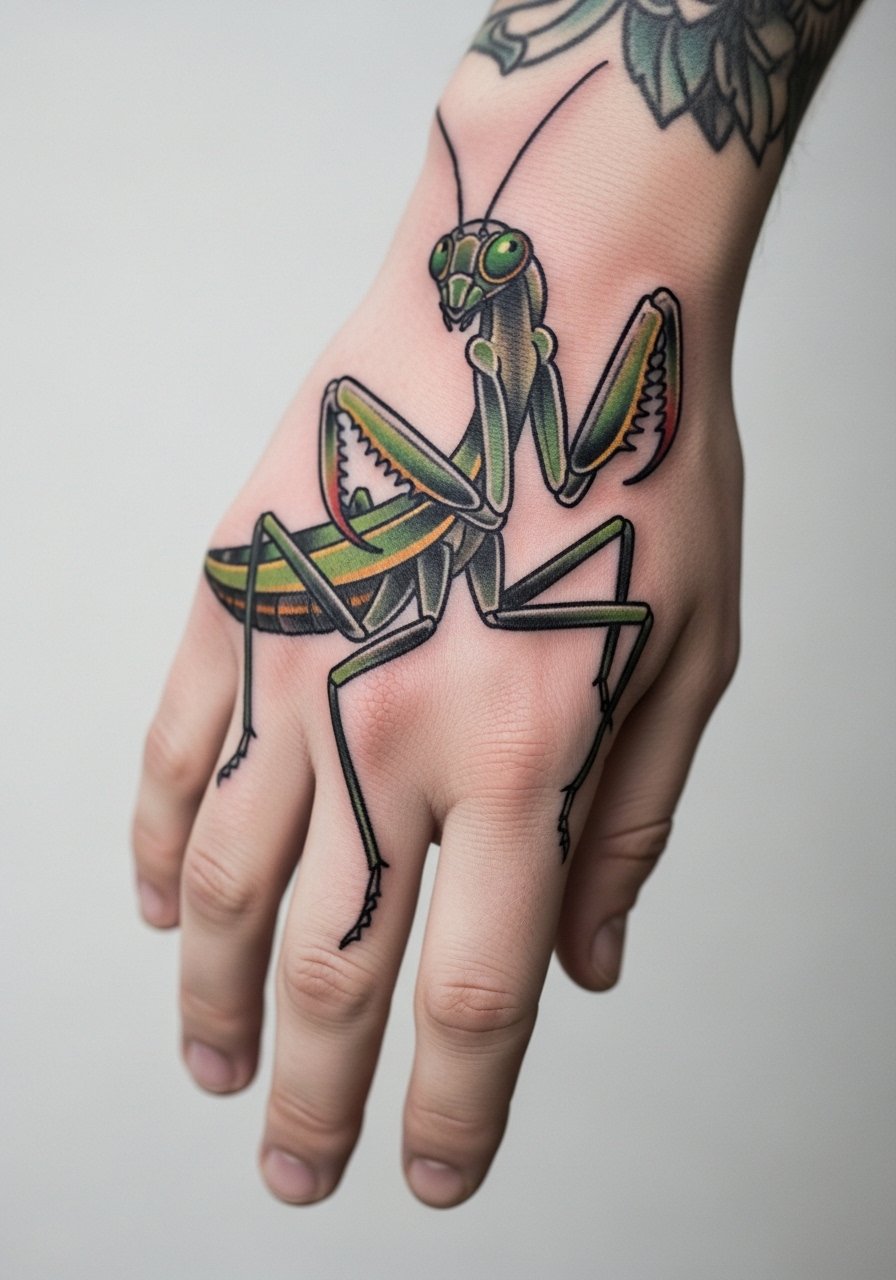
Controversy here is practical. One camp argues hand tattoos seldom age well in professional settings and tend to fade fast because of washing and sun exposure. The other camp says precise, bold neo traditional work with thick outlines survives better than fine detail. If you want a hand mantis, plan for bold silhouette, avoid tiny antennae, and accept yearly touch-ups. Pain is higher here and healing needs careful protection. For showing the piece pair with simple rings that do not rub the tattoo, such as a minimal band set.
15. Hip Mantis Curving Toward the Thigh
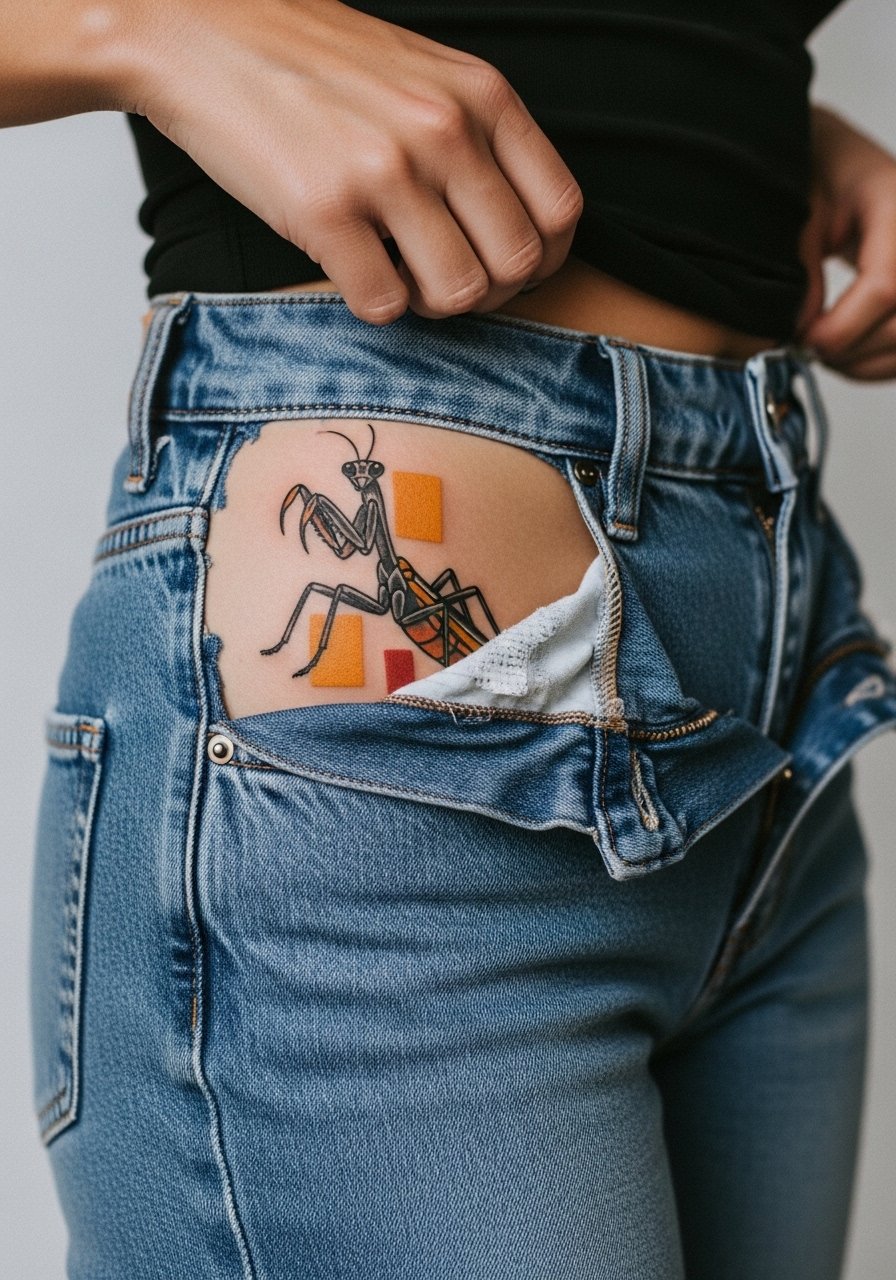
Styling lead applies because hip pieces often peek from high-waisted bottoms. The hip moves with clothing and weight changes so avoid tiny interior dots that will smear. I suggest a posture-aware placement that follows the natural curve and asks the artist for heavier outer lines where fabric will press. Pain is moderate to high in spots near the hip bone and the session is usually one to two hours. Show it off with high-waisted cuts and consider a vintage high-waisted denim that reveals the crest of the design.
16. Lower Back Mantis Acting as a Small Backpiece
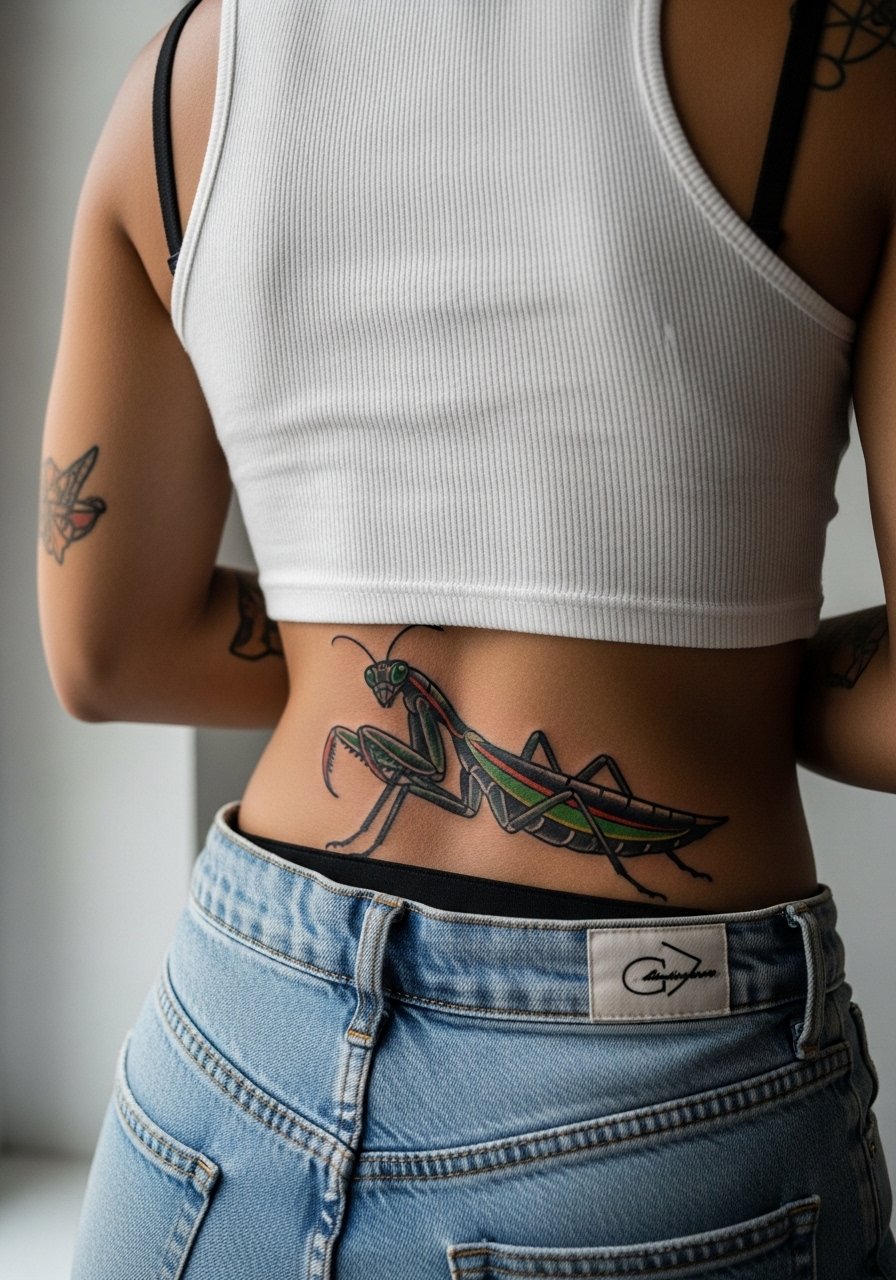
The lower back gives room for a mantis with a decisive silhouette. Common mistake is overly thin background lines that fade into the waistline over time. Ask for a strong anchor point and keep the central insect slightly larger than you think you need. Sessions are moderate, often in the 90 to 180 minute range. For appointments wear a tank top you can adjust so the artist reaches the area without you feeling exposed.
17. Full Sleeve Mantis Narrative
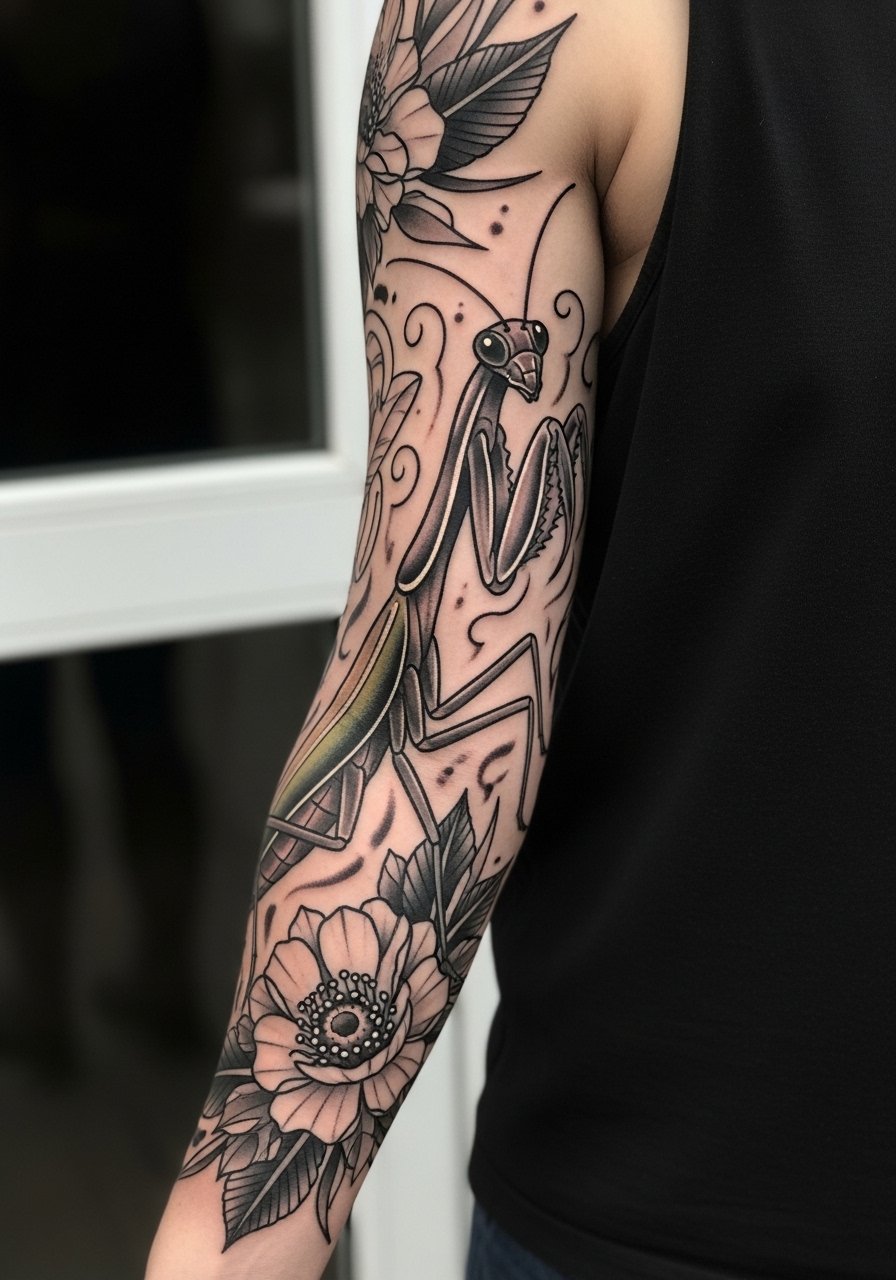
This is the biggest commitment and it often becomes a visual story rather than a single image. Personal observation lead works because sleeves need planning over multiple sessions to avoid overcrowding. Tell your artist during the consultation you want the mantis to be a recurring motif with clear negative space around each repeat so the silhouette holds. The mistake is stacking detail without planning movement and skin flex. Expect several sessions and periodic touch-ups. For the shop day wear a button-down shirt you can pull aside as needed without removing layers.
Frequently Asked Questions
Q: Will a neo traditional praying mantis tattoo on the ribs blur faster than on the forearm?
A: It depends on skin movement and line weight. Ribs change shape with breathing and aging, so ultra-fine interior detail can blur sooner there than on the forearm. For ribs ask for stronger contour lines and slightly larger spacing between elements to preserve the mantis silhouette.
Q: How often do neo traditional mantis wrist or hand pieces need touch-ups?
A: From what I’ve seen, wrist and hand pieces are the most likely to need touch-ups by year two or three because of friction and sun exposure. Bold outlines help, but expect maintenance if you want the color to stay vivid.
Q: Are there styling tips to hide or show a collarbone mantis for work?
A: Yes. A wide-neck shirt pulled slightly aside shows the piece without full exposure, while blazers and scarfs hide it. A thin pendant works well above a small collarbone mantis when you want subtle layering. Here is a thin chain pendant that sits well with collarbone pieces.
Q: What should I ask my artist during the consultation for a neo traditional mantis sleeve?
A: Ask how they plan negative space, what session breakdown they recommend, and whether they will map the mantis positions to your arm’s movement. Request preview stencils at different arm positions to check the silhouette while you bend and reach.
Q: Is a praying mantis design culturally sensitive to use in neo traditional style?
A: The mantis itself is not tied to a single sacred tradition in most contexts, but if your design incorporates specific cultural motifs, mention that to your artist. Many people choose stylistic nods rather than direct copies of on-theme iconography to show respect and make the piece personally meaningful.
Q: How should I prepare clothing-wise for a thigh or ribcage session?
A: Wear loose, easy-to-shift clothing that gives access without exposing more than necessary. For thighs shorts or a wrap skirt work well. For ribs a cropped athletic top that you can lift slightly keeps things comfortable and private.
