
Fine line work dominates saved boards right now, but the shoulder blade is an honest place to test how those lines age. Skin there moves with your shoulder, and fabric rub from straps matters as much as needle depth. These 27 black and grey takes balance delicate linework with space and heavier saturation where longevity matters. Start with the ideas below and find the version that will still read clean after a few summers of sun exposure.
1. Delicate Botanical Cluster on the Shoulder Blade
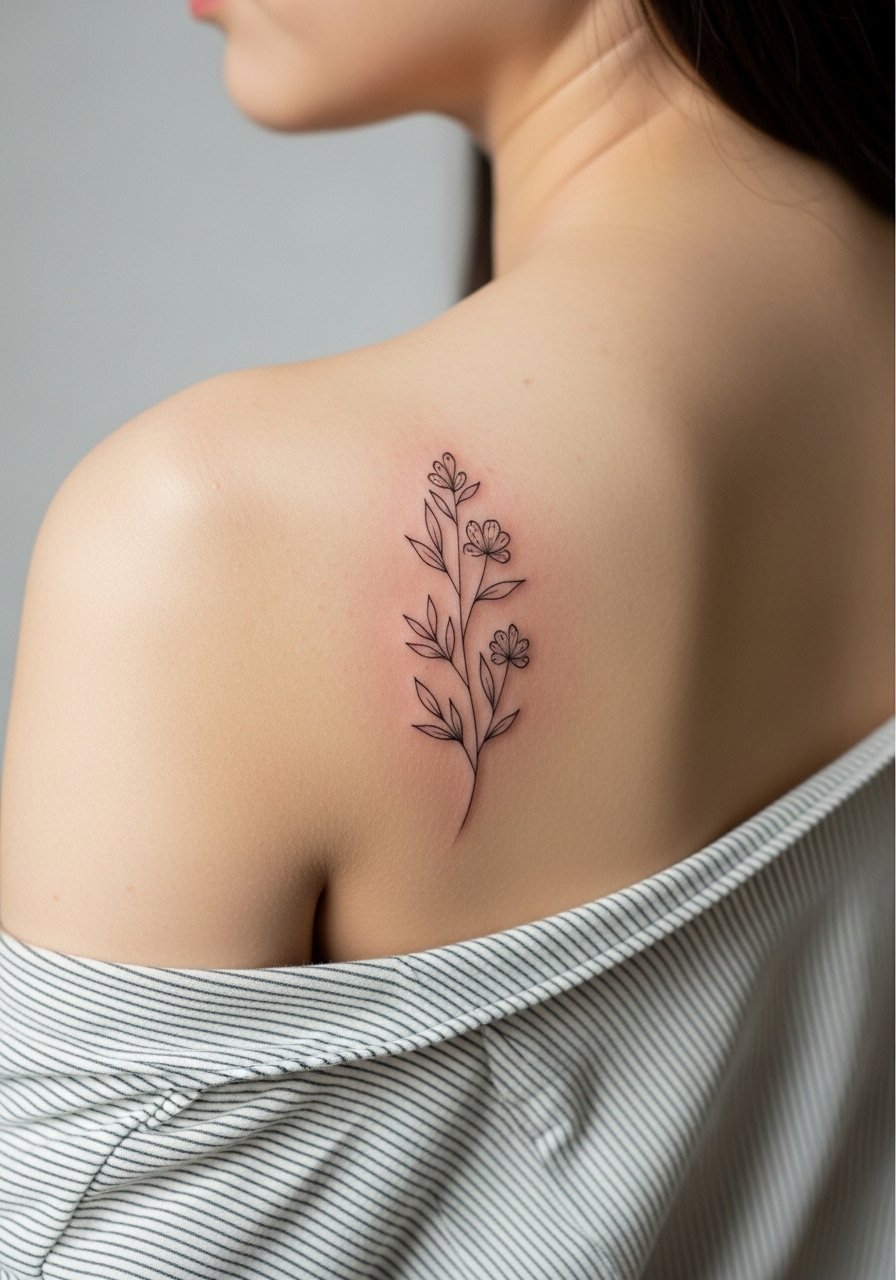
This is the classic go-to for someone who wants an elegant, low-key piece on the shoulder blade. Tell your artist you want modest spacing between stems and stems that curve with the scapula so the design breathes as you move. Pain is moderate and the session usually runs one to two hours depending on scale. The common mistake is packing too many tiny leaves into a small patch. That makes the work blur into a grey patch after a few years. Ask for slightly bolder main stems and stipple shading to hold contrast over time. For showing it off, pair the piece with a racerback tank that keeps the shoulder exposed without rubbing.
2. Single Stem Script with Shadowing
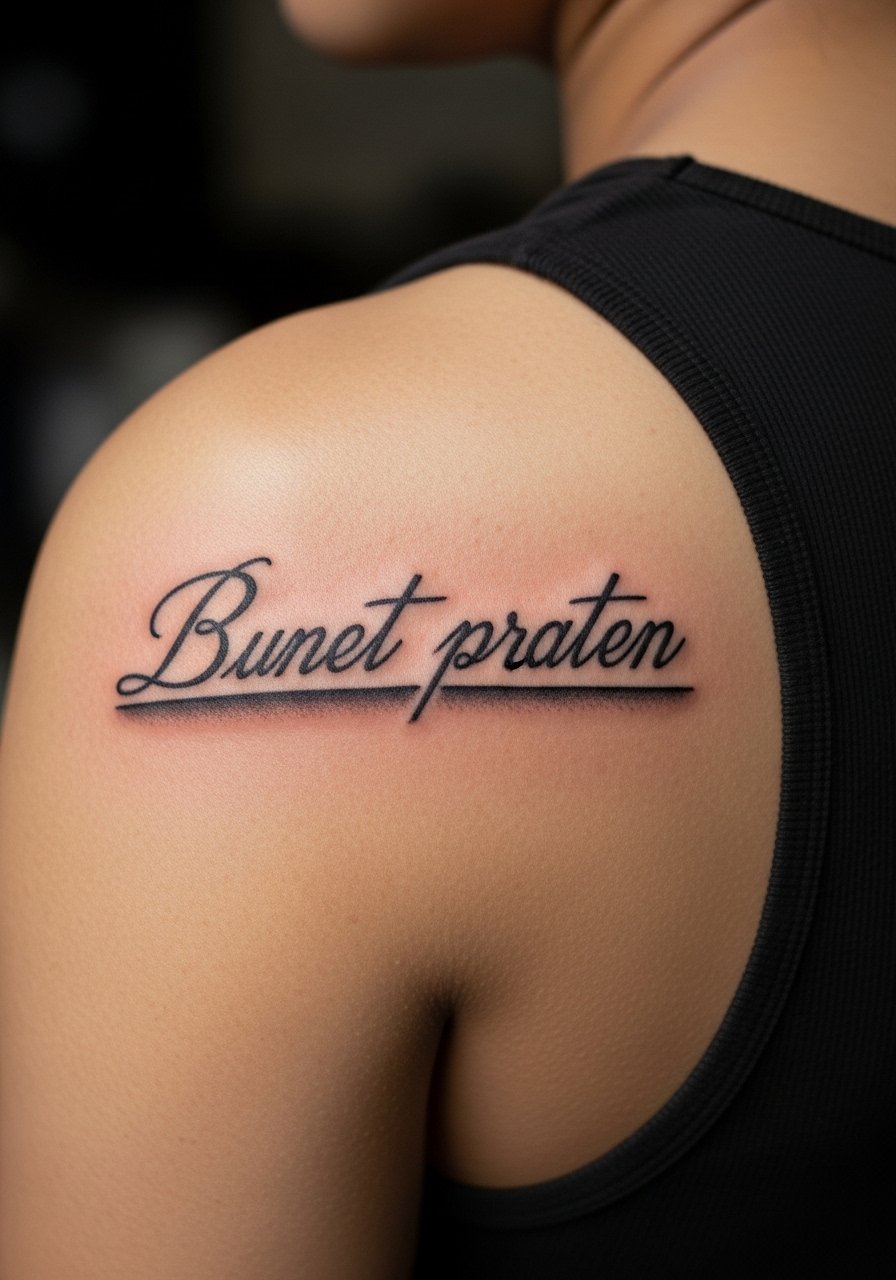
Script on the shoulder blade reads like jewelry when it is spaced correctly. The trick is to pick a size that keeps counters open and letters distinct. In consultation, ask the artist for a stencil test in the exact size and placement while sitting and standing. Expect a one-hour touch and a small top-up within the first year for thinner scripts. The aging issue is ink migration in fine scripts. One camp says thin scripts blur fast on back skin. The other camp says with the right depth and spacing they last well. Bring up both views and see how your artist explains their approach. For session comfort, wear a loose button-down shirt you can slide off one shoulder.
3. Negative Space Geometric Shield
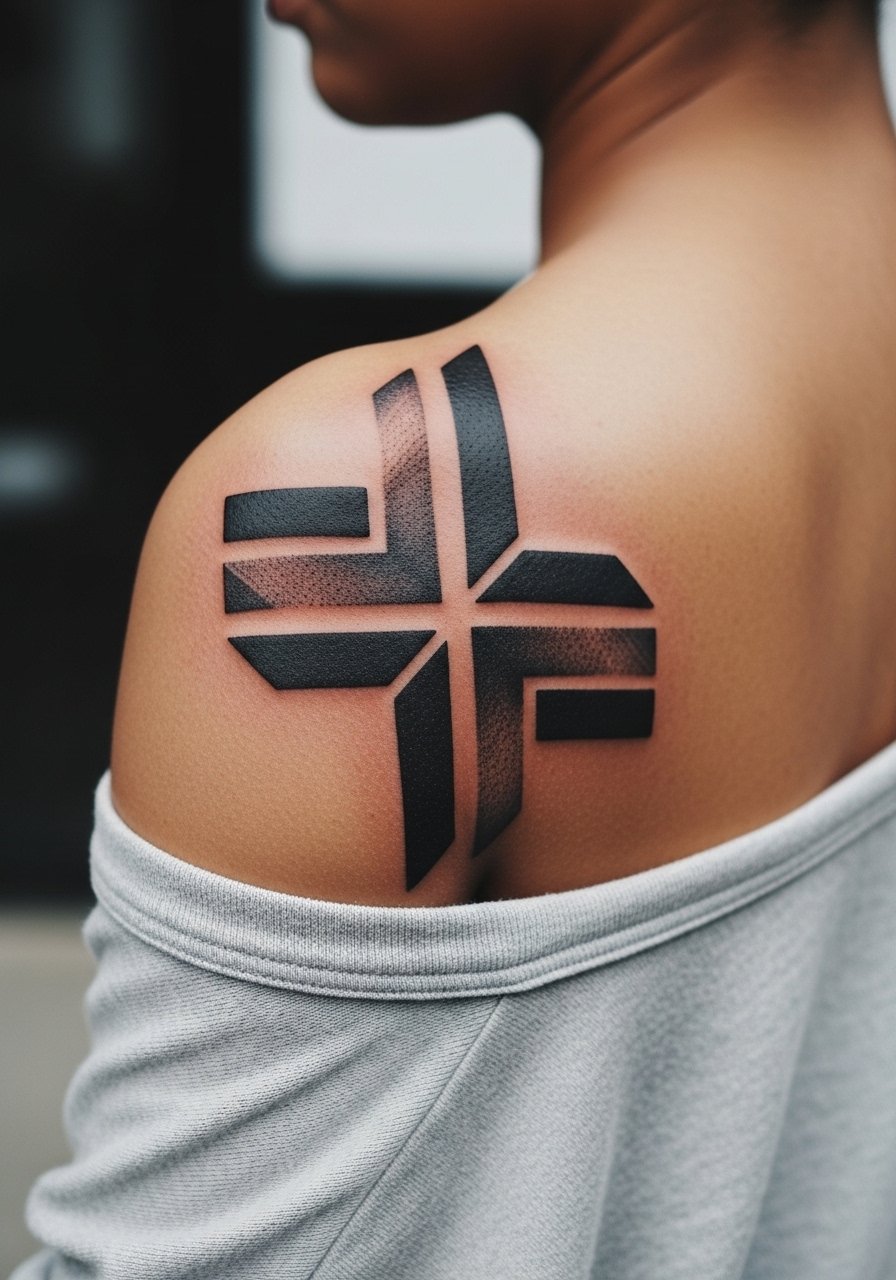
Geometric work on the shoulder blade lets you play with symmetry without committing to heavy saturation across the whole back. Ask for slightly wider line gaps than you think you need so the negative space holds at year three. The session feels focused and calm because most of the time is spent on measured linework. A common error is going too small with packed geometry. That tends to merge into grey within a few years. For a clean long-term look, request bold anchor lines around the perimeter and subtle dot shading inside. Pair this with an open-back midi dress for evenings when you want the pattern on display.
4. Micro-Realism Bird in Flight
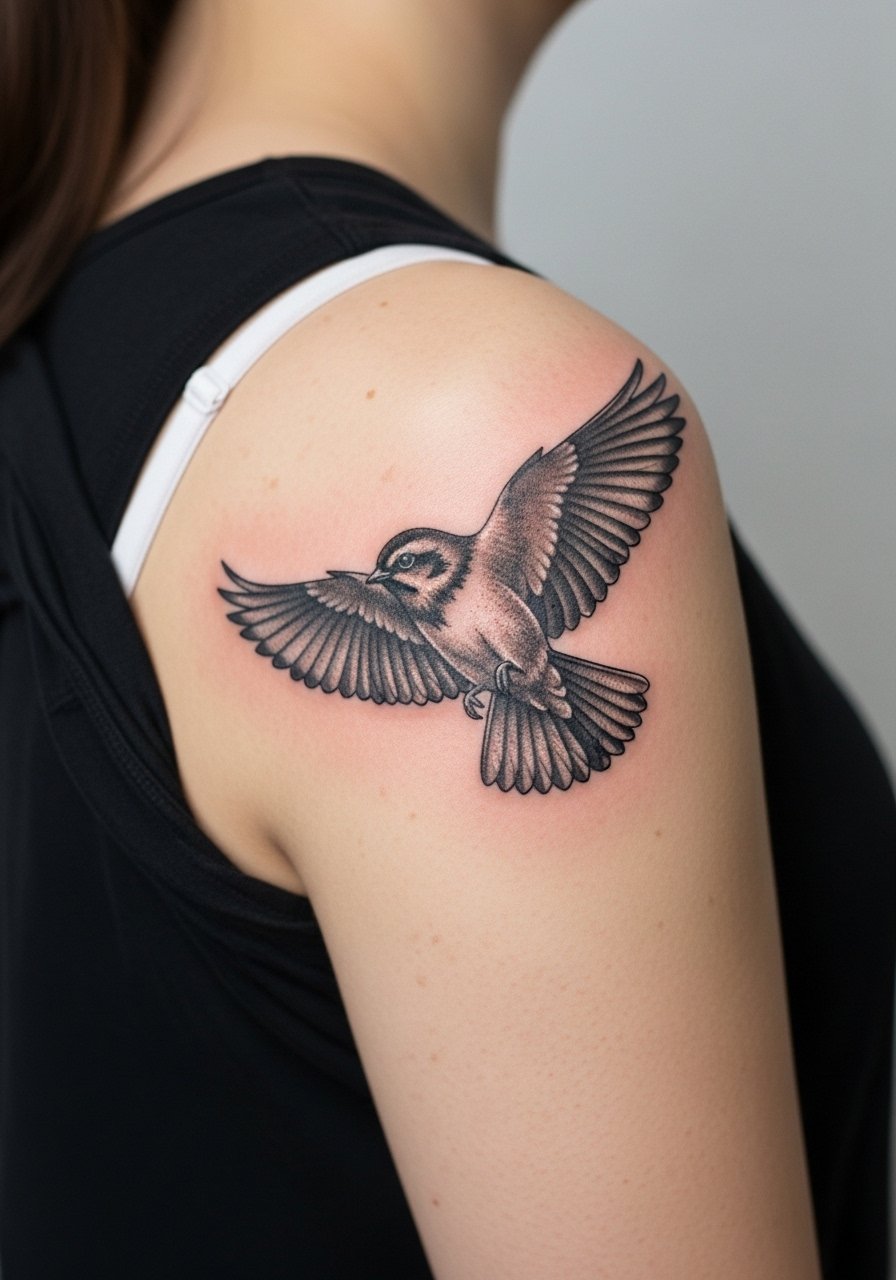
Micro-realism can look striking on the shoulder blade because the curved surface suggests motion. Tell your artist you want selective contrast instead of full photographic detail across the whole bird. Pain is moderate and the session usually takes two hours for a medium-sized piece. The mistake people make is requesting too much micro detail in a small area. That detail can wash out after a couple of years. I recommend stronger silhouette edges and softer internal shading to keep the form readable at six months and five years. For showing it off, an open-back blouse frames the flight without exposing too much skin.
5. Ornamental Mandala Fragment
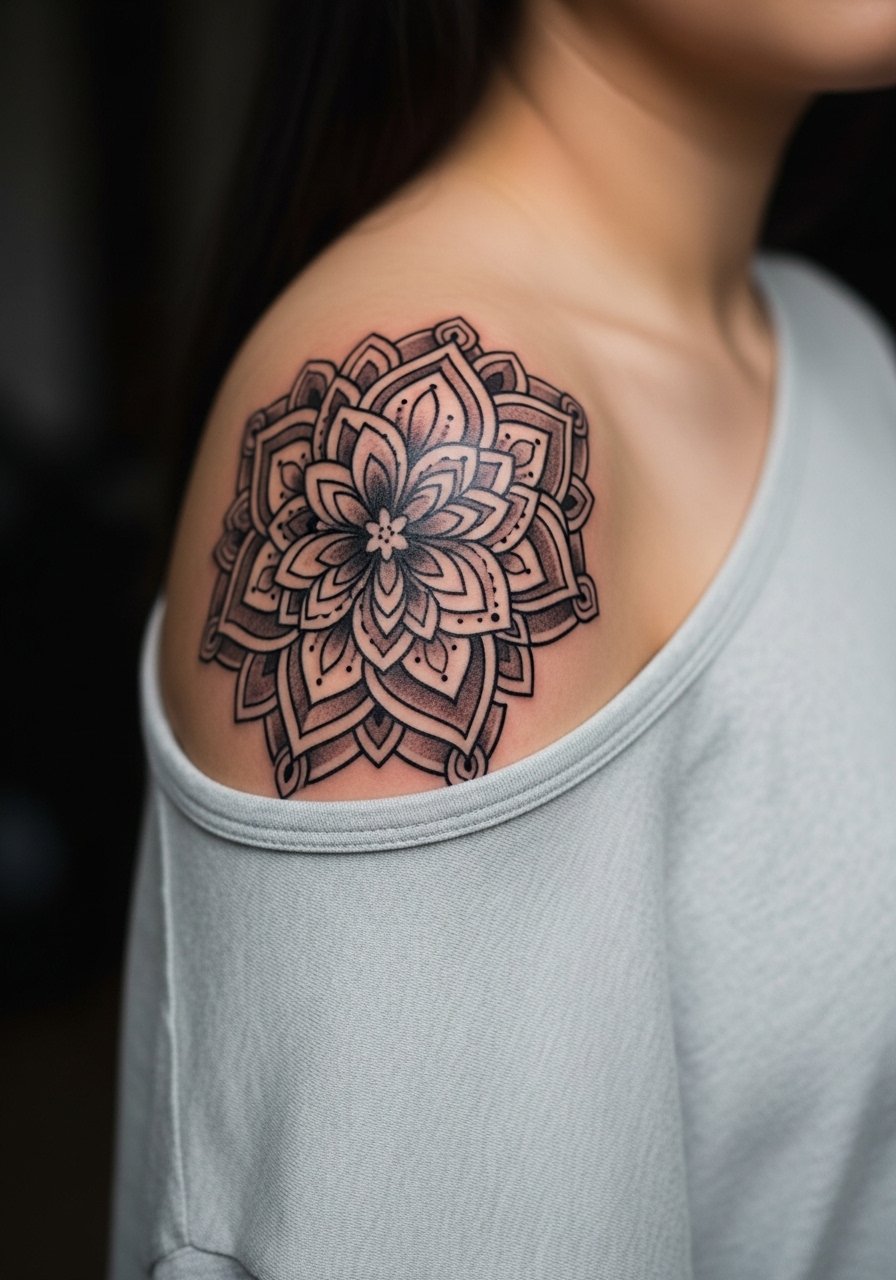
A mandala fragment sits well on the scapula because you can crop a full mandala to the curve and keep negative space around it. Ask for a version that uses stipple shading rather than tiny concentric lines when the piece is under three inches across. That holds up better. The session can be two to three hours depending on complexity. The controversy here is clear. One camp favors fine concentric lines and intricate detail. The other camp prefers open elements and stippling for longevity. State which camp you prefer and have the artist mock up both. For evenings out, a halter top lets the mandala peek through.
6. Bold Blackwork Crescent
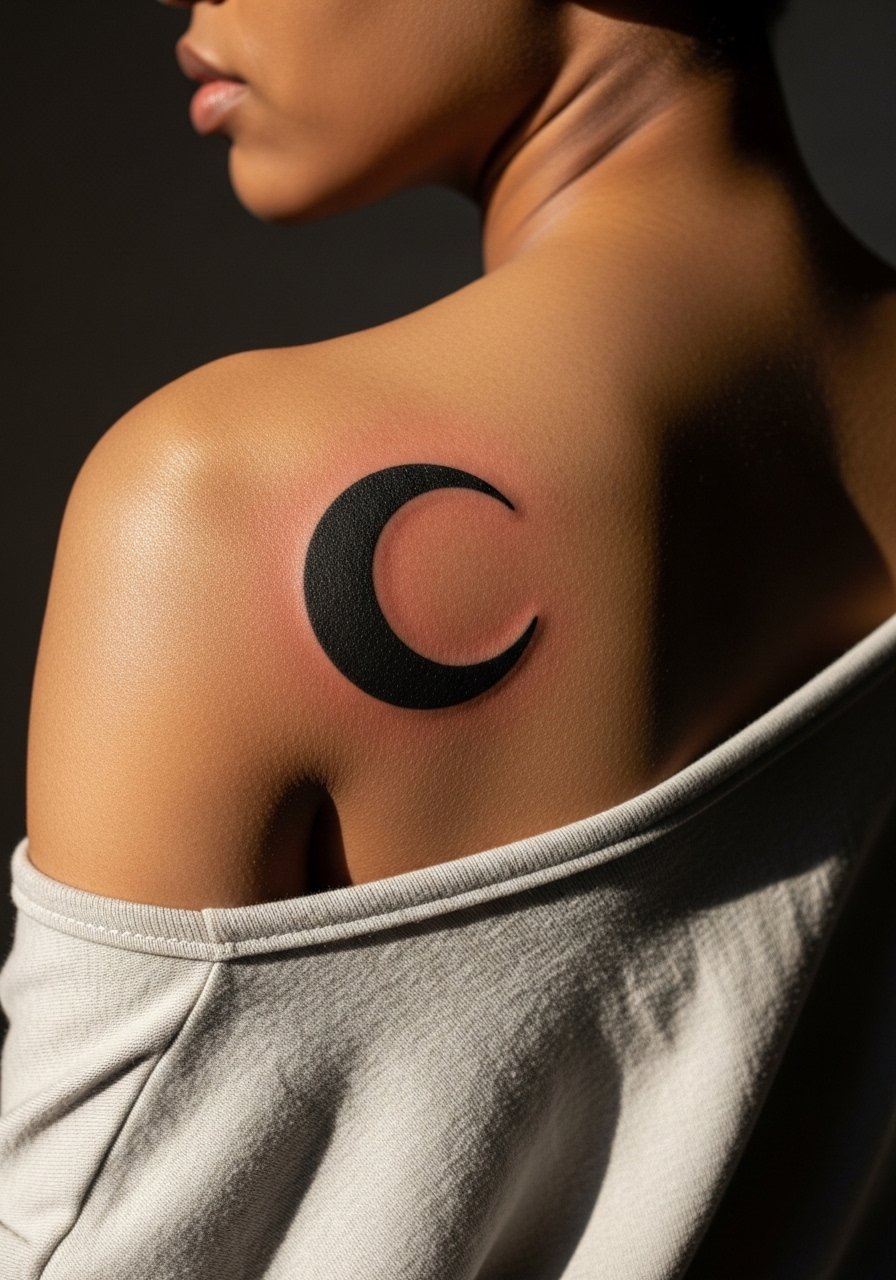
Saturated blackwork on the shoulder blade reads from across a room and ages predictably when executed with strong saturation and proper layering. Tell your artist you want smooth fill without skipping over texture in the skin. Pain is moderate and sessions can be split into two shorter sittings if you prefer. The common mistake is uneven fill that leaves patchy areas needing touch-ups. Expect a touch-up at year two for heavy blackwork in an area that gets sun. For session ease, wear a loose tank top you can tug aside without rubbing the fresh work.
Studio Day Picks
The shoulder blade pieces above range from delicate scripts to saturated blackwork, and a few small items smooth out the session and the first week.
-
Stencil transfer paper kit. Lets you preview exact placement and letter size on your shoulder blade before the needle touches skin which is useful for script and geometric pieces.
-
Topical numbing cream. Applied per the product window reduces the edge for longer shoulder blade sessions without interfering with linework.
-
Thin protective film roll. Helps protect the area from bra strap friction and shirt rubbing during the first couple of days.
-
Fragrance-free body wash. Cleanses healing skin gently which matters for fine line and micro-realism work on the back.
-
Aquaphor healing ointment. A thin layer during the initial window keeps the surface supple without clogging the channels that hold fine ink.
7. Sculpted Ribbed Rose
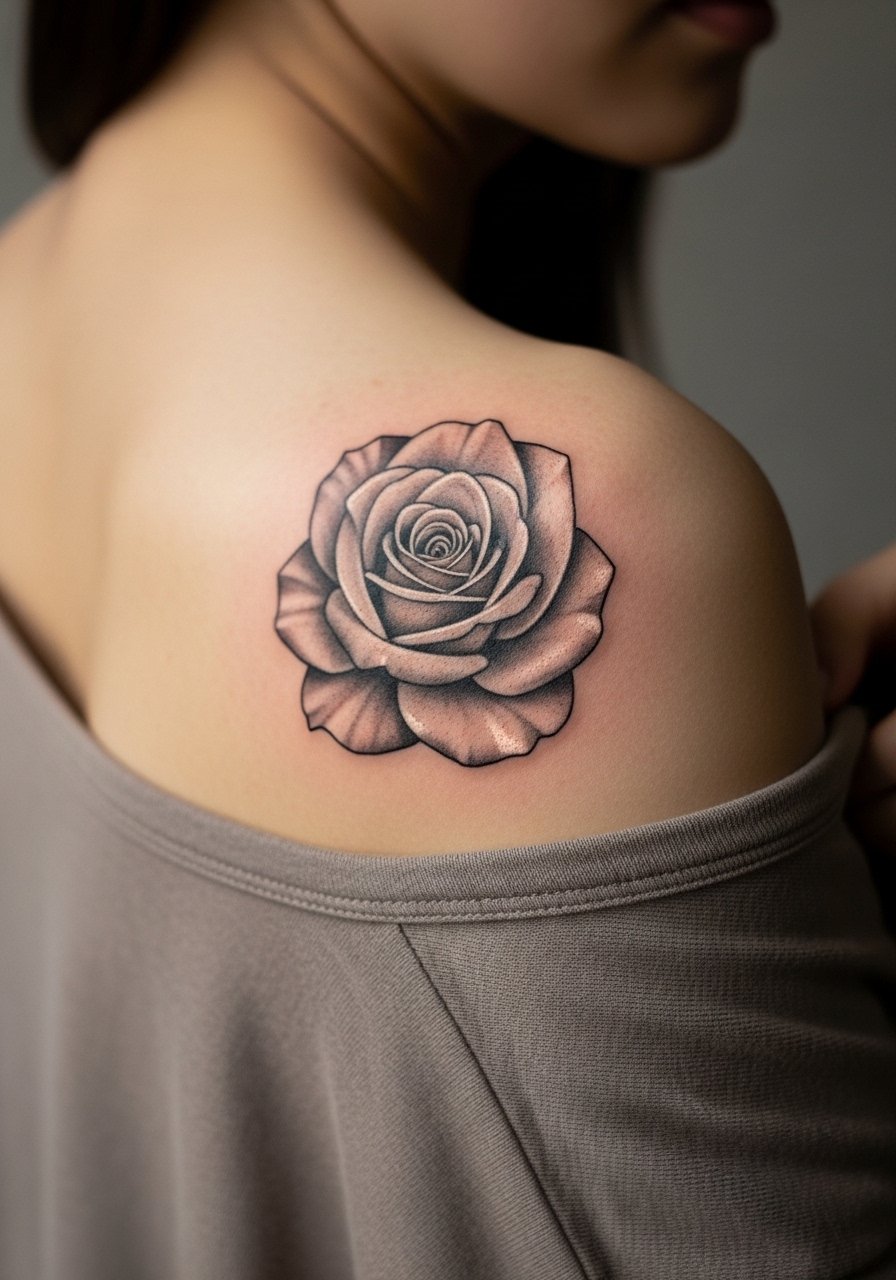
A rose with sculptural shading uses feathered shadow instead of tiny lines which helps it hold up on shoulder blade skin. In consultation, say you want the petal edges slightly bolder than the central details so the shape reads from a distance. Sessions run about one to two hours. The mistake is over-detailing small petals. Those details soften quickly. Ask about touch-up timing and expect an adjustment at year two if you live in sunlit climates. For wardrobe, this design pairs well with a button-back dress that shows the tattoo without competing with a busy neckline.
8. Minimalist Compass Anchor
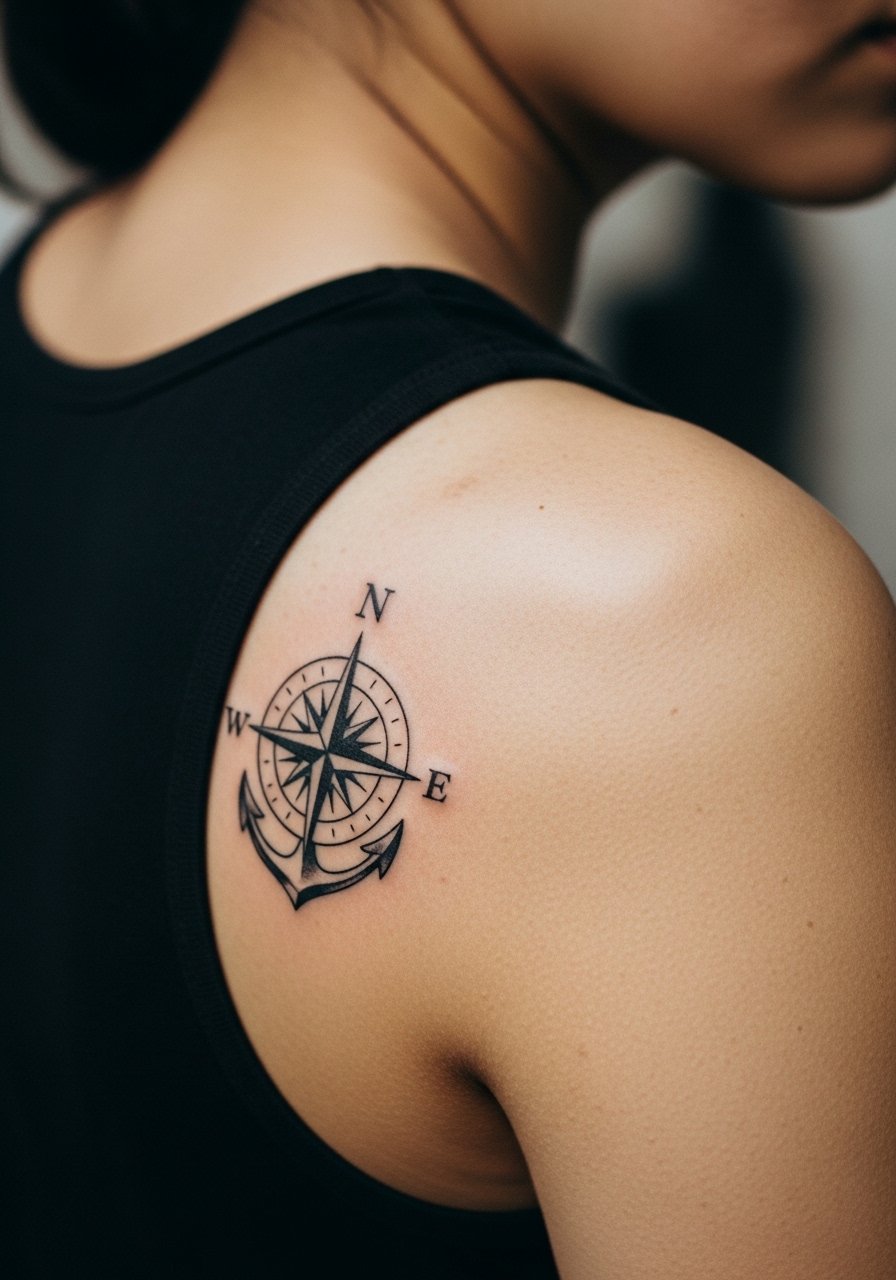
Small compass work reads crisp when you give it room. The shoulder blade curve is forgiving for a centered motif near the spine or out toward the scapula. Tell the artist you want the cardinal points slightly thicker to preserve readability. Expect a short session under one hour for a modest size. A common error is crowding arrowheads and internal ticks. That makes touch-ups more likely. This design ages well if left with clean negative space. For everyday wear, a racerback sports bra keeps the area visible while protecting it from chafing.
9. Floating Chain of Stars
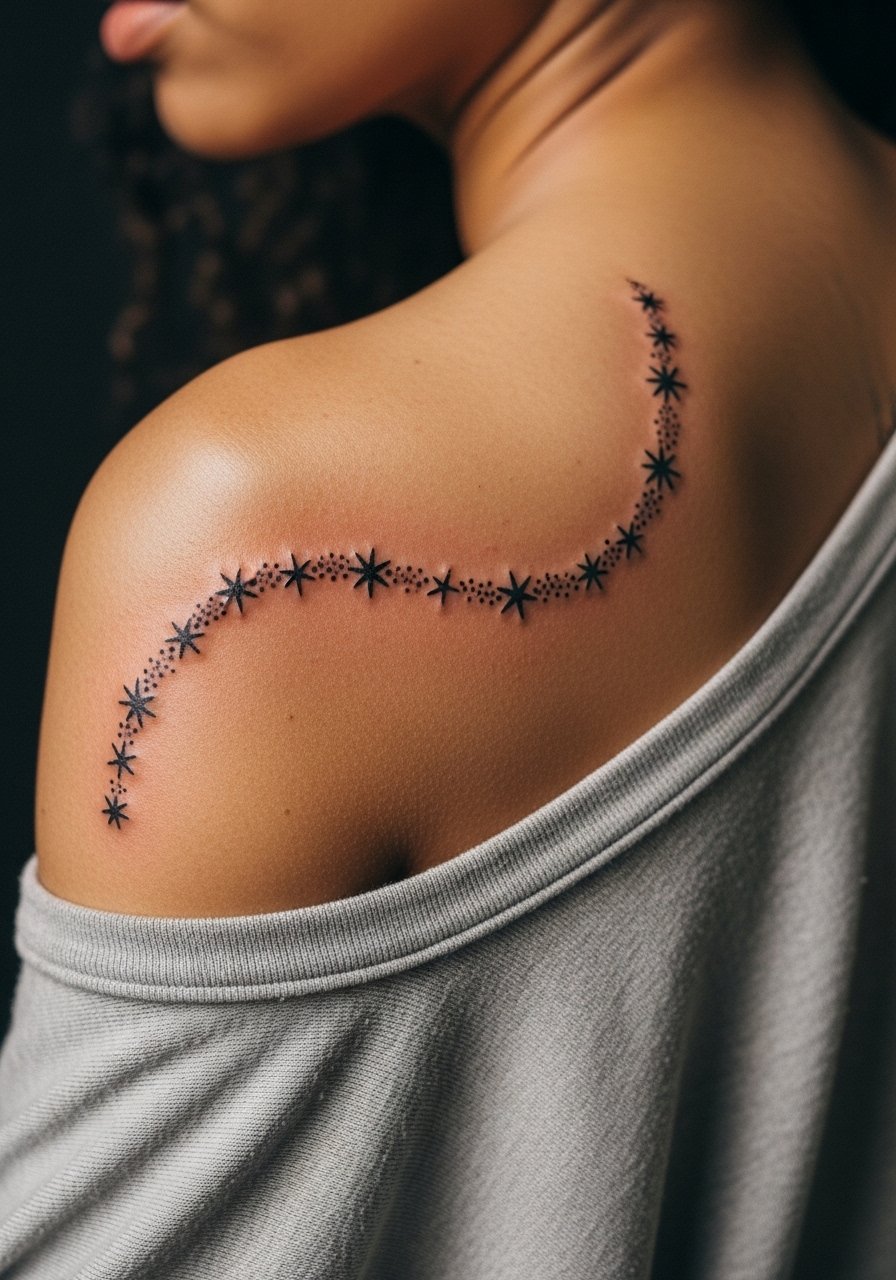
Tiny stars strung across the shoulder blade read delicate and organic when spaced unevenly. Ask for alternating dot sizes and slightly heavier anchor stars so the chain holds contrast over time. Sessions are usually brief but require precise hand control. The common mistake is making all stars the same tiny size. That makes the chain invisible after a few years. Expect touch-ups earlier than with bolder work. This placement looks contemporary with an open-back tank that lets the trail show naturally.
10. Map Fragment with Coordinates
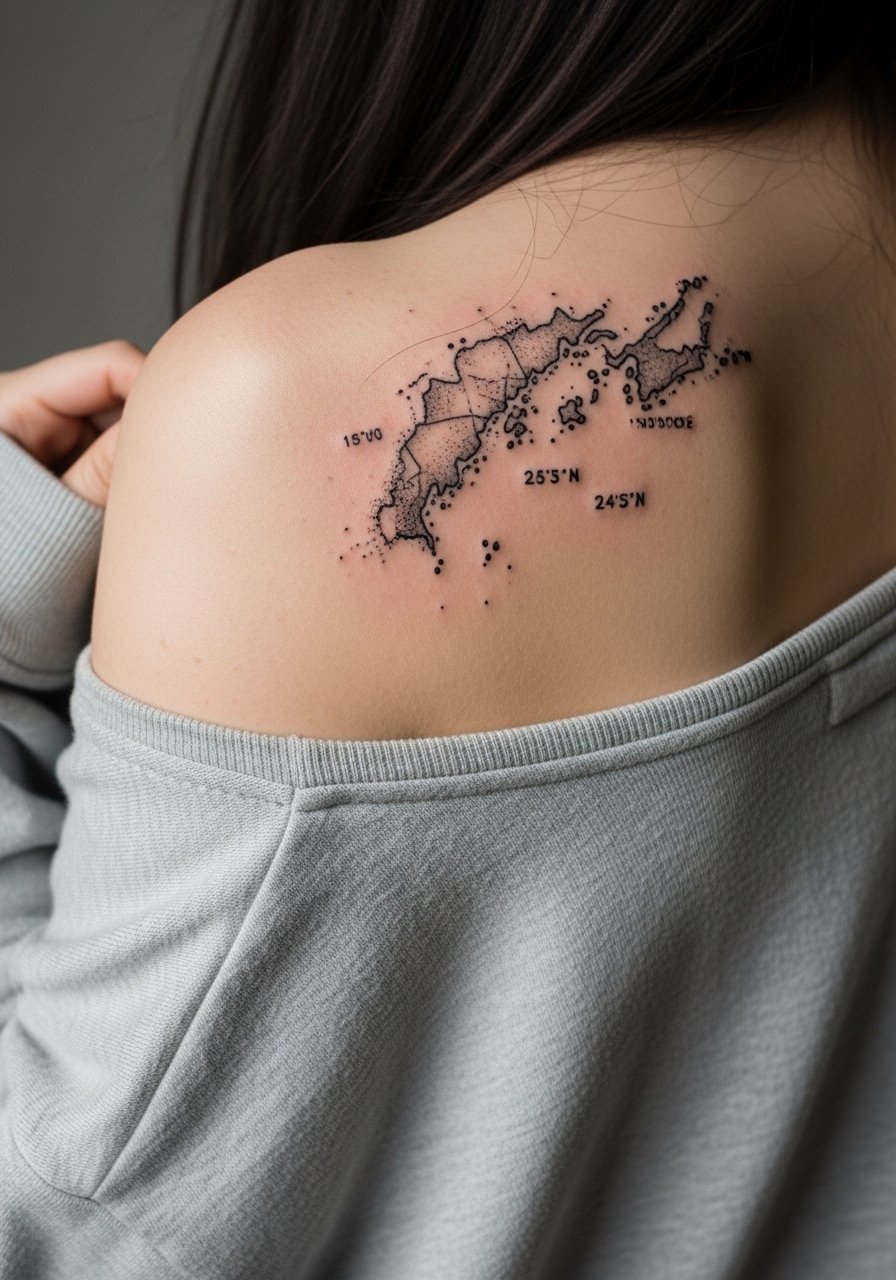
A small map fragment with coordinates reads personal and quiet on the shoulder blade. Specify the exact text for the coordinates in your stencil request so the lettering renders correctly. Sessions run from one to three hours depending on detail. Common mistakes are too-small type and overly delicate coastline lines. Those elements merge over time. Use slightly bolder coastal lines with fine inner detail and plan a touch-up after a year or two. For showing it off, a backless dress highlights the map without exposing more than intended.
11. Classical Line Portrait
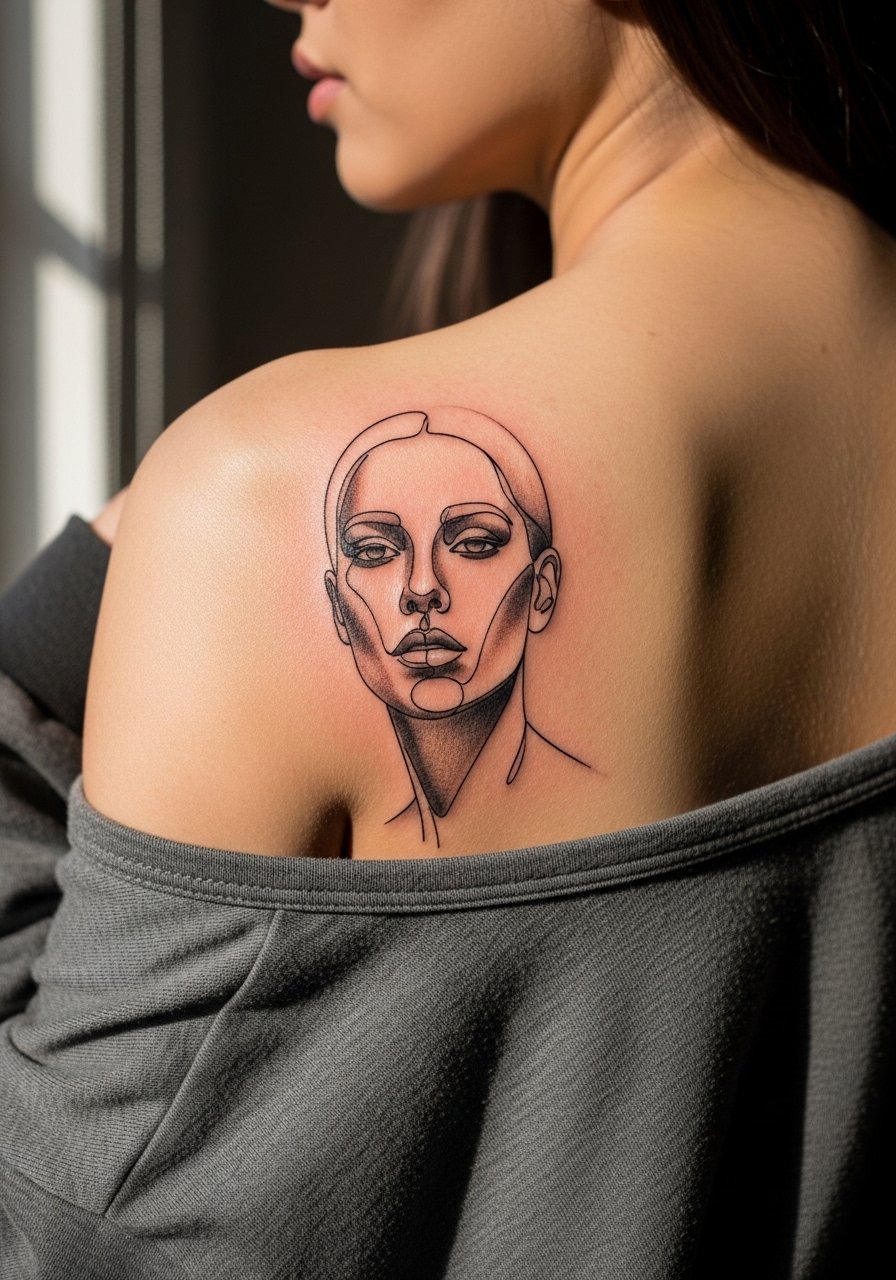
Single-line portraits on the shoulder blade can be arresting when simplified. The consultation should focus on which facial planes you want emphasized so the portrait reads at small sizes. The session is technical and may take two to three hours for a medium piece. The biggest mistake is asking for too much facial detail in a compact area. That level of detail tends to soften into an indistinct wash. Opt for strong contour lines and minimal interior shading for longevity. Pair with a low-back top for styled outfits where the portrait is the focal point.
12. Architectural Linework Panel

Architectural pieces use perspective and negative space to read like a tiny sketch on the shoulder blade. Ask the artist to mock up the piece on a full-size stencil and to show you the view with your shoulder moving. Sessions vary by complexity. A common error is compressing too many converging lines into one small area. That causes visual noise after a few years. Keep key structural lines a touch heavier and inner hatch shading looser to preserve form. For everyday outfits, a slip dress with an open back lets the panel show.
13. Stippled Fern Frond
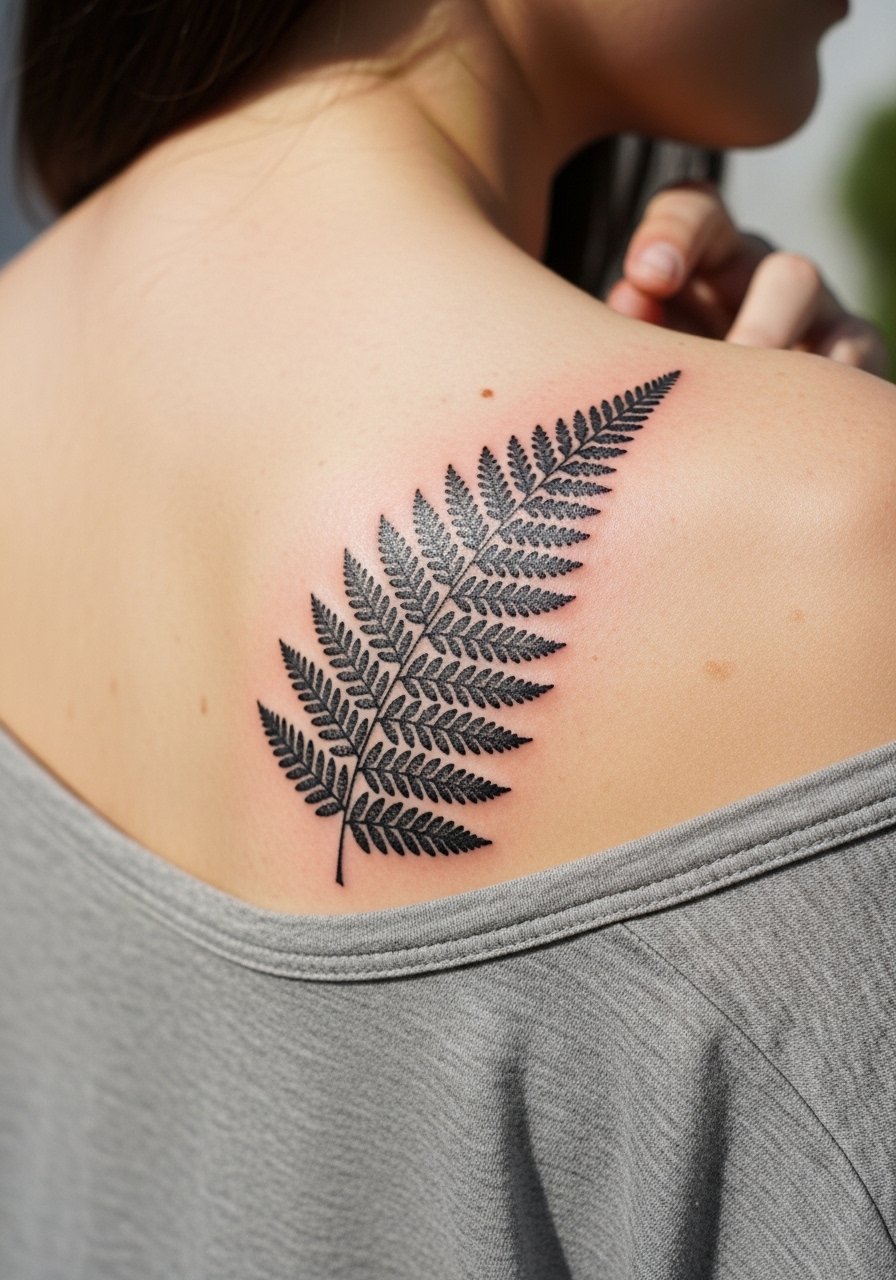
Stipple shading translates beautifully across the shoulder blade because it follows the skin texture. Specify that the artist uses stippling for gradients rather than dense grey washes. Sessions usually take one to two hours for a medium frond. The pitfall is too-tight dot patterns that coalesce into a spot of grey. Ask for graduated dot density and stronger outer edges. Over time the stippling softens into a pleasant gradient rather than a hard blur. Pair this piece with a loose linen shirt for a natural look that complements the botanical shape.
14. Script Banner Curving with the Scapula
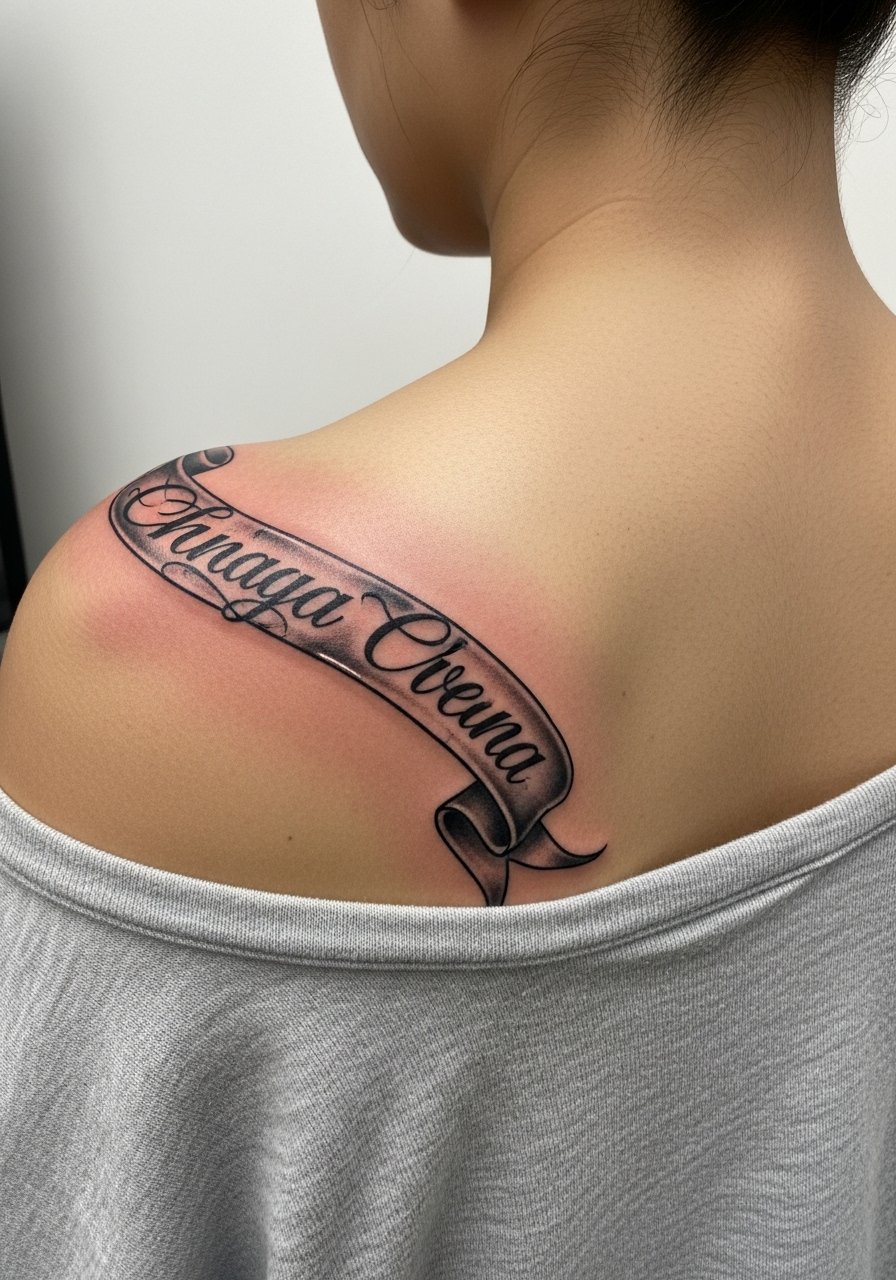
A banner that follows the scapula curve looks custom and intentional. During the consultation, have the artist pin the stencil and check how the text sits with your shoulder movement. Sessions are often under two hours. The common mistake is trying to fit a long phrase into a narrow curve. Tight letters blur and require touch-up. Keep the phrase short and the counter space generous. This approach keeps readability at three and five years. Pair with a strappy top that lets the banner peek out naturally.
15. Abstract Brushstroke Wash
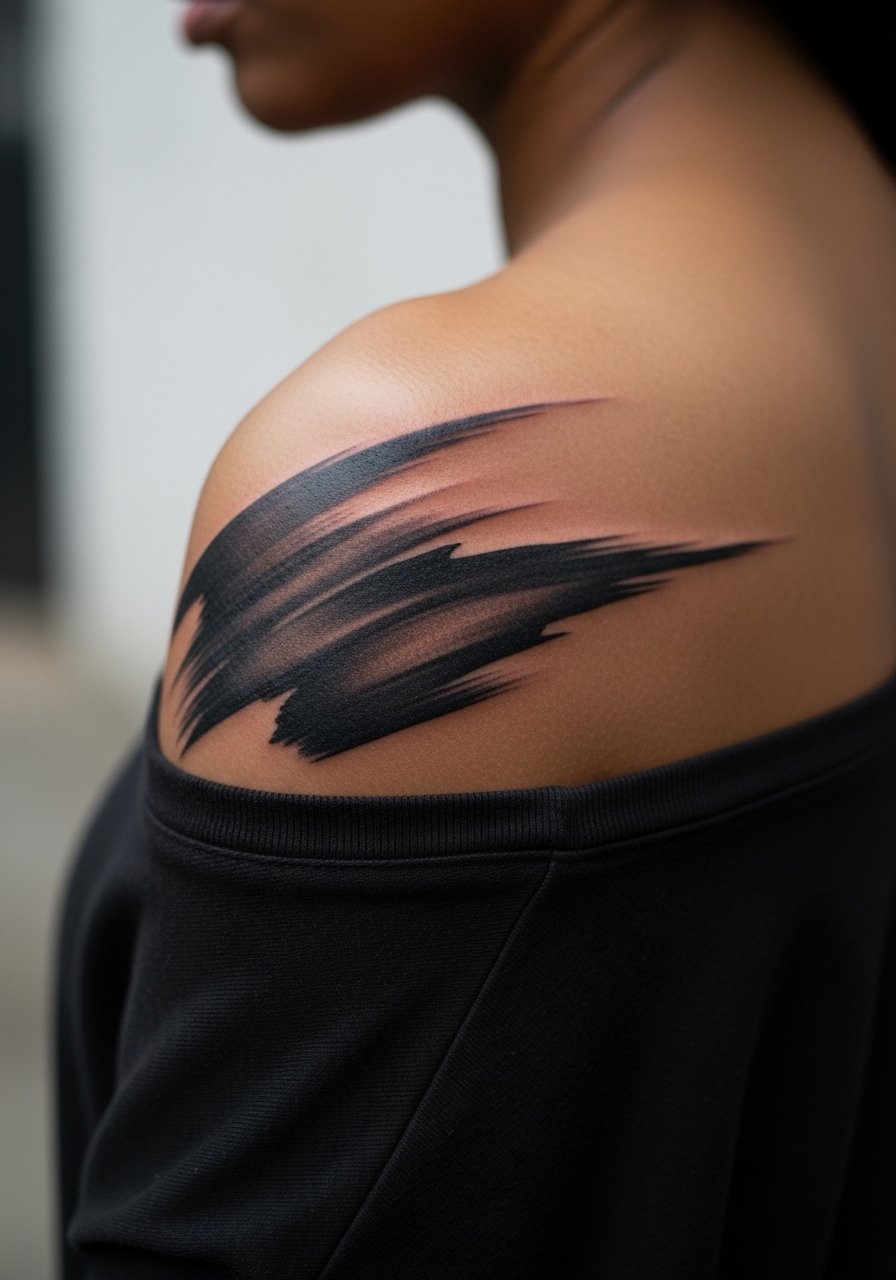
Brushstroke tattoos mimic ink on paper and can read as a modern, painterly mark on the shoulder blade. Tell the artist you want texture suggested with a few bold strokes and soft feathered edges. Sessions range from 45 minutes to two hours depending on scale. A mistake is overworking feathered edges into fine lines, which blur over time. Lean into broad strokes with layered grey for longevity. This style pairs with a raw-edge tee for a casual, artistic vibe.
16. Crescent Moon with Dot Halo
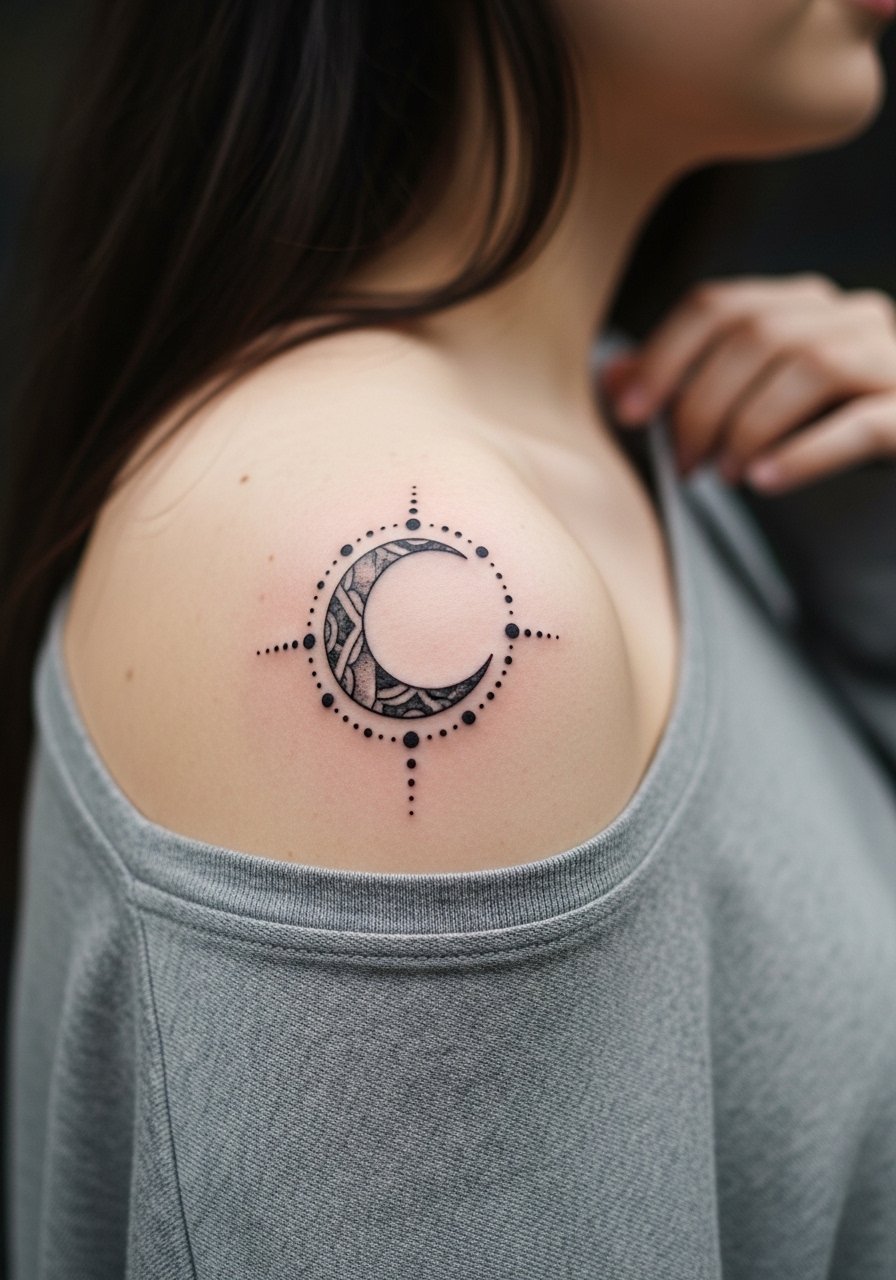
A crescent with a halo of dot work is a small composition that benefits from breathing room on the shoulder blade. Ask the artist for a halo that fades outward with lower dot density so the glow lasts beyond the first year. Sessions are often short. The error is packing dots too tightly around the crescent which leads to a grey ring later. Request a lighter outer edge and bolder crescent to anchor the motif. For evenings out, a backless camisole puts the moon on display.
17. Black and Grey Anchor with Rope Detail
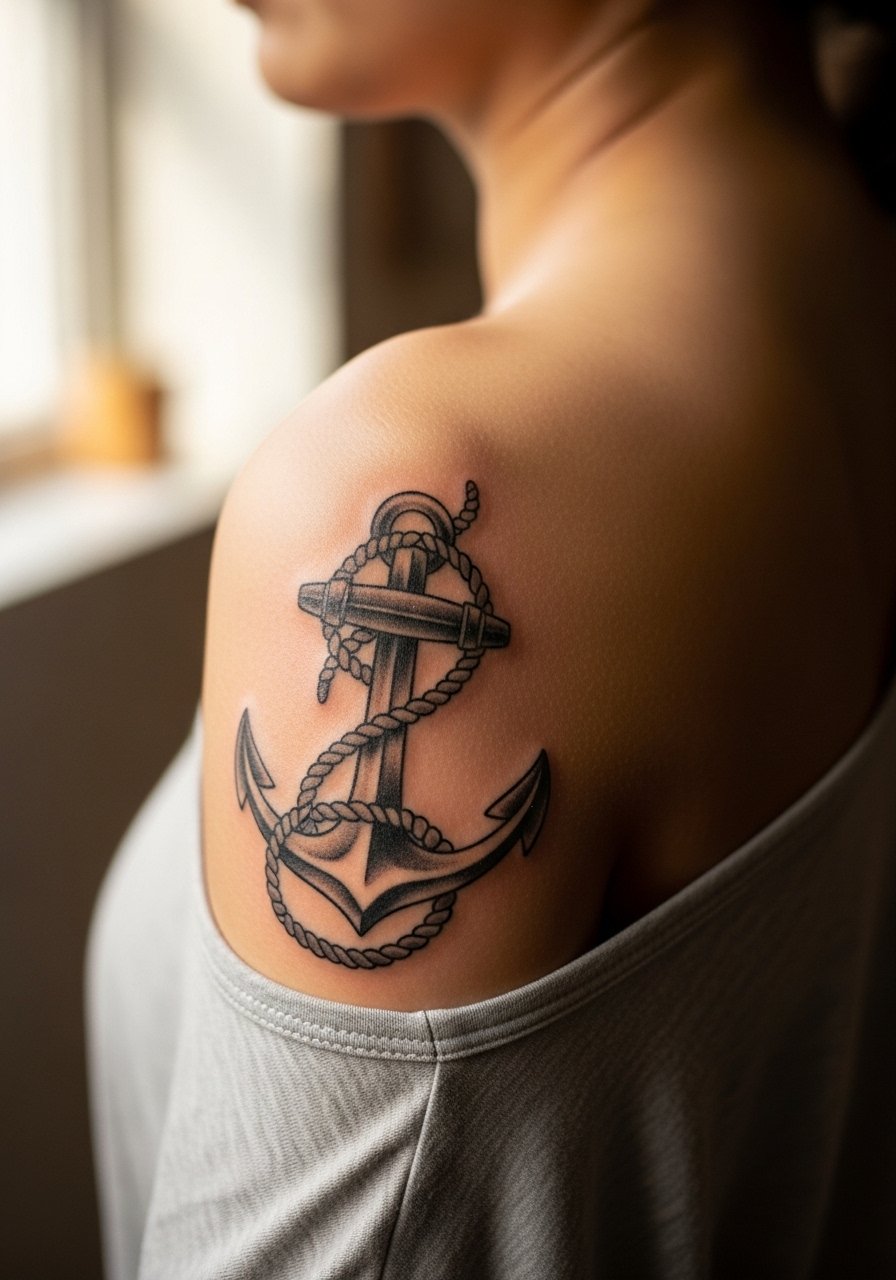
Traditional anchor motifs adapt well to shoulder blade contours because the design has a strong silhouette. Ask for rope detail that reads like texture instead of a maze of tight lines. Sessions are moderate length. A common mistake is over-detailing the rope, creating fine lines that blur. Keep the anchor silhouette bold with textured shading inside. That strategy protects the shape as it ages. For day-to-day wear, a striped boatneck top gives maritime flair without rubbing the area.
18. Tiny Zodiac Glyph Cluster

A cluster of tiny zodiac glyphs works if each glyph has room. During consultation, place the stencil on the moving shoulder to ensure glyphs do not sit where fabric will constantly rub. Sessions are short but precise. The mistake is compressing glyphs into a small rectangle. That reduces clarity over time. Spread them slightly and consider a faint dot or line between each to maintain separation. For subtle styling, a thin chain lariat necklace can sit above the cluster without masking it.
19. Illustrated Moth with Veined Wings
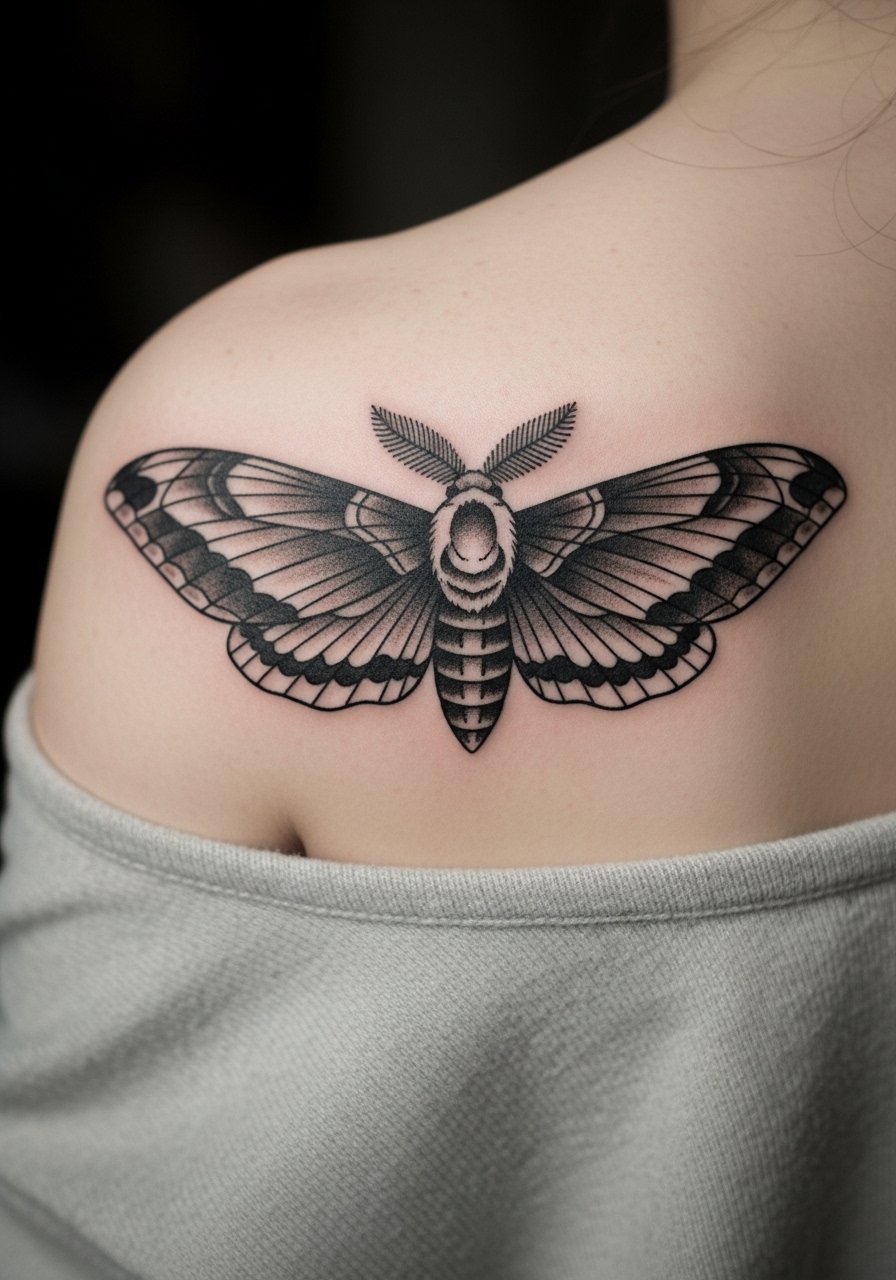
A moth with veined wings benefits from a balance of linework and soft grey fills. Tell your artist you want emphasized wing contours with lighter internal texture so the veins do not merge. Sessions can take two to three hours. Overworking wing detail is the usual misstep. That leads to loss of definition after a couple of years. Keep main veins stronger and background shading airy. This design looks great with a cropped jacket that leaves the shoulder blade visible while adding shape.
20. Antique Key with Shadow
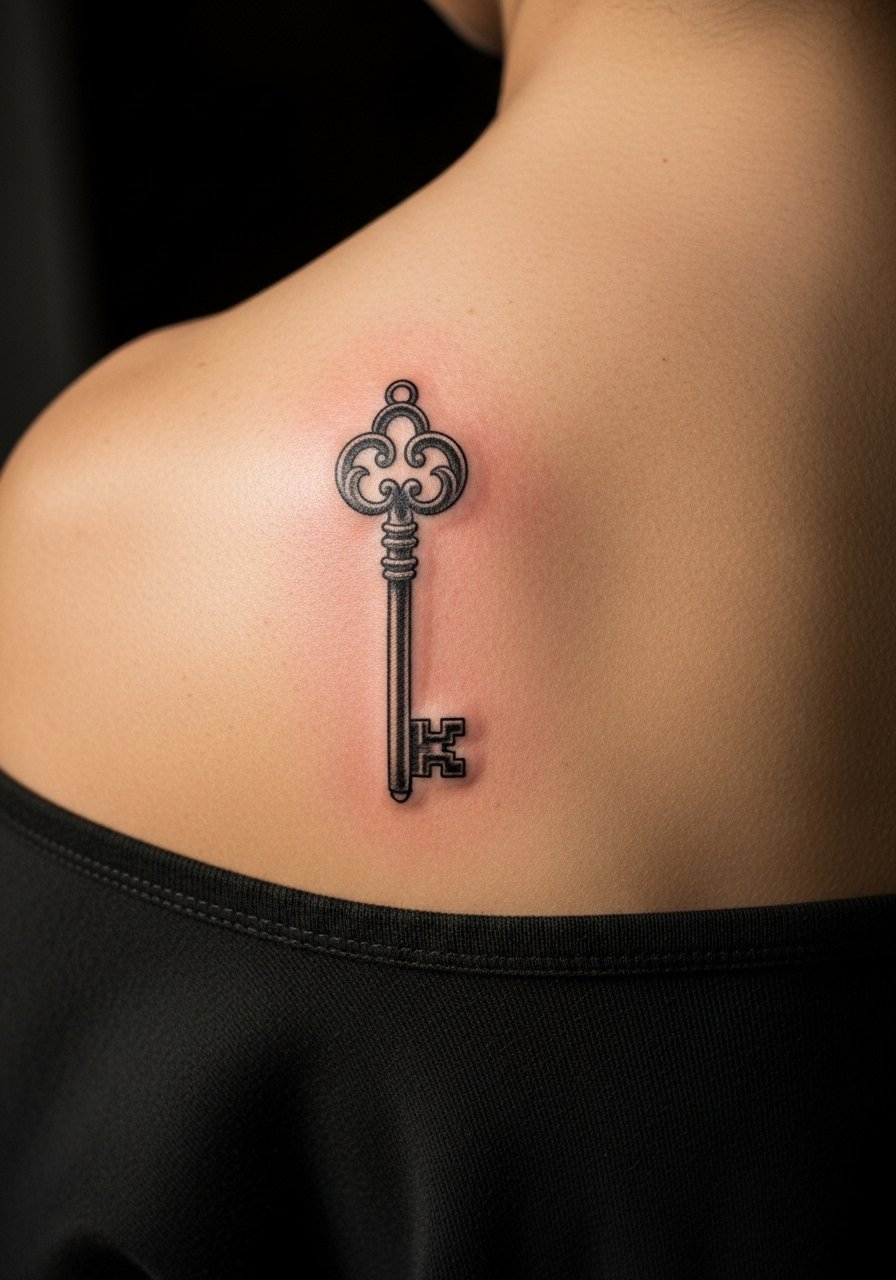
An antique key reads like a small story on the shoulder blade. Request a soft cast shadow to lift the key from the skin which helps readability at almost any distance. Sessions are moderate in length. Common mistakes include overly delicate teeth and too-thin stems. Those details dissolve. Ask for slightly stronger outer lines and muted shadowing rather than tiny cross-hatches. For outfits, a scoop-neck top presents the key without covering it.
21. Thin Ridgeback Wave
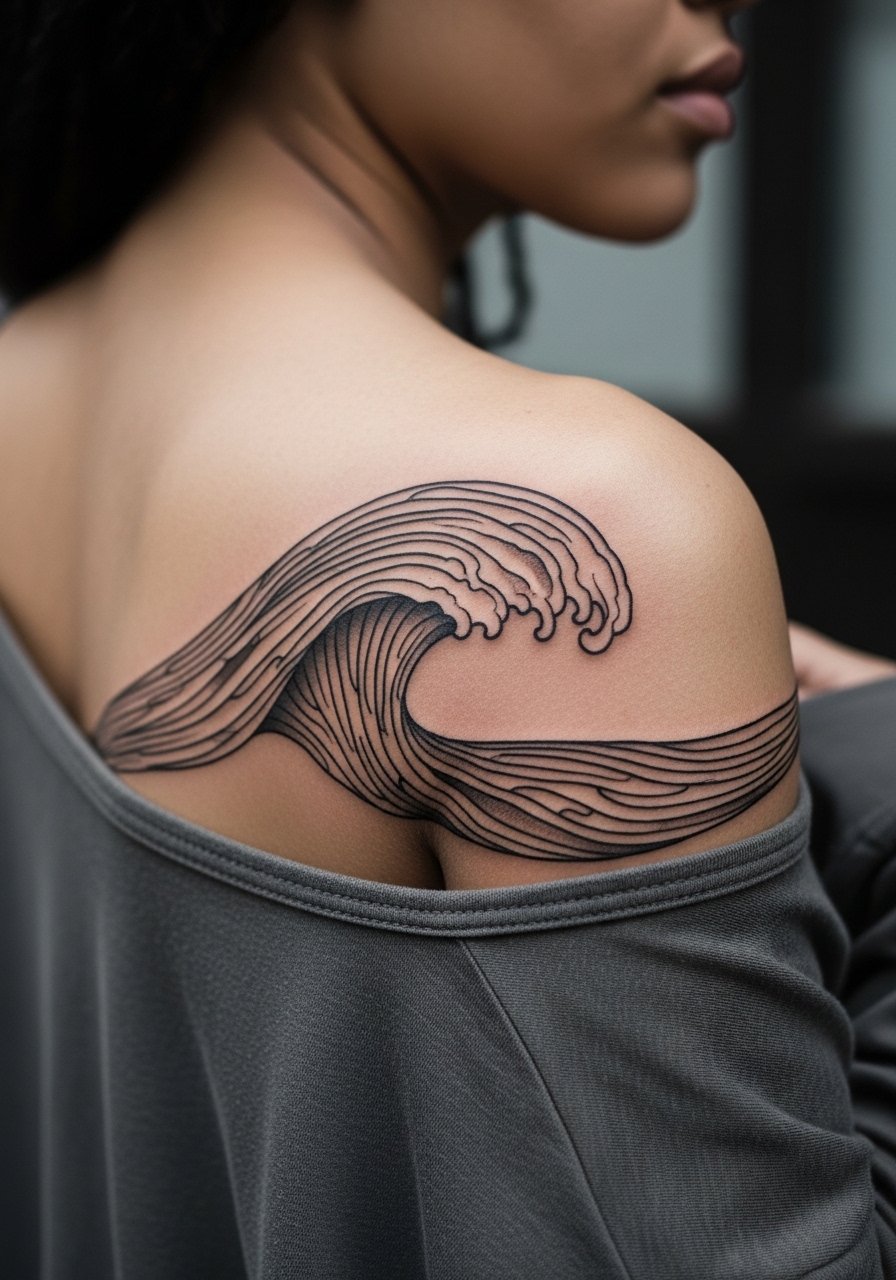
A series of thin waves that curve with the scapula creates rhythm and motion. For longevity, tell the artist you want alternating line weights so the pattern keeps a readable rhythm as lines soften. Sessions are short to moderate. The mistake is identical thin lines stacked too closely. They can merge into a single grey tone after years. Keep spacing and alternate heavier anchor lines. This style pairs neatly with a knit tank that shows the curve.
22. Botanical Half-Mandala
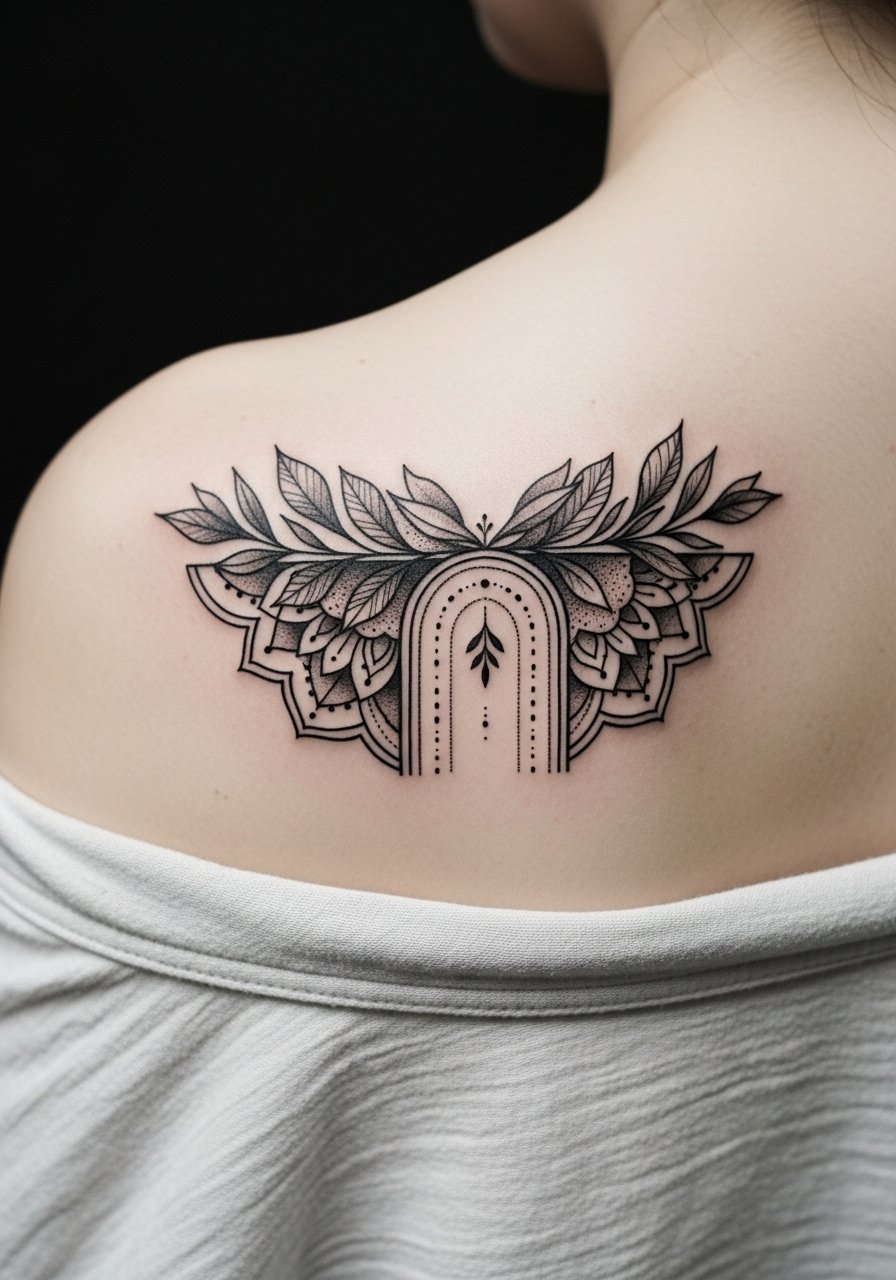
A botanical half-mandala hugs the shoulder blade without asking for a full circular field. Ask for leaf shapes to replace some mandala rays so the piece reads organic as it moves. Sessions are usually two hours. A mistake is packing too much concentric detail on the inside. That reduces clarity. Use open petal shapes and stipple fades for longevity. Wear a wrap top to show the piece with shape and modesty.
23. Vintage Camera Silhouette

Silhouette work like a vintage camera benefits from strong negative space so the profile reads instantly. In consultation, define the silhouette scale so lens and viewfinder are readable. Sessions are brief. The typical error is adding tiny lens detail that does not survive time. Keep the silhouette bold with suggestive interior shading. That approach keeps the icon clear at three and five years. For style, a camisole top frames the silhouette nicely.
24. Ancient Script Fragment
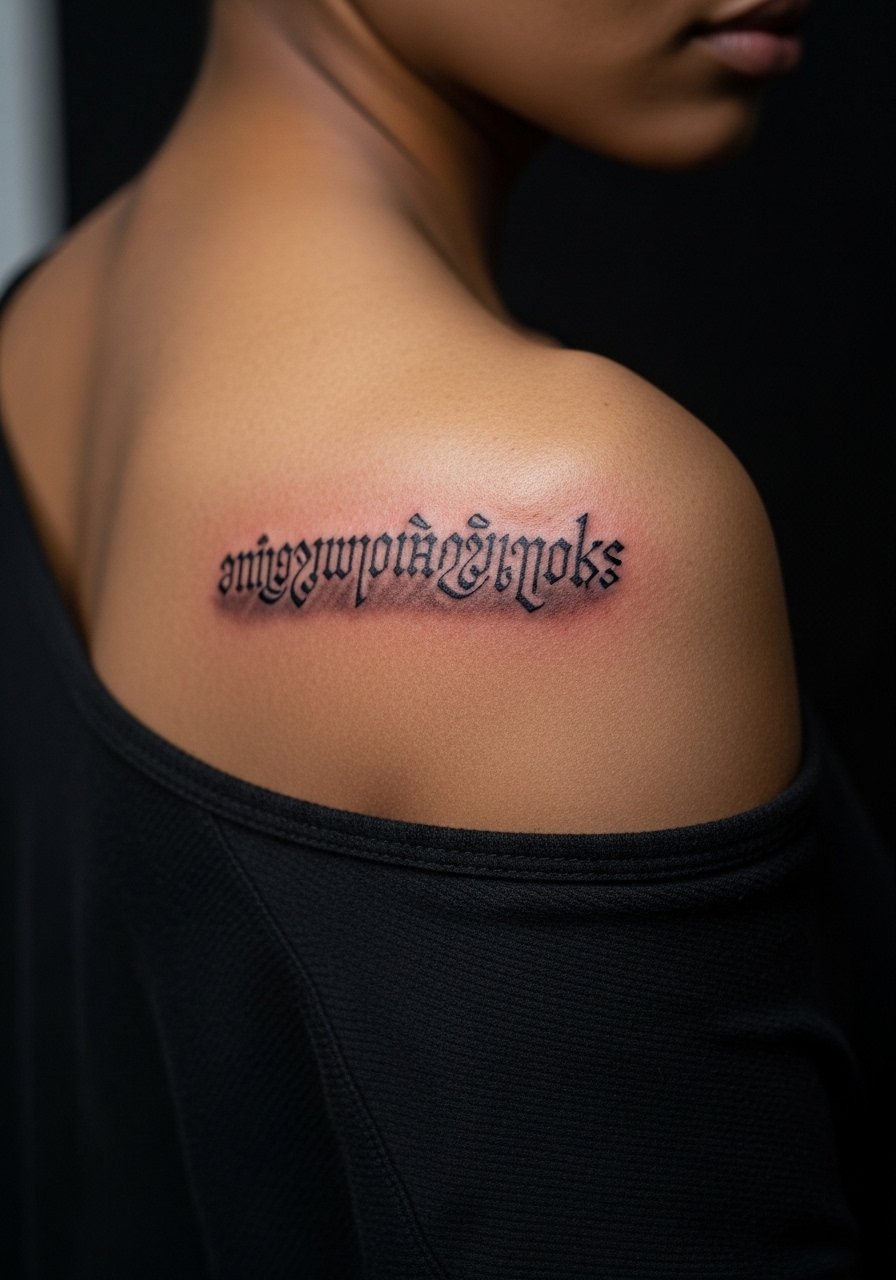
Ancient script or runes can feel personal and cryptic on the shoulder blade. Provide exact spelling and request a stencil in the precise size to avoid tiny counters. Sessions are short. The mistake people make is choosing a script too small to survive. Opt for bolder strokes for each character and allow for slightly larger letterforms. Over time the characters retain shape rather than melting. Pair with a boho kimono for a curated layered look that still shows the script.
25. Geometric Flower with Shaded Core
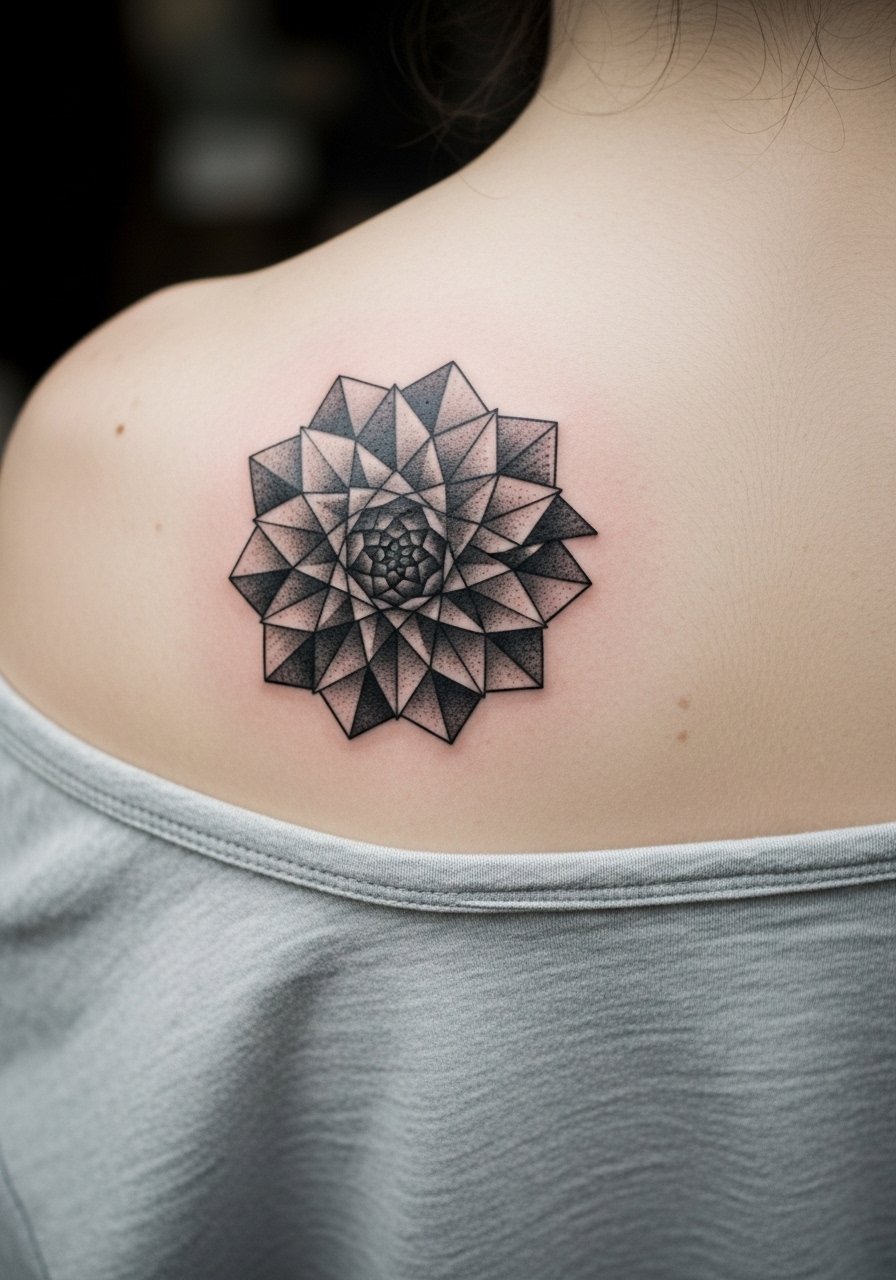
A geometric flower that centers on a shaded core gives you a readable focal point as outer petals can be simplified. Tell your artist you want the core slightly darker to anchor the flower against soft petal lines. Session time depends on size. A mistake is trying to render every petal line. That causes softening later. Strong core contrast plus lighter outer petals helps the design age gracefully. For display, a cutout back tee keeps attention on the flower.
26. Maples and Light Branching
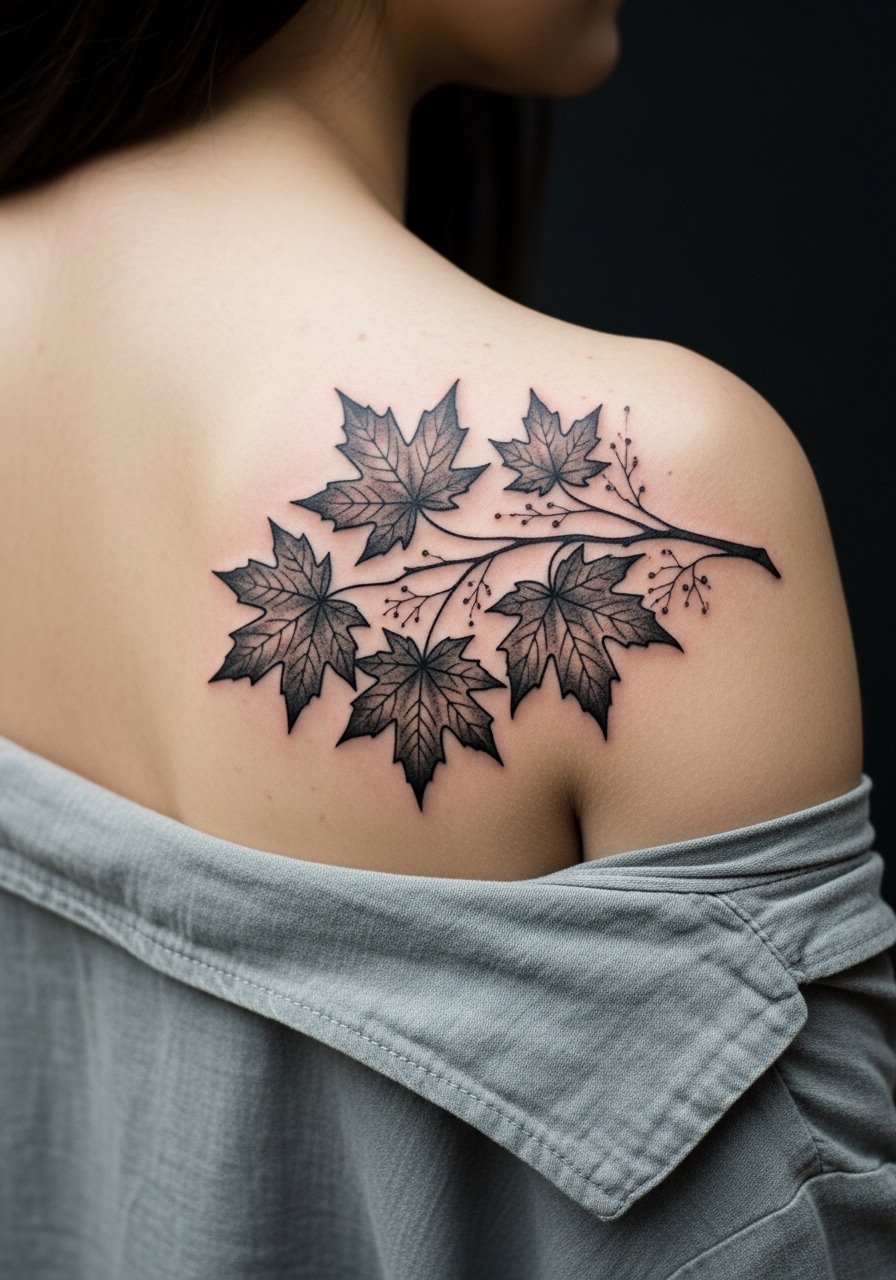
Maple leaves with light branching lines make for seasonal shoulder blade work. Ask the artist for silhouette edges with inner veins suggested not rendered fully. Sessions are typically one to two hours. The usual mistake is over-etching veins that later blur. Keep interior lines minimal and let negative space define the leaf. A soft touch-up in a couple of years can refresh the veins if needed. This motif looks great under a textured cardigan that can be draped to display the work.
27. Constellation Arc with Tiny Dots
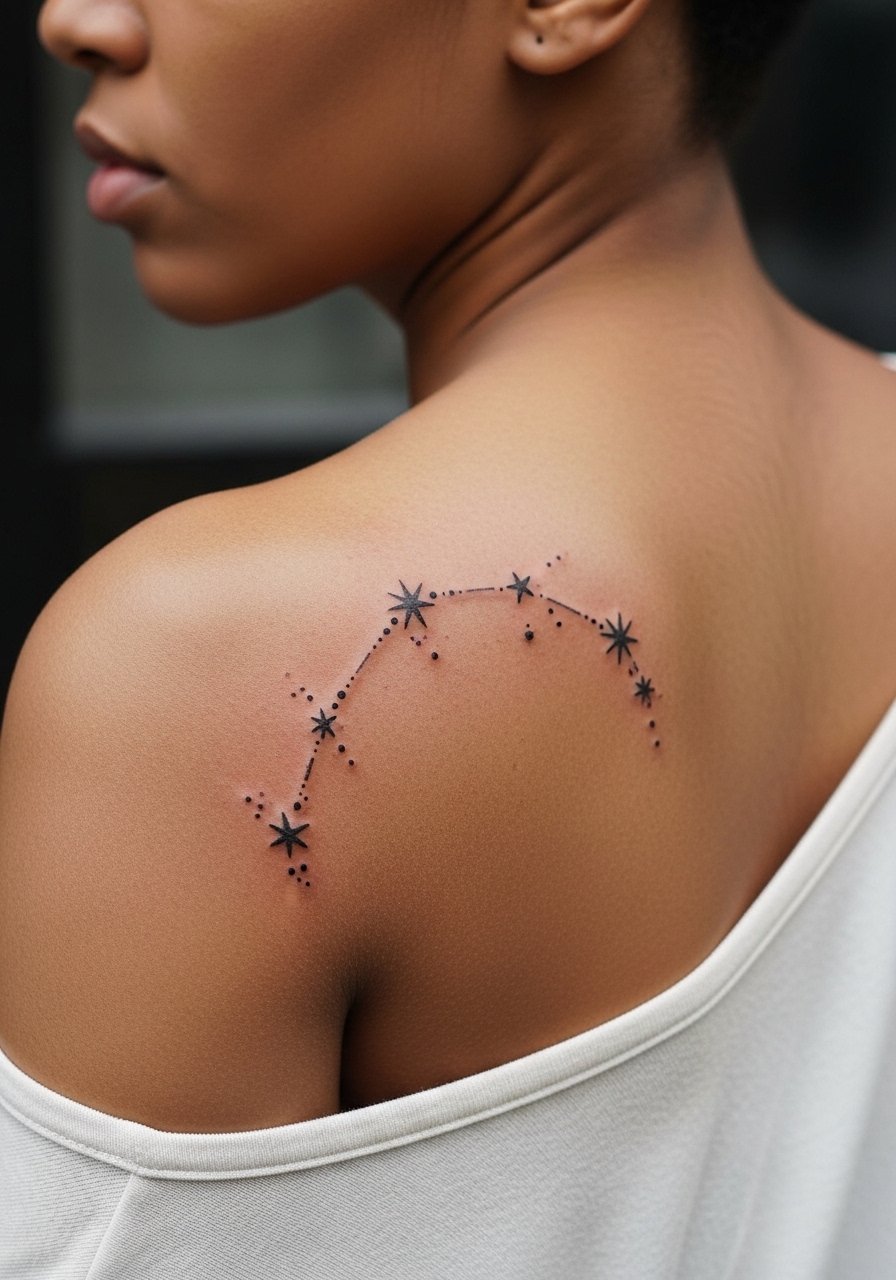
A constellation arc that follows the shoulder blade is a subtle nod to placement and movement. For longevity ask your artist to thicken connector lines slightly and to use slightly larger anchor stars. A common mistake is hairline connectors that vanish as skin ages. Sessions are brief but require precision. Expect a touch-up at year two if you live in high sun exposure areas. This piece plays well with a slip camisole that keeps the back open without exposing more than intended.
Frequently Asked Questions
Q: How much does a black and grey shoulder blade tattoo usually hurt compared to an arm piece?
A: The shoulder blade is generally moderate on common pain scales because there is a mix of thin skin near the scapula and more padded areas. Pain varies by exact spot and your threshold. Expect short breaks if the artist needs to focus on a tight detail near the bone.
Q: Will fine line shoulder blade tattoos blur faster than bolder blackwork on the same spot?
A: In my experience fine line tends to need touch-ups sooner than saturated blackwork because the lines are thinner and more vulnerable to migration. That said, careful spacing and slightly bolder primary lines extend the lifespan without changing the aesthetic too much.
Q: What should I wear to my shoulder blade tattoo session for easy access?
A: Wear a loose button-down shirt or a wide-neck top you can slide to one side so the artist has clear access. Avoid tight bras during the first week to reduce friction.
Q: How long should I expect a touch-up for delicate shoulder blade pieces?
A: Plan on an optional touch-up around year one or two, especially for scripts and micro-detail. Many people book a check at six months to see how settling is going and then schedule a small adjustment if needed.
Q: Are there career or visibility considerations for shoulder blade tattoos?
A: Most workplaces find shoulder blade tattoos easy to cover with shirts, so they are lower risk than hand or neck work. Think about your typical wardrobe and whether you need the option to conceal the piece for certain settings.
