
Fine line scorpion tattoos look delicate in photos, but they tell a different story once they meet real skin and time. Trends push tiny, hairline details, and what looks crisp on an iPhone often softens fast if placement, spacing, and ink saturation are not chosen with longevity in mind. Below are 17 sketch-style scorpion concepts that plan for how they heal, what to ask your artist, and how to show them off without compromising the linework.
1. Fine Line Scorpion on the Inner Wrist
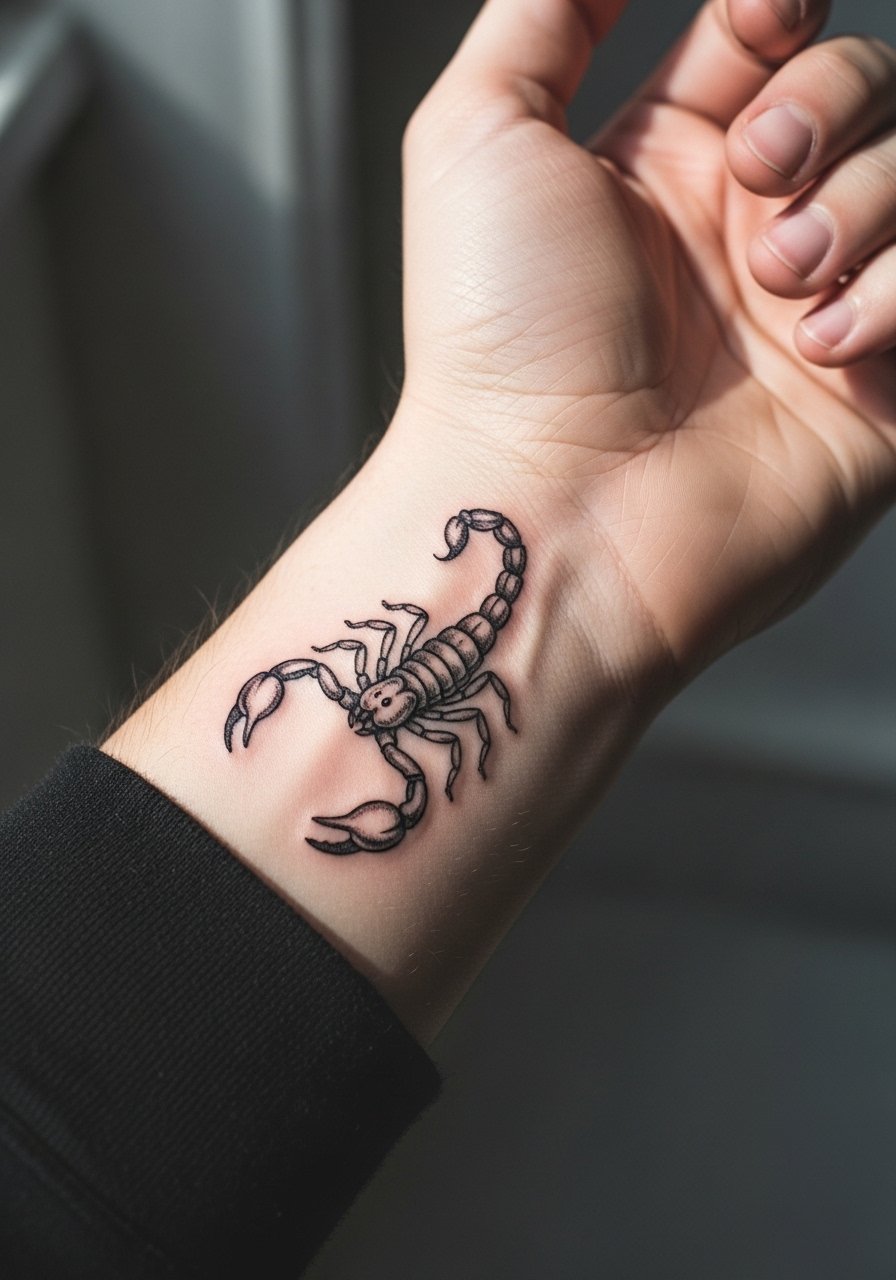
I've seen tiny wrist scorpions keep their shape best when artists balance line weight and spacing. Ask for slightly heavier anchor lines and airy internal sketch marks so the fine details have room to soften without merging. Expect the session to sting more than a forearm piece because the wrist is shallow on padding. Plan for a short touch-up at year two rather than assuming permanent crispness. For showing it off, roll sleeves or wear a thin chain bracelet that sits just below the piece so the scorpion reads without jewelry crowding the small canvas.
2. Sketched Scorpion Along the Side Forearm
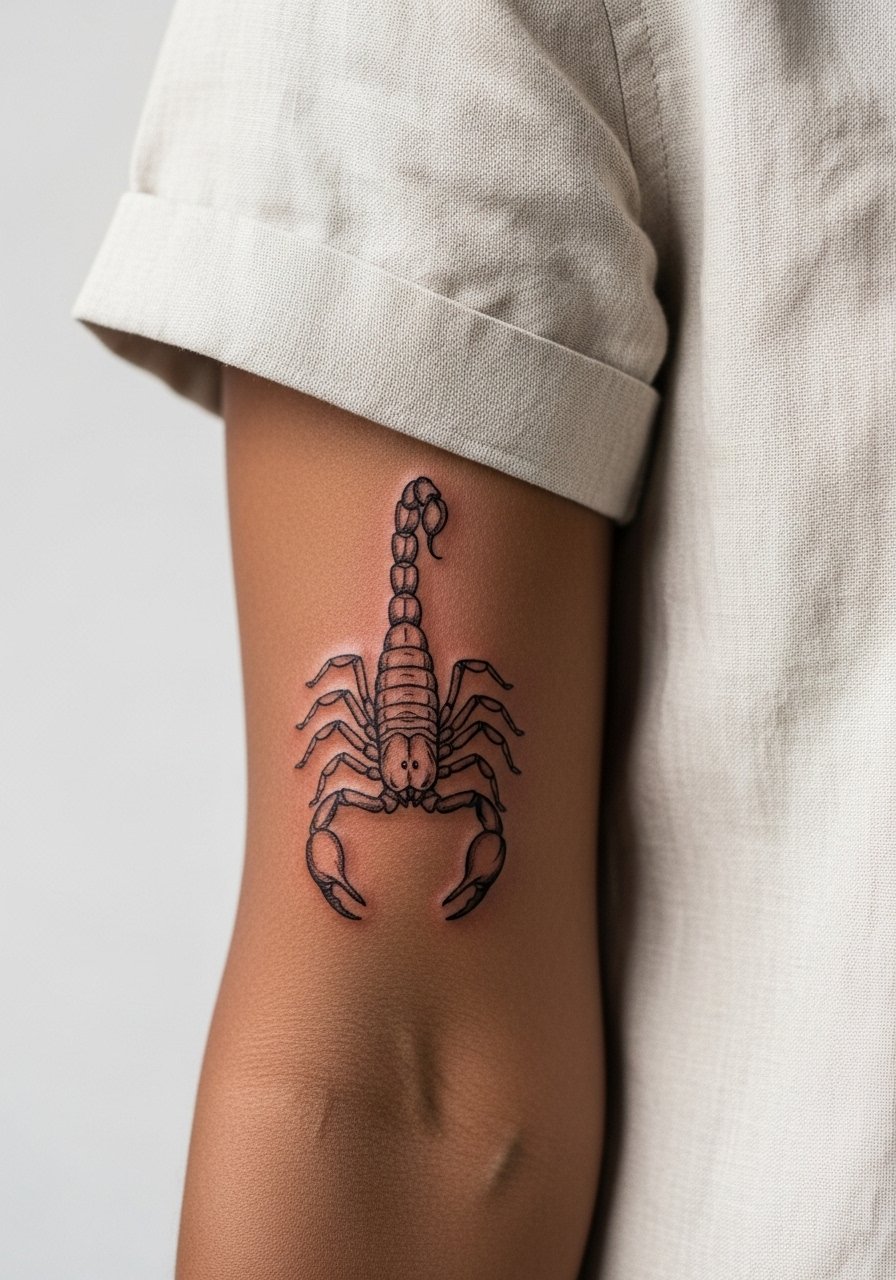
Forearm placements tolerate more detail than the wrist because there is room for motion and spacing. Tell your artist you want stipple shading for texture rather than solid fills, because stippling settles into the skin more gracefully over five years. A common mistake is asking for too much tiny crosshatching, which can read muddy by year three. Pain is moderate and sessions usually fit into one appointment under two hours for a medium sketch. Pair this with rolled sleeves and a rolled-sleeve linen shirt for summer wear that frames the art.
3. Minimalist Scorpion on the Ankle
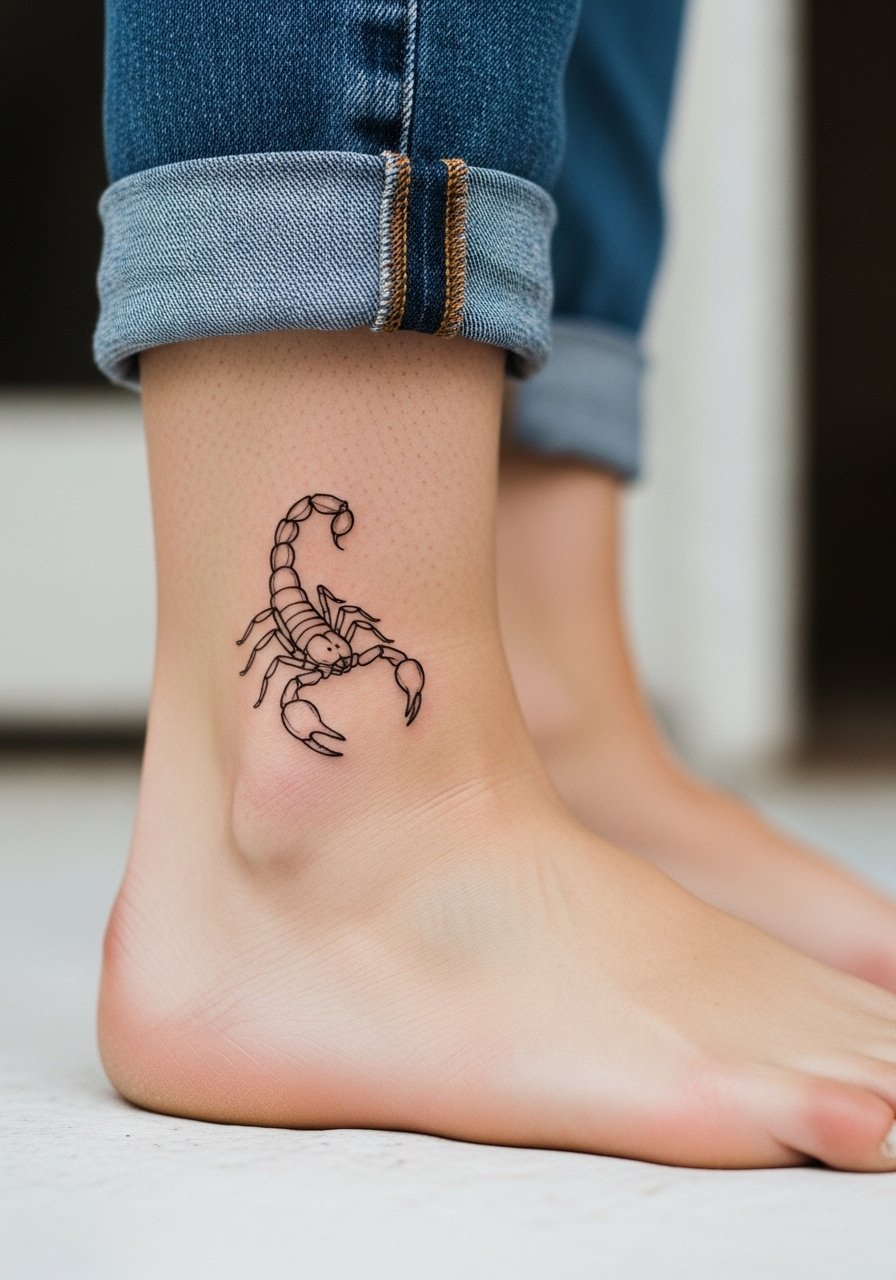
Ankle tattoos face constant friction from socks and shoes, so design choices matter more than you might think. Go for simplified linework with negative space legs and a small, bolder pinch on the tail pivot. The session feels quick but expect tenderness when walking the first few days. Blowout risk is low if the lines are not packed too tightly. For showing it off, a delicate ankle bracelet or sandals keeps the focus on the motif while avoiding constant rubbing against fabric.
4. Shoulder Blade Sketch Scorpion
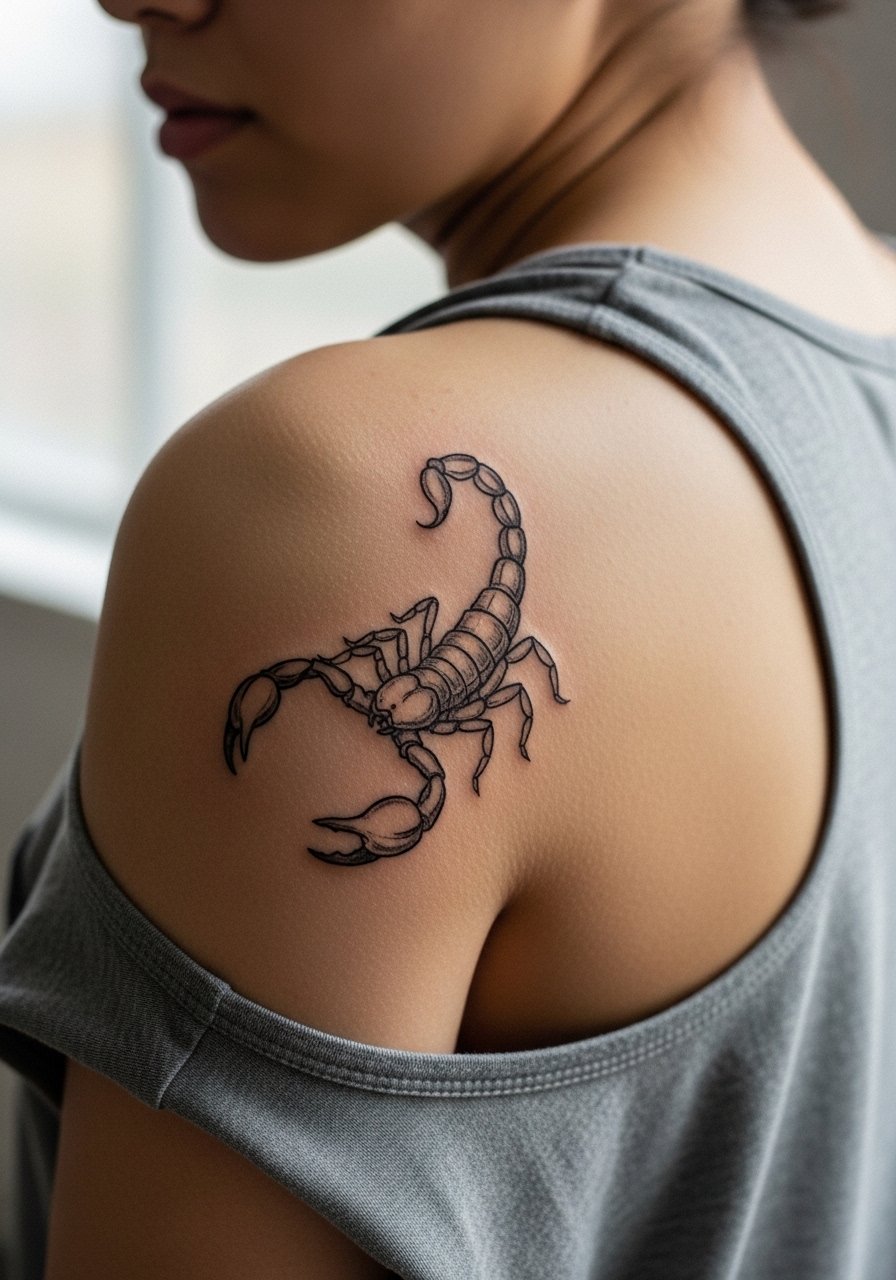
The shoulder blade offers a broad canvas for sketchy motion lines that look intentional even as they age. When you consult, specify flow over symmetry so the scorpion follows the shoulder blade curve rather than sitting stiff. Sessions can be a bit awkward because of positioning, but pain is moderate and spreads into a pleasant pressure for many people. Most shoulder pieces show minimal blowout when linework is relaxed and not overly dense. For evenings out, an open-back top frames this placement beautifully.
5. Tiny Scorpion Behind the Ear (Subtle Accent)
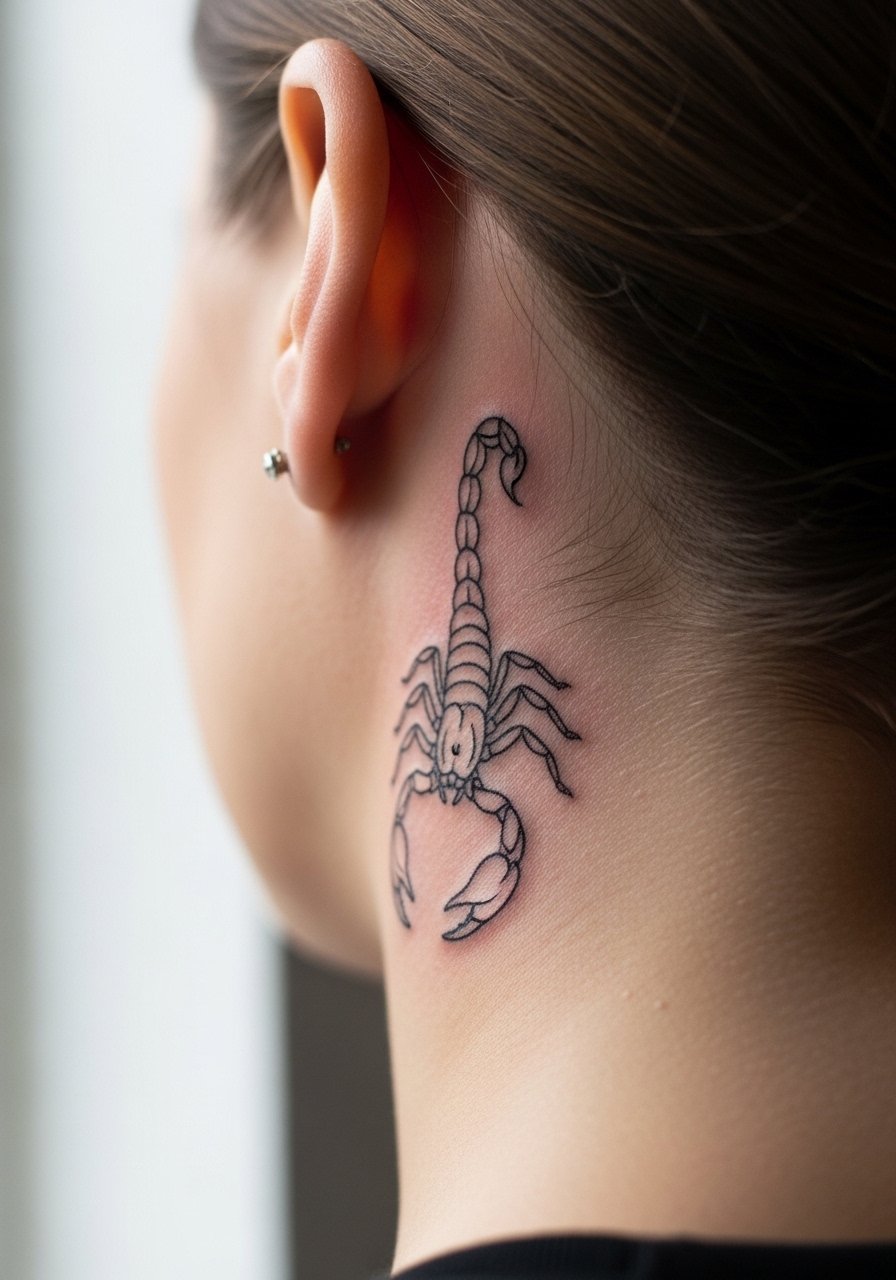
Behind-the-ear placements are tiny statements that age differently because hair oils and shampoo contact the area. Ask for a compact composition with a bold tail line and lighter interior sketch marks to prevent early blurring. Expect the session to be quick and the pain to be sharp for a short burst. A mistake is requesting hairline-only strokes without any anchoring line, which can disappear faster than expected. Keep in mind ease of access when you choose a hairline that still allows an artist to stencil cleanly.
6. Ribcage Sketch Scorpion with Flowing Tail
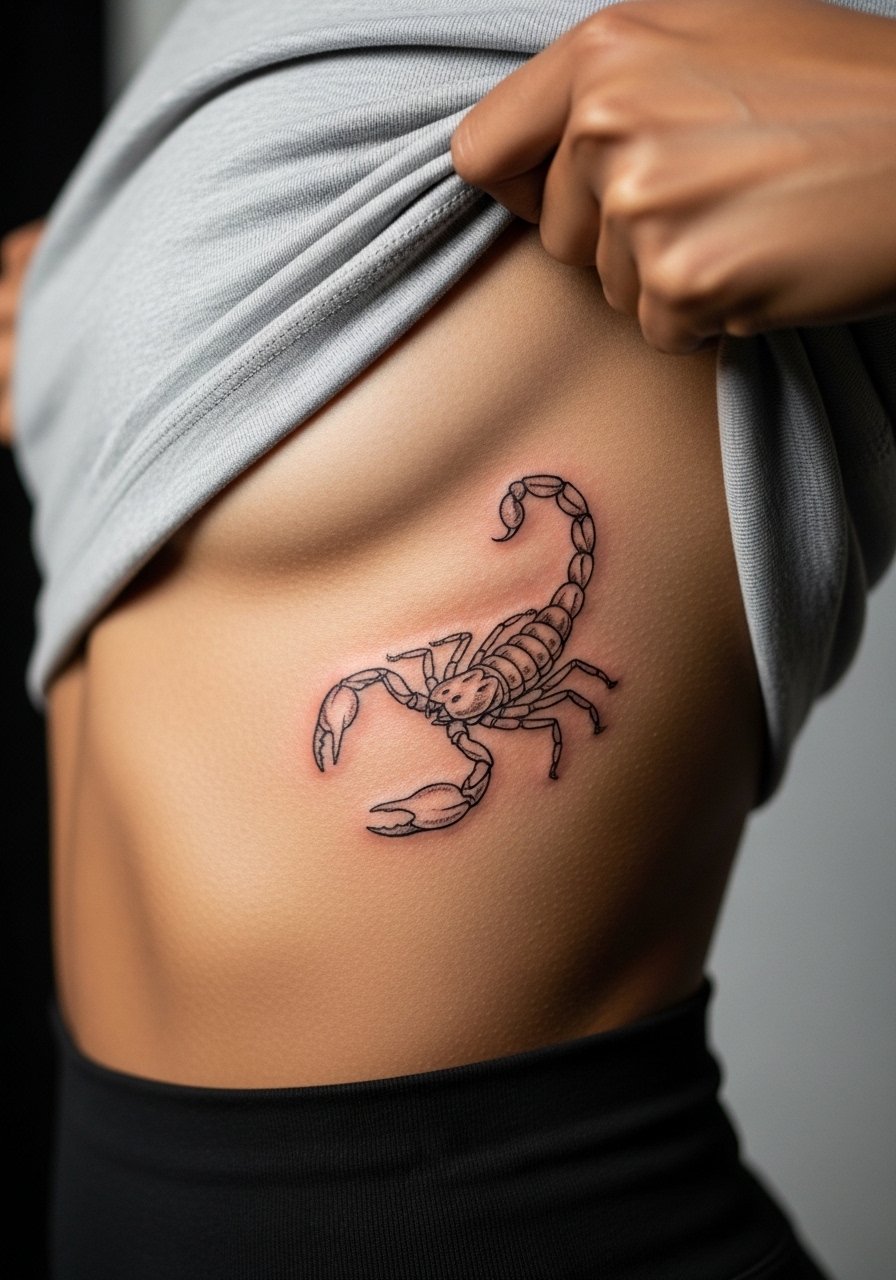
Fair warning, ribs are a sensitive area and the canvas moves with breathing and body changes. Artists split on fine line ribs into two camps. One camp argues the skin stretch blurs lines within two years. The other camp says with proper depth and spacing fine line settles fine on ribs. The right approach is to start slightly larger than you envision and ask for controlled needle depth so the lines do not sit too shallow or too deep. Sessions are longer and often split. For comfort, wear a zip-up hoodie you can pull aside to the appointment so access is simple and private.
Studio Day Picks
The inner wrist, forearm, ankle, and ribs above ask for different prep and a few targeted items will smooth the session and the first week.
- Stencil transfer paper kit. Lets you preview how the sketch linework sits on curved areas like the forearm and ribcage before the needle touches skin.
- Topical numbing cream. Applied 30 to 45 minutes before helps with sharp rib and wrist sensitivity without compromising line visibility.
- Thin protective film roll. Useful for ankle and hand pieces that face constant friction from clothing and footwear.
- Fragrance-free gentle body wash. Cleanses healing skin without stripping the thin lines that small scorpions depend on.
- Aquaphor healing ointment. Thin layers protect fresh fine line work while allowing enough moisture for proper healing.
7. Sketch Scorpion Half-Sleeve with Negative Space
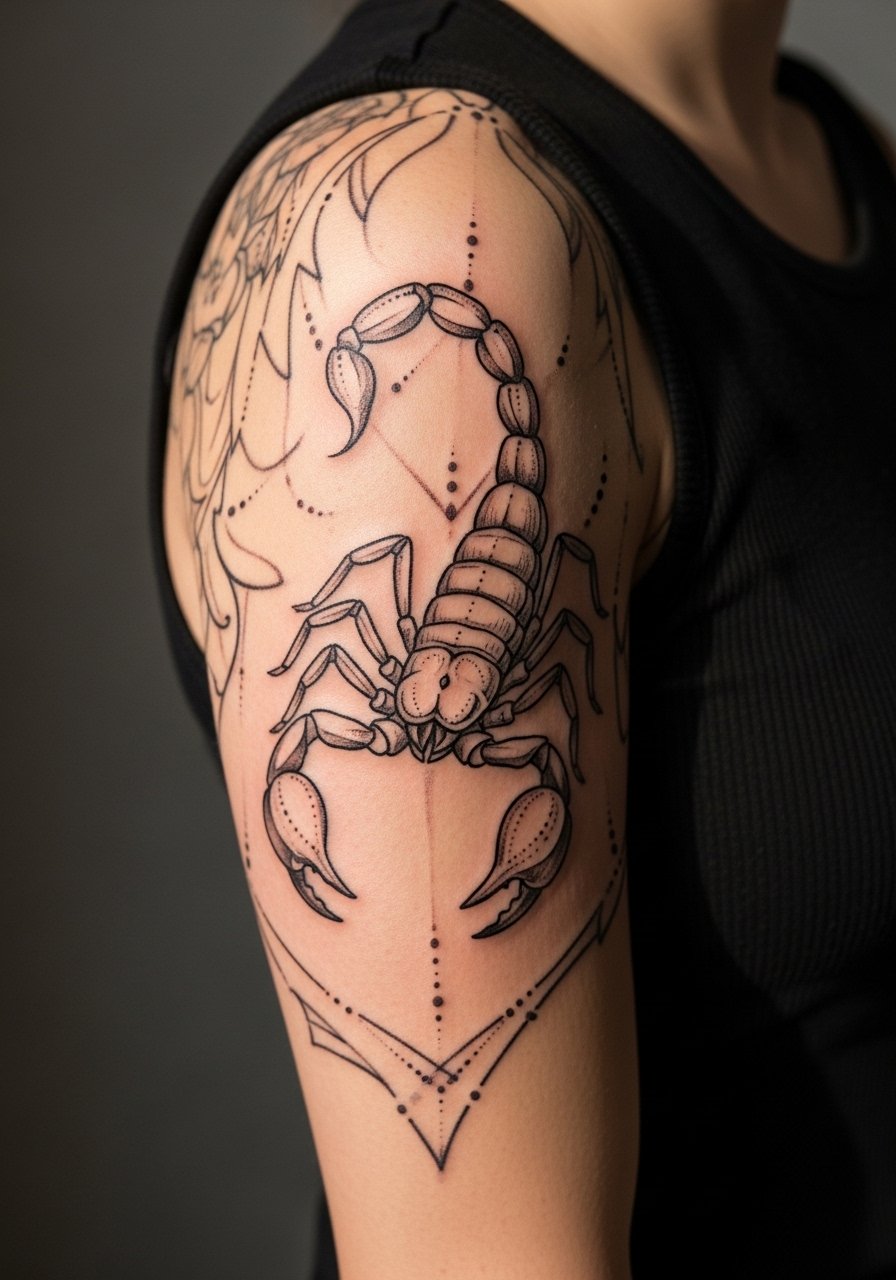
A half-sleeve lets you play with motion lines and negative space so the scorpion looks dynamic without dense fills. Tell your artist you want stipple and whip shading around the body to preserve contrast as the piece ages. A common mistake is packing too much detail into a tight upper-arm band, which becomes muddy after a few years. Expect multiple sessions over weekends and moderate pain. This placement pairs well with sleeveless tops that let the negative space breathe for maximum impact.
8. Collarbone Scorpion Sketch Flanked by Script
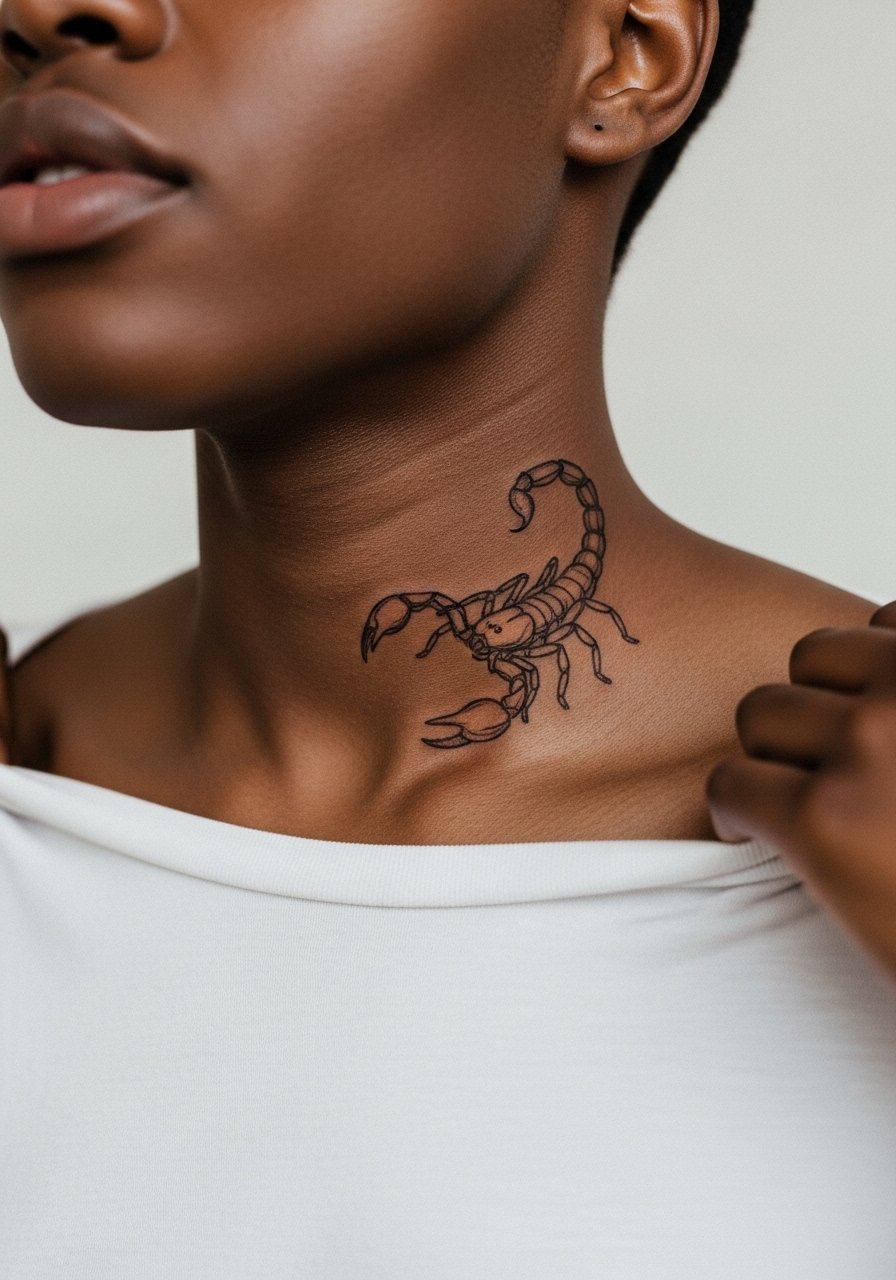
Collarbones are visible and delicate, so scale and line weight matter. Pair the scorpion with sparse script or a minimal glyph to avoid crowding the bones. One mistake is asking for tiny script crammed against the stinger, which competes with the main motif as it softens. Pain is notable over bone but sessions stay short. For showing it off, an open-neck blouse or a thin chain sits above the piece and keeps attention focused on the composition.
9. Sketch Scorpion on the Calf with Motion Tail
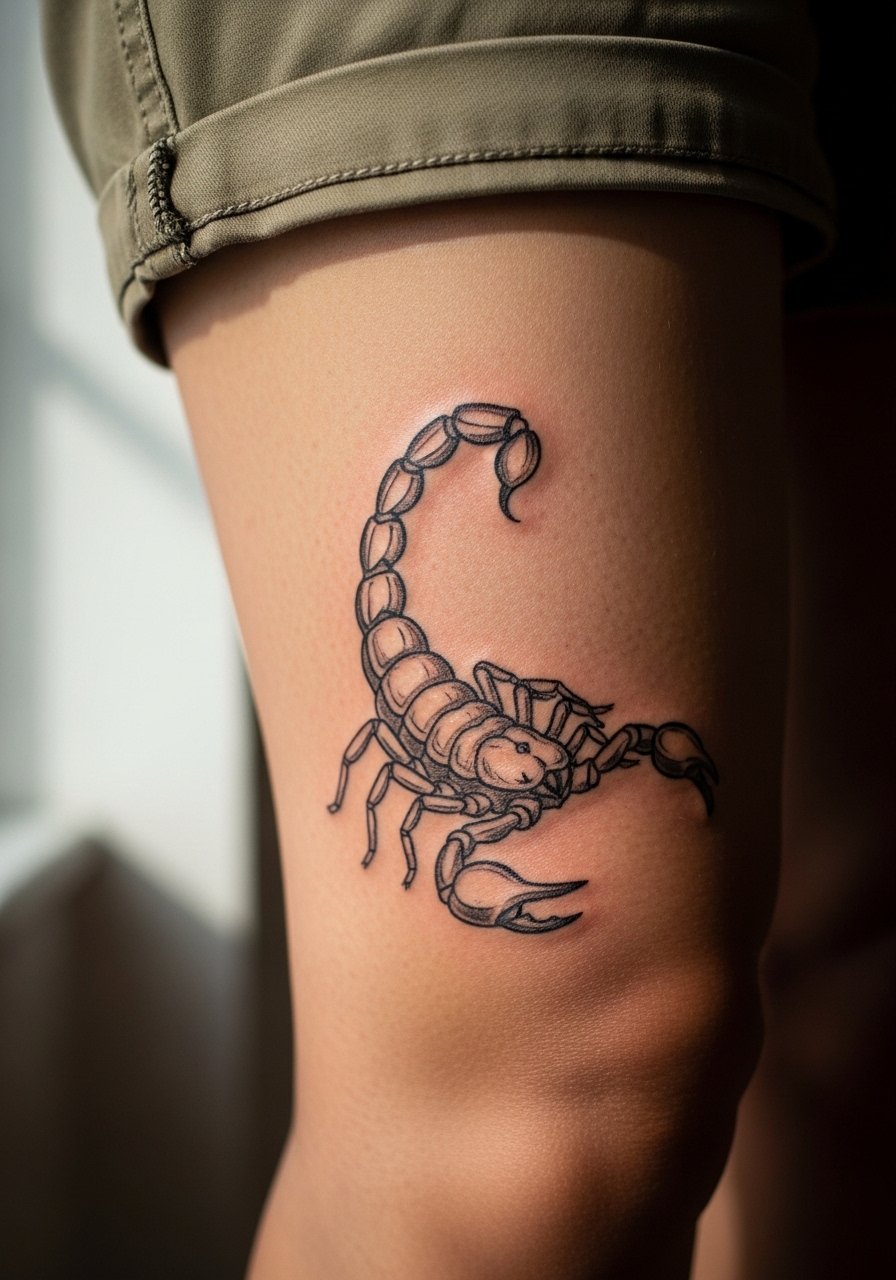
Calf placements let you exaggerate tail motion for a sense of movement when you walk. Ask for longer gestural lines trailing the tail rather than dense interior shading. The session can be comfortable because the calf has more muscle and padding, though some people feel percussion from the needle more toward the back of the leg. Expect the work to hold up well with minimal touch-up at year three. For warmer months, pair the piece with mid-length shorts or a pair of slide sandals so the tattoo is visible without being exposed to constant abrasion.
10. Small Scorpion Over the Top of the Hand
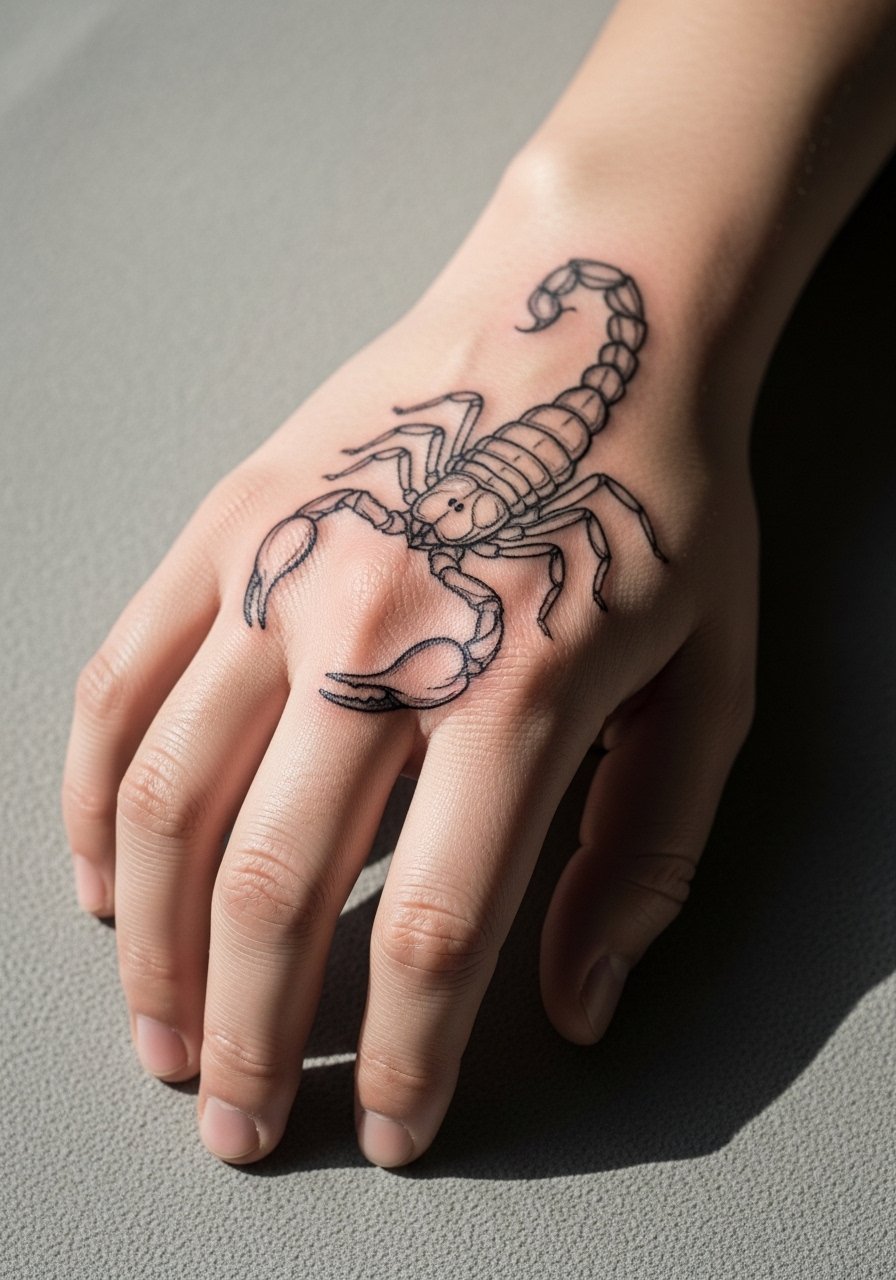
Hand tattoos age differently because of constant washing and sun exposure. Artists often split into two camps on hands. One camp warns hand pieces blur and fade quickly and advise against fine line there. The other camp argues that bold, simplified linework with proper saturation can last. For a sketch scorpion, favor bolder outline anchors and leave internal sketch marks sparse. Expect frequent touch-ups and a higher failure rate than arm placements. Wear gloves for manual work when possible and plan for maintenance if you want the motif to stay crisp.
11. Inner Bicep Sketch Scorpion
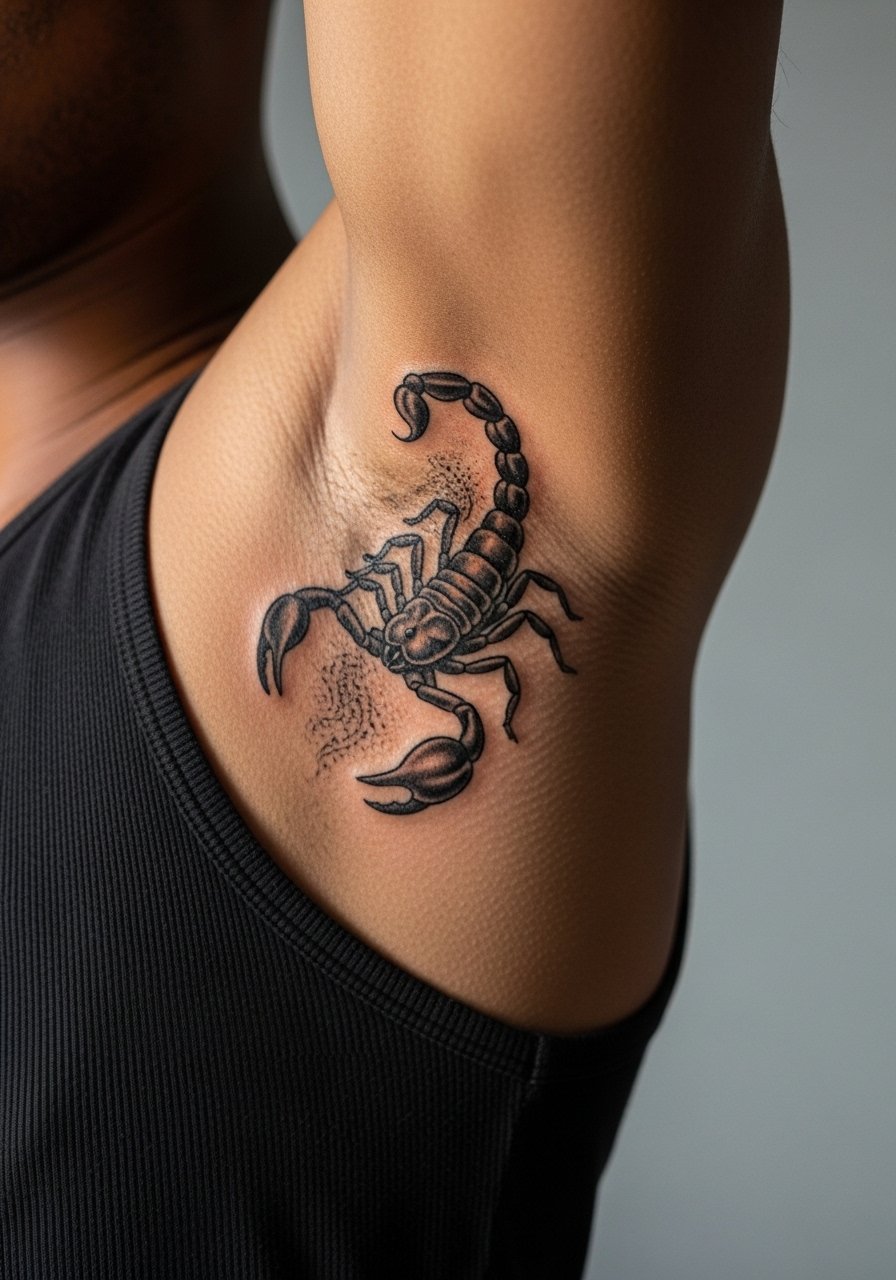
The inner bicep has softer skin and moves in ways that affect fine lines. I recommend asking for slightly larger negative spaces inside the design so the sketch marks do not blend with adjacent shading over time. Sessions can be awkward because the arm position is held for extended periods, and pain can ramp up toward the armpit. A common mistake is requesting ultra-fine detail that the area cannot resolve long-term. For the appointment, wear a loose tank top so the artist can raise the sleeve without creating pressure on the area.
12. Sternum Sketch Scorpion Under a Band
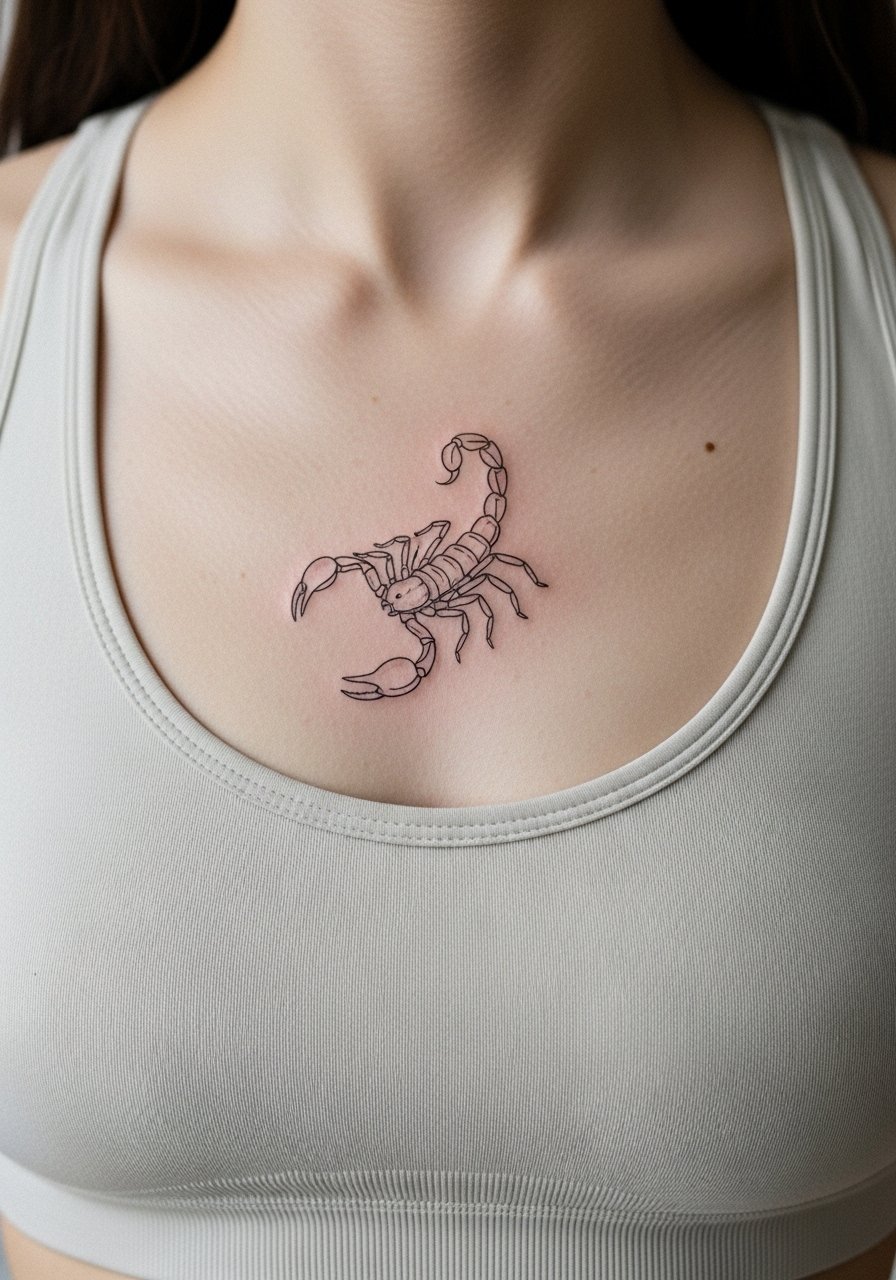
Sternum pieces are intimate and sensitive to breathing and clothing. Artists are split on whether dense fine line across the sternum holds up. One camp cautions the skin stretch and fabric friction smudge detail. The other camp says careful spacing and slightly heavier anchor lines make it durable. If you choose this spot, ask for break points in the design so the core shapes read when the body moves. Sessions are painful and often staged over more than one appointment. For comfort during the session, bring a loose zip-up top you can shift easily.
13. Sketch Scorpion Along the Spine
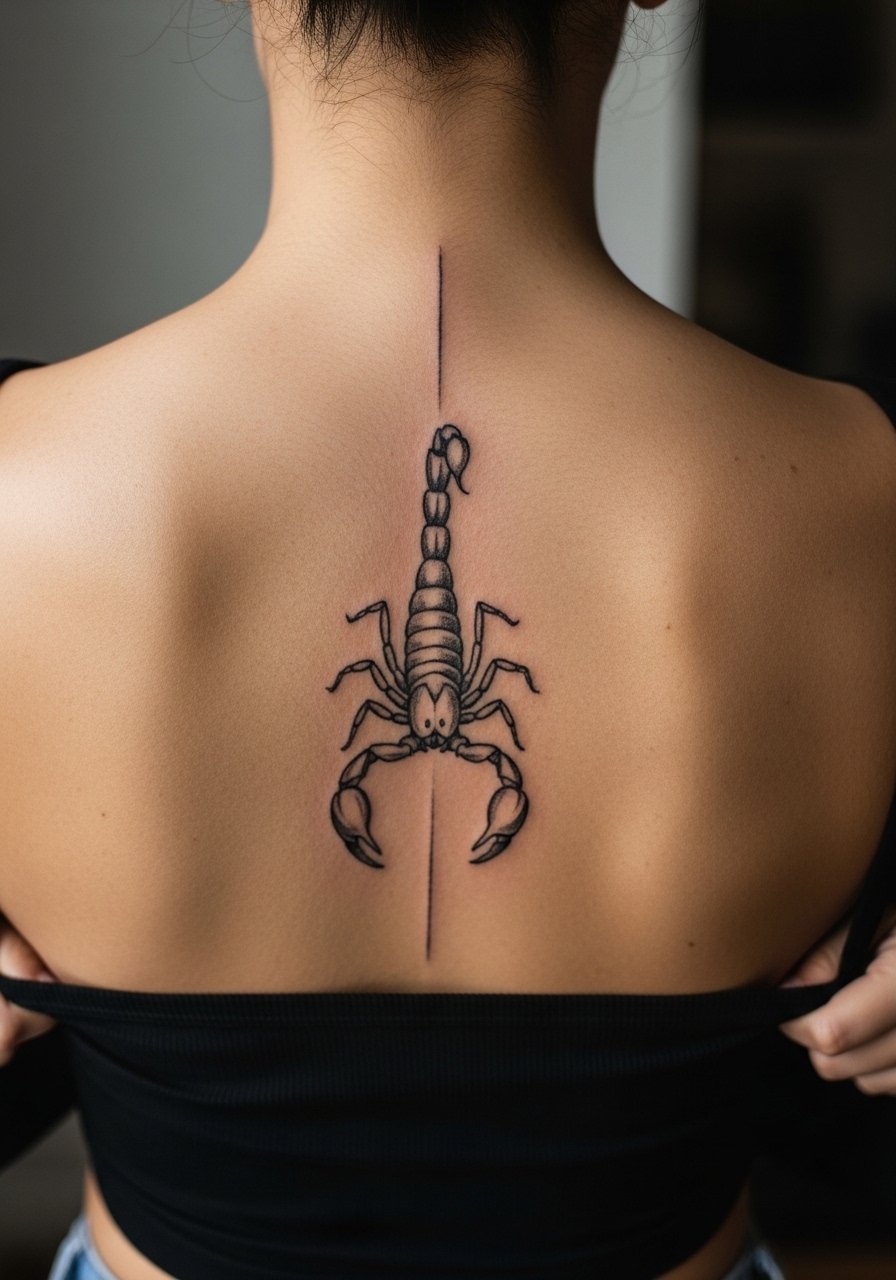
A spine placement calls for careful composition so the scorpion follows the vertebral line without looking forced. Ask your artist to map the piece with the curve of your back, and avoid too many intersecting lines that can merge as skin stretches. Expect sharper pain over bone and a slow, steady burn in those moments. Most spine work looks best with negative space added above and below the main motif to give it breathing room. For nights out, an open-back dress highlights the verticality without exposing everything.
14. Hip-Edge Sketch Scorpion
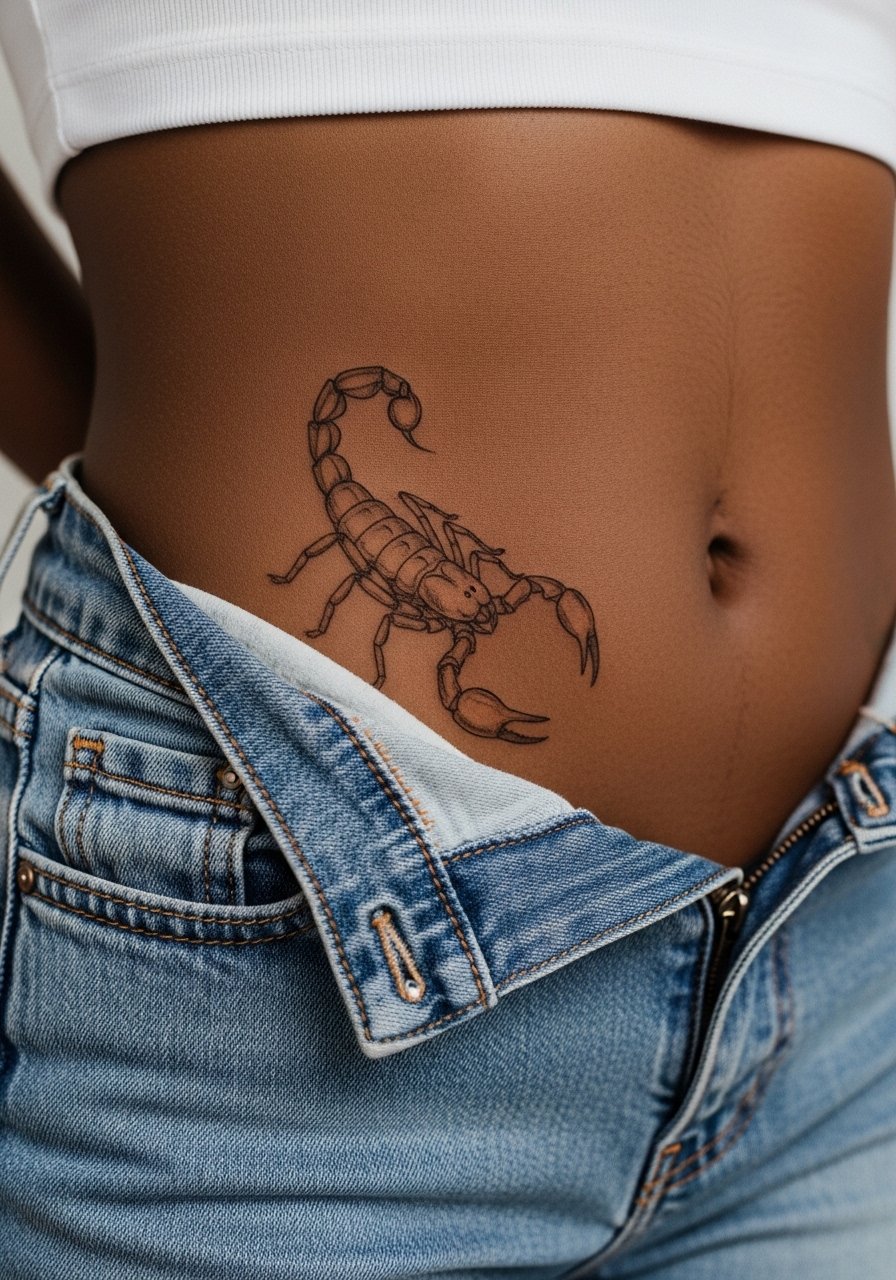
Hip placements sit in a friction zone with waistbands, so sizing matters. Ask for the stinger and tail to arc away from waistband lines so daily movement does not rub the freshest ink. The session is comfortable because you can shift positions, but swelling can be concentrated when fabric presses. A frequent mistake is placing the design too close to the elastic line. Pair this with high-waisted pieces that do not cut directly across the tattoo and consider high-waisted shorts that sit below the motif for showing it off.
15. Thigh Sketch Scorpion Curving with Muscle
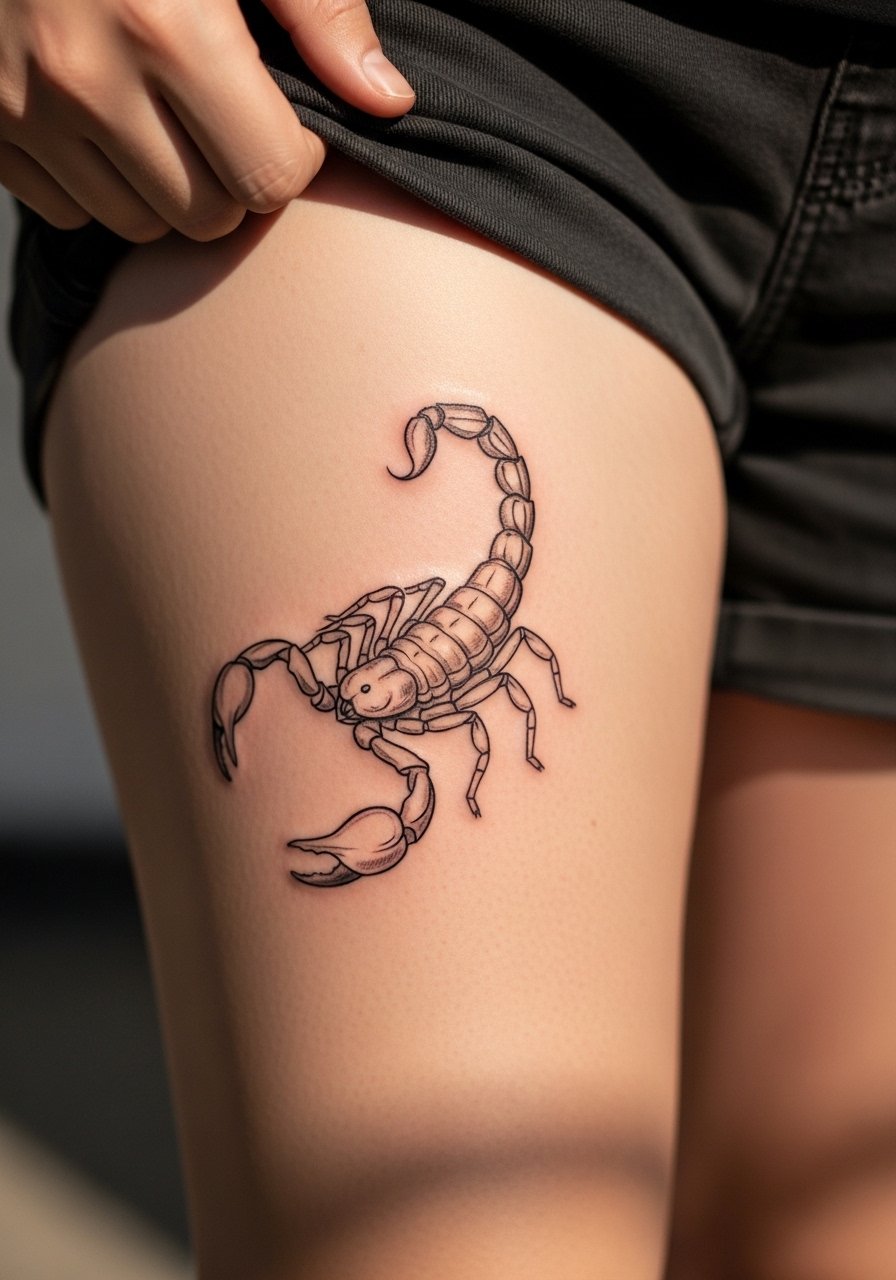
Thighs accept larger, more detailed sketch work because they move less with daily gestures. Request that artists orient the tail to curve with the muscle so the design reads whether you are standing or sitting. Sessions are usually longer and may be split into two blocks because the area tolerates larger pieces. One mistake is overcomplicating the interior marks, which can soften into noise across the thigh's broad surface. For session comfort, wear loose drawstring pants so you can roll them up without tight elastic pressing on the site.
16. Small Scorpion Near the Collar of a Shirt
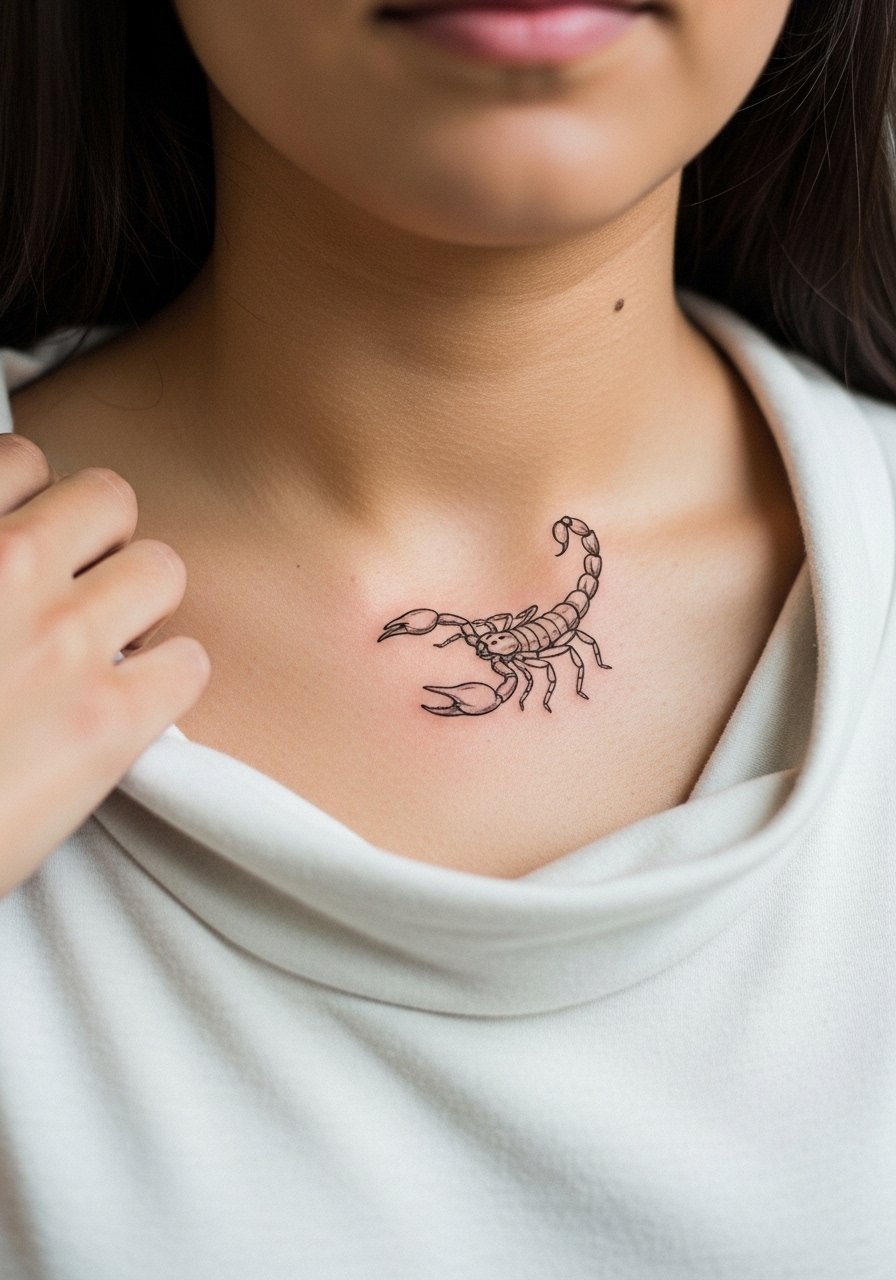
Upper chest motifs need careful placement relative to clothing lines. The sketch aesthetic benefits from a slightly asymmetrical composition so the scorpion looks natural when framed by collars. Sessions can sting over bone but remain short. A common mistake is centering too close to the sternum when you intended an off-center visual. For showing it off, a wide-neck shirt pulls the eye to the piece without exposing too much.
17. Small Scorpion on the Side of the Neck
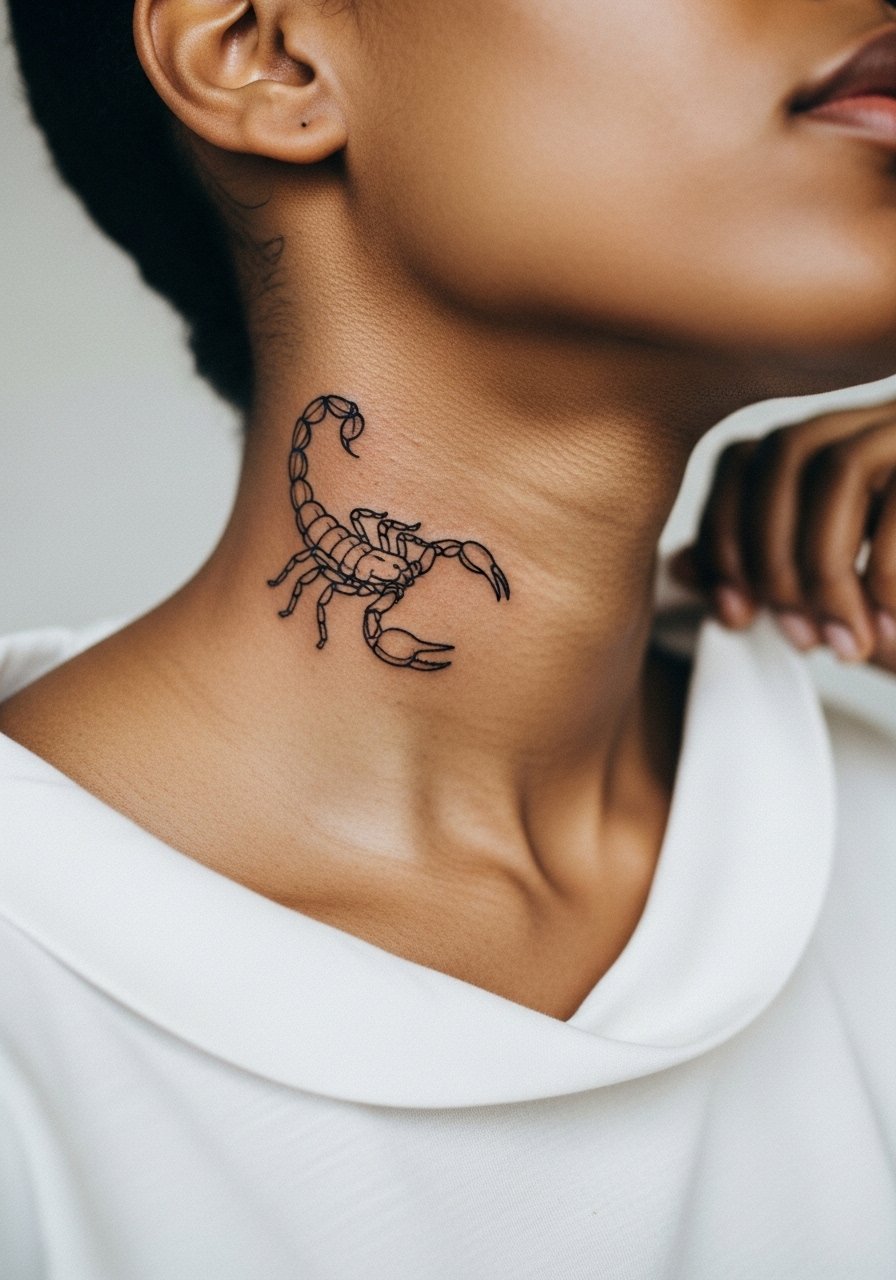
Neck placements are visible and sensitive and require an artist experienced in linework on thin skin. Ask for a bold anchor line along the spine of the scorpion with airy sketch strokes for the legs. Expect a sharp, brief pain and a need for careful sun protection as the neck receives a lot of exposure. A common mistake is too much fine interior detail that becomes indistinct after sun and time take their toll. If your career requires discretion, remember visibility considerations before booking.
Frequently Asked Questions
Q: Will a sketch-style scorpion on the ribs hold up compared with one on the forearm?
A: It depends on scale, spacing, and your skin. Ribs move and stretch more, so sketch pieces there should be slightly larger with anchor lines. Forearms tolerate tighter detail. If you want longevity on ribs, plan for a touch-up around year two to three.
Q: How often should I expect touch-ups for fine line scorpions on hands and wrists?
A: Hands and wrists see more washing and sun exposure, so expect touch-ups sooner than arm or leg placements. Plan for at least one maintenance session within two to four years if you want crispness kept, especially for top-of-hand work.
Q: What should I wear to a sternum or rib session for comfort and access?
A: Bring a fitted sports bra or a zip-up layer that you can shift without exposing your whole torso. A zip-up hoodie or a button-up works well for quick changes and modesty while still giving the artist clear access.
Q: Are scorpion designs culturally sensitive or tied to specific traditions?
A: Scorpions are used across many cultures and do not belong to a single tradition. If a design borrows from a specific cultural motif, consider slight variation or a conversation with your artist about respectful adaptation.
Q: Do sketch-style tattoos take longer to heal than solid blackwork?
A: Sketch pieces often use lighter passes and stippling, which can feel gentler during healing. Solid saturation can irritate more initially but sometimes holds color longer. Both need standard aftercare and protection from UV to age well.
Q: Is there a placement you recommend to minimize blowout risk for sketch details?
A: Areas with more padding like the calf, thigh, and upper arm are safer for delicate sketch marks. Avoid ultra-thin zones like the top of the hand or very close to joints if you want tiny, long-lasting detail.
