
Sitting in the chair with the stencil tucked behind the ear is a thin, decisive moment. The skin there reads details differently than the forearm, so every line weight and dot choice matters. Small changes in placement, a hair tuck or a cropped fade, and the piece either reads crisp for years or blurs into a smudge. Below are focused behind-ear ideas laid out with what to ask your artist and how to wear them so they look clean long term.
1. Tiny Neo Traditional Rose Behind the Ear
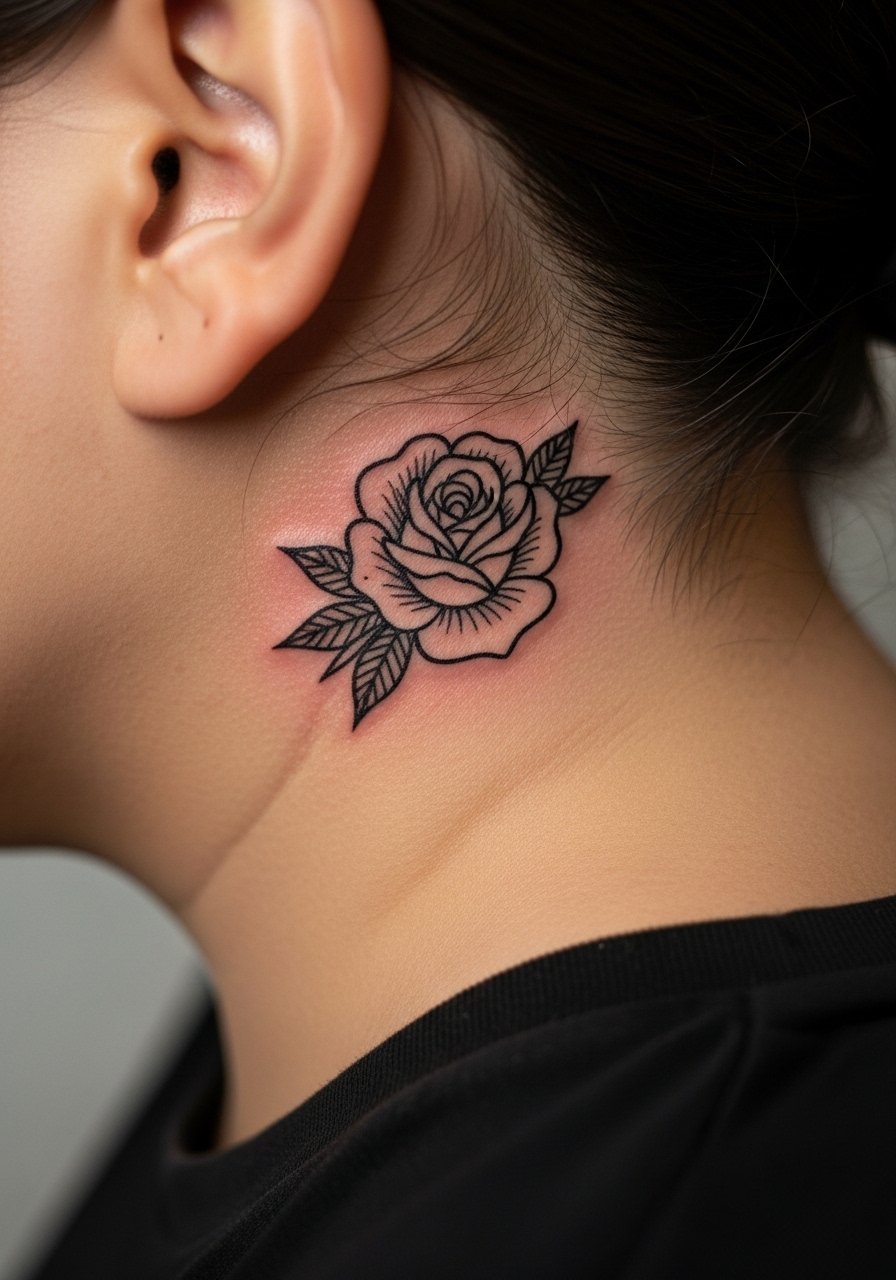
A compact rose with bold outlines and saturated petals reads clearly in that tucked spot. Fair warning, the area is sensitive so expect a sharper sting for a short session of about 20 to 40 minutes. Tell your artist you want slightly thicker outer linework and reduced inner filigree so the petals keep their shape as the skin moves. The common mistake is asking for ultra-fine inner detail that fades into a gray in two years. For showing it off, a short undercut or a neat tuck behind the ear helps, and a thin chain pendant necklace sits above the piece without crowding it.
2. Miniature Dagger with Ribbon on the Neck Fold
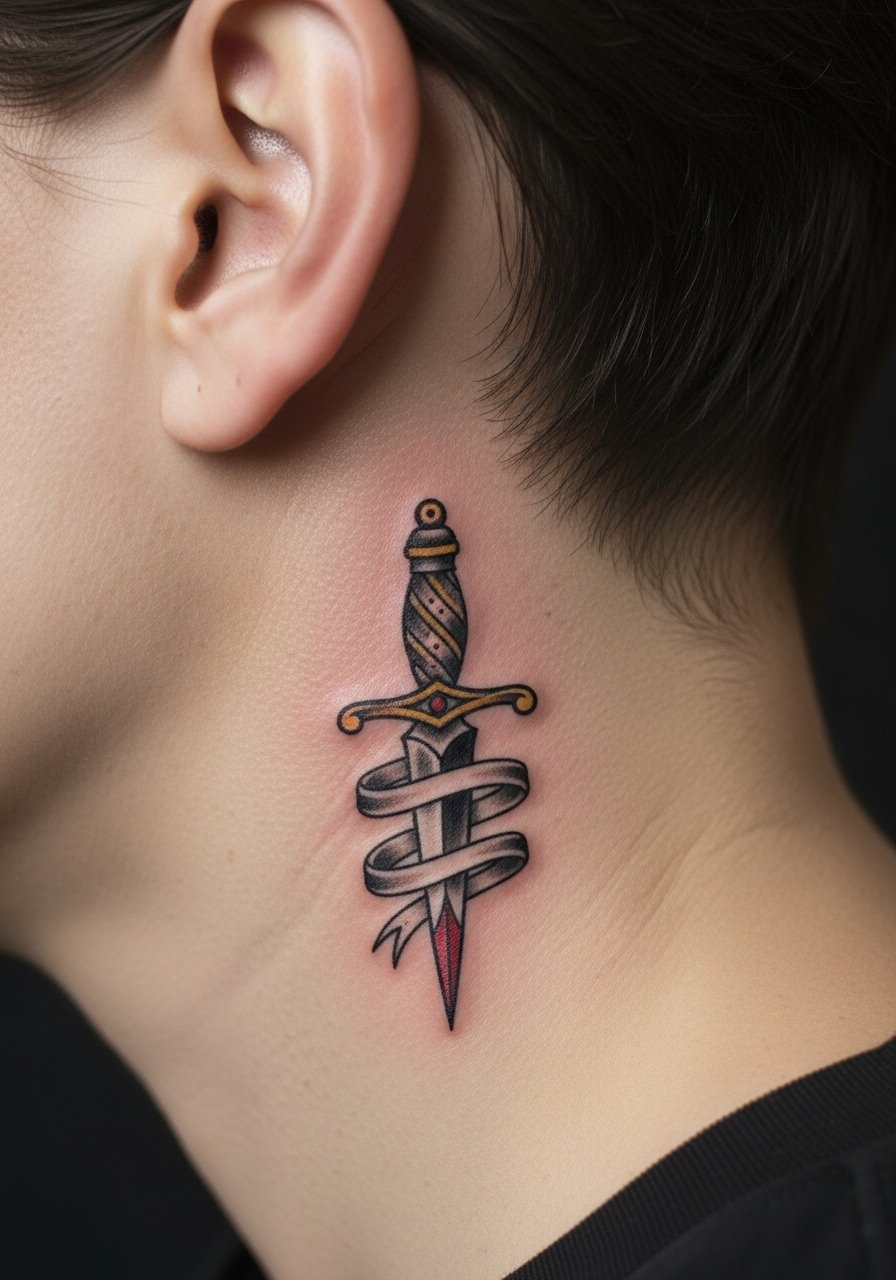
The dagger motif uses bold black outlines and solid shading to resist blurring on that thin skin. Session time is short, usually under an hour, but the pain is noticeable where the skull meets neck. During consultation say you want saturated black outlines and block shading rather than tiny hatching. That avoids the typical bleeding of delicate shading into the folds. For appointment comfort, bring a soft beanie you can pull back or wear afterwards to keep sweat off the site.
3. Small Ship in a Bottle Behind the Ear
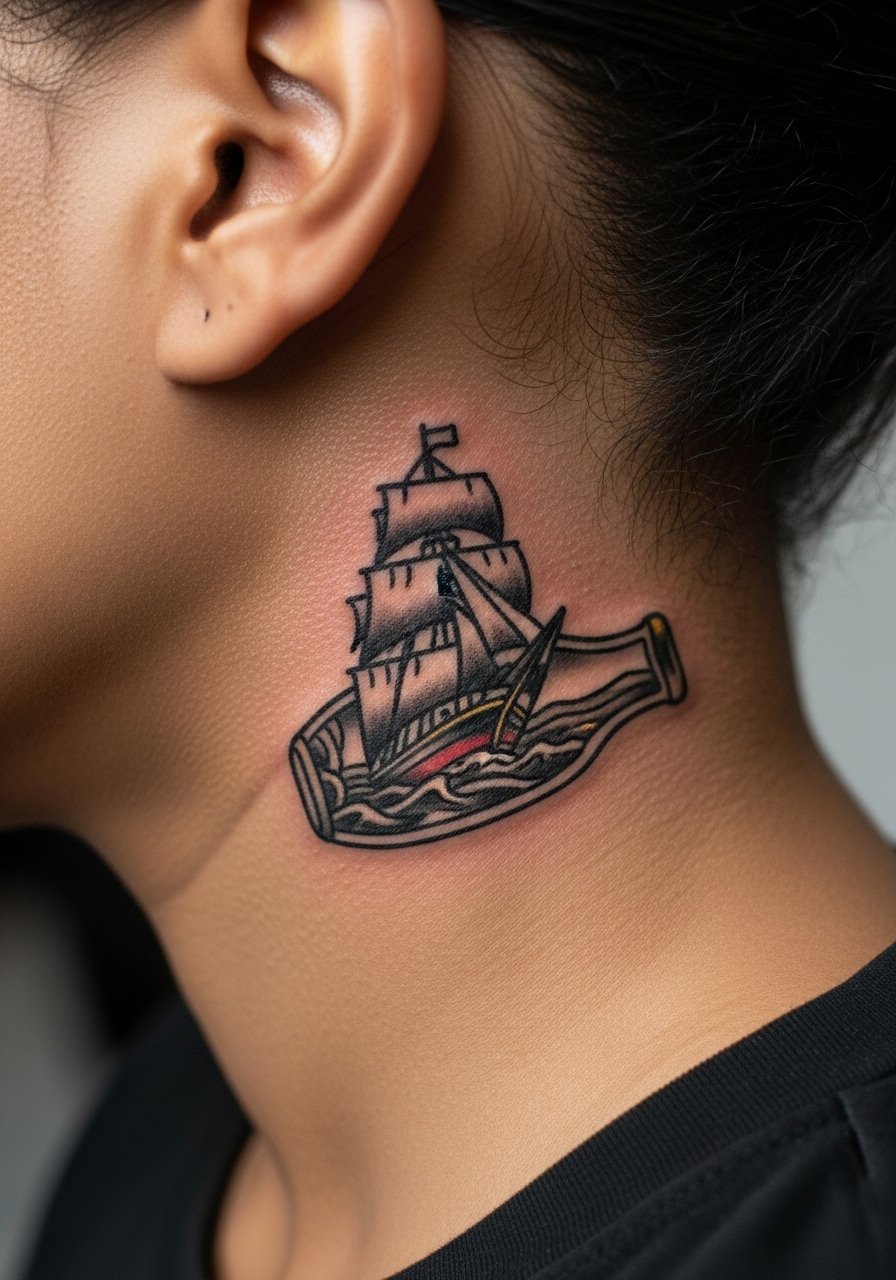
This tiny narrative piece looks like a secret tucked behind the ear. It takes around 30 to 50 minutes depending on color fill. A frequent error is cramming too much pictorial detail into a tiny frame. Ask for simplified silhouettes and flat color blocks so the ship remains readable after a year or two. Blowout risk is moderate because the skin is thin, so allow slightly bolder linework. Pair it with an unstructured cotton beanie or show it off by sweeping hair back.
4. Tiny Anchor with Stipple Shading
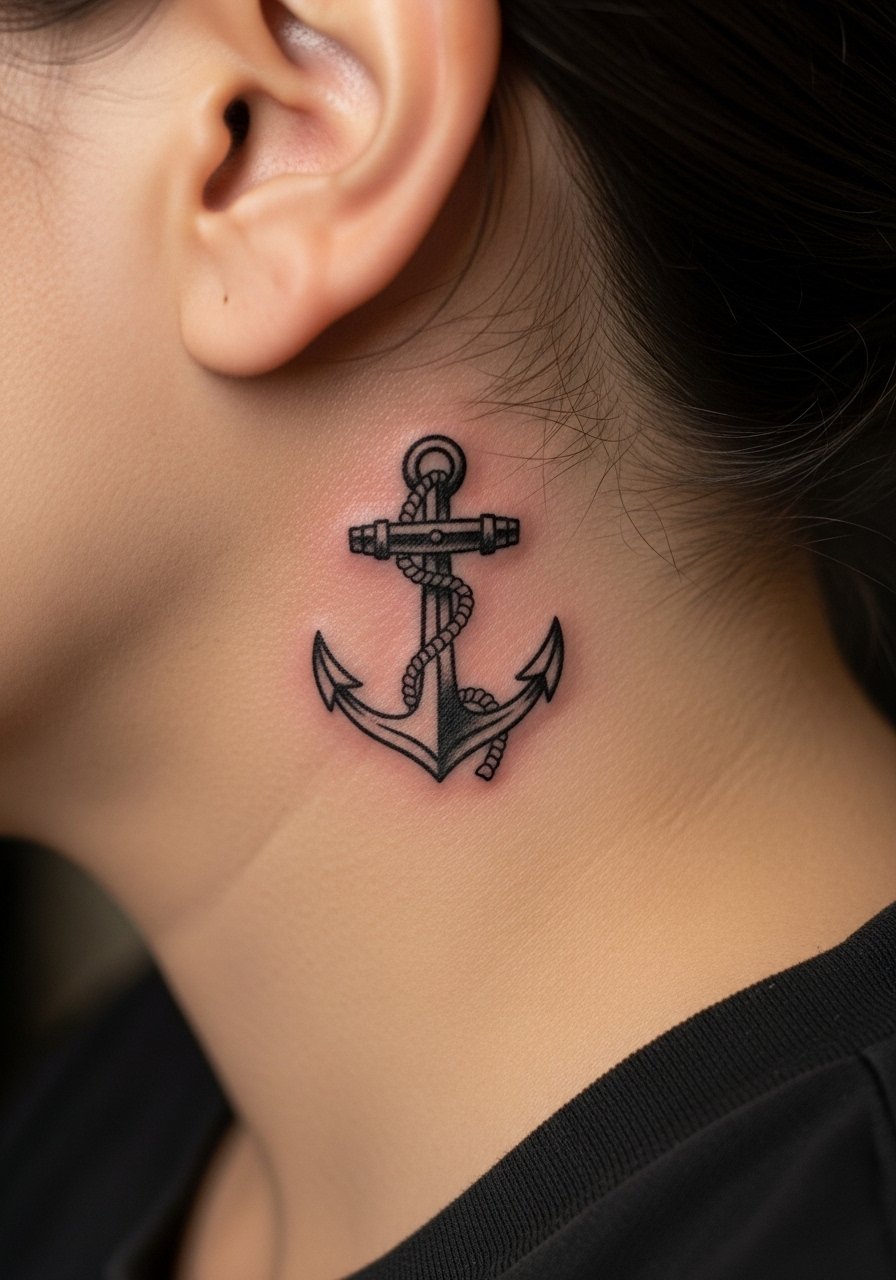
Stipple shading gives weight without dense gradients that age poorly in that spot. Expect a 20 to 35 minute session and a sharp, fast pain. The common mistake is asking for smooth gradients that the needle can not hold on the thin, mobile skin. Tell your artist you prefer dot work for depth and a clean bold outline for longevity. This placement benefits from a cropped haircut or a men's baseball cap during healing to keep sun off the area.
5. Tiny Snake Coil Nestled Behind the Ear
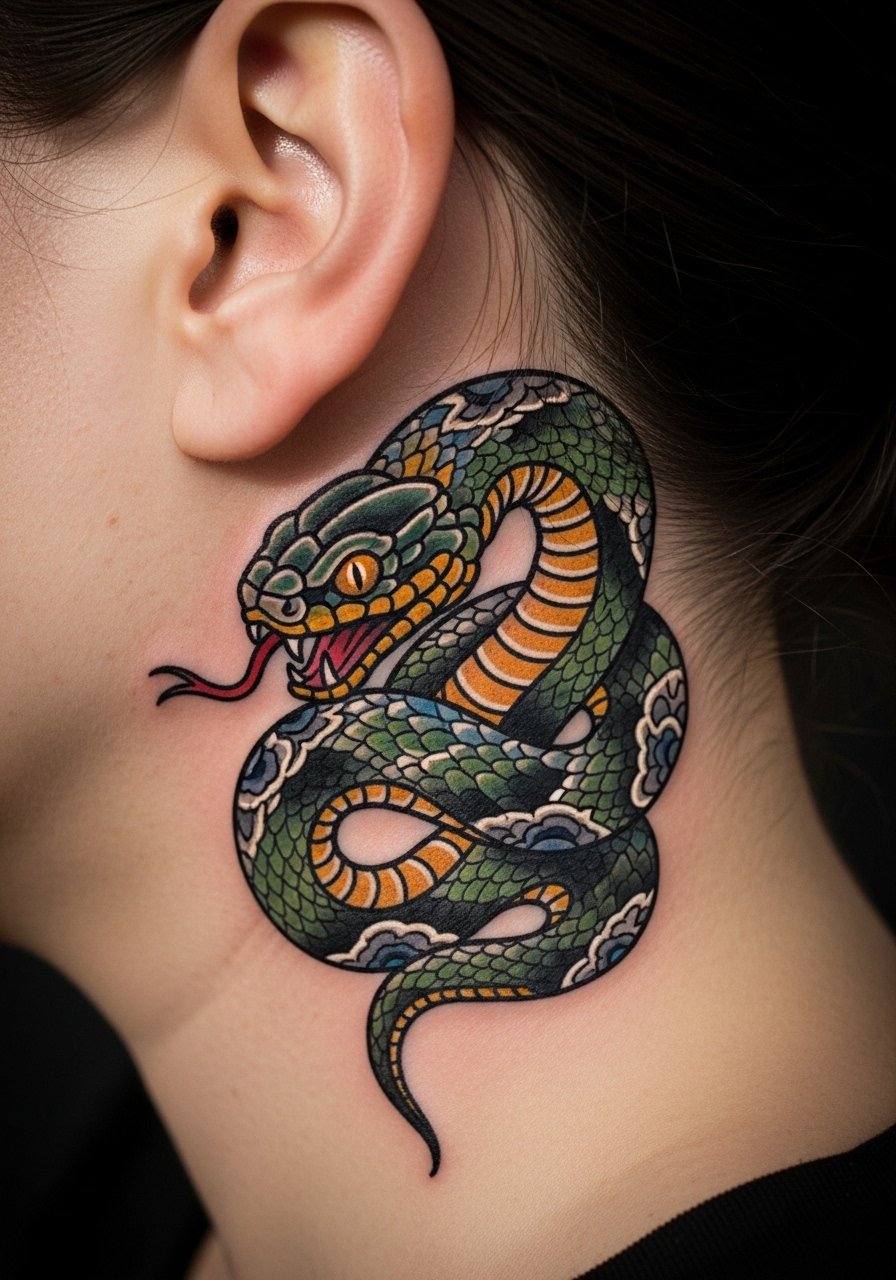
A coiling snake uses curvature to follow the neck line and reads very clean if scaled properly. Session time is usually 30 to 45 minutes and the pain hits where it curves against bone. A frequent misstep is requesting a long thin snake when the skin needs a compact curve to hold the line. Ask for a design that mirrors the natural fold behind the ear so movement does not distort the shape over time. For showing the piece, a low bun or short sides make it visible, and a slick back hair product can help keep hair tucked during the first week.
6. Miniature Neo Traditional Sparrow with Banner
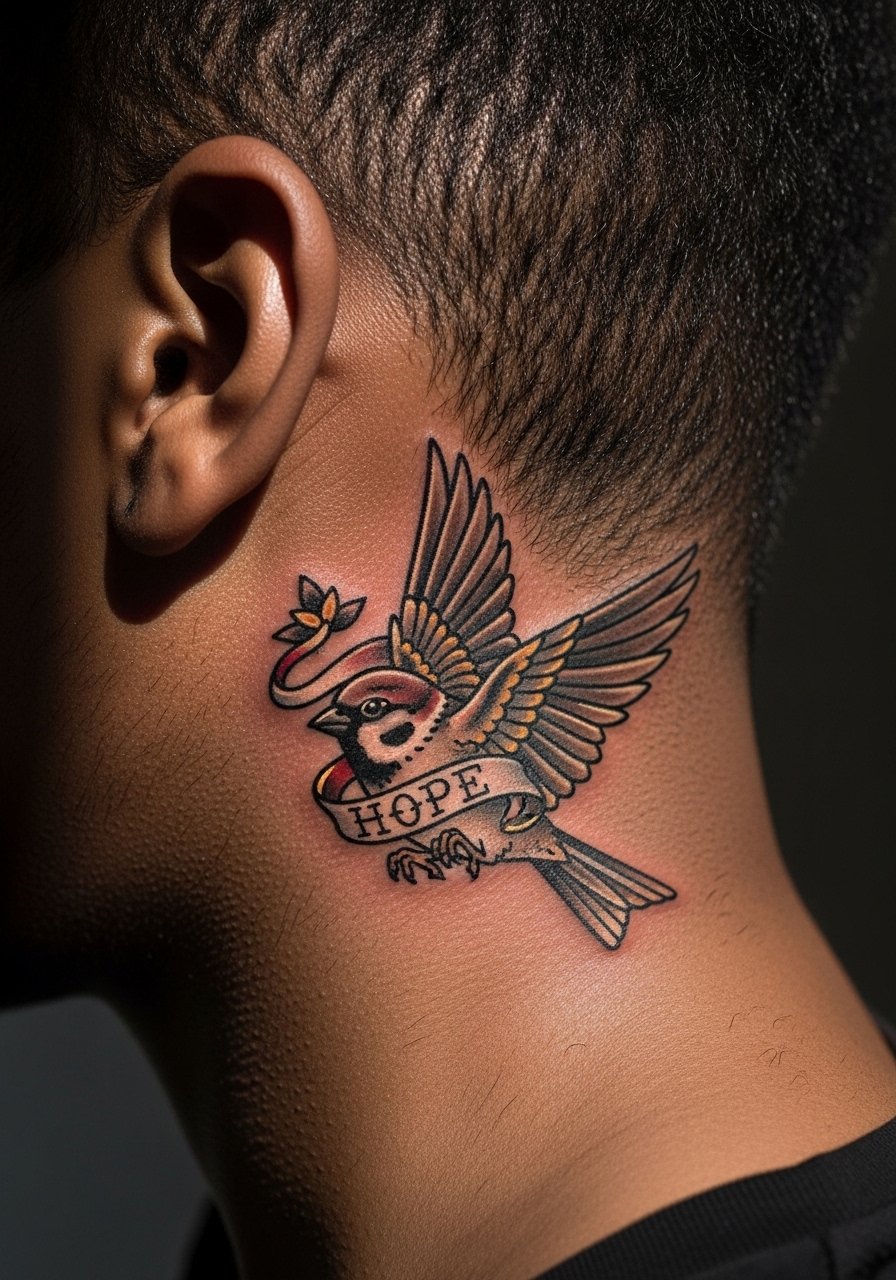
A sparrow and banner combo offers symbolic space for a tiny word or date. The piece takes about 30 to 60 minutes depending on whether you want lettering. Be specific about font size. The reality is that tiny script often turns into a dark line over time when placed here. If you want text, pick two to three letters or opt for initials in a simple monospace style. For the appointment, wear a shirt with a collar you can pull slightly aside and keep a thin chain pendant necklace low to avoid rubbing the healing area.
Studio Day Picks
The small behind-ear pieces above demand easy access and sun protection for the first weeks, so these picks smooth the session and the early healing window.
-
Stencil transfer paper kit. Lets you preview exact line placement on the thin neck skin before the first needle stroke.
-
Topical numbing cream. Applied per instructions about 30 to 45 minutes before can ease the sharp sensitivity near bone.
-
Thin protective film roll. Helps shield behind-ear tattoos from friction with collars and hair while the scab settles.
-
Fragrance-free gentle body wash. Cleanses the delicate neck area post-session without stripping color from small saturated fills.
-
Aquaphor healing ointment. A thin layer in the first couple of days locks moisture without suffocating the tiny needle channels.
7. Tiny Neo Traditional Skull with Rose Accent
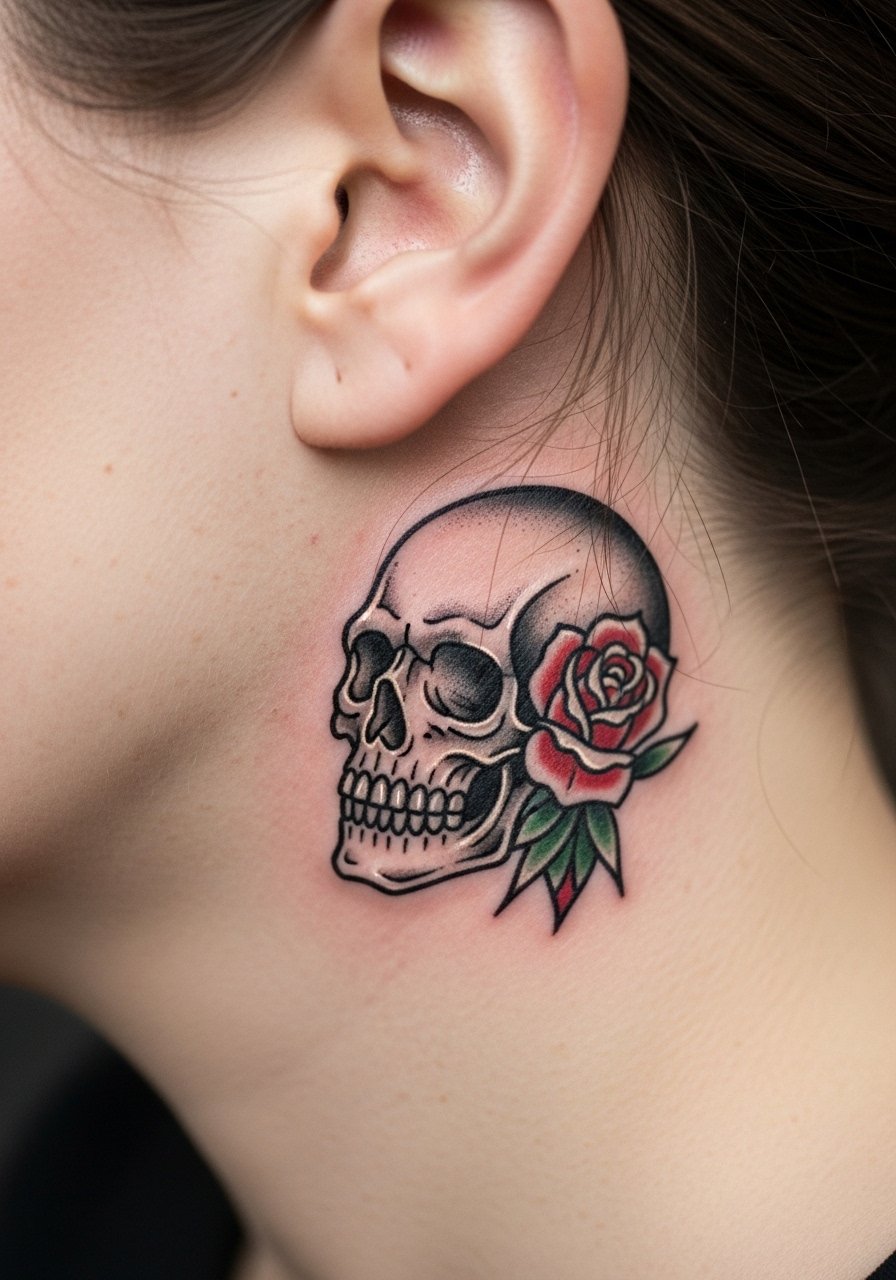
A skull paired with a small rose balances dark and color for a bold micro piece. This is usually a 30 to 50 minute session with a sharp sting near bone. One mistake is asking for extreme shading inside the skull when the area needs flat fills for clarity. Ask for simplified negative space for eye sockets and saturated color in the rose. For wardrobe, a crew neck tee you can lift at the collar is easiest for the artist and keeps the area clean during aftercare.
8. Crescent Moon with Stipple Stars
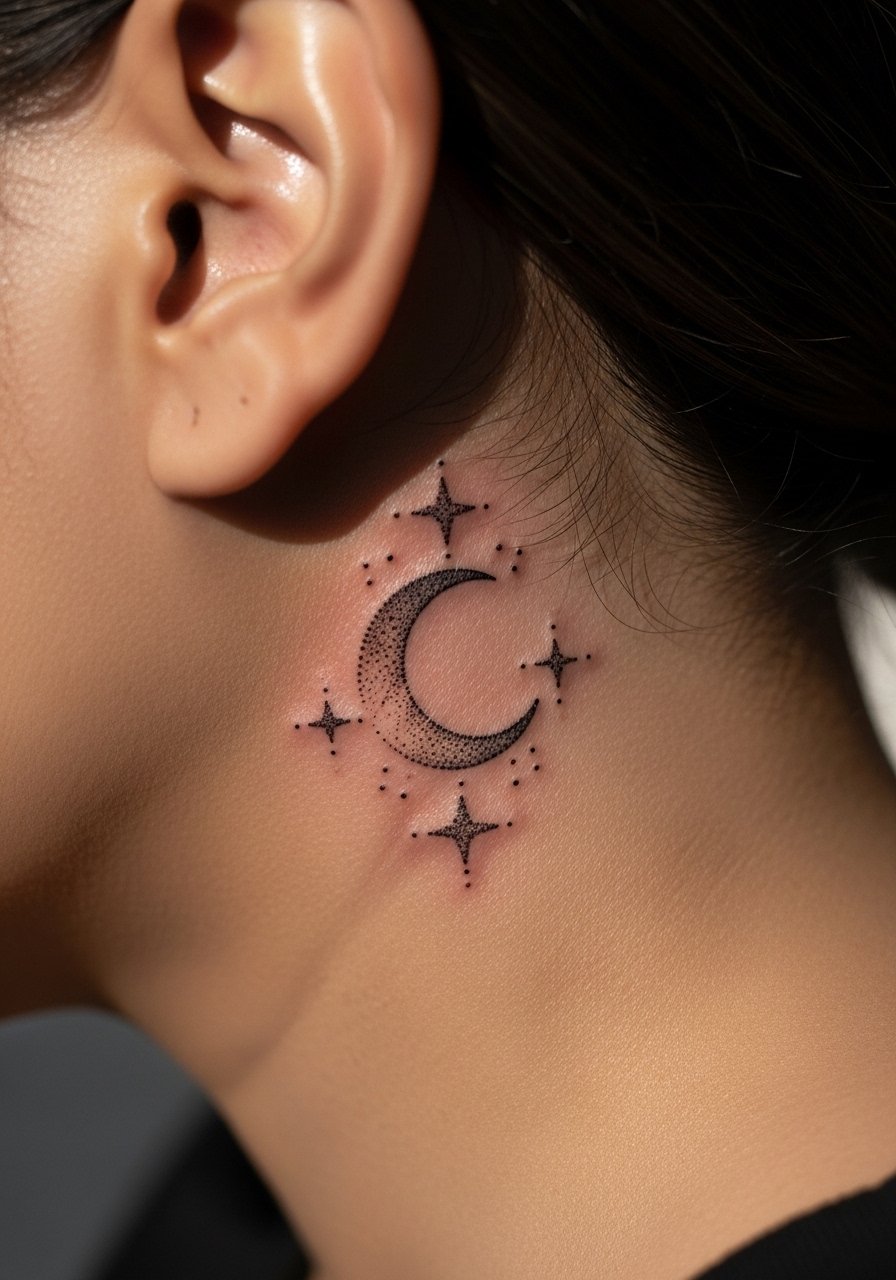
Dot work and compact symbols age well here because they avoid dense gradients that bleed. Expect 25 to 40 minutes and moderate sensitivity. A common error is wanting a constellation of tiny stars that merge after healing. Instead pick three to five larger dots and slightly thicker crescent outlines. The piece is subtle when hair is down and pops with a cropped style. For the session, a zip-up hoodie you can pull to one side works well.
9. Tiny Panzer Leaf with Bold Outlines

Botanical motifs translate into readable shapes when the leaves have clear separation and bold edge lines. This one usually finishes within 30 minutes and the pain is short and sharp. The common mistake is to request too many overlapping leaves. Tell the artist you want three distinct leaf shapes with clean black outlines so saturation holds. To frame the piece, a knit beanie pulls hair back while keeping the area shaded during the first few sunny days.
10. Micro Neo Traditional Compass
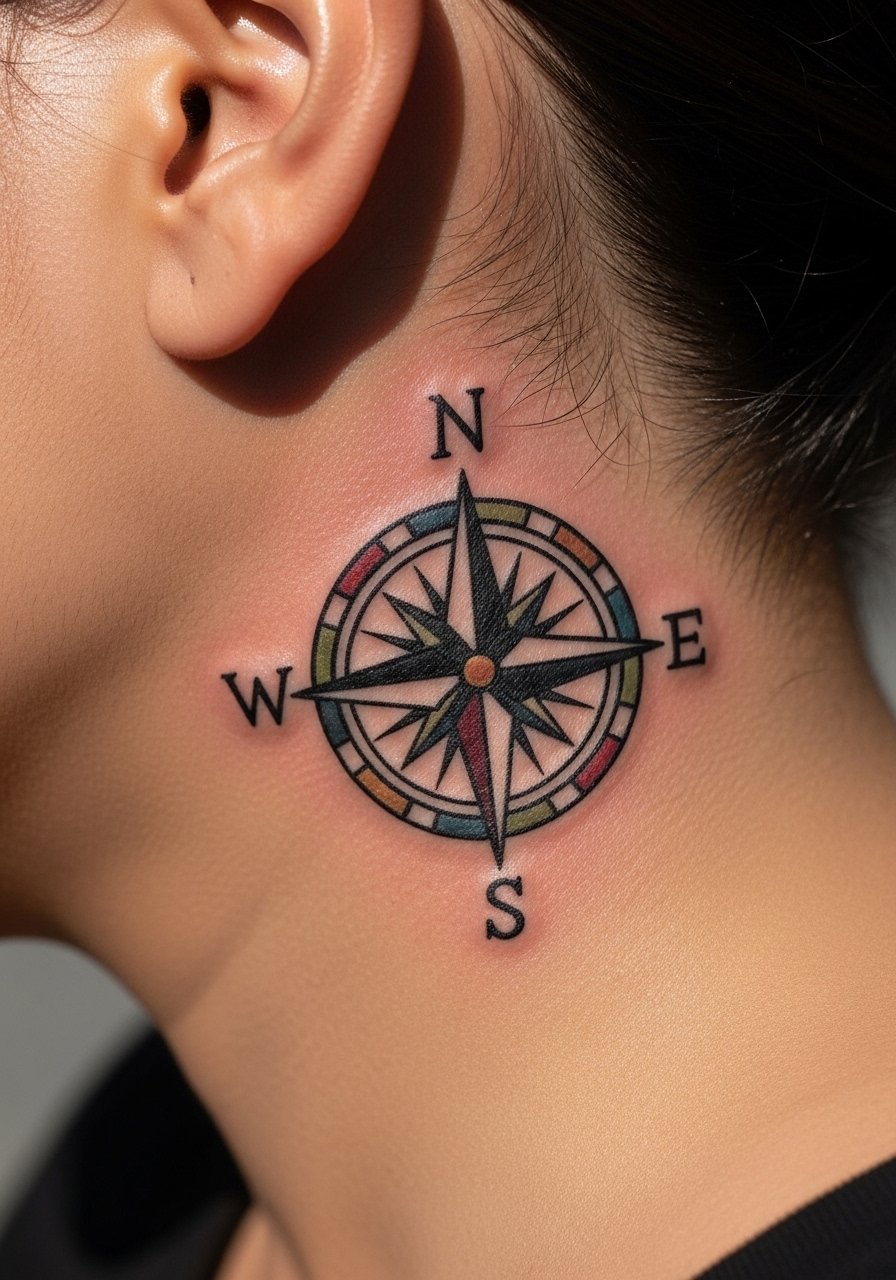
A compact compass benefits from radial symmetry and bold cardinal points. Session time can be 30 to 60 minutes if you include color. The risk is asking for ultra-thin spokes that blur into a starry blotch. Instead request thicker primary lines and simplified inner marks to preserve legibility at year two and beyond. Career considerations apply only if your workplace has strict visible tattoo policies. A short hairstyle highlights the compass without making it feel like a statement.
11. Tiny Neo Traditional Panther Head
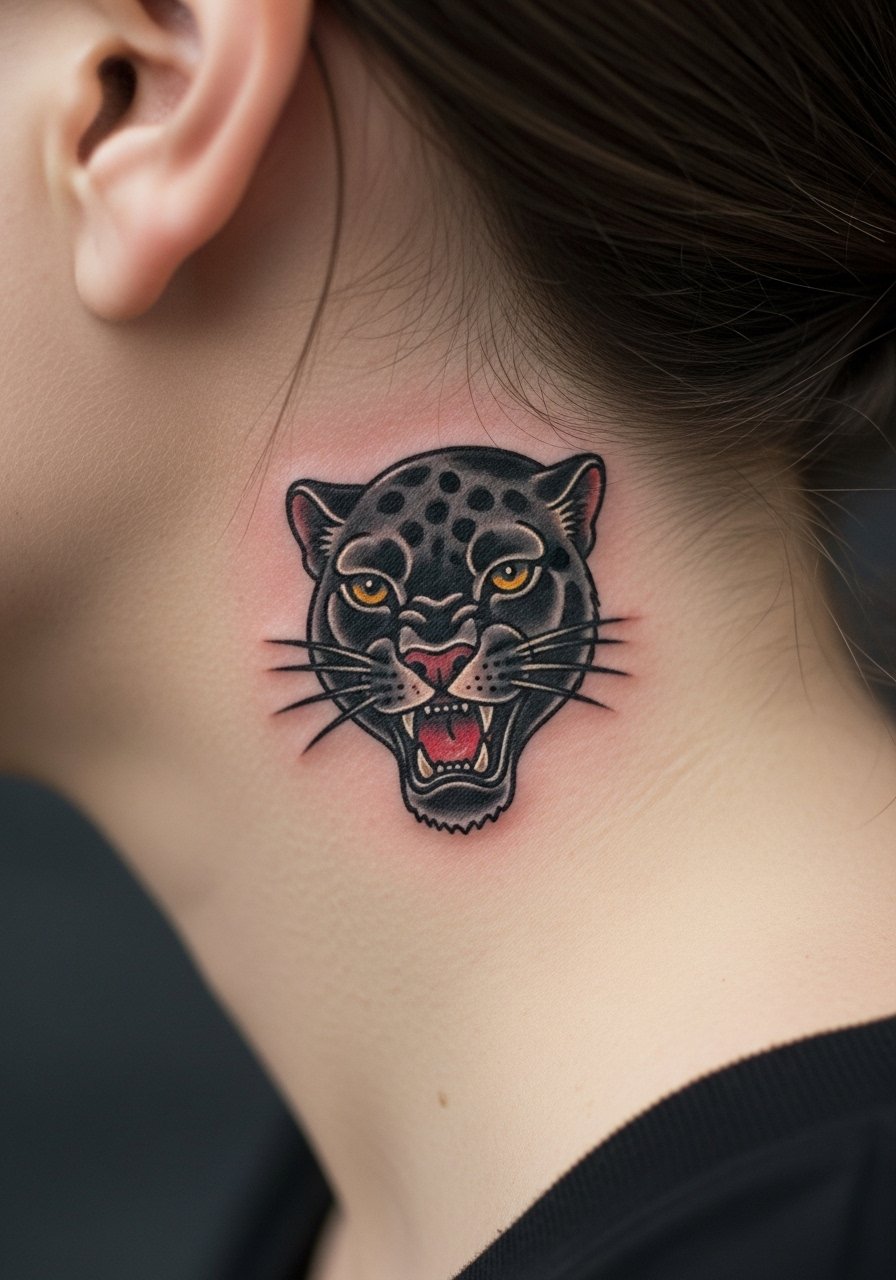
A small panther uses heavy black outline and limited color pops to keep features readable. Expect about 45 minutes and moderate pain near the bone. People often request too much facial detail at this scale which turns into a gray patch later. Ask for bold contrast between black work and one color accent so the eyes and contours stay defined. For evening wear, a low-profile stud earring keeps the area visible without rubbing the healed skin.
12. Tiny Neo Traditional Anchor with Rope Detail
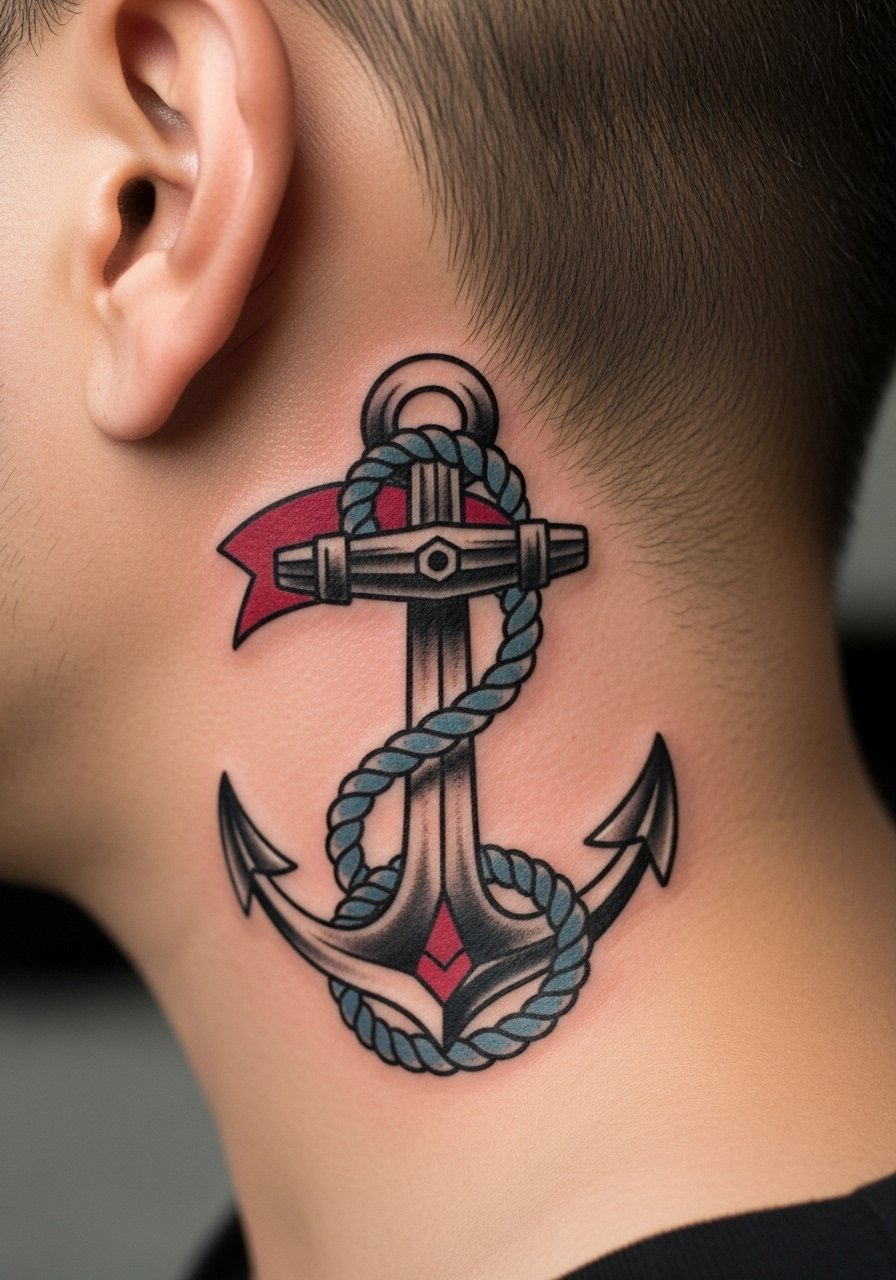
Rope detail is decorative but often overworked at micro scale. The session is 30 to 45 minutes and the pain level is short and sharp. The common mistake is tiny rope twists that the skin cannot hold. Request simplified rope loops and thicker outline on the anchor. After two years minimal touch-up is typical for medium saturation pieces in this spot. For the session, wear a button-down shirt you can pull to one side for easy access.
13. Tiny Neo Traditional Hourglass with Sand

An hourglass reads like a miniature scene if you limit internal detail. This takes 30 to 50 minutes and has a noticeable sting. Artists divide on whether tiny scenes should be done here. One camp says simplified silhouettes hold up best. The other camp thinks precise small work can last with the right spacing. Ask where the artist stands and see healed photos of similar placements. For showing the piece, a low ponytail or pulled-back style reveals it without friction.
14. Tiny Neo Traditional Spider and Web Accent
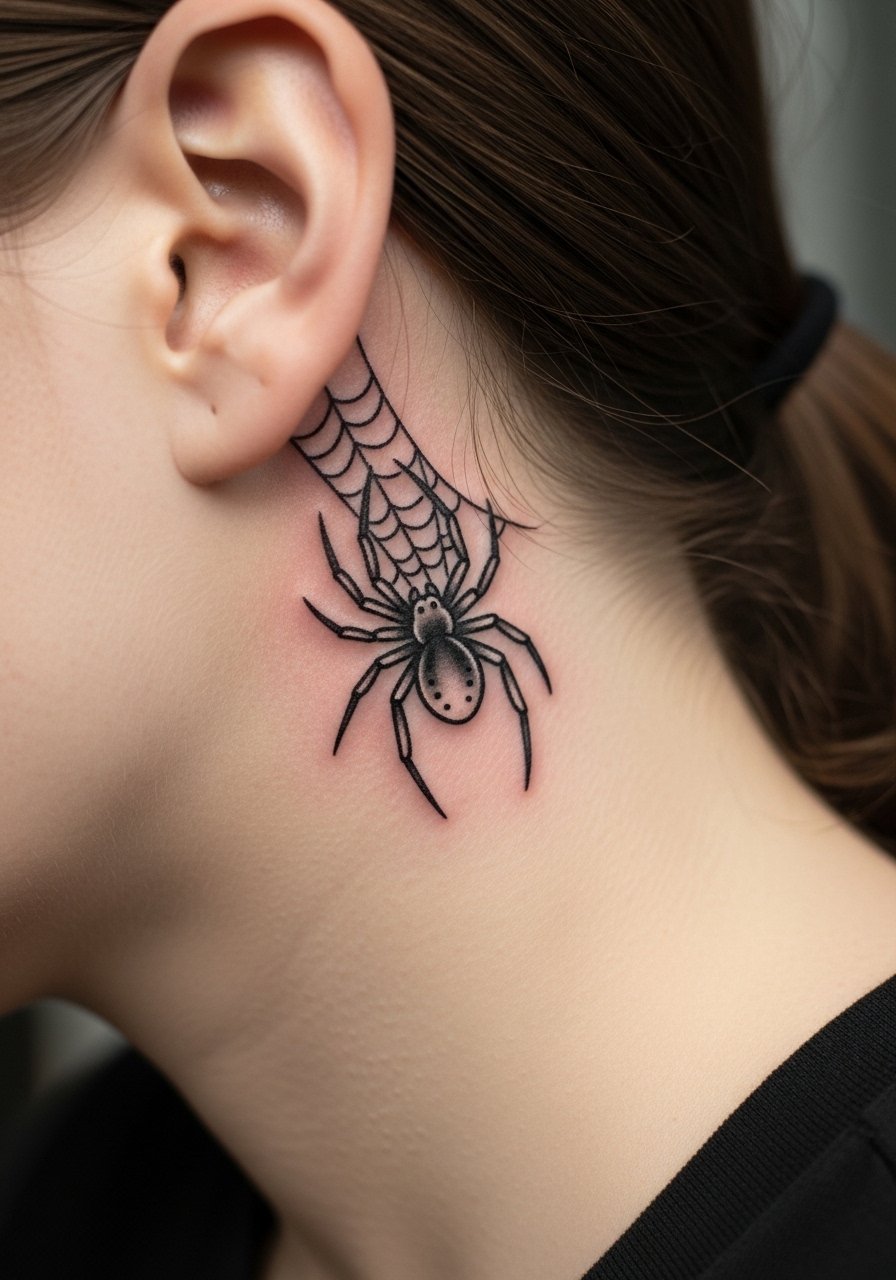
The web needs space or it becomes a gray smudge as it heals. Keep web strands sparse and anchor with a bold spider silhouette to avoid that. Session time is about 25 to 40 minutes and the sensation is sharp over the bone. A mistake is asking for a dense web pattern. Ask for three to four primary strands and a solid black spider. This placement may demand touch-up by year three if exposed to sun often. For appointment comfort, carry a soft scarf to keep the area warm and reduce post-session chill.
15. Tiny Neo Traditional Anchor Rose Hybrid
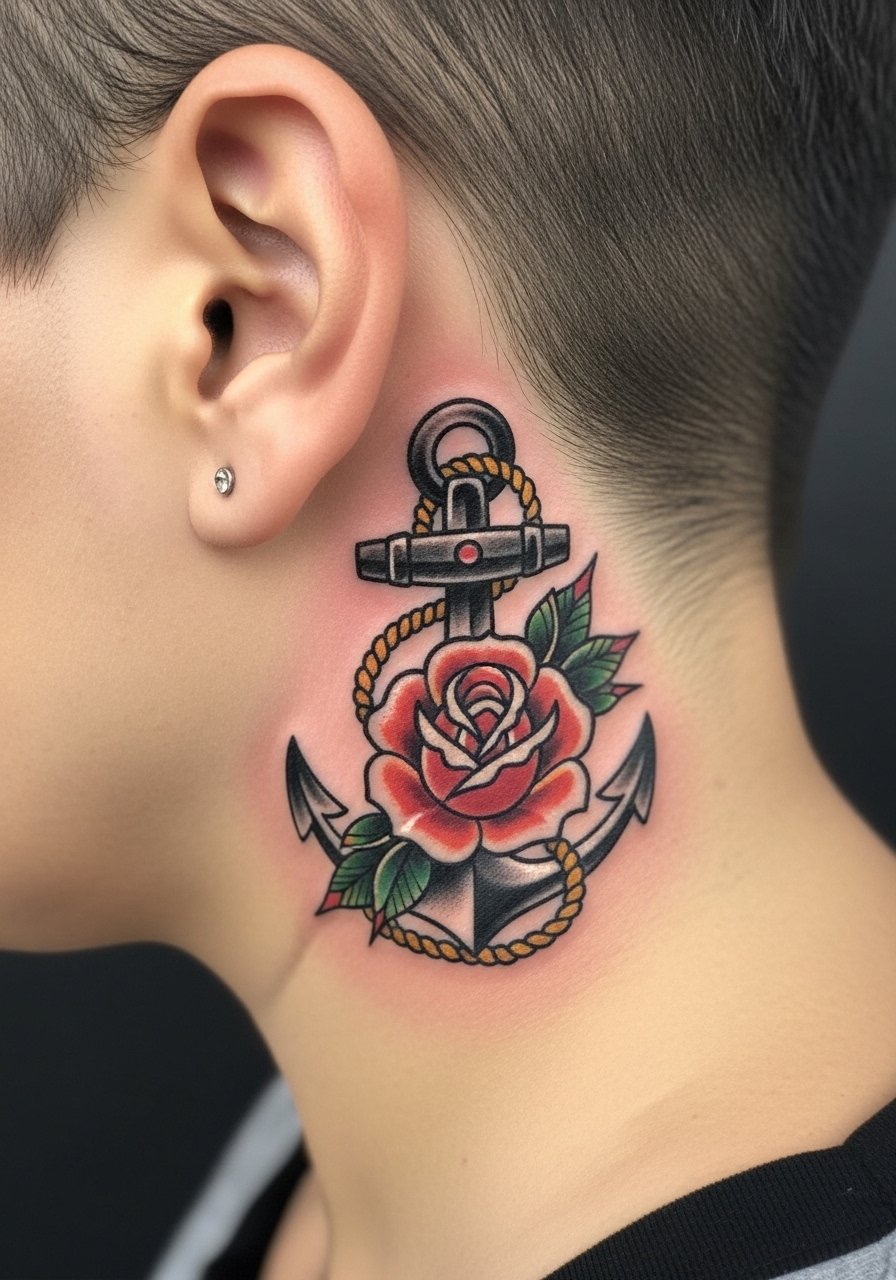
Combining elements works when each shape remains simple. Expect 35 to 55 minutes and a quick, focused pain. The usual error is stacking too many tiny motifs together. Tell the artist you want clear negative space between anchor and rose so both read at a glance. For everyday wear, a beanie cap keeps hair off the area and protects the fresh scab from sun during the first week.
16. Tiny Neo Traditional Key with Lock Detail
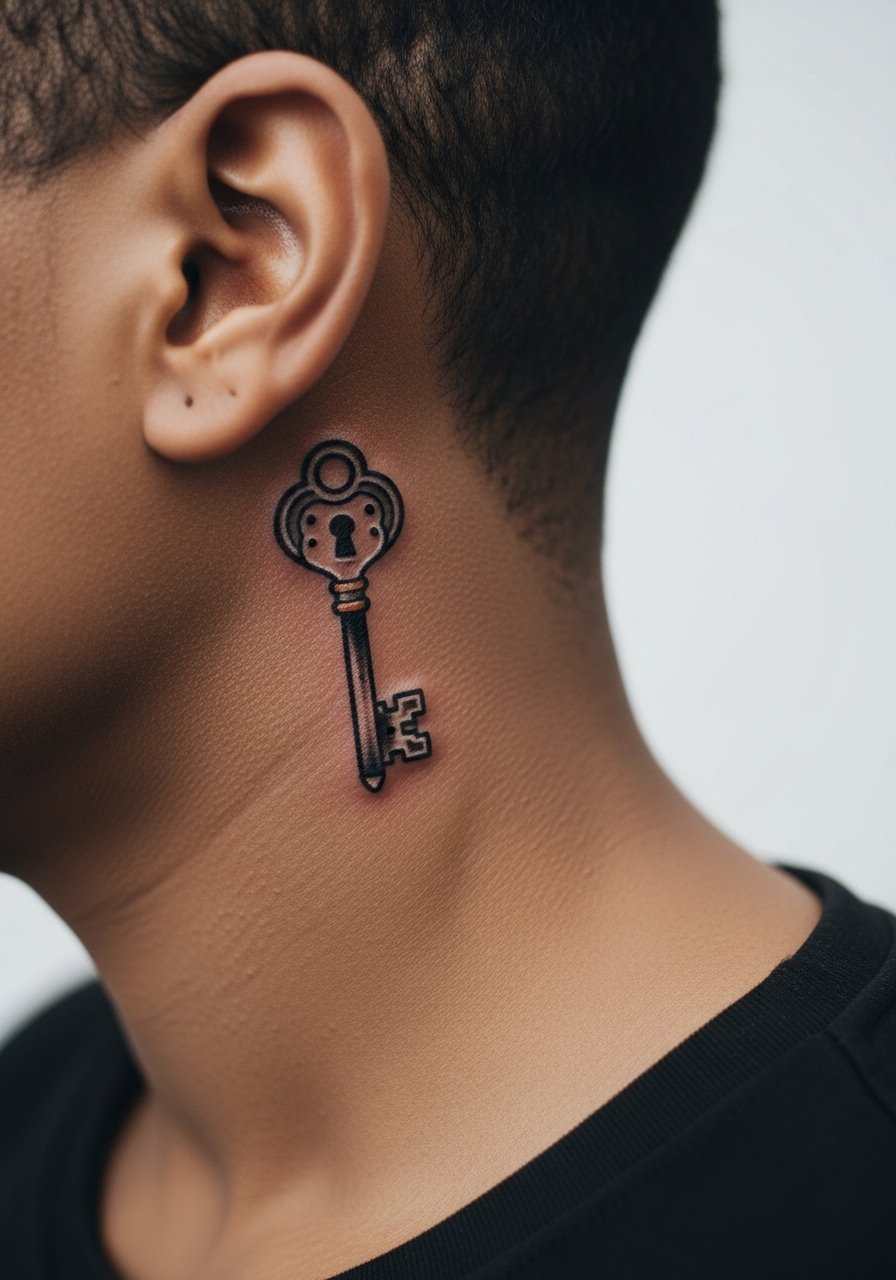
Metallic motifs read well when linework is confident and shading is restrained. Session time is 30 to 50 minutes and the area is sensitive but the session is short. A common mistake is tiny cross-hatching meant to suggest metal that ends up as muddied texture. Request flat blacks and a single highlight color to indicate shine. If you plan to keep it private, remember behind-ear pieces are easy to conceal with hair. For discovery pathways mention, look through local shop directories and convention portfolios to find someone who has healed photos of similar micro pieces.
17. Tiny Neo Traditional Lightning Bolt Accent
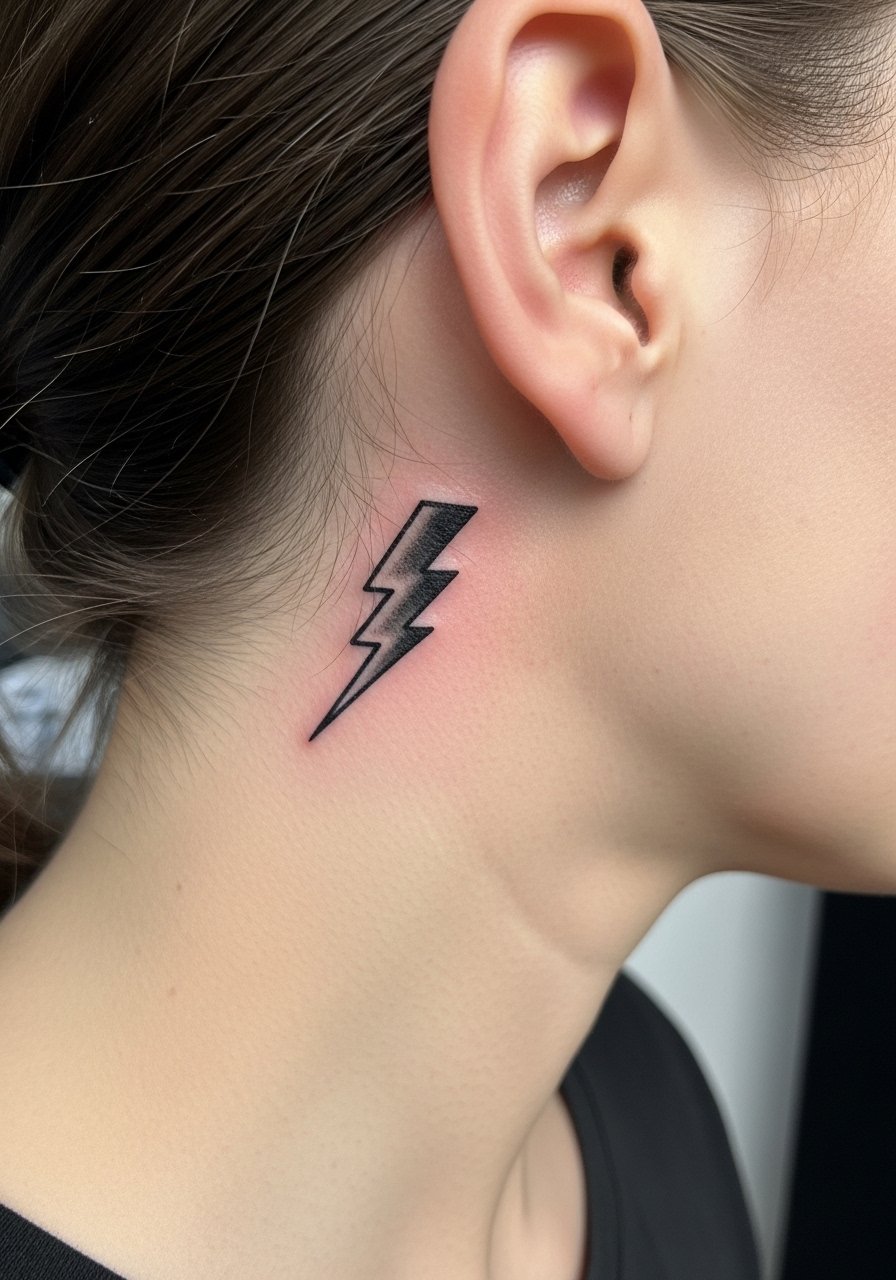
A lightning bolt is bold at a micro scale when the outline is decisive. This is a 15 to 30 minute job and the pain is quick and bright. The mistake is making the bolt too thin so it fades into a dull streak. Ask for a slightly thicker outer line and a saturated fill. Expect touch-ups around year three depending on sun exposure. For the session, a simple crew neck tee that you can pull aside keeps access easy.
Frequently Asked Questions
Q: Do behind-ear neo traditional pieces blur quickly because the skin is thin?
A: The neck area does make fine detail more vulnerable. Artists split into two camps. One camp says thin skin and constant motion mean tiny detail blurs within a few years. The other camp argues that with slightly bolder linework and simpler internal shapes the pieces can look clean for much longer. The safe route is to pick compact designs with strong outlines and to ask the artist for healed pictures of similar placements.
Q: How visible are these tattoos in professional settings and can they be covered easily?
A: Behind-ear tattoos are surprisingly easy to hide with hair, collared shirts, or a low bun. If your job is strict about visible ink, plan for a hairstyle or hat option that keeps the area concealed while it heals and afterward.
Q: What should I ask in my consultation to ensure the neo traditional look stays crisp?
A: Ask the artist to prioritize bold outer linework, reduced inner filigree, and flat color blocks over micro shading. Request healed photos of their small neck pieces and discuss a realistic touch-up timeline. Saying where you expect the piece to sit relative to the hairline helps get placement right.
Q: Will micro lettering in a banner behind the ear hold up?
A: Tiny script is one of the most common regrets in this placement. At this scale letters can merge into a dark line over time. If you must have text, limit it to initials or a two-letter monogram in a simple font and allow the artist to size the letters for longevity.
Q: How long does the initial healing feel sensitive and what should I wear to the session?
A: The first 48 to 72 hours are the most sensitive. For access, wear a loose-collared shirt or a zip-up hoodie you can slide to the side. Bring a soft beanie or scarf for after the session to keep hair and sun off the spot while the scab forms.
Q: Where should I look to find an artist experienced with small behind-ear neo traditional work?
A: Use local shop directories, tattoo convention portfolios, and community forum threads that show healed photos. Search tags and terms for micro neo traditional healed photos in your city and ask shops specifically for after-healed shots of behind-ear placements.
