
Fine line tigers are trending on boards, but the traditional saturated tiger keeps proving it ages better under real-life wear. Pain, placement, and future touch-ups matter more than whether the stripes are photoreal or classic bold. Read the next sections for designs that account for skin stretch, friction zones, and realistic touch-up timelines so you can pick a tiger that still looks fierce after five years.
1. Classic Shoulder Tiger Head with Bold Linework

I recommend the classic shoulder tiger when you want a statement piece that tolerates sun and sleeves. Tell your artist you want heavy outlines and dense saturation so the stripes read even as color mellows. Fair warning, the shoulder can feel like a four out of ten on the pain scale the first hour, but sessions are usually short. A common mistake is requesting tiny details inside the face; those fine features tend to blur with movement. Expect solid look at six months and steady softening by year five, with a likely touch-up window around year three if you spend lots of time outdoors.
2. Wrapped Forearm Tiger That Reads From Every Angle

I've seen forearm wraps hold up because the artist spaces the stripes to avoid congestion. Ask for clear negative space between the stripes during consultation. The forearm is forgiving for bold work and heals visibly fast, though frequent sun exposure ages saturation. For session wear, bring a loose button-down shirt you can pull aside so the artist has room to rotate your arm comfortably. Avoid asking for micro-details near joints, since the skin there flexes and can soften lines over time.
3. Inner Bicep Tiger in a Hidden-Then-Show Design

Fair warning: the inner bicep is tender and can rate as a seven out of ten for pain. People choose this spot because it hides easily at work and shows well with sleeveless tops. During consultation, request slightly heavier linework than you might want to compensate for the inner arm's softer skin. A typical mistake is going too fine with whisker details. Expect bright saturation at six months and more blended edges at two years. For session comfort, wear a tank top that allows full access while keeping the rest of your torso covered.
4. Thigh Roaring Tiger for Large-Scale Detail

There is something about thigh pieces that makes them worth longer sessions. Big surfaces let the stripes breathe, so the face can keep its contrast without overworking the skin. Tell your artist you want bold negative space around the whisker area to prevent crowding as the piece ages. Sessions can run long but pain is usually lower than ribs. A common error is asking for too much micro-shading inside the muzzle. Pair this design with nights out in high-waisted skirts that show the tiger without constant abrasion from tight denim.
5. Collarbone Tiger Accent That Frames Jewelry
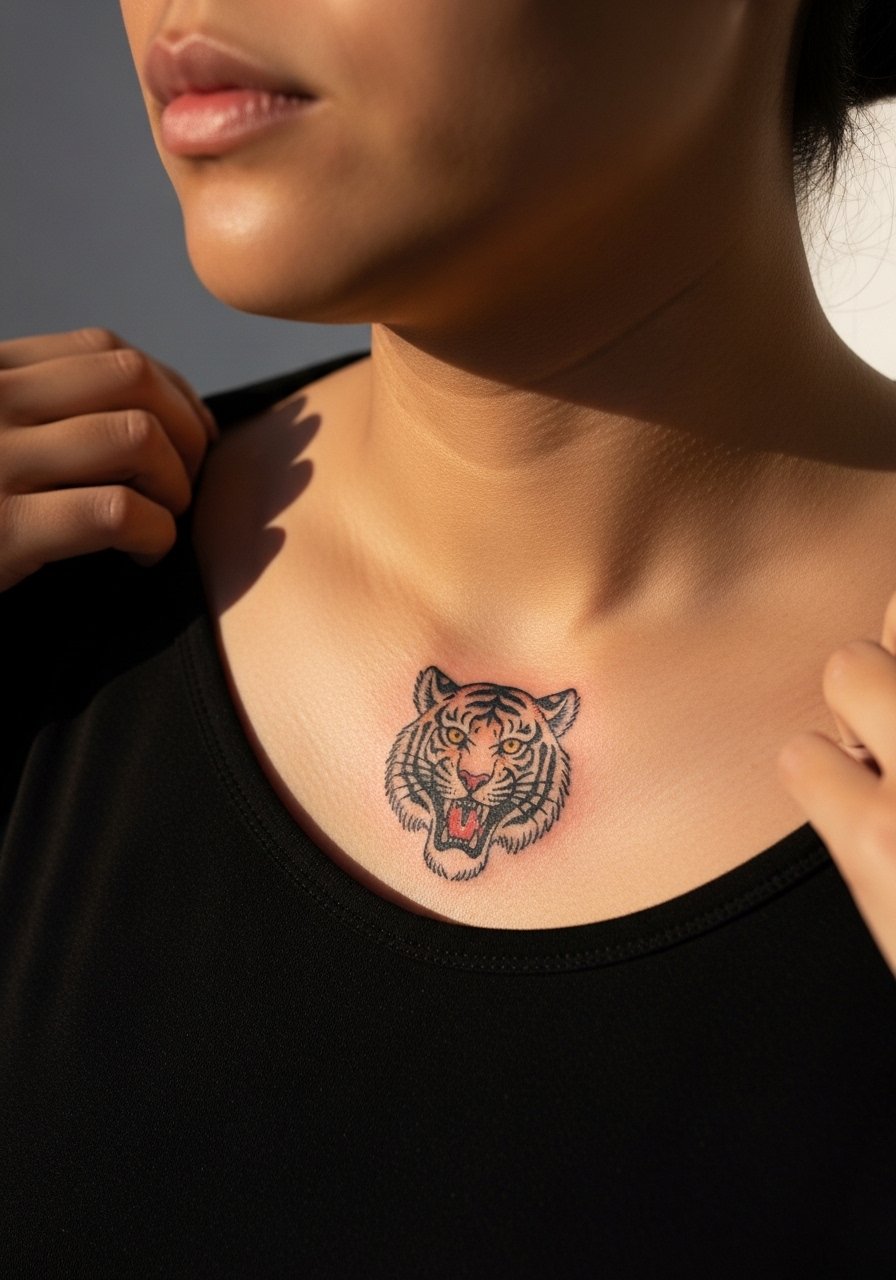
The collarbone placement reads delicate but still packs presence with bold outline. Tell your artist to keep the lower contrast toward the bone lighter so it does not blow out against the shallow tissue. The session is short and pain is moderate. A common mistake is placing the tiger too close to the bone line, which can distort while healing. For show-off styling, a thin chain pendant necklace sits above the image and draws eyes without covering the design.
6. Ribcage Tiger in a Flowing Pose
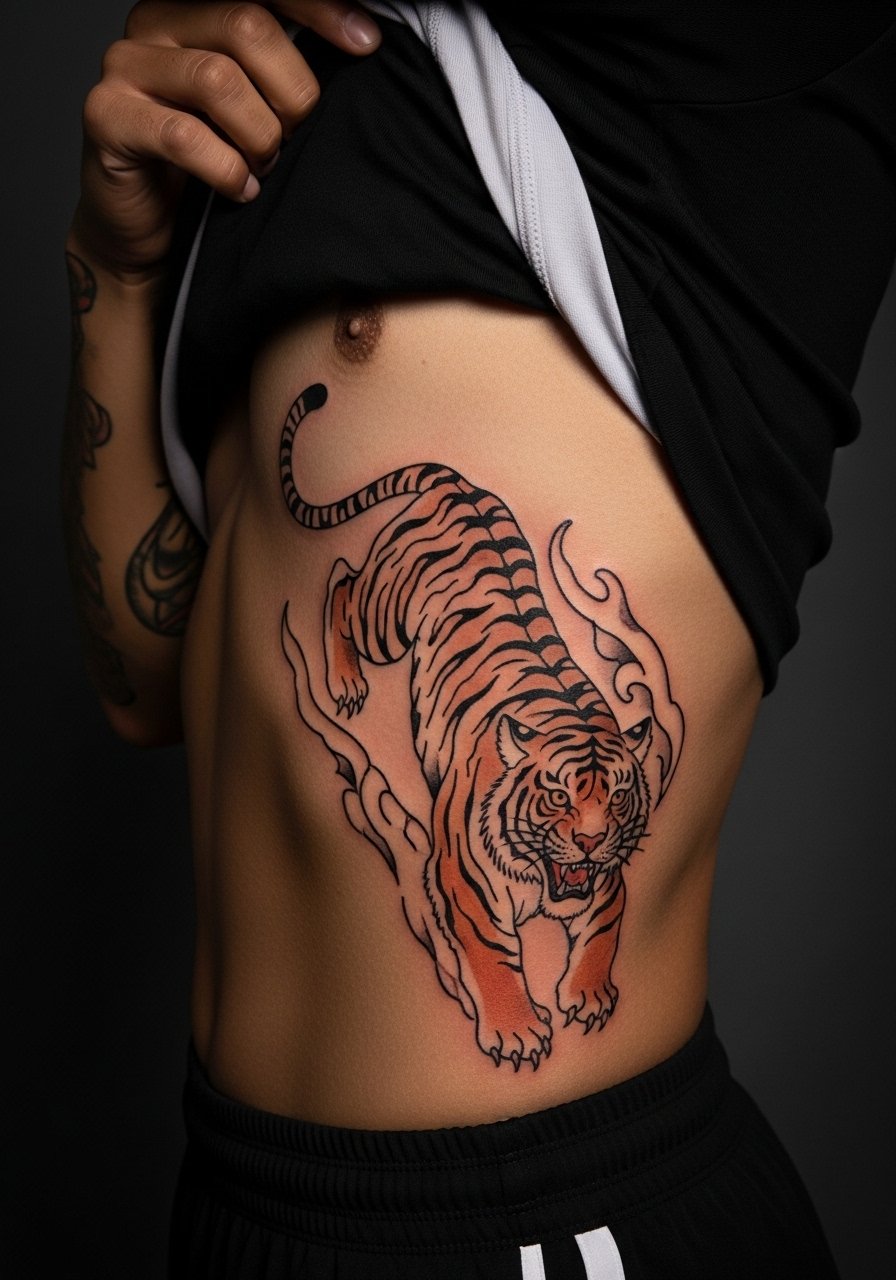
Artists split on fine detail on ribs. One camp says the skin stretch and movement cause fine lines to blur within two years. The other camp argues that with deliberate depth and spacing, the same ribs handle intricate work. For a traditional tiger on the ribs, favor bolder outlines and ask for less dense internal stippling. Expect a painful hour or two and swelling after, but the payoff is dramatic. Wear a sports bra you can remove easily for the session so the artist has full access without you getting chilled.
Pre-Session Essentials
The chest and ribcage sessions above ask more from your body than forearm pieces, and a few targeted items smooth out the session and the first week.
-
Stencil transfer paper kit. Lets you preview placement, which is useful for collarbone and forearm pieces where small shifts change how the tiger aligns with jewelry.
-
Topical numbing cream. Applied 45 minutes before eases the edge during rib and inner bicep work without interfering with linework.
-
Thin protective film roll. Guards ankle and finger pieces from rubbing during the first week of daily movement.
-
Fragrance-free body wash. Cleanses freshly healed areas like the shoulder and thigh without irritating saturated color.
-
Aquaphor healing ointment. A thin layer for the initial days helps keep linework from drying into heavy scabs on tighter placements.
7. Sleeve-Ready Tiger Composition That Moves With You

Think of a sleeve tiger as part of a visual story. When you consult, bring reference for how the stripes should wrap near the elbow joint. The elbow is a tricky hinge, so avoid tiny facial details that will blur with bending. Expect a series of sessions and plan touch-ups around year three if you wear short sleeves often. For showing off a sleeve as it heals, rolled-up linen sleeves work well. Wear a short-sleeve linen shirt the day of your appointment so your artist can access the whole arm easily.
8. Tiny Wrist Tiger for Subtle Habitual Display

Wrist tattoos are visible and get constant hand washing, which affects healing. Ask your artist for slightly heavier outer lines and minimal inner detail to keep things readable after a year of wear. Session time is short but the area can sting due to thin skin. Expect the lines to crisp up at six months and slowly soften. For daily wear that complements the wrist, pair the tattoo with a minimalist watch or stacked thin bracelets. Try a minimalist watch to frame the piece without covering it.
9. Ankle Tiger for a Low-Key Accent
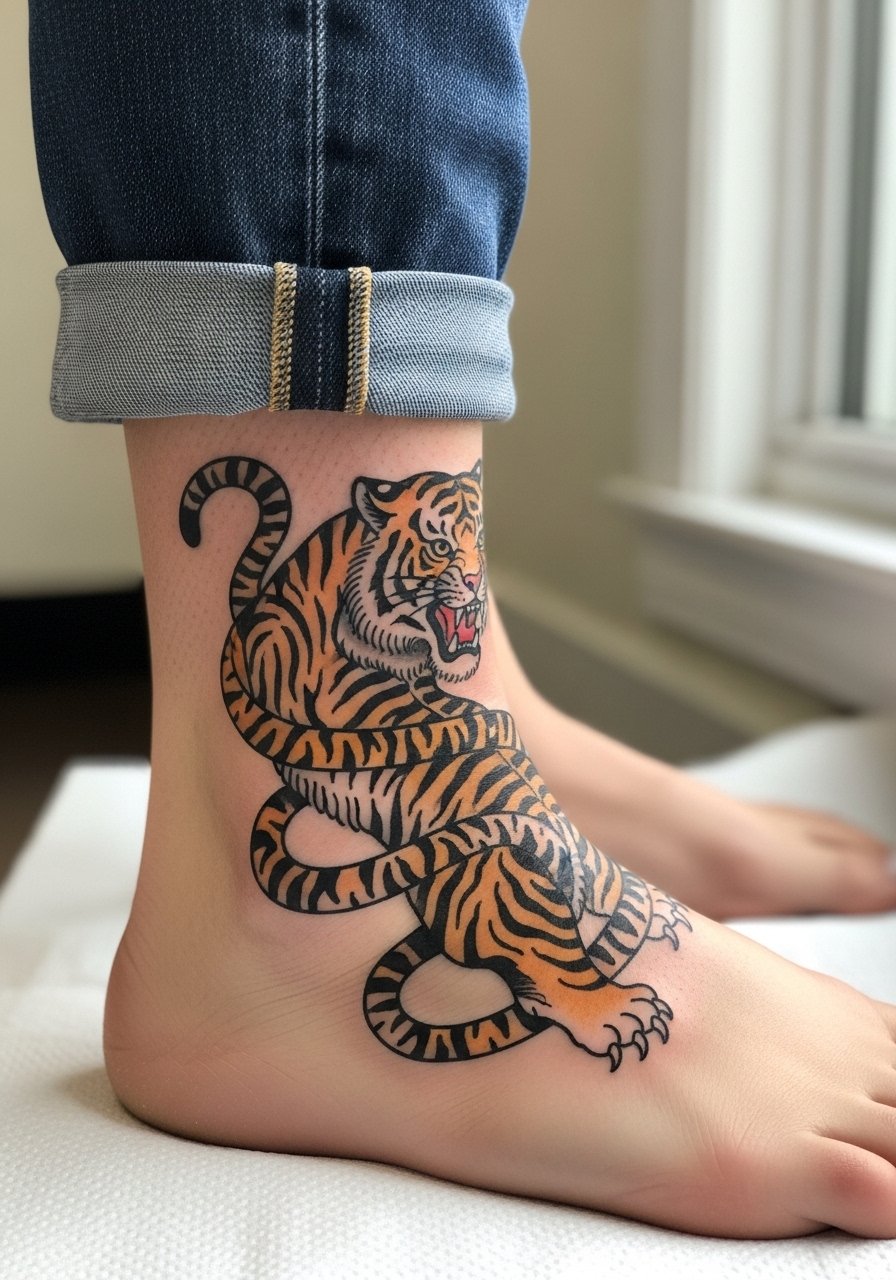
Ankle work survives well if your shoes and socks do not rub the fresh ink. Tell your artist you plan to wear low-profile footwear during the first week so they can tailor placement away from high-friction spots. A common mistake is requesting ultra-fine stripes right where shoe collars sit. Pain is moderate and sessions are short. For show-off styling, sandals or rolled jeans complement ankle pieces. Bring a pair of sandals or slip-ons you can easily put on after the session to avoid compressing the area.
10. Hand and Knuckle Tiger Accents with Career Considerations

Hand tattoos still affect hiring in some industries, so consider that before committing. Hands also take a lot of wash cycles which accelerates fading. If you want knuckle stripes, ask for bolder edges and accept that touch-ups may be needed within two years. The session feels sharp and fast. A common error is trying to fit too much detail in a tiny knuckle area. For session prep, plan to avoid heavy manual work for the first week so the scabs don't shear off.
11. Sternum Tiger with Symmetry and Sensitive Skin Notes

Sternum placements are intimate and demand careful symmetry. Because the area is soft and mobile, artists often recommend simplified internal shading and stronger outlines. Sessions can be uncomfortable and may need breaks. People split on whether to go fine or bold here. One camp prefers bold to last longer. The other camp uses meticulous spacing and says fine work can settle. If you pick sternum work, bring a fitted sports bra you can remove for the session and put back on cleanly. Session wear like a fitted sports bra helps protect the area afterwards.
12. Back Piece Tiger Along the Spine for Vertical Drama

A spine-running tiger benefits from vertical composition so the stripes work with the body's natural lines. Consultation should cover how the tiger looks when you bend and when you stand. Avoid dense cross-hatching that tries to simulate fur on a large back piece; it tends to merge over time. Sessions are long and you may need multiple appointments. For showing the design, open-back or halter dresses work well. Consider an open-back dress for evenings when you want to display the piece.
13. Calf Tiger That Ages Well With Socks and Boots
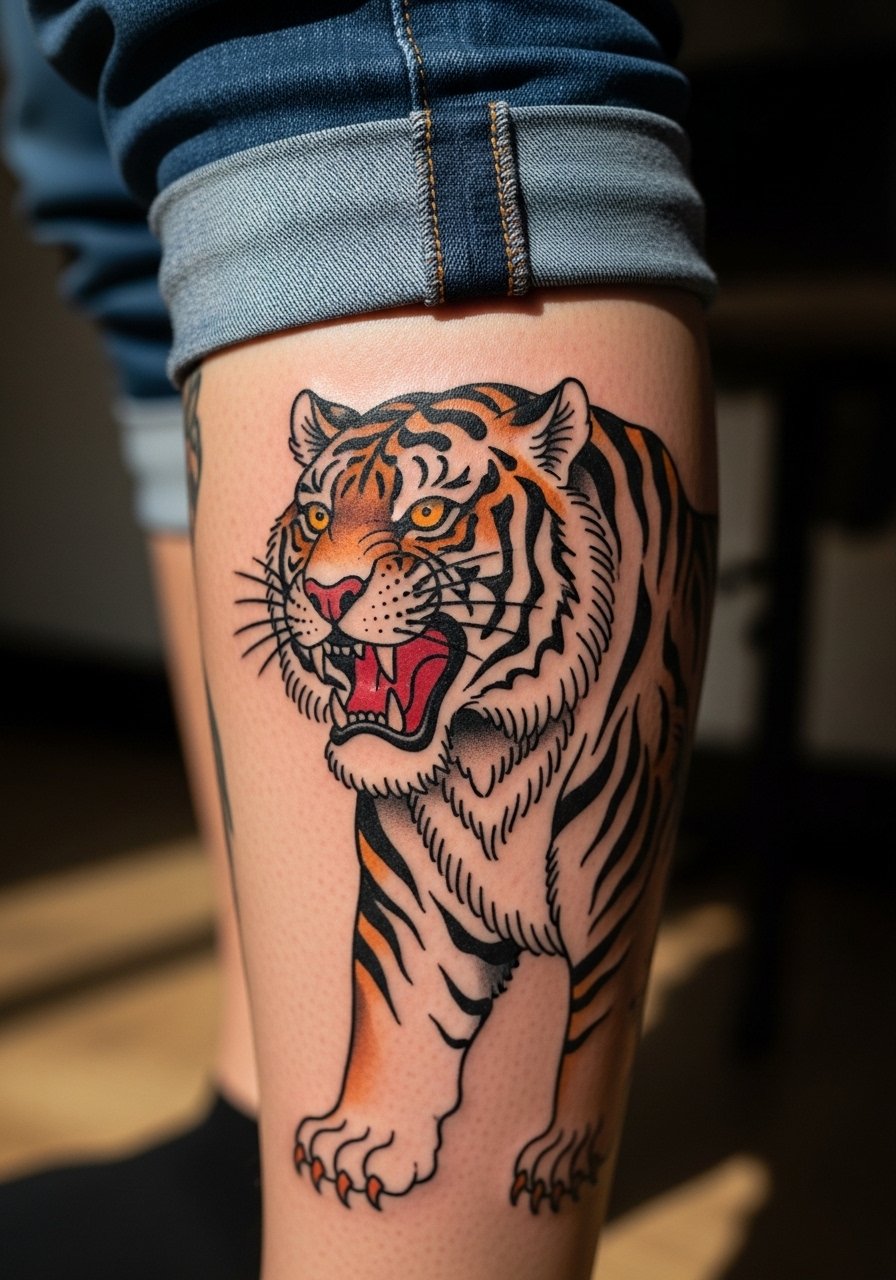
Calf pieces are practical because they have room and are shielded by clothing if needed. The primary aging factor is friction from socks and boots. Ask your artist to place the lowest stripes above typical sock lines unless you only wear ankle socks. Pain is lower and sessions are comfortable to sit through. For session ease, wear loose drawstring linen pants that you can roll up without compressing the area while you get tattooed.
14. Micro Traditional Tiger on the Finger for Tiny Statements

Finger placements are small and high-friction. Fine features inside a mini tiger rarely survive a year without touch-up. If you want a finger tiger, ask for a simplified silhouette with strong outer contour. Expect frequent touch-ups and faster blurring than on larger limbs. Sessions are quick but sharp. For showing the piece, pair it with delicate rings that do not sit directly on the tattoo. Try a set of thin stacking rings that complement the design without pressure on the skin.
15. Neo-Traditional Tiger with Floral Frame on the Hip

A neo-traditional tiger adds floral elements for contrast and helps the image age by dispersing saturation. Hip placements respond well to this because you can design around curves. Tell your artist you want the flowers to serve as breathing room so the tiger's stripes do not compress. Sessions can be medium-length and mildly painful. For showing the piece, pair it with high-waisted bottoms and cropped tops. Wear something like high-waisted denim for days you want to frame the tattoo.
16. Chest Panel Tiger That Works with Button-Downs
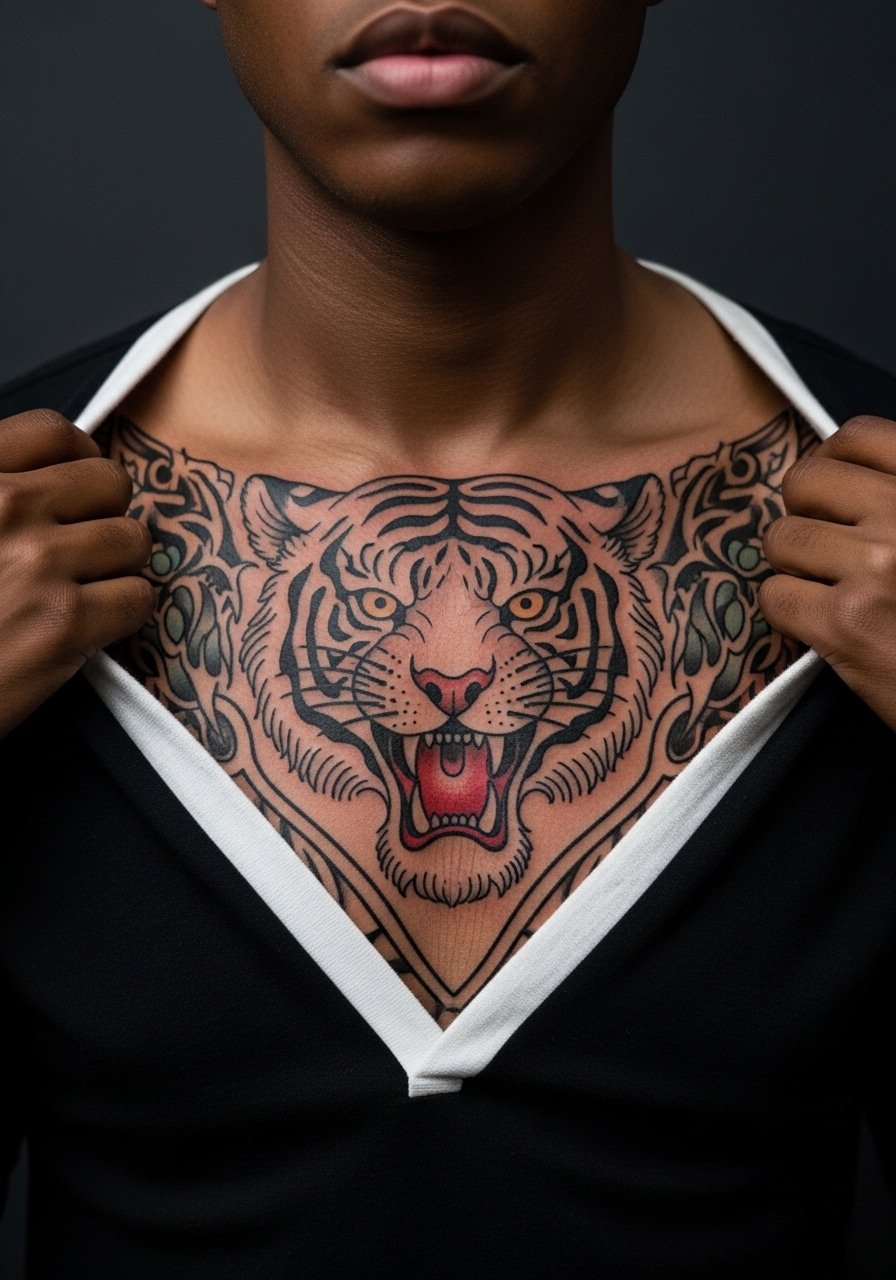
Chest panels are bold and can be tailored to sit around collarbones. During consultation, discuss how shirts will sit over the design so you can avoid constant abrasion along seams. Pain can be significant in the center of the chest. A mistake is overloading the panel with micro details near sternum lines. For showing the tattoo, consider open-collar shirts or wide-neck tops. A wide-neck shirt the day of the session keeps you comfortable and gives the artist clear access.
17. Watercolor Accent Tiger for a Softer Edge
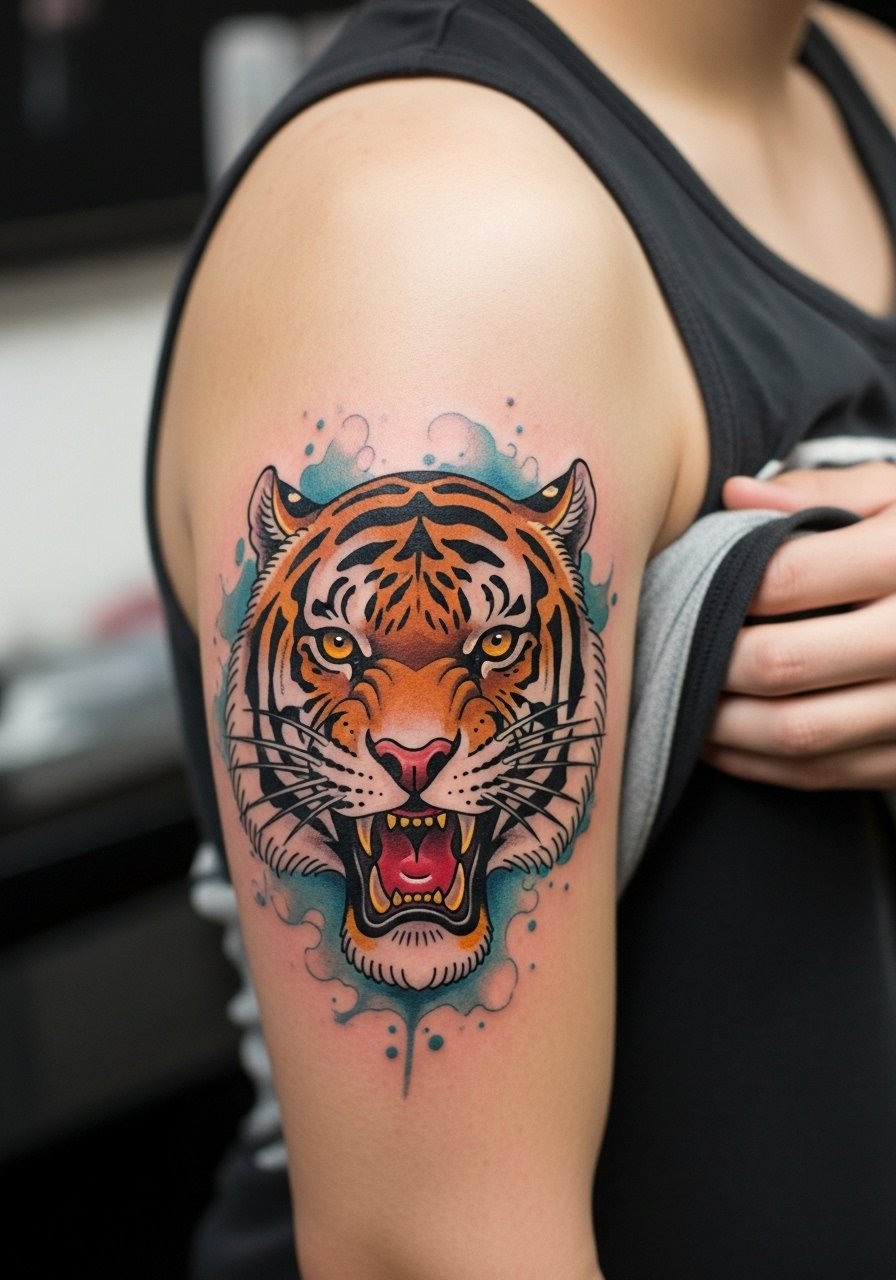
Watercolor treatments add a painterly background that can reduce the harshness of bright stripes. Controversy exists here because one camp says watercolor over traditional linework dilutes longevity, while the other says careful layering preserves both effects. For a tiger, keep the outlines bold and the watercolor loose so the lines remain readable. Expect the watercolor to fade faster than the black outlines and to require refreshes at different intervals. For session wear, a tank top provides easy access without rubbing the background pigment.
18. Minimalist Side-Face Tiger Near the Ear

Behind-the-ear placements are discreet and visible when you tuck hair up. The key safety rule is to describe this as on the skin behind the ear, below the hairline, not on the ear itself. Small tigers here should favor simplified contours so lines do not blend with nearby hair follicles. Pain is surprisingly low but sessions must be short. For after-session protection and to show the piece, wear hairstyles that let the tattoo peek out. A textured clip or updo works well without constant rubbing.
19. Geometric Frame Tiger Combining Lines and Shapes
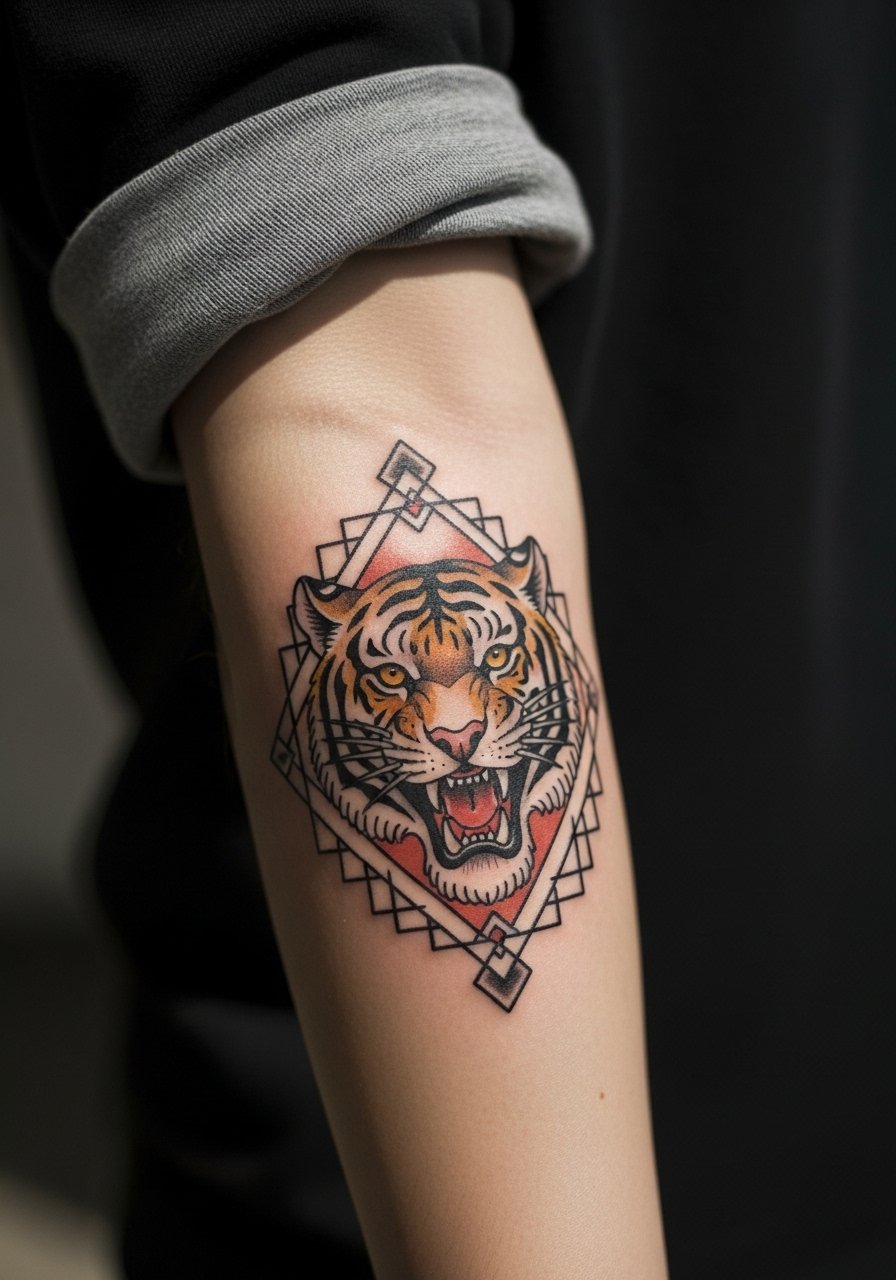
Combining geometry with traditional stripes requires careful spacing to avoid congested intersections. Tell your artist you want clear negative space where the triangle or diamond meets the stripes. The forearm handles this mix well because the skin is flat and shows contrast. A common mistake is cramming tight geometry into a small area. For styling, rolled sleeves and a casual racerback tank keep attention on the forearm design without competing elements.
20. Back of Neck Tiger for a Bold Flash

The back of the neck is a high-visibility spot when hair is up. For a tiger here, ask for compact composition and heavy outline to prevent smudging. Pain is usually moderate and quick. A pitfall is choosing too much inner shading which can merge with hair follicles during healing. For session prep, wear a wide-neck shirt you can pull aside without getting hair caught under the collar.
21. Thigh Band Tiger in a Decorative Strip
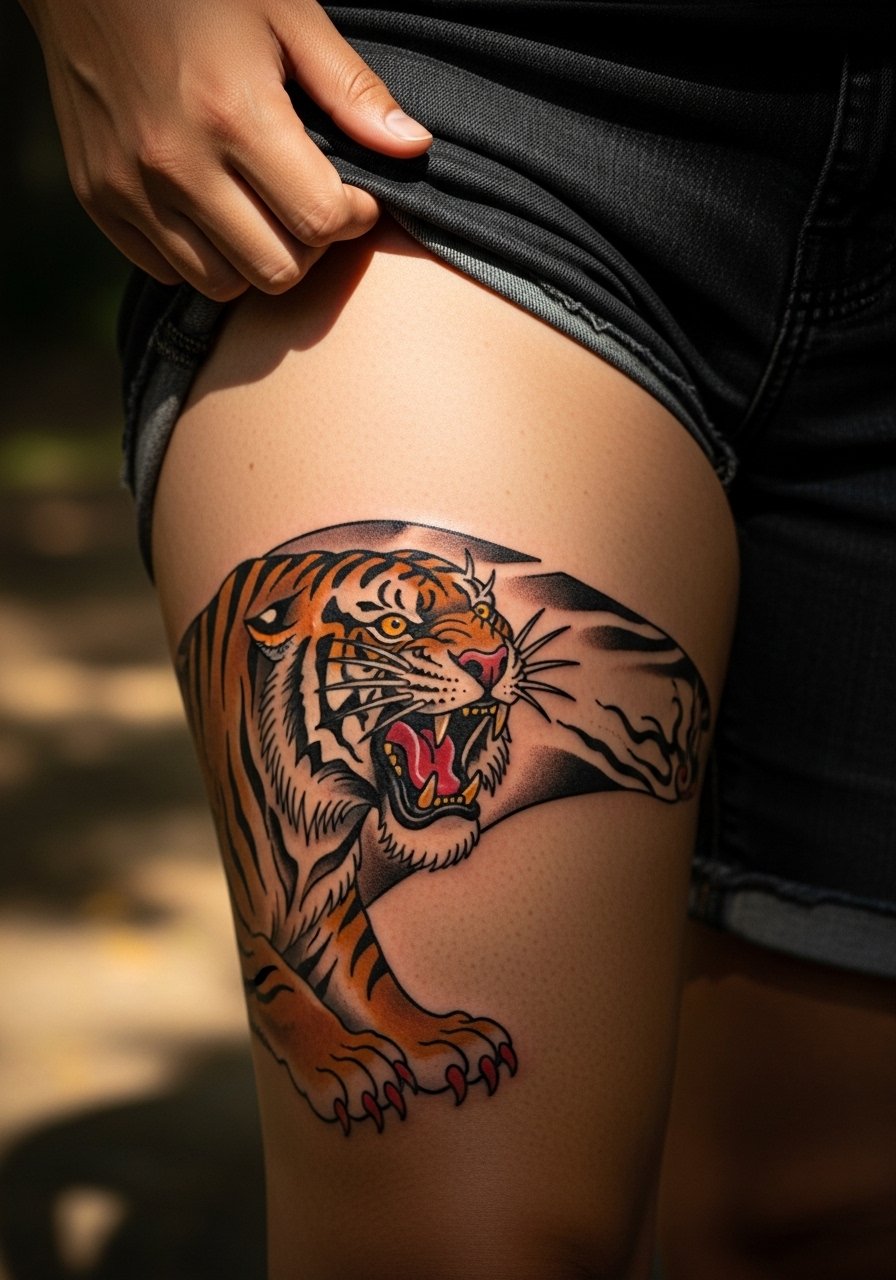
Band placements use repetition to make a statement and are forgiving because they sit away from high-friction zones if you plan properly. Tell your artist to keep the lowest stripe slightly higher than waistband cuts so the design avoids constant abrasion. Sessions are comfortable and allow larger needles for saturation. A mistake is squeezing too many elements into a narrow band. For showing the piece, high-waisted shorts or skirts work well. Try high-waisted shorts to frame the band without chafing.
22. Neck-Side Tiger Accent That Plays With Collars

Side-neck tattoos require clear discussion about visibility and movement. Artists often suggest reduced internal detail because the neck skin moves with turning and swallowing. Expect a higher sensitivity and a quick session. A common mistake is placing the design too low where collars will rub it constantly. For styling, choose shirts with open collars on session days and after healing. A wide-neck shirt keeps the area accessible and reduces irritation.
23. Upper Arm Memorial Tiger with Script Integration

Integrating script needs exact placement planning because lettering ages differently than bold tiger stripes. If you add text, specify font size and spacing to the artist and state how long you want the lettering to remain legible. A common mistake is asking for very small script next to bold shading. Sessions are moderate length and comfortably tolerable. For showing off the combined piece, rolled sleeves highlight both the tiger and the script. Consider a short-sleeve shirt that frames the upper arm.
24. Lower Back Tiger Buried in Floral Detail

Lower back pieces must consider waistband placement and sleeping positions. Place the tiger higher than where belts typically sit to avoid constant abrasion. Sessions are usually medium-length and comfortable. A mistake is overdoing dense shading in areas that rub against clothing. For showing the piece, low-back dresses and cropped tops reveal the work. A tank top and high-waisted jeans on the day of the session keeps things simple and clean.
25. Hip Pocket Tiger That Peeks From Swimwear
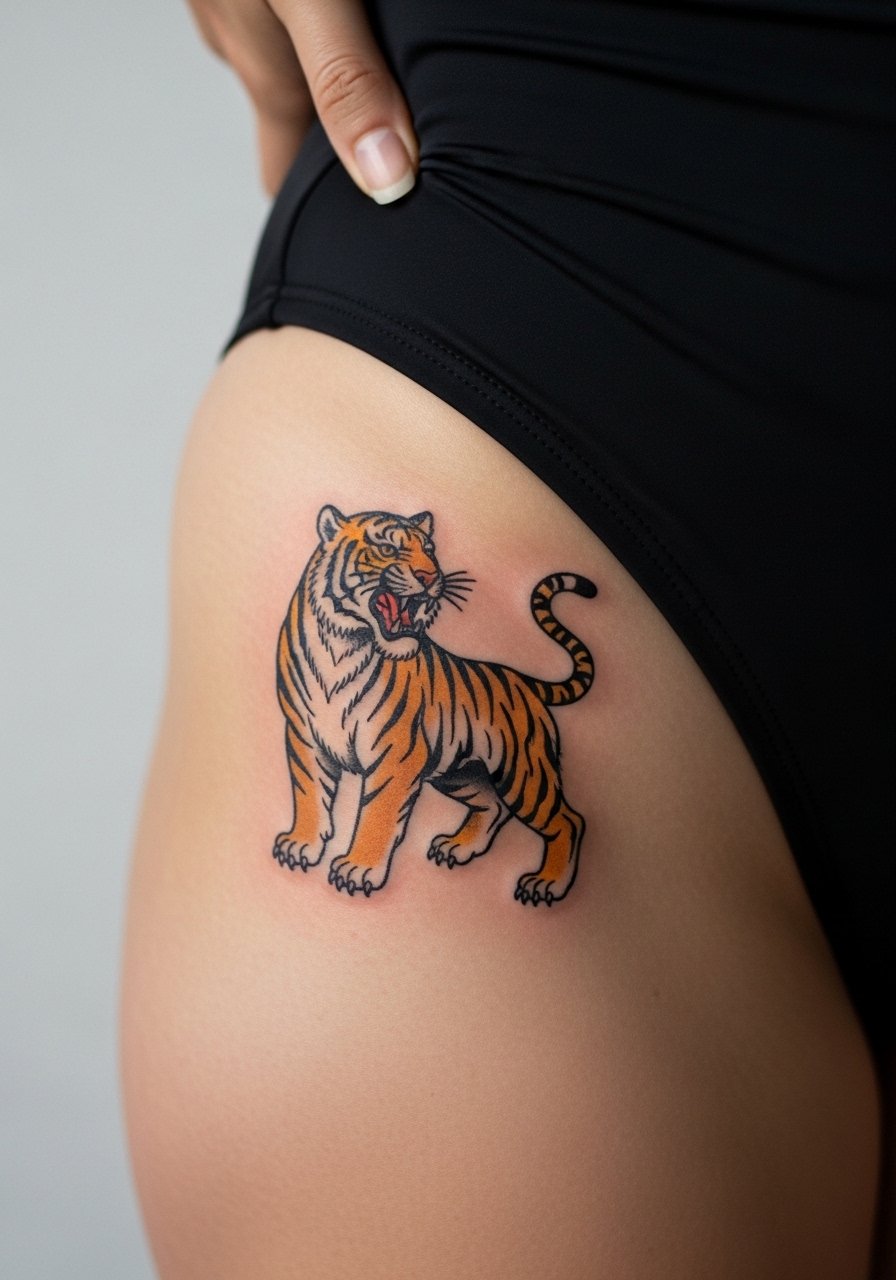
Hip work needs attention to swimwear and jeans. Artists recommend placing the lowest stripes above common swimlines. The area is tender and sessions are short but can be sharp. People often mistake wanting lots of micro-shading where the hip flex makes details collapse. For show-off styling, choose high-cut swimsuits that reveal the design. Try a swimsuit bottom with moderate coverage to display the tattoo safely.
26. Shoulder Blade Tiger That Hangs Off Tank Tops

Shoulder blade placements allow for dynamic poses and generous spacing. Tell your artist you want the tail or stripes to interact with the shoulder blade curve for movement when you reach or twist. A common mistake is trying to compress facial detail into the narrow part near the spine. Sessions feel moderate and you will sit or lie comfortably for longer stints. For showing off, open-back or loose tank tops work well. A loose tank top is an easy session choice that gives coverage while allowing access.
27. Neo-Classic Calf Tiger with Bold Negative Space
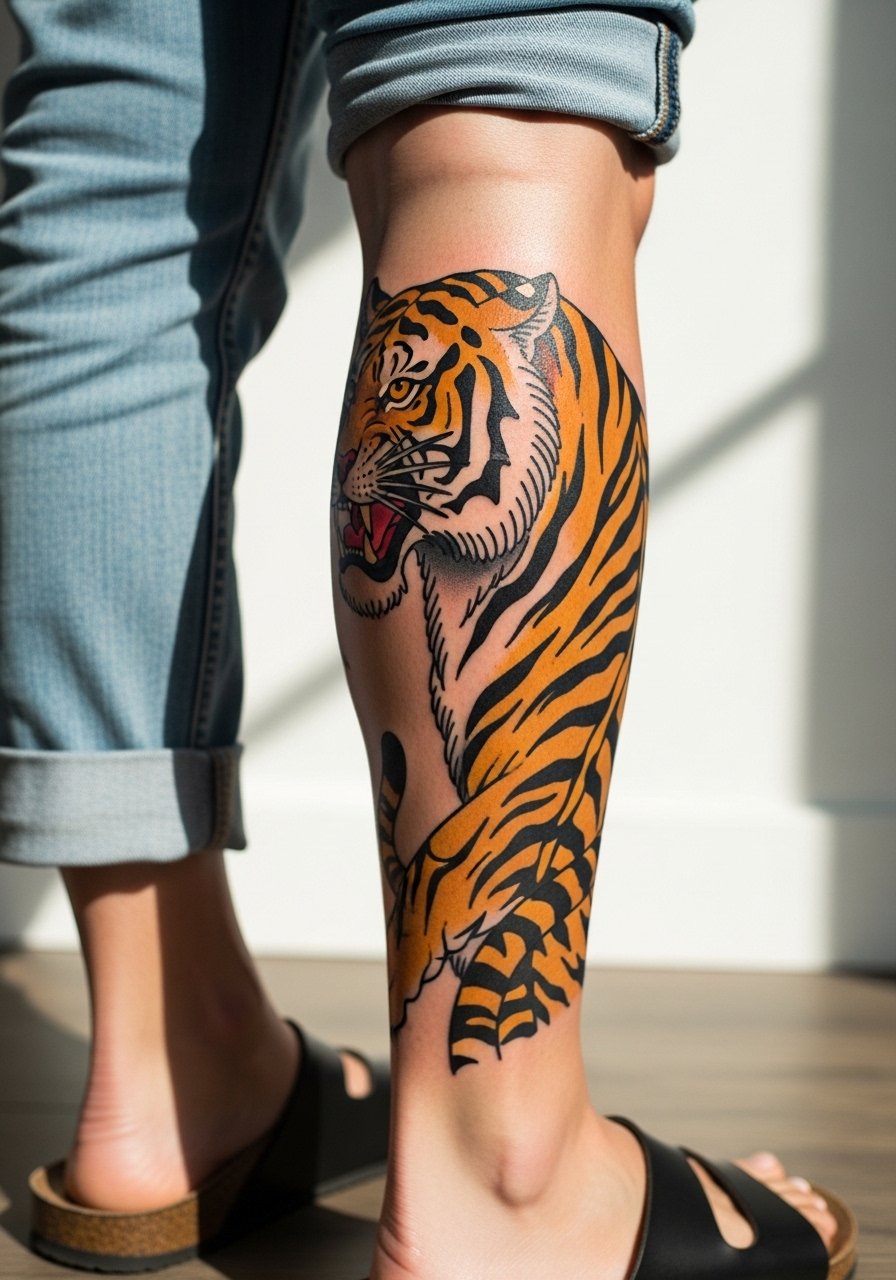
There is something about bold negative space on a calf that keeps a tiger readable for years. Ask your artist to prioritize clear gaps between stripes and the background elements. The calf is forgiving with low pain and steady sessions. A frequent error is adding too many small background motifs that compete with the tiger. For daily wear and display, sandals or cropped pants frame the calf without constant rubbing. Slip into sandals after the session to avoid boot friction while healing.
Frequently Asked Questions
Q: How painful is a traditional tiger on the ribs compared with the forearm?
A: Ribs are generally more painful than forearms because skin is thinner over bone and the needle vibrates against less padding. Forearms feel more tolerable and heal faster. Expect rib sessions to include breaks and bring a numbing cream option if you want extra comfort.
Q: Will a fine line tiger lose its detail faster than a traditional bold tiger?
A: From what I've seen, fine line tigers do blur sooner, especially on high-motion areas like the ribs or inner arm. Bold outlines and saturation hold better over five years. If you love fine detail, plan for possible touch-ups and discuss spacing and depth with your artist beforehand.
Q: How should I dress to protect a fresh ankle or foot tiger during healing?
A: Wear slip-on sandals or shoes that avoid compressing the area for the first week. Loose rolled jeans or a skirt let the tattoo breathe. Bring footwear you can remove easily so you are not tugging socks on and off over the fresh ink.
Q: Do hand and finger tigers require different care or expectations?
A: Yes. Hands and fingers get more washing, sun, and abrasion which speeds fading. They are also prone to scabbing loss, which affects pigment retention. Expect more frequent touch-ups and be mindful of your daily activities in the first two weeks.
Q: How do I choose between a neo-traditional tiger and a watercolor-accent tiger if longevity matters?
A: If longevity is a priority, neo-traditional with strong outlines is the safer bet because those outlines anchor the image as color fades. Watercolor accents can look beautiful but they often need refreshes in different intervals than the black lines. Talk through how often you are willing to touch up during consultation.
Q: Can I get a tiger over old scars or stretch marks and expect it to look normal?
A: Scars and stretch marks change how ink sits. Some artists will tattoo over light scars with adapted techniques, but results vary. Expect areas with scar tissue to take pigment unevenly and plan for possible touch-ups. Always ask your artist to test a small area or show portfolio examples of similar work.
Q: Will a sternum or chest tiger affect my choice of clothing long term?
A: Sternum and chest pieces are very visible with certain necklines. If your wardrobe includes many open-neck styles you will see the tattoo regularly. For session and early healing days, pick wide-neck shirts and fitted sports bras that do not rub the area.
