
Fine line and saturated color are both trending for cat tattoos, and that gap between what looks great on a phone screen and what lasts on skin is where most regrets live. Some pieces hold decades, and some need touch-ups by year three. Read on for colorful cat designs that balance visual pop with realistic aging, plus what to tell your artist at the chair.
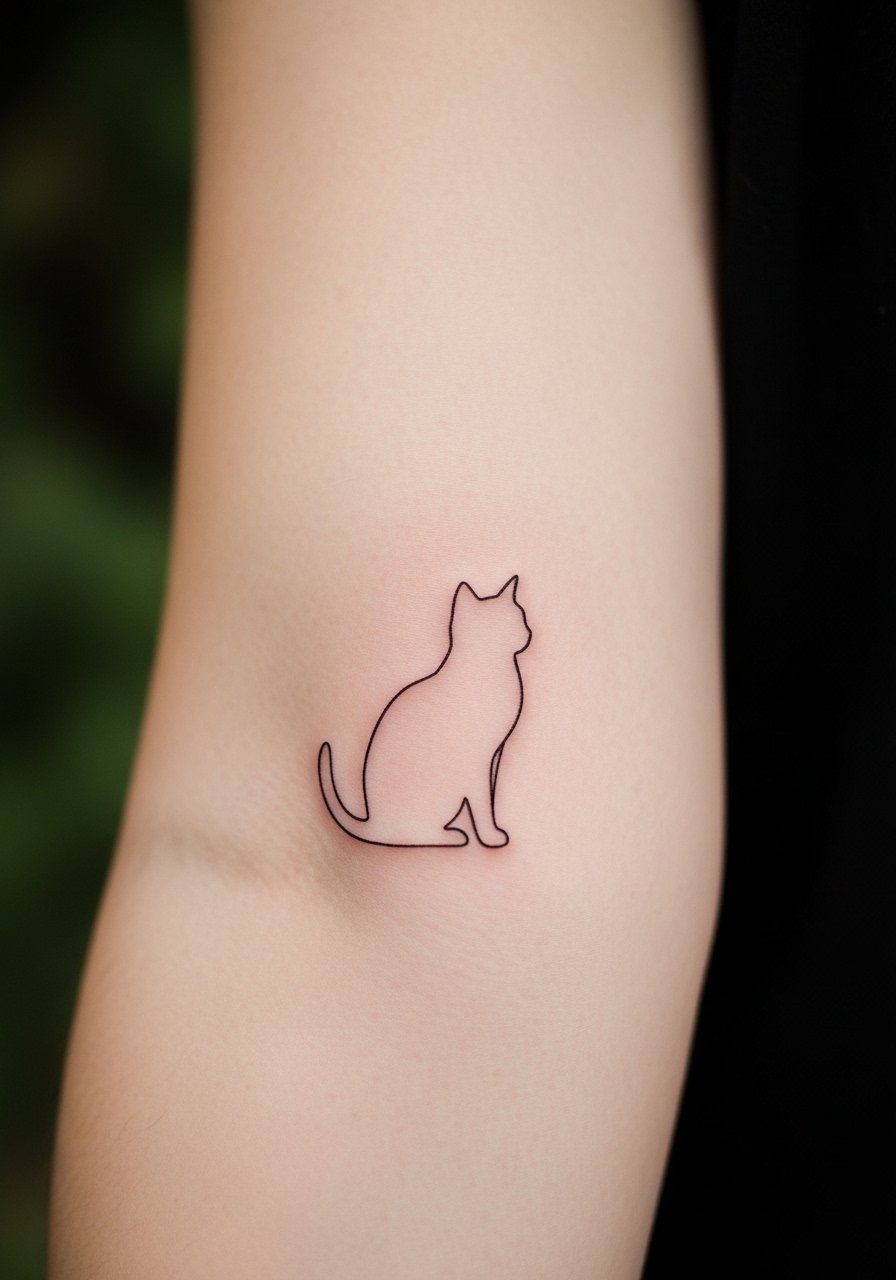
1. Delicate Line Cat Silhouette on Inner Forearm
A thin, single-line cat silhouette works well on the inner forearm if you like subtlety that still reads up close. I recommend this over a tiny, dense script-style cat because the forearm moves and needs slightly stronger linework to avoid early blur. Tell your artist to keep linework crisp but give each curve 1.5 to 2 millimeters of spacing so the negative space breathes. Expect mild discomfort, like steady scratching, for a 45-minute session. Common mistake is asking for ultra-fine single-needle lines that sit too shallow. At six months the silhouette should look clean. By year three you may want a light touch-up to restore saturation. For showing it off, roll sleeves up and pair it with a rolled-up linen shirt that frames the forearm without overpowering the linework.
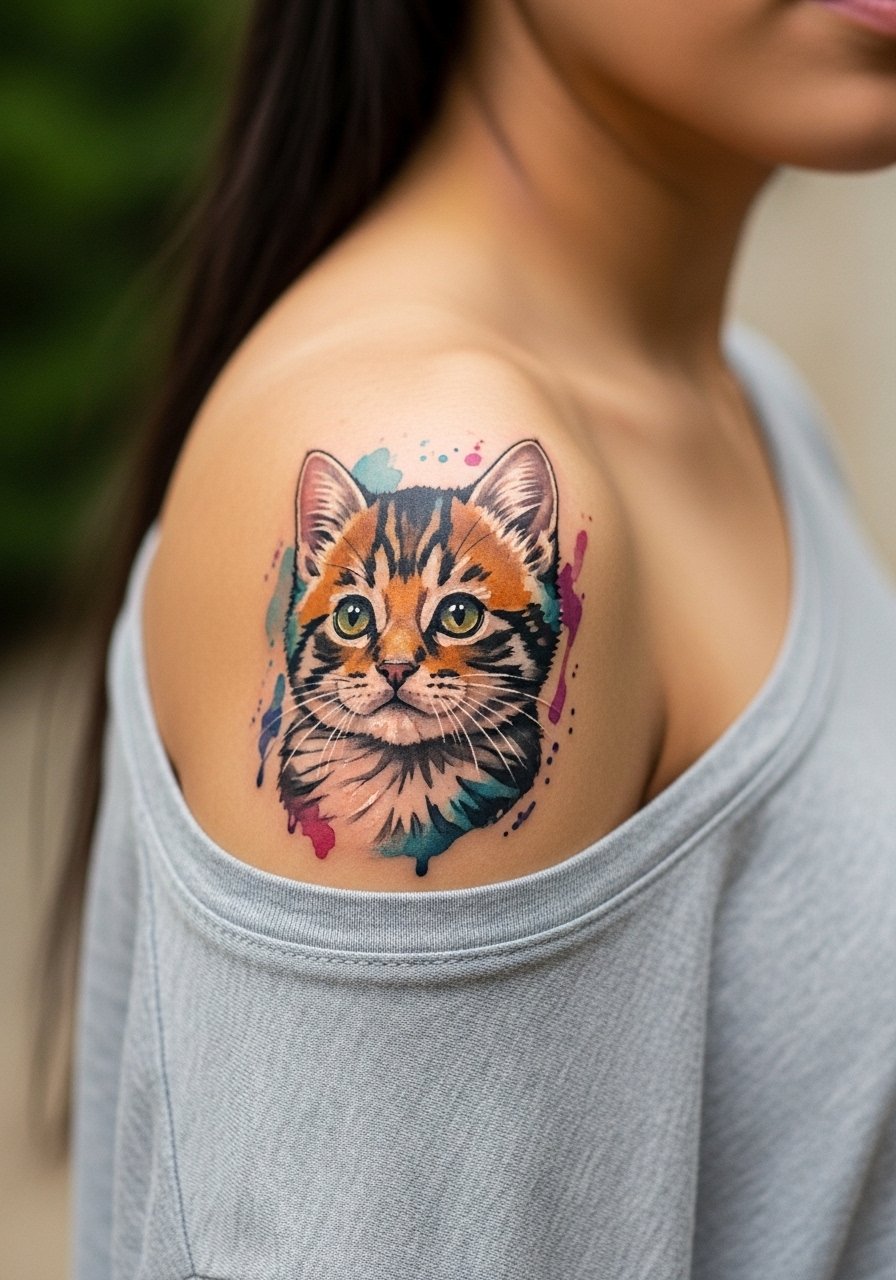
2. Watercolor Portrait Kitten on the Shoulder Cap
Bright watercolor fills behind a micro-realism kitten head give a painterly feel without heavy outlines, and the shoulder cap is forgiving for saturation. Ask your artist for a mix of saturated focal colors and a muted wash around edges so individual hues age gracefully. The biggest mistake is going too heavy with dilute color that migrates into muddy tones after two years. Sessions usually run 90 to 120 minutes and feel like intermittent vibration with sensitive patches near the bone. Blowout risk on the shoulder is low when the artist uses correct depth and spacing. For evenings out, pair this with an open-back midi dress to let the shoulder peek through without exposing tattoos in professional settings.
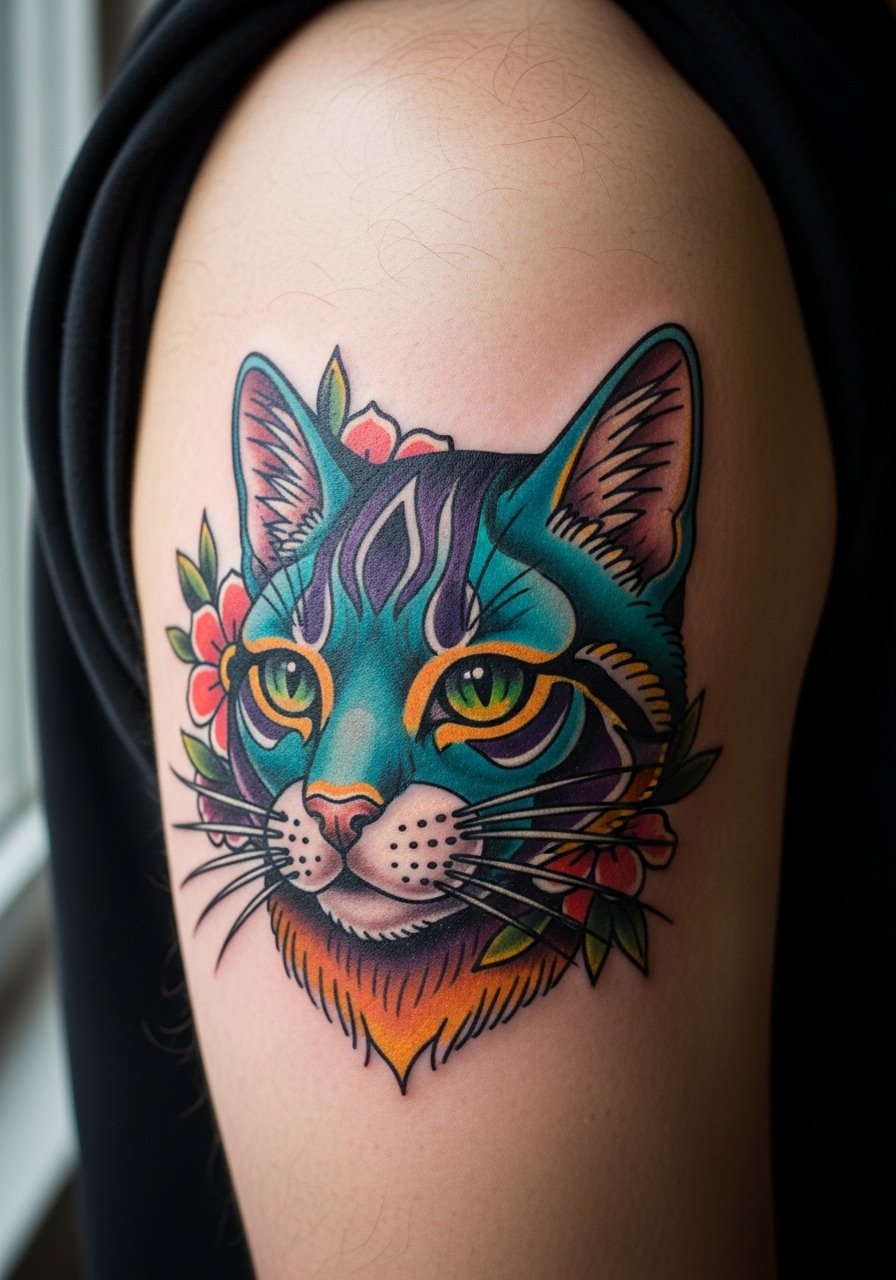
3. Neo-Traditional Cat Head on Upper Arm
Neo-traditional cat heads get bold outlines with saturated fills that age predictably. I suggest this when you want a piece that reads from across a room. During consultation, specify consistent saturation and ask to keep outline thickness slightly thicker than a hairline so it does not feather. A common error is cramming too much small detail into the cheek and whisker area, which can blur by year four. The session is moderate on pain and often done in one two-hour block. Expect touch-up at year five for color refresh. This placement pairs well with short sleeves or a loose button-down shirt rolled at the cuff for casual looks that show the artwork.
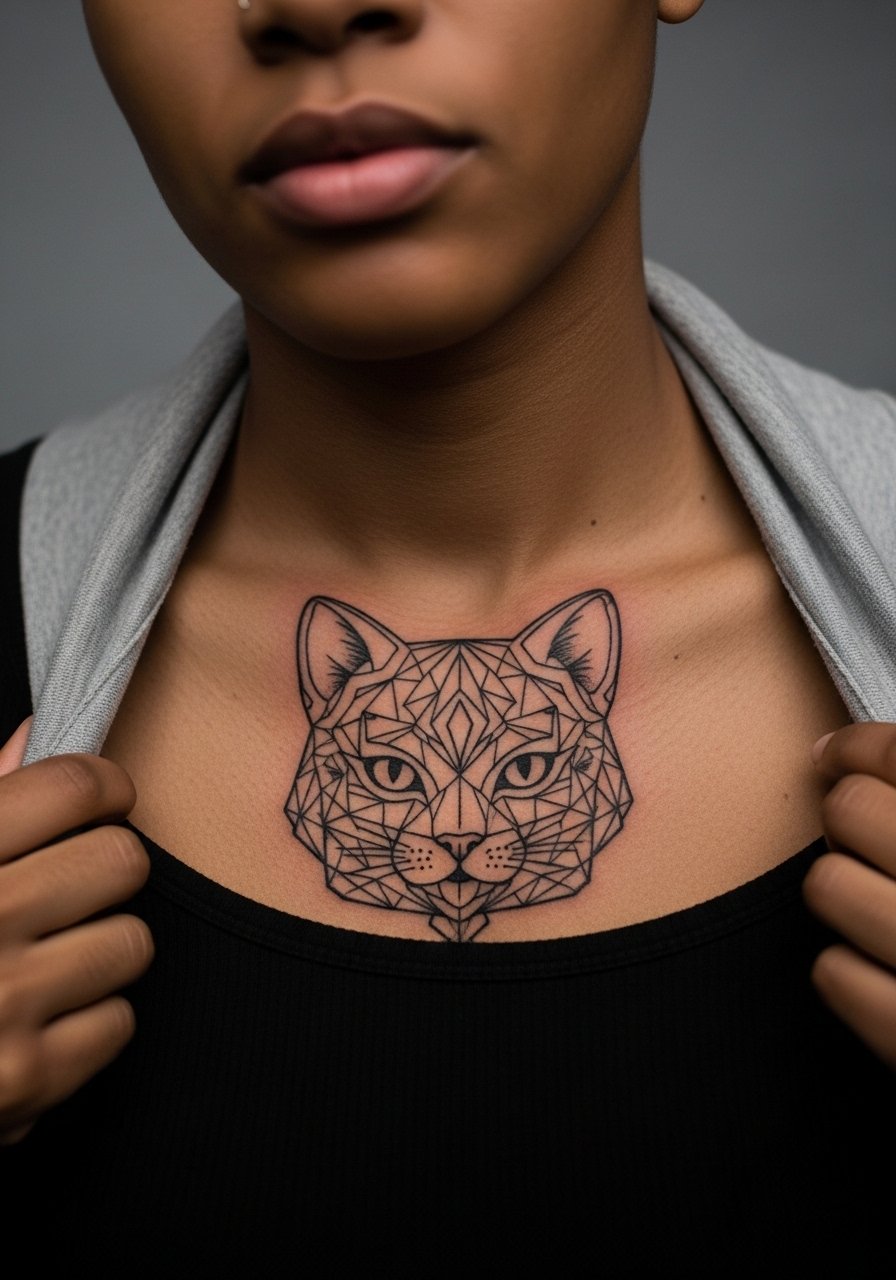
4. Geometric Cat Mandala on the Upper Chest
Geometric mandalas overlaid with a cat face sit nicely on the upper chest when scaled for the collarbone line. Artists are split on fine detail here. One camp says dense fine line in chest skin blurs quickly. The other camp argues that with proper spacing and needle depth the shapes hold. Ask where the artist stands before booking. This piece works best when the mandala has breathing room between spokes and the cat's face is slightly simplified. The session can be several short passes and it feels tender near the bone. For session wear, show up in a wide-neck shirt you can pull to the side so only the upper chest is exposed.
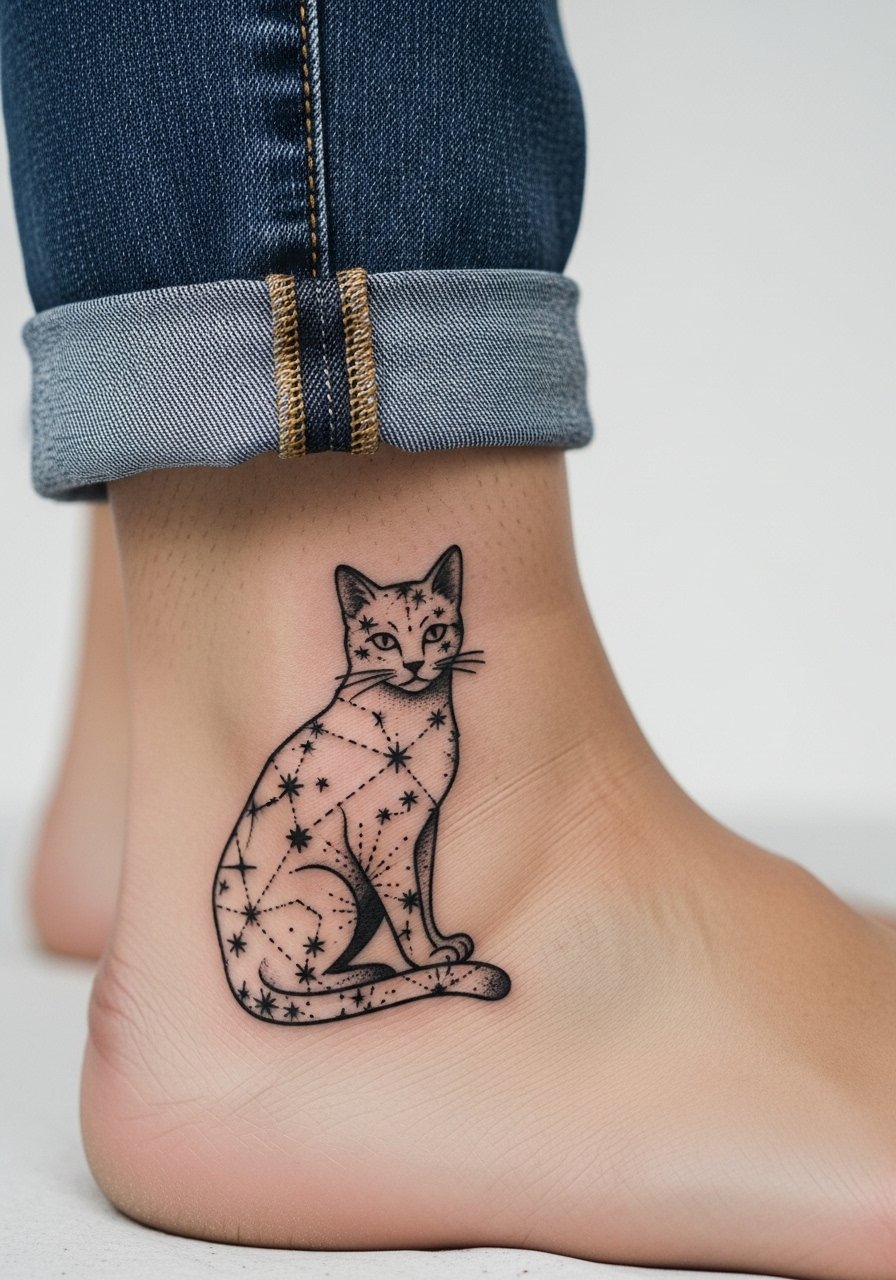
5. Blackwork Constellation Cat on Ankle
A tiny blackwork cat formed from stars makes a delicate ankle piece that holds up because of bold dots and clean negative space. I recommend this over extremely thin script-style cats on the ankle since daily friction and footwear can erode fine lines. Tell your artist to use dot work for the stars and a slightly heavier outline for the silhouette. Session time is short, under an hour, but the area is sensitive near bone so expect sharp pinches. Key mistake is requesting too many minuscule stars that merge. For summer wear, roll pants or pick sandals that reveal the ankle and a minimalist anklet frames the piece without competing.
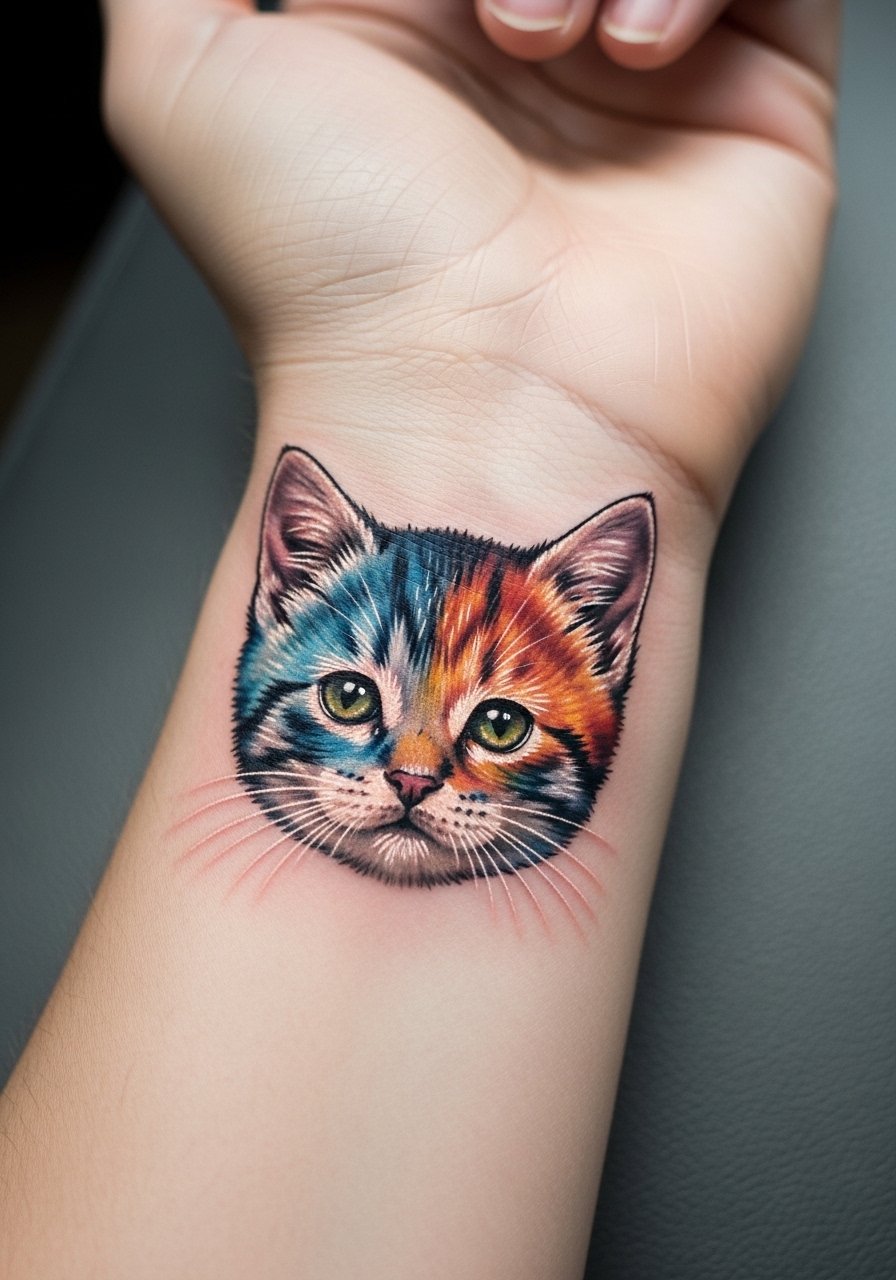
6. Micro-Realism Kitten Face on the Inner Wrist
Micro-realism needs crisp saturation and precise shading, and the inner wrist shows detail best for small faces. The wrist is a high-motion zone, so tell your artist to slightly increase contrast in shadow areas to preserve depth as the skin ages. Many people ask for ultra-fine portrait detail that fades fast. This design usually takes 60 to 90 minutes and feels like a steady stinging. Expect touch-ups around year two to three, especially on the lighter tones. For the session, wear a racerback tank so your sleeve can be easily rolled without rubbing the fresh ink.
Studio Day Picks
Those first six designs include wrist, ankle, chest, and shoulder placements that need different prep. A few compact items smooth the appointment and the first week.
- Stencil transfer paper kit. Helps you and the artist preview exact placement, which matters for inner wrist and ankle pieces.
- Disposable armrest cover pads. Keeps the forearm and wrist stable during fine line or micro-realism sessions.
- Thin protective film roll. Useful for ankle and wrist tattoos that face friction from socks and watches during the first days.
- Cooling gel pack wrap. Soothes the shoulder and chest after longer sessions without interfering with the artist's process.
- Aquaphor healing ointment. Thin application for the first few days helps maintain moisture on small, detailed work until scabbing eases.
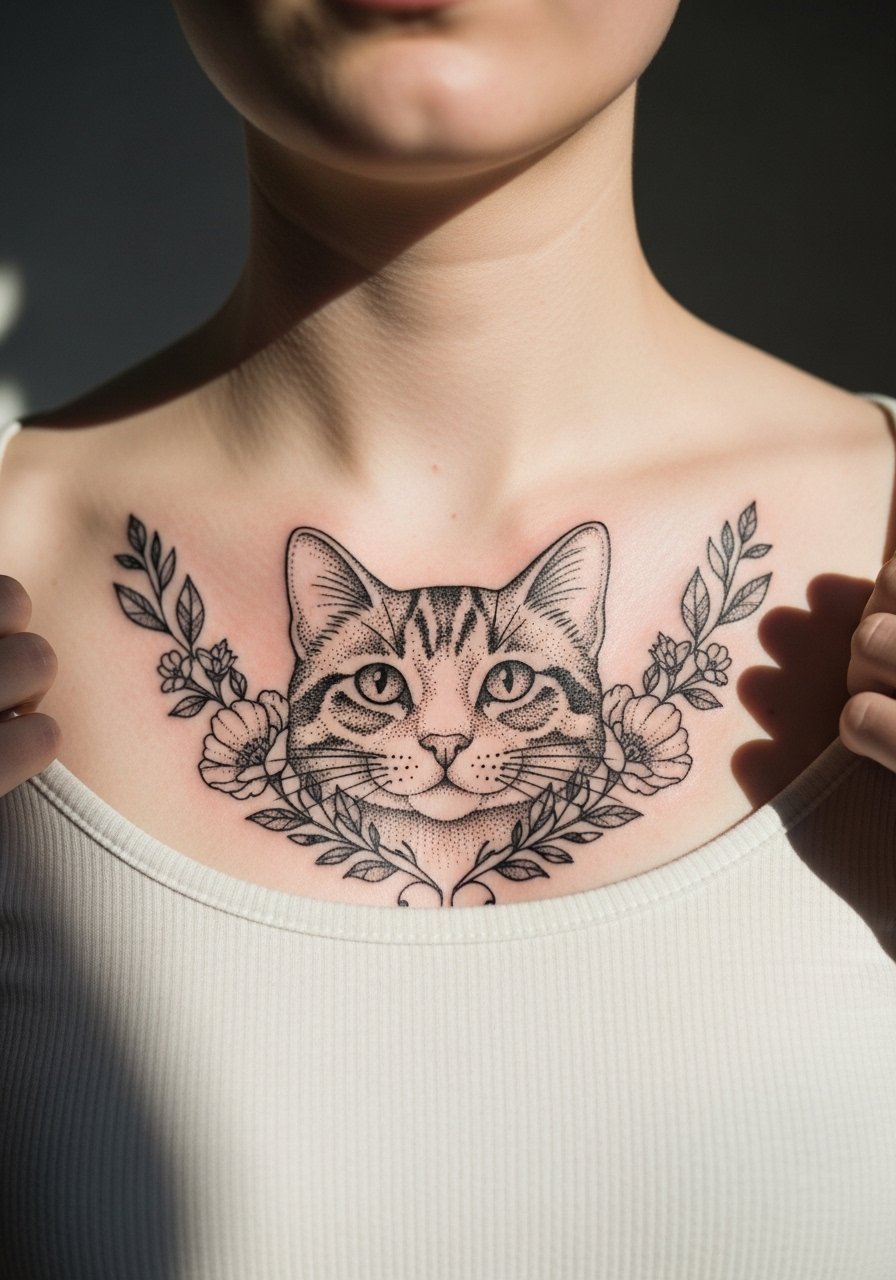
7. Floral Collar Cat on the Collarbone
A cat face framed by stippled florals follows the collarbone curve and looks dynamic under jewelry. The collarbone is prone to movement, so ask for a slightly larger scale and stronger stipple shading to keep detail from softening. A common mistake is choosing too small a floral pattern that merges with the cat's features over time. The session is light to moderate pain and usually under two hours. For showing jewelry, pair the piece with a thin chain pendant necklace that sits just above the design without crowding the linework. If you work in a conservative office, remember collarbone visibility can be adjusted with shirt choice.
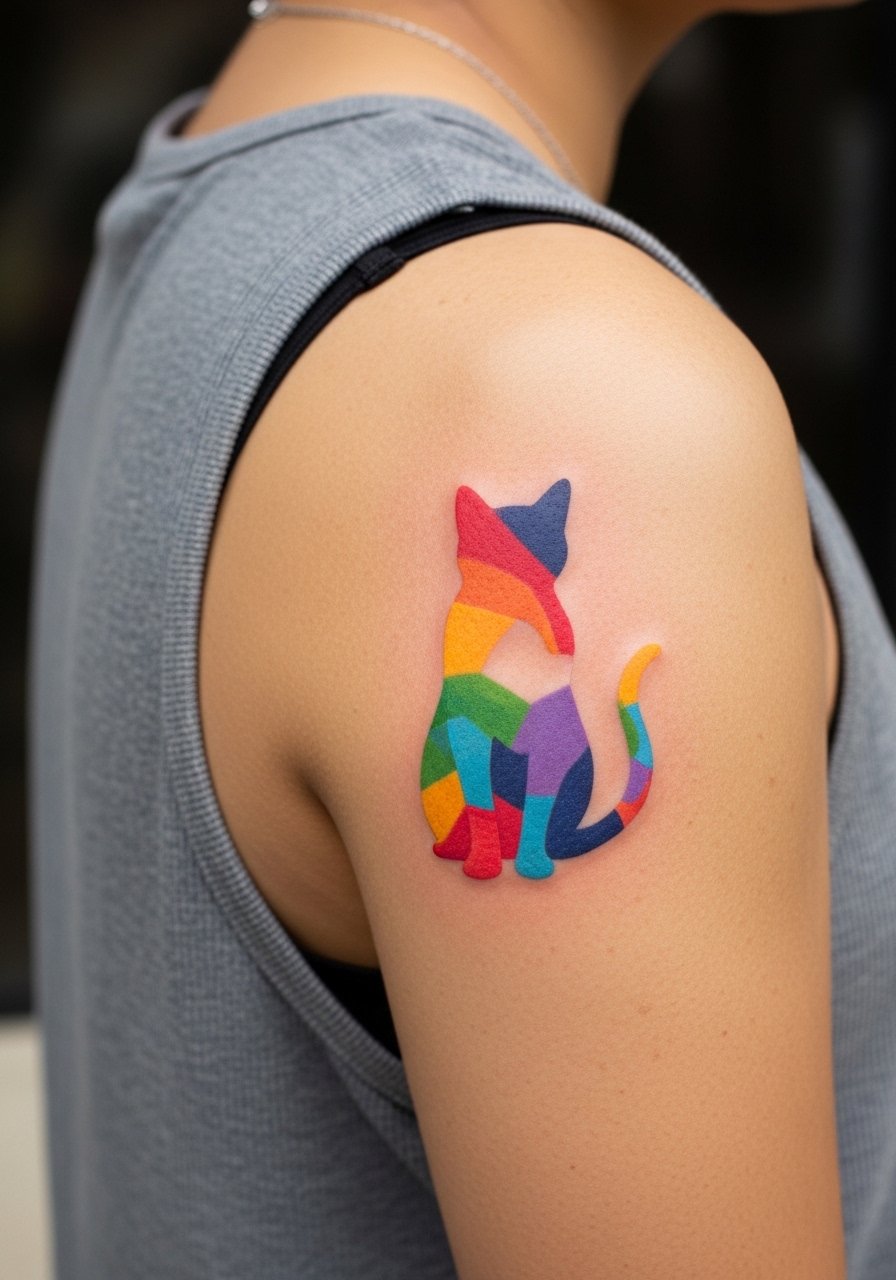
8. Color-Blocked Abstract Cat on Shoulder Blade
Blocks of saturated color behind an illustrative cat silhouette age more reliably when color fields are clean and not over-blended. Choose this instead of a heavily shaded painterly piece if you want longevity. Tell the artist to use full saturation and let each color field settle separately. The shoulder blade is low on blowout risk. Sessions vary from one to two hours. A mistake is blending adjacent colors too much so they muddle later. For casual wear, an open-back top shows the shoulder blade in a flattering way and an open-back tank lets you style it without overexposing.
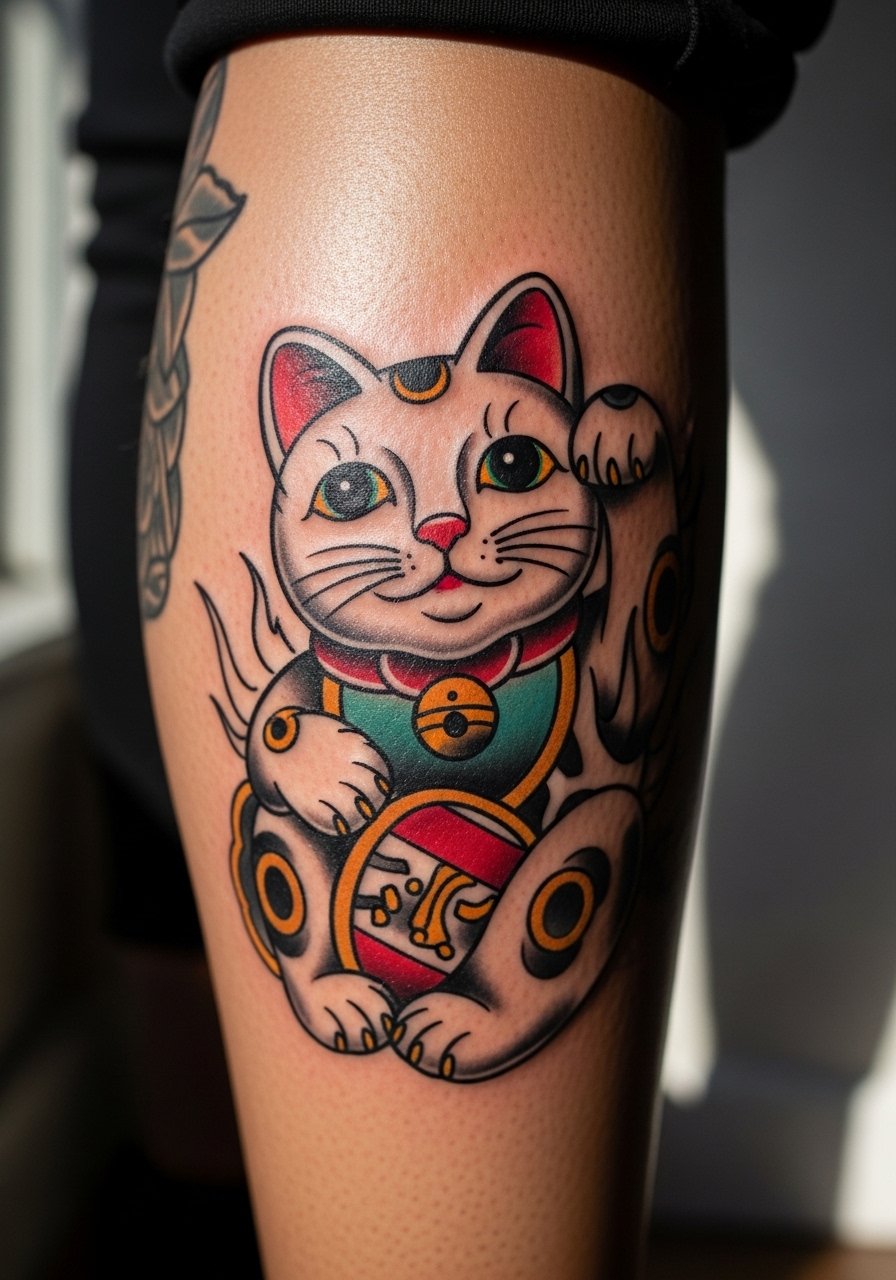
9. Traditional Lucky Cat on the Calf
A traditional, saturated lucky cat with bold outlines suits the calf because the skin there holds saturation well. This style is great when you want a design that stays readable at a distance. Ask for slightly heavier outlines and moderate saturation for the midtones. Common mistake is adding tiny script or micro-detail around the paw that disappears by year three. Sessions are comfortable and usually under two hours. For shoes and shorts combos, wear a loose drawstring linen pant or rolled shorts during the session for easy access and minimal pressure on the area.
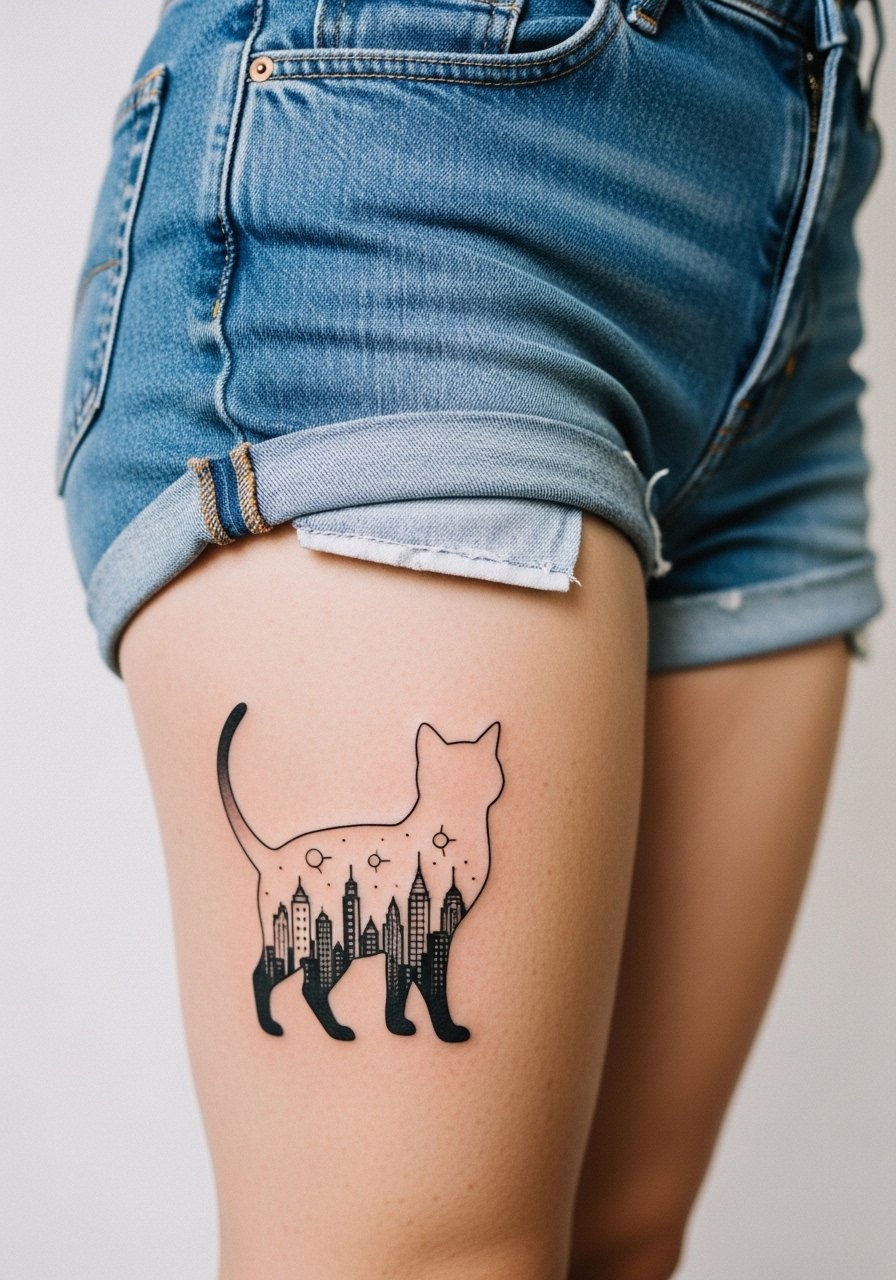
10. Negative-Space Cityscape Cat on the Calf
Negative-space work that carves a city skyline inside a cat silhouette looks modern and holds because the design relies on contrast. Use this when you want a graphic statement that does not need heavy color upkeep. During consultation, request crisp negative edges and avoid tiny alleyway details that collapse into texture. The session feels like medium pressure and takes roughly 90 minutes. Mistake to avoid is asking for too many thin spires in the skyline. For showing it off, mid-length skirts or cropped pants work well with a high-waisted denim short that reveals the calf without rubbing the tattoo.
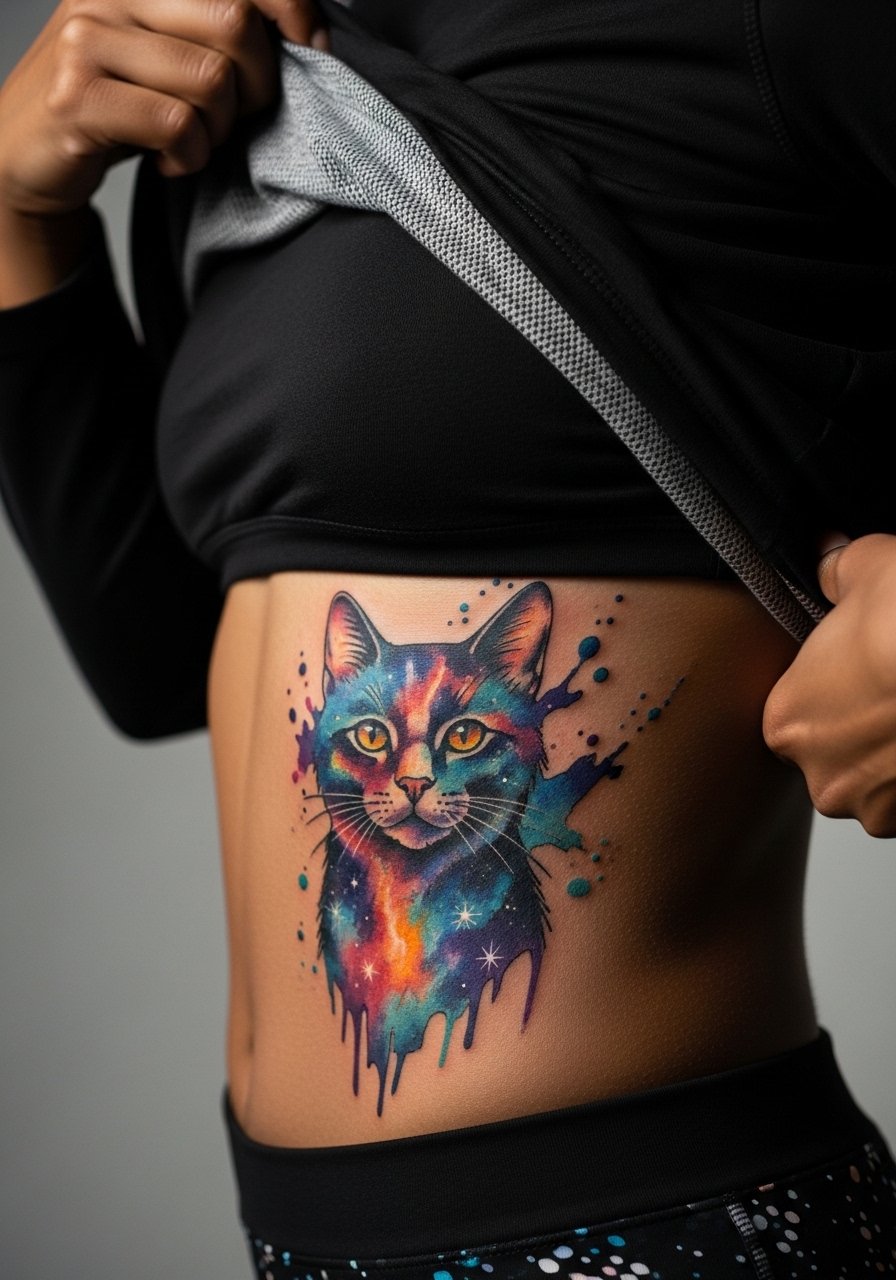
11. Watercolor Cosmic Cat on the Ribcage
Ribcage watercolor packs dramatic color and motion, but fine detail here is controversial. One camp says the ribcage skin moves and stretches so watercolor washes bleed. The other camp insists proper spacing and slightly bolder edges keep the piece intact. Be explicit with your artist about desired longevity. Sessions on ribs are painful and often split into shorter appointments. Common mistake is insisting on small, highly detailed watercolor elements that the area cannot maintain. For the appointment, wear a cropped athletic top you can lift without exposing more than necessary.
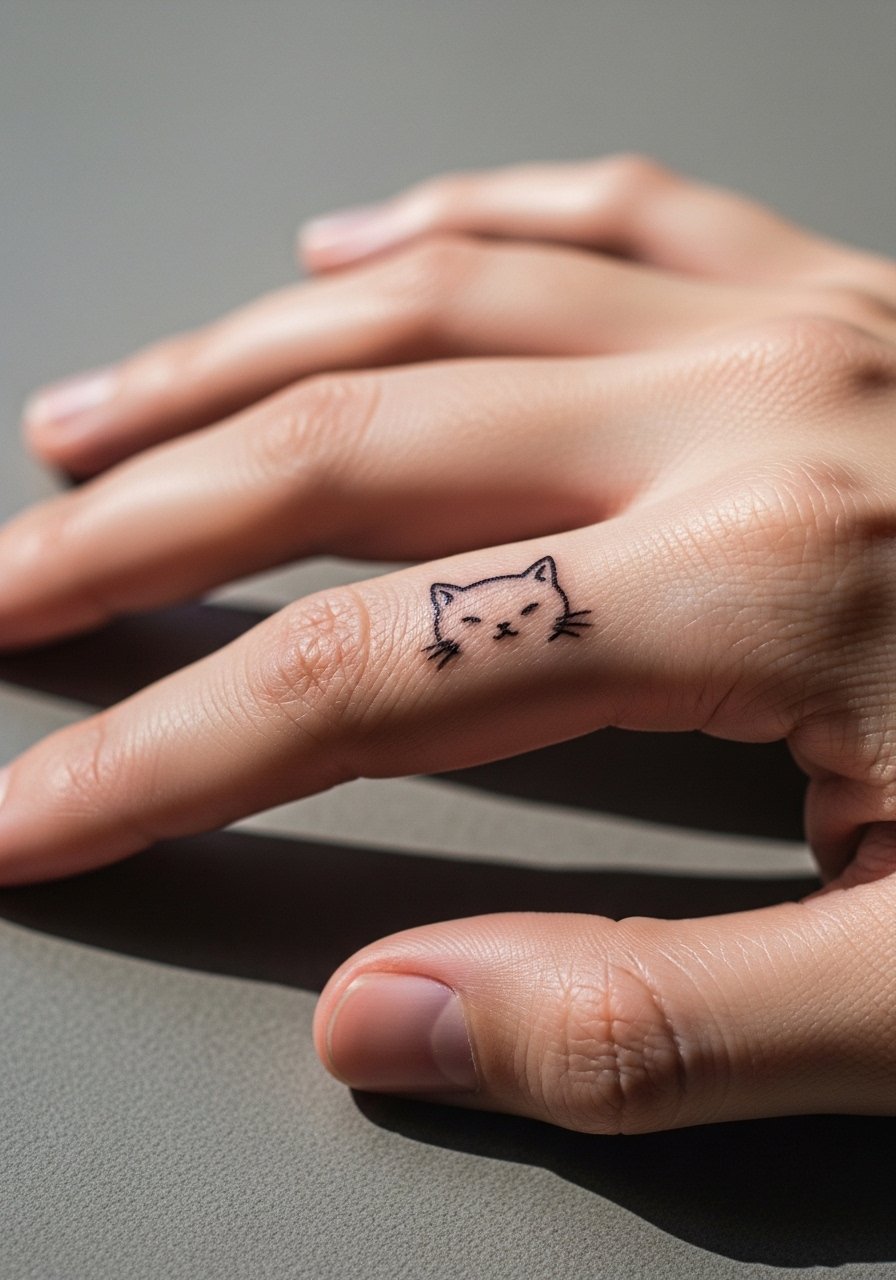
12. Tiny Outline Cat on the Side Finger
Finger tattoos are great for micro outlines, but they demand trade-offs. The skin is thin and hands get washed constantly, so lines fade fast. I recommend slightly thicker outline weight and minimal internal detail. In the consultation ask for depth that is stable without over-saturating the skin surface. Sessions are short but sharp. Touch-ups are common within 12 to 24 months. A frequent mistake is expecting the same longevity as forearm work. For showing subtle ink, wear a delicate stacking ring on the opposite hand rather than covering the tattoo.
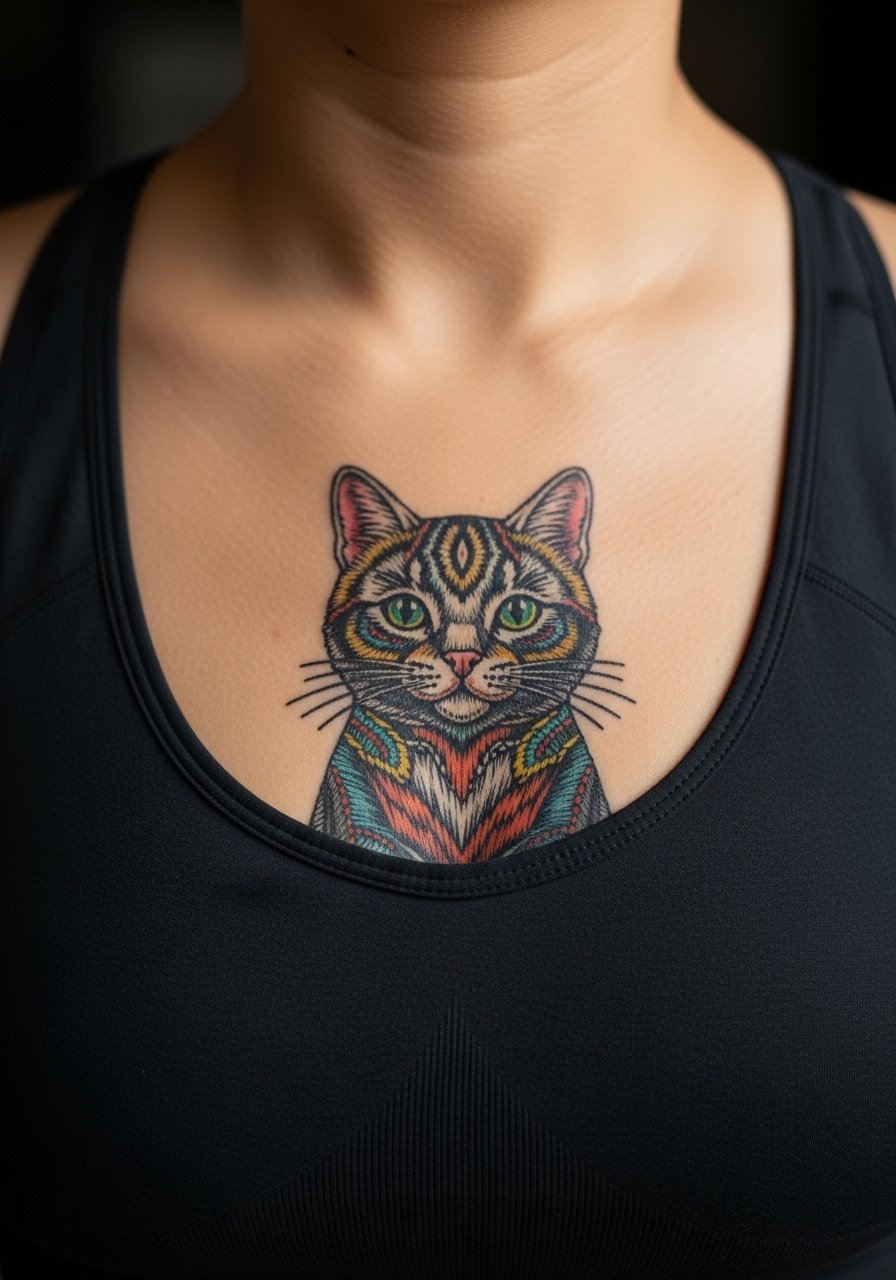
13. Embroidered-Style Cat Sternum Piece
Embroidered-style tattoos use color stitching effects and look striking over the sternum when scaled correctly. Sternum ink requires a specialized hand and careful mapping. Ask your artist for thicker color threads in the center and softer edges to keep the needlework readable. The session is tender and often requires breaks. Many people mistake small stitch patterns for fine detail that the sternum cannot maintain. For the appointment, wear a fitted sports bra or bandeau you can pull down slightly so only the sternum strip shows.
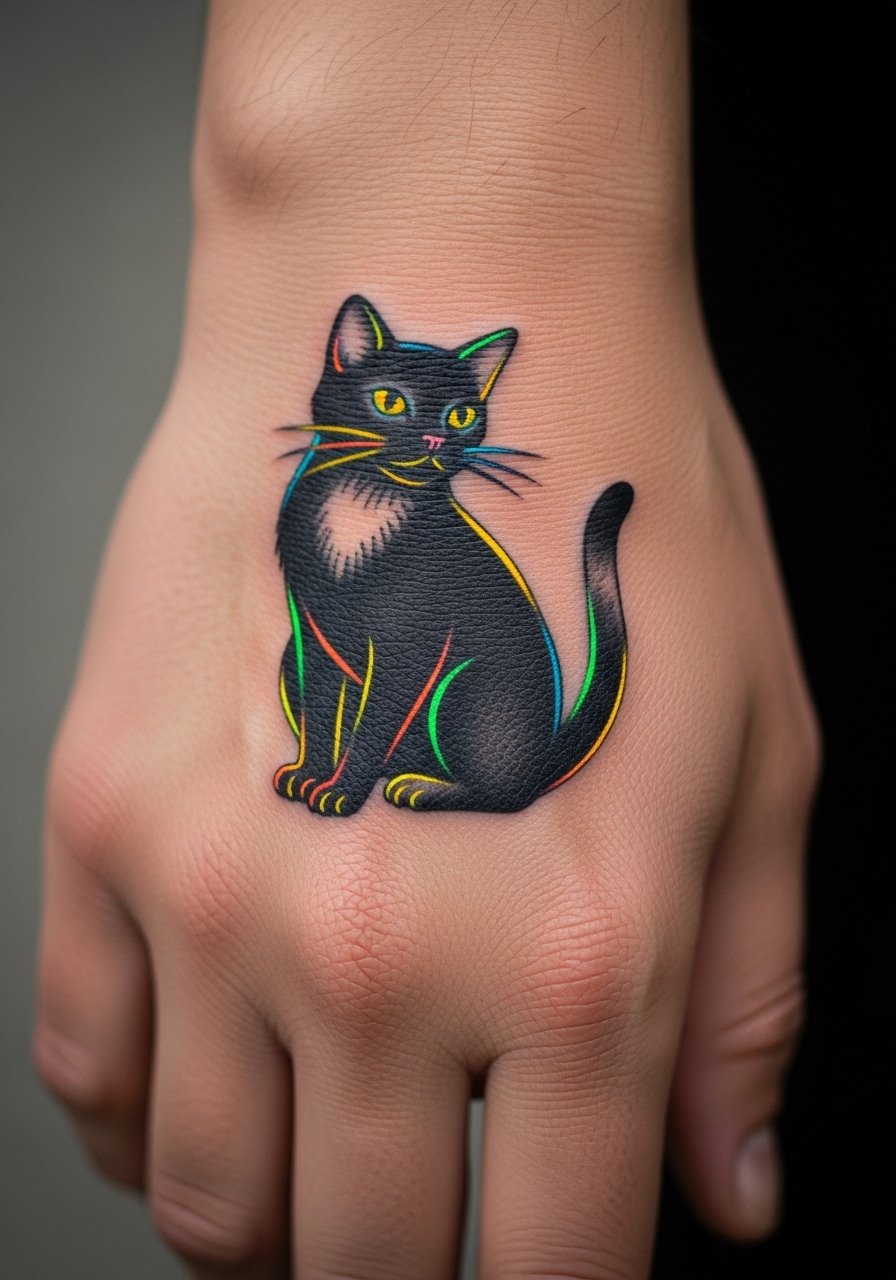
14. Neon Accent Cat on the Back of the Hand
Hand tattoos are highly visible and sometimes impact job considerations. Neon accent colors layered over black outlines read vividly at first but fade faster due to sunlight and washing. Ask your artist to keep neon as small highlights over solid black shapes rather than the entire fill. The session is intense and brief. Expect touch-ups every one to two years for neon. For day-to-day wear, a thin bracelet can draw attention away from heavy fading areas and a minimalist bracelet sits well with hand art. Remember hand work still affects some hiring decisions.
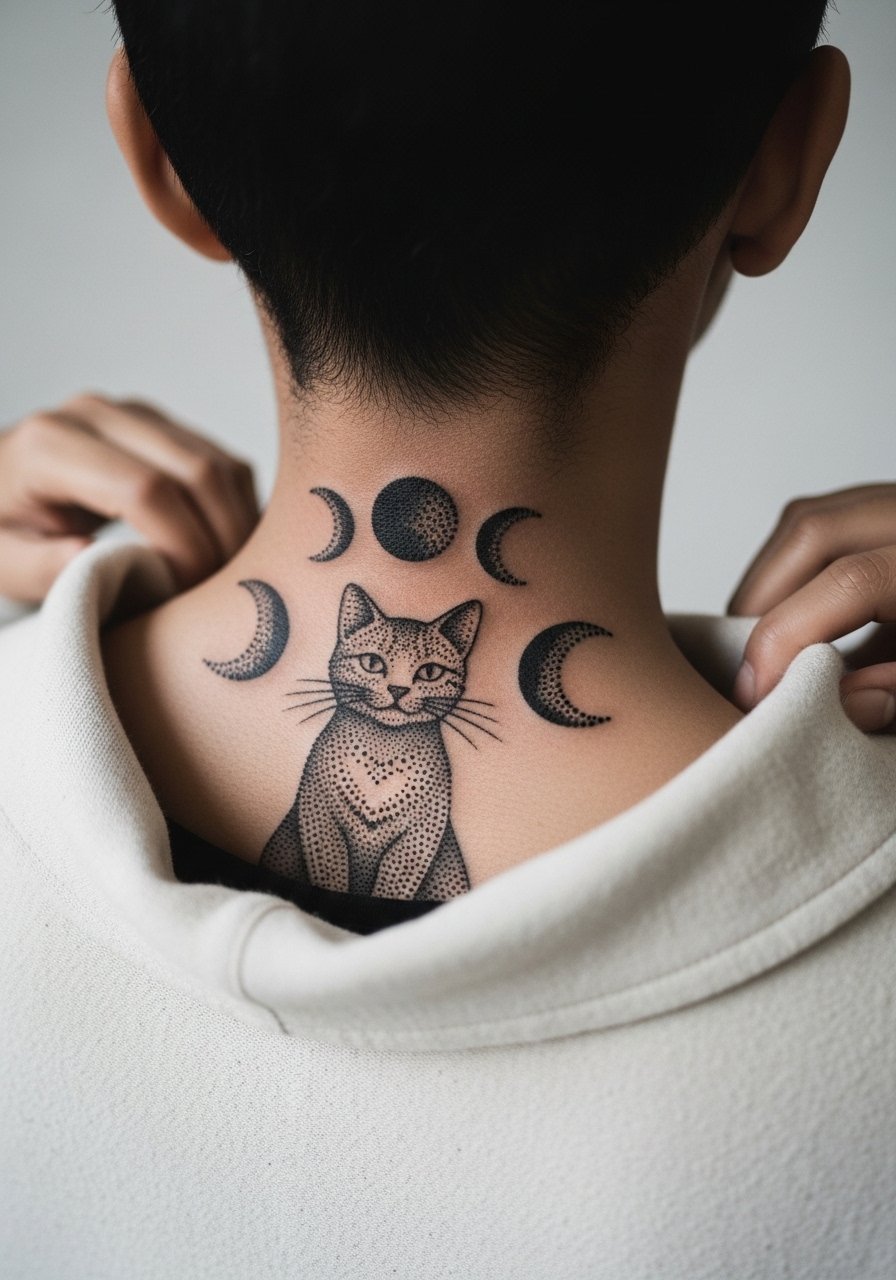
15. Dotwork Lunar Cat on the Nape of the Neck
Dotwork cats with lunar motifs look delicate on the nape and age well when scaled for the area. For placement, request a size that keeps dot spacing consistent. The session is comfortable and often quick as dot clusters build slowly. Mistake to avoid is going too dense with dots that merge into a shaded blob. For showing off, wear a wide-neck blouse or pullable collar so the nape is visible without exposing shoulders. If you plan frequent short haircuts, consider placement so the design is sometimes concealed.
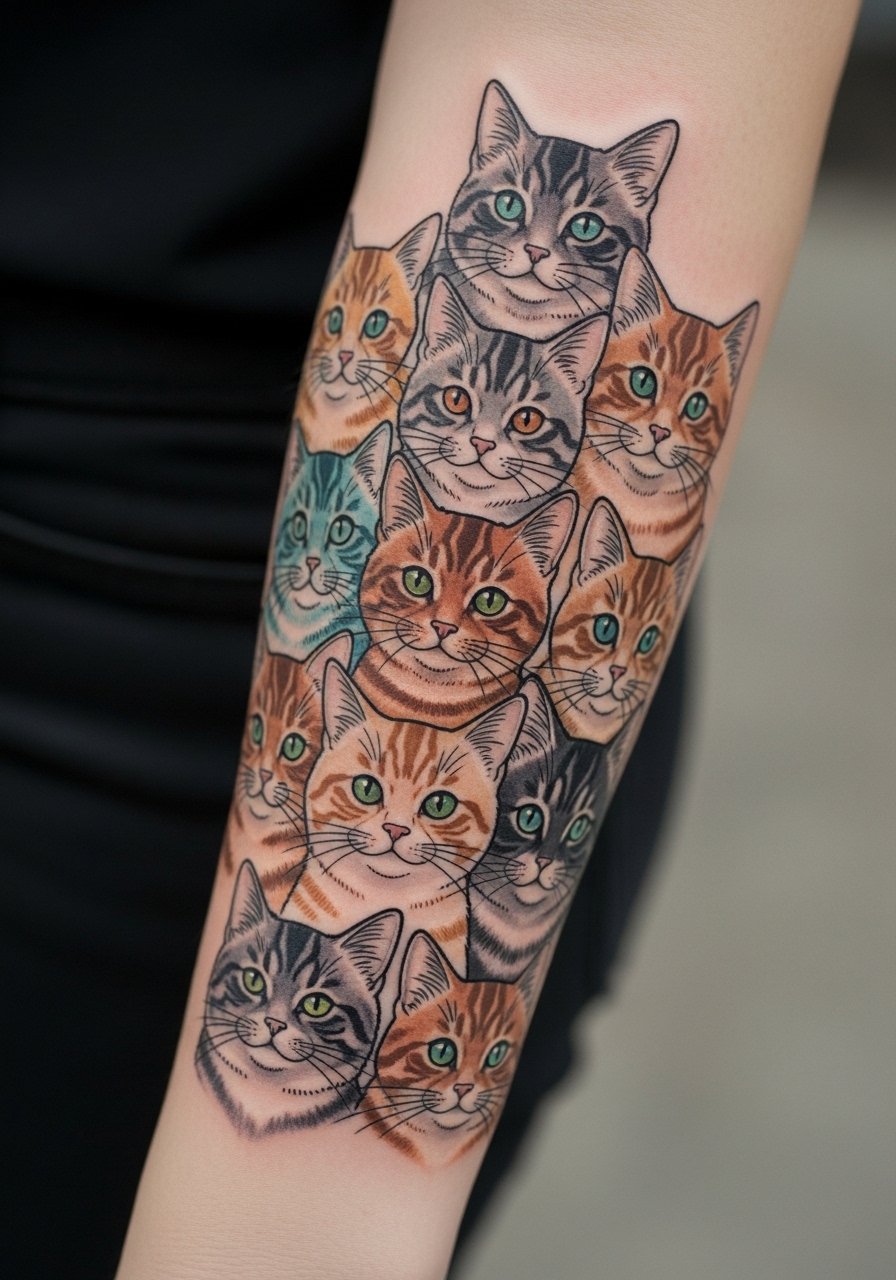
16. Illustrated Sleeve Accent Cat Cluster
An illustrated cluster of cats woven into a partial sleeve gives flexibility to expand later. I like this approach if you think you might add pets or botanical elements in the future. During consultation, plan negative space corridors so future work can attach without crowding. The session will be multiple appointments and the forearm area feels like continuous vibration with some tender rows. Common mistake is committing all your color in one sitting without thinking about expansion. For wardrobe, rolled sleeves or a longline cardigan lets you reveal or hide sections as needed.
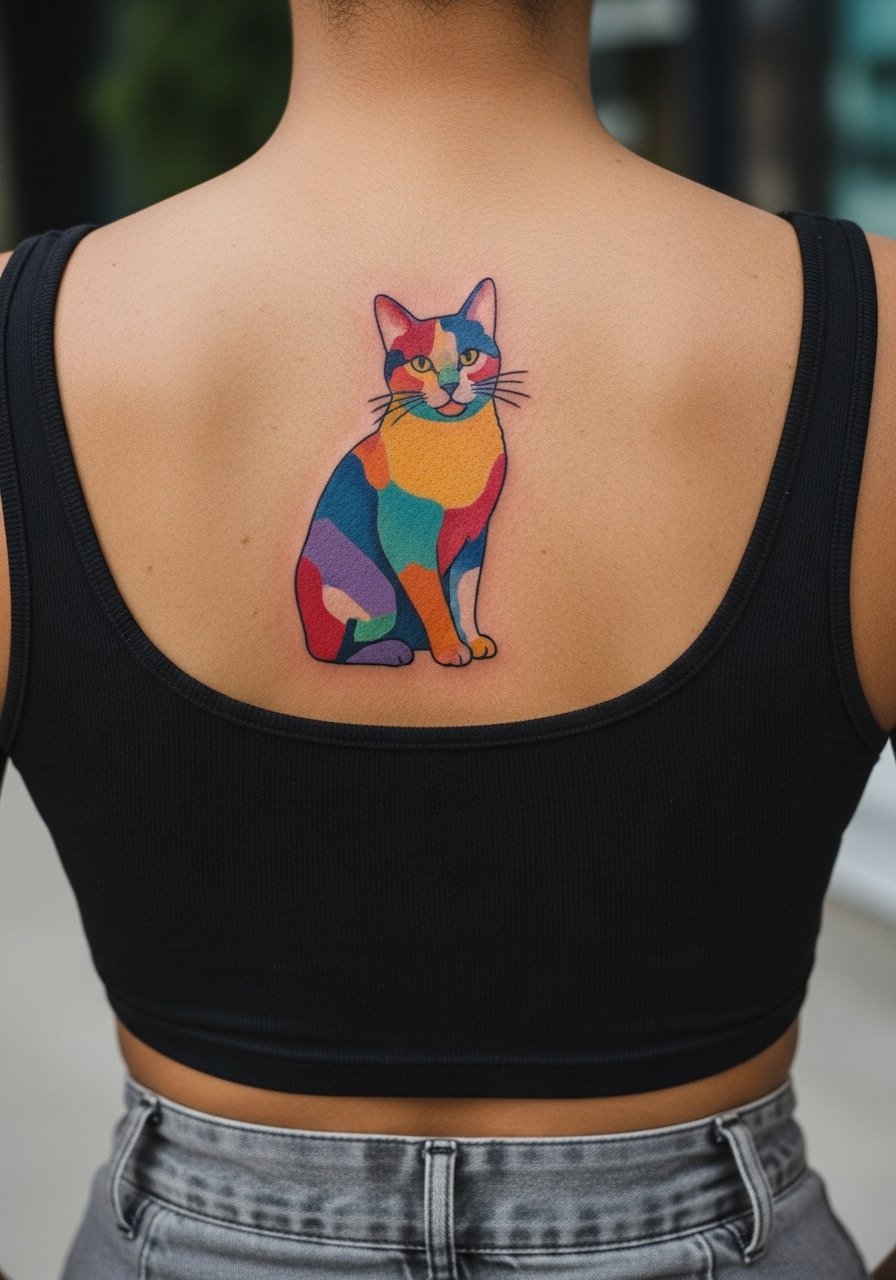
17. Abstract Color-Block Cat on the Upper Back
An upper back piece uses broader color fields and stands up to time if composed with clear edges and contrast. It is a good choice when you want a sizable colorful statement without tiny micro detail. Ask the artist to plan anchor lines that will age into the musculature. Sessions can be long and often split. Mistake is overloading the piece with tiny decorative motifs that lose definition. For session access, wear a button-down you can slip off in the chair or a loose tank top so the artist can reach the shoulder blade without you being exposed.
Frequently Asked Questions
Q: How long do watercolor-style cat tattoos last before needing a touch-up?
A: Watercolor pieces often need a touch-up sooner than bold traditional work. From what I have seen, small watercolor accents can start losing vibrancy by year two to three. Larger washes with stronger anchor edges can hold longer. Ask your artist about planned refreshes during the consultation.
Q: Are hand and finger cat tattoos worth it if I want longevity?
A: Hand and finger tattoos are visible and fade faster because of frequent washing and friction. If longevity is a priority, choose slightly bolder linework and expect touch-ups every one to two years. You can also opt for an adjacent placement like the inner wrist that balances visibility with better retention.
Q: Will a colorful cat portrait on the ribcage blur more than one on the shoulder?
A: Ribcage skin moves and stretches, so detailed color work there faces more risk of softening than the shoulder. Artists are split on the technique that works best, so ask where your artist stands and request spacing and contrast that compensate for movement.
Q: What should I wear to a session for a sternum or upper chest cat piece?
A: For sternum and upper chest, choose a fitted sports bra or a wide-neck shirt that you can pull slightly aside so only the tattoo area is exposed. A breathable layer helps you stay comfortable during longer sessions. If you need added modesty, bring a zip-up hoodie you can slip on between passes.
Q: How do I find references and artists without naming anyone directly?
A: Search local shop directories, look through community forum threads, and check convention guest lists to compile a short list. Use hashtags for the style you want and narrow by your city to find recent healed photos. Spend time comparing healed work, not just fresh photos, and ask artists for healed images during consultation.
