
Realistic dragon fly tattoos can look impossibly delicate while still reading like a real insect on skin. They work best when the artist balances crisp linework with soft shading and thoughtful placement so the wings never smear into a gray blur. That balance is what I focus on in the first idea below, and the next sections walk through placements, aging, and what to ask for in consultation.
1. Fine Line Dragonfly on Inner Forearm
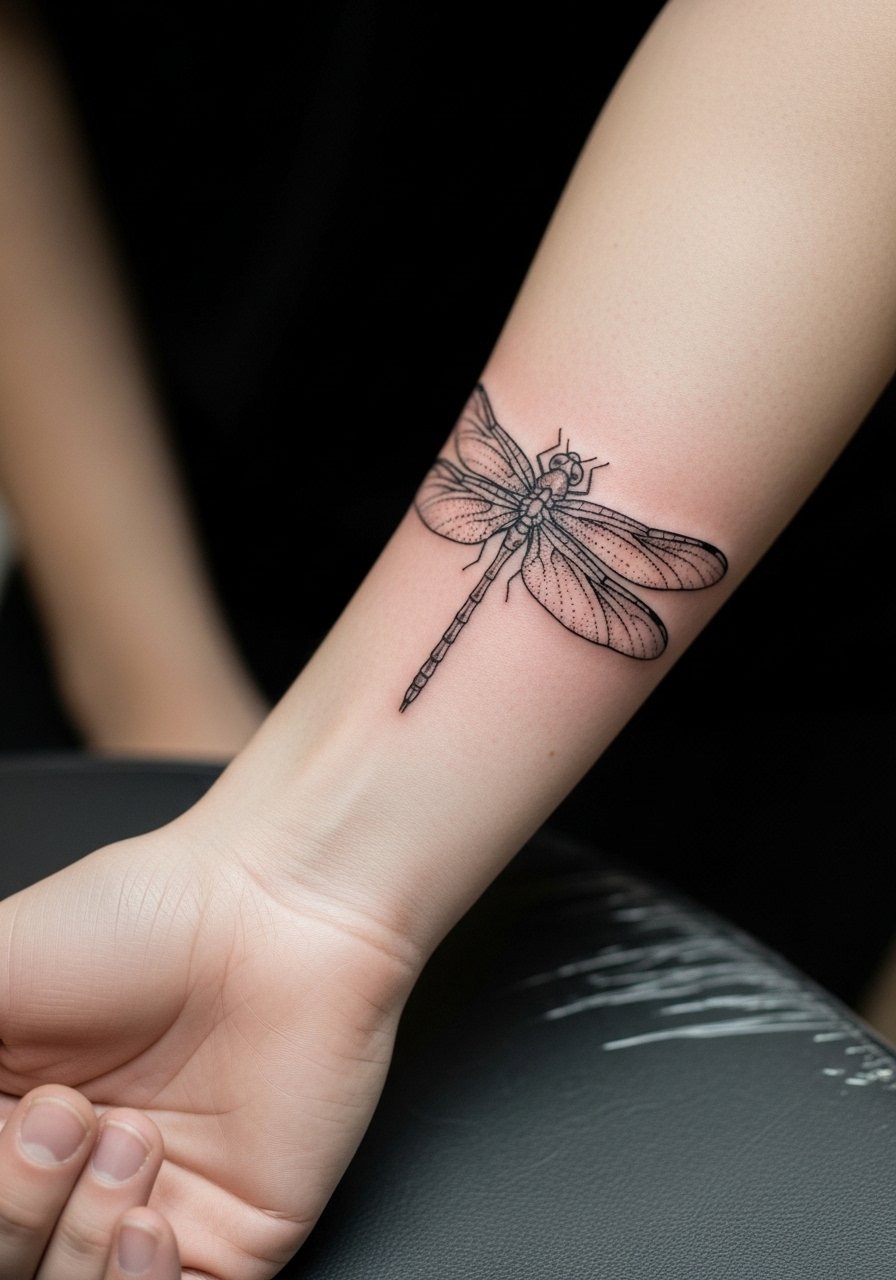
I recommend this for someone who wants a daily-showoff placement that still reads delicate. Ask your artist for slightly heavier contour on the thorax and very light stipple shading on the wings so the piece keeps a soft feeling without losing definition. Fair warning about blowout on softer forearm skin, so avoid ultra-fine single-pass lines too close together. The session feels straightforward and short, usually under an hour, and touch-ups are common at year two if you wear sun on your arms a lot. For showing it off, rolled sleeves pair well with a linen button-down that keeps focus on the forearm.
2. Tiny Realistic Dragonfly on the Side of the Wrist
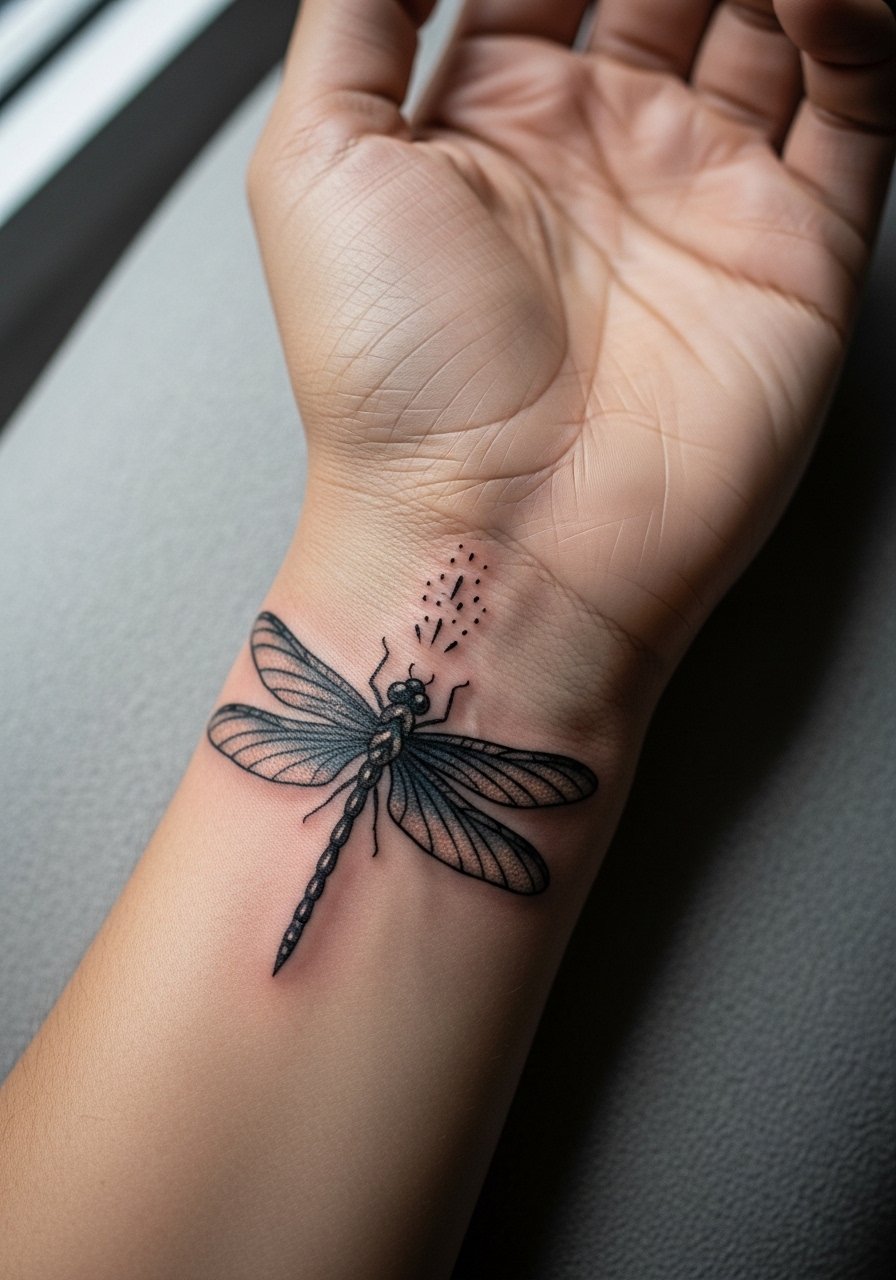
The wrist is a high-visibility spot with constant friction from watches and straps. I suggest a compact design with bold main lines and minimal internal wing detail so it does not turn into a soft gray smudge over time. During consultation, specify that you want the wings airy but not fussy, and tell the artist about daily watch or bracelet wear so they can plan spacing. Expect the session to be quick and stingy but tolerable. For the appointment, wear a loose button-down shirt you can roll or pull aside easily.
3. Soft-Shaded Dragonfly Along the Collarbone
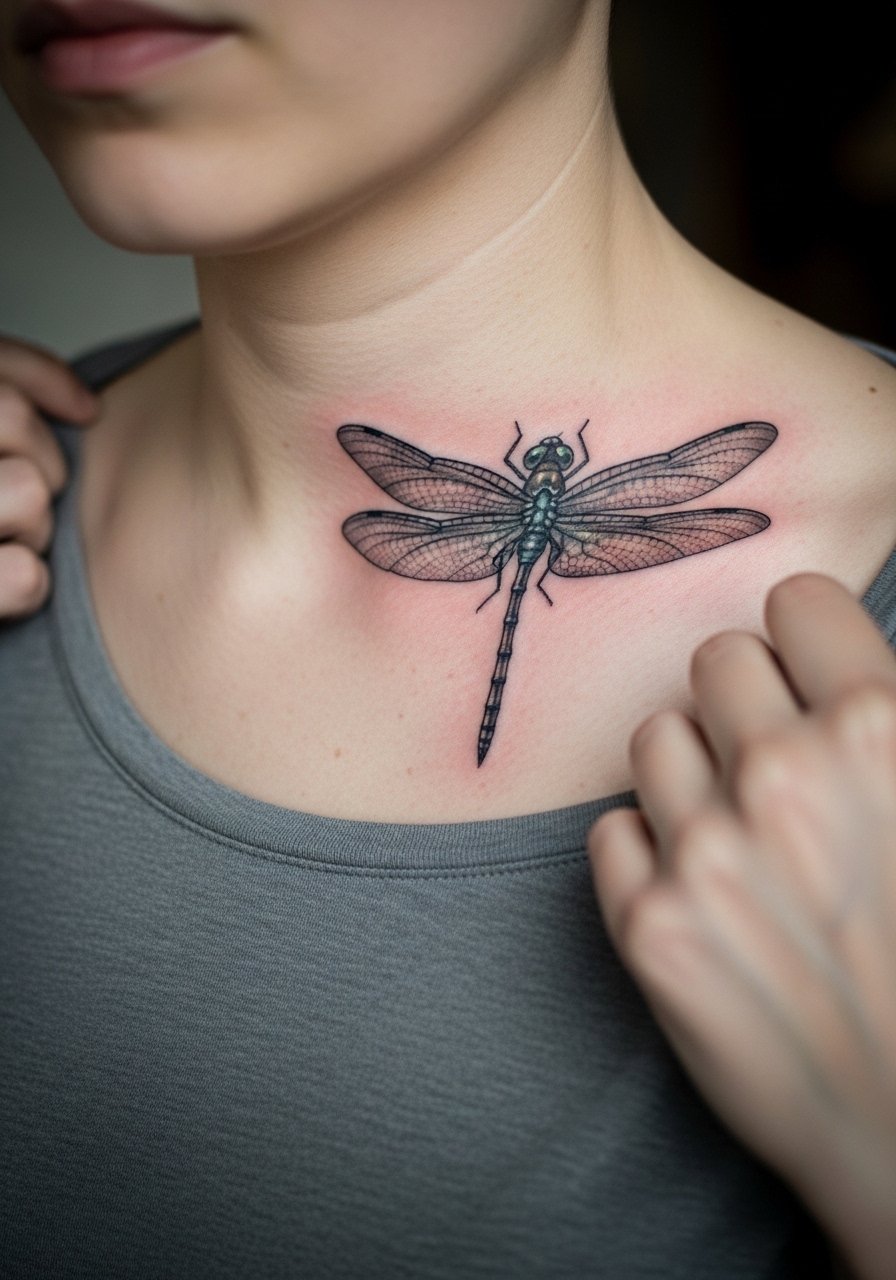
This placement reads like jewelry and ages well when given room. Ask for slightly diffused wing shading and a crisp, darker body so the piece keeps contrast as it heals. The main mistake people make is packing too much tiny wing detail near the bone, which can blur into a patch at year three. The session is pleasant but expect some sensitivity over the collarbone. For evenings out, pair this with an open-back midi dress or a simple racerback tank so the silhouette shows without competing.
4. Watercolor-Soft Dragonfly on the Shoulder Cap
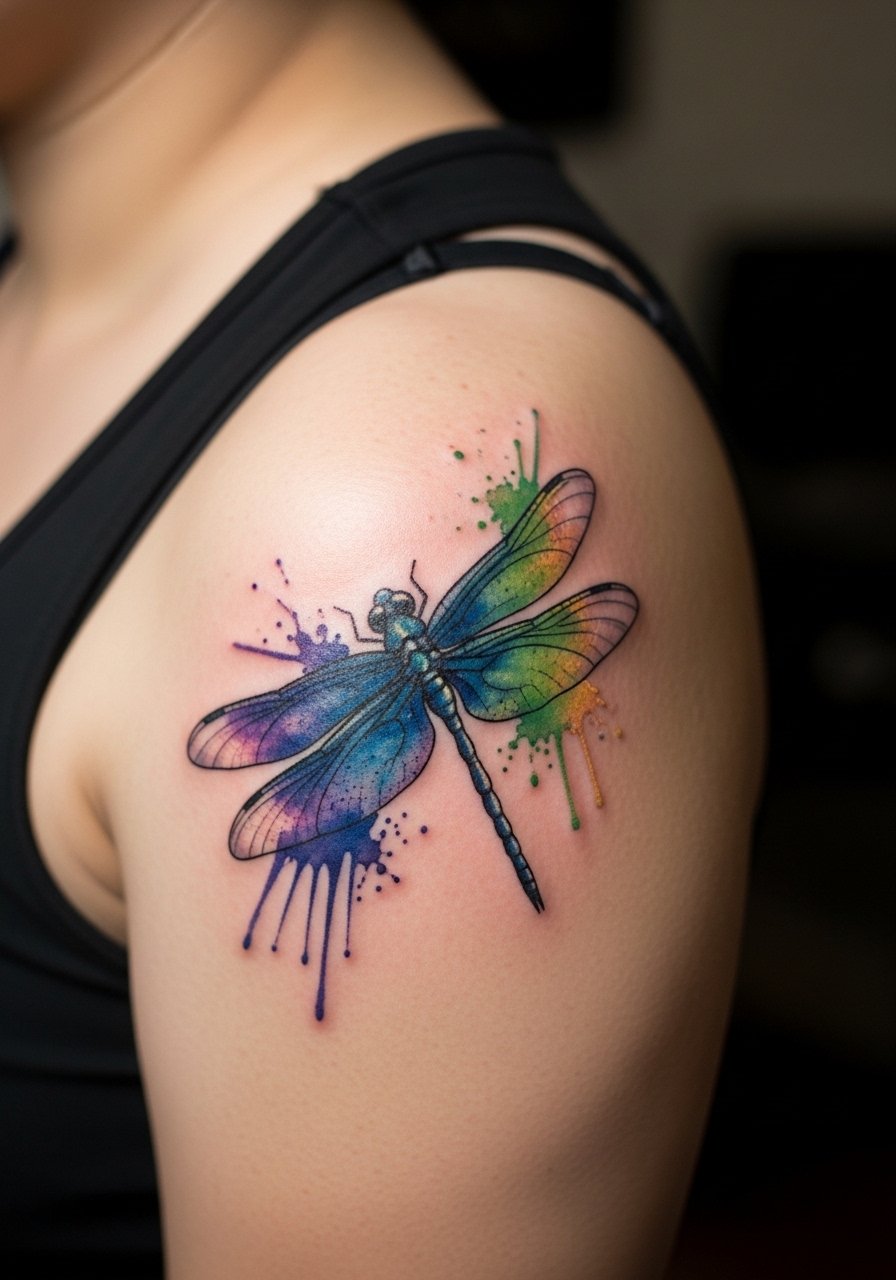
Watercolor touches can keep a dragonfly feeling soft without heavy outlines. Tell your artist you want color washes behind the wings rather than saturated fills inside them. The biggest aging issue is color migration from over-saturated patches, so keep pigments thin and let the linework carry the shape. Shoulder sessions are moderate on pain and usually done in under two hours. For the studio, wear a loose tank top so the artist has clear access and you stay comfortable.
5. Tiny Dragonfly Between the Fingers
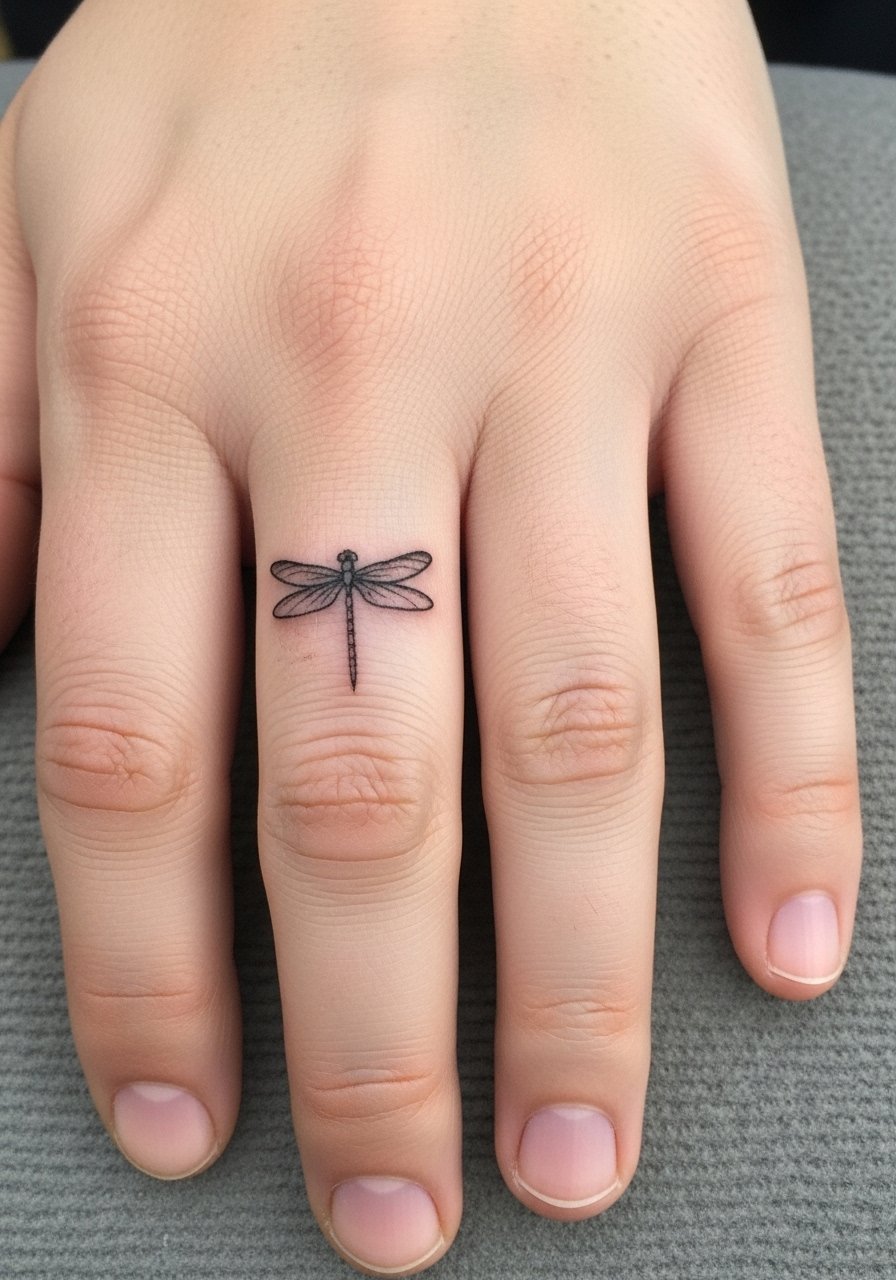
Finger spacing is unforgiving and very prone to fading from washing and friction. If you want this spot, make the design extremely simple with thicker primary lines and minimal wing crosshatching. Expect faster fading and plan for touch-ups within a year or two. The session is short but sharp, and some artists will refuse finger micro work due to the high failure rate. If you plan to show it, layered thin rings or a thin chain bracelet keep attention on the hand without rubbing the ink.
6. Large Ribcage Dragonfly with Soft Shading
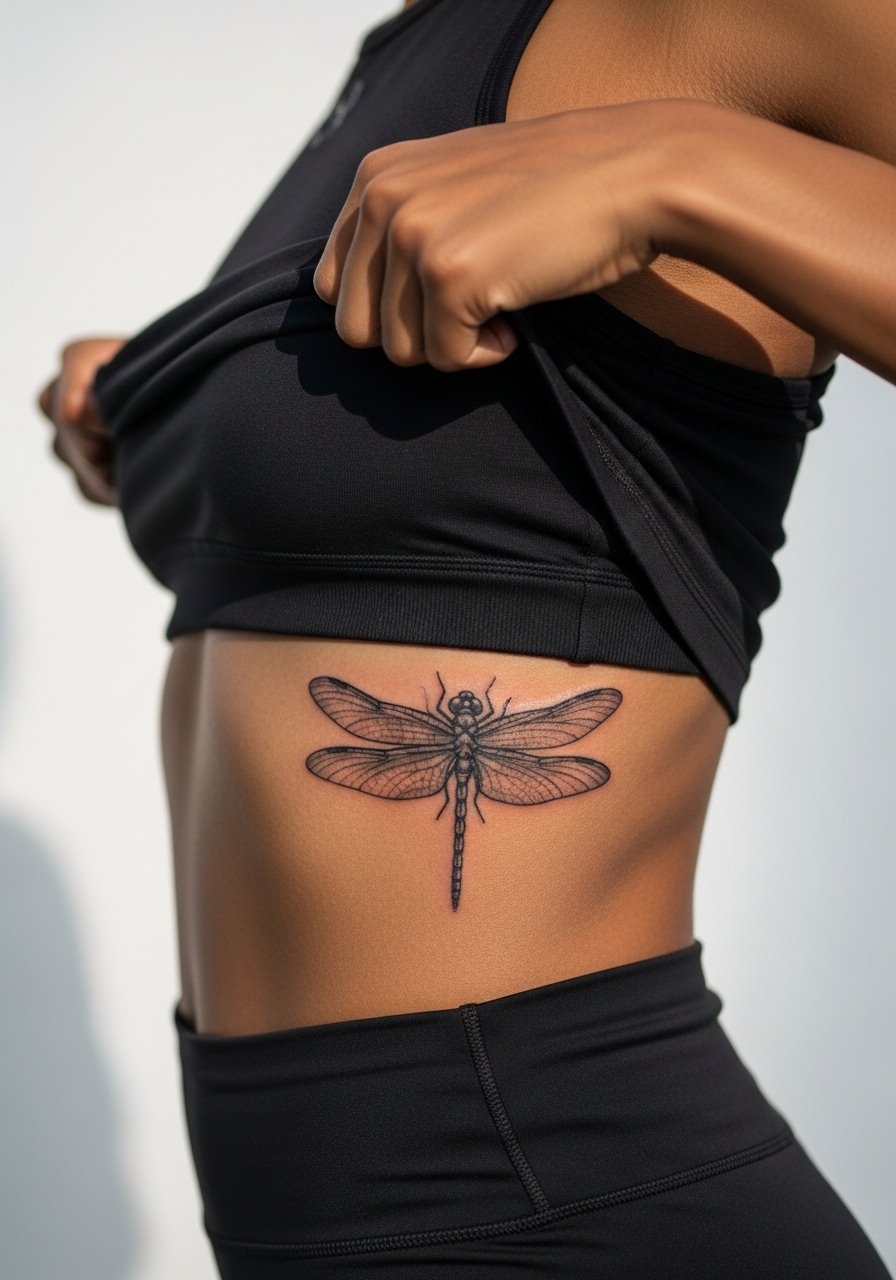
Fine line on ribs splits artists into two camps. One group argues the skin stretch and movement blur fine detail within two years. The other group says with controlled needle depth and spacing, fine line can settle well on the ribcage. I suggest a medium-scale piece with staggered wing spacing and stipple shading to give the wings air. Sessions here can be long and painful, so bring a loose top and plan short breaks. For the appointment, wear a cropped athletic top you can lift without discomfort.
Studio Day Picks
The ribcage and finger pieces above demand different prep than wrist or collarbone work, so a compact kit that addresses transfer, sensitivity, and first-week protection makes the session smoother.
- Stencil transfer paper kit. Lets you preview placement and lineweight on skin, which is crucial for asymmetric ribcage and collarbone designs.
- Topical numbing cream. Use as directed before longer sessions to manage rib and inner-thigh sensitivity without compromising linework.
- Thin protective film roll. Helps keep finger and wrist tattoos clean during the first week when friction is highest.
- Fragrance-free body wash. Gentle cleansing avoids irritation on delicate fine-line areas like the forearm and collarbone.
- Aquaphor healing ointment. A thin layer during the initial days helps maintain moisture for fine line pieces without clogging the surface.
7. Spine-Down Dragonfly Trail
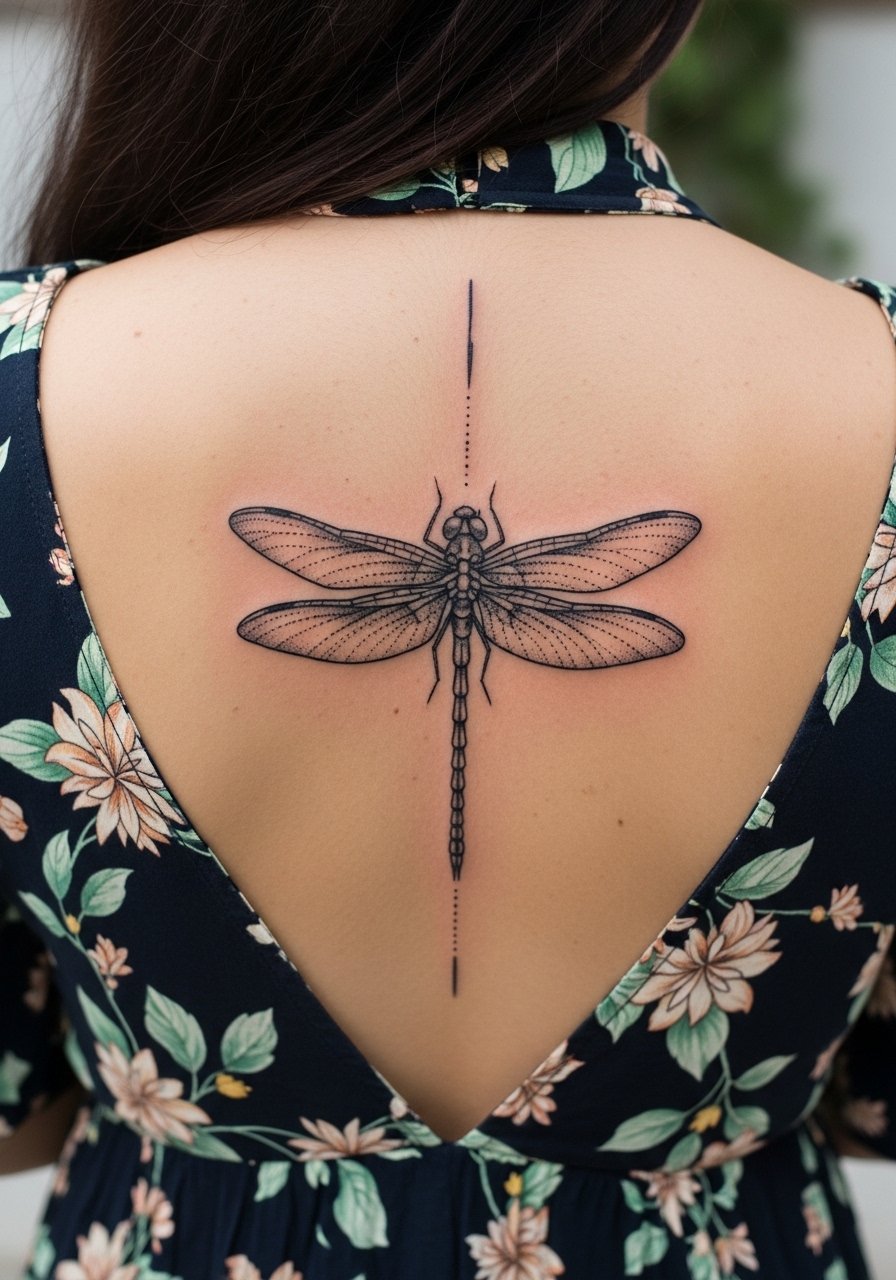
A vertical cluster down the spine plays with movement and reads elegant with soft shading. Ask your artist for slightly heavier anchors where the body meets the wing to keep contrast as the piece ages. A common mistake is compressing too many insects into a narrow strip so the lines fuse after healing. Spine sessions are moderate to high on pain depending on proximity to bone, and touch-ups at year three are not unusual. Show it off with an open-back dress that frames the line without competing.
8. Realistic Dragonfly on the Outer Thigh
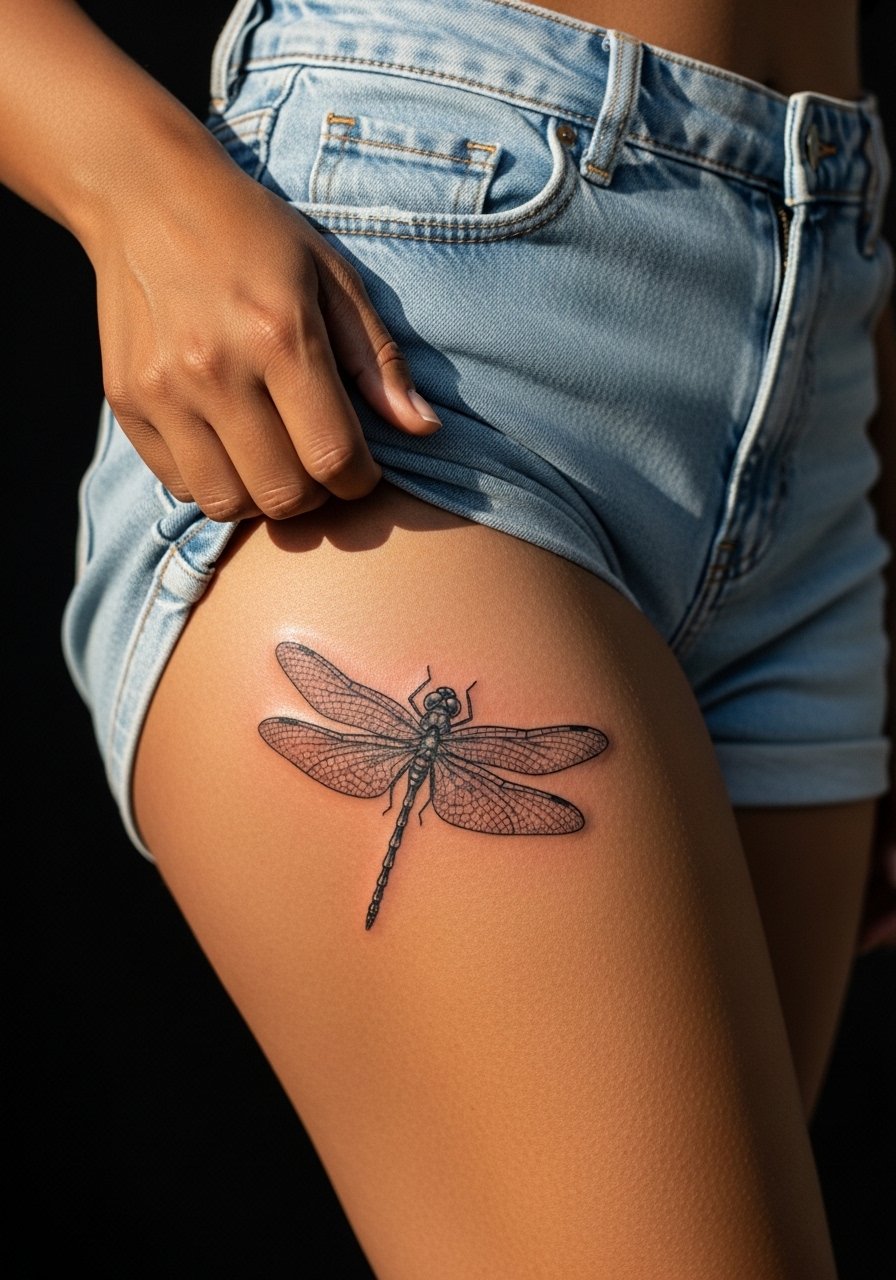
Thigh skin tolerates saturation well and ages gracefully with moderate color retention. This is a good spot for larger wing detail because it has room to breathe. Tell your artist you want wings that fade into stippling at the edges rather than solid fills. Sessions are comfortable because the area lets you sit or lie down. For the studio, wear a pair of loose drawstring shorts or high-waisted shorts so the artist can access the outer thigh easily.
9. Ankle Dragonfly with Minimal Shading
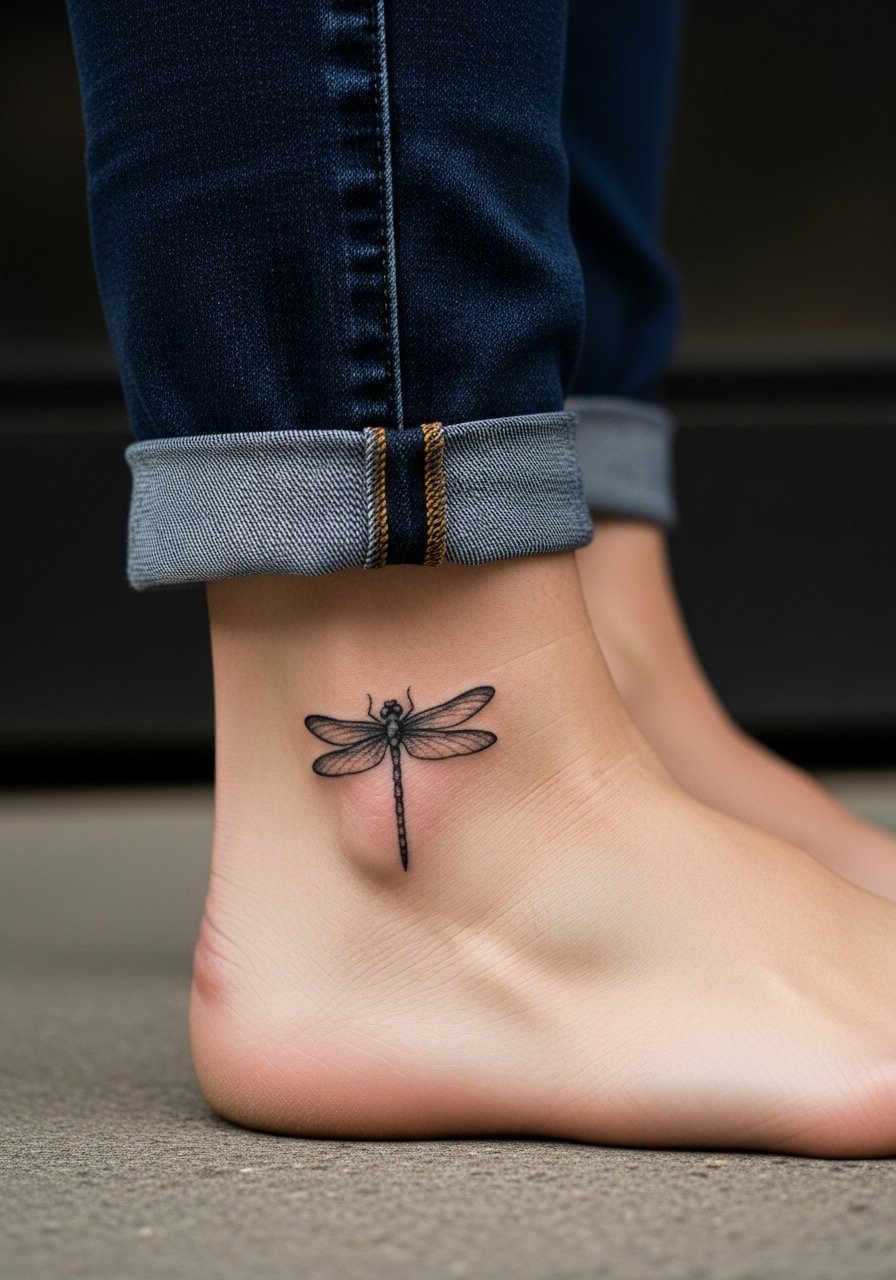
Ankle ink faces constant rubbing from socks and shoes so keep the design simple. Ask for clear, slightly thicker outlines on the body and just a whisper of texture in the wings. Expect touch-ups in the first year if you wear sneakers often. The session is quick but sensitive. For showing the piece, rolled jeans or sandals pair well and do not obscure the work. Try a pair of low-profile sandals to keep attention on the ankle without covering it.
10. Delicate Dragonfly at the Nape of the Neck
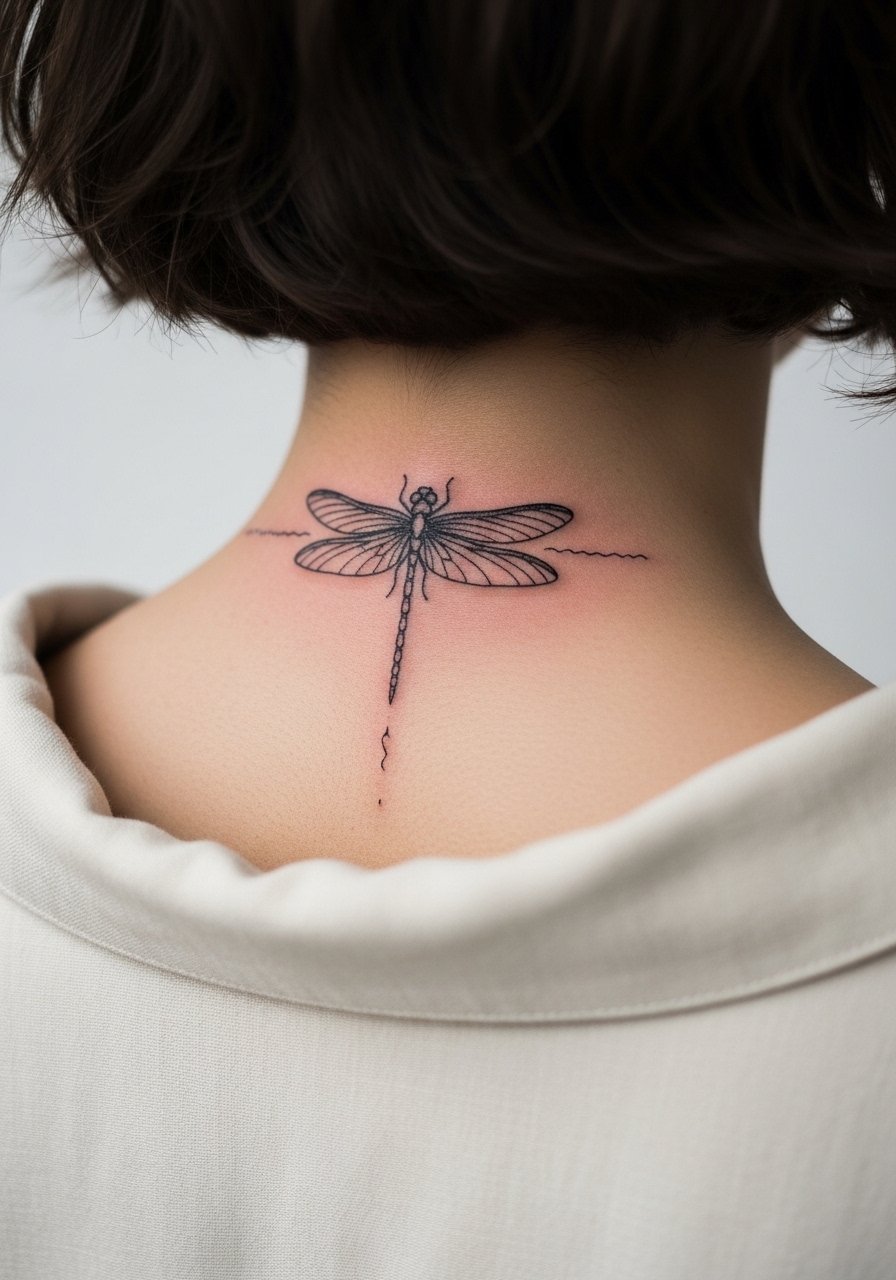
Neck placement reads intimate and is visible in pulled-up hair. If you want subtlety, keep wings small and airy and a slightly darker body for contrast. The main mistake is going too detailed where the skin shifts with movement. Pain is moderate and most artists recommend a short session. For career considerations, remember neck tattoos remain visible in many settings.
11. Soft Realistic Dragonfly on the Calf
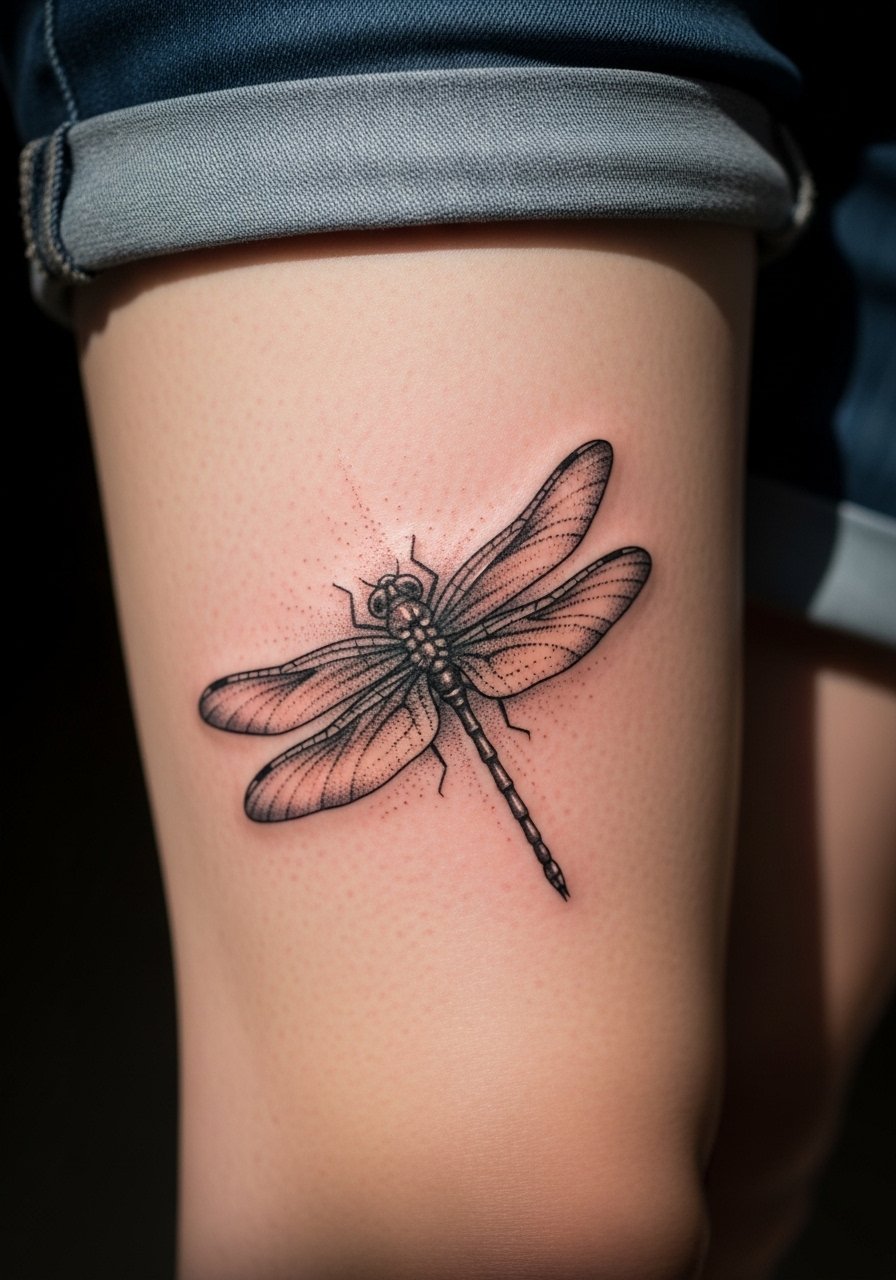
Calf skin holds detail well and tolerates longer sessions, which is great if you want a slightly larger, soft piece. Ask for a balance of subtle stipple and clean body linework to prevent wing blur over time. The session is moderate and you can usually sit comfortably. This placement pairs well with summer looks and short hems, so consider cuffed shorts or a linen wrap skirt to show it off.
12. Tiny Dragonfly Behind the Ear Area
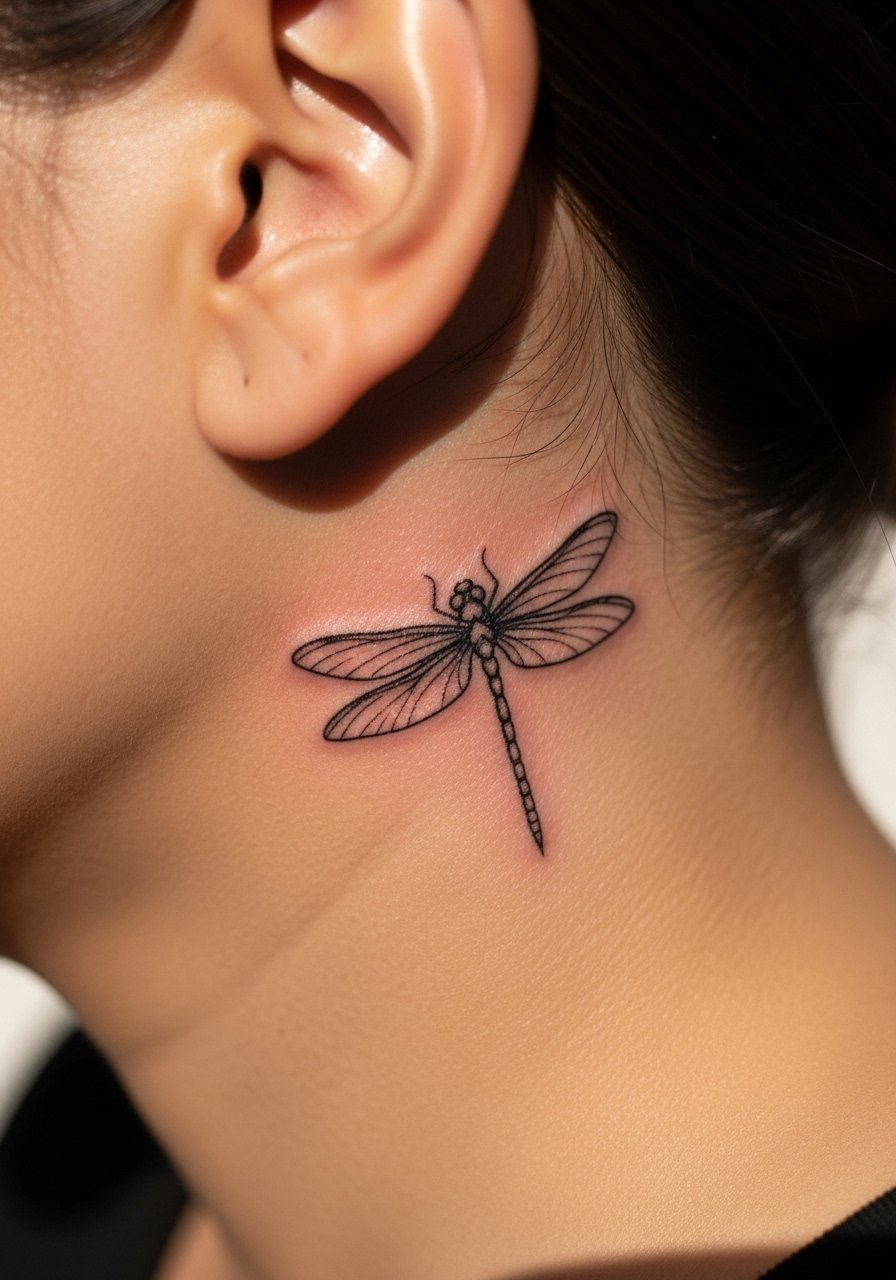
Behind-ear pieces are discreet and delicate but need precise placement under hairline movement. Tell your artist you want the body slightly bolder than the wing veins to avoid losing shape as hair rubs the area. Sessions are quick and surprisingly sensitive. If you wear shorter hair, be aware of visibility. This spot often requires a specialized approach from artists who do micro work.
13. Symmetrical Sternum Dragonfly
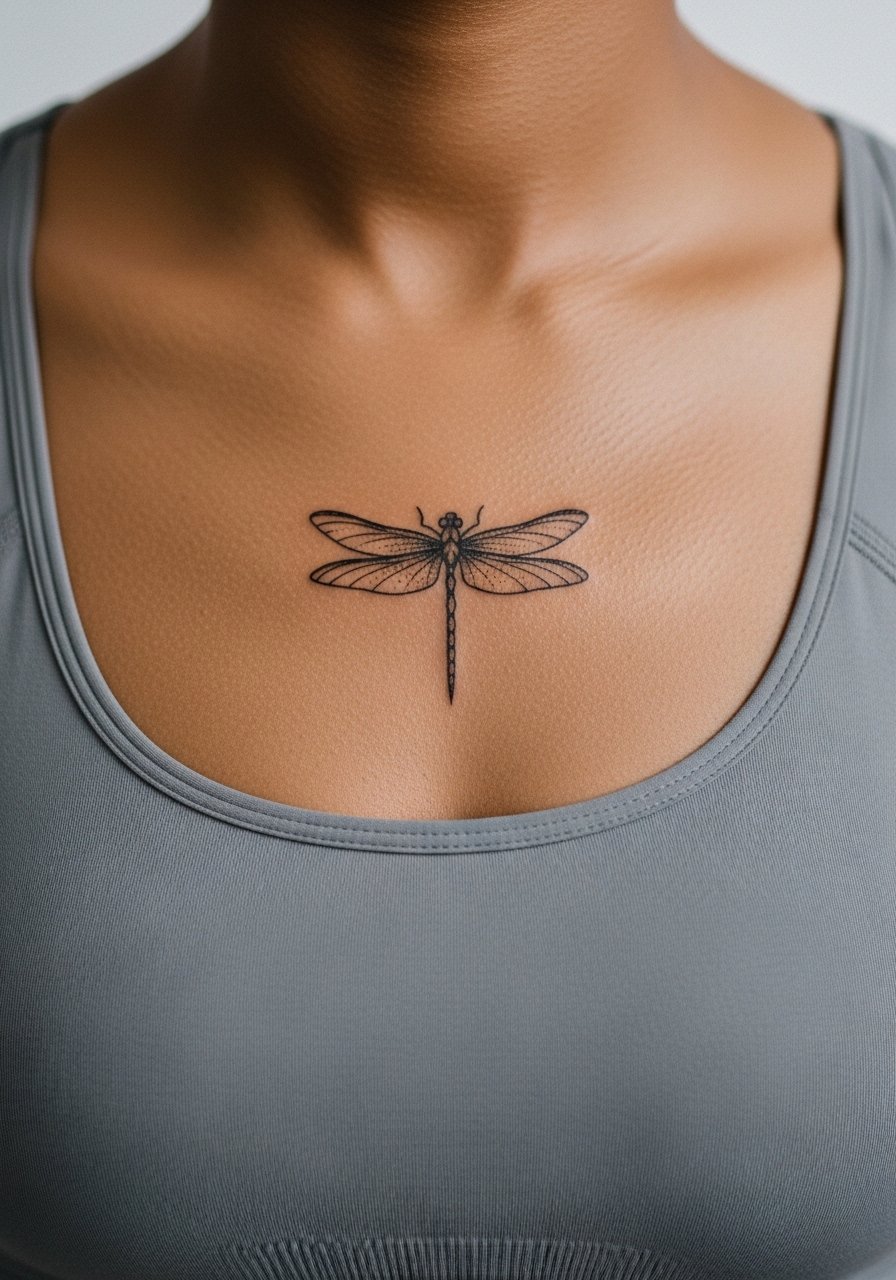
Sternum work divides opinion among artists and clients. One camp worries that chest movement and tight clothing make fine line blur quickly. The other camp believes with correct spacing and slightly deeper needle placement the piece will settle well. I suggest making the design scale slightly larger than you think to prevent early merging. Sessions are intense and require steady breathing and breaks. Wear a fitted sports bra to the appointment for modest access and comfort.
14. Micro-Realism Dragonfly on the Top of the Foot
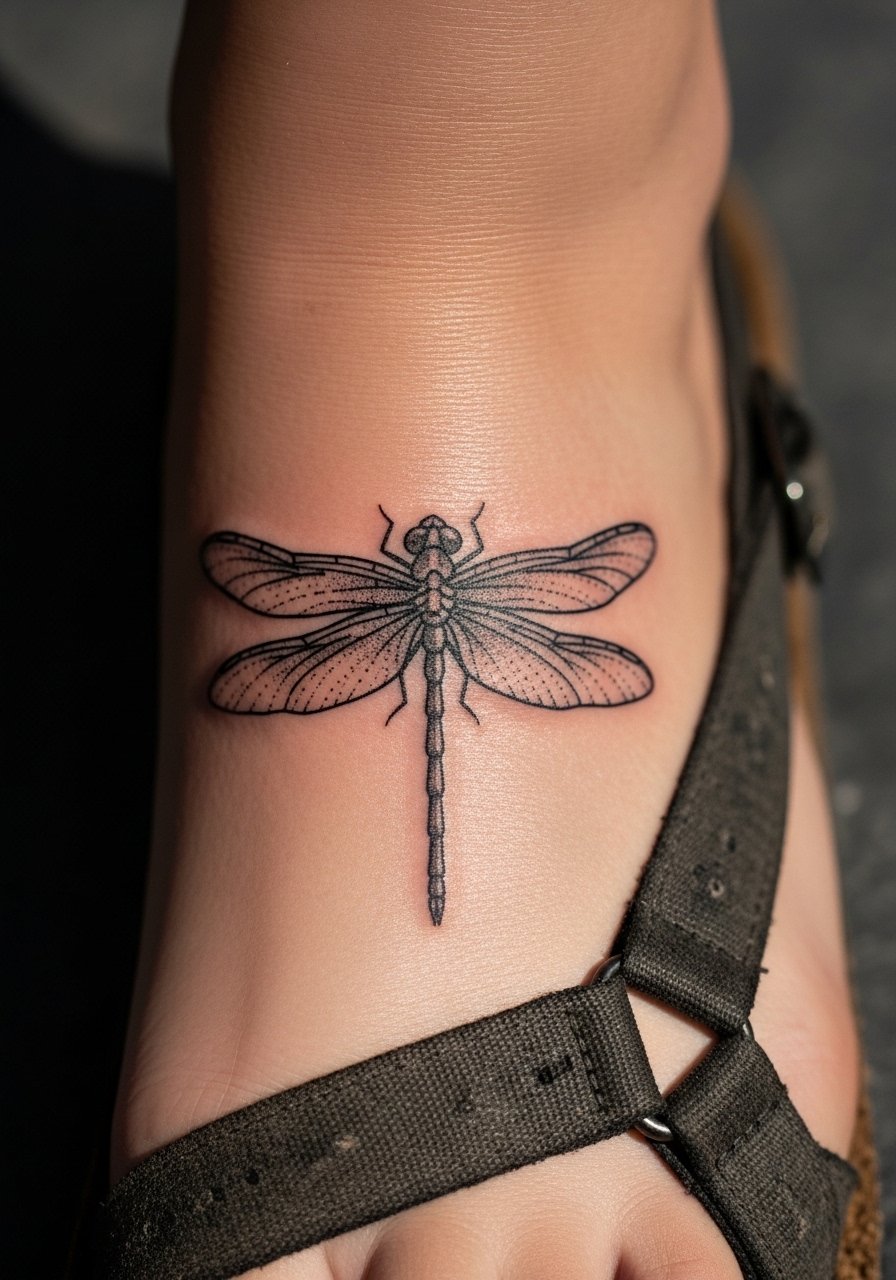
Top-of-foot tattoos face rubbing from shoes and a lot of washing, so prioritize bold anchors in the body over tiny wing veins. The main mistake is trying for too much fine crosshatching. Expect early touch-ups and slower healing if you are active. Sessions are short but quite painful. For showing it off, simple sandals highlight the piece without causing friction. Consider a pair of simple sandals on warm days.
15. Sleeve-Adjacent Dragonfly Cluster on Upper Arm
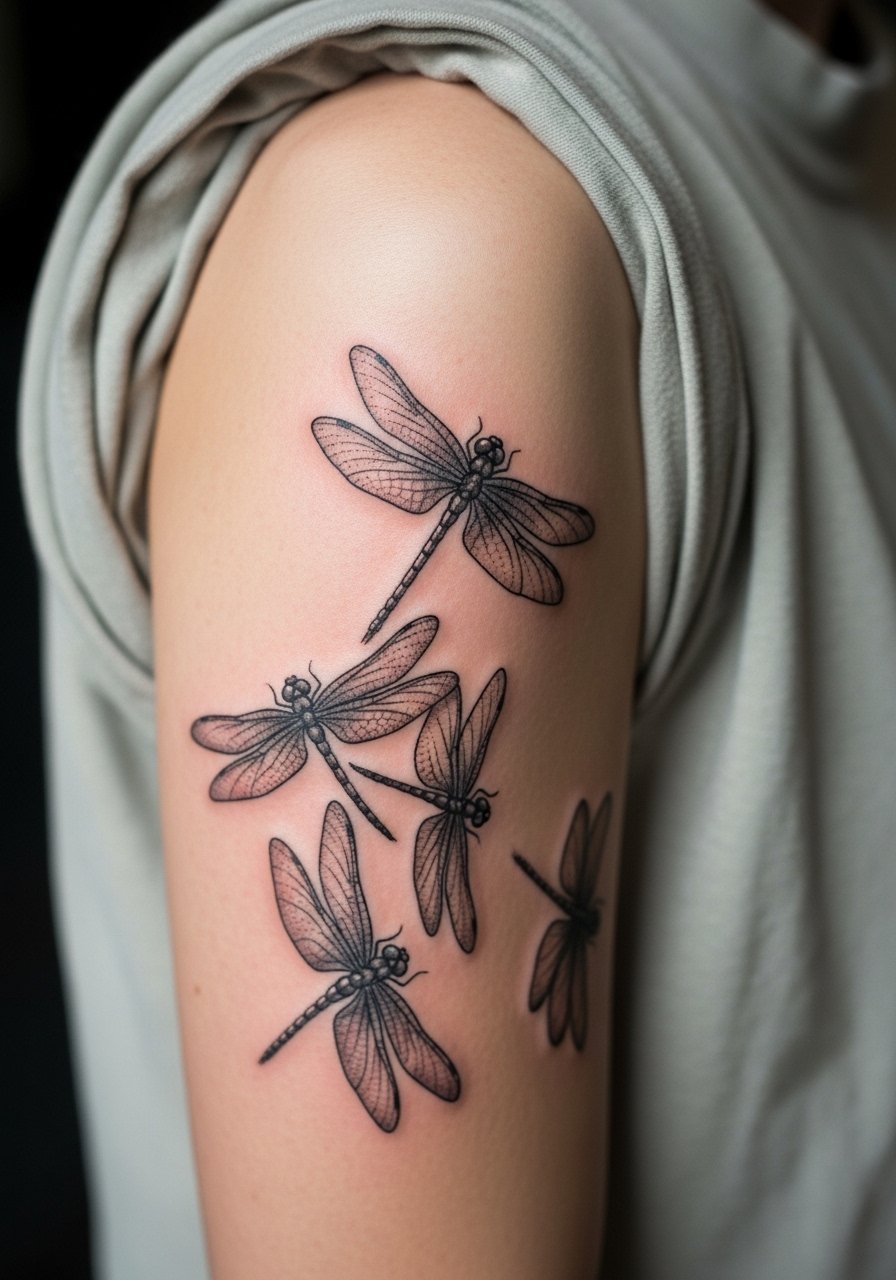
Clusters near the sleeve edge let you build motion and avoid dense detail that ages poorly. Tell your artist you want each insect spaced so the wings keep negative space between them. The session time varies by how many pieces you include. A common mistake is trying to cram sleeve density into a small upper-arm area. For the session, wear a loose sleeve shirt you can roll up without tight seams.
16. Minimalist Dragonfly on the Side of the Rib
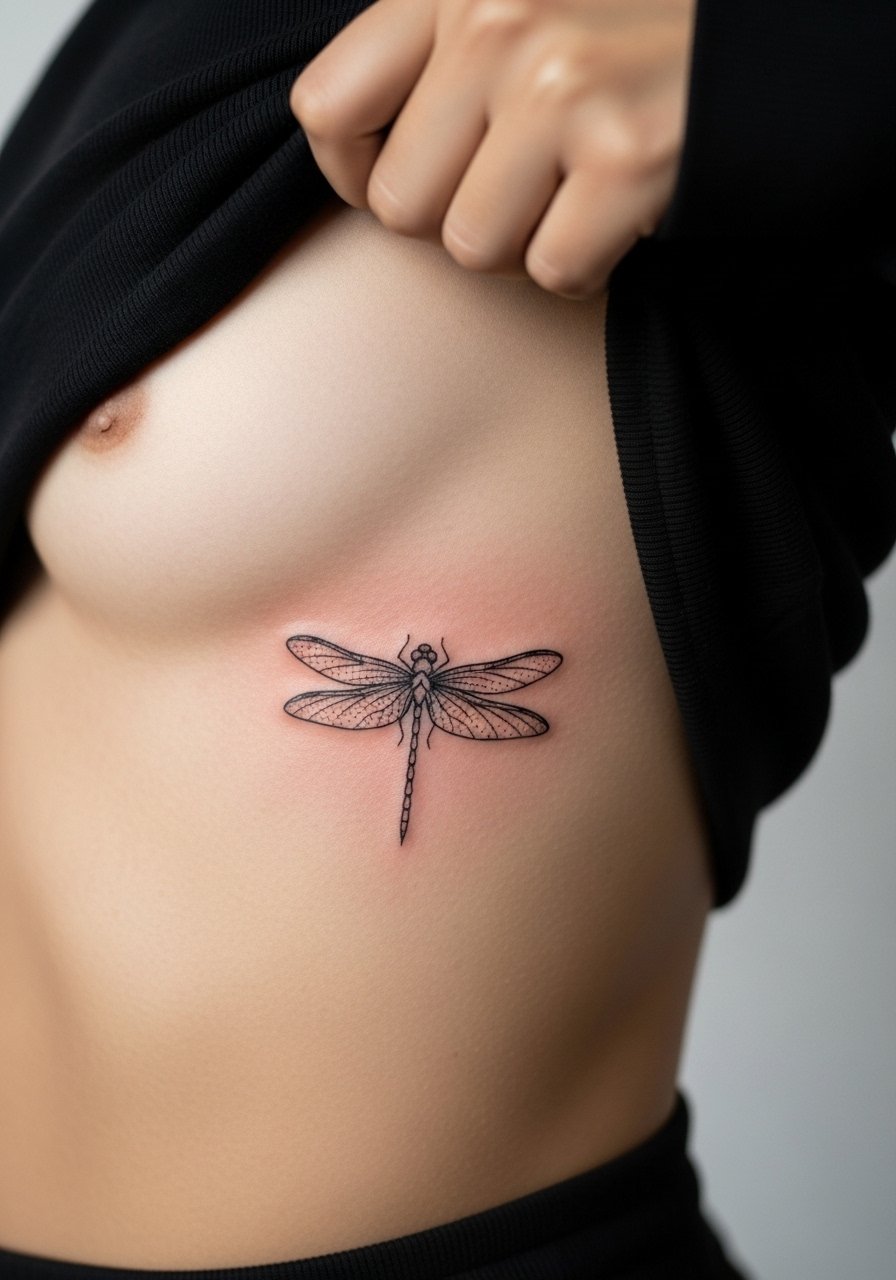
Side ribs are sensitive and change with posture, so keep designs slightly larger with more breathing room than you might assume. That spacing prevents lines from merging as the skin shifts. Pain is high and sessions may be split into shorter passes. Some artists avoid micro detail on this canvas. Wear a cropped top you can lift easily for comfort during the session.
17. Dragonfly That Flows Around the Elbow
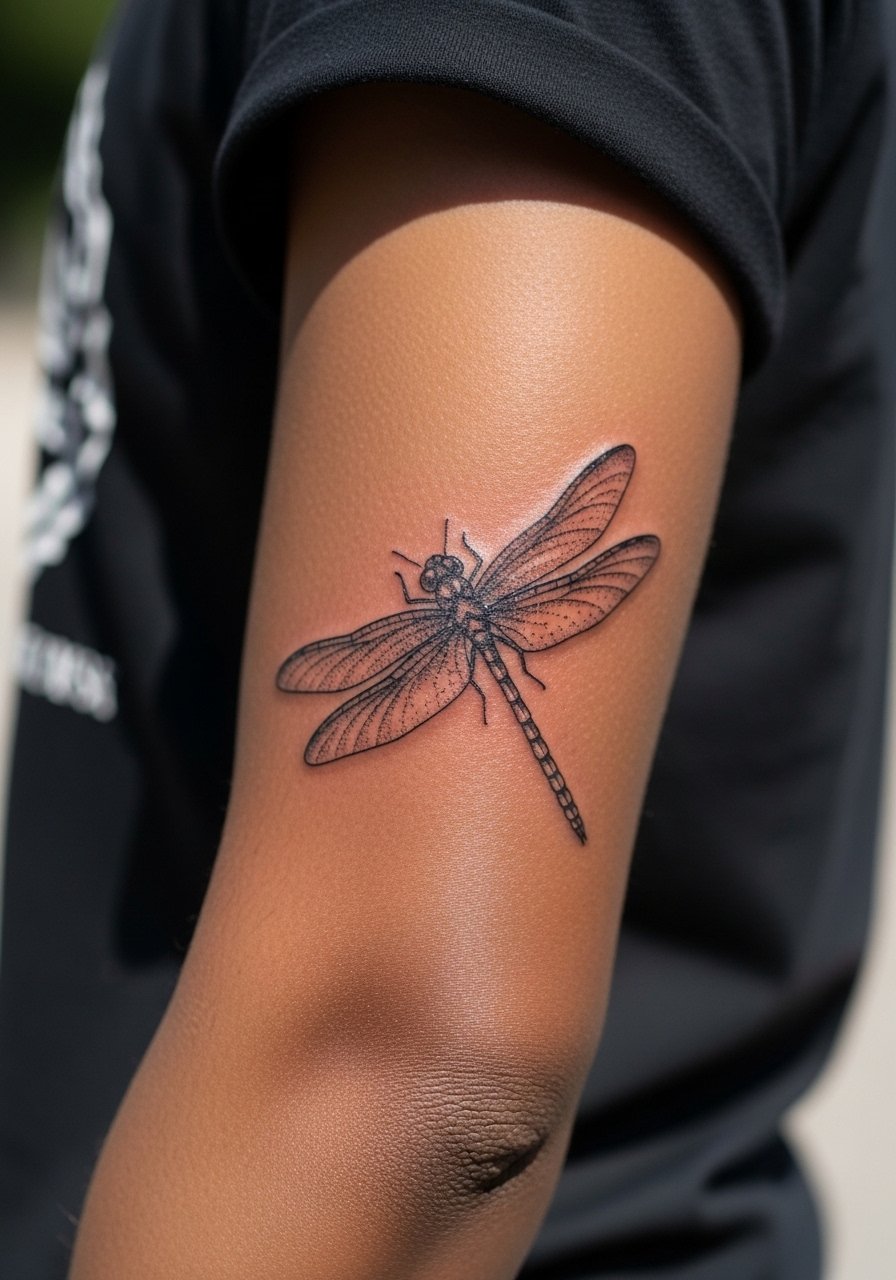
An elbow-wrapping design must respect joint movement and thicker dermal layers. Ask for simplified wing veins on the wrap area and reserve detail for the flat zones above and below the joint. Expect the session to be more uncomfortable and the need for touch-up where skin stretches most. The main mistake is trying to keep identical detail across the fold. For the studio, wear a short-sleeve shirt you can roll for access.
18. Dragonfly Accent Over a Floral Thigh Piece
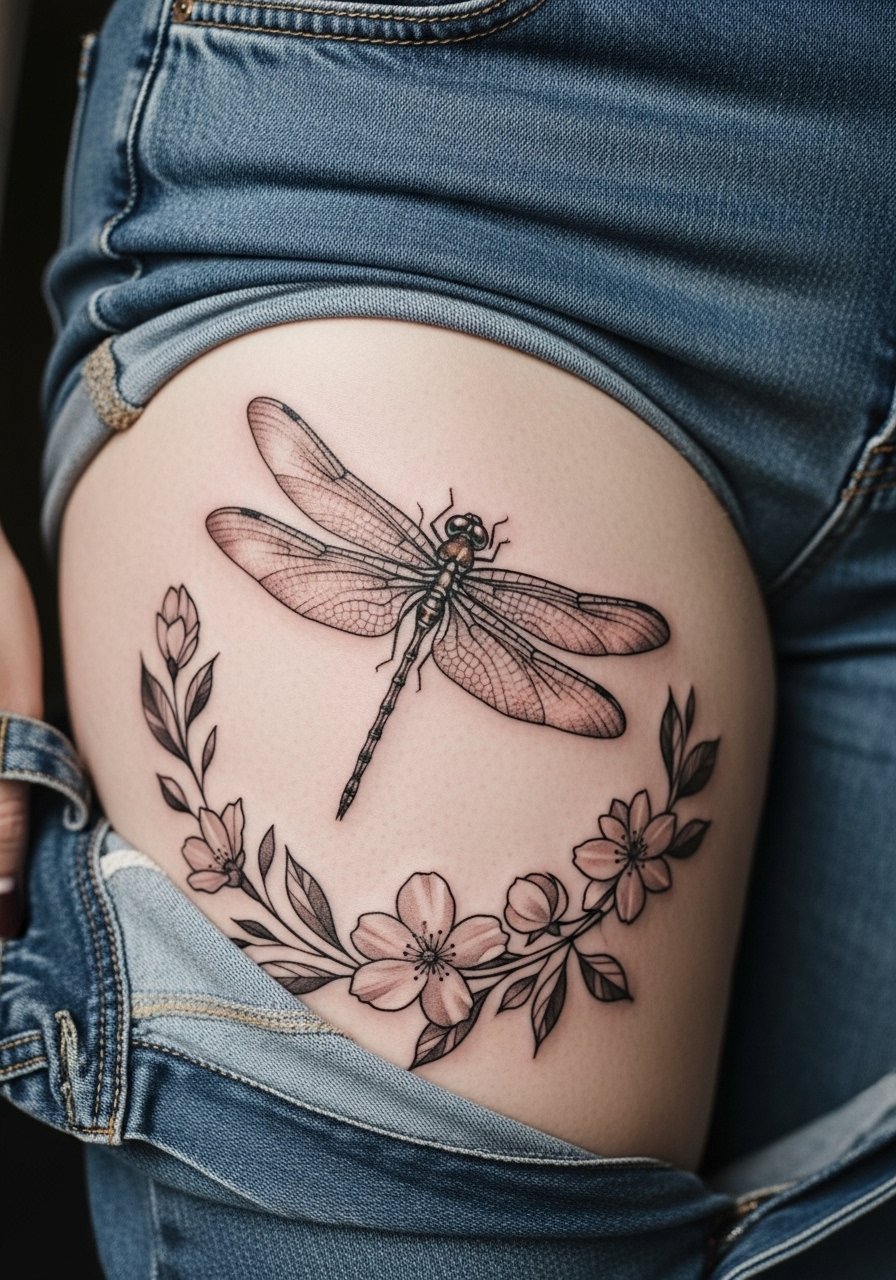
Layering a dragonfly over florals works when the insect has higher contrast than the background. Tell your artist to use the flower as soft shadow and to give the dragonfly a slightly darker body and lighter wings so it reads forward in photos. Thigh skin ages well and tolerates sessions longer than the wrist. For sessions, wear high-waisted jeans you can shift easily so coverage is quick to adjust.
19. Small Dragonfly on the Side of the Hand
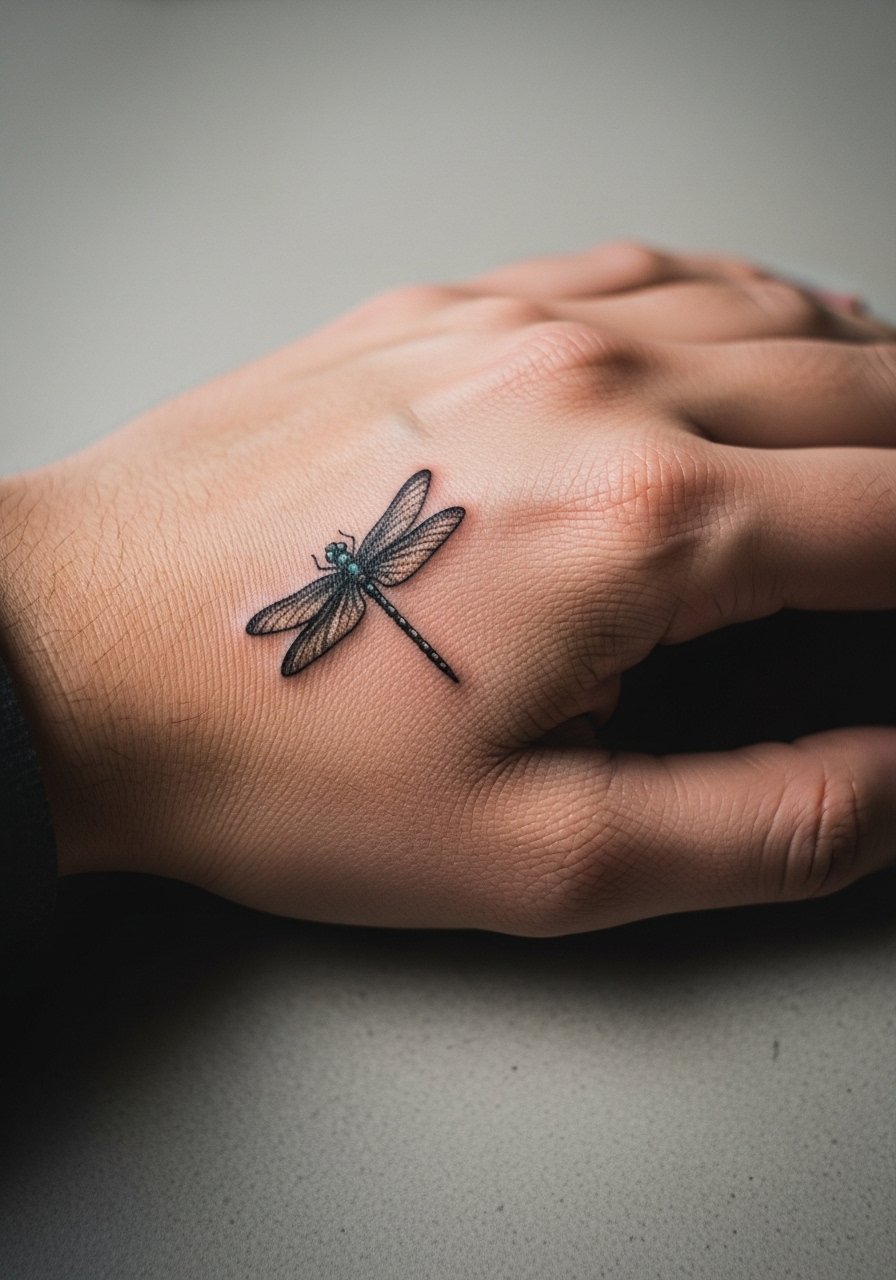
Hand tattoos still affect hiring in some industries, so think about career visibility before committing. The skin here moves a lot and ink fades quickly, so keep the design bold in key places and accept likely touch-ups. Sessions are brief and sharp. For showing without overexposure, pair with minimal rings or a thin chain bracelet that does not rub the ink.
20. Dragonfly with Stippled Wing Detail on the Shoulder Blade
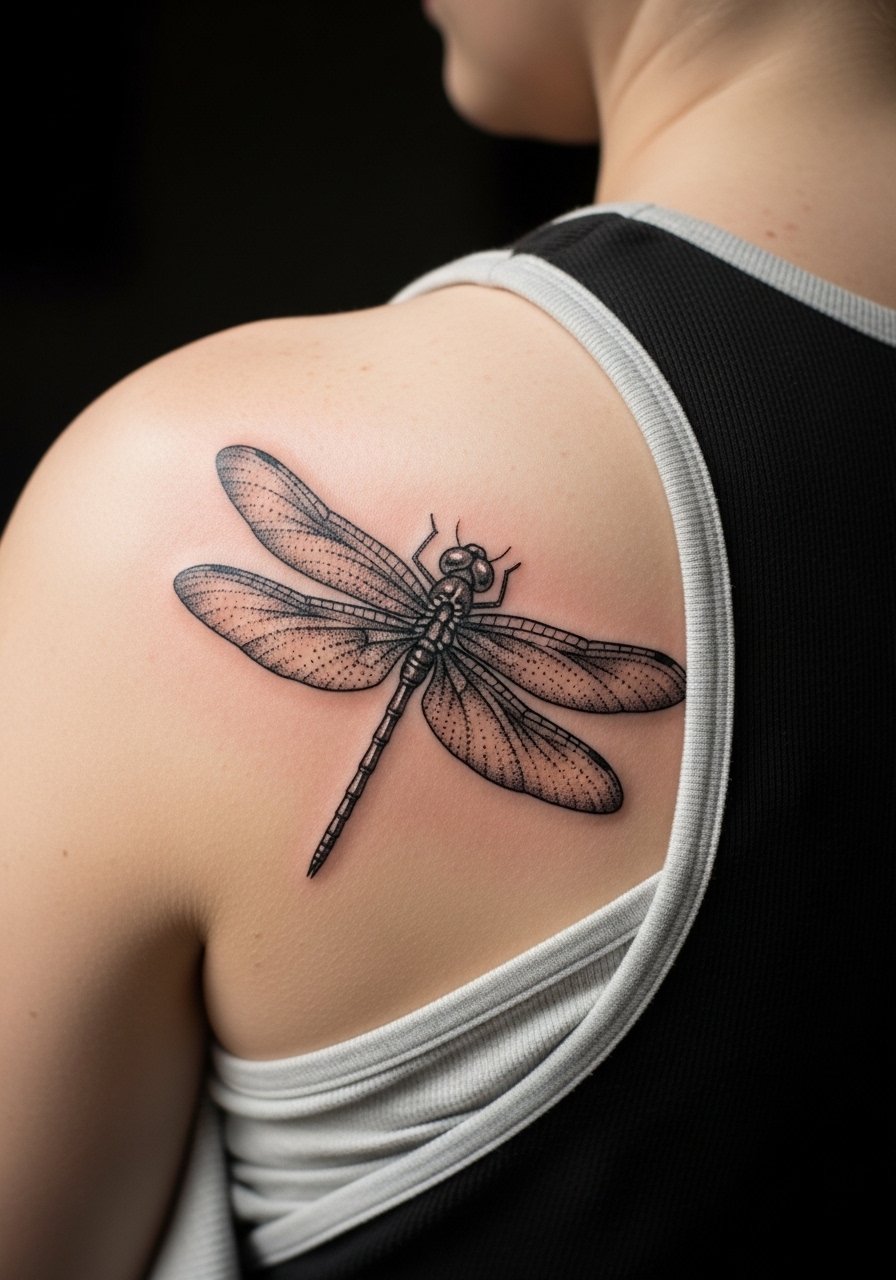
Shoulder blades allow soft stipple shading that reads airy even after years. Specify stipple or dot work rather than heavy gradation so the wings soften without bleeding. Sessions are comfortable and easy to pause. A common mistake is over-saturating the wings which later lose their airy look. For showing, an open-back tank or halter pairs well with the flow of the wings.
21. Micro Dragonfly Near a Collarbone Script
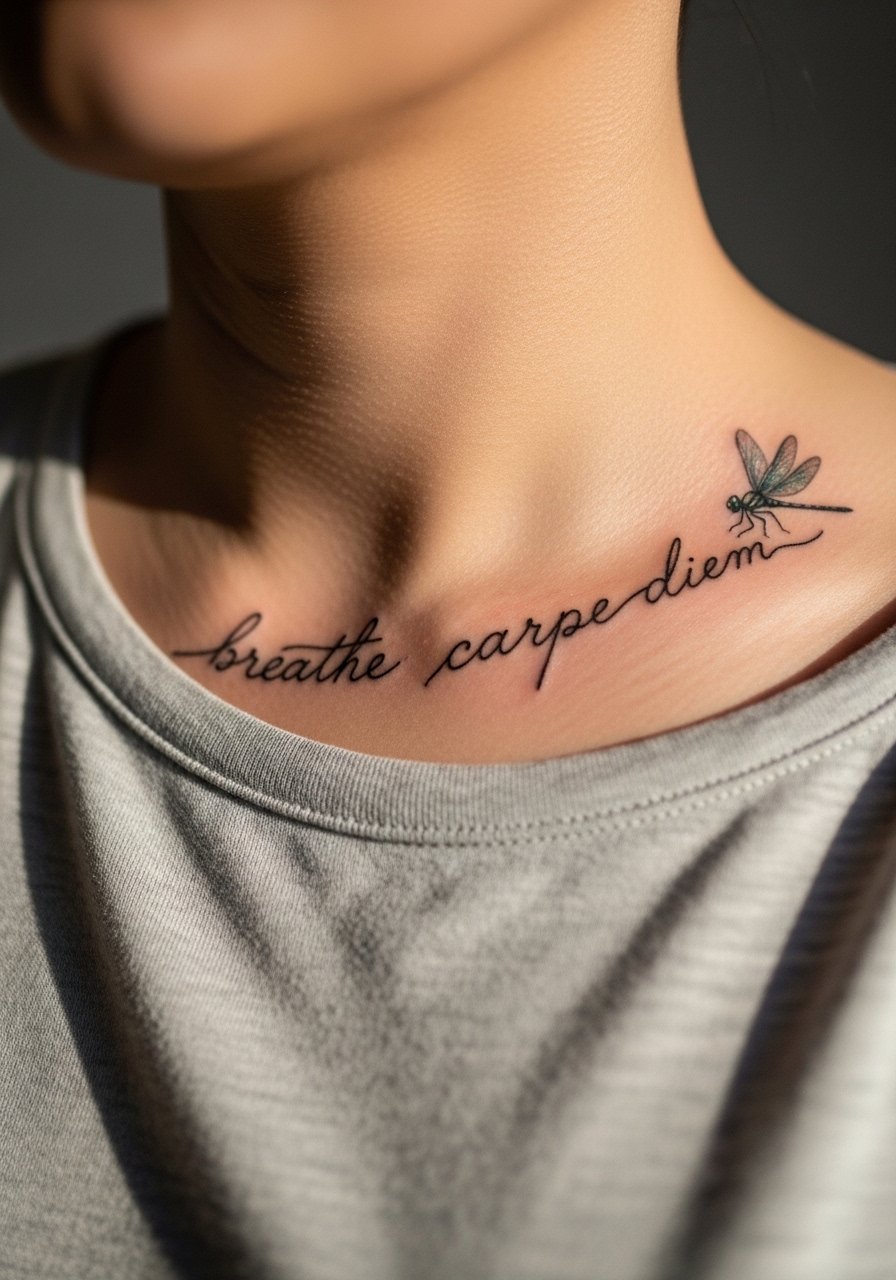
Combining a small dragonfly with script needs careful scale so the insect does not crowd the lettering. Tell your artist where the focal point should be and whether the dragonfly should point toward or away from the text. This placement is visible and ages like other collarbone work. Sessions are short and manageable. For showing, a thin chain pendant necklace sits nicely above the piece without competing.
22. Realistic Dragonfly as a Delicate Sternum Accent
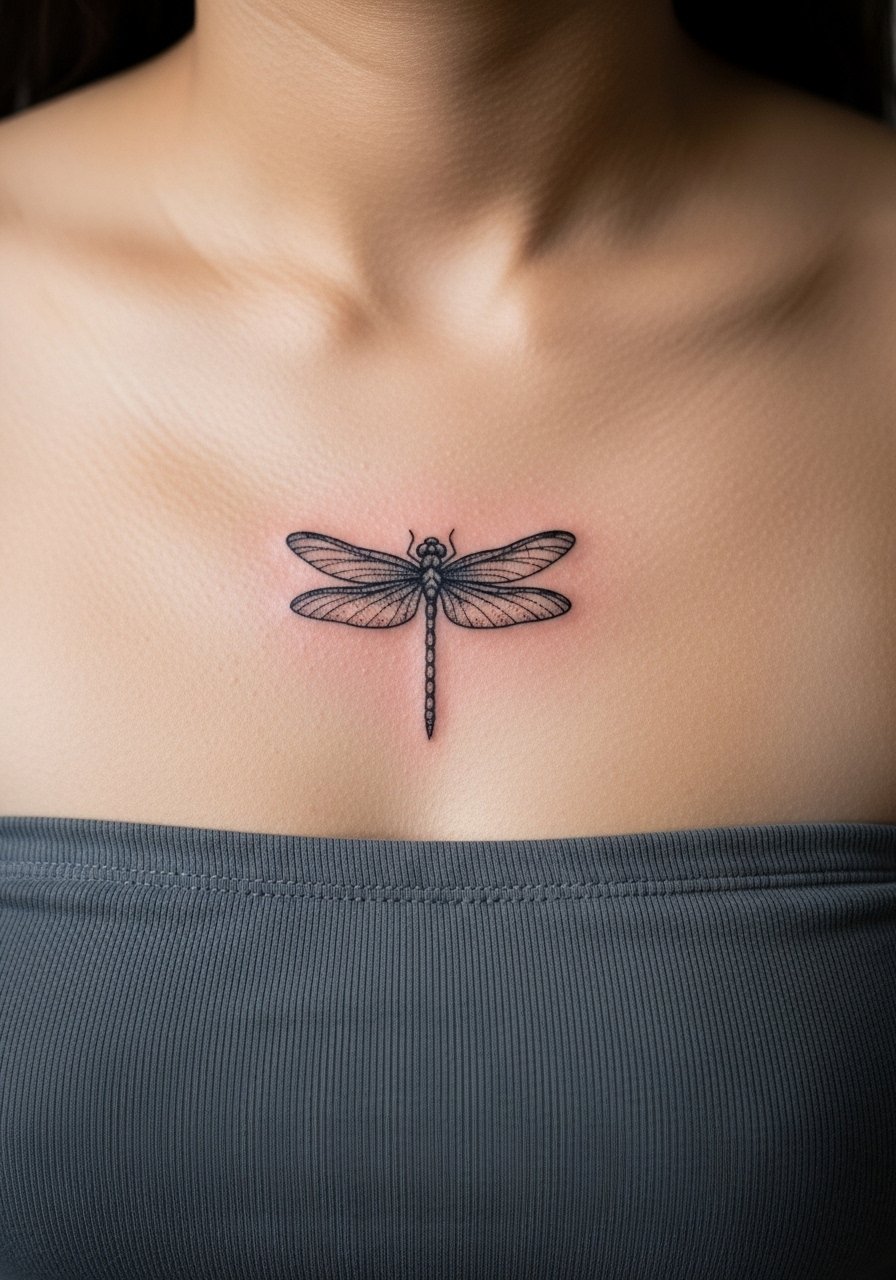
Sternum pieces can read elegant when scaled correctly and when the wings mirror the chest shape. Because of chest movement and clothing pressure, one group of artists advises larger, bolder work here. The other group finds success with careful spacing and slightly deeper placement for fine lines. I suggest erring on roomier scale and talking through fabric choices so the piece avoids constant irritation during healing. Sessions are intense and require breaks.
23. Dragonfly with Light Color Accent on the Outer Shoulder
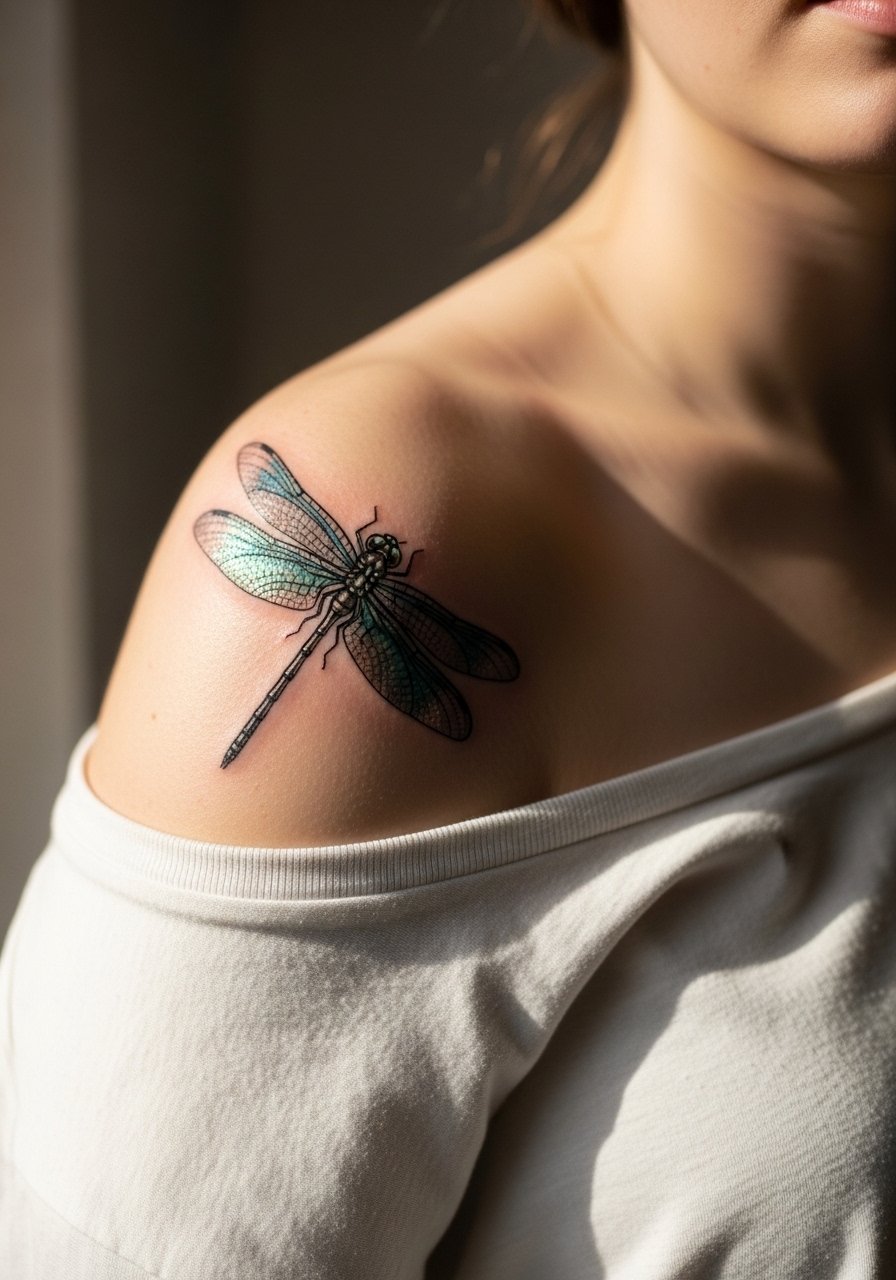
A subtle wash of color behind wings can keep the dragonfly soft without demanding heavy saturation. Ask for pigments that sit as background wash and not solid fills inside wing veins. Shoulders are forgiving and age nicely. The session feels moderate and you can usually do color in a single appointment. Pair with sleeveless tops or a loose button-down to display the work.
24. Tiny Realistic Dragonfly on the Inner Bicep
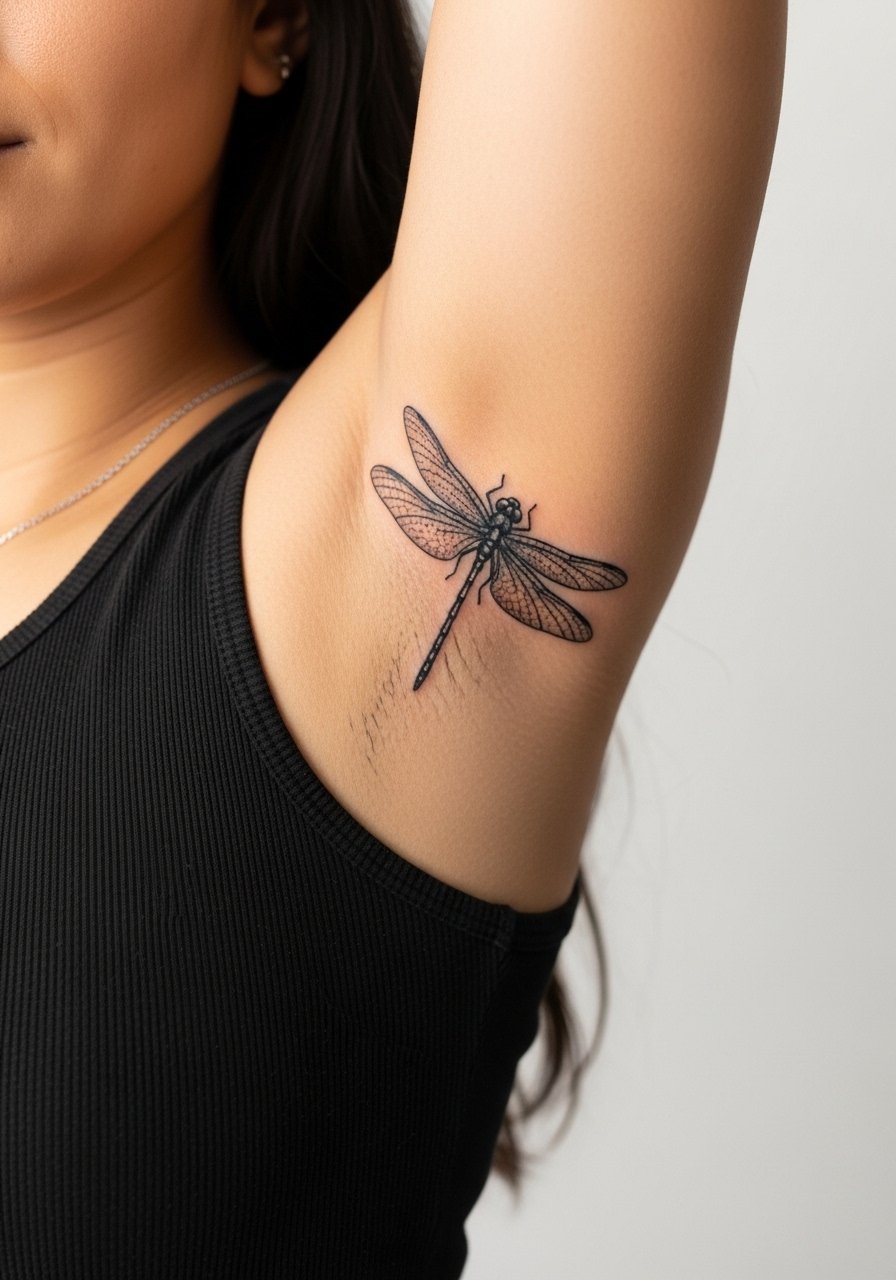
Inner bicep skin is softer and a bit unpredictable, so choose slightly bolder body lines and softer wing stippling. The controversy here is less heated than ribs but some artists avoid ultra-fine detail because the stretch can blur lines over time. Sessions are moderate and often fast. For comfort, wear a tank top you can lift without restricting circulation.
25. Dragonfly Near the Hip With Floral Tie-In
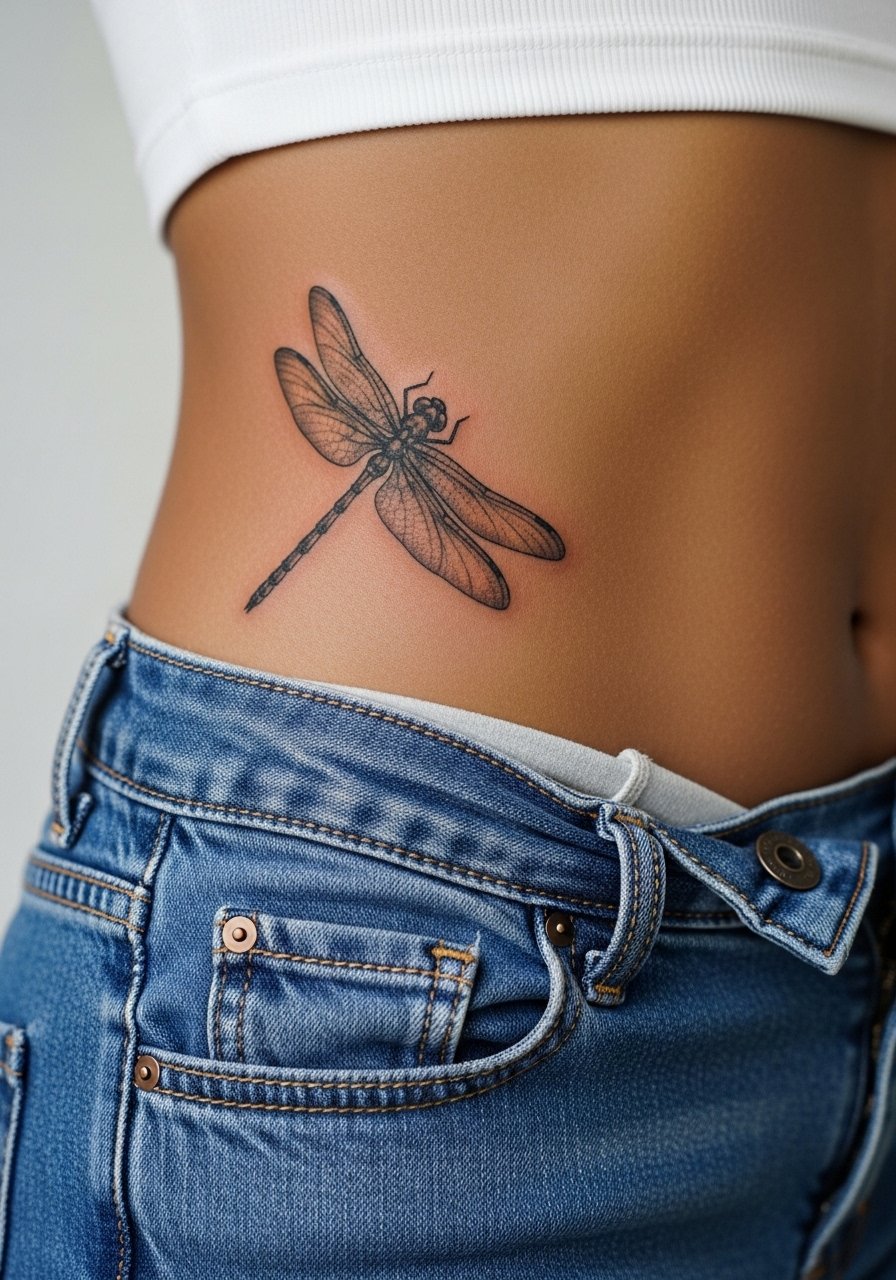
Hip tattoos let you play with tilt and curve so the wings echo natural body lines. Ask for a slightly oblique angle so the thorax sits toward the torso and the wings point toward the thigh. The area heals well but beware tight waistbands during the first two weeks. Sessions are comfortable if you lie on your side. For showing, a high-cut swimsuit or low-rise jean look works well.
26. Small Dragonfly at the Base of the Neck
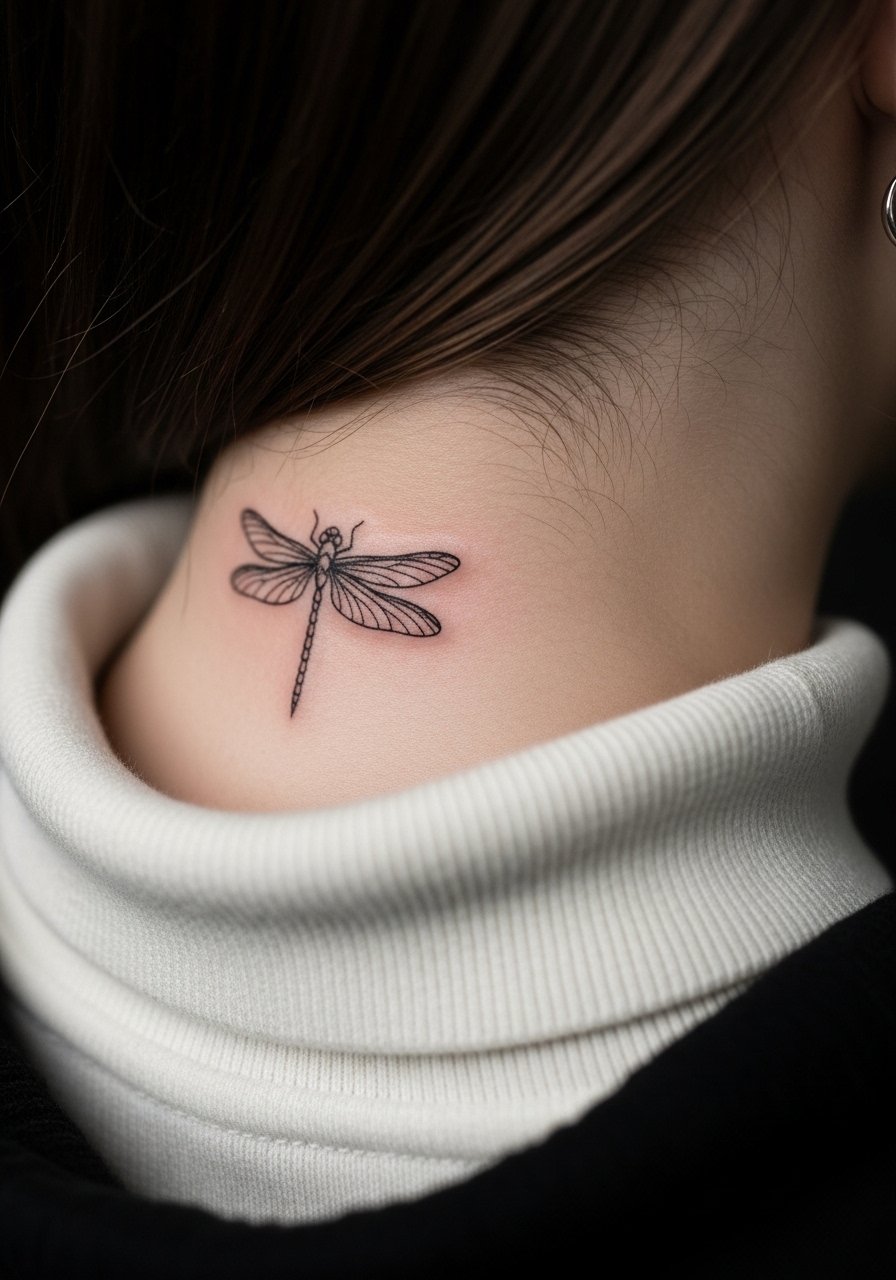
The base of the neck is subtle and often covered yet easy to show with certain necklines. Keep the design small and the wings light so it remains delicate. Sessions are short; sensitivity is moderate. Think about hair length because hair can rub the area during healing.
27. Dragonfly Accent Over a Lower Back Piece
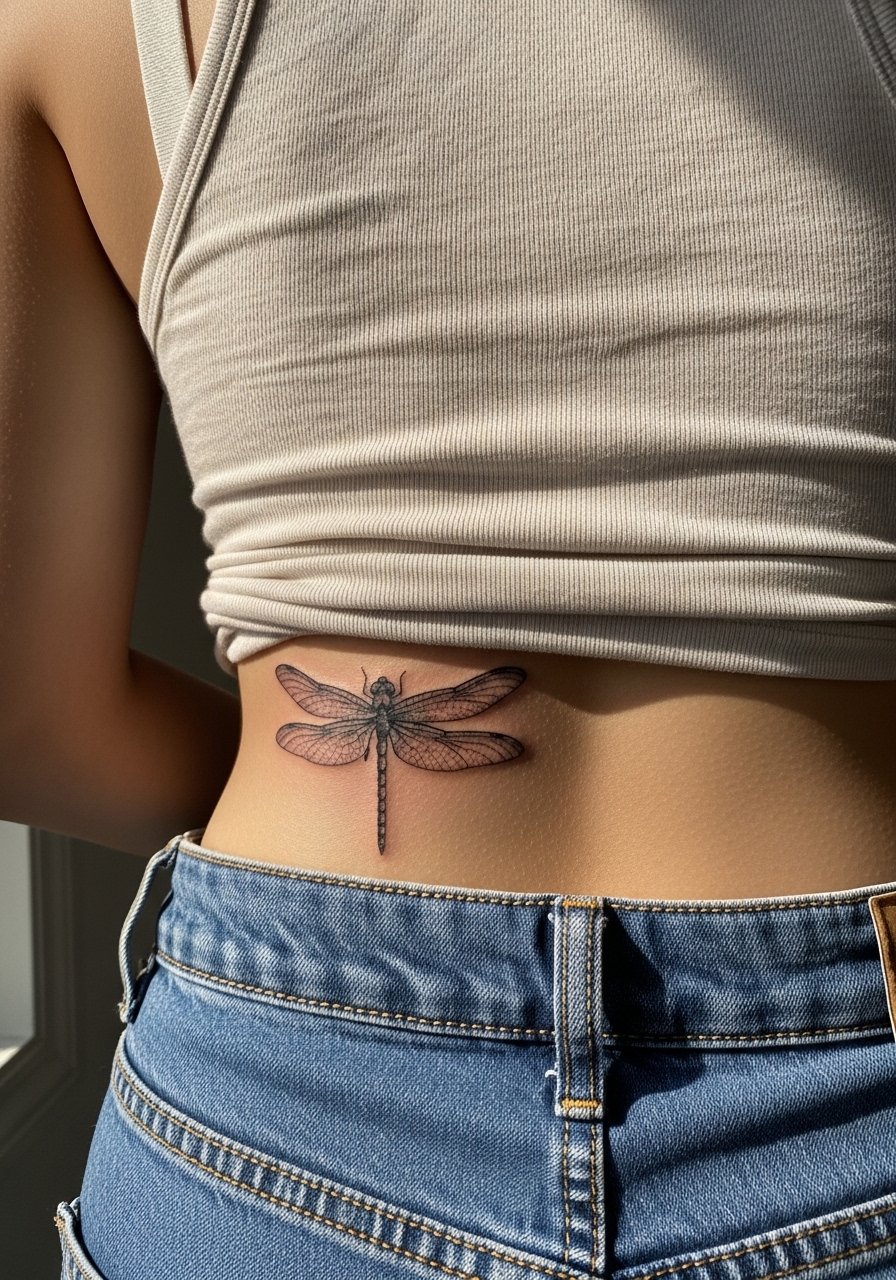
Lower back work can be both discrete and expansive. For a soft dragonfly accent, ask the artist to keep wings airy and to use light stipple for negative space contrast. Watch for tight waistbands during healing since pressure can affect saturation. Sessions are moderate and often part of a larger lower-back composition. For showing, a low-rise pant or crop top frames the area well.
Frequently Asked Questions
Q: Will a realistic fine line dragonfly on the ribcage blur faster than on the forearm?
A: It depends on scale and technique. Rib skin moves more and can cause finer strokes to blur if they are too close together. A slightly larger scale with spacing and stipple shading usually holds up better on the ribs than ultra-fine work.
Q: How visible are touch-ups for finger and ankle dragonfly tattoos?
A: Expect touch-ups sooner than for larger pieces because those spots face more friction. They can look seamless if the artist matches the original line weight and fills sparingly, but plan for a one- to two-year revisit.
Q: Should I avoid color in a dragonfly tattoo if I want a soft look that lasts?
A: Not necessarily. Soft color washes behind wingwork can stay soft if pigments are used sparingly and not packed too densely. Ask for background washes rather than saturated fills to preserve longevity.
Q: What should I tell my artist when I want a dragonfly to read delicate but avoid future blowout?
A: Mention that you want slightly stronger body contour with airy wing stipple, and ask them to show a stencil on skin first so you can confirm spacing. Also bring up your daily sun exposure and clothing habits so they can suggest scale and placement.
Q: Are there wardrobe items worth buying specifically for the session or for showing off a collarbone or shoulder dragonfly?
A: Yes. For shoulder or collarbone sessions, a loose button-down shirt you can pull aside or a wide-neck top makes access easier and helps you display the piece cleanly afterward.
