
Fine line geo crosses are everywhere on feeds right now, and that popularity has a cost. The very pieces that look razor-sharp in photos can soften if the line weight is too thin or the placement rubs against clothing. I want to cut through the trends and show geometric cross options that balance fresh looks with real-world aging, plus what to say in the consult so the lines still read clean in year three.
1. Geometric Cross with Infinity Loop on Inner Forearm
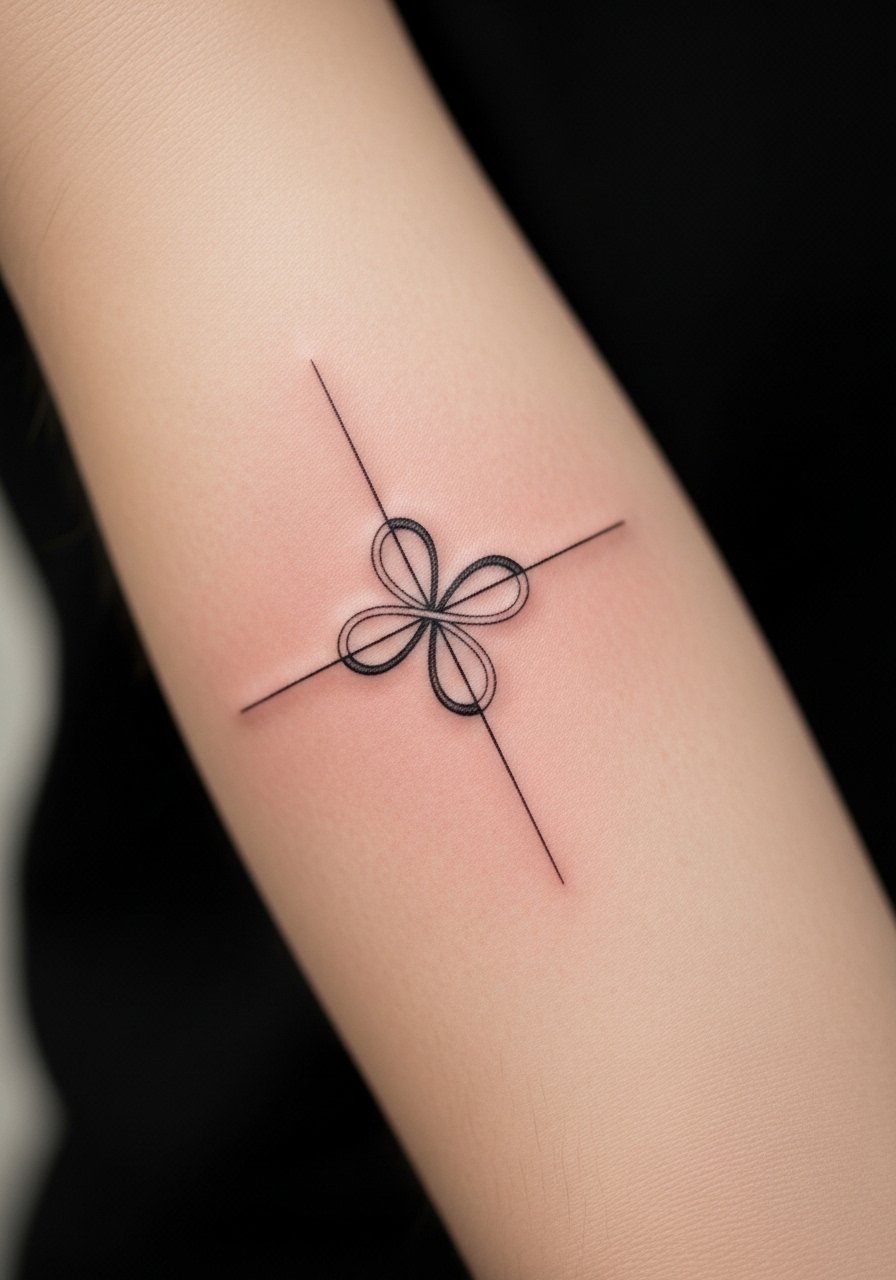
I've seen this hybrid more than any other small cross design because it reads like a quiet, ongoing commitment. The inner forearm is forgiving for fine line work, but fair warning, thin single-needle lines can blur faster there if you live an active lifestyle. Tell your artist you want slightly thicker contour lines around the infinity loop so the negative space breathes as it heals. Expect one session under two hours and a touch-up at 18 to 24 months for many people. For showing it off, rolled cuffs and a chambray button shirt frame the forearm without stealing attention.
2. Thorn-Wrapped Geometric Cross on Outer Forearm

Pain is low to moderate on the outer forearm, so this is a go for people who want bold lines without an intense session. The thorn elements add weight that helps the geometric structure age better than ultra-fine crosses. During consultation, ask for slightly denser black fill in thorn edges so the negative space does not collapse over time. Typical session time is two hours with shading adding texture. If you plan to wear long sleeves often, tell your artist because frequent friction is a common aging issue. Pair the look with rolled-up bootcut jeans and a leather ankle boots vibe when you want the calf and forearm to play off each other.
3. Three Geometric Crosses Silhouette on Collarbone
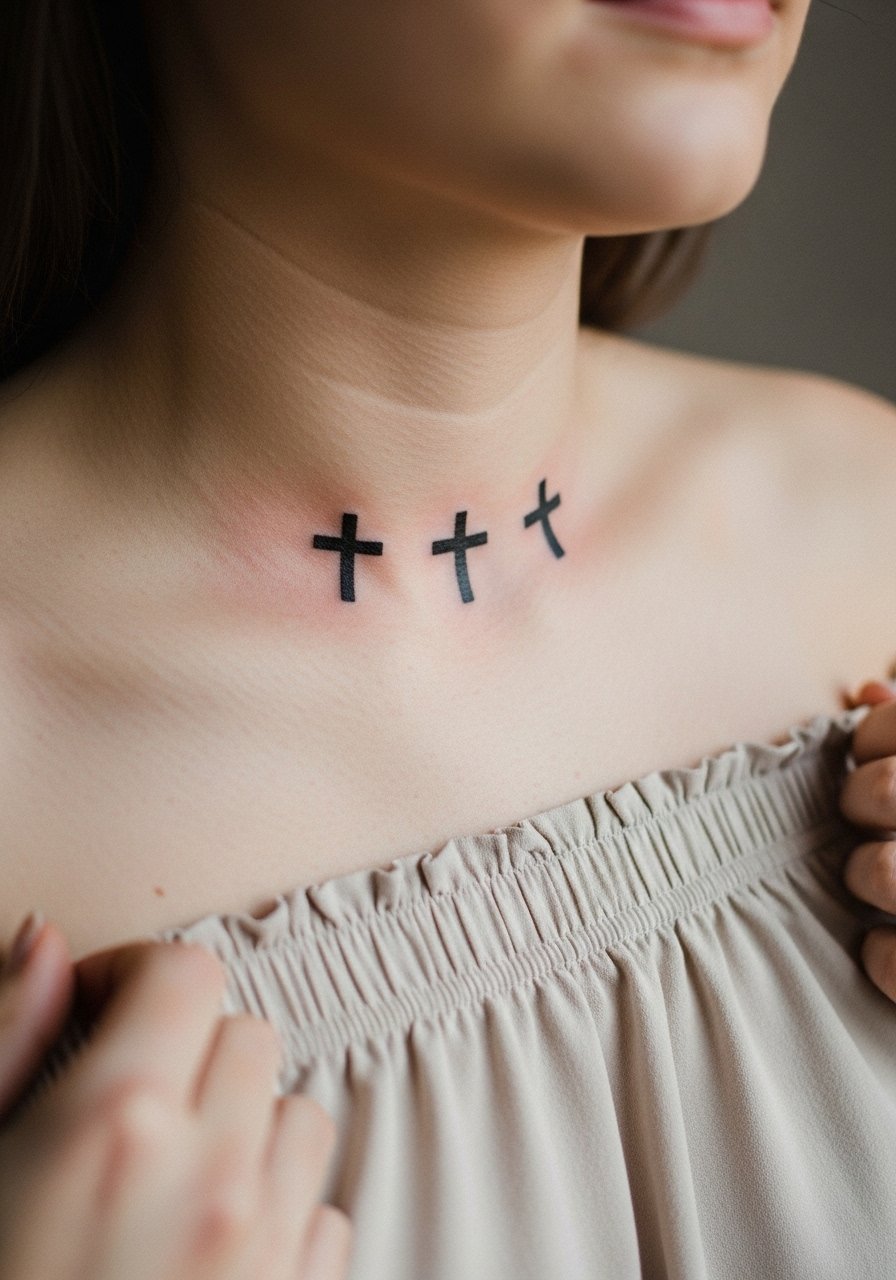
Collarbone placements read small and intentional, and the three crosses work well here because the negative space between them keeps the cluster readable over time. The collarbone can sting more than the arm, but sessions are usually short. A common mistake is crowding them too close, which causes the shapes to merge after a few years. Tell your artist to keep even spacing and slightly thicker outer contours. For evenings out, an off shoulder blouse frames the cluster without overpowering it.
4. Winged Geometric Cross Outline on Upper Arm
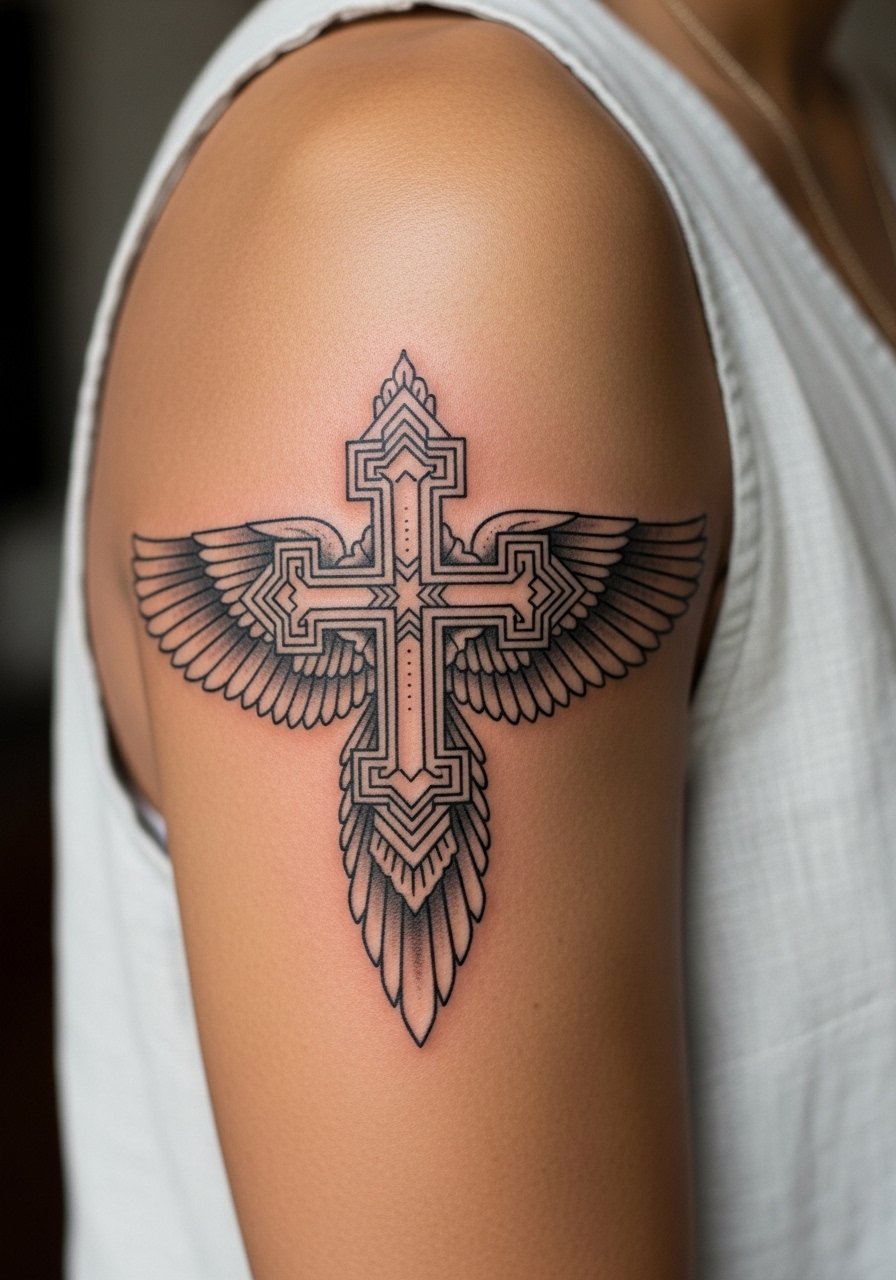
Upper arm work ages well because it gets less daily abrasion than wrists. The wings introduce a motion line that offsets the rigidity of the geometry. Expect two sessions for linework and soft shading. The biggest error I see is artists over-detailing the wings for small scales, which blurs into texture later. Ask for simplified wing feathers and stronger primary lines. Wear a sleeveless linen tank to show it off while keeping the tattoo visible during the healing window.
5. Intertwined Geometric Cross and Vines on Thigh

Fair warning about thigh pieces. Sessions tend to be comfortable but longer because the canvas is large. The vine elements add organic flow that masks small shifts if body shape changes, which helps aging compared with a rigid grid. Common mistakes include over-detailing the vines for a small area, which eats into the cross' clarity. Ask the artist to balance flow with negative space so the geometry keeps its silhouette. For session day wear pick high waist shorts so the artist can easily access the area without pressure on the skin.
6. Dotted Geometric Cross Mandala on Ankle
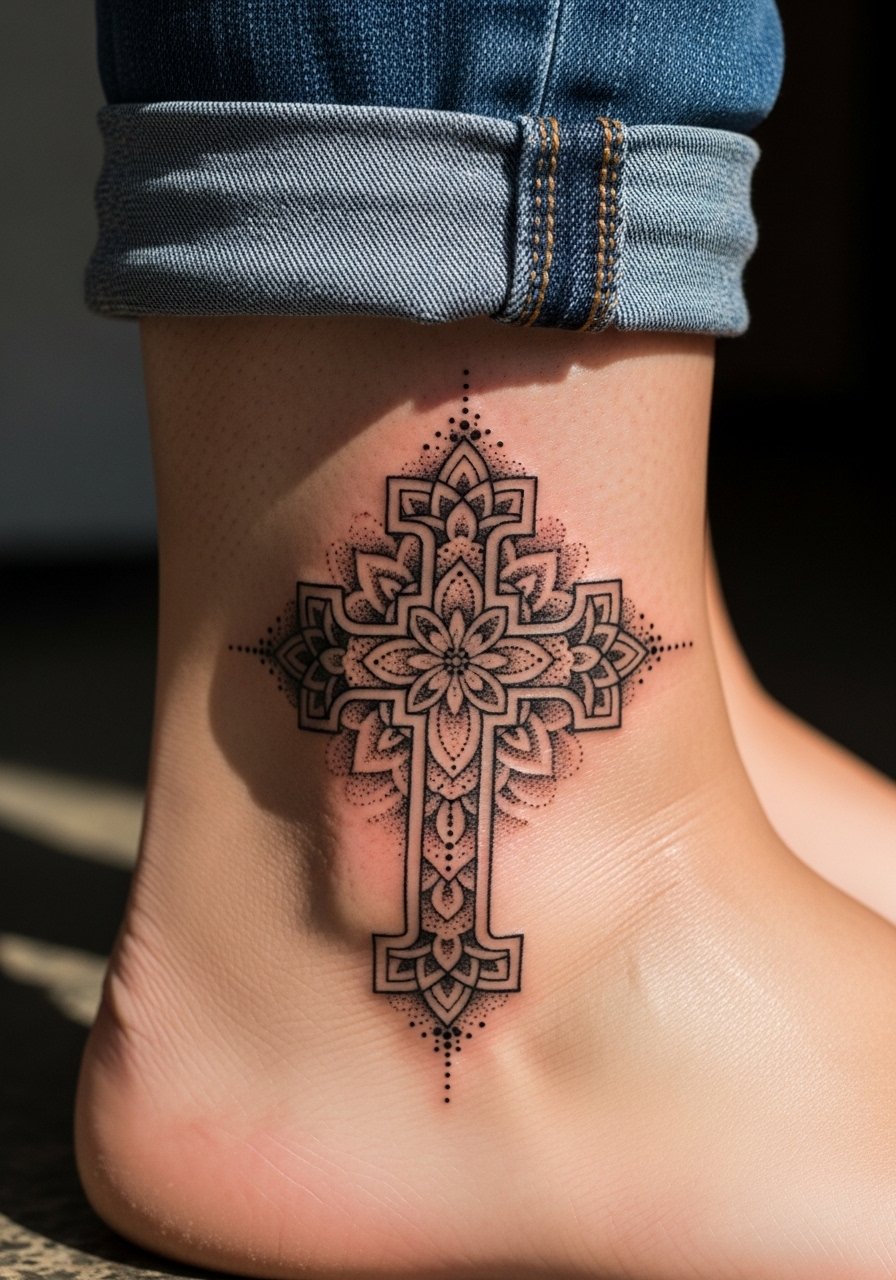
Ankle dotwork looks meditative and delicate, but the ankle is a high-friction zone for shoes and socks. Dotwork ages differently than linework because individual points can fade. One camp argues dotwork holds up when dots are densely packed and spaced correctly. The other camp says the ankle moves too much and dots blur regardless. Ask your artist which approach they prefer and why. For summer show-off, cuffed straight-leg jeans or a midi skirt flowy with sandals keep the ankle visible without constant rubbing.
Studio Day Picks
The wrist, forearm, collarbone, ankle, and thigh designs above each demand different session prep. A few targeted items smooth the appointment and protect fine line details in the first week.
-
Stencil transfer paper kit. Lets you preview the placement on skin and test spacing before the needle hits, which is crucial for clustered collarbone and triple-cross layouts.
-
Topical numbing cream. Applied per instructions about 45 minutes before a sensitive ankle or rib session eases the sting without changing how the artist works.
-
Thin protective film roll. Useful for keeping ankle and wrist pieces cleaner during the first few days when footwear and watches cause friction.
-
Fragrance-free body wash. A gentle wash helps showering during the healing window without stripping tiny dotwork or fine lines.
-
Aquaphor healing ointment. A thin layer in the early days locks in moisture and supports fine line settling, especially on forearm and wrist pieces.
7. Abstract Geometric Cross with Flames on Chest
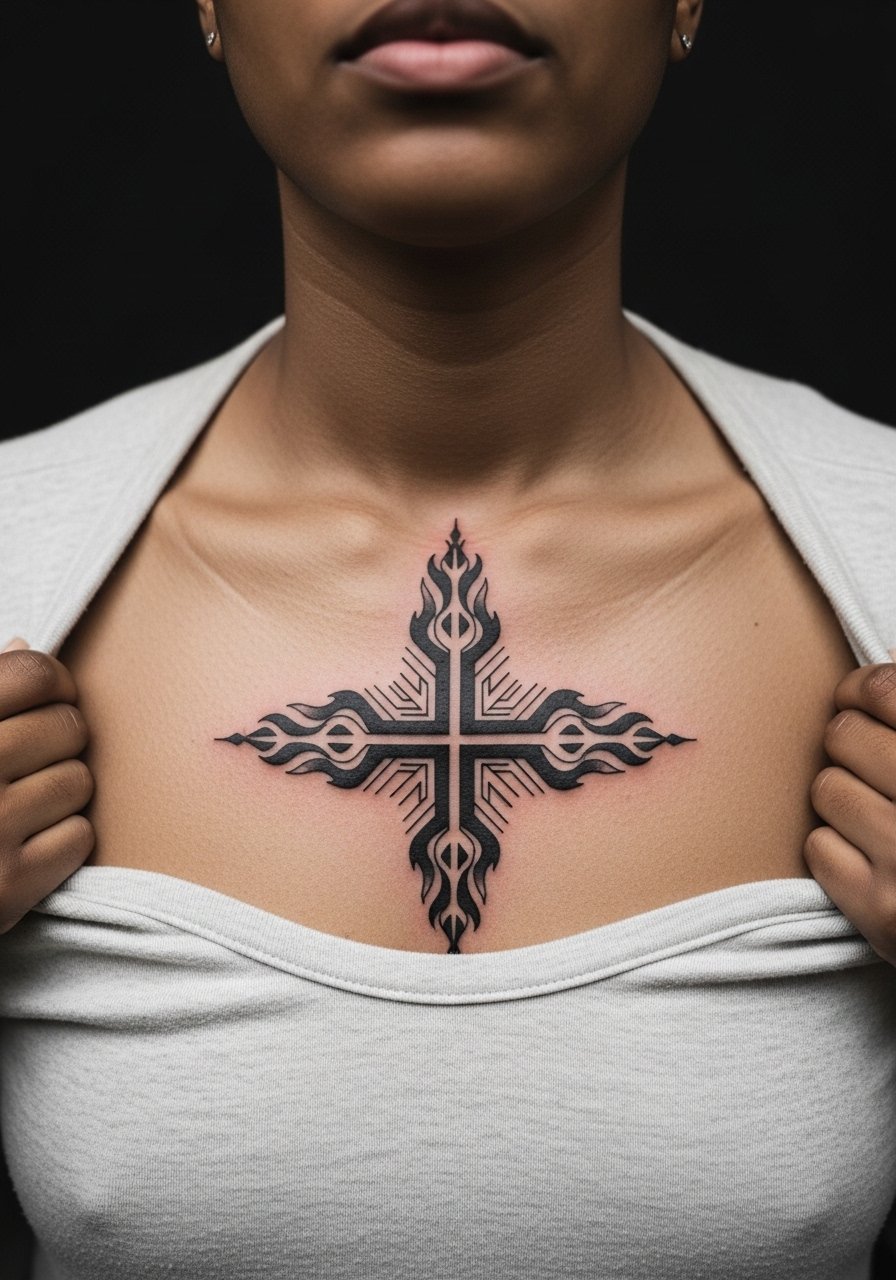
The chest can be sensitive but it gives room for dramatic scale and deep blackwork. Flames read as trials overcome, and when paired with geometric structure they create a powerful visual rhythm. The mistake I see is packing too much micro detail into chest pieces intended to be seen from a distance. Ask for bold silhouette elements that keep the cross readable across changes in body contour. For studio prep wear a wide-neck shirt you can shift aside so the artist has access without you undressing.
8. Minimal Geometric Cross Silhouette on Finger

Finger tattoos feel immediate when you glance down, but they are among the fastest to fade. The skin there is thin and constantly washed. If you want longevity, avoid ultra-tiny single-needle details and ask for slightly bolder contours even if the cross remains small. Sessions are quick but expect touch-ups within a year. For day-of, remove all rings and let the artist see the full finger. A common regret is choosing dense dot shading on a finger cross because it fills in within months.
9. Layered Geometric Cross with Ribbon on Forearm
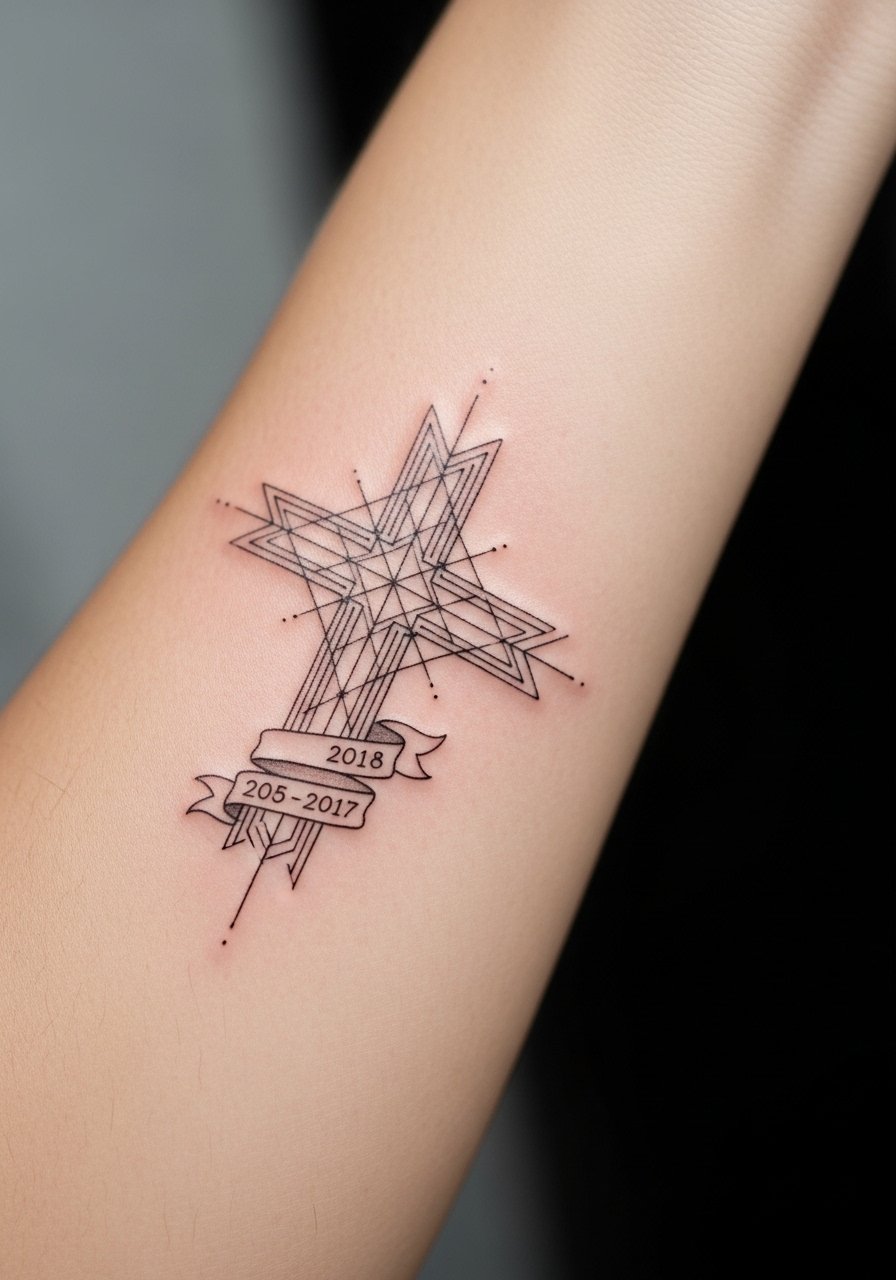
Forearm placements are some of the most practical. The ribbon detail is ideal for memorial text or dates because it follows the arm's natural line. Avoid micro-lettering that is too small, as tiny script often turns into a dark smudge. Tell your artist the exact font size you want and where the date will sit. Sessions fit into one sitting for small-to-medium sizes. Show-off pairing that keeps the forearm visible is a thin leather cuff bracelet on the opposite arm.
10. Sacred Geometric Cross with Dove on Back
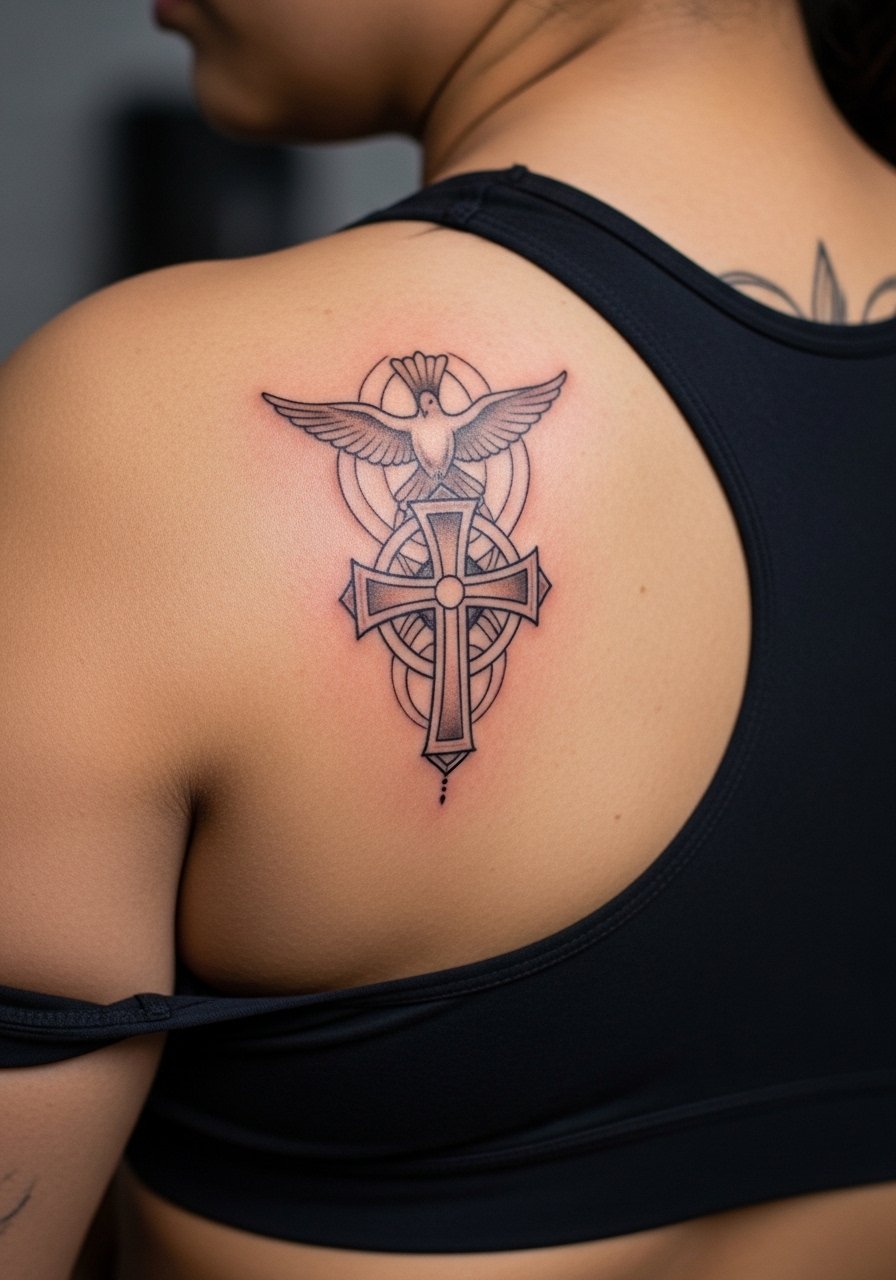
Back pieces let you scale the geometry and keep intricate spacing intact. The dove introduces a softer shape that contrasts the angles. The downside is back work usually requires an assistant or two longer sessions. The key mistake is putting too many tight mandala rings in a small area, which later blends. Ask for clear spacing between mandala rings so the geometry stays crisp. For showing it off, backless halters or an open back blouse highlight the piece for special occasions.
11. Negative Space Geometric Cross on Inner Wrist

The inner wrist is a high-visibility spot and negative space designs work well because they rely on contrast more than tiny detail. The common error is using too thin an outline. One camp favors precise fine line negative space, while another argues thicker outlines make the space read longer. I recommend a medium outline with crisp corners so the optical effect lasts when the skin shifts. For sessions wear a sleeveless tee you can pull up easily.
12. Tribal-Inspired Geometric Cross on Calf
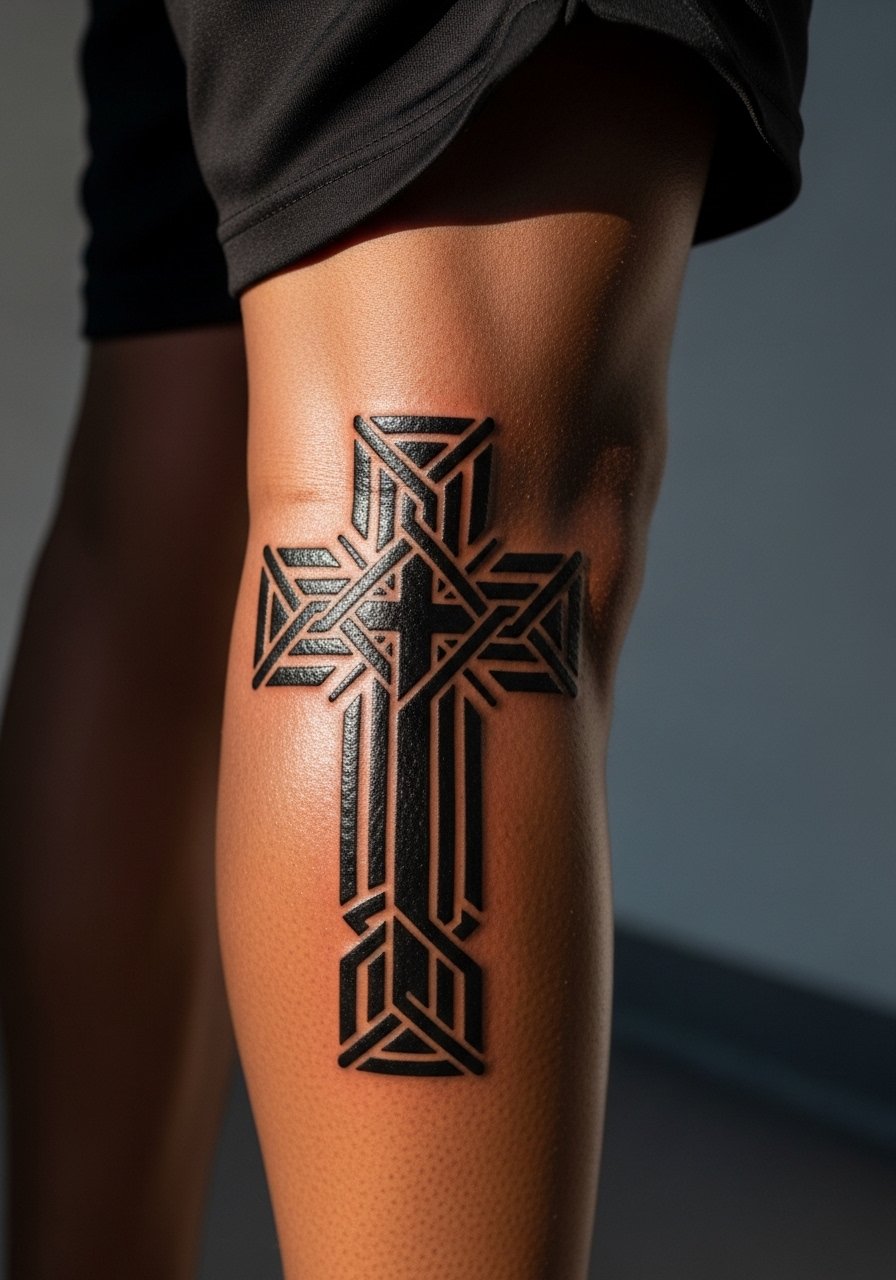
Calf placements tolerate bold blackwork well and tribal geometry can be scaled to keep its edges readable for years. The biggest mistake is replicating culturally specific motifs without understanding their origin. If you borrow tribal elements, consider a personalized variation rather than a direct copy. Sessions are usually two to three hours depending on size. For show-off days pair with rolled shorts and a leather ankle boots look for balanced contrast.
13. Fractal Geometric Cross Pattern on Spine
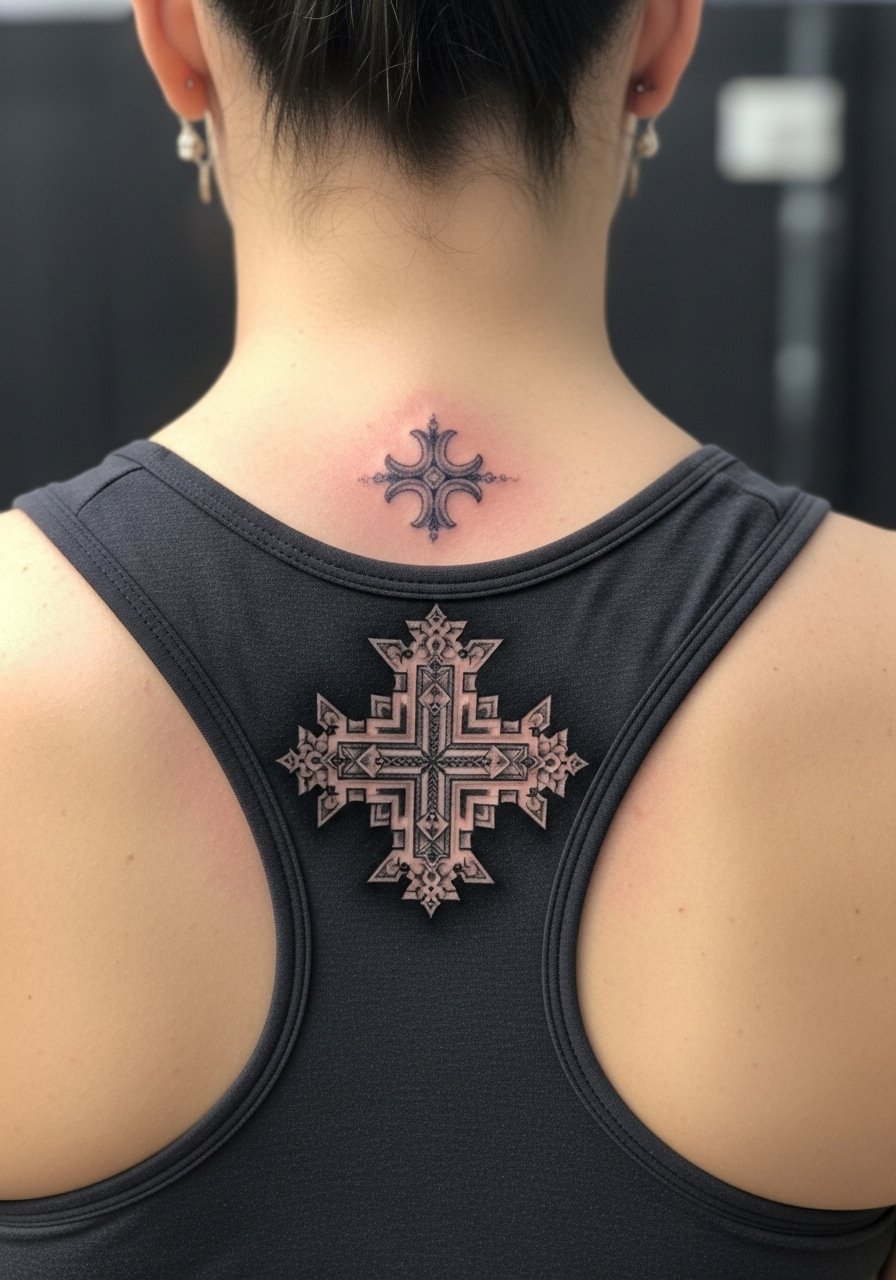
Spine work offers dramatic vertical flow and fractal patterns give a hypnotic depth when executed at the right scale. This is one of the under-covered ideas for people who like math-inspired symmetry. Expect longer sessions and plan for three sittings on medium-sized fractal work. The major pitfall is packing fractal detail too tightly, which causes the tiny intersections to merge after healing. Ask for slightly more space between repeating elements so the pattern reads clearly at two years. For showing it off pick a sports bra racerback.
14. Interlocking Negative Space Cross on Finger Joints
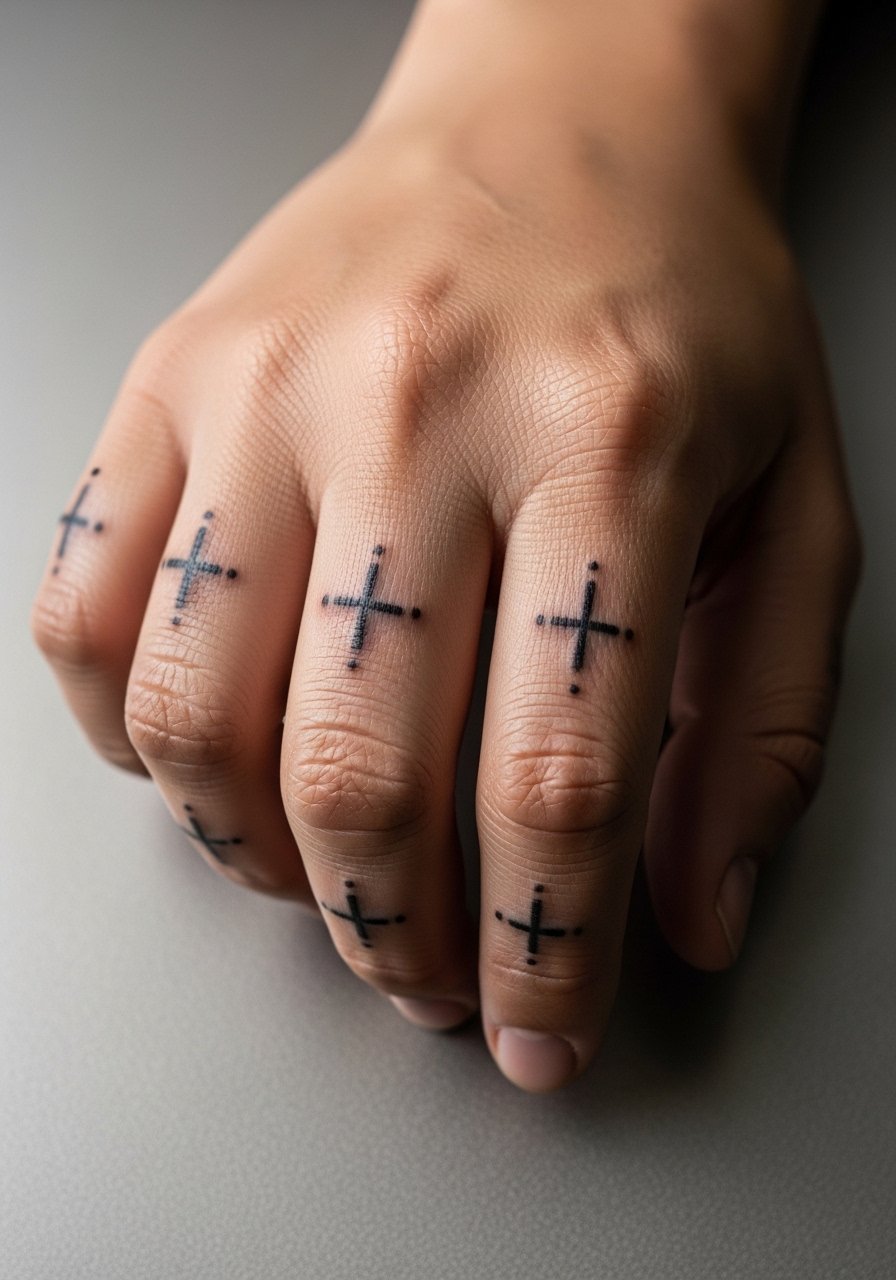
This is a fresh placement idea where discrete crosses "build" with hand movement. Finger joint skin moves constantly, so this is a play-first design that accepts touch-ups as part of its life. The practical mistake is putting complicated fills on knuckles. Keep the geometry bold and minimal. Mention during consultation that you type a lot or do manual work because friction affects longevity. For the session remove all rings and let the artist check joint mobility.
15. Geometric Cross with Ribbon Dates on Neck
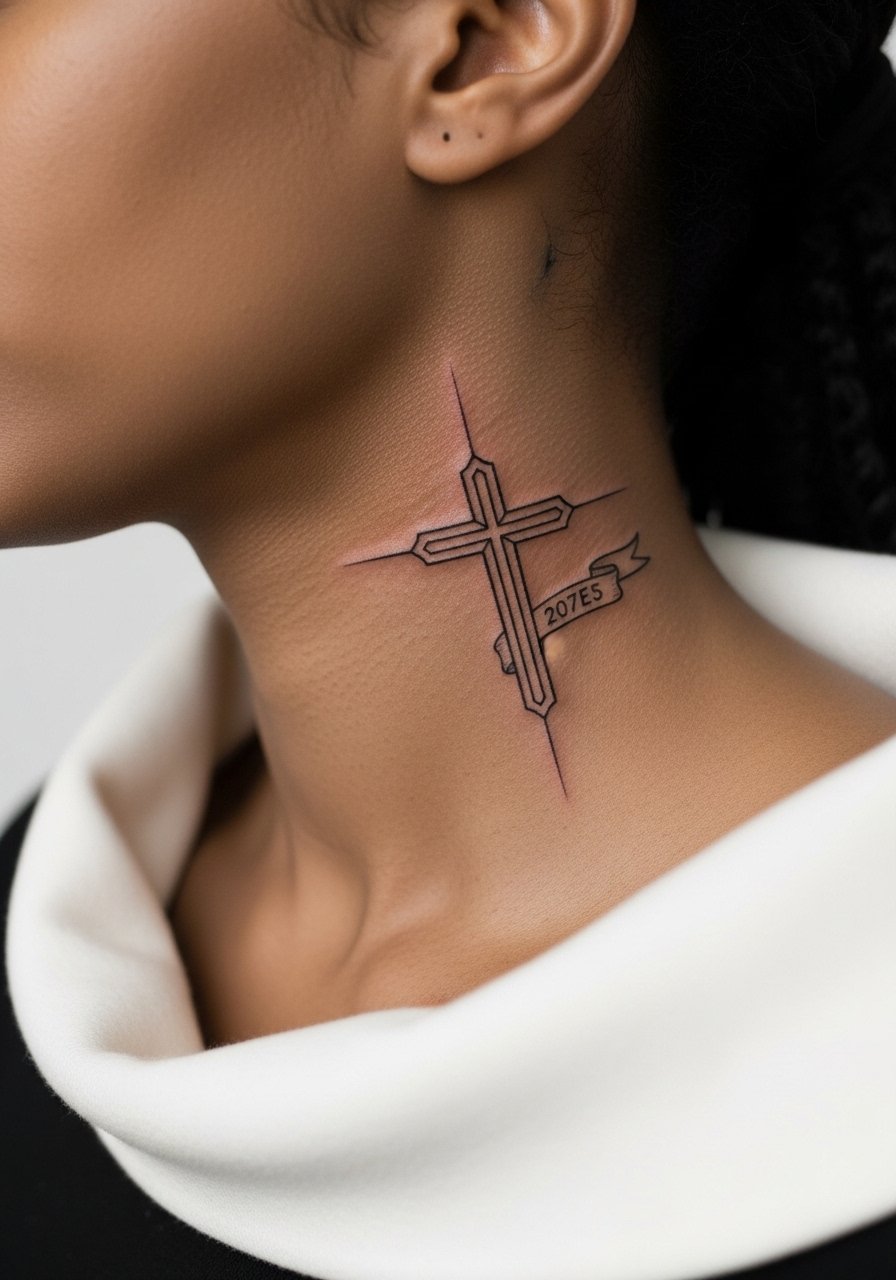
Neck placements are visible and not everyone wants that in daily life. If you do choose the neck, keep ornamentation minimal because tight detail fades quickly with movement. One sentence note: neck work can affect certain professional settings. A common mistake is overcomplicating the ribbon with tiny numerals. Use clean, legible type and confirm size with stencil. For session prep wear a wide-neck shirt you can shift aside.
16. Small Geometric Cross on Sternum
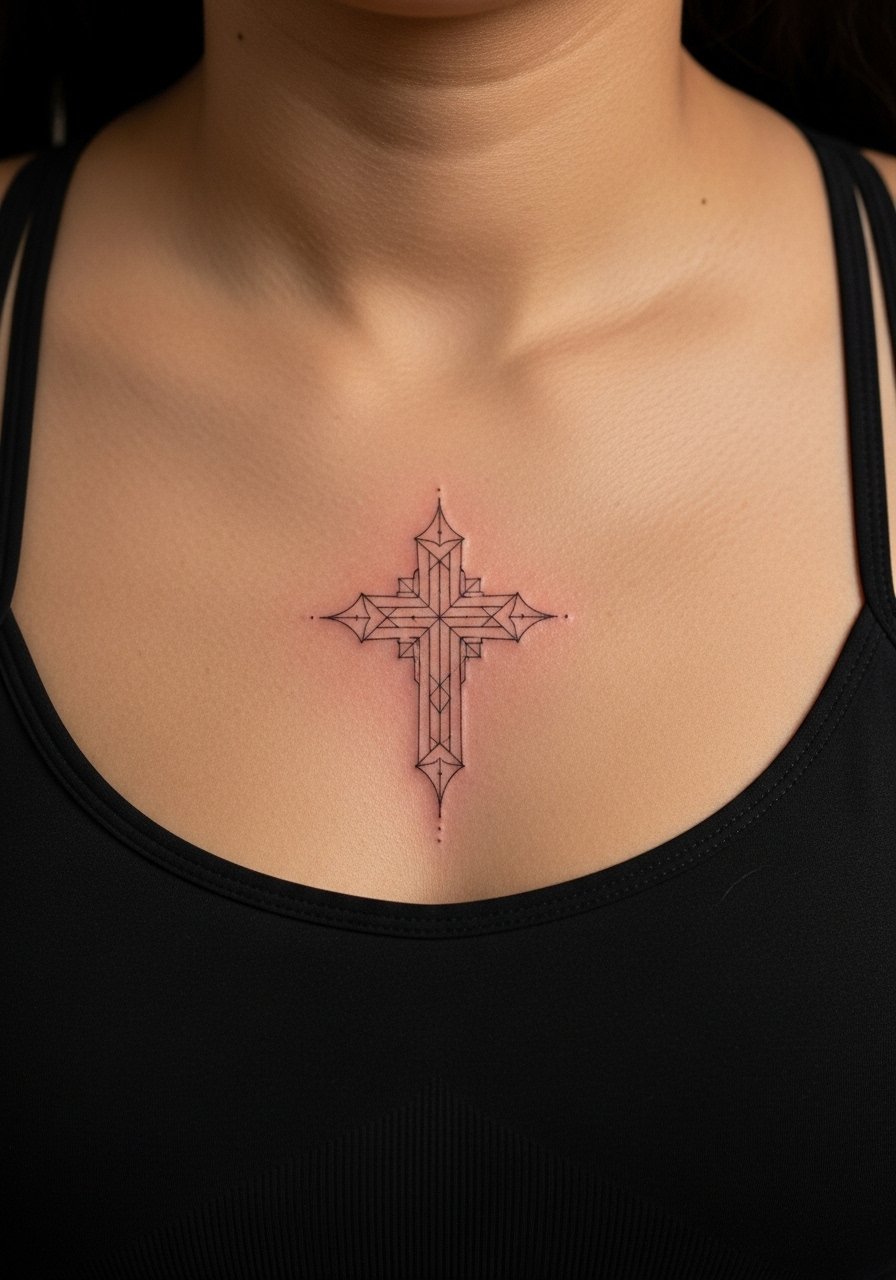
Sternum pieces can be intense in pain but they let you center symmetry. The sternum's curvature means linework needs slight optical correction from the stencil so the cross reads straight when you stand. The common mistake is insisting on single-needle thickness across the whole piece. Ask for slightly heavier primary lines to prevent early softening. For the session wear a sports bra that gives access without exposing more than needed.
17. Scar-Friendly Angular Geometric Cross

Adapted geometric crosses are excellent for scar camouflage because angles can interrupt scar lines and distract the eye. The key is honest conversation with an artist experienced in scar work. The wrong move is trying to hide a long raised scar with fine dotwork that only emphasizes texture. Instead, request bold planar shapes that flow across the scar and accept that touch-ups may be needed as the scar matures. For the session wear a loose tank top or button-down so the artist can adjust access without pressure.
18. Interlaced Cross and Vines for Ribcage
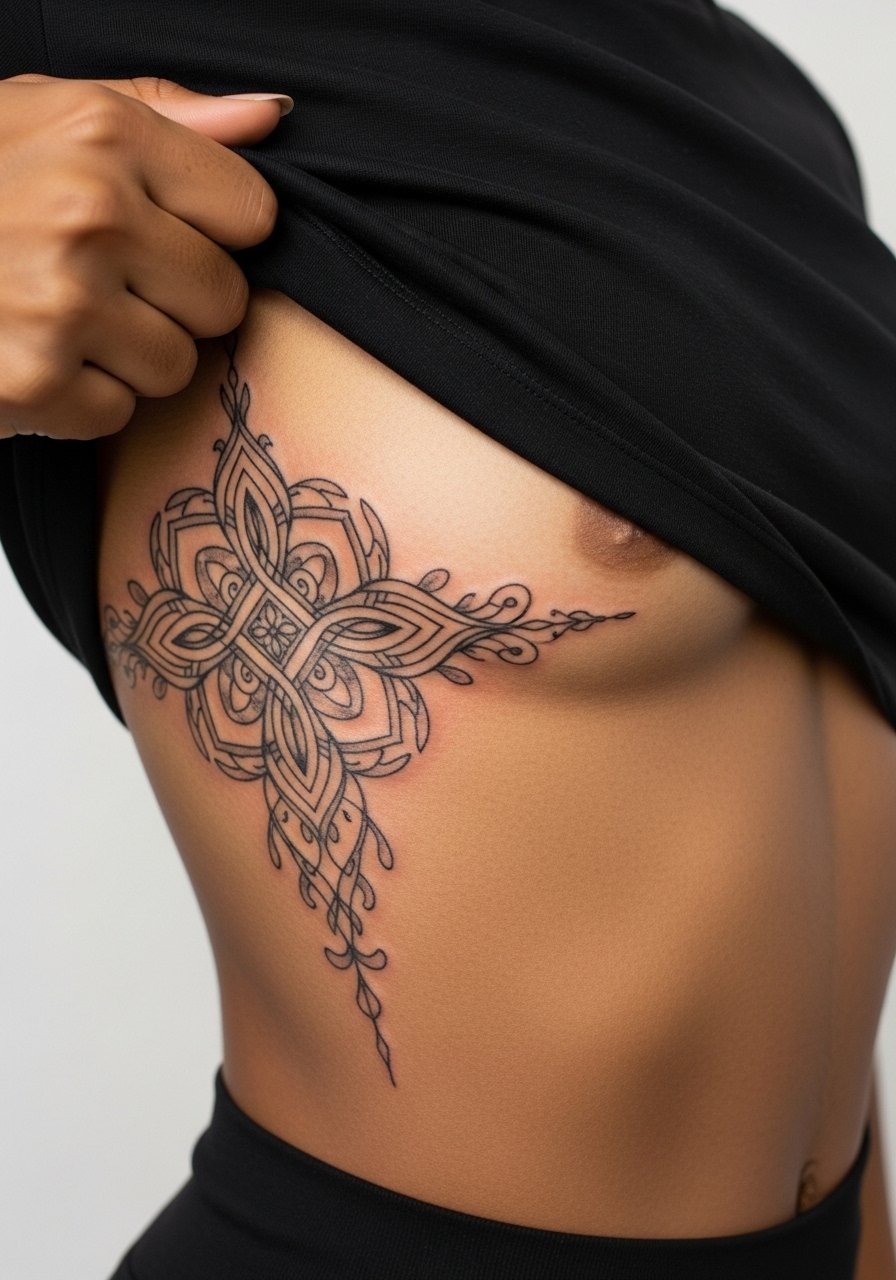
Ribcage sessions are notorious for pain, but the area lends itself to flowing compositions that follow breath and movement. There is a controversy around fine line on ribs. One camp says the skin there stretches and blurs lines within two years. The other camp says with correct needle depth and spacing fine line settles fine. Name both camps and then ask your artist where they stand and why before committing. For session comfort wear a cropped athletic top you can shift easily.
19. Geometric Cross with Dove and Negative Space on Collarbone
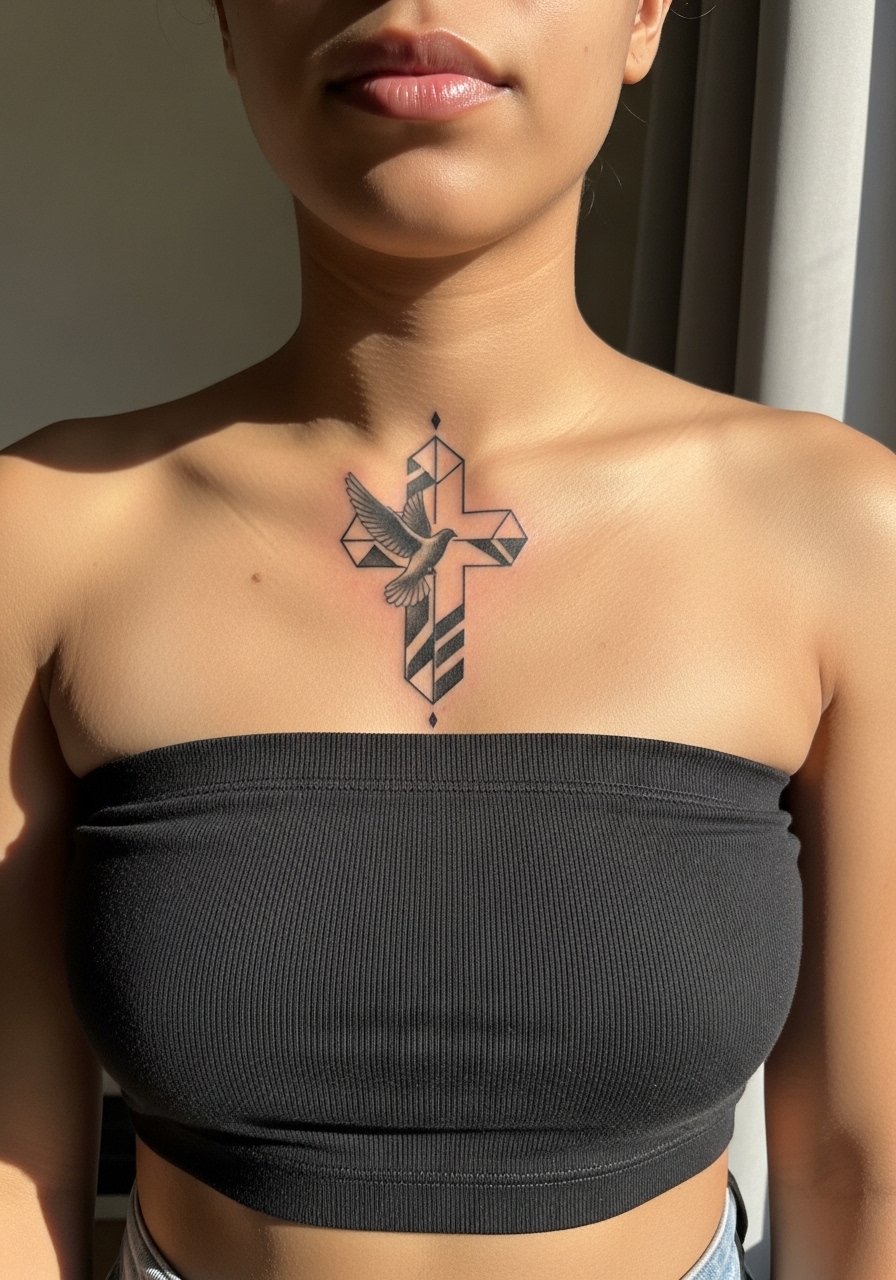
This hybrid mixes hard geometry and soft silhouette so it photographs well on collarbone placements. The typical mistake is putting small feather detail inside the dove, which can smudge into texture. Ask for a clean dove silhouette with negative space around it and slightly bolder outer lines on the cross. For showing it off choose a strapless crop top when you want the collarbone to be the focal point.
20. Layered Mandala Cross on Shoulder Blade
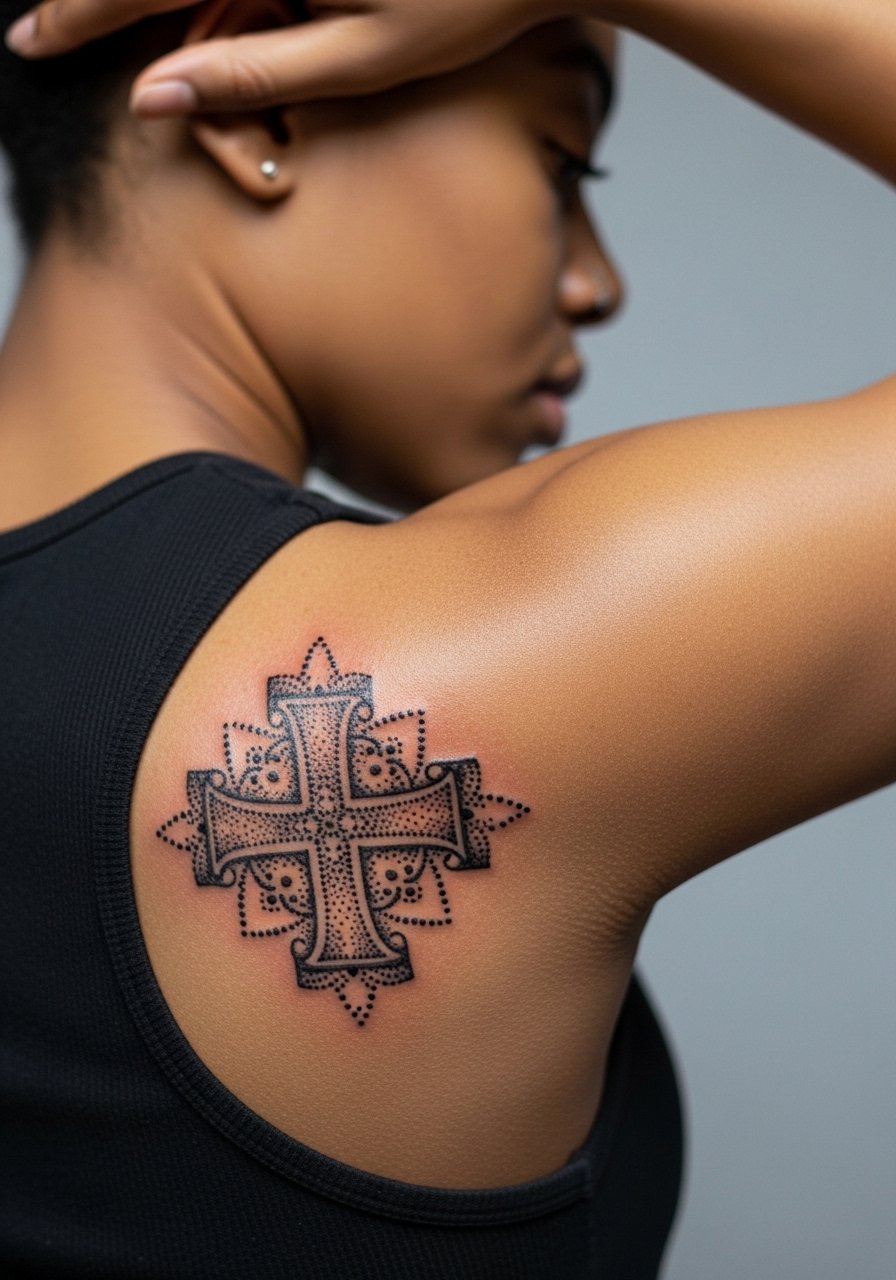
Shoulder blade work is forgiving for dotwork because muscle and fat distribution cause less constant abrasion than wrists. The mistake is compressing mandala rings too tightly. Ask your artist for deliberate spacing between stipple layers and expect two sessions for medium detail. For the session wear a tank top so you can raise your arm without exposing more skin.
21. Fractal Cross Accent on Lower Back
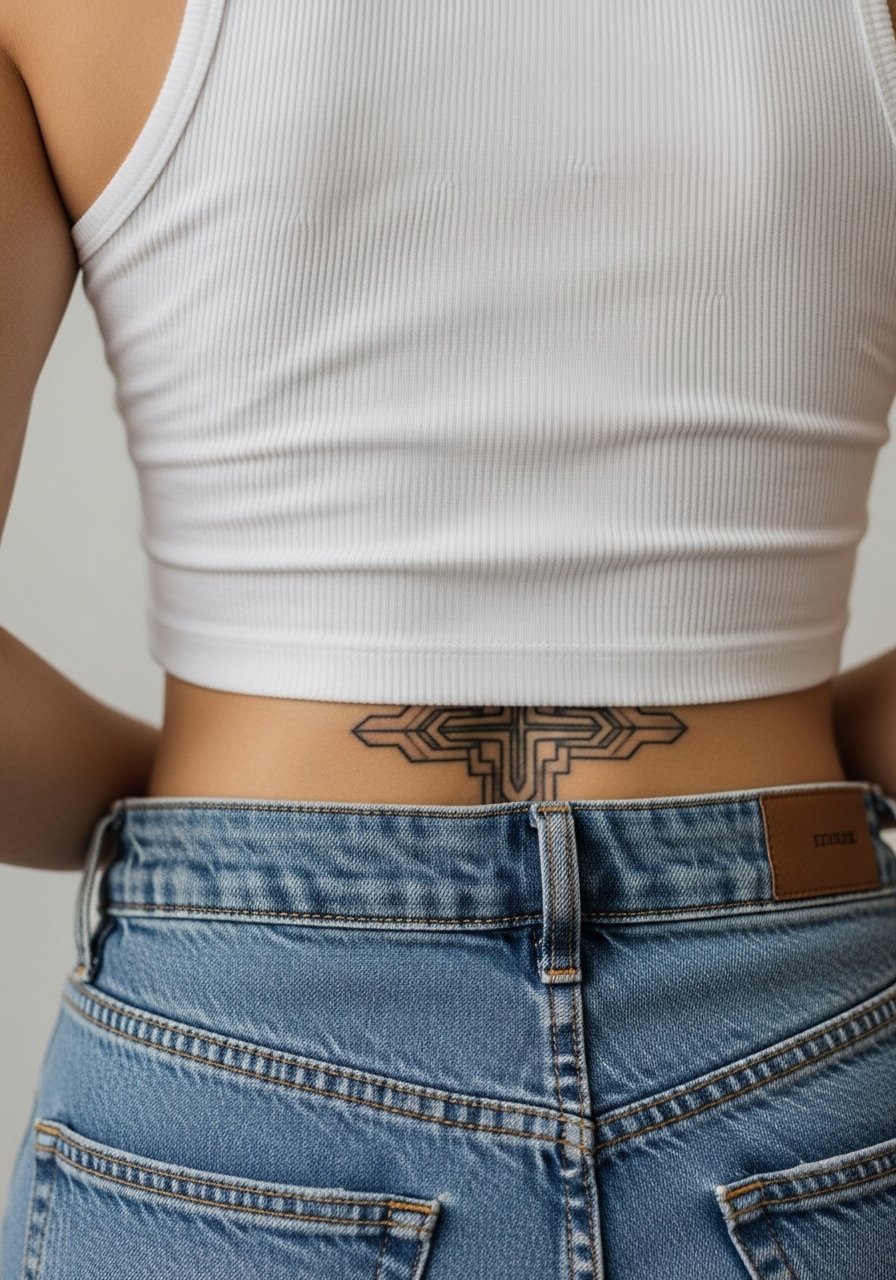
Lower back canvas is great for a compact but detailed fractal accent. The area ages well because it is usually covered and protected from constant sun. The pitfall is scaling fractal detail too small. Keep repeating elements large enough so contrast holds. Mention during the consult if you anticipate weight fluctuation because that can shift geometry over time. For show-off occasions select a backless halter top to reveal the work.
Frequently Asked Questions
Q: How much does a geometric cross tattoo cost for small versus medium pieces?
A: Expect a range from about $100 to $900 depending on size, linework complexity, and how many sessions are needed. Micro crosses on fingers or wrists fall at the low end, while fractal or multi-session chest and back pieces trend toward the high end. Pricing varies by city and artist so get a few quotes before booking.
Q: Will fine line geometric crosses blur faster than bold lines, and what should I ask my artist?
A: Fine line tends to blur faster in high-friction or high-movement spots, while bolder contours often hold longer. Artists split into two camps on this. One group says fine line ages elegantly if spaced and placed correctly. The other group argues thicker lines give predictable longevity. Ask your artist which approach they prefer for your placement and why, and request a slightly heavier primary contour if you want longer clarity.
Q: Are dotwork mandalas safe on ankles and ribs given movement and friction?
A: Dotwork on ankles can fade sooner because shoes and socks rub the area. Ribs add motion from breathing which affects density. For ankles use tighter dot spacing and consider protective film in the first week. For ribs expect longer sessions and possibly a touch-up once the piece settles.
Q: How do I find an artist who understands geometric cross work without religious overtones?
A: Look through hashtag discovery like #geometriccrosstattoo and #finegeometricross on social platforms, and check local boards for "geometric" filters. Book a consultation and bring precise references that show the line weight and spacing you want. Ask to see healed photos, not just fresh work, to judge real-world settling.
Q: What should I wear to a session for a collarbone, forearm, or thigh piece?
A: For collarbone pieces wear an off shoulder blouse or a strapless top so the artist can reach the area without you disrobing. For forearm sessions a loose button-down shirt makes access easy. For thigh work pick high waist shorts that you can shift without pressure on the site.
Q: Do I need Saniderm or dry healing for a geometric cross? Which is better for linework?
A: There is a debate between Saniderm users and dry healing advocates. One side praises Saniderm for less scabbing and protected line edges. The other side worries about trapping moisture and ink migration. My advice is to ask your artist what they recommend based on your skin type and the specific linework. If you try Saniderm, follow the application and removal guidance closely so edges do not lift when the film comes off.
