
The tattoos that still read clean at year ten are not always the ones that looked best on day one. Bold black centers and smart spacing often outlast ultra-fine detail, especially when old ink needs hiding. If your goal is to make yesterday's mistakes look intentional, these vintage cover-up directions blend density, flow, and wardrobe thinking so your new piece reads like it was meant to be there all along.
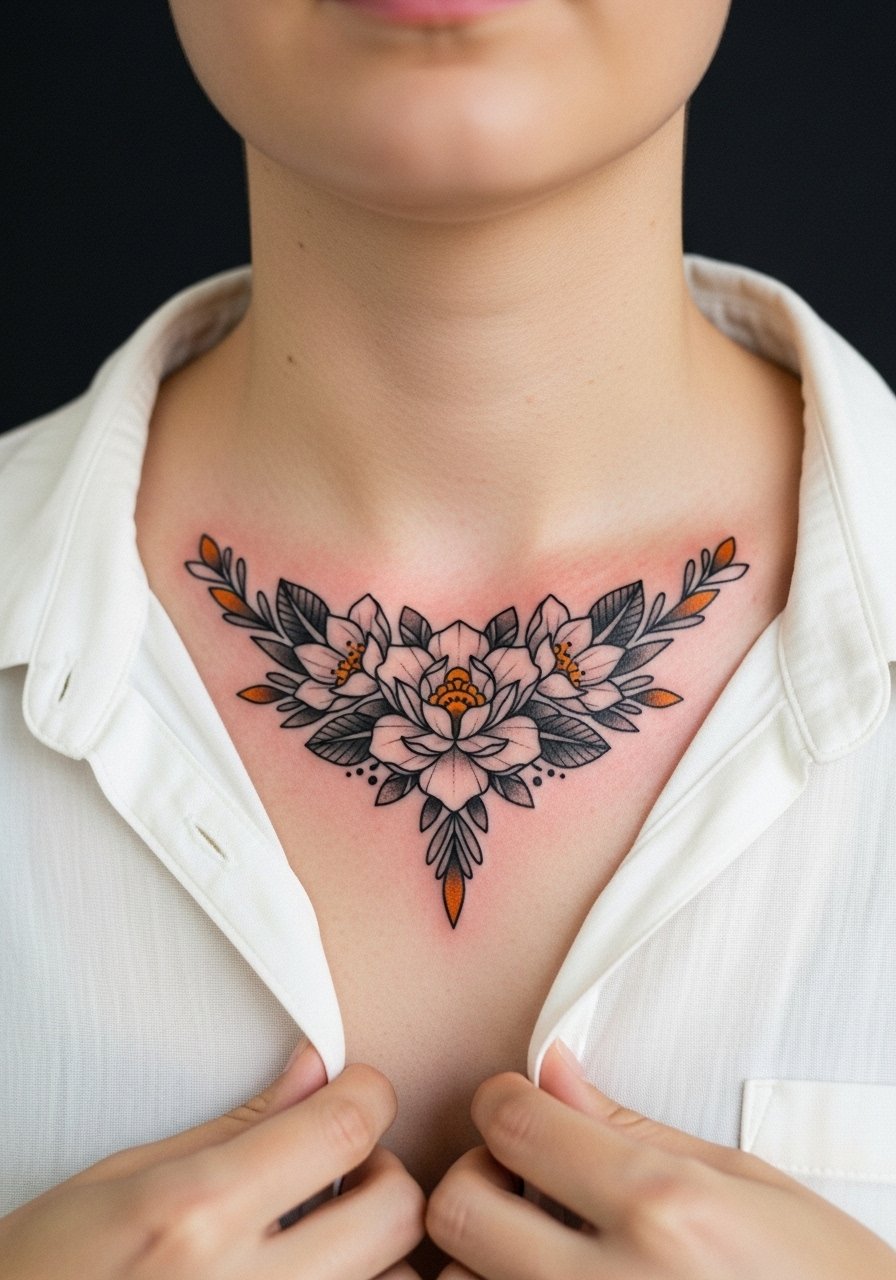
1. Floral Symphony Cover-Up on Upper Chest
I've seen floral pieces rescue everything from faded script to small tribal stamps. For chest work, ask for bold midtones and heavier saturation near the old lines so the new petals sit on top visually. Expect the session to feel tender because the sternum area is sensitive, but a fitted sports bra pulled aside keeps exposure minimal and comfortable. If you want to show it off, pair it with an off shoulder blouse in a deep tone to frame the collarbone without competing. Common mistake is insisting on pale pastels over dark old ink, which can let the old lines ghost through as it heals.
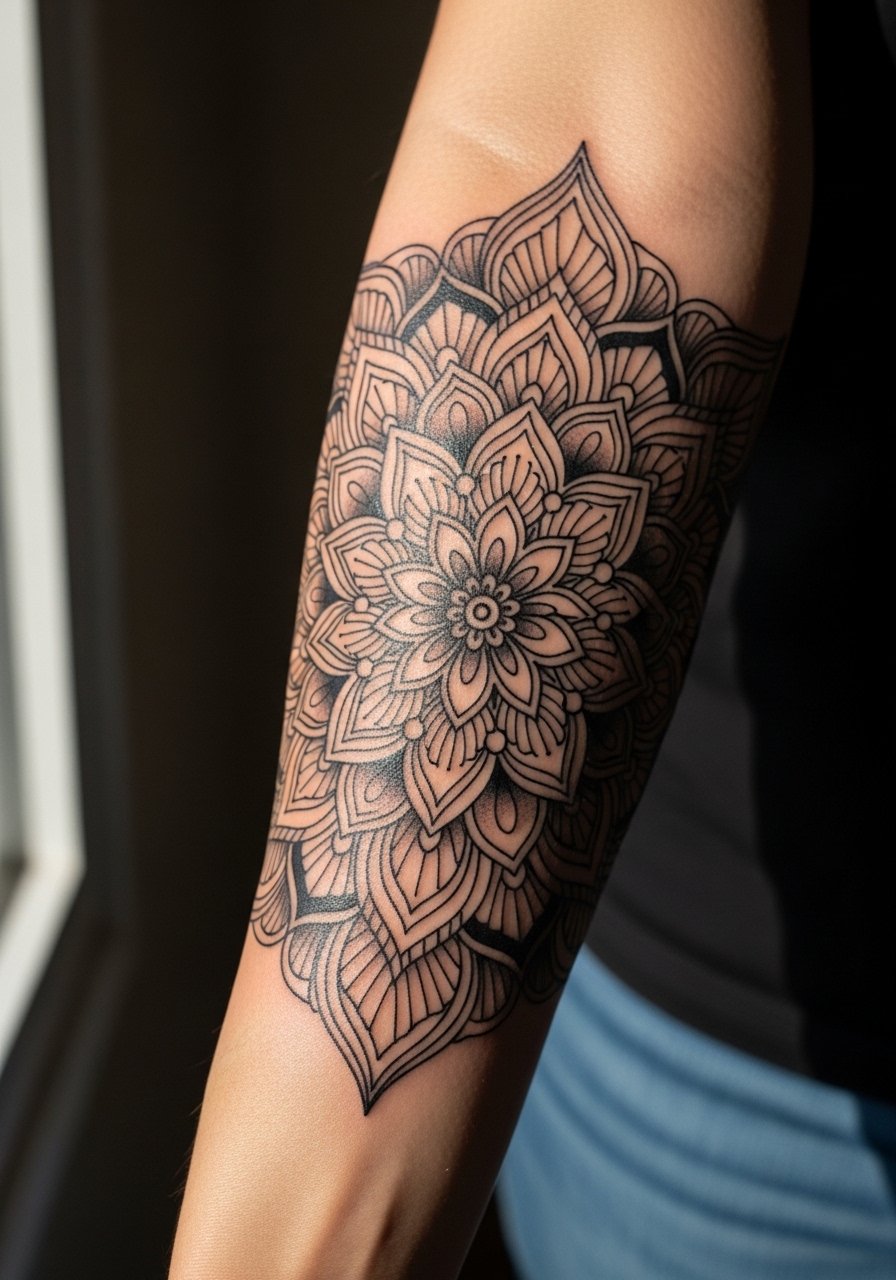
2. Mystical Mandala for Forearm Camouflage
Controversy runs hot about color here. One camp swears by packed black mandalas for the best coverage. The other camp argues that layered color with careful planning can mask old tones without going massive. Ask your artist which approach they prefer and why before booking. For forearm placement, request concentric spacing that distracts from linear remnants and heavy center saturation to block dark old ink. This placement pairs well with a rolled sleeve blouse women aesthetic and a thin silver cuff bracelet on the opposite arm so the forearm reads intentional. Watch for blowout in dense small dots if the piece is done too tightly.
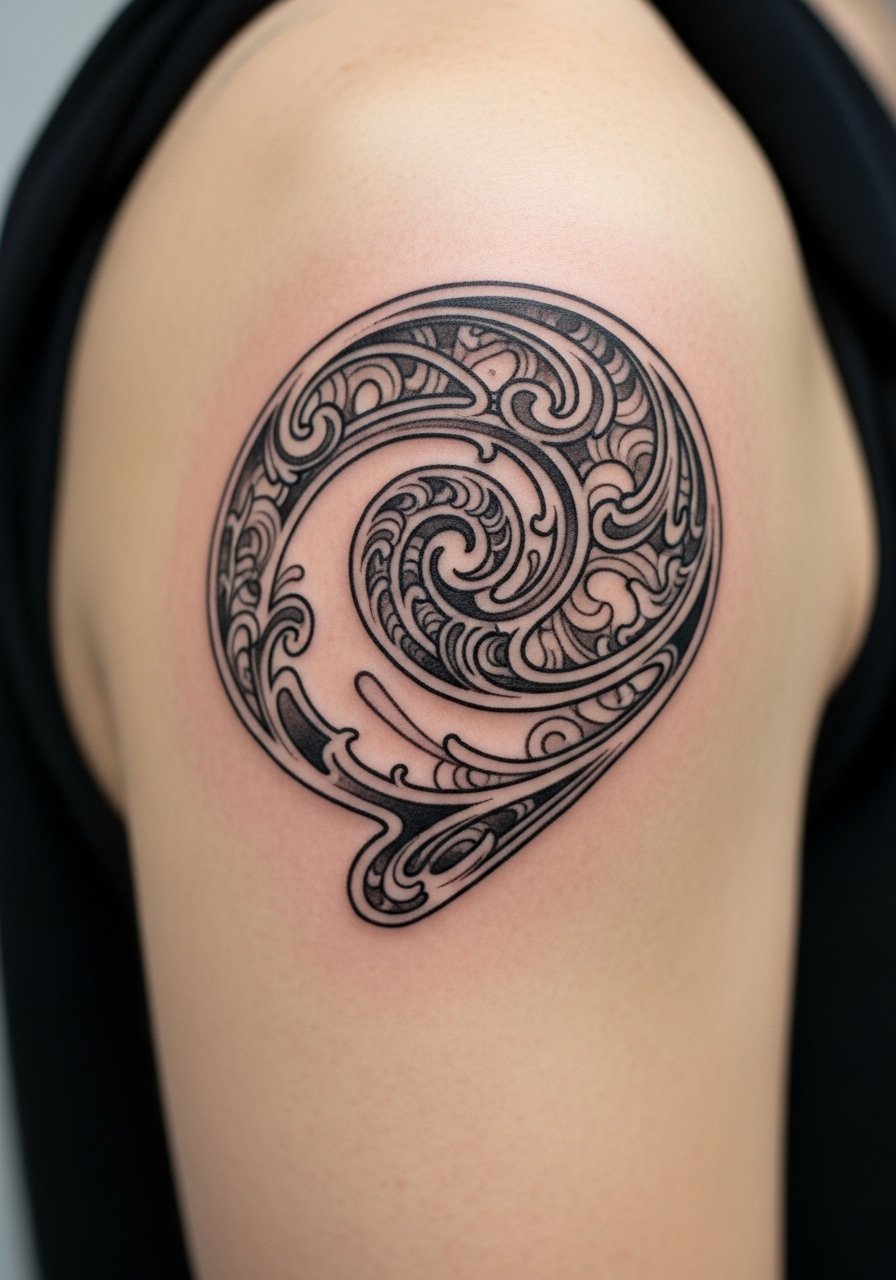
3. Art Nouveau Swirl on Upper Arm
When I see Art Nouveau curves over older ink, the secret is flow. The organic lines let the artist route around stubborn outlines so nothing looks pasted on. Tell your artist to build sweeping contours that bury old edges under layered foliage and stipple shading. Expect a few hours for a medium piece and a comfortable session if you wear a sleeveless sundress or a strapless top you can easily pull aside. Avoid tiny, high-contrast flourishes that age into muddiness. Over three to five years this style softens in a pleasing way if saturation is maintained in the first sessions.
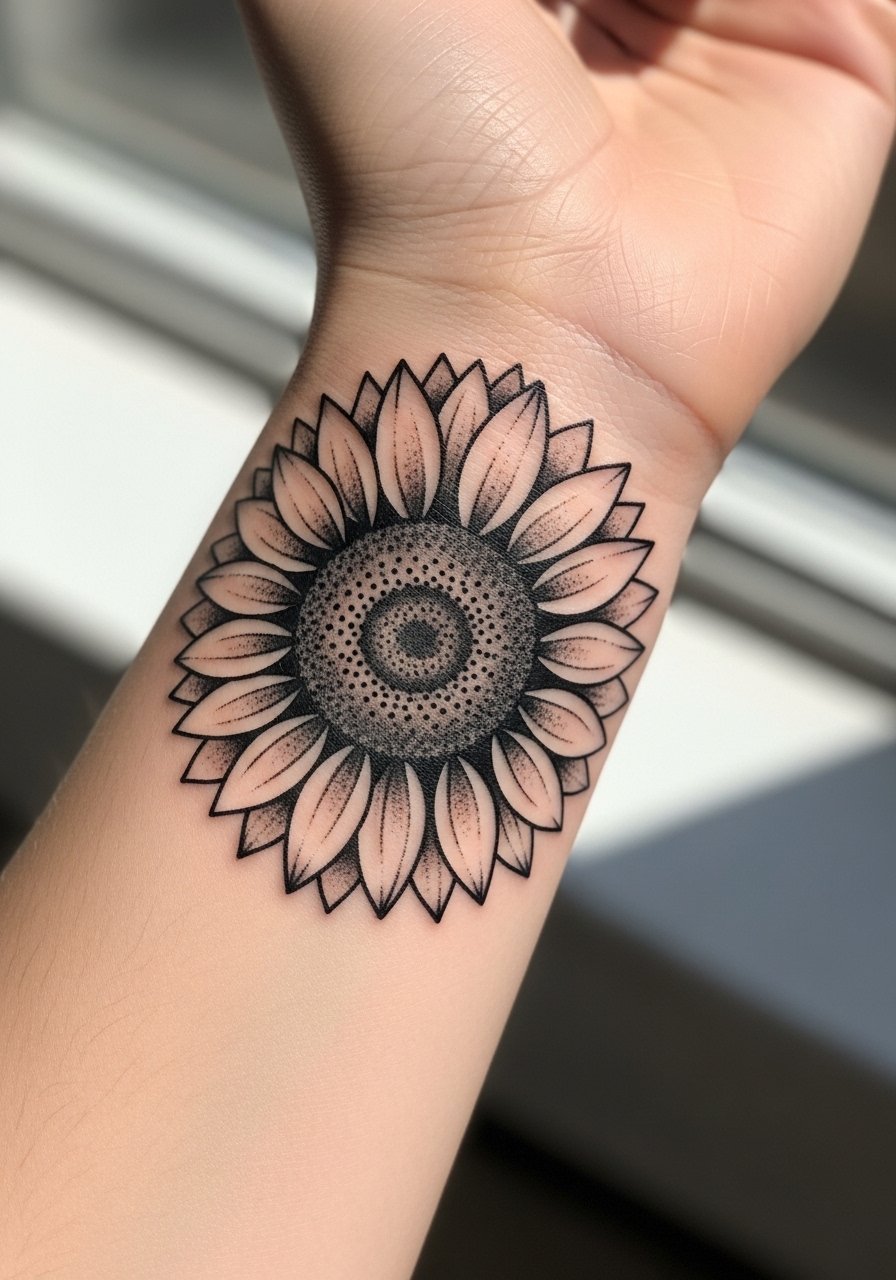
4. Sunflower Center Blackwork on Wrist
There is a practical trick with sunflowers. A packed dark center covers dense old lines while the petals expand coverage without needing a gigantic scale. For wrist placement, expect short sessions but high sensitivity. Ask for strong center saturation and slightly bolder linework than you might normally want so the healed contrast reads clean. Pair this piece with a slim leather watch women or a single cuff on the opposite wrist so attention stays balanced. The main mistake is going too small in the center which lets the old ink peek through after a year.
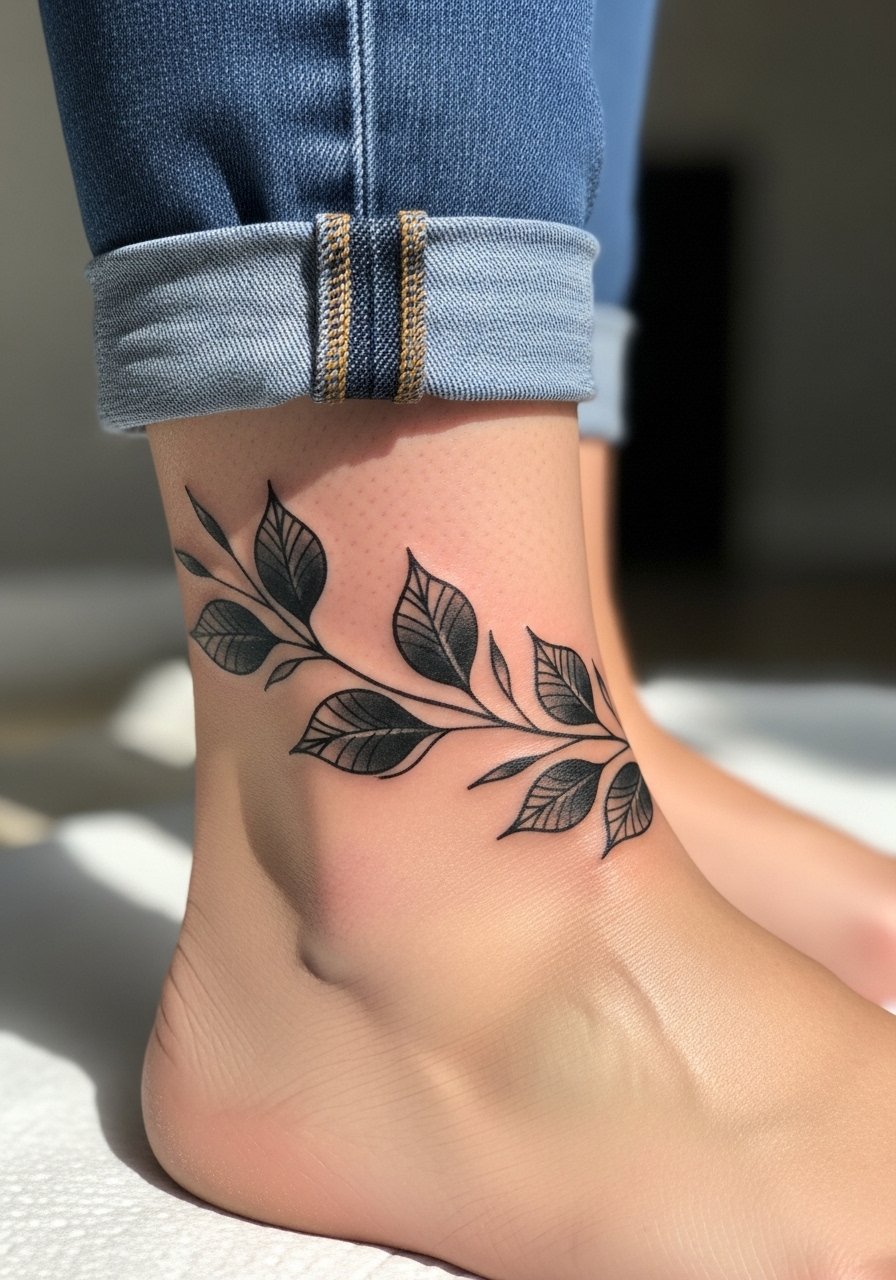
5. Rose Vine Over Frame at Ankle
Visual impact lead: vines do the job because they curve and cross older geometric shapes naturally. For ankle frames, request shading that fans out from the old design and darker leaves over the old linework. Session wear matters here. Choose strappy heeled sandals or roll up your jeans for the appointment so the artist can access the ankle cleanly. A typical mistake is wearing tight socks right after healing which rubs the edges and dulls saturation. Healed results vary with footwear friction so expect touch-ups if you wear boots often.
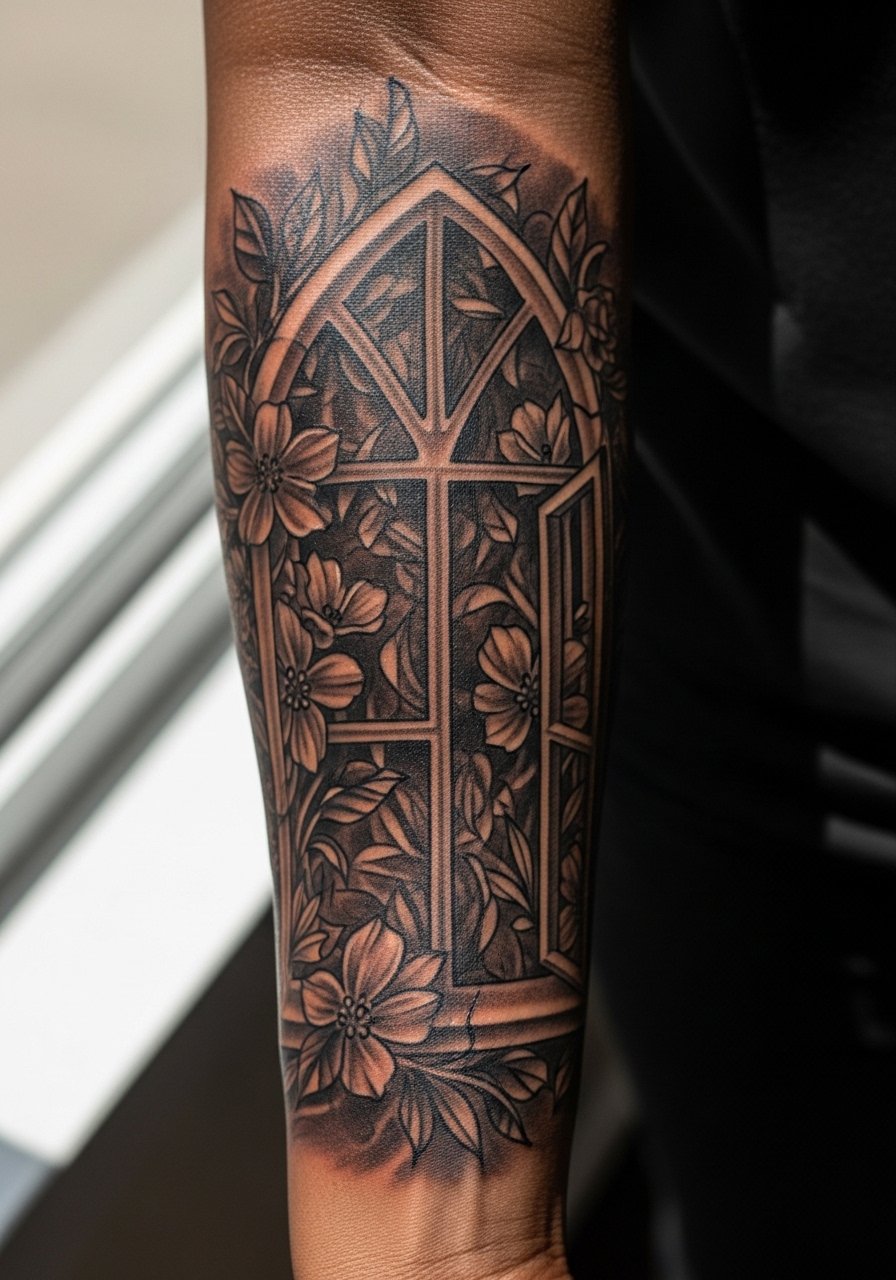
6. Dark Floral Window on Forearm
Aging and healing lead: framed florals work well when they convert an old border into layered petals. For forearm pieces, ask the artist to pack the outer petals with midtone shading and to build a dark inner shadow over existing lines. The healing feels like a typical forearm session, with mild scabbing for a week. Avoid watercolor washes over dark old ink unless your artist has healed examples showing color masking. Over two to five years the dark floral window will hold up better than pale fills because saturation resists show-through.
Studio Day Picks
Those chest, wrist, ankle, upper arm, and forearm cover-ups above all benefit from small, specific prep items that make the session and the first week easier.
-
Stencil transfer paper kit. Lets you test placement on skin before the needle touches ink, which is handy for collarbone and wrist placements.
-
Topical numbing cream. Use before ankle or sternum sessions to take the edge off sensitivity when needed.
-
Thin protective film roll. Protects wrist and ankle pieces from friction while the first scabs form.
-
Fragrance free gentle body wash. Cleans healing areas without irritation for the first week.
-
Aquaphor healing ointment. A thin layer in the first few days helps seal fine line and blackwork areas without clogging.
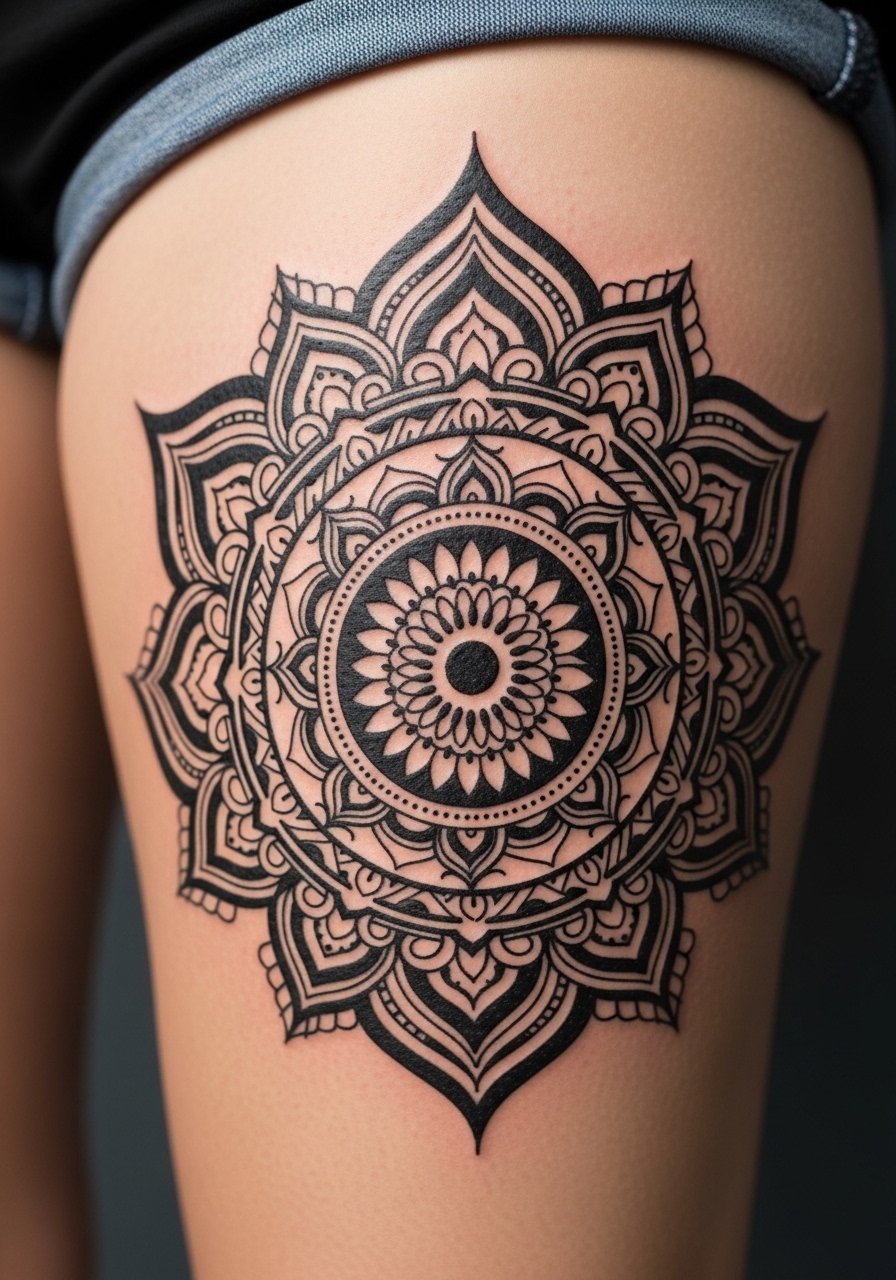
7. Tribal-Inspired Blackwork Mandala on Thigh
Consultation lead: mention the old tribal lines and show clear photos of the faded ink. On the thigh, large mandala lobes let you route dense black sections over stubborn strokes. The thigh tolerates longer sessions and is forgiving for heavy saturation, but tell your artist if your skin scars easily so they can plan touch-up spacing. For summer shows, these pieces pair with high waisted denim shorts or slit skirts so the pattern reads as part of your outfit. The common error is shrinking the mandala to fit a smaller area which forces tiny dots and leads to blur.
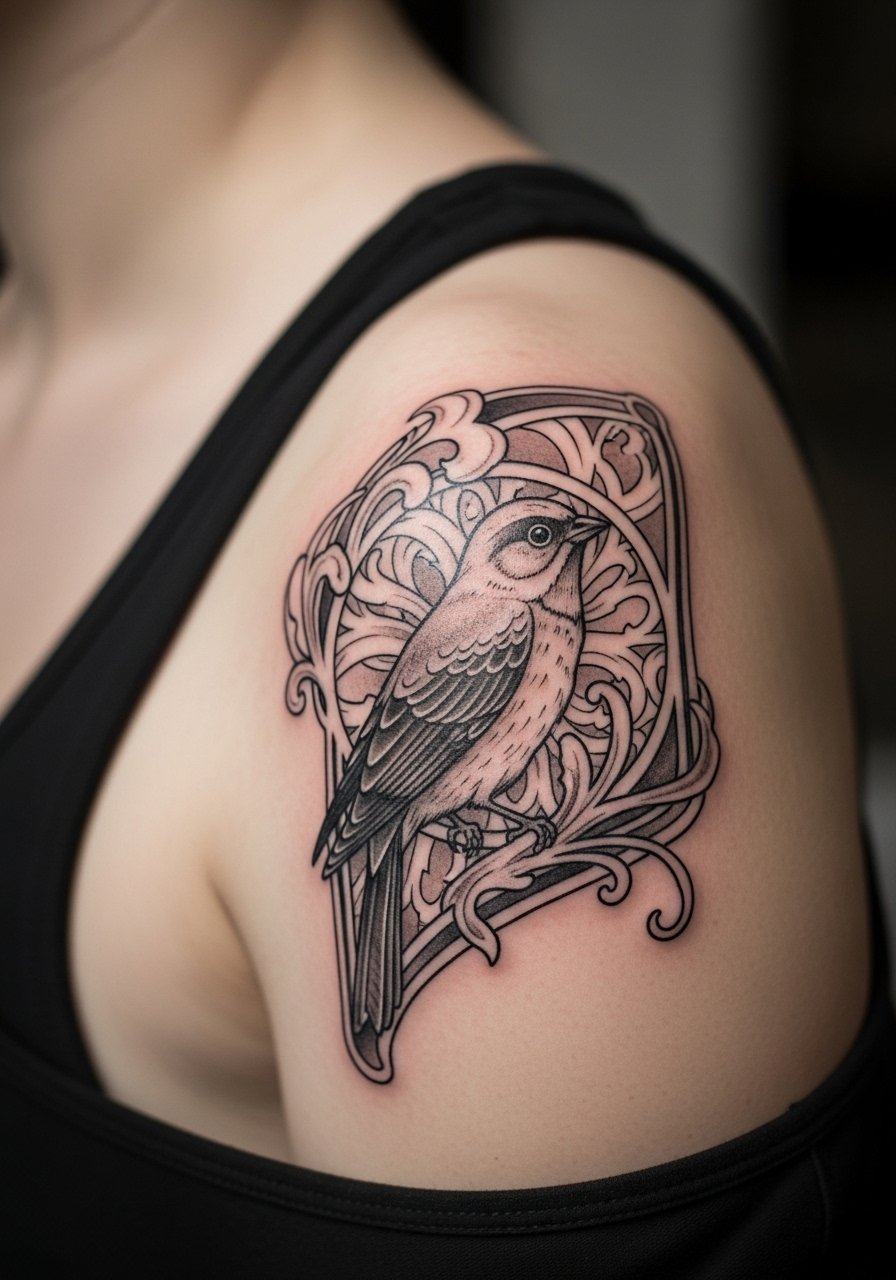
8. Vintage Bird in Art Nouveau Frame on Shoulder
Personal observation lead: birds framed with flowing lines sit well on rounded shoulders because the composition follows the curve. Ask your artist for heavier shadow near the old ink and lighter feathers flowing outward. A strapless or wide-neck top you can pull aside keeps the shoulder accessible during the session. Over time the swooping lines soften but stay legible if initial saturation is solid. Avoid tiny feather detail directly over old heavy lines, it reads busy after a couple of touch-ups. This style benefits from artists who work custom flash rather than copy-paste images.
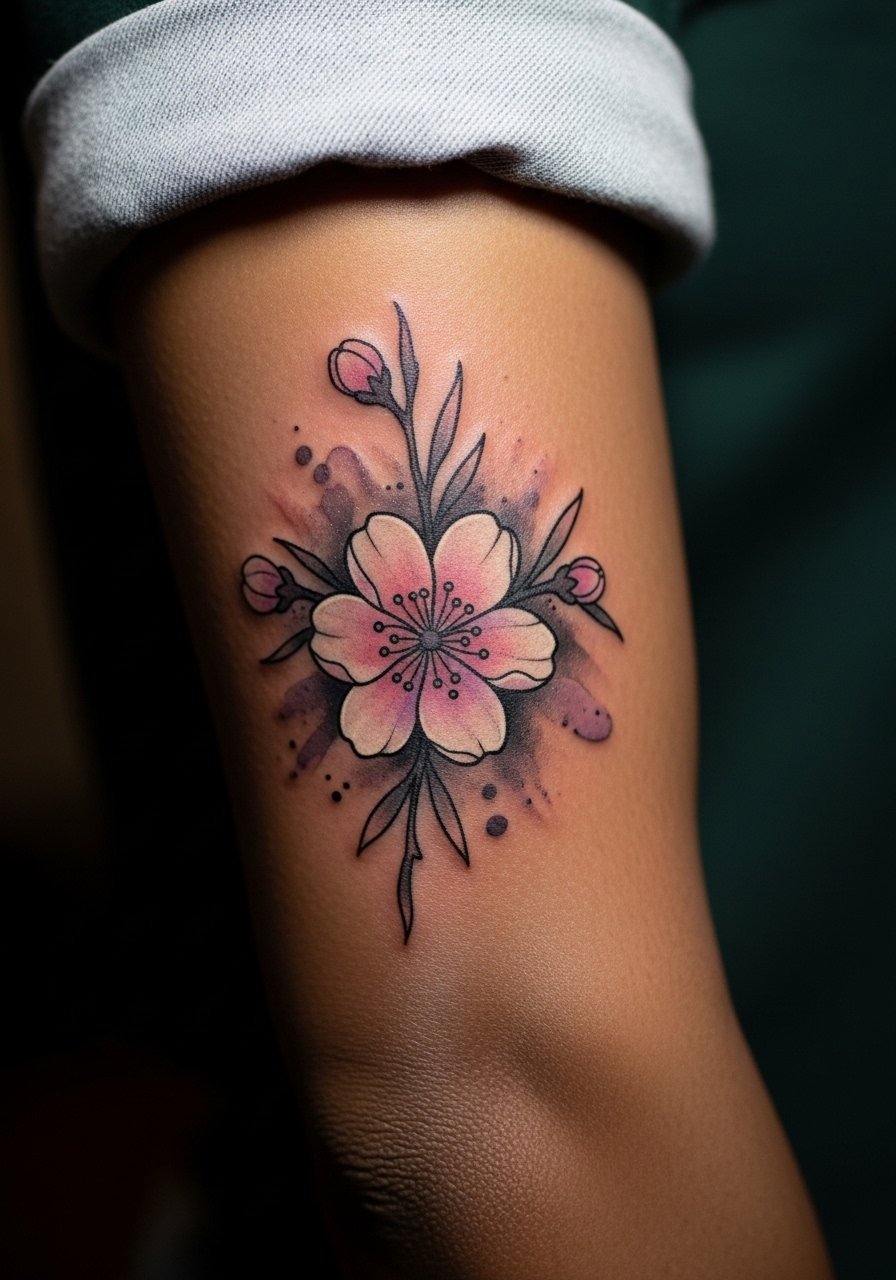
9. Cherry Blossom Pastel Over Fade on Inner Arm
Aging lead: pastel choices can work if the base is darkened first then color layered. For inner arm placement, ask for a dark underlayer in the centers of petals so the old ink does not ghost through. Session wear tip is to bring a loose long-sleeve button-up you can roll or remove so the inner arm is clear. When showing it off, cropped sleeves and light linen shirts keep attention on the blooms without oversharing. The main mistake is relying on pure pastel with no dark anchor which fades into a bruise-like look at six months.
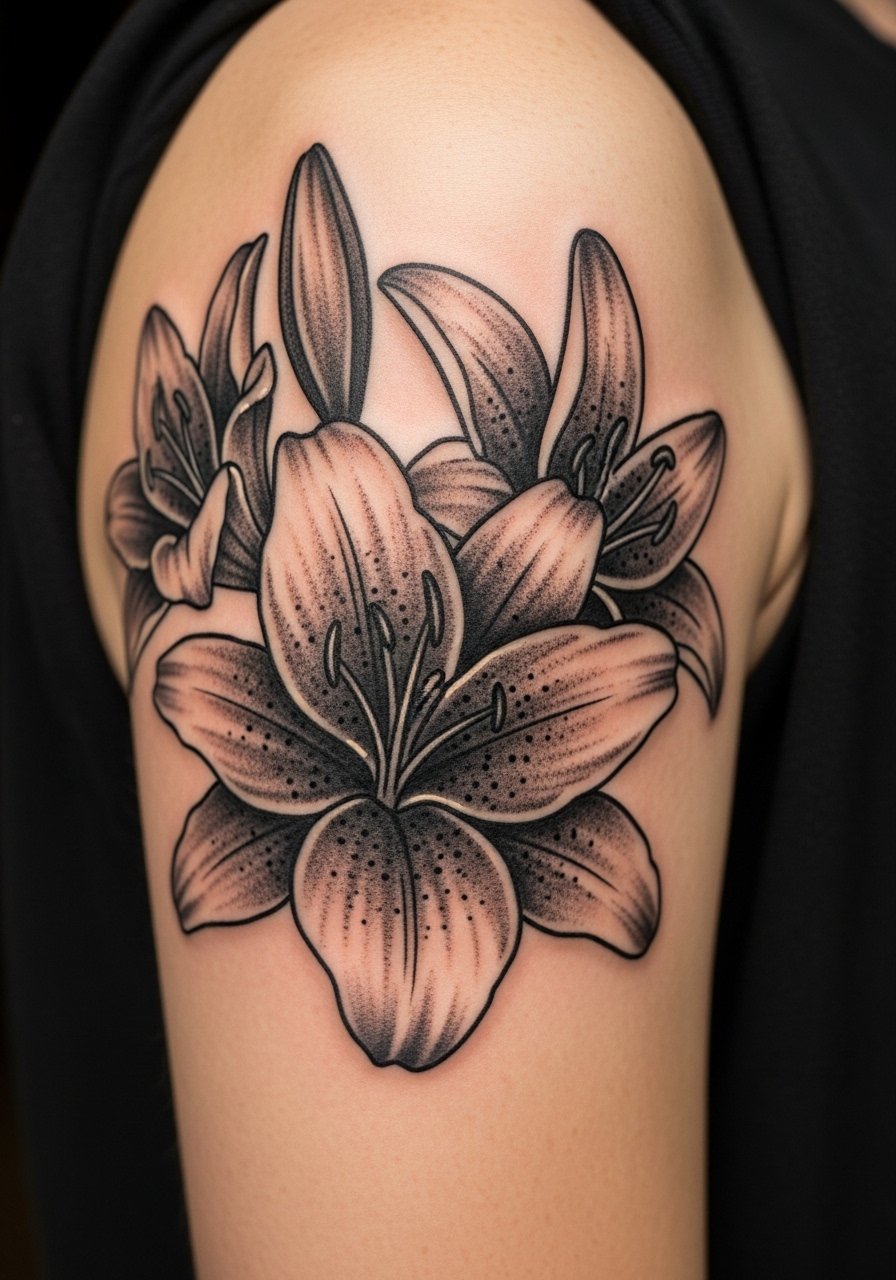
10. Packed Black Lily Sleeve Start on Upper Arm
Visual impact lead: starting a sleeve over old ink requires bold choices. For lilies packed in black, expect longer sessions and multiple visits for saturation. Tell your artist you want dense black blocks near the old lines and gradual transitions to midtones toward the edges. The upper arm is forgiving for saturation but touch-ups may be needed at year two for edge consistency. Scattered stipple shading keeps the piece vintage feeling without relying on color. The biggest mistake is trying to hide heavy old ink with only linework. You need mass and contrast to stop show-through.
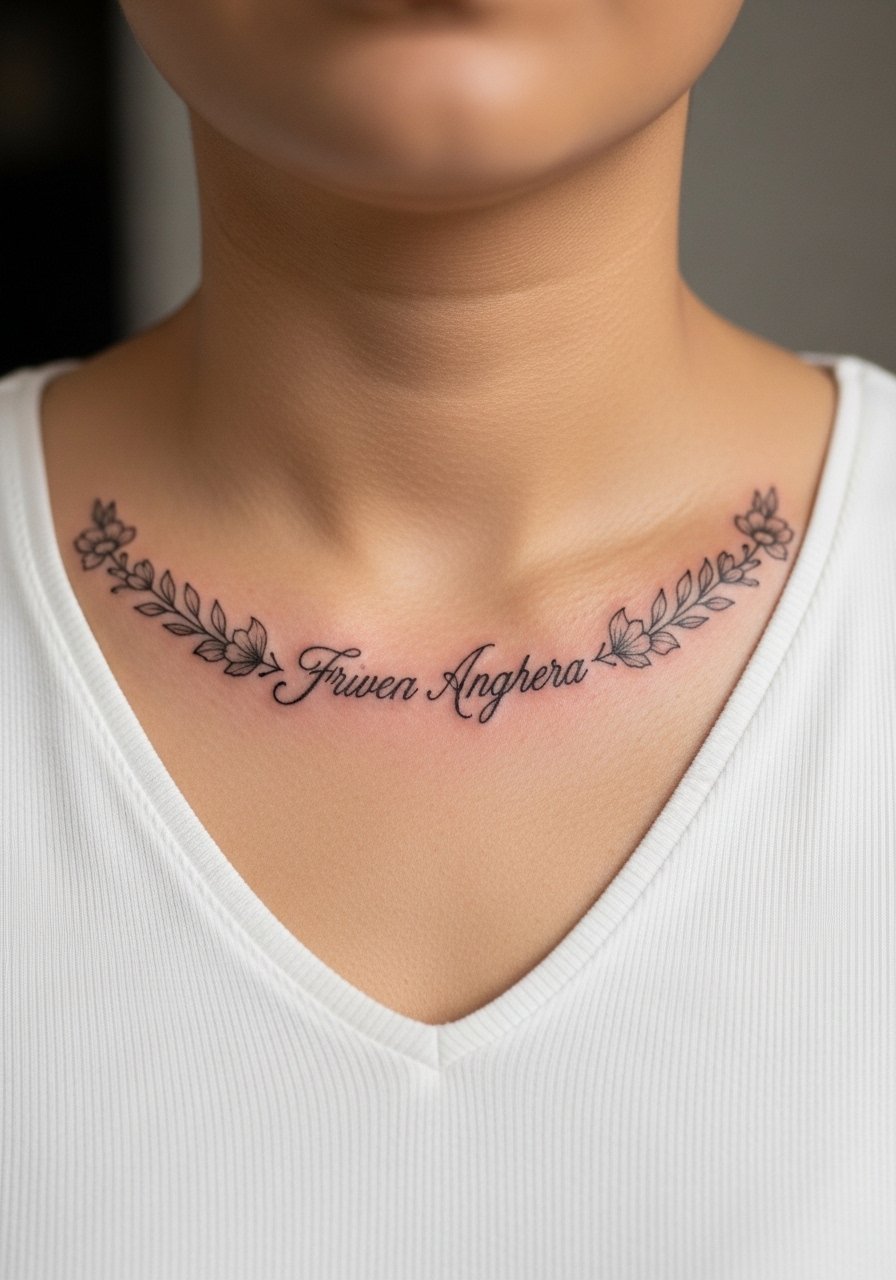
11. Script Framed by Floral on Collarbone
Consultation lead: small script overprinted by florals needs precise placement to avoid saying the wrong thing. For collarbone text, ask that the lettering sit slightly off-center from the oldest lines and let petals overlap where necessary. Wear a v neck silk top when showing the piece so the script and the florals sit in the frame naturally. Expect tenderness across the bone and plan short sessions under an hour for initial work. A common error is insisting on ultra-fine lettering right over dark ink which rarely heals crisp.
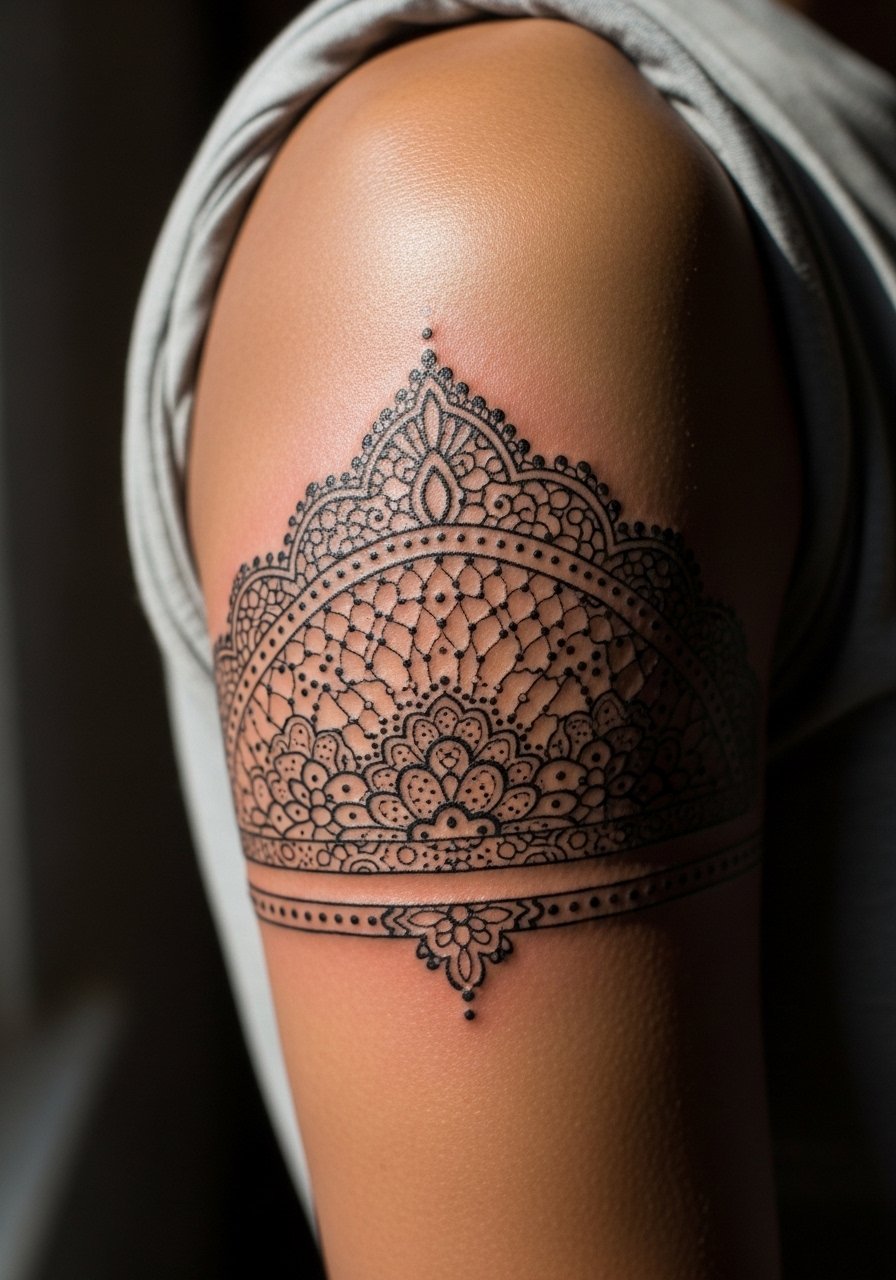
12. Lace Motif Over Old Band on Upper Arm
Mistake lead: the worst request is to paste a lace flash directly over a thick old band without adjusting scale. Lace motifs succeed because they have open negative areas that break up heavy lines. For upper arm bands, request slightly thicker outer threads and dot work in the negative spaces so the original band is visually interrupted. The session is tolerable and often fits into two hours. Over time the lace will age softer than solid black bands but stays readable if the threadwork is spaced correctly.
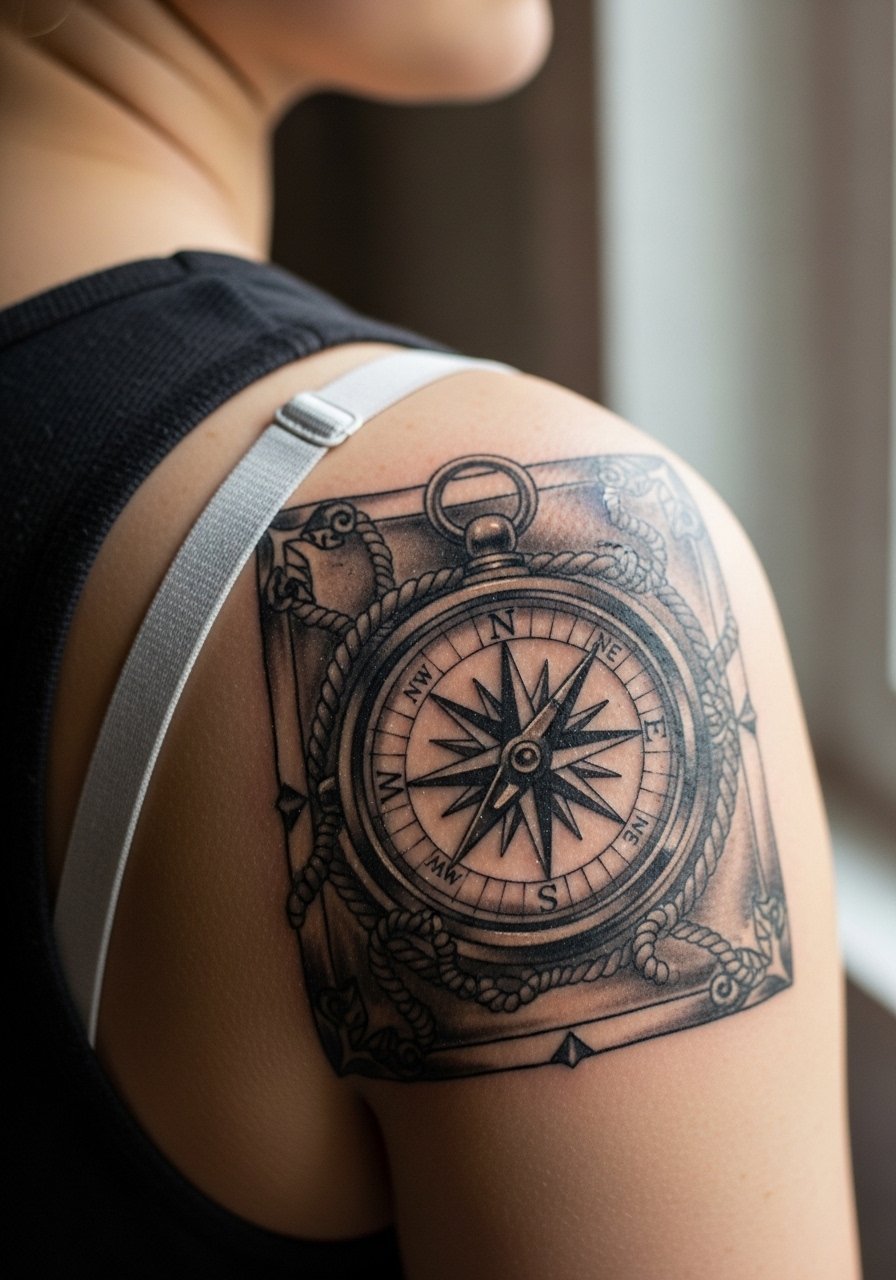
13. Nautical Frame with Vintage Compass on Back Shoulder
Styling lead: nautical frames let you place a dense compass or anchor over faded shapes and then use rope work to blend. For the back shoulder, wear a loose button-down you can pull slightly aside during the session. For evening wear the piece pairs well with cream fitted tank tops that echo vintage tones. tell your artist to keep the compass center dark and the surrounding ropes lighter so the old marks vanish into texture. Avoid tiny ornamental lines over old thick strokes which can read messy after healing.
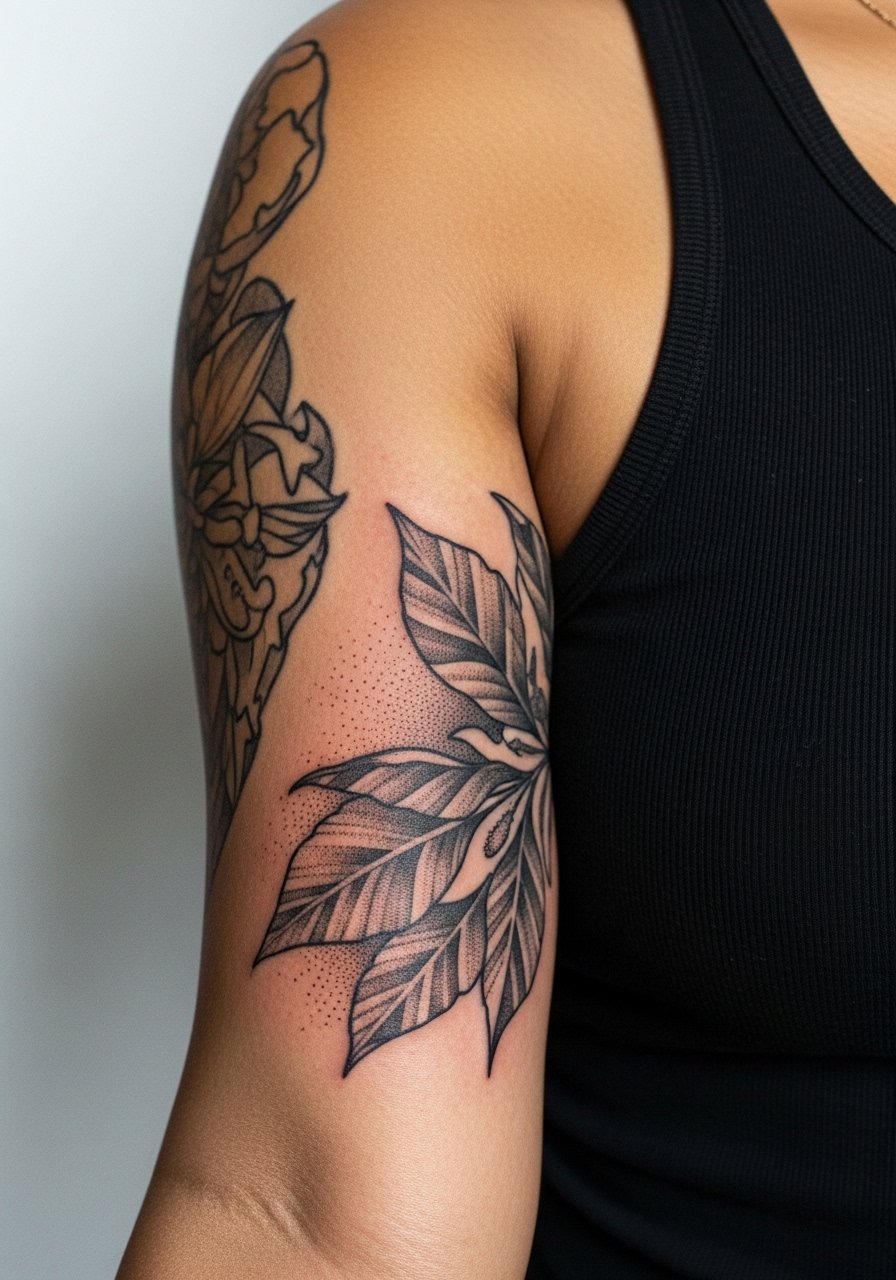
14. Botanical Sleeve Transition on Inner Bicep
Pain warning lead: inner bicep sessions are softer for some people but can sting when the needle hits thinner skin near the armpit. For a botanical sleeve that transitions over old ink, ask for larger leaves and gradual stipple shading to distract from dense lines. The inner arm is a place where blowout risk exists if needles are too deep, so confirm the artist uses healed examples from this exact location. Plan multiple sessions spaced out to allow for swelling to settle. The result is a soft, vintage-looking sleeve that reads cohesive as it ages.
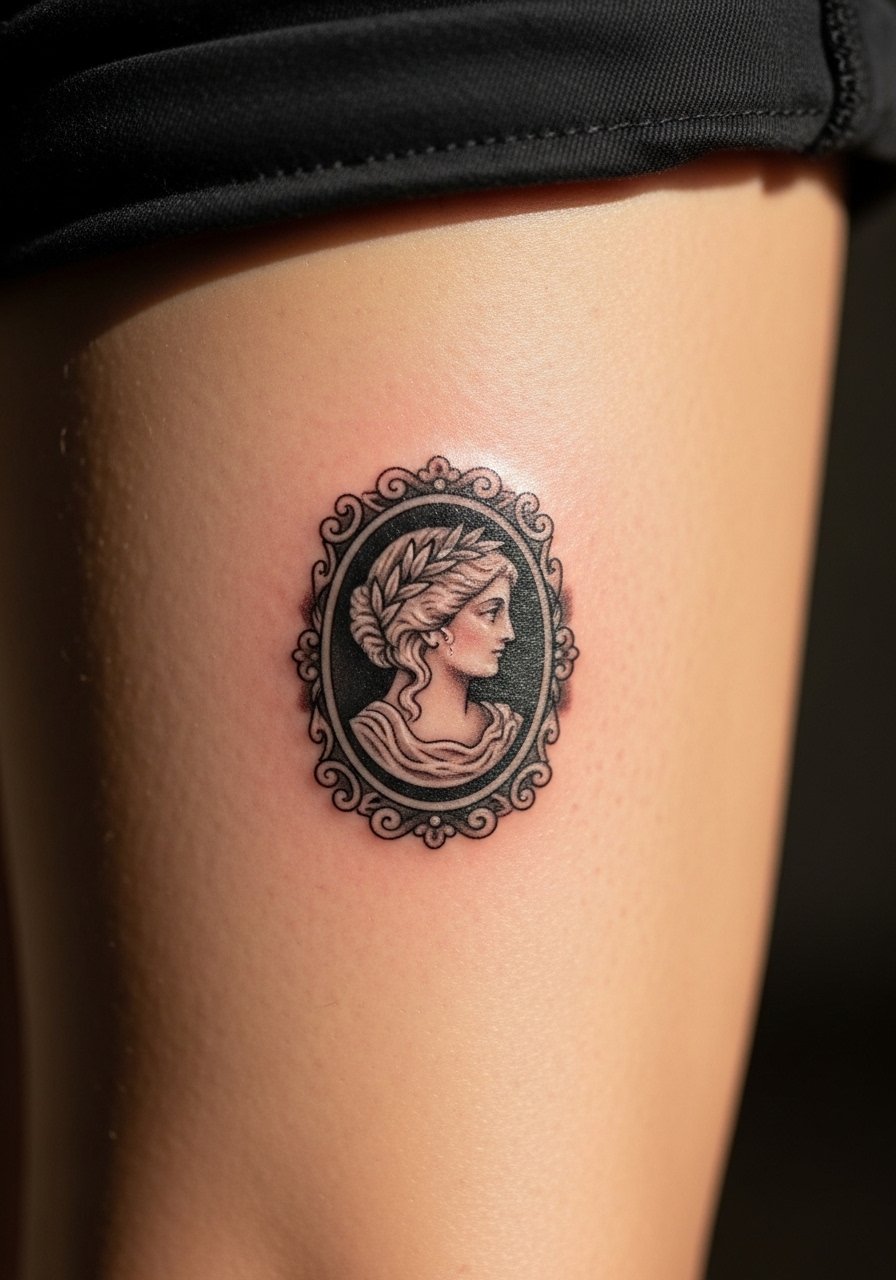
15. Small Cameo Portrait Over Tiny Tattoo on Calf
Styling lead: a calf cameo portrait turns a small mistake into a focal point by centering a face and surrounding it with ornamental shading. For this placement wear midi skirt side slit styles to highlight the portrait in summer. Tell your artist you want soft stipple shading around the portrait so the old ink blends into texture. The calf is forgiving for saturation but friction from socks and boots can dull edges early. Plan to avoid tight footwear during the first two weeks.
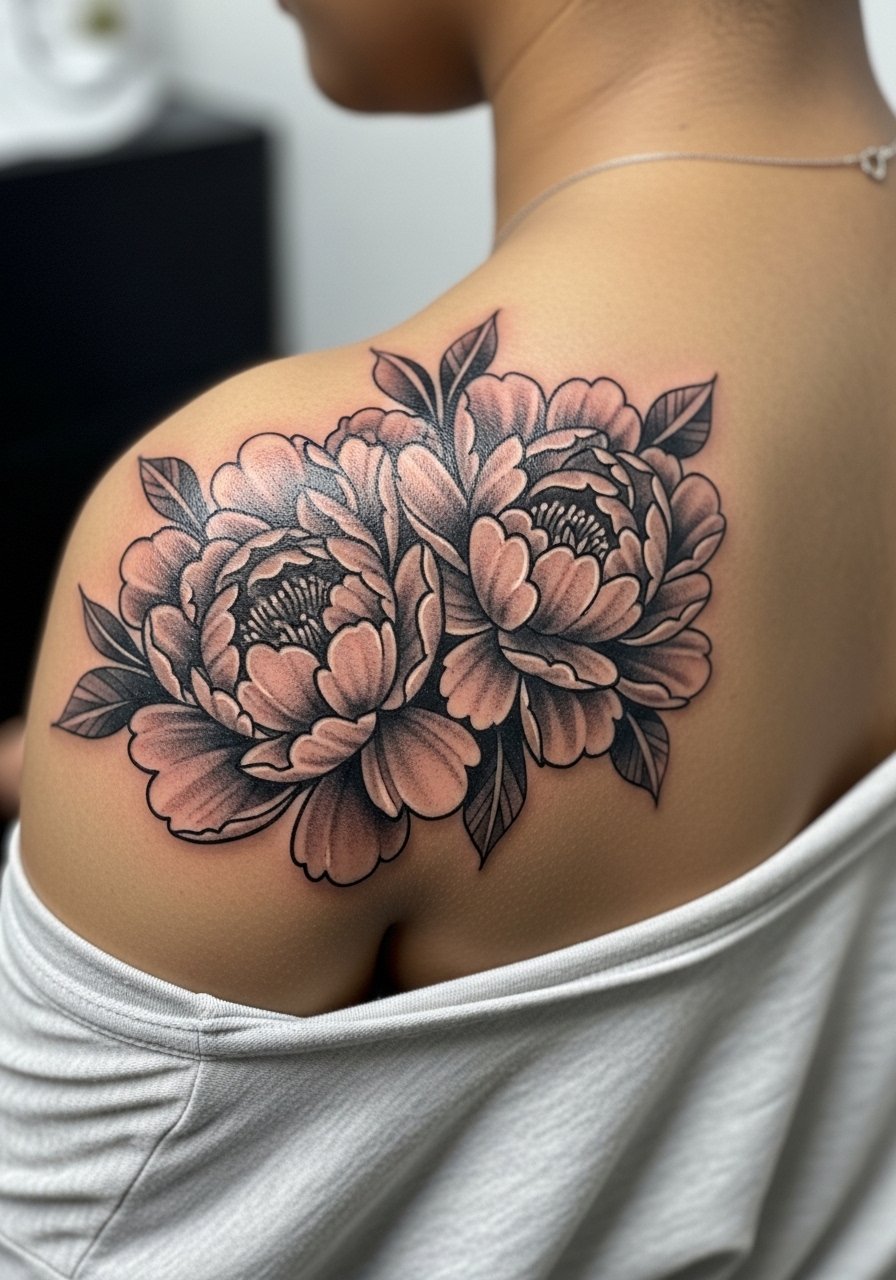
16. Peony Cluster for Shoulder Blade Cover
Aging lead: shoulder blade pieces benefit from broader shapes that settle well as skin moves. A peony cluster hides old anchors and linear marks by overlapping petals and packing dark centers. Sessions on the shoulder blade are often comfortable in one to two hours. The common mistake is keeping everything the same scale as the old tattoo, which forces tiny details that blur. Ask for reference photos of healed shoulder blade work from your artist to assess how their shading ages.
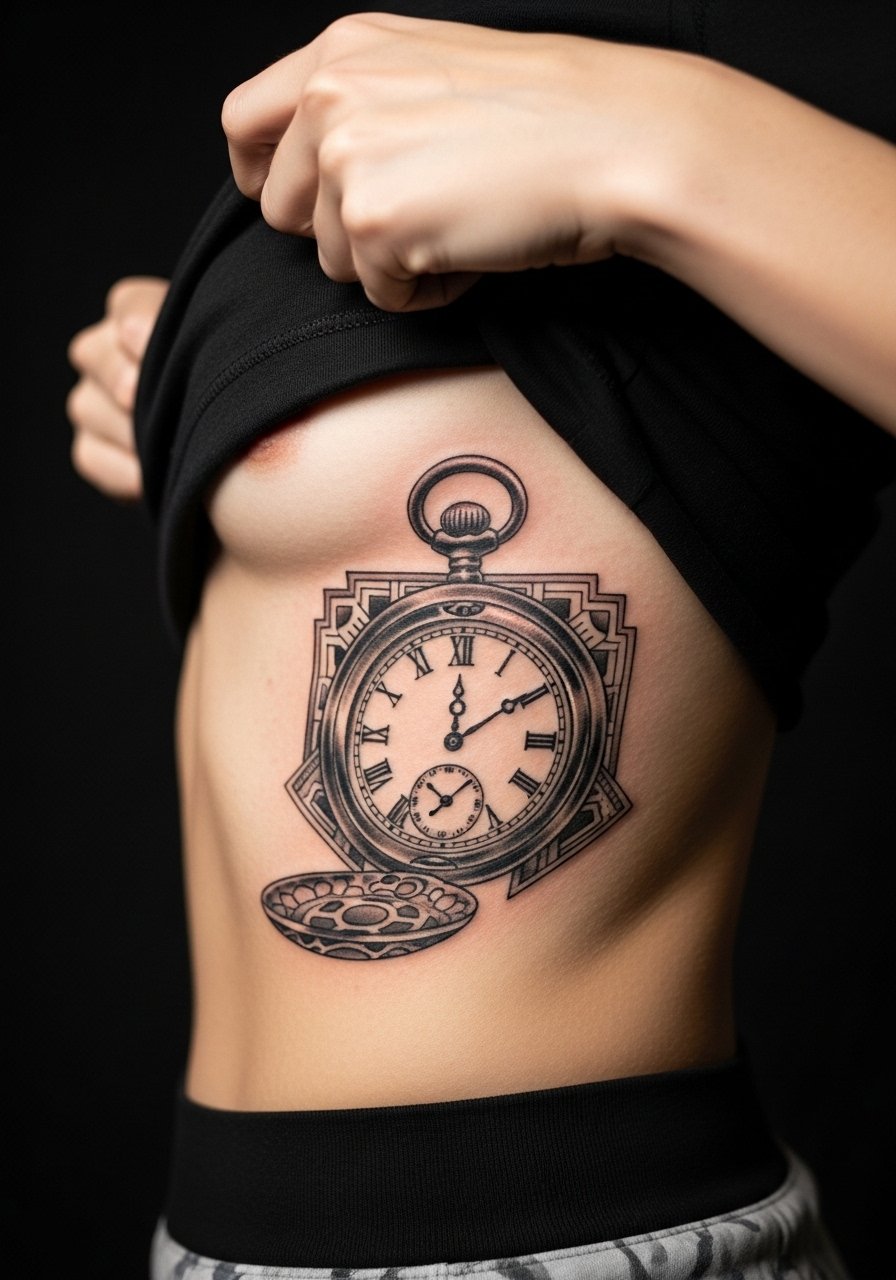
17. Pocket Watch in Art Deco Frame on Ribcage
Styling lead: ribcage work is sensitive so session prep is important. Wear a cropped athletic top you can lift slightly to expose only the region. For nights out pair the piece with off shoulder blouse silhouettes that reveal the curve of the frame. Ask for bold contrasts in the pocket watch face so old ink is masked under the dial and not visible through light detailing. Expect tenderness and a slower healing timeline compared with limbs.
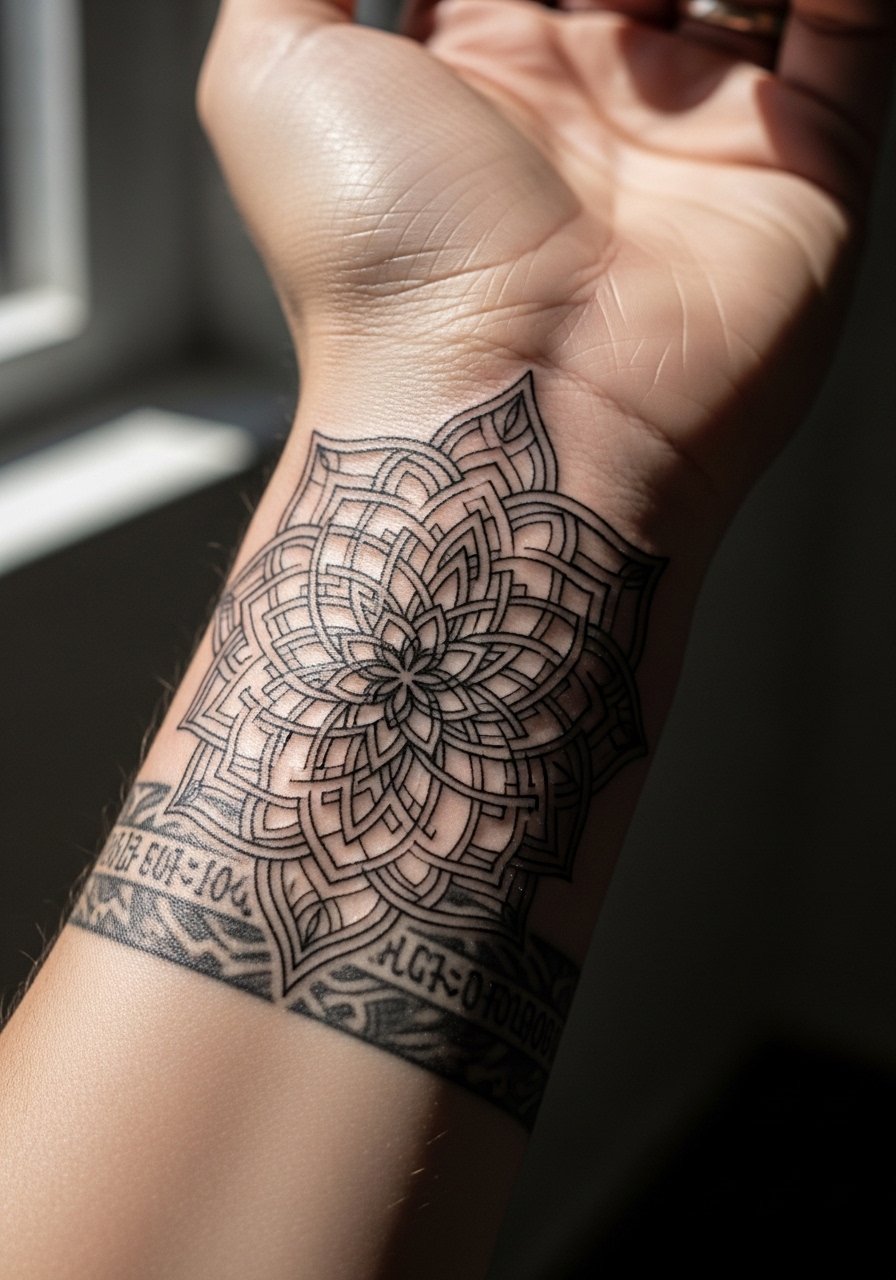
18. Geometric Mandala Over Linear Wrist Band
Mistake lead: tiny geometric mandalas that are too dense on the wrist blur quickly. For a wrist band cover-up, expand the negative space and ask for heavier packing in the center circles to intercept old linear marks. The wrist heals faster but is exposed to constant washing and movement, so expect slightly faster fading and plan for a touch-up at year two. Friction from bracelets can also thin edges, so wear soft bands or remove jewelry while healing.
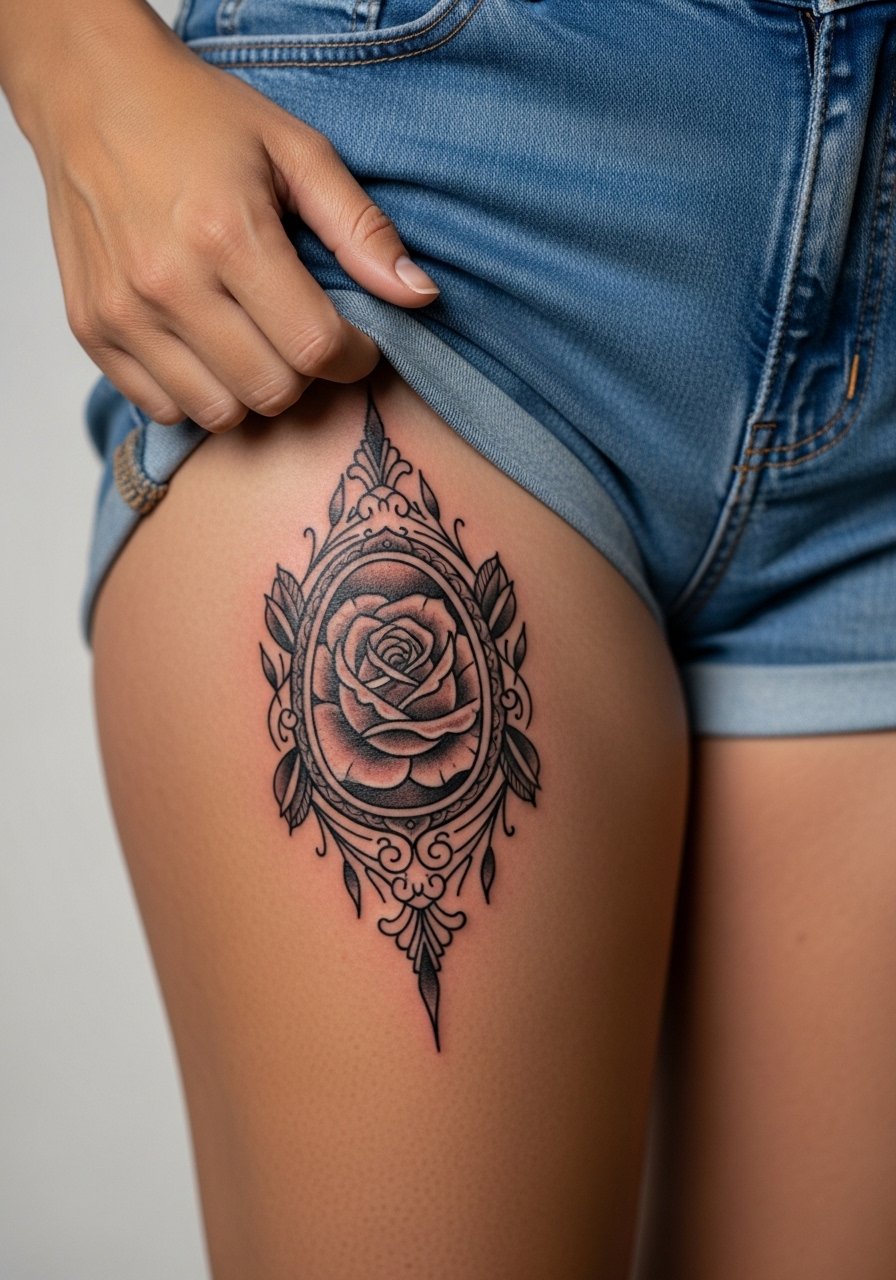
19. Vintage Rose Cartouche on Thigh
Styling lead: thigh roses camouflage old shapes by wrapping and scaling. Pair this piece with slit maxi skirt looks or high-waisted shorts to show the vine when you choose. For the appointment wear loose shorts so the artist can move the leg without pressure on the area. Thigh placements tolerate heavy blackwork so choose confident saturation near the old ink and softer tones outward. Avoid placing tiny petals directly on top of thick old ink, that is a recipe for early blurring.
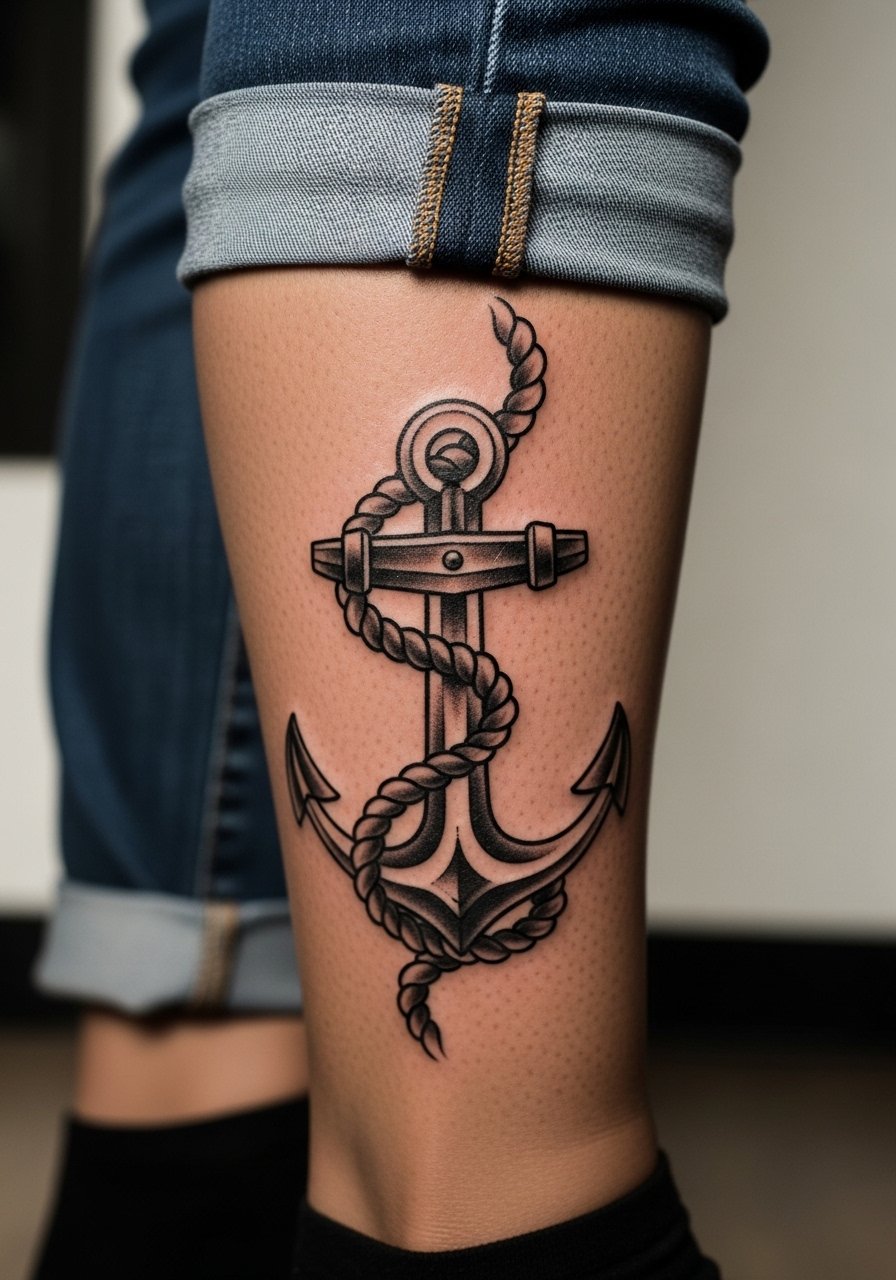
20. Anchor Wrapped in Rope on Lower Leg
Visual impact lead: wrapping rope around an anchor allows heavy rope lines to obscure old linear tattoos while keeping a vintage maritime feel. For the lower leg, expect moderate pain and low blowout risk. Ask your artist to thicken the rope coils over the old lines and to use whip shading on the background to create texture. The mistake is under-scaling the anchor which forces small detail into areas that will blur. This placement is easy to show off with rolled jeans or sandals depending on season.
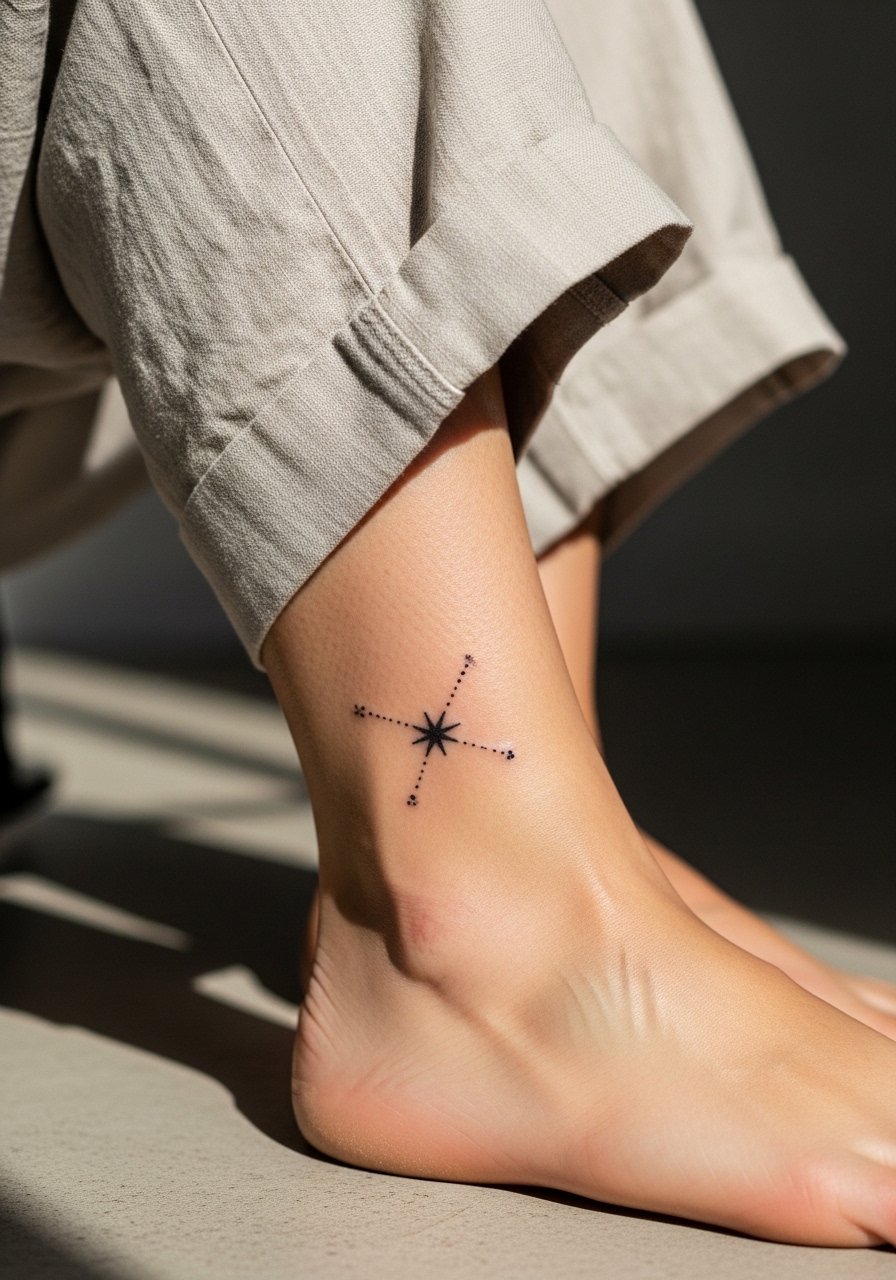
21. Tiny Constellation with Dark Star Center on Ankle
Styling lead: when covering a small stamp or symbol, use a dark star or sun center and radiating tiny dots to scatter the old ink. The ankle placement is delicate from footwear friction, so for the session wear wide leg linen pants you can roll up. The main error is choosing faint dots that rely on color alone rather than a dark anchor. Healed results are tidy if the center is saturated and the dot work is spaced for future clarity.
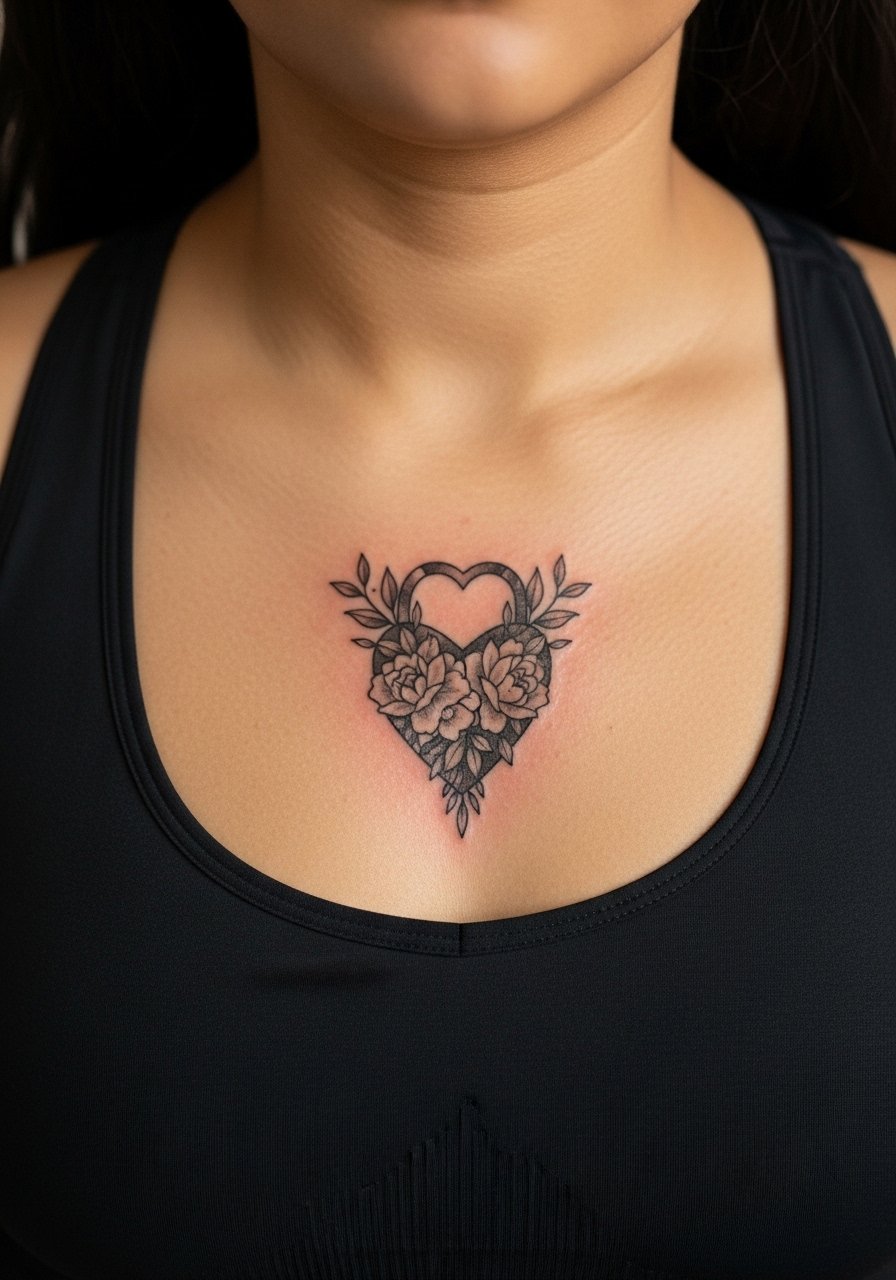
22. Botanical Heart Lock on Sternum
Consultation lead: sternum pieces need careful framing so old tattoos do not peek around edges. For a botanical heart lock, request the artist place darkest ink over the oldest lines and keep the floral highlights toward the sides. Wear a fitted sports bra during the session so the area is accessible yet covered appropriately. Sternum pieces are sensitive so shorter sessions spread across multiple days are common. Some people limit this placement because healing is intimate and can affect how you dress for a few weeks.
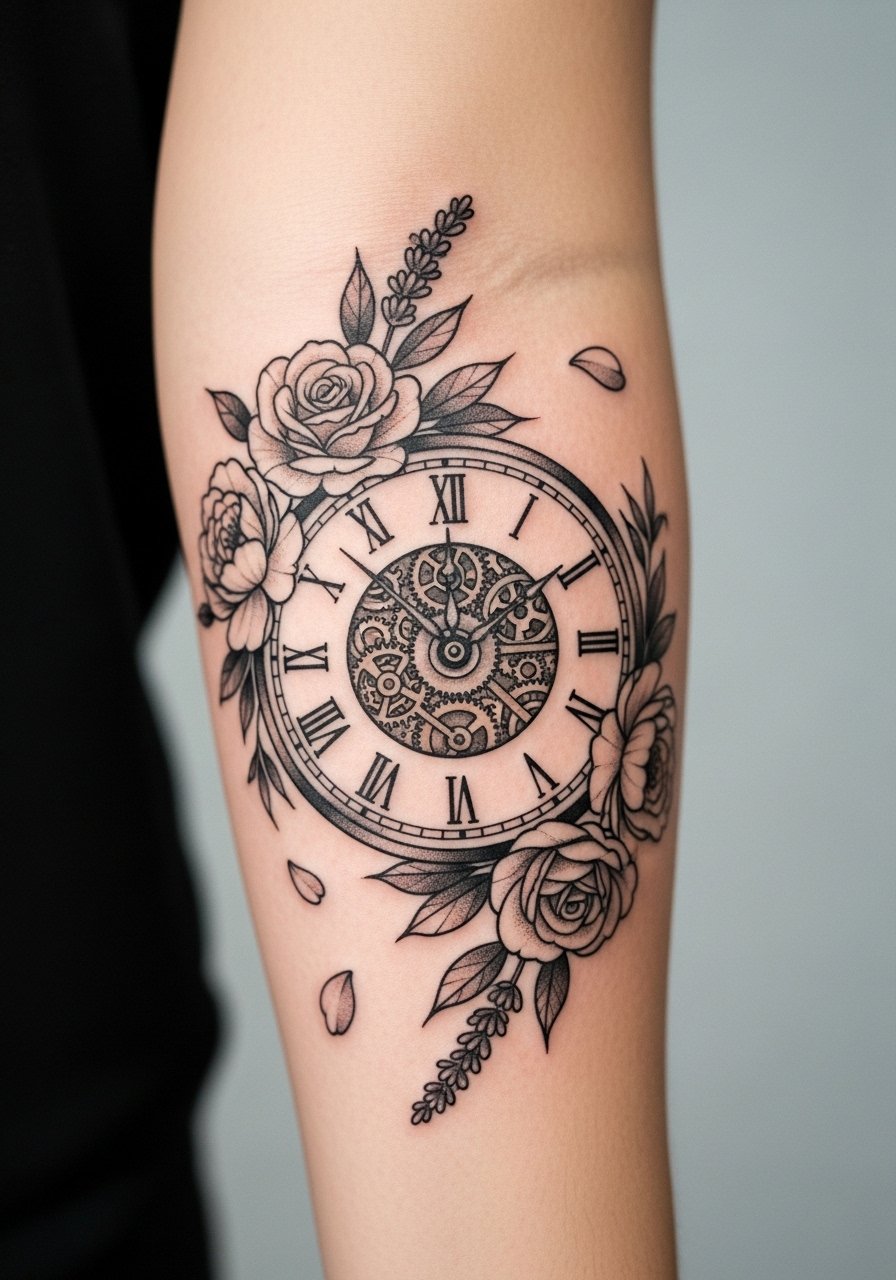
23. Clock Face with Floral Halo on Back of Forearm
Styling lead: a clock face centered on the back of the forearm uses its circular mass to override old script or thin blackwork. For showing it off, roll sleeves or wear a rolled sleeve blouse women so the piece sits naturally. Ask the artist to anchor the numerals with dark arcs and to use stipple halo shading so the old marks fade into texture. Forearm movement can stretch lines slightly over time, so expect a touch-up at year two for fine edges.
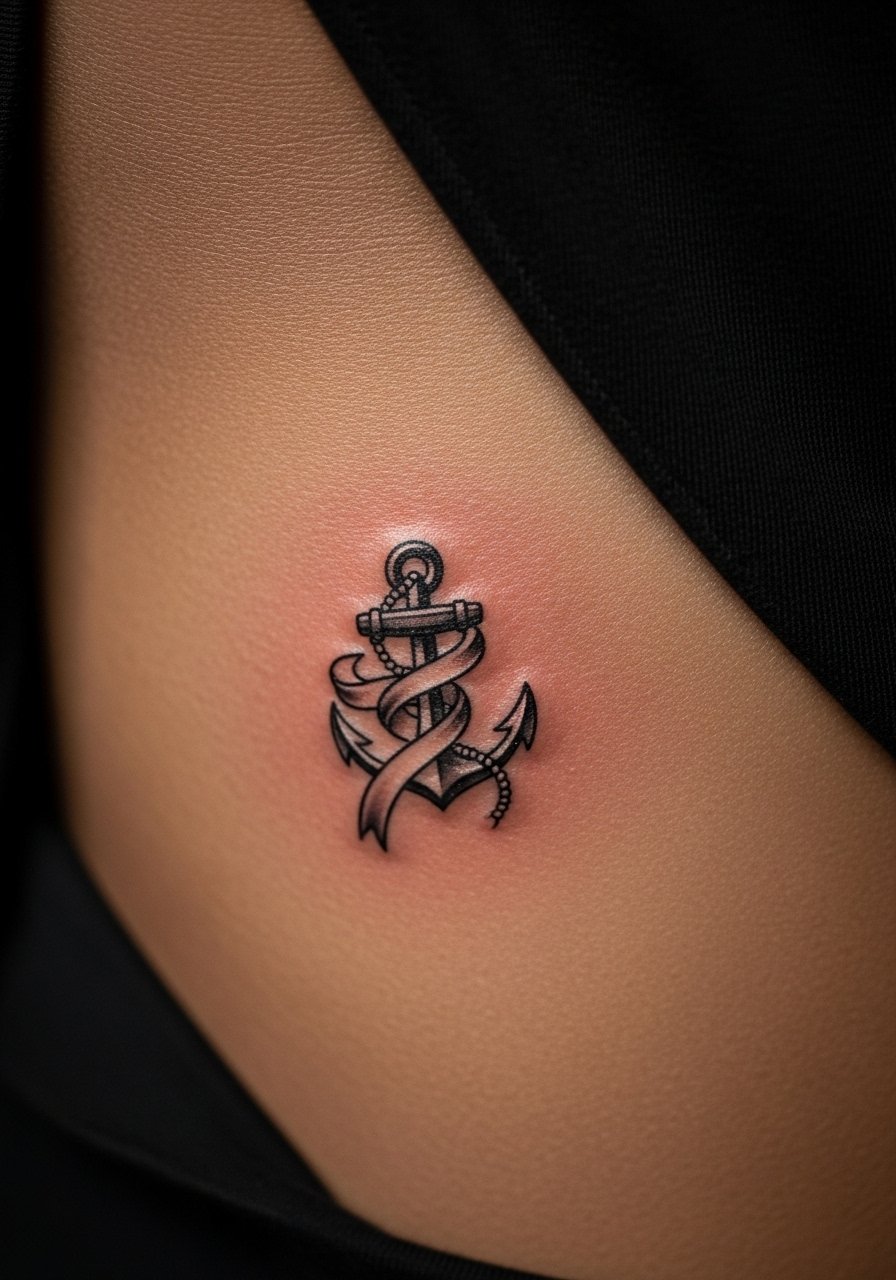
24. Tiny Anchor and Ribbon on Side Rib
Pain warning lead: rib work is a higher pain zone so plan for breaks and short sessions. A small anchor and ribbon can cover a tiny old tattoo if the ribbon overlaps the old ink and the anchor center is dark. Ask for bolder contouring at the start to ensure the anchor reads clearly as it heals. Wear a cropped top to the session that you can lift just enough to expose the side rib. The main mistake is demanding small, pale detail in this area which rarely stays crisp over time.
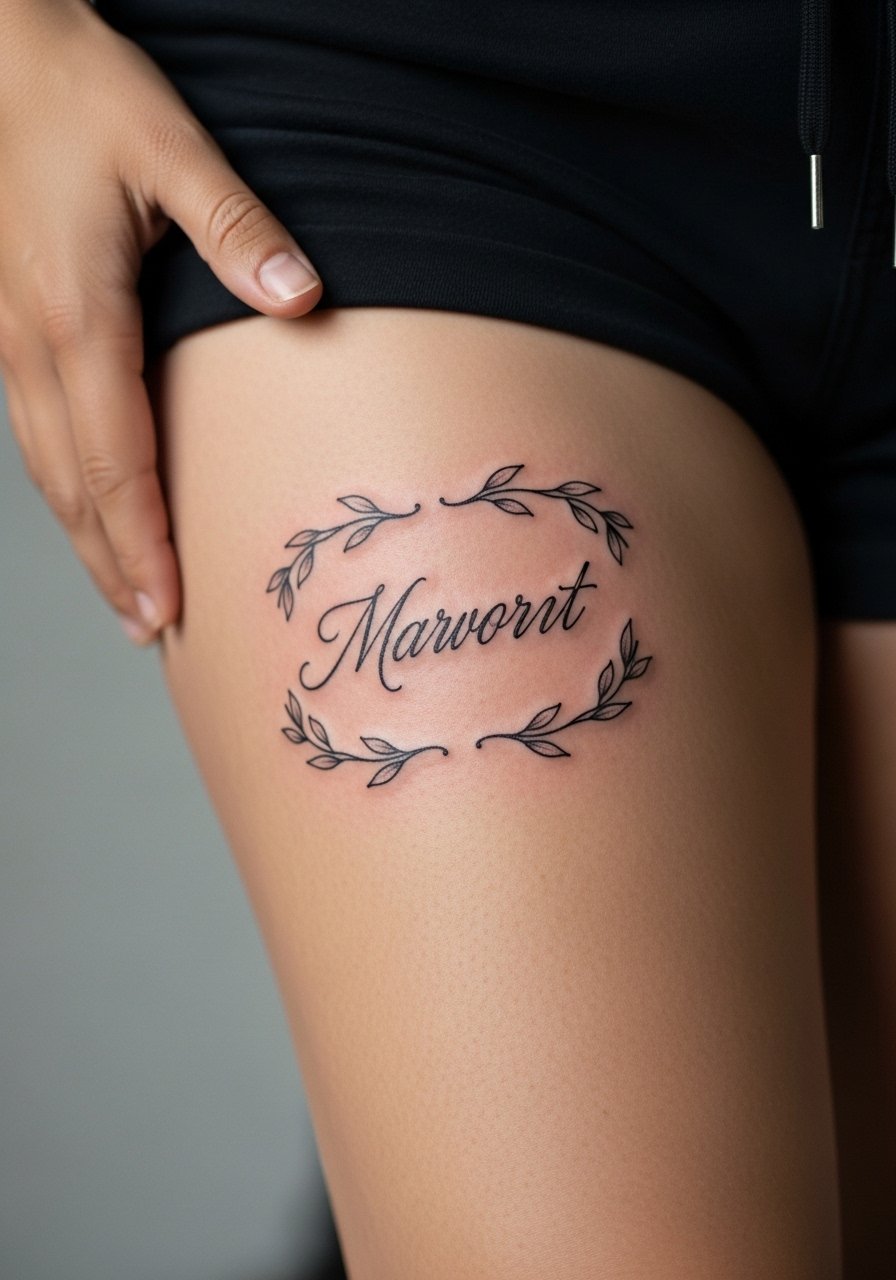
25. Scripted Name Framed by Vines on Inner Thigh
Mistake lead: inner thigh work needs discretion and a plan for mobility. Framing a name with vines lets the dark vine anchors cover old marks and the lettering sit legibly. For the session wear shorts you can shift upward to reveal only the inner thigh area. Inner thigh skin can be softer and stretch differently than limb skin so spacing is important. Avoid ultra-fine script over old heavy lines. The healed look is elegant when negative space around letters is respected.
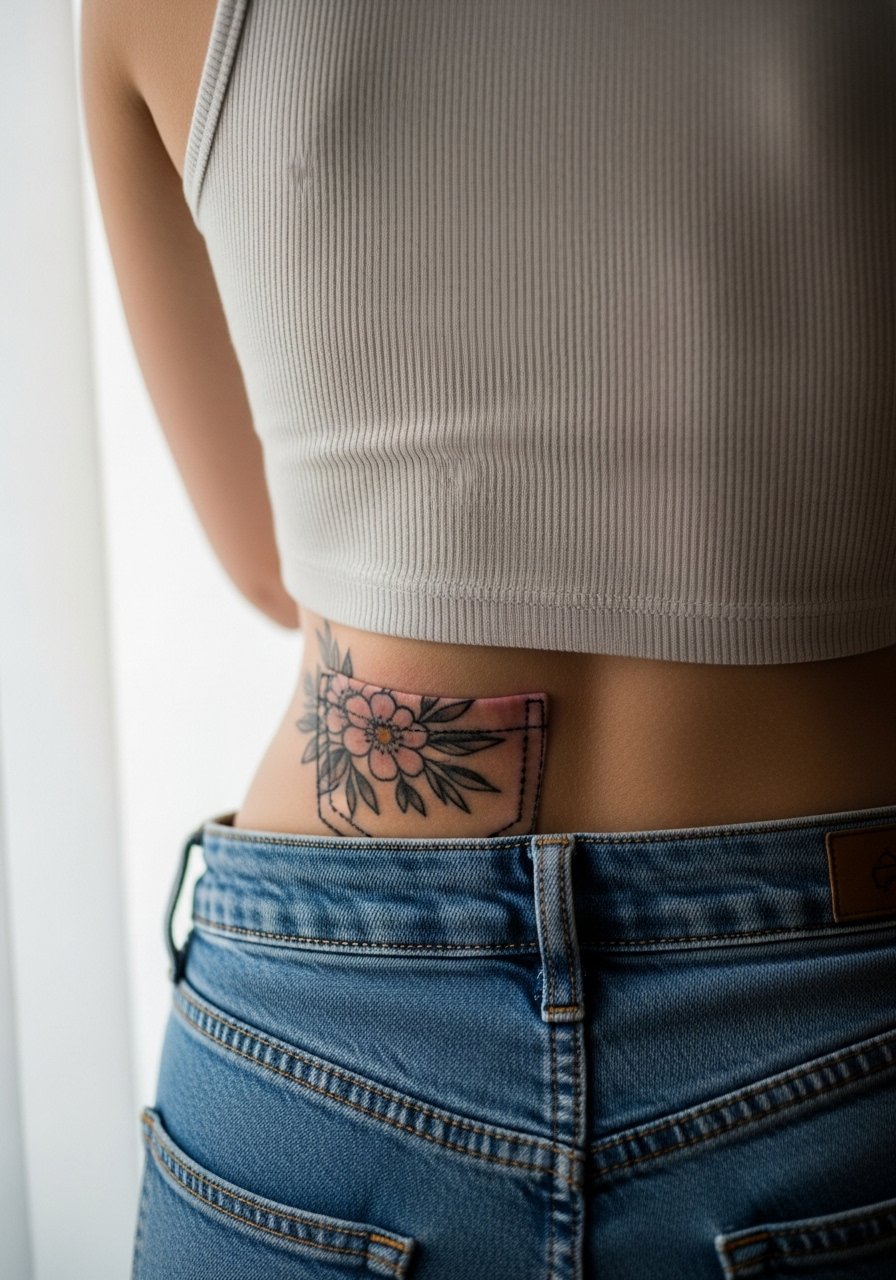
26. Pocket Floral on Lower Back
Personal observation lead: lower back pieces let you hide rectangular or banded old tattoos by turning the area into a garden. For pocket florals, request denser centers over old ink and open petals at the edges. Wear a tank top with high-waisted jeans pulled slightly low to reveal only the lower back during the session. Lower back heals reliably if you avoid tight waistbands while scabs form. The common error is centering the design on the old tattoo rather than building a frame that integrates it.
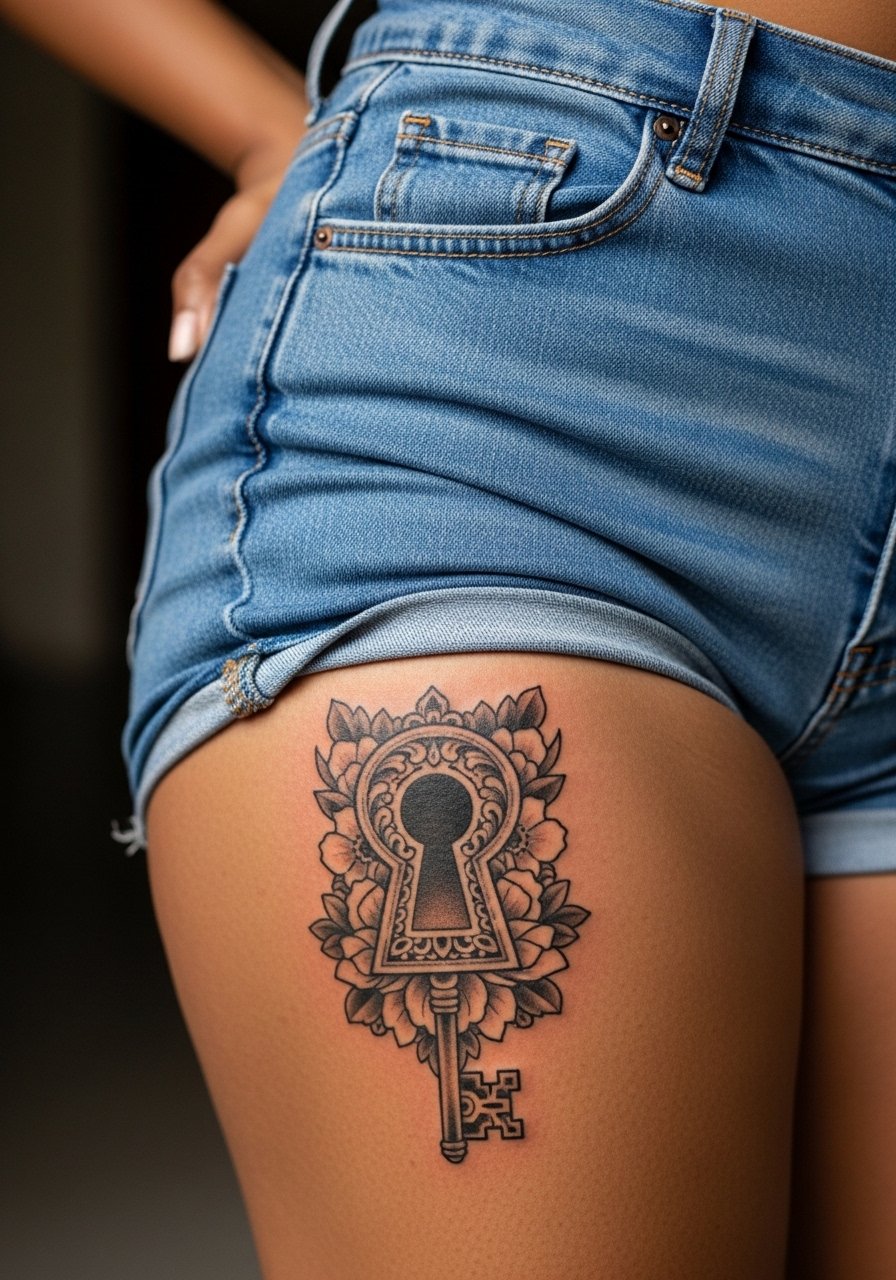
27. Ornamental Keyhole and Floral Over Old Flash
Consultation lead: ornamental keyholes are excellent for hiding odd flash marks because the dark core and ornate borders distract the eye. For this placement pick a size that allows for bold borderwork and a shaded interior to mask the old ink. If the piece is near visible areas consider how clothing will frame it but do not let clothing needs dictate scale. The session feels moderate and often wraps in two hours depending on detail. A frequent mistake is wanting an overly small keyhole which forces the artist to crowd detail and risks blurring.
Frequently Asked Questions
Q: Will blackwork always cover a dark tribal tattoo better than color options?
A: It depends on the size and saturation of the old tribal lines. One camp prefers packed black because it reliably blocks dark ink, while another camp uses layered color with dark underlayers to blend tones without going fully black. In practice ask to see healed examples from your artist for both approaches so you can choose what looks best on your skin tone.
Q: How long should I wait after my initial cover-up before planning a touch-up?
A: Expect to plan a touch-up around twelve to twenty-four months for most heavy cover-ups, especially where old ink was dense. Fine line overlays and pastel work often need earlier tweaks. The timeline depends on placement, sun exposure, and how your skin heals, so factor that into scheduling.
Q: Do mandalas hide linear tattoos better on the forearm or the shoulder?
A: Mandalas work on both but they do different jobs. On the forearm concentric density and a packed center break up linear marks most effectively. On the shoulder a mandala can use curved lobe shapes to follow muscle contours which helps the design blend as your body moves. Tell the artist which old lines you want hidden and ask them to map the mandala accordingly.
Q: What should I wear to a collarbone or chest cover-up session to make access easy?
A: A wide-neck shirt or a loose button-front top that you can pull aside is ideal. For showing the healed piece later a delicate chain necklace sits above collarbone designs without competing. Avoid tight straps or high collars for the appointment.
Q: Are there design types to avoid if I want the cover-up to look natural over time?
A: Avoid ultra-fine, tightly packed linework directly over dense old ink. Minimalist washes and light watercolor without dark anchors tend to let old marks ghost through. Choose designs with deliberate dark anchors, overlapping elements, and spacing that anticipates how lines may soften with age.
