
Fine line chains are plastered across saved boards and fan feeds right now, but what posts great on a phone does not always stand up to daily wear. I’ve seen delicate wrist wraps look like soft jewelry at first and blur into a gray line by year three. Pick placement, line weight, and session clothing with care and you can keep a discreet Kurapika nod readable for years. Below are wearable options and consultation lines to bring to your appointment.
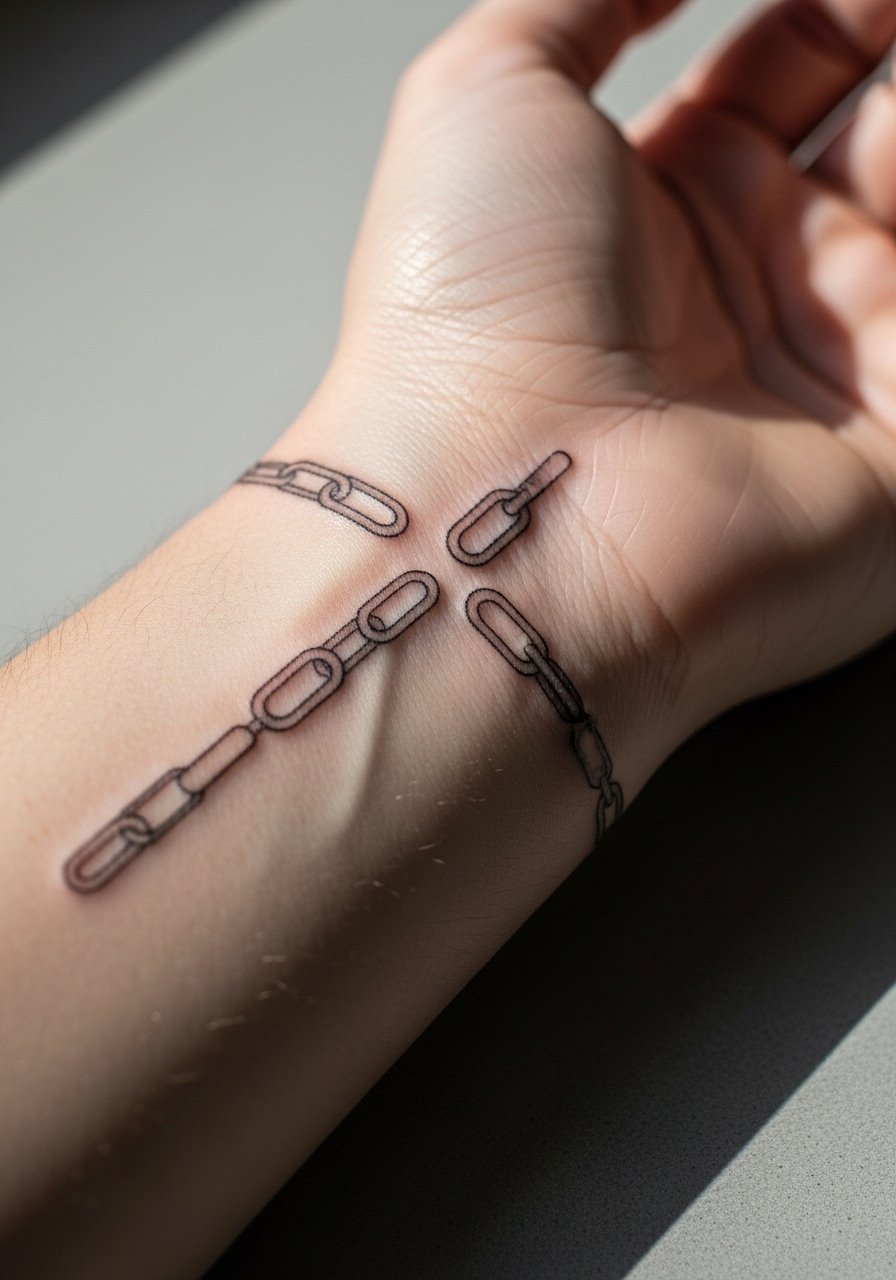
1. Fine line Kurapika chains wrapping the wrist
I've seen this one a lot on fans choosing a low-key nod to the character. Fair warning, wrists move and rub against clothing, so fine line here can look crisp at six months and soft by year two if the line weight is too skinny. Tell your artist you want slightly thicker single-pass linework and tighter spacing between links so the design holds. During the session wear a sleeveless tank for easy access. For showing it off, roll the cuff of a chambray shirt and balance with a thin silver bracelet. The fine line versus bold line debate is active here. One camp accepts touch-ups as part of the look. The other prefers heavier blackwork for longevity. Ask your artist which side of that split they work from.
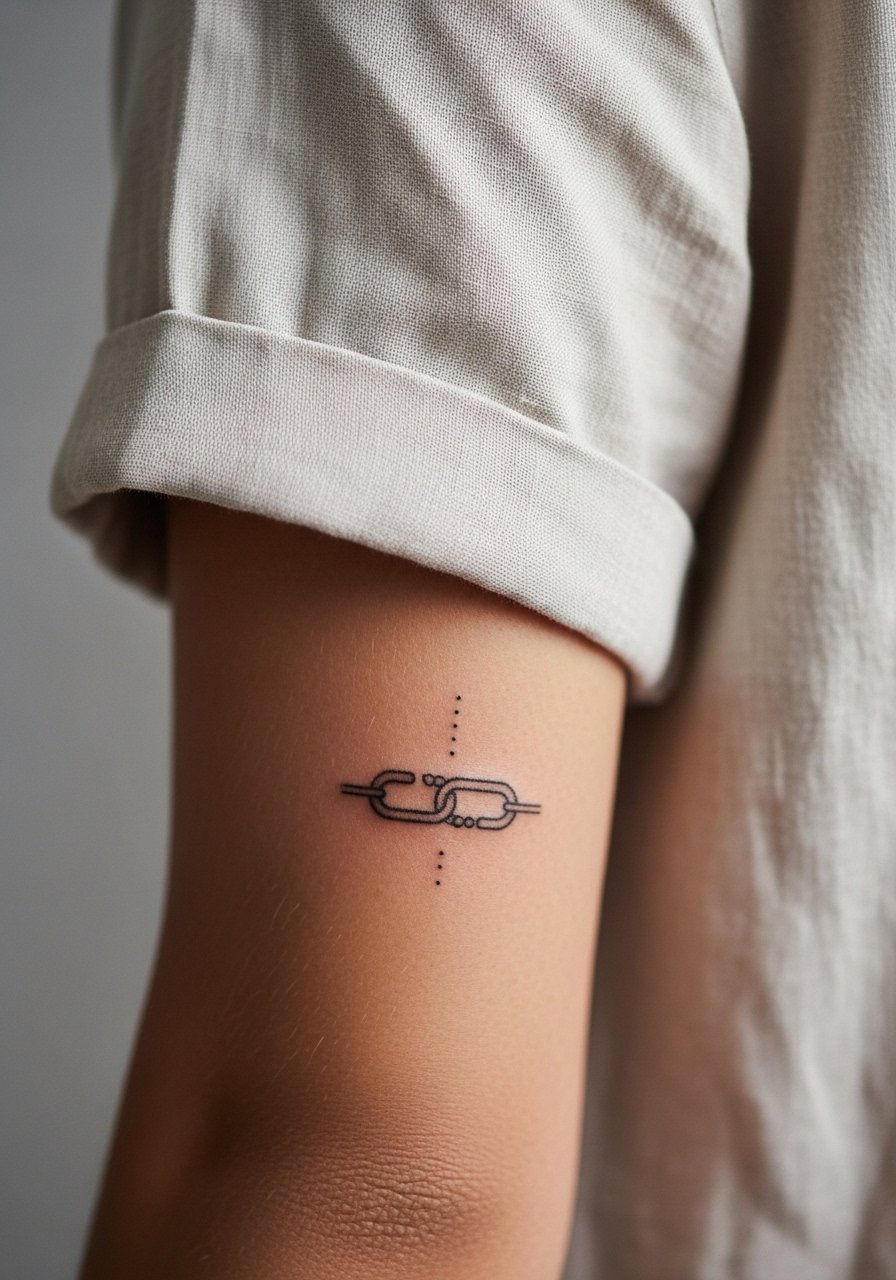
2. Minimalist geometric chain links on the inner forearm
When I was looking through portfolios I noticed minimalist chains read clean for years on the inner forearm because the skin is flatter and less frictional. For a three-inch piece ask for slightly bolder link outline and muted gray fill so the geometric rhythm stays legible at two years. During the consultation bring photos that show exact link spacing and line weight. For the session wear a linen short sleeve shirt you can roll to the elbow. Pair this with a dainty leather cuff bracelet when you want the tattoo to peek during casual outings. Touch-ups are common at year two for minimalist forearm work.
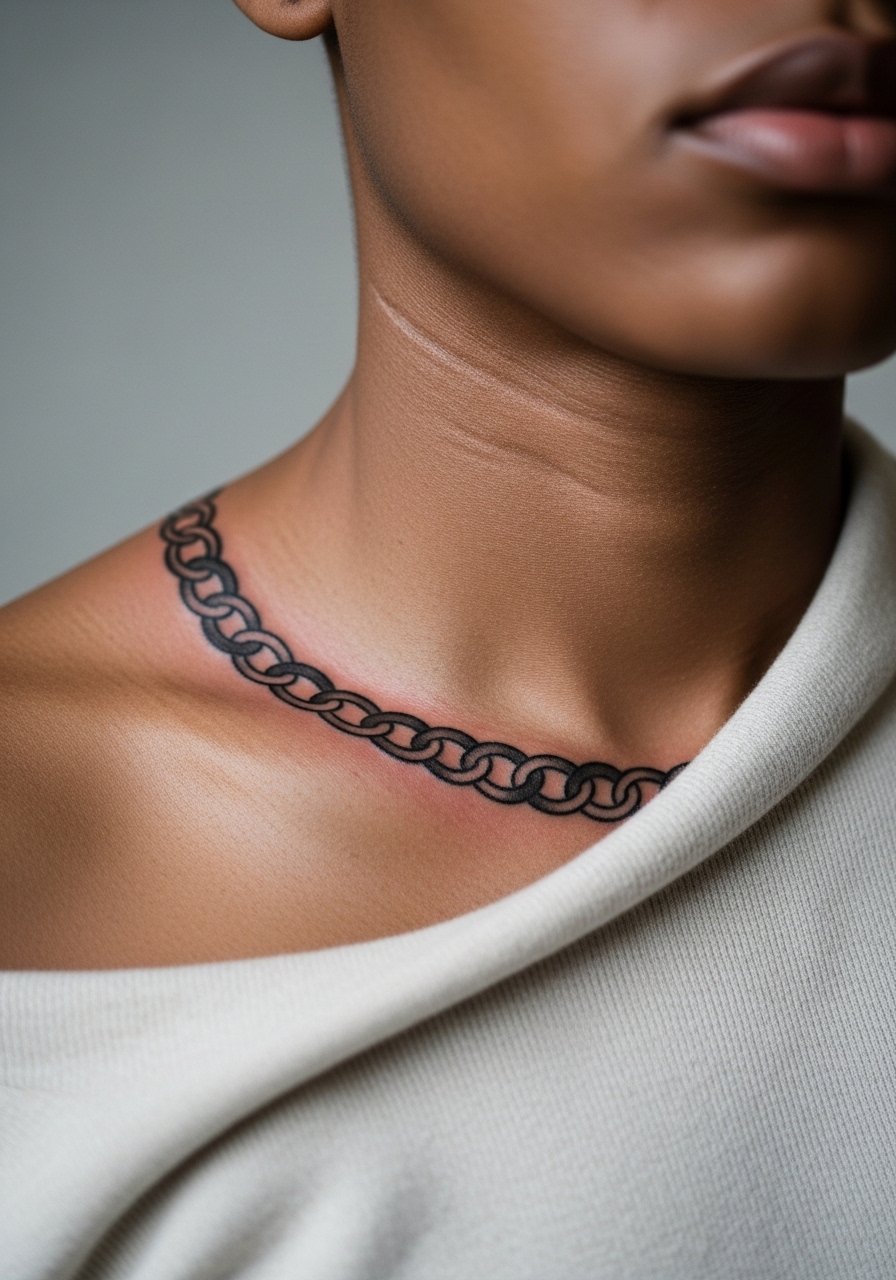
3. Blackwork Kurapika chains with Nen aura shading on the collarbone
There is something about high-contrast blackwork that still reads in photos months after healing. Collarbone pieces hide under shirts and pop when you want them to. In the consult ask for saturated black outlines with soft whip shading to suggest Nen energy without full color. Wear a off shoulder blouse or a button front camp shirt you can pull aside during the session. Pain is moderate and the area can need two sessions if saturation is your goal. Expect bold blackwork to age better than delicate lines on the same spot.
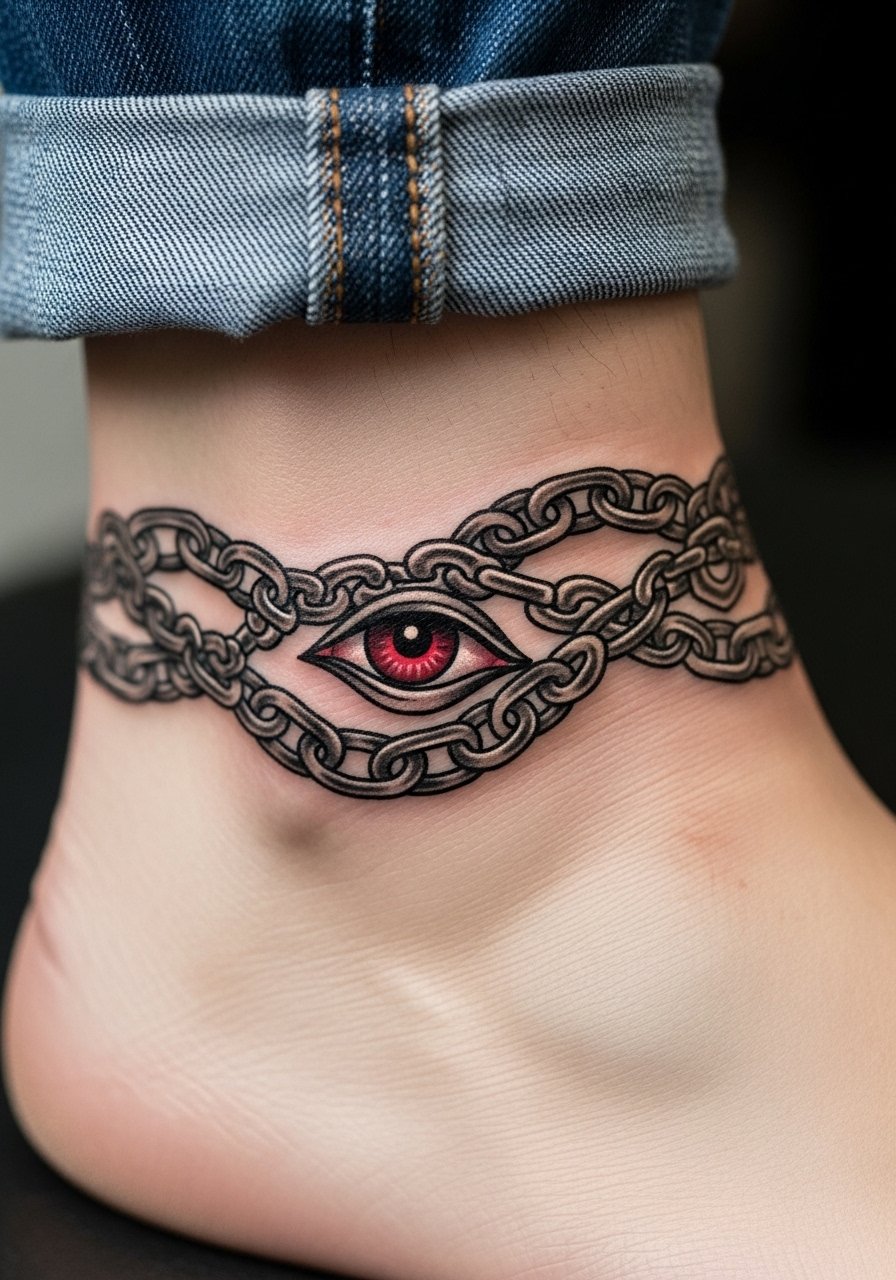
4. Neo-traditional ornate chains with a scarlet eye motif on the ankle
The ankle is seasonal and flirts with visibility. Neo-traditional treatment gives tiny pops of scarlet while keeping most of the piece in black and muted tones, which helps the design stay readable in photos. The session feels quick for a small ankle piece, but the thin skin over bone can sting. Avoid going too small with the eye motif or the color will bleed into surrounding black over time. For showing it off, cuff straight-leg jeans or pair with espadrille sandals in summer. For the session wear loose joggers you can roll up without pressure on the fresh ink.
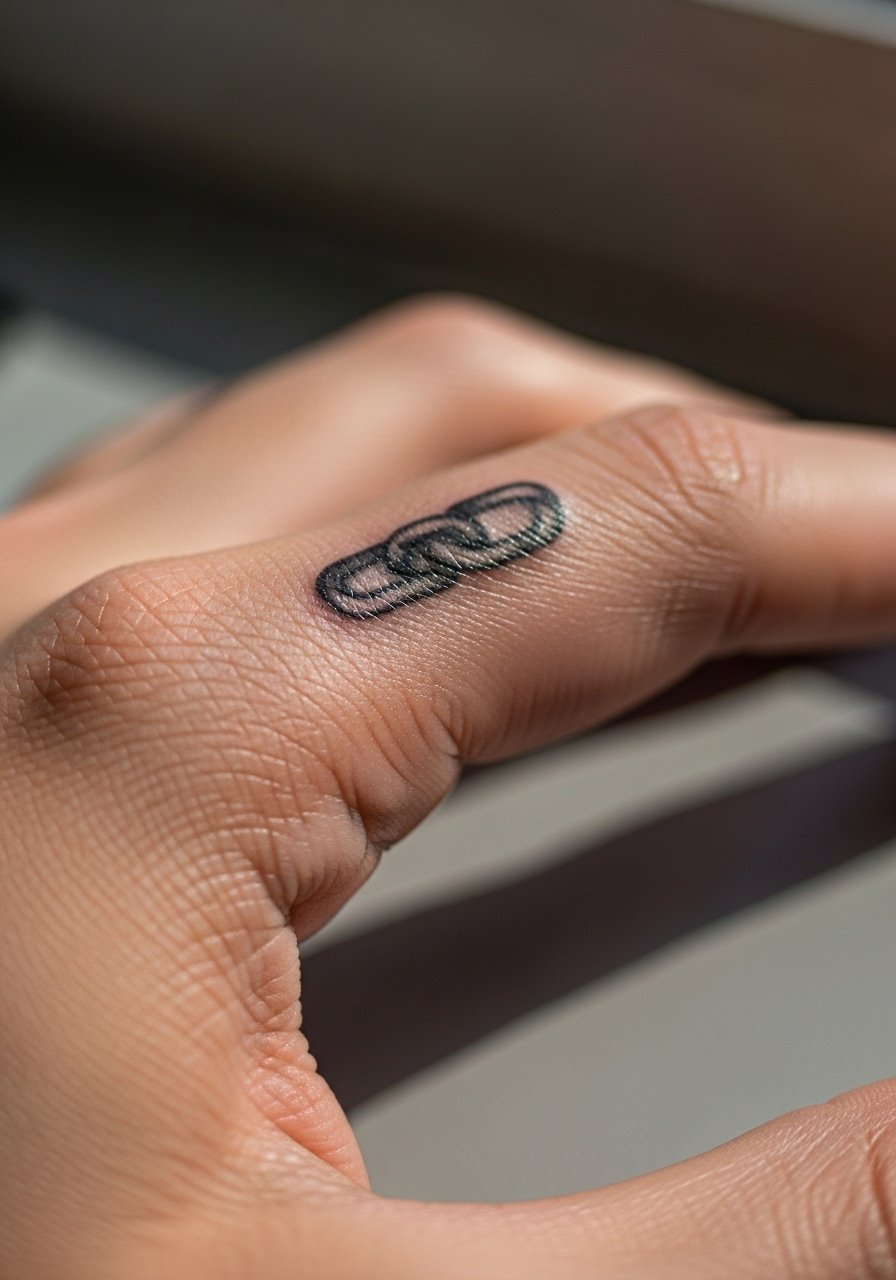
5. Micro-realism single chain link on the finger
Finger tattoos age differently than arm work. The skin renews quickly and daily use means this micro-real piece will soften, but a single, well-placed chain link can still read like jewelry. Tell the artist you prefer a single-pass outline with a touch of dot shading for dimension and plan on touch-ups within 12 to 24 months. For the appointment keep hands bare and wear no rings so the artist has clear access. When you want to accent the link, a minimalist gold ring on the opposite hand balances the look. Expect a higher touch-up rate but a discreet, meaningful result if you accept the trade-off.
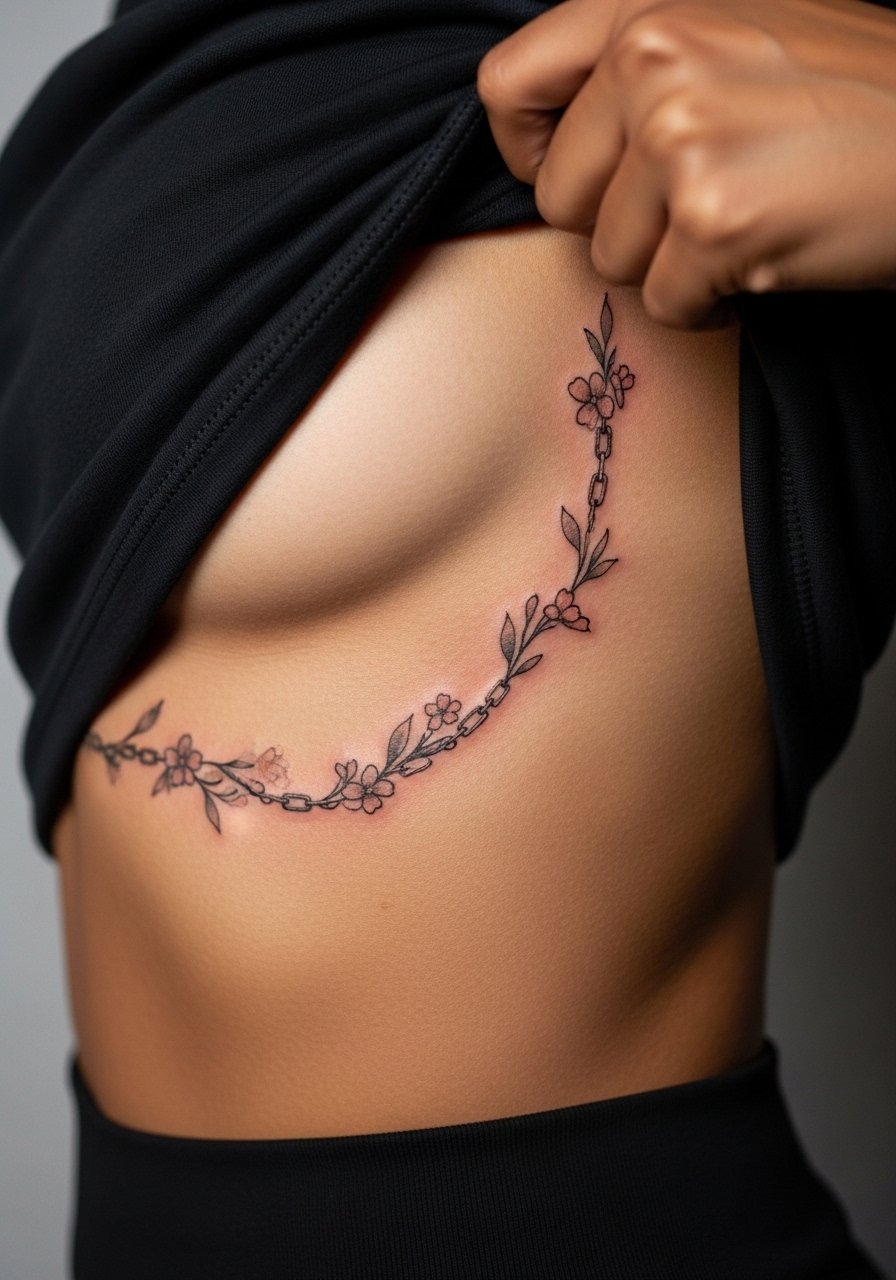
6. Watercolor chains intertwined with floral rebirth on the ribcage
Fair warning about ribs, the placement is painful and the skin moves a lot. Watercolor washes feel poetic at first but often fade unevenly on ribs after summer and heavy sweating. If you want color here ask for a watercolor base with a blackwork anchor so the links stay readable as pigments soften. During the appointment wear a fitted sports bra or a cropped top you can lift slightly for access. The Saniderm versus dry healing debate comes up a lot for ribs. One camp prefers breathable film to avoid scabbing, the other prefers dry healing to reduce trapped moisture. Discuss both options with the person who will do your piece and pick what they recommend for that skin type.
Before You Book
Smaller forearm, wrist, and ribcage pieces above ask for different prep than thigh or ankle work, so a few targeted items make the session easier and the first week smoother.
-
Indie tattoo salve, thin formula. A lighter salve can prevent clogged pores on fine line wrist work while keeping lines supple after day three.
-
Breathable second skin film. Useful for ankle and wrist pieces that encounter summer sweat and friction.
-
Rice bran balm. Gentle option for color pieces on ribs that need a non-greasy finish during the early healing window.
-
Thin protective film roll. Handy for finger tattoos and tiny wrist links that face constant washing and typing.
-
Aquaphor healing ointment. A thin layer in the first few days helps seal moisture for detailed linework without heavy residue.
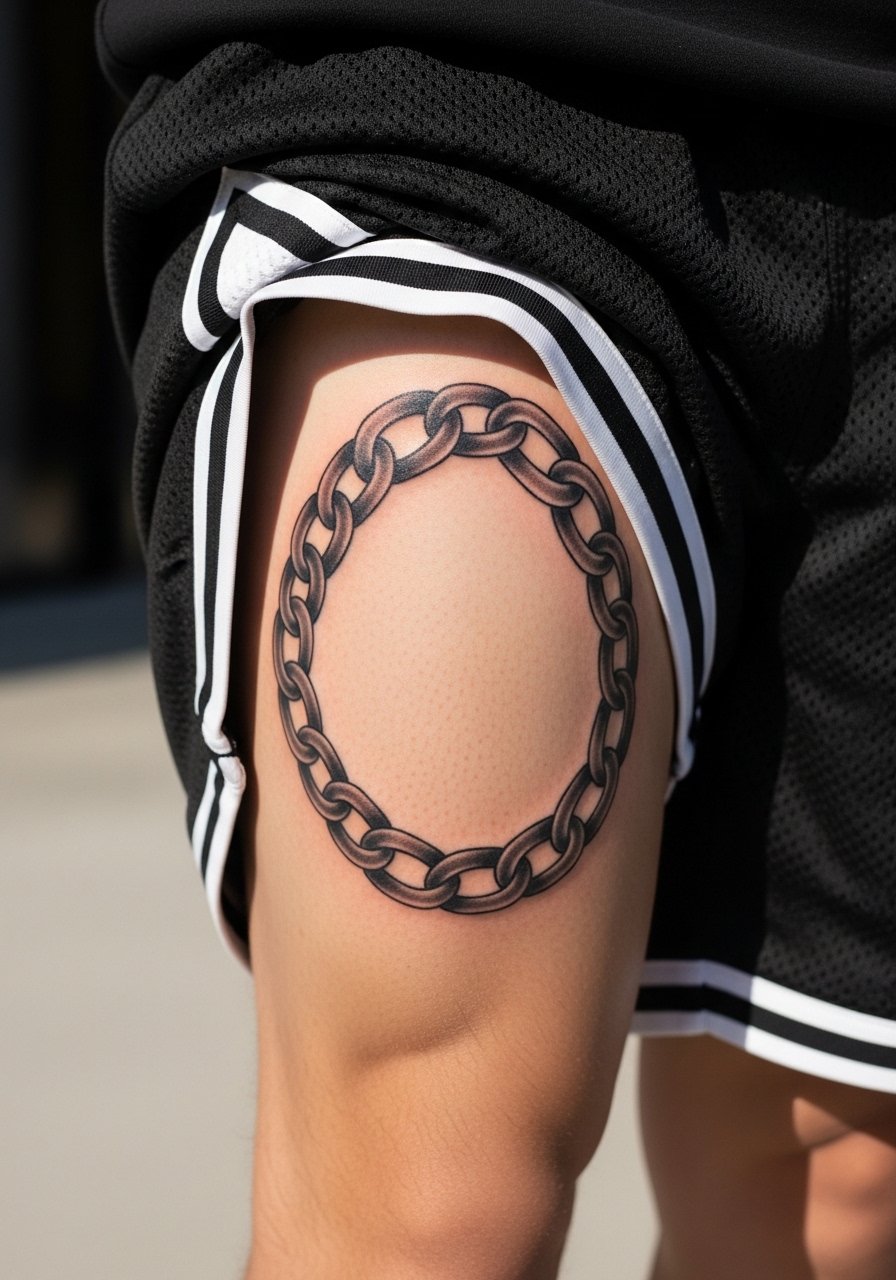
7. Black and gray realistic chains on the upper thigh
Thigh work is a great private option for fans who want high detail without daily visibility. The fleshy surface lets artists render texture and shadow for convincing chain links and deep saturation. I advise waiting until your weight is stable because significant gains or losses can warp the design. For the session wear loose basketball shorts so the artist can roll a leg without pressure. Expect two sessions for full realism and a touch-up timeline around year two. This placement ages well visually if you avoid sustained sun exposure on the area.
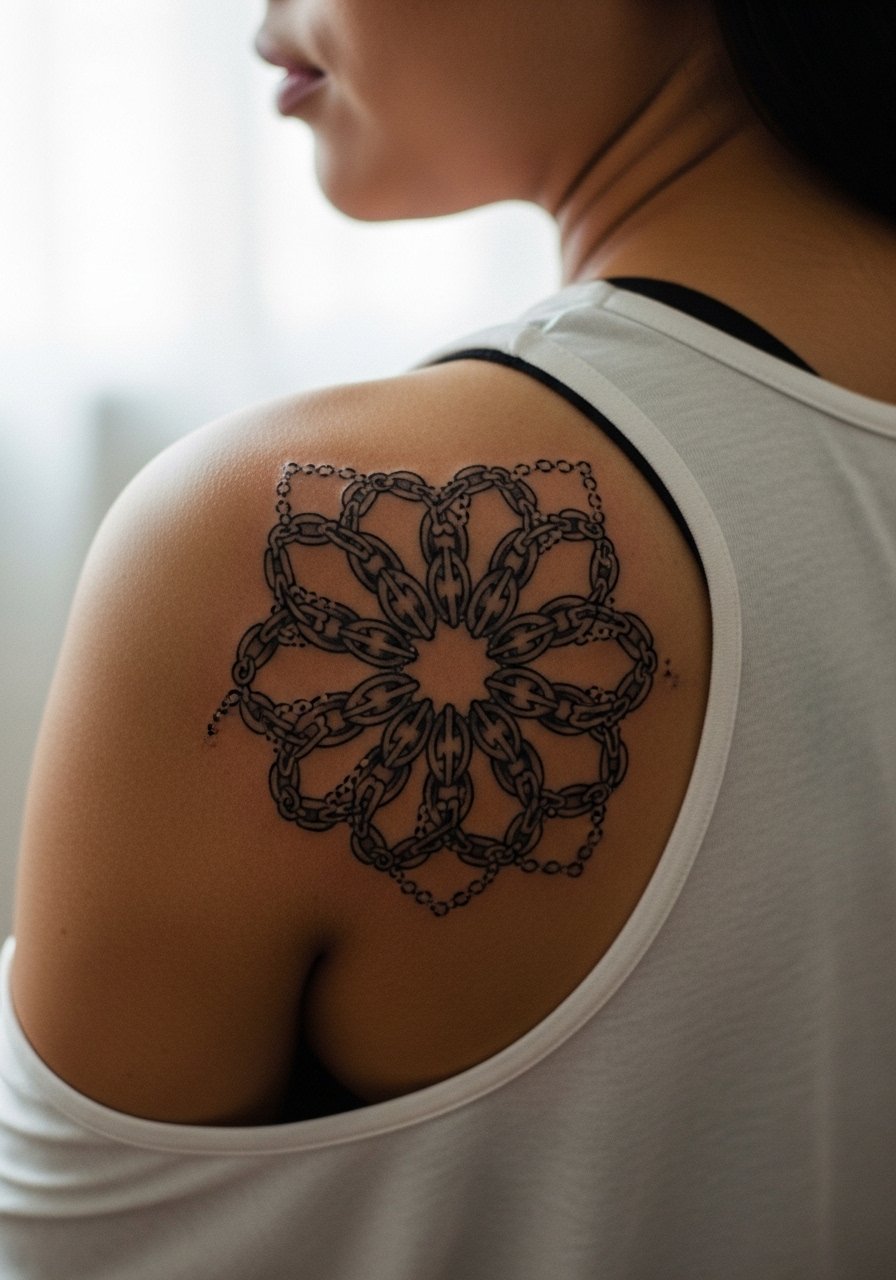
8. Ornamental Kurapika chains mandala on the shoulder blade
I've seen shoulder blade mandalas hold up nicely when artists give the pattern room to breathe. The circular arrangement works with the shoulder blade curve and reads like ornamental jewelry when worn with open-back tops. Ask for stipple shading and dot work to keep texture without dense black fills that can merge. For the session wear a loose tank top or a button-down you can pull aside. A loose button-down shirt works perfectly. Touch-ups tend to be rare here if the piece is given space and the linework avoids unnecessary micro-details.
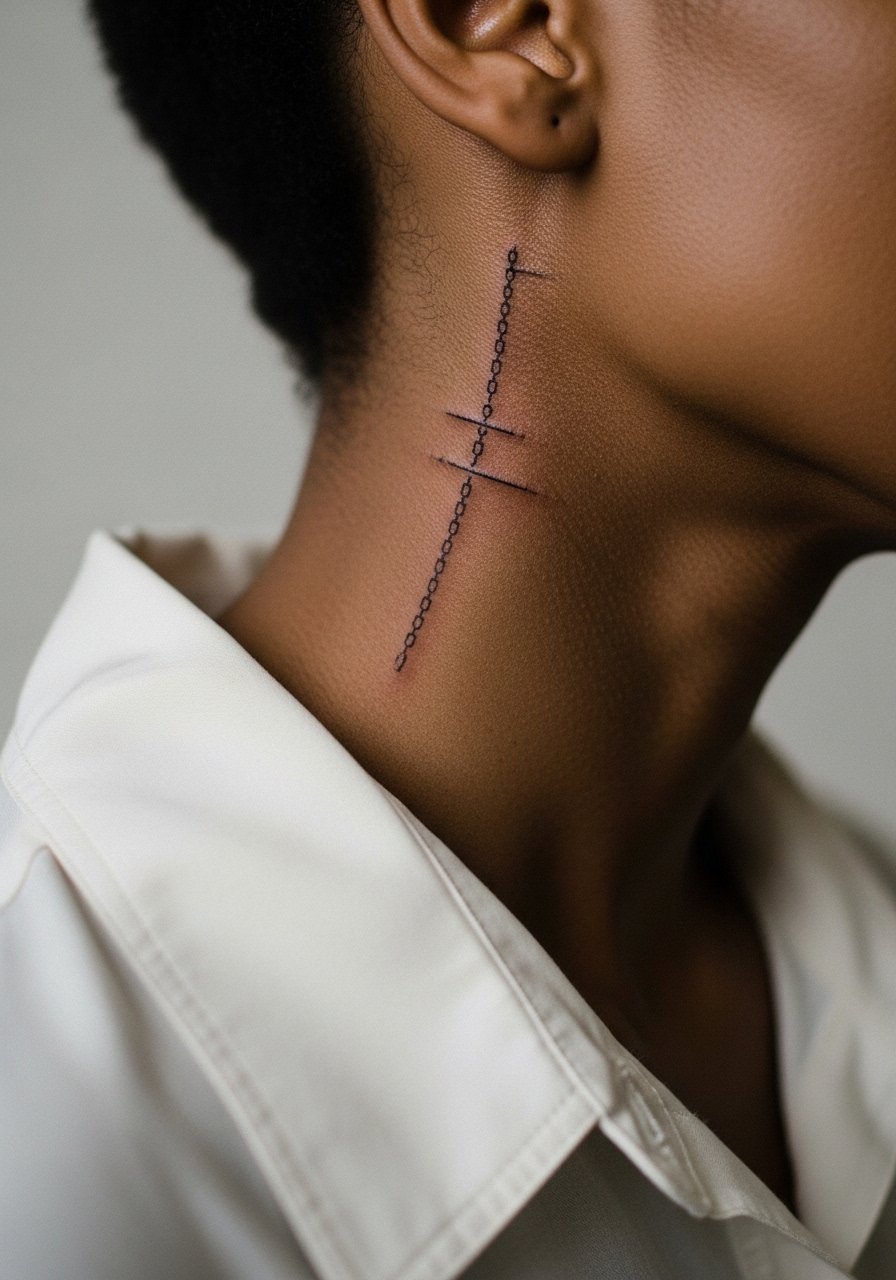
9. Fine line chains with ethereal Nen lines on the side neck
Neck placements can be hidden by hair and still peek when you want. Fine line vertical pieces here read elegant but the skin is delicate so ask your artist about depth and single-pass contouring. Pain and visibility are higher than an arm piece and some studios have stricter policies about neck work. For sessions wear a wide-neck shirt you can pull slightly aside. Keep in mind that people split on whether fine line belongs on the neck. One side accepts the upkeep. The other prefers heavier lines for the area.
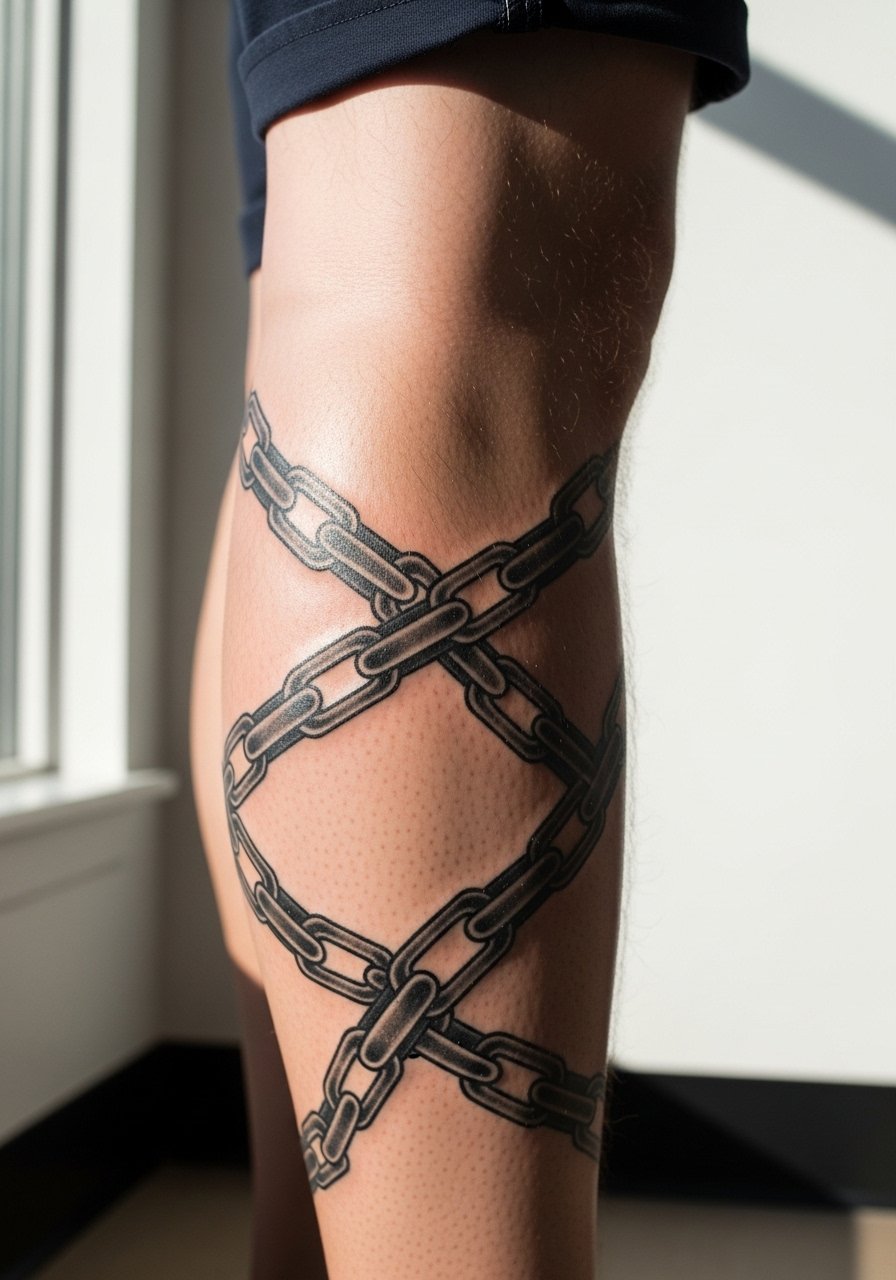
10. Ignorant style chunky chain links on the calf
The calf is forgiving and shows bold, naive lines well. Ignorant style chunky links get a rebellious look and the thicker strokes age reliably because the area is low friction. Sessions are comfortable and healing is quick if you avoid tight socks. For showing it off pick cropped joggers or shorts and pair with a simple boot or trainer. For the appointment wear loose drawstring shorts so the artist can roll the pant leg without pressure. Expect this style to need minimal touch-ups because the lines are intentionally bold.
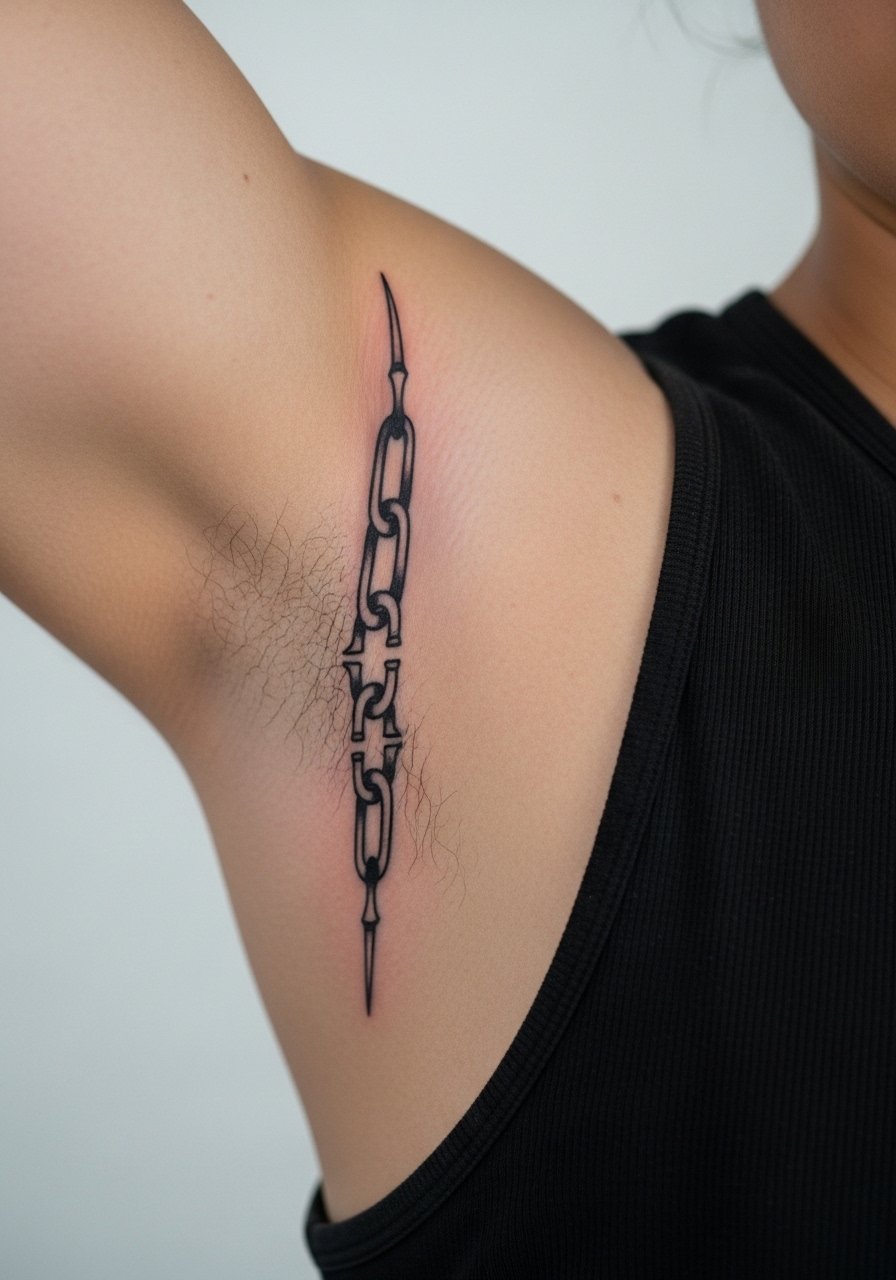
11. Anime-style stylized chains on the inner bicep
The inner bicep is a classic hiding spot for fan work. Anime-style linework reads crisp with medium line weight and a touch of color for highlights. The downside is that friction from arm movement can soften very thin details, so avoid dense, tiny crosshatching. Bring references that show exactly how much color you want and ask about whip shading for soft gradients. For the session wear a sleeveless muscle tank so the artist can rotate your arm freely. Pain is moderate and touch-ups are more likely if the arm sees rapid expansion or heavy gym use.
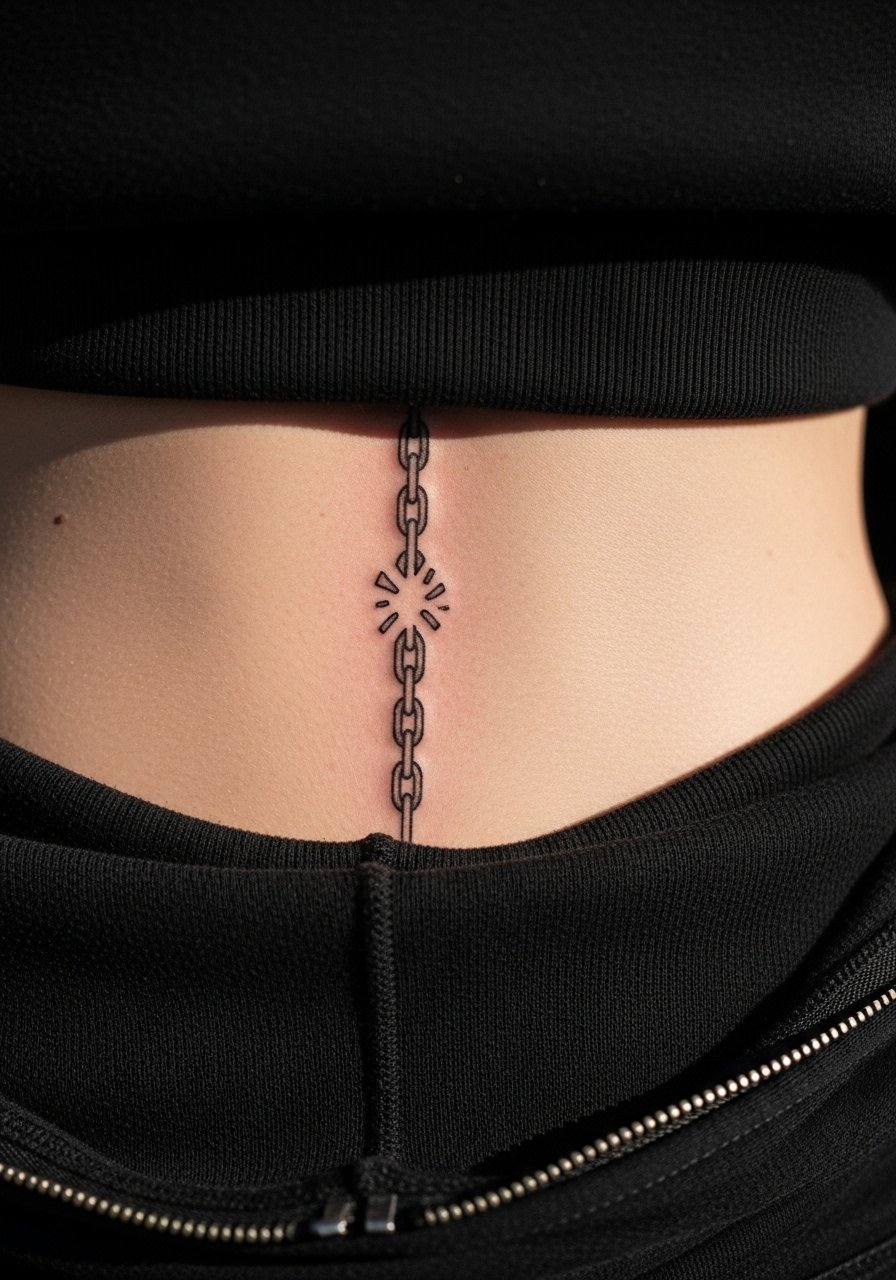
12. Minimalist broken chain down the spine
Most spine work reads dynamically when it follows the vertebrae rhythm. A vertical broken chain signals fractured loyalty themes from Kurapika's arc without overt fandom. Be aware the spine is a high-movement area and small links can merge over time if spacing is too tight. Ask for slightly wider spacing and a midline anchor point so the design ages with clarity. For the session choose an open-back dress or a zip-up hoodie you can pull aside to expose the lower spine. Expect touch-ups around year two if you live in hot climates that accelerate pigment shift.
13. Chains with embedded birthstone links for custom hybrid designs
I do like this hybrid idea because it personalizes the chain without adding obvious character art. Ask your artist to carve tiny settings into one or two links and suggest color accents that read like stones rather than full gems. The trick is to keep the colored area small and backed by blackwork to avoid rapid fading into smudges. For the session wear high-waisted denim shorts so an ankle or thigh setting is easy to access. Pair the finished piece with a matching thin pendant for nights out. This approach gives you a fan reference that doubles as a private personal marker.
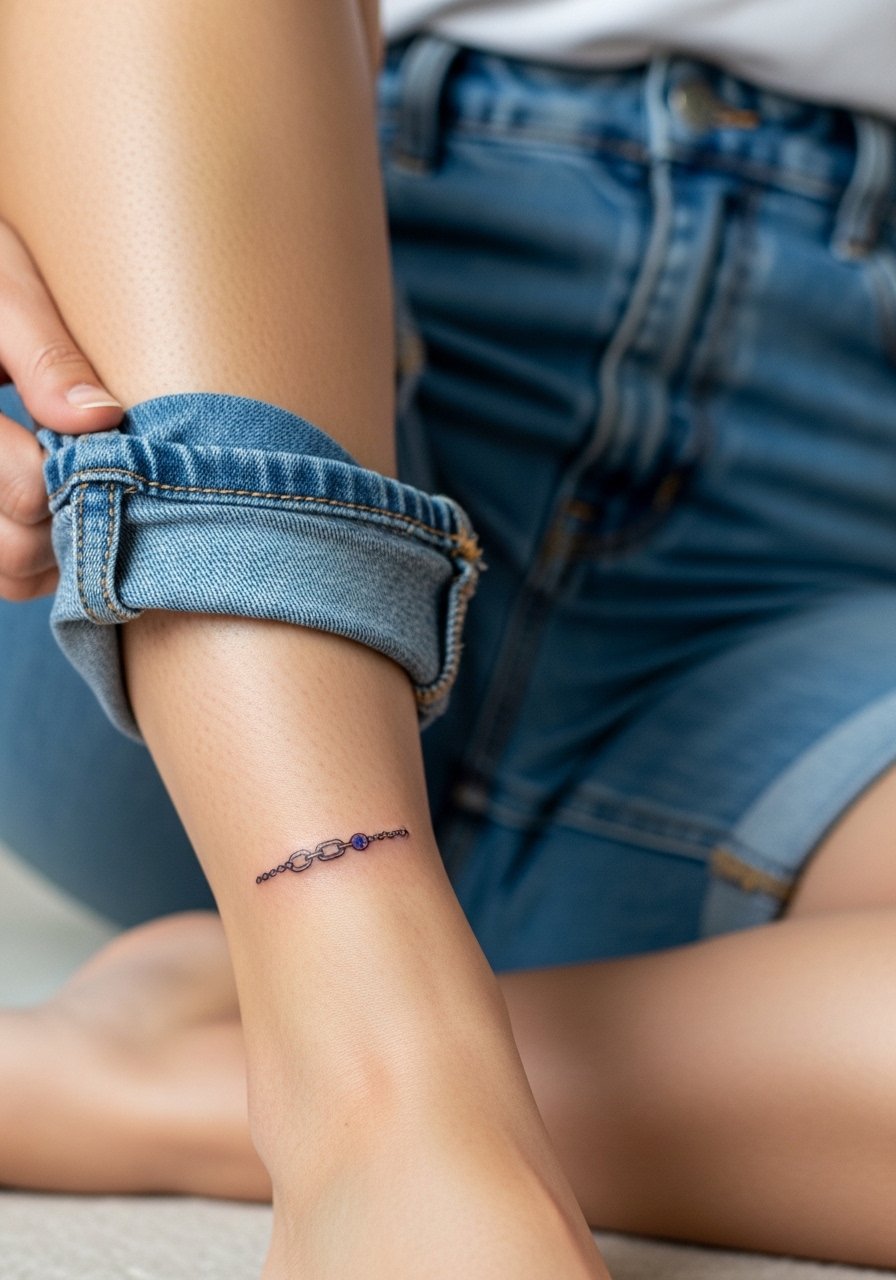
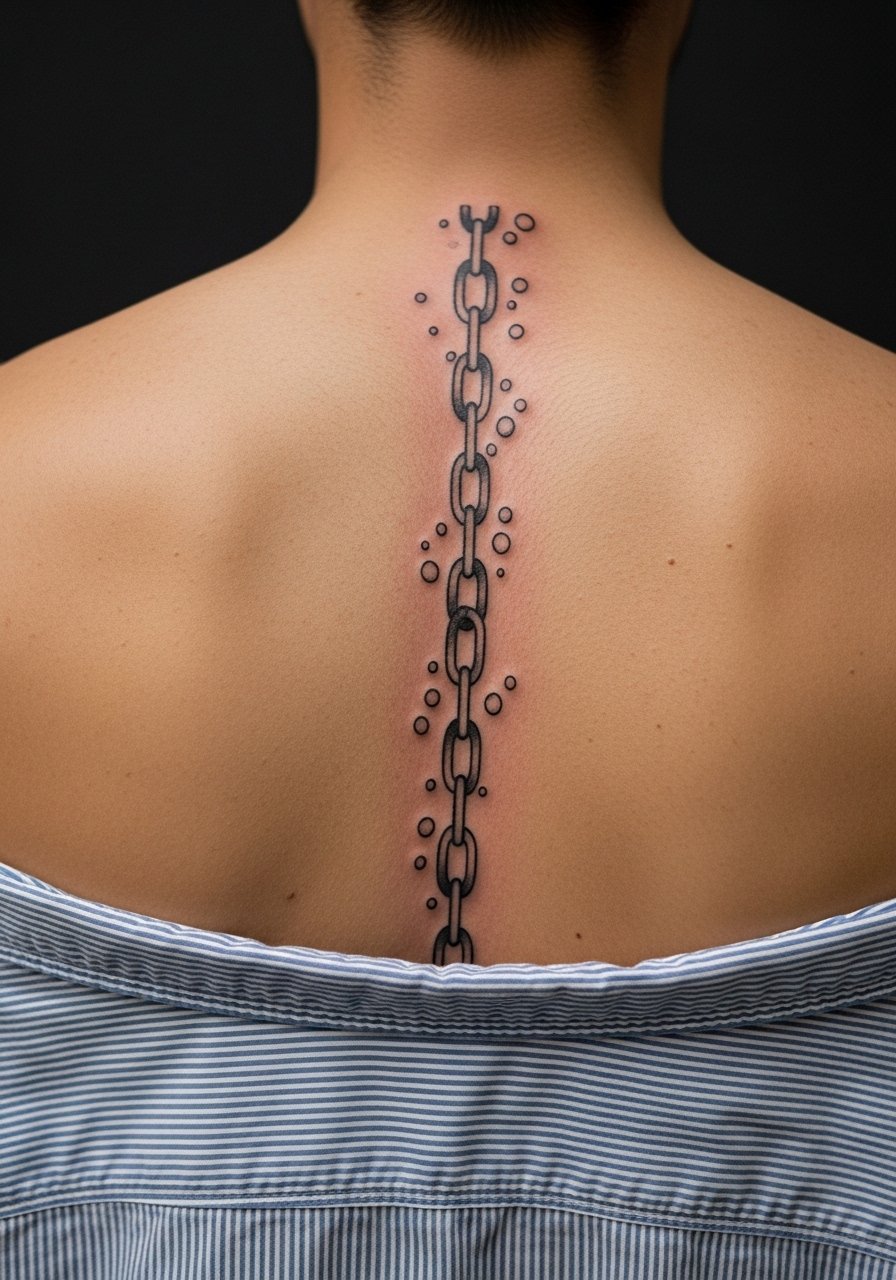
14. Vertical spine chain that mimics Kurapika’s posture
This idea plays with movement because the chain can appear to tighten or slack depending on posture. Most people who try it want motion, so request slightly staggered link sizes to reinforce depth. The session can be longer than a simple vertical line because artists will test stencils with your posture. Wear a button-down you can easily unfasten at the back to show the area during sit-ups. This design looks cinematic in photos and ages predictably when the links have breathing room. Consider a touch-up after any big body changes.
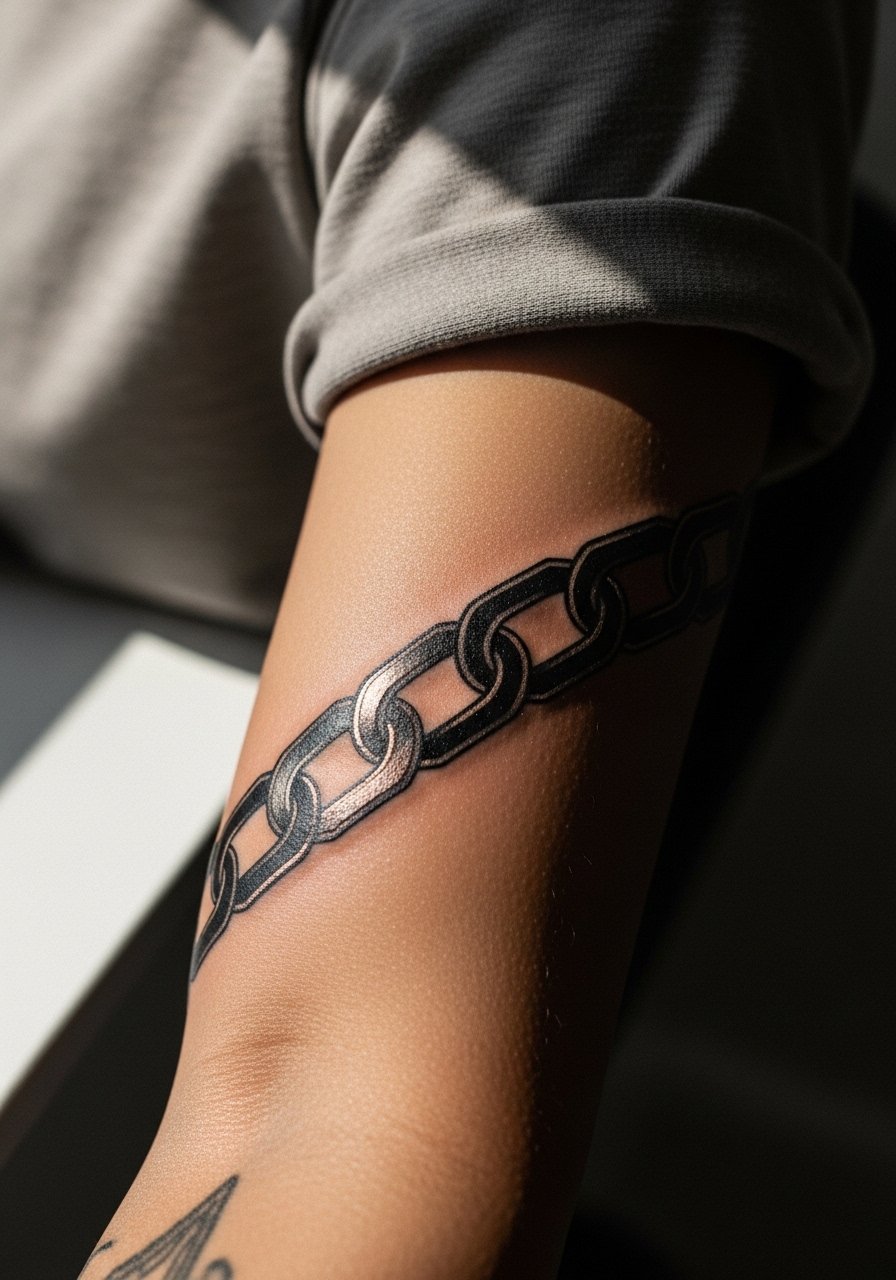
15. Dark-skin adapted blackwork chains with metallic ink gleam
Dark skin gets overlooked in many galleries, but bold blackwork and small metallic highlights can read beautifully if tested on a patch first. Ask for amplified line weight and a contrast plan rather than delicate finelines. Metallic or reflective inks need a test swatch because reaction and visibility differ by pigment. For the session tell the artist you want a patch test and plan for a slightly heavier outline. Pair the finished tattoo with neutral tops that let the blackwork stand out. From what I’ve gathered, artists who work often with pigmented skin adapt saturation and contrast to keep the design visible in photos and day-to-day.
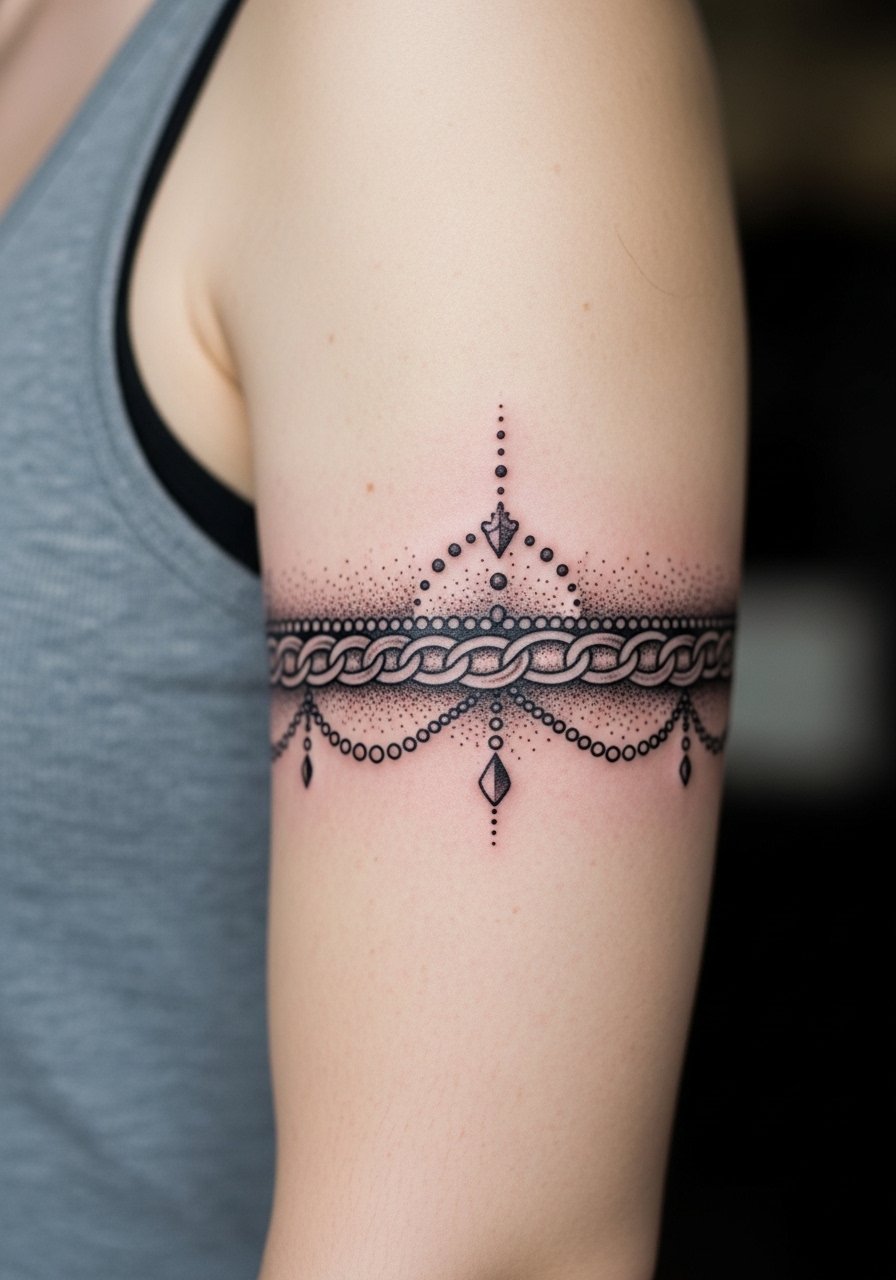
16. Ornate cuff-style chain wrap above the elbow with stipple shading
A cuff design reads like a band and suits an upper arm placement because the curve gives it presence without being loud. Request stipple shading and dot work to create texture that does not rely on heavy fill. The session can be comfortable and usually finishes in one longer appointment. For the session wear a loose button-down or a tank so the artist can access the upper arm easily. Keep the pattern slightly open at the top and bottom edges so it does not blur into a single band over time. This placement ages well if you avoid dense micro-details.
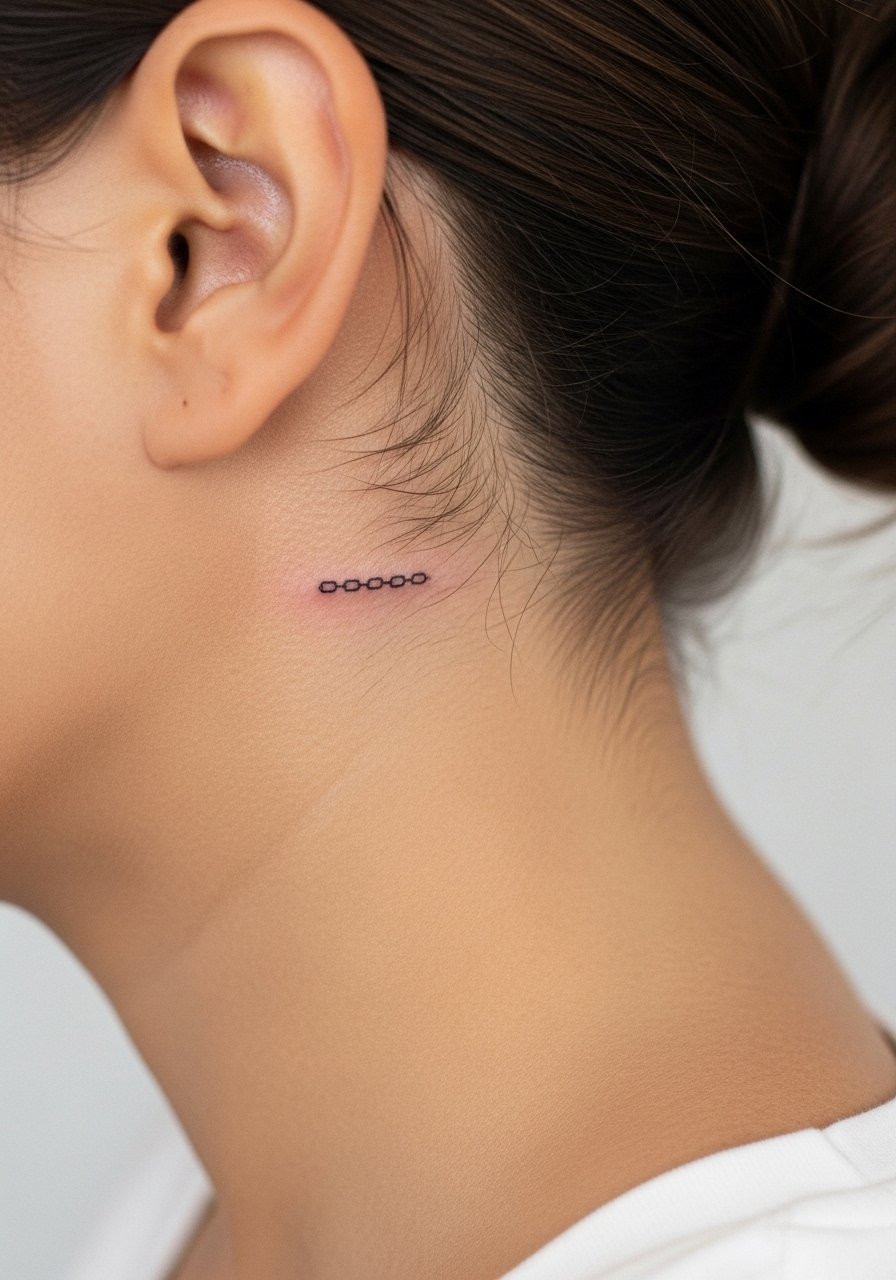
17. Tiny linked chain tucked behind the ear for a low-profile nod
A behind-the-ear link is tiny and private when your hair is down, yet visible when you tuck hair back. Due to the sensitivity of the area ask for a skinny link with a single-pass line and plan a patch test for any color. For the session have hair tied back so the artist can work cleanly. This placement needs a specialized hand and studio policies vary, so ask about experience with neck and behind-the-ear work before booking. It reads like a hidden token to fellow fans while staying out of most day-to-day view.
Frequently Asked Questions
Q: Will a fine line wrist chain need touch-ups more often than a blackwork collarbone piece?
A: Yes, fine line on a wrist generally needs touch-ups sooner because of friction and hand washing. Blackwork on the collarbone tends to hold saturation longer. Plan for a possible touch-up around year two for fine line wrist pieces.
Q: How should I dress for a ribcage watercolor session to limit movement and exposure?
A: Wear a fitted sports bra or cropped top that you can lift slightly to reveal only the rib area. That keeps the rest of your torso covered and helps the artist access the spot without shifting the stencil. Bring a loose hoodie to stay warm after the session.
Q: Are metallic inks safe for darker skin tones and do they photograph well?
A: Metallic inks can show up as sheen on darker skin but results vary. Ask for a patch test and expect that subtle metallic highlights will be used sparingly and backed by bold black outlines so the motif remains readable in photos.
Q: Which placements are best if I want a Kurapika chain that stays private most of the time?
A: Thigh and upper inner bicep placements keep the work private. A small wrist or behind-the-ear link can also be concealed when you want. Consider where you work and dress when choosing privacy level.
Q: Do I need to tell my artist about dry healing versus adhesive film for my ankle or wrist piece?
A: Yes, bring the question up during the consult. Some artists prefer breathable film for high-movement areas, others recommend dry healing to avoid trapped moisture. Name both camps and ask which they have seen work best for the exact placement and your skin type.
Q: What should I show my artist to avoid a chain design that blurs into a smudge later?
A: Bring close-up references that show line weight and spacing, plus a photo of the exact placement on a similar body part if possible. Ask them to demonstrate how much room each link needs to "breathe" and whether they recommend heavier outlines for that spot.
