
Fine line trends look perfect on a screen, but pretty dark fantasy tattoos live in a different set of rules. They ask for contrast, careful spacing, and a plan for aging that keeps motifs readable as linework and shading soften. I wrote this list thinking about how pieces heal, how they show through clothing, and what to ask during the consultation so each design keeps its mystery for years. Start with the first idea to see how a small change in placement changes everything.
1. Inked Moon and Cracked Glass Collarbone Script
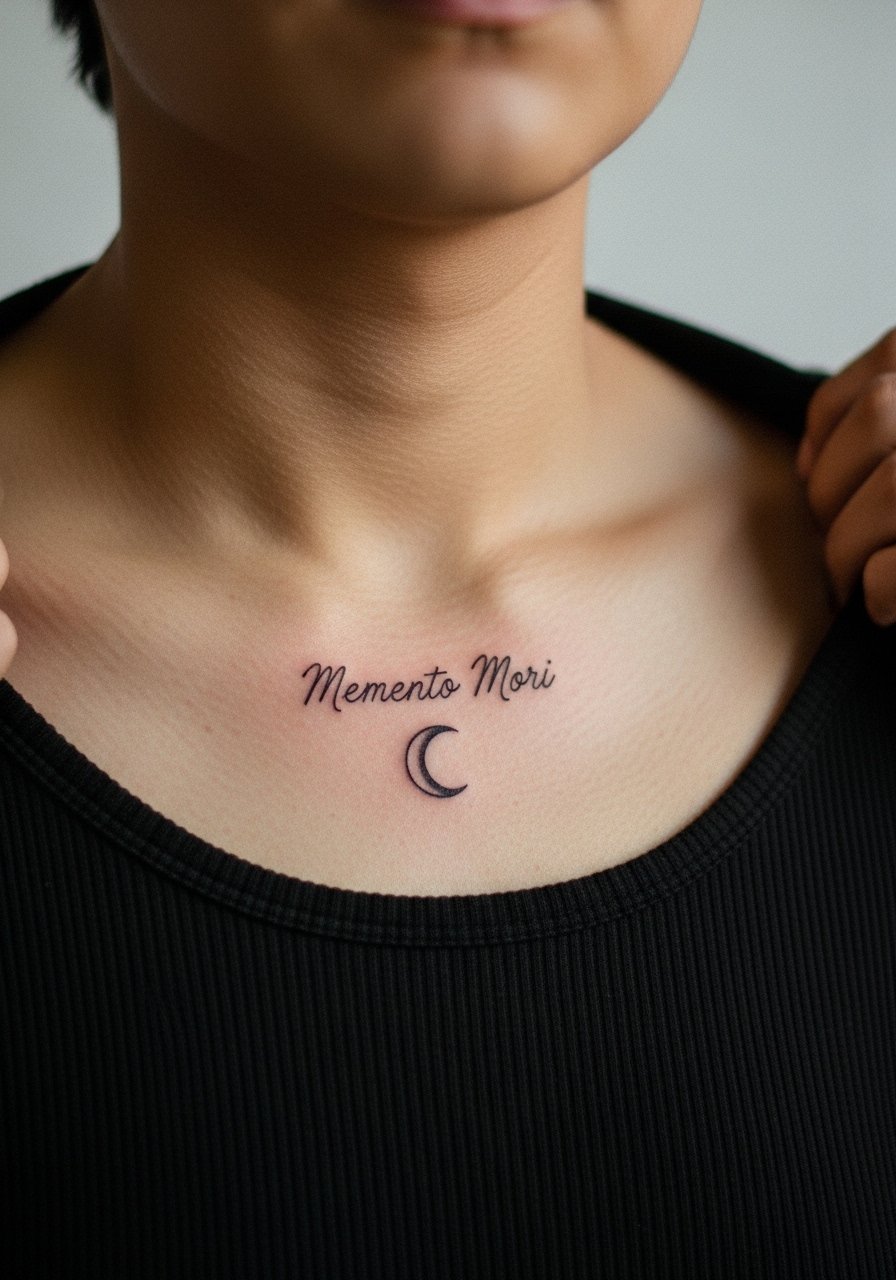
When you want a dark fantasy vibe with delicate presence, a moon paired with tiny cracked-glass accents reads like a secret kept at the collarbone. Fair warning, the collarbone is a high-movement area and tiny script can blur if the letters are too close. Ask for slightly heavier linework in the main shapes and stipple shading around the cracks to keep contrast as the piece heals. For showing it off, a wide-neck sweater or a thin chain pendant frames the ink without covering it. This placement needs a touch-up timeline of about two to four years depending on sun exposure.
2. Miniature Blackwork Dragon on the Side Rib
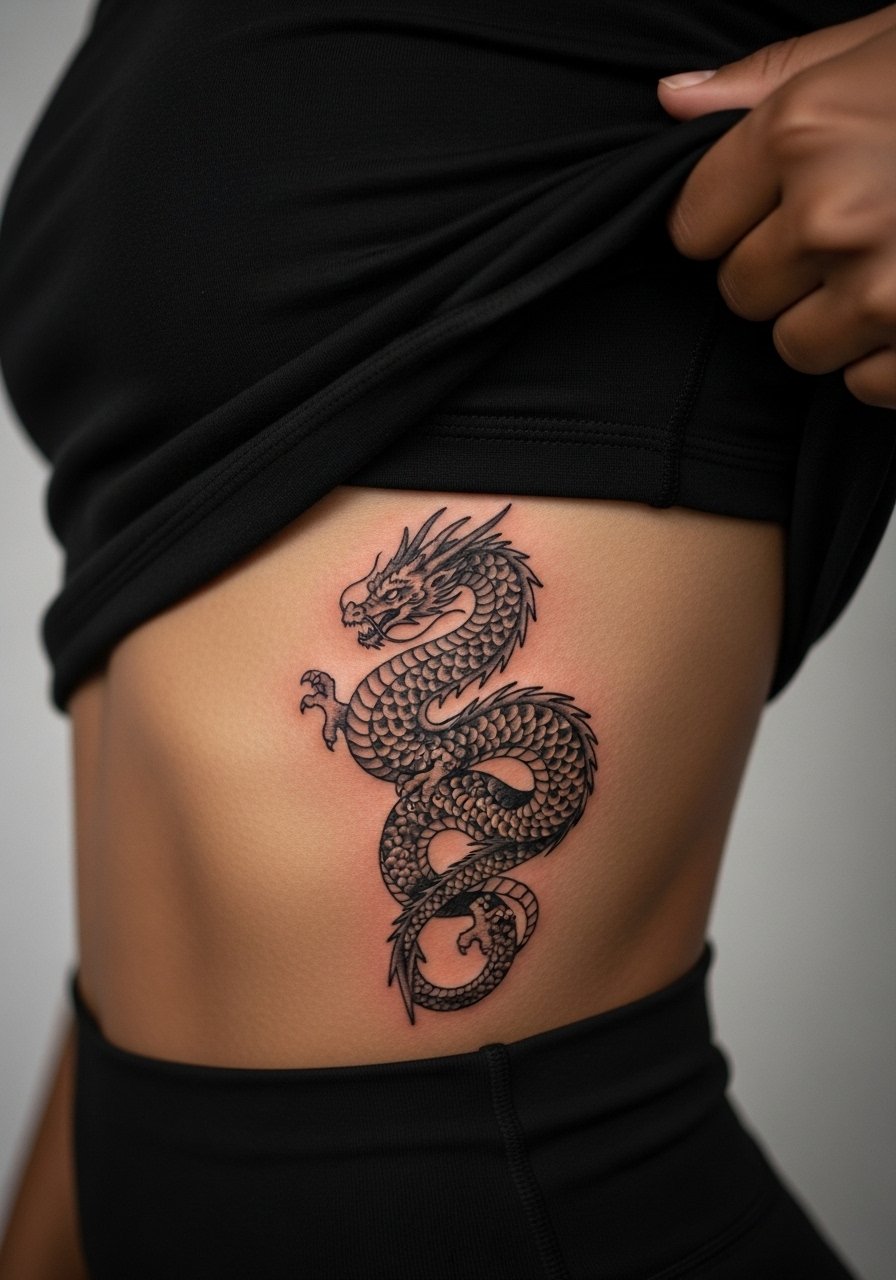
The ribcage is sensitive, so expect a longer session with regular breaks. Pain-wise it lands high, but the large flat area lets the artist use saturated blackwork that ages into a cohesive silhouette. Artists split into two camps about fine detail on ribs. One camp says dense detail blurs quickly because of skin movement. The other camp says proper spacing and deeper saturation hold up fine. Ask where your artist stands and whether they recommend stronger line weight or more negative space. For this design, plan for a single long session rather than multiple tiny passes to avoid excess trauma and reduce blowout risk.
3. Thorned Rose in Micro-Realism on the Outer Forearm
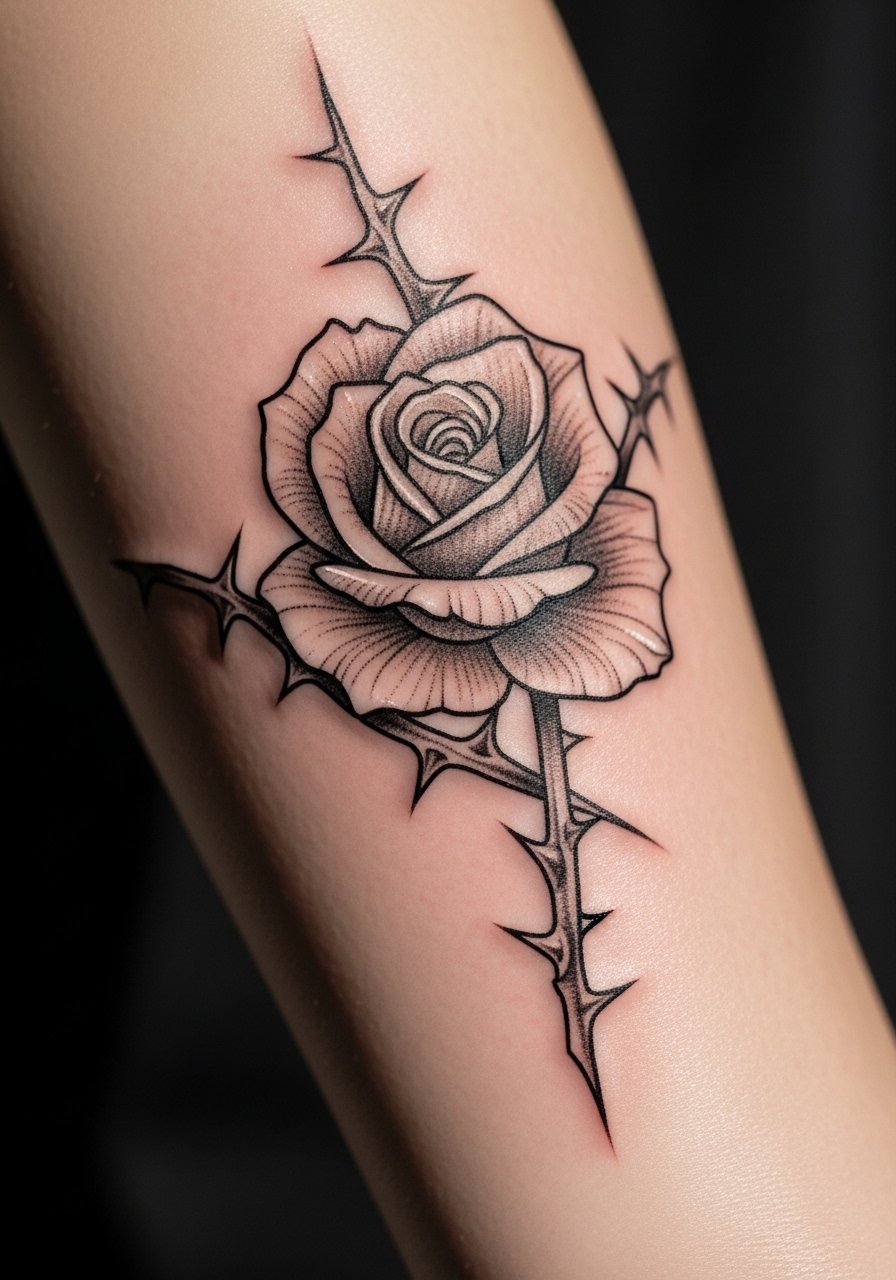
I have noticed forearm pieces show detail well for years if the linework has breathing room. The thorned rose pairs dark petals with crisp stems and dot work shadows to keep depth without overworking the skin. During consultation, show photos that match the exact line weight you want and ask for stipple shading in shadowed areas rather than dense grey wash. For the session wear, roll up a sleeve and pick a loose button-down shirt so the artist has full access without tugging. Expect touch-up needs around year three for the delicate petal tips if you spend a lot of time outdoors.
4. Blacked-Out Crescent with Negative Space Stars on the Hand
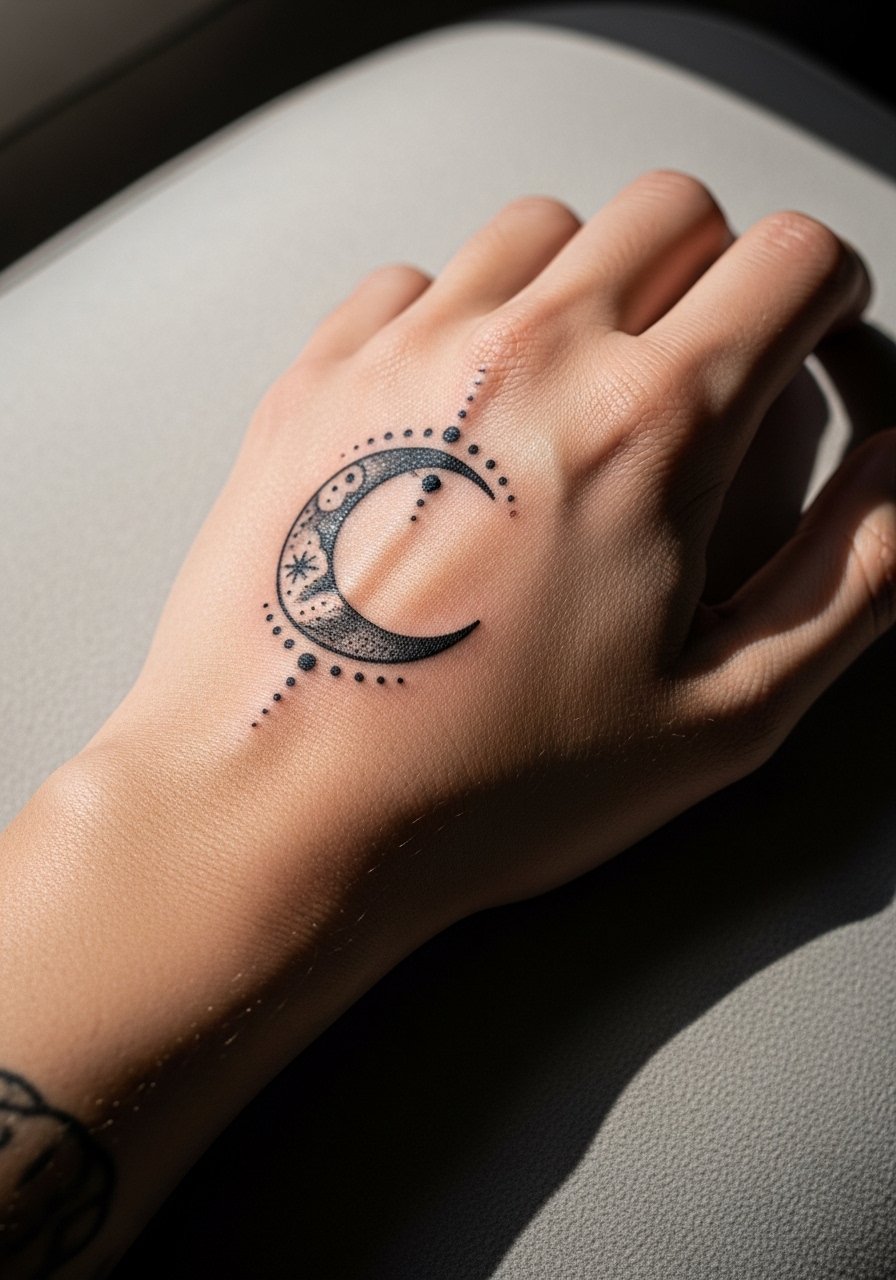
Hand tattoos feel immediate and visible, but they also face daily wear from washing and friction. The biggest mistake is asking for very tiny interior detail on the hand. For a dark fantasy piece that lasts, go for bold black fill with intentional gaps to form stars and tiny moons. The session will sting more than an arm piece and often needs a faster touch-up cycle. If you plan to show it off, stack a thin cuff bracelet that sits clear of the knuckle area so the black silhouette remains the focal point. Consider career implications before booking.
5. Underbust Mandala with Gothic Filigree
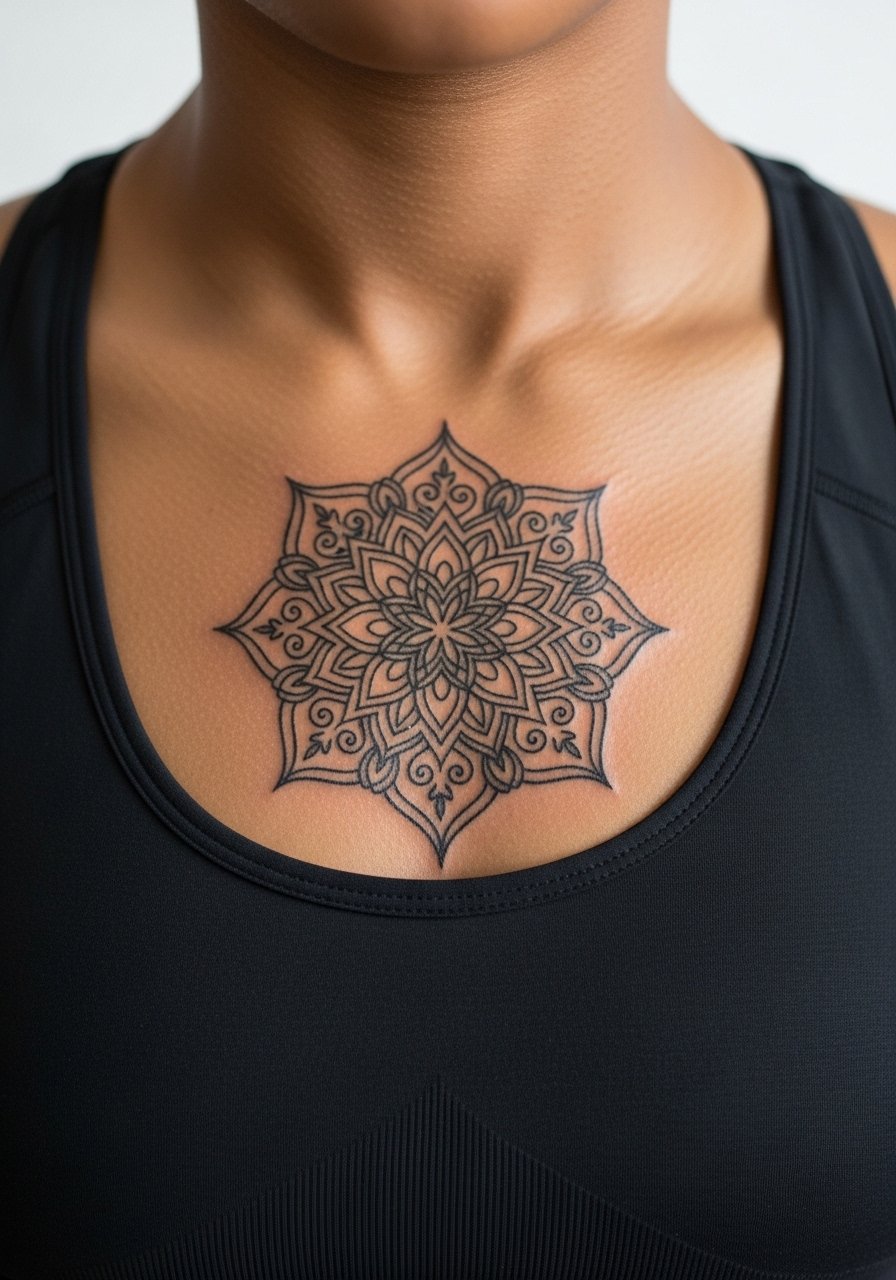
Sternum and underbust pieces read dramatic with dark fantasy motifs, but the area demands a steady hand and thoughtful spacing. A common error is compressing too many spokes and flourishes into a small band. Ask the artist to scale filigree outward so each element has negative space, and use stipple shading for gradients instead of dense greys. Session-wise, breathing and position make this area feel more intense, so pace yourself. For showing it off, an open-back dress or a bandeau pairs well. Keep in mind this placement often ages differently with weight fluctuation and body changes.
6. Shadowed Sylph on the Inner Bicep
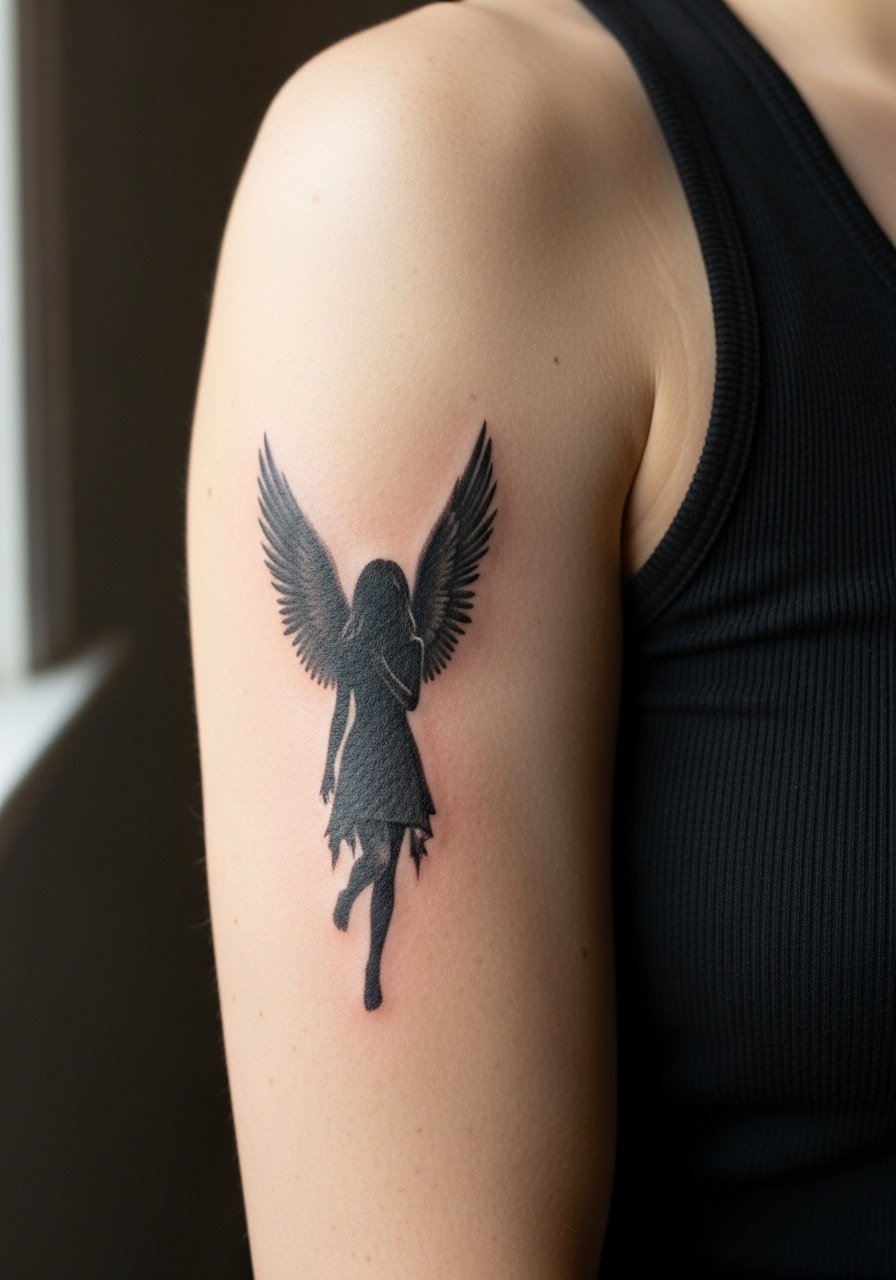
Inner bicep pieces can be hidden or revealed, which makes them perfect for a subtle dark fantasy figure. The inner arm moves a lot, so fine lines there risk softening faster than on flat areas. When you sit down for this, ask for slightly denser linework and a mix of whip shading and dot work to keep texture. For session comfort, wear a loose tank top that lets you raise the arm without rubbing. Expect touch-ups at year two to keep the silvery highlights crisp if you want that ghostly glow to persist.
Studio Day Picks
The small, high-contrast pieces above heal differently from larger silhouettes, so a few thoughtful items smooth the session and the first week.
-
Tattoo stencil transfer paper kit. Lets you preview placement and line weight on skin before the needle hits, especially useful for collarbone and inner bicep plans.
-
Topical numbing cream. Applied as your artist recommends it takes the edge off rib and sternum sensitivity without altering linework.
-
Thin protective film roll. A light barrier for hand and finger tattoos that face constant washing in the first week.
-
Fragrance-free gentle body wash. Cleans the area without stripping the delicate dots and lines that define micro-realism forearm pieces.
-
Aquaphor healing ointment. Thin layers during the initial days lock in moisture for high-contrast blackwork while still allowing the skin to breathe.
7. Gothic Violin and Broken Notes on the Outer Thigh
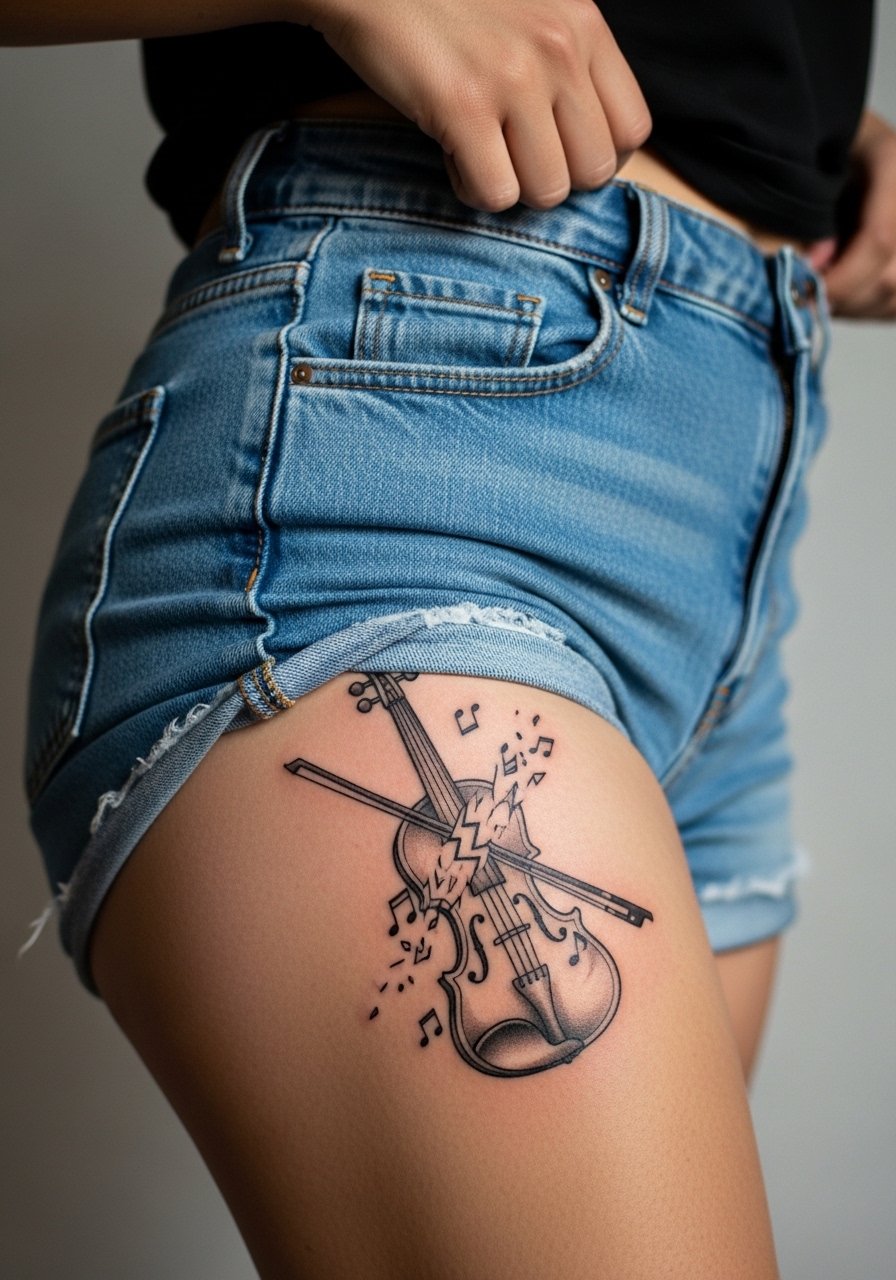
Thigh pieces are forgiving when it comes to size, which means you can carry both delicate linework and dense black to get that moody contrast. The main mistake is doing the violin too small and crowding the broken notes. In the consultation, specify how much negative space you want between notes so they remain distinct as the skin relaxes. For the session, wear loose drawstring shorts or a skirt so the area is accessible without pressure. Healing is relatively straightforward, but expect a lighter touch-up if you often wear tight clothing across the site.
8. Midnight Stag with Branch Antlers on the Calf
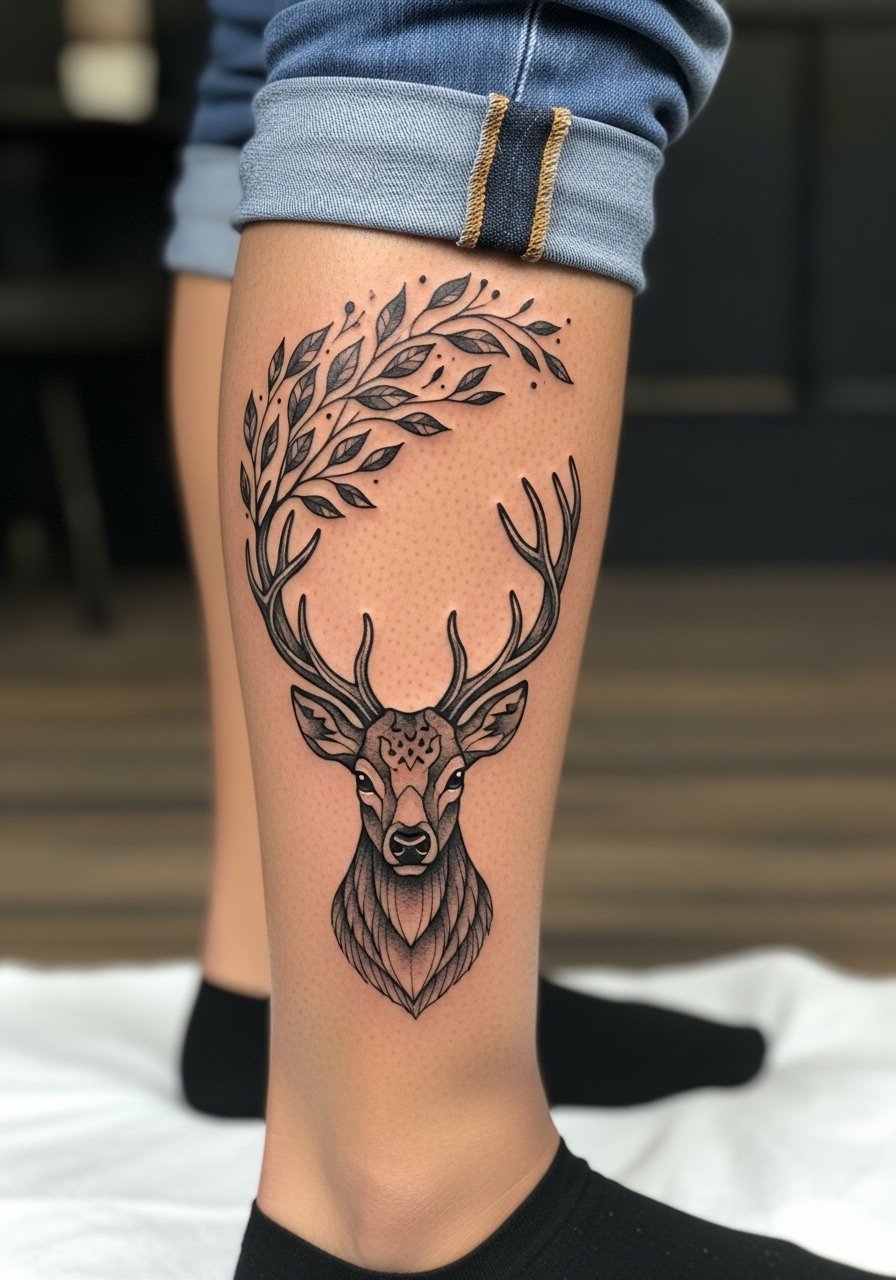
Calf tattoos sit in a zone that tolerates bold silhouettes well. There is a strong visual impact when antlers turn into botanical branches. A common misstep is over-detailing the antlers when a simpler silhouette keeps the piece readable at distance. Ask for high saturation in the main head and lighter dot work on the antlers for texture without risking blowout. For session comfort, bring a cushion since calf sessions can last longer than you expect. This placement ages predictably and usually needs fewer touch-ups than hands or ribs.
9. Moonlit Moth Above the Wrist
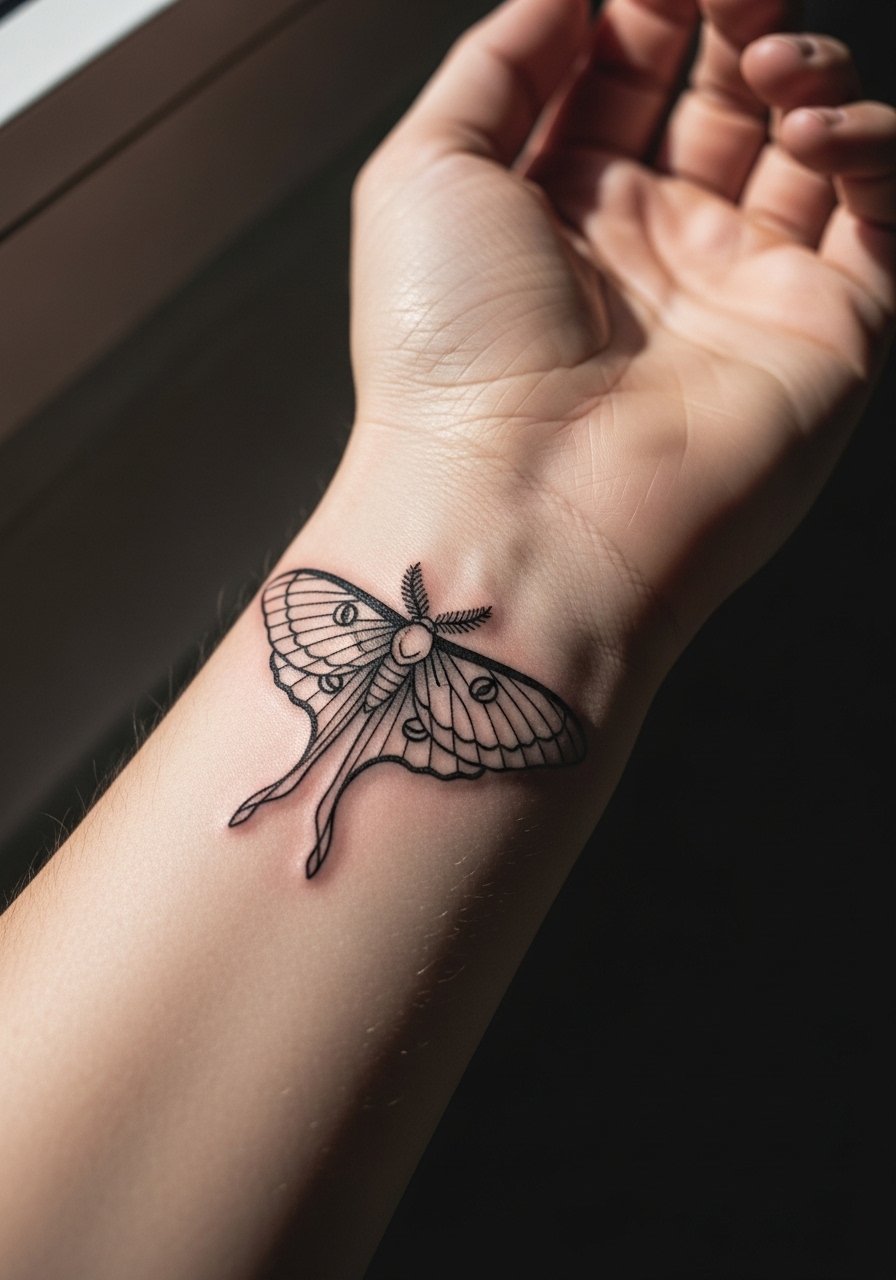
Wrist pieces show immediately and they also face constant sun and movement. The mistake is packing a lot of micro-detail into the wing veins. Instead, ask for bold contour linework with dot work filling the wings for texture that holds. For the session, wear a loose long-sleeve button shirt you can roll up so the artist has clean access. Wrist tattoos often require touch-ups sooner, and the first two months of aftercare determine much of the long-term clarity.
10. Dark Fairy Circling the Ankle
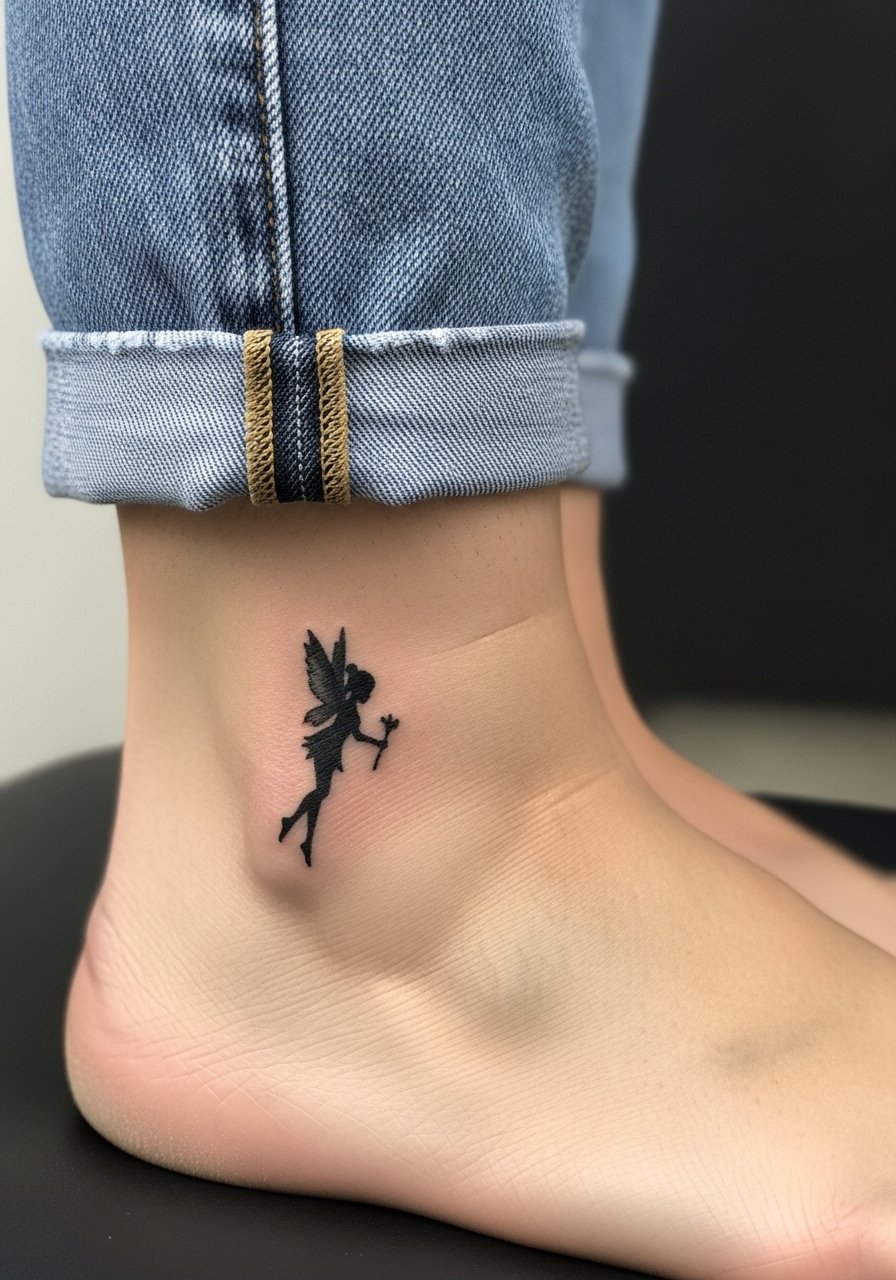
Ankle work is intimate and delicate. The area sees shoe friction and frequent movement, which makes tiny legs and wings vulnerable. The best version of this idea avoids hair-fine legs and keeps the silhouette readable with slight negative space around limbs. A good consultation note is to request a small halo or shadow under the figure to anchor it without tiny internal detail. For the session, slip on shoes that are easy to remove afterward to limit irritation while healing. Expect that the ankle may need a fast touch-up cycle compared to flat calf or thigh pieces.
11. Shadowed Gargoyle Behind the Ear
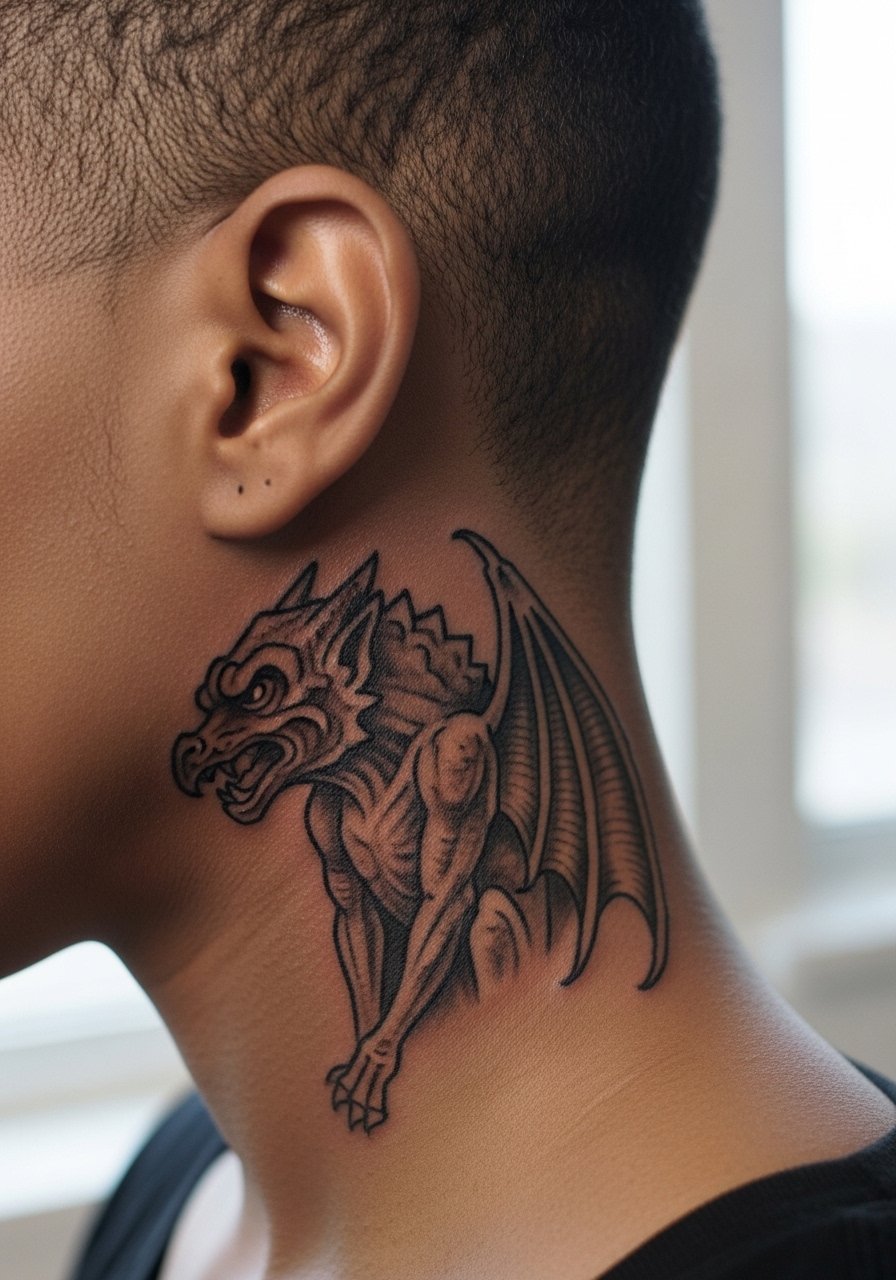
Behind-the-ear tattoos require careful framing and a compact design. The area can hide detail well under hair, but the skin there is thin and the design can lose sharpness if lines are too fine. A common version that ages poorly uses ultra-thin contours. Ask for a slightly bolder outer line and fine stipple for face and wing texture. Since the location is discreet, plan for aftercare that protects against shampoo and collar friction. If you want this to be visible for work events, consider hair styling that pulls the hair back occasionally.
12. Veiled Portrait with Cracked Glass Halo on the Upper Back
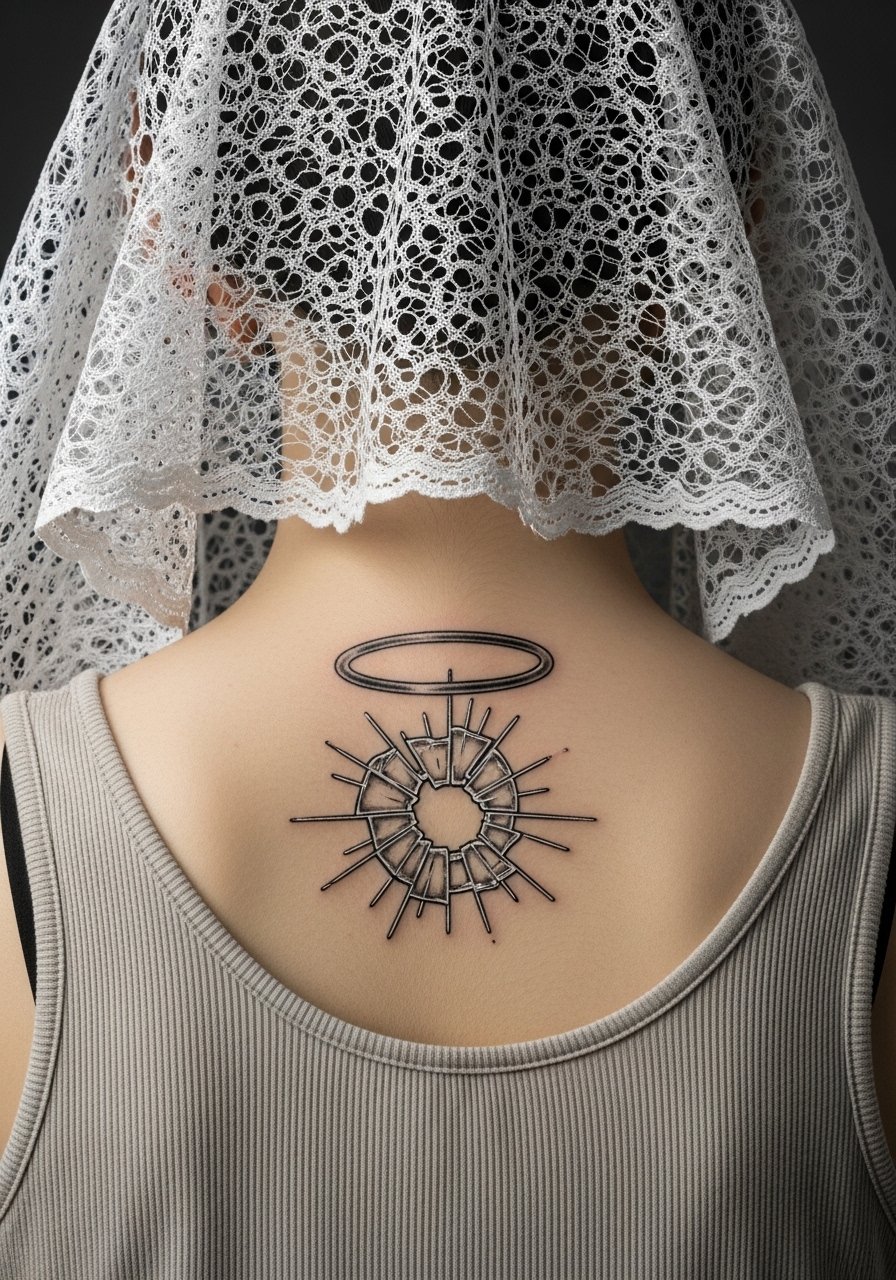
Upper back pieces allow for larger compositions that still feel intimate. Portraits in dark fantasy look best when the artist balances saturated blacks with soft stipple shadows so facial features remain legible over time. The mistake is compressing the halo and portrait so they compete. Ask for breathing room around the face and a cracked-glass motif pushed slightly outward. For session-day wear, a loose button-down shirt you can pull aside usually works. Healed, these pieces age well if you avoid chronic sun exposure.
13. Black Rose Wrist Band, Interrupted by a Keyhole
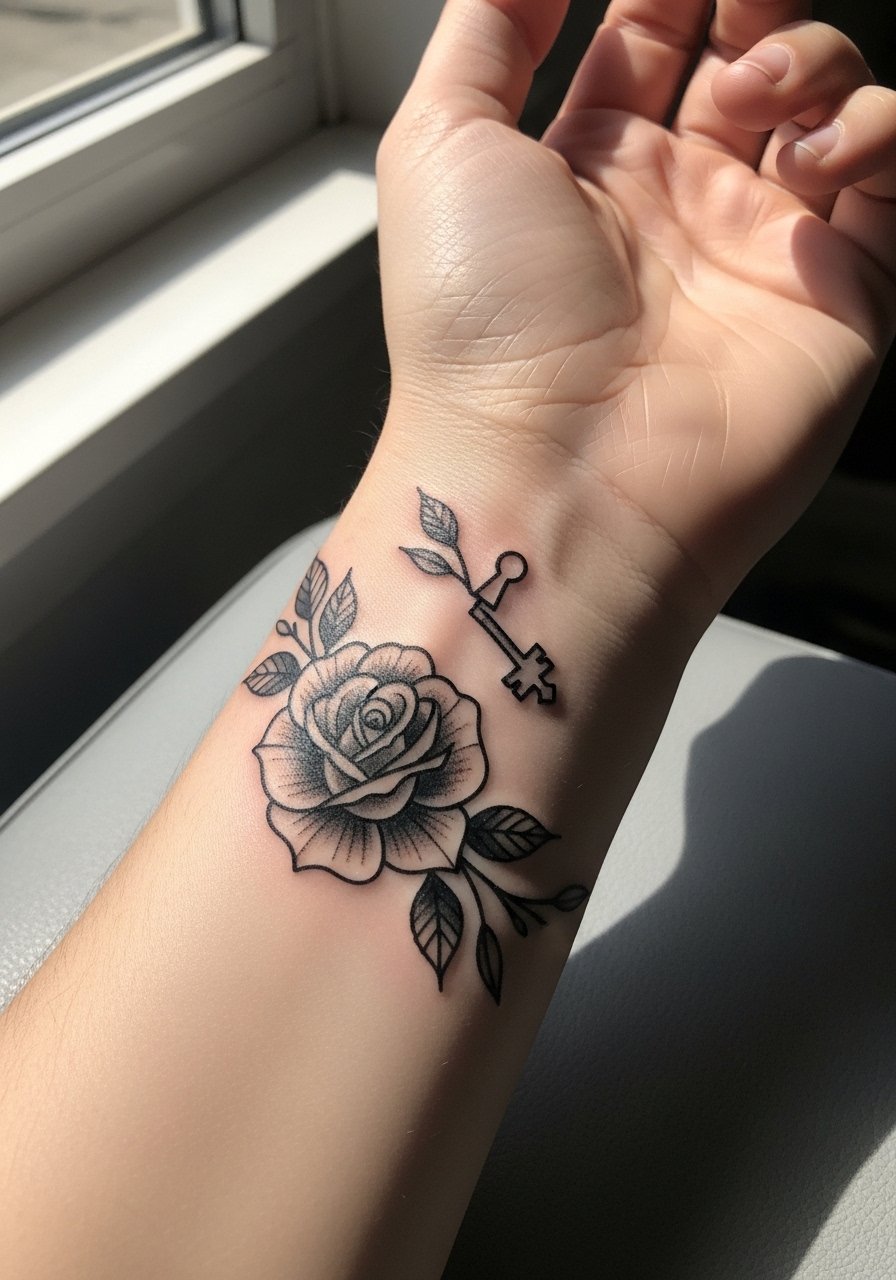
A band-style wrist tattoo reads striking with dark floral silhouettes interrupted by a negative-space keyhole. The largest risk here is making the band too tight or too thin, which leads to early blurring. During the consult, ask for gaps between petals and a thicker primary outline. Pair this with a minimalist watch that sits above the band so both elements breathe. Expect touch-ups in tight petal edges after the first year as the wrist undergoes frequent motion.
14. Blackened Compass with Occult Symbols on the Shoulder Blade
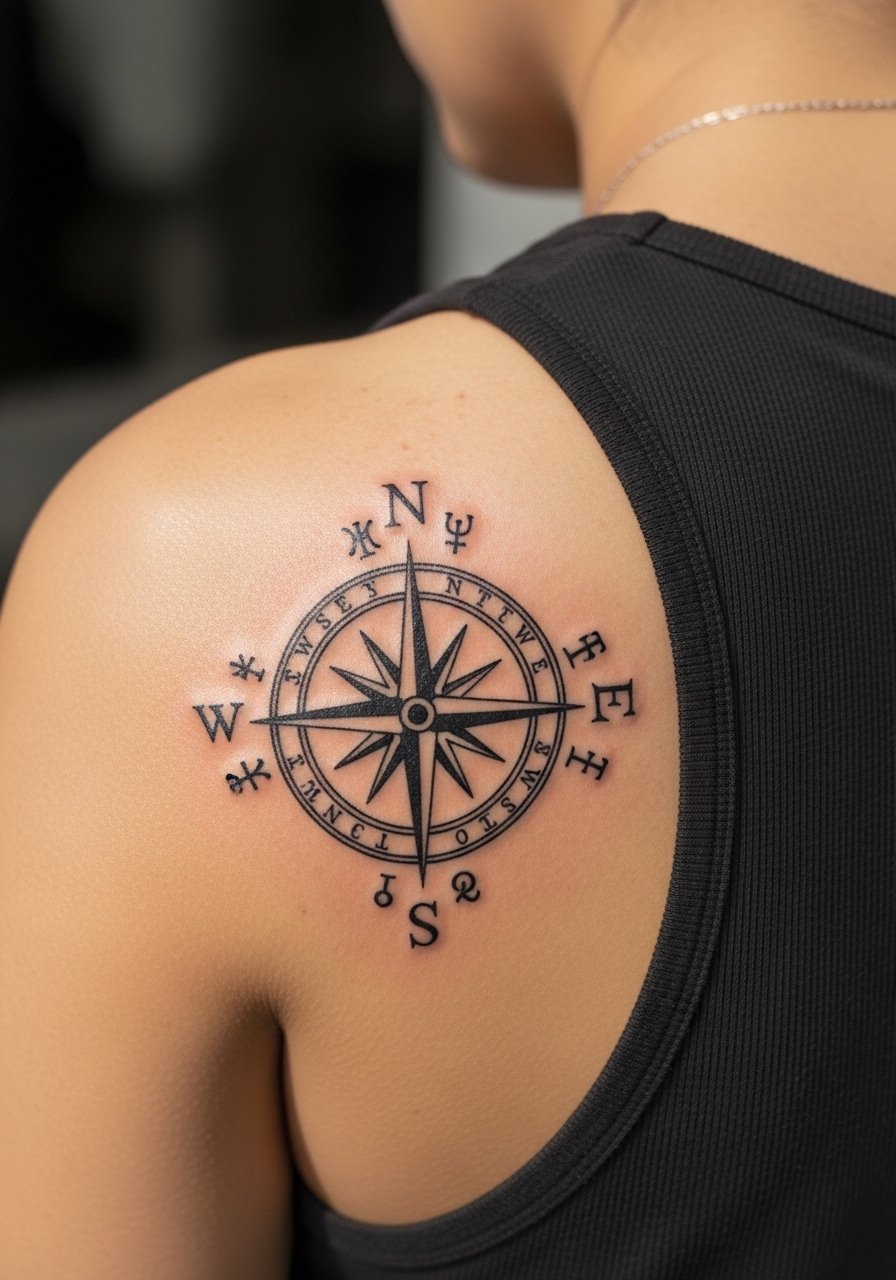
Shoulder blade tattoos handle directional motifs well because the plane is broad and relatively low-movement. A common mistake is crowding sigils into a tiny compass. Scale the compass so the sigils sit around it with clear negative space, and request dot work for shading to keep texture without dense grey wash. For showing it off, a spaghetti-strap top that leaves the shoulder visible makes the composition read like an emblem. This placement tends to age nicely unless regularly exposed to intense sun.
15. Watched Eyes in a Cloak on the Sternum Edge
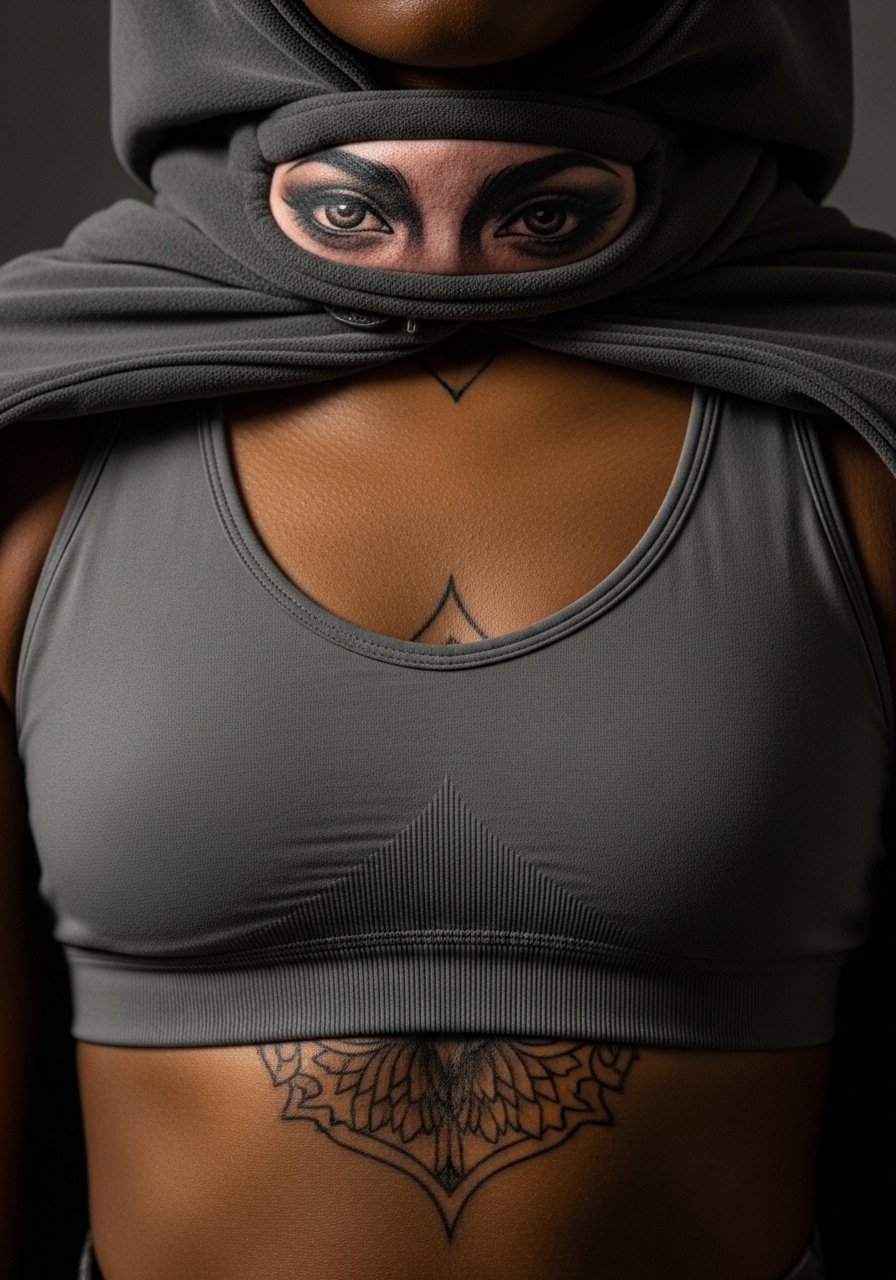
Sternum-edge pieces can be evocative, but they also live near movement and clothing lines. The typical error is placing micro-eyes too close to the fabric line where friction causes early softening. Ask to position the eyes slightly higher or to make lashes and pupils bolder so they retain expression. For session wear, a zip-up top helps you remove clothing without pulling across the area. Keep in mind heavier shading near the chest may need touch-ups if weight or posture shifts over time.
16. Night-Blooming Bellflower Sleeve Fragment on the Forearm
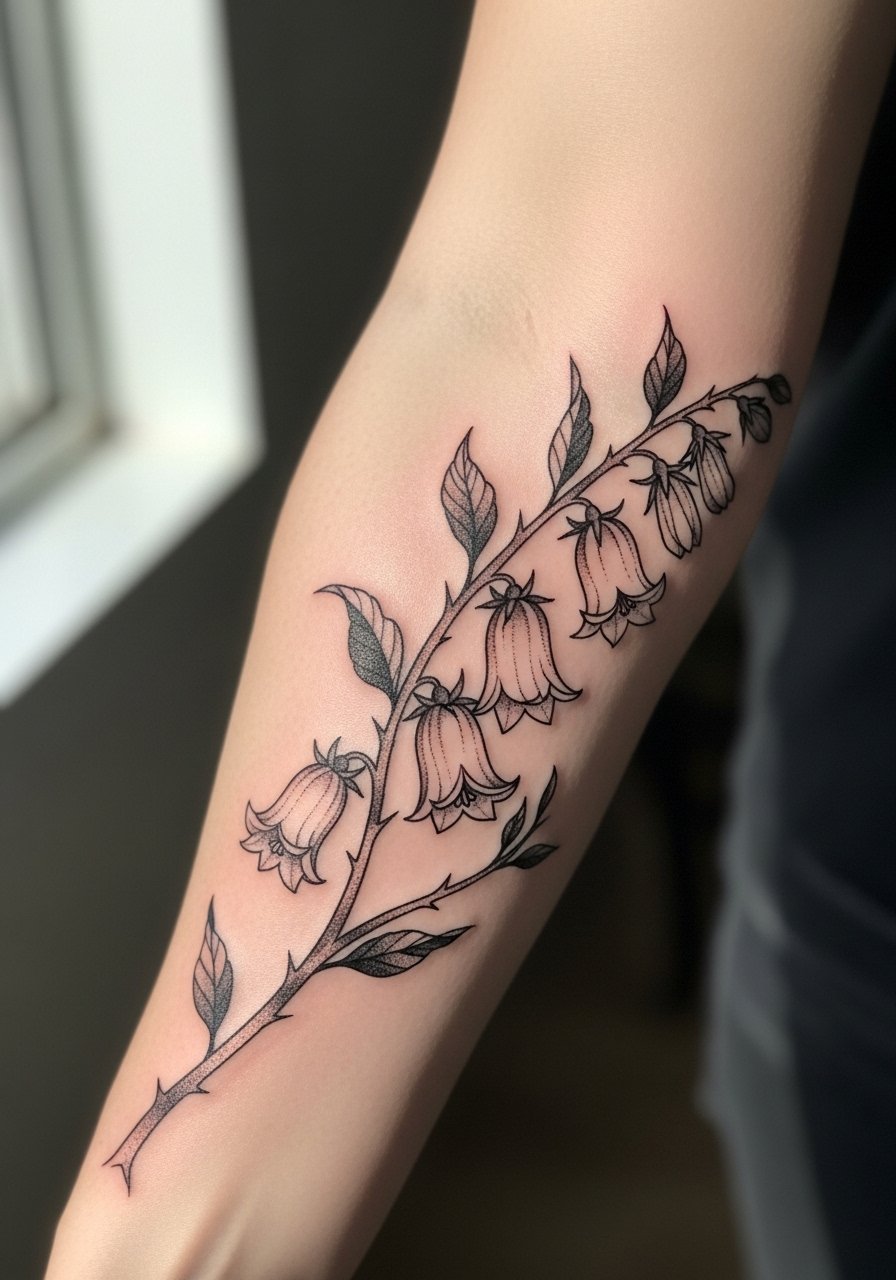
Sleeve fragments let you blend botanical forms with dark fantasy silhouettes in a way that scales easily. The visual impact comes from alternating heavy black fills with delicate dot work, which keeps the composition legible as it softens. The most frequent mistake is crowding multiple motifs into a narrow band instead of stacking them vertically. When you consult, ask for a mockup that shows how the branch flows when the arm moves. For showing it off, roll sleeves or wear a three-quarter linen shirt. Expect touch-ups along edges where sleeves rub.
17. Blackthorn Dagger Piercing a Crescent on the Hip
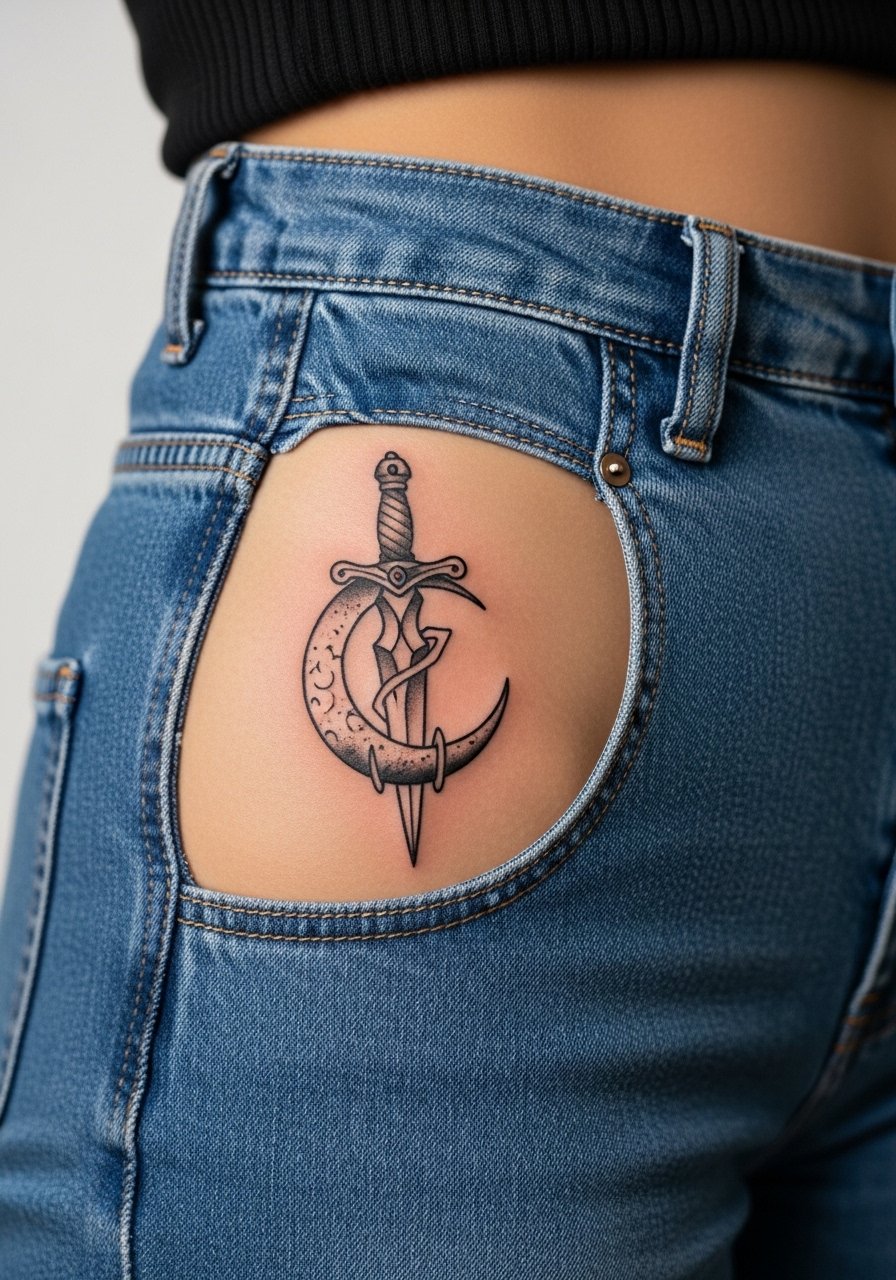
Hip tattoos are sensual and private, and the skin there accepts darker saturation well. A common mistake is too-narrow daggers that look delicate when new but lose definition after healing. Aim for a bold central line with textured dot work on the thorned handle. For the session, wear high-waisted bottoms that you can lower slightly without discomfort. This area handles touch-ups well if you want to deepen black areas after the first healing cycle.
18. Obsidian Crow Nesting on the Scapula
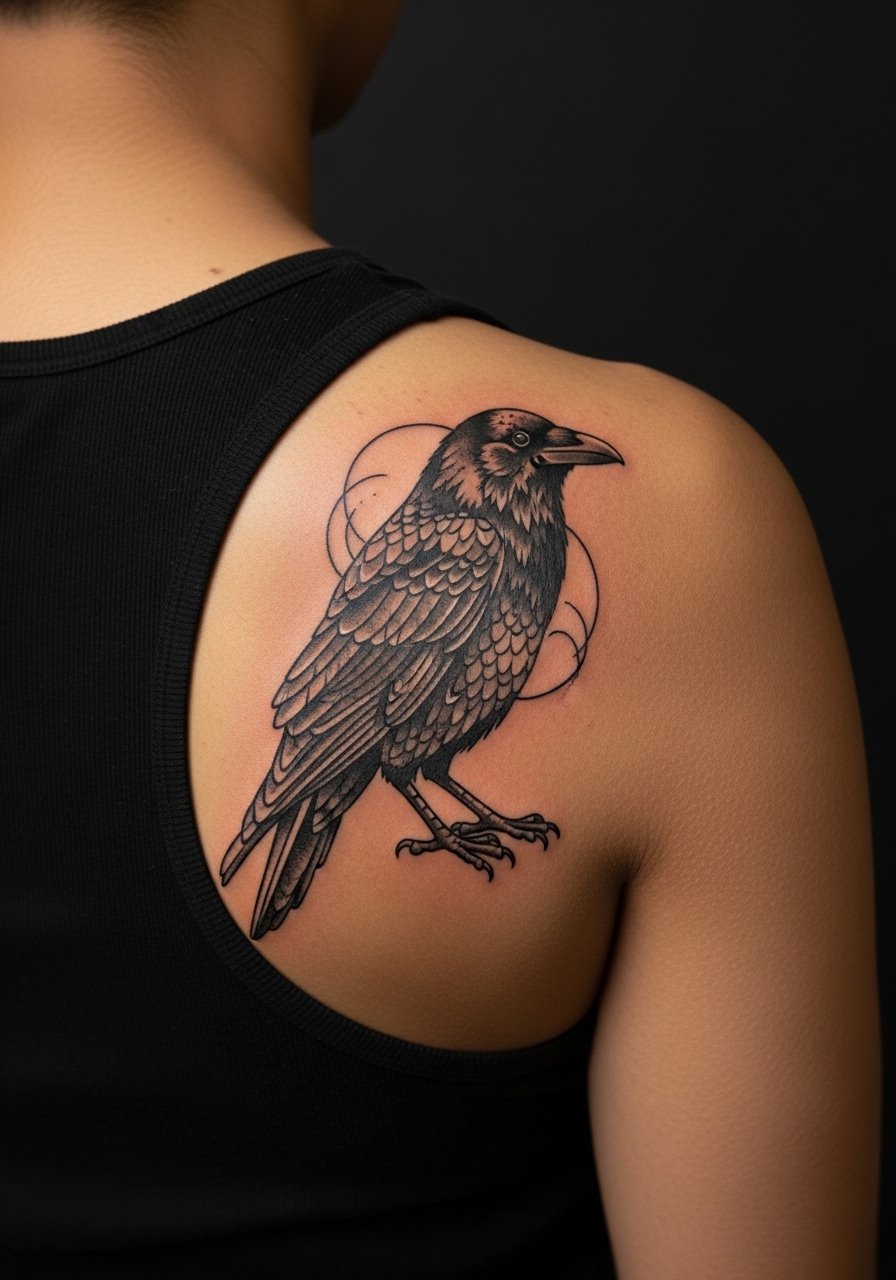
The scapula gives room for wings and texture, and a crow silhouette in saturated black looks theatrical without needing micro-detail. People sometimes overwork feather texture which can read muddy after a few years. Ask for suggestion of solid wing blocks with layered stipple to imply feathers. If the design brushes the strap area of tops, choose looser clothing for the first weeks to avoid rubbing. This placement tends to be resilient, with touch-ups mostly for contrast restoration.
19. Tiny Ruins and Vaulted Windows on the Ankle
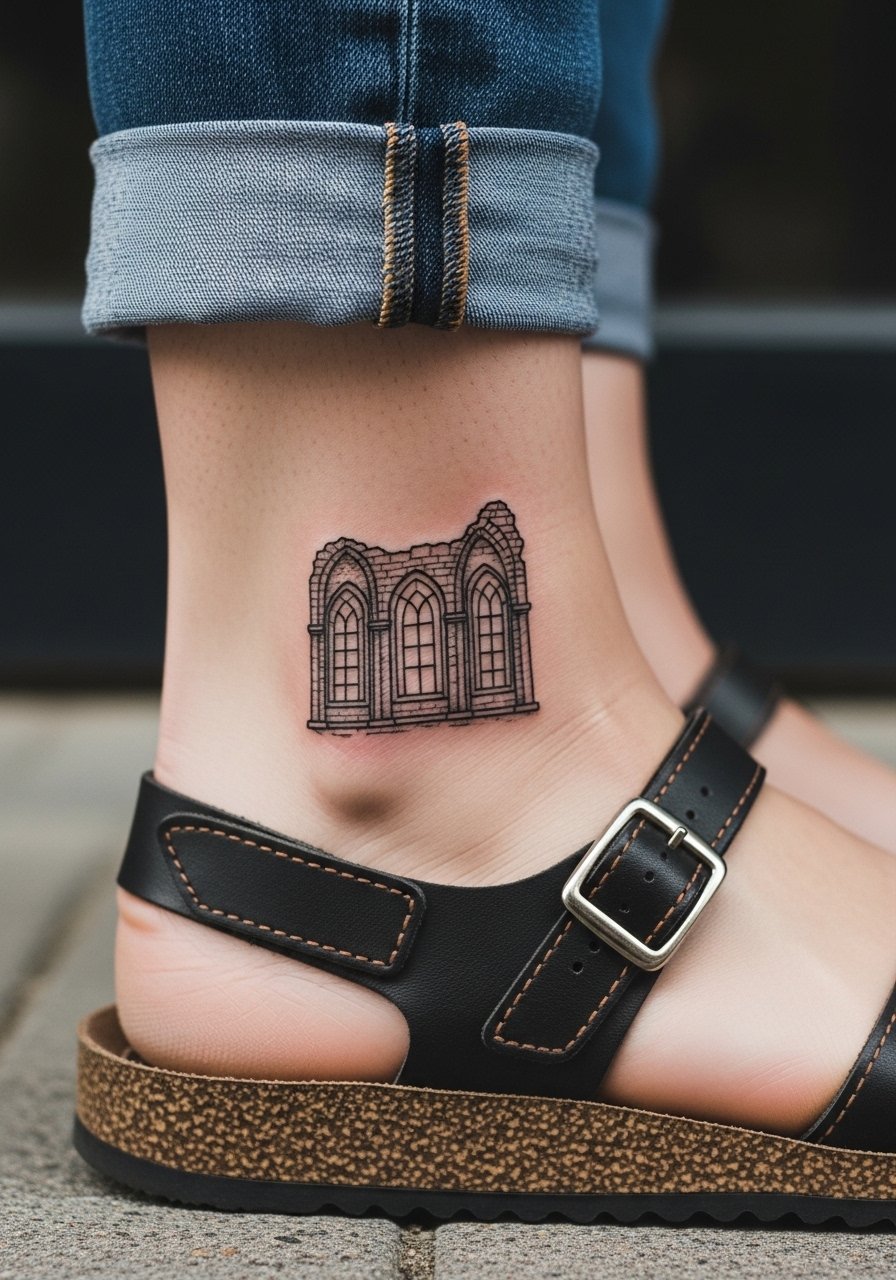
Mini architecture on the ankle reads like a secret map. The common mistake is cramming detailed archways into a narrow band so they blur. Instead, ask for simplified window silhouettes and heavier negative space to suggest depth. For showing it off, pair with strappy sandals and cropped pants that let the piece peek out. Ankle tattoos face friction from socks and shoes, so plan for a touch-up in the two-year range.
20. Blackened Lacunae Script along the Side Rib
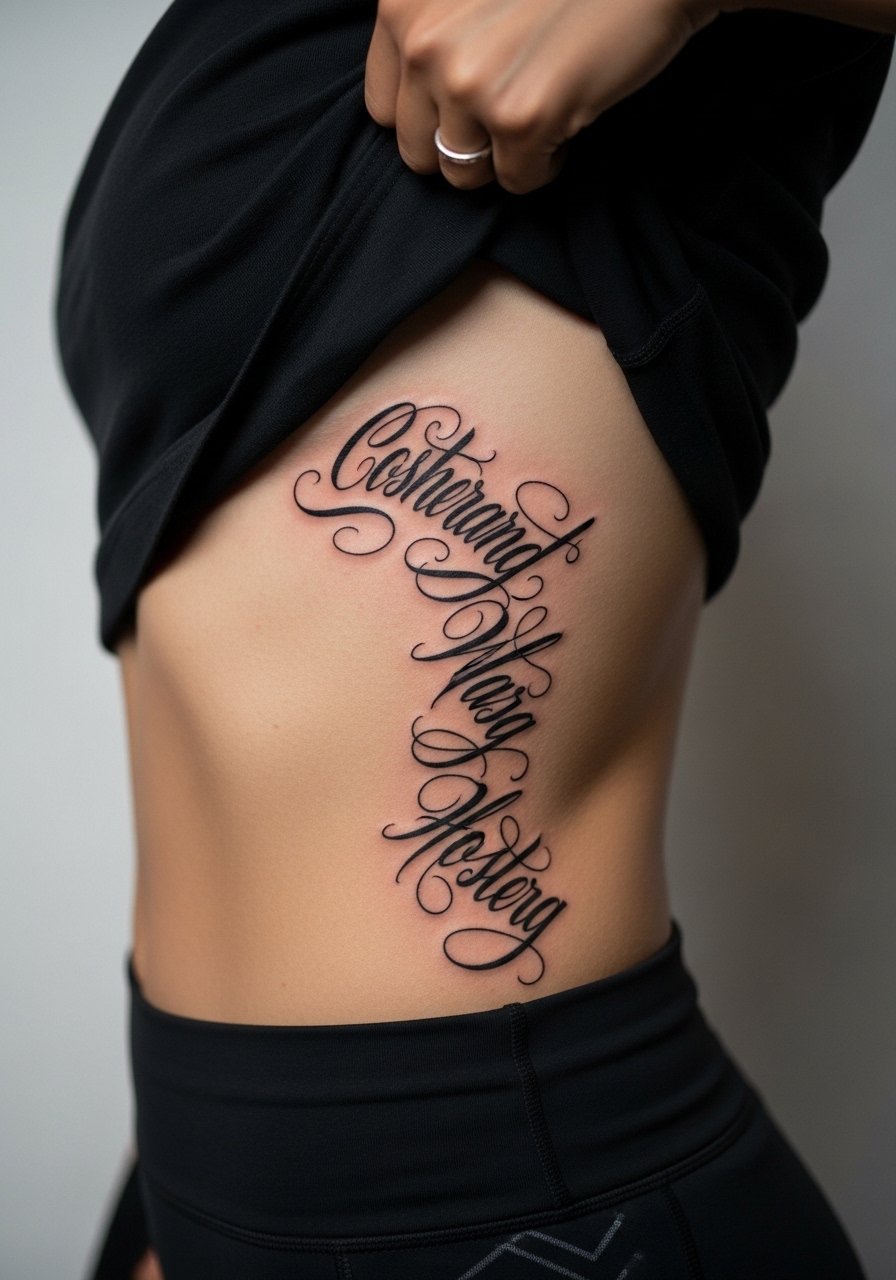
Script on the ribs carries emotion but also faces the debate about fine lines in mobile areas. One camp warns that ribs cause lines to blur within a couple of years because the skin stretches. The other camp argues that with strategic spacing and slightly heavier strokes, script can hold up. Ask your artist whether they prefer to increase letter spacing or to subtly thicken key strokes. For the session, wear a zip-front or cropped top so you can change without pulling at the area. Expect a touch-up more often than for a forearm script.
21. Midnight Garden Sleeve Tip Behind the Elbow
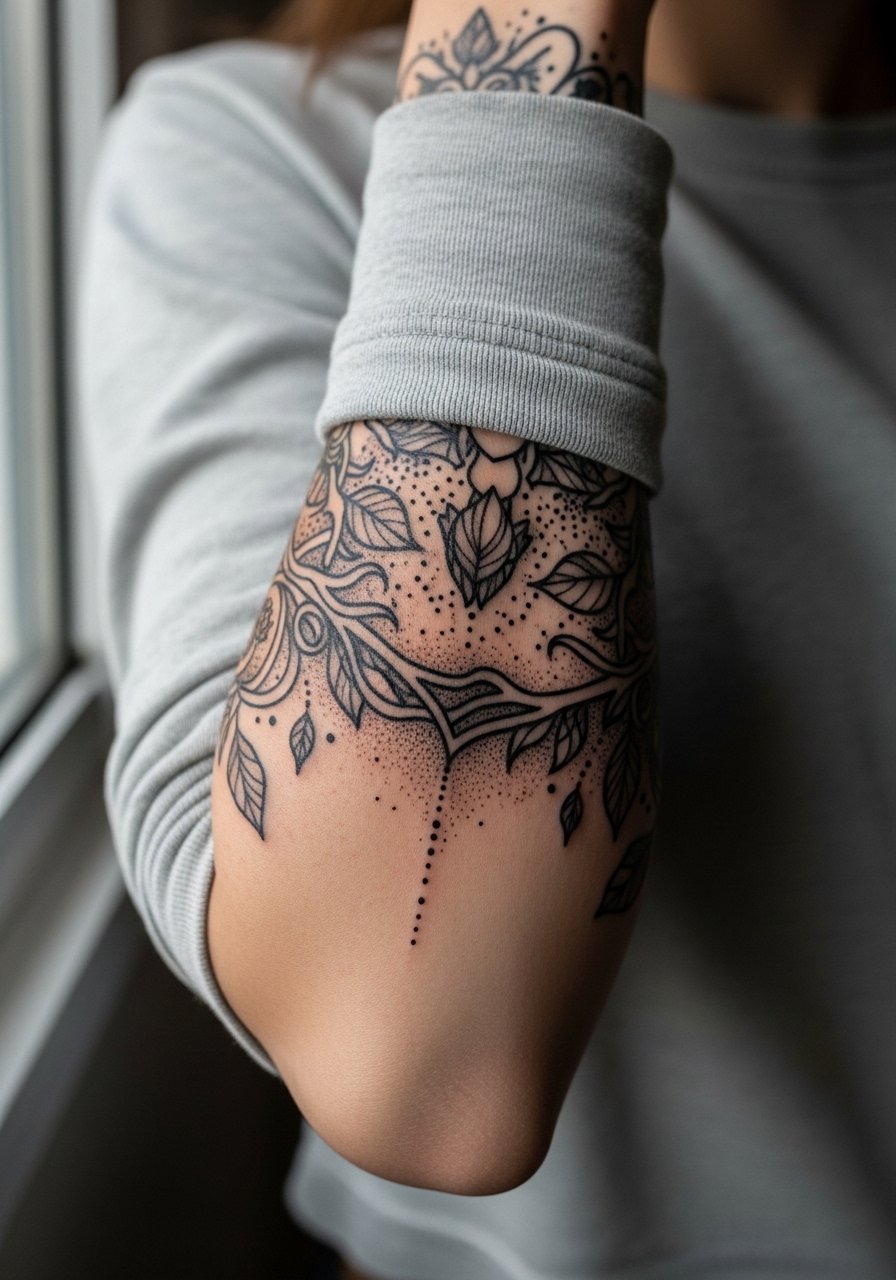
The area behind the elbow poses a unique challenge because of frequent bending. The most common mistake is placing high-detail focal points directly on the fold where the skin puckers. For a garden motif, keep the densest black work on the outer planes and use dot work on the fold to imply shadow. For the session, wear a loose long-sleeve shirt you can roll up without creasing the tattoo too much. Behind-elbow work often needs touch-ups to maintain crispness along fold lines.
Frequently Asked Questions
Q: Will a lot of dark shading make a fine line design lose its detail over time?
A: Heavy dark shading provides contrast that can protect small lines, but if shading presses against fine elements without breathing room you will lose clarity. I recommend asking your artist to maintain clear negative space around delicate parts and to use stipple or whip shading so the main contour lines remain readable as the piece heals.
Q: How often should I expect touch-ups for hand, wrist, and rib placements shown here?
A: Hands and wrists typically need touch-ups sooner because of washing and sun, often within two to three years. Ribs can require earlier attention if the piece is very fine, though denser linework tends to last longer. It depends on your lifestyle and sun exposure. Bring healed photos when you consult your artist so they can give a realistic touch-up timeline.
Q: Are there wardrobe choices that help dark fantasy pieces age better while showing them off?
A: Yes. Breathable fabrics in neutral tones reduce sun fading when pieces peek out, and choosing garments that avoid constant rubbing over the tattoo during the first month helps healing. For shoulders and collarbone, wide-neck tops frame work well without constant friction.
Q: Should I be worried about blowout with dense blackwork on the calf or forearm?
A: Blowout risk relates to needle depth, skin type, and movement. Calf and forearm are lower-risk zones compared with hands and inner bicep. A good consultation includes talking about depth and asking to see healed examples of the artist's saturated blackwork so you know how their work settles.
Q: How do I find an artist who specializes in dark fantasy aesthetics without naming anyone?
A: Look for artists through tattoo convention booths, curated directories, and hashtag searches that match your style terms. Reddit threads and community galleries can show healed photos and session reports. When you find candidates, ask to see healed work in similar placements and request a consult to discuss spacing and touch-up approach.
