
Counterintuitive truth, straight up: the mandala that looks most impressive on Instagram is not always the one that holds up on skin. Finer linework, tiny dots, and overly dense geometry often blur with time. People worry about fading, placement regret, and surprise touch-up needs before they book. Read these 27 mandala ideas with practical notes on spacing, session dress, and what to ask your artist so the piece still reads clean years from now.
1. Dotwork Geometric Forearm Mandala
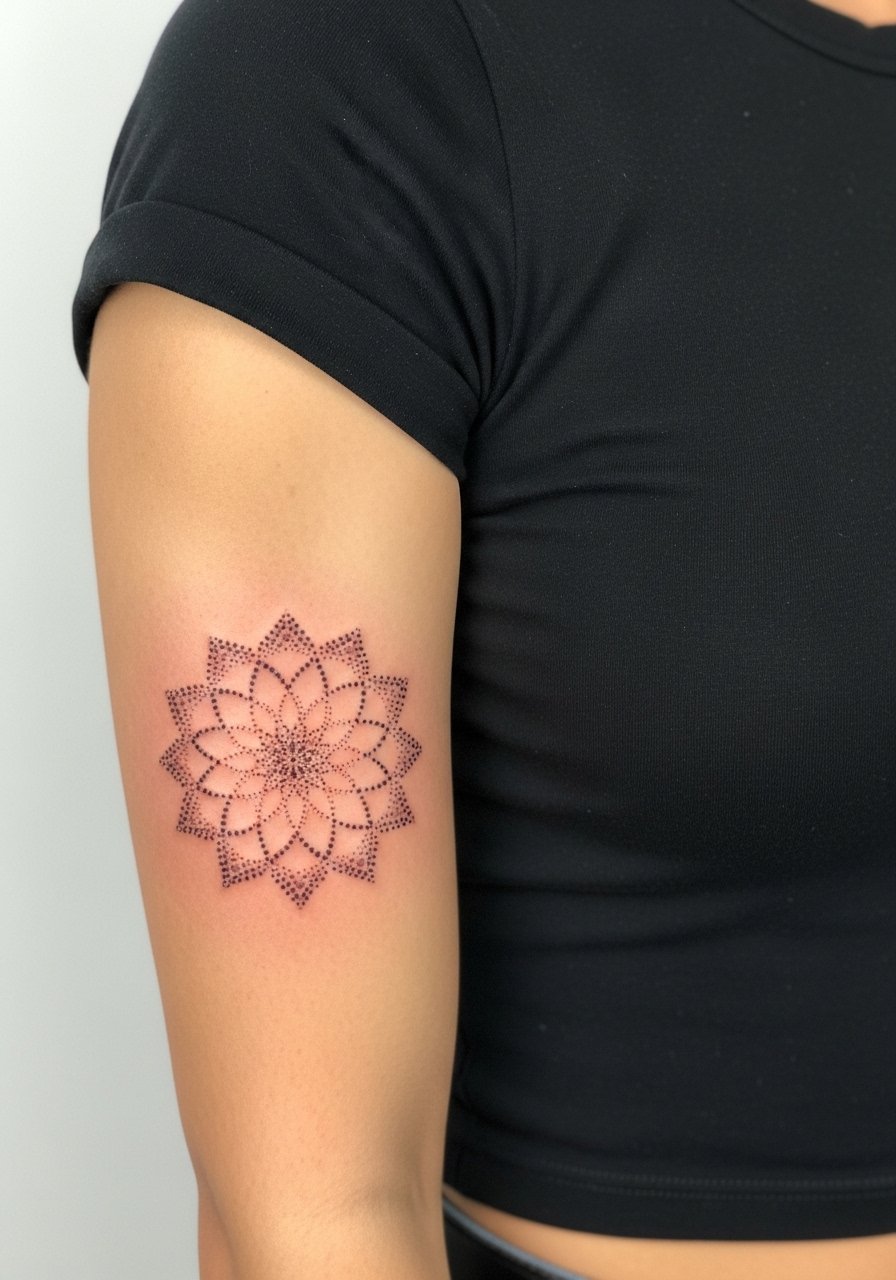
Dotwork on the outer forearm reads hypnotic and holds up when spaced correctly. I recommend asking your artist for slightly larger dot spacing than the reference photo so stipple shading does not merge after a few years. Fair warning, forearm sessions are moderate on most pain charts and usually finish in a 2-3 hour block depending on size. Common mistake is asking for hyper-dense center fills which look great fresh but soften into blotches. For the session wear a fitted black short sleeve tee that you can roll without creasing the fresh ink. Expect a touch-up at year two or three if you want the high-contrast look maintained.
2. Repeating Circle Forearm Mandala
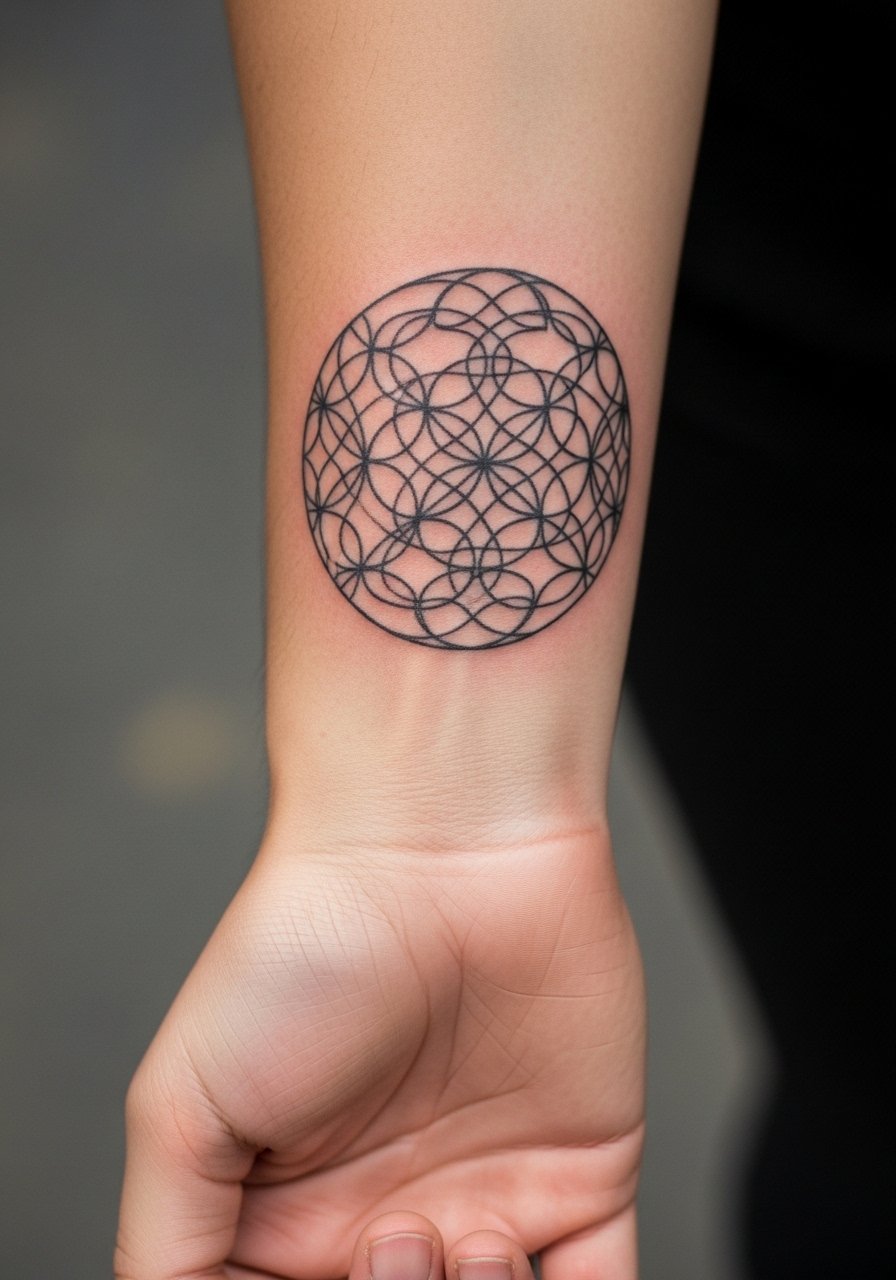
This repeating-circle approach makes a trance-like sleeve starter that scales well into arm pieces. When you consult, ask the artist to map the repeat so it flows with the forearm taper to avoid awkward breaks at the wrist. Inner forearm is lower on the pain scale but gets more sun and friction. The ageing pattern here shows crisp rings at six months then subtle softening by year three unless the dots are spaced intentionally. A common error is compressing too many rings into a small band. For show-off outfits try a charcoal henley shirt men with sleeves rolled so the pattern sits center-stage. Touch-ups are usually simple single-session fixes.
3. Fine Line Wrist Mandala
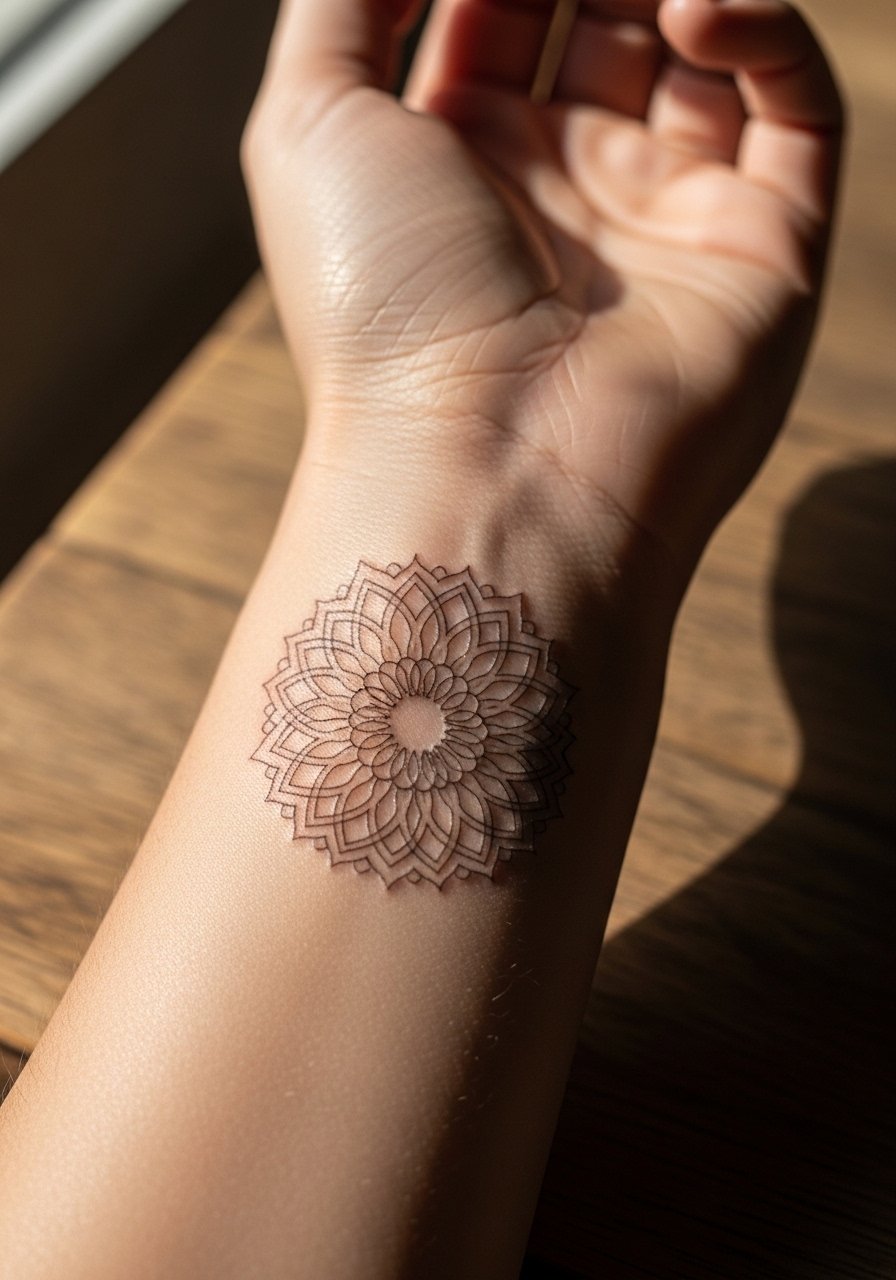
Wrist mandalas are vivid in daily life but need breathing room. Most people underestimate how quickly fine line on the wrist can blur. The biggest mistake is asking for dense center detail on a 2-inch canvas. Tell your artist to scale motifs outwards and prioritize clean outer linework. Expect a short 1-2 hour session and higher touch-up likelihood at year two on active hands. For the appointment wear clothing easy to remove, or a rolled sleeve muscle tee so the artist has perfect access without tugging. If job considerations matter, remember the wrist is highly visible.
4. Tribal Blackwork Back Mandala
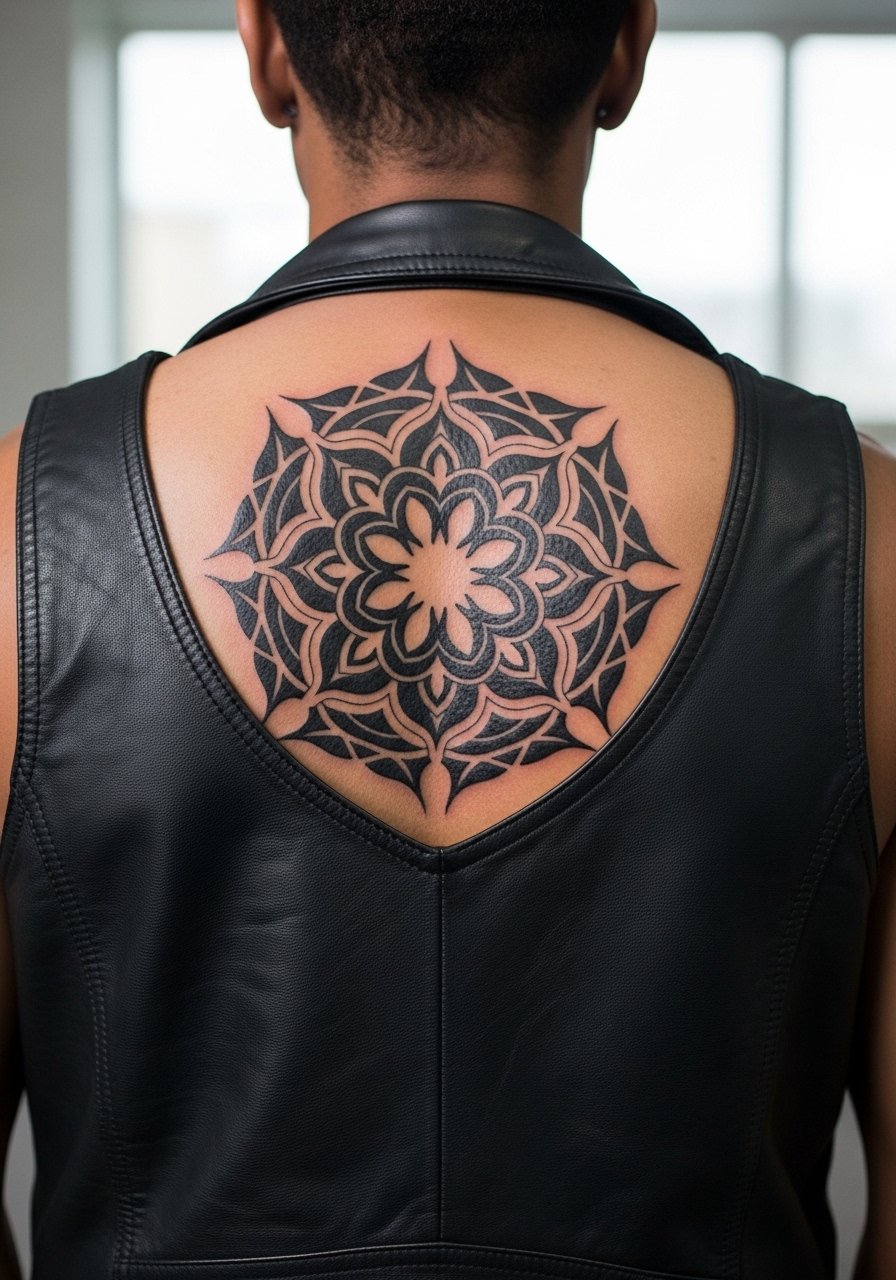
A full upper back blackwork mandala makes a bold frame for the shoulders and chest. These pieces require multiple long sessions to saturate large negative-space fields and preserve crisp edges. One real mistake is asking for too many tiny internal elements inside a large black field. For consultations bring torso mockups so the artist can plan flow with the shoulder blades. Back sessions are less painful than ribs but can be grueling because they run long. For showing it off, a leather vest jacket men or an open-back gym tank frames the piece. Expect touch-ups around edges after heavy sun exposure.
5. Ornamental Chest Mandala with Lotus
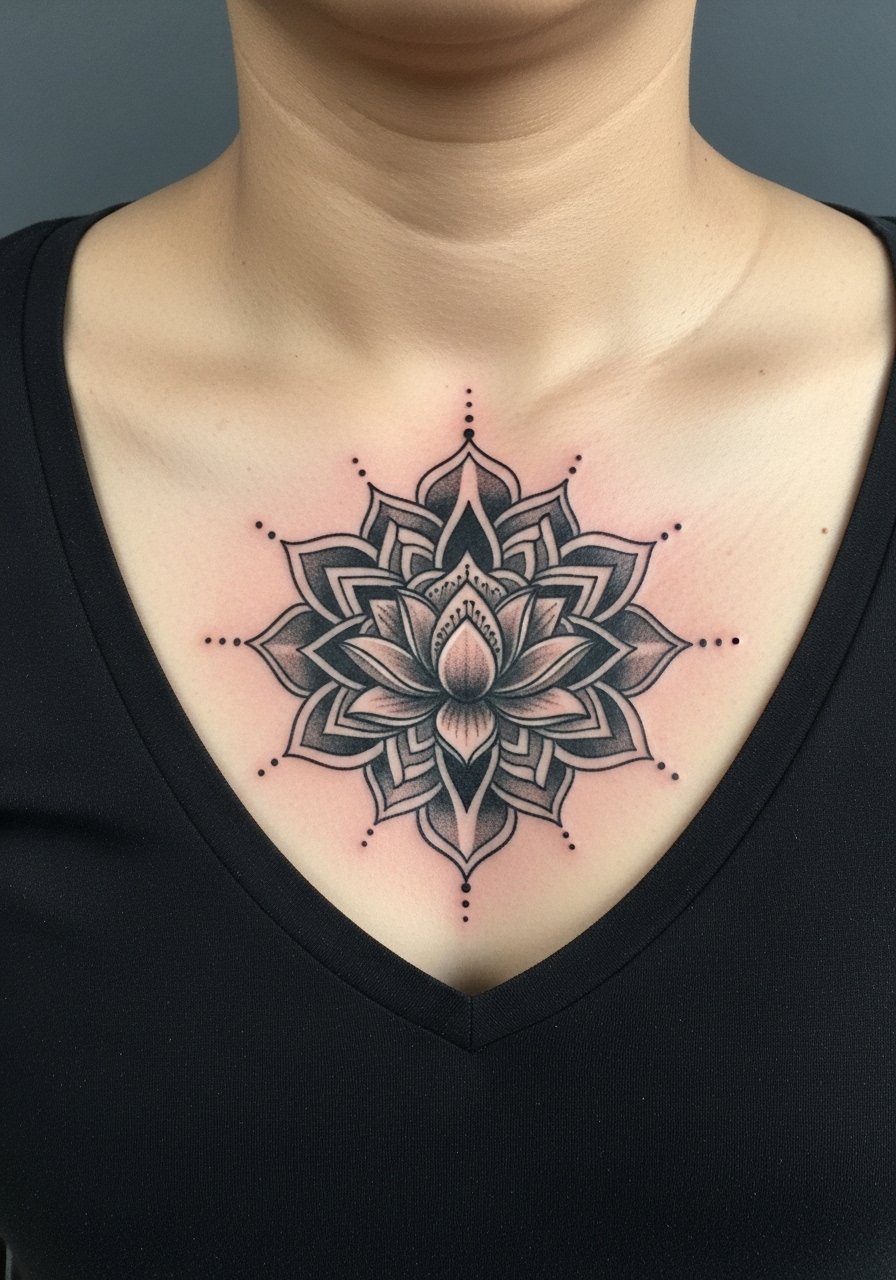
Chest mandalas sit beautifully on the sternum line and accent masculine contours when balanced correctly. The chest skin shifts with breathing and work, so the consultation should cover symmetry and where the lotus sits relative to the sternum. Chest work rates higher on pain charts but heals predictably if spacing and shading are planned. A common aging issue is too-tight line clusters near the center which blend over time. For show-off looks choose a deep v neck tee men that frames the symmetry. Plan on a two to three session timeline for a 6-8 inch chest piece and a possible touch-up after a year if you want crisp contrast.
6. Neo-Traditional Color Sleeve Mandala
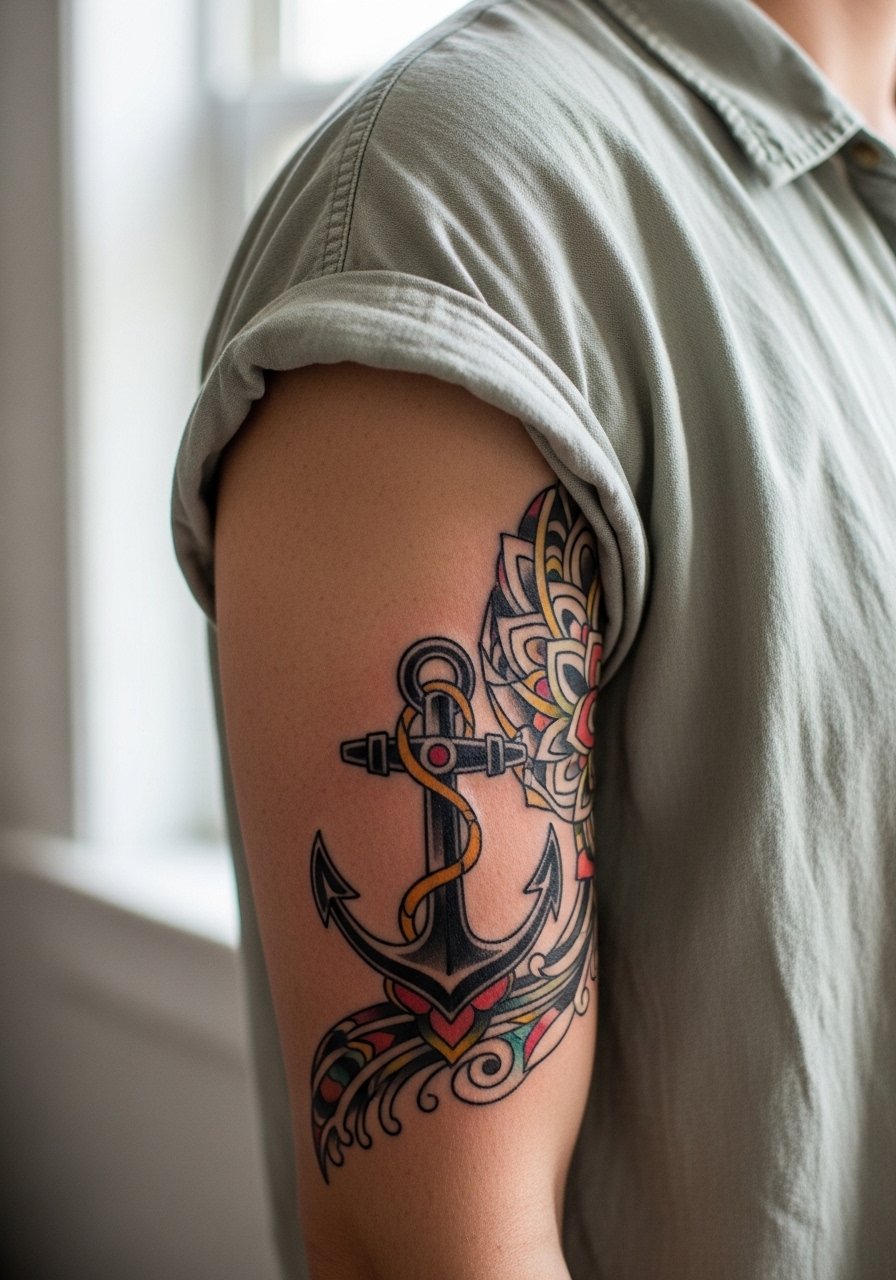
A neo-traditional sleeve blends mandala geometry with motifs like animals or bold color fills. These hold up well because the black anchors keep saturation stable while color gives modern pop. Key consultation notes are palette limitations and how much black to reserve for longevity. Big mistake is overloading the sleeve with tightly packed micro detail. Expect this to span multiple sessions and to age differently across sections depending on sun exposure. For the session wear a loose short-sleeve athletic shirt so the artist can roll the sleeve without pressure. Touch-ups are often localized to color fades over the first few years.
Studio Day Picks
The forearm, chest, and wrist pieces above need different prep. These items smooth the chair-day experience and protect fine line work in that first week.
-
Stencil transfer paper kit. Lets you preview line placement and avoid alignment surprises on curved forearms or chest symmetry.
-
Topical numbing cream. Applied per the product window it eases the edge on wrists and ribs for better client comfort during longer blackwork fills.
-
Thin protective film roll. Useful for small wrist or finger pieces that get friction from daily washing and typing in the first days.
-
Fragrance-free gentle body wash. Cleans heals without irritating delicate linework, handy for chest and forearm showers.
-
Aquaphor healing ointment. Thin layers over the first few days lock in moisture for detailed mandala dots without clogging needle channels.
7. 3D Shaded Thigh Mandala
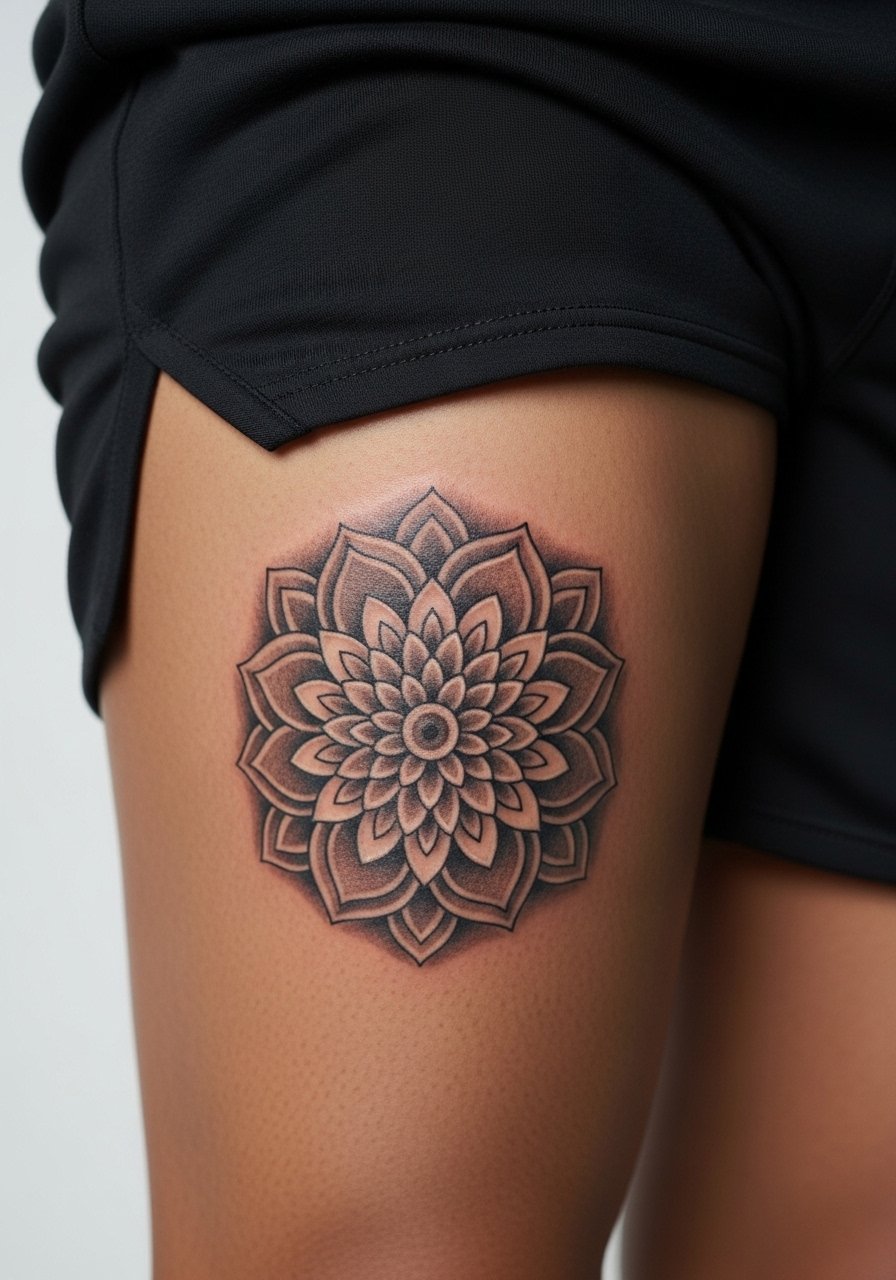
Thigh mandalas use illusionary shading to read as dimensional when the leg moves. The outer thigh gives room for 8-10 inch pieces that breathe with muscle flexing. During consultation ask your artist for gradation maps so highlights sit on muscle peaks. Sessions are moderate and easy to access if you wear loose shorts. For session day pull on black athletic shorts men that can be shifted without rubbing the area. Three sessions is a common timeline for deep 3D shading and expect possible softening in the highest contrast spots by year three.
8. Mixed-Style Knee Mandala
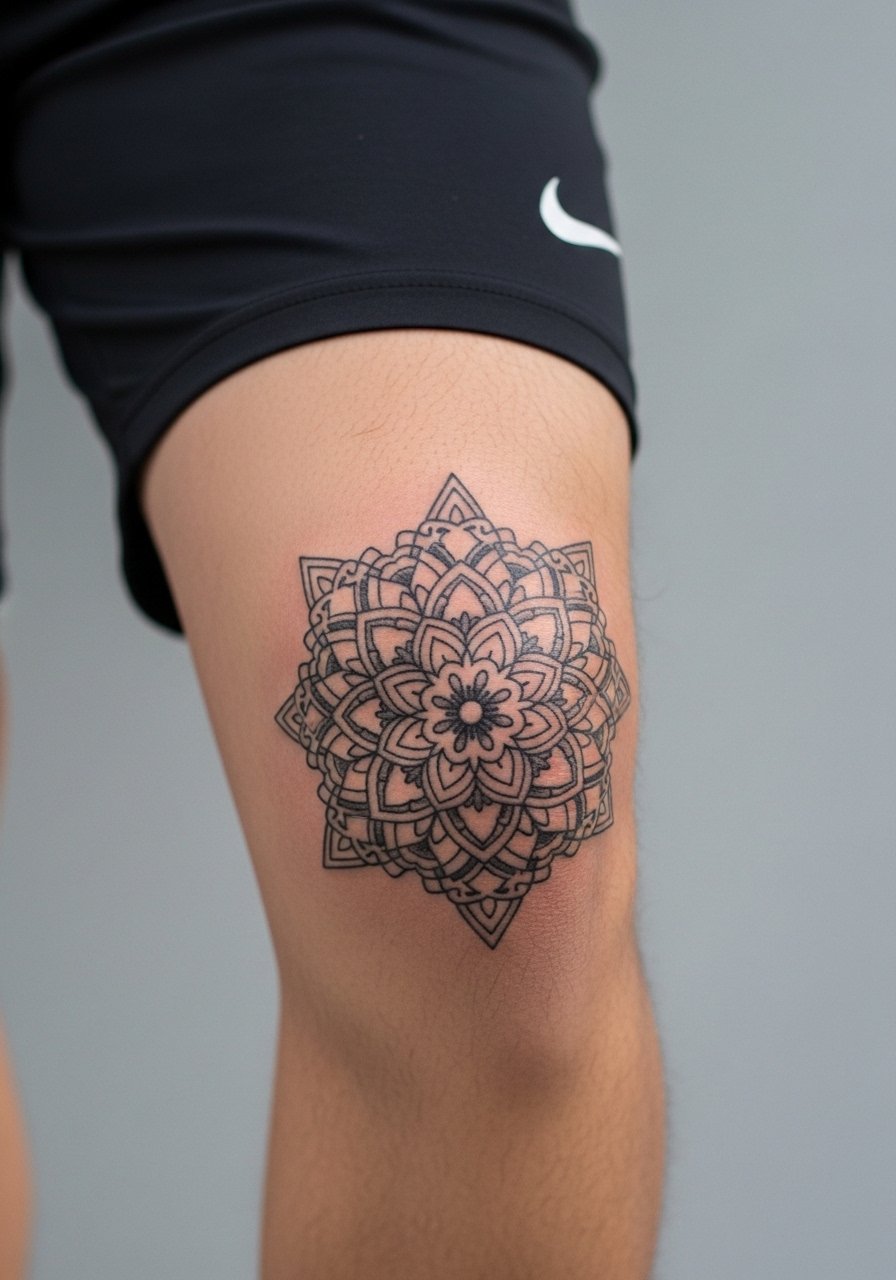
Knee mandalas are engineered around joint curves so the pattern expands and contracts with movement. This placement hurts more because of thin tissue over bone and often finishes in shorter sessions to manage comfort. Artists split on technique for knees, but one practical error is using too tight a center that distorts with bend. Tell your artist to plan for negative space that reads at full extension and at flex. For showing off pair with knee length athletic shorts. Touch-ups may be needed sooner than on low-movement areas.
9. Elbow Mandala with Negative Space
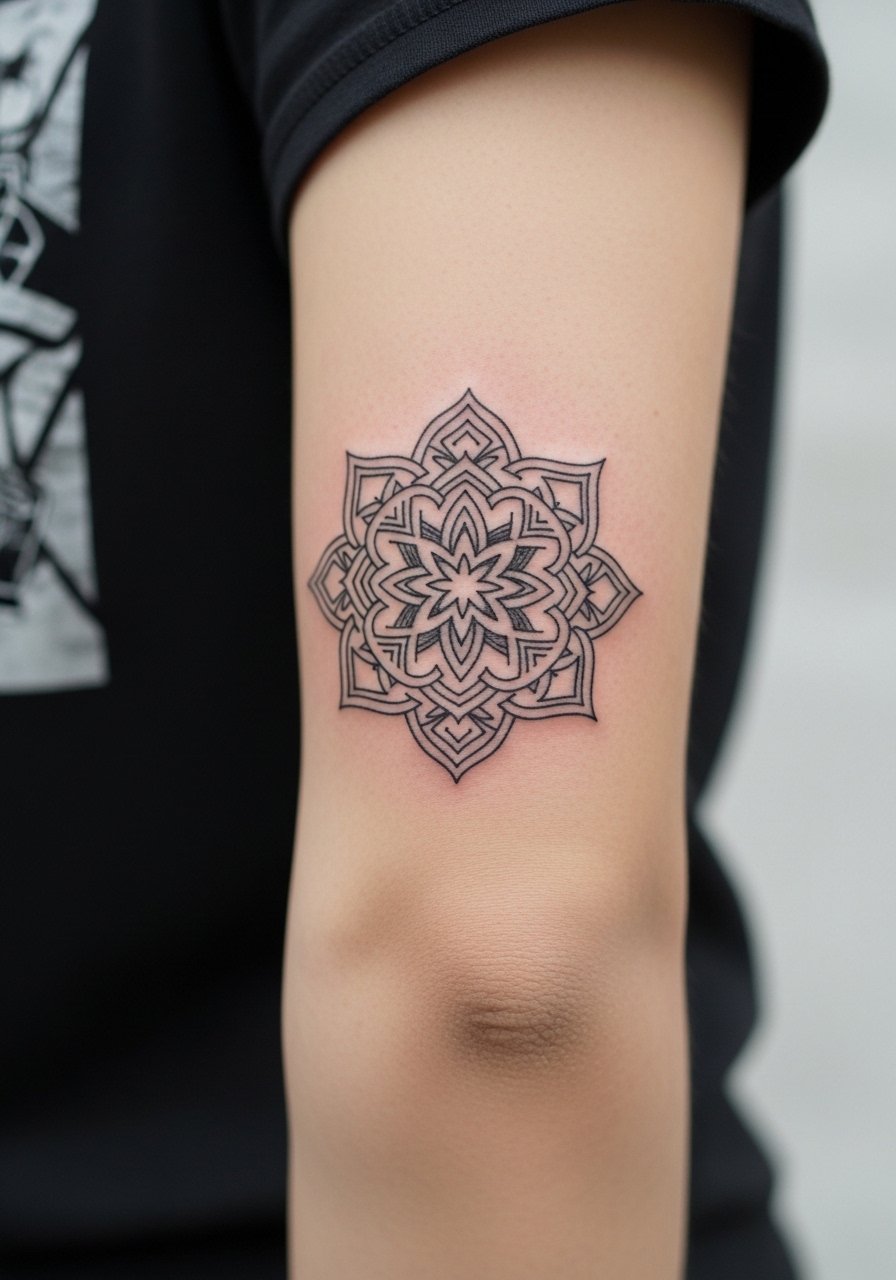
Elbow work uses untouched skin as a design element and ages well because joints are notoriously rough on heavy detail. The elbow itself is a high-movement spot and the biggest mistake is packing small fill work right over the pivot. Ask for bold bands and clearer negative shapes that will hold. Sessions are short but can sting. Expect the outline to need touch-ups faster than the solid black fields. Wear a loose short-sleeve shirt you can slide up easily during the session. Many clients find the graphic contrast still reads clean after several years with proper spacing.
10. Butterfly-Integrated Arm Mandala
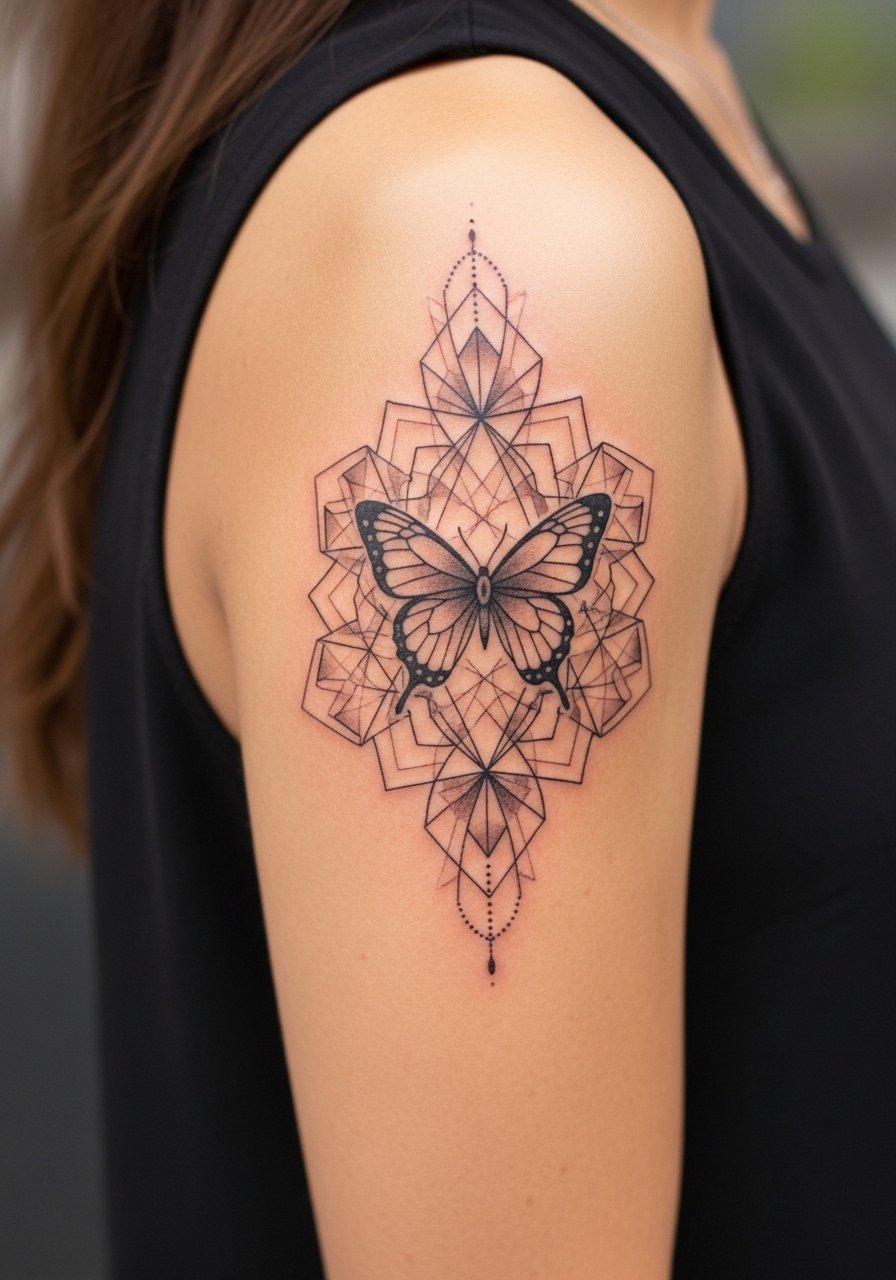
Combining natural motifs like a butterfly into mandala geometry softens the edge without losing masculinity. The upper arm handles mid-sized motifs well and is forgiving for touch-ups. When you sit down for consultation specify which elements you want emphasized so the butterfly does not get lost in the circle. A common aging issue is overly thin wing veins that disappear. Ask the artist to keep modest line weight for key features. Sessions are moderate length and healing is straightforward. For wardrobe, a simple tank or henley keeps the focus on upper-arm flow.
11. Head Side Mandala for Constant Focus
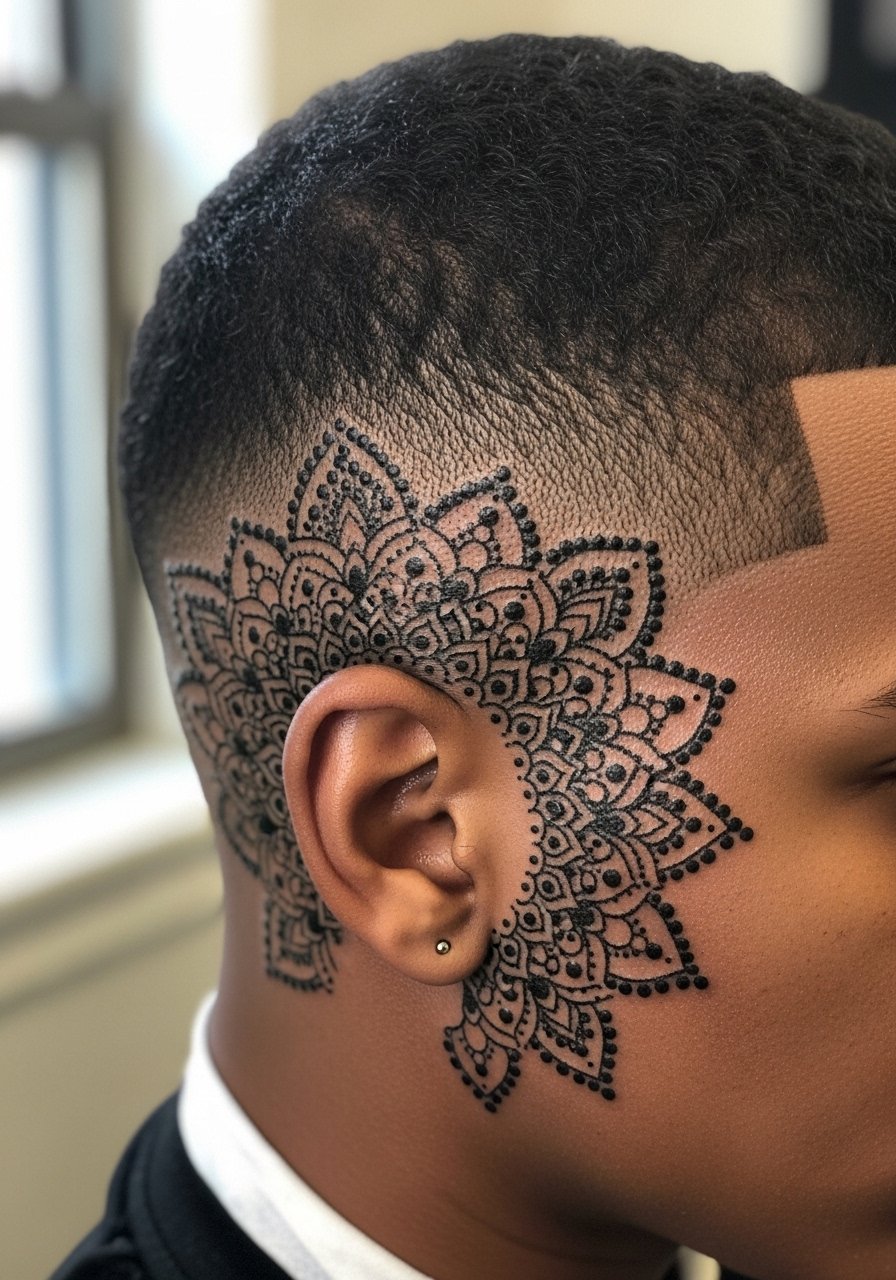
A side-head mandala is bold and offers constant visual access for meditation or stress relief. Pain is higher and the area needs an artist experienced with scalps. Artists split on whether dense dotwork holds on the temple, and the debate runs two ways. One camp says scalp skin and hair growth can soften fine dots quickly. The other camp says with proper depth and spacing it settles fine. Ask the artist where they stand before booking. For the session, a shaved or clipped short style helps access and a simple buzz cut clippers search can prep you. Expect touch-ups earlier than for forearm pieces.
12. Back of Hand Mini Mandala
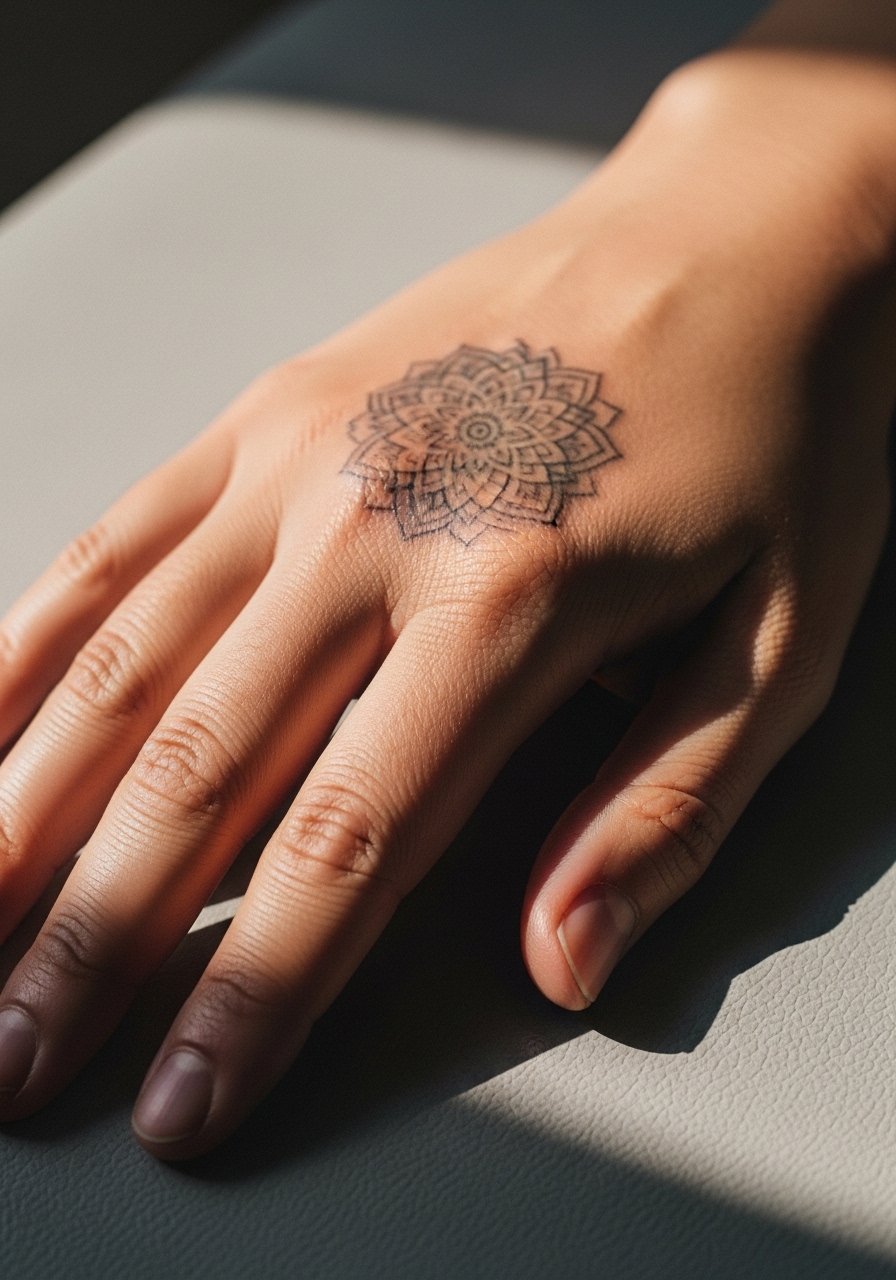
Hand pieces show fast and get immediate attention, but they also face accelerated fading from washing and friction. If you choose a mini mandala here, keep the elements bold and avoid micro detail. The common mistake is tiny interior dots that are gone within months. Sessions are quick but healing demands care. Expect touch-ups frequently. For desk jobs consider the visibility hit. Plan your design with thicker linework and simplified centers to maintain clarity through heavy use.
13. Inner Bicep Micro Mandala
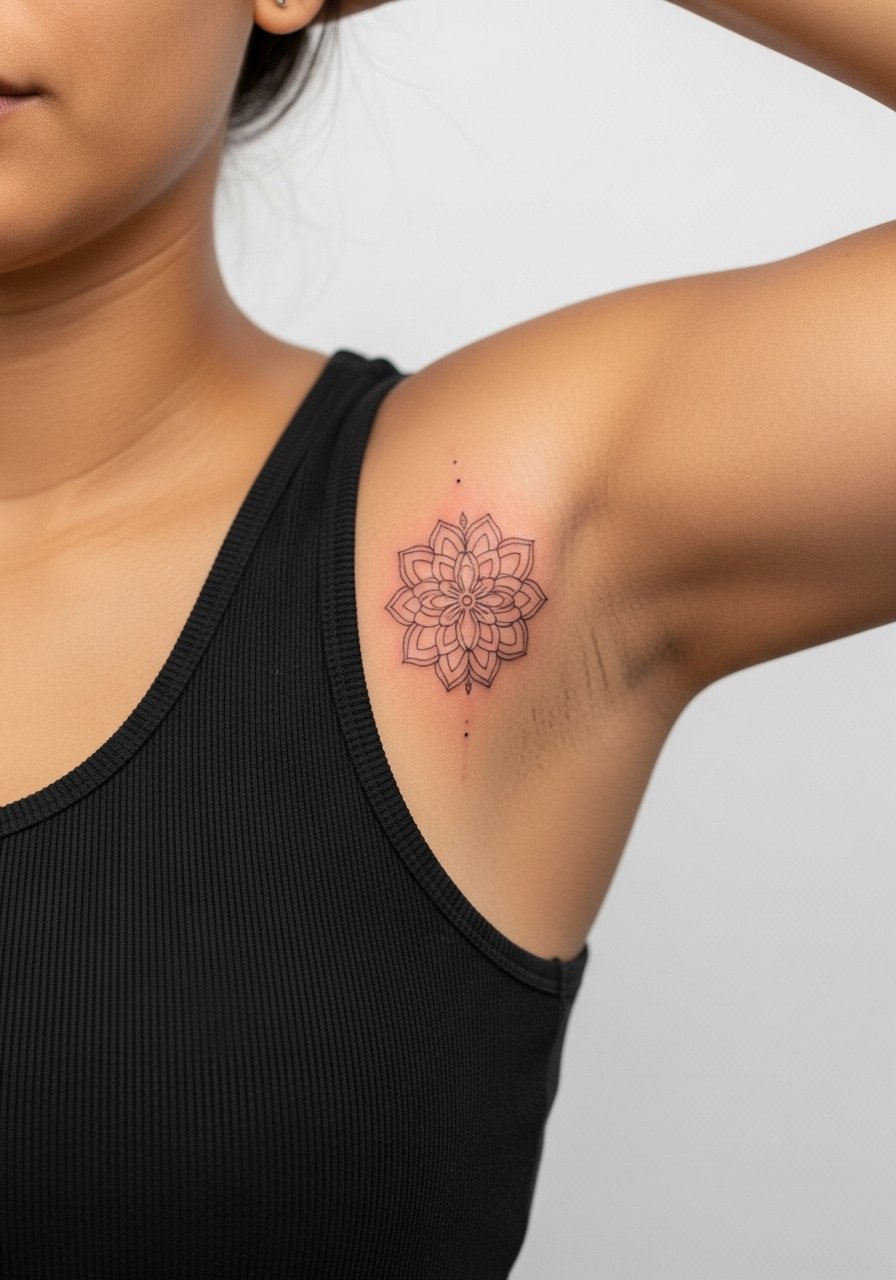
Inner bicep gives a private canvas that peeks occasionally when you raise your arm. The area bruises more and is sensitive. The most common mistake is requesting ultra-fine detail on moving skin. Tell the artist to prioritize slightly stronger line weight and lighter fills to prevent early blurring. Session time is moderate and touch-ups at year two are typical for fine pieces. Wear a tank top you can lift without tugging. This placement works well for someone wanting a mandala that reads in close moments rather than across a room.
14. Sternum Mandala with Compass
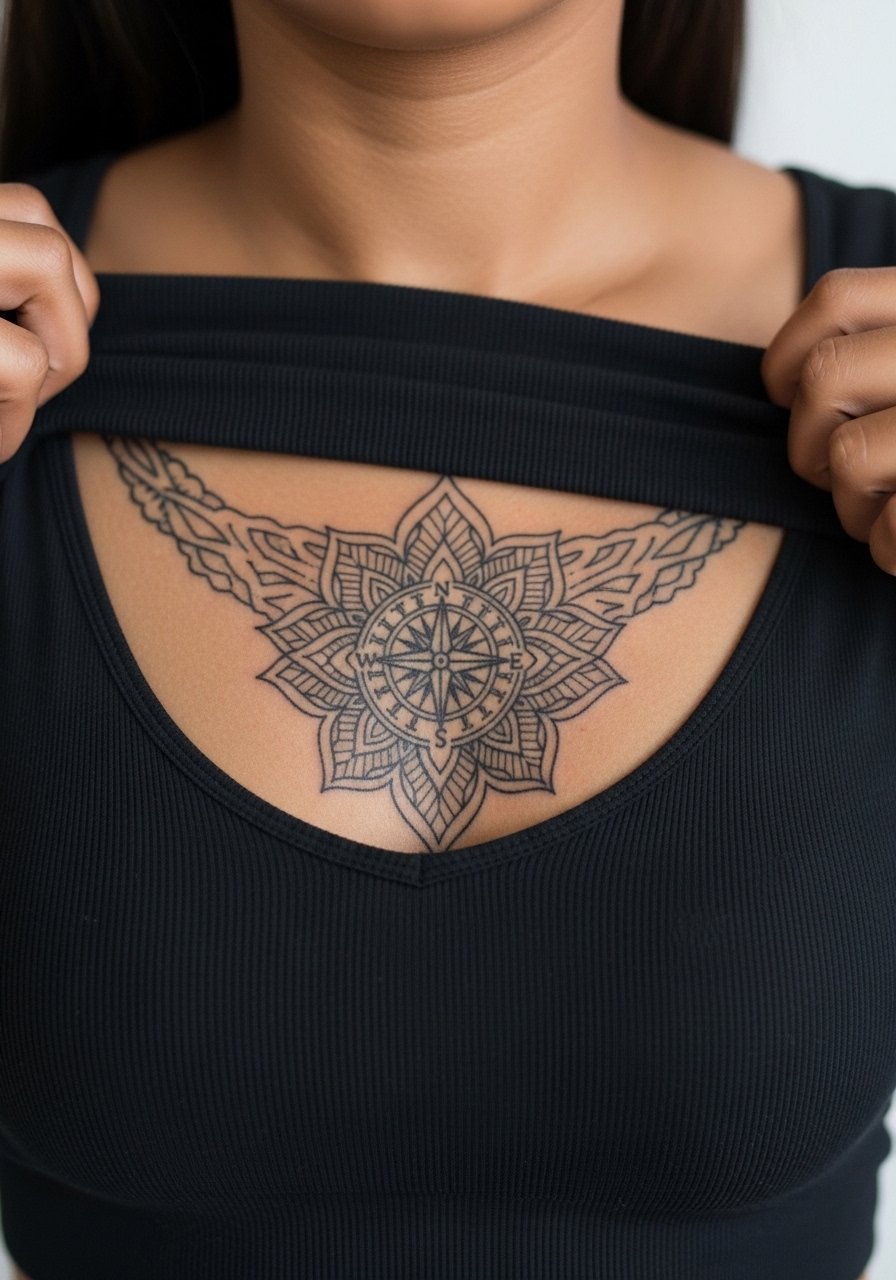
Sternum mandalas sit along a high-movement chest zone and can be punchy visually when centered properly. Artists are split on fine line work here. One group cautions that the skin stretch from breathing blurs thin lines quickly. The other group maintains that careful spacing and depth preserves detail. Bring reference photos and ask the artist which side they favor. Pain is higher and sessions often split to manage comfort. For the appointment wear a fitted sports bra or open shirt that reveals only the area needed. Healing requires sun avoidance for the first months.
15. Shoulder Cap Mandala That Wraps
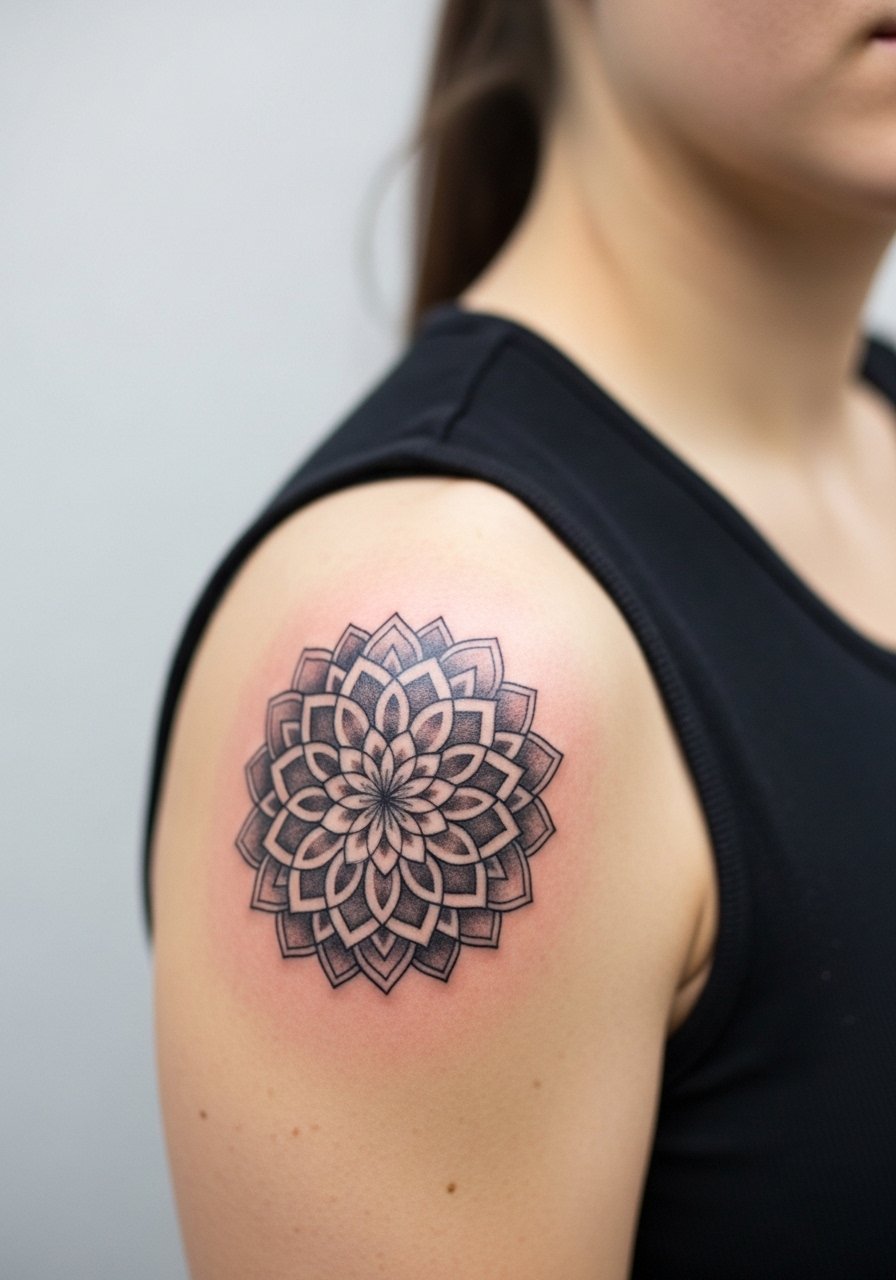
Shoulder cap mandalas work with the round muscle to create a natural halo effect. The placement is forgiving for medium detail and ages steadily because of lower daily abrasion. The key mistake is forcing the mandala to continue across the chest without flow. Ask for mockups that show how the edge meets the bicep and trap. Session time is moderate and the piece often finishes in a single multi-hour appointment. For easy access wear a sleeveless top. Expect minimal touch-ups unless you get heavy sun exposure.
16. Upper Arm Blackwork Band Mandala
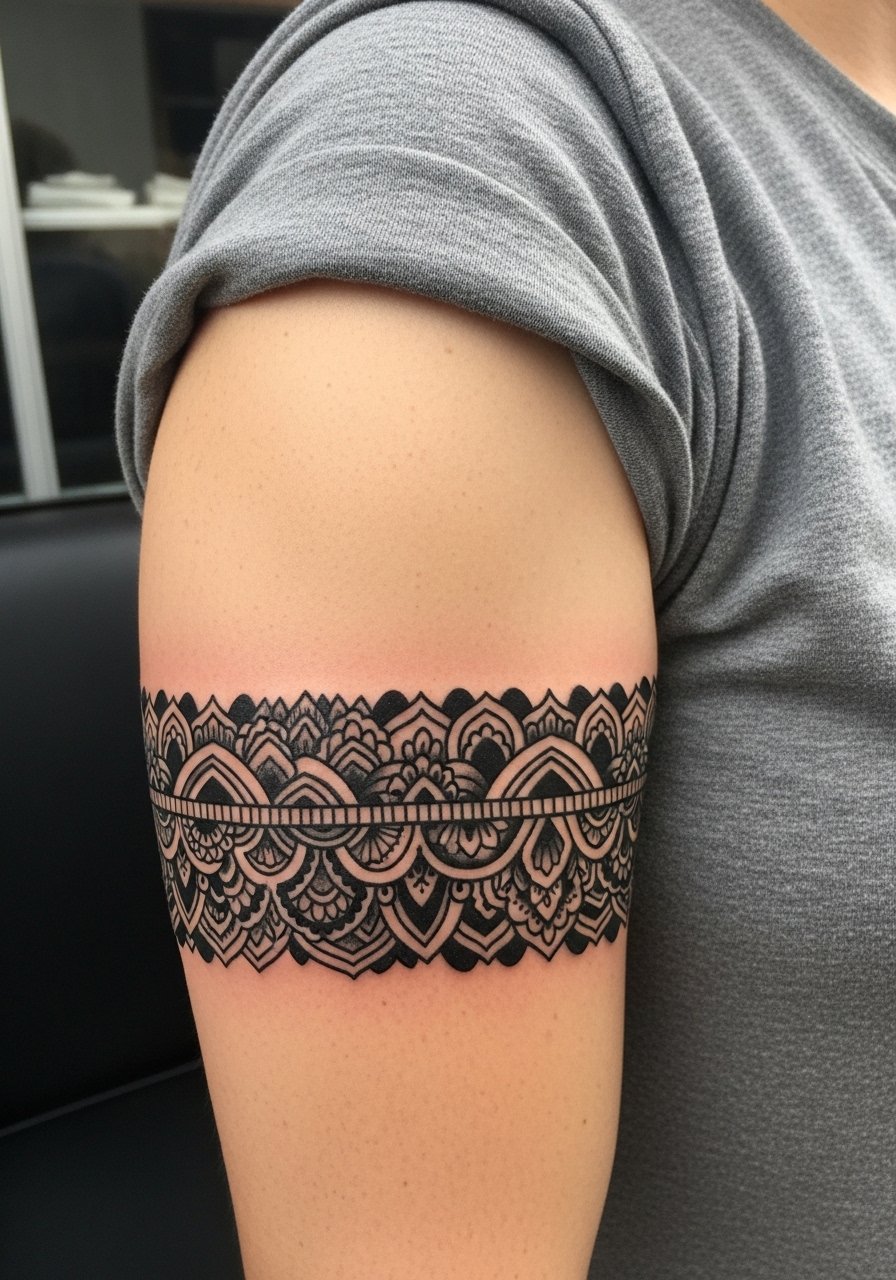
A blackwork band integrates mandala motifs into a repeating cuff and reads strong across different body types. The main mistake is too many micro details inside dense black bands. Ask your artist to map negative spaces that will survive stretching and aging. Sessions usually require focused fill time for saturation. For show-off pairing try a charcoal henley shirt men with sleeves rolled to frame the cuff. Touch-ups are often localized to edge crispness.
17. Calf Mandala with Motion
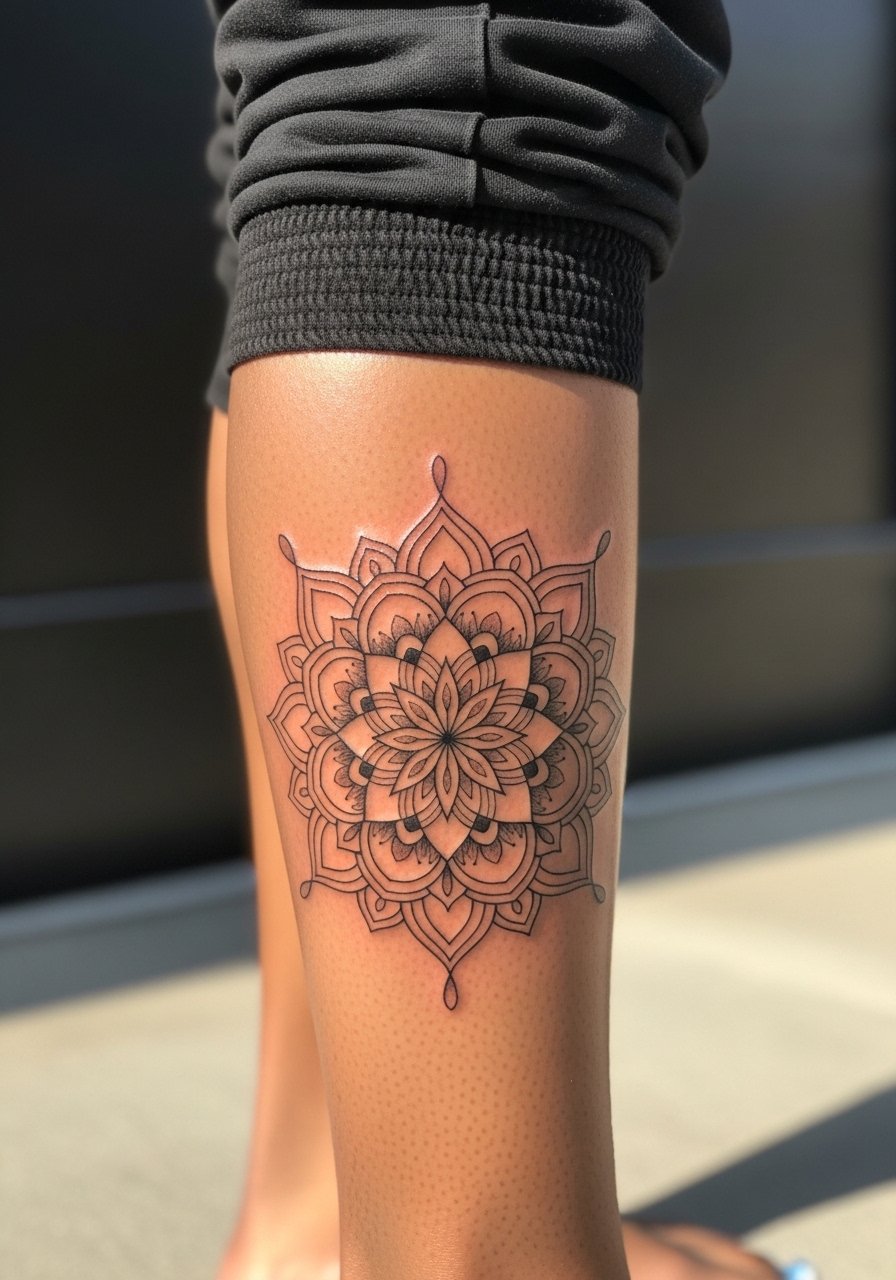
Calf mandalas benefit from muscle movement that animates radial patterns. The mistake is centering a piece too low where pants rub. Ask the artist to position the center at the widest part of the calf and to plan flow toward the ankle. Sessions are moderate and healing is friendly. For session wear pull on rolled joggers men so the artist can lift the pant leg without constriction. Expect occasional touch-ups where friction is constant.
18. Side Neck Mandala Accent
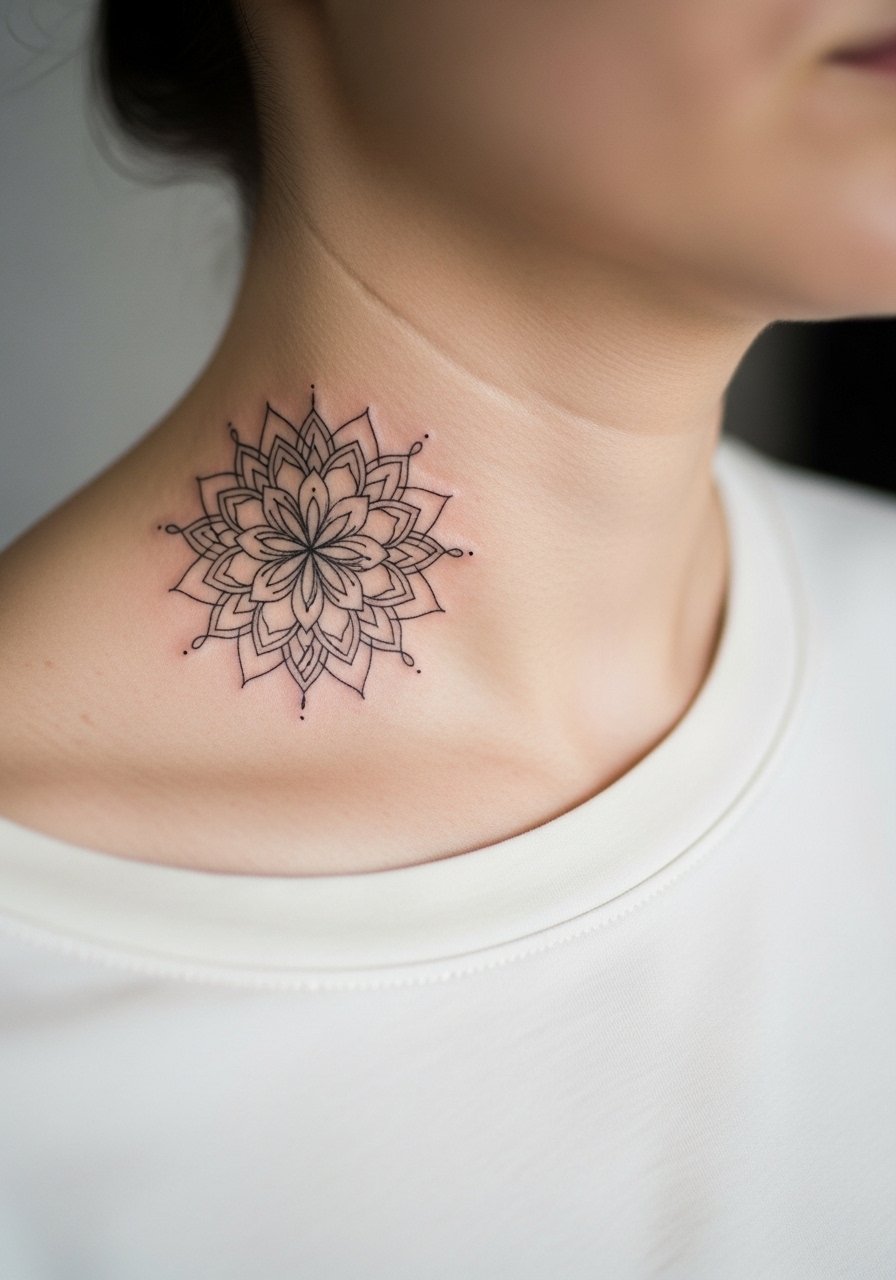
Neck pieces are visible and polarizing in many contexts. The skin there is thin so the biggest mistake is demanding ultra-fine micro detail. Artists differ on technique and longevity for neck lines. Tell your artist you want slightly bolder line weight for longevity and ask about touch-up timelines. Sessions sting more than arm work. For showing it off wear a wide-neck shirt you can pull aside without full exposure. Expect a higher touch-up frequency than torso pieces.
19. Ankle Orbit Mini Mandala
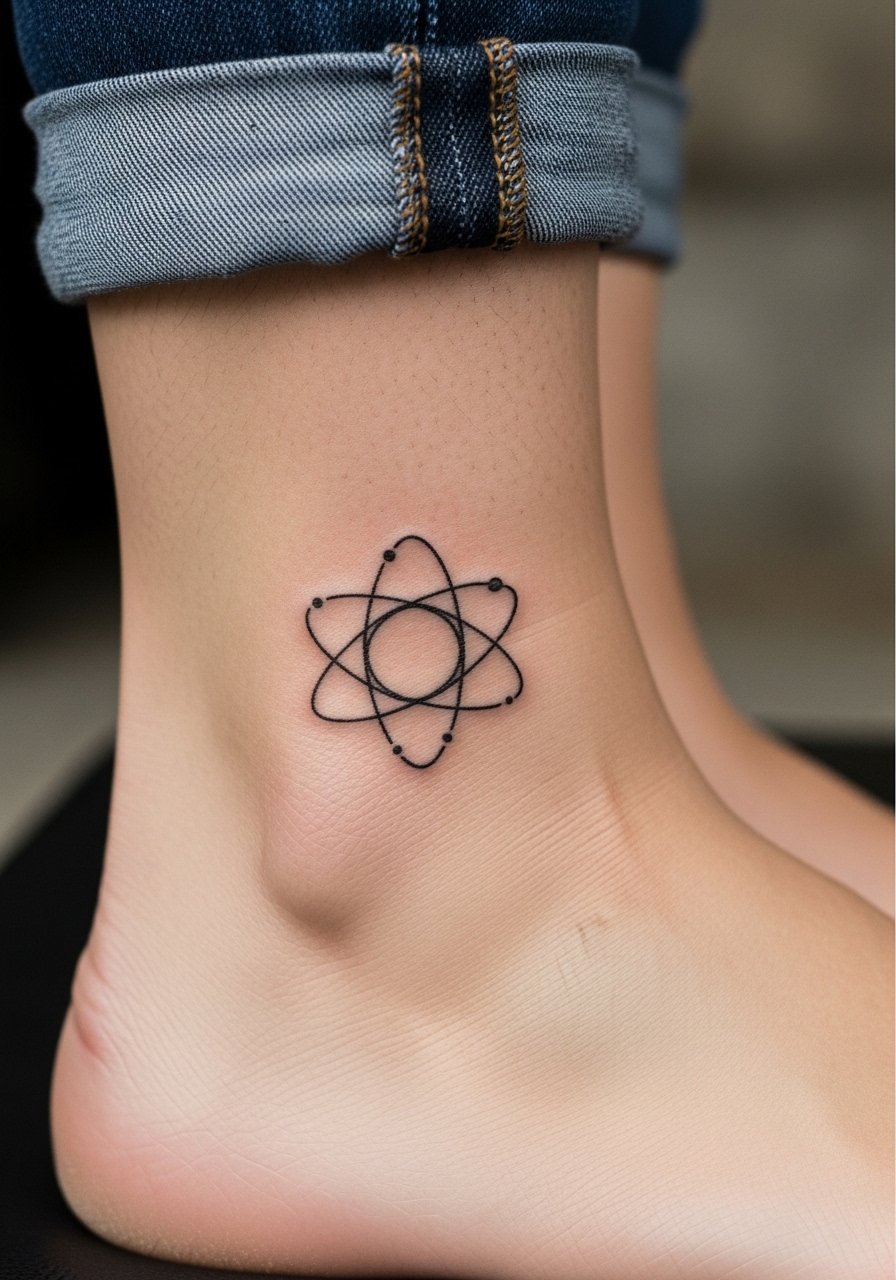
Ankle mandalas are delicate and catch the eye when framed with shoes or rolled pant cuffs. The main error is using thin dotwork without enough backing, which fades with shoe rub and socks. Sessions are short and healing needs low-friction socks for the first week. If you want to show it off, roll up jeans or wear low-profile sandals. Expect touch-ups sooner than forearm pieces due to daily abrasion.
20. Finger Stack Mandala Set
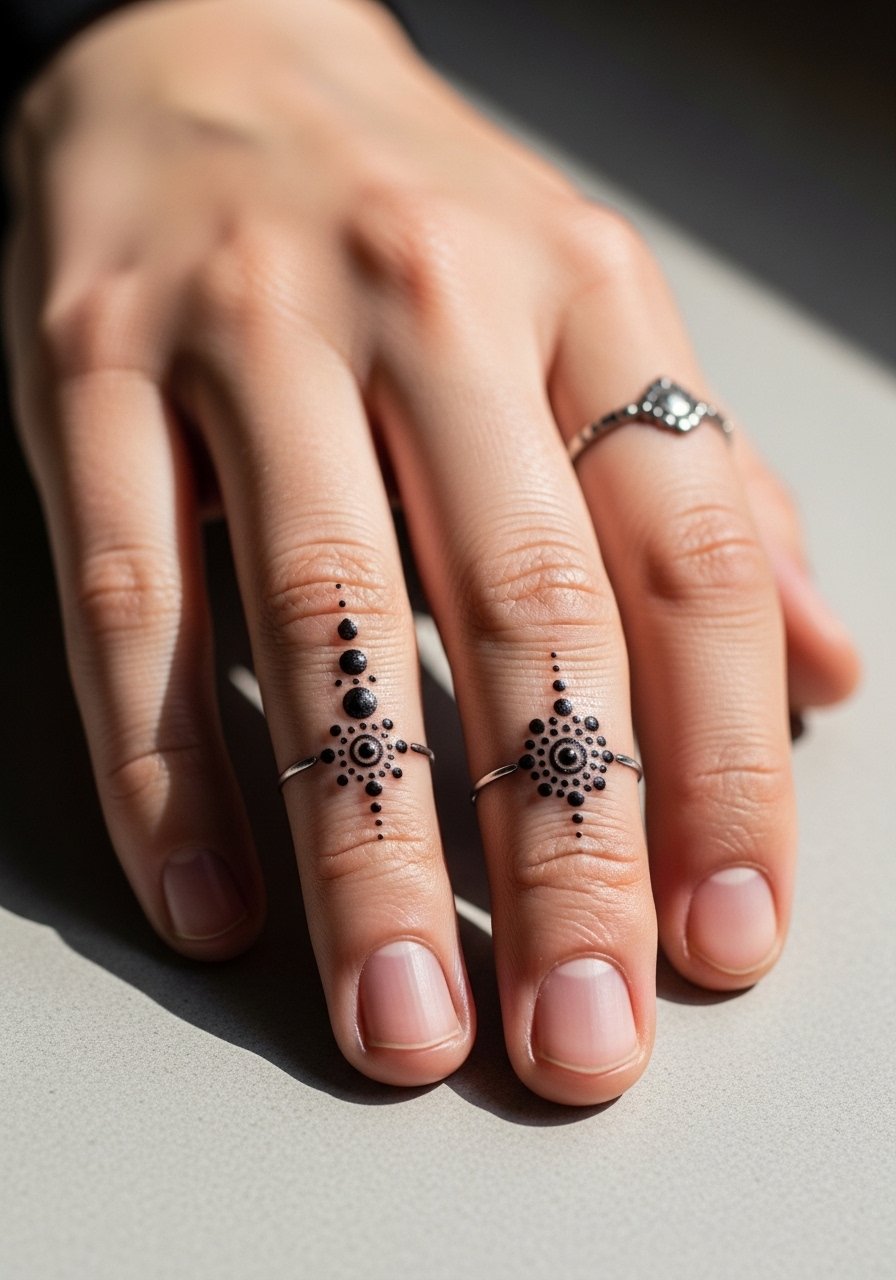
Finger tattoos demand boldness because the skin and friction eat away at fine details. A stacked mandala set works if you simplify each ring and keep stronger line weight. Common mistake is packing micro dots into the finger pads. Sessions are quick but plan on regular touch-ups. These pieces read best with negative space between rings. For desk workers the visibility trade-off is real. If you want longevity, prepare financially for maintenance.
21. Full Chest Radiating Mandala
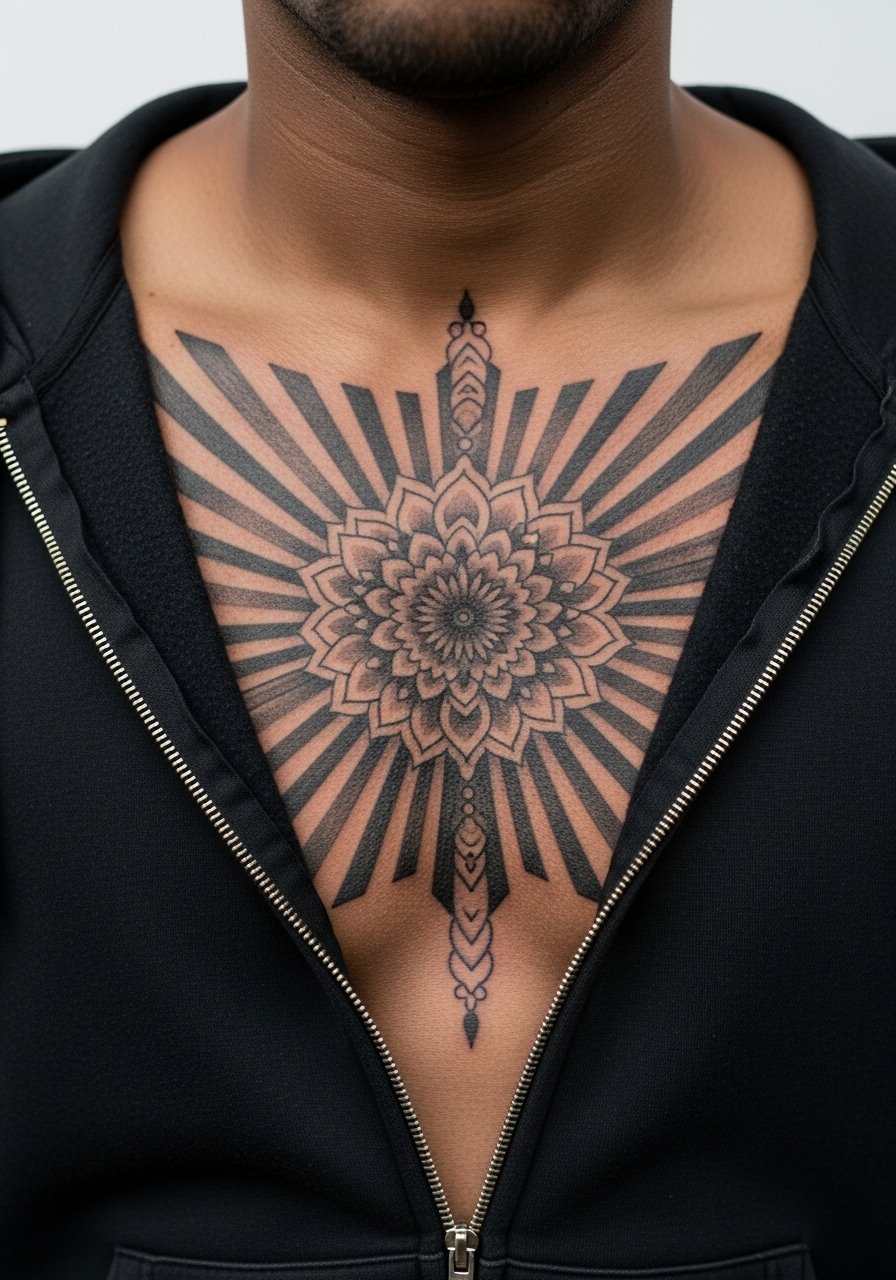
A full chest radiating mandala commands presence and requires meticulous symmetry planning. Expect a multi-session plan and careful stenciling to get center alignment with the sternum. The common pitfall is letting the center sit off-axis which becomes obvious the moment you stand straight. Sessions are more painful over the sternum and less so over pectoral muscle. For the session wear an open front hoodie or loose button shirt so the artist can access the area without full undressing. Touch-ups often focus on the sternum and outer edge after weight change or sun exposure.
22. Collarbone Accent Mandala
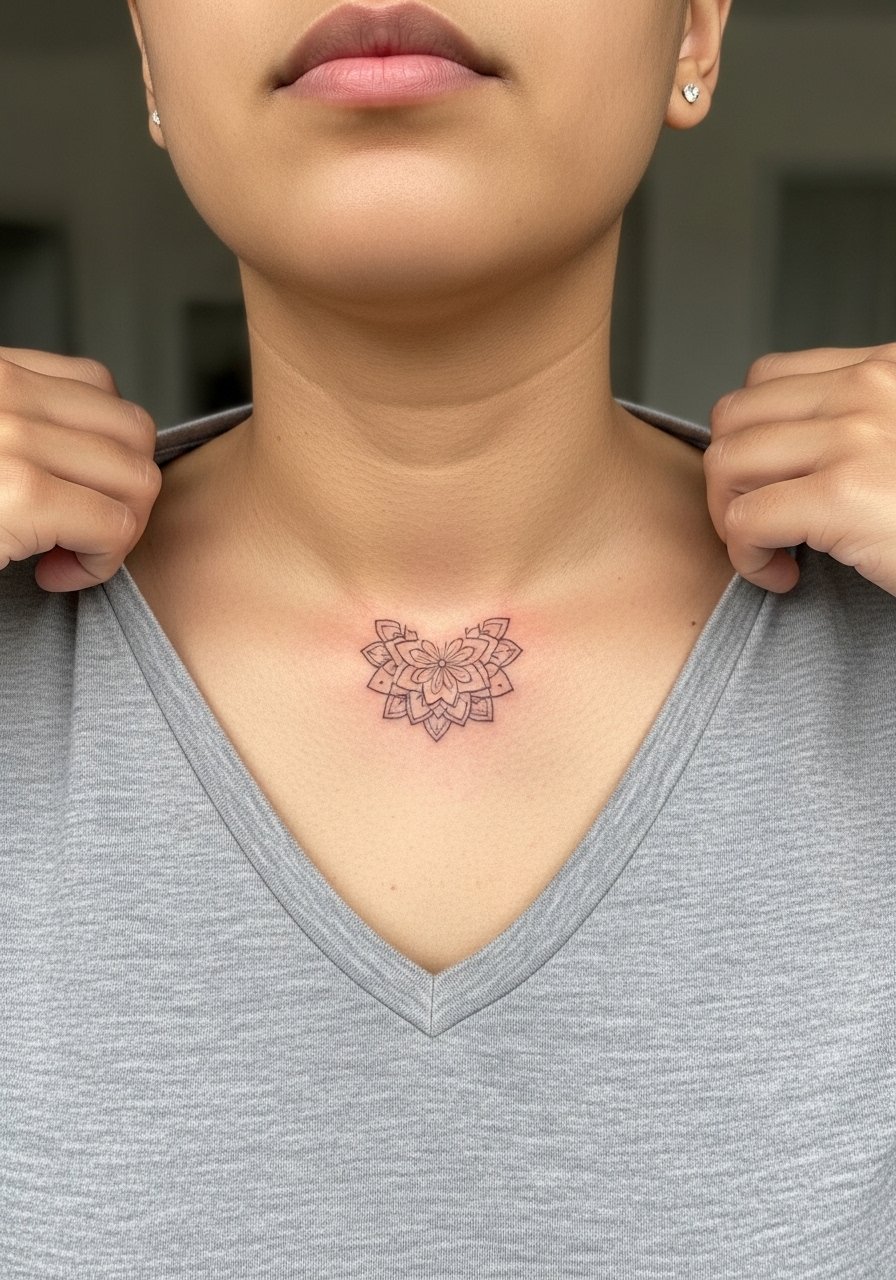
Collarbone mandalas look refined when placed to complement the clavicle line. The main mistake is over-detailing on a narrow strip. Ask for tapering elements that echo the bone structure so the mandala reads balanced. Pain is higher near bone and sessions may be broken into shorter passes. For showing it off choose a deep v neck tee men that frames the area. Expect light touch-ups as the edges face sun and shirt friction.
23. Ribcage Stipple Mandala and the Fine Line Debate
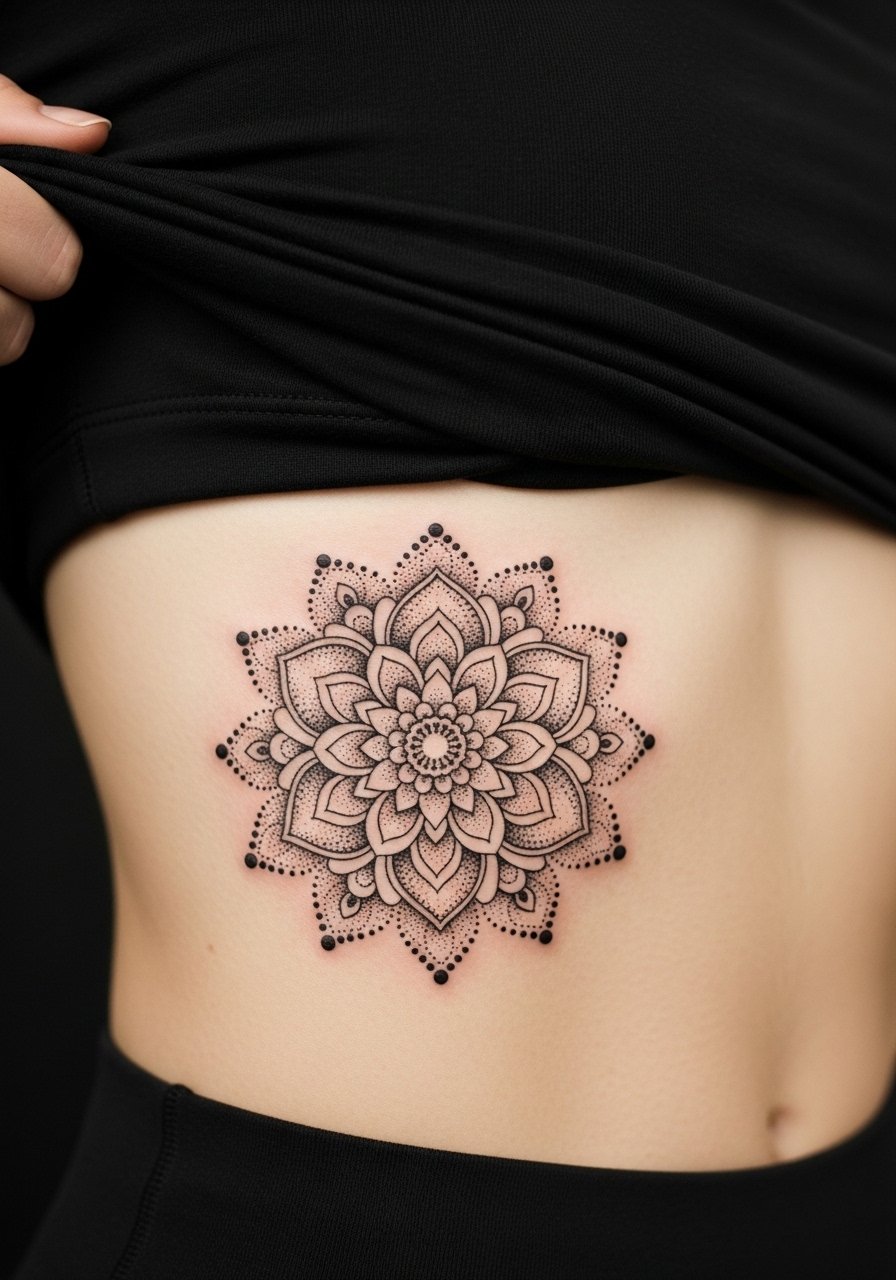
Ribcage mandalas are dramatic but painful and widely debated. Artists split into two camps on fine line here. One camp says the stretching and movement blur thin lines within two years. The other camp believes with deliberate spacing and proper needle depth, fine line can settle nicely. My tip is to agree on spacing and a realistic touch-up plan before the stencil goes down. Sessions often need breaks because of pain and breathing, and healing needs sun avoidance. For the appointment pull on a cropped athletic top you can lift without rubbing the finished area.
24. Knee Cap Expansion Mandala
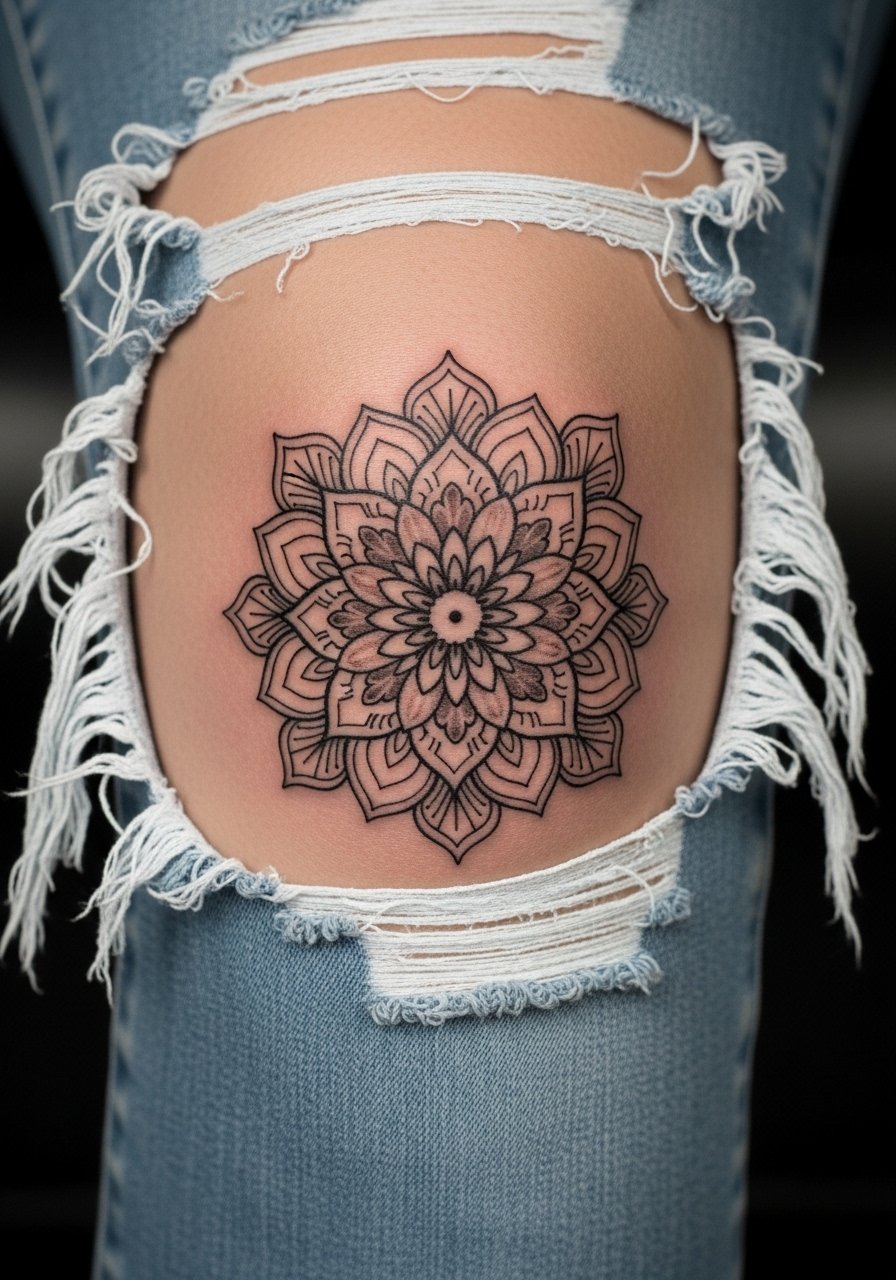
This knee variant focuses on layers that visually expand with movement. The primary mistake is too-tight inner mandala work that becomes distorted when you bend. During consultation have the artist test the stencil at different bends to check flow. Pain is sharp but sessions are manageable if split. For showing it off try ripped knee jeans men or shorts. Touch-ups usually target the center lines worn by motion.
25. Geometric Sleeve Starter Mandala
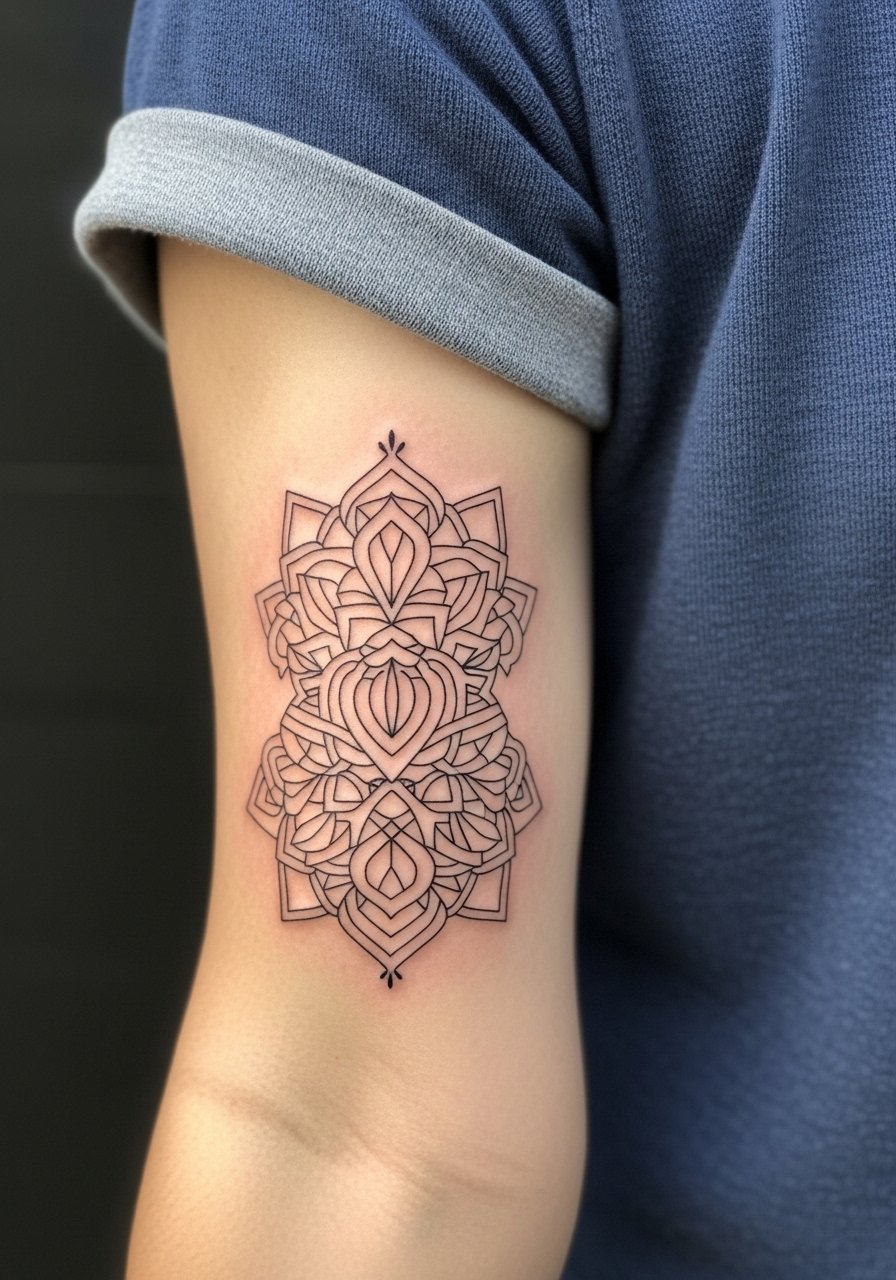
A mandala sleeve starter lays base geometry so future elements can tie in. The common error is starting with mismatched scales that force awkward fills later. Ask for a cohesive motif system and a mapping session so future work sits naturally. This approach lets you stagger sessions and budget. The mid-arm is forgiving and heals well. For the appointment wear a charcoal henley shirt men with sleeves you can roll without creasing the fresh ink. Touch-ups are usually minor as the sleeve grows.
26. Minimalist Shoulder Blade Mandala
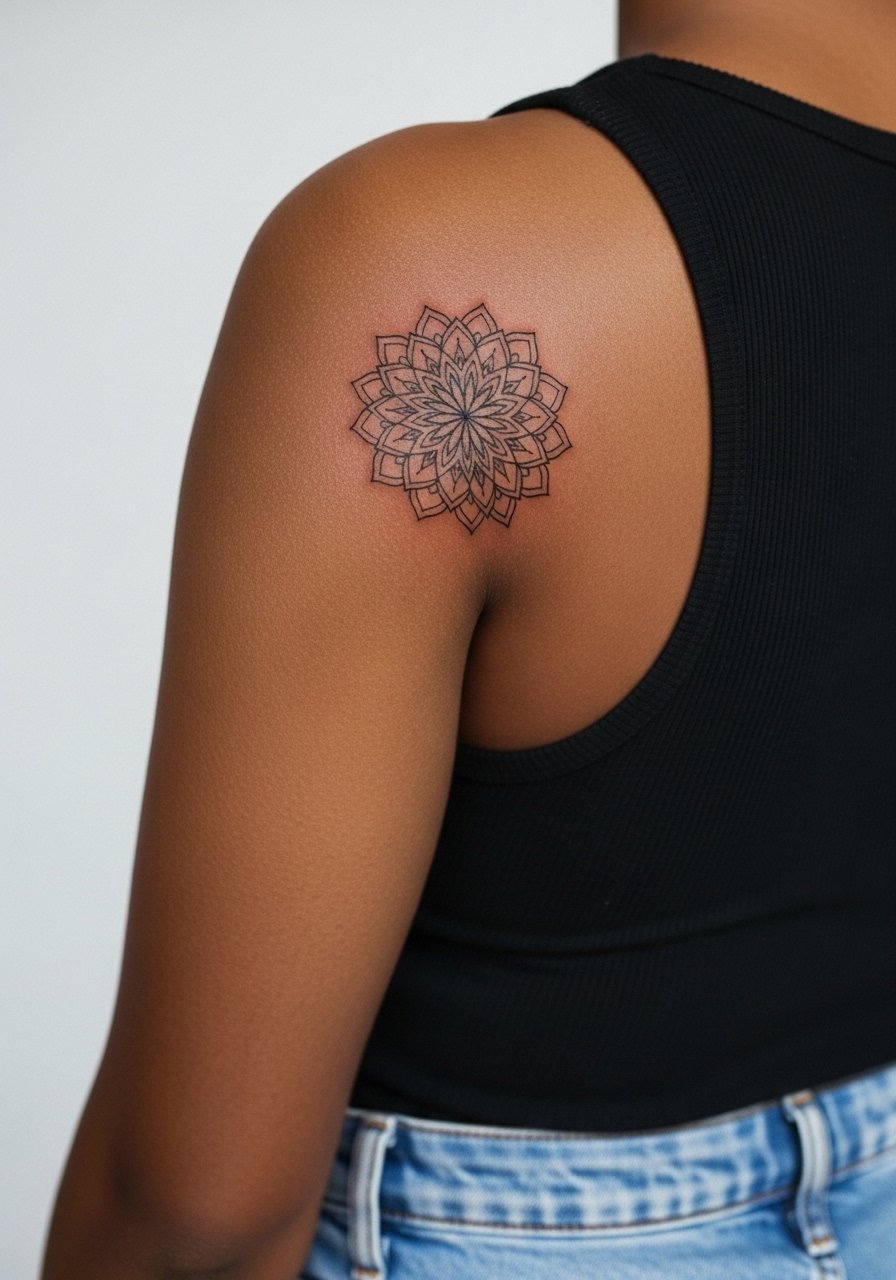
A shoulder blade placement keeps the piece personal and occasionally visible. The main mistake is too much center detail for a small isolated spot. Ask the artist for simplified radial motifs that keep strong outer lines. Sessions are short and healing is relatively painless. For session comfort wear a tank top that you can pull aside without exposing the rest of your back. Touch-ups are infrequent unless you spend heavy time in direct sun.
27. Mandala Over Scar Cover-Up
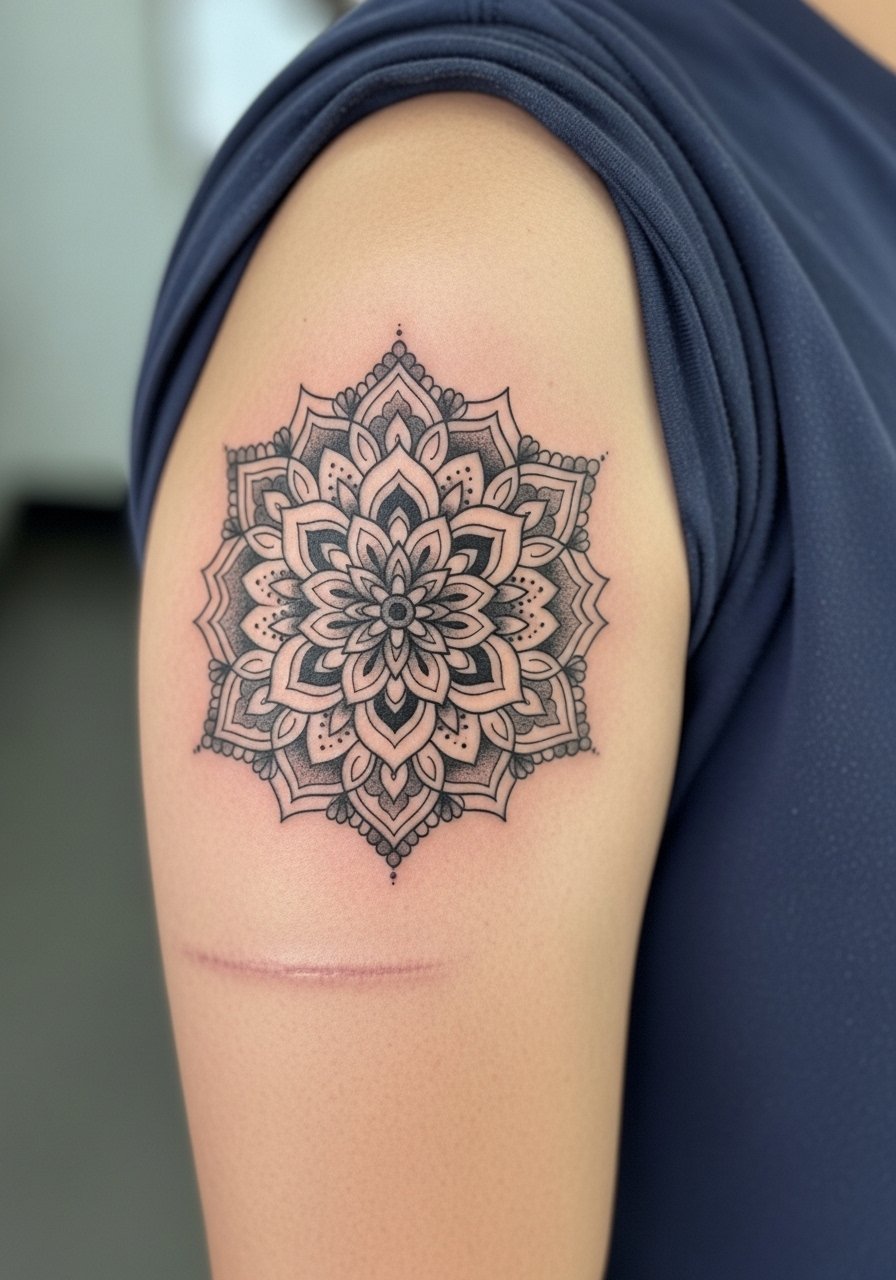
Using a mandala to incorporate a healed scar is a smart option when the scar lines match radial geometry. The crucial consultation topic is scar thickness and sensitivity because scar tissue absorbs ink differently. A common mistake is assuming identical coverage to native skin. Ask the artist for a staged test patch and to plan heavier linework around the scar rather than overloading the scar tissue itself. Sessions may be slower and require extra passes. For session wear short sleeves you can roll up easily. Embrace subtle asymmetry so the piece reads intentional not disguised.
Frequently Asked Questions
Q: Will a fine line mandala fade faster than blackwork?
A: From what I have seen, fine line tends to soften sooner because thin lines have less pigment to withstand skin shift and sun. Blackwork and bold saturation age into an obvious form more predictably. If you want the fine line look long term, plan for scheduled touch-ups and sun protection.
Q: How much should I budget for a medium mandala on an arm or chest?
A: Expect session-range pricing that varies with size and complexity. Small wrist or wrist-to-forearm work often fits the one to two session range. Medium chest or upper arm pieces usually span two to four sessions. The right budget is a range that lets you prioritize a skilled artist over speed.
Q: Are there placements I should avoid for a first edgy mandala?
A: High-movement or thin-skin spots like fingers, hands, ribs, and the side head can be unpredictable for a first piece. They are doable but they ask for extra consultation and a maintenance plan. If it is your first tattoo, consider forearm or upper arm placements to learn how your skin accepts linework.
Q: How soon will a knee or thigh mandala need a touch-up?
A: Knees usually need touch-ups sooner because the joint motion and clothing friction stress the ink. Thigh pieces often last longer between touch-ups if they sit on the outer muscle and avoid constant rubbing. Expect timelines to vary by activity and sun exposure.
Q: How do I find an artist for dotwork mandalas without naming anyone directly?
A: Search style-specific hashtags like #dotworkmandala and narrow by location tags such as "mandala tattoo [city]" to find portfolios. Tattoo directories and convention guest lists are useful for comparing work and scheduling consultations. Ask for healed photos of similar placements before you book.
