
Fine line work is trending again, and the gap between what looks great on Instagram and what reads well five years later is wider than most people expect. Some pieces are made to age, others are made to be liked for a week. Read on for 21 modern tattoo ideas that lean into lasting linework, placement-aware choices, and outfit pairing so your next piece ages in a way you can live with.
1. Geometric Wolf Mandala on Outer Forearm
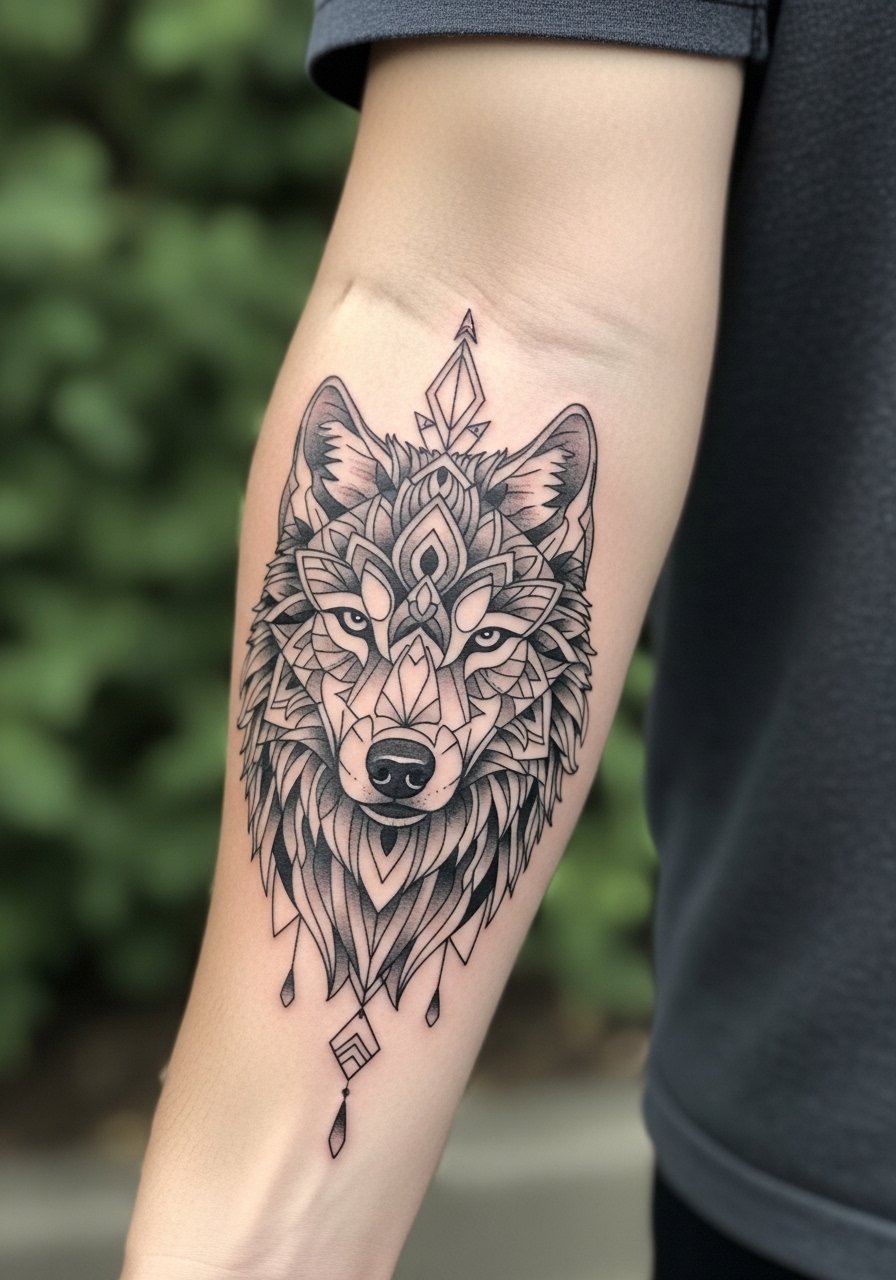
A mandala-wolf combo works when you want symmetry and a focal animal motif that reads while you type or lift your sleeve. Suggest to your artist that the mandala rings get breathing room. A common rookie mistake is shrinking the mandala until the inner lines merge. Expect a two to three hour session for medium size and a likely touch-up at year two for tight dot work. Fair warning, muscular forearms can push ink slightly during sessions so schedule a time when your arm is relaxed. For show-off wear, roll a rolled cuff chambray shirt in navy or gray and balance the arm with a slim gold chain bracelet on the opposite wrist.
2. Japanese Irezumi Dragon Sleeve
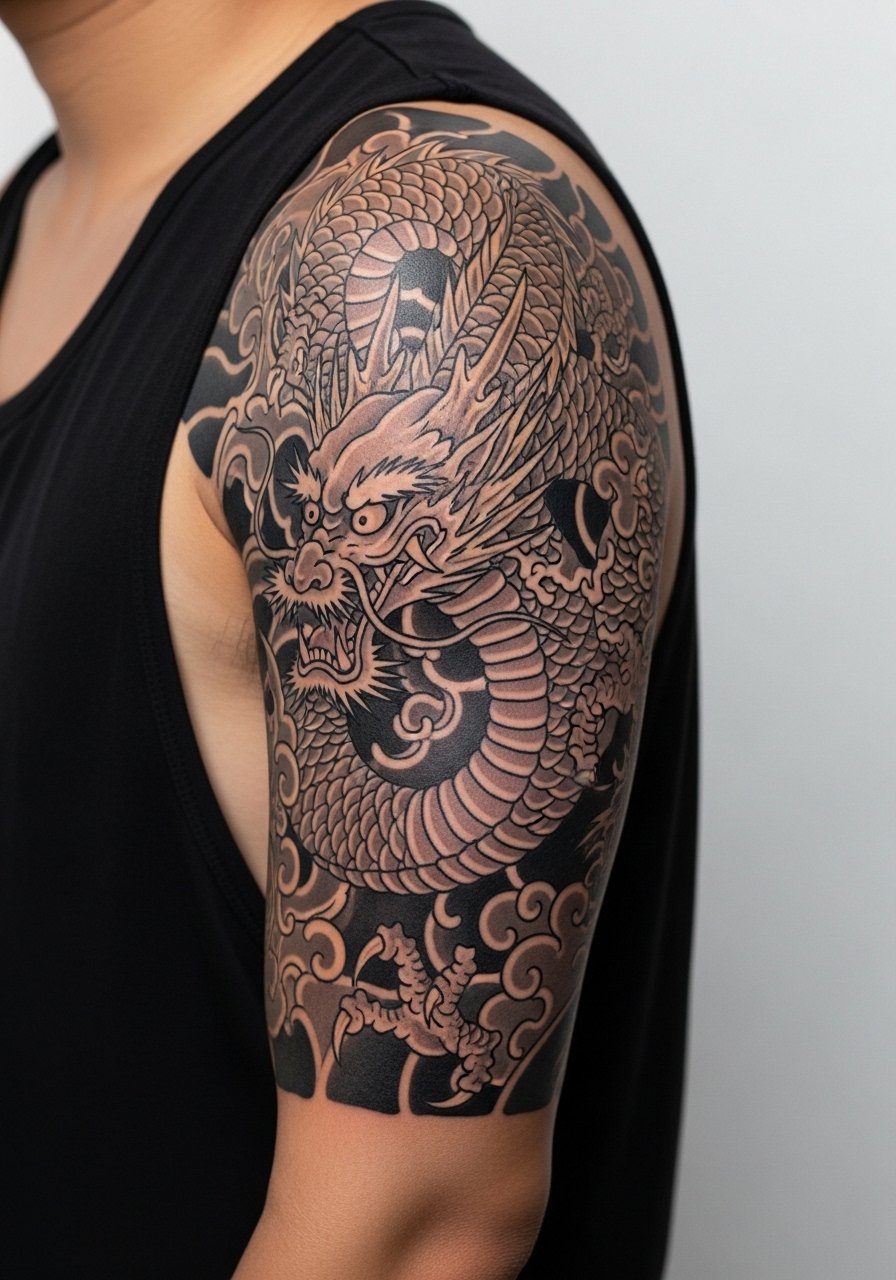
This is for someone who wants a long-form narrative piece that builds across sessions. Tell your artist you want five-plus sessions and continuity rather than chopping the dragon into unrelated motifs. The wrong approach is squeezing tiny, Instagram-friendly details into a large canvas. That style needs bold saturation and layering so colors age into a cohesive whole. Sessions feel long because of saturation work and color packing. Numbing cream comes up during these days. Artists split on it. One camp says numbing creams mask subtle reactions that guide proper depth placement. The other camp uses them for marathon days and schedules touch-ups later. Discuss numbing use with your artist before booking.
3. Angel Wings Upper Chest Pair
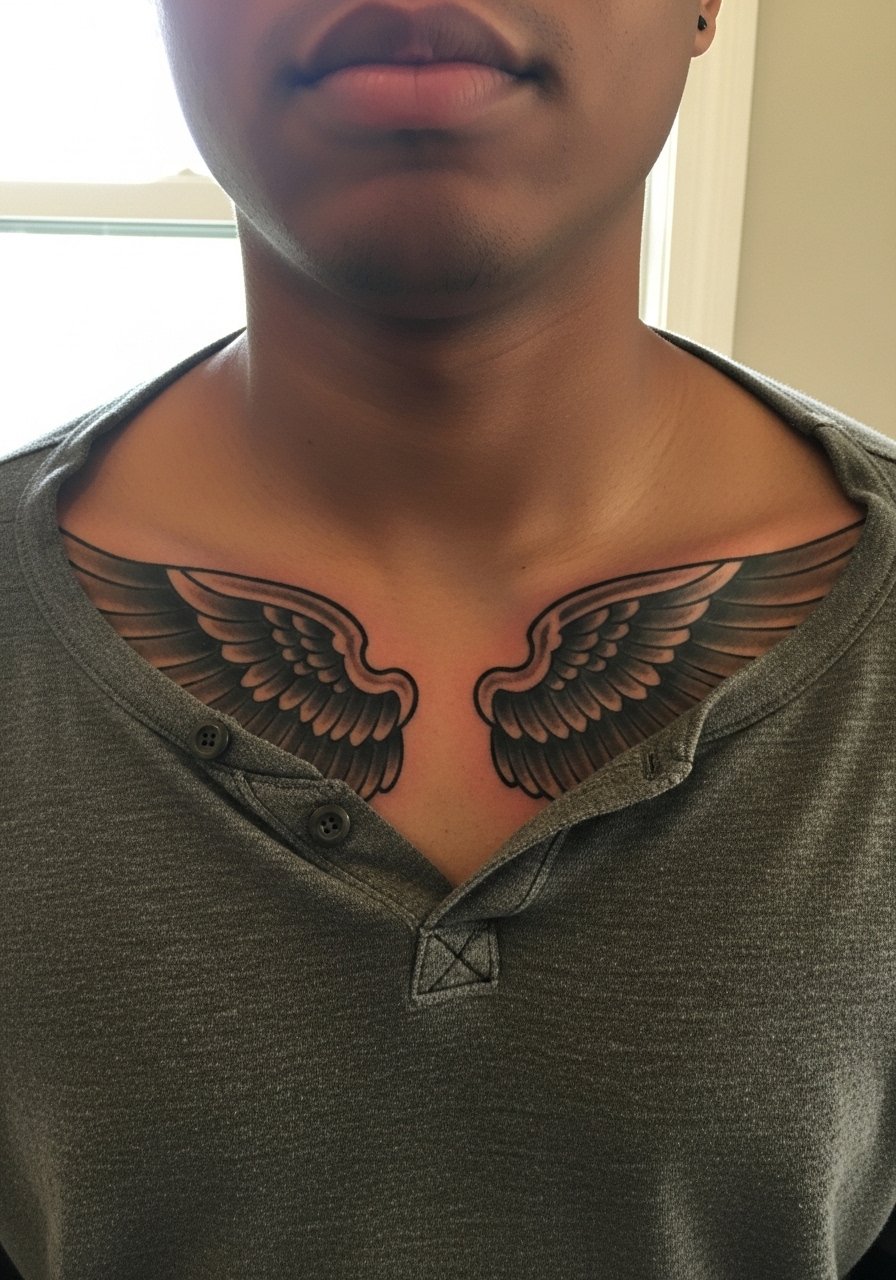
Wings across the chest read as protective markers for people who want a visible, wearable piece without heavy color. In consultation, ask the artist to match wing curvature to your clavicle angle for a natural fall. A frequent error is mirroring wings too symmetrically when the chest anatomy differs. Expect mid-level pain around the sternum edge and two to four sessions depending on shading. For showing it off, unbutton a men's henley shirt black or pull a wide-neck open slightly so the wings frame the neckline.
4. Thor's Hammer (Mjolnir) on the Bicep
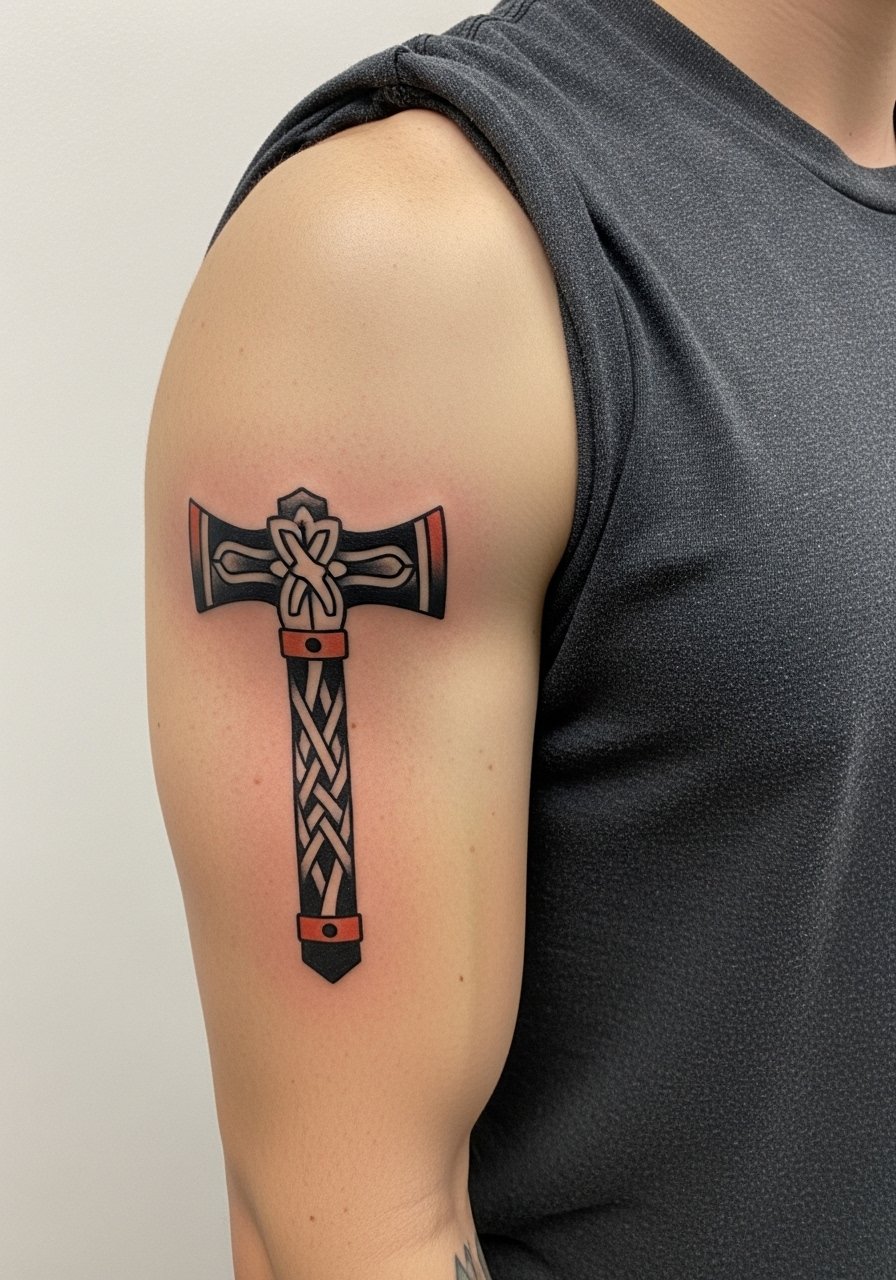
A compact Norse hammer is perfect if you want mythic reference without a full sleeve. Ask for clean, thick outlines and avoid tiny filigree that can blur with movement. Most people underestimate how much biceps bulge during workouts. For that reason, keep linework simple and scale slightly larger than your first impulse. Session time is usually one to two hours and pain is moderate. For session wear, slip into a fitted muscle tee olive or a sleeveless tank so the artist has full access without fabric tugging.
5. Crescent Moon and Milky Way on the Calf
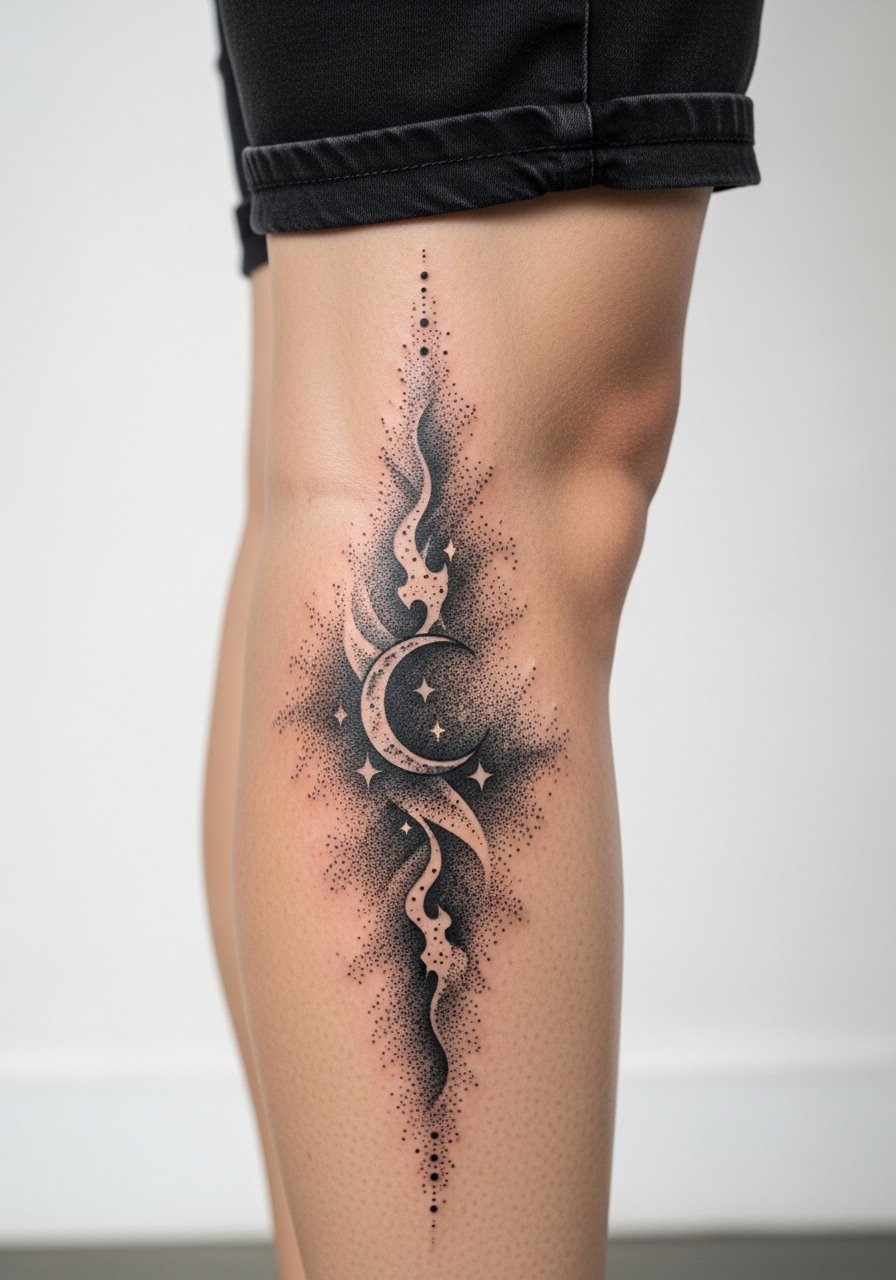
Vertical calf pieces carry well for people who want a story without sleeve commitment. Tell your artist you want negative space to form the Milky Way rather than heavy gray fill. A typical mistake is packing too many tiny stars into a small area, which becomes muddled after healing. The calf is a low to moderate pain zone and usually wraps into two shorter sessions. For show-off pairings, cuffed joggers or slim shorts let the negative space breathe. Try a cuffed joggers men look in black to frame the piece.
6. Minimalist Quote on the Inner Wrist
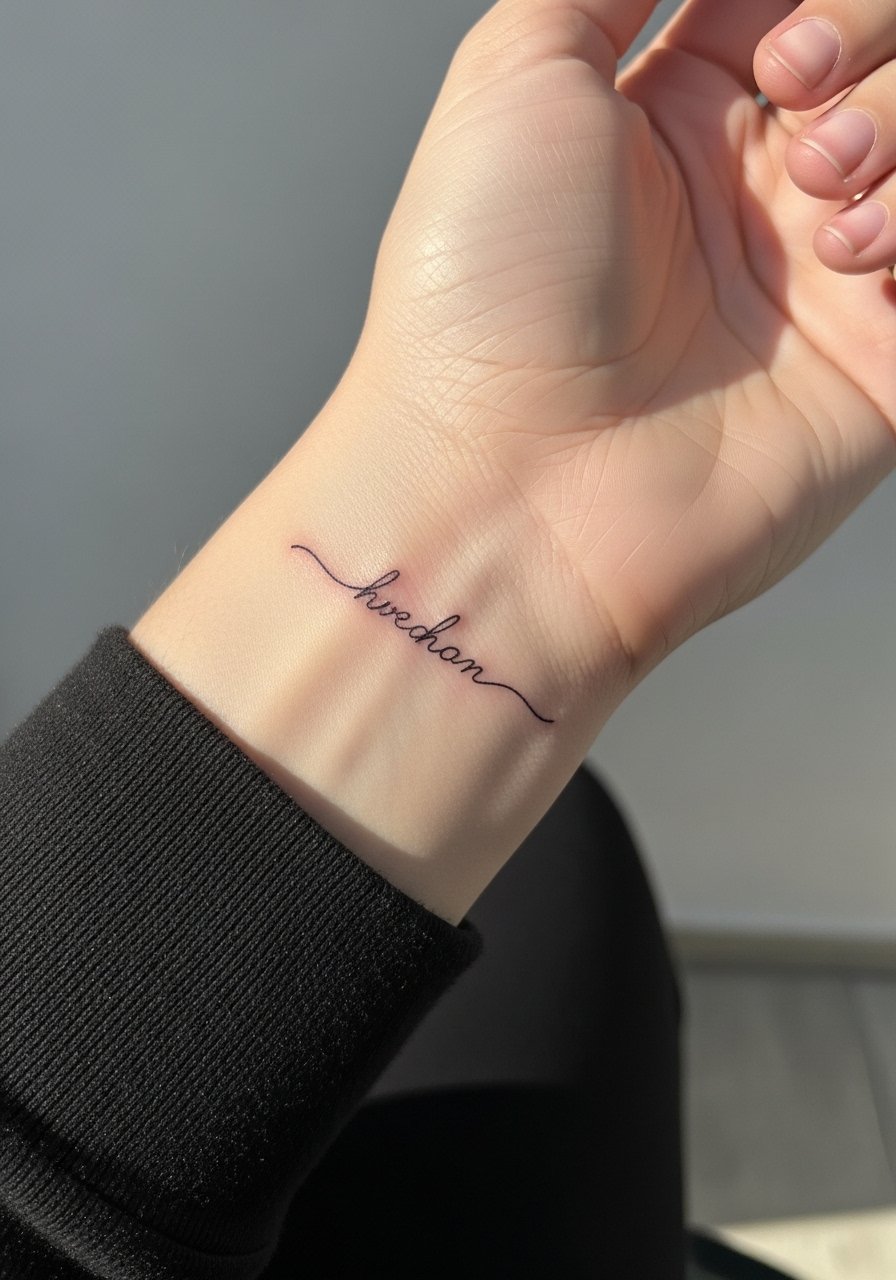
A wrist script can feel like a daily compass, but short scripts age differently across skin types. Artists debate fine line longevity on high-motion spots. One camp says fine line fades quickly on hands and wrists and softens into blurring within two years. The other camp maintains that with correct needle depth and occasional touch-ups, fine line can hold. When booking, specify exact font size and letter spacing. A common mistake is requesting an ornamental script that the wrist cannot sustain. Plan for a quick single-session appointment and a possible touch-up in year two. For appointment day, wear a loose fit short sleeve tee you can roll up without pulling at the jewelry.
Studio Day Picks
The wrist and forearm pieces above heal differently from larger back and thigh work, so a few small things smooth out the session and the first week.
-
Stencil transfer paper kit. Lets you preview the line placement on skin so the mandala and script areas land where you expect.
-
Topical numbing cream. Used by some people for marathon sessions on sleeves and heavy saturation days, applied before the artist arrives.
-
Thin protective film roll. Useful for small wrist and finger work that sees a lot of friction in the first days.
-
Fragrance-free body wash. Gentle cleansing helps keep fine line pieces clean without stripping the scabbed areas.
-
Aquaphor healing ointment. A thin layer for the first few days keeps delicate linework hydrated while it forms stable scabs.
7. Anchor Forearm Sleeve, Modern Neo-Traditional
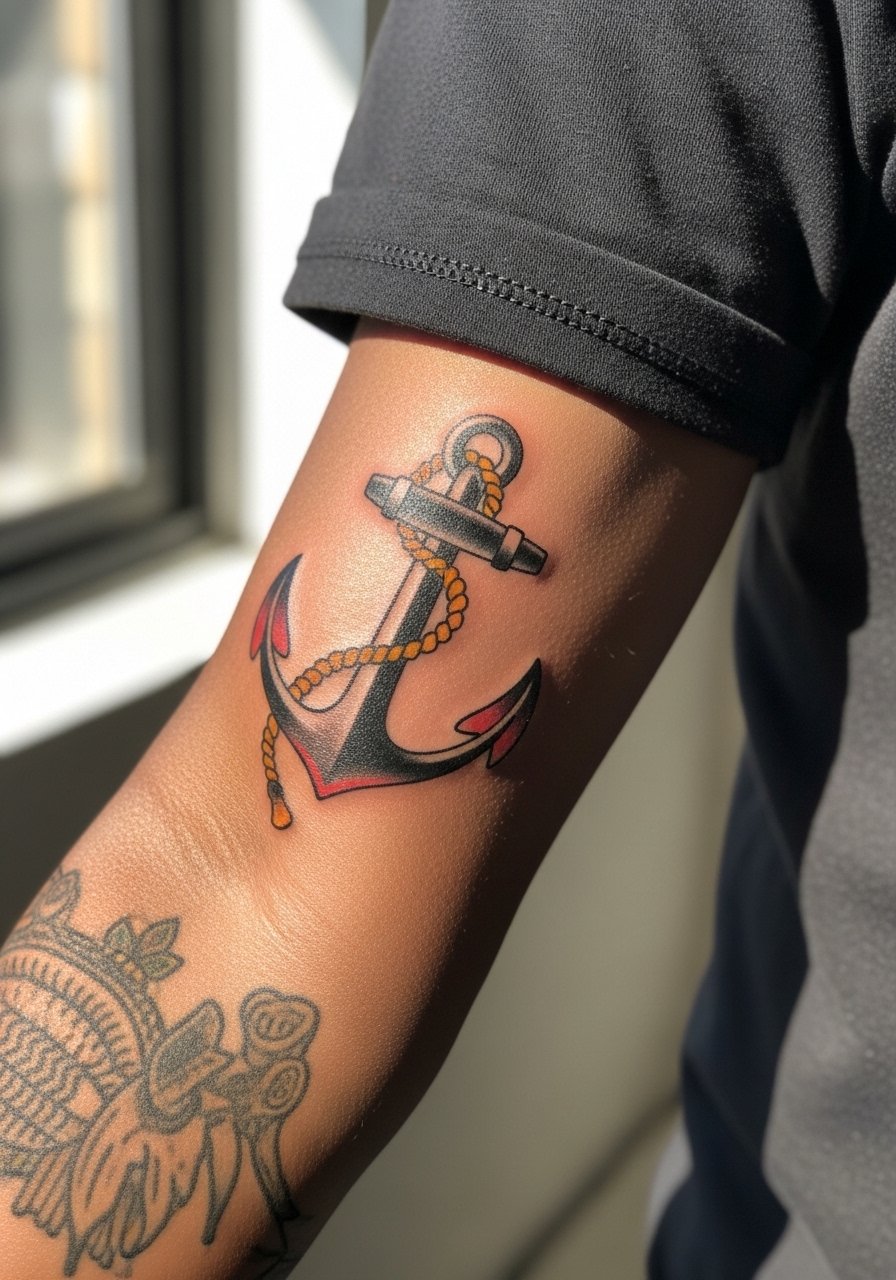
An anchor sleeve mixes classic motifs with modern fills if you want a cohesive forearm narrative. Say you prefer color pops kept to accents and ask the artist to plan negative space for future add-ons. A common mistake is over-saturating small motifs which makes the sleeve feel boxed in when you add new work. Forearm sleeves take multiple sessions and feel manageable since the area is easy to rest. For showing it off, roll sleeve cuffs and wear a rolled cuff chambray shirt so the full sleeve reads cleanly.
8. Cross Outline on the Side Neck
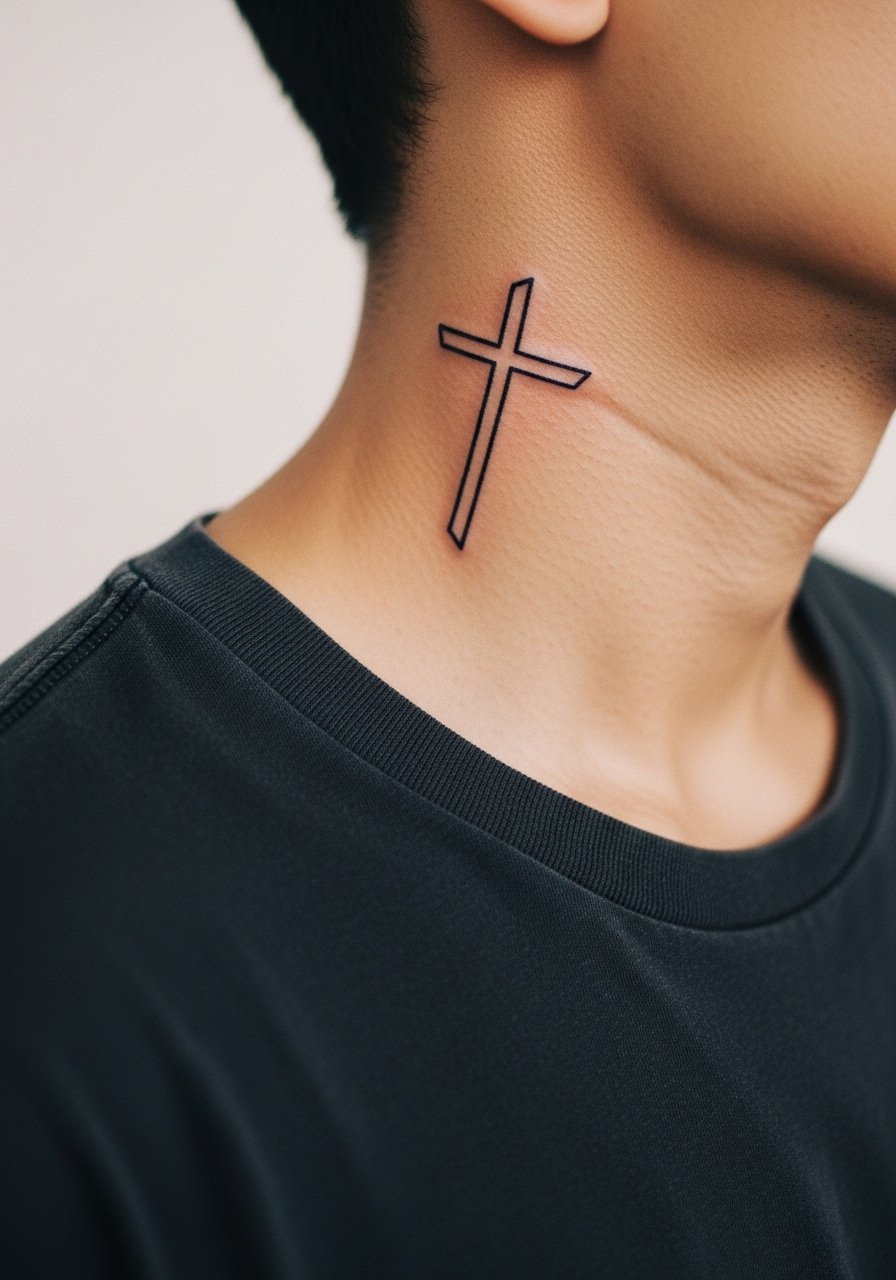
Neck outlines are visible and demand clear intent. Tell your artist how visible you want the cross at work and social settings. The typical mistake is asking for ultra-thin lines that blur over time on the neck. Neck skin can be unforgiving and touch-ups are common. Pain is higher here than on the arm, so expect a one-hour session and plan for a small touch-up at year one. For outfits, a men's v neck tee keeps the neckline casual while showing the piece when you want to.
9. Lion Head Shoulder Cap in Realism
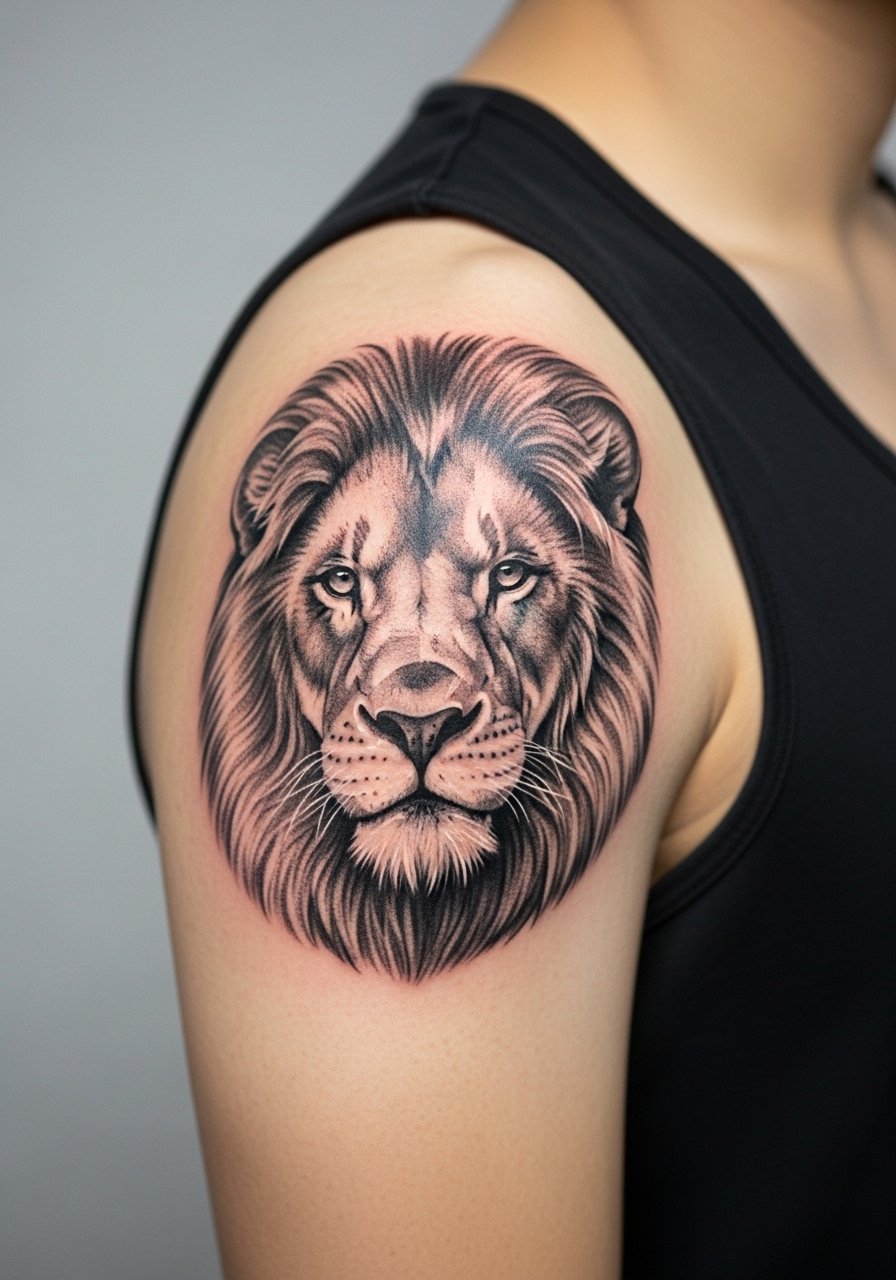
A shoulder cap lion suits someone aiming for leadership symbolism without a chest takeover. Ask for clear separation in the mane and avoid tightly packed micro-detail near the shoulder seam. Shoulders move and the most common mistake is trying to push cinematic micro-realism into a small cap. Sessions usually run two to three hours with moderate pain. For the session, wear a sleeveless tank men so the shoulder is fully accessible.
10. Phoenix Rising on the Outer Thigh
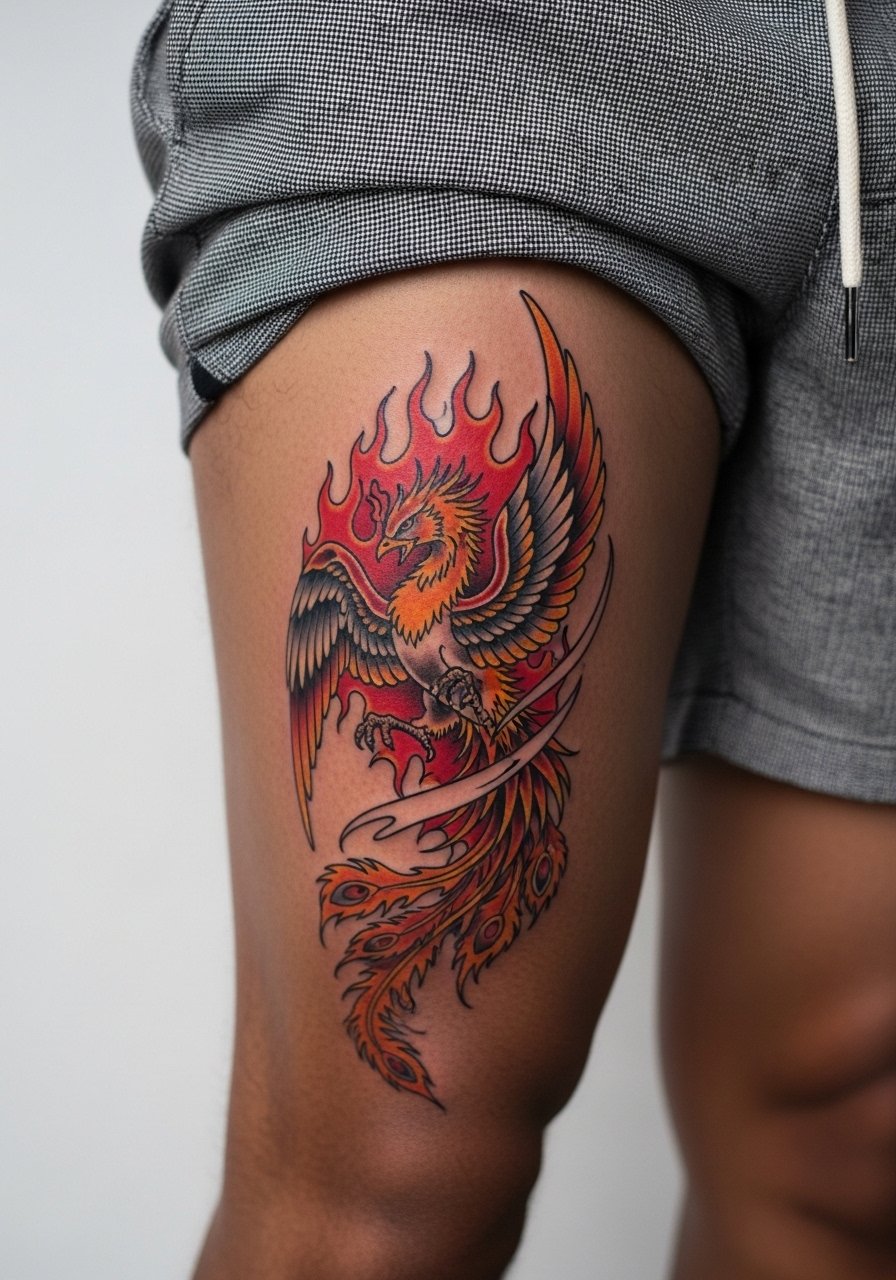
Thigh pieces let you tell a bigger rebirth story without public daily exposure. Tell the artist you want the phoenix in a vertical flow that follows the thigh muscle. The wrong route is compressing the wings into a tiny patch that looks crowded once you stand. Expect multiple sessions and moderate-to-high session comfort, because the thigh handles saturation well. For showing it off, pick tailored shorts in khaki or swim trunks in the summer. Try a tailored swim shorts fit so the leg frames the piece.
11. Arrow Column Along the Spine
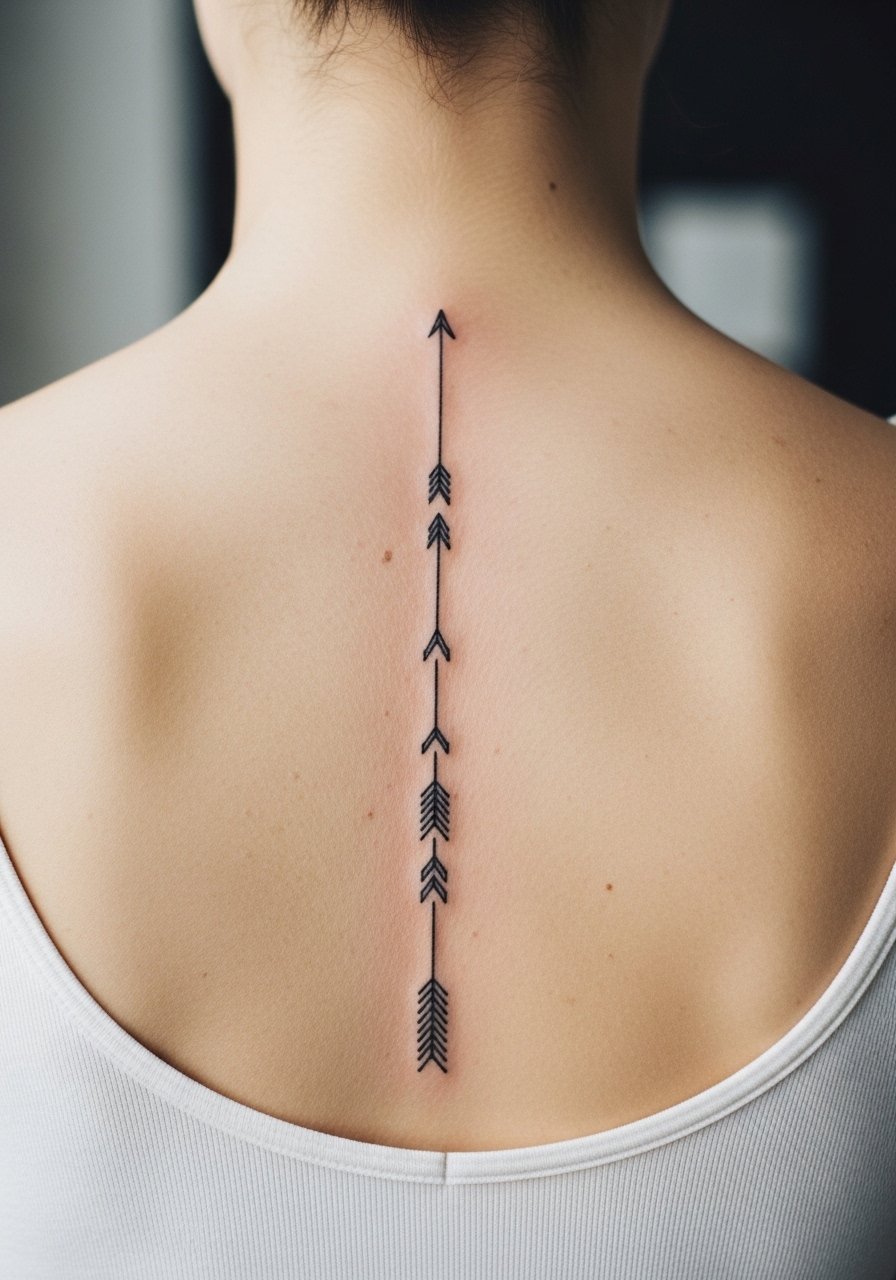
Spine columns look clean when spaced correctly and when the arrow motifs are scaled for movement. Tell the artist you want generous spacing between arrowheads and shafts. A typical mistake is compressing multiple tiny arrows into a narrow run that blurs with time. Fine line on the spine sits in a contested zone. Some artists say spine skin shifts too much for thin lines and recommend bolder shafts. Others keep it fine but set expectations for touch-ups under any outcome. Pain is higher here and sessions are shorter to limit discomfort.
12. Feather Chest Minimal Cluster
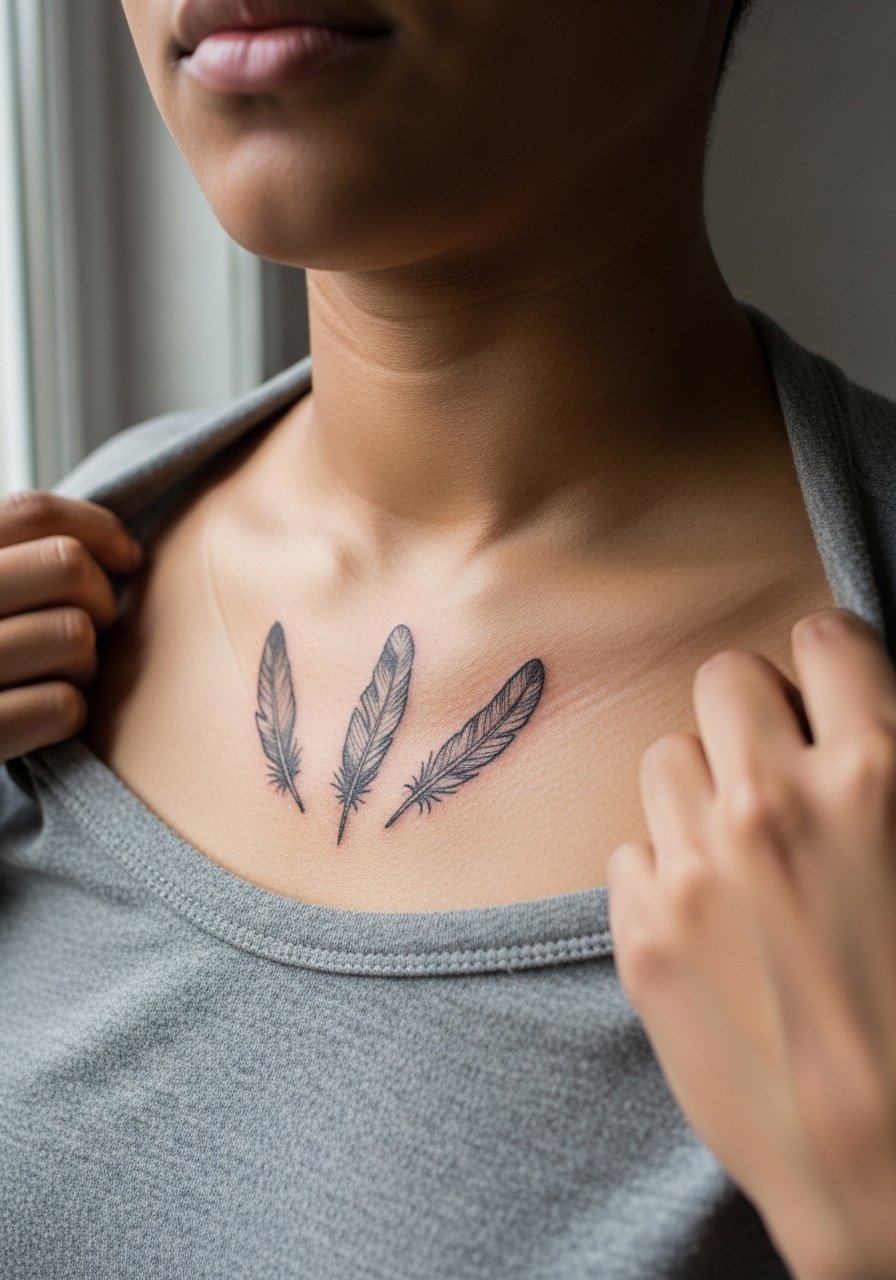
Feathers across the chest make for a soft motif that layers under shirts. Ask the artist for open stems and to orient feathers with your muscle lines. People often ask for ultra-lacy feathers that the chest cannot sustain if placed too close together. Expect a one-hour session and a touch-up possibility if stems soften. For showing it off, an open henley or a plain chain sits well. Try a plain chain necklace men to keep attention on the upper chest.
13. Tree of Life Back Panel
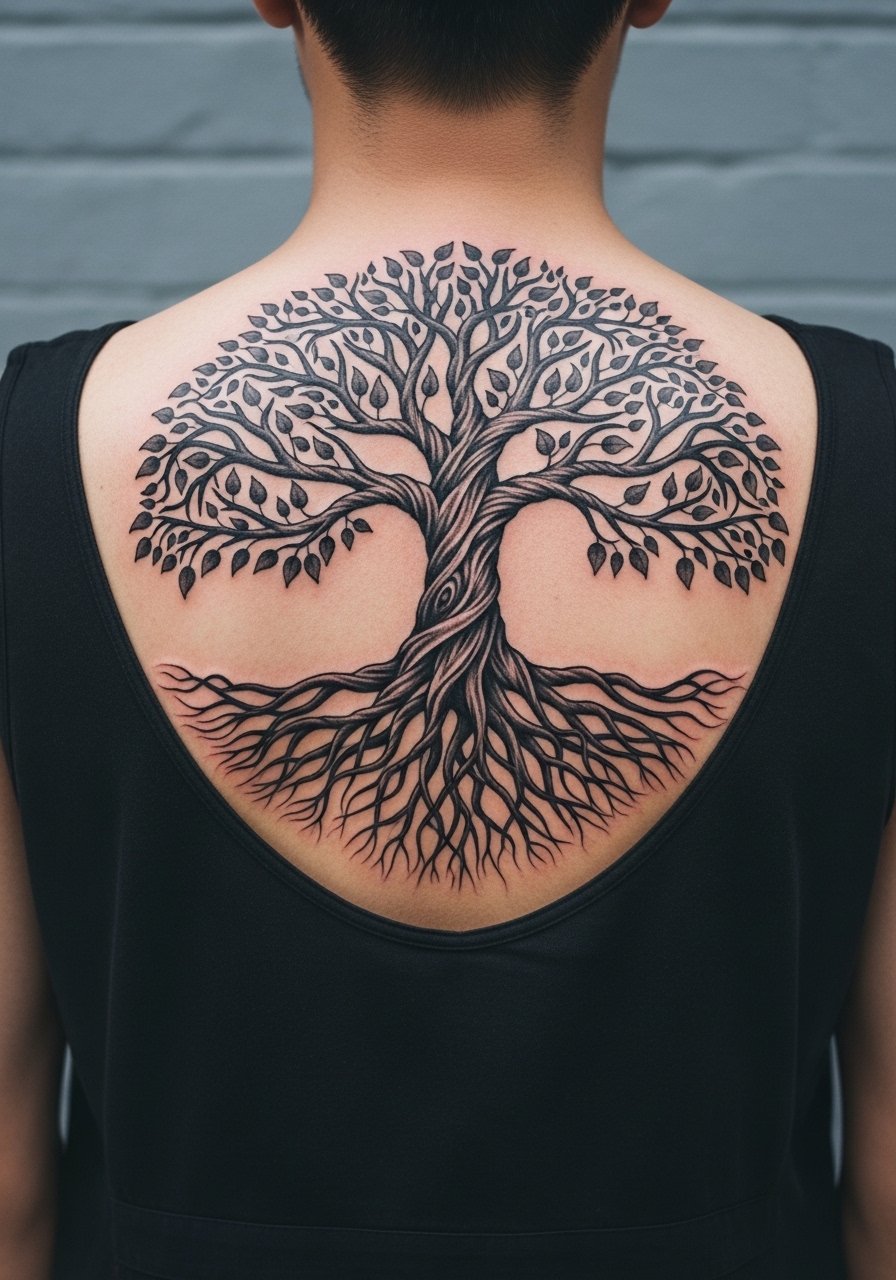
A back panel is for people who want ancestry and growth motifs with room for detail. Ask your artist to plan root-to-branch flow so future additions have clear margins. The big mistake is treating the back like a set of disconnected flash pieces. Back panels take several long sessions and healing is slower in the center of the back. For the appointment, wear an open vest jacket or a backless tank that the artist can work around.
14. Geometric Milky Way with Wolf, Outer Forearm
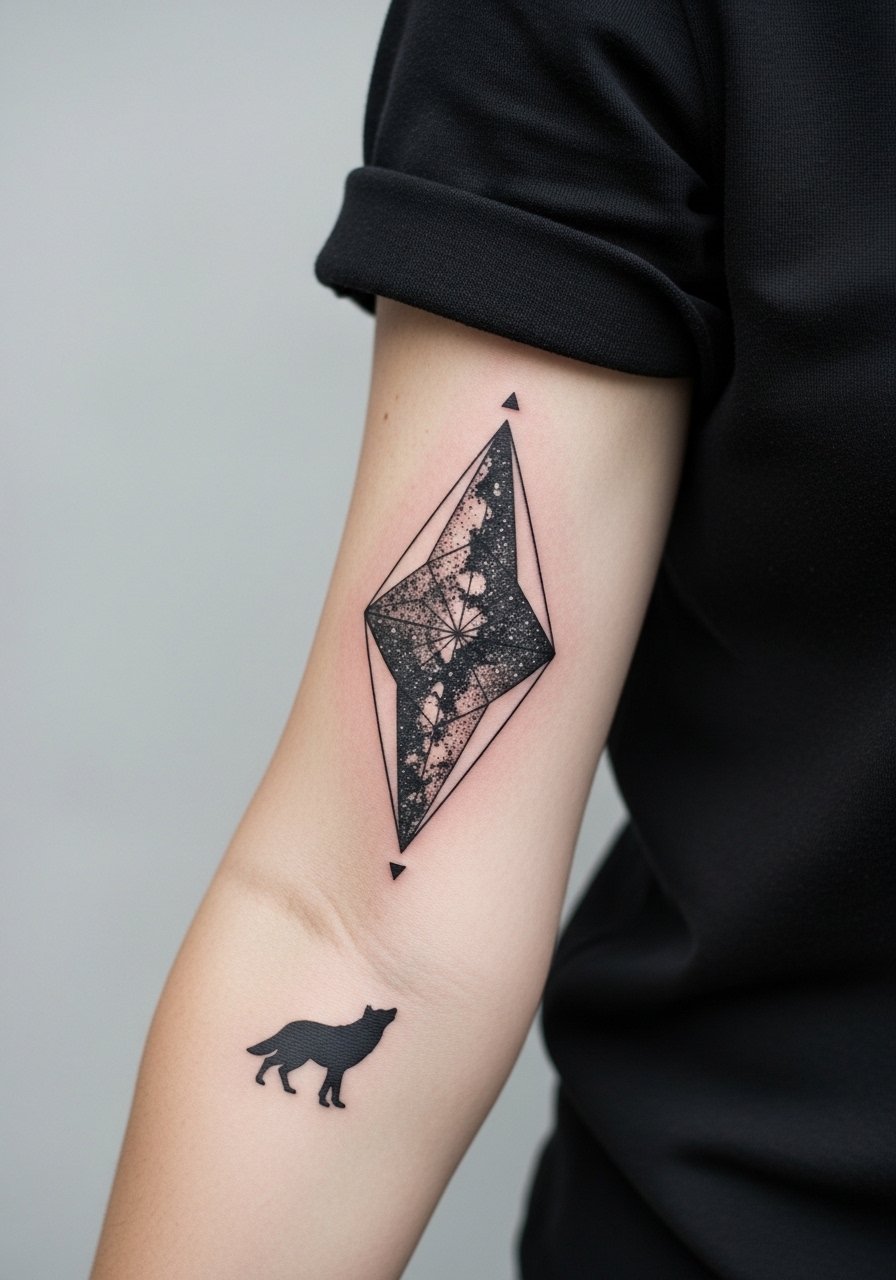
This combination blends cosmic loss with animal focus for someone who wants layered symbolism without large scale. Tell the artist you want the Milky Way implied through dot spacing instead of heavy gray, and the wolf as a silhouette for contrast. Too much dot density in the center is a common error because the pattern can smudge once healed. Session time is moderate and touch-up needs are usually limited to the dot-work field. For a casual show-off, pair with rolled sleeves and a slim bracelet to keep attention on the forearm.
15. Abstract Family Crest on Upper Chest
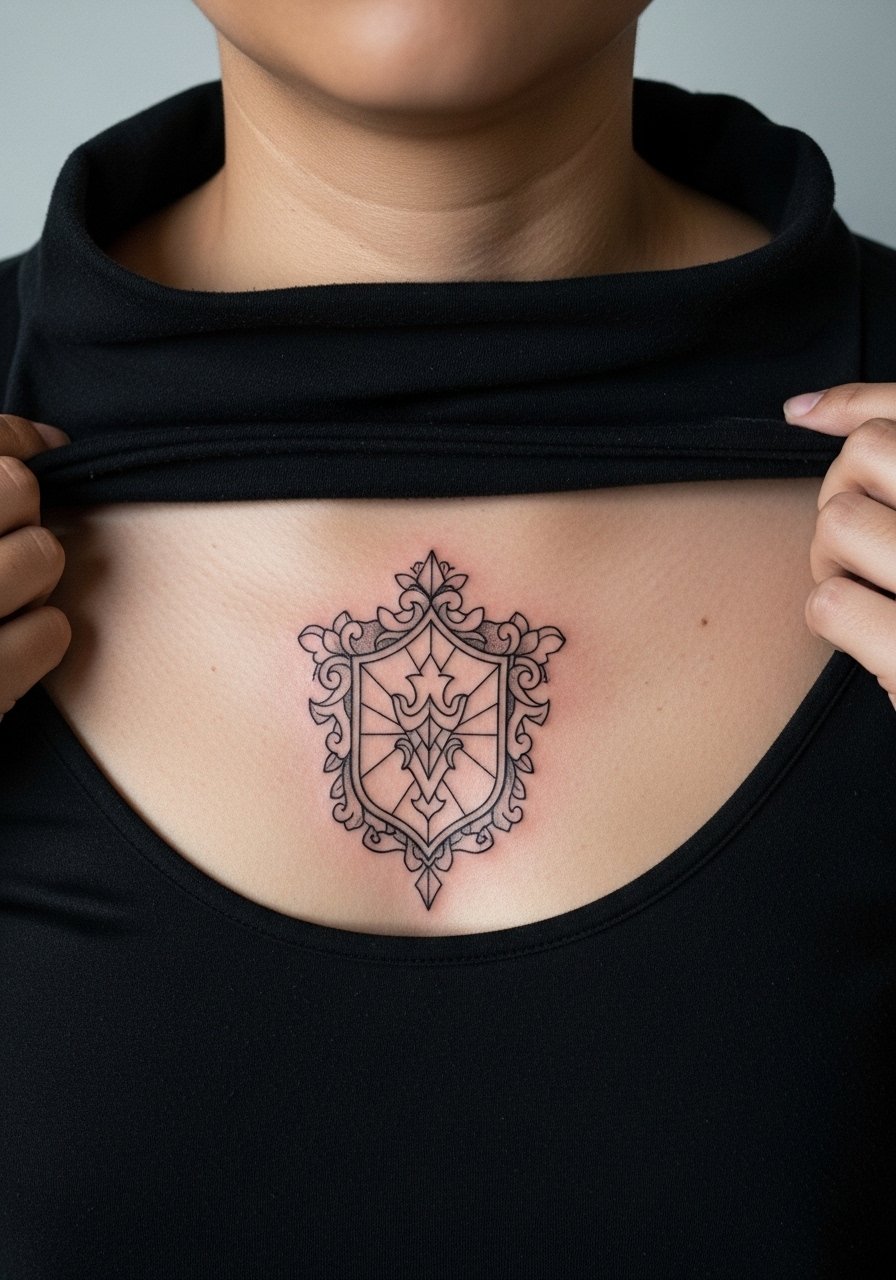
A modern crest lets you combine lineage cues without copying a literal coat of arms. Bring reference motifs and specify which elements matter to you so the artist can stylize respectfully. The usual mistake is layering too many symbols and ending with visual clutter. This placement can be sensitive near the sternum so expect moderate pain. For session wear, a loose tank or open button-down means quick access.
16. Feather-Arrow Hybrid on Inner Forearm
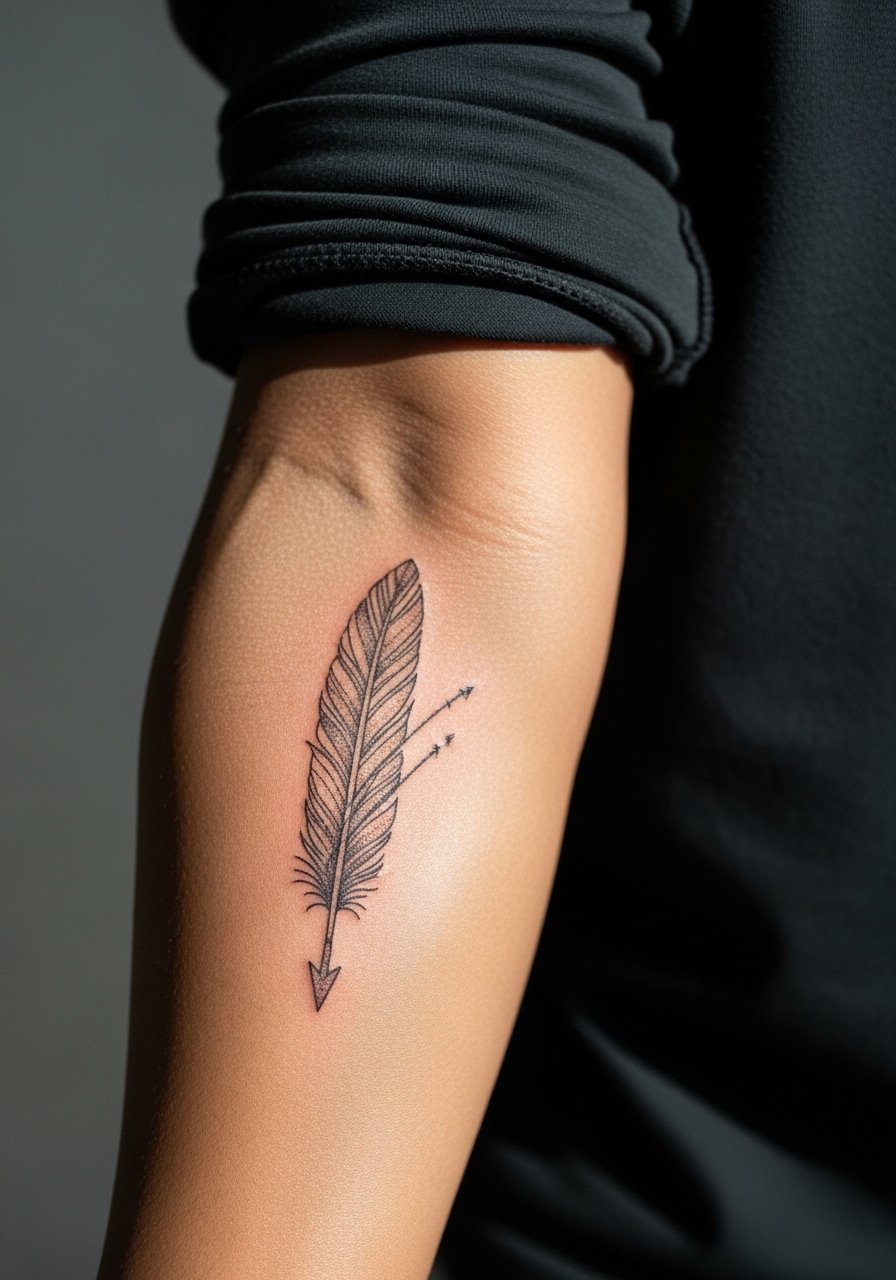
Combining a feather and arrow gives an option for layered meaning where each element supports the other. Tell the artist to keep the arrow shaft straight and let the feather flow off it so the motif reads at arm motion. A common error is making the feather too detailed where the inner forearm movement will blur slender barbs. Expect one session and a possible touch-up. For calm session access, wear a loose fit short sleeve tee that you can roll without stretching the fabric.
17. Minimalist Mountain Range on Inner Forearm
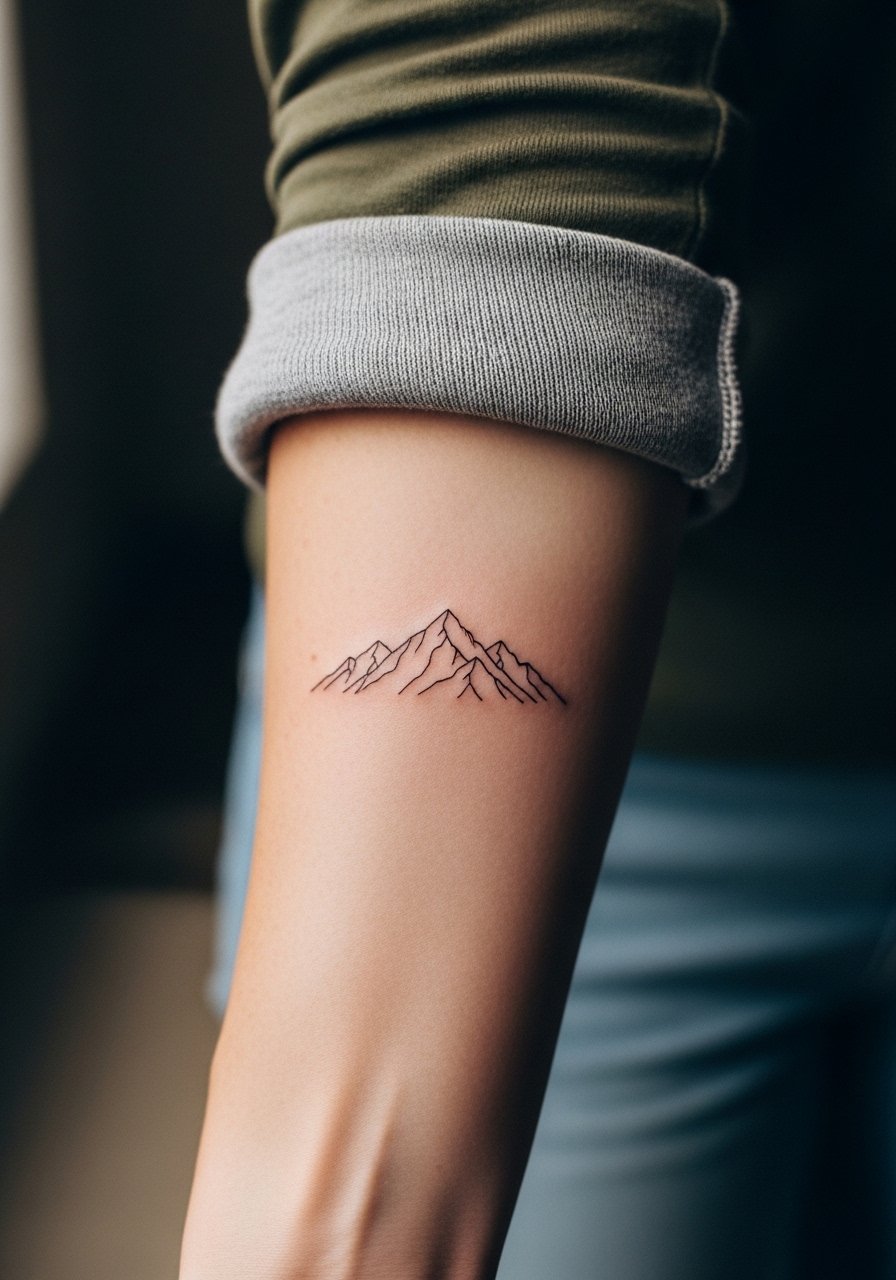
A small mountain range reads as quiet and wearable if spaced properly. During consultation, ask for deliberate spacing between peaks to avoid merged lines. The main mistake is shrinking the peaks until the angles look like a single flattened mark after healing. Inner forearm is a forgiving spot with moderate pain and usually one short session. For the session, a loose fit short sleeve tee or button-down works best so the artist can position your arm comfortably.
18. Micro-Realism Pocket Watch on the Inner Bicep
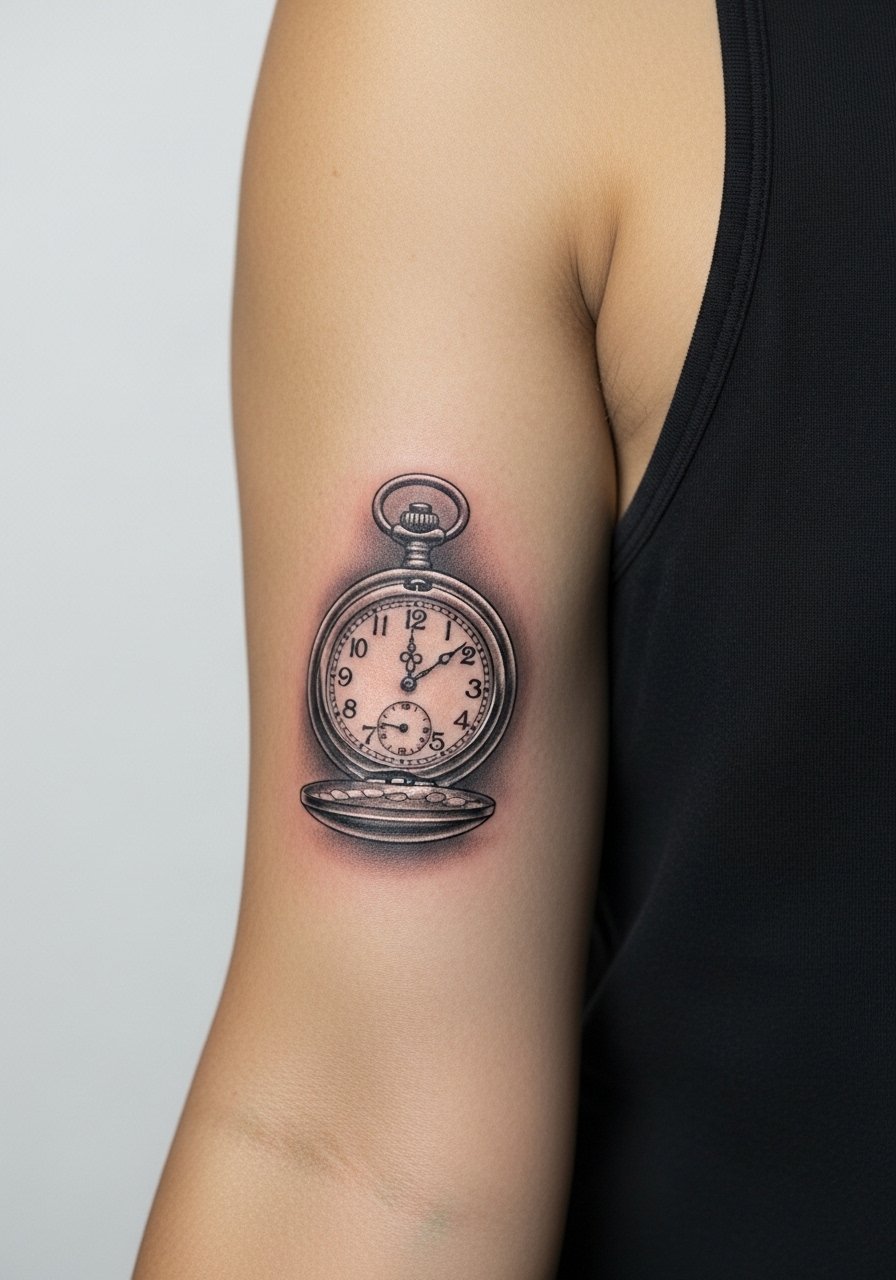
Inner bicep micro-realism reads best when artists plan for the skin stretch there. Ask for slightly larger highlights so the watch face keeps clarity. A common error is trying micro-detail at too small a scale which then peters out after six months. Inner bicep is a sensitive area so sessions are often short and broken into two sittings. Wear a tank top so the arm can be raised comfortably during the appointment.
19. Abstract Bold Shapes on Upper Arm
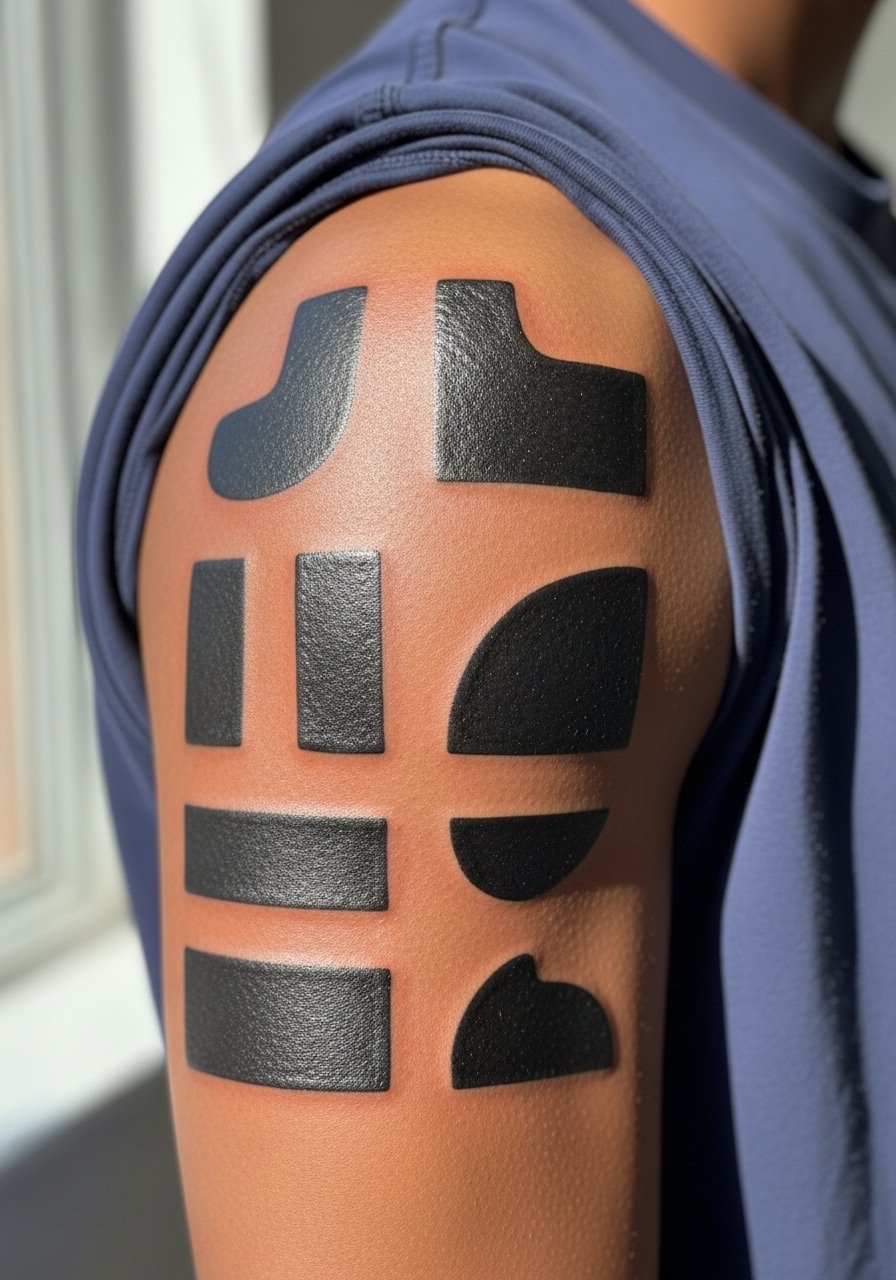
If you want something contemporary and non-figurative, bold abstract blocks can age into sculptural fields. Tell your artist you want clear negative edges so the shapes do not bleed into each other. The frequent mistake is placing heavy adjacent fills without thin separators which later look like one blob. Upper arm fills are durable and typically need fewer touch-ups. For session comfort, try a sleeveless tank men.
20. Dot-Work Constellation Ankle Tattoo
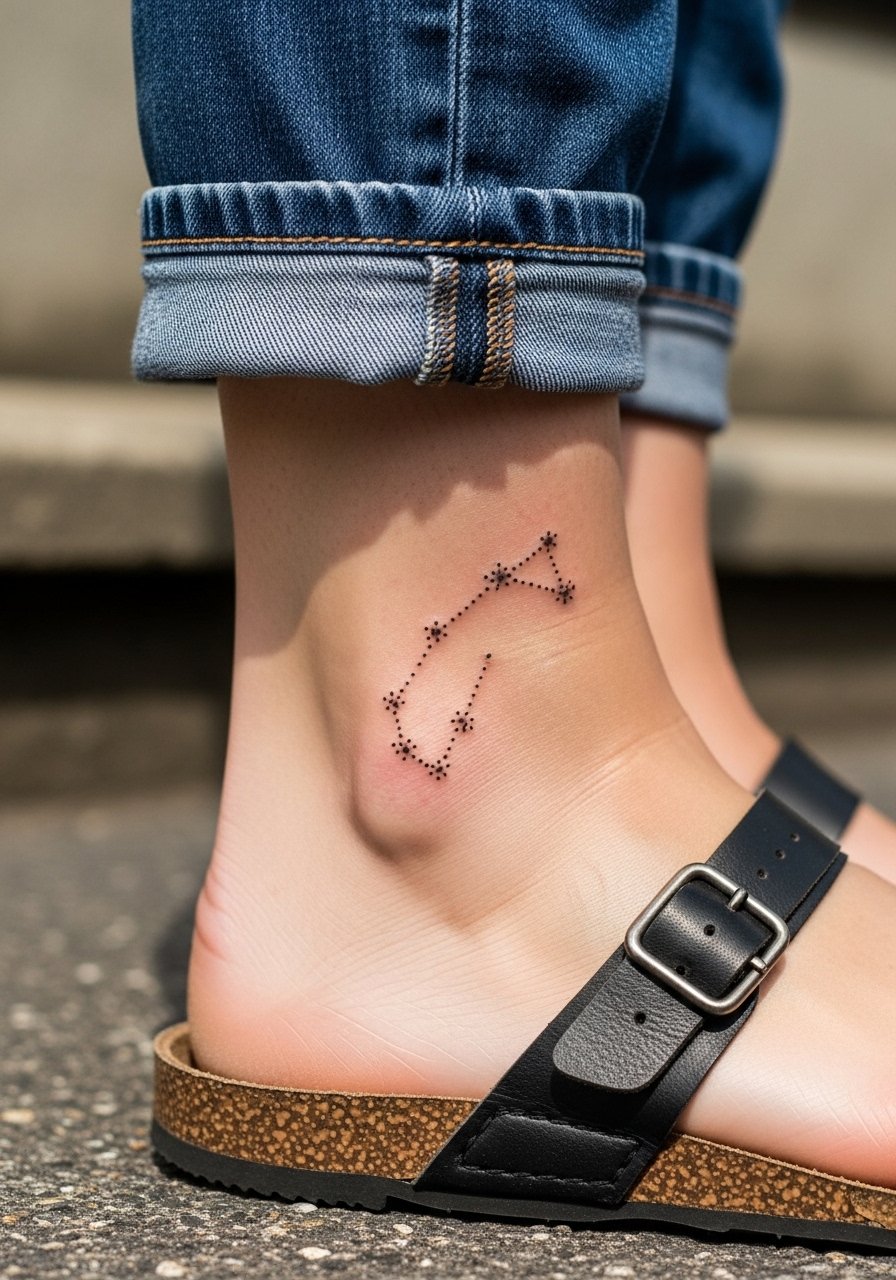
Ankle constellations are low-profile and work if you pick a constellation that has personal coordinates or form. Ask the artist for larger dot spacing across joints to avoid merging with movement. A common oversight is requesting tiny clusters that go soft from shoe friction and daily washing. Expect a short session, but protect that area from long walks while healing. For summer visibility, cuffed jeans and minimal socks pair best.
21. Single-Line Arrow with Feather on the Ribcage
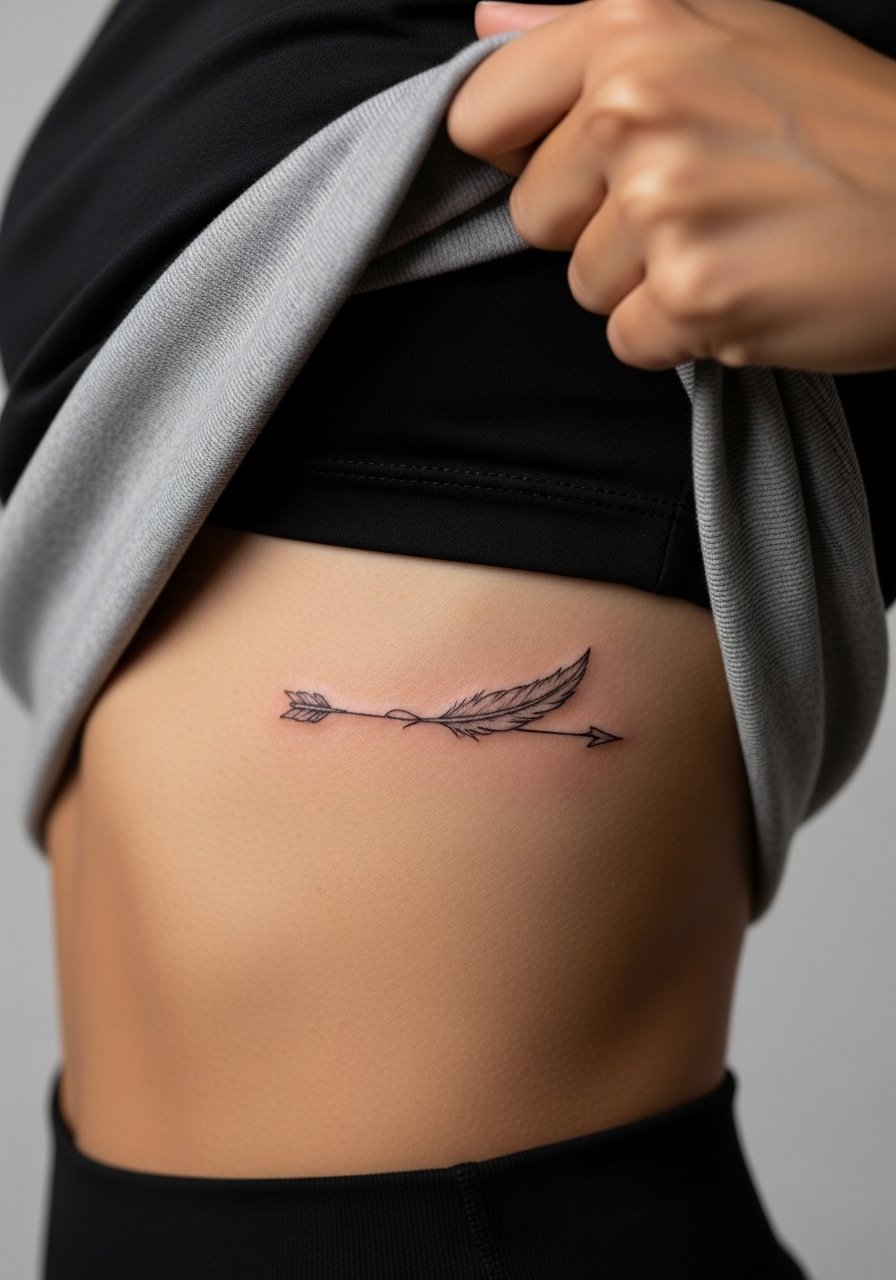
Ribcage placements read dramatic when scaled correctly but they come with a pain trade-off. Tell your artist you want the arrow thin yet with a single consistent depth so it does not patch out. Many people ask for very thin scripts or line work on ribs and then report heavier blur because the skin there stretches and moves. Pain is often higher and sessions are kept short. If you need artist discovery, search hashtags like #finelinetattoo or use Tattoodo with a city filter to find portfolios that show healed rib work.
Frequently Asked Questions
Q: Will fine line wrist scripts need a touch-up more often than blackwork forearm pieces?
A: Fine line on wrists usually needs touch-ups sooner because wrists get constant motion and washing. Blackwork on forearms tends to hold longer. Plan for a possible touch-up at year two for wrist scripts and expect less frequent refreshes for bold forearm fills.
Q: How does a Japanese Irezumi sleeve get built across multiple sessions without losing cohesion?
A: Start with a long-term plan and map major elements first, then add filler and color in timed stages so saturation blends naturally. Tell your artist you want continuity between sessions and keep your appointments with the same shop to maintain consistent line weight and color saturation.
Q: Are neck and hand tattoos still risky for workplace settings?
A: Yes, visible neck and hand tattoos can affect hiring in some industries. Think about visibility and your career trajectory before committing. If you want something private, pick placements like the thigh or back panel instead.
Q: Do I need special clothing for a thigh or back session?
A: Yes. For thigh work wear loose basketball shorts or tailored swim shorts so the artist can roll the leg easily. For back panels pick an open vest or a shirt you can put on backward for access. A tailored swim shorts fit is a good summer option for thigh sessions.
Q: How should I address concerns about cultural origins when considering Irezumi or mandala work?
A: Acknowledge origins and ask your artist how they adapt motifs respectfully. Many people choose stylized or hybrid versions that nod to tradition without direct replication.
Q: Does muscular build make tattoos hurt more in certain spots?
A: Muscular areas can feel more intense because the skin sits tighter over muscle fibers and there is less cushion. Ribs, hands, and areas with thin subcutaneous tissue are usually more painful. Booking shorter sessions and starting on the outer forearm is a good way to test pain tolerance.
