
Fine line skeleton hands are everywhere on saved boards, but what you see in a photo and what still reads clean at year three are often different things. Some artists insist the delicate approach can last if placed and spaced right. Others warn that high-movement zones blur fast and push for bolder line weights instead. Read on for 17 takes that balance femininity with real-world wear so you can pick one that fits your style and lifestyle.
1. Delicate Skeleton Hand with Flowers on the Wrist
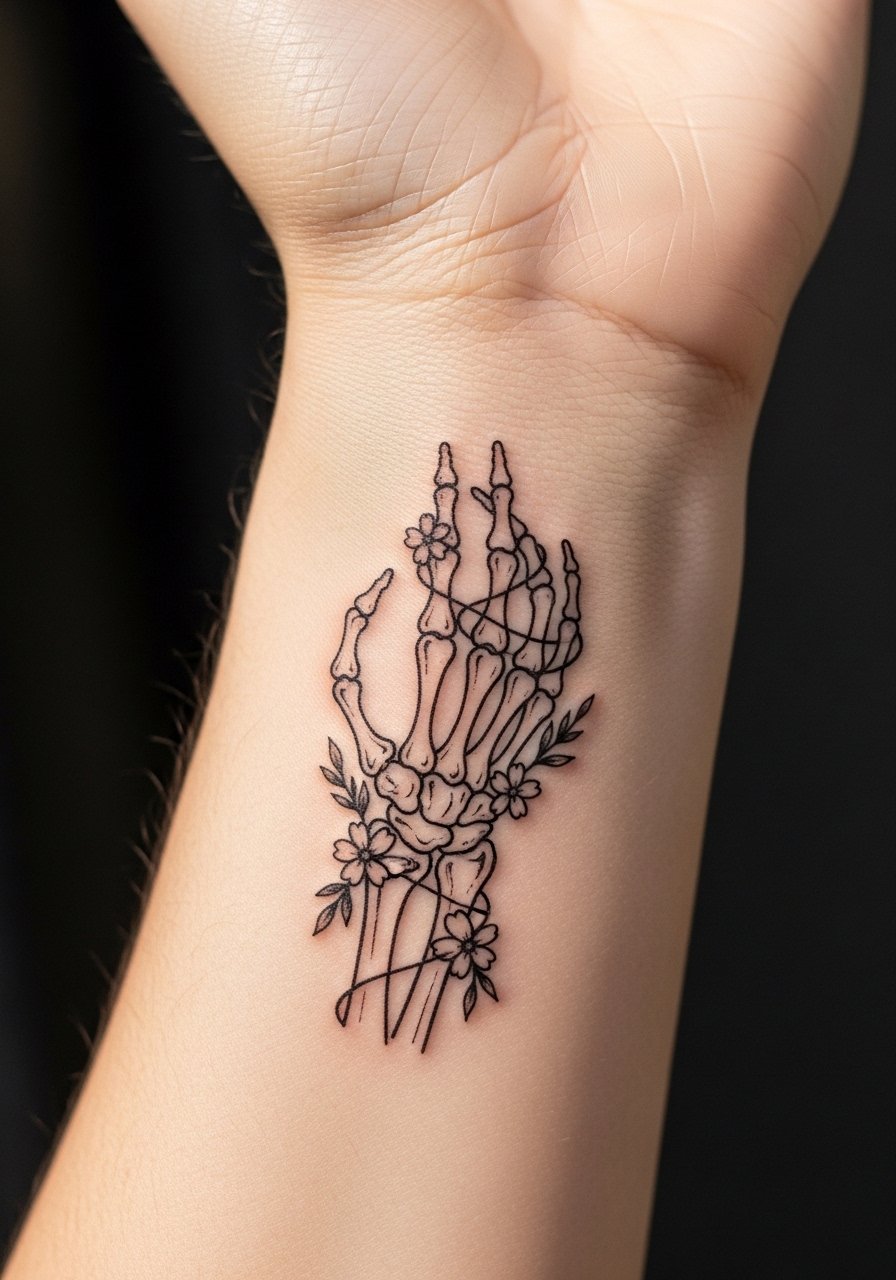
I recommend this wrist piece when you want a small statement that still reads feminine. Ask your artist for slightly heavier outer lines with thin interior lines so the petals do not feather into the bonework over time. Common mistake is requesting ultra-micro lines across the entire design, which often needs touch-ups at year two on wrists because of constant washing and motion. Expect a short session and moderate wrist sensitivity. For session comfort wear a sleeveless black top you can roll or pull up easily and a thin silver ring on the non-tattooed fingers to frame the hand when healed.
2. Heart-Shaped Skeleton Hands for Thigh or Buttock
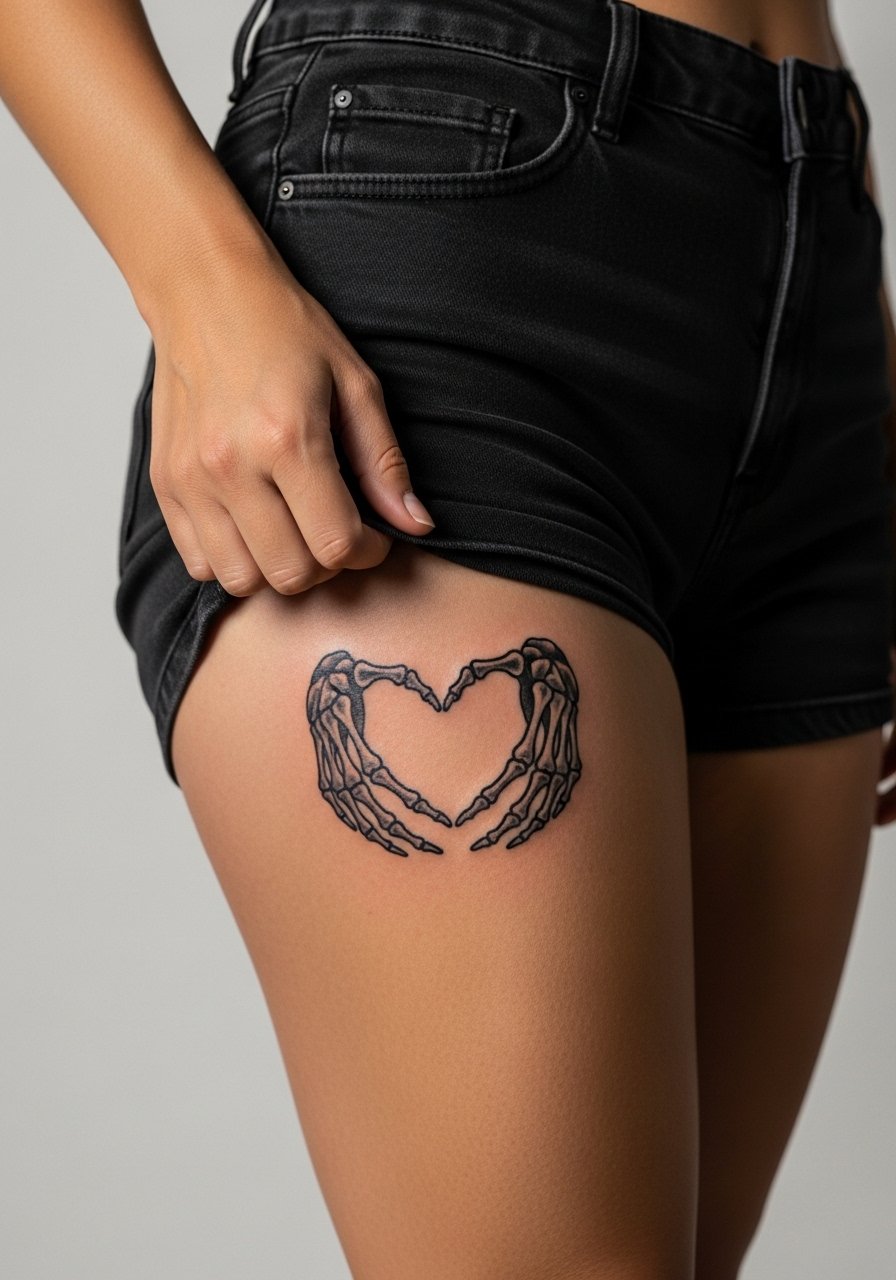
This cheeky heart arrangement works best on thigh or buttock where scale can be playful. Tell your artist you want bold contour lines around the hand shapes and softer internal shading on the heart negative space. For buttock placement bring loose joggers or a skirt you can lower easily during the session. The design ages well if the outlines are not micro-thin. One debate I see is about placement choice for sensual pieces; some clients prefer hidden spots for longevity while others value the surprise factor. Expect single-session work if sized around three inches.
3. Realistic Skeleton Hand Holding a Patch Flower on the Forearm
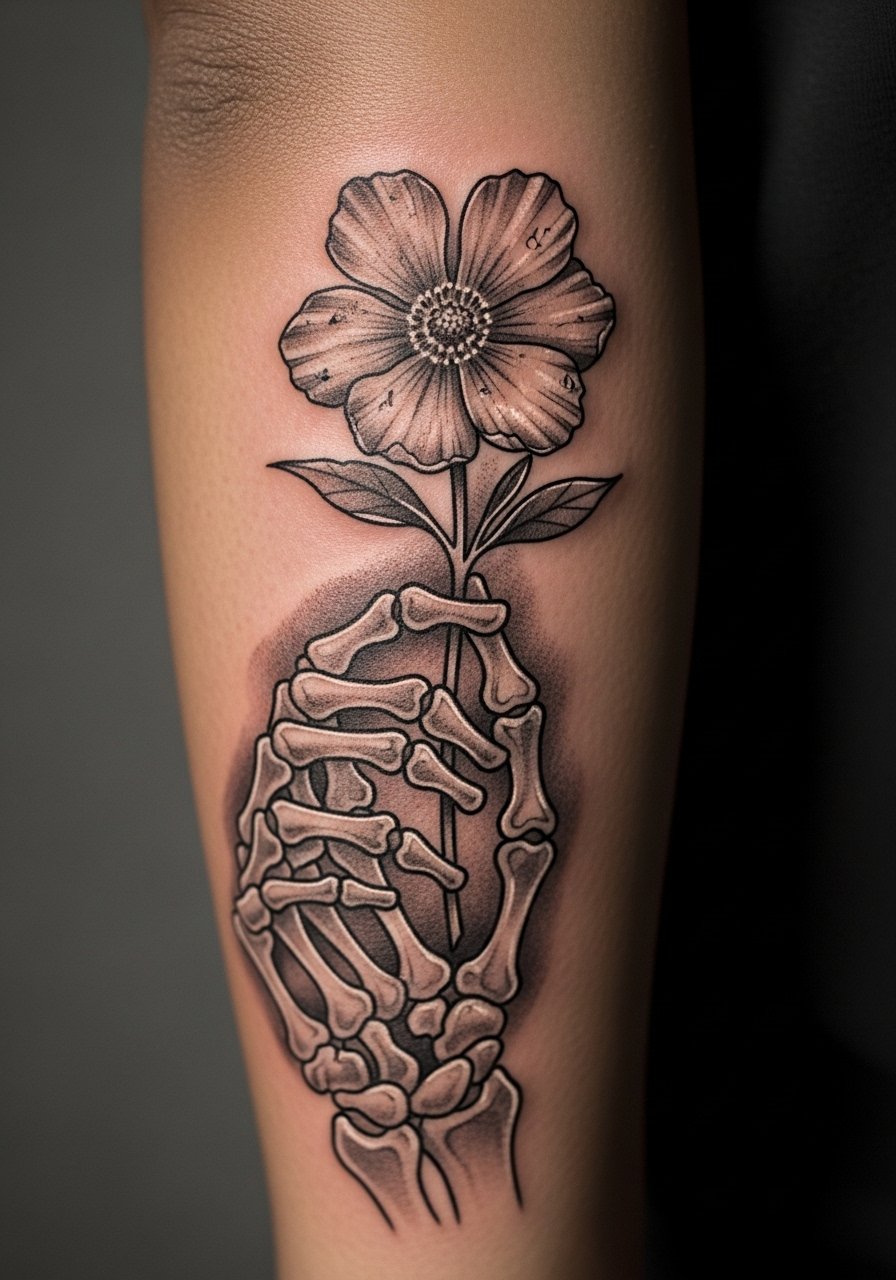
Go realistic here when you want contrast between the bones and a simple bloom. In consultation say you want a gray wash for depth and stipple shading in the petals rather than heavy fill. A common version that ages poorly uses dense tiny details without room for blowout, so I suggest slightly larger petal highlights that will keep separation as the skin moves. Forearm placement feels less painful and allows for a two-session build if the shading is layered. For showing it off pair with a loose button-down shirt you can roll to the elbow.
4. Skeleton Hand with Skull Motif on the Back of Hand
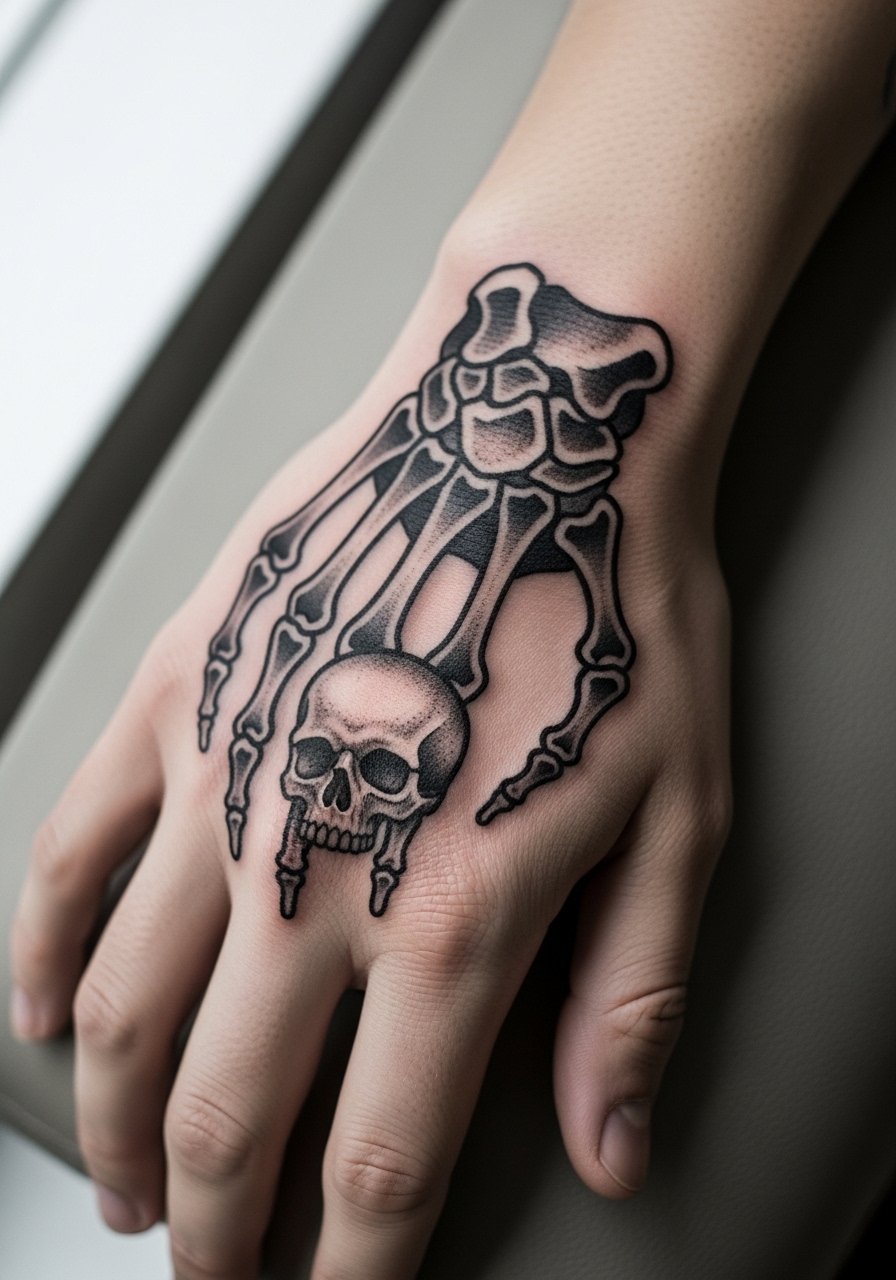
Back-of-hand skull details have drama built in, but they also face the highest risk of fading and touch-ups. Ask for slightly bolder outer lines and minimal densely packed small dots near the knuckles to avoid blowout. If you want the skull to read from a distance, request contrast between the skull's negative space and the hand bones. Show-off pairing after healing includes fingerless gloves or dark nail polish to keep focus on the back hand artwork. Hands can make some employers pause, so think about career fit before committing. Touch-ups are common around year two for this placement.
5. Feminine Skeleton Hand with Butterflies on Inner Forearm
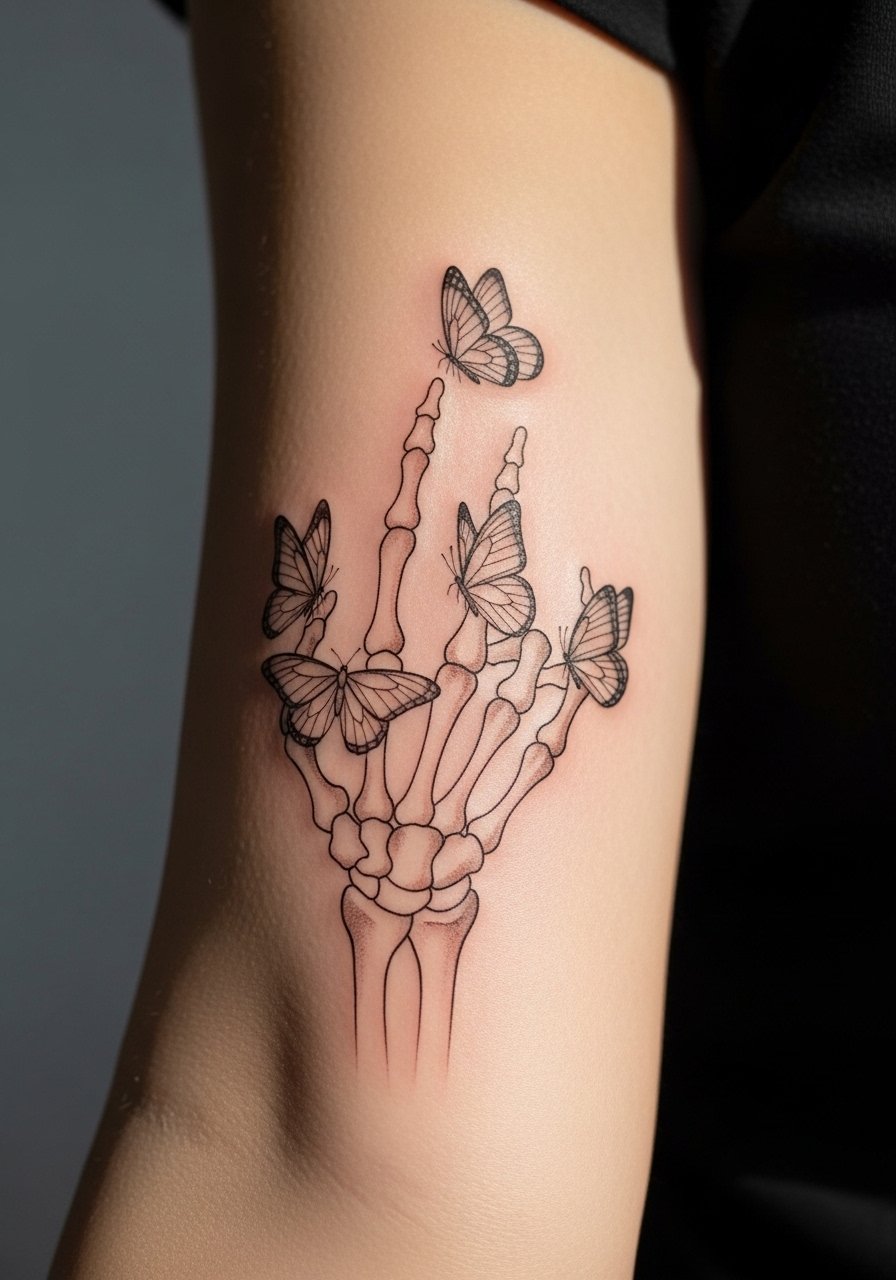
This illustrative approach keeps the bones delicate while butterflies soften the composition. During consultation say you want stipple shading for the wing shadows instead of heavy fill. A typical mistake is squishing too many butterflies into a tiny canvas. Leave breathing room so the wings stay distinct at six months and at two years. Inner forearm placement is less prone to blowout than the hand, but expect sun exposure to be the main enemy. For showing it off try a flowy off-shoulder blouse gray that keeps attention on the arm.
6. Feminine Fist Pose, Skeleton Hand Adapted for Strength
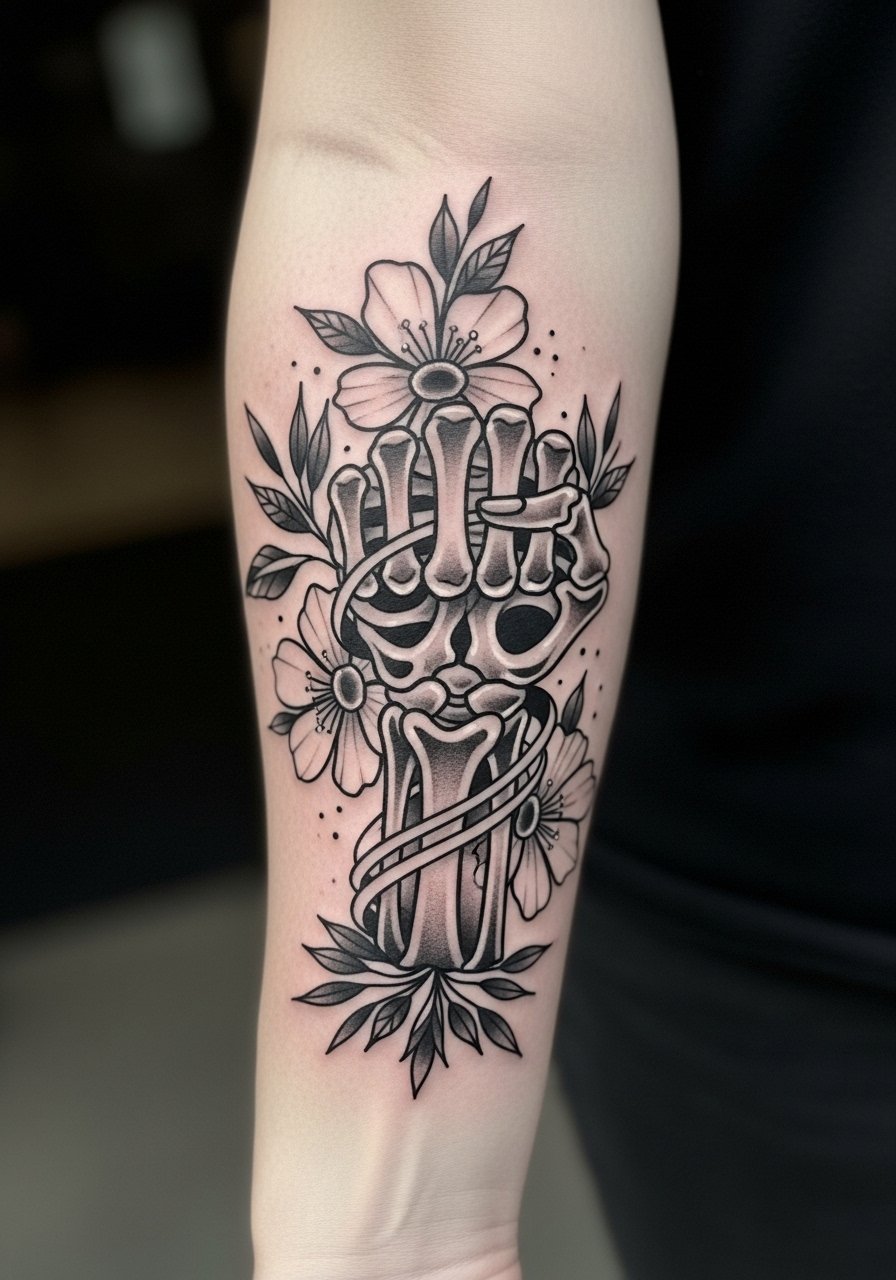
This version channels power without looking masculine by narrowing the knuckle planes and adding floral wrapping. Tell your artist to keep the knuckles slightly tapered and avoid overly chunky bones. Outer forearm tolerates two-session work if you want layered shading. The main mistake is asking for too many tiny internal lines in that small area, which can blur with time. Pair the healed piece with a fitted leather jacket women fitted with sleeves pushed up for that tough-feminine look. Pain is moderate and the session is manageable.
Studio Day Picks
The wrist and forearm pieces above heal differently from larger designs, so a few specific items make chair day and the first week easier.
- Stencil transfer paper kit. Lets you preview placement on skin before the needles start, which is helpful for wrists and hands in ideas 1 and 4.
- Topical numbing cream. Applied before studio time reduces edge pain for sensitive wrist or hand sessions without compromising linework when used properly.
- Thin protective film roll. Keeps finger and back-of-hand pieces cleaner during the first days of frequent handwashing.
- Fragrance-free body wash. Gentle cleansing avoids irritation on fresh forearm and hand work while preserving tight linework.
- Aquaphor healing ointment. Thin layers during the first 48 hours help protect delicate linework until the scabs start to settle.
7. Micro Skeleton Phalanges as Ring Accents on Fingers
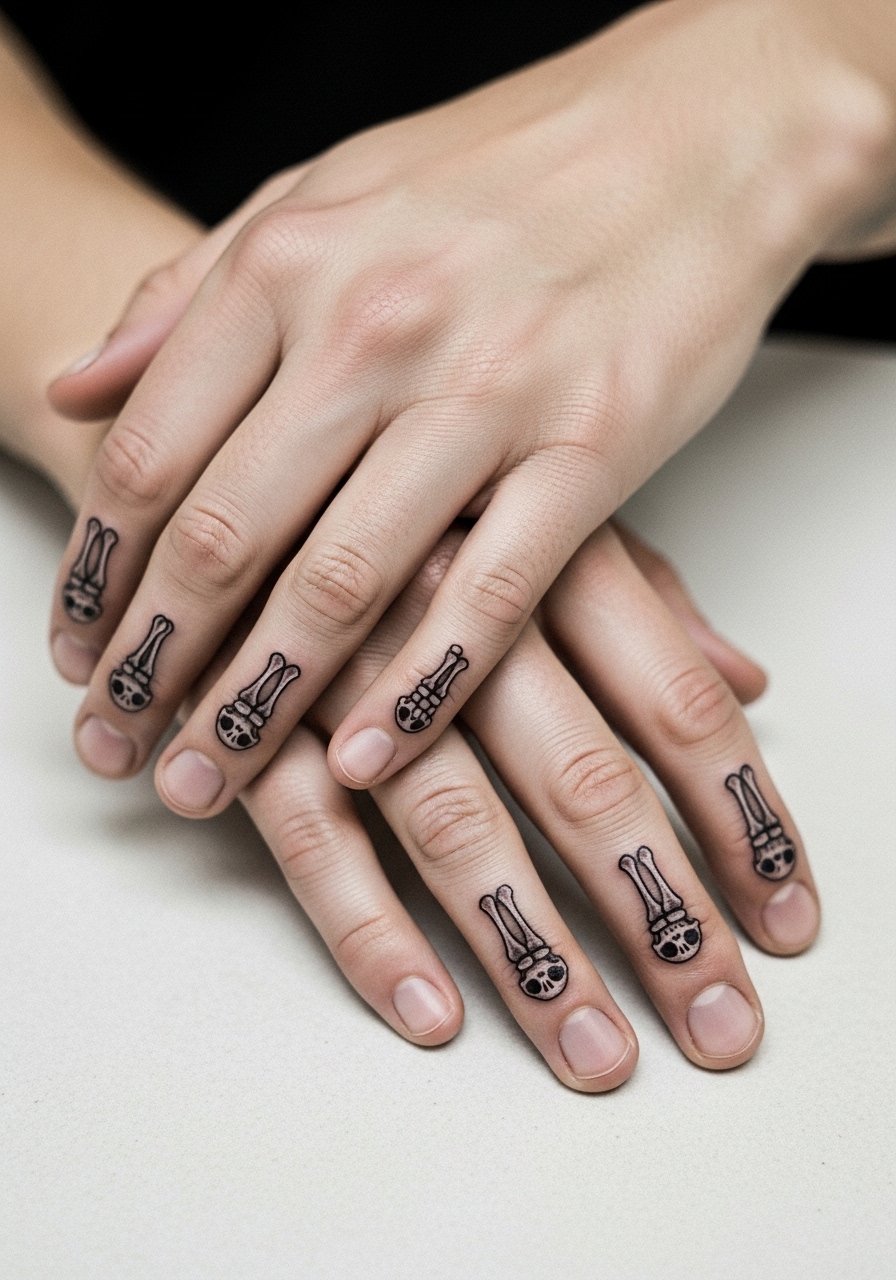
Finger rings made from tiny phalange bones are subtle and clever, but they come with high maintenance. I tell people upfront these need yearly touch-ups because fingers face constant washing and wear. Ask your artist to keep line weight slightly bolder than you would for a wrist fine line ring so the shapes remain readable. Session pain is sharp and brief. During the appointment avoid wearing rings so the artist has access and you do not risk pressure on fresh ink. For showing it off, short nail polish or negative-space minimalist rings on other fingers keeps the look balanced.
8. Lace-Patterned Skeleton Glove Across the Back of Hand
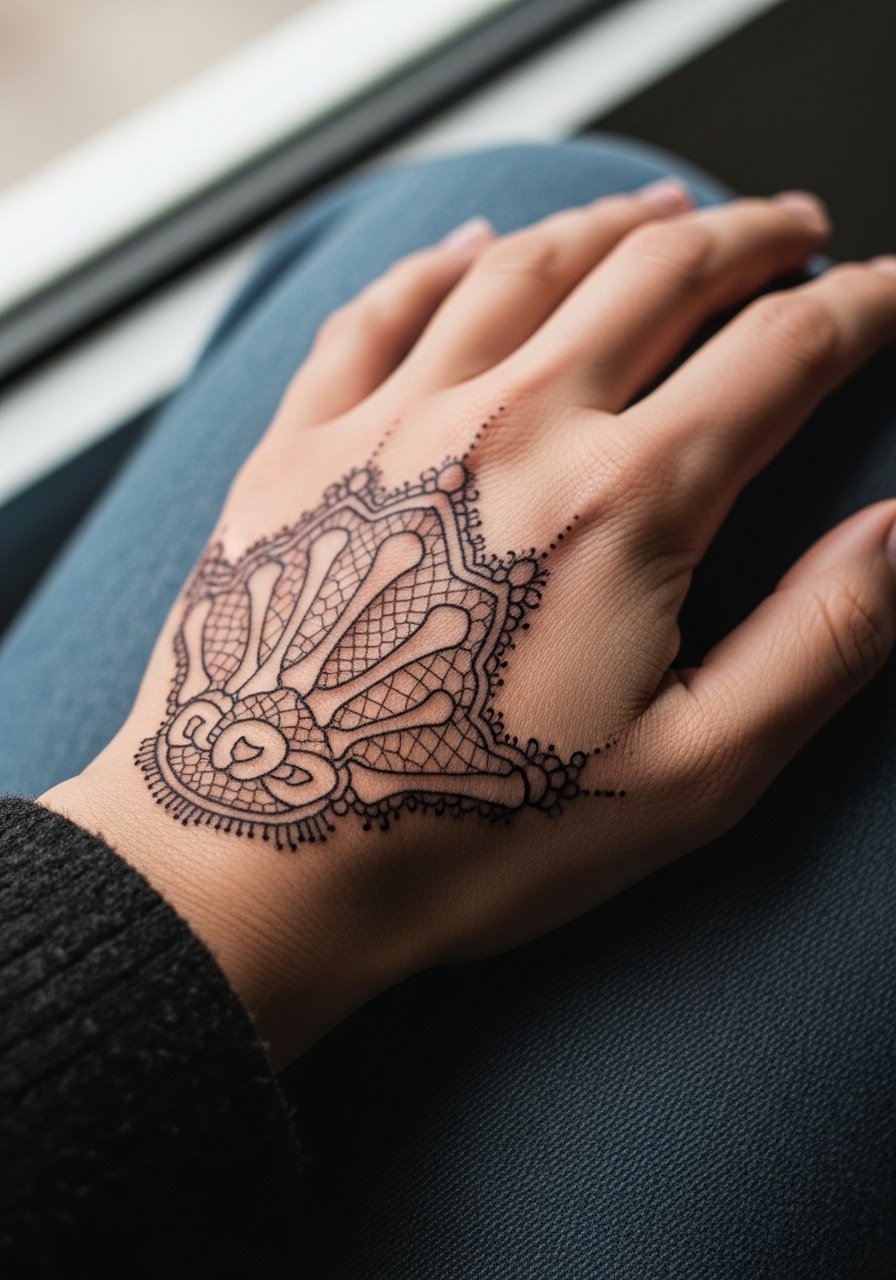
This idea blends lace filigree with bone structure to maintain femininity while reading edgy. In consultation ask for negative-space lace inside the knuckle areas and slightly strengthened outer lines to combat early softening. The common mistake is too-dense lace details that merge at year two. Back-of-hand work demands touch-ups more than forearms. If you want to hide the piece sometimes, fingerless gloves or long-sleeve layering work well for different outfits. Expect moderate discomfort during inking on the dorsal hand.
9. Skeleton Hand Holding a Tiny Bird on the Wrist
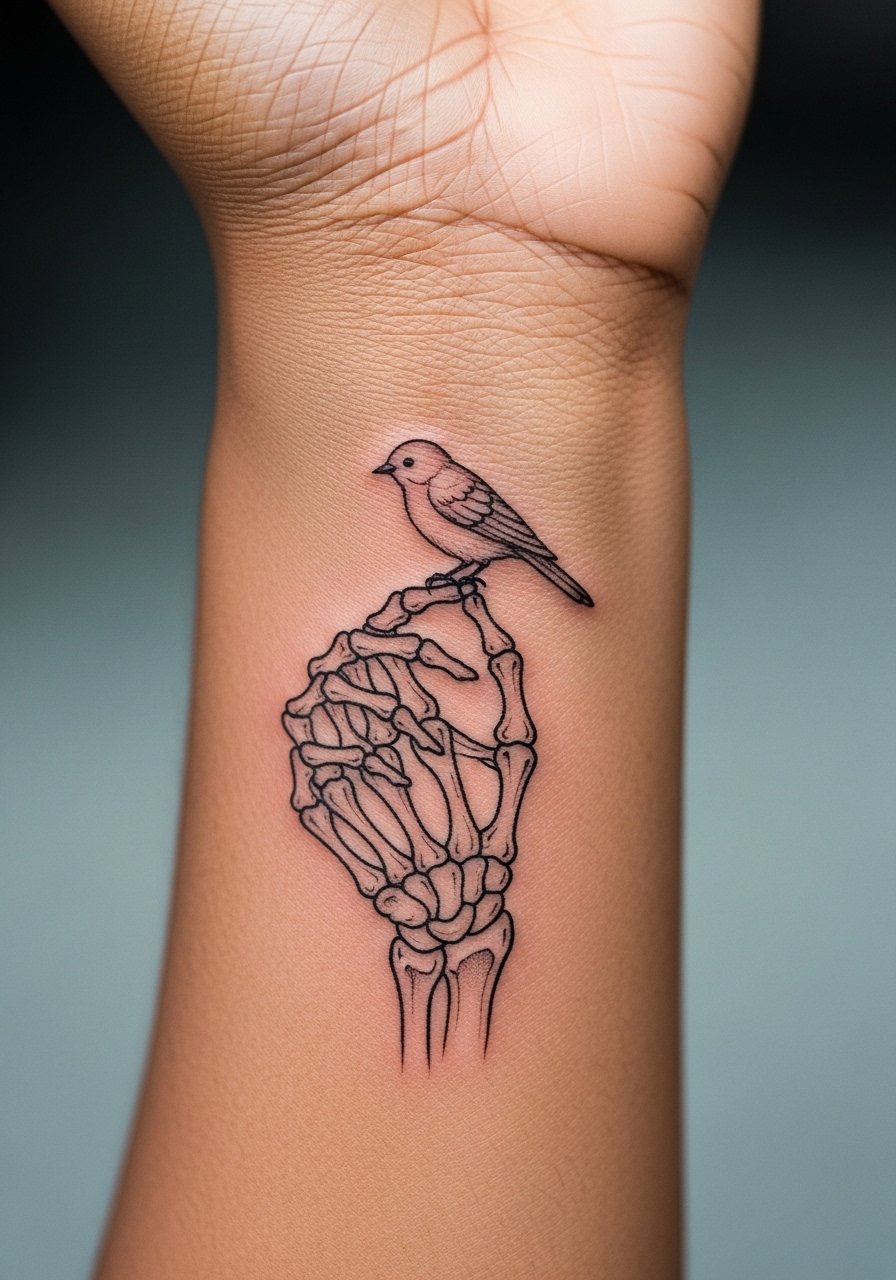
A small bird adds motion to bonework without overcomplicating the wrist canvas. When you sit with your artist say you want stipple shading for the bird and slightly heavier linework on the distal bone edges for longevity. The mistake I see is asking for both micro feathers and micro bone lines in a very tight area. Keep the bird proportionate to the hand so both elements age legibly. For the session wear a rolled cuff blouse women or a top you can push up to the elbow to make access easy.
10. Negative-Space Floral Pattern Within Bones on Forearm
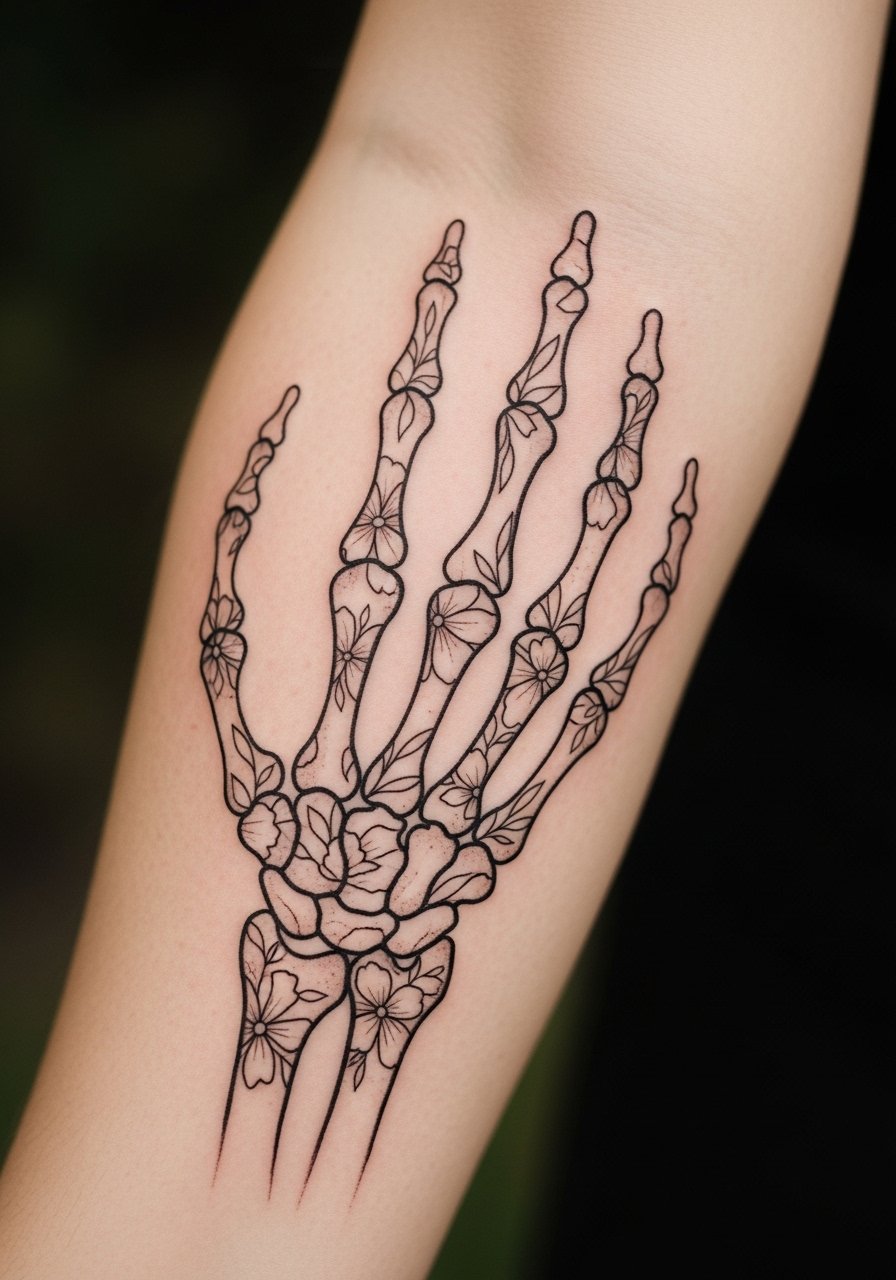
Negative-space florals inside the bones give the piece visual texture while keeping the silhouette simple. Tell your artist during consult that you want clear empty zones rather than tiny dots filling the flowers. A common aging problem is too many tiny negative contrasts that disappear when the skin softens. Forearm placement provides room to scale the design so negative space holds up better. For showing it off consider a dainty chain bracelet on the opposite wrist to keep the balance feminine.
11. Stipple-Shaded Skeleton Hand with Tiny Script
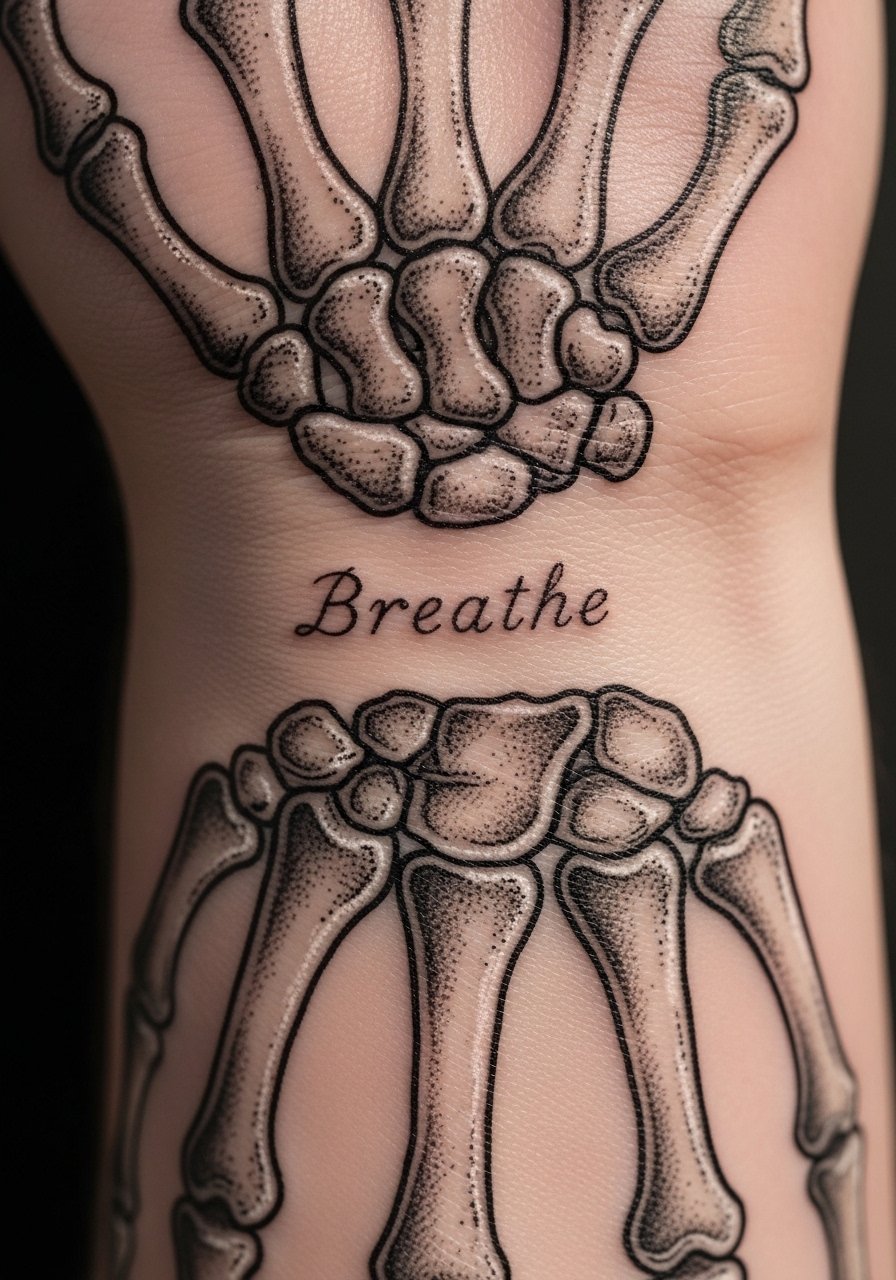
Incorporating small script takes planning because lettering reads differently than bone linework. Provide exact wording to the artist and request the script set slightly apart from dense stipple areas. The mistake here is placing micro script too close to dense shading where it will blur. Expect a quick session and moderate wrist pain. For session comfort wear a sleeveless black top you can slide up easily and avoid fabric rubbing the fresh ink.
12. Celestial Motif Bones with Moon Phases on the Back of Hand
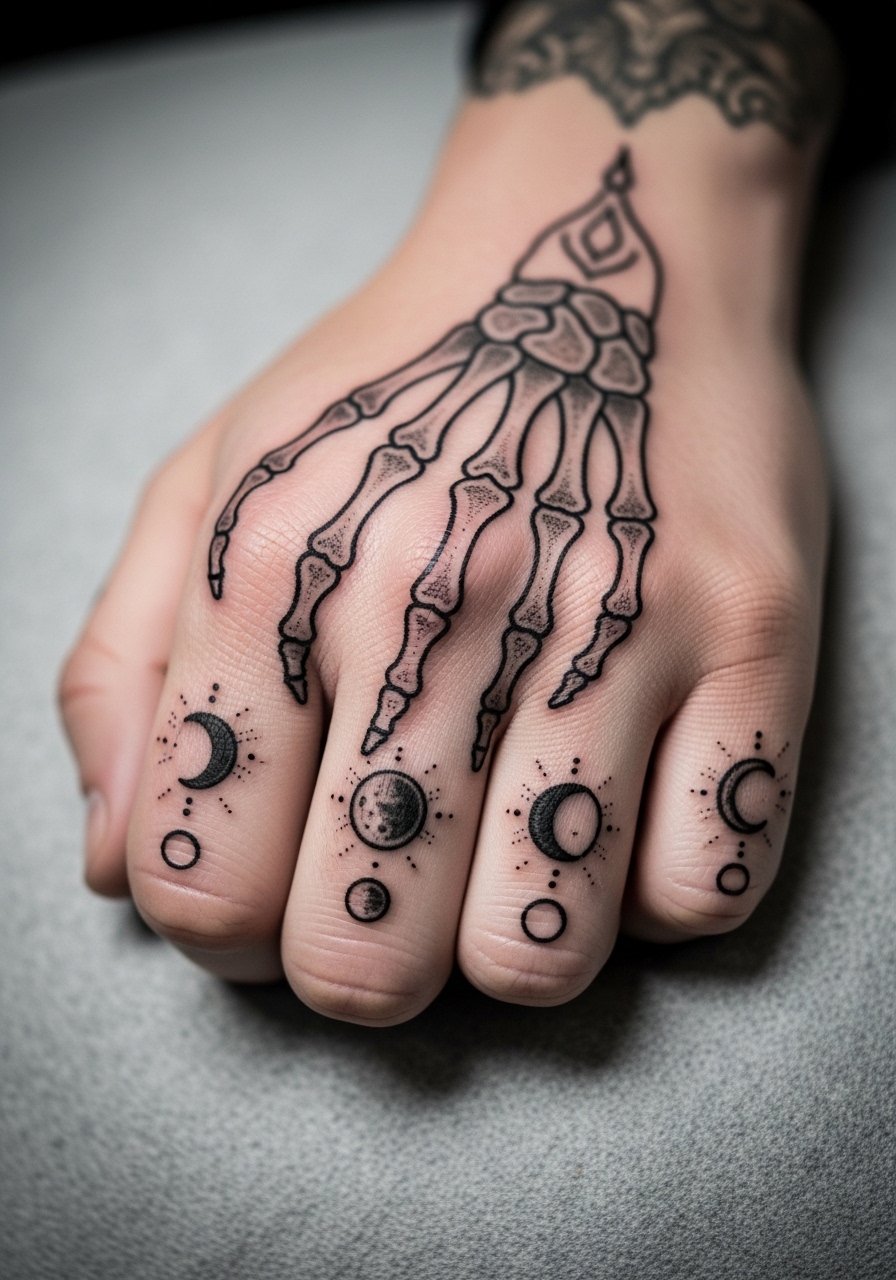
Adding tiny moons and stars builds a theme without adding heavy fill. I advise spacing the celestial marks at least two to three millimeters from the bone contours so they keep shape as the skin settles. The common error is cramming too many glyphs into the knuckle area. Back-of-hand glyphs need stronger lines and are more likely to require touch-ups than forearm counterparts. For showing off, dark nail polish and a gothic ring stack keep the imagery cohesive.
13. Skeleton Hand Wrapped in a Floral Garland on the Forearm
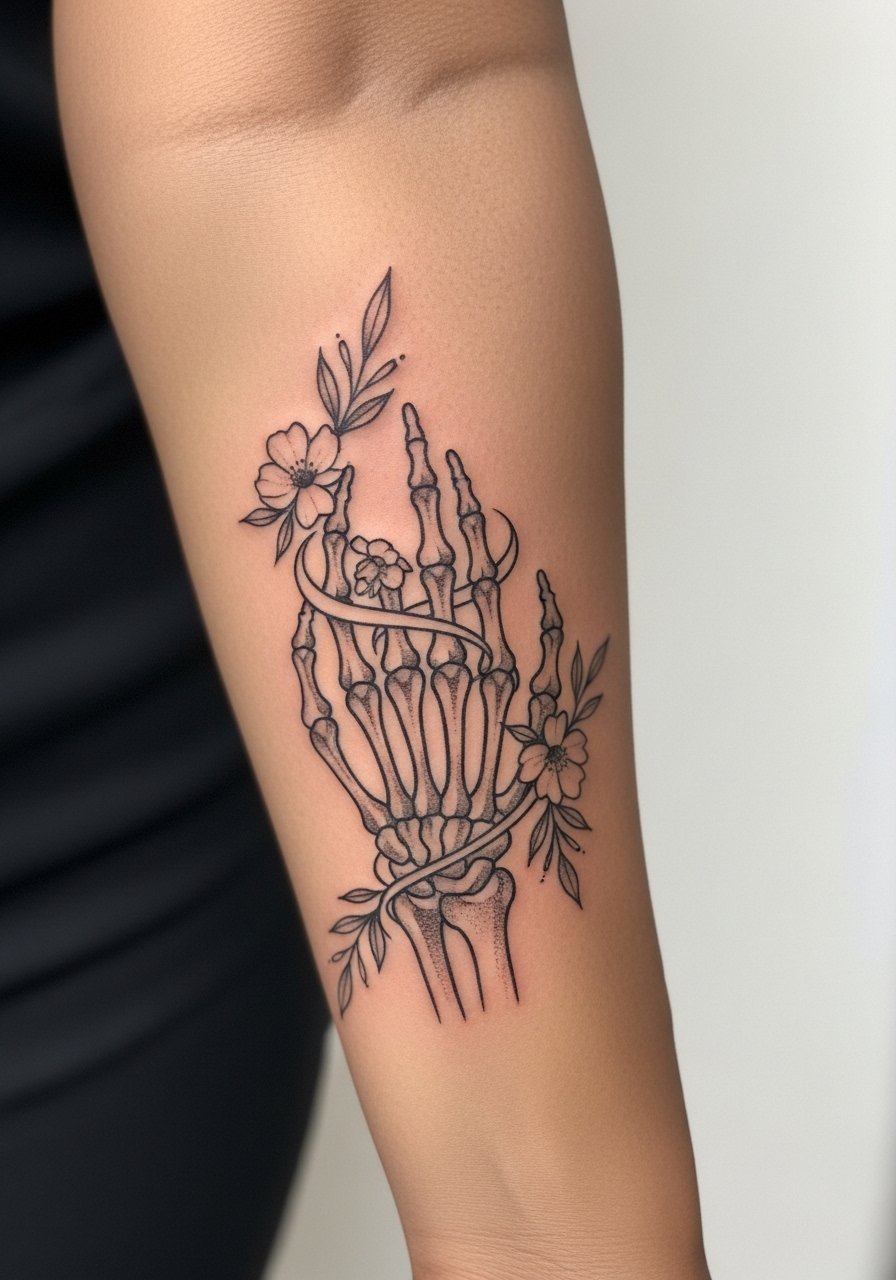
A garland wrapping lets the design extend naturally and gives the artist room to space details. Ask for whip shading in the leaves rather than heavy fill so the garland does not compete with the bones. People sometimes request too many tiny petals which then blur into a single mass. Forearm placement tolerates a longer session when the design runs larger. For session wear bring a loose button-down shirt you can roll to the elbow without stretching the skin.
14. Small Micro-Realism Skeleton Hand on the Ankle
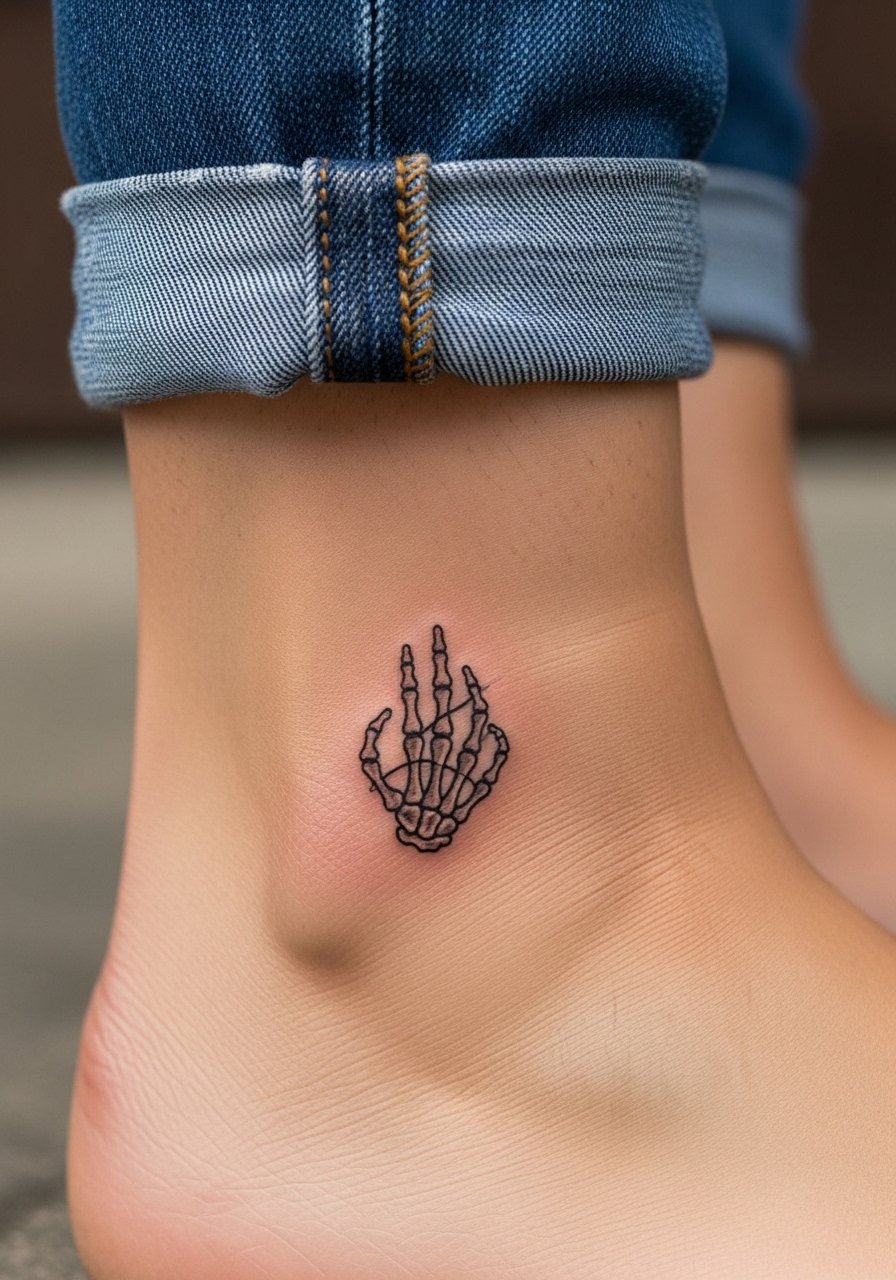
Ankle placements let you be selective and private while still having an edge. Warn your artist you want the design small but with bold anchor lines so the hand reads at a glance. The common mistake is requesting ultra-fine detail in a very tiny ankle piece, which fades quickly because of friction with socks and shoes. For the session wear pants you can roll comfortably or a skirt so the area is accessible. Healed ankle pieces are easy to hide or show depending on footwear.
15. Skeleton Hand Holding a Mirror Motif on Inner Forearm
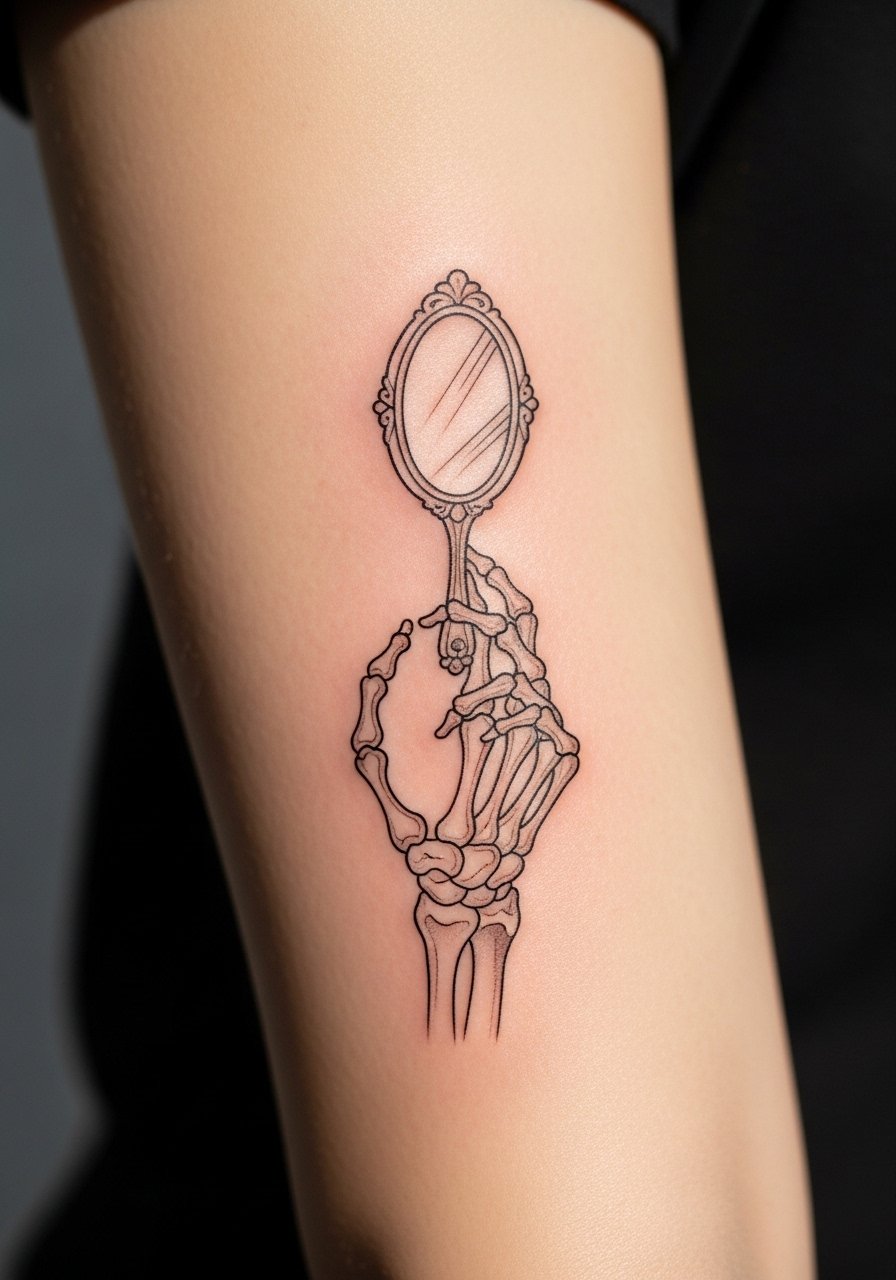
A mirror adds narrative and a focal point to the hand design. In consult specify you want the reflective plane suggested with subtle negative space rather than heavy fill so the mirror remains readable over time. A typical mistake is overworking reflective details with tiny highlights that do not survive skin movement. Inner forearm placement gives the mirror room and protects it from daily abrasion. For showing it off pair with a loose button-down shirt rolled at the sleeves so the piece sits front and center.
16. Skeleton Hand with Lace Cuff and Tiny Pearls Near the Wrist
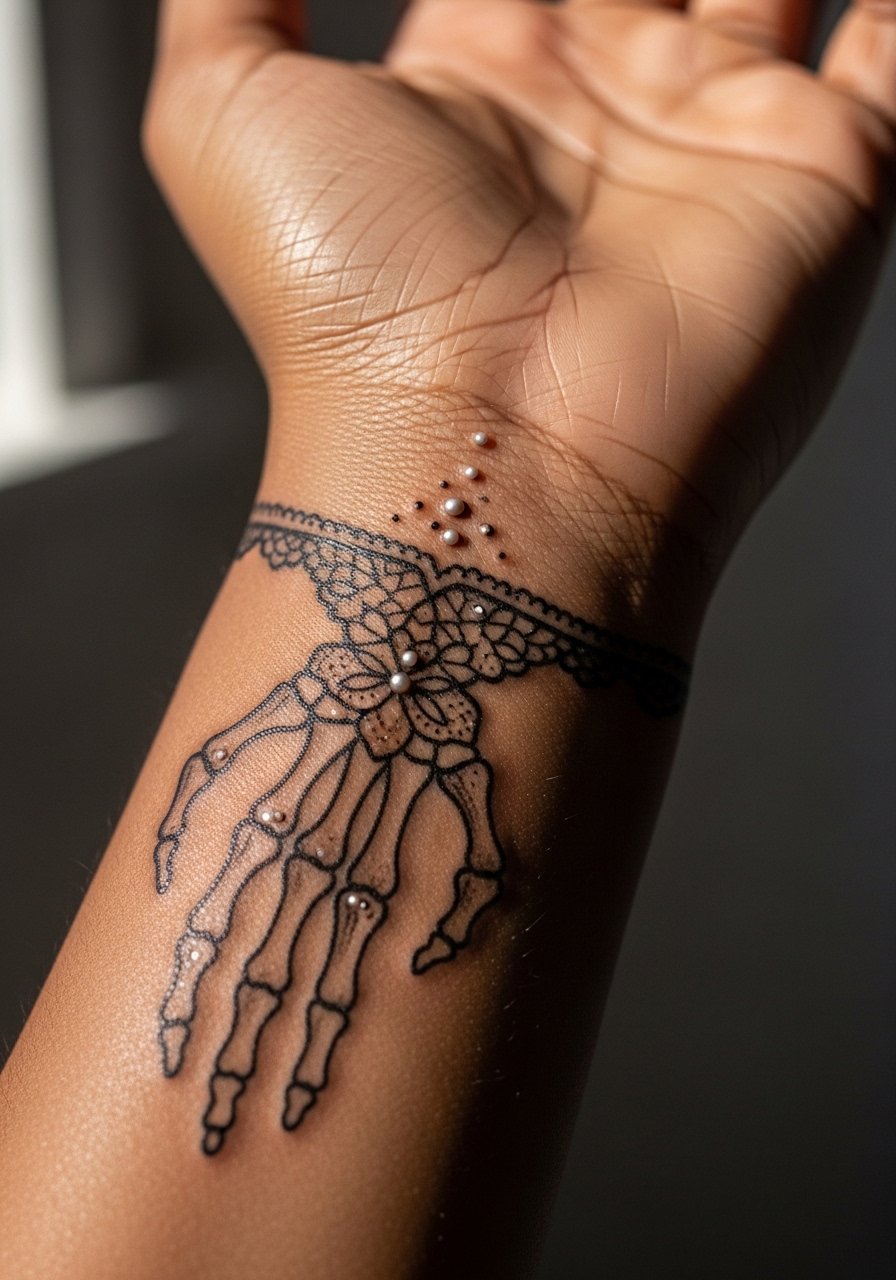
This Victorian touch keeps the bones feminine by adding cuff detail and pearl dots as accents. Tell your artist you want the pearls as tiny negative spaces or single-dot highlights rather than filled circles. The mistake is packing too many decorative dots that merge into a blur. Wrists have higher touch-up rates, so ask about a small follow-up session. For the session wear a rolled cuff blouse women you can slide up and a thin chain bracelet on the opposite wrist to balance the look.
17. Minimalist Skeleton Hand with Dot Work Halo on the Back of Hand
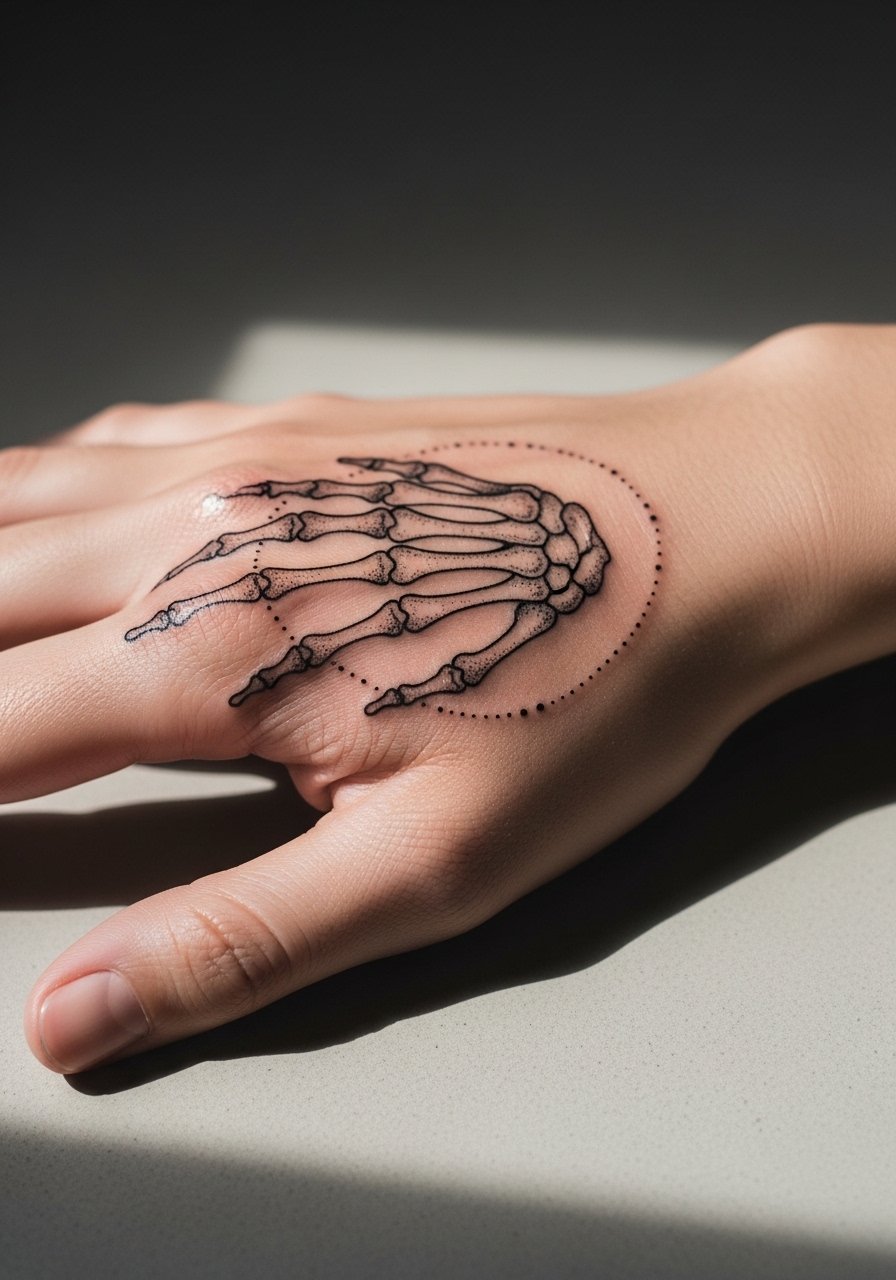
Dot work halos give subtle contrast and let a minimalist skeleton piece feel finished without heavy fills. Ask for stippling that runs outward and fades rather than tight dense dots near the bone edges. A common version that ages poorly keeps stippling too close and too dense which leads to muddy areas after a couple of years. Back-of-hand dot work needs bolder key lines near the anatomy. Consider fingerless gloves or dark polish to frame the halo for evenings out. Expect a short but precise session.
Frequently Asked Questions
Q: Will fine line skeleton hand tattoos blur faster on hands than on forearms?
A: From what I've seen hands take more friction and washing than forearms which speeds softening. Many artists split into two camps on this. One camp says fine line on hands blurs quickly and recommends bolder contours. The other camp argues fine line can hold if spaced and inked slightly deeper. Ask your artist where they stand and plan for touch-ups at year two or three if the area gets heavy use.
Q: How should I prepare clothing-wise for a wrist or forearm skeleton hand session?
A: Wear something you can move or roll up without pulling on the skin. For wrists and forearms a loose button-down shirt or a sleeveless black top makes the artist's life easier and keeps fabric away from fresh ink. Avoid tight fabrics that press on the area right after the session.
Q: Are skull-integrated skeleton hand designs suitable for professional settings?
A: That depends on your workplace and how visible the piece will be. Back-of-hand and finger pieces are the most visible and sometimes cause friction in conservative industries. If you need discretion consider forearm or thigh placements that you can cover when required.
Q: How often will I need a touch-up for a hand or finger skeleton tattoo?
A: Expect higher maintenance on hands and fingers. A realistic baseline is a touch-up at year one to correct initial settling and potential follow-up every one to three years depending on exposure, skin type, and how bold the original linework is.
Q: Can I combine watercolor tones with a blackwork skeleton hand and still keep it feminine?
A: Yes, but watercolor needs breathing room and less dense linework nearby so pigments do not mix with the bones visually. Ask for color placed in negative spaces or as winged accents rather than full washes over the bone shapes. Color on hands fades faster so plan for color refreshes if you choose that option.
