
Fine line samurai are everywhere online, and the gap between what trends and what lasts is clear once you start watching healed photos. Small warrior pieces that look incredible fresh can soften into blur if placement, line weight, or spacing are off. Read these ideas with an eye for how they age, what to ask your artist, and how to show them off day to day.
1. Mini Samurai Helmet with Cherry Blossom Accent
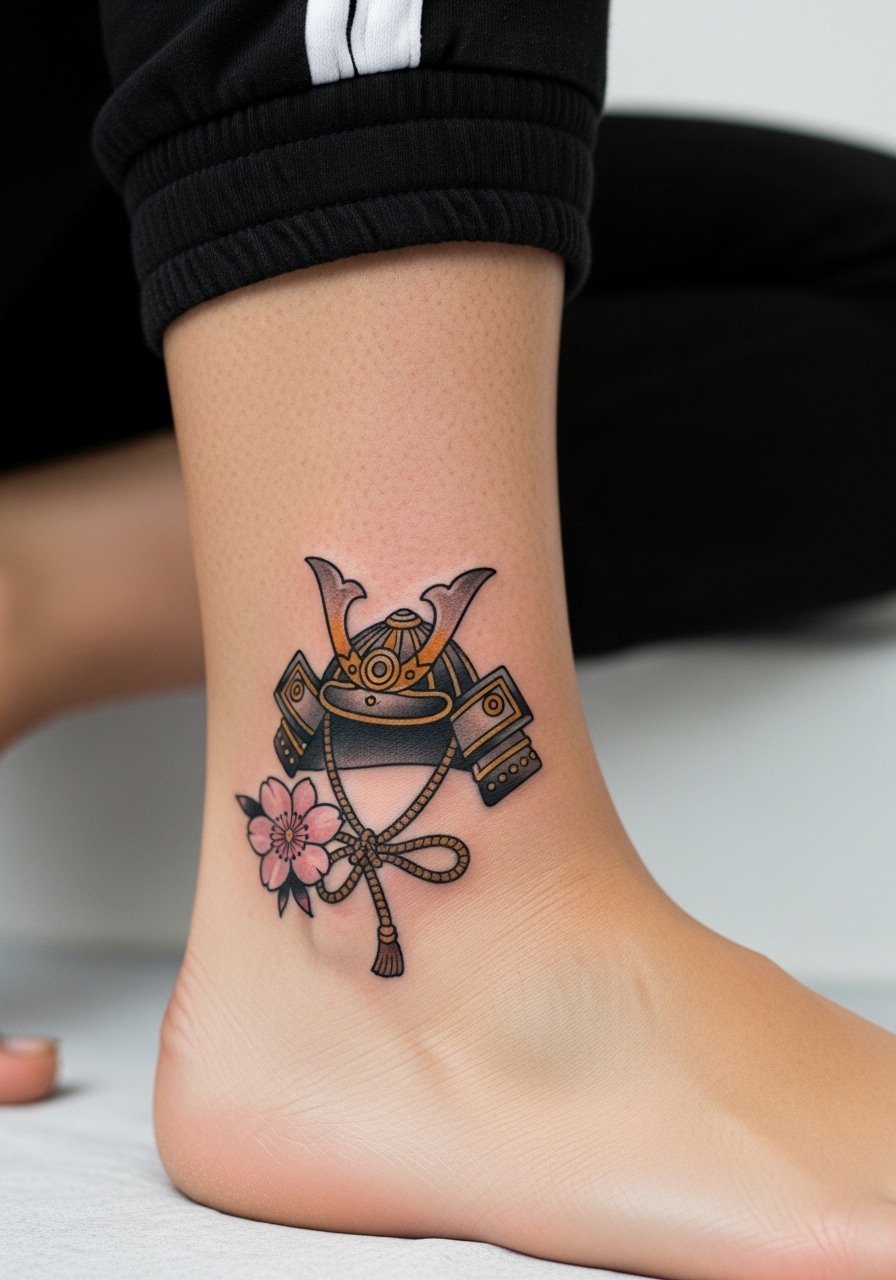
This wrist-or-ankle mini reads like a compact narrative. For ankle placement expect a higher friction environment, so tell your artist you want slightly bolder outlines and more spacing between ornaments. I would ask for a protected dot of red in the blossom rather than saturated fields of color, that helps the red hold without muddying the armor. Pain on the ankle hits around a 6 out of 10 for most people, and session time is short so you can do this in one appointment. Common mistake is asking for ultra-fine detail too close to the joint. For the session wear, roll up cuffed slim chinos so the artist can access the area cleanly while you keep warm.
2. Fine Line Samurai Mask Outline
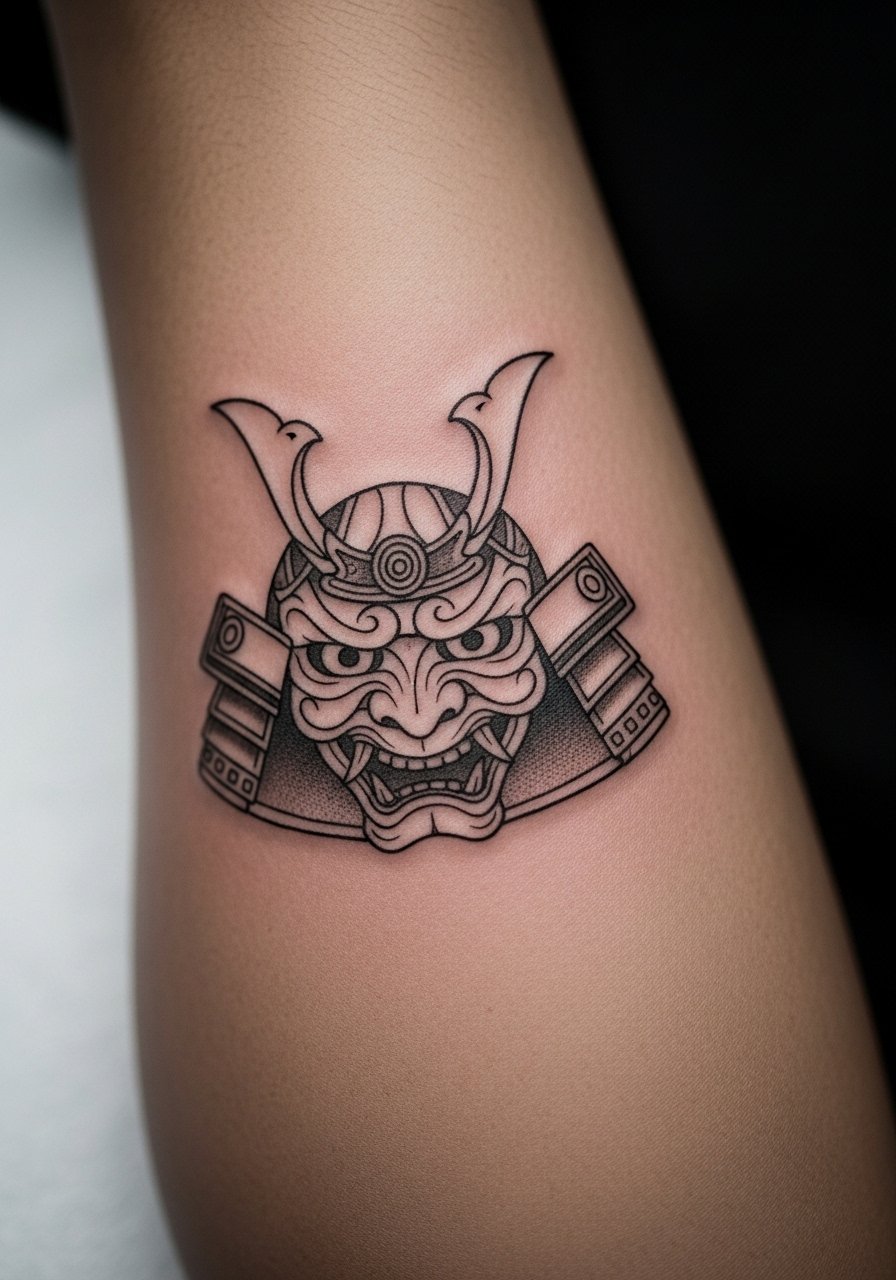
The inner forearm is a forgiving canvas for single-needle work but it shows every tiny spacing choice. I recommend asking your artist for slightly heavier anchor lines with single-needle internal details. The common version that ages poorly is ultra-dense facial detail without structural outlines, which blends after a year. Expect low to moderate pain and a single, tidy session of 30 to 60 minutes. Blowout risk is low here but watch out for overly tight stacking of stipple shading. Plan a light touch for dot work and consider a touch-up at 12 to 18 months if fine details soften.
3. Micro-Realism Samurai Sword Tip
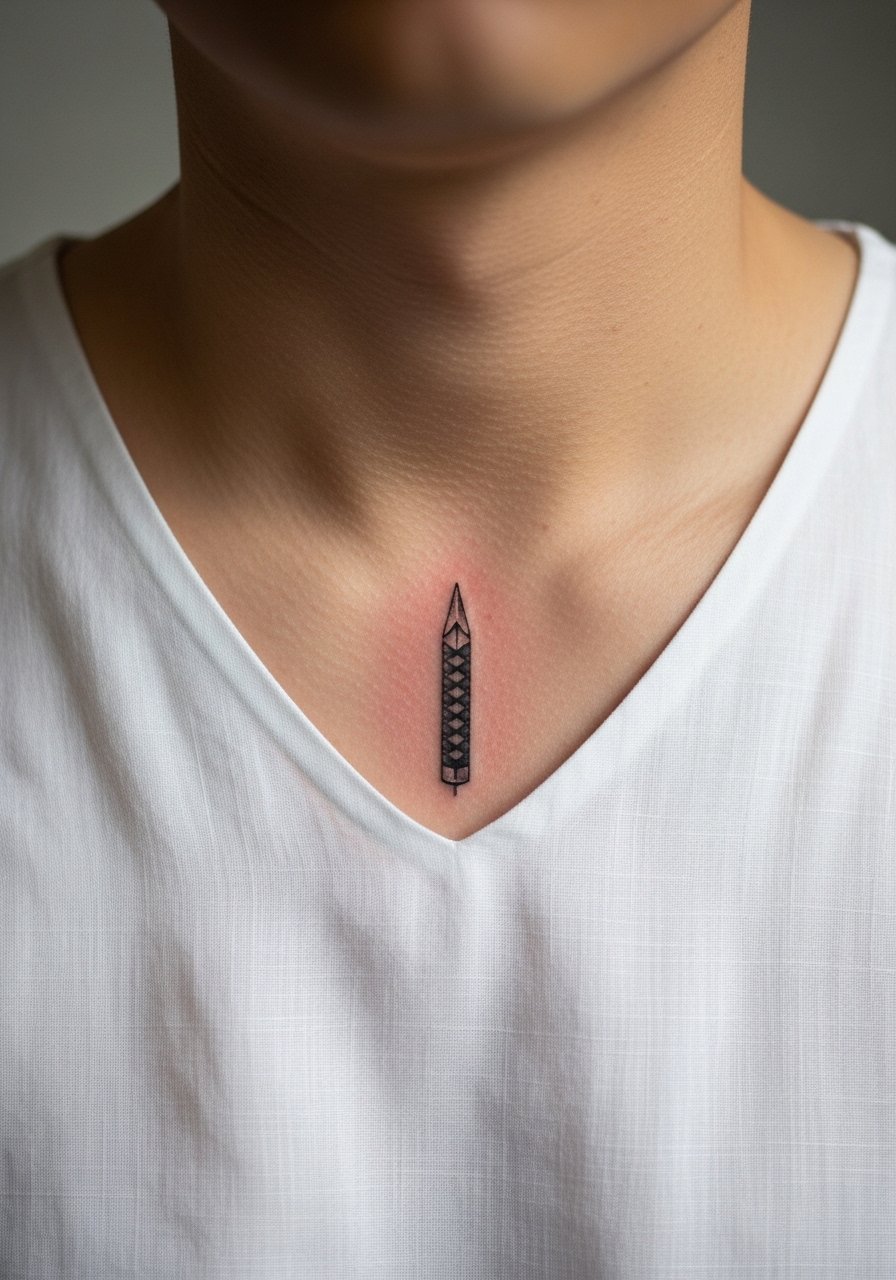
Tiny micro-realism on the collarbone reads like a secret sigil but it needs crisp contrast or it disappears in photos. Tell your artist you want dense gray saturation with tight contrast at the edge so the tip keeps definition against the collarbone shadow. The collarbone is a moderately painful area because the needle rides bone, yet sessions are short. A frequent mistake is asking for micro tonal gradients without enough edge contrast. For showing it off, a white linen v neck or open button shirt frames the piece without competing.
4. Blackwork Samurai Armor Silhouette
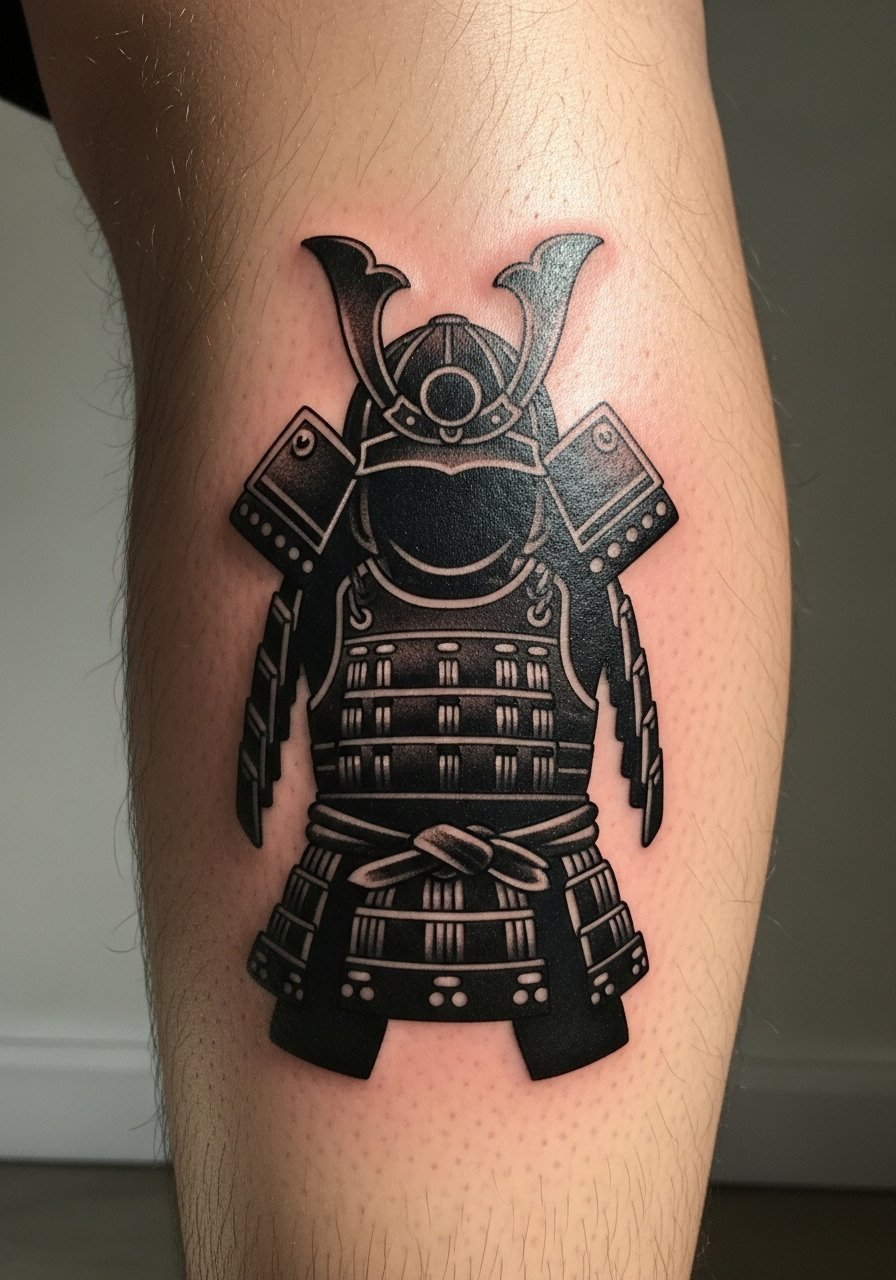
If longevity is your priority this silhouette is the safest mini. Heavy saturation and simple shapes age into a graphic presence across skin tones. Ask for clean edges and bold negative space to keep the armor readable as the skin stretches. Expect low to moderate pain on the calf and a session of under two hours. The mistake is overcomplicating the silhouette with tiny internal details. That invites early muddiness. Plan a touch-up at 18 months if you wear jeans that rub the area often.
5. Minimalist Kanji Warrior with Katana
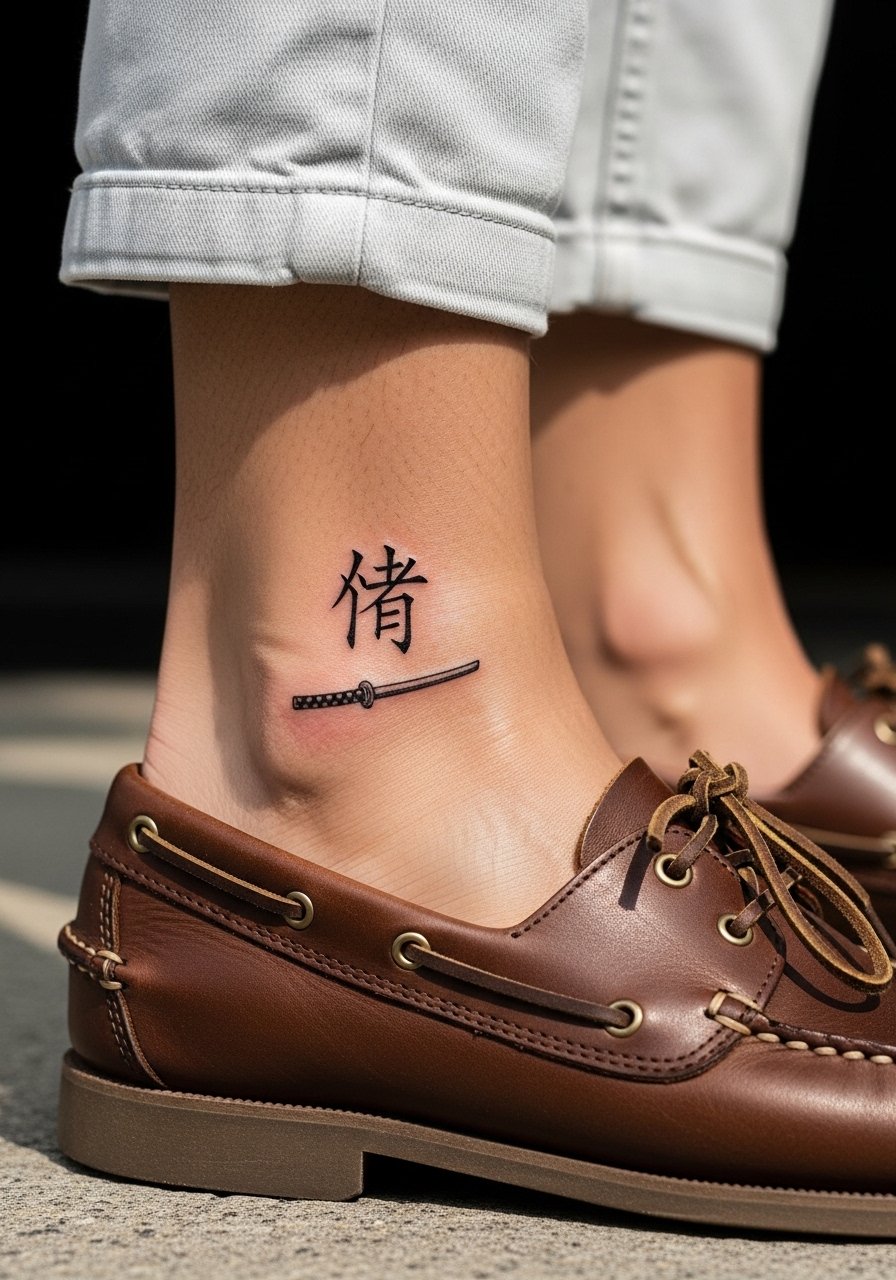
A script-and-katana combo behind the ankle reads clean when the line weight is a little firmer than standard single-needle script. Tell the artist which kanji font you prefer and request a one-point heavier outline to help the character remain legible. Ankle placement can be painful and it sees a lot of rubbing, so expect to book a touch-up at 12 to 18 months. The most common error is tiny script dumped on the lateral ankle without accounting for movement. For showing the piece wear cropped chinos and leather boat shoes when you want it visible.
6. Irezumi-Style Mini Oni Mask Warrior
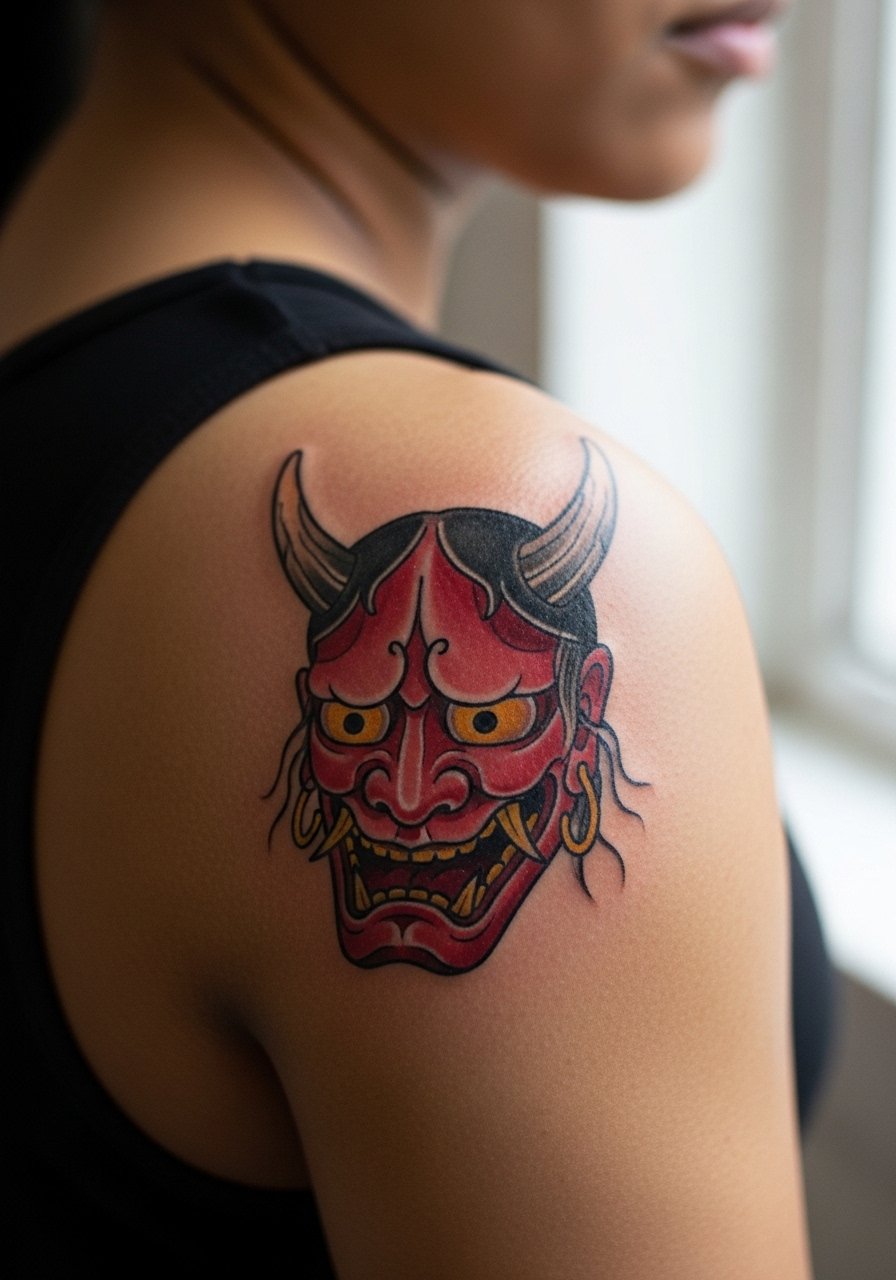
This one leans into traditional Irezumi color and pose. Shoulder blade gives you room for saturation and the depth those reds demand. Ask for color separation and a palette that avoids too many adjacent reds, that keeps hues from blobbing together as they soften. Cultural origins matter here so consider a subtle variation rather than a copied sacred motif. Sessions usually span two sittings for color layering, and pain is low to moderate. A common misstep is asking for full saturation in a single pass, which stresses the skin and can affect healing.
Pre-Session Essentials
The small wrist, ankle, and collarbone pieces above each have different session needs, and a few targeted items smooth the chair day and first week.
-
Japanese rice paper balm. A lighter texture that artists mention for humid heals, useful on colored bits like the cherry blossom in idea one.
-
Tea tree salve from indie sellers. Good for minor itch during the second week on small linear work, especially on forearm pieces.
-
Bamboo charcoal adhesive patches. Handy for drawing away small plasma spots on high-friction areas like ankles and fingers.
-
Breathable tattoo wrap roll. Useful for protecting tiny ankle or wrist pieces on the trip home or during a sweaty commute.
-
Aquaphor healing ointment. Thin layer application in the first 48 hours keeps fine-line work from scabbing excessively without clogging.
7. Ornamental Samurai Crest
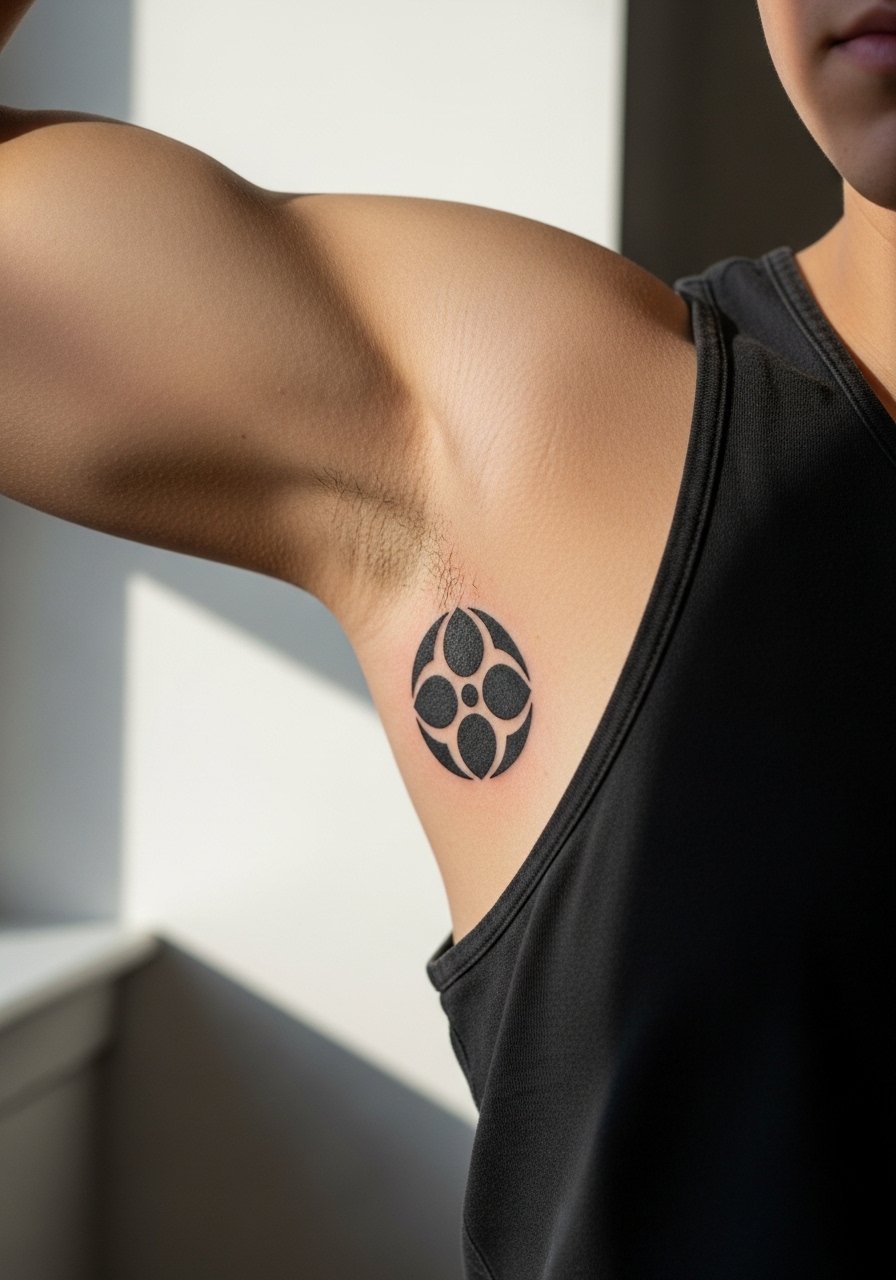
Ornamental crests shrink well into compact sizes but need negative space to read. On the inner bicep I ask artists to keep geometry bold around the edges and let the interior carry lighter dot work. This placement sees mild stretching when the arm moves, so avoid ultra-tight repeating dots near the hinge. Sessions run about 45 to 90 minutes. If the crest includes script, specify exact placement and orientation during consultation. For showing it off, a loose button-down shirt you can pull aside keeps attention on the crest without overexposing the shoulder.
8. Neo-Traditional Samurai in Battle Pose
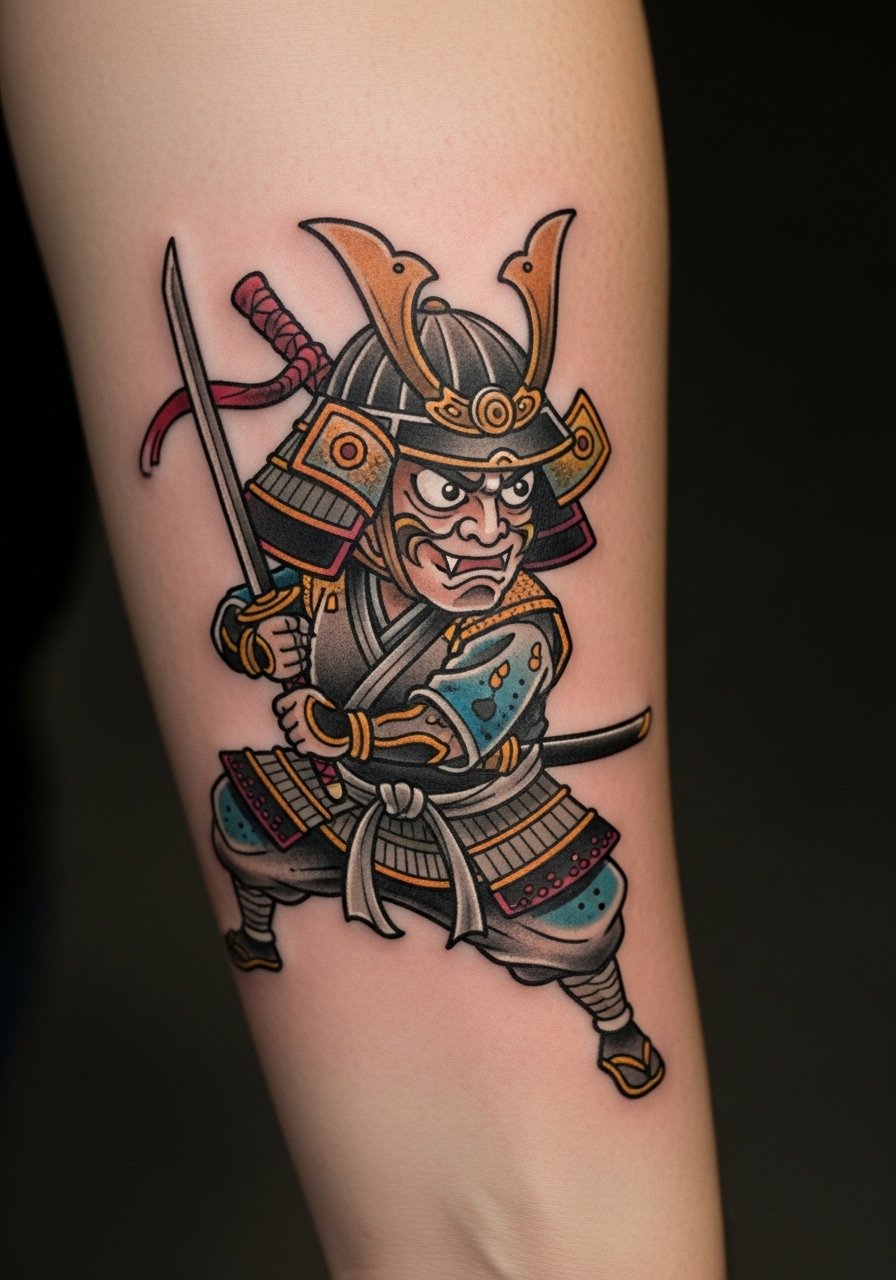
A mini battle scene reads best on the forearm where the design can flow with the arm's shape. Ask for simplified background elements so the figure does not get lost over time. Neo-traditional color holds better than watercolor in small scenes but needs careful saturation. Common mistake is cramming too many secondary figures into a two to three inch layout. Expect a two-session turnaround if you want vivid color pops. If your weight fluctuates the forearm can distort composition slightly, so discuss final scale in consultation.
9. Fine Line Katana Crossing Cherry Blossoms
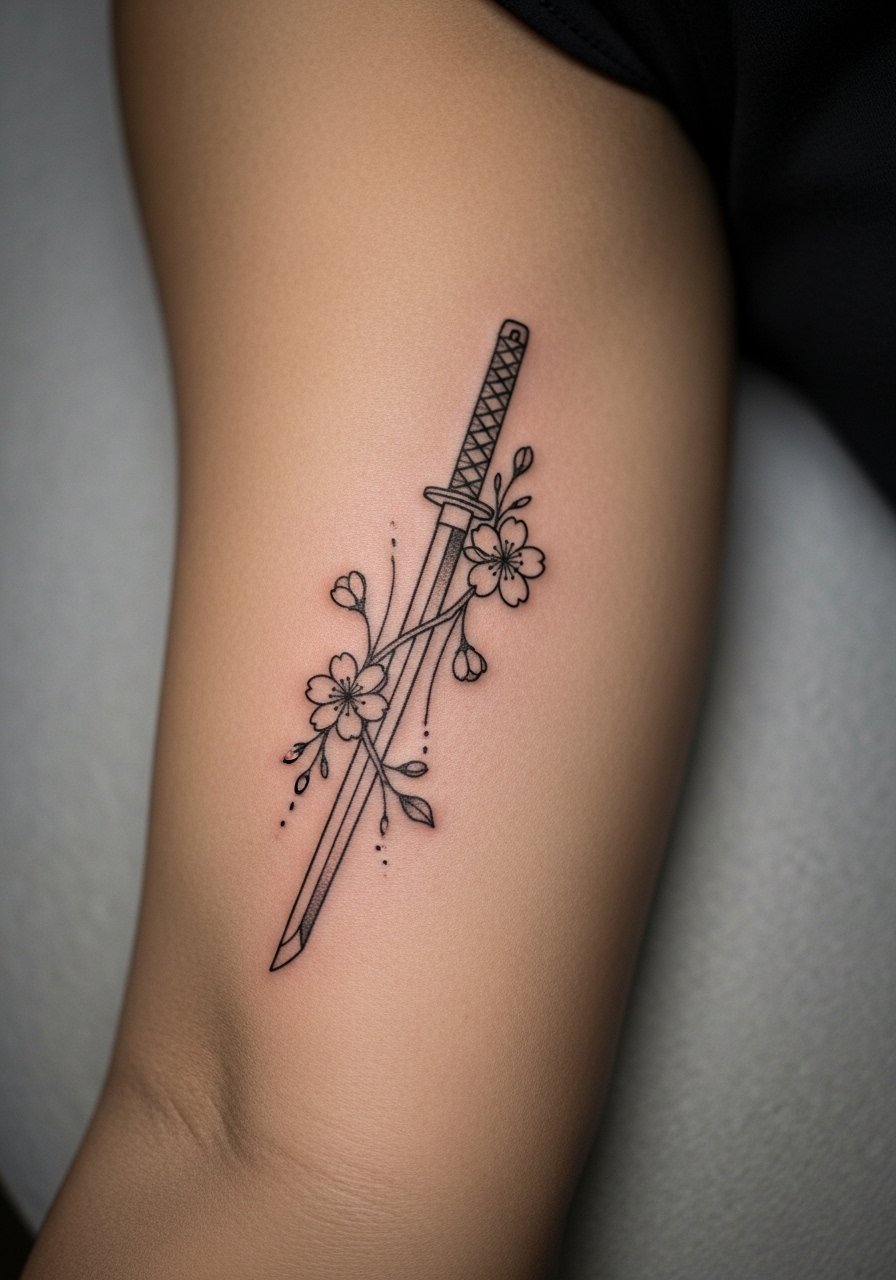
This pairing looks elegant when spacing is generous. The fine line camp and the bold line camp split on forearms. One side says single-needle grace is worth the trade for soft aging, the other side recommends a firmer outline for longevity. I advise asking for a fine inner detail with a slightly stronger outer contour so you get the visual lightness and a better chance of clarity at year three. Session time is short and pain is low. Avoid stacking blossom petals too tightly because the petals can blend over time. For casual wear, rolled cuffs in a rolled cuff chambray shirt frame the piece.
10. Ignorant Style Blocky Samurai Head
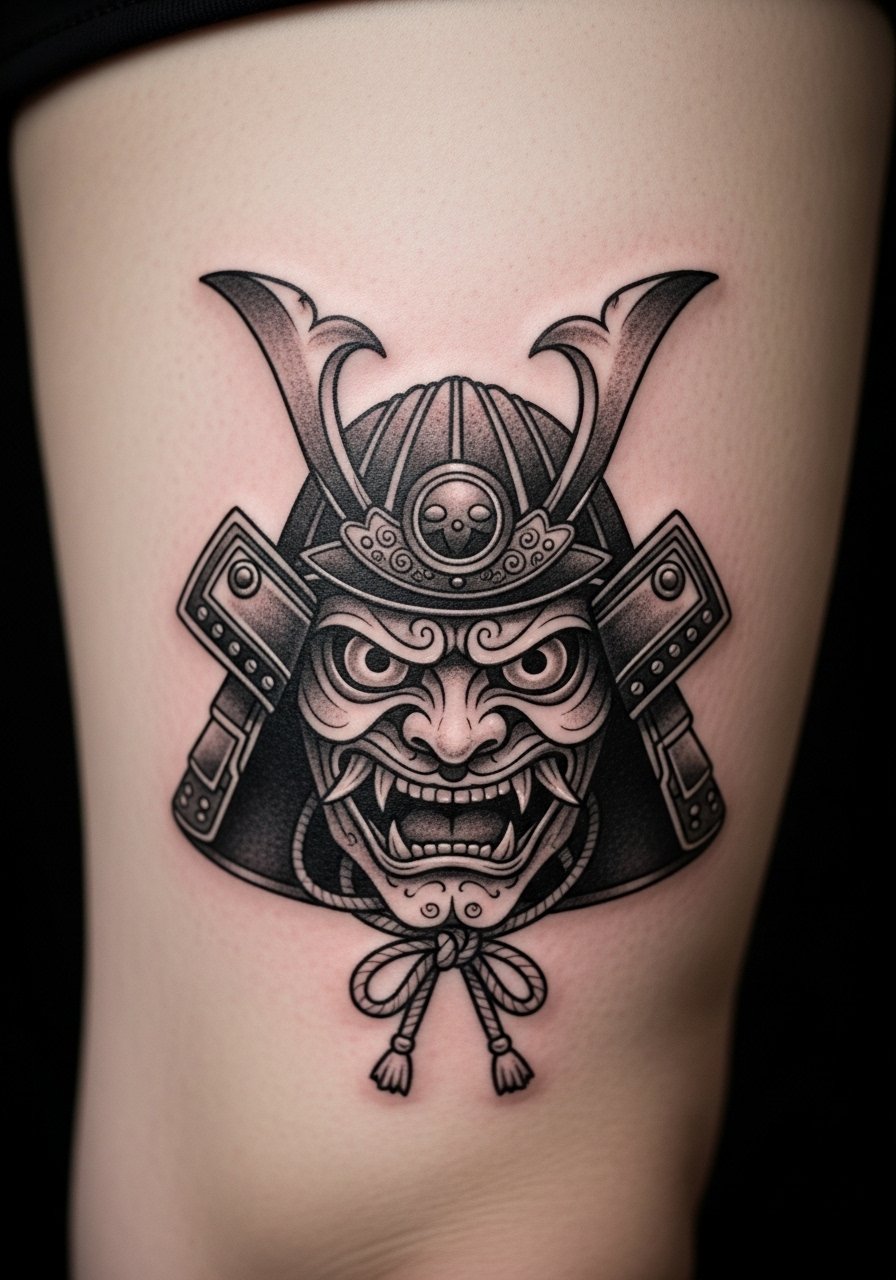
Ignorant style embraces chunky, primitive blocks and that makes it sturdy as it ages. The thigh is ideal for large blocks because the skin is stable and friction is low. Tell your artist you want solid blacks with intentional negative shapes rather than texture inside. Session time is short for a mini and pain is mild on the thigh. A common error is asking for small internal lines inside the black blocks, which disappear as saturation settles. If you travel for a guest slot, ask about their minimums because some shops charge a flat fee for minis.
11. Micro Samurai Dragon Claw
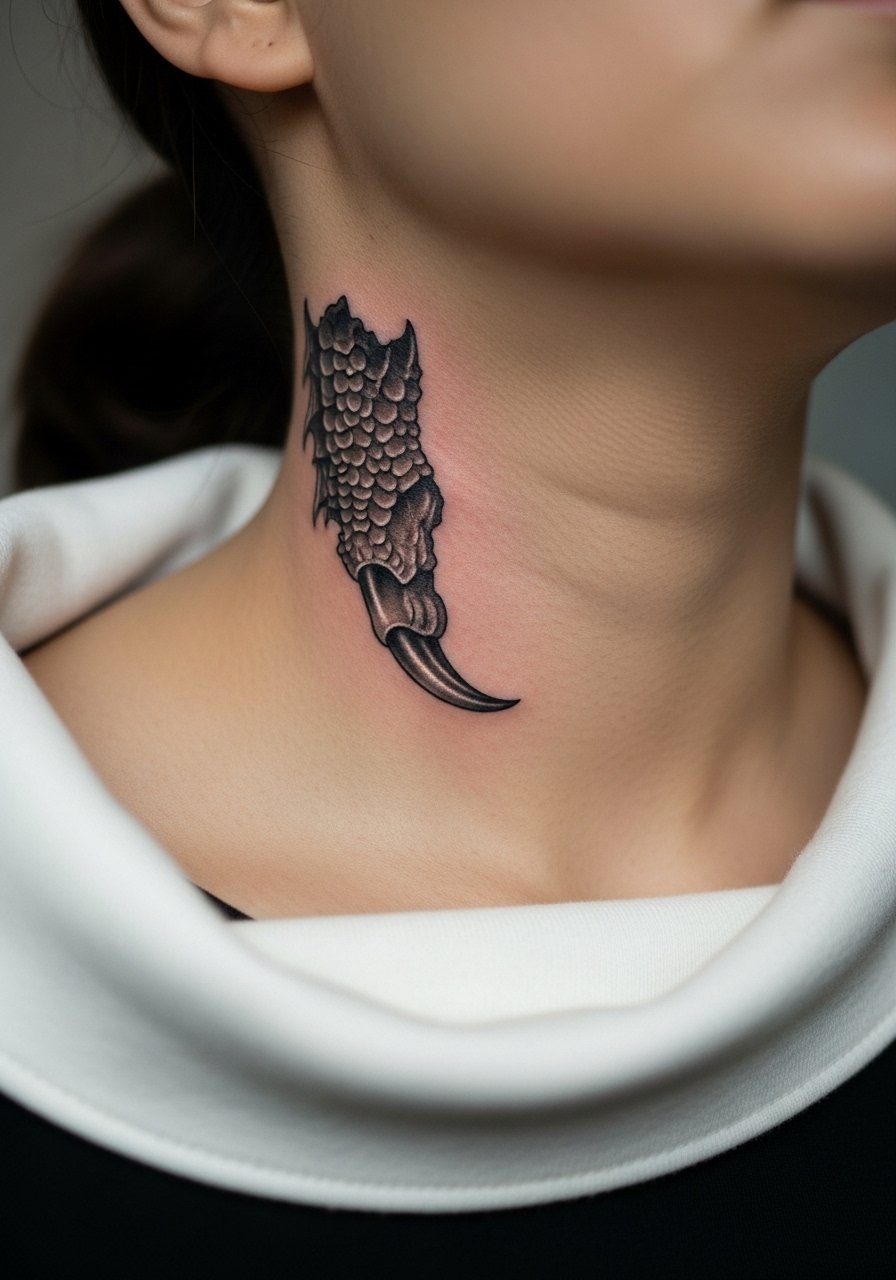
Neck-side micro work reads as an edgy peek when it sits just below the jawline. The skin there is thin so detailed micro realism needs crisp contrast to avoid softening into a smudge. Artists divide on numbing and depth control for neck ink, so ask where your chosen artist lands on needle depth. Pain is higher here and sessions are short. For a low-key reveal, pair it with a slim crew neck tee or an unzipped hoodie.
12. Watercolor Samurai Ghost Outline
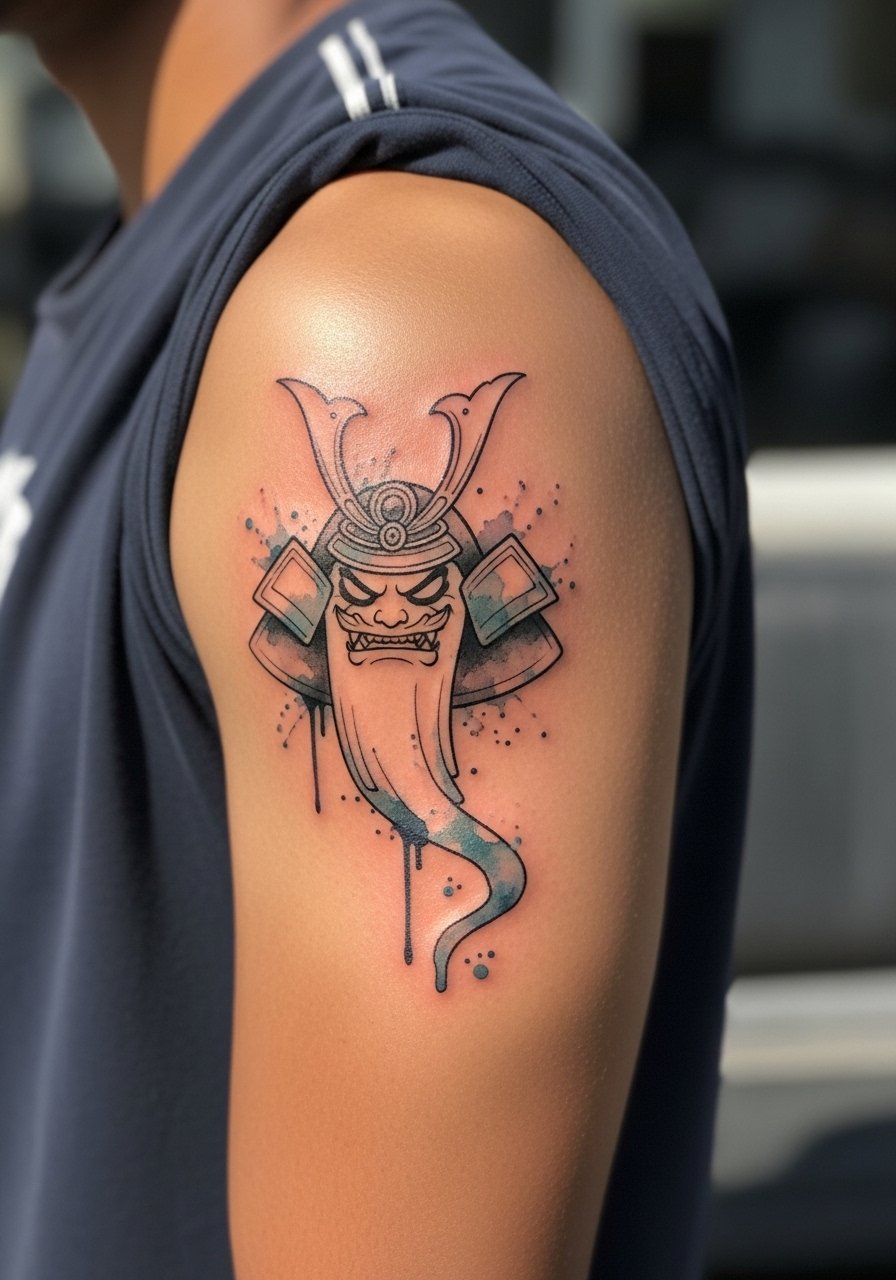
The watercolor take is ethereal but it tends to diffuse faster than solid color. Upper arm placement gives more room for wash breathing room. If you love the watercolor aesthetic, ask your artist to anchor the washes with a faint outline so the shape survives fading. Session time is usually a single appointment of 45 to 75 minutes. A common mistake is requesting extremely light washes in small areas. These can look like bruises as they age. Plan for touch-ups at year two if you want the washes vivid.
13. Koi-Paired Mini Warrior on the Outer Calf
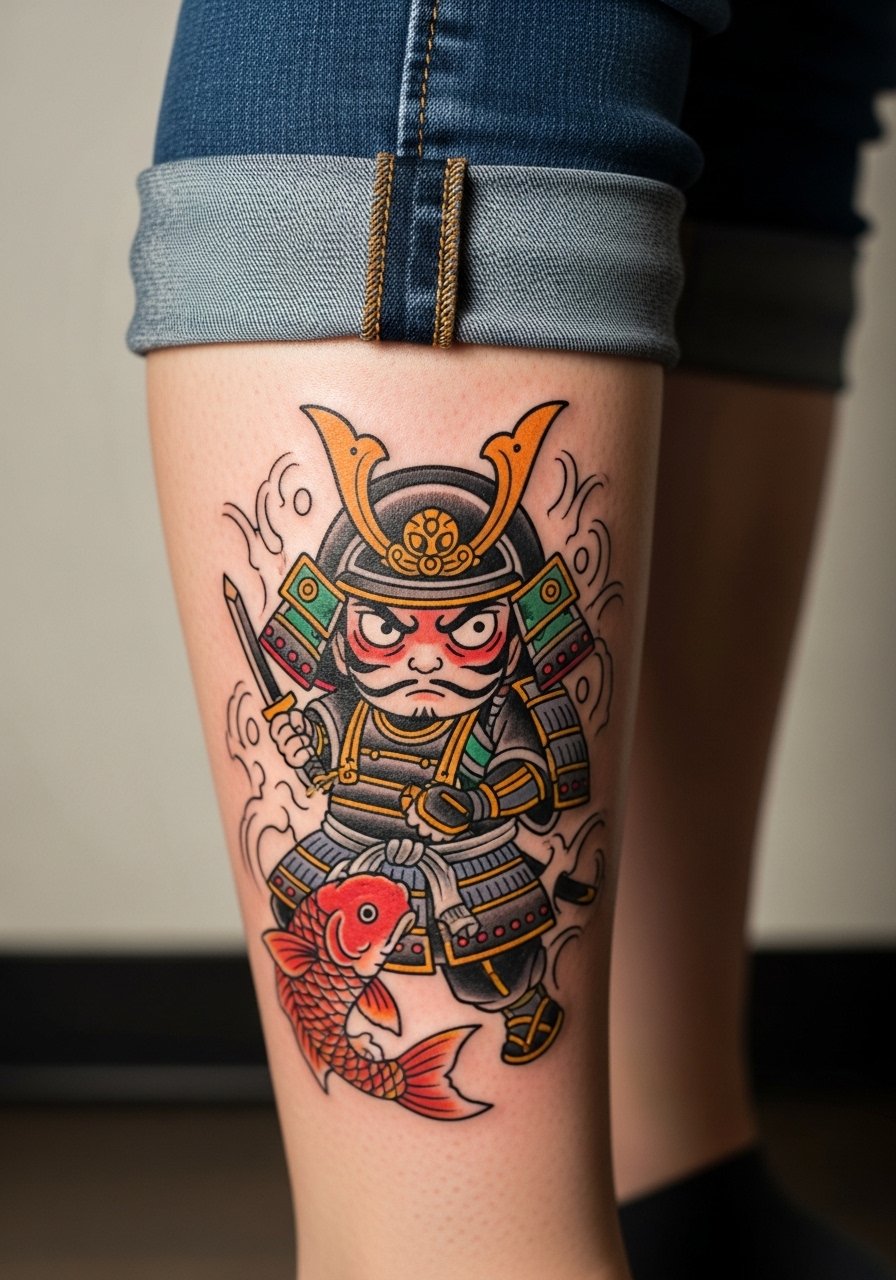
Pairing a mini samurai with a koi gives movement to a compact piece and the calf is forgiving for color. Ask the artist to scale the koi so it winds around the samurai without crowding the armor. The outer calf tolerates bold blackwork and saturated oranges well. Sessions are moderate and pain is low. A mistake is cramming too many narrative elements into a two to three inch space. For showing the design, rolled jeans that expose the calf frame the composition without distracting. Try slim fit rolled jeans when you want the piece visible.
14. Knuckle Samurai Aging Sketch
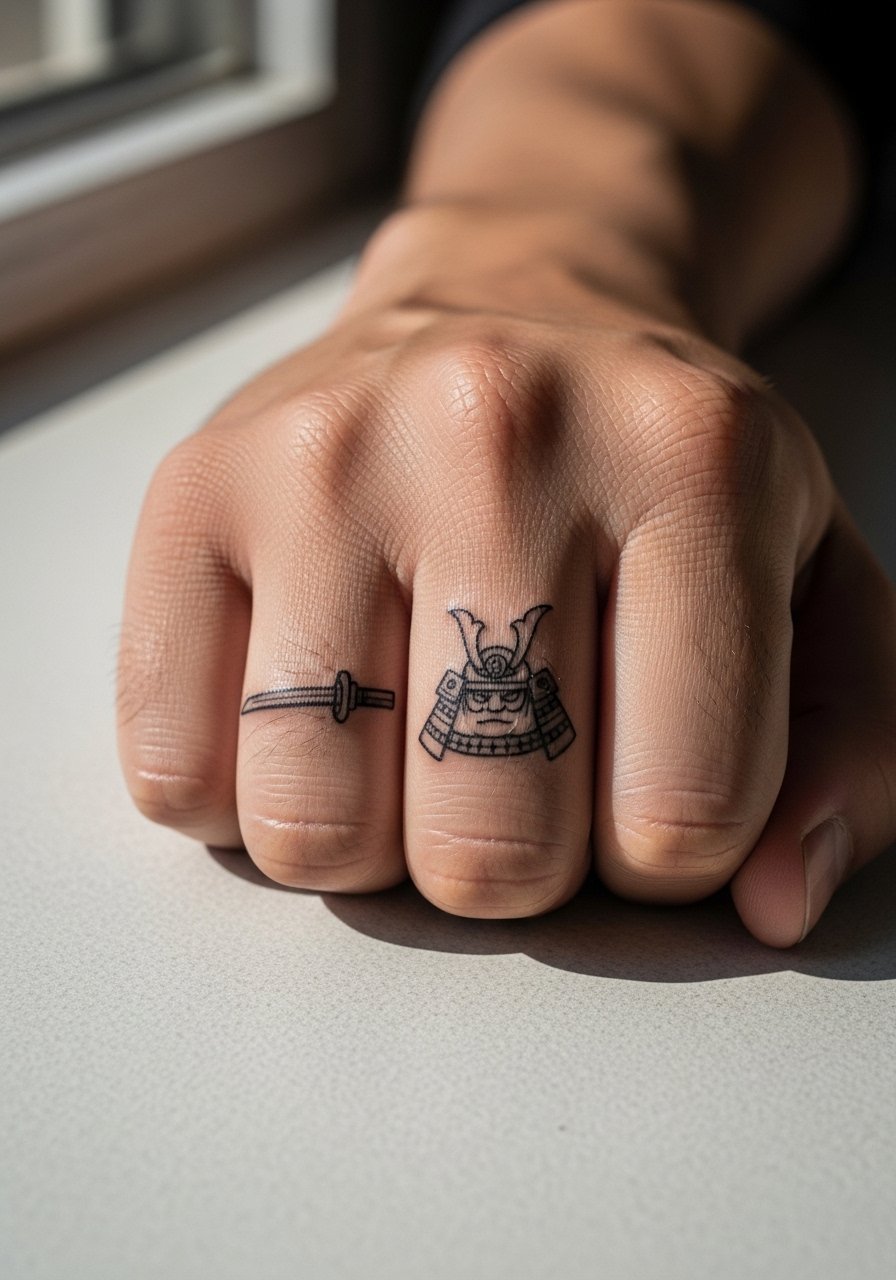
Knuckle and hand work age fast because of constant use and washing. A sketch approach can look raw and intentional, but it needs bold separations to stay readable past one year. Tell your artist you prefer thicker knuckle anchors with light interior scratches. Expect high visibility during healing and a possible touch-up at 12 months. The common mistake is treating knuckle pieces like wrist minis, then wondering why they fade quicker. Think of knuckles as high-maintenance canvas.
15. Guest-Spot Mini Irezumi Warrior
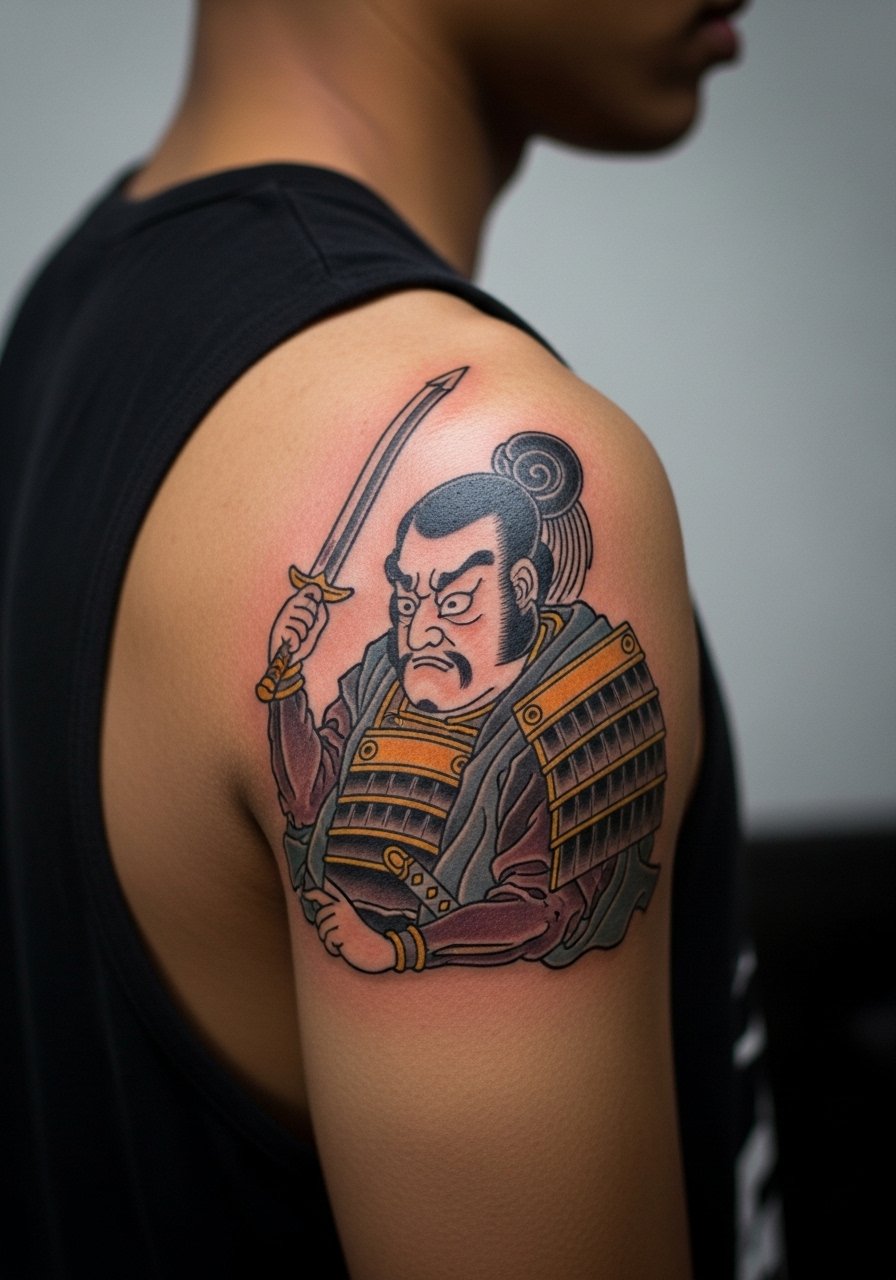
Traveling for a guest spot often brings specialty skills you cannot find locally, and mini Irezumi benefits from that. Scope the artist's healed portfolio for color transitions and banding to see how they layer reds and blacks. Sessions may be split between outline and color glazing. The shoulder blade handles saturation well which reduces early touch-up needs. If you book a guest artist, confirm their deposit and cancellation policy ahead of time. Wear a sleeveless muscle tee so the artist has full shoulder access but you stay comfortable.
16. Spine-Stitched Samurai Kanji Column
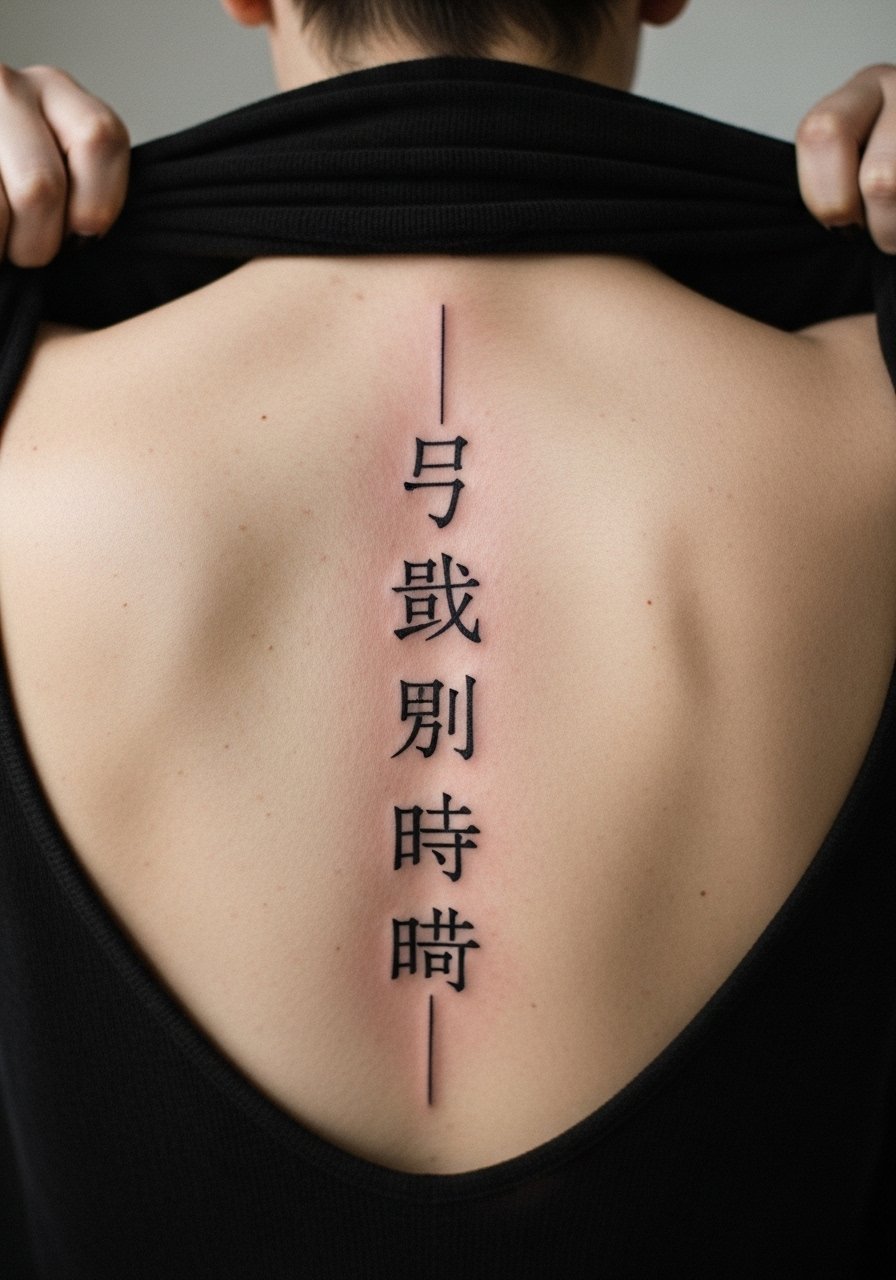
A vertical kanji column along the spine reads meditative but the area shifts with posture. Ask for spacing that allows each character to breathe. Pain on the spine is higher than limb work, and sessions are generally short but sharp. The usual mistake is stacking too many characters into a narrow strip which forces tiny strokes that blur. If you want it symmetrical, bring clear reference for scale and alignment.
17. Memorial Cherry Blossom Mini Helmet
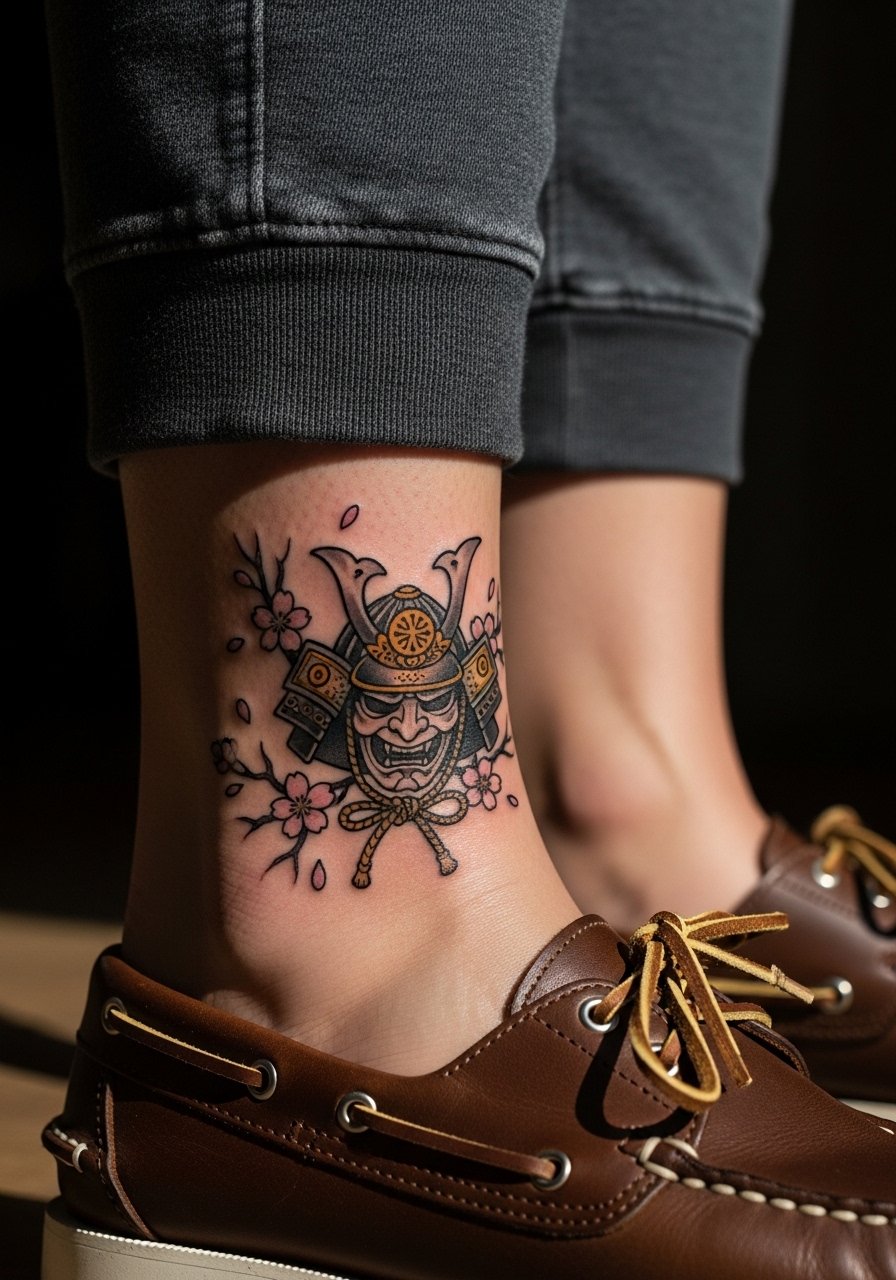
Memorial mini pieces need readable detail and tasteful accents. On the ankle keep the blossom elements minimal and ask for modest negative space around the helmet. Ankle friction and footwear can speed fading, so plan a light outline and an 18-month touch-up if you want longevity. A common regret is asking for too many petals on a joint area. For visible days try pairing with cropped pants and leather boat shoes or sandals so the piece reads clearly.
18. Micro-Realism Katana Tip on the Finger
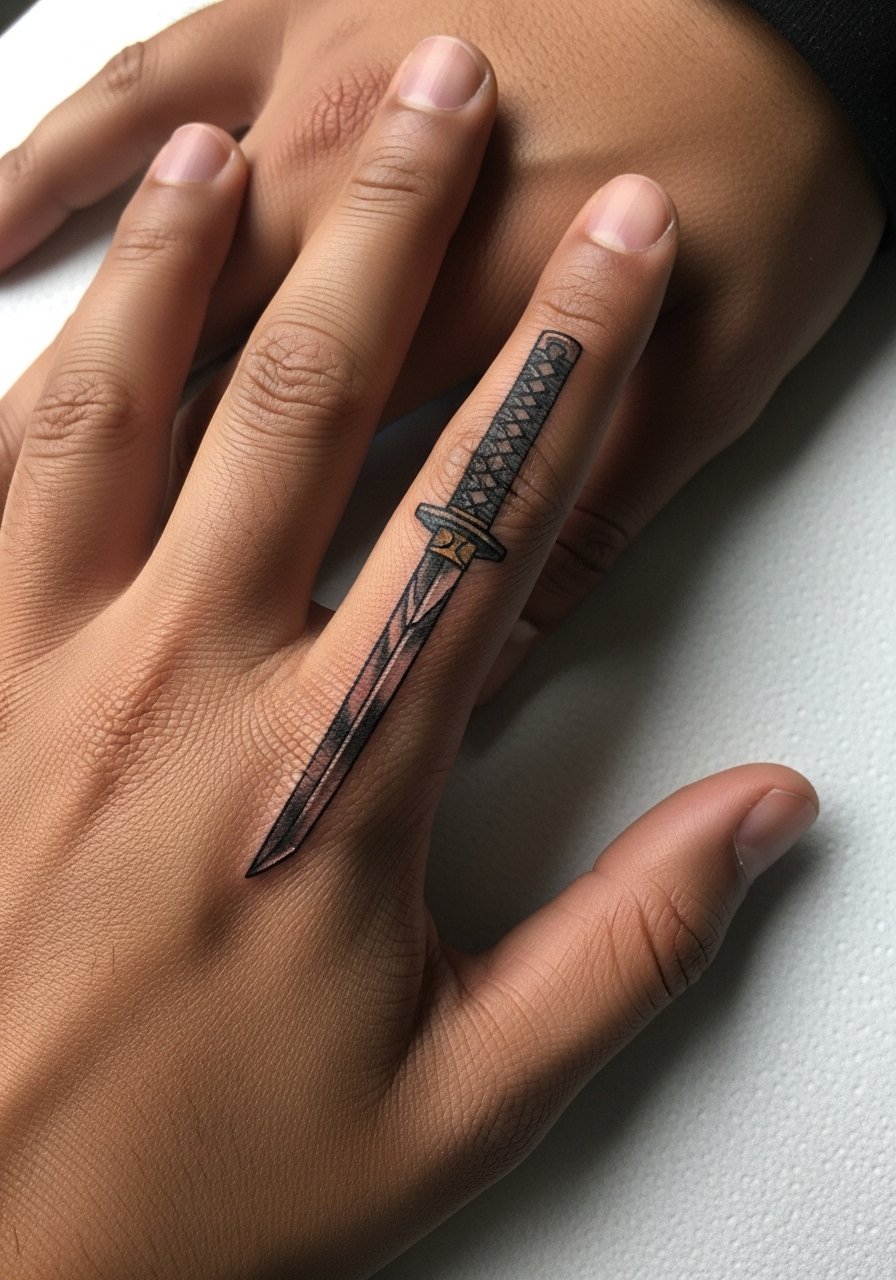
Finger minis are high-contact and often need more love than people expect. Micro-realism can look crisp at first but the skin and constant use will soften edges. Ask your artist about ink depth and realistic expectations for a 1-inch piece. Pain is high on fingers and touch-ups are common around year one. The main mistake is expecting hand-like longevity for fine tonal work. If you want something to last longer consider a slightly bolder outline or placing the tip on the side of the finger to reduce rubbing.
19. Collarbone Minimal Samurai Crest
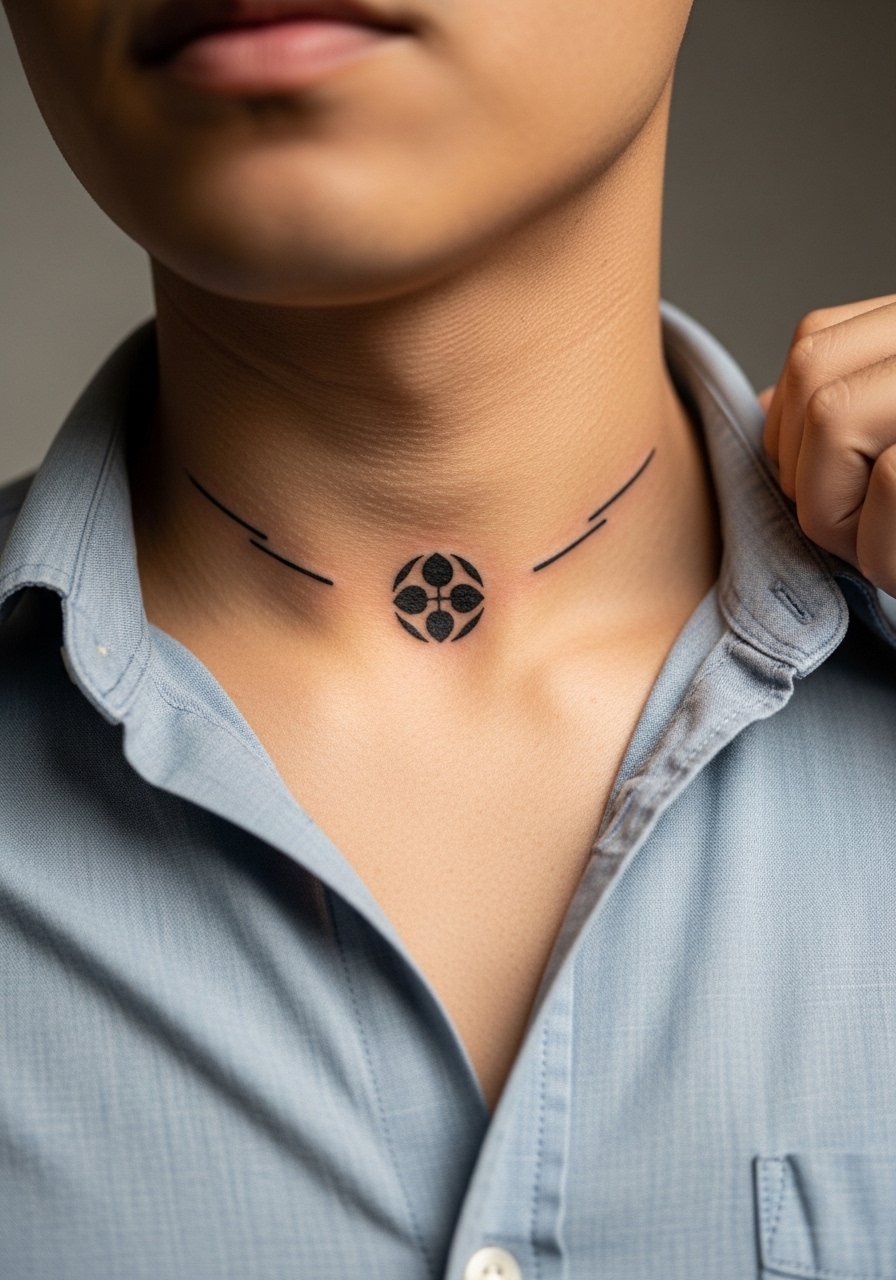
Small collarbone pieces need contrast to show against bone highlights. Ask for clean edge saturation rather than tiny internal shading. The collarbone can be tender and sessions are short. Many artists argue over fine line here. One camp says single-needle achieves elegance. The other says the bone area needs stronger outline to prevent early blur. My preference is a balanced approach with a modest outer line and delicate internal stippling. For a simple reveal wear an open button-down shirt or a light V-neck.
20. Blackwork Samurai Lower Back Panel
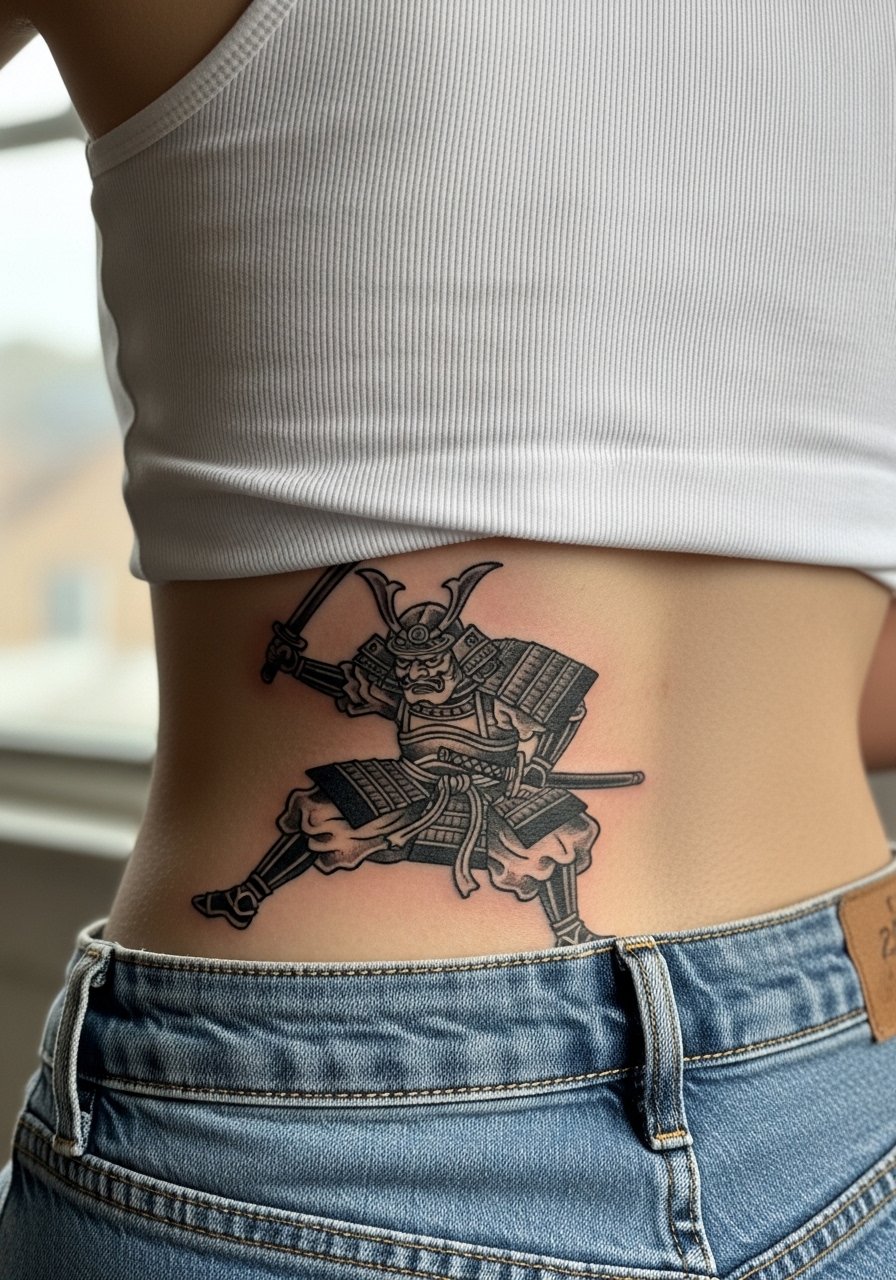
Lower back minis can sit low and remain private or be shown off with the right outfit. Solid black shapes survive tensile changes well, and the lower back is less prone to daily friction. Tell your artist you want clean negative shapes and avoid tiny interior detail. Sessions are comfortable and often accomplished in one pass. A common mistake is requesting lots of fine shading that ends up looking muddy once the area settles. Consider placement relative to waistlines and belt wear.
21. Minimal Samurai Wrist Seal
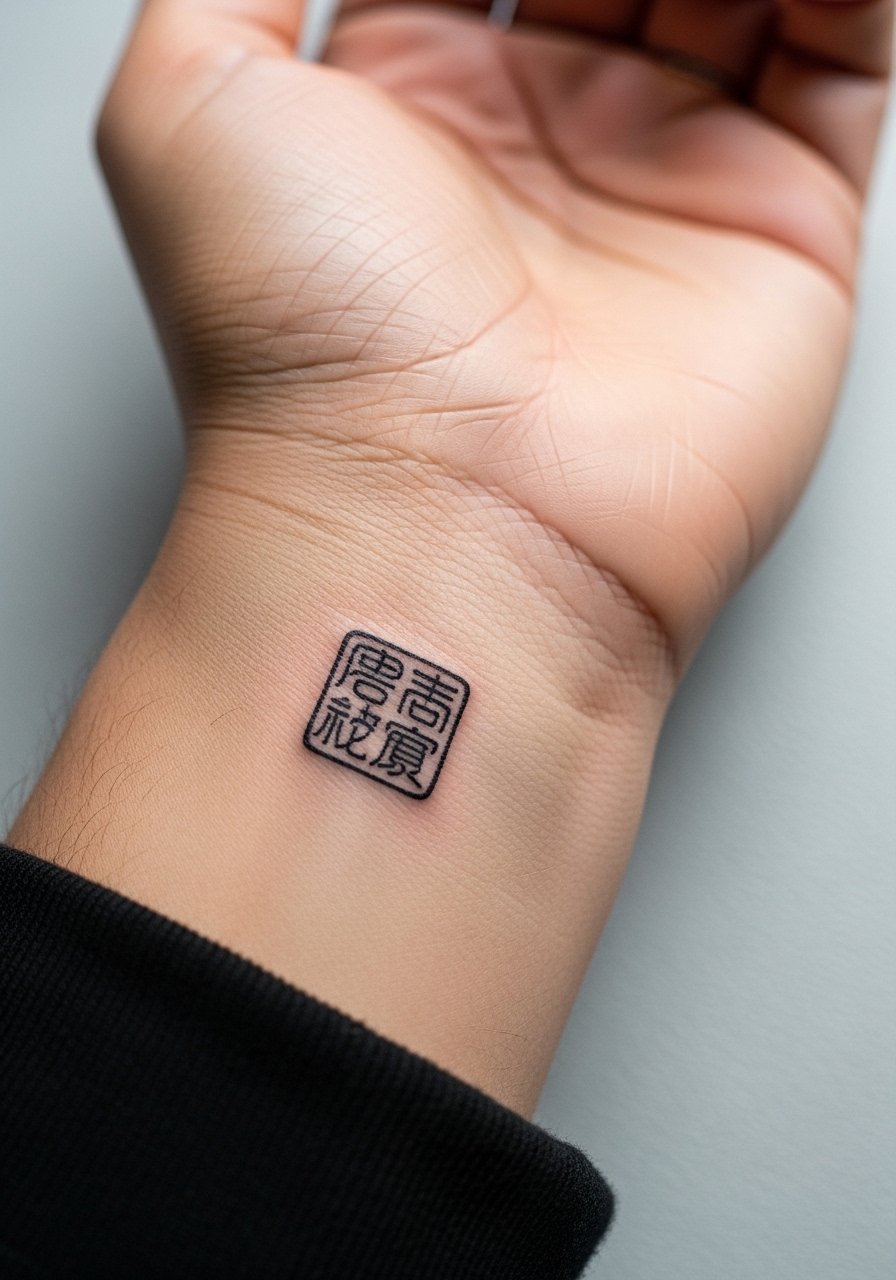
A wrist seal is subtle and powerful if the composition is bold enough to survive frequent washing and sunlight. Ask your artist for compact negative space around the seal and a slightly stronger outer contour. Pain is low to moderate and sessions are short. The common mistake is crowding the seal with bracelets or heavy wrist accessories that abrade the ink during healing. Pair this piece with a thin silver chain bracelet when you want a delicate look that does not compete.
Frequently Asked Questions
Q: Will fine line samurai tattoos blur faster on wrists and forearms?
A: Fine line does tend to soften faster on high-movement zones like wrists and the inner forearm. One camp prefers the single-needle look even knowing it will require touch-ups. The other camp recommends firmer outlines for those sites. Ask your artist which approach they use and plan a possible touch-up around year one to two.
Q: How should I prepare clothing for an ankle or calf samurai session?
A: Wear pants you can roll up easily or shorts that do not press on the area during the appointment. For ankle pieces consider cropped joggers or cuffed chinos so the artist has clean access. Bring a pair of loose shoes or sandals for the ride home if the area will be bandaged.
Q: Are there cultural considerations for Irezumi-style mini warriors?
A: Yes. Irezumi motifs carry traditional meanings and visual language. Many people choose subtle variations or consult an artist familiar with the style to avoid direct replication of sacred symbols. Being specific in your consultation about which elements you want altered helps keep the result respectful.
Q: How often should I expect touch-ups for small samurai tattoos?
A: For fine line minis expect touch-ups between 12 and 24 months, depending on placement. Bold blackwork and saturated minis on stable skin often need fewer touch-ups. Keep in mind lifestyle factors like sun exposure and friction accelerate fading.
Q: Which placements hurt the most for these mini warriors?
A: The spine, ankle, and fingers usually rank highest in pain for most people. Calf, forearm, and shoulder blade are lower on the scale. Pain is individual so consider numbing options if anxiety is high, and confirm product use with your artist ahead of time.
