
Fine line trends look gorgeous on feed but they do not always hold up on the sternum the way a collarbone or forearm does. The skin is thin, the space is tight, and movement makes some designs change shape when you are undressed. Expect sensitivity, placement testing nude, and careful spacing as the baseline. Below are 27 delicate ideas that work with the chest curve, and what to say in a consult to get them right.
1. Minimalist Heart Outline at Sternum
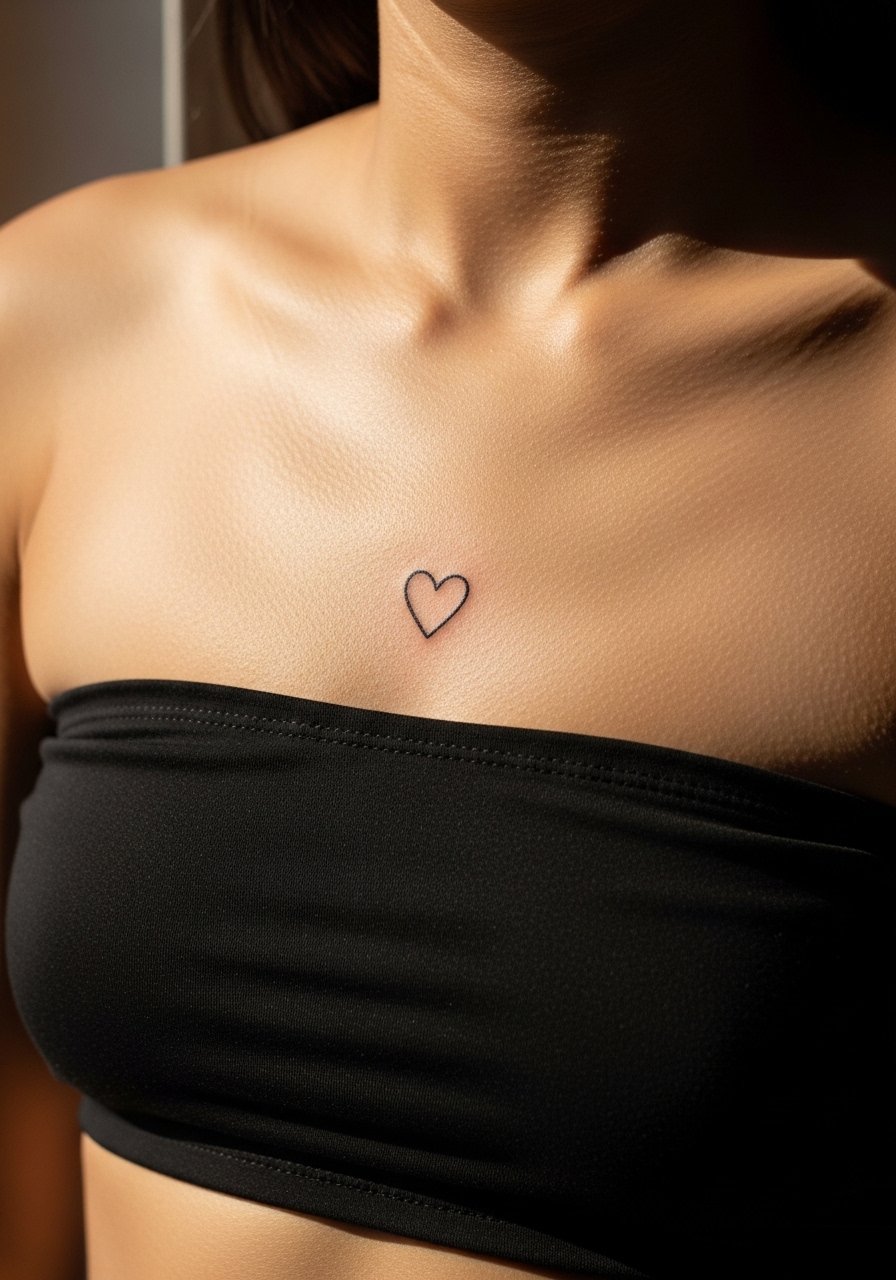
When you want a statement that reads delicate, a one-inch heart at the sternum works because the shape is familiar and sits with the bone for support. I've seen this requested as a very thin single-line heart and also as a slightly bolder outline. Tell your artist you want closed, even linework and ask for a slightly heavier line weight than a hairline so the shape lasts at year two. Fair warning about pain, the area is sensitive but one short session usually covers it. For the appointment wear a loose button-up shirt you can pull aside with no rubbing on the fresh piece.
2. Fine Line Leaf Wrap Along the Sternum Side
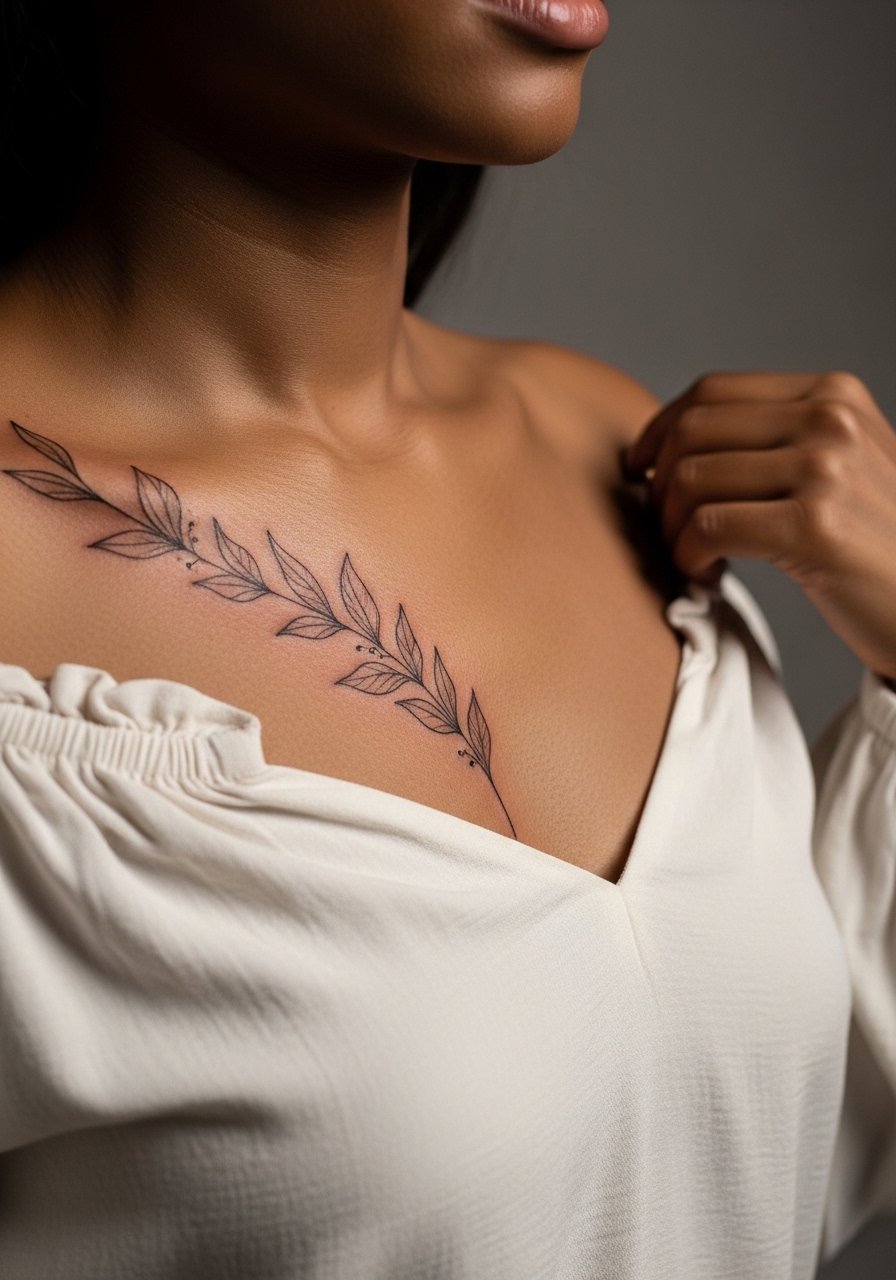
I've seen this work well when the vine follows the natural curve of breast tissue. In consult, ask the artist to test placement while you stand nude so the wrap moves with your body. The common mistake is making the vine too symmetrical. Let one side tuck and overlap so it reads organic when you move. Typical session time is 45 to 90 minutes. Because this design benefits from asymmetry, it tolerates modest breast size changes better than rigid shapes. To show it off pair with an off shoulder blouse.
3. Small Star Cluster Centered on the Sternum
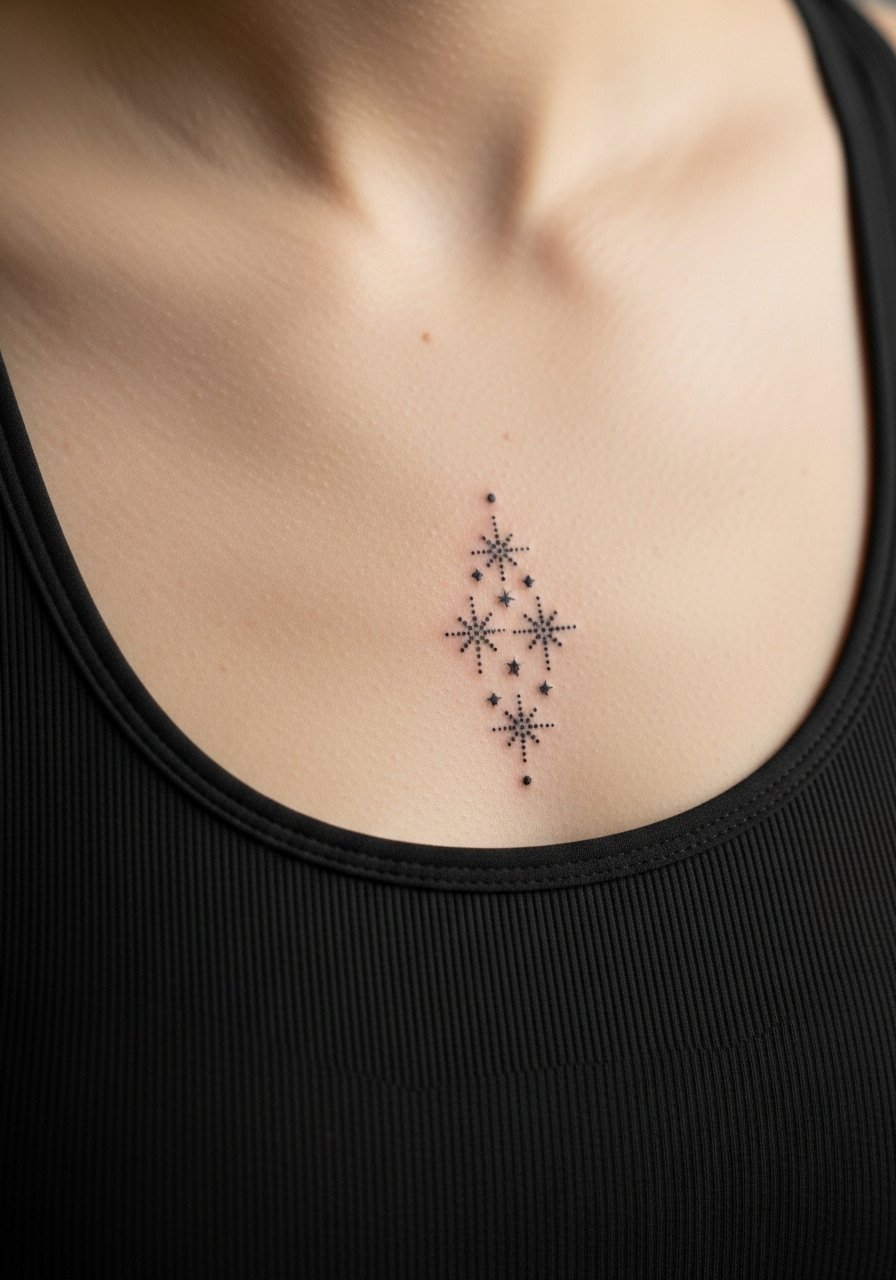
This constellation-style cluster is ideal for first-timers who want a delicate look with low session time. Tell the artist you want staggered dot sizes so the cluster reads airborne and not boxed in. Most of these are under one inch and are done quickly, which helps with pain. The aging is forgiving if dots are spaced properly, but crowding them too close leads to merging at year three. For the session, a strapless or fitted sports bra keeps pressure off the area and gives the artist clean access.
4. Vertical Floral Stem With Stipple Shading
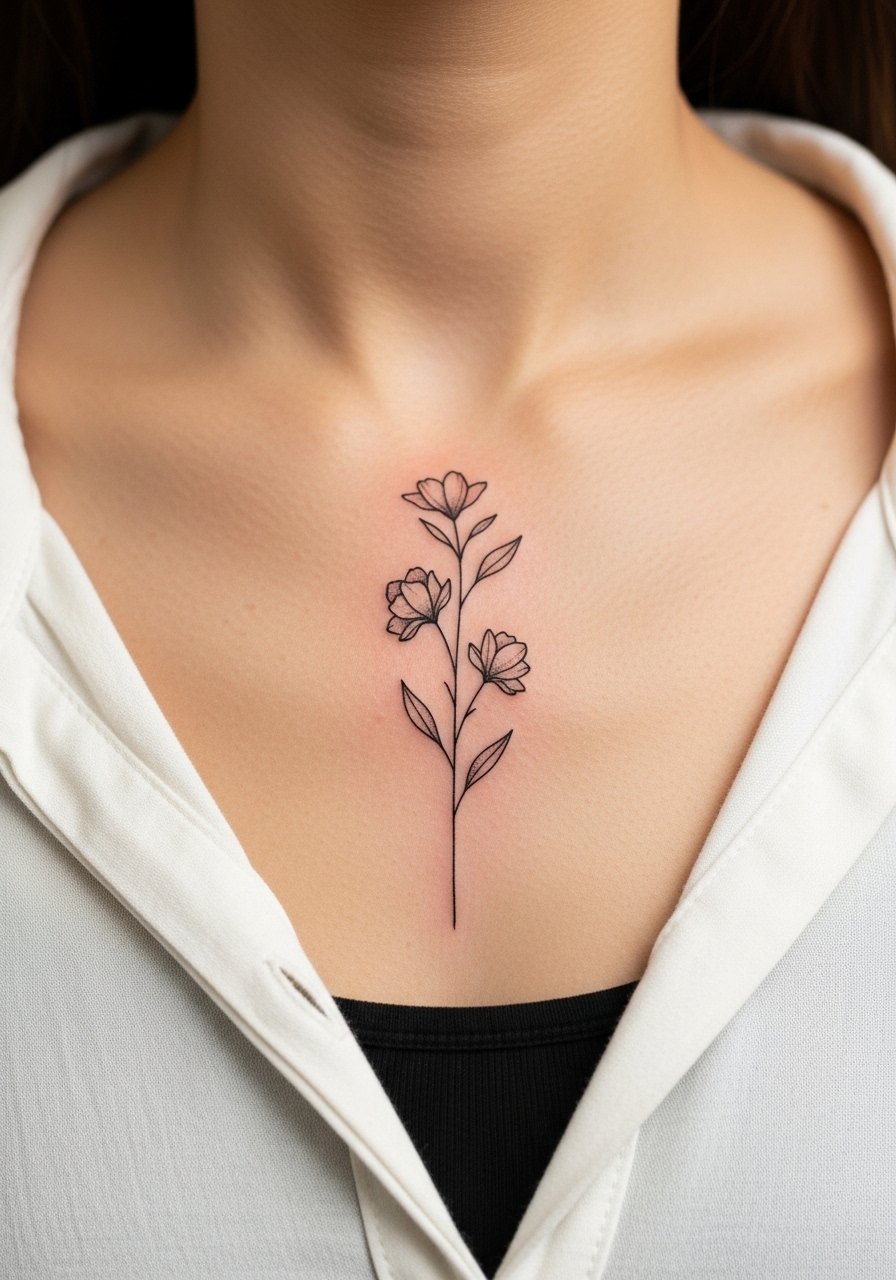
Floral stems play with the chest's vertical axis nicely and the stipple shading gives depth without heavy saturation. When you sit down with the artist, show reference for petal spacing and ask for dot shading rather than heavy gray washes. The mistake I see is designers packing too much shading into a small stem. That makes touch-ups more likely. Expect one to two sessions depending on length. For going out, a thin chain necklace sits above the stem and frames it without crowding.
5. Under-Breast Butterfly With Sternum Extensions
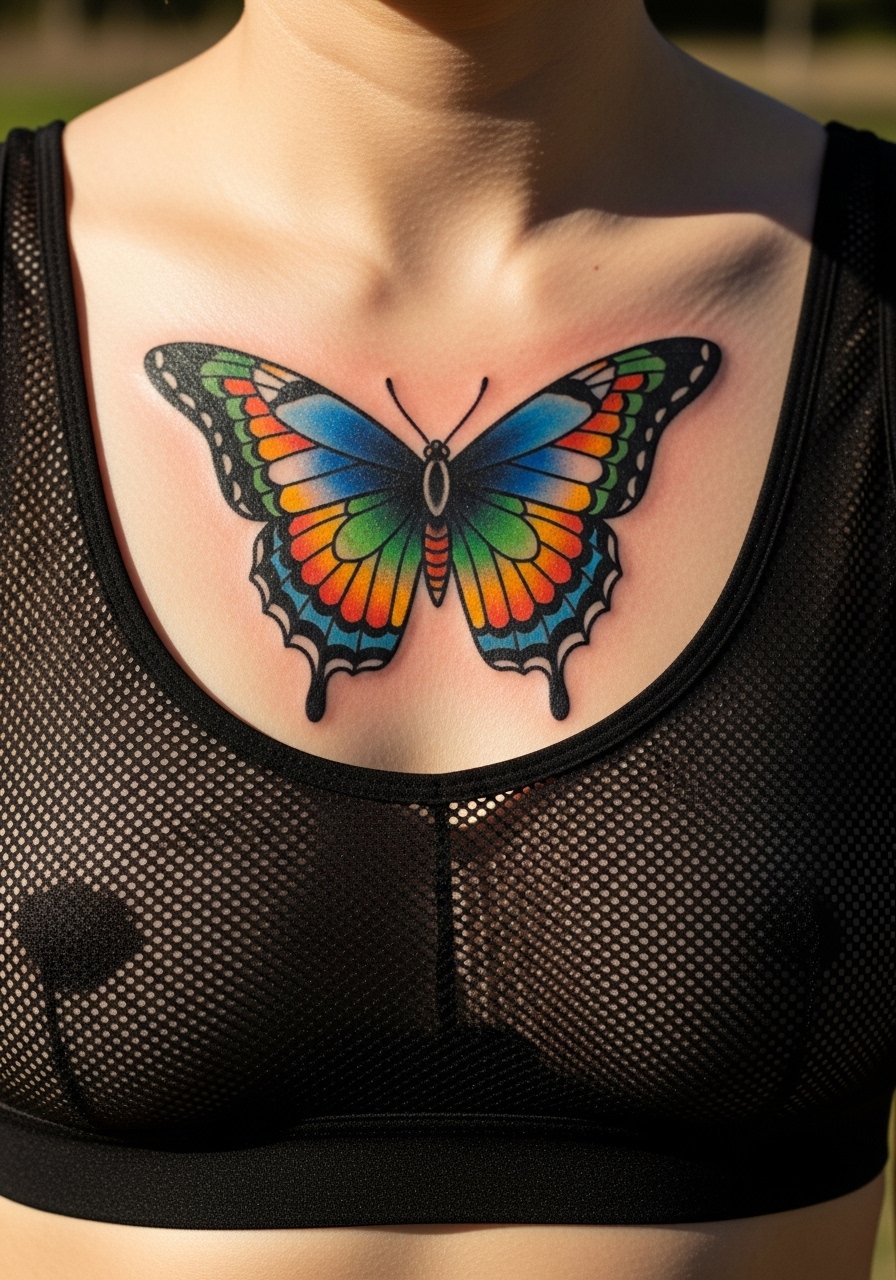
This is a clever workaround for the sternum's limited flat canvas. Place the main butterfly under the breast and run small decorative lines or dots up toward the sternum. In consult say you want the wings to read full when standing and to extend subtly when the chest is relaxed. Pain is concentrated under the breast fold so plan for two shorter sessions if color is involved. For nights out pair the piece with a mesh bralette tank that lets the underbust peek without exposing the area fully.
6. Fine Line Bird Wings Centered With Side Flair
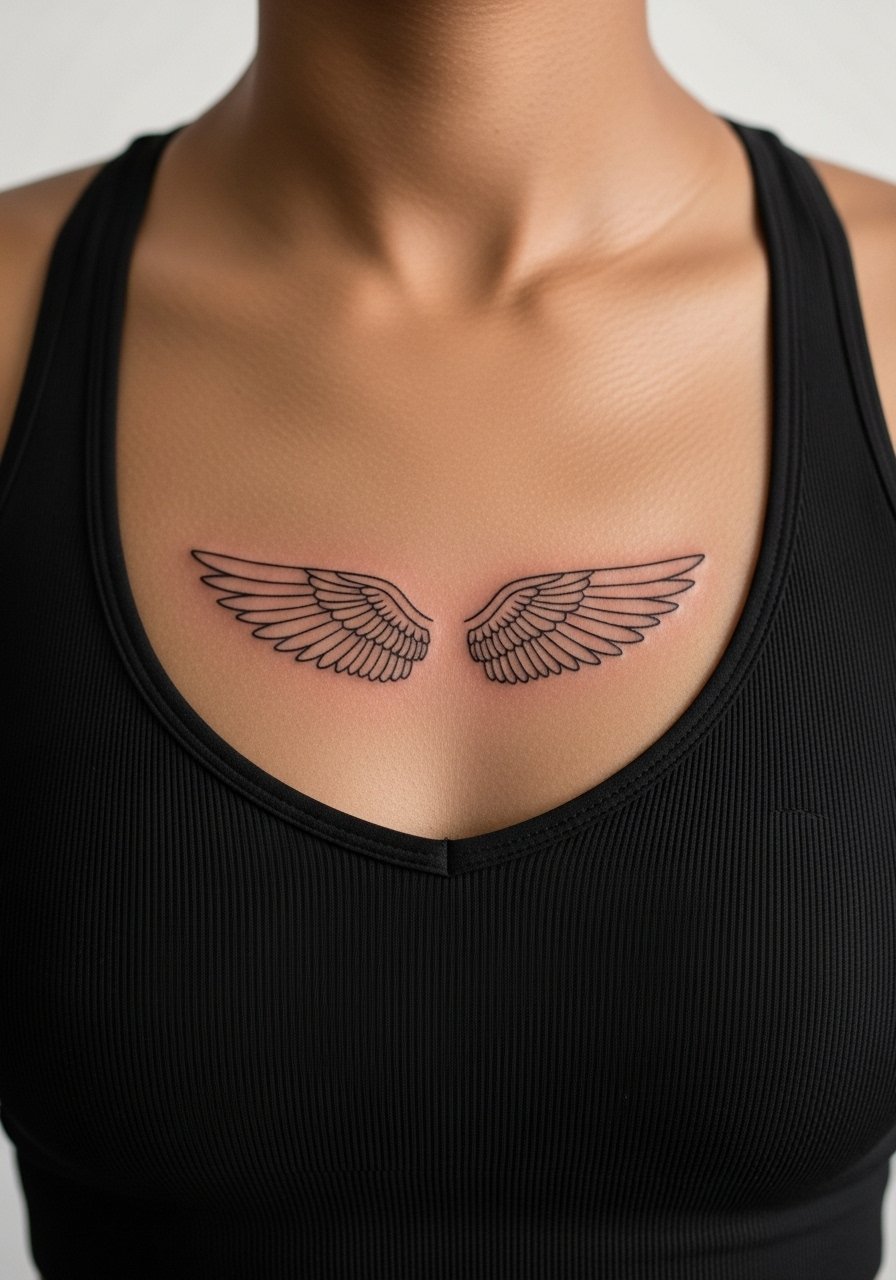
Bird wings give motion to a static area because the tips can follow the chest curve. A consultation note to bring: "I want primary wing lines slightly thicker than the feather details so the wings age into shape." The main controversy here is placement symmetry. Some artists prefer exact centerlines to accentuate curves, others avoid heavy center pieces to reduce distortion when nude. Name both views and ask which approach the artist prefers. Sessions are usually one solid appointment. For the session wear a wireless bralette top you can pull down slightly for access.
Studio Day Picks
Those first six sternum and underbust ideas ask for short sessions and careful prep, and a few targeted items make the chair time and first week smoother.
- Stencil transfer paper kit. Lets you preview the exact placement on skin during consult, which is crucial for centerline pieces and asymmetrical wraps.
- Topical numbing cream. Applied according to instructions it can reduce sternum and under-breast sensitivity long enough to keep sessions under an hour.
- Thin protective film roll. Useful for under-bust work that rubs against clothing during the first few days.
- Fragrance-free gentle body wash. Cleanses without irritating delicate linework or dot shading near the chest.
- Aquaphor healing ointment. Thin layers during the first 48 hours help keep fine line work moisturized without clogging.
7. Porcelain Devil Fish with Sternum Patterning
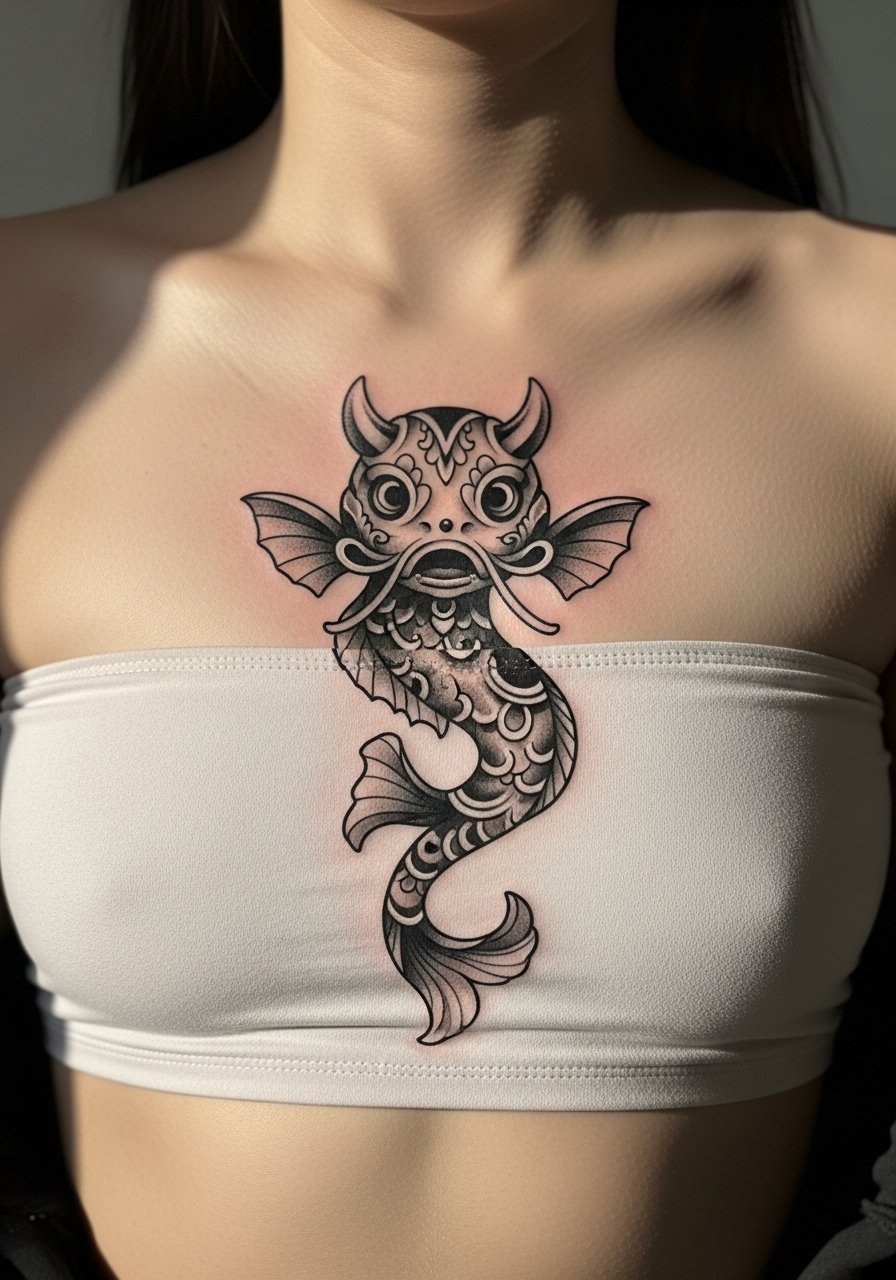
This is one of the more unusual options and it fits the flatness of the sternum by using porcelain motifs inside a single central shape. Tell the artist you want open negative spaces to prevent the design from becoming a solid block over time. The mistake is over-detailing small fish scales which later merge. Two to three short sessions might be needed for dense blackwork. Because this is ornamental, discuss cultural origins and avoid direct cultural motifs unless you have a clear reason. Expect higher sensitivity at the center bone than at side placements.
8. Mandala Sternum Plate with Radial Spacing
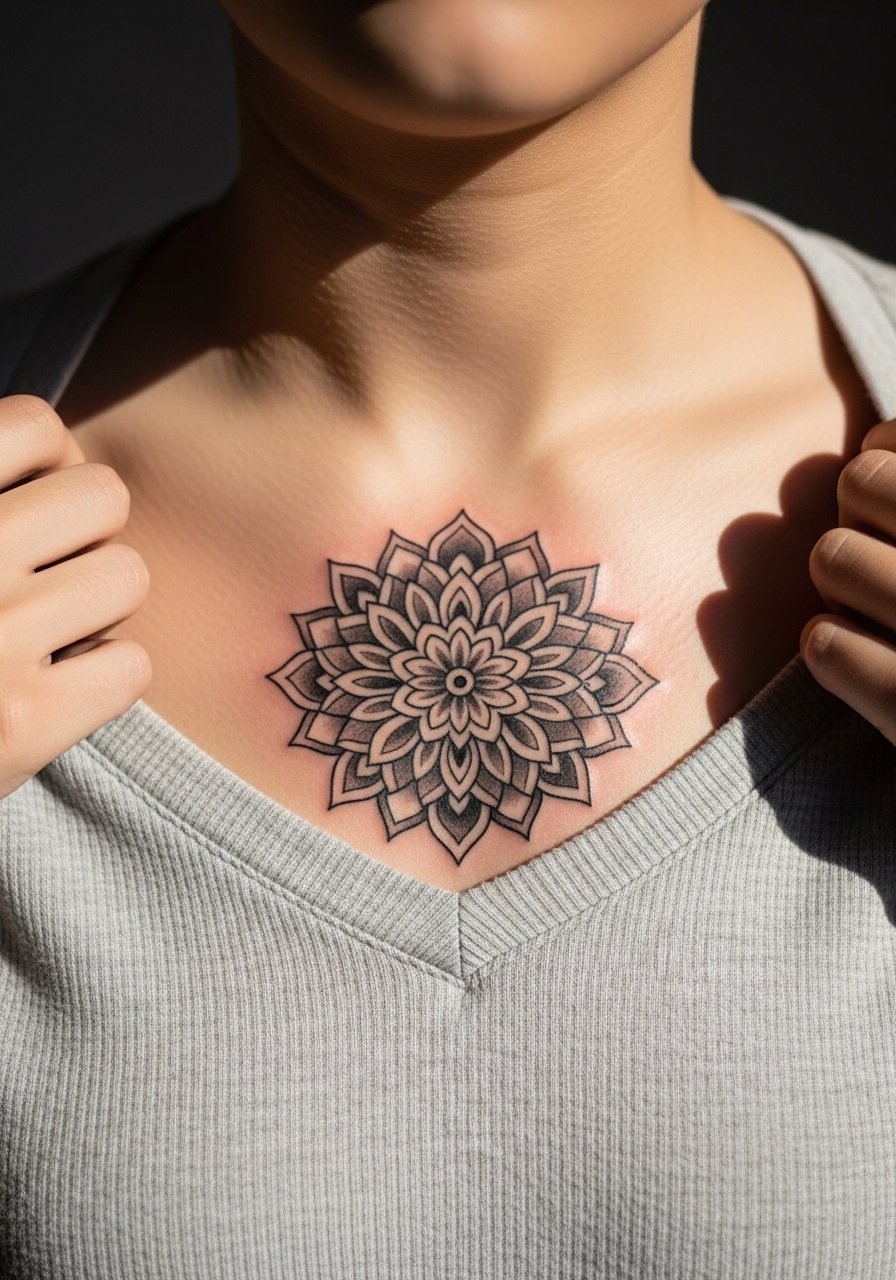
Mandala work reads bold when done on the full sternum, and the trick is giving each radial element breathing room. In consult ask the artist to scale the negative spaces in the center slightly larger than usual so the dense lines do not compact as they age. The risk is asking for a full plate too small. If you want longevity, aim for 5 to 6 inches across when your anatomy allows. This style often needs multiple sessions and touch-ups at year three for crispness. Pair with a plunging halter top for evenings when you want to frame the work.
9. Geometric Vine Curve from Sternum to Side Rib
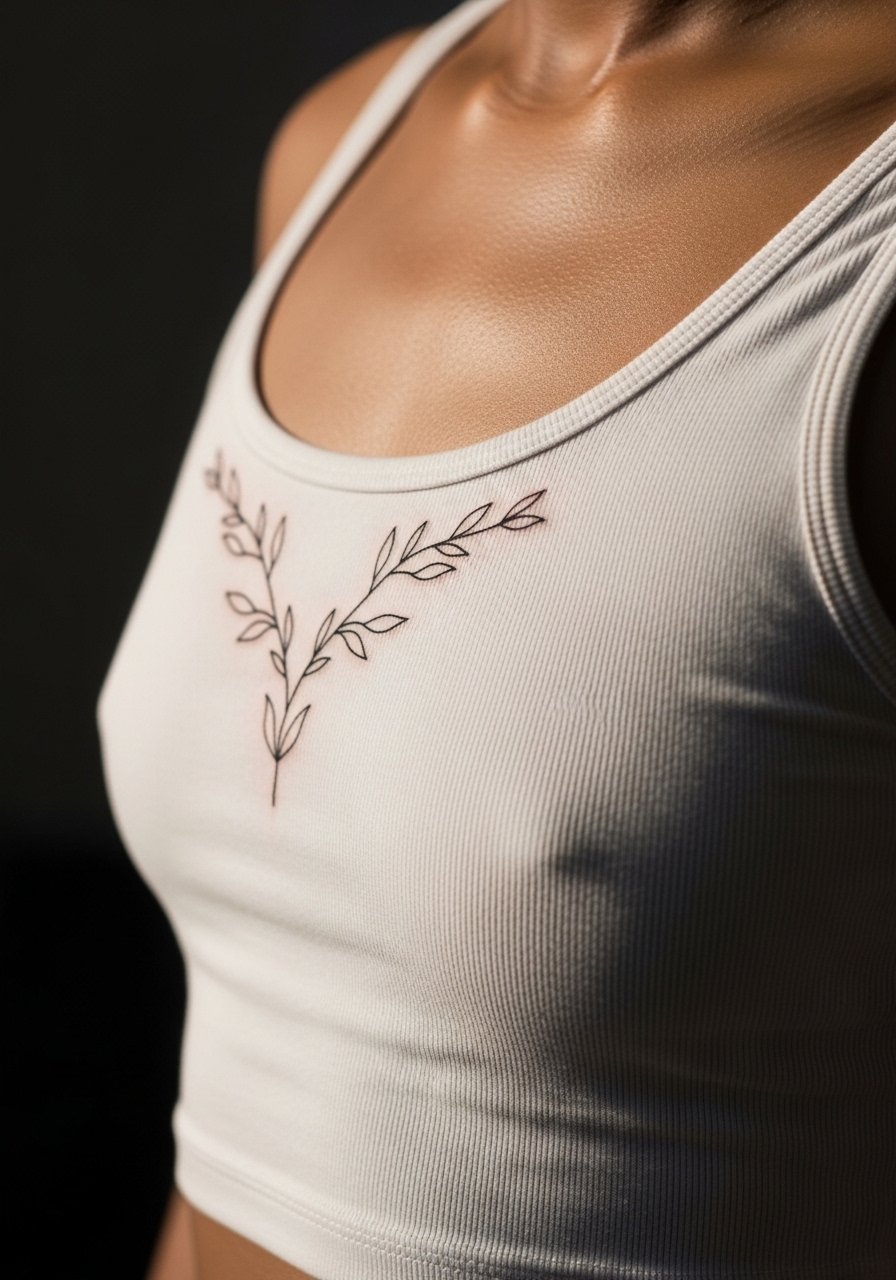
This hybrid of geometry and vine helps the piece follow the torso as a curve. The consultation should include a nude placement test so the curve reads correctly when you move. A common mistake is forcing a perfectly straight geometric grid against the chest curve. Ask for lines that honor the anatomy with small breaks or gentle arcs. Expect two sessions if it travels into the rib area. For showing it off later try a wrap crop top that follows the same sweep.
10. Feather Detail Sternum Linework
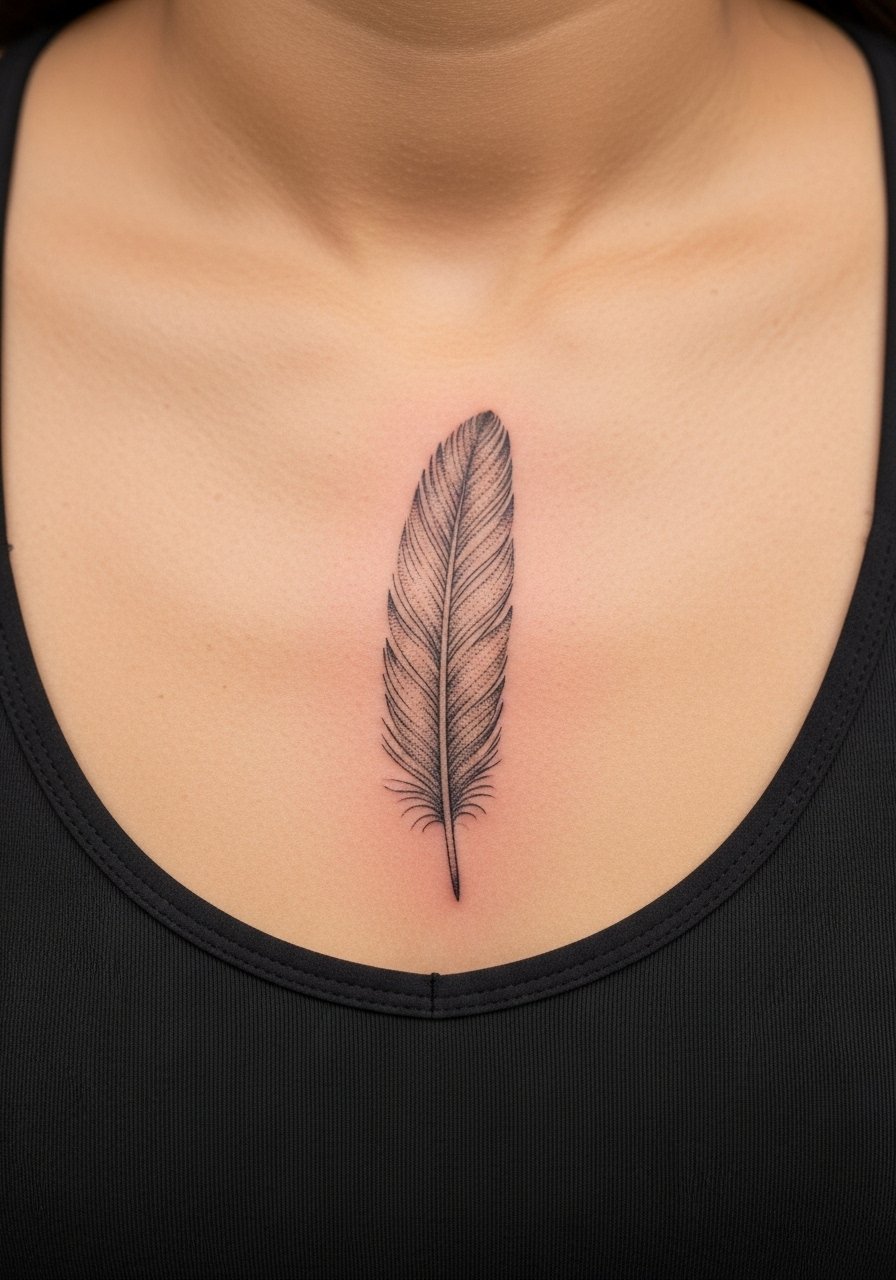
A feather reads airy on the center chest and stipple work prevents heavy patches. In consult specify that the rachis, or central shaft, be slightly more pronounced so the feather keeps its silhouette as the edges soften with time. The sternum is sensitive and a single long feather often fits a one-hour session. The most common error is making barb detail too tight which causes blur. For the session wear a wireless bralette top that you can lower for access without rubbing the fresh ink.
11. Crescent Moon and Tiny Stars Vertical Stack
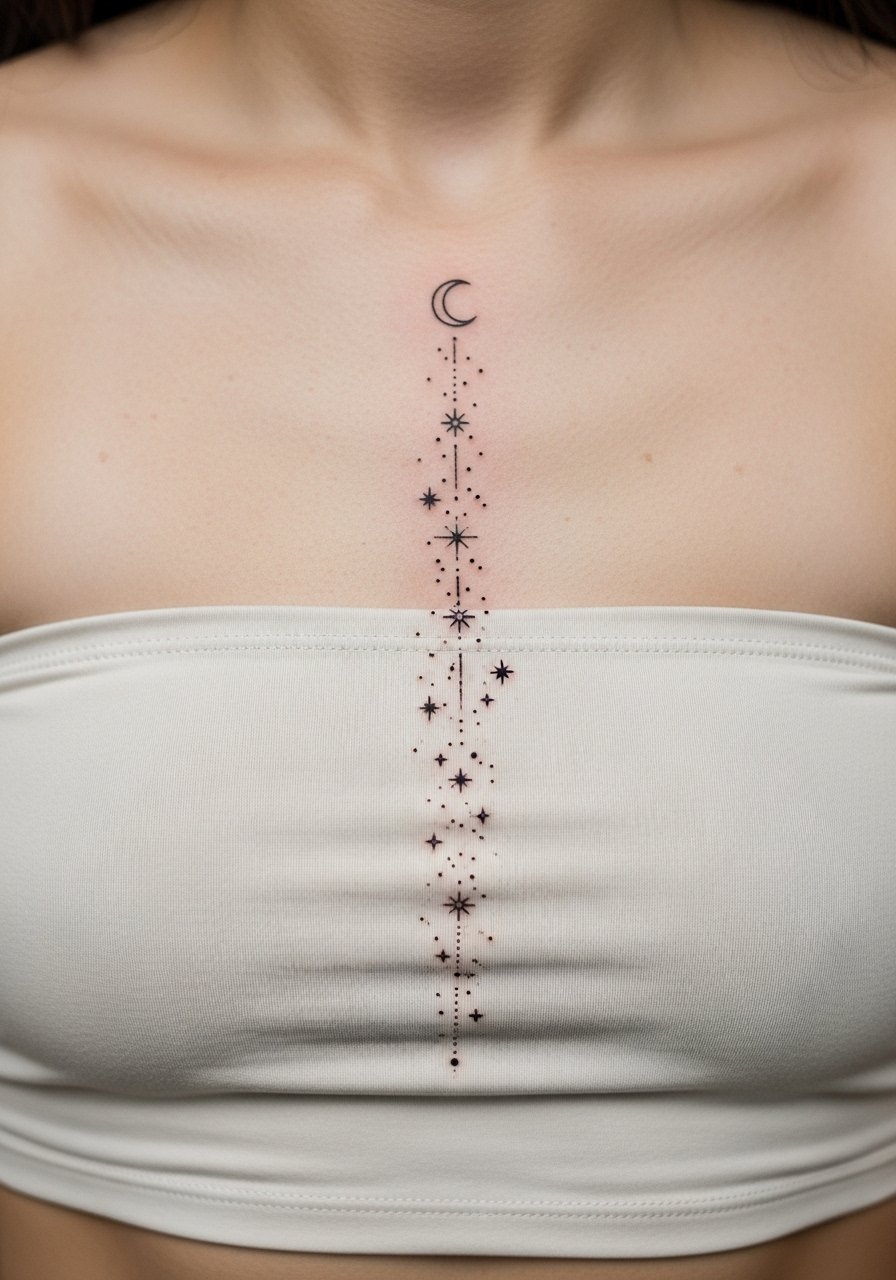
This vertical motif uses negative space well in a narrow zone. Tell your artist you want the moon line slightly bolder than the stars to keep the focal point stable over time. The session is short and tolerable for those worried about sternum pain. A common mistake is crowding the stars close to the moon which blurs. Styling pairs well with a thin chain pendant necklace that sits just above the top star for a neat frame.
12. Micro-Script Naming or Single Word
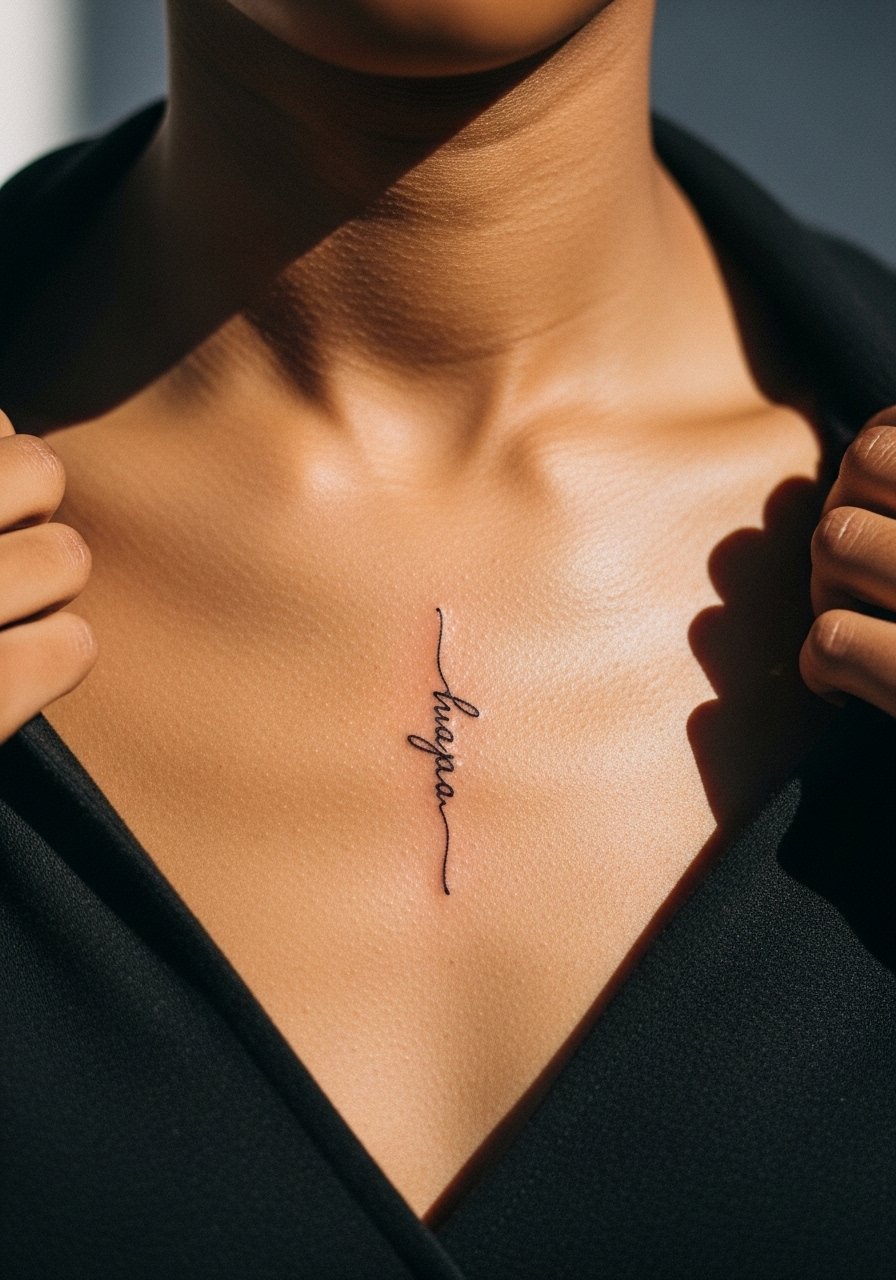
Text on the sternum reads intimate and small script can be beautiful if done at the right scale. Spell the exact lettering in your reference so the artist knows exactly how it should look. The main mistake is choosing a too-fine script in a high-movement zone. Request slightly heavier strokes and ask about touch-up frequency. For the session wear a loose button-up shirt you can pull to one side without friction.
13. Laurel Wreath Curve Nesting the Sternum
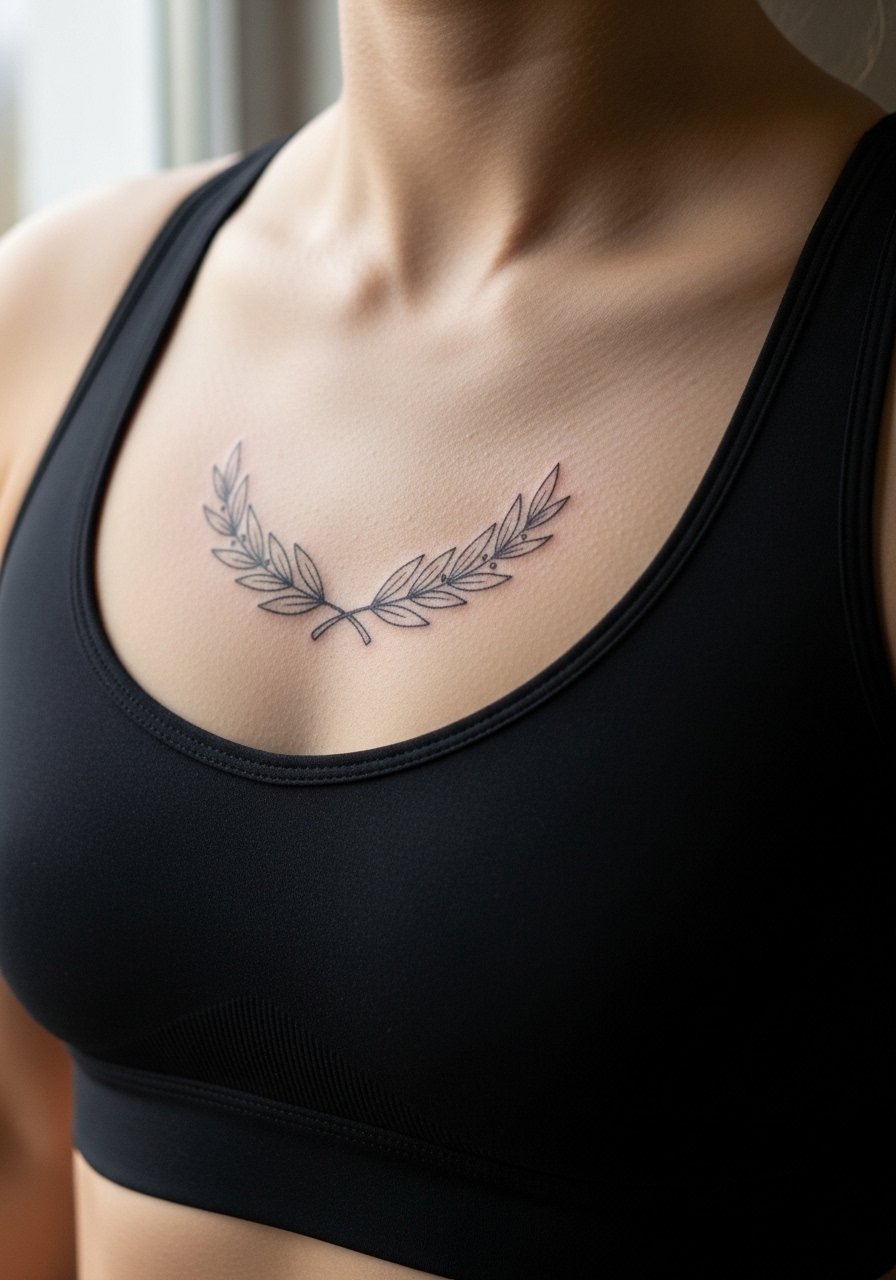
A laurel that wraps slightly under and around the sternum can feel classic without heavy detail. During consult explain you want open leaf spacing and a soft curve that follows breast movement. Many people mistakenly want identical leaves on both sides. Let one side sit a touch higher to look intentional and to age more naturally. One session usually handles this. For occasions choose a minimalist pendant necklace that sits above the wreath.
14. Tiny Dot-and-Bead Chain Down the Midline
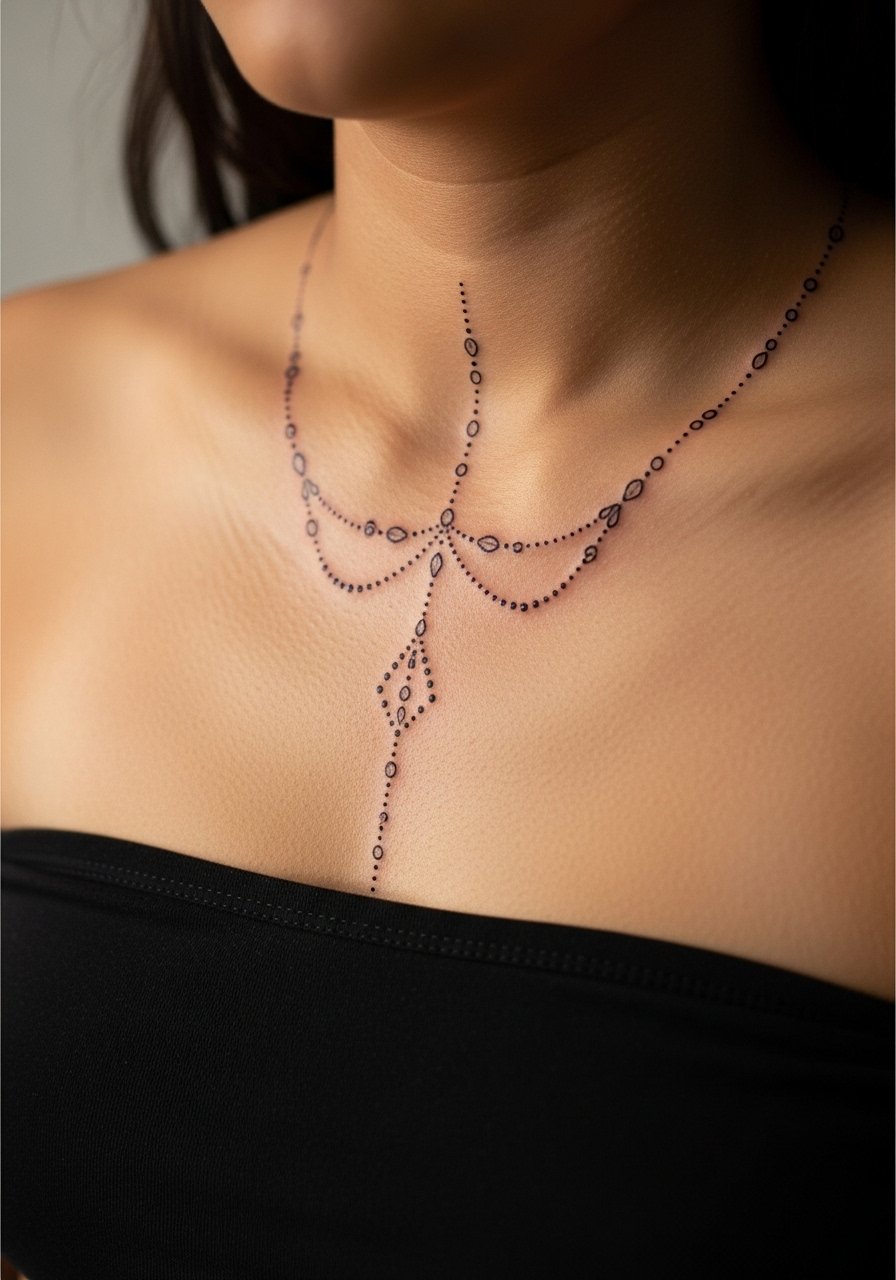
This beaded chain design reads like jewelry and it is forgiving because small dots allow breath between marks. Ask for staggered bead sizes during consult so the chain does not look like a single blurred line in a few years. The session is brief and the pain tends to localize. A common mistake is over-tight spacing which invites merging. Pair with a thin chain necklace if you want layered jewelry without competing for attention.
15. Abstract Brushstroke That Follows the Curve
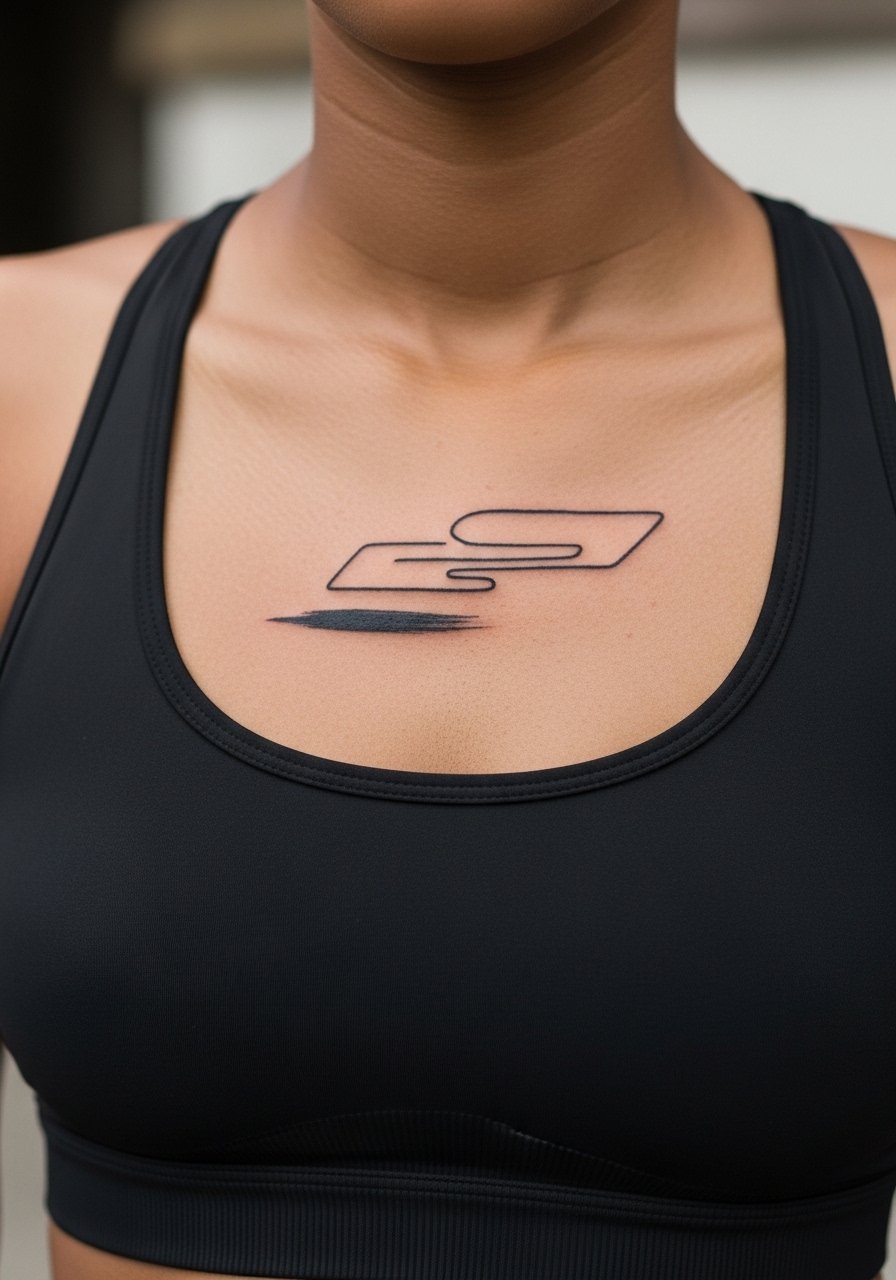
Abstract forms can read modern and hide small inconsistencies because they are intentionally irregular. Tell the artist you want intentional gaps and textured edges instead of a single continuous stroke. The controversy with abstract strokes is durability; some artists prefer bold blocks while others recommend softer strokes to avoid heavy scabbing. Name both views and decide which look you want. Sessions are quick. For showing it off try a plunging halter top that frames the stroke.
16. Single-Stem Rose with Open Petal
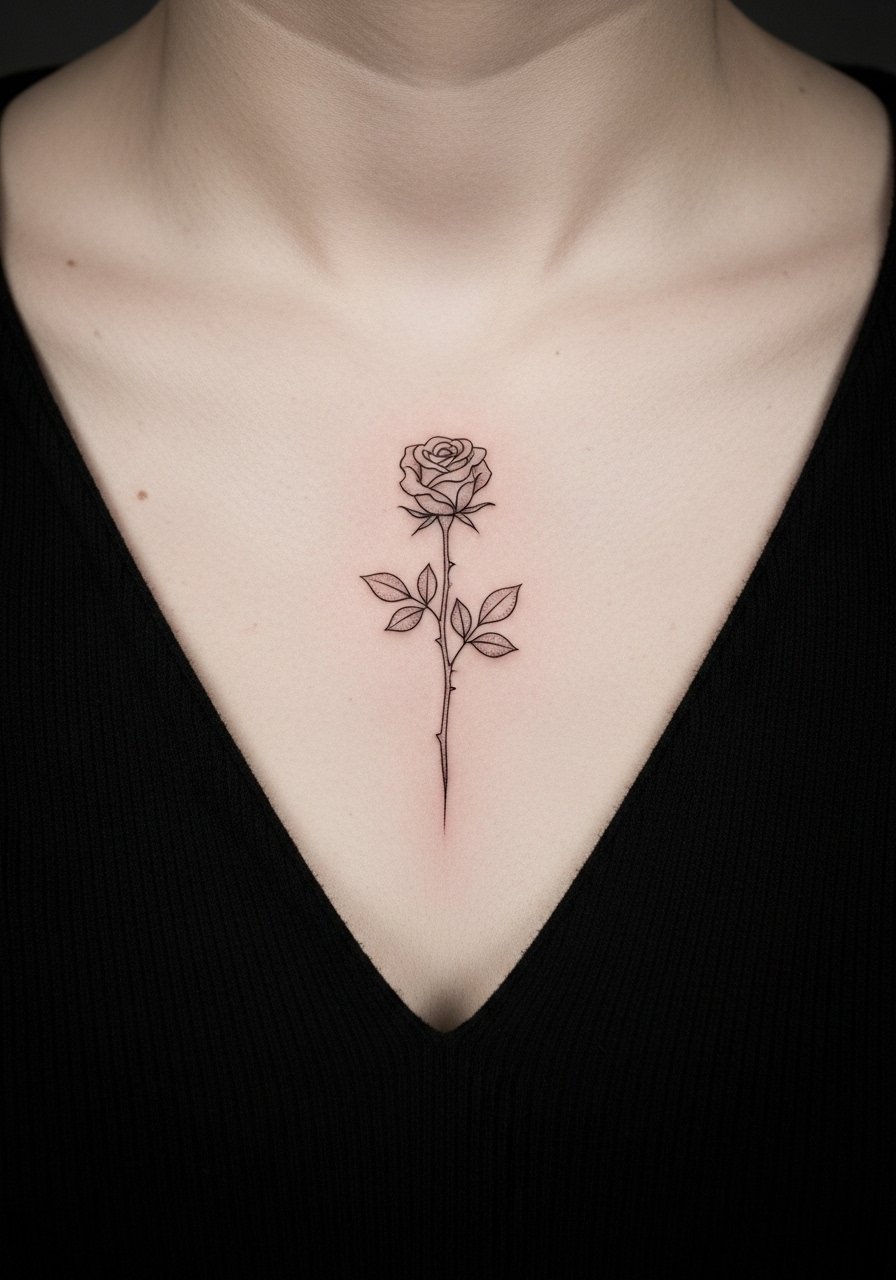
A single rose stem reads classic while staying compact. In consult ask for petal outlines with light internal dot shading rather than solid fills. The common mistake is asking for heavy color in a small rose which fades unevenly on the sternum. Expect one session for a black-and-gray stem. For the appointment wear a loose button-up shirt that can be shifted without rubbing.
17. Mirrored Dotwork with Tiny Crescents
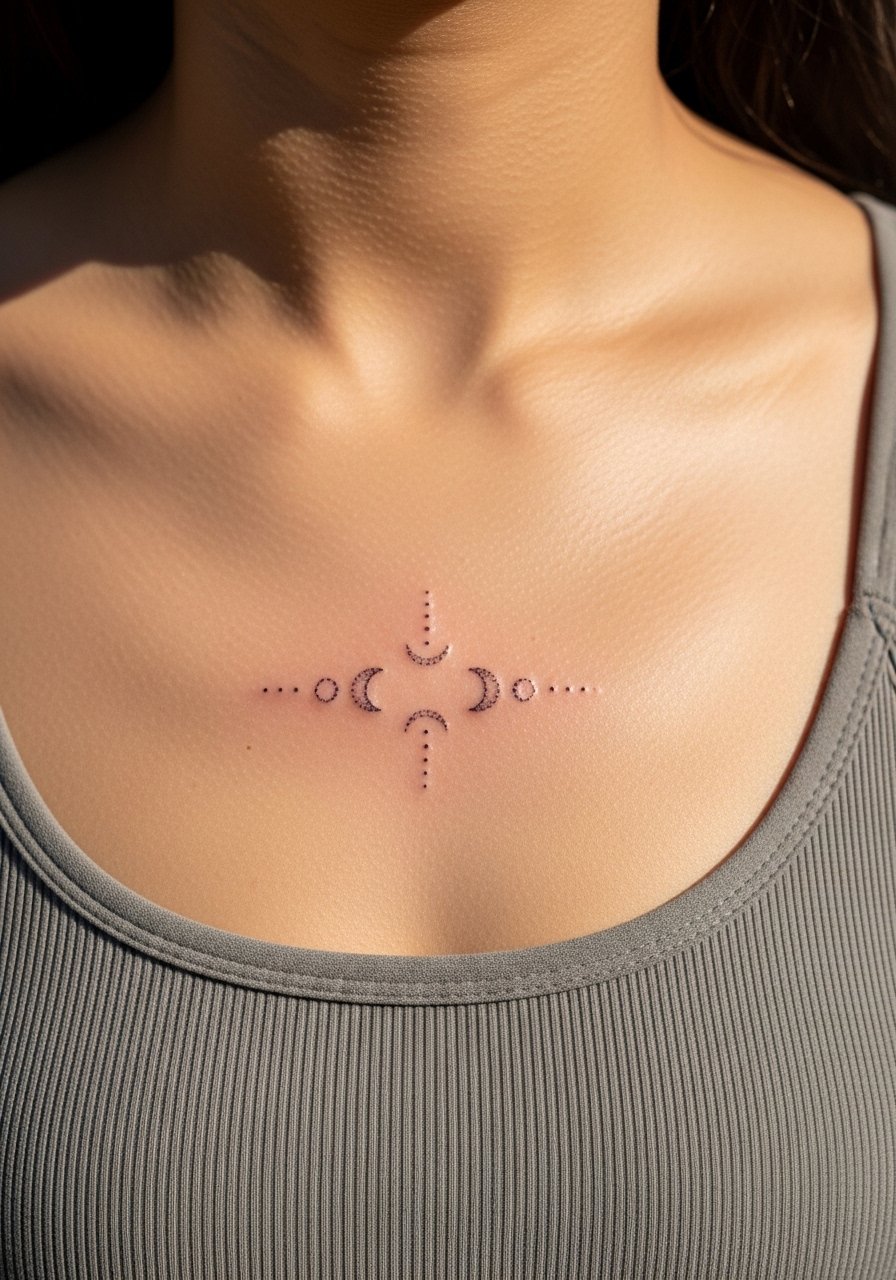
Mirrored dotwork adds quiet symmetry and can sit above the sternum like jewelry. Ask the artist to use varied dot density so the symmetry feels natural and does not become a heavy gray patch. Small crescents need breathing room to avoid merging. This is low-pain and often one short session. For nights out a thin chain pendant necklace can accent the symmetry without competing.
18. Minimal Arrow Pointing Down the Sternum
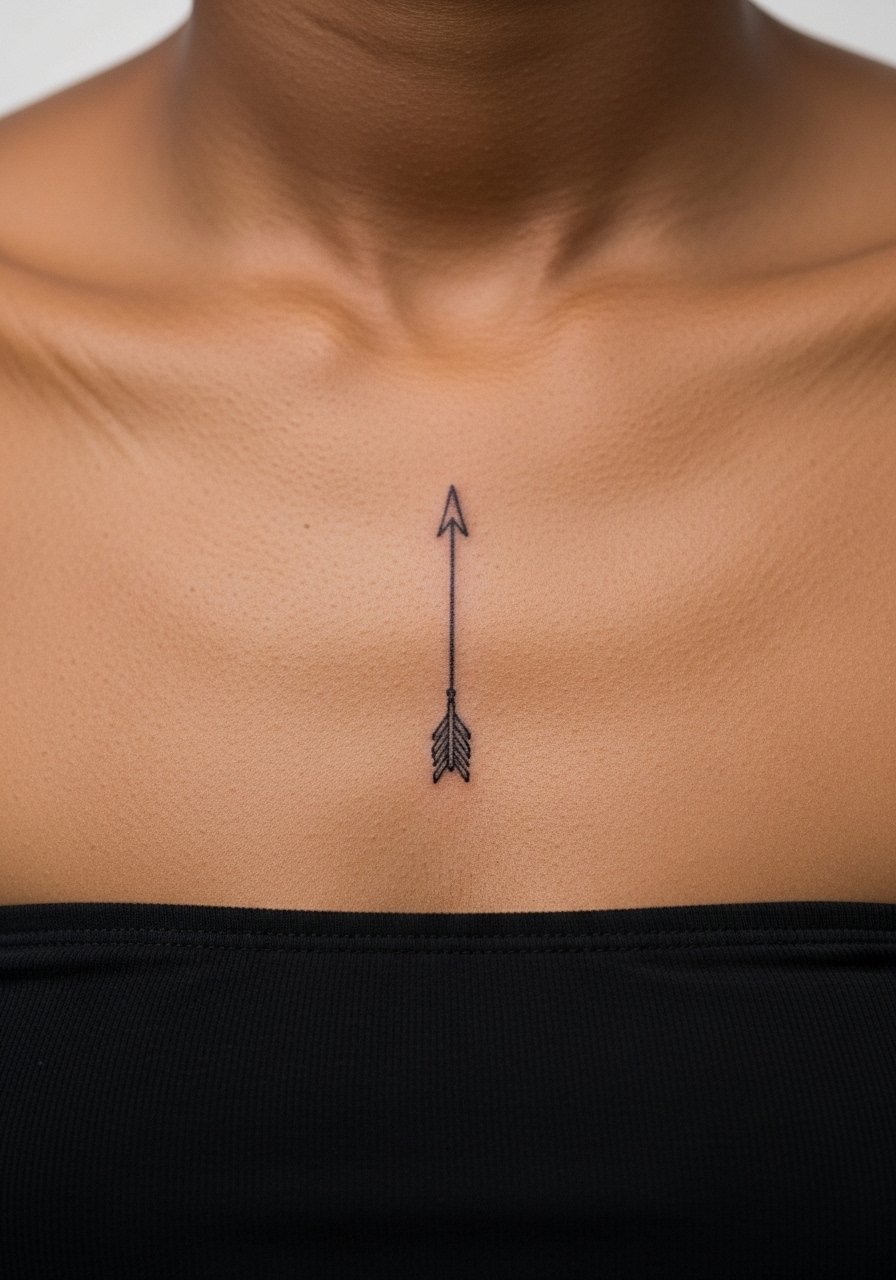
Arrows are simple and strong in narrow vertical zones. When you consult, say you want the shaft slightly thicker than the tip so the arrow retains definition as the edges soften. The main mistake is choosing a scale too small for a midline area. A short arrow is a one-session job and tolerates touch-ups at year two. For the session choose a wireless bralette top to avoid underband pressure afterward.
19. Tiny Compass or North Star Micro
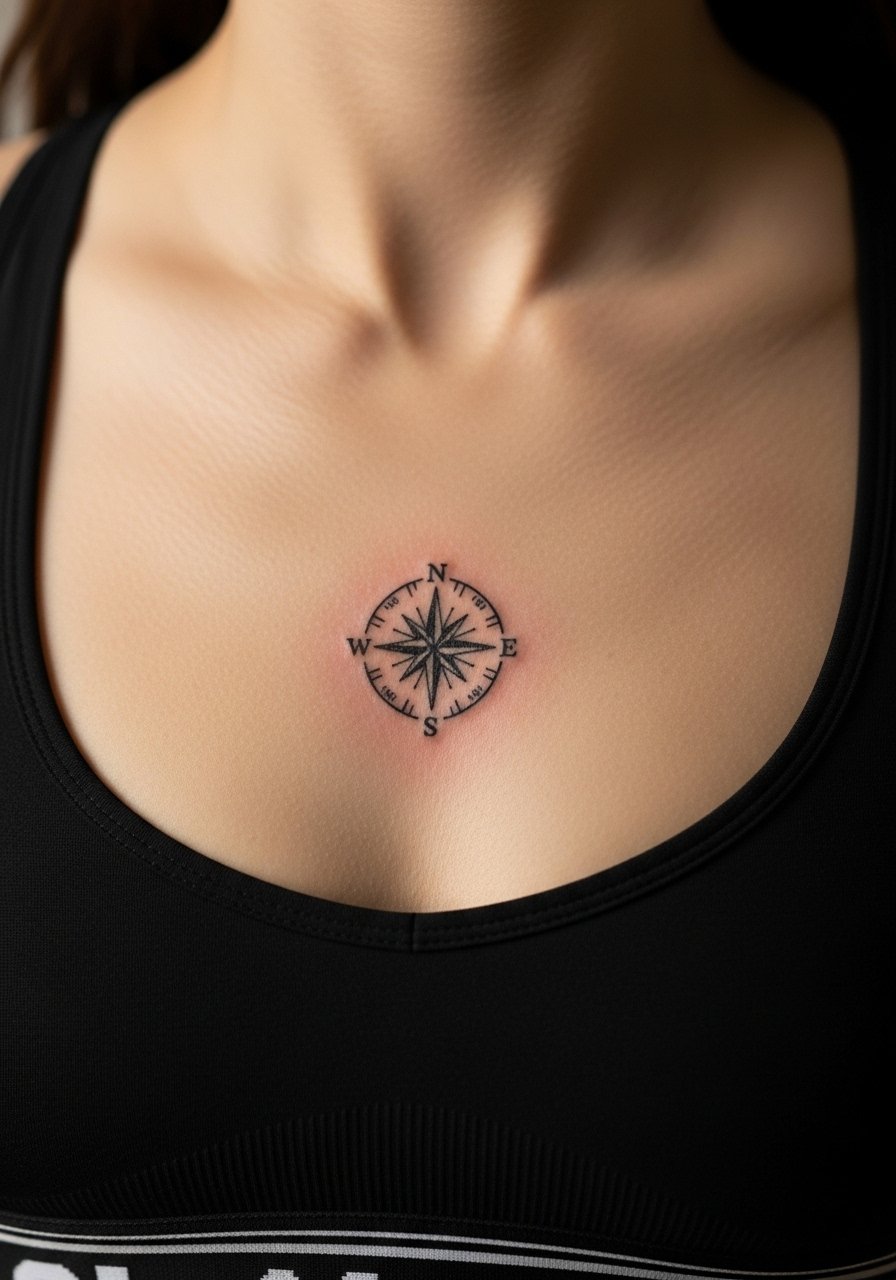
Micro compasses can be meaningful without being large. Request slightly bolder cardinal points in the consult so the compass reads clearly at two years. A common error is asking for thin micro-details that fade into dots. Keep the design compact and balanced. One short appointment usually covers it. For showing it off a minimalist pendant necklace gives a neat frame.
20. Botanical Asymmetry Around One Side of the Sternum
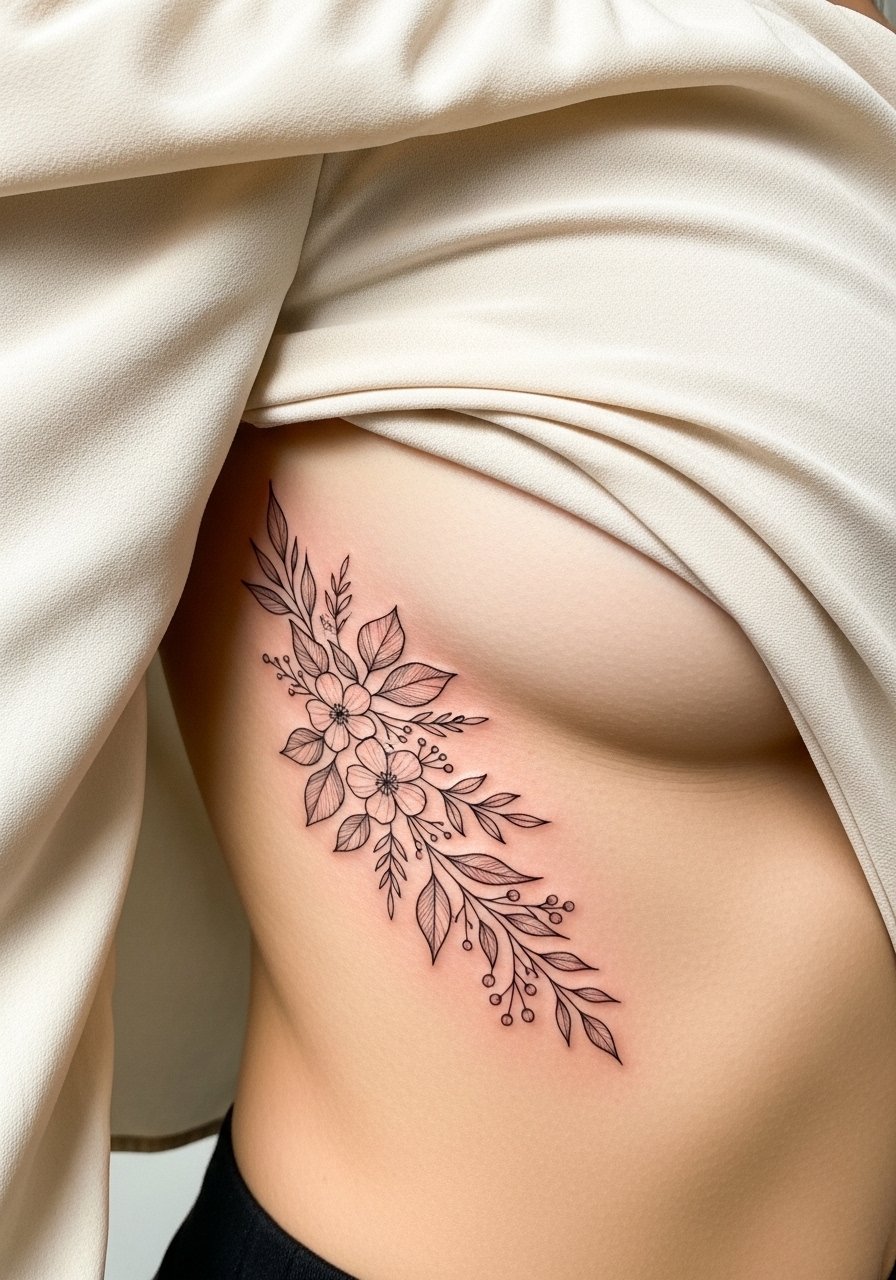
This asymmetrical wrap was one of the under-covered options I saw in galleries. The advantage is standout flow without demanding symmetry. Tell your artist you want the heavier elements on the wrap side and airy leaves toward the center so the piece reads like movement. The downside is potential distortion if breasts change size significantly, so prioritize flexible curves over rigid geometry. Session length varies. Style it with an off shoulder blouse to emphasize the asymmetry.
21. Baroque Ornamental Plate Framing the Sternum
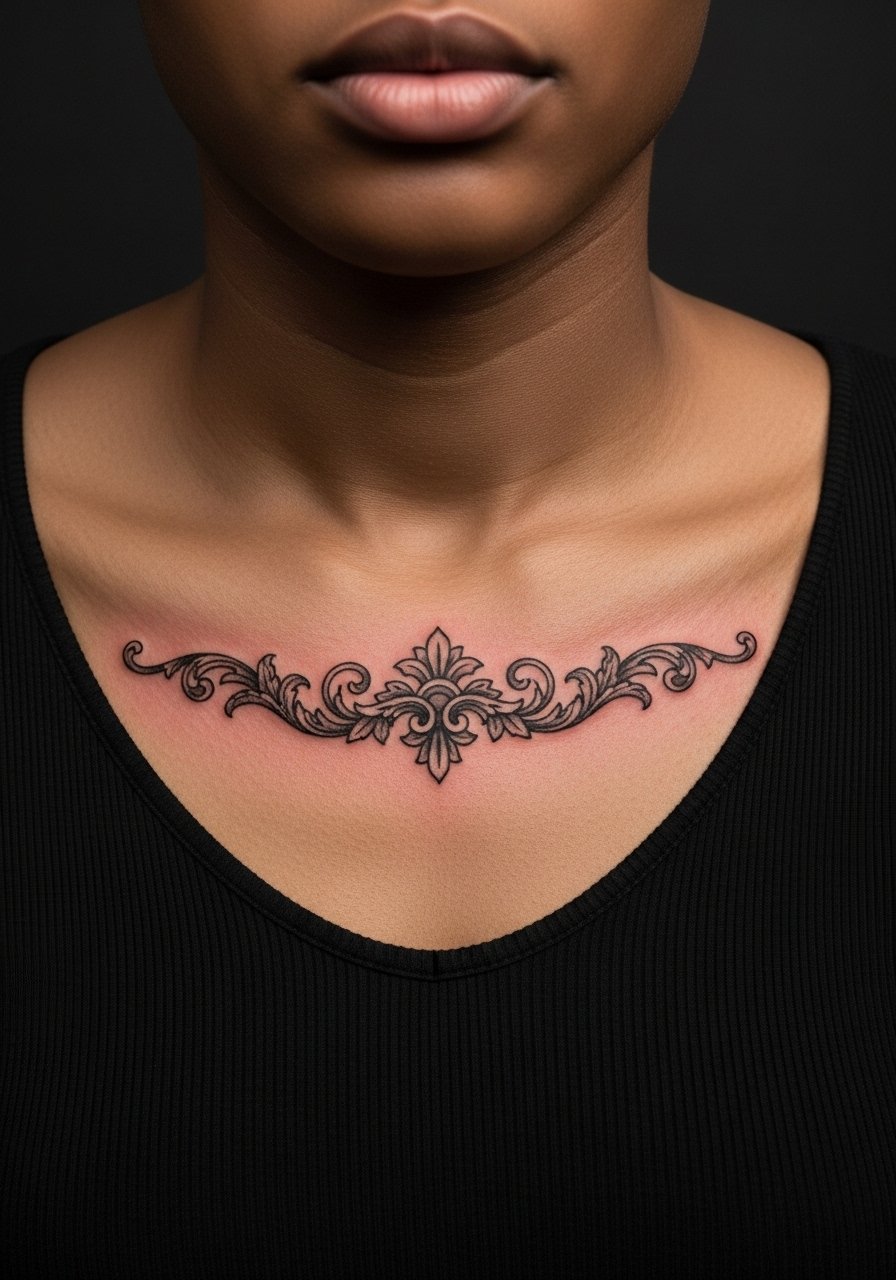
An ornamental plate reads antique and formal when scaled correctly. Ask for open spaces in the filigree so the tattoo does not become a block of ink. The common misstep is requesting too many fine curls in a small area which later looks muddy. Multiple sessions may be required for dense work. For an evening out, a plunging halter top pairs with the frame without hiding it.
22. Art Nouveau Linework Accent on the Sternum
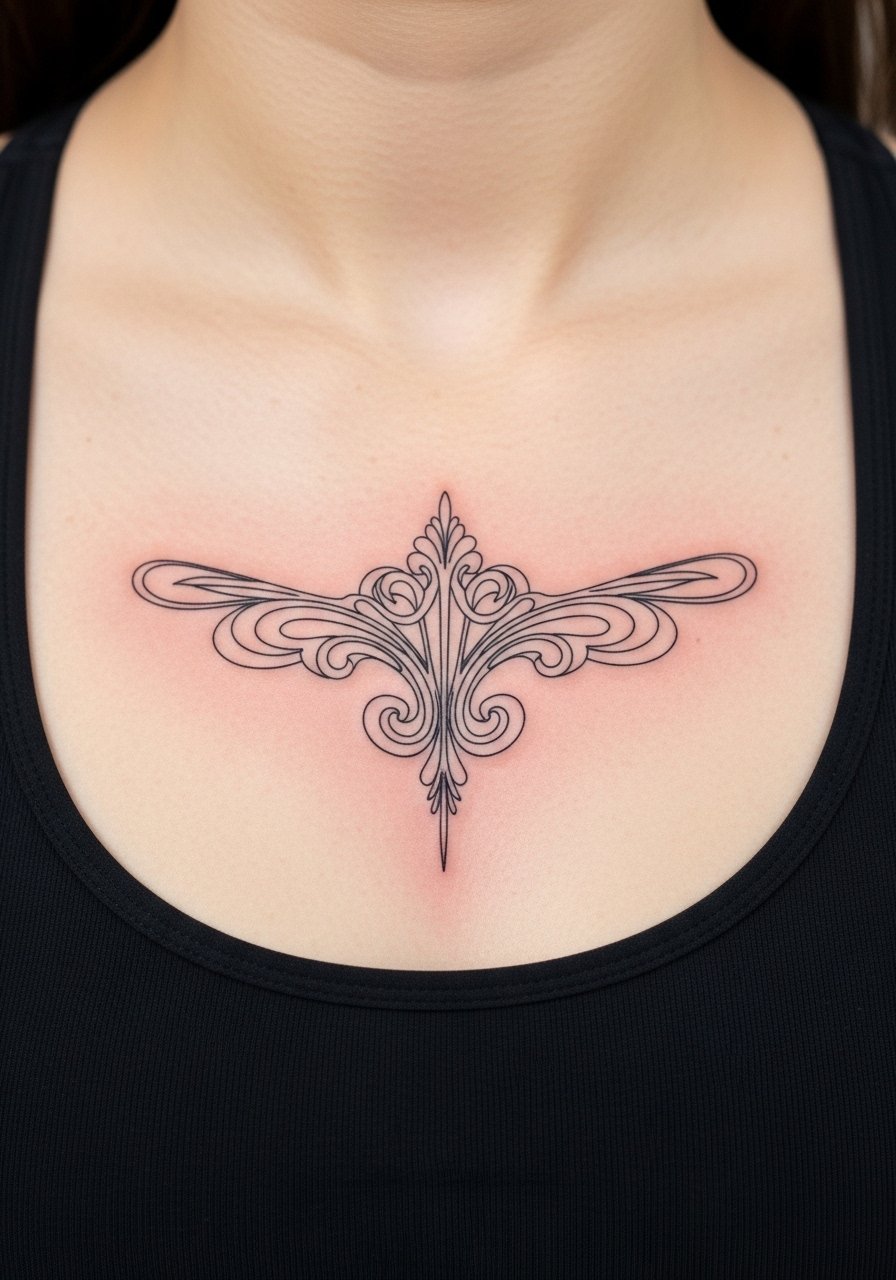
Art nouveau curves complement the chest anatomy if the lines are given room. Tell the artist you want flowing negative space between the main ribbons to avoid future merging. The mistake I see is compressing too many parallel lines into a narrow band. Sessions are typically single and gentle on the needle. For the session wear a loose button-up shirt so you can move it without pressure on the fresh ink.
23. Tiny Lock and Key Pair Split Across Sternum Line
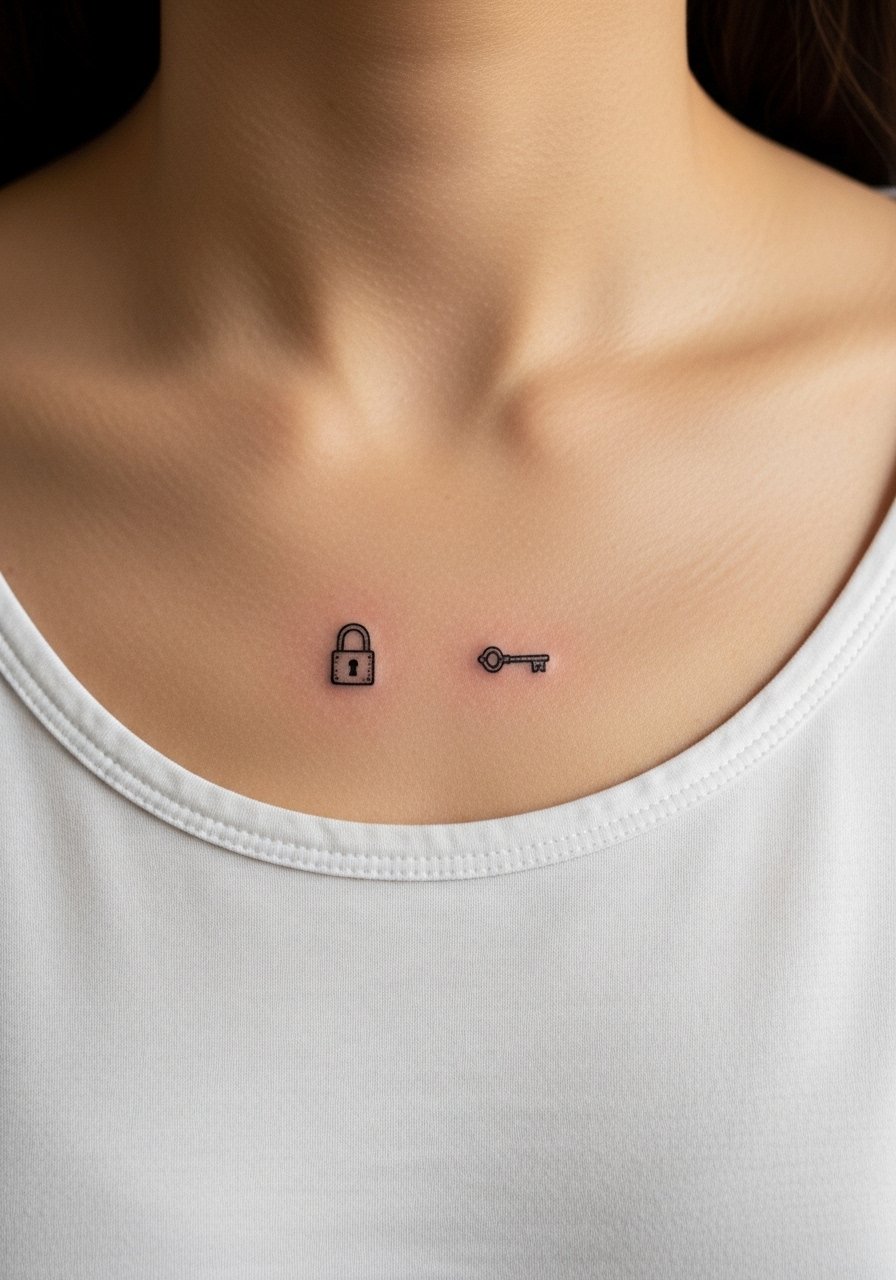
Split micro motifs are playful and work when placed with precise spacing. In consult specify the exact distance between pieces so they do not read as one shape later. The common error is making them too small or too close. This design is low-pain and often a single short session. Pair with a thin chain necklace or leave it bare for intimacy.
24. Single Teardrop Drop Under the Sternum
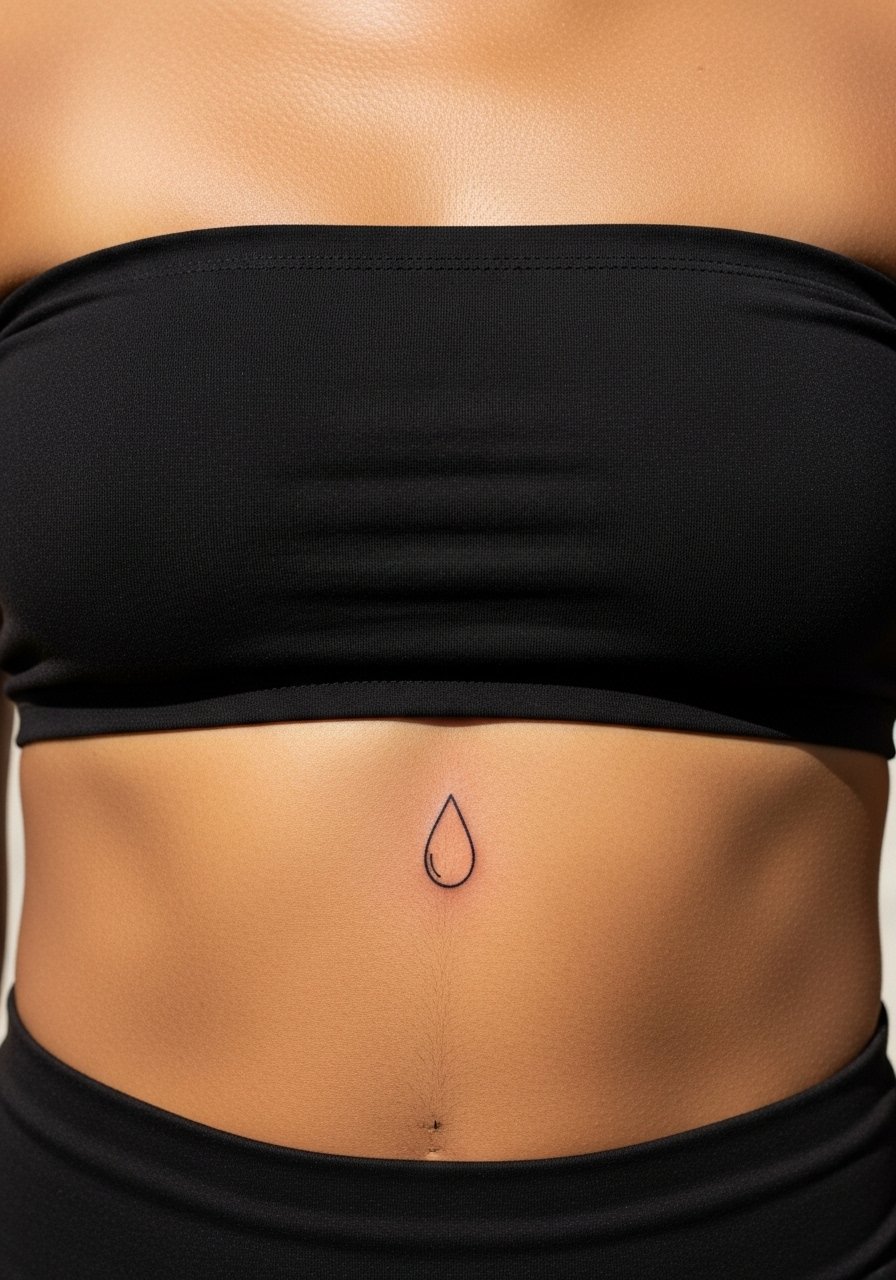
A lone teardrop is understated and holds up well because it is a simple silhouette. Ask for a slightly fuller fill rather than hairline edges so the teardrop keeps its shape as skin shifts. This is a very short session and tolerable on sensitivity. A common mistake is adding too many nearby dots which can dilute the focal shape. Keep jewelry minimal so the drop reads as the center.
25. Tiny Sunburst That Radiates Upward
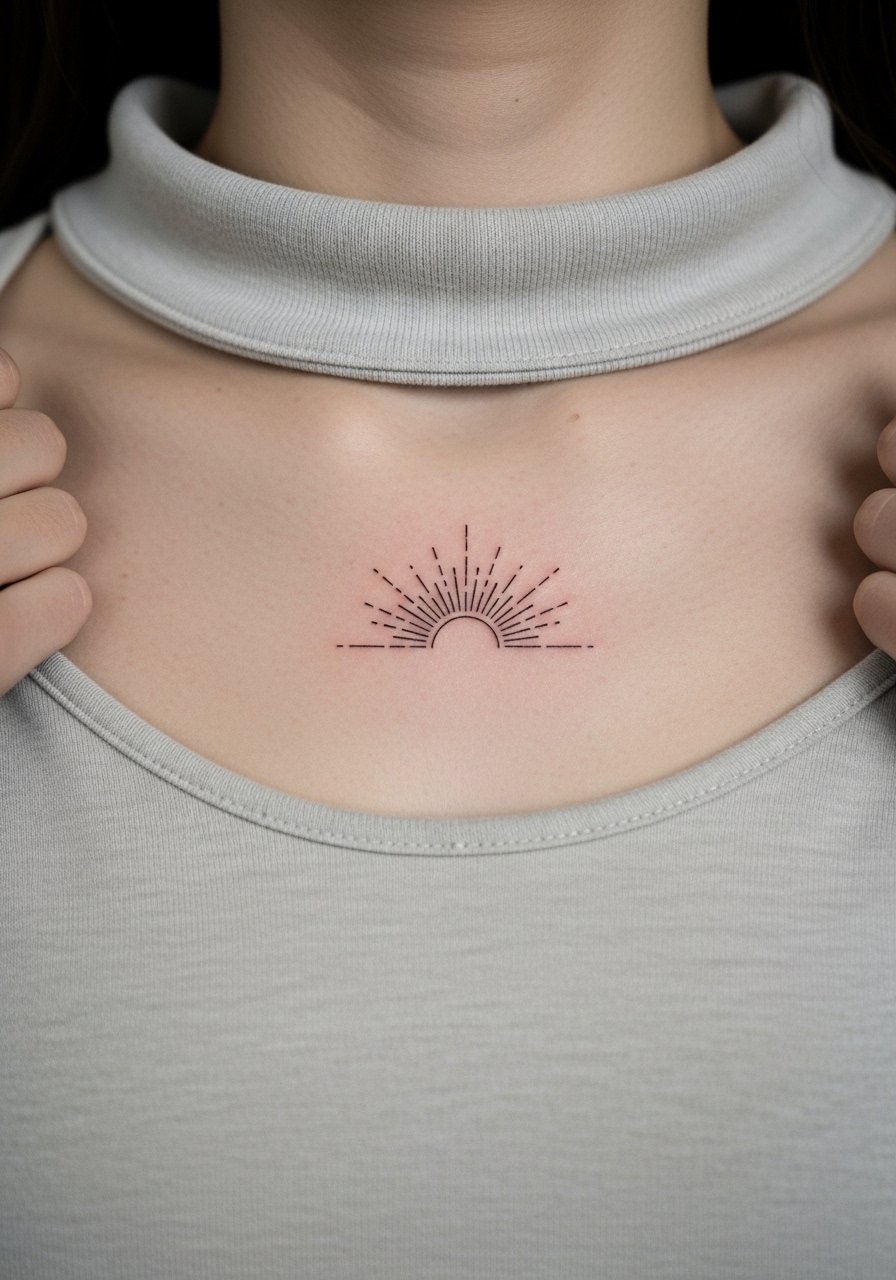
A sunburst that points upward toward the collarbone draws the eye without needing mass. In consult indicate ray length limits so the rays do not creep into crowded areas. The main issue is over-extending rays which can become uneven with movement. This is quick to tattoo and ages predictably. For framing pick a minimalist pendant necklace that sits just below the collarbone.
26. Phases of the Moon Vertical Series
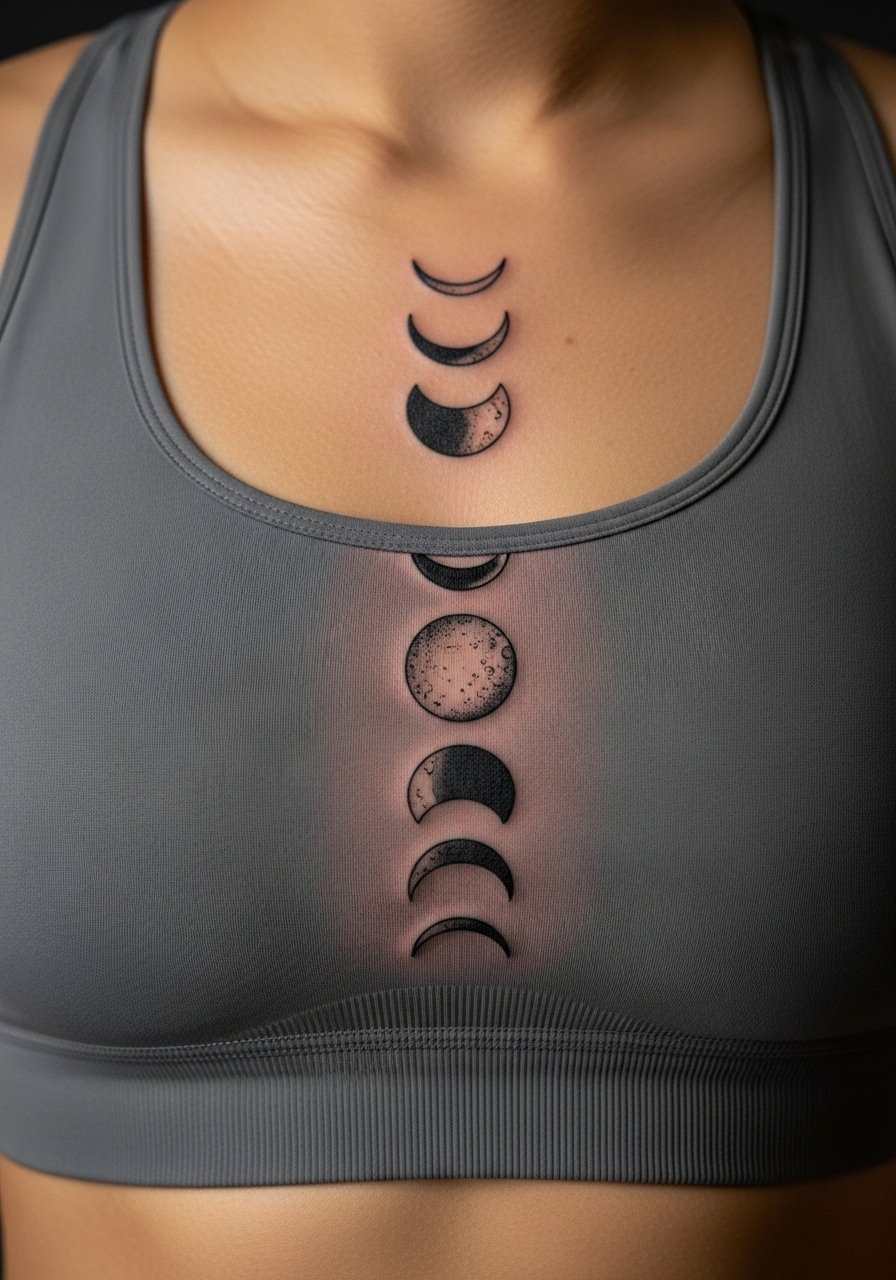
Moon phases are a natural vertical read for the sternum. Ask for consistent spacing and slightly varied dot fills to keep each phase distinct at year three. The frequent mistake is tight spacing and identical tones which merge. Plan for a single session. Style with a thin chain necklace that does not sit directly on top of the top moon.
27. Electrocardiogram Line That Hits the Sternum
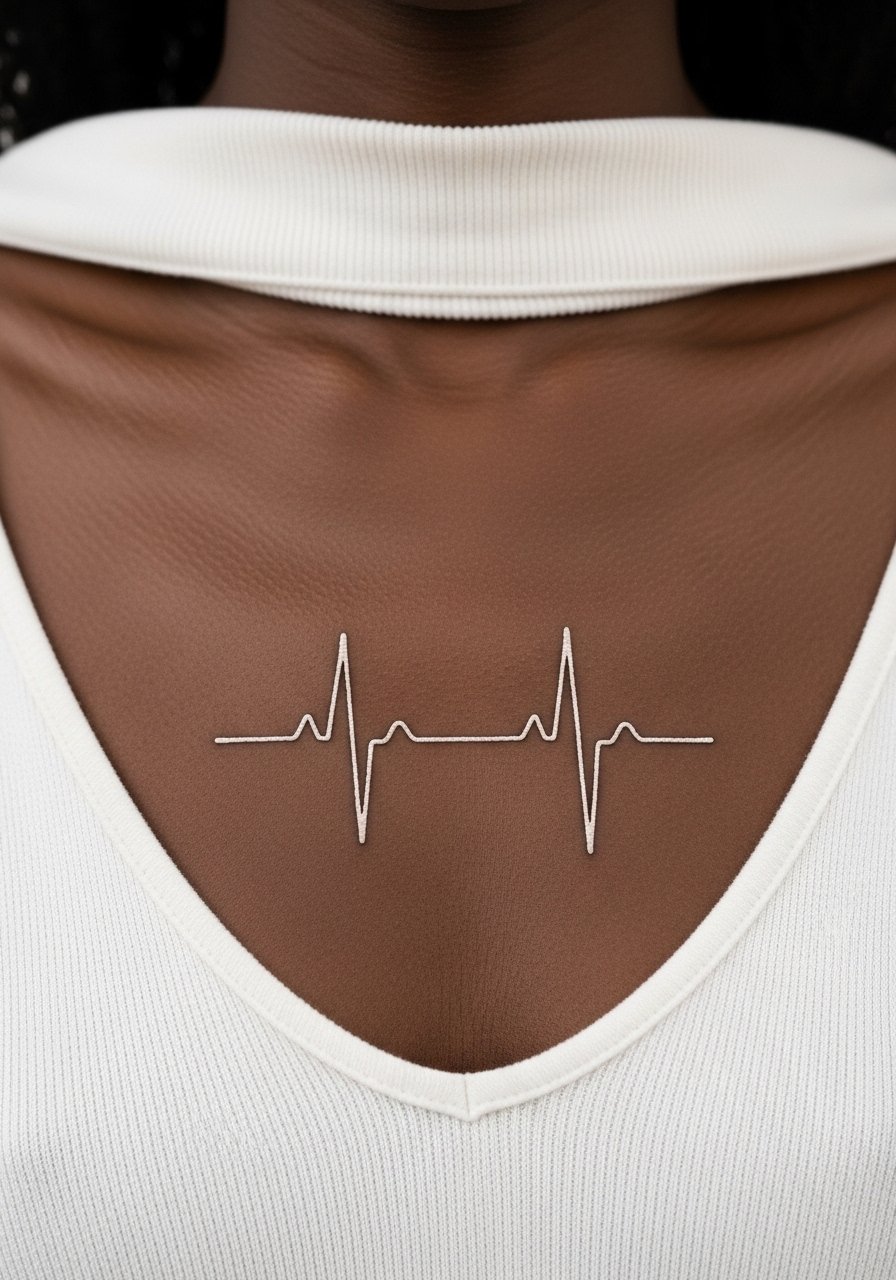
A tiny EKG line can read modern and minimal when executed with consistent line weight. During consult say you want slight variation in the peaks so the line does not look mechanically identical at a glance. The main mistake is making the peaks too close together which can blur. Expect a short session and easy styling. For the appointment pick a loose button-up shirt to move aside without pressure.
Frequently Asked Questions
Q: How painful is a sternum tattoo compared with side rib work or under-bust pieces?
A: Sternum work feels sharp at the center because the skin lies over bone. Side rib work often spreads that discomfort across a larger surface so it can feel different. Under-bust areas can be tender near the fold. Pain varies by person and by session length. If you are nervous consider numbing options and book shorter sessions so you can pause between passes.
Q: Will a fine line design between the breasts distort when I am nude or if my breast size changes?
A: Artists split on the exact approach. One camp argues that centerline pieces accentuate curves and hold if the design follows anatomy. The other camp cautions a midline design risks distortion with larger fluctuations. The short answer is it depends. Test placement nude during consult and ask the artist how they scale a design for your body to reduce distortion risk.
Q: How small is too small for detailed dot work or script on the sternum?
A: If the element is under half an inch with tight detail it risks merging into a smudge at year two. I recommend slightly larger spacing and bolder key lines for longevity. Ask your artist to draw the design on your skin and step back to check legibility at arm's length before finalizing.
Q: What should I wear to the session for proper access and comfort?
A: For sternum or under-bust work pick something you can adjust without rubbing the fresh ink. Good options are a fitted sports bra or a loose button-up you can pull aside. Avoid tight underbands that press on the area once the session ends.
Q: How often do sternum fine line tattoos need touch-ups?
A: Expect touch-ups more often than for heavily saturated work. Many fine line sternum pieces benefit from a touch-up around year two to three depending on sun exposure and skin type. Discuss a realistic touch-up timeline with your artist before booking.
Q: Are there designs you would avoid for the sternum because they rarely age well?
A: Very dense black fills or extremely tight micro-detail tend to age poorly in this zone. The ones that struggle most are tiny, highly detailed pieces packed into a small circle. Prefer spacing, stipple shading, or slightly bolder anchor lines to improve longevity.
Q: Where should I look to find artists experienced with sternum work if I do not want to name anyone here?
A: Use hashtags like #SternumTattoo and #BetweenBoobsTattoo for style scouting. Search location tags such as "[city] sternum tattoo" and check portfolios on directories and forums. Ask to see healed sternum photos during consult and request an in-person placement test so you know how the design moves with your body.
