
Fine line trends dominate feeds right now, but placement and skin movement decide which designs last. Above-knee tattoos sit where fabric, muscle, and sun all meet, so choices that look great on a saved photo can behave very differently over five years. This list focuses on vintage moods that age with grace, and it starts with a design that proves placement matters just as much as style.
1. Hannya Mask Above the Knee with Traditional Color Accents
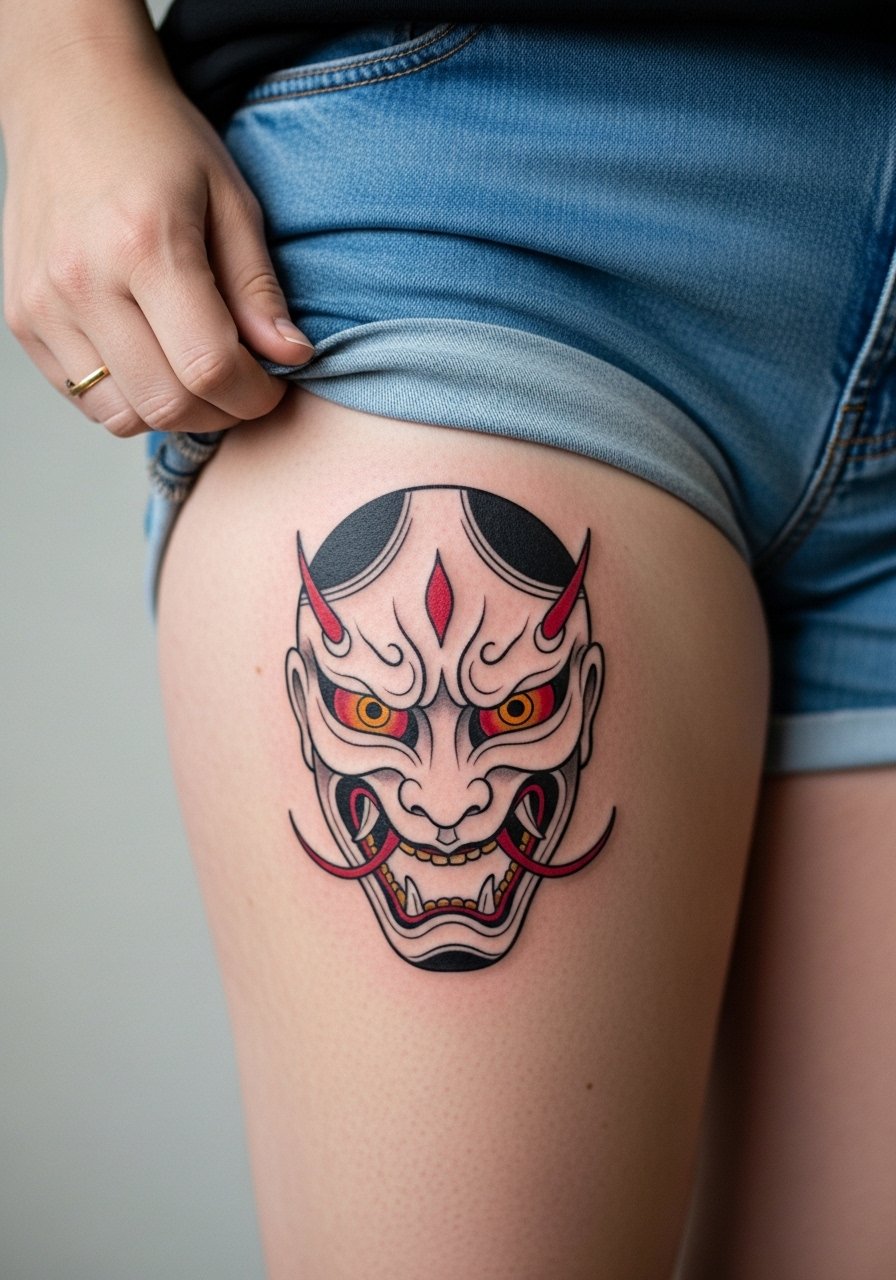
A Hannya mask plays with duality, showing both beauty and menace when placed above the knee. Recommend a medium scale so the horns and facial detail read without crowding the skin. In consultation say you want clear negative space around the eyes and teeth to avoid the dense areas merging over time. Fair warning, this placement can feel thumpy when the leg tenses, so expect moderate pain and two sessions for color and shading. Ask for bold outlines around the main forms to help the piece hold up, and plan a touch-up around year two to three. For showing it off, pair with high waisted denim shorts on sunny days so the mask sits framed by clean fabric lines.
2. Barbed Wire Wrap That Circles the Thigh
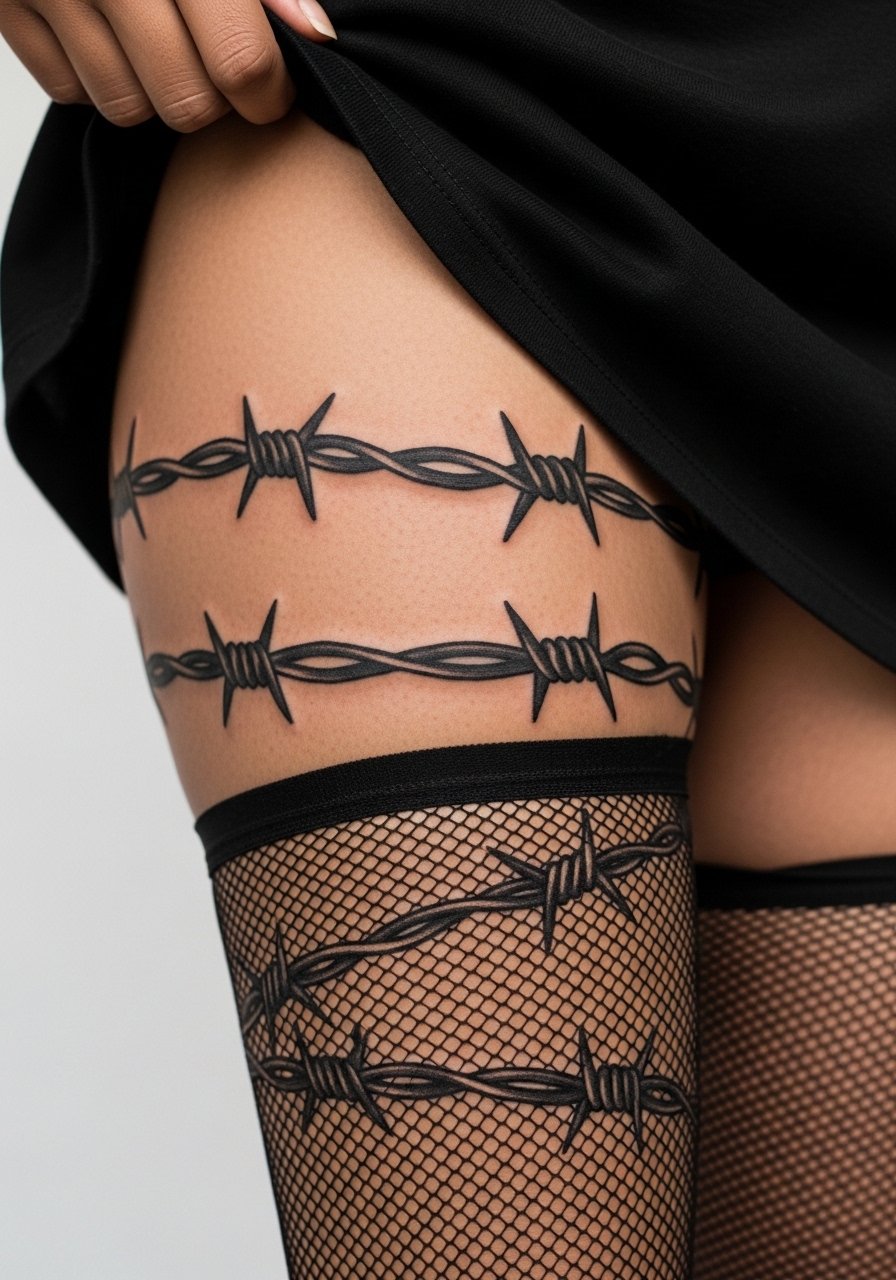
Barbed wire is a 90s nod that works as a true wraparound piece above the knee. The biggest mistake is making the wire too thin or too tight so the points blur into a single dark line with time. Tell your artist you want clear spacing between knots and small negative gaps around each barb. Session feel is quick but can sting more where the wire crosses bony edges. One session usually suffices for solid black, with a possible touch-up at year two if the wrap sees daily friction from clothing. Wear fishnet stockings and boots when you want the design to read as part of a deliberate vintage look.
3. Red Lace Garter, Neo-Traditional Thigh Band
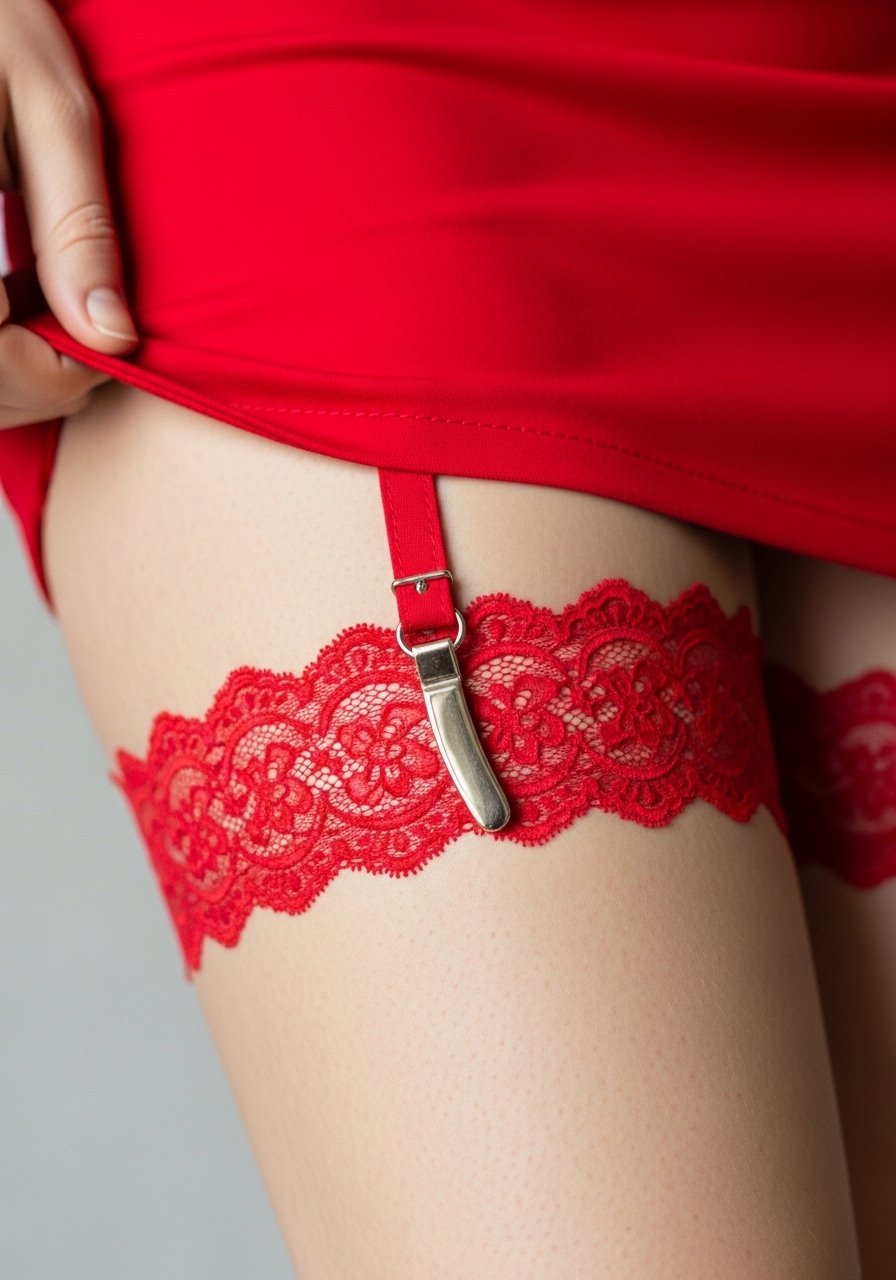
A red lace garter leans pin-up and confident without being literal. For longevity request saturated midtones rather than tiny highlights that disappear when the skin moves. The common error is over-detailing the lace so it looks muddled after healing. Ask for slightly wider threadwork and bold bordering lines to keep the motif readable at three to five years healed. Expect one to two sessions for color and small highlights, and some clients return for a minor color boost after two years. When you want to showcase this piece, pair it with a red mini skirt so the band becomes a deliberate styling choice.
4. Black and Gray Rose Garter with Thorny Edge
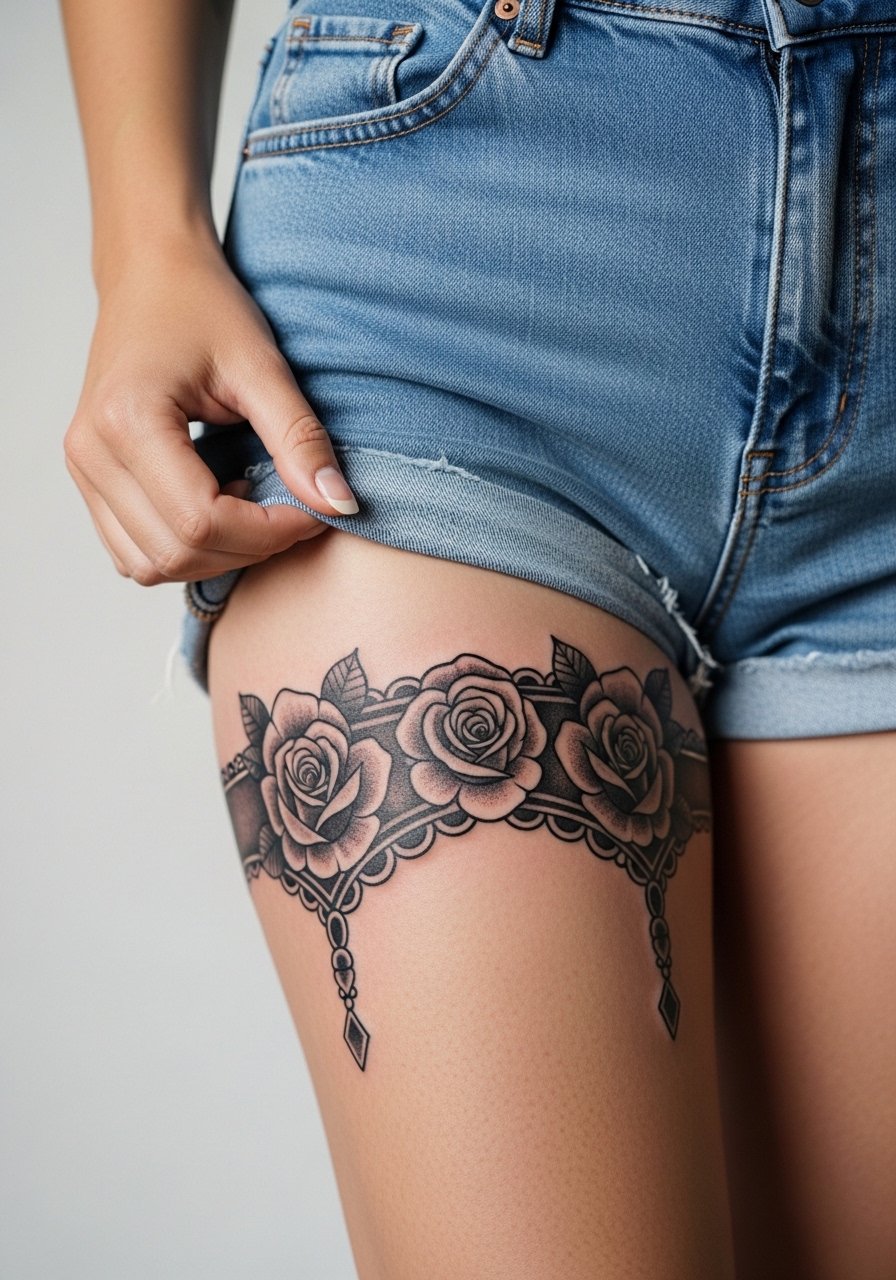
A black and gray rose garter mixes softness with a hint of rebellion. I tell clients to choose one strong focal bloom rather than a crowded cluster, that avoids the petals blending over time. During the consult ask for stipple shading behind the rose so the petals keep dimension without relying on tiny lines. Pain is moderate above the knee and shading can feel like warm scrubbing for stretches. This design ages well if saturation is even and negatives are left around the thorns. For nights out, leather boots and high waisted denim shorts frame the garter without competing.
5. Aztec Calendar Panel, Ornamental Above Knee
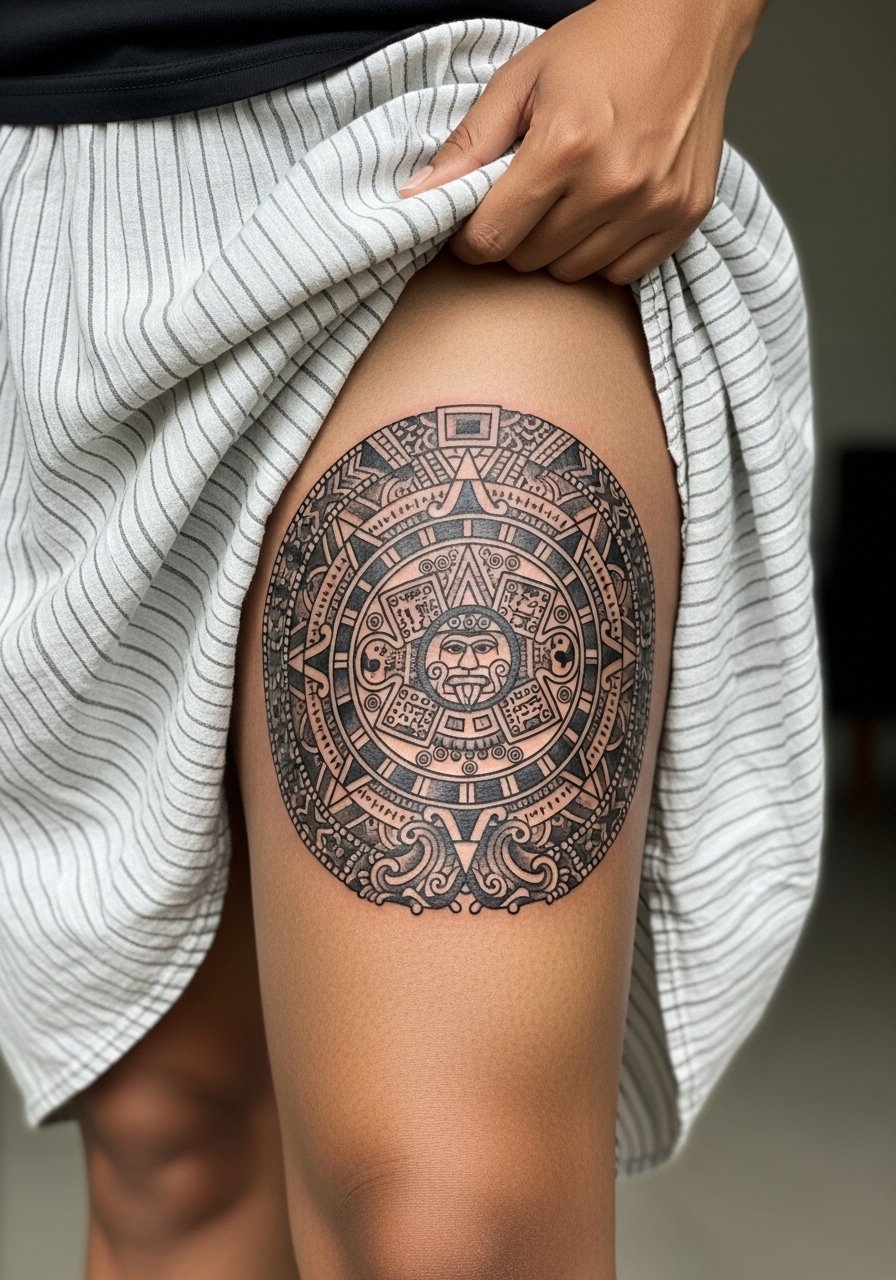
An Aztec calendar gives a bold geometric statement but needs room to breathe. The usual mistake is compressing too many symbols into a small patch. Ask for simplified negative spaces between concentric rings so the detail reads at a distance and after healing. Expect three or more sessions for dense linework and slow shading because fine geometry takes time. There is also a cultural angle to respect. Acknowledge the design's origins and consider adapting motifs rather than copying a sacred image exactly. Pair this with an earth tone a line skirt to let the geometry show without clashing patterns.
6. Mandala Knee Halo That Wraps Above the Knee
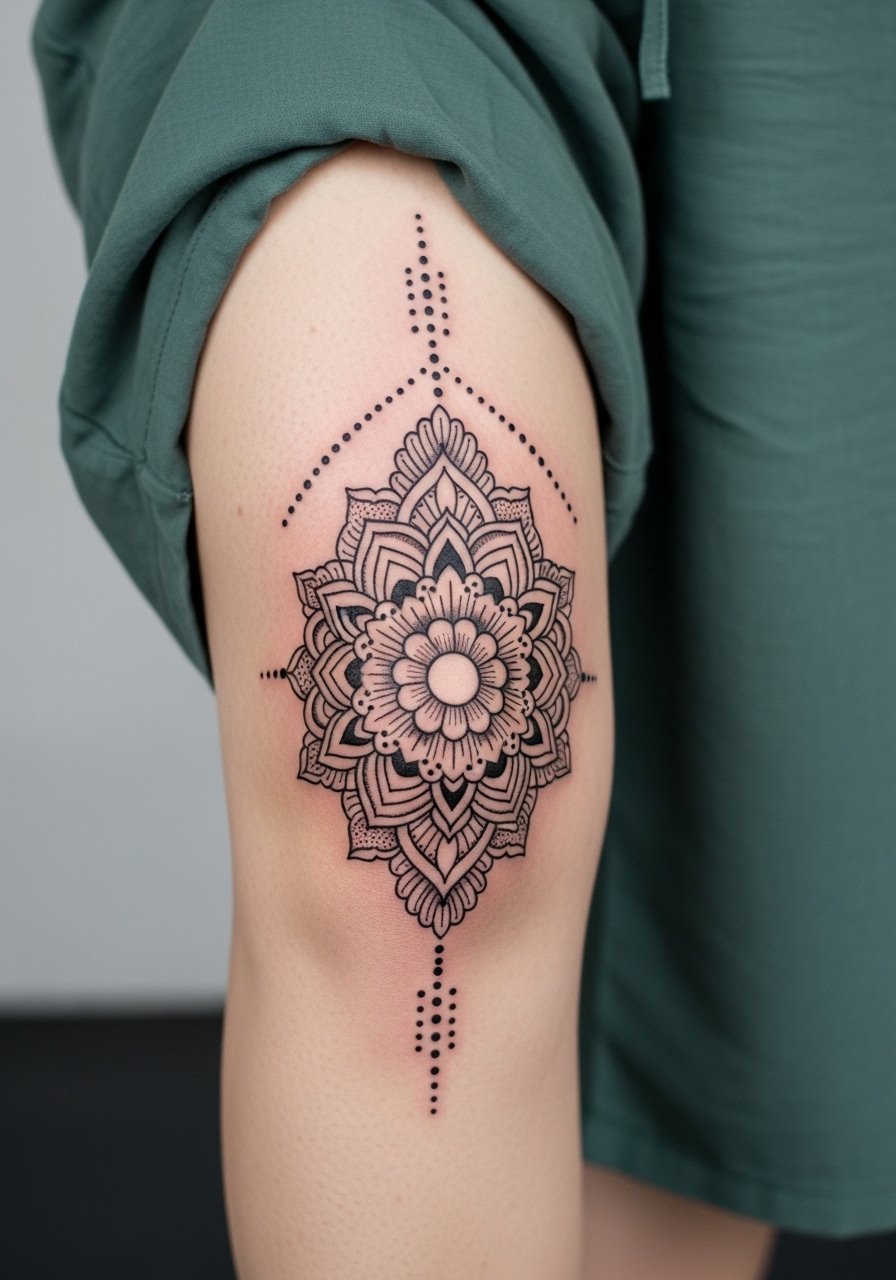
Mandalas read like a classic ornamental choice when scaled properly for the knee area. Small, dense mandalas often merge into a gray mass by year three. One camp argues that tight linework survives on the thigh because the skin is thicker. The other camp warns that the constant flexing at the knee leads to early softening. Both views have merit. When booking, ask your artist which spacing they use for knee halo pieces and why. Plan two sessions for the central motif and the surrounding rings, and expect stipple shading to retain texture better than continuous gradients. For a casual reveal, a pair of loose culotte pants rolled at the hem gives a neat frame without rubbing the tattoo.
7. Realistic Full Moon with Crater Shading on Side Thigh
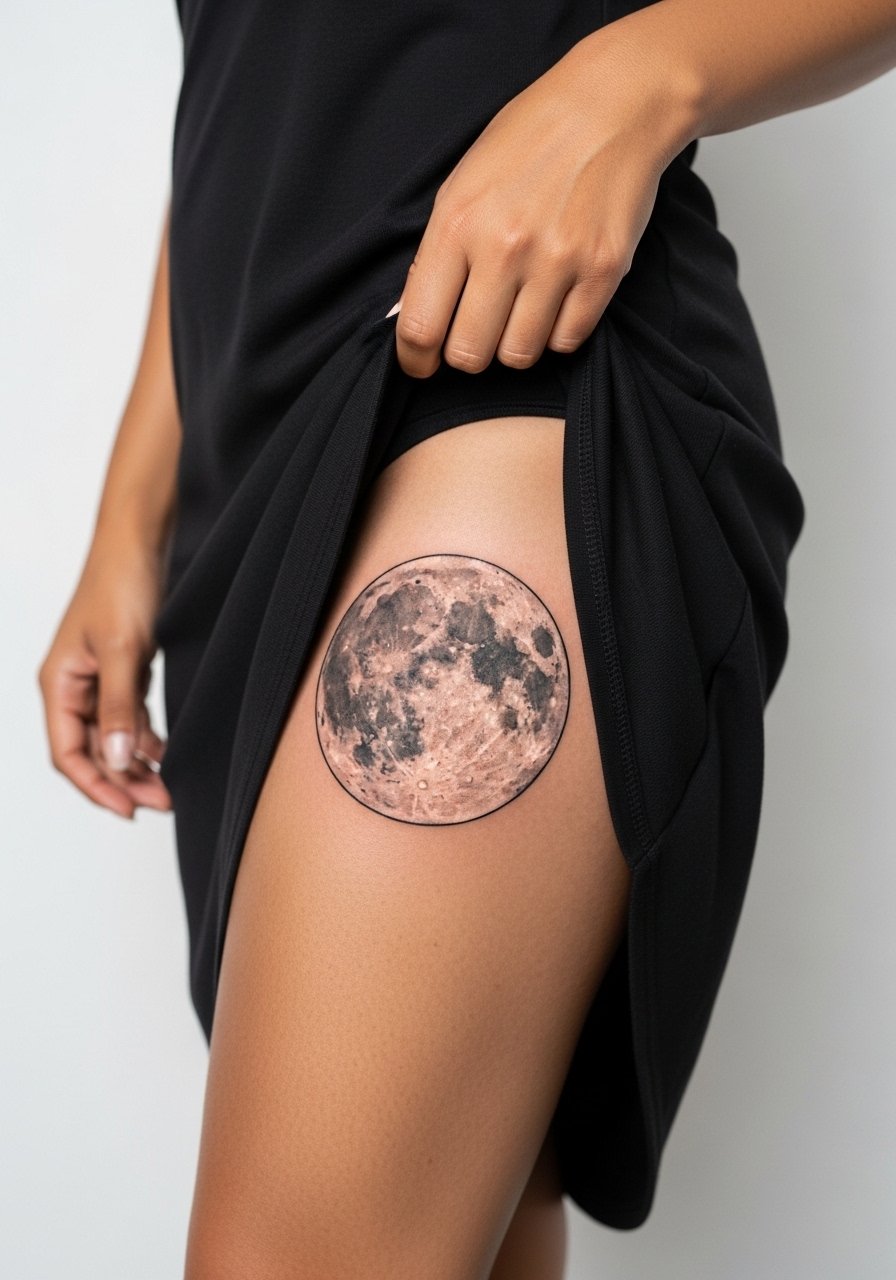
A micro-realism moon looks cinematic on the side thigh where the curve helps the round form read. The mistake is pushing too much micro-detail into a small circle so the craters lose definition. Say you want crater contrast rather than tiny surface scratches. Two to three sessions are common for depth and subtle gray blends. The session feels like steady buzzing with occasional pressure, especially when the artist layers shading. For evenings, an asymmetrical hem dress or rolled cigarette pants shows the moon without revealing everything.
8. Minimal Geometric Triangle, Small and Bold
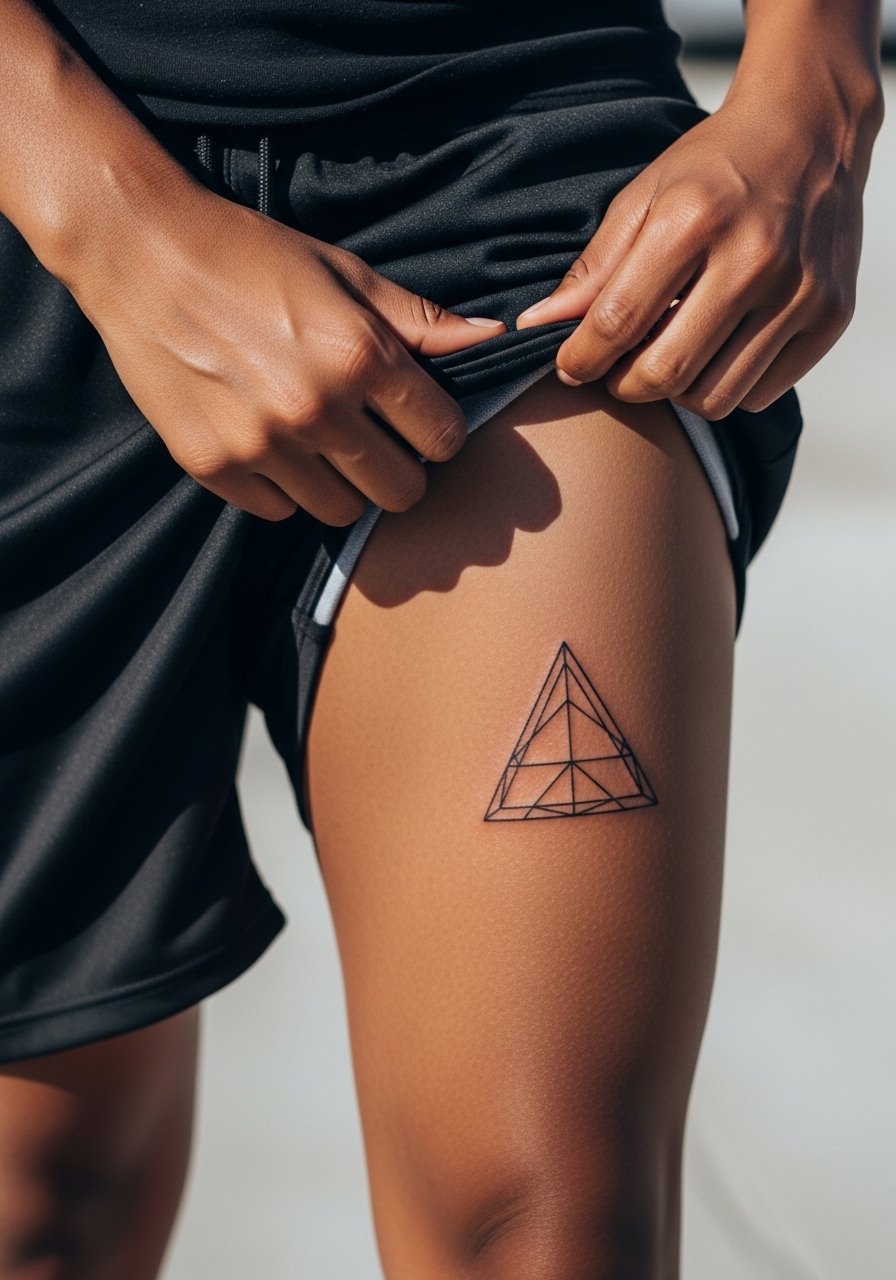
A simple triangle is an entry-level vintage motif that can age either very well or poorly. Artists split into two camps on minimal geometrics. One group says the thigh holds fine line because the skin is stable there. The other group cautions that tiny angles and thin lines can blur when the design is under constant friction. The truth depends on scale and line weight. I advise making the triangle slightly larger than you think and asking for consistent linework with room around each side. Session time is brief and pain is low. For the session wear bring baggy athletic shorts so the artist can access the zone without fabric bunching.
9. Vintage Pin-Up Silhouette That Sits Just Above the Knee
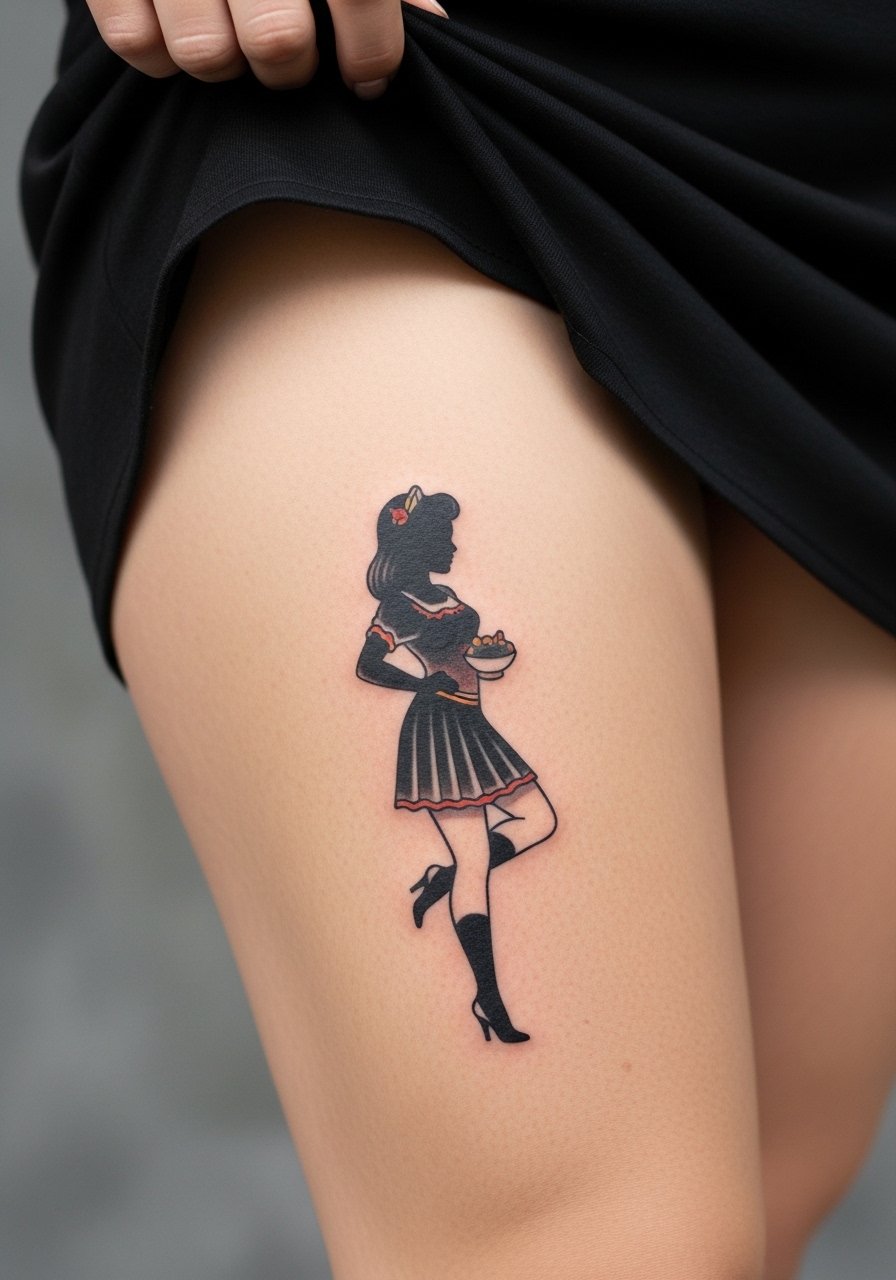
A pin-up silhouette reads classic when kept stylized rather than photo-real. Ask the artist to avoid tiny facial features when the piece is small. That detail is a common trap and it often turns into a gray smudge after healing. One session usually covers linework, a second can add muted color blocks or hair shading. For wardrobe pairing that leans vintage try high waisted denim shorts or a high-waisted skirt to keep the silhouette framed like a deliberate costume element.
10. Sailor Anchor with Rope, Old School Above Knee
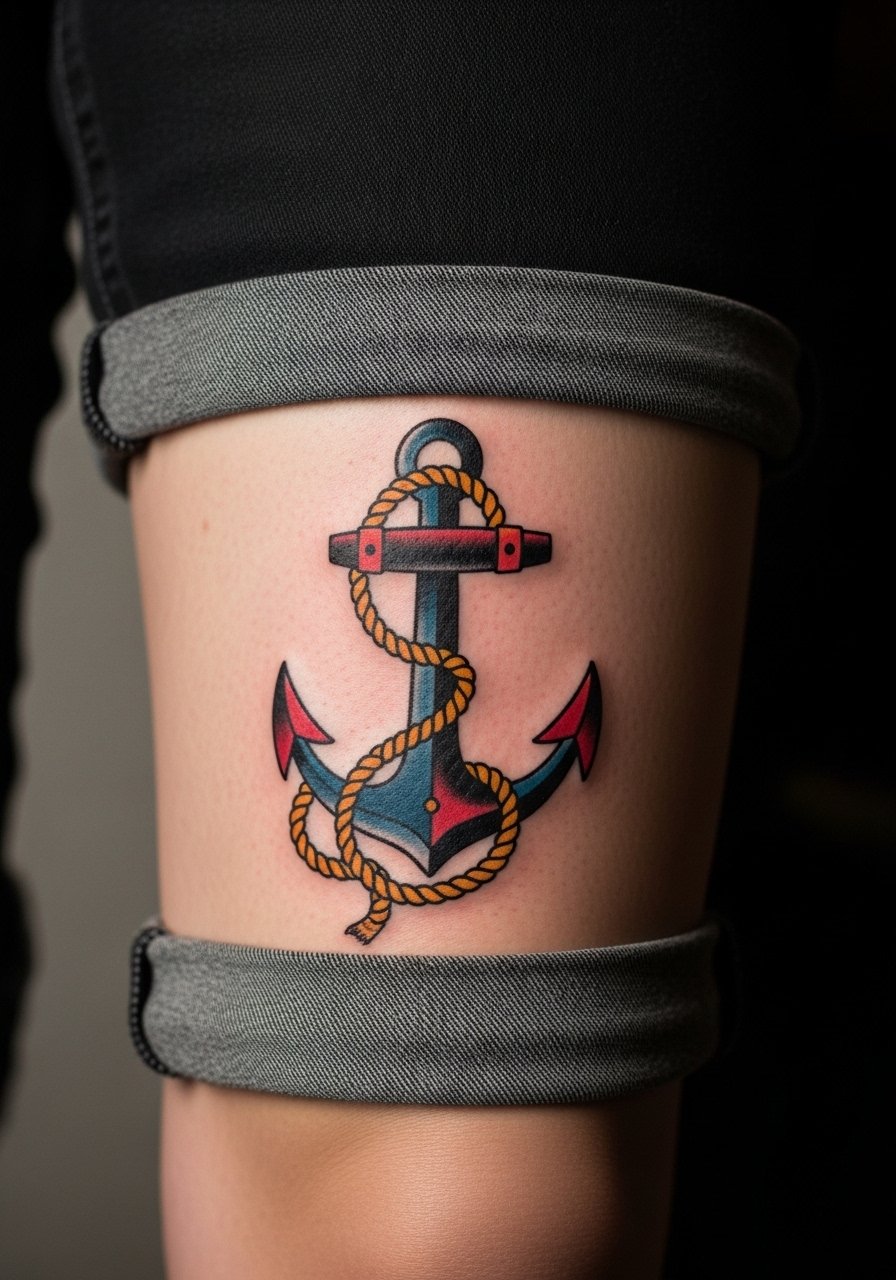
An anchor with rope is classic Americana that reads well at thigh scale. Request bold outlines and solid color blocking because that approach resists early softening. The common error is tiny rope twists that lose texture after a year. Two short sessions usually handle linework and color fills. Pain is moderate over muscle and tends to calm when you shift leg position. When you want to make the anchor part of an outfit, roll the cuff on a pair of cigarette pants to reveal the placement in a subtle way.
11. Ornamental Compass Medallion Centered Above the Knee
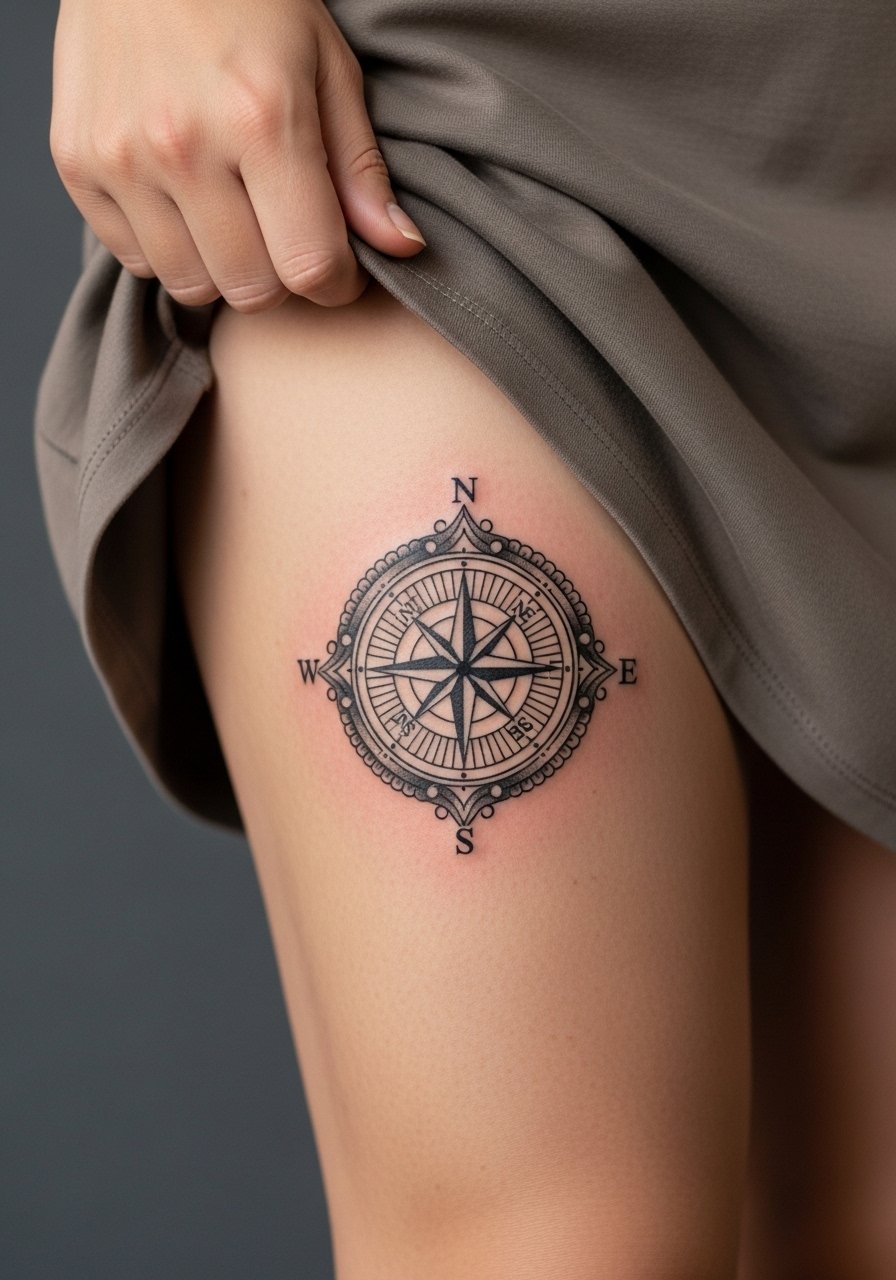
A compass medallion feels vintage and purposeful when drawn with clear radial spacing. The mistake is packing tiny ticks and numbers into the face which quickly becomes visually noisy. Tell your artist you want open intervals between the spokes and a bold outer ring for longevity. Expect two sessions for linework and subtle shading to give the medallion dimension. For daywear choose an earth tone a line skirt that lets the circular geometry sit as a focal point without clashing prints.
12. Small Script Ribbon Banner That Wraps Above the Knee
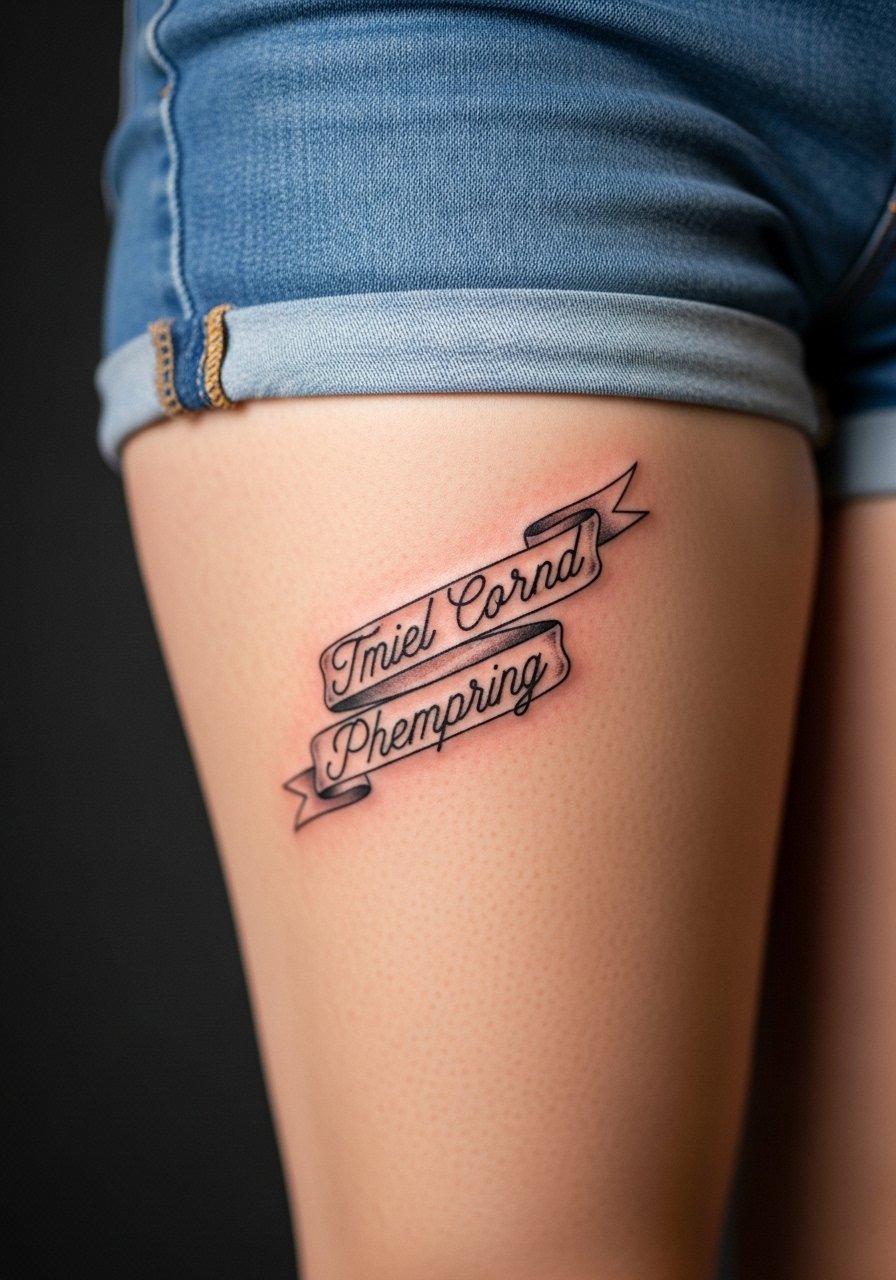
Script ribbon banners are a vintage staple when typography is treated carefully. People often ask for very thin script that fades into leg texture. The fix is to request slightly bolder lettering and a clean ribbon edge so the words remain legible at two to five years. Session time is short if the banner is compact. If the text matters to you, specify the exact lettering and spacing in the consult. For showing the ribbon with minimal fuss, try pairing with high waisted denim shorts or a tucked tee.
13. Art Deco Fan Pattern That Sits Above the Knee
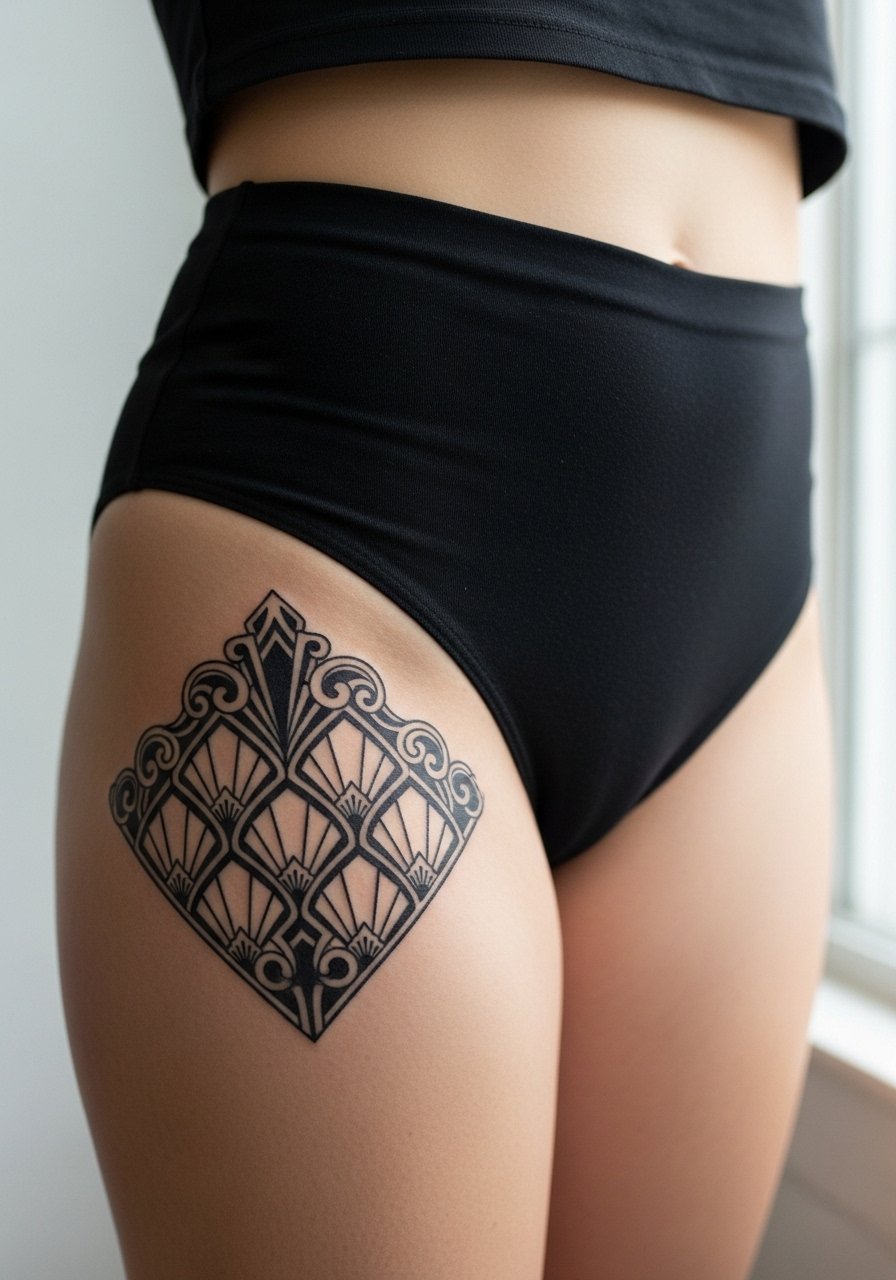
Art Deco flourishes bring vintage glam when spacing is prioritized. Dense line filigree in a small area is the typical mistake. Ask for simplified motifs with repeating negative zones so the pattern avoids looking muddy when healed. Two sessions may be needed if you want layered shading behind the fans. Pain is moderate and tolerable with short breaks. This style pairs well with asymmetrical hems or a cropped top, and you can lean on structured waists to keep the pattern visible without overexposing the thigh.
14. Micro-Realism Planet Cluster, Small Cosmic Grouping
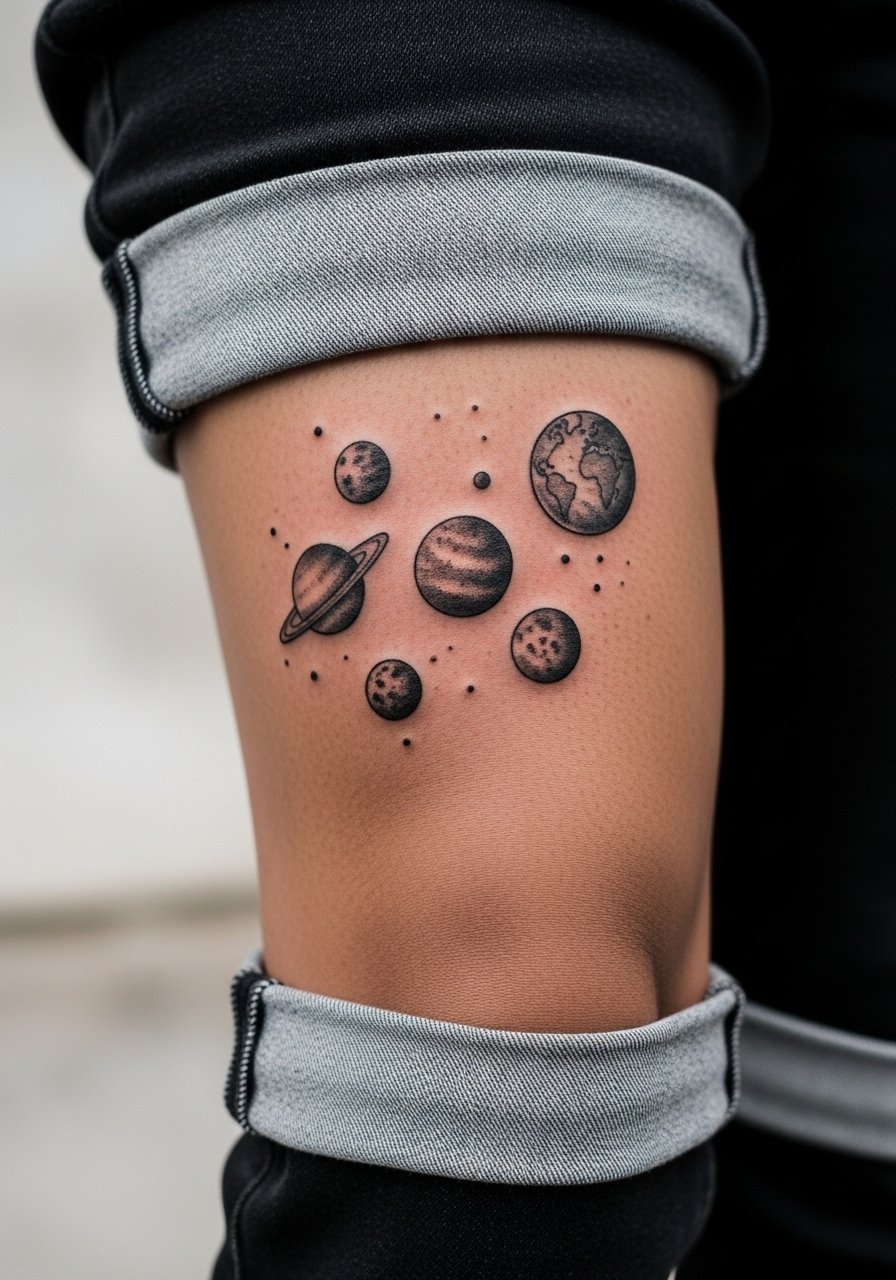
A tiny planet cluster works as a vintage-sci-fi nod when the scale allows for clear crater contrast and orbital spacing. A common error is compressing too many tiny spheres into a tiny patch. Ask your artist to space the planets and reserve the smallest ones as dots rather than detailed miniatures. Two sessions can be required for layered gray washes. Micro-realism needs steady hands and a calm chair rhythm. Pair the piece with rolled cuff cigarette pants so the cluster reads like a thoughtful accent.
15. Stipple Shaded Lattice Band, Ornamental Wrap
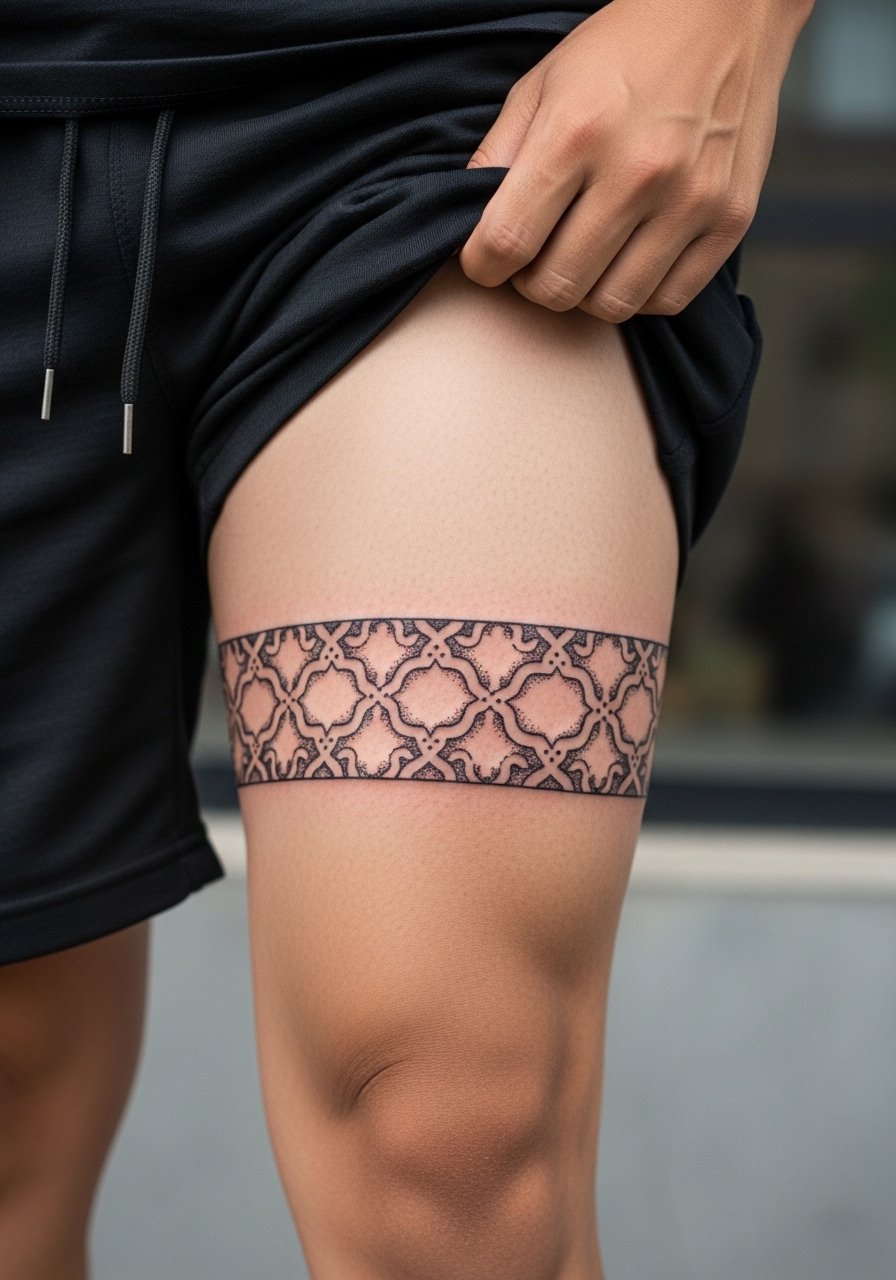
A stipple lattice band uses dot work to create texture without heavy lines. The main mistake is too-dense stippling that looks like a gray patch when viewed from a distance. Ask the artist for graduated density so the lattice breathes and reads at arm's length. Session time varies with dot counts, expect more time than a solid black band. The technique ages well because dots settle with soft texture rather than hard lines that blur. Dress for the session in baggy athletic shorts so you can roll the leg up without pinching the fresh work.
16. Retro Swallow Pair, Symmetrical Above-Knee Motif
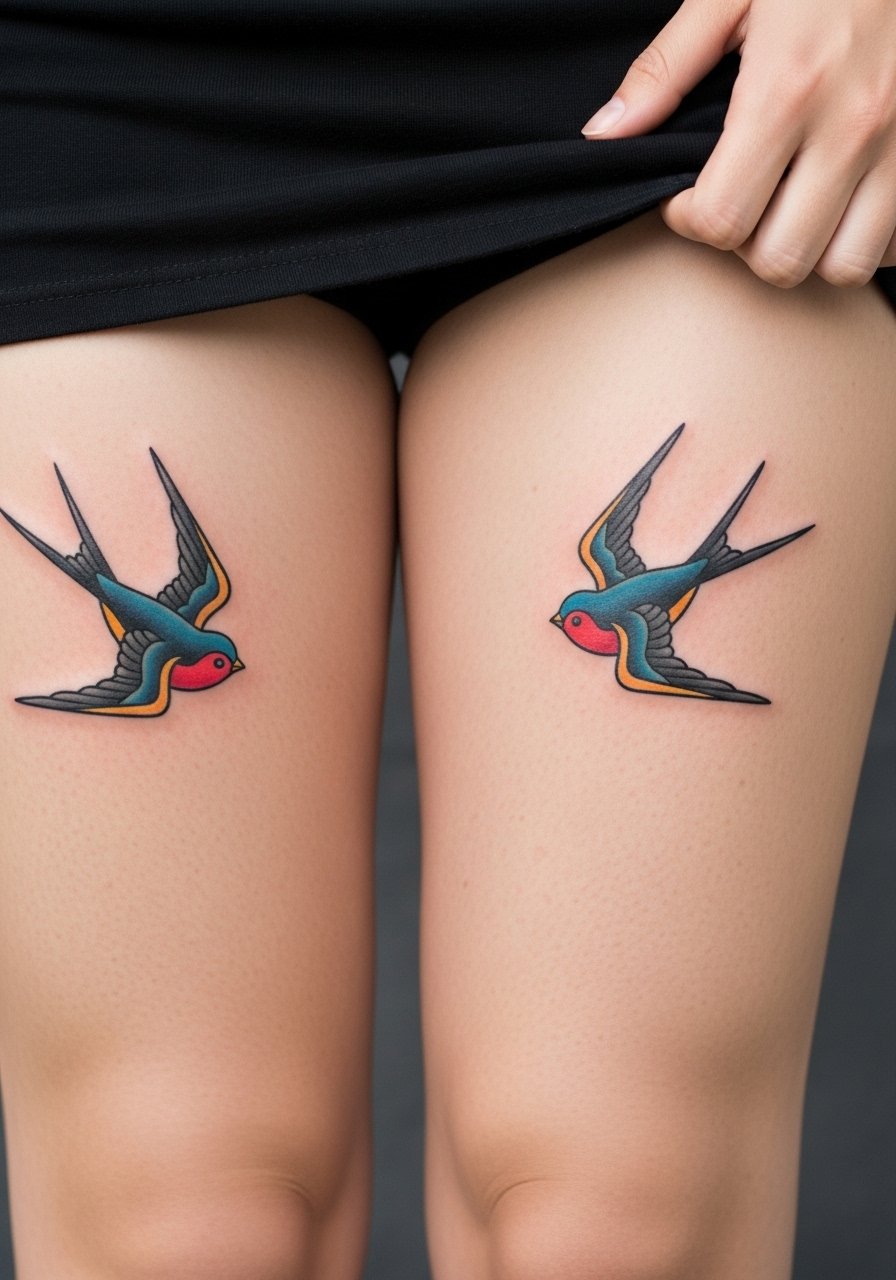
Swallows are classic sailor imagery that reads vintage when kept symmetrical and simple. Over-detailing in feather texture is the usual trap for small swallow pieces. Ask for clear wing silhouettes and a bold outline so the birds remain readable as they age. One session covers both birds if they are small to medium. Expect mild sensitivity around the muscle belly above the knee when the artist works the curve. For a coordinated look, match the swallows with a high-waisted skirt or vintage cut shorts for a deliberately retro silhouette.
17. Neo-Traditional Dagger and Rose, Anchored Above the Knee
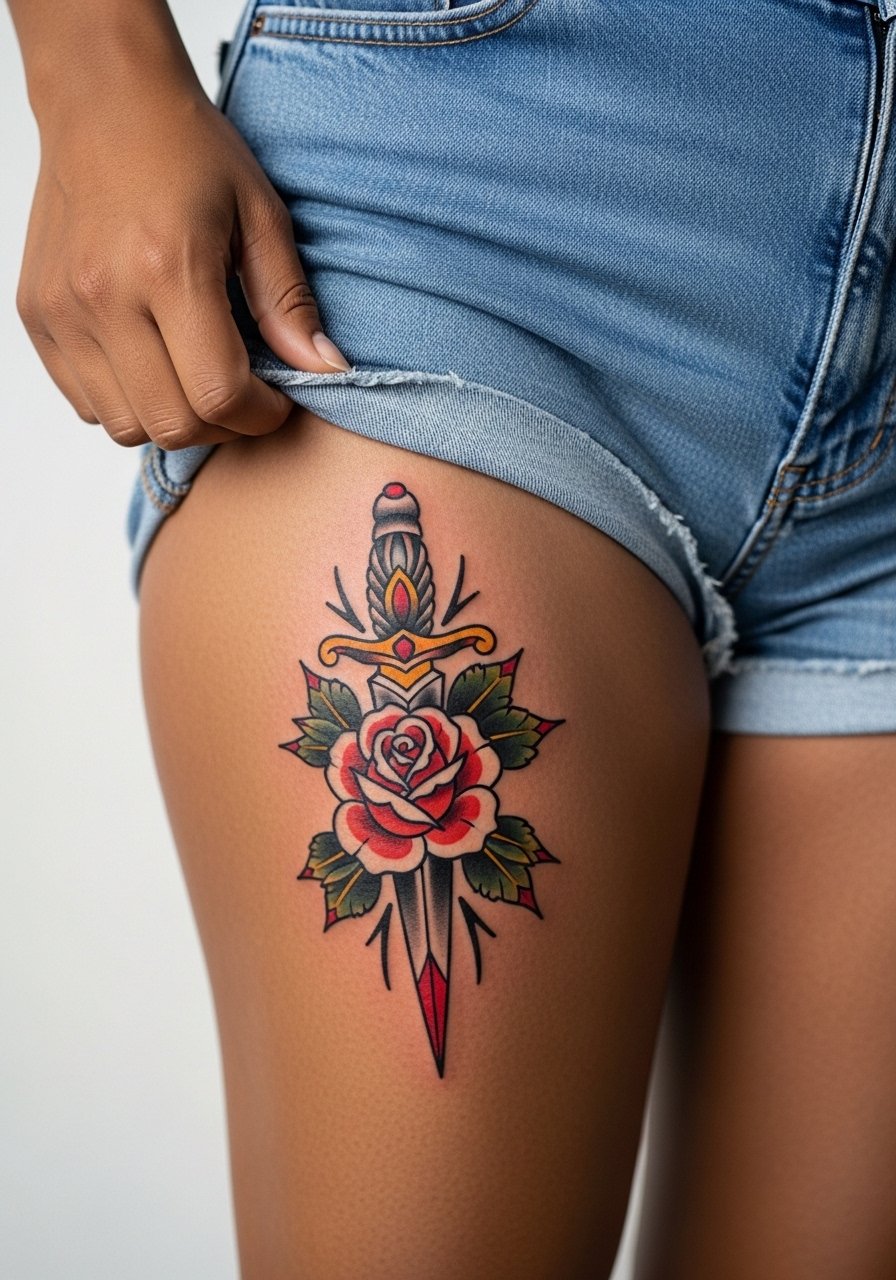
A dagger and rose mixes edge and romance when the composition centers on negative space. The mistake people make is squeezing the rose tight against the blade which removes visual separation. Tell the artist you want a breathing area between elements and a heavy outer outline for the dagger to maintain contrast. Two sessions are common for crisp linework and color fills. This placement is forgiving for neo-traditional saturation, and a small touch-up at year three keeps the colors lively. For styling that leans vintage, pair it with high waisted denim shorts or a cropped knit.
Pack Smart
Those upper-thigh designs above live at the junction of clothing and movement, so simple prep and a few targeted items make sessions easier and early healing less fussy.
-
Stencil transfer paper kit. Lets you preview placement exactly on the skin, which matters for wraparound garters and panels that must sit above the knee.
-
Topical numbing cream. Applied per instructions before a long thigh session eases the first hour when shading and dot work begin.
-
Thin protective film roll. Helps protect larger thigh panels from friction with clothing during the initial healing window.
-
Fragrance-free body wash. Gentle cleansing avoids irritating stitch-like lines and dense blackwork as they scab and heal.
-
Aquaphor healing ointment. A thin layer in the first days keeps the surface supple without clogging the fine needle channels on detailed work.
Frequently Asked Questions
Q: How much does an above knee tattoo cost and how many sessions will it need?
A: Costs vary widely based on artist and complexity, but for the vintage styles here expect anything from a brief single session for small triangles up to multiple sessions for ornate panels like an Aztec calendar. Speak with the artist about approximate session times. Ask for a ballpark session count during consult so you can plan scheduling.
Q: Will a garter or wraparound design fade faster because of clothing friction?
A: Friction can accelerate fading if fabric rubs the same spot daily. Position the band slightly higher or lower to avoid waistband pressure. For the first two weeks follow the studio's movement advice and consider looser bottoms while the scab phase completes.
Q: Are fine line or micro-realism pieces risky on the thigh compared with bold traditional work?
A: There is disagreement among artists. One group says the thigh's thicker skin preserves fine detail. The other warns that movement near the knee blurs delicate lines faster. The deciding factors are scale, line weight, and the artist's spacing choices. Ask the artist to show healed photos from that placement and compare similar scales.
Q: What should I wear to the studio for a thigh appointment?
A: Wear loose, easily adjusted clothing so the artist can access the area without tugging. For most thigh work I suggest baggy athletic shorts or high-waisted pieces you can shift. Avoid tight fabrics that press on the fresh tattoo during transit home.
Q: How soon should I book a touch-up for these vintage styles?
A: Plan to revisit the artist around year two to three for most delicate or colored pieces. Bold blackwork and thick outlines typically need less frequent refreshing. Touch-up needs depend on sun exposure, clothing friction, and your skin's healing tendencies.
