
Fine line spine tattoos are everywhere on saved boards right now, but they bring a trio of surprises most people do not expect. The needle over bone feels sharper than arm work, the design is hard to check while it heals, and ultra-thin lines can soften faster than you plan. Read on for 17 clean minimalist spine ideas and the exact wardrobe and session tips that make each one live well over time.
1. Fine Line Vertebrae Outline
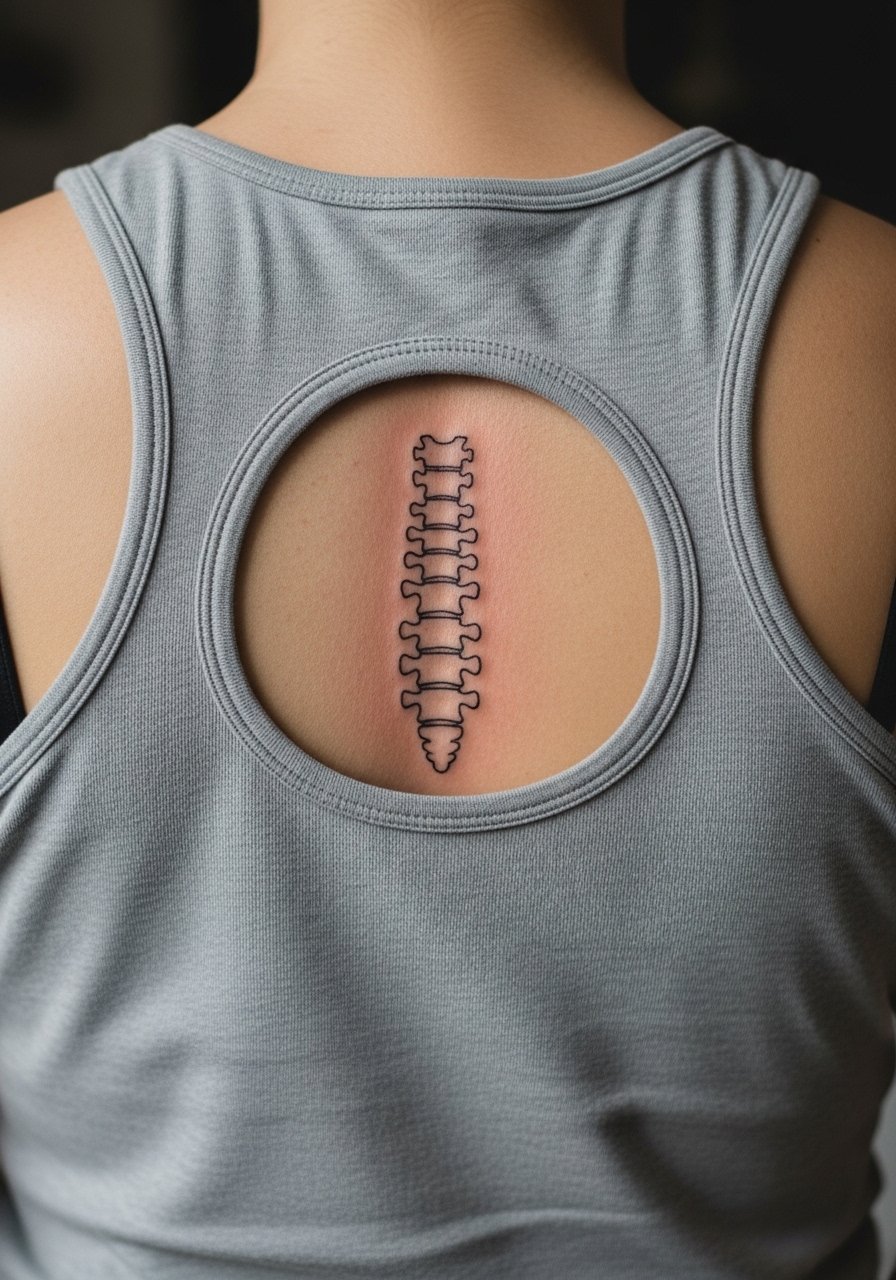
I open with this because it reads like anatomy and it elongates the back without fuss. Fair warning, fine line on bone splits artists into two camps. One camp says ultra-thin single-needle work blurs faster on the spine. The other camp says precise depth and modest spacing make it last. When you book, tell your artist you want a slightly bolder single-needle contour to reduce future touch-ups. Expect the session to be short, about 45 to 90 minutes, and to feel sharp when the needle passes over vertebrae. Common mistakes are asking for hairline-thin lines and placing the piece too low where waist movement stretches it. For showing it off, pair with a backless linen dress women on nights out, and wear a loose tank to the session so the artist can work prone.
2. Minimalist Floral Cascade
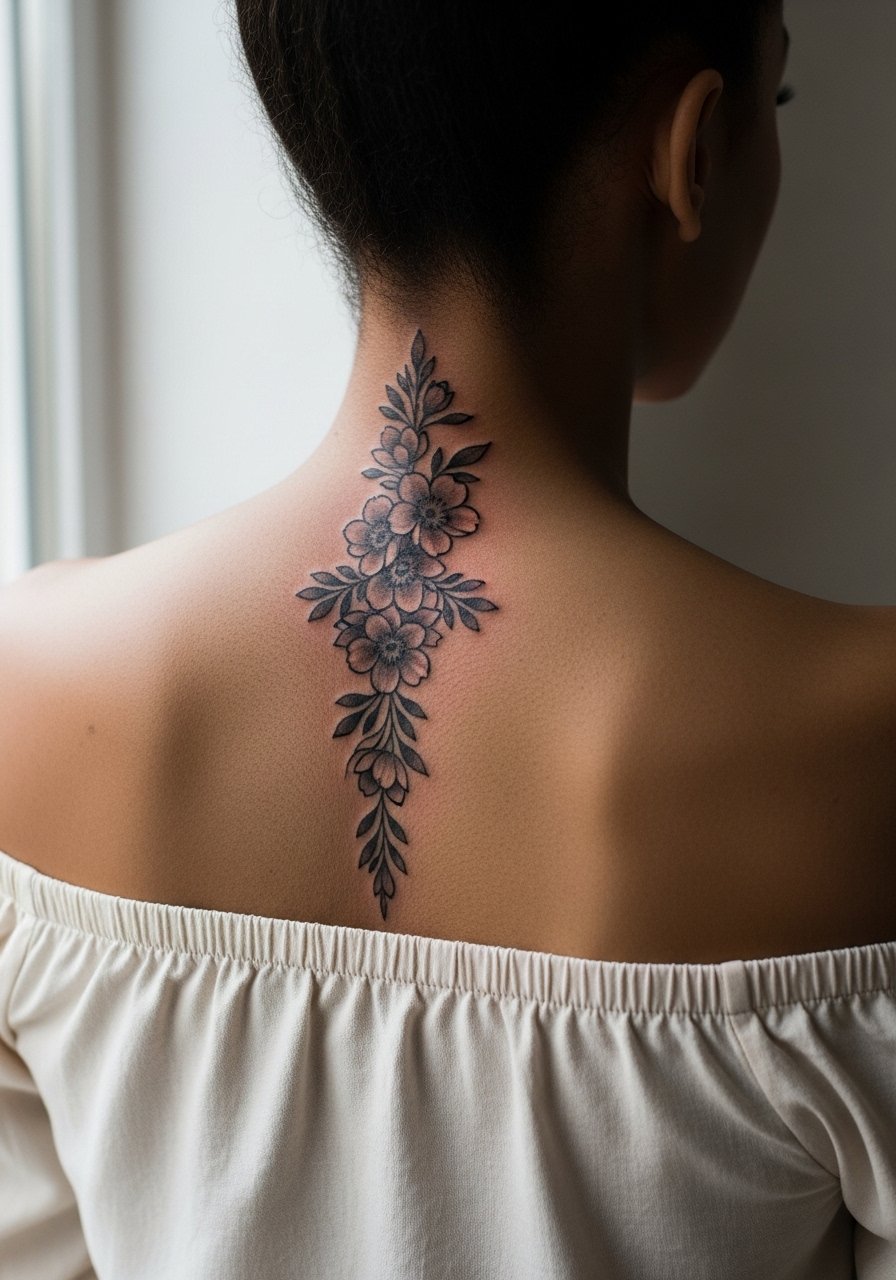
I've seen this one on women who like movement in their tattoos. The cascade follows the spine curve and looks different when you arch the back. Tell your artist to keep negative space between petals so the cascade does not blob over time. Pain is moderate along the ribs and lower thoracic area, and sessions often split into two sittings if it runs long. A common aging problem is heavy gray shading packed too tightly. Ask for stipple shading and thin stems instead. For outfits, try a silk slip dress midi when you want to reveal the whole column, and wear a V-neck loose tee to the appointment so the shop can access the neck base easily.
3. Script Quote Along the Vertebrae
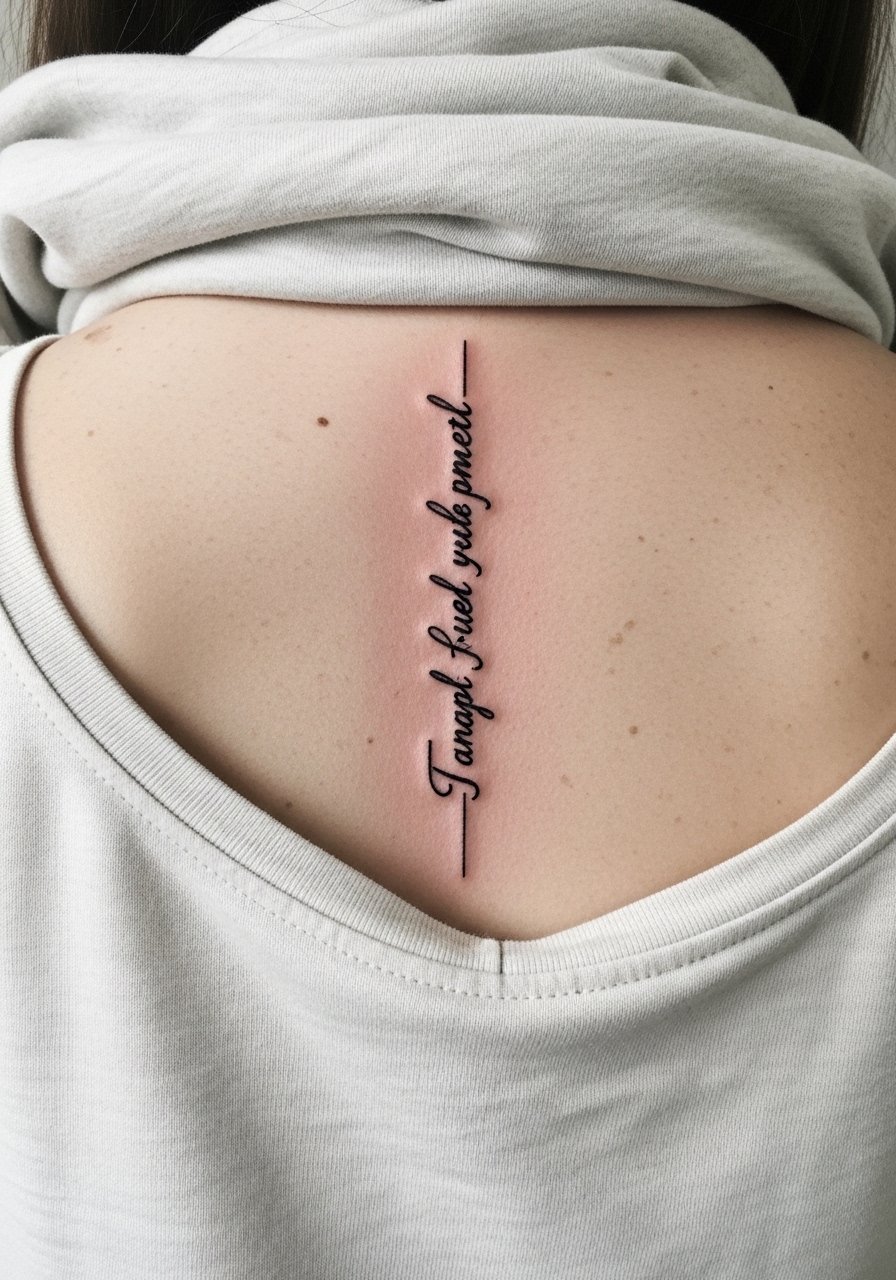
When people want a mantra they can flash in low-back outfits, this is the go-to. The trick is font size. Tiny cursive looks pretty at first and then reads as a blur after one to two years. Tell the artist you want open spacing and sharpened ascenders so letters remain legible when healed. Session time is usually under 60 minutes and the sensitivity sits in the mid-back. A mistake I see is copying tiny script from phone screenshots without scale reference. For session wear, a halter top women or a clip-front sports bra helps the artist work without the fabric tugging across the back.
4. Ornamental Geometric Spine Filler
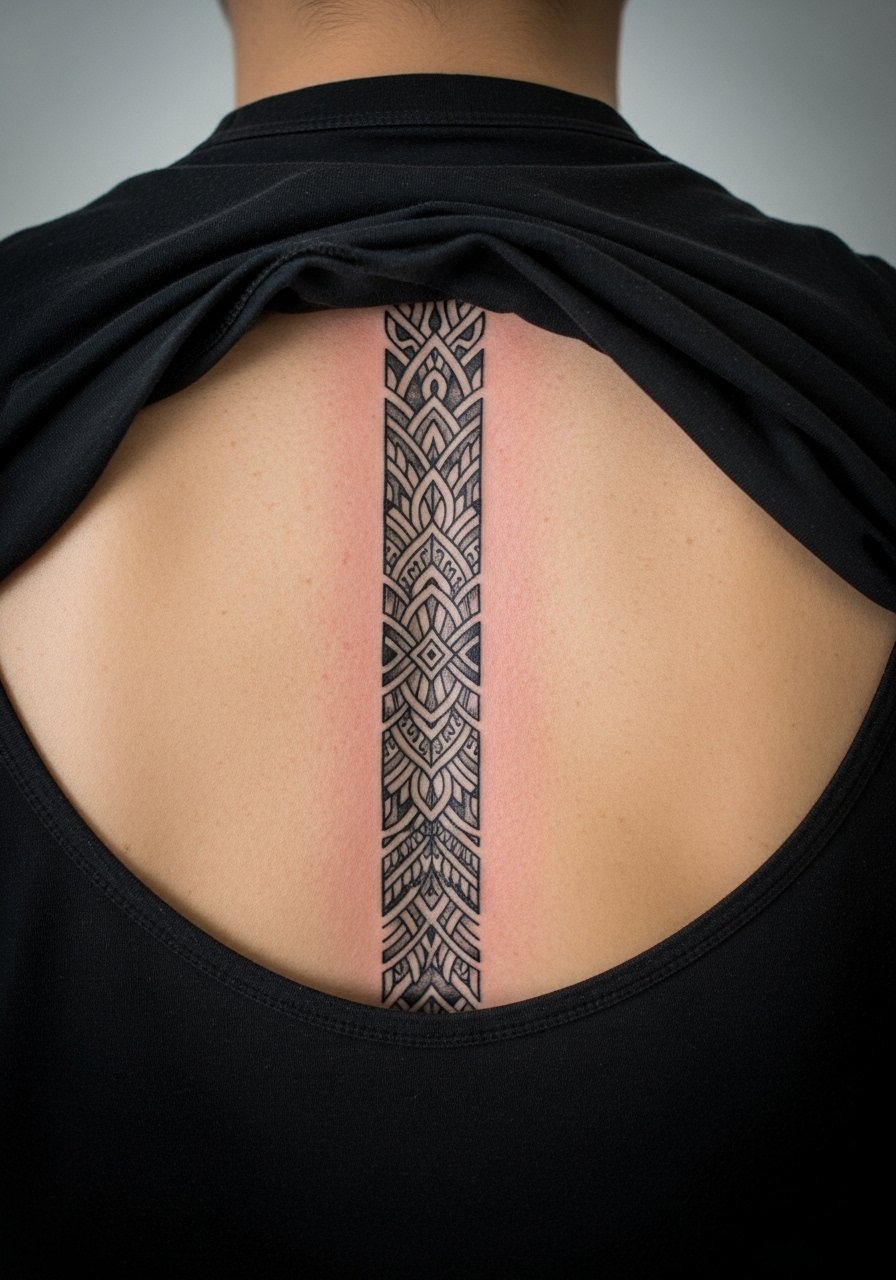
Visual impact lead makes sense here because geometry frames the spine like jewelry. This style often needs 2 to 3 sessions for clean edges and symmetry. Tell your artist you want spacing between dense elements to avoid merging. The biggest mistake is going too small for ornate motifs. If you want it to age, give the patterns breathing room and avoid micro detailing in the densest sections. Expect the session to be longer and the pain to increase toward lower vertebrae. For evening wear, pair with an open-back midi dress that echoes the symmetry, and wear a loose button-down to the appointment so the artist can reposition you without pressure.
5. Single Line Lotus Bloom on Lower Spine
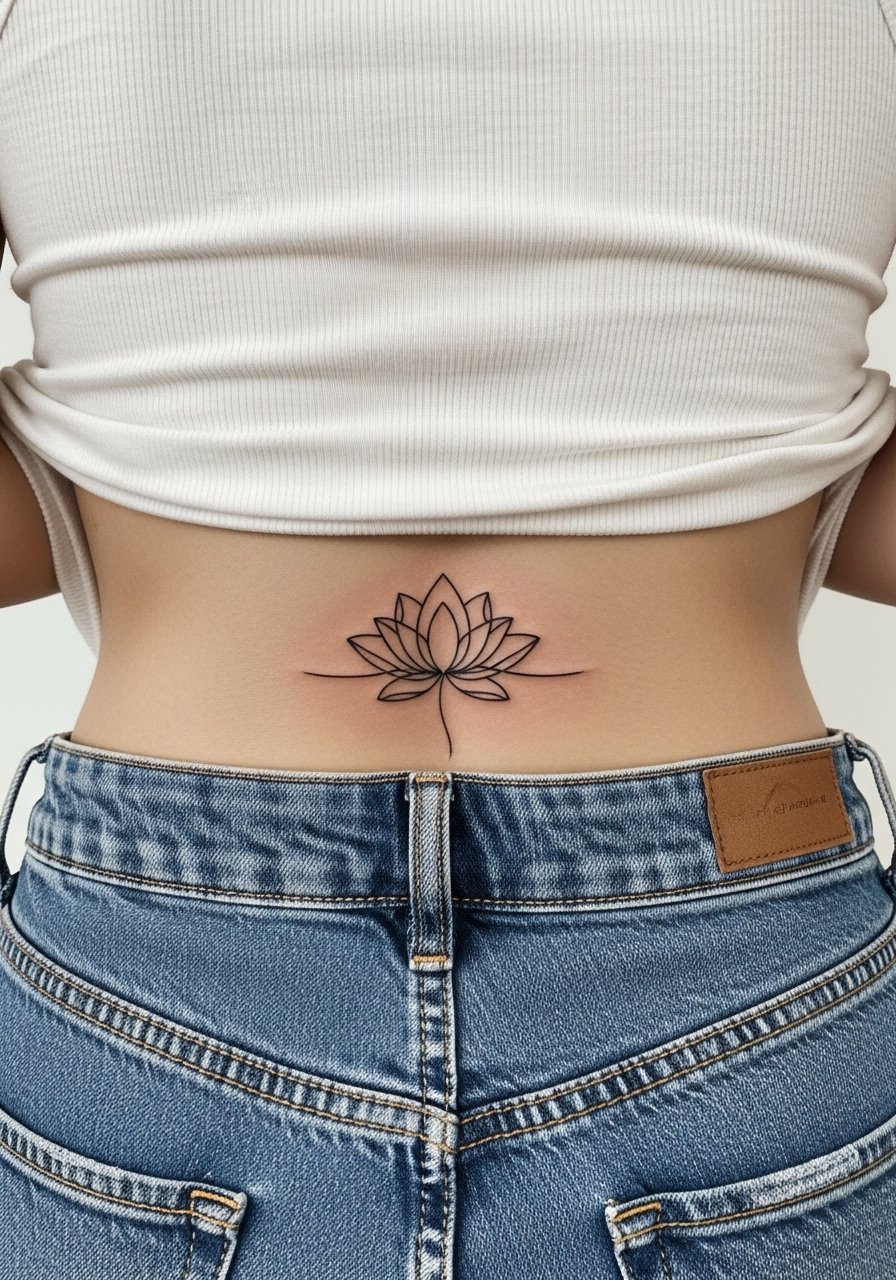
This one is for people who want symbolism without heavy work. The session is short and the pain on the lower spine is notable because the area sits over bone in spots. A common mistake is asking for an impossibly thin continuous line. Ask for a single clean contour with slight line weight variance to preserve shape over time. In terms of longevity, the lotus will hold if you avoid placing it where belts sit. Show-off pairing includes high rise jeans women or a sarong at the beach. For the session, elastic-free underwear and an oversized tee make prone positioning easier for everyone.
6. Dotwork Sacred Geometry at Upper Spine
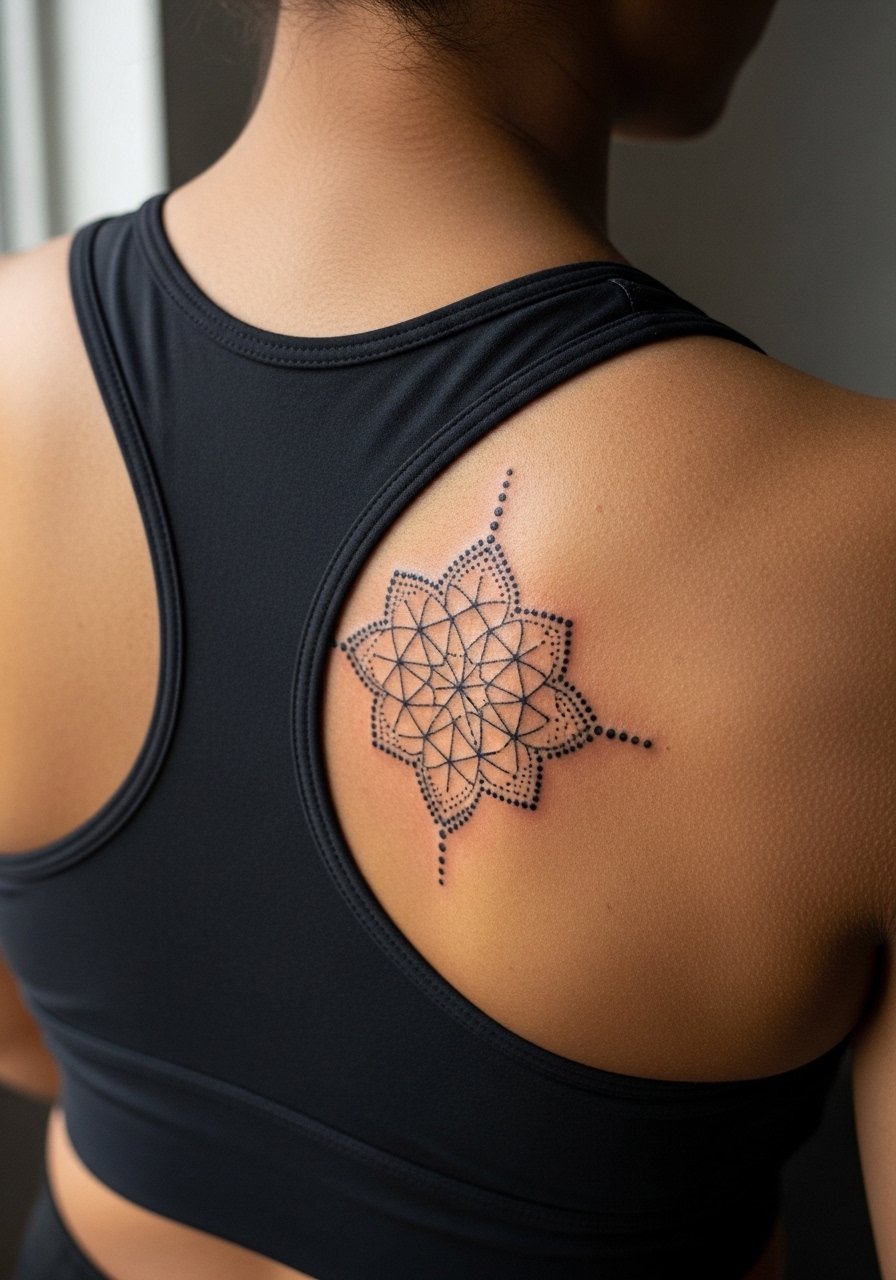
Aging lead works here because dotwork photographs beautifully on curved backs but needs space to avoid merging. Dotwork takes longer because each texture point is deliberate. Tell your artist you want sparse dot spacing near the edges and denser work toward the center for a 3D effect. Pain is moderate on the upper thoracic region. The controversy on fine line longevity matters here too. Some artists prefer dotwork on darker skin or curved areas because dots keep contrast. Others say dense dotwork can read heavy if the skin stretches. Expect touch-ups around year two to maintain crispness. For styling, an off shoulder blouse linen frames the upper spine for daytime looks.
Studio Day Picks
Those first six column pieces include fine line and dotwork options that behave differently during the healing window, so a few targeted items make the appointment and first week less fussy.
-
Hustle Butter Deluxe. A non-greasy balm many people prefer for smoothing scab texture on larger blackwork pieces without leaving a slick residue.
-
Indie UK tattoo balm. Thinner consistency that sits well on curved spine zones and helps with itching during the mid-heal.
-
Australian tea tree salve. Useful for brief flare-ups in the first week when the skin reacts, applied as a spot treatment per your artist's guidance.
-
Thin protective film roll. Helps keep lower-back designs clean during clothing friction, especially useful when you have a long floral cascade or full-column geometry.
-
Aquaphor healing ointment. A go-to for the initial days to lock in moisture on small fine line work, used sparingly as directed by your artist.
7. Minimalist Arrow Stack on Thoracic Spine
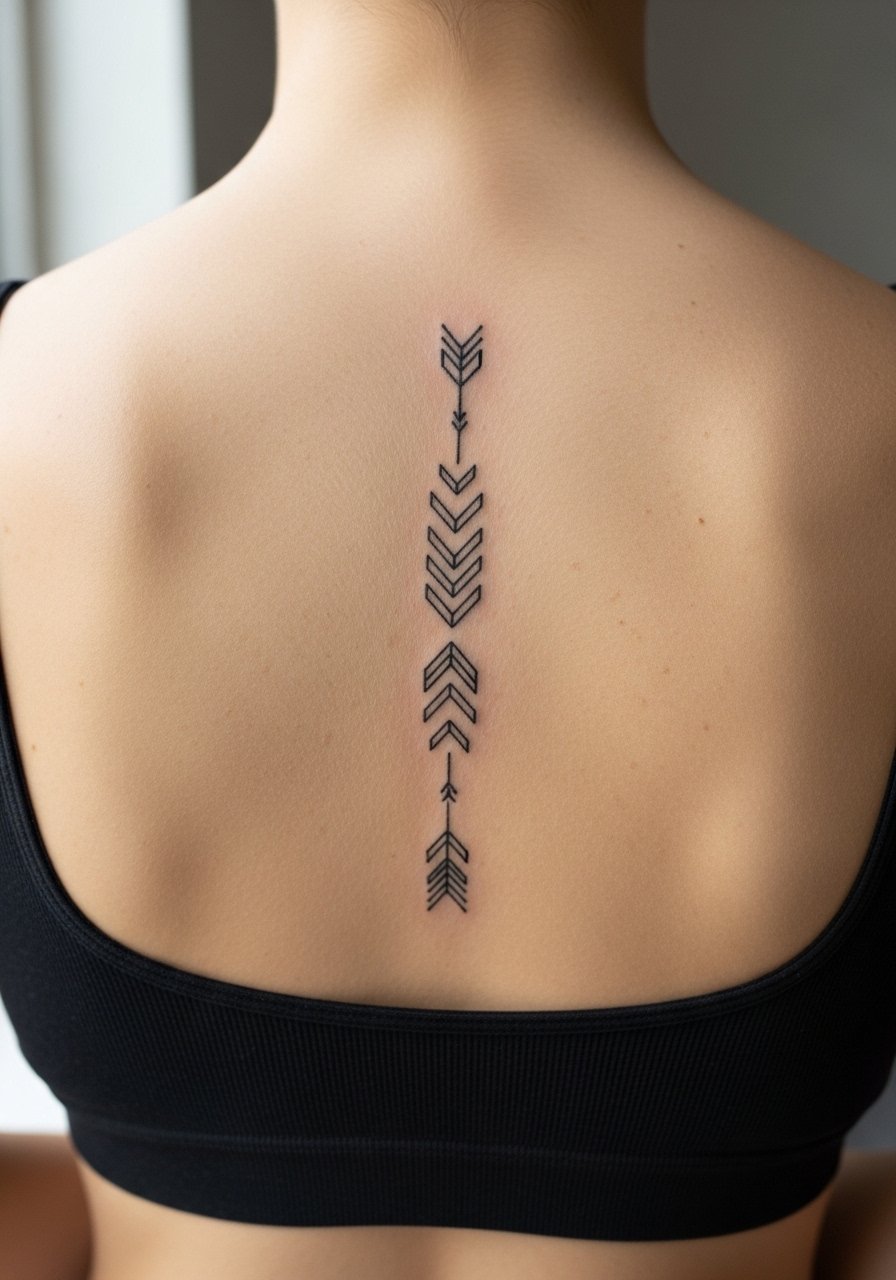
Styling lead fits this neat motif because arrow stacks are directional and pair with certain tops. These are short sessions, usually under an hour, and the pain is moderate. Tell your artist you want the arrows aligned to your natural thoracic curvature and to use small gaps between arrows to prevent merging. A common mistake is stacking too many tiny arrows; scale matters. Expect touch-ups at year three if you keep them ultra-fine. For showing off, try a strappy bralette under an open cardigan so the vertical stack remains visible without full exposure.
8. Blackwork Vine Tendril Down Full Spine
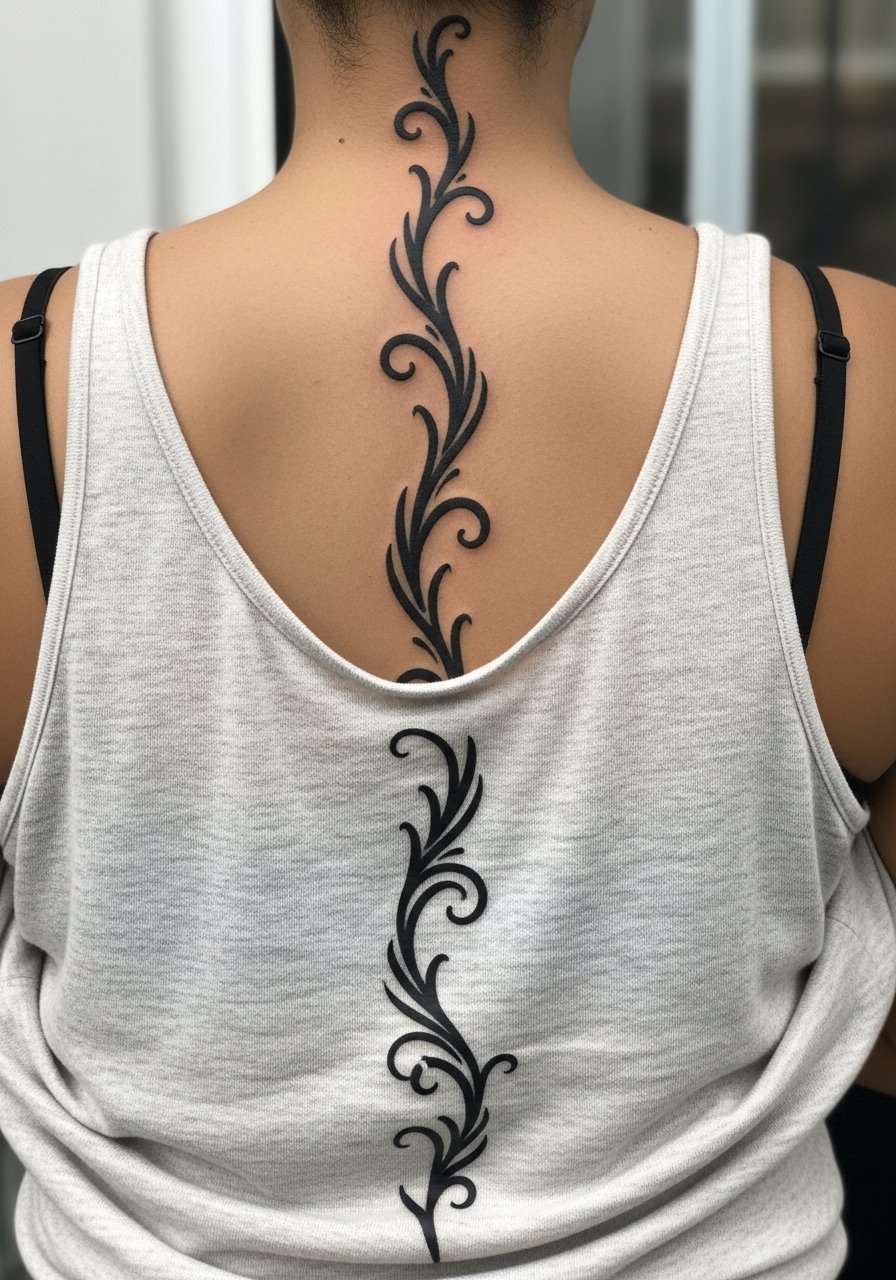
Visual impact lead because this one moves with the body when you twist or bend. Blackwork fills require longer sessions and often multiple sittings. The lower back portion is sensitive and may need breaks. Tell your artist you want tapered fills so the vine breathes with the skin and does not create a heavy block along the lumbar. The key mistake is too much solid closely packed into areas that flex. Expect bold blackwork to age better visually than fine line on bone, but know it will need occasional touch-ups to keep edges crisp. For session comfort, wear a loose button-down you can pull aside so the artist can have clear access without you getting cold.
9. Micro-Realism Butterfly Near Mid-Back
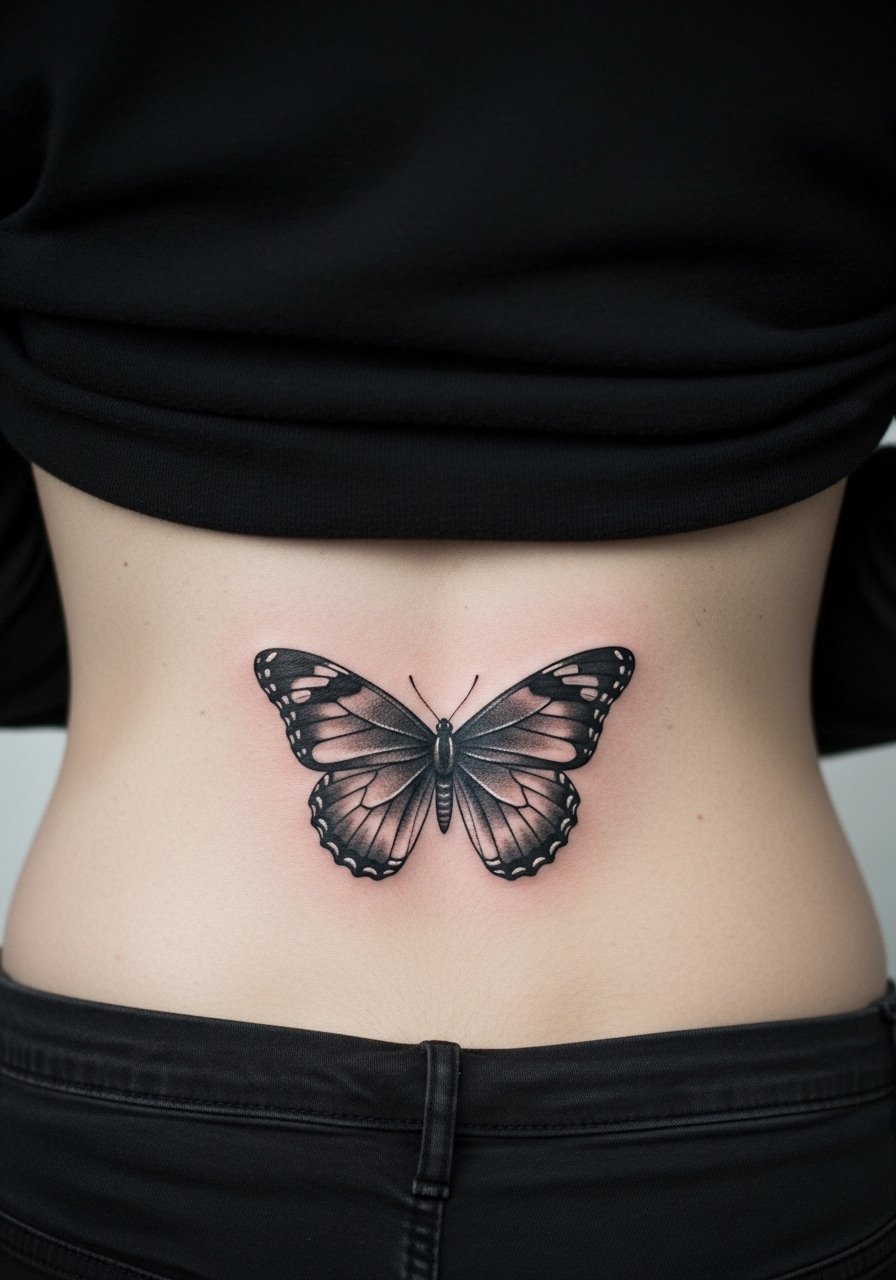
Mistake lead is useful here because micro-realism can become a smudge if scaled wrong for the spine. This style needs a skilled hand and two sessions for shading and crisp edges. Tell the artist you want simplified shading around the wing tips to avoid merging at year two. Expect a sensitive spot when the needle crosses the spine center. For outfits, a racerback tank frames the butterfly in casual wear and keeps lines clean for photos.
10. Fine Line Moon Phases From Neck to Dimples
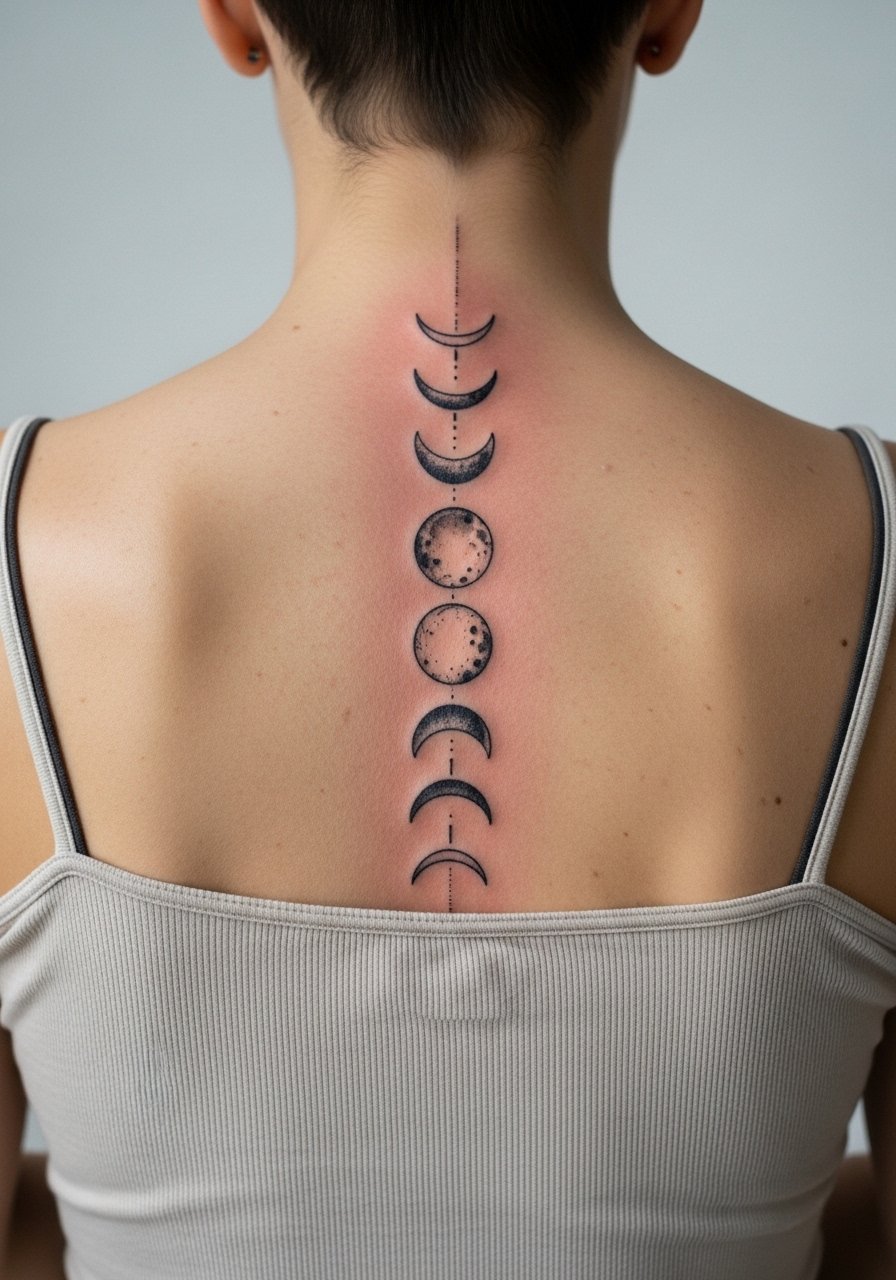
Aging-reality lead applies because moon phases look great fresh and need spacing to age well. Artists disagree on fine line longevity here. One group says the repeated thin crescents blur on the spine over time. The other group says correct line depth and spacing keeps them distinct. When you consult, ask which approach your artist uses and for examples of healed work on similar skin. The session may be split because the column spans high to low. For showing off, a backless linen dress women highlights the vertical run, and a V-neck tee works for travel days to avoid fabric rubbing.
11. Minimalist Heartbeat Line on Lower Lumbar
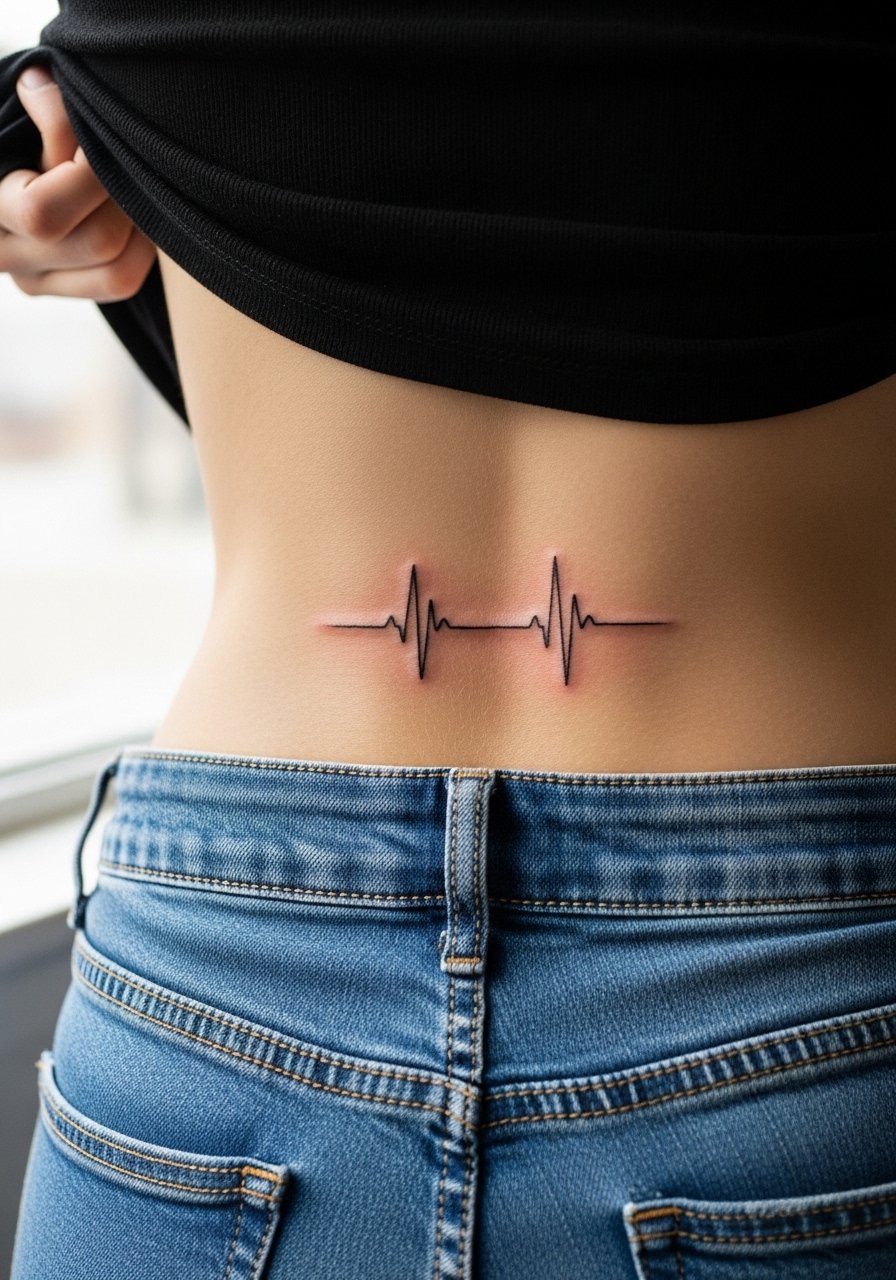
Consultation lead here because placement changes the meaning and visibility. The heartbeat reads intimate and pairs with low-rise silhouettes. The linework should be bold enough to survive friction from waistbands. A typical mistake is placing it where belts or high seams cross the design. The session is short and sensitivity is high near the lower lumbar. For showing off, use low rise jeans women or a sheer blouse for evening layering.
12. Ornamental Feather Quill on Upper Spine
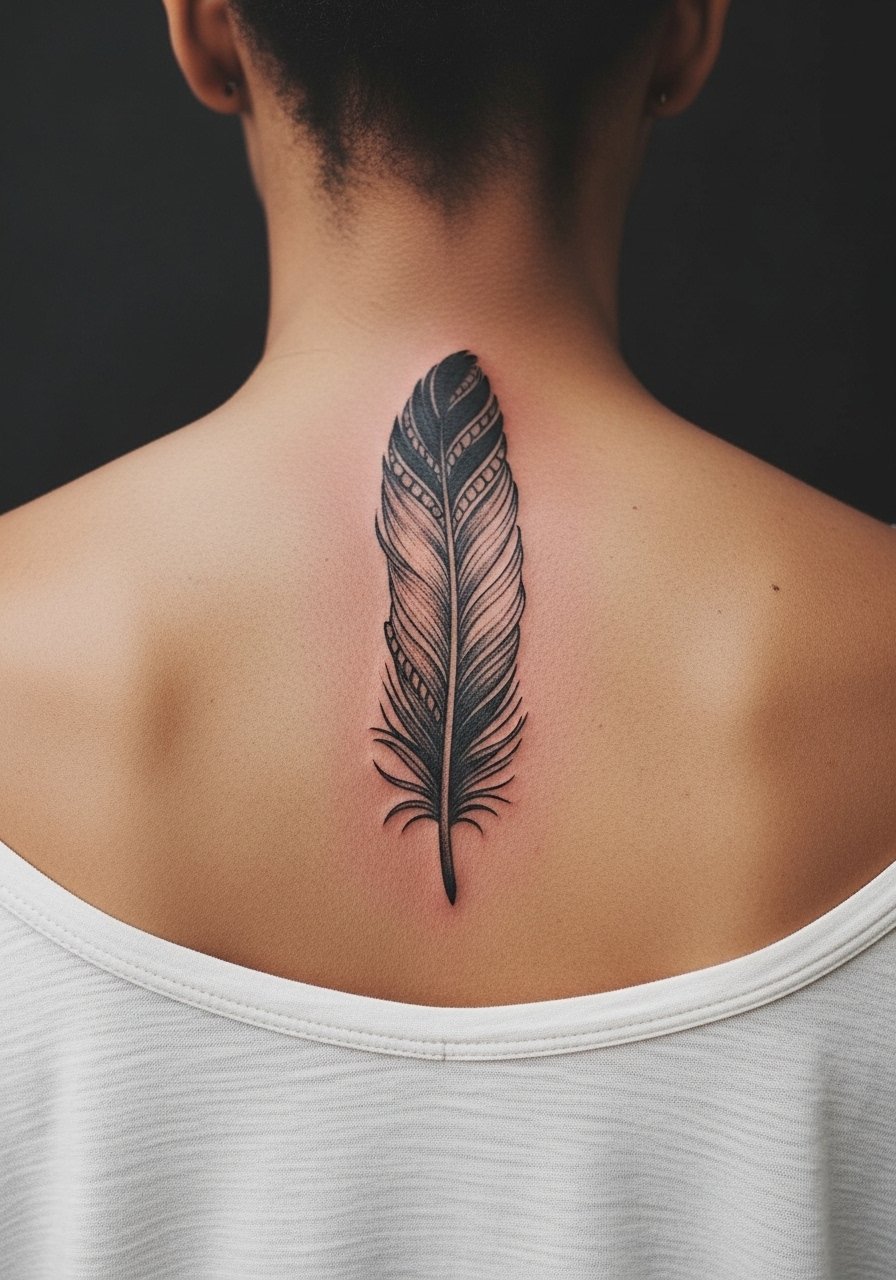
Mistake lead fits because feather quills can lose their tapered detail if artists use too heavy a hand. This piece should have gradient tapering using fine hatch or whip shading so the quill ages into a soft silhouette. Pain is moderate near the shoulder blades. Controversy around numbing creams touches this placement. Some people use topical numbing to reduce the sting, and others believe numbing changes skin response under the needle. Mention during consult if you want topical numbing and ask the artist how they handle it. For session wear, a clip front bra or a wide-neck shirt makes repositioning simpler.
13. Minimalist Vertebrae Cascade for Curved Spines
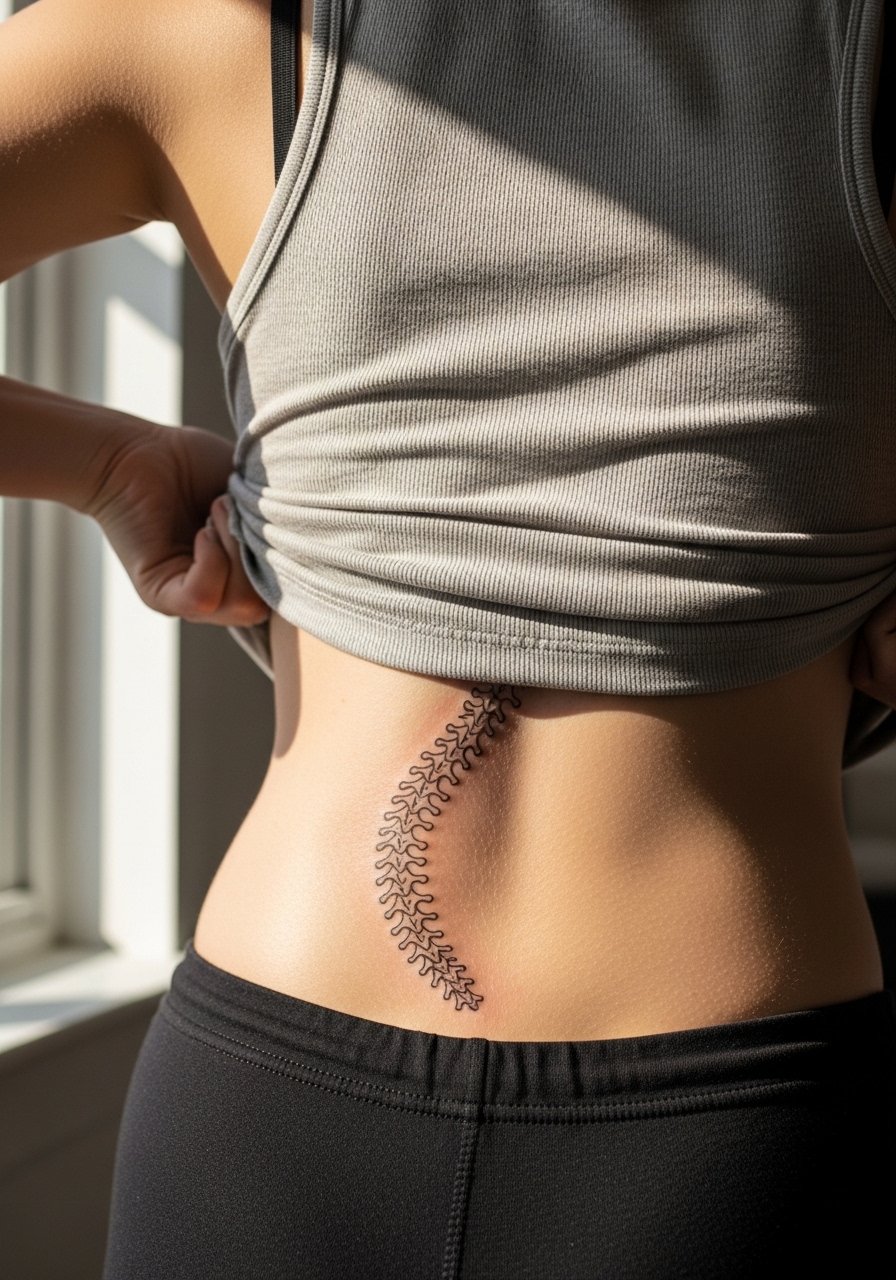
Consultation lead again because custom curvature matters for people with scoliosis. This is one of the under-covered approaches where artists intentionally map the design to each vertebra. Tell your artist you want anatomical alignment that honors your natural bend. The session will include more stencil checks and pauses. Common mistakes are forcing a straight column on a curved spine and regretting it later. Expect touch-ups more on the concave side where ink sits differently. Wear a front zip sports bra to the session for easy on and off without stretching your back.
14. Black and Gray Gradient Column for Depth
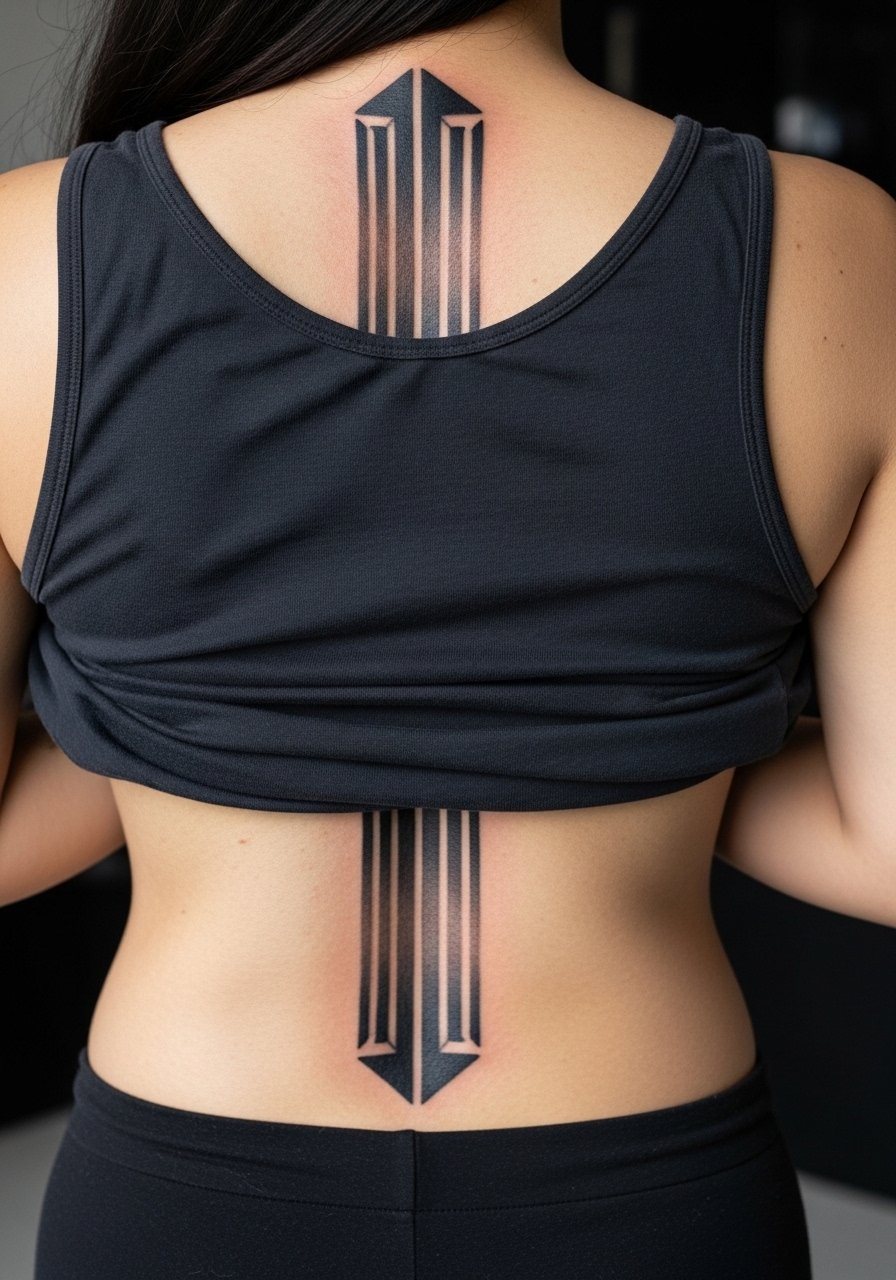
Aging/healing lead explains this rare minimalist twist because it uses gradients to simulate depth without ornate detail. It takes more shading time and a careful hand to avoid muddy patches. The common error is compressing too much tonal work into a tight vertical space. Ask for soft transitions and test patches in heavier skin tones. This approach holds visually well because the gradients read as shadow rather than fine lines, but expect yearly touch-ups to preserve contrast. For session comfort, wear a loose button-down shirt you can shift without rubbing the area.
15. Minimalist Lotus on Dimples with High-Arch Visibility
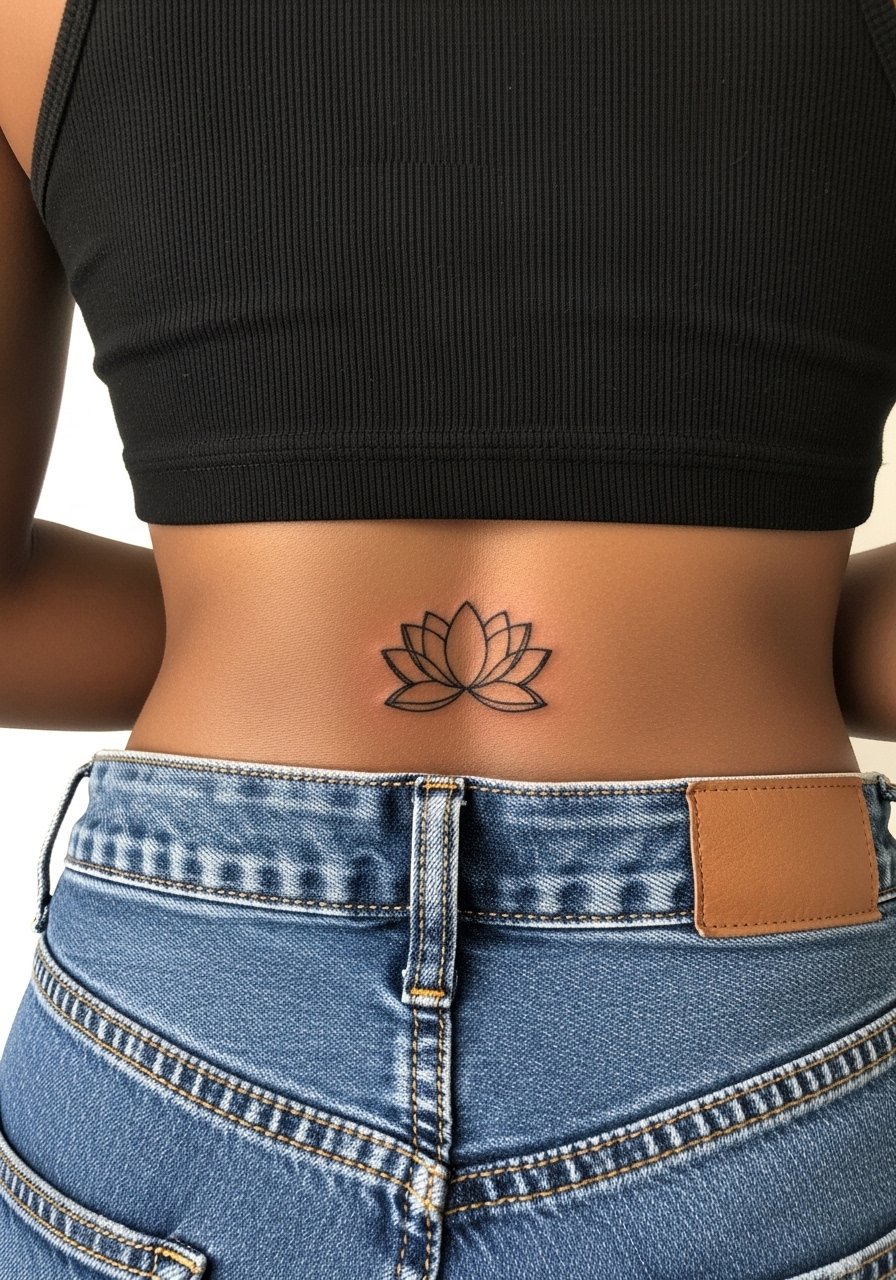
Styling lead works here because this placement plays with arching and yoga poses. The lotus should be sized to remain visible when you bend and to avoid waistline interference. Tell the artist you want a 3-inch contour with slight internal spacing. The session is brief and pain peaks where the bone is shallow. For showing off, a sarong wrap skirt or crop top highlights the dimples without compressing the tattoo during daily wear.
16. Tiny Celestial Linework Along Spine
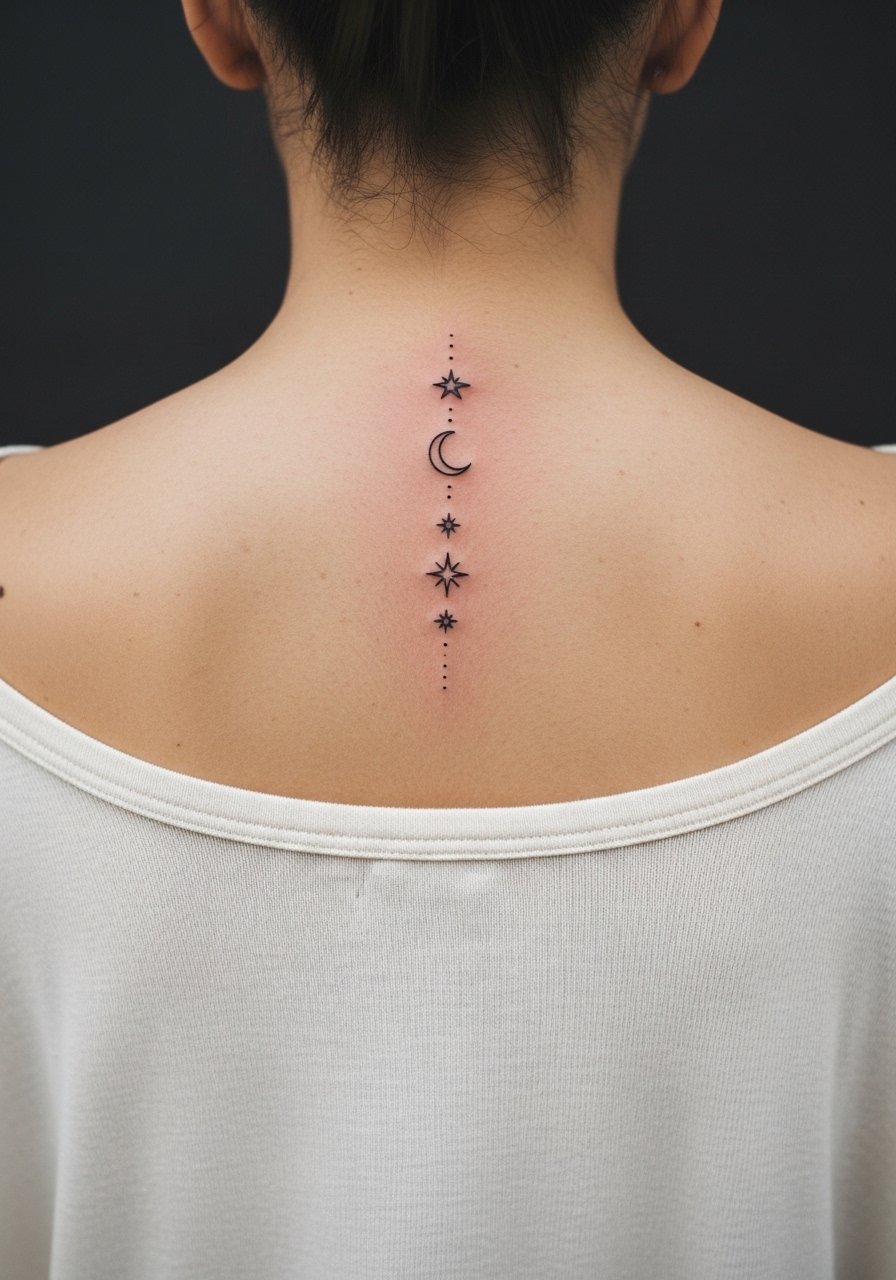
Mistake lead is useful because tiny celestial pieces suffer if placed too close together. Space the moons and stars so they age independently. This is low session time and moderate pain. The usual error is copying fingertip-scale icons without scaling them for back curvature. Ask for subtle spacing increases and expect a touch-up in two to three years. For an easy reveal, add a thin choker necklace to draw attention to the nape without overcrowding the vertical motif.
17. Ornamental Minimalist Spine Jewelry
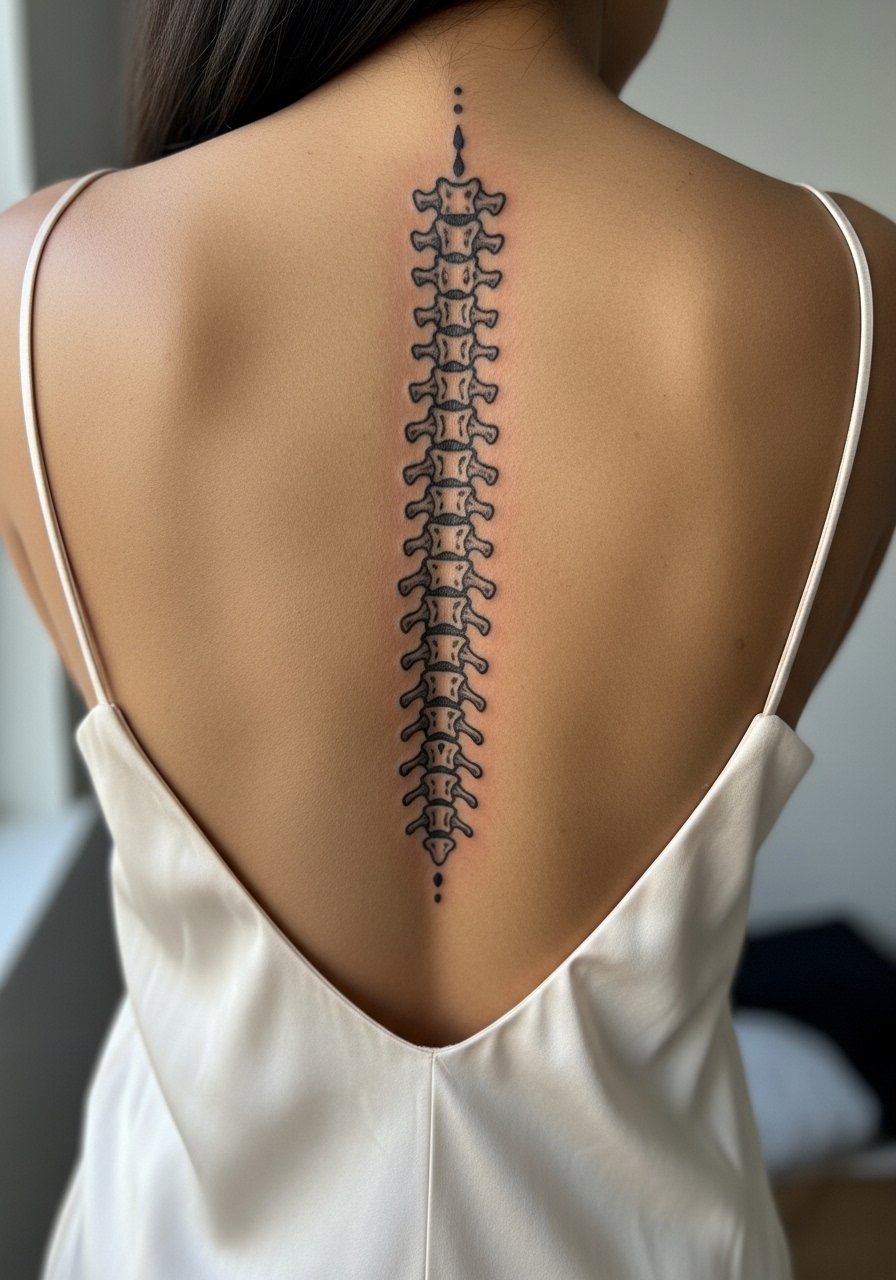
Decision-pressure lead fits this because this design often comes up when someone is booking in the chair. It frames the spine like jewelry and calls for symmetry. Tell the artist you want proportional anchors at the top and bottom so the piece does not feel top-heavy. The session is medium length and sensitivity increases lower down. A common mistake is trying to mash multiple flash motifs into one column without a unifying line language. For showing off, a silk slip dress midi or an open-back evening top keeps attention on the vertical frame.
Frequently Asked Questions
Q: How much does a minimalist spine tattoo typically cost and how many sessions will it take?
A: Prices vary by complexity and region, but expect a range depending on size and detail. Small fine line vertebrae often finish in a single session, about 45 to 90 minutes. Full-column ornamental or blackwork pieces commonly need two to three sessions. Plan for an extra touch-up at year one or two for fine line work.
Q: How painful are spine tattoos and where is the pain worst?
A: Spine tattoos are generally higher on the pain scale because the needle runs close to bone. The mid and lower spine tend to feel sharper than the upper thoracic area. Short sessions, timed breaks, and good breathing help. Discuss topical numbing if you want less sting, and ask your artist how they recommend using it.
Q: Will fine line spine tattoos blur faster than blackwork and should I avoid them?
A: Fine line can blur faster, especially when lines are hairline thin and placed on skin that flexes or sits directly over bone. Blackwork masks aging differently and often reads well longer. That does not mean avoid fine line. Ask for slightly stronger line weight and spacing adjustments so the piece ages the way you want it to.
Q: How do I get a tattoo on a curved spine or with scoliosis to look balanced?
A: Book an artist who does custom mapping and wants to place multiple stencils before inking. Tell them you want the design to follow your natural curvature rather than force a straight column. Expect more stencil checks during the session and a bit longer overall time.
Q: What should I wear to my spine session to make positioning easier and keep the tattoo safe?
A: Loose tops that you can pull aside or button-down shirts work best. For upper-spine starts, a wide-neck tee or a clip-front bra helps. For lower spine work, elastic-free underwear and drawstring pants or a skirt that you can shift make prone positioning comfortable and keep fabric from rubbing the fresh ink.
Q: Should I use Saniderm or dry heal for a spine tattoo?
A: There are two camps on that choice. One camp prefers Saniderm for a cleaner, less messy first week. The other camp favors a traditional dry-heal approach to let scabs form and fall naturally. Both methods have supporters who report good outcomes. Ask your artist which method they routinely use and follow their instructions so you get consistent aftercare.
Q: How often will I need touch-ups on a spine tattoo?
A: Touch-up frequency depends on style and placement. Expect fine line pieces to need a refresh sooner, often around year two to three. Blackwork and ornamental fills usually keep their visual weight longer but still benefit from touch-ups every few years if you want them crisp. Keep sunscreen on the area year-round to slow fading.
