
Fine line tattoos are all over feeds right now, and they look gorgeous fresh. The reality is that a design that reads sharp on day one can soften faster than expected if placement and line weight do not match your skin. Pick a style that will still read well at year three, and plan wardrobe and session wear so the appointment and the healed result both feel intentional. Below are twenty-one ideas that consider aging, placement, and how to show them off.
1. Rose with Thorns on the Forearm
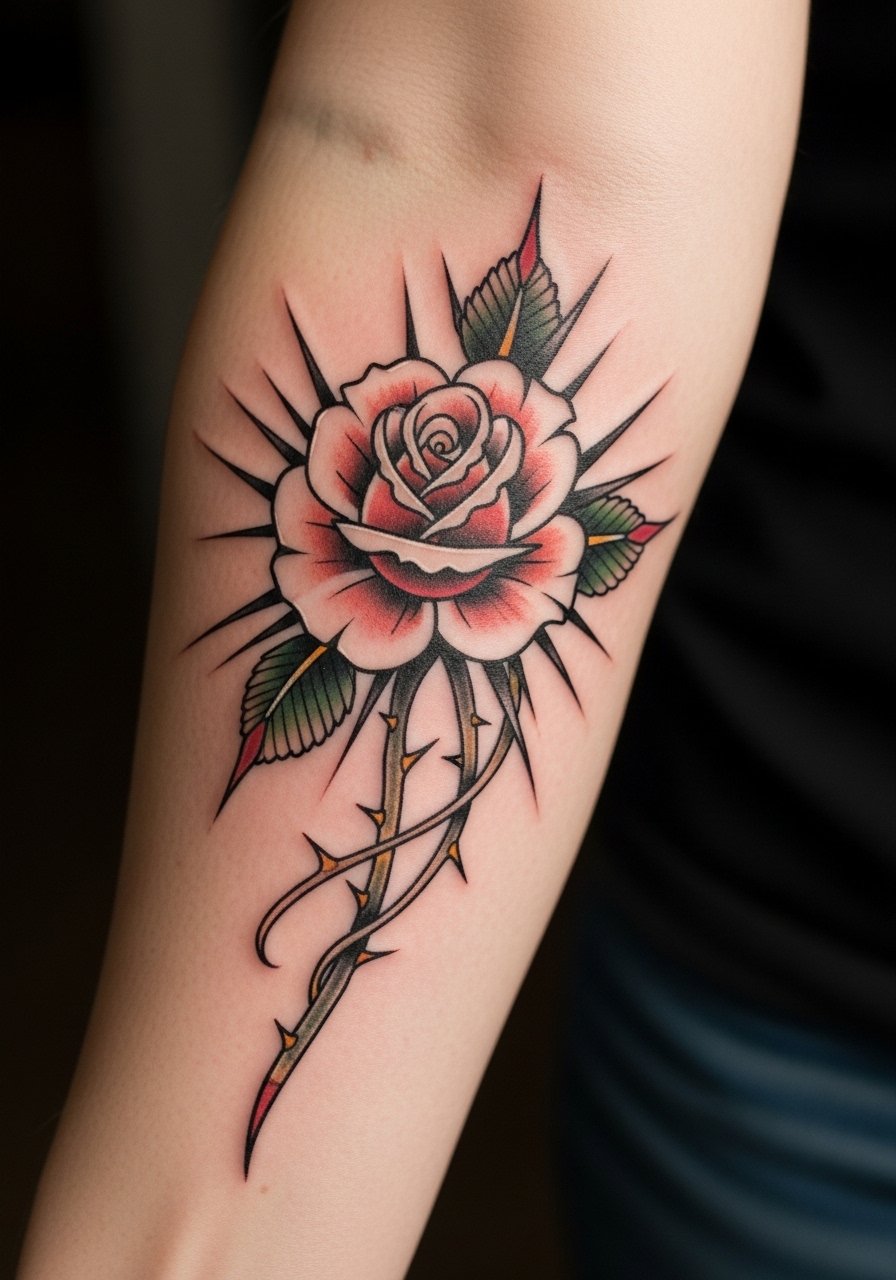
I have seen this neo-traditional forearm piece age well when artists use bold outlines and thoughtful shading. Ask your artist for slightly heavier linework in the lowest outline so the thorn edges hold up at year three. Common mistake is asking for ultra-fine outlines on forearms where the skin moves more than expected, which leads to softening and occasional blowout. Pain is moderate and a single two-hour session often covers a 4-6 inch design. For showing it off, roll up a chambray button-up and wear thin silver bangles opposite the piece to balance the arm.
2. Butterfly Transformation with Semicolon on the Wrist
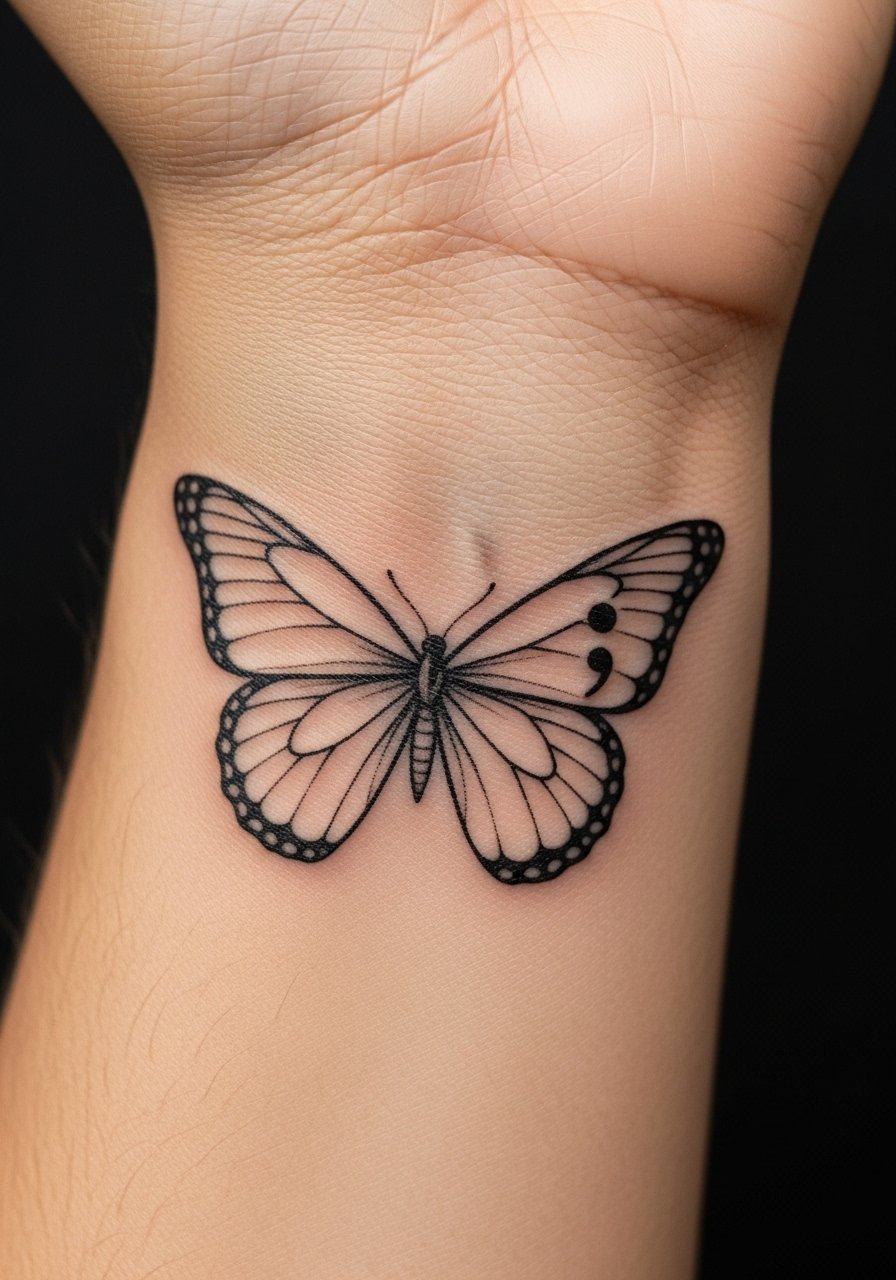
Fine line butterflies read as precise and intimate on the inner wrist but this placement faces friction and washing often. Artists debate fine line versus bolder line for wrists. One camp argues fine line fades faster on high-use zones. The other camp says correct needle depth and placement keep fine details intact. My advice is to scale the wings slightly larger than you imagine and request clean, uninterrupted linework from the start. Session time is usually under an hour and discomfort is low to moderate. Pair with a dainty cord bracelet on the opposite wrist when you want to highlight the semicolon without covering it.
3. Dreamcatcher with Feathers on the Shoulder
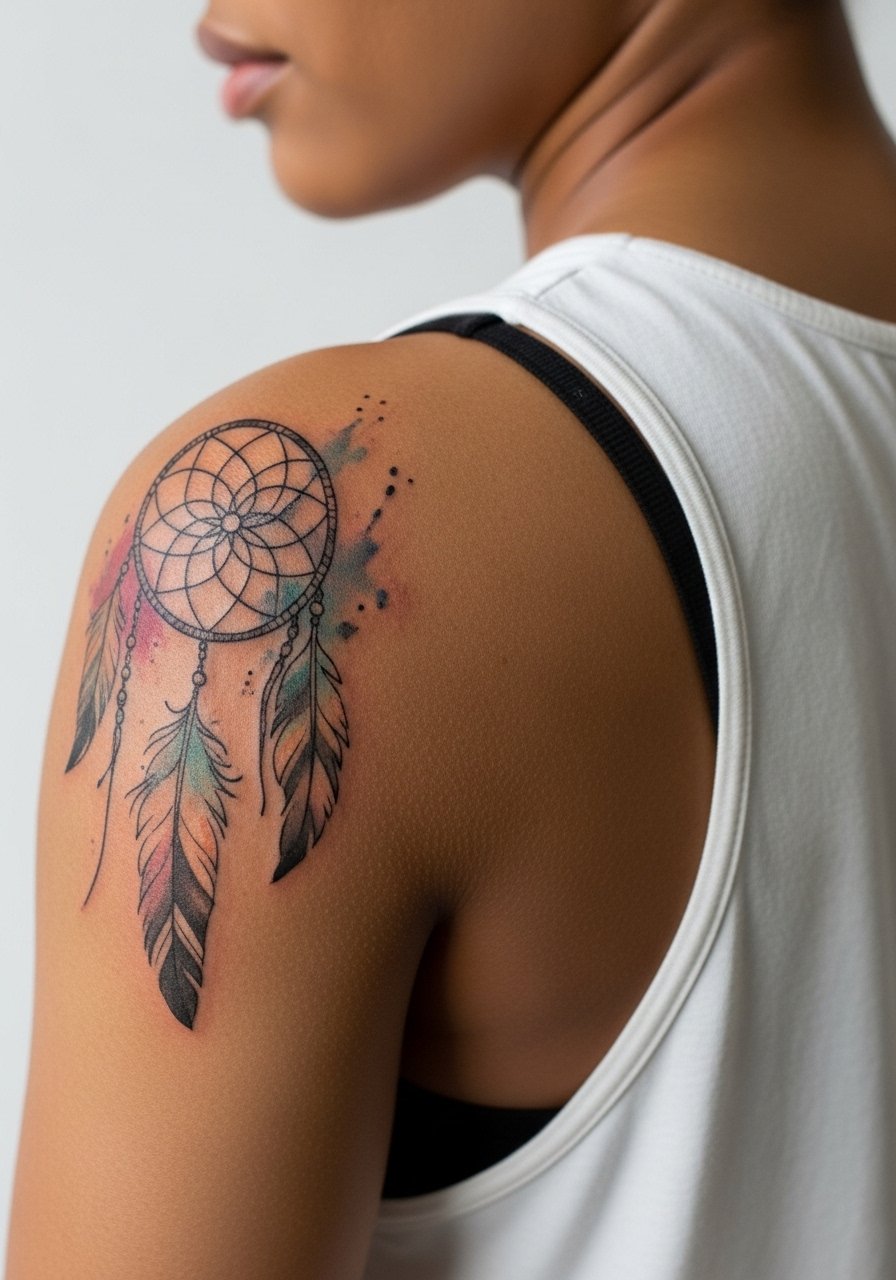
Shoulder dreamcatchers give room for detail and allow both soft color washes and stronger blackwork. Most people who pick watercolor want the airy look. The longevity trick is to anchor the design with crisp black outlines inside the ring so the feathers and color washes have a dark frame to age against. Expect two sessions if you want saturated color with delicate feathers and one session if you prefer blackwork only. For the appointment, choose a loose tank top so the artist has full shoulder access without you getting cold.
4. Lotus Outline at the Ankle
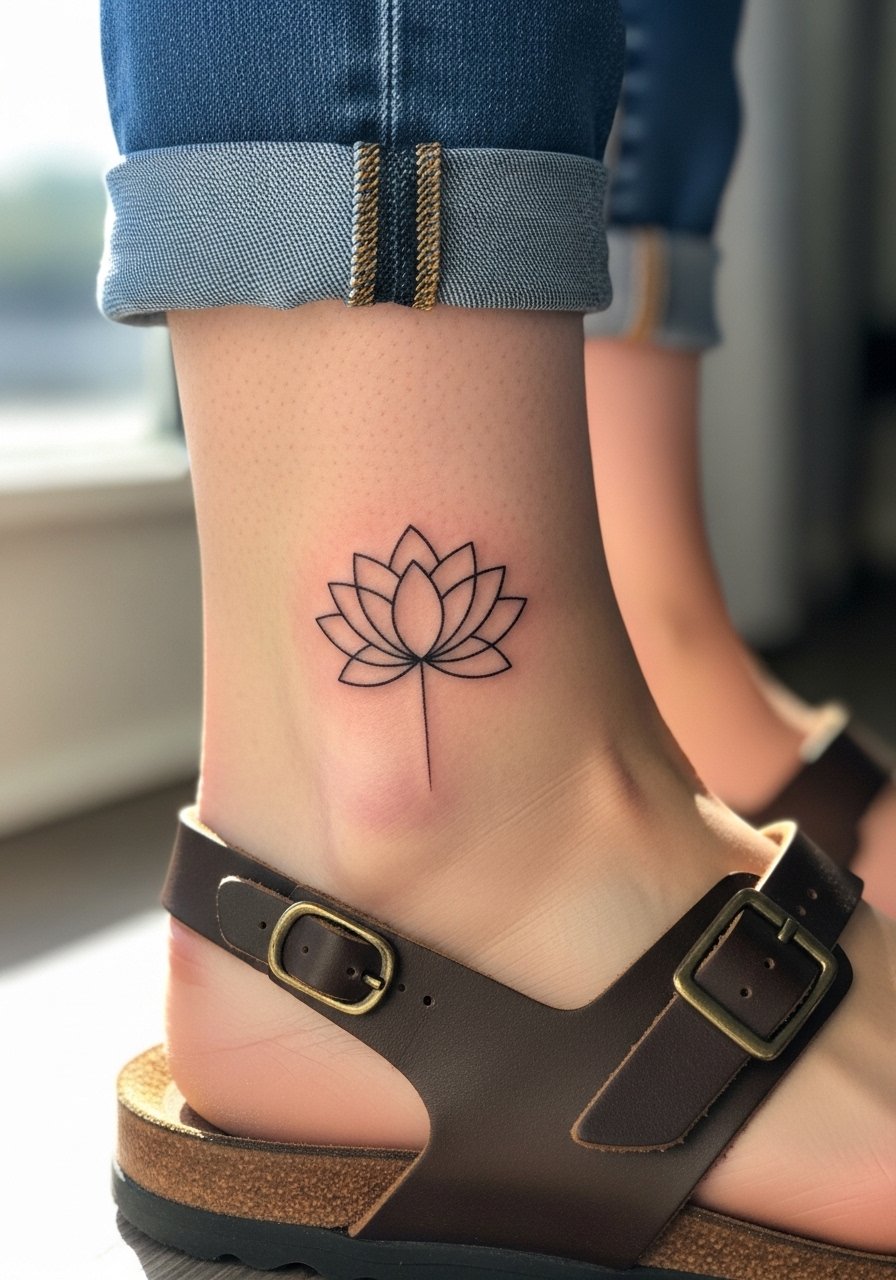
A small lotus on the ankle reads elegant when executed in single needle fine line. The ankle sees friction from socks and shoes so the lines should be bold enough to survive repeated wear. The common mistake is shrinking the lotus too small and using the thinnest possible needle. That choice makes the petal tips thin and fragile over time. Pain is noticeable around the bony ankle. For summer showing, pair it with strappy flat sandals or cropped jeans to keep attention on the linework.
5. Snake Coiled Around a Dagger on the Thigh
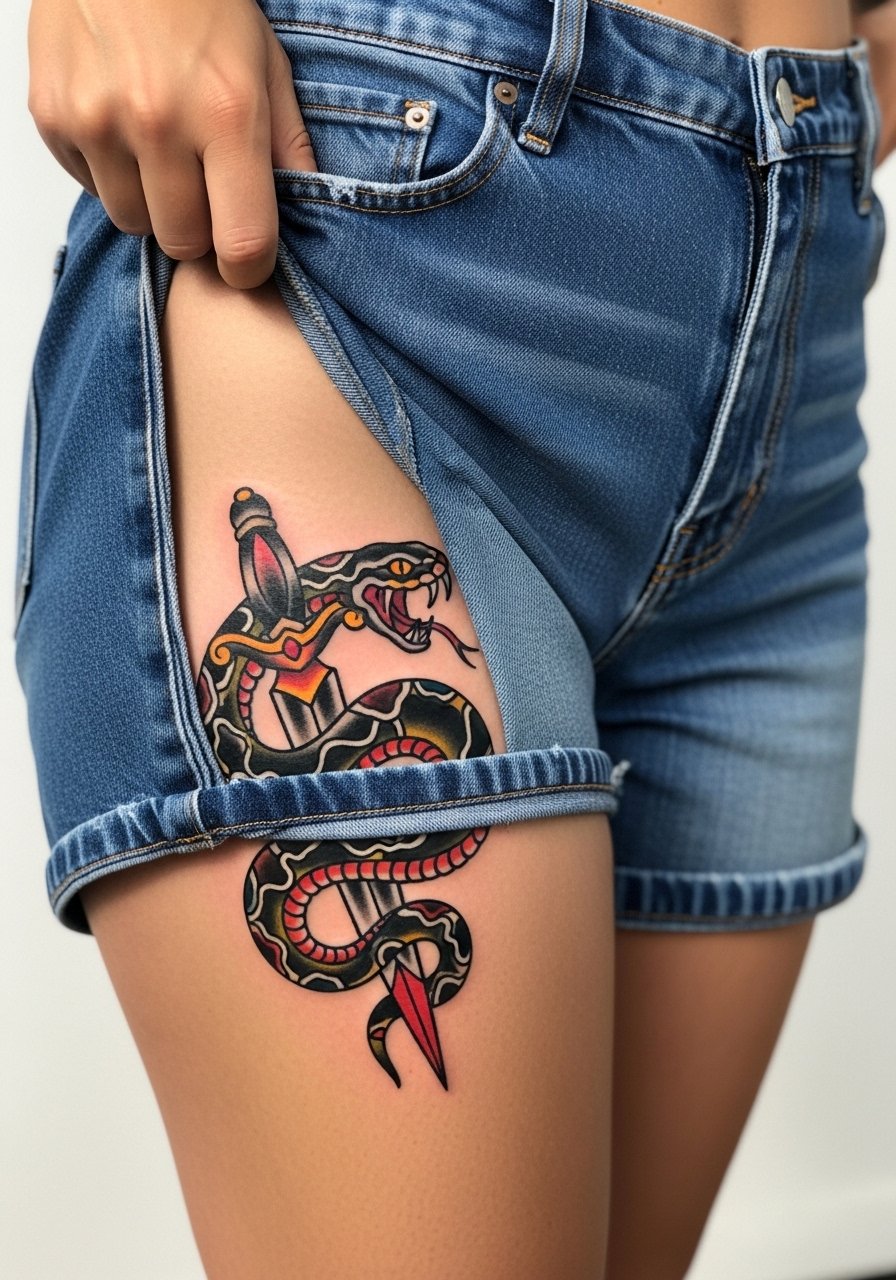
Thigh pieces tolerate saturation and bold color because the skin there stretches less with daily movement than forearms do. This classic motif benefits from strong contrast in the scales so the snake reads from a distance. A mistake I see is asking for too many tiny details in a design meant to be seen from across a room. Sessions can run two to four hours depending on size and color. For show-off outfits, high-waisted shorts or a midi skirt with a side slit reveal the coil without overexposing the area.
6. Birth Flower with Coordinates on the Ribcage
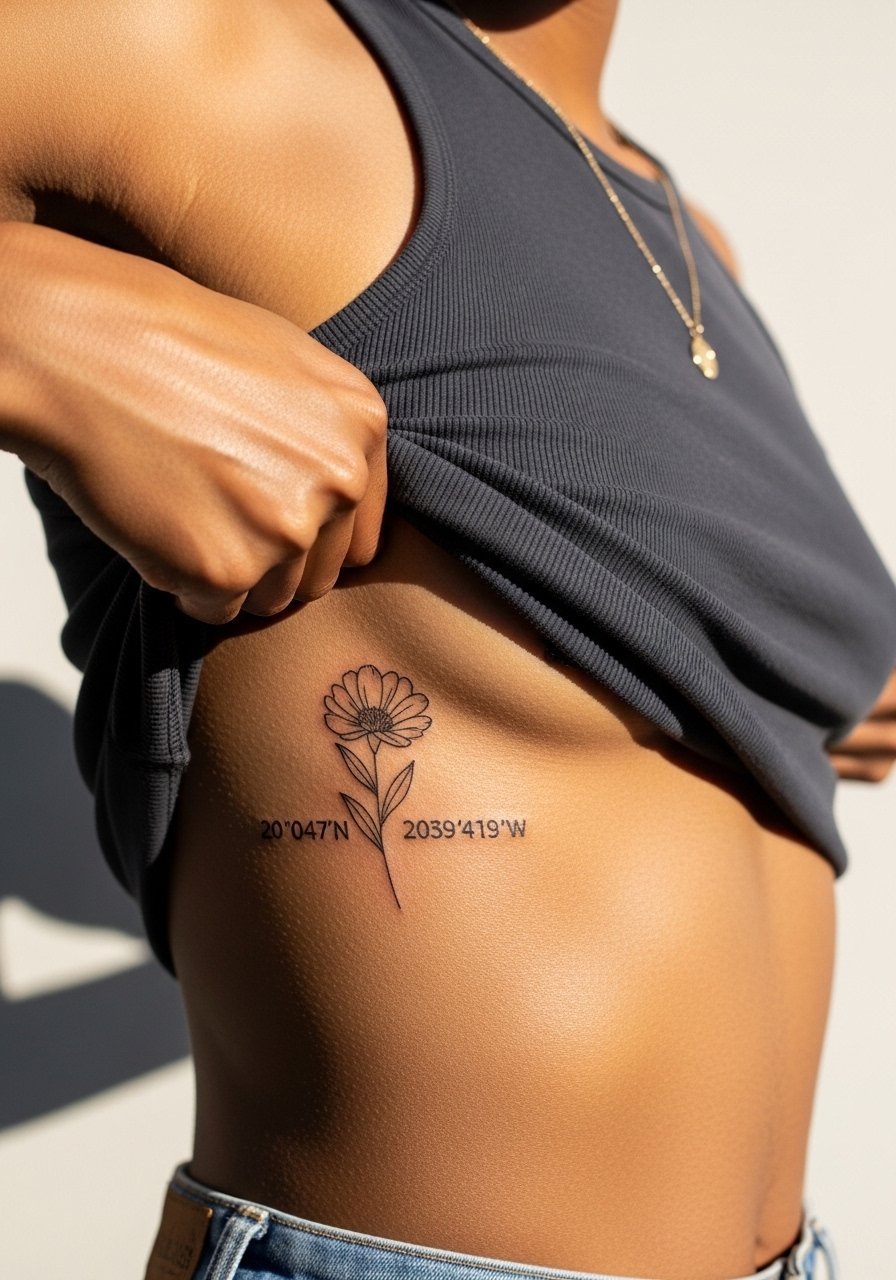
Fair warning, ribs rank high on most pain charts, yet many people choose this spot for privacy and curve. The beauty of pairing a birth flower with coordinates is the personal map it creates without spelling out a name. Artists are split on fine line on ribs. One group says thin lines blur quickly due to skin stretch. The other group says precise depth and a bit more spacing keep the work readable. Ask about needle depth and touch-up expectations in your consultation. For the session, wear a sports bra or fitted crop top that you can shift slightly to expose the exact area.
Studio Day Picks
The forearm, wrist, shoulder, thigh and ribcage pieces above have different prep needs, and a compact kit smooths the session and the first week of healing.
-
Stencil transfer paper kit. Lets you preview placement on skin before the needle touches down, which is especially useful for forearm vines and ribcage florals.
-
Topical numbing cream. Applied under a barrier about 45 minutes before the appointment eases rib and thigh sensitivity without interfering with linework.
-
Thin protective film roll. Useful for small wrist and ankle pieces that rub against clothing during the first days.
-
Fragrance-free body wash. A gentle wash helps the fine line wrist and forearm work heal without irritation from scented products.
-
Aquaphor healing ointment. A thin layer in the earliest window can keep delicate single-needle work moist while skin begins to heal.
7. Infinity Knot with Tiny Hearts Behind the Ear
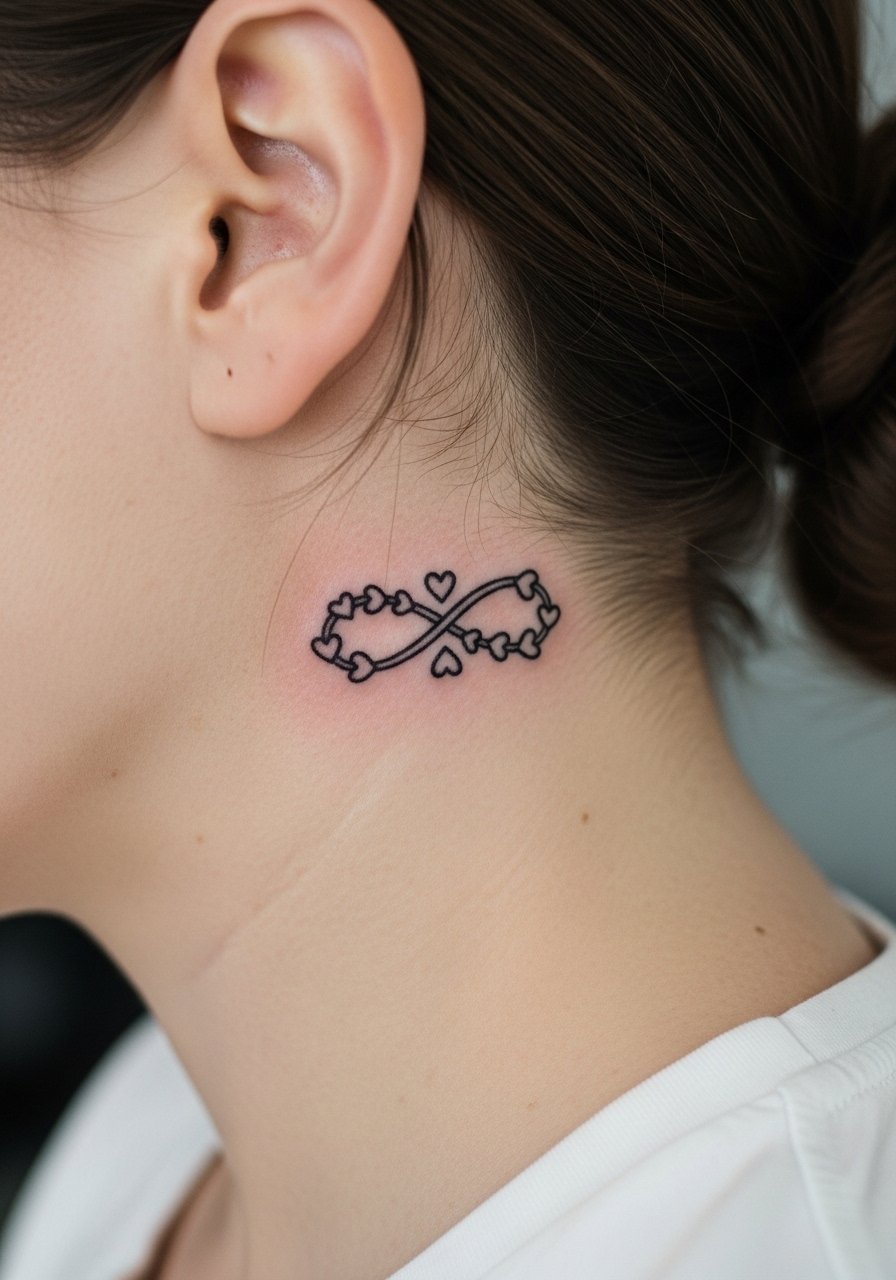
This behind-the-ear micro piece sits in a discreet spot that looks intimate and is easy to conceal with hair. The area is sensitive, and fine line here can fade faster because hair oils and shampoo contact it frequently. Ask your artist to place the knot slightly larger than you expect so the hearts remain identifiable. Session time is short but bring a headphone and expect some buzzing sensations. For discretion or nights out, tuck hair behind one ear and wear small studs to frame the area.
8. Evil Eye Talisman on the Inner Wrist
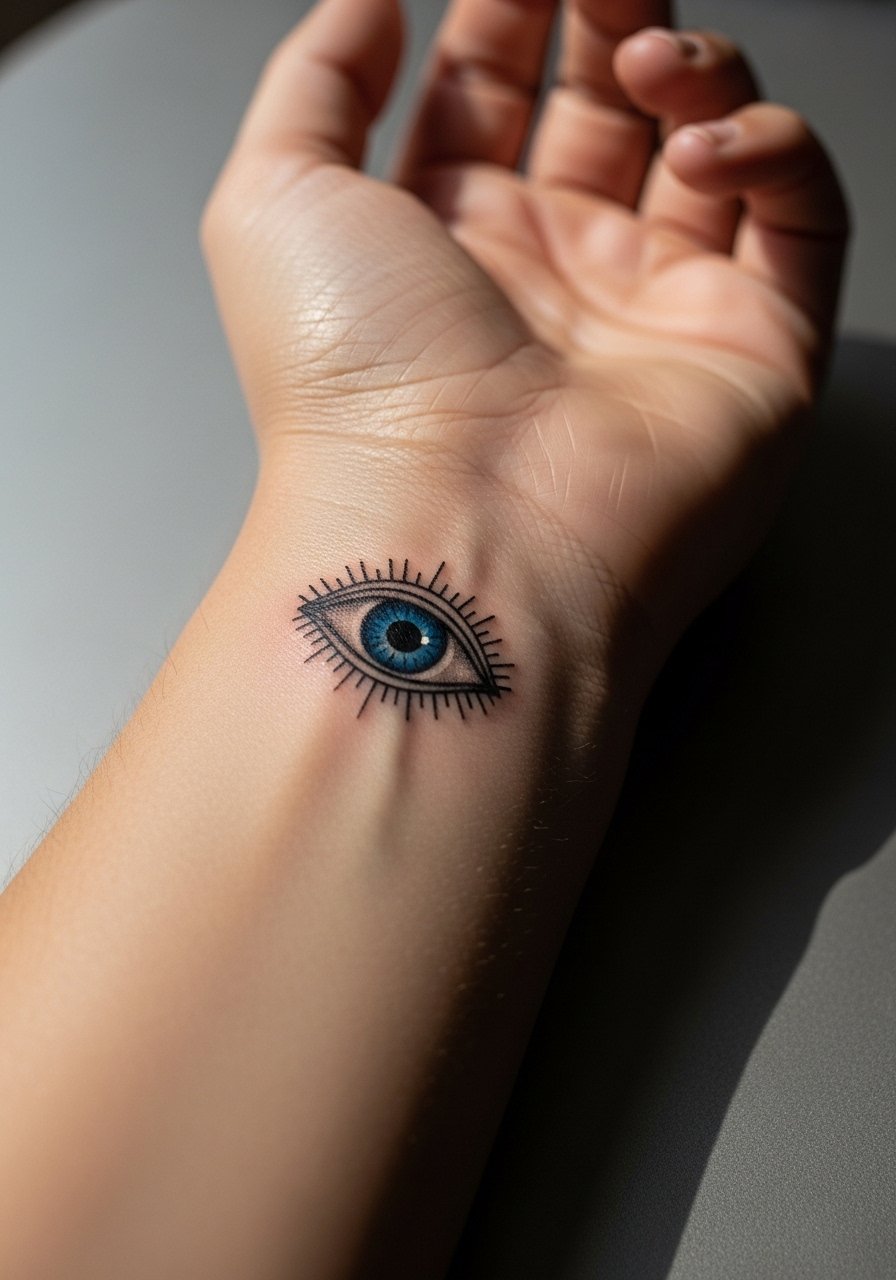
The inner wrist suits tiny protective symbols because it is visible to you throughout the day. Micro-realism needs crisp dots and saturated color to retain the pupil and lashes after a year. The common mistake is shrinking the charm too much. Make sure the artist spaces the color dots so they do not blur into one another as the skin settles. Expect a short session and light discomfort. Swap bracelets for a thin leather cord during the session so metal does not interfere with stencil placement.
9. Cherry Blossom Branch Across the Collarbone
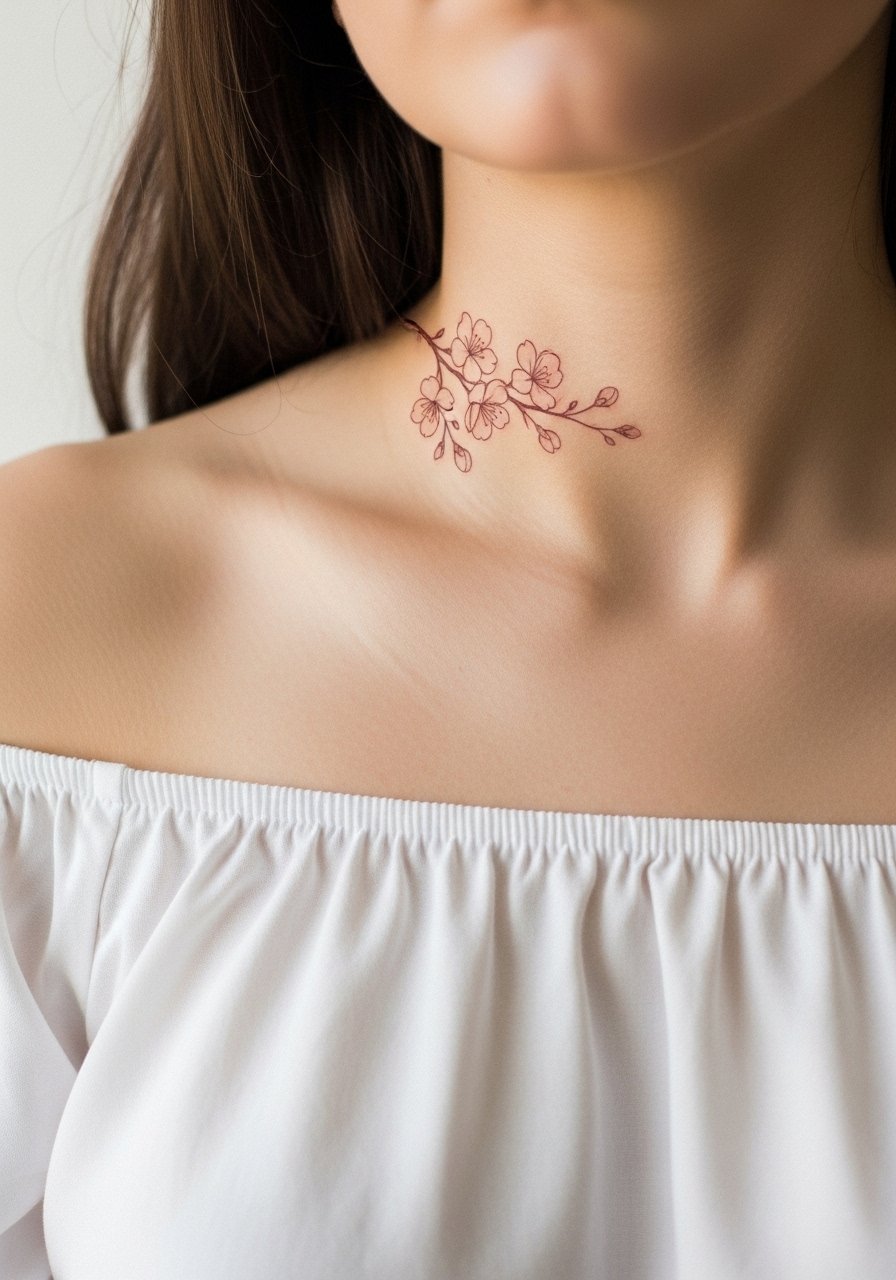
Collarbones show off horizontal botanical work beautifully but they also sit near clothing seams that can rub while healing. Cherry blossoms benefit from soft pink shading anchored by black stems so the petals remain visible over time. A frequent error is packing too many small petals into a narrow span. Make the branch longer with negative space around clusters. For photos and outings, pair the piece with an off shoulder blouse so the flowers sit in the open without necklace clutter.
10. Tree of Life Mandala on the Upper Back
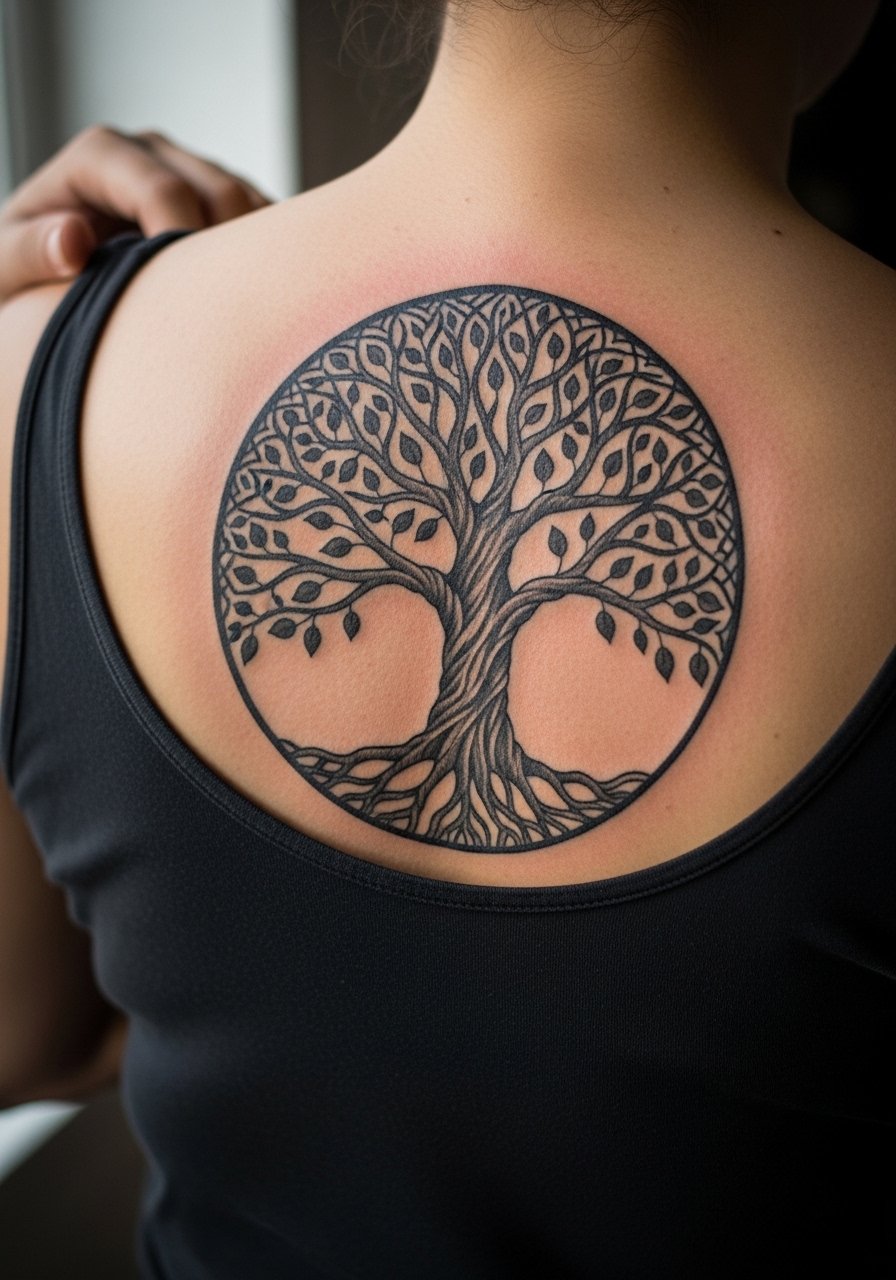
Back pieces give space for ornament and symmetry which helps mandalas age more predictably. Heavy blackwork in the trunk and key mandala rings preserves contrast as minor shading softens over five years. A mistake is trying to cram a dense mandala into a small square. Keep it larger and centered on the shoulder blades. Sessions typically run longer because of the detail. For sessions, choose a loose button-down you can put on backwards or a tank top that allows the artist easy access.
11. Sun and Moon Matching Anklets
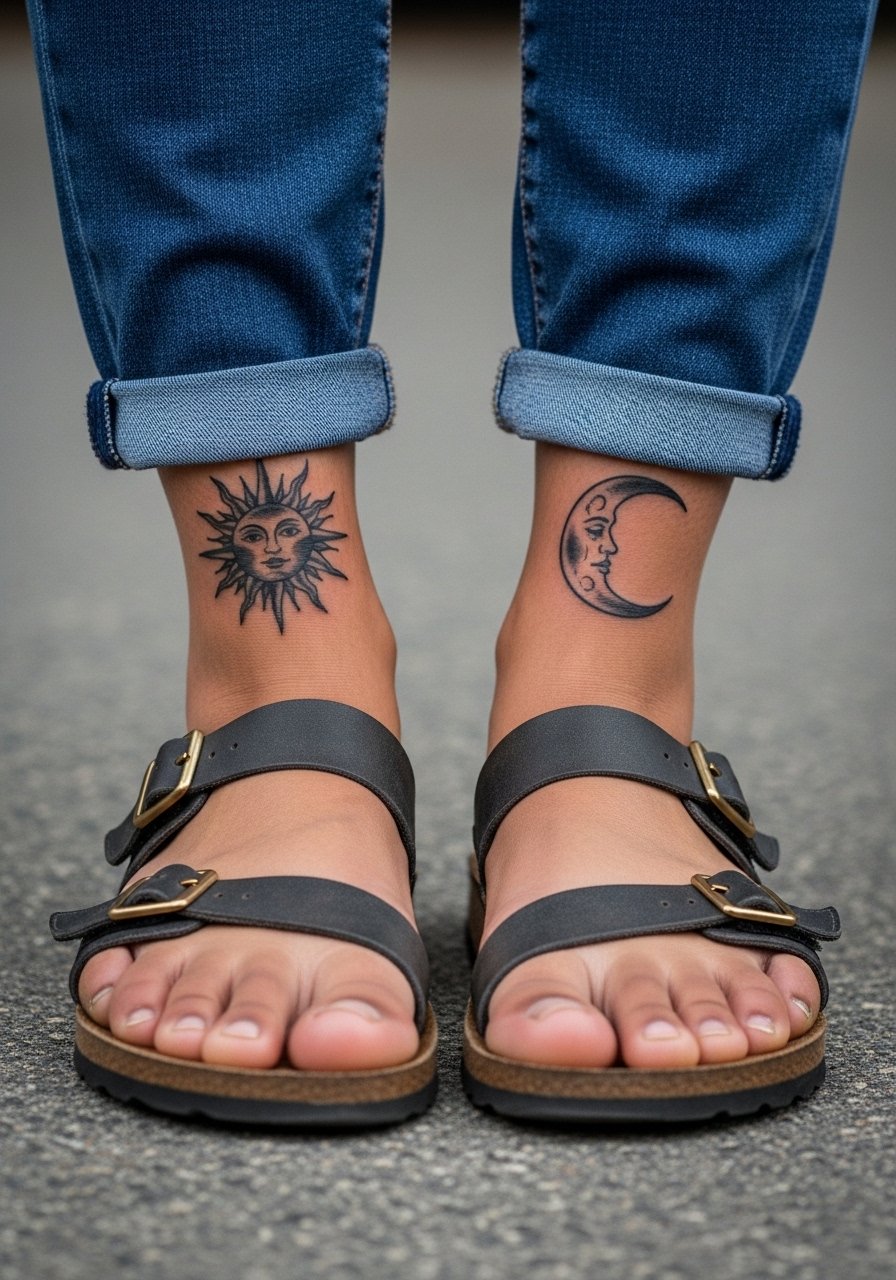
Matching ankle pieces create a complementary story for pairs who want subtle twin motifs. Ankles are exposed to shoes and socks so minimal lines and low-detail fills work best. The mistake is placing too much tiny shading that will rub and fade against footwear. Keep motifs simple with bold outlines and small color blocks. Pain is sharp when the needle hits bone, but sessions are short. Pair with strappy flat sandals and cropped jeans for summer visibility.
12. Constellation Zodiac Map on the Inner Bicep
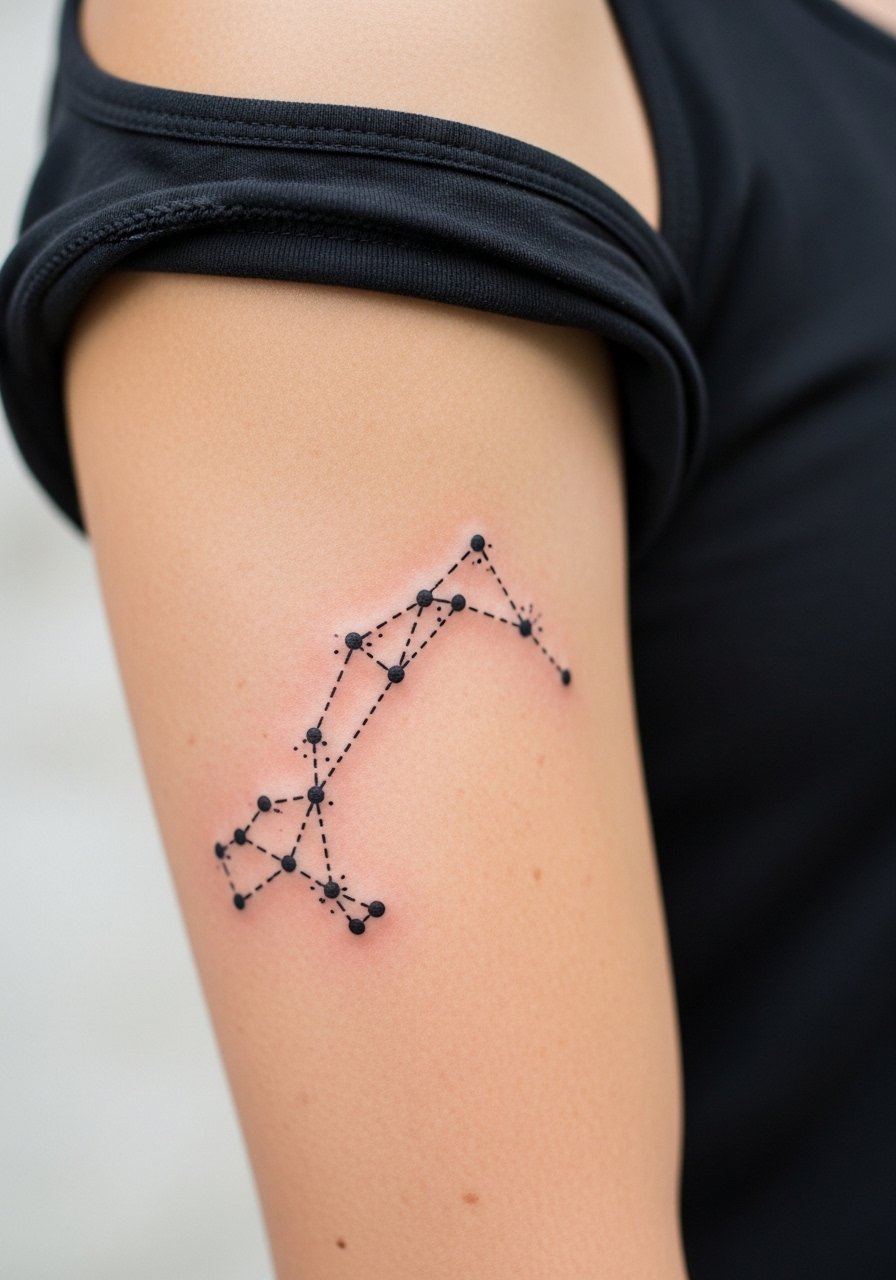
Inner biceps are a great canvas for dotwork because the skin is relatively stable and hides the piece when needed. A common error is compressing constellation dots too close together which causes merging as the dots settle. Ask for slightly wider spacing and a subtle connecting line that can soften without vanishing. Expect moderate pain when the arm is raised for a longer session. For after-session comfort, wear a loose sleeve top and keep the arm relaxed to prevent unnecessary stretch.
13. Diamond with Crown on the Ankle
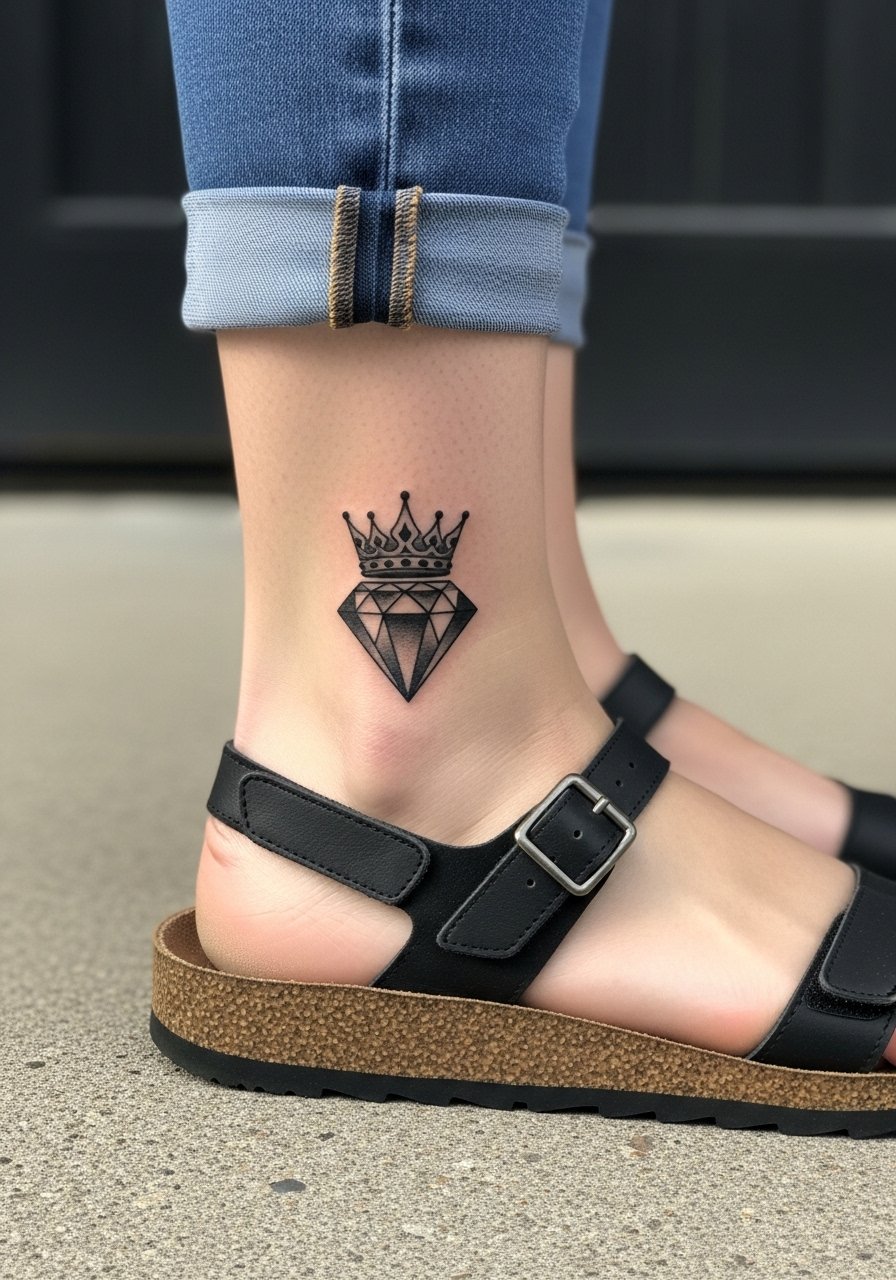
Solid blackwork on ankles holds up well because large fields of saturated black resist fading better than sitter dot shading. The common mistake is using thin linework for a gemstone that needs dense facets to read as a diamond. Ask for bold facets and crisp crown edges so the piece remains legible. Sessions are short and discomfort depends on how close to bone the design sits. Style it with a delicate gold ankle chain when you want a little sparkle.
14. Book with Zodiac Symbols on the Sternum
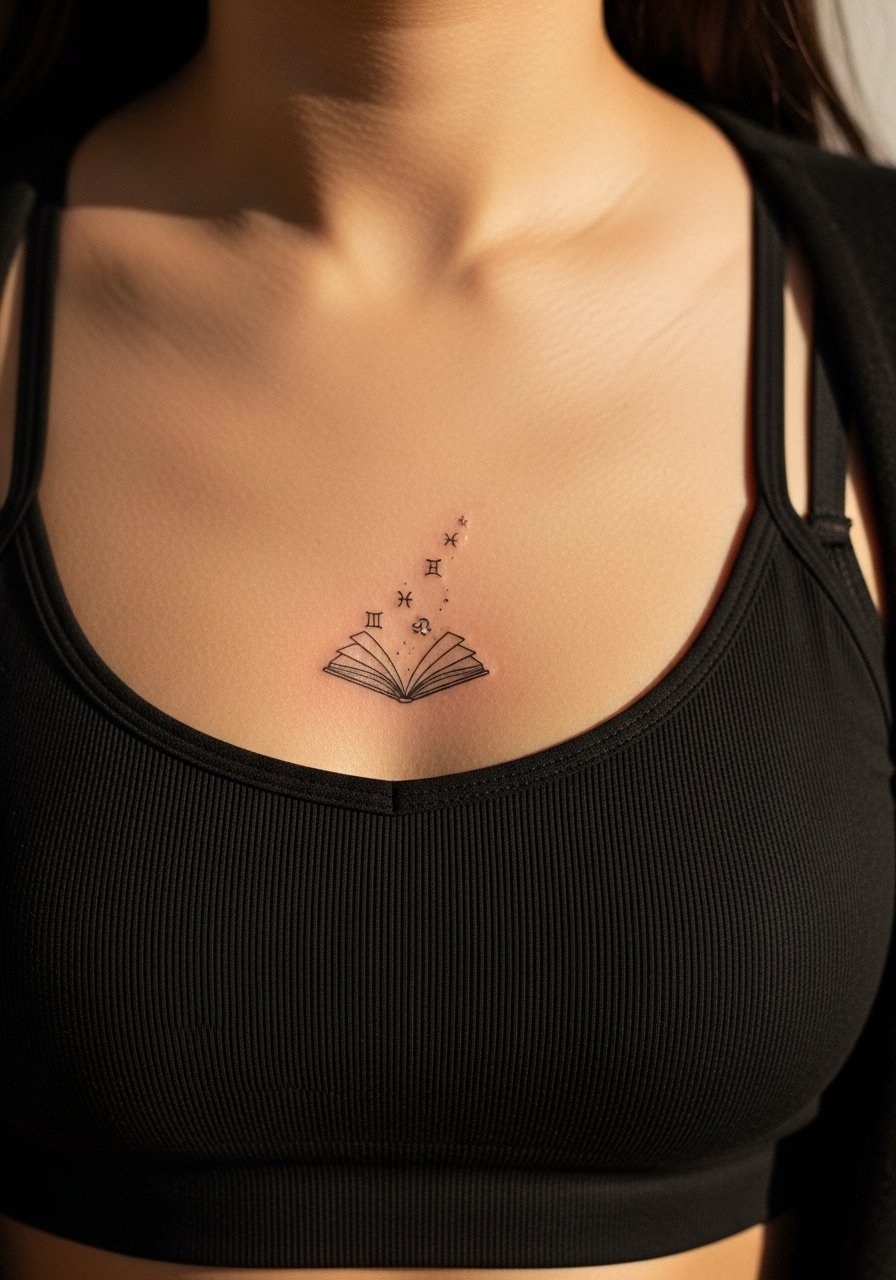
Sternum placements are intimate and demand confident consultations because the area is sensitive and heals differently across bodies. A book motif with zodiac glyphs anchors knowledge and identity without spelling names. Many artists avoid super-fine script here because the skin shifts with breathing. Choose a slightly larger scale and clear glyph forms. Sessions can be uncomfortable. Wear a fitted sports bra you can shift and ask about breathing breaks.
15. Tiny Plane for Travelers on the Side Wrist
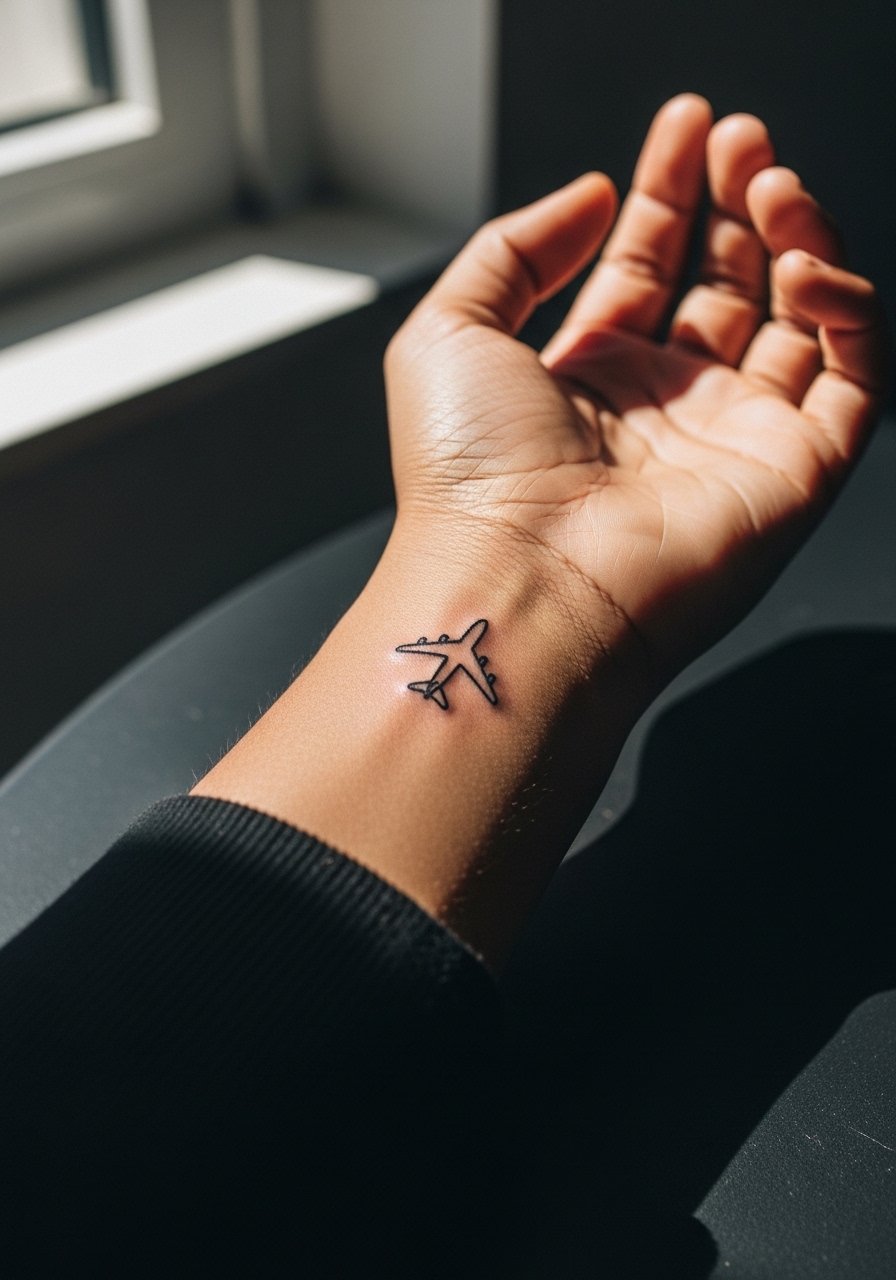
Travelers often pick a tiny plane as a discreet marker for a life in motion. The side wrist sees a lot of movement and tugging, so keep the plane simple and bold enough to survive frequent washing and bracelets. The mistake is pushing the size below one centimeter which can blur into an unrecognizable mark. Sessions are short and pain is low. For showing it off or hiding it during travel days, trade metal bracelets for a thin leather bracelet opposite the tattoo.
16. Geometric Mandala on the Calf
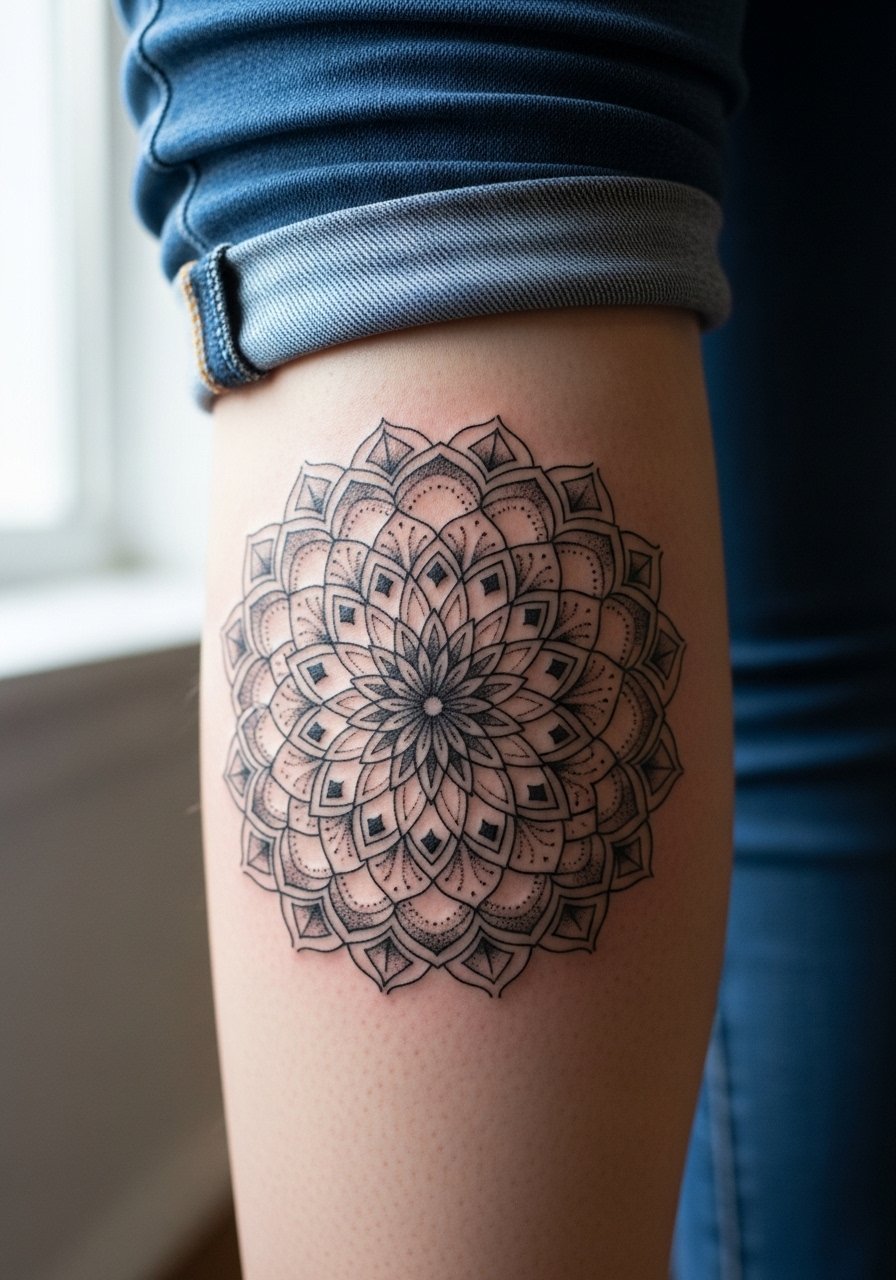
Calves take shading well and offer a vertical plane for mandala symmetry. The shift from watercolor to blackwork is a trend because blackwork keeps lines and negative space crisp as it ages. Mistakes happen when artists compress too many tight rings in a small radius. Give the pattern breathing room and expect a two-hour session for a medium-sized piece. Pair the healed look with cropped pants or a cropped straight jean to frame the mandala without crowding it.
17. Minimalist Script Along the Collarbone
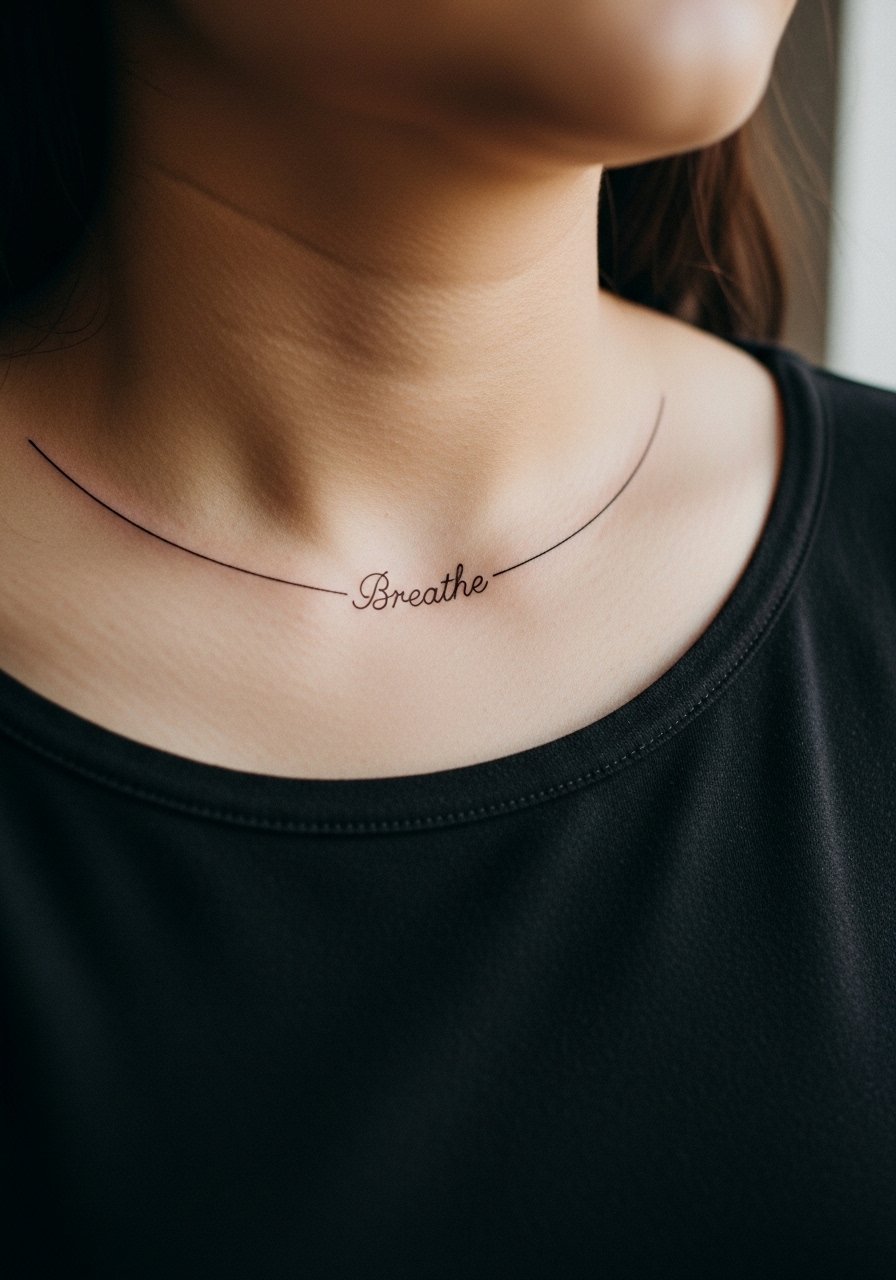
Script on the collarbone reads intimate and can interact with necklace lines in flattering ways. The trick is to use a slightly heavier hairline than your favorite font suggests so the letters do not thin out after healing. A common error is packing too many words into a short span which forces small letters that blur. Sessions are quick and pain is moderate. Layer with a thin chain pendant necklace that sits just below the text to balance the horizontal flow.
18. Chest Flower Pairs Near the Sternum
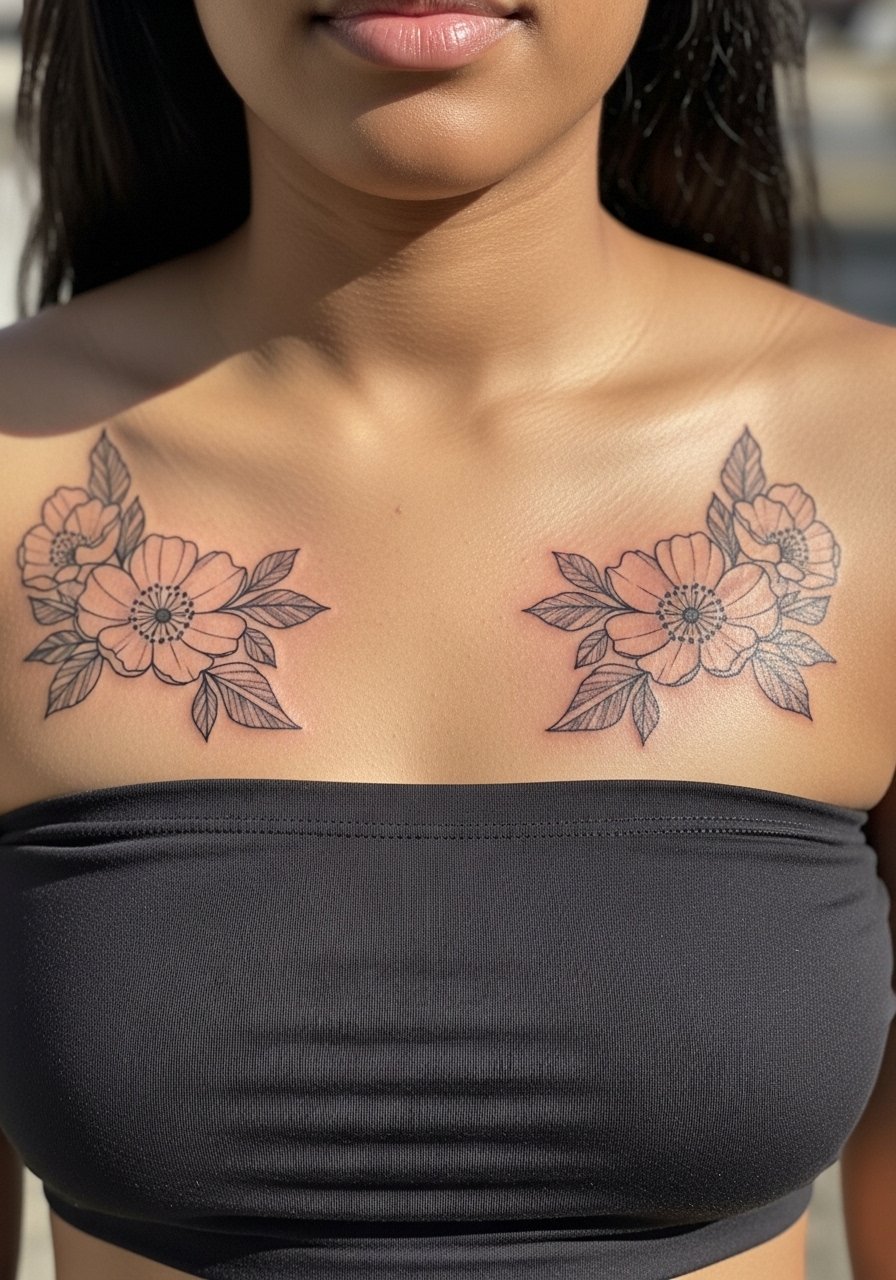
Paired chest flowers play with strength and softness across the upper chest. This area is sensitive and contoured, so artists often prefer slightly bolder lines near the sternum to avoid blurring where skin folds. A mistake is mirroring two different scales which makes one flower dominate. Sessions vary based on size and shading. Consider a fitted bandeau for the appointment so the artist can work without clothing folds.
19. Hip Snake for an Intimate Curve
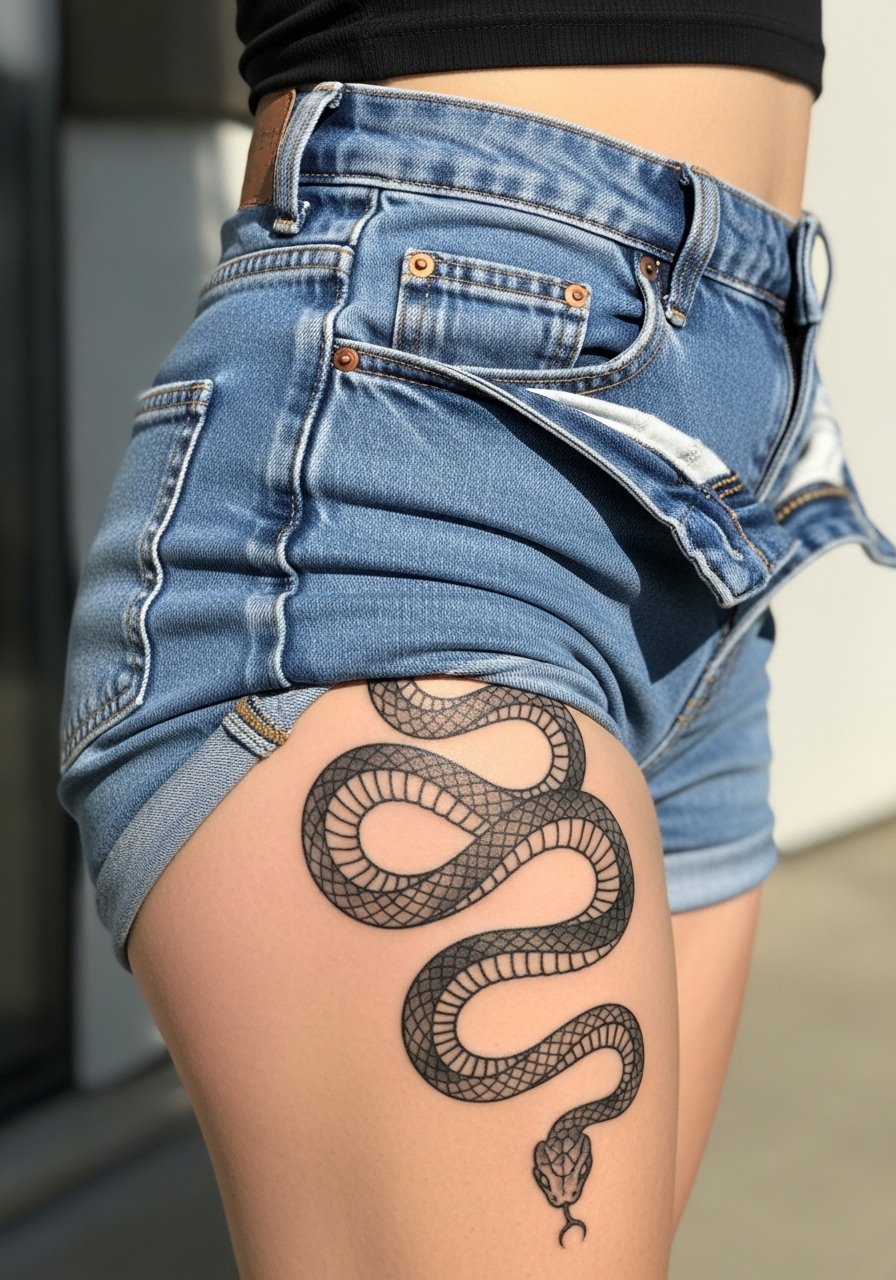
Hip snakes are an under-shown placement that hug curves and read as private and sensual. Because hips move with body weight and clothing, design scale matters more than needle finesse. Tiny scales and very fine lines are at risk of distortion after natural fluctuations. Plan for a mid-weight line and expect moderate discomfort. For outfits, high-waisted shorts or skirts that reveal the high hip line complement the coil.
20. Ocean Wave with Coordinates on the Inner Wrist
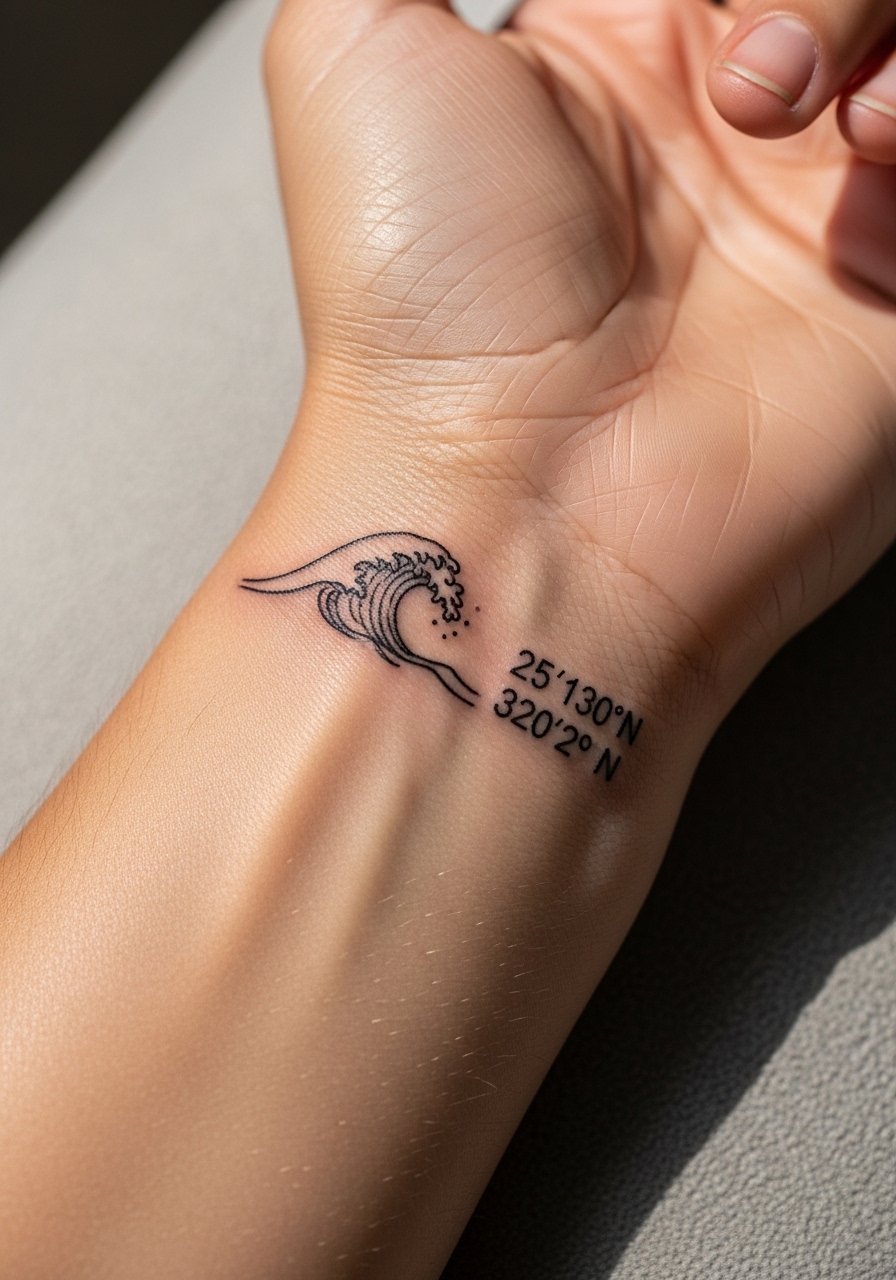
Small wave motifs pair well with coordinates to mark a place that matters without explicit text. Inner wrists face constant movement so keep the wave graphic simple and the coordinate numerals spaced to avoid merging. A frequent mistake is squeezing long coordinates into a tiny area. Choose slightly larger numerals and expect a short session. Complement the piece with a neutral manicure and swap in a minimalist wrist stack when you want to accessorize.
21. Cosmic Script and Tiny Stars Along the Side Rib
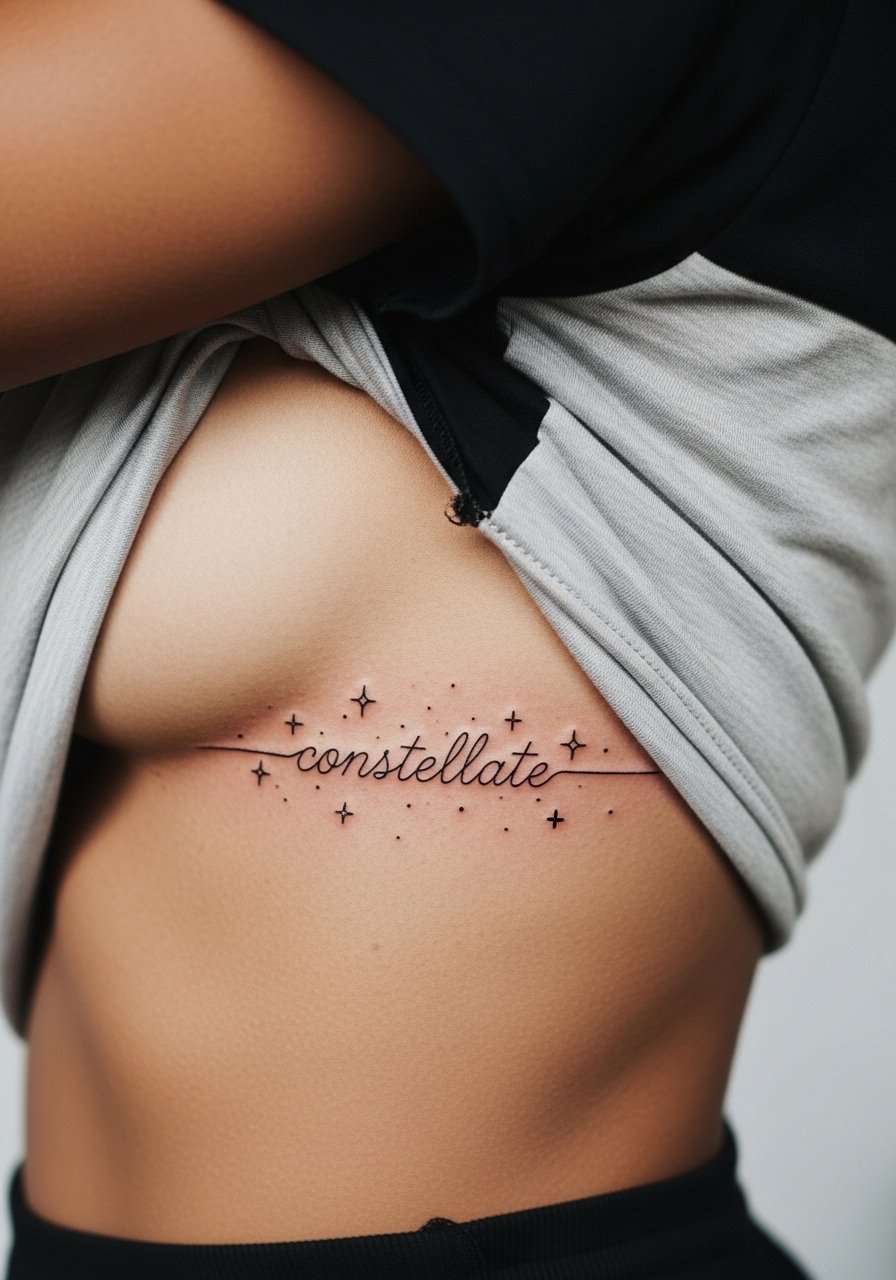
Rib-side script is poetic but sensitive. The skin there flexes and breath affects placement, so keep the script at a legible scale and avoid ultra-narrow letterforms. Artists split on fine line on ribs. One camp says the stretch blurs thin scripts quickly. The other camp says spacing and slightly heavier hairlines keep text legible for years. Ask the artist which camp their work aligns with. Expect a more intense session, and wear a cropped tee you can lift slightly to expose only the narrow strip for accurate stencil placement.
Frequently Asked Questions
Q: Will fine line florals like cherry blossoms and lotuses fade faster than bold florals?
A: In my experience fine line florals can soften earlier on high-friction spots. Bold outlines and moderate spacing extend visual life. Placement matters more than the aesthetic alone, so consider collarbone or shoulder pieces for finer petals.
Q: How should I dress to the studio for a ribcage or sternum appointment?
A: Wear a fitted sports bra or a cropped tank you can lift slightly so the artist has clear access without exposing more than needed. For rib work, a smooth, seamless fabric helps the stencil sit flat. A sports bra seamless style is practical.
Q: Are color tattoos okay on darker skin tones, or is blackwork safer?
A: Artists debate this. One camp says color can pop but sometimes heals unevenly on deeper tones. The other camp says carefully chosen, saturated pigments do well if the artist has experience. If you have darker skin, look for examples in the artist's healed portfolio and ask about pigment choices.
Q: If I want a small wrist piece and budget is tight, how can I save without compromising quality?
A: Bundle designs into one session where possible and ask about guest-spot bookings or apprentice-led days that the studio trusts. Keep the design size reasonable so session time stays short and costs stay predictable.
Q: How often do fine line wrist tattoos need touch-ups compared with ankle or thigh work?
A: From what I have seen, wrists often need touch-ups sooner because of friction and washing. Ankles and thighs tend to hold color and linework longer. Expect a realistic touch-up window around year two to three for high-use areas.
