
Fine line trends dominate saved boards, but what holds up for years is not always what looks best fresh. Popular collarbone designs lean toward thin linework and small motifs, yet those choices demand decisions about spacing, needle depth, and wardrobe that many people skip in a consultation. Read the options below for designs that follow the bone, what to tell your artist, and how each idea wears at six months, two years, and beyond.
1. Fine-Line Heart Row Along the Curve
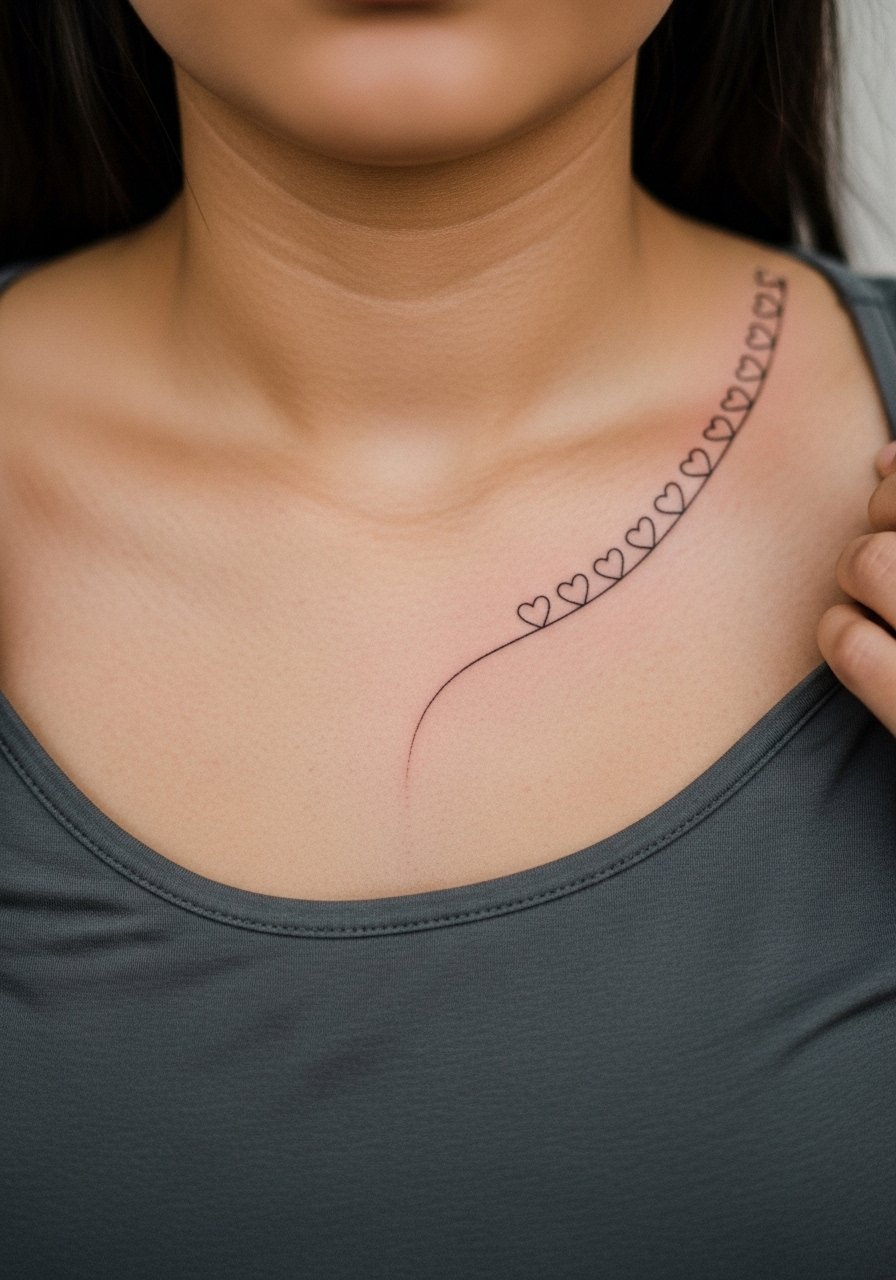
Start this as a centered string of small hearts that follow the bone instead of sitting perpendicular to it. I recommend telling your artist you want slightly bolder line weight than an ultra-micro one so the hearts keep their shape at year two. Common mistakes are packing too many tiny hearts into a short span, which causes merging as the skin ages. At six months the linework looks crisp, at two years expect mild softening, and by five years plan for a touch-up to restore crisp edges. For showing it off, an off shoulder blouse women frames the row nicely while still letting you conceal it under collars.
2. Delicate Floral Stem That Tracks the Bone
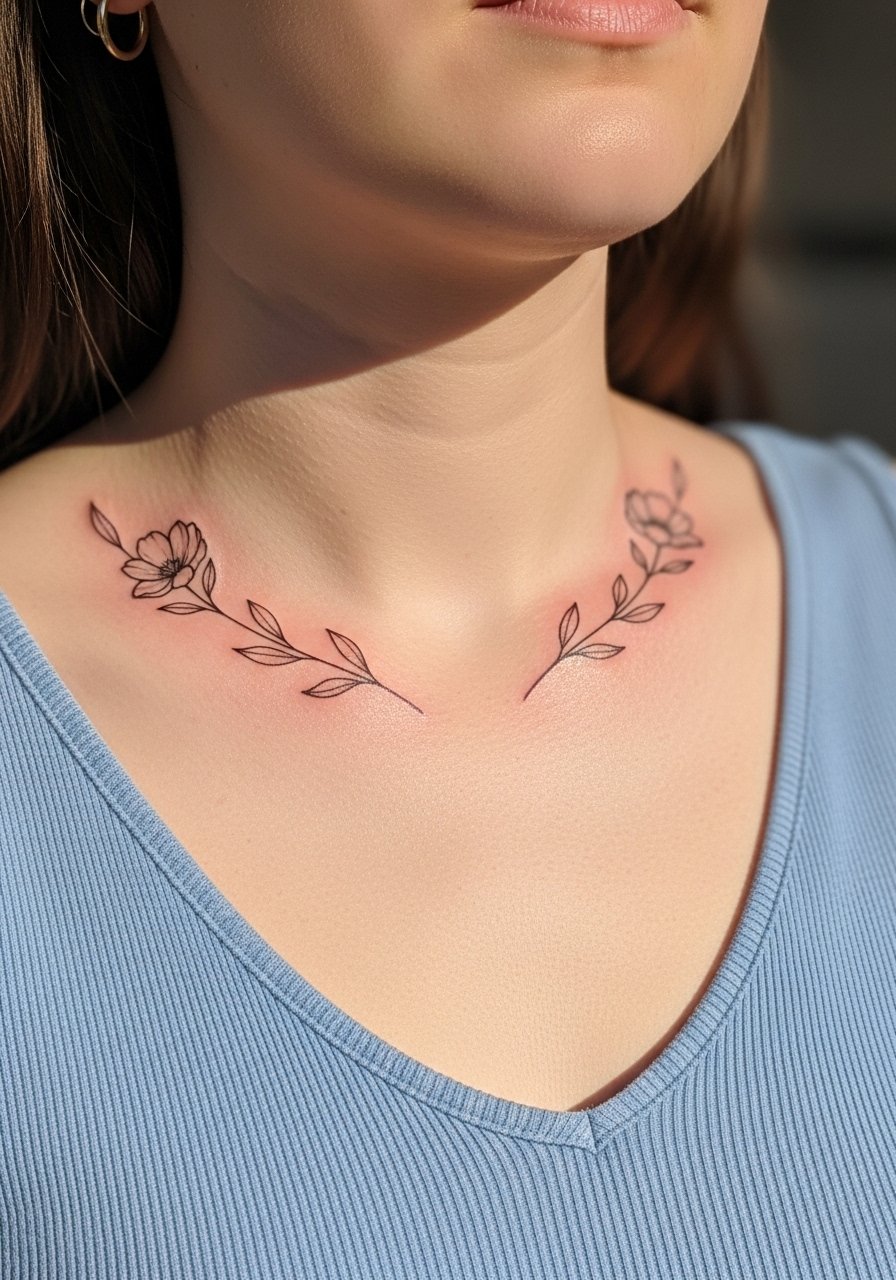
A single-stem floral piece works when you want organic motion without crowding the chest. Ask the artist to ink the main stem slightly thicker than the buds so the anatomy reads after a few years. The session is quick and the collarbone area is sensitive, so expect short sharp twinges when the needle crosses the bone. A common version that ages poorly uses micro stems that blur into the skin after two years. At the one-year mark the contrast holds, at three years detail softens, and a small touch-up restores petal edges. For the appointment wear a loose tank top so the artist can access the area without rubbing straps over fresh ink.
3. Bold Lotus Bloom with Watercolor Accents
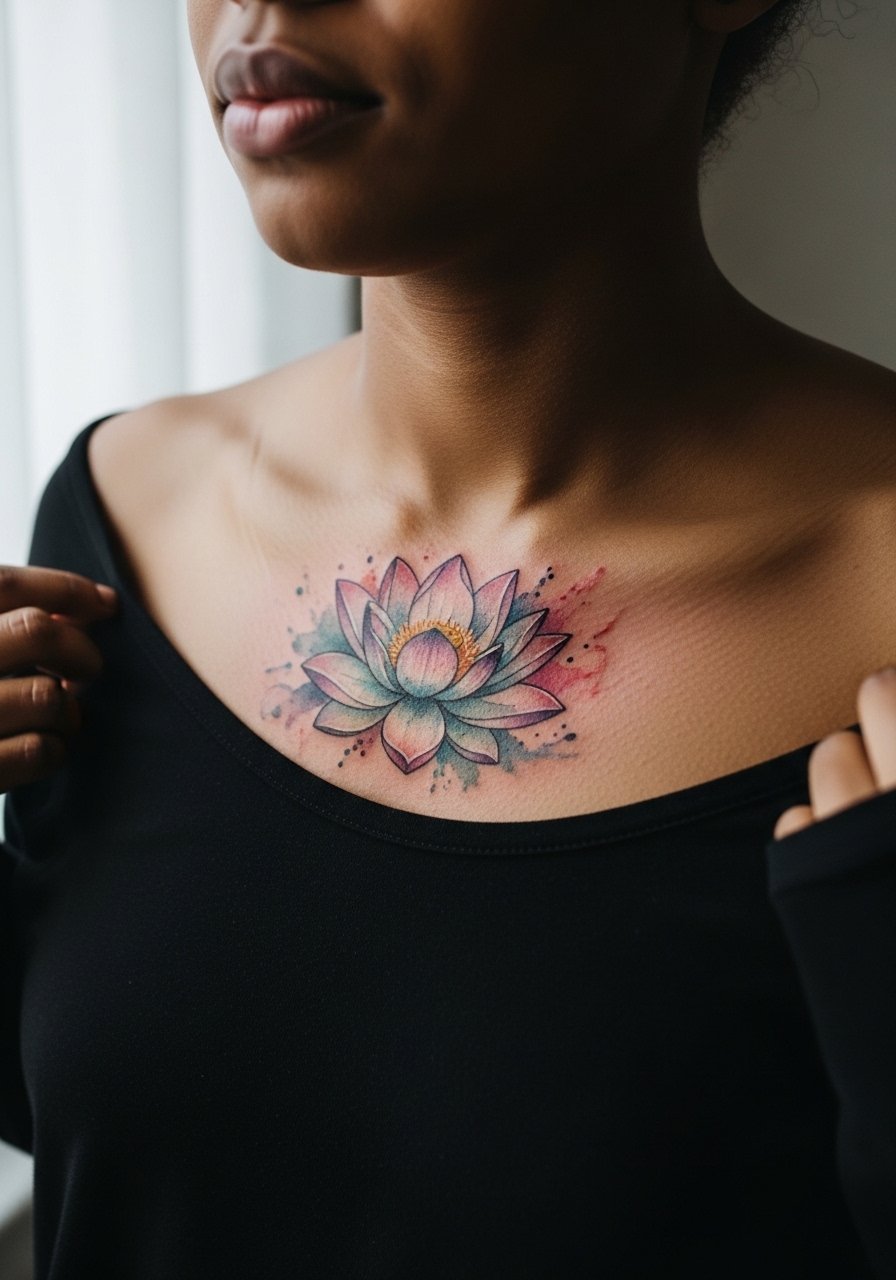
Scale the lotus to be a focal point rather than a micro accent. Tell your artist you want softer edges around the color wash and strong black outlines at the petal base to protect saturation. Expect two sessions if you add color. The collarbone will sting more on the bone itself but the work is short. The risk for watercolor is that pale washes fade faster than solid blacks, so ask for small areas of saturation near the center to anchor the design. At six months the colors pop, at two years the washes mellow, and at five years expect the bloom to need a refresh to bring back vibrancy. When you want to reveal it, a strapless top women lets the shape read without distractions.
4. Horizontal Fine-Line Script Quote
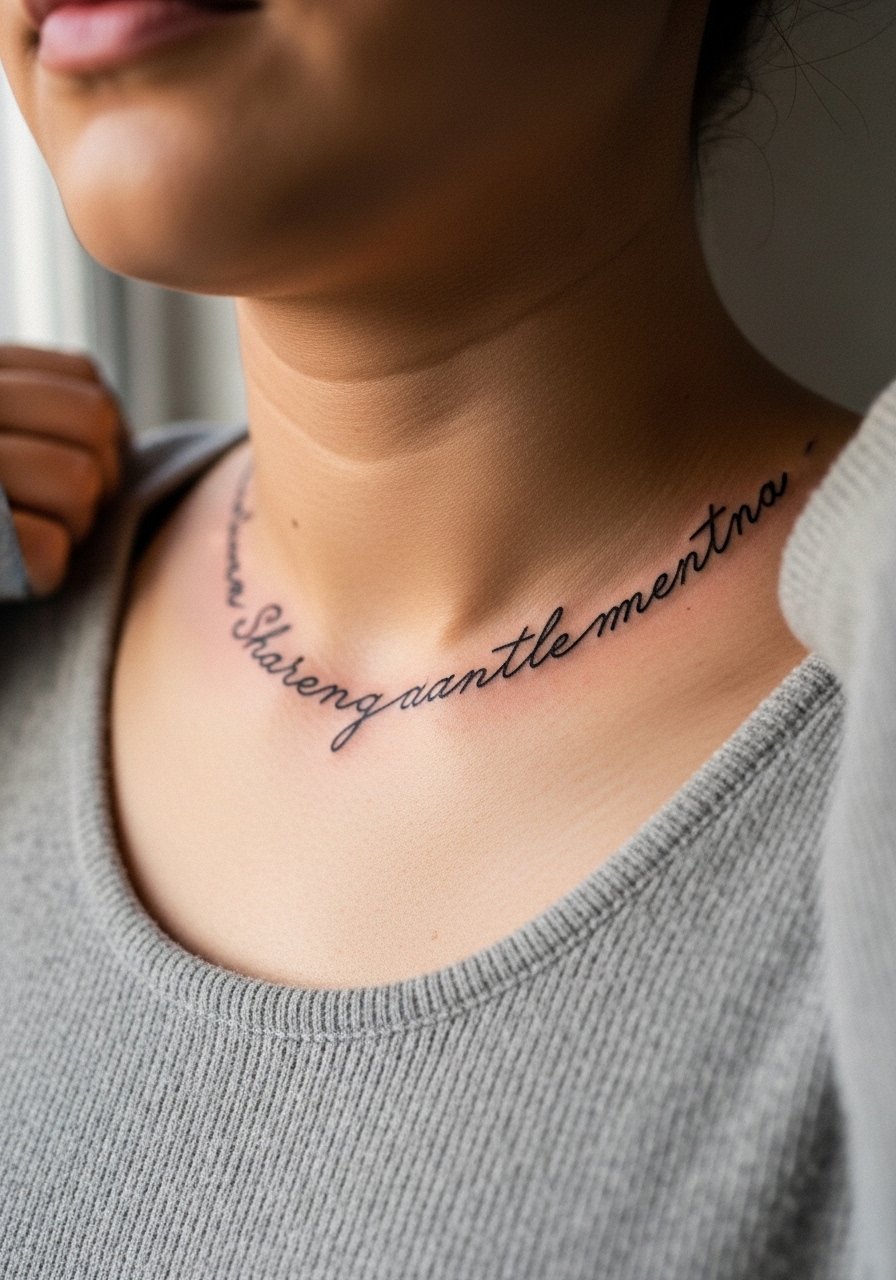
Script across the bone is an elegant place for a short mantra. Be explicit about spacing and ask for a healed-photo reference the artist can show you from their own portfolio. There is a known split in opinion about fine-line script on the collarbone. One camp warns that ultra-thin script blurs within a couple of years. The other camp says properly paced letters and slightly thicker single-needle work will keep text legible for much longer. Tell your artist which side they fall on so you can plan for touch-ups at two to four years. For everyday wear, a low cut tee women keeps the line visible without exposing more than you want.
5. Geometric Triangle Cluster Nestled in the Dip
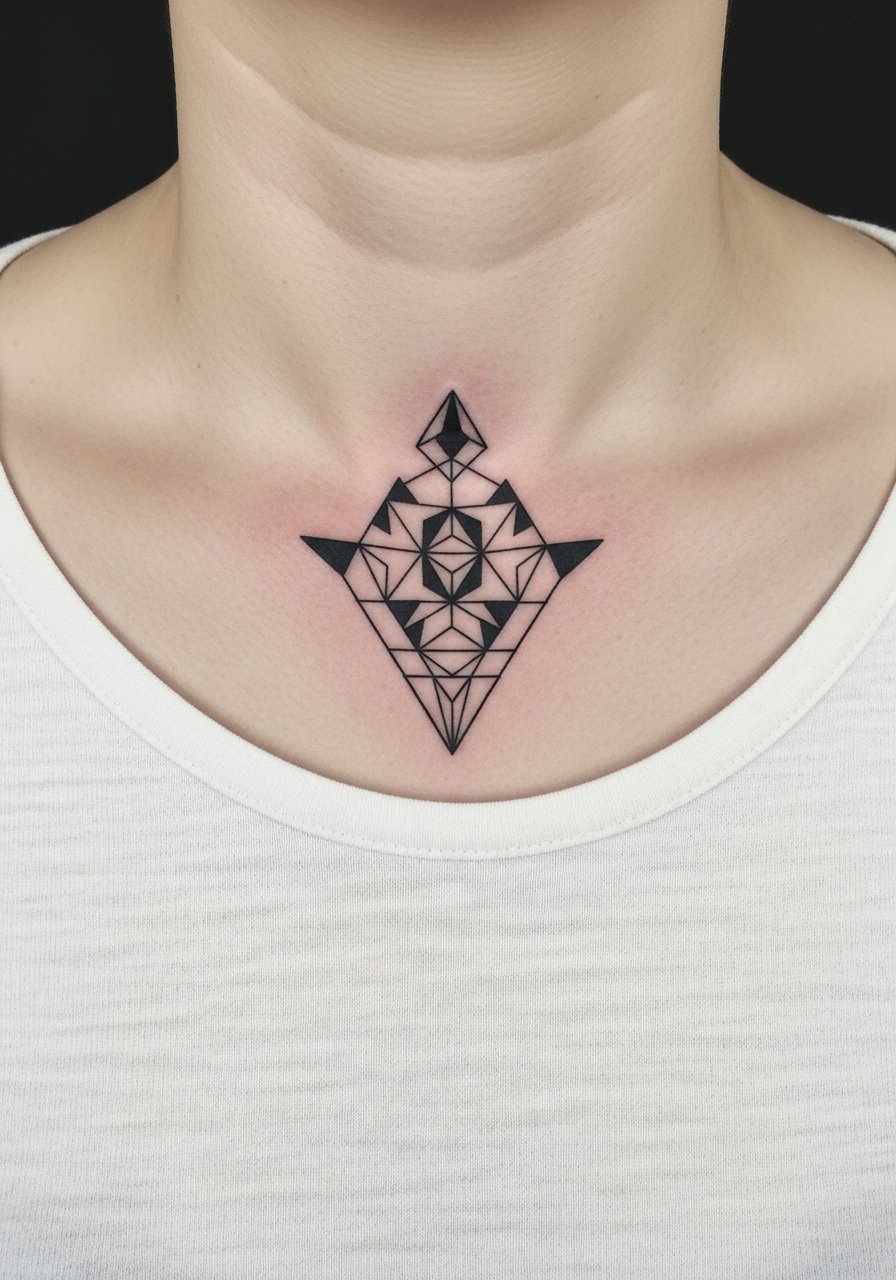
Geometric clusters read modern when they respect spacing. The biggest mistake is scaling triangles too small. Tell the artist you want negative space between each element and specify minimum line width so the geometry keeps its shape. Expect mild discomfort on the central dip where bone is prominent. At six months the edges are sharp, at two years micro-blending can begin where lines sit too close, and at five years well-spaced geometry still looks deliberate. For outfits, a halter neck blouse complements the angular feel while showing the pattern.
6. Wispy Feather Outline That Follows the Arch
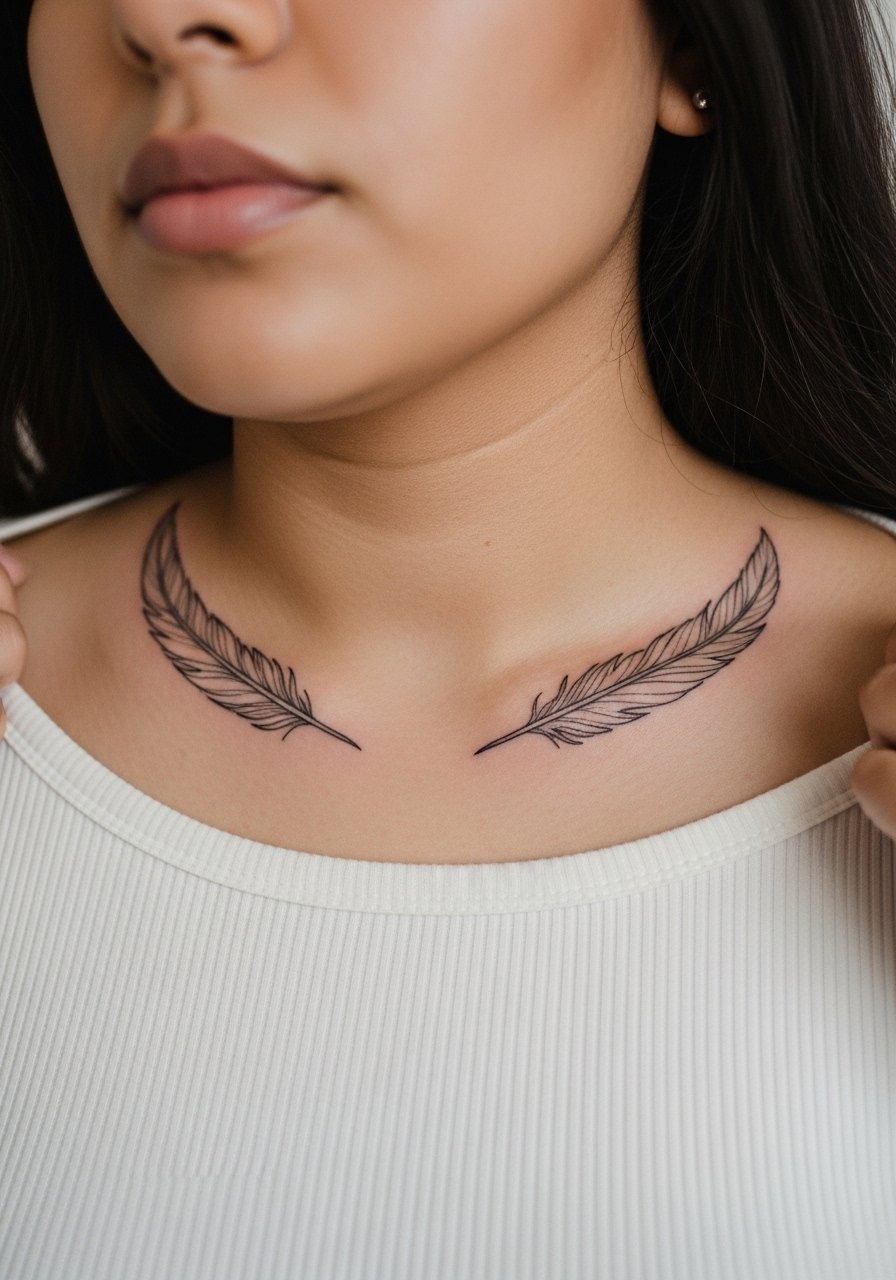
Feathers are forgiving because they already imply texture. Ask for small internal barbs to be slightly bolder so they do not disappear as the work ages. The session is quick and the bone crossings are short bursts of sharp sensation. A common aging mistake is using ultra-faint crosshatching that vanishes within a couple of years. At six months the feather reads airy, at two years thin crossbars fade, and at five years the outline may need a touch-up to regain crisp separation. For a subtle reveal, pair this with a thin chain pendant that sits above the feather.
Studio Day Picks
Those first six collarbone pieces vary in scale and sensitivity, so a few items make sessions and the first week easier.
-
Stencil transfer paper kit. Lets you roll the exact placement and curvature onto skin before the needle goes in, which is key for pieces that trace the bone.
-
Topical numbing cream. Applied correctly before the session it takes the edge off near-bone discomfort without interfering with the stencil.
-
Thin protective film roll. Useful for minimizing friction over the collarbone during the first days of healing, especially for designs near straps.
-
Fragrance free gentle body wash. Cleans the area without stripping pigment or irritating fine line work.
-
Aquaphor healing ointment. A thin layer in the initial window helps keep fine line channels from drying out and flaking too aggressively.
7. Minimalist Vine That Wraps Slightly Around the Bone
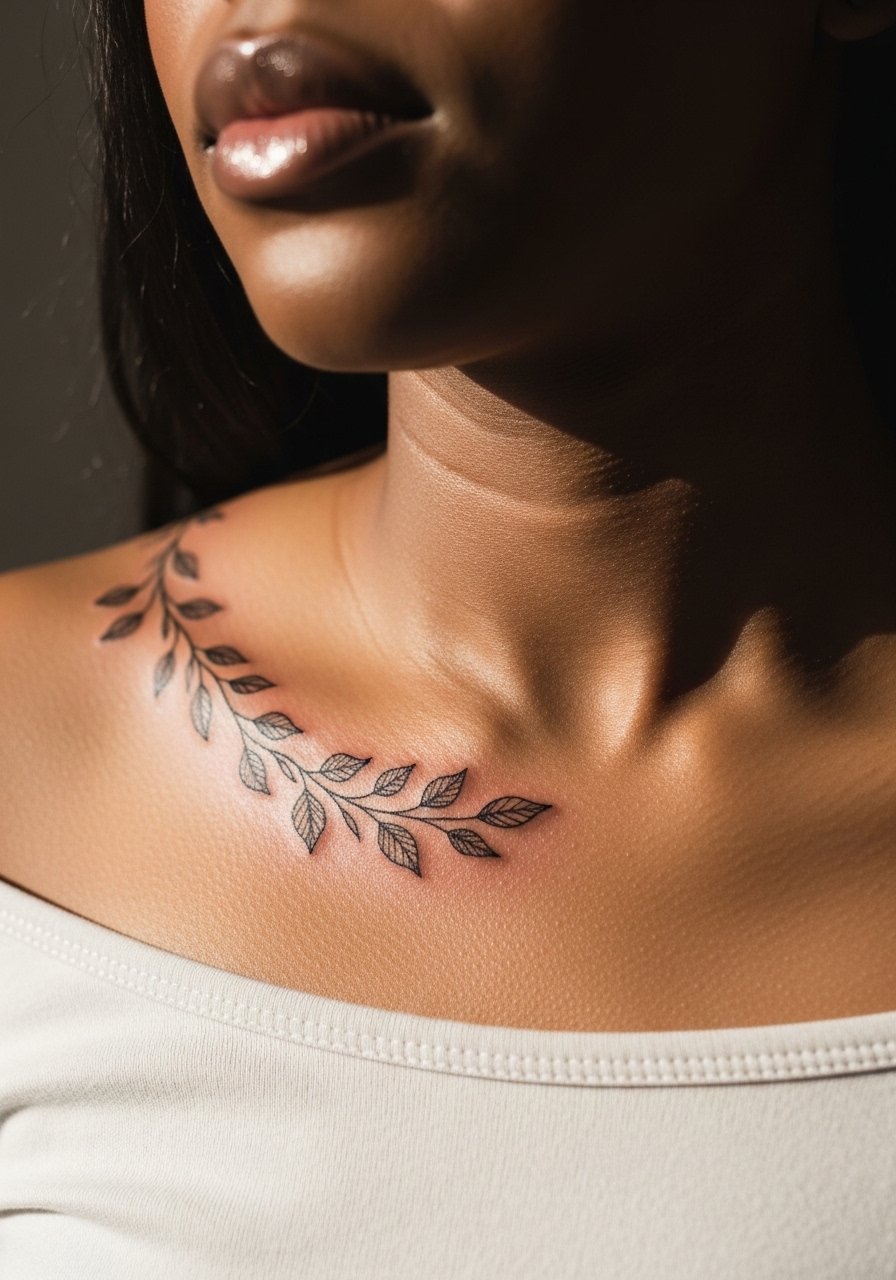
A vine that gently wraps the bone reads organic and moves with the shoulder. Tell your artist to leave small gaps between leaves for skin to breathe as it settles. The session feels pin-prick sharp where the needle crosses the highest point of the bone. One common error is trying to compress too much detail into a short length. At six months leaves still read distinct, at two years tiny leaf veins can soften, and at five years the silhouette should still be recognizable if spacing was respected. For evening looks, a boat neck top lets the vine peek out in a way that follows its flow.
8. Symmetrical Mini Mandala Centered Over the Dip
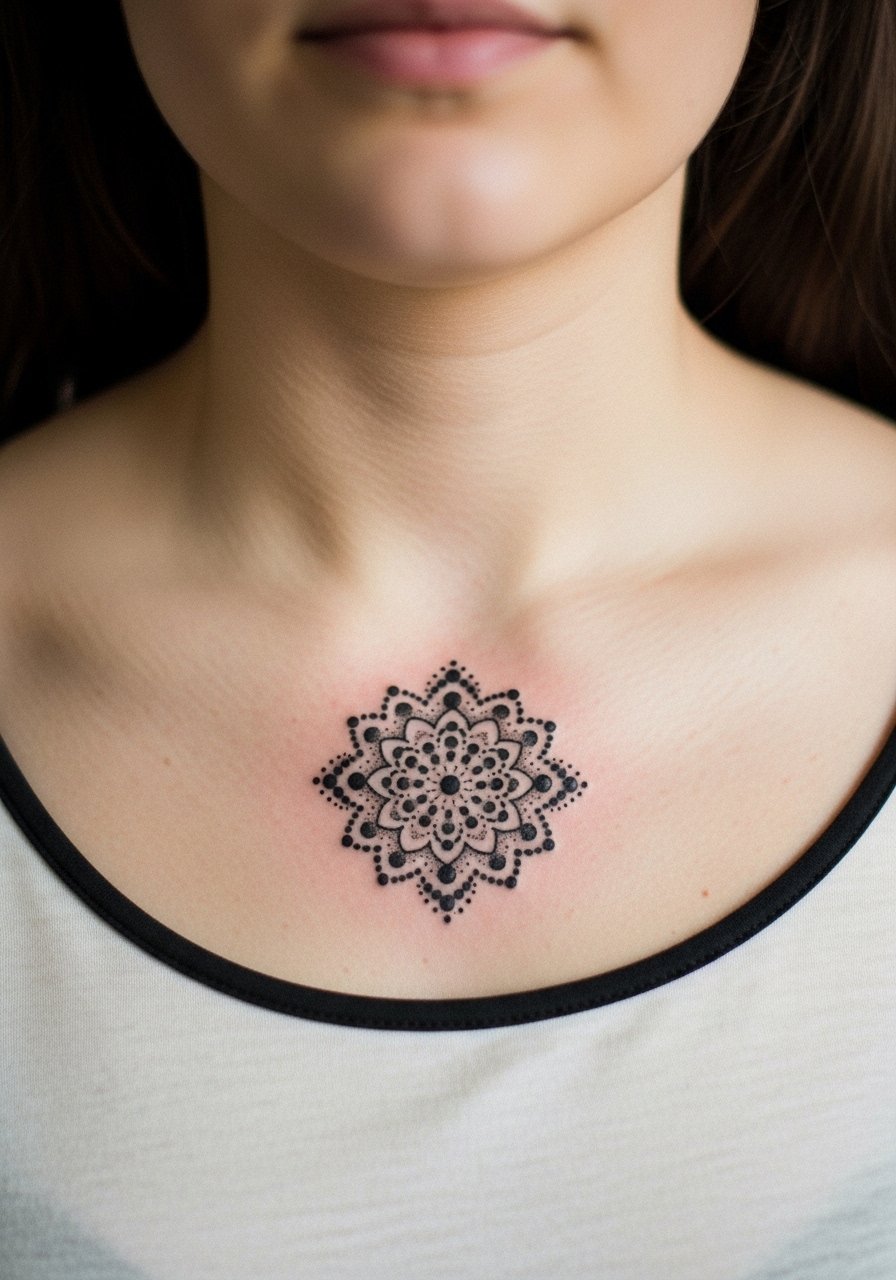
A small mandala can use stipple shading to feel ornamental without being heavy. Ask for spacing between petals and for slightly increased dot size toward the center to prevent early merging. Symmetry demands precision, and a steady hand makes the difference between a piece that reads as pattern and one that looks like a smudge later on. At six months the dotwork looks textured, at two years tightly packed dots can lose definition, and at five years touch-ups often refine central contrast. If you want to browse references locally, search #FineLineCollarbone or check curated boards on Pinterest to see healed mandalas on real skin.
9. Single-Line Wave That Mirrors Shoulder Movement
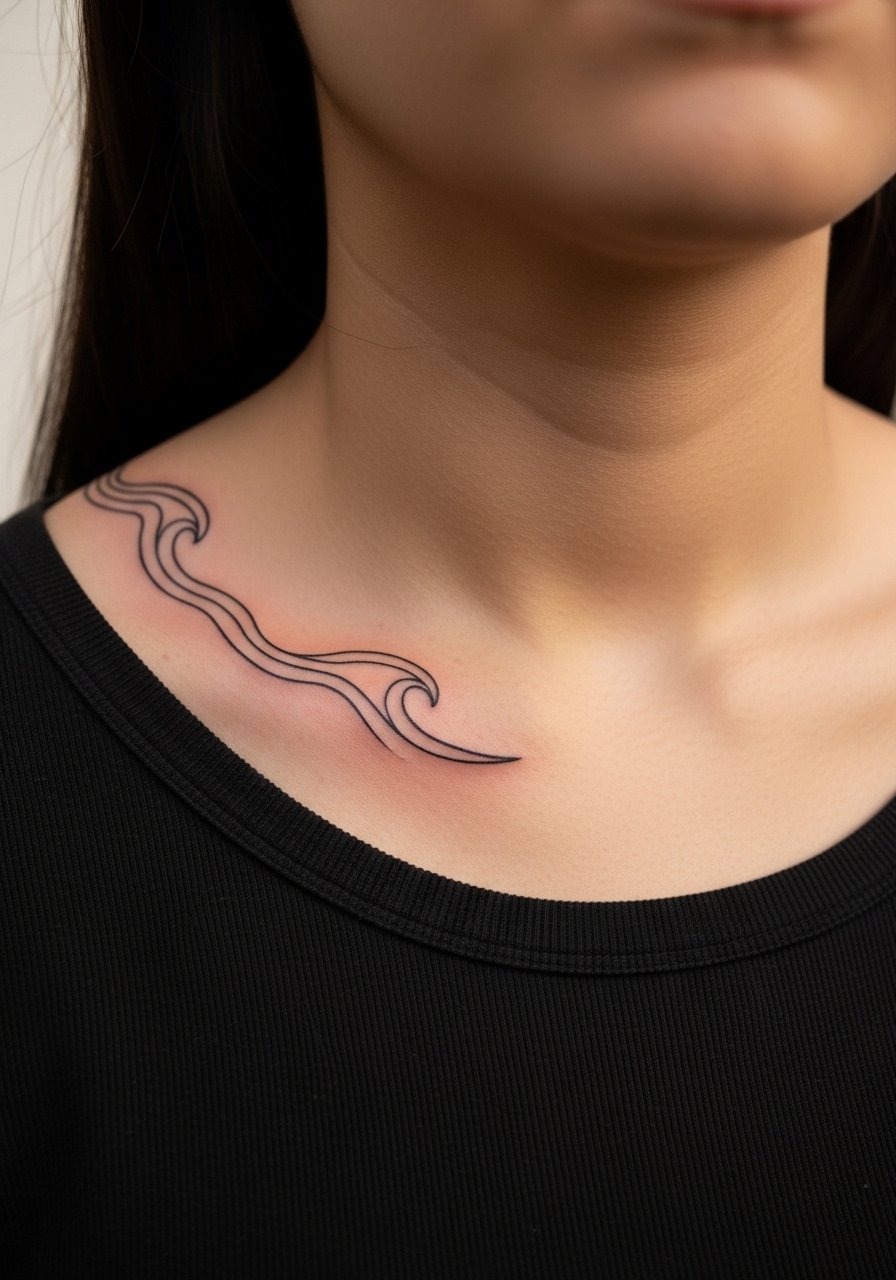
A one-line wave reads minimal and modern when done with confident, uninterrupted linework. Tell your artist you want a single continuous pass rather than multiple small strokes to keep the rhythm intact. This design ages well if the line has enough thickness to resist feathering. At six months it is sleek, at two years expect minor softening, and at five years a single touch-up brings back the original flow. Session discomfort is brief because the work is small. For casual wear try a loose tank top that keeps straps off the area until healing settles.
10. Butterfly Silhouette Nestled Near the Inner Bone
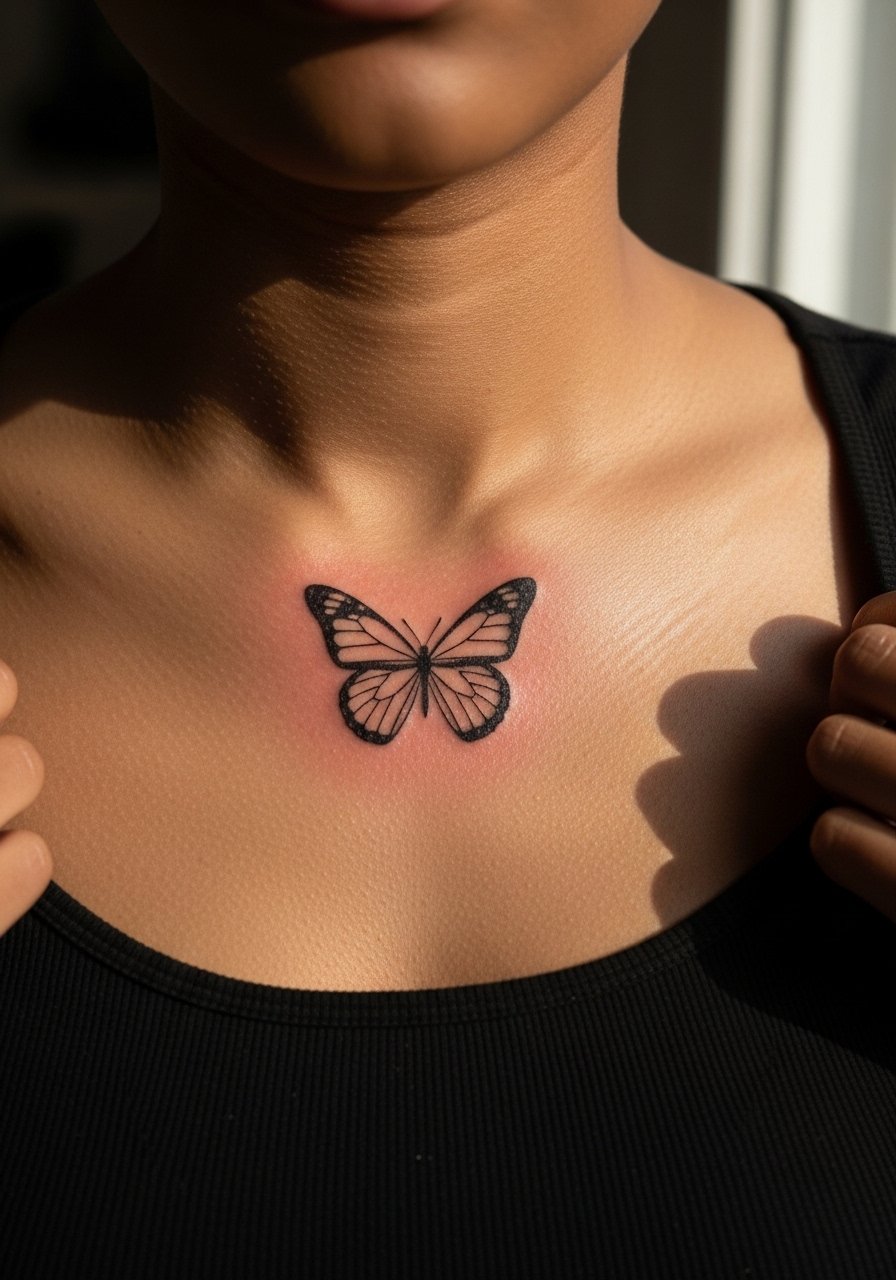
A tiny butterfly can symbolize change without dominating the chest. When consulting, bring a photo showing the exact wing span you want and ask the artist to favor open negative space inside the wings. The collarbone area is sensitive but quick for small motifs. People sometimes request dense shading that later fills in and looks flat. At six months the silhouette looks crisp, at two years some internal shading will soften, and at five years the wings may need a touch-up for definition. For displaying it, an off shoulder blouse women creates a natural frame for the silhouette.
11. Scattered Leaf Cluster That Follows the Curve
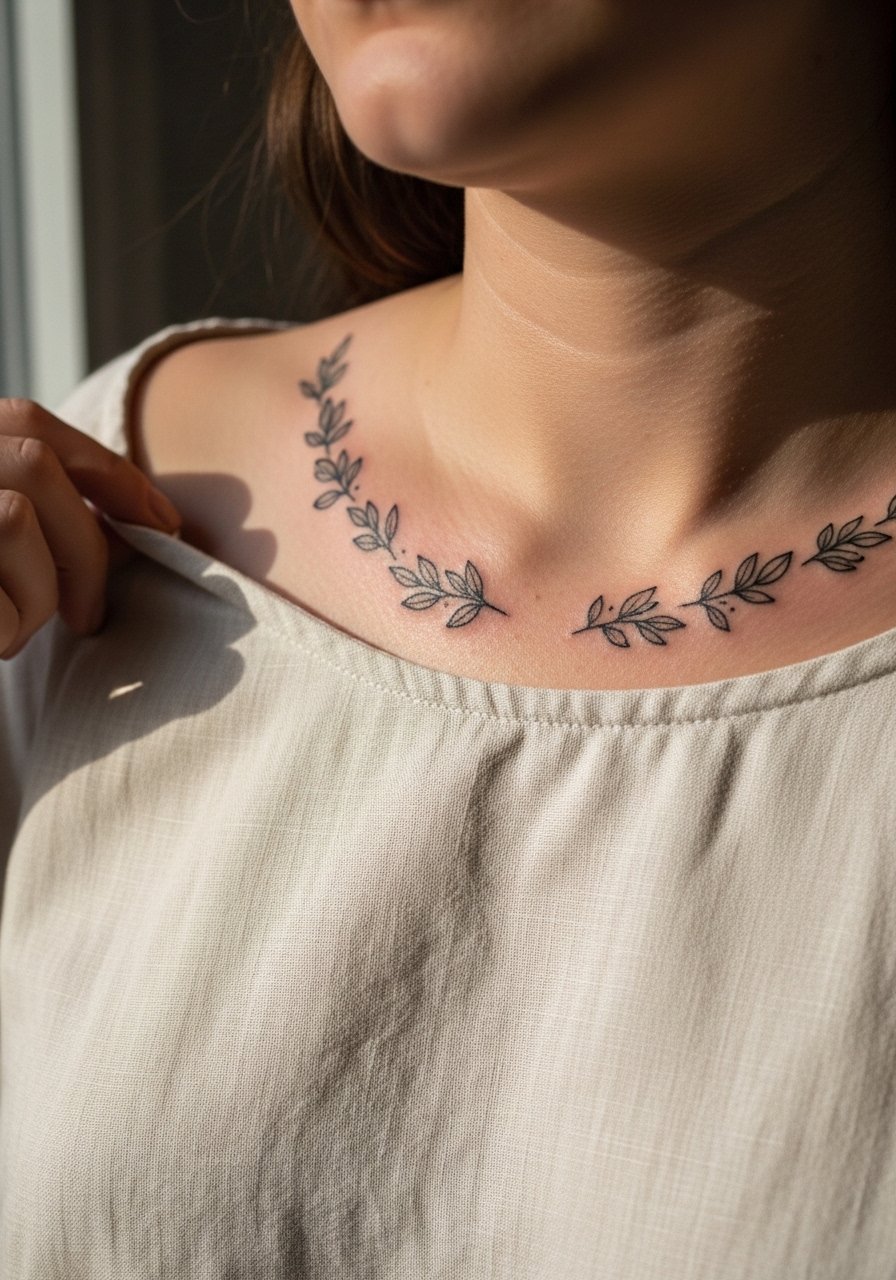
A dispersed leaf cluster gives an earthy look and can be scaled to avoid dense groupings that blur. Ask for varied leaf spacing and for the artist to test placement on the skin with transfer paper so the cluster flows with your collarbone. The session is comfortable overall but the central dip twinges more. At six months leaves remain distinct, at two years tiny veins can disappear, and at five years a gentle refresh can redeclare shape. Neutral fabrics highlight the linework, so try a cream linen top when you want to show the arrangement.
12. Tiny Heart With Arrow, Angled Toward the Shoulder
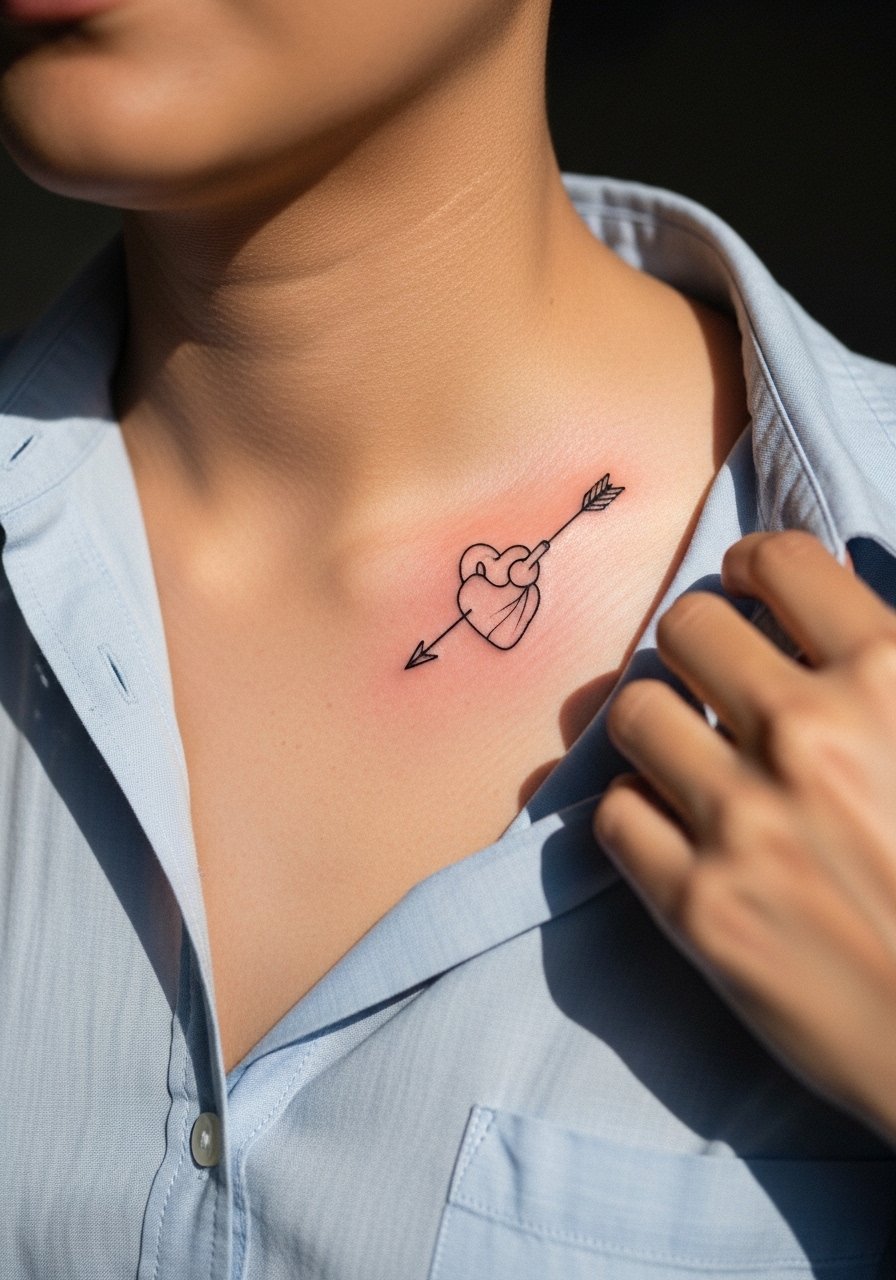
This playful motif reads small and personal. In consultation ask for a slight curve in the arrow shaft to mirror the bone rather than a rigid straight line. The common mistake is asking for a tiny arrow with hairline weight that fades into a blotch at year two. Pain is brief since the piece is micro. At six months the heart looks defined, at two years thin parts may need a touch-up, and at five years a single session can sharpen edges. For the appointment wear a loose button-down shirt you can pull aside without snagging fresh ink.
13. Micro Constellation That Traces the Bone
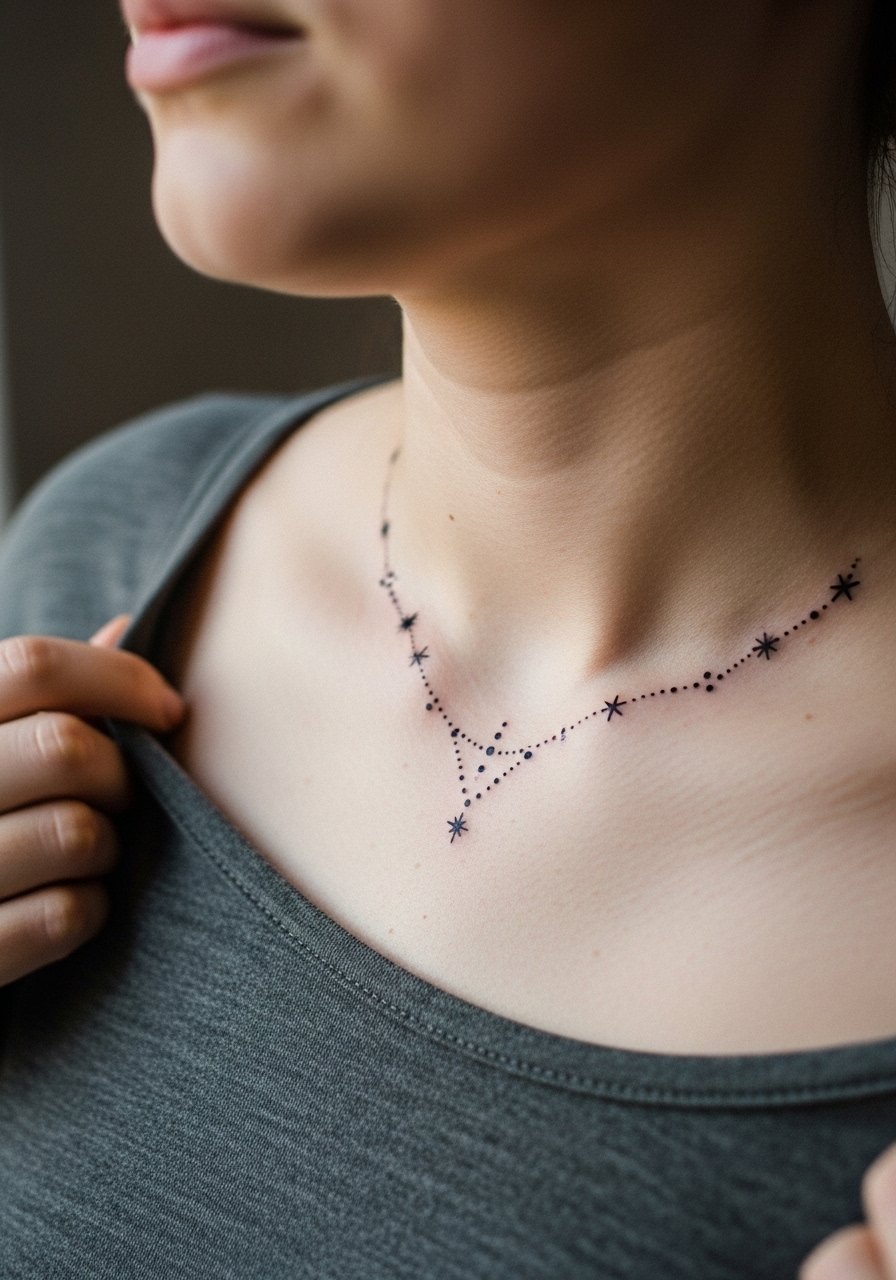
Constellations make great micro collections because negative space is part of the design. Ask your artist to map the placement using stencils and mark natural pauses between stars so the pattern does not appear crowded later. The session is quick and the pain mild. At six months the dots read sharp, at two years the smallest dots can fade faster than tiny stars, and at five years a light touch-up restores contrast. A thin chain pendant necklace sits above the pattern and helps integrate jewelry with the tattoo.
14. Roman Numeral Date, Small and Centered
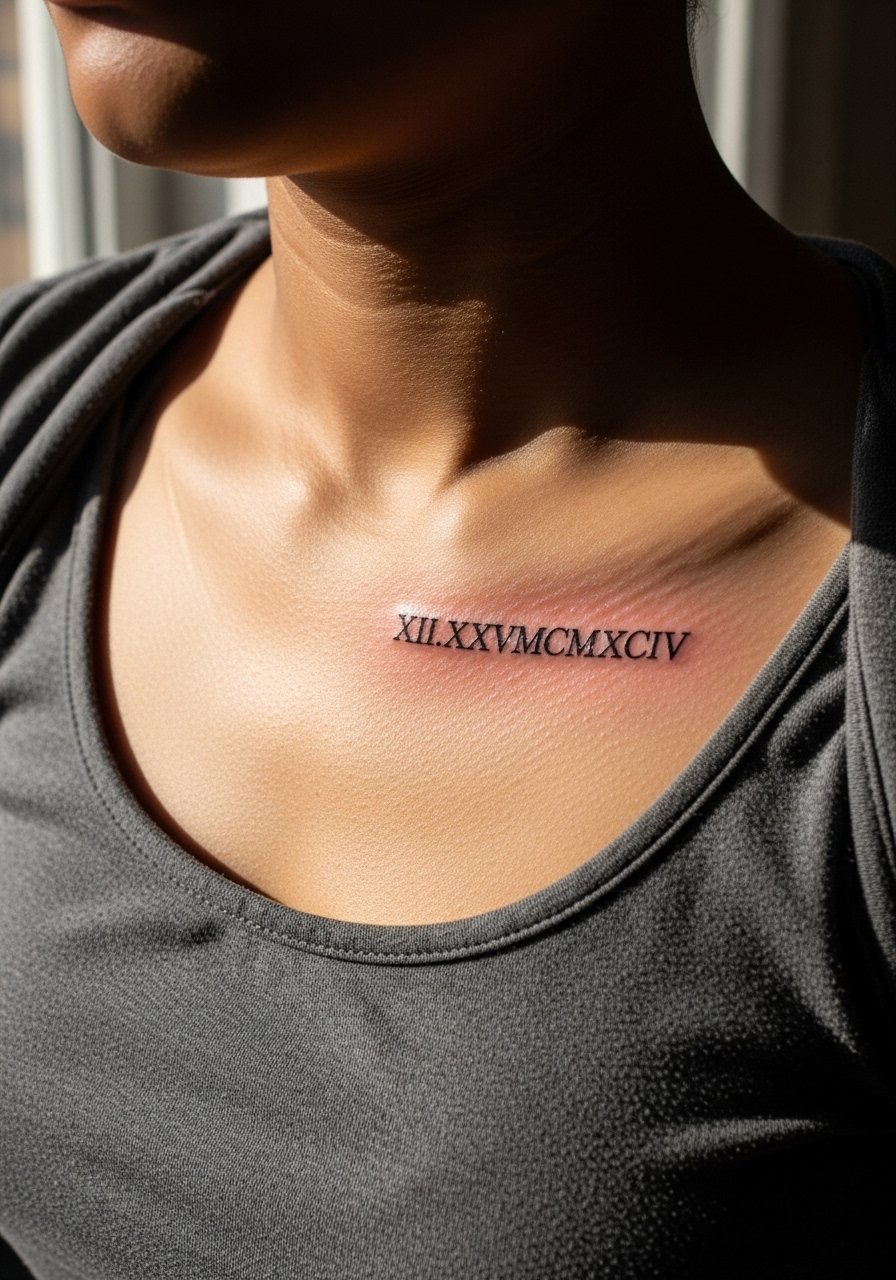
Numeric tattoos need exact spacing to remain legible. Provide the exact numerals to your artist and ask for a slightly larger type size than your first instinct. Micro numerals that are too thin blur into lines as skin texture changes. At six months the numerals are clear, at two years the smallest strokes may lose crispness, and at five years a modest touch-up keeps numbers readable. The collarbone location is visible but easy to hide beneath collars if necessary. For subtle daytime looks, a scoop neck sweater tucks the numerals out of direct sight.
15. Minimal Crescent Moon Tilted Toward the Shoulder
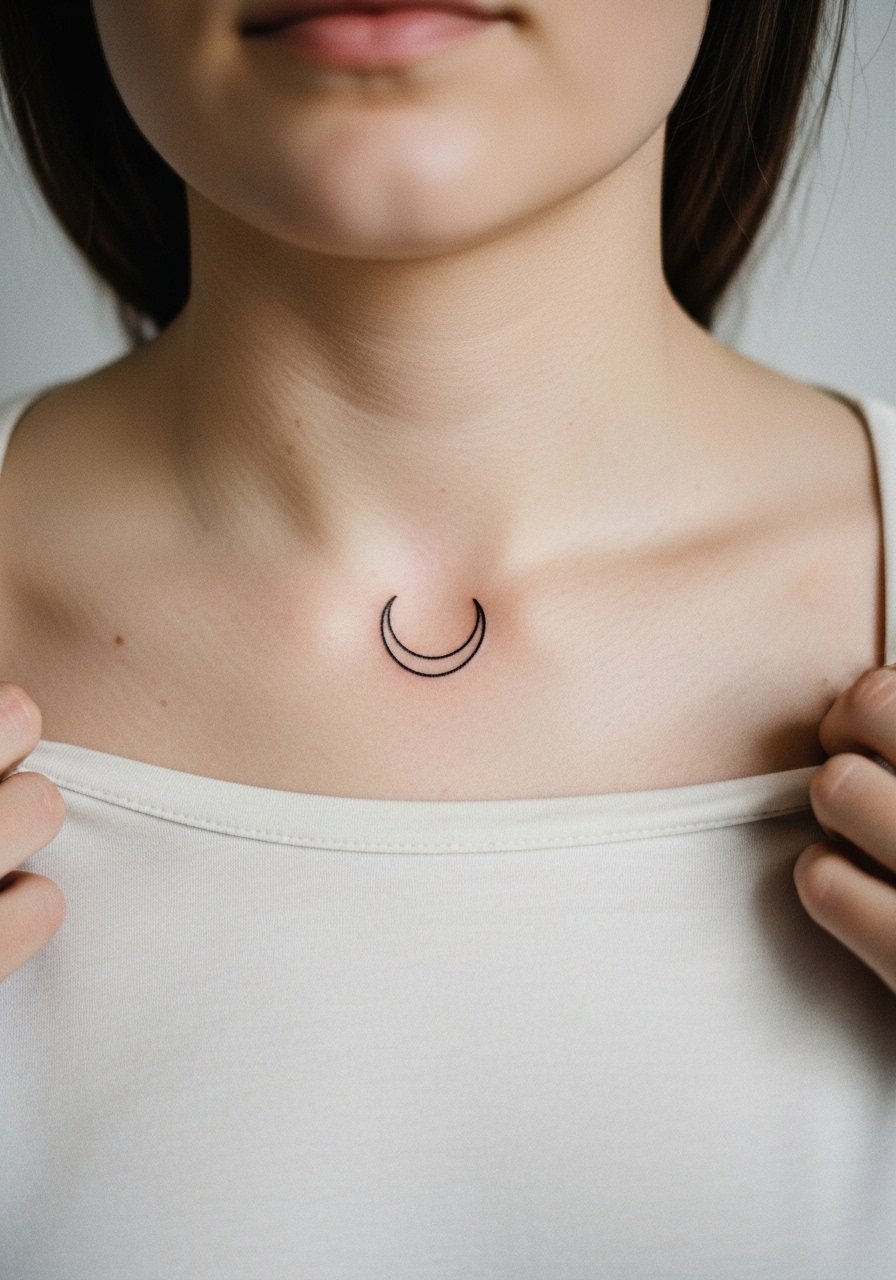
A tiny crescent uses curvature that naturally complements the bone. Tell your artist you want a closed curve with a slightly thicker apex to prevent the moon from breaking into two lines over time. The session is short and the bone crossings are noticeable but brief. At six months the curve is distinct, at two years the thinnest sections may soften, and at five years a touch-up restores the crescent's silhouette. Consider pairing with small ear studs so attention balances between neck and chest when you dress up.
16. Little Anchor Near the Outermost End of the Bone
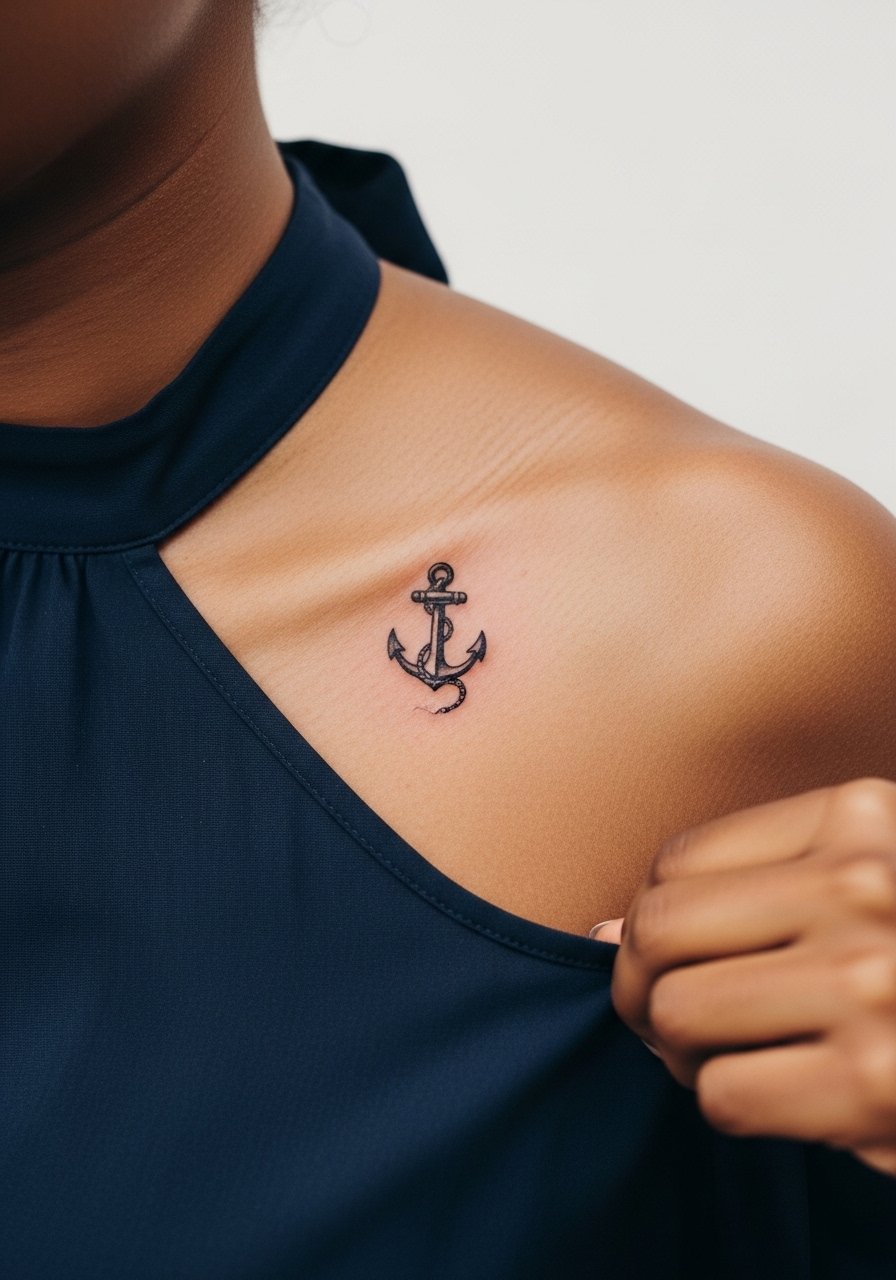
Anchors are classic micro icons that do well on the bone when the lines are slightly bolder than micro hairlines. Ask for clean negative space around the anchor so it reads as a symbol instead of a smudge. The session feels like a short series of pin-pricks. At six months the anchor is solid, at two years expect minor softening at thin points, and at five years a small touch-up keeps the weight consistent. A halter neck blouse complements nautical motifs and reveals the anchor in a flattering frame.
17. Tiny Mountain Range Silhouette Tilted Upward
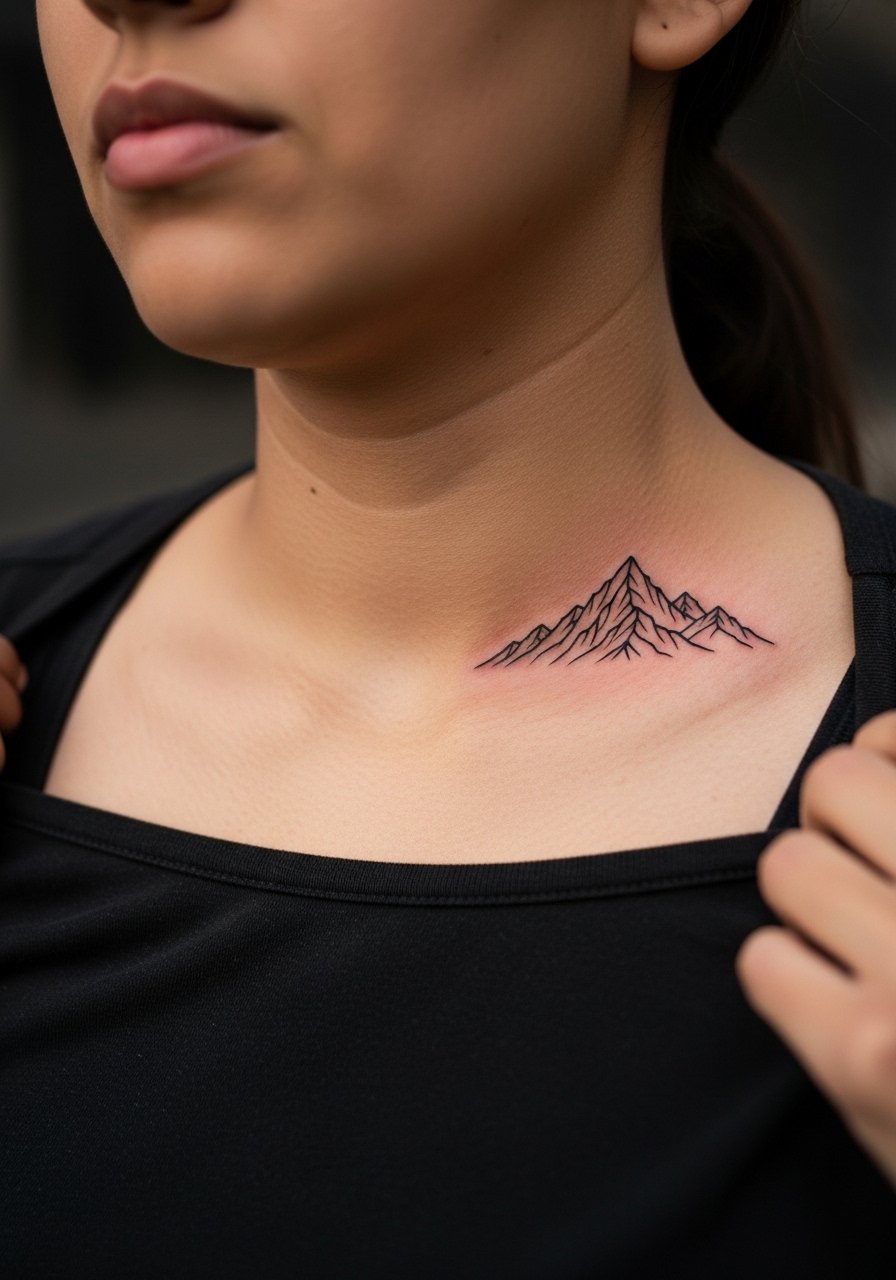
A compact mountain line reads graphic and pairs with outdoorsy style. During consultation specify how many peaks you want and the height ratio between them so the skyline does not compress. The collarbone crossing is uncomfortable where the peaks sit over bone. At six months the peaks are crisp, at two years minor merging can occur if peaks are too close, and at five years spacing that was planned will prevent heavy touch-ups. For casual looks consider layering with a light jacket that can be opened when you want to show the skyline.
18. Continuous Floral Chain That Links Both Clavicles
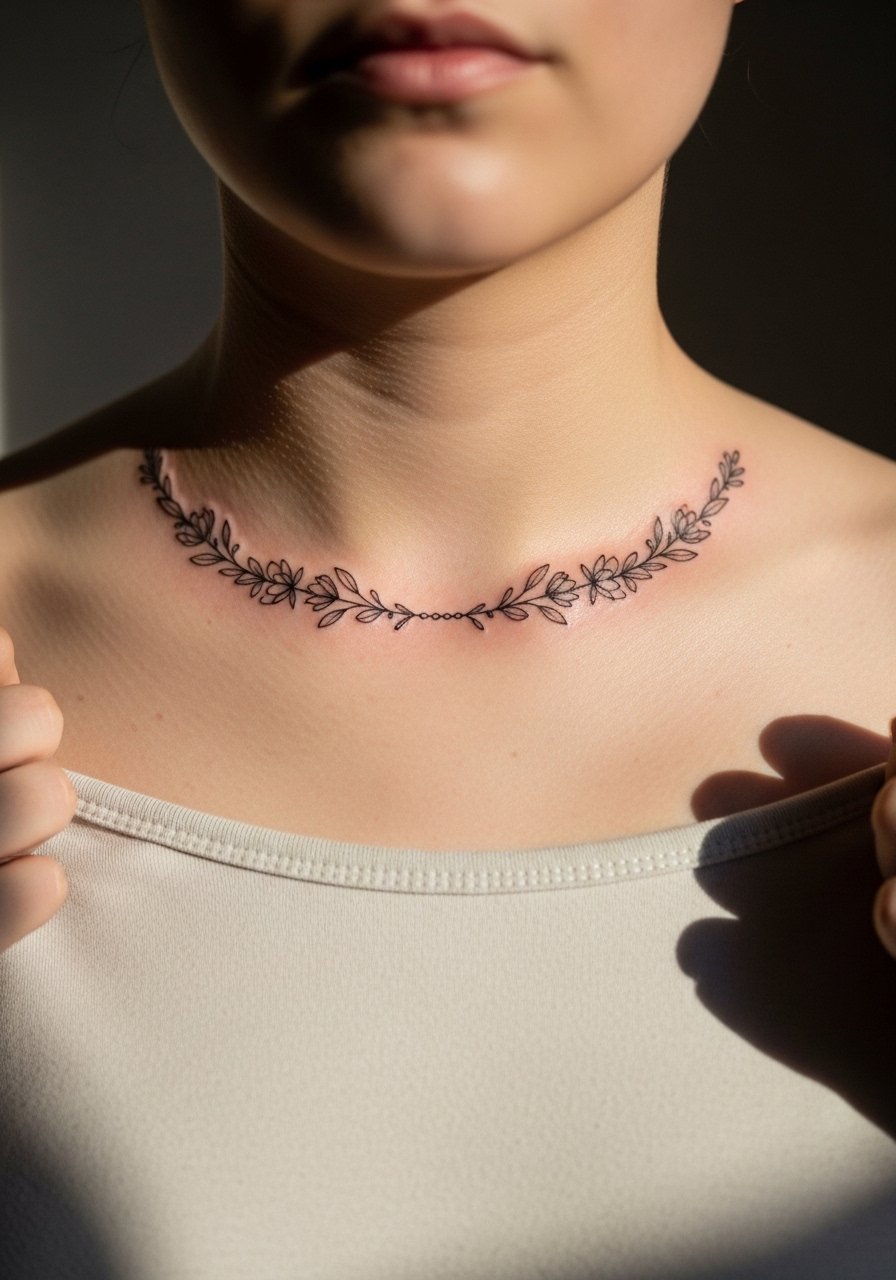
A chain that crosses from one clavicle to the other must respect symmetry and movement. Tell your artist to plan mirrored negative space on each side. This is a longer session if you want both sides to match perfectly. At six months the chain reads cohesive, at two years small mismatches can show if one side needed more touch-up, and at five years a coordinated refresh keeps both sides consistent. For showing it off, a boat neck top highlights the across-the-shoulder sweep without obscuring the middle.
19. Feather With Subtle Color Wash for Movement
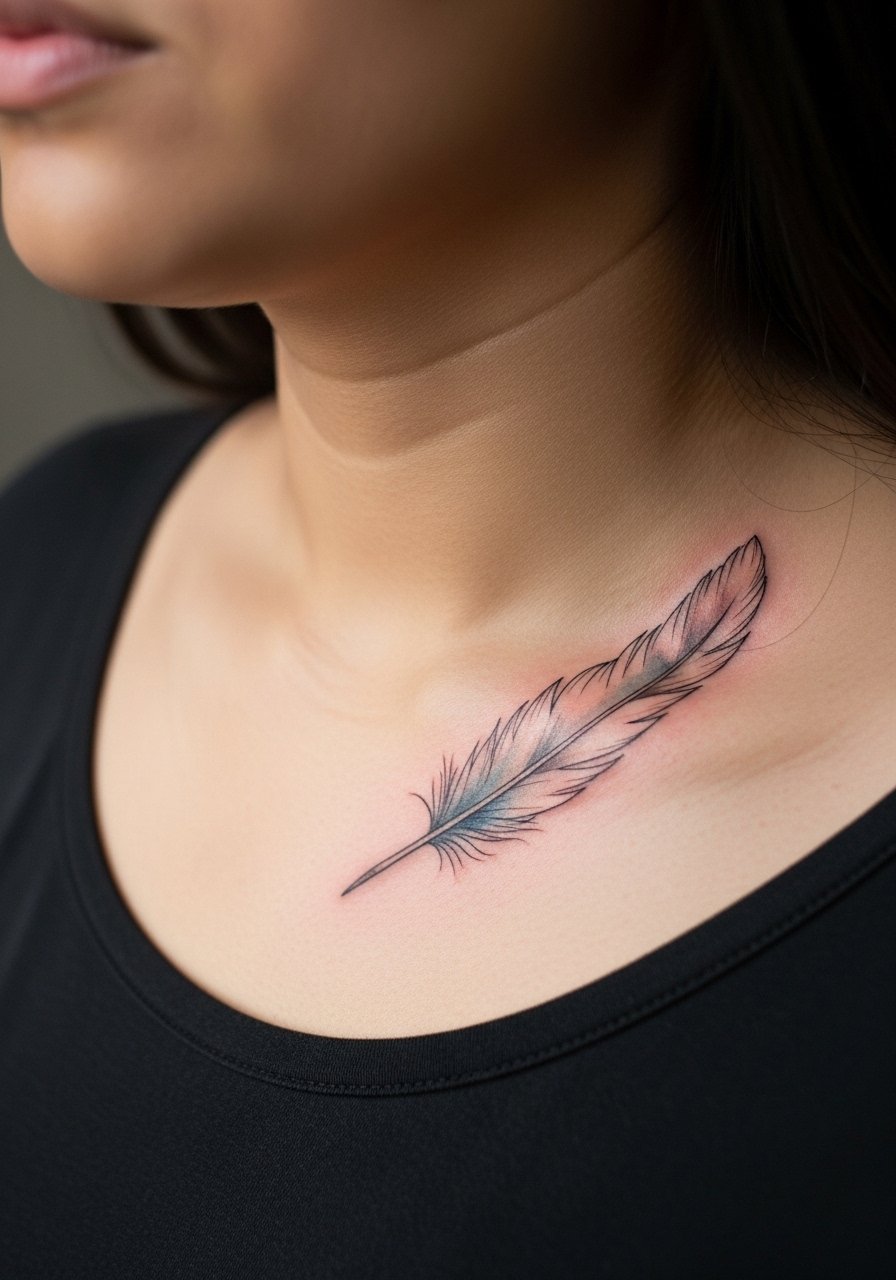
Color can bring a feather to life, but pale washes fade faster. Ask the artist for concentrated color near the quill and lighter washes toward the tip so you retain contrast. Sessions with color can be slightly longer and the skin is more sensitive at the bone. At six months the wash reads airy, at two years the pale areas will need refreshing, and at five years the color will need re-saturation if you want the original pop. A strapless top women shows off the vertical sweep of this piece.
20. Stipple-Shaded Mini Mandala Offset Toward the Shoulder
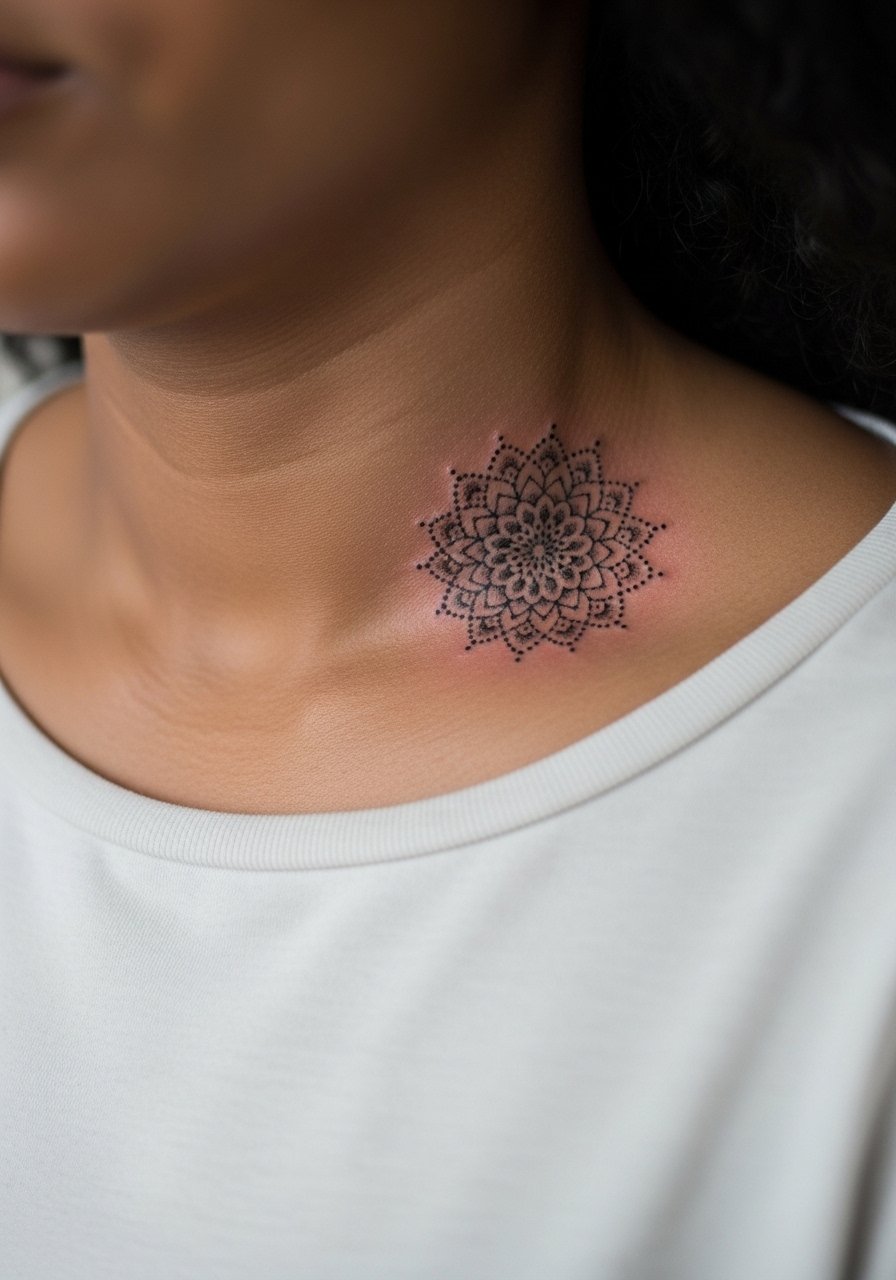
Dotwork gives a textured look without heavy lines. Request gradual dot density from the center out so the mandala does not become a single dark patch later. The artist may need to space dots more generously near the bone to avoid merging. At six months the stippling is crisp, at two years close dots can soften, and at five years touch-ups usually involve re-dotting central contrast. If the design taps into spiritual motifs, be mindful of origins and opt for respectful variations rather than direct cultural replication.
21. Scripted Arrow Phrase That Curves With the Bone
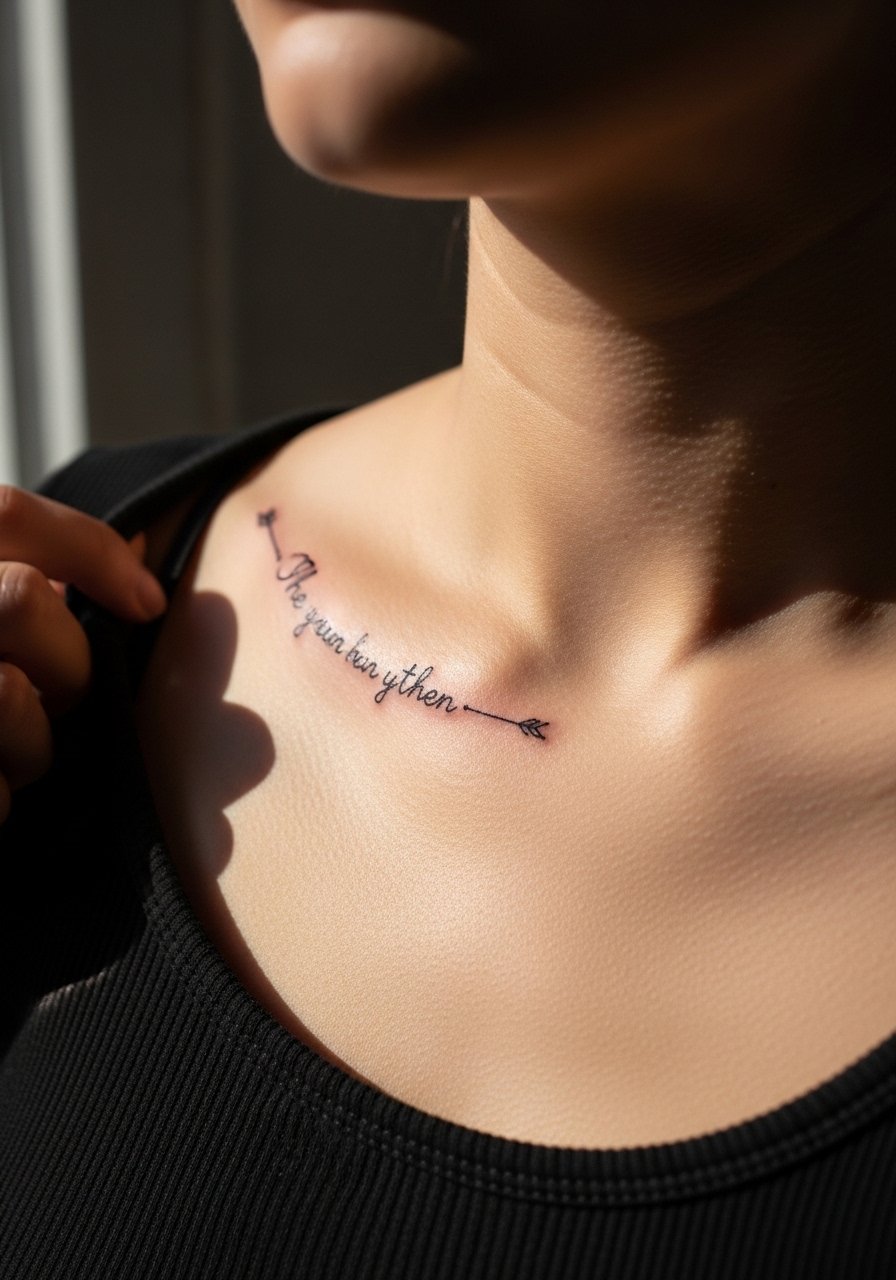
Hybrid pieces pair script and iconography. When booking, explain the exact curvature you want so the phrase and arrow act as one unit. The most common mistake is asking for dense lettering that crowds the arrow. At six months both elements look integrated, at two years thin script can blur where it crosses the bone, and at five years a touch-up refines the phrase so it reads clearly. For casual looks, a low cut tee women shows the curve while remaining work-appropriate.
22. Tiny Key Symbol Tucked Near the Center
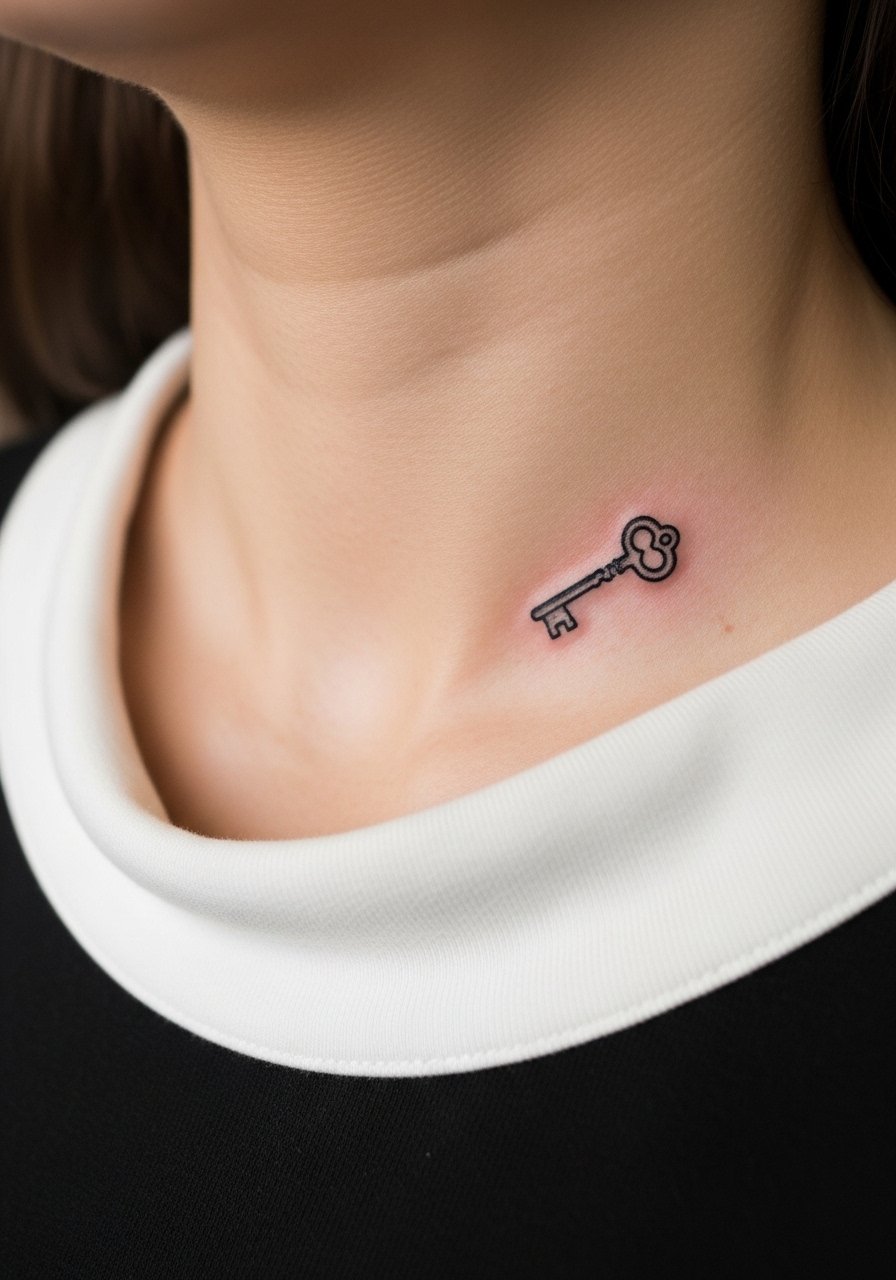
Small keys need negative space to preserve silhouette. Tell the artist you want an open shaft and defined teeth so the shape does not fill in. At six months the key reads like a symbol, at two years small inner details can soften, and at five years a targeted touch-up keeps the teeth and loop clear. Pair this with a dainty gold necklace that sits above the key without crowding the collarbone area.
23. Slim Snake Outline That Flows With the Collarbone
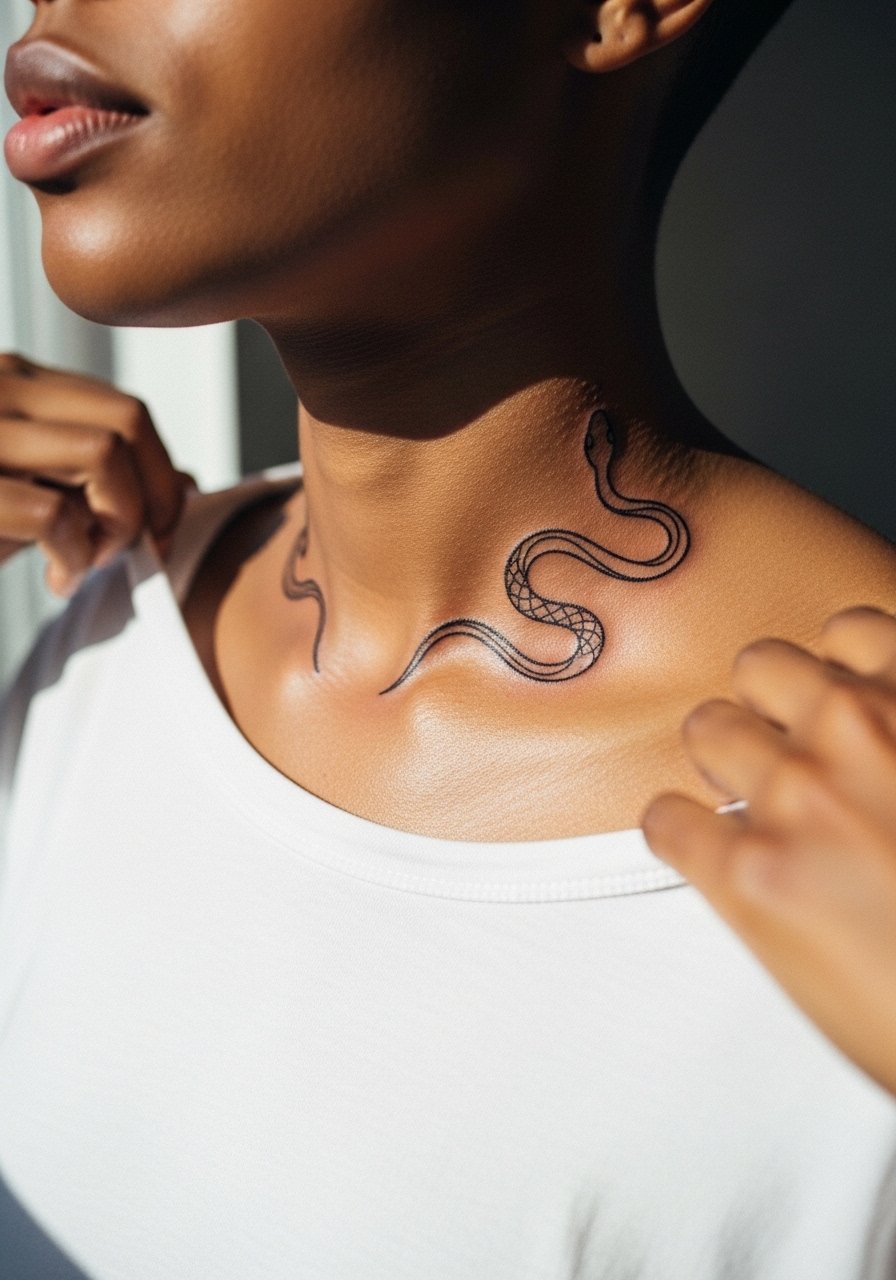
A snake motif is dynamic when the curve matches the bone. Ask for variation in line weight where the snake coils to preserve form as the skin shifts. The session can feel sharper when the needle crosses the high point of the clavicle. At six months the coil reads animated, at two years close loops can merge if spacing was tight, and at five years a touch-up can restore definition. If you work in a conservative environment, think about concealability because hand and collarbone visibility still influence perceptions in some workplaces.
24. Memorial Paw Print in Micro Scale
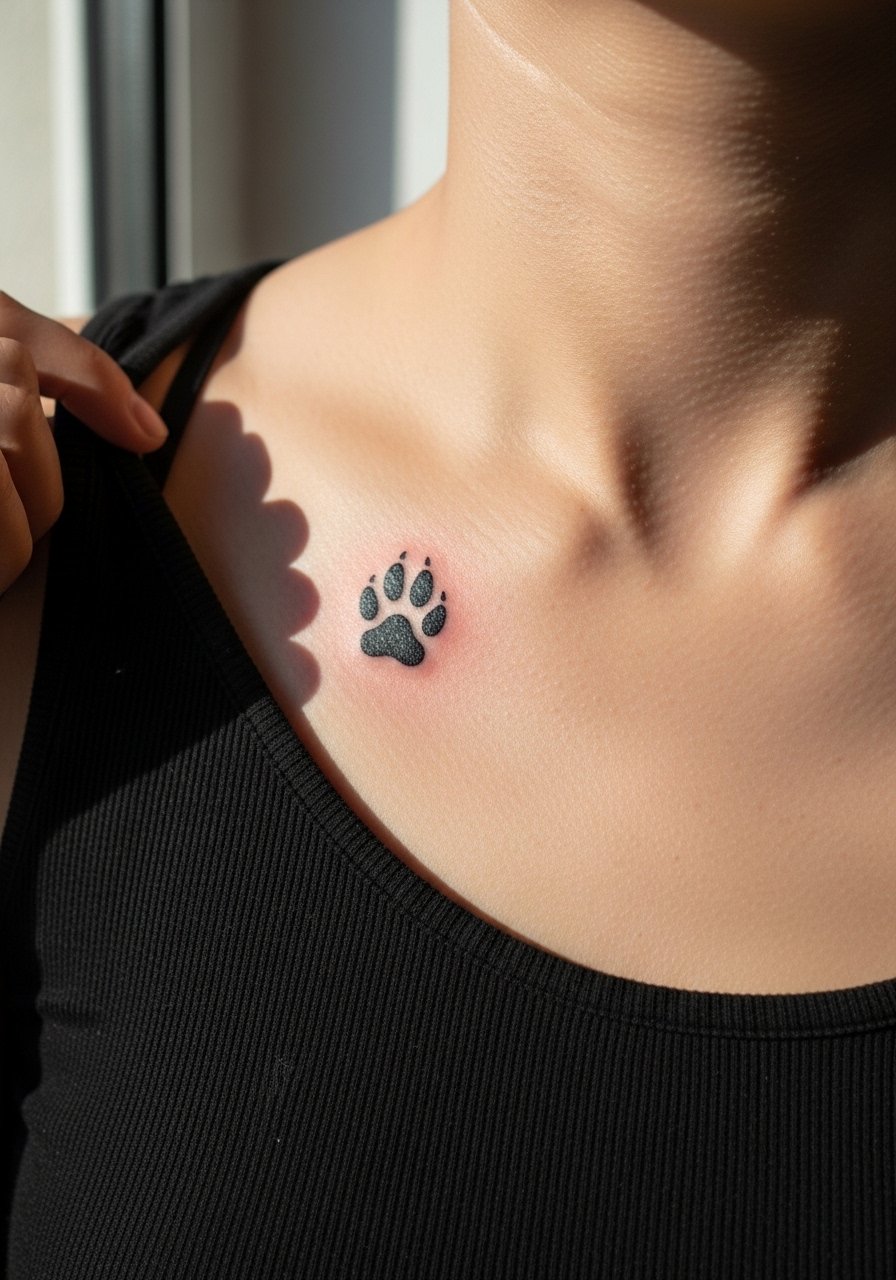
Memorial symbols are often very small. For paw prints ask the artist to slightly enlarge the pads and leave space between the toes so the print does not blur into a blob. Sessions are quick and the pain is manageable if the piece is tiny. At six months the print looks crisp, at two years micro details can soften, and at five years a light touch-up keeps the pads distinct. For the session wear a loose tank top so straps do not rub fresh ink.
25. Precise Coordinates Inked Along the Bone
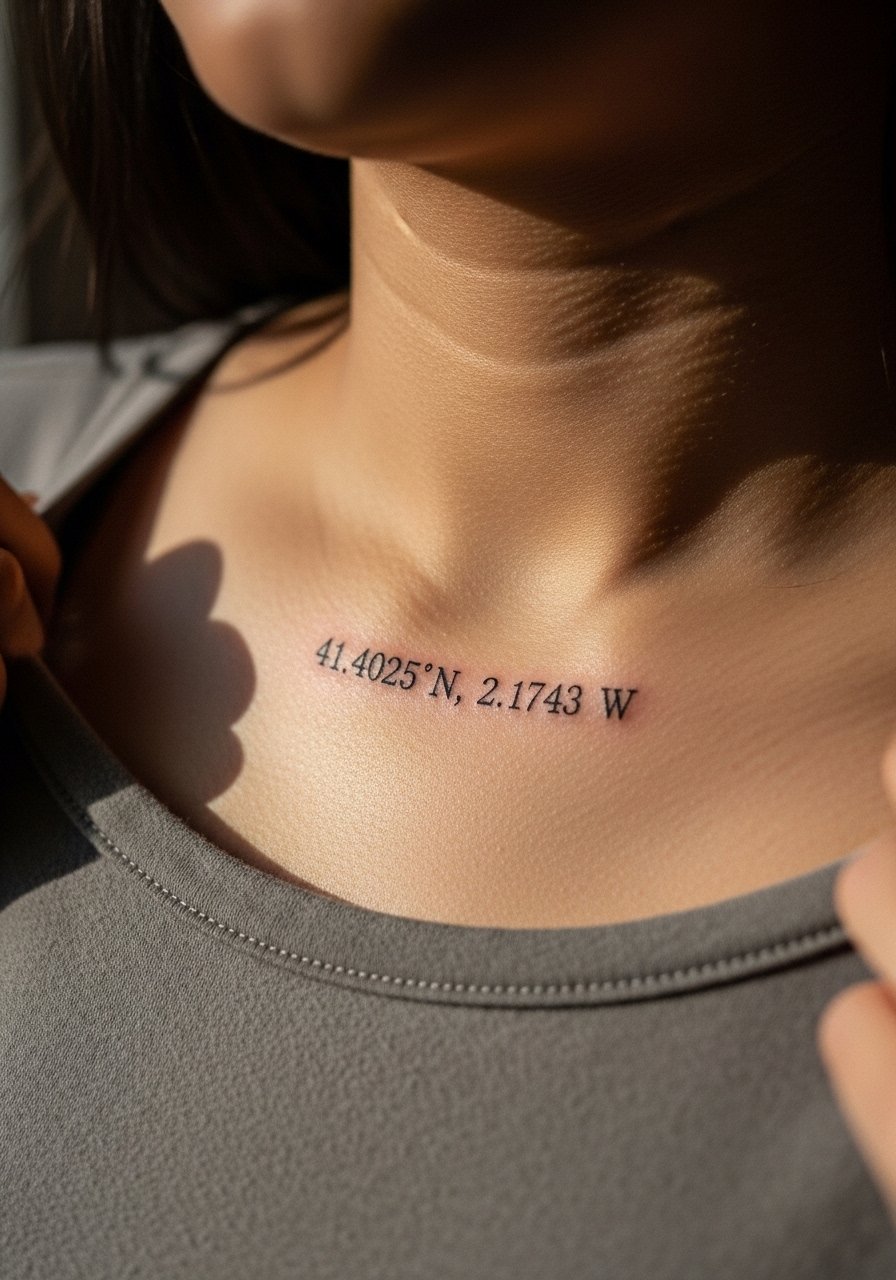
Text-based coordinates should be provided exactly as you want them. Specify font and minimum size so numerals do not smudge into one another later. The nearest bone areas can be sensitive when the needle follows long strings of digits. At six months the numbers are clear, at two years very small digits may lose legibility, and at five years plan a touch-up to maintain precision. For low-key days, an open cardigan over a tank keeps the coordinates tucked away when needed.
26. Clustered Lotus Buds That Scale With Shoulder Width
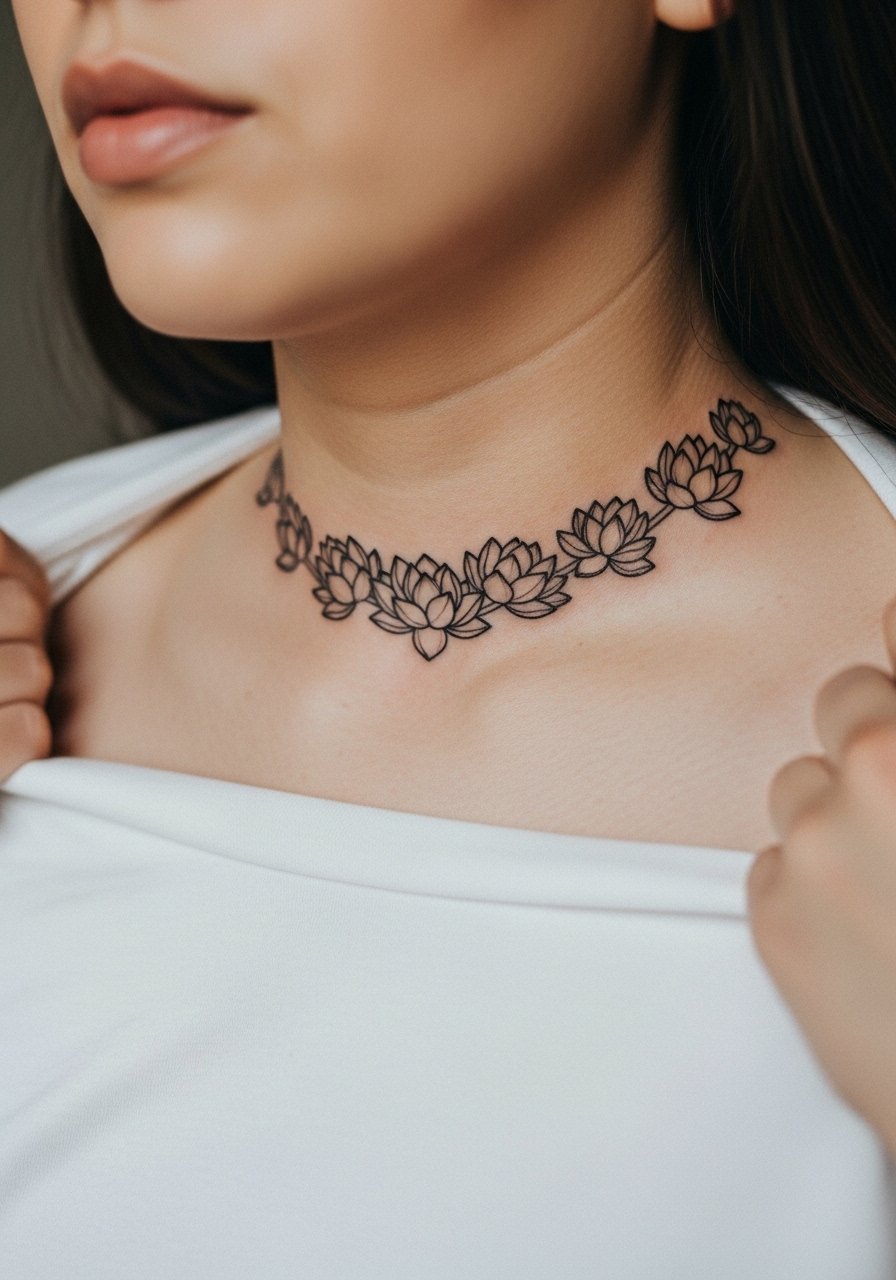
Multiple buds allow you to scale the motif according to shoulder width. Ask for proportion sketches at consultation so the cluster balances on your frame. The session can stretch longer if you want mirrored symmetry. At six months the cluster looks intentional, at two years tiny internal lines can soften, and at five years a strategic touch-up evens density. If you prefer a summer reveal, pair this look with sundress necklines that mirror the bud placement.
27. Abstract Brushstroke Sweep That Emphasizes Motion
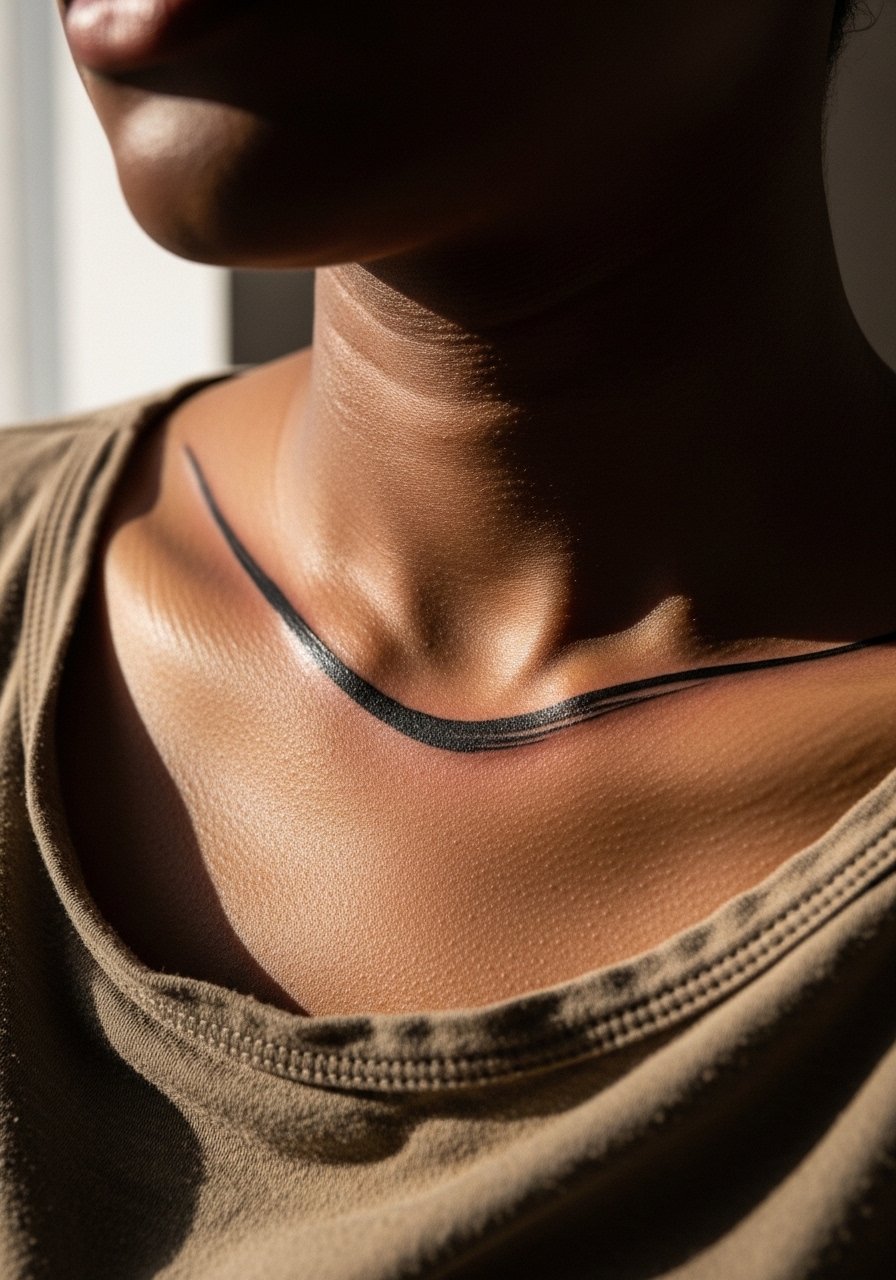
Abstract brushstrokes rely on confident negative space and deliberate thickness changes. Tell the artist you want variations in saturation so the thicker areas hold pigment longer. This kind of piece can age well because the form already embraces soft edges, but thin tails will need touch-ups at year three in many cases. The session feels quick and the collarbone crossings are the most intense moments. For layering accessories try a minimalist watch or thin stack of bracelets so attention moves between chest and wrist.
Frequently Asked Questions
Q: Do fine line collarbone tattoos fade faster than bolder work?
A: There is a real debate. One camp argues ultra-thin work blurs faster because the needle channels are so small and pigment migrates over time. The other camp says with proper spacing and slightly heavier single-needle weight, fine line holds up well. My advice is to ask an artist which approach they use and to plan on a touch-up in two to four years if you want the original crispness back.
Q: How much should I expect to pay for a small collarbone piece?
A: Pricing varies with region and artist experience. A typical range for delicate collarbone work runs roughly 100 to 600 depending on size, color, and session count. The appointment minimum at many studios often covers small pieces, so compare portfolios and ask if they charge a flat rate for minis.
Q: How painful is a collarbone tattoo, and how long is the session?
A: The pain is usually sharp where the needle crosses bone and softer over flesh. Most micro and small collarbone pieces finish in a single short session under an hour. Two-part color jobs or larger decorative pieces can take longer and may require two sessions so plan clothing and rest accordingly.
Q: What should I wear to the session and to show off the tattoo afterward?
A: For the session, choose clothing that exposes the collarbone without pulling or rubbing the area. A loose button-down shirt or wide-neck top works well. For nights out, off-shoulder or halter styles highlight the piece while letting you hide it under collars when needed.
Q: How do I find an artist who can do true delicate collarbone work?
A: Look for healed portfolios with clear close-ups, search hashtags like #FineLineCollarbone, and use local directories to filter by style. Ask studios for healed photos, not just fresh shots, and check community boards for touch-up histories to see how pieces age.
Q: When should I plan a touch-up for collarbone ink?
A: Expect to consider a touch-up around two to four years for very fine work. Factors that change this timeline include sun exposure, skin type, and how closely line weight was planned during the consultation. Booking a small touch-up is common and keeps delicate work readable.
