
Fine line dragonfly trends look gorgeous on feeds, but what actually holds up after a few summers of sun and sleeves rubbing is different. Bold blackwork outlives delicate tracery in high-friction spots, and watercolor needs careful placement if you want the colors to last. I picked 21 feminine dragon fly tattoo ideas that balance trend and longevity, and the first one shows how to ask for line weight that lasts.
1. Fine line dragonfly on the inner wrist
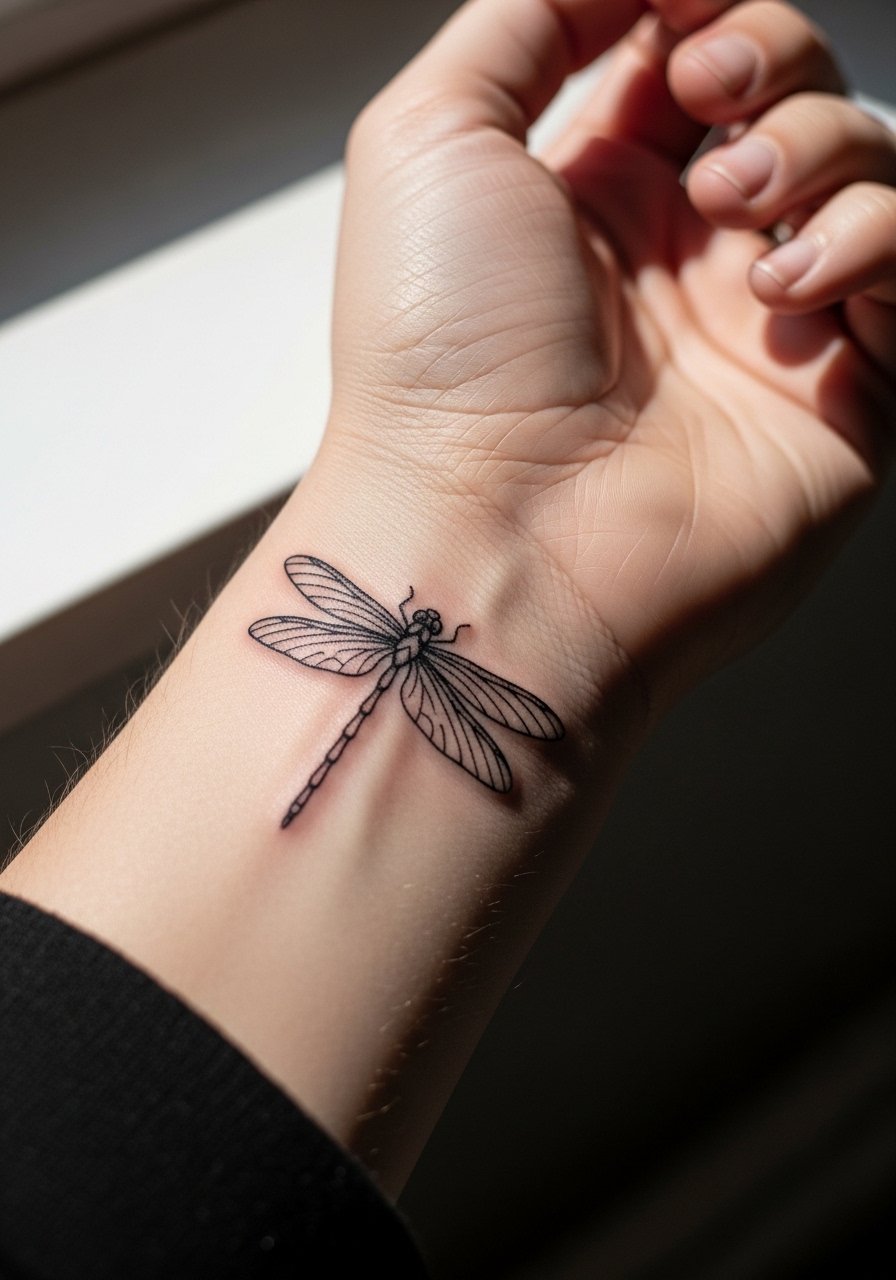
I see this tiny wrist piece at cafés and train stations, and it works because it is simple to hide and easy to touch up. Ask for slightly heavier linework than a hairline, so the veins in the wings read after a year. Expect low session time and mild sensitivity because the wrist sits on the lower pain scale for most people. A common mistake is pushing the wings too dense, which leads to lines merging after two to three years. For showing it off, pair it with a rolled cuff blouse women and a thin bracelet on the opposite wrist to keep attention balanced.
2. Watercolor dragonfly on the collarbone
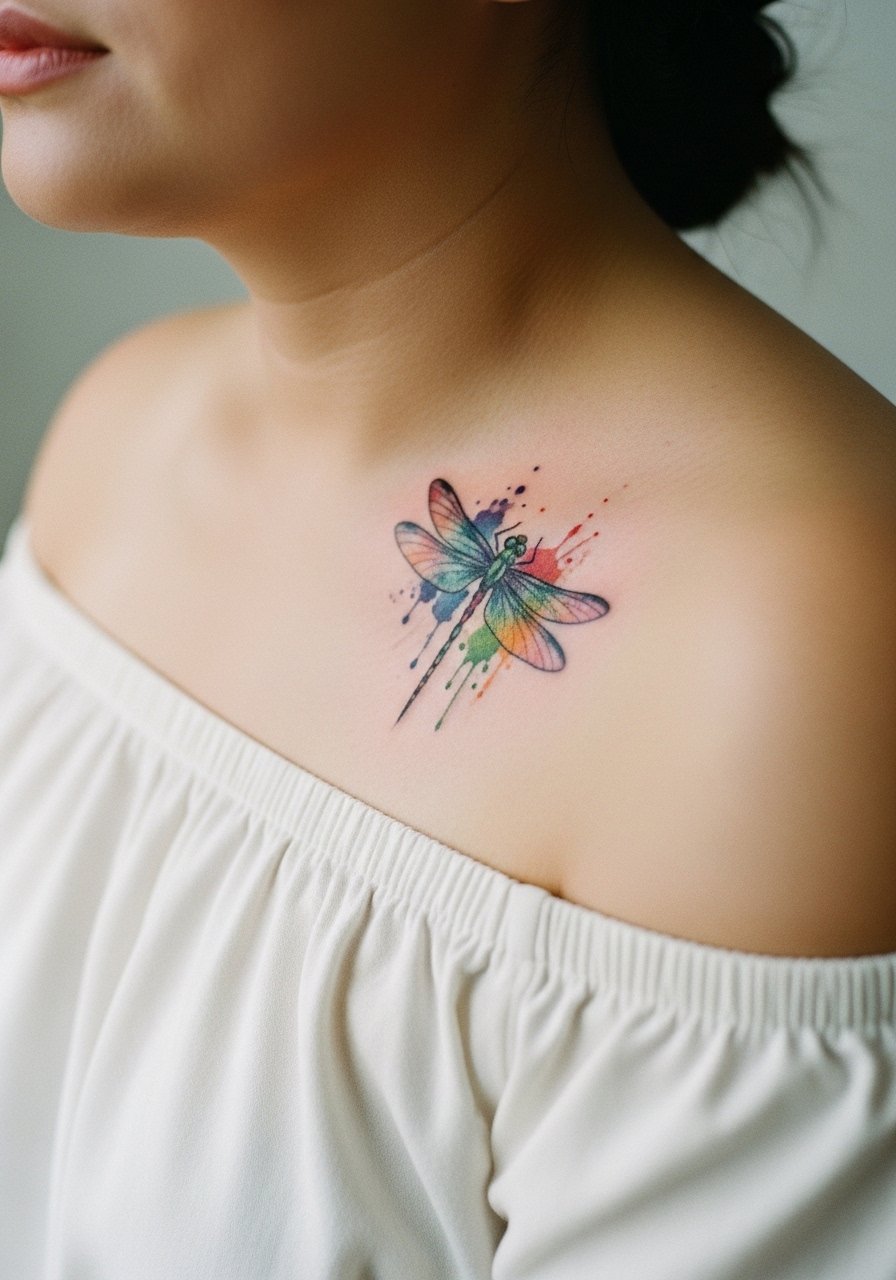
Watercolor lets the wings blend into skin tones without heavy outlines, which is dreamy for off-shoulder looks. Tell your artist you want soft edges and a hint of negative space inside the wings, so the colors read as airy rather than muddy as they age. This area tans and gets sun exposure, which accelerates fading, so plan placement slightly lower or under a collarbone shadow for longevity. For session comfort, bring a strapless bra or a pastel strapless top so the artist can work without fabric tugging. Expect moderate session time and two sittings for full saturation.
3. Minimalist single-line dragonfly on the ankle
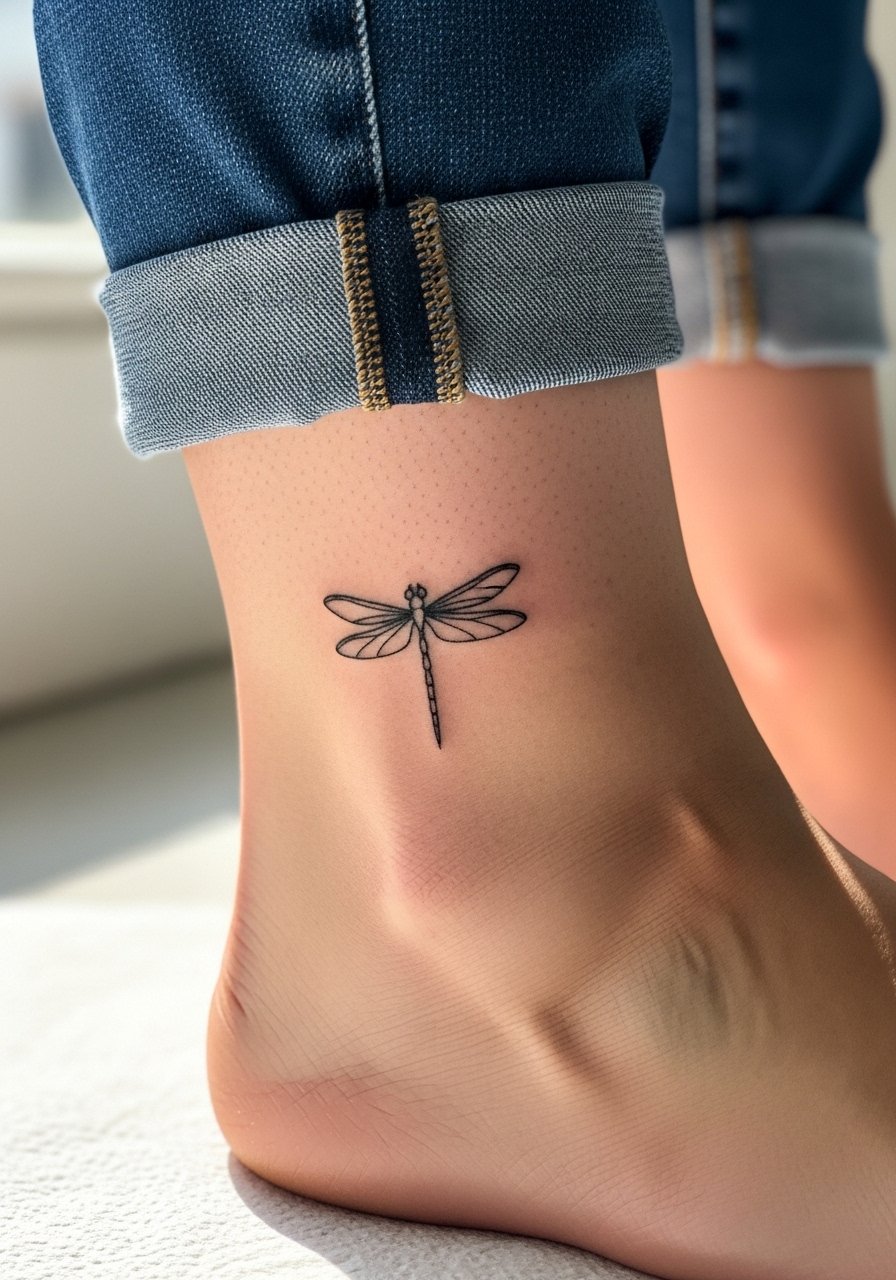
Ankles are great for discreet pieces but beware of summer swelling and shoe friction. The minimalist single-line approach keeps the silhouette tiny and elegant, but lines that are too fine can blur when exposed to constant rubbing from socks and shoes. Ask your artist to keep the design at a slightly larger scale than your reference so it ages cleaner, and wear loose pants the day of your session so the area does not get pressure afterward. For seasonal showing, pair it with strappy flat sandals or cropped jeans so the ankle reads without overcrowding.
4. Micro-realism dragonfly perched on the finger
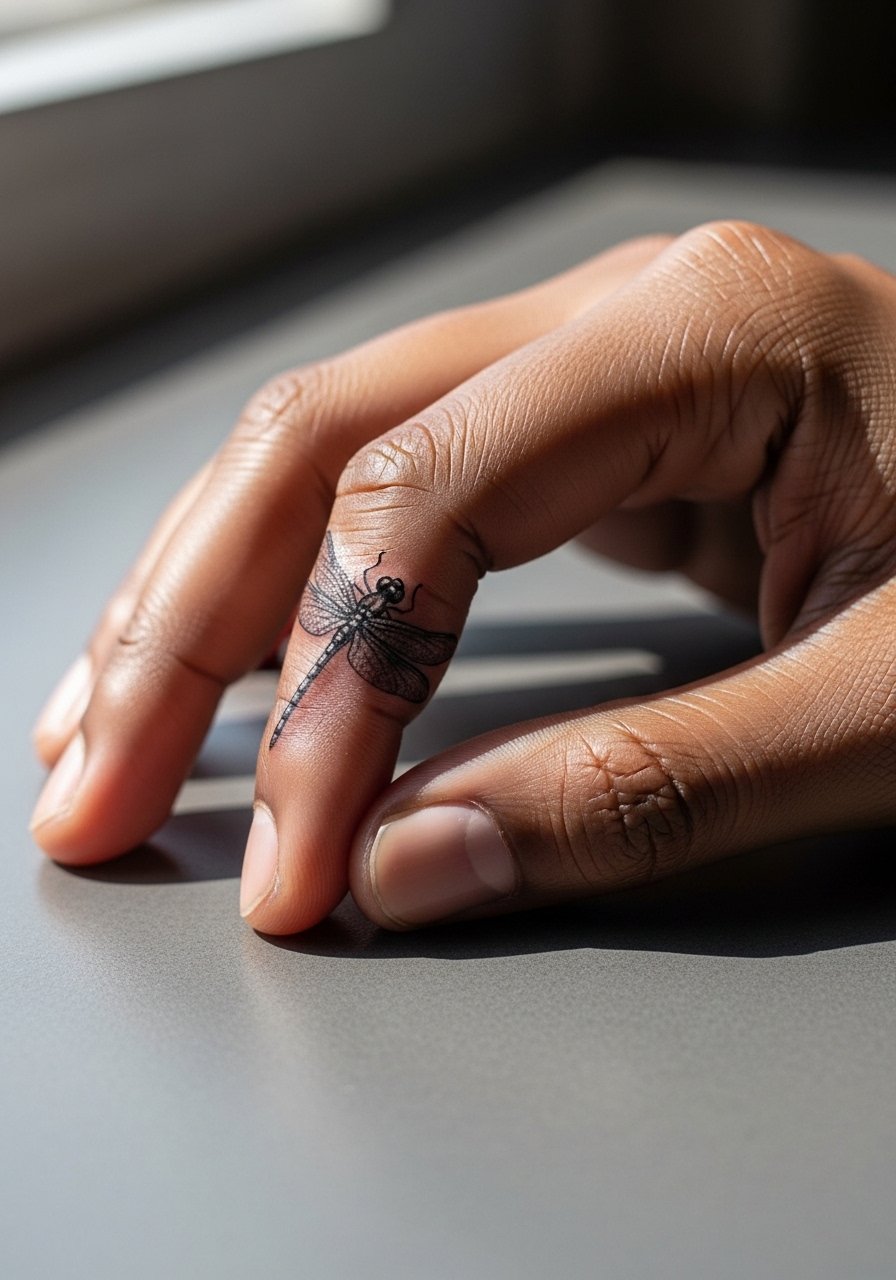
Finger tattoos are intimate and constant in sight, but they face higher risk of fading and blowout due to frequent washing and thin skin. Micro-realism gives incredible detail up close, but the trade-off is touch-ups sooner than on thicker-skinned areas. A common mistake is requesting extreme shading on a 0.5 inch canvas, which flattens after a year. For the session, expect brisk stinging and short appointments, often one to two sittings. Because fingers are high-friction, plan for a touch-up at year one, and keep designs simple to preserve the micro detail.
5. Neo-traditional dragonfly with floral accents on the forearm
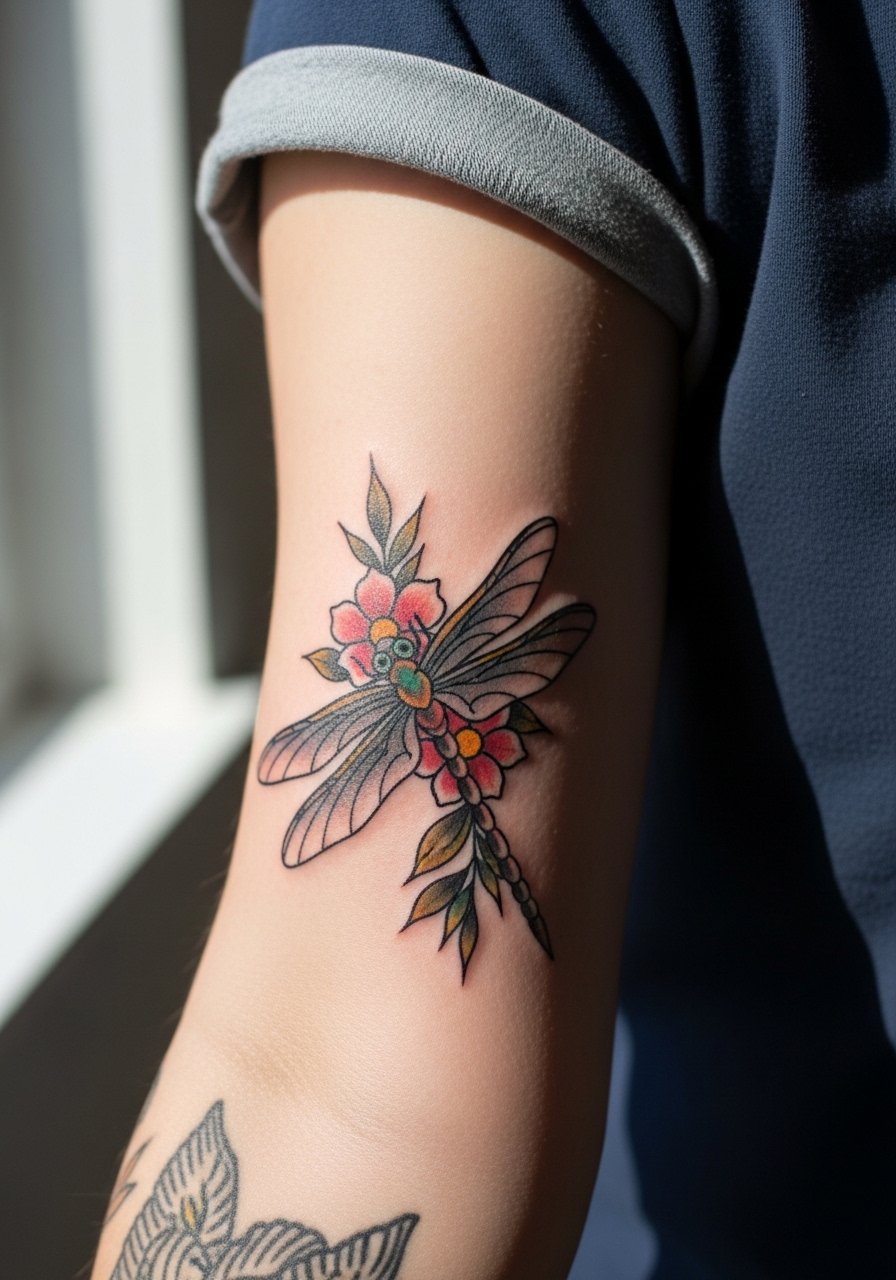
There is something about saturated color and bold outlines on a forearm that reads across a room. Neo-traditional approaches balance visual weight and femininity using color fills and modest saturation. Tell your artist to keep the outlines bold enough to protect color edges, and ask for layered color blocks rather than tiny stipple fills in the wings. Forearm sessions are comfortable for most people and usually finish in two sessions depending on size. For daily wear, try a thumb hole long sleeve or a leather cuff to frame the piece without covering it completely.
6. Blackwork geometric dragonfly on the shoulder blade
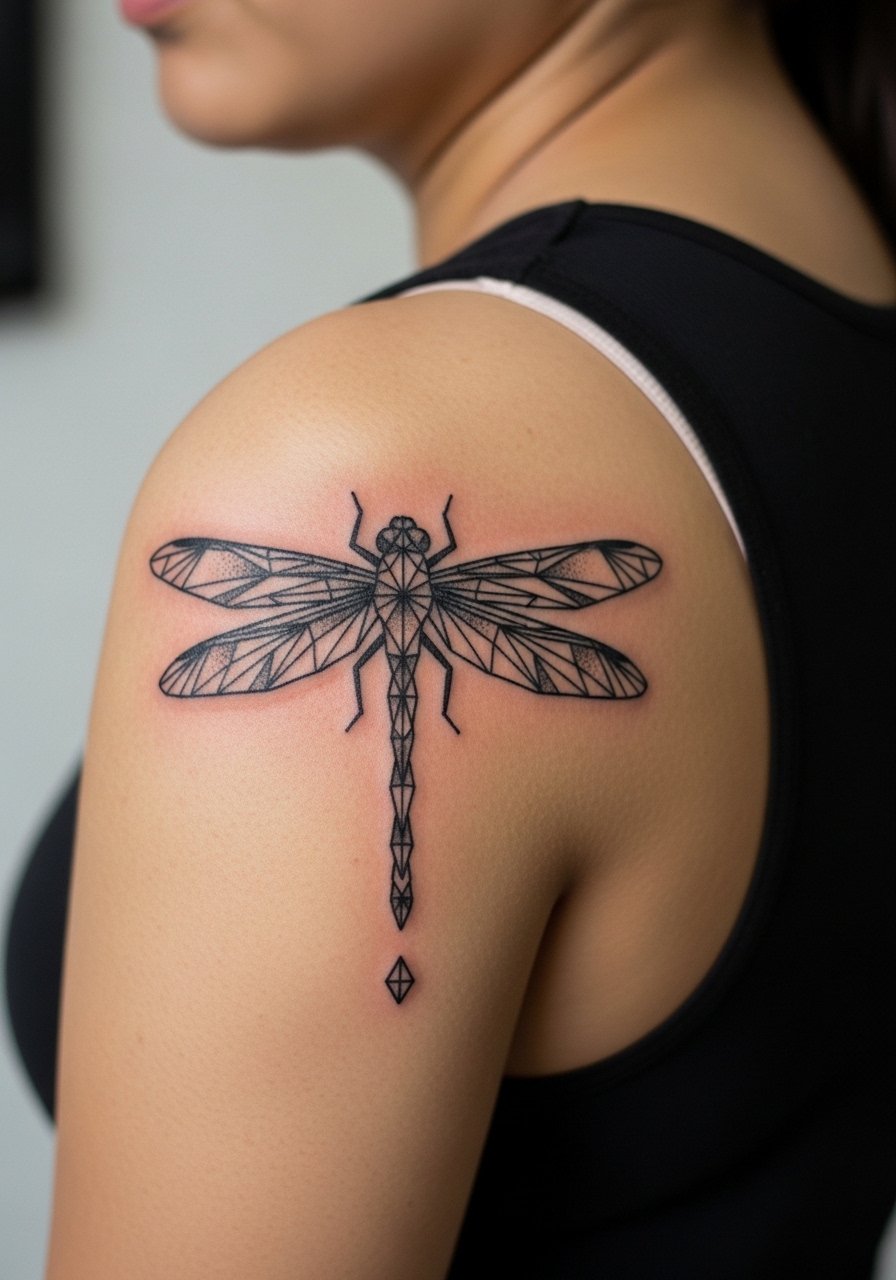
Blackwork geometric pieces last well because solid black resists UV fade and holds in high-friction zones. The shoulder blade offers a flat canvas for geometry to sit cleanly. Ask for negative space between shapes to avoid heavy saturation that can look like a solid mass after a few years. Session wear should include a loose tank so the artist can access the area without you being uncomfortable. Pair this with a backless halter top for nights out when you want the geometry to pop.
Pre-Session Essentials
The wrist, ankle, forearm, and shoulder pieces above have different prep needs, so a few targeted items smooth the session and first week.
-
Stencil transfer paper kit. Lets you preview placement on skin before committing, which is especially useful for wrist and collarbone designs that sit on curves.
-
Topical numbing cream. Apply as directed before a sensitive ankle or finger session to ease the initial sting while still allowing the artist to work.
-
Thin protective film roll. Useful for covering small, high-friction pieces like fingers and wrists during the first days of healing.
-
Fragrance free gentle body wash. Cleanses healing skin without irritating delicate linework in the first week.
-
Aquaphor healing ointment. A thin layer helps lock in moisture for fine line tattoos without smothering the skin during the initial healing window.
7. Ornamental dragonfly mandala on the ribcage
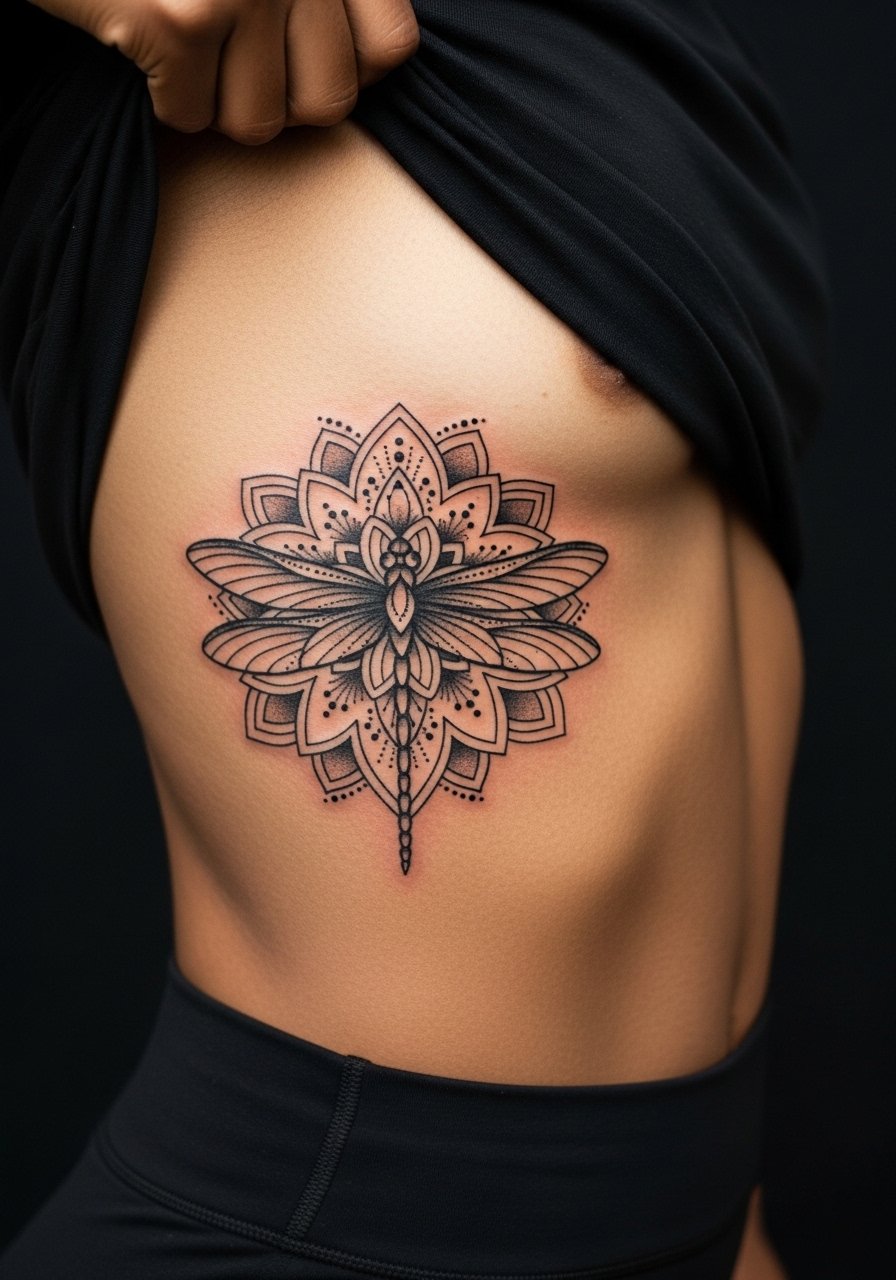
Fair warning, the ribcage rates high on most pain charts, but the result moves with your body and reads like jewelry. For this ornamental mandala, ask the artist to space dot work and stipple shading generously. The biggest mistake is packing the mandala too tight against natural folds, which causes merging as skin moves. Expect three sessions for a five inch piece and plan recovery around rest days. Because ribs stretch and shift with weight changes, consider slightly larger spacing so the pattern keeps definition over time.
8. Traditional American dragonfly with bold lines on the calf
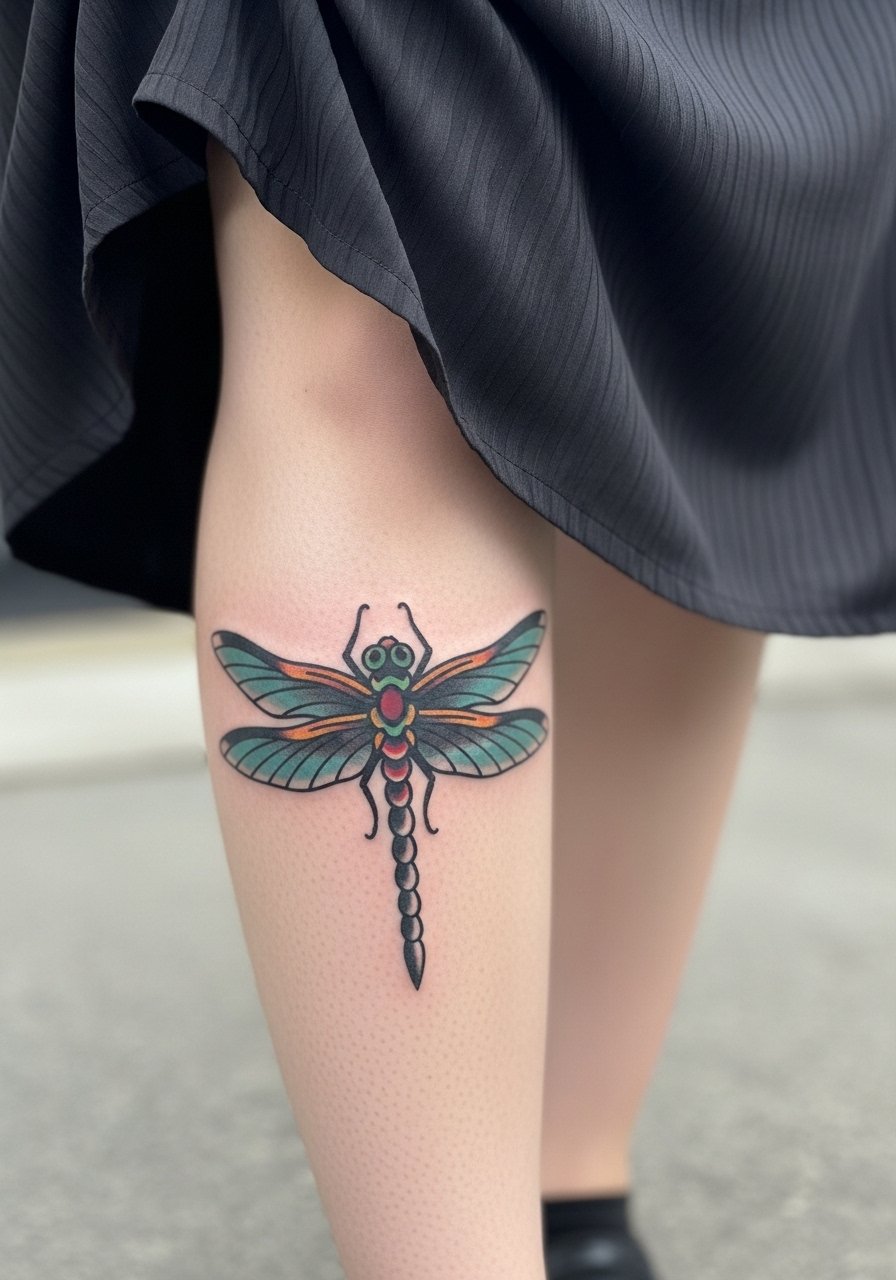
Calf placements are forgiving, and traditional saturation likes the space. The bold outlines protect color and keep the dragonfly readable years from now. Tell your artist you want classic saturation and clean black borders, and avoid tiny color gradients in the wings. Expect moderate pain if the piece wraps toward the shin, and two sessions if you want multiple colors. Pair the calf piece with a midi skirt flowy in summer so it is visible without constant sun exposure.
9. Ignorant style abstract dragonfly on the thigh
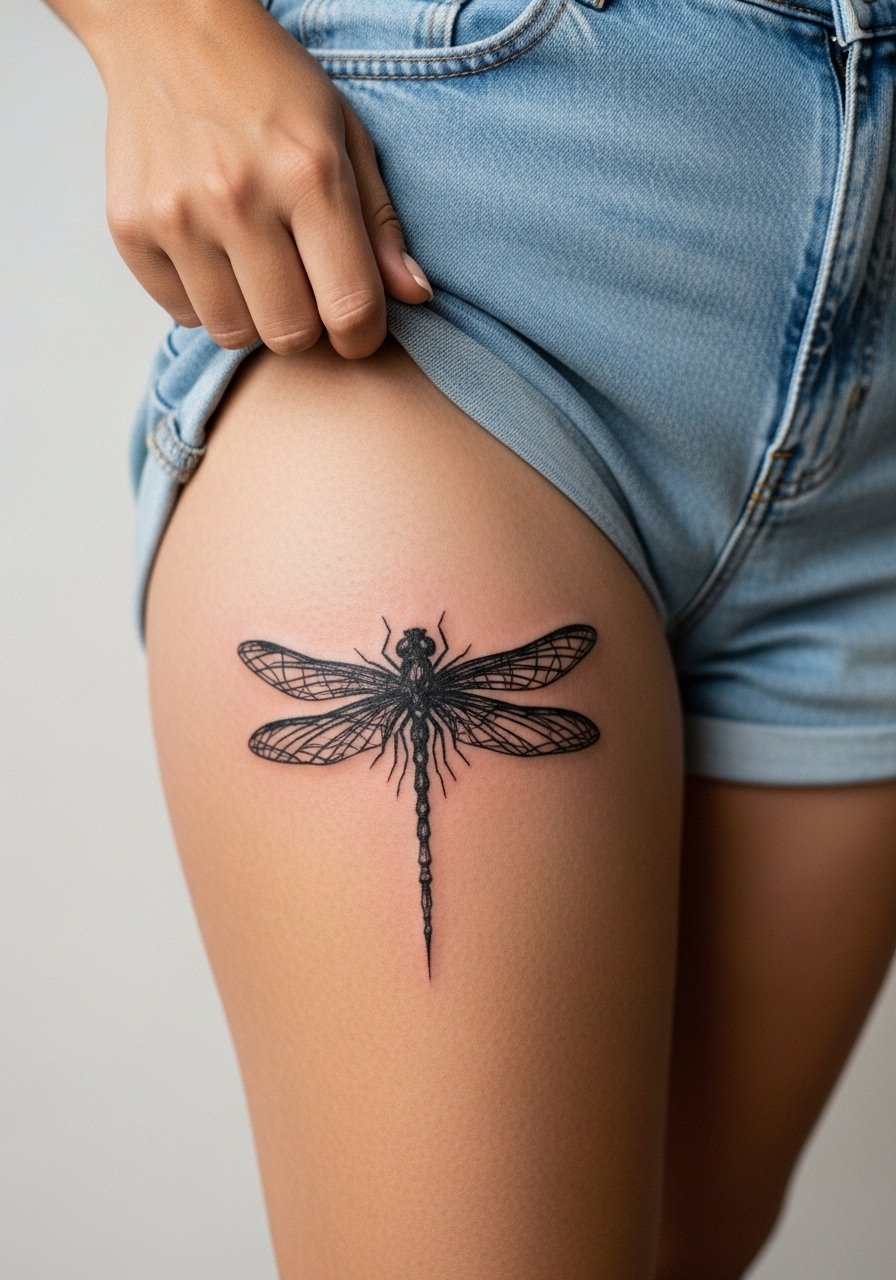
Ignorant style thrives on raw, hand-drawn energy and the thigh is an ideal canvas for scale. The advantage is it looks intentional as it ages because its aesthetic is imperfect from the start. Tell the artist you want sweeping gestural strokes and resist requests for tight realism. Session wear should include loose shorts you can shift, and expect two sittings for a 4 inch layout. Because thigh pieces rarely get sun exposure, color and linework settle well, and touch-ups are typically minimal.
10. Fine line dragonfly swarm along the spine
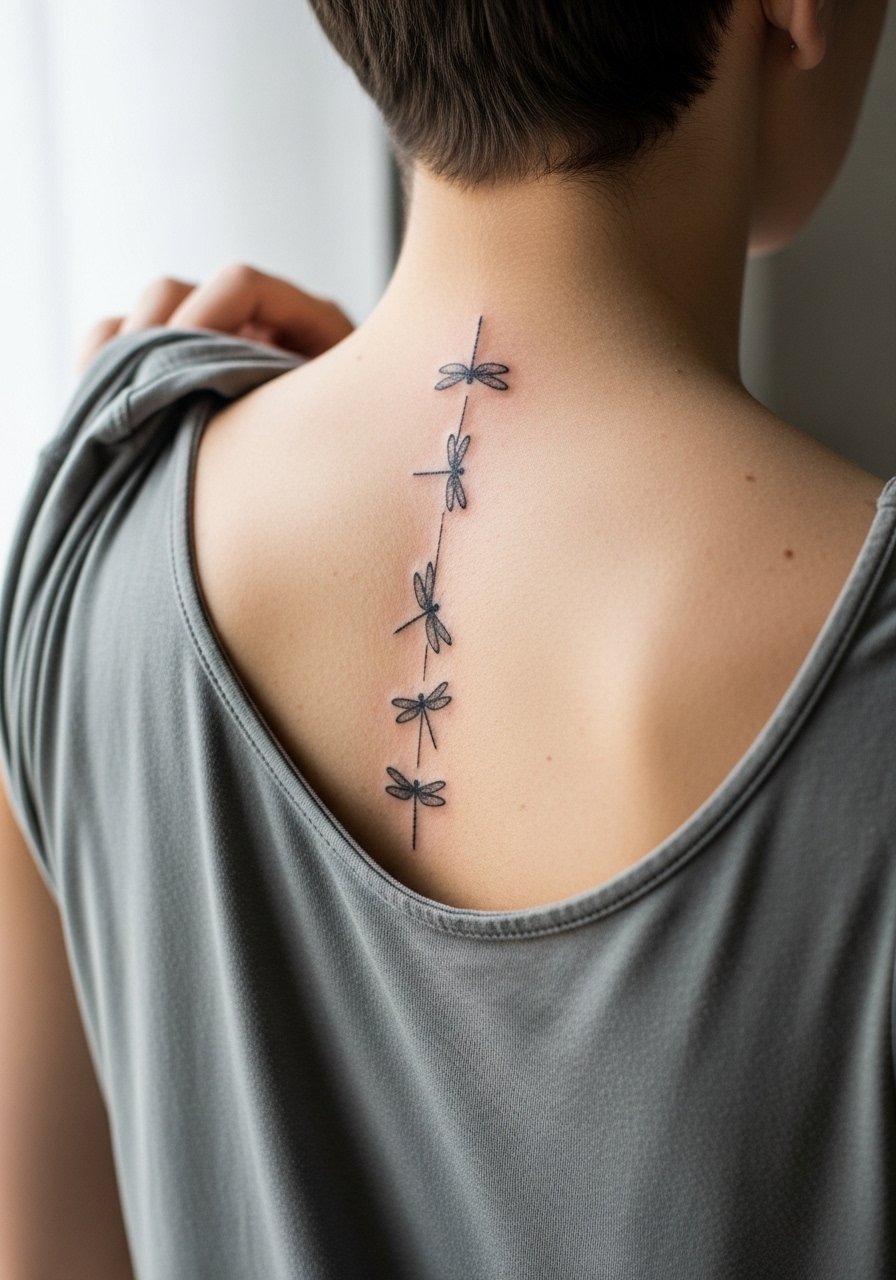
Long, vertical designs like a swarm suit the spine because they echo natural line and motion. The risk with fine line on a spine is spacing too tightly, which leads to visual merging after a few years. One controversy here is clear. One camp argues spine skin shifts with movement and fine lines blur quickly. The other camp says with the right depth and spacing, fine line works fine on the spine. Ask the artist where they stand and show examples of healed pieces. Expect multiple sessions for a six to eight inch run and plan for a touch-up at year two.
11. Negative-space dragonfly illusion on the collarbone
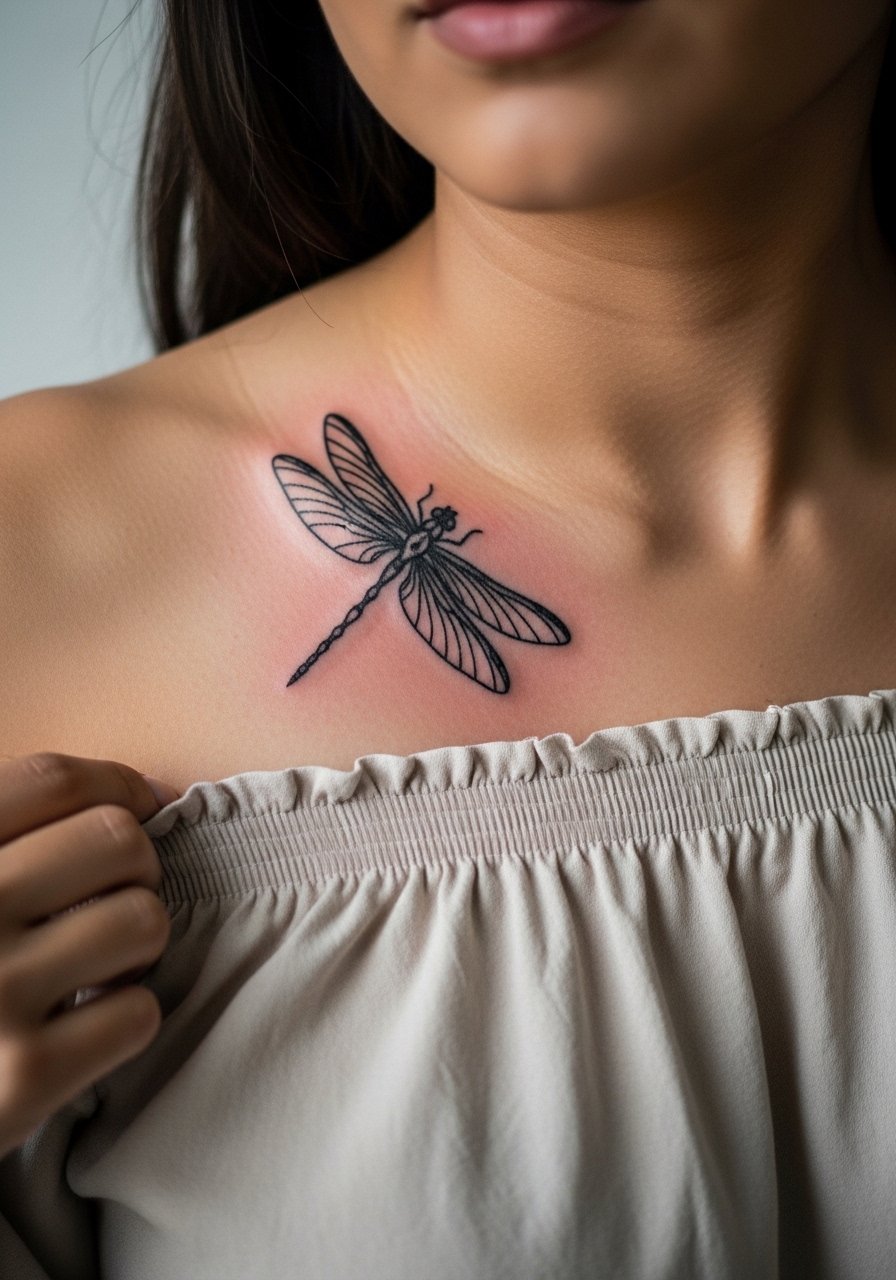
Using negative space creates an optical illusion where the dragonfly seems to float above skin rather than sit on it. This is a fresh angle not often showcased in basic galleries. When consulting, bring reference photos highlighting which areas you want left as skin. The collarbone tans easily, so plan placement to avoid direct sun exposure. Session wear should include an off shoulder blouse or button-up top that you can shift for access. The overall effect holds well if the gaps are wide enough from the start.
12. Limb-elongation dragonfly following natural arm curve
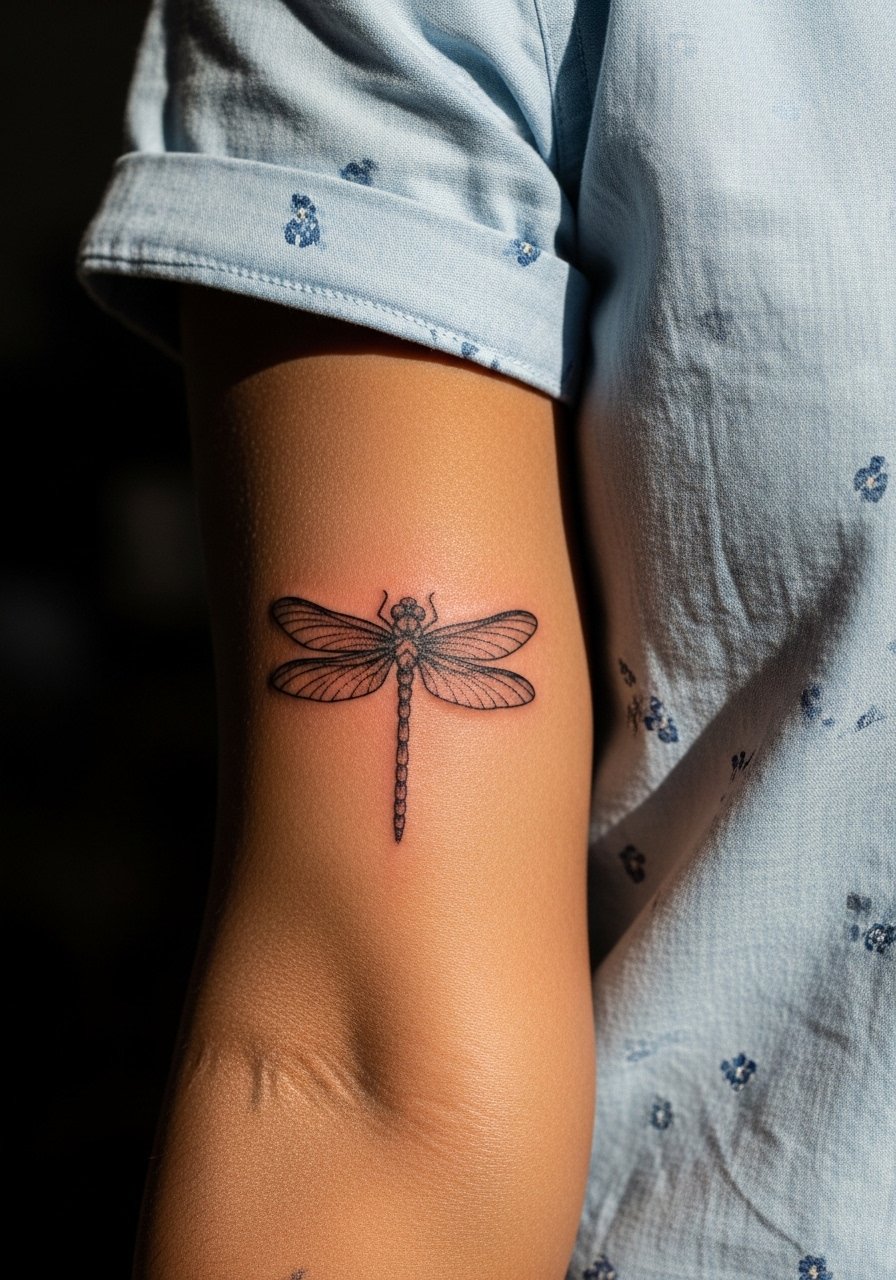
Designs that follow limb contours read as movement rather than static art. Ask for the dragonfly's body and wings to curve with your forearm length, not against it, so the piece appears to fly when your arm extends. The common mistake is forcing symmetry onto a curved area, which looks stiff once healed. For sessions, expect the forearm to be comfortable and finishable in one to two sittings depending on size. For display, a fitted crewneck tee with rolled sleeves frames the piece without hiding it.
13. Geometric dragonfly mandala on the sternum
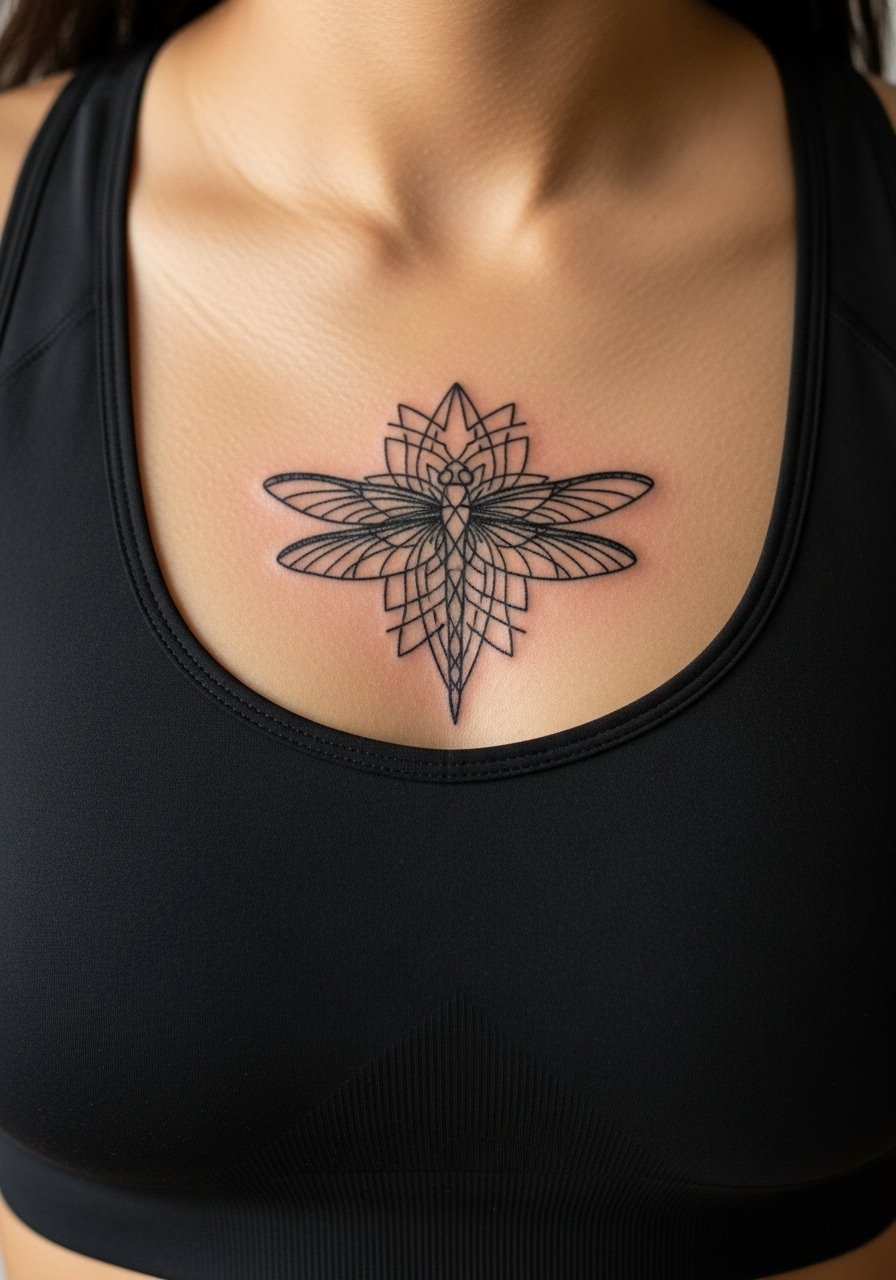
Sternum work is sensitive and requires an artist experienced with central chest symmetry. The pain is higher, but the piece sits like a pendant. When you consult, emphasize the need for breathing room between dense shapes so the mandala does not fill in over time. This placement benefits from a fitted sports bra or zip-up top during the session for easy access. Expect multiple sittings and a slower healing window because clothing can rub, so plan loose layers for the first week.
14. Ornamental lace-style dragonfly on the upper thigh
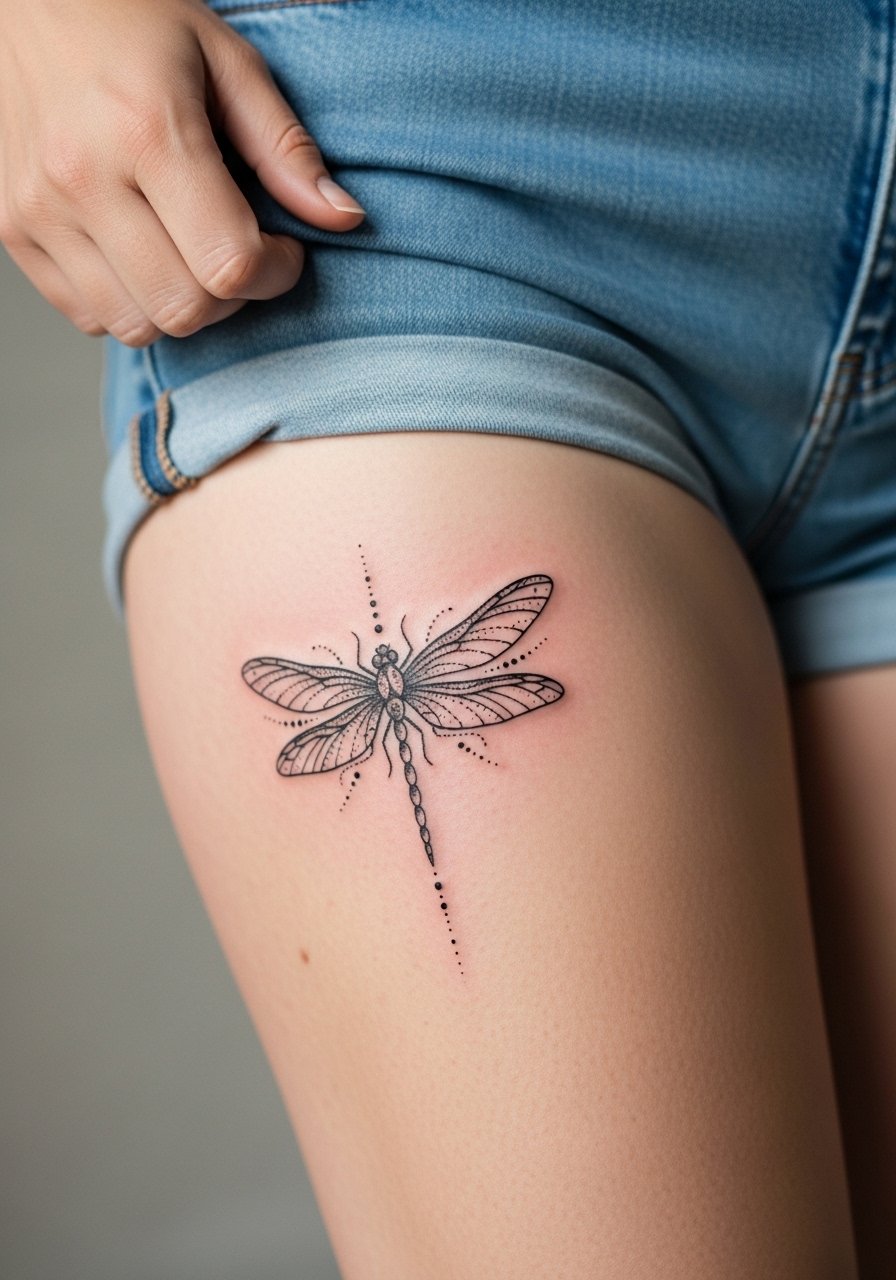
Upper-thigh placements are private but brilliant for ornate filigree because of the broad surface area. Lace-style stippling and dot work read well here and age gracefully if given enough space between dots. The common mistake is compressing detail too tightly for a small piece. Session wear should include loose shorts you can shift easily. Because thighs are less exposed to UV, the piece will retain contrast longer than collarbones or hands.
15. Tiny dragonfly behind the ear, below the hairline
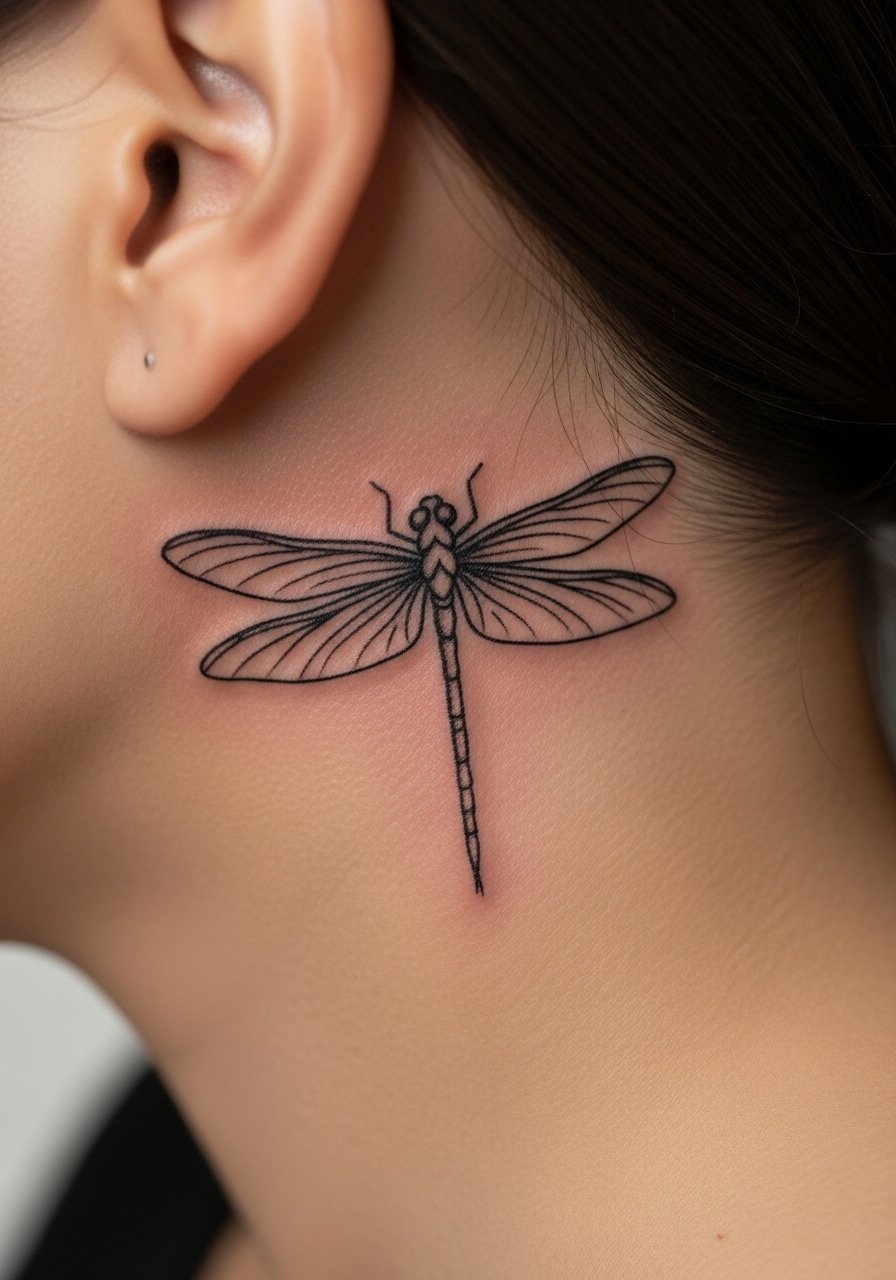
Behind-ear tattoos must be framed carefully because they sit at an intersection of hair and neck. The area is sensitive and tiny designs can blur if they are not spaced correctly. Always describe the exact spot as below the hairline on the neck so the artist places it on flat skin. Session time is short but expect tenderness while sleeping on that side for a few nights. Keep hair tied up during the first week to reduce rubbing from shampoos and accessories.
16. Micro-realism dragonfly with personal engraving on the rib
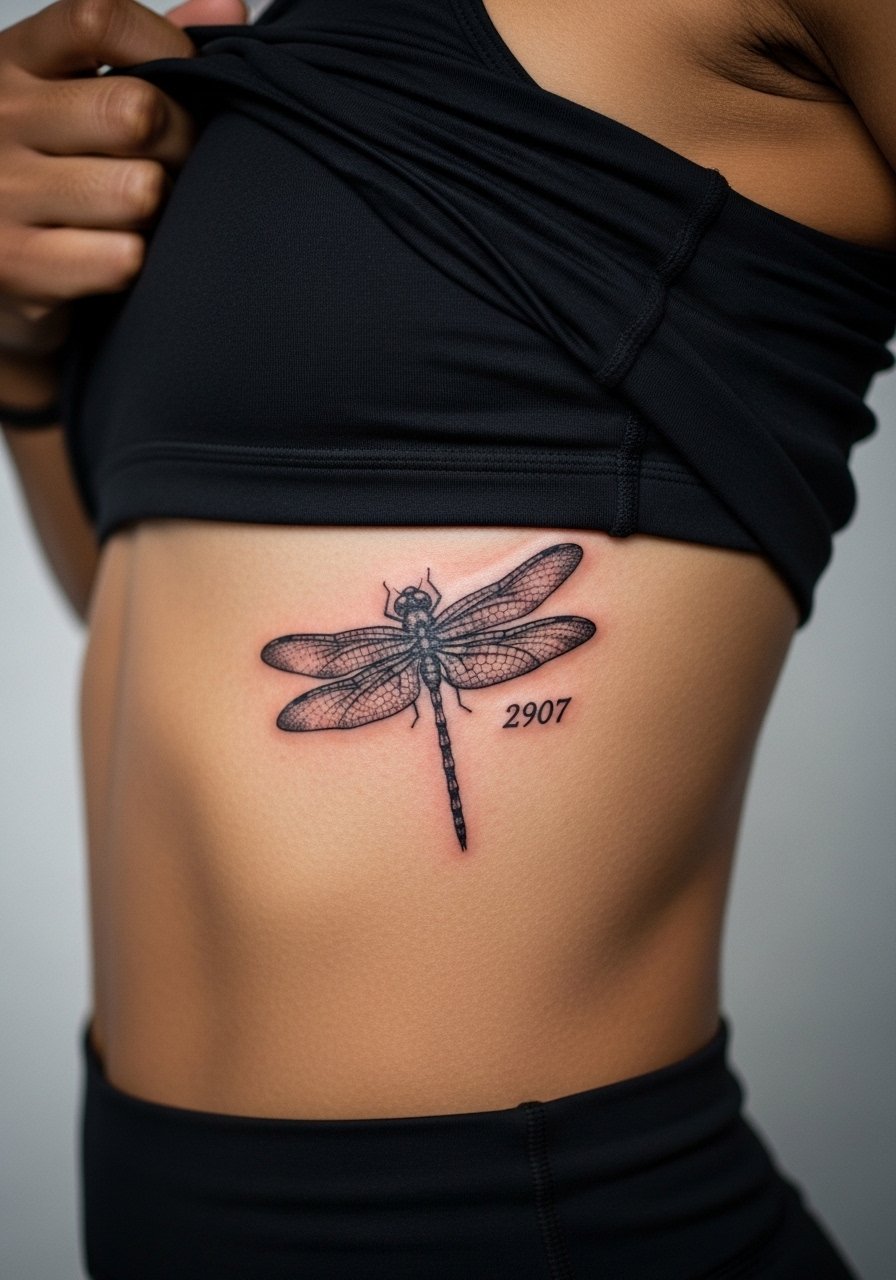
Micro-realism on ribs looks intimate and sharp up close, and adding a small engraved year or initials gives it a memorial angle without overwhelming the art. Ribs are painful for many, so plan breathing pauses during the session. Artists are split on micro-realism here. One camp warns that ribs stretch with body changes and tiny detail can blur. The other camp says heavier contrast and slightly larger detail solves that. Ask how they handle healed samples on similar skin and expect a multi-session plan.
17. Tattoo chain of small dragonflies across the foot
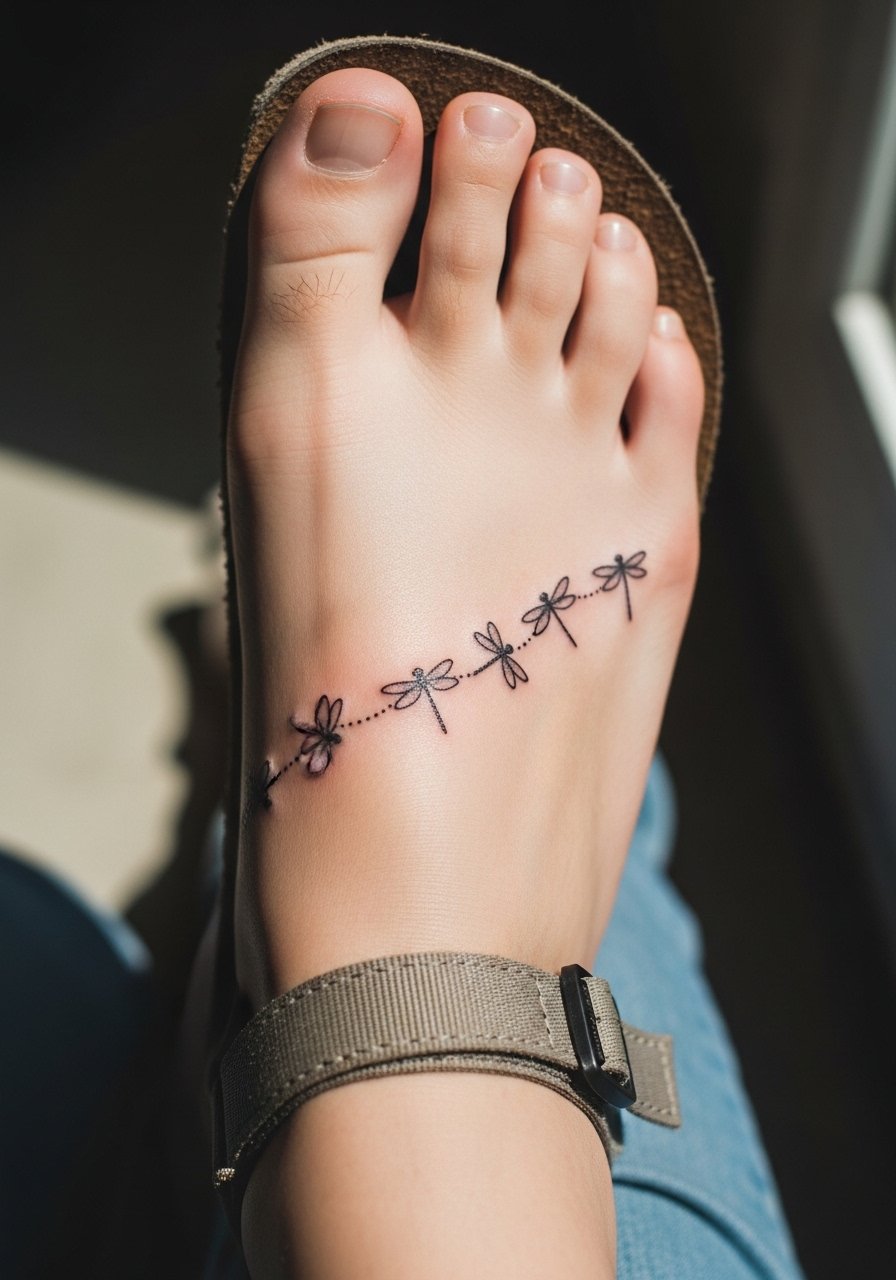
Foot tattoos look delicate but face friction from shoes and boots, so keep the linework a touch bolder than ultra-fine. The session feels sharp because the foot has many nerve endings, and healing can take longer since shoes rub. For showing it off, strappy sandals highlight the piece without constant pressure. Consider a protective film for the first few days and expect a touch-up within the first year due to fading.
18. Dragonfly with constellation dots on the upper arm
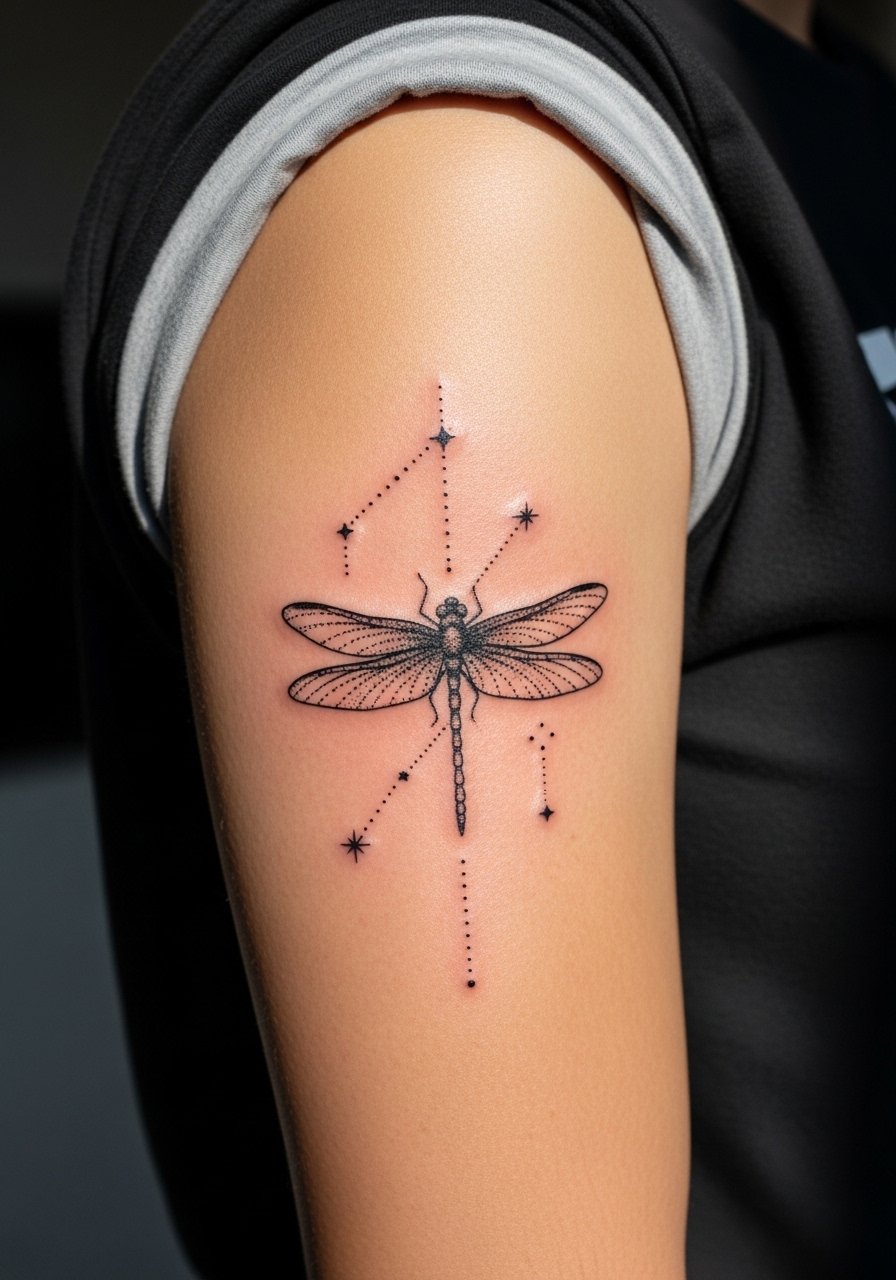
Pairing a dragonfly with constellation dots adds a subtle narrative without crowding the composition. This works well on the upper arm because the skin is forgiving and sessions are usually comfortable. Ask your artist to map the dots so they do not sit too close to the wings, which would compete visually as they age. The upper arm tolerates several techniques from dot work to whip shading, and touch-ups are rarely urgent here.
19. Stylized dragonfly with filigree shoulder wrap
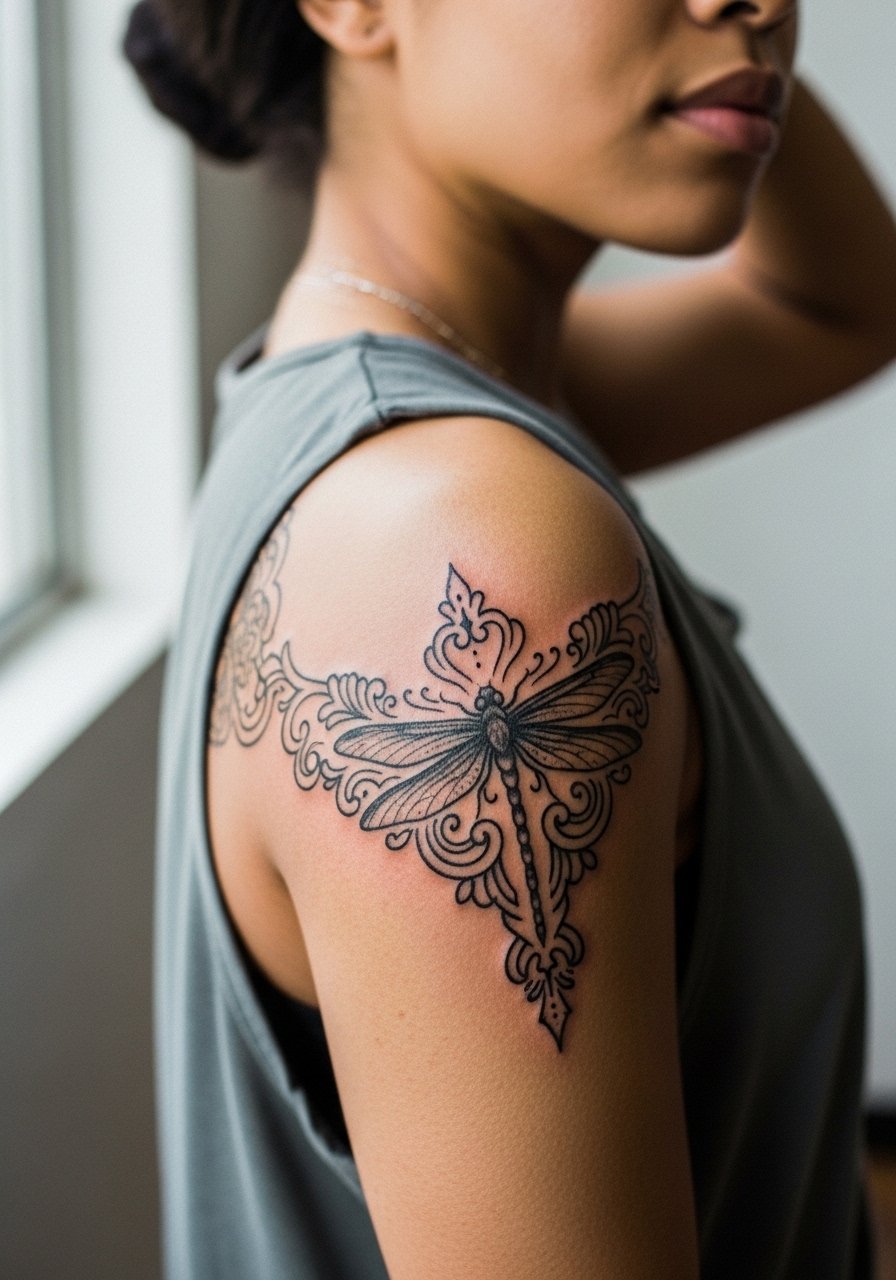
A shoulder wrap sits nicely with summer tops and allows you to choose how much coverage you want for work. The filigree should breathe around the dragonfly so that shading does not fill in small gaps. Session wear includes a loose tank so the artist can work with ease. For showing off, a loose tank top women frames the shoulder and lets the wrap flow visually.
20. Single-line dragonfly behind the collar on the nape
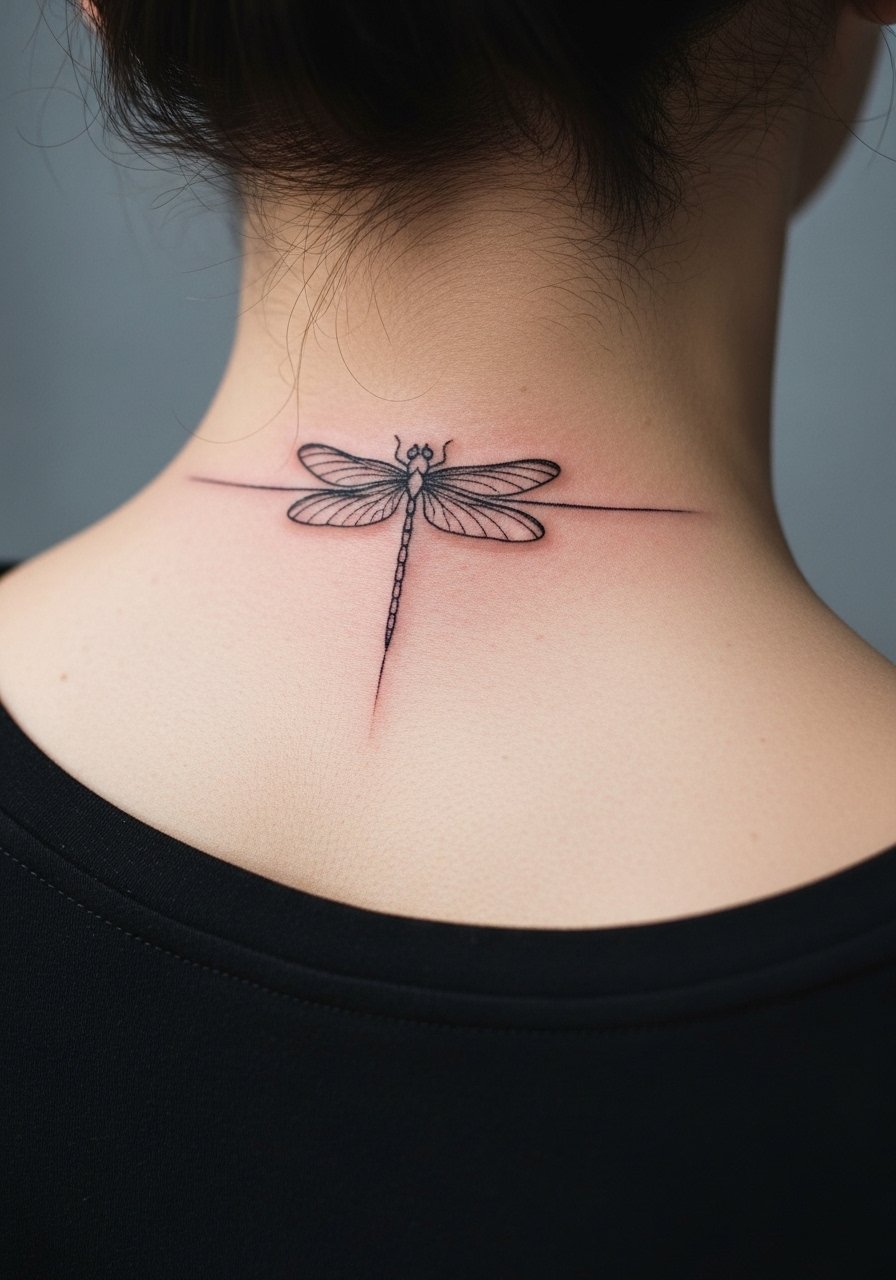
Nape tattoos are discreet and peek out with up-dos or low collars. Keep line weight steady to prevent hair follicles and movement from softening the image prematurely. The area heals quickly but can tangle with hair care products, so protect it during showers. A wide-neck shirt during the session gives easy access. Because this zone sees sun less often, fine lines read longer than on hands or feet.
21. Dragonfly paired with floral garland across the chest
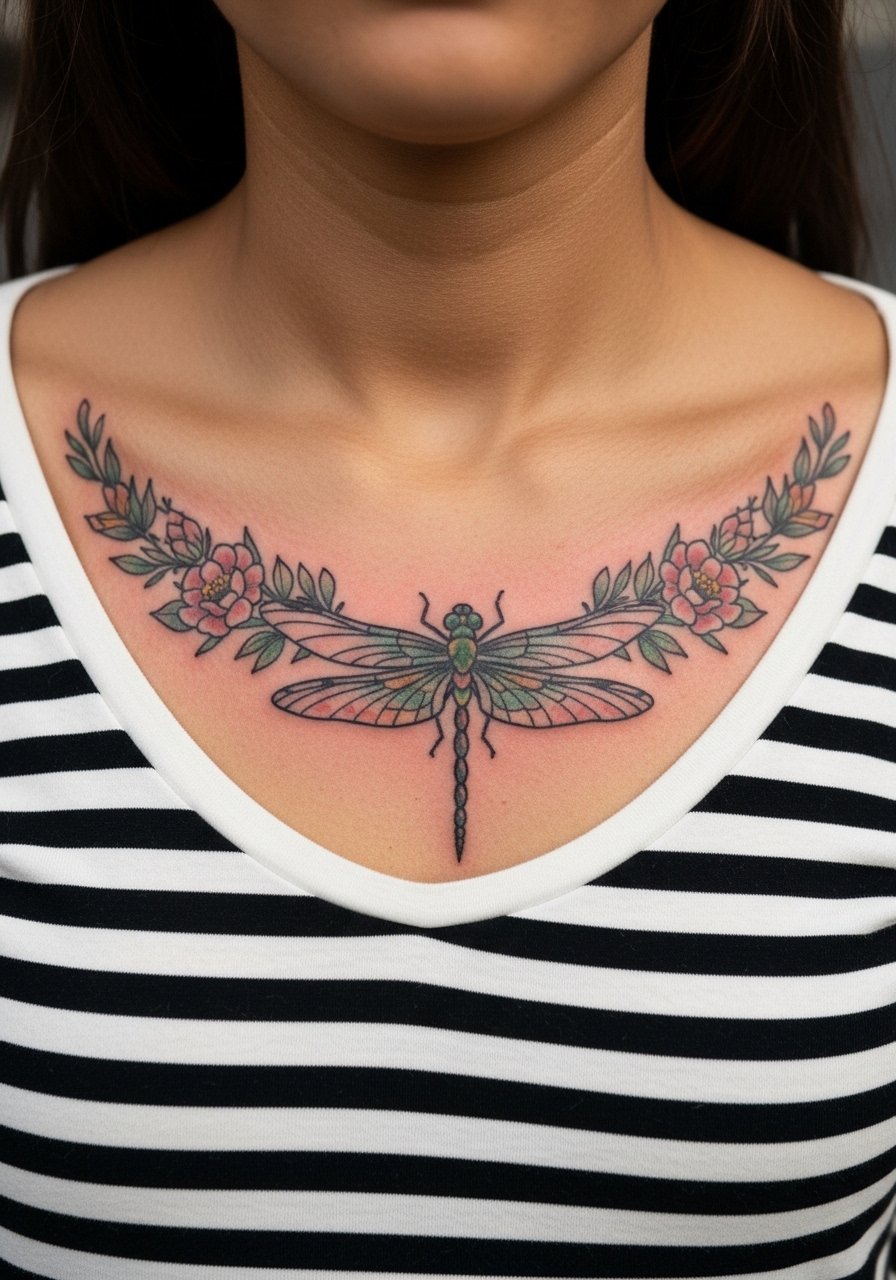
A chest garland blends organic flow with a central dragonfly, and it benefits from symmetry and spacing. The chest can be vulnerable to clothing friction, so plan looser shirts for the week after the session. Ask your artist for slightly larger petals and wing gaps so detail does not compress with movement. For the session, a button-up that you can pull aside works best. The chest is visible with low necklines and pairs well with delicate pendants that sit above the piece.
Frequently Asked Questions
Q: Will a fine line dragonfly on the wrist fade faster on darker skin tones?
A: Fine line can appear lighter sooner on melanin-rich skin if the line weight is ultra-thin. From what I've seen, asking for slightly heavier linework or a low-saturation blackwork variant helps the piece stay readable. Discuss healed photos on similar skin with your artist so you both agree on scale and depth.
Q: Do watercolor dragonfly tattoos need different aftercare than traditional ones?
A: The core steps are the same, but watercolor relies on softer pigment edges so it benefits from strict sun avoidance in the first three months and consistent SPF afterward. Keep the area out of salt or chlorinated pools during initial healing to prevent pigment migration.
Q: Is it true that ribs and sternum are a bad spot for fine line work?
A: Artists are split. One camp points to skin movement and stretch as a reason fine line blurs sooner. The other camp says careful depth and spacing can make fine line workable there. It depends on your body, the artist's experience, and how much size you allow between strokes.
Q: How soon should I schedule a touch-up for a micro-realism finger or toe piece?
A: Expect to plan a touch-up around the one year mark for extremity pieces because washing, friction, and thinner skin can reduce saturation. If your artist offers a free or discounted touch-up window, clarify how long that offer lasts before booking.
Q: What should I wear to a collarbone or chest session to make the artist's job easiest?
A: Wear a v neck blouse women or a button-up you can open or pull aside. That gives the artist unobstructed access without you feeling exposed, and it keeps fabric from rubbing the freshly inked area while you travel home.
